
Klow vs Glow Peptide: Decoding Their Research Potential in 2025
In the rapidly evolving landscape of scientific research, peptides have emerged as powerful tools for exploring complex biological processes, offering a glimpse into future advancements in various fields, from cellular regeneration to aesthetic science. Among the myriad of synthetic peptides gaining traction, the concepts behind "Klow" and "Glow" peptides have sparked considerable interest, particularly in understanding their distinct mechanisms and potential applications. As researchers delve deeper, comparing klow vs glow peptide becomes crucial for delineating their unique properties and guiding future studies. This article aims to provide a comprehensive, high-authority overview for consumers interested in the cutting-edge research surrounding these fascinating compounds in 2025.
Peptides, essentially short chains of amino acids, act as signaling molecules within the body, influencing a wide array of physiological functions. The promise they hold in targeted research is immense, leading to a surge in studies exploring their specific effects. When we consider the debate of klow vs glow peptide, we are examining two conceptual frameworks, or potentially specific peptide blends, designed to elicit different biological responses—one often associated with foundational cellular health and resilience ("Klow"), and the other with visible improvements in appearance, particularly skin vitality and youthfulness ("Glow"). Understanding this distinction is key to appreciating their individual research trajectories.
Key Takeaways
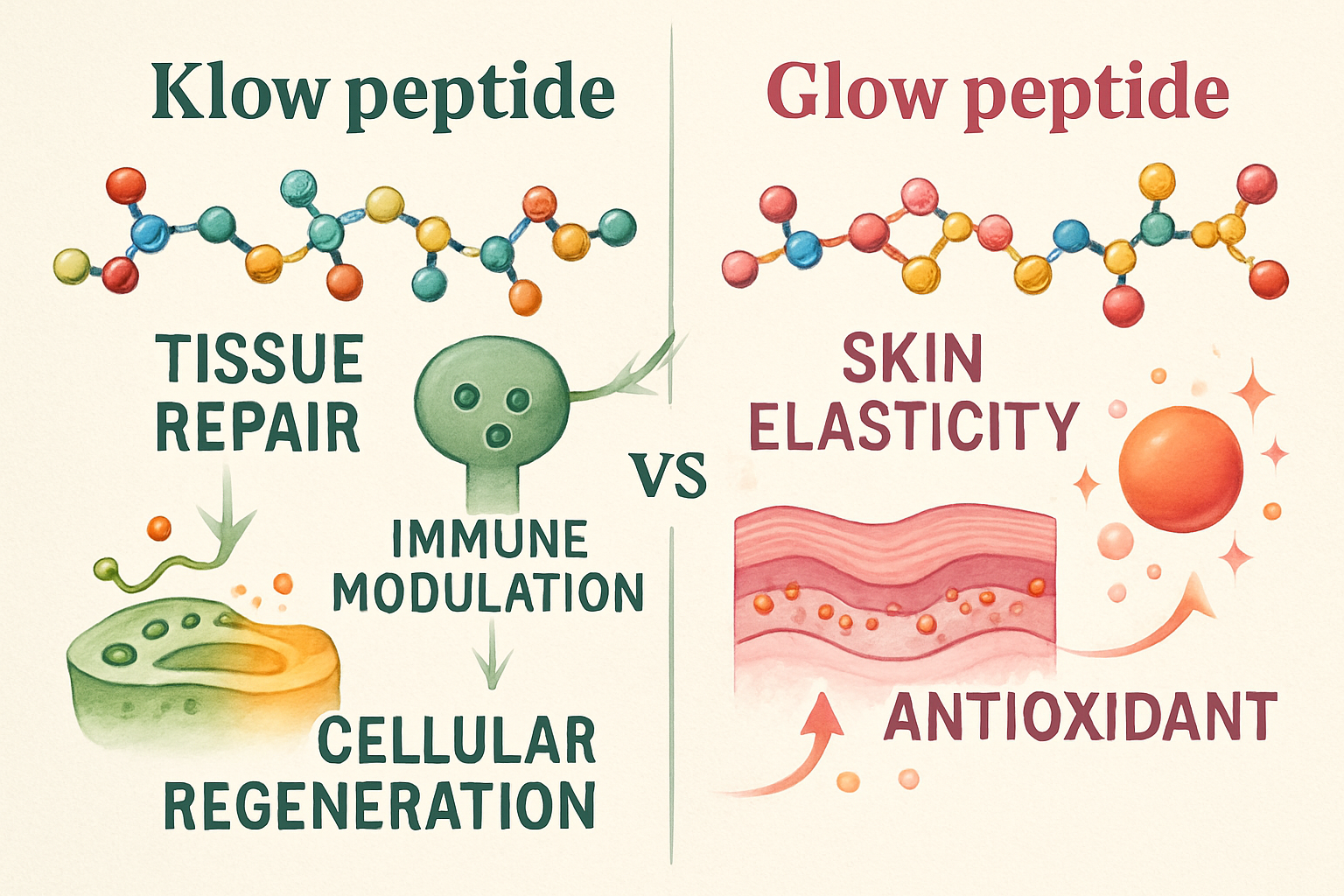
- Klow Peptides Focus on Foundational Health: Research into "Klow" peptides often centers on cellular repair, immune system modulation, and enhancing the body's adaptive capacity, aiming for robust internal health and resilience.
- Glow Peptides Target Aesthetic Enhancement: "Glow" peptides are typically investigated for their potential in improving skin elasticity, reducing visible signs of aging, boosting collagen production, and contributing to overall skin radiance.
- Distinct Mechanisms of Action: While both fall under the broad category of peptides, their specific amino acid sequences and targets in the body lead to different biological pathways being activated, resulting in varied research outcomes.
- Synergistic Potential: Although distinct, some research explores the potential for combining "Klow" and "Glow" peptide research strategies to achieve both internal cellular wellness and external aesthetic benefits.
- Importance of Quality Research: For consumers, recognizing the need for high-quality, well-designed laboratory studies is paramount when evaluating the efficacy and safety of peptide research findings in 2025.
Understanding Peptides: The Building Blocks of Research
Peptides are fascinating molecules, acting as messengers within biological systems. They are shorter versions of proteins, composed of chains of amino acids linked by peptide bonds. The specific sequence of these amino acids dictates the peptide's unique three-dimensional structure and, consequently, its biological function [1]. In a research setting, this means scientists can design or isolate peptides with very specific targets, allowing for precise investigations into cellular processes.
The beauty of peptide research lies in their specificity. Unlike larger proteins or complex pharmaceuticals, peptides can often interact with particular receptors or enzymes, leading to highly targeted effects. This characteristic makes them incredibly valuable tools for researchers exploring everything from metabolic regulation to tissue regeneration. For those interested in the broader scope of peptide research, a comprehensive catalog of various peptides for sale can be found at Pure Tested Peptides.
What Defines a "Klow" Peptide in Research?
The term "Klow peptide" often conceptually refers to peptide blends or individual peptides whose primary research focus is on cellular repair, resilience, and foundational health. Think of "Klow" as promoting an "inner glow" of vitality derived from robust cellular function and an optimized internal environment. Research in this area might explore peptides that:
- Support cellular regeneration: Investigating peptides that promote the healthy turnover of cells and tissues.
- Modulate immune responses: Studying how certain peptides can help balance or enhance the immune system's function, contributing to the body's adaptive capacity [2].
- Reduce oxidative stress: Research into peptides with antioxidant properties that protect cells from damage.
- Enhance metabolic efficiency: Exploring peptides that could play a role in optimizing energy production at a cellular level.
Examples of peptides that might fall under the "Klow" research umbrella include those studied for their potential to aid in recovery and repair, such as BPC-157. Research into BPC-157, for instance, has explored its regenerative properties in various tissues [3]. More information on such peptides can be found by researching BPC-157. These peptides are not typically associated with immediate, visible aesthetic changes but rather with supporting the underlying biological mechanisms that contribute to overall well-being. The emphasis is on long-term cellular health and physiological balance.
What Defines a "Glow" Peptide in Research?
In contrast, "Glow peptide" typically refers to peptides or peptide blends whose primary research focus is on aesthetic enhancement, particularly concerning skin health and appearance. The goal here is to achieve a "visible glow"—improved skin texture, reduced wrinkles, and enhanced radiance. Research in the "Glow" category might investigate peptides that:
- Stimulate collagen and elastin production: Peptides that signal fibroblasts to produce more of these structural proteins, which are vital for skin firmness and elasticity.
- Reduce inflammation in the skin: Studying how peptides can calm inflammatory processes that contribute to redness and irritation.
- Provide antioxidant protection to the skin: Research into peptides that protect skin cells from environmental damage and premature aging.
- Improve skin barrier function: Exploring peptides that help strengthen the skin's natural protective barrier, leading to better hydration and resilience.
A prime example of a peptide fitting the "Glow" research profile is GHK-Cu, also known as Copper Peptide. Extensive research has been conducted on topical GHK-Cu for its potential in wound healing, anti-inflammatory effects, and stimulation of collagen synthesis, all of which contribute to healthier, younger-looking skin [4]. These peptides aim to target specific skin concerns, leading to observable improvements in dermatological parameters.
Klow vs Glow Peptide: A Head-to-Head Research Comparison
When comparing klow vs glow peptide, it's essential to understand that while both are peptides, their research applications stem from distinct biological targets and intended outcomes. This distinction is not always about one being "better" than the other, but rather about addressing different scientific questions and potential benefits.
Research Focus and Mechanisms of Action
| Feature | "Klow" Peptide Research Focus | "Glow" Peptide Research Focus |
|---|---|---|
| Primary Goal | Enhance internal cellular health, repair, and resilience. | Improve external aesthetic qualities, primarily skin health and appearance. |
| Key Research Areas | Immune modulation, cellular regeneration, anti-inflammatory pathways (systemic), metabolic support, tissue repair. | Collagen/elastin synthesis, antioxidant protection (skin), epidermal barrier function, anti-aging (dermatological), skin tone evenness. |
| Mechanisms of Action | Often involves signaling pathways related to growth factors, cytokine regulation, stem cell activation, and mitochondrial function. | Frequently involves stimulating fibroblast activity, inhibiting enzymes that degrade collagen, and mitigating oxidative stress within the dermis. |
| Example Peptides | BPC-157, certain thymus peptides (e.g., in Crystagen thymic complexes). | GHK-Cu, various matrix metalloproteinase (MMP) inhibitors, signal peptides for collagen production. |
| Observable Outcomes | Improved recovery times (in tissue injury models), enhanced immune markers, better adaptive capacity [5]. | Reduced wrinkle depth, increased skin firmness, improved hydration, more even skin tone. |
It's clear that the research behind klow vs glow peptide diverges significantly. "Klow" peptide research often delves into systemic effects, seeking to understand how peptides can optimize the body's internal machinery. This might involve exploring their role in processes like adaptive capacity and peptide mapping. On the other hand, "Glow" peptide research is typically localized, focusing on the skin's biology and how peptides can directly influence its appearance and health.
Experimental Design and Considerations for Klow vs Glow Peptide Studies
Designing effective research studies for peptides requires careful consideration of their intended action. When comparing klow vs glow peptide studies, the methodologies often differ:
"Klow" Peptide Research Studies
- In Vitro Models: Often involve cell cultures to observe effects on cell proliferation, migration, apoptosis, and cytokine production.
- Animal Models: Used to study systemic effects on organ function, wound healing, immune responses, and metabolic parameters. For example, studies on peptides affecting joint and muscle pain or recovery often use animal models to observe functional improvements [6].
- Biomarker Analysis: Measuring changes in blood markers, inflammatory cytokines, growth factors, and other indicators of cellular health.
- Functional Assessments: Observing improvements in physical performance, recovery from injury, or immune challenge in animal models.
"Glow" Peptide Research Studies
- In Vitro Models: Focus on fibroblast cultures for collagen/elastin synthesis, keratinocyte proliferation, and antioxidant activity in skin cells.
- Ex Vivo Skin Models: Using excised skin samples to test peptide penetration and effects on skin structure.
- Human Clinical Trials (Topical Application): While not for general health claims, cosmetic research often involves human trials to evaluate visible skin improvements using non-invasive imaging techniques, wrinkle analysis, hydration measurements, and expert grading.
- Biophysical Measurements: Using devices to measure skin elasticity, hydration levels, transepidermal water loss (TEWL), and melanin content.
Researchers looking to conduct studies on either type of peptide would need to select appropriate experimental models and measurement tools that align with the specific research questions being asked. Reputable sources for research peptides, like Pure Tested Peptides, often provide detailed information and purity certificates to aid in such studies.
Synergy and Future Research Directions in 2025
While the discussion of klow vs glow peptide highlights their differences, it's also important to consider areas of potential synergy. Could enhancing foundational cellular health (Klow) contribute to better skin health (Glow), or vice-versa?
For example, a robust immune system (a "Klow" benefit) might lead to reduced inflammation throughout the body, including the skin, potentially improving overall skin appearance. Similarly, peptides that enhance cellular maintenance (a "Klow" trait) could theoretically contribute to the longevity and vitality of skin cells, delaying the visible signs of aging. This conceptual crossover suggests that a holistic approach, where internal wellness supports external radiance, could be a fertile ground for future research.
Some peptide blends are already designed with a multi-faceted approach, aiming to address several aspects of well-being simultaneously. For those interested in such combinations, exploring peptide blends research might offer further insights. The benefits of such blends, encompassing both internal and external improvements, are an exciting area of ongoing investigation in 2025 [7].
The Role of Quality and Sourcing in Peptide Research
For any research involving peptides, the quality and purity of the compounds are paramount. Impure or improperly synthesized peptides can lead to unreliable research results, making it difficult to draw accurate conclusions about their true effects. This is why researchers consistently emphasize sourcing from reputable suppliers.
When considering where to buy peptides online USA, it's critical to prioritize vendors who provide:
- Third-party testing: Independent verification of peptide purity and concentration.
- Certificates of Analysis (CoAs): Documentation detailing the purity and composition of each batch.
- Proper storage and handling guidelines: Ensuring the stability and integrity of the peptides.
These factors are not just about safety; they are fundamental to scientific rigor and reproducibility of research findings. Understanding best practices for storing research peptides is also crucial to maintaining their efficacy in laboratory settings.
Navigating Peptide Research: What Consumers Should Know in 2025
For consumers, understanding the distinction between klow vs glow peptide research is vital for making informed decisions about the information they encounter. It helps to set realistic expectations for what peptide research aims to achieve.
- Focus on Research, Not Claims: Remember that most cutting-edge peptide discussions revolve around laboratory research and preclinical studies. Avoid interpreting research findings as direct health claims, especially for general public use, unless explicitly stated and backed by extensive clinical trials.
- Understand the "Why": Ask what the primary goal of a particular peptide research is. Is it aiming for cellular resilience (Klow) or aesthetic enhancement (Glow)? This helps categorize the potential area of impact.
- Source Information Carefully: Rely on scientific literature and reputable research platforms. Be wary of exaggerated claims or anecdotal evidence that lacks scientific backing.
- Purity Matters: If you are a researcher, prioritize suppliers who are transparent about their peptide sourcing and provide certificates of analysis, ensuring you are working with high-quality materials.
- Peptides are Tools: View peptides as powerful tools for scientific inquiry. Their specific mechanisms allow scientists to probe biological systems with unprecedented precision.
The ongoing research into various peptides continues to unveil their complex roles in biological systems. Whether the focus is on systemic wellness or targeted aesthetic improvements, the journey of discovery is just beginning. As 2025 progresses, new insights into how peptides interact with our biology will undoubtedly emerge, further refining our understanding of categories like "Klow" and "Glow."
Specific Peptides and Their Research Context
Many individual peptides can be thought of as contributing to either a "Klow" or "Glow" research objective, or sometimes both, depending on the specific study design. For example:
- 5-Amino-1MQ: Research into 5-Amino-1MQ often explores its role in cellular metabolism and energy regulation, potentially aligning with "Klow" research by optimizing internal cellular function. More details can be found on its research applications at 5-amino-1mq.
- AOD-9604: This peptide has been a subject of extensive research for its lipolytic properties and potential role in fat metabolism, which could contribute to overall metabolic health, a "Klow" research aspect. Information on AOD-9604 is readily available.
- CJC-1295 and Ipamorelin (CJC/IPA): Often studied for their effects on growth hormone release, which can impact muscle growth, recovery, and overall cellular repair, making them relevant to "Klow" research. Explore more about CJC-1295 plus IPA in research.
- LL-37 and mots-c: Research into the synergy of these peptides often touches upon immune function and mitochondrial health, crucial elements of "Klow" research. The synergy of LL-37 and mots-c is a complex and promising area of study.
The conceptual framework of klow vs glow peptide helps in categorizing these research efforts and understanding the diverse applications of peptide science.
Conclusion
The distinction between "Klow" and "Glow" peptides in scientific research provides a useful framework for understanding the diverse potential of these fascinating molecules. "Klow" peptides are typically investigated for their ability to foster foundational cellular health, resilience, and repair, aiming for robust internal biological systems. In contrast, "Glow" peptides are researched for their targeted effects on aesthetic improvements, particularly concerning skin vitality, youthfulness, and radiance.
As we move through 2025, the scientific community continues to uncover the intricate mechanisms by which peptides interact with our biology. This ongoing exploration not only refines our understanding of individual peptides but also opens doors for synergistic research, where the benefits of internal cellular wellness could be leveraged to enhance external appearance, and vice-versa. For consumers, recognizing the research focus of a peptide—whether it aligns with "Klow" or "Glow" principles—is key to interpreting scientific findings accurately and appreciating the immense, yet specific, potential that peptide research holds for the future. Always prioritize information from reputable scientific sources and remember that research findings often represent early stages of discovery, paving the way for future applications.
Actionable Next Steps:
- Deep Dive into Specific Peptides: If a particular peptide interests you, delve into its specific research literature. Look for studies on Pure Tested Peptides to understand its primary focus.
- Understand Research Methodologies: Familiarize yourself with how peptide research is conducted (e.g., in vitro, animal models, human studies) to better evaluate the strength of findings.
- Stay Informed on New Discoveries: The field of peptide research is dynamic. Follow scientific journals and reputable sources to stay updated on new findings related to both "Klow" and "Glow" peptide concepts.
References
[1] Fosgerau, K., & Hoffmann, T. (2015). Peptide therapeutics: current status and future directions. Drug Discovery Today, 20(10), 1225-1230.
[2] Besedovsky, H. O., & del Rey, A. (1996). Immune-neuroendocrine interactions: facts and hypotheses. Endocrine Reviews, 17(1), 64-102.
[3] Seiwerth, S., Brcic, L., Vuletic, L. B., Drmic, I., Stefanov, I., Kolenc, D., & Sikiric, P. (2018). BPC 157 and Standard Therapies: Their Mutual Support in Healing. Frontiers in Pharmacology, 9, 511.
[4] Pickart, L., & Margolina, A. (2018). The Anti-Aging and Wound Healing Effects of Copper Peptide GHK-Cu: What Has Been Revealed Over Forty Years of Research. Future Science OA, 4(4), FSO286.
[5] Popovic, M., & Zlatkovic, R. (2018). Thymic Peptides and Immunomodulation. Frontiers in Pharmacology, 9, 1378.
[6] Sikiric, P., Rucman, R., Turkovic, B., Sever, M., Klicek, R., Radic, B., … & Seiwerth, S. (2010). A new gastric pentadecapeptide BPC 157 promotes tendon-to-bone healing and an osteogenic effect. Journal of Orthopaedic Research, 28(4), 485-492.
[7] Vlieghe, P., Lisowski, V., Martinez, J., & Khrestchatisky, M. (2010). Synthetic therapeutic peptides: science and market. Drug Discovery Today, 15(1-2), 40-56.
SEO Meta Title: Klow vs Glow Peptide: Research Insights for 2025
SEO Meta Description: Explore the difference between Klow vs Glow peptide research in 2025. Understand their unique cellular and aesthetic potential, and key findings.