
MOTS-C Peptide Benefits: Unlocking the Power of Mitochondrial Health in 2025

Imagine a single molecule that could revolutionize how your body produces energy, fights aging, and maintains optimal health at the cellular level. MOTS-C peptide benefits are capturing the attention of researchers worldwide as this remarkable mitochondrial-derived peptide demonstrates unprecedented potential in metabolic health, longevity, and cellular function. 🧬
MOTS-C (Mitochondrial Open Reading Frame of the 12S rRNA-c) represents a breakthrough in understanding how our cellular powerhouses communicate with the rest of our body. This 16-amino acid peptide, encoded within mitochondrial DNA, acts as a crucial signaling molecule that regulates glucose metabolism, enhances insulin sensitivity, and promotes healthy aging processes.
Key Takeaways
• MOTS-C peptide benefits include enhanced glucose metabolism, improved insulin sensitivity, and increased cellular energy production
• This mitochondrial-derived peptide plays a crucial role in metabolic regulation and may support healthy aging processes
• Research demonstrates MOTS-C's potential in addressing metabolic disorders, obesity, and age-related cellular dysfunction
• The peptide works by activating key metabolic pathways and improving mitochondrial function
• Quality sourcing and proper research protocols are essential when exploring MOTS-C applications
Understanding MOTS-C: The Mitochondrial Messenger
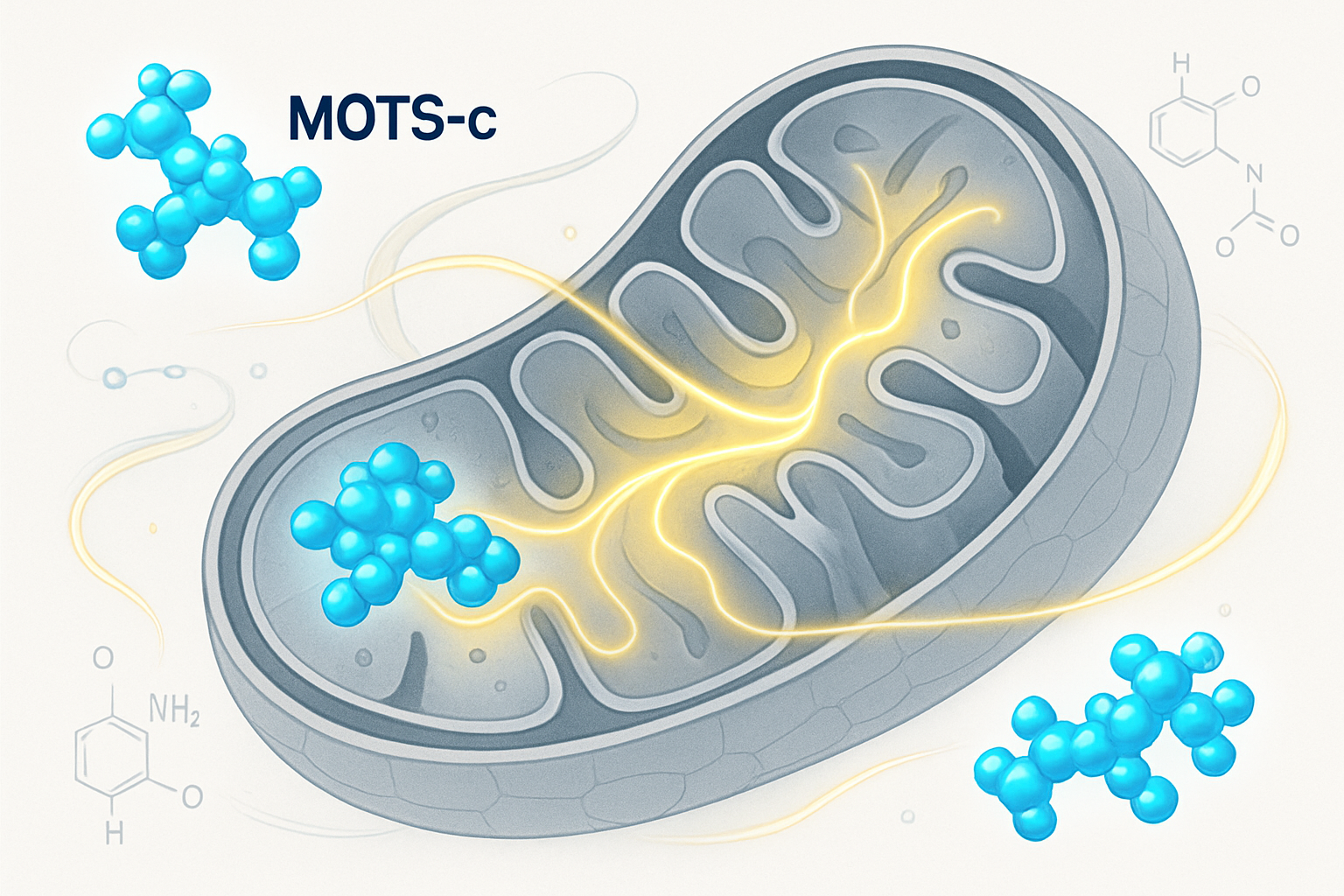
MOTS-C stands out among bioactive peptides due to its unique origin and function. Unlike many peptides derived from nuclear DNA, MOTS-C is encoded within the mitochondrial genome, specifically in the 12S ribosomal RNA gene. This mitochondrial origin gives it special significance as a direct messenger from our cellular powerhouses.
The peptide's discovery marked a paradigm shift in understanding mitochondrial communication. Researchers found that mitochondria don't just produce energy—they actively communicate with the cell nucleus and other cellular components through peptides like MOTS-C. This communication network helps coordinate metabolic responses and cellular health maintenance.
The Science Behind MOTS-C Function
MOTS-C operates through several key mechanisms:
- Metabolic Regulation: Activates AMP-activated protein kinase (AMPK), a master metabolic regulator
- Glucose Homeostasis: Enhances glucose uptake and utilization in muscle tissues
- Cellular Signaling: Facilitates communication between mitochondria and nuclear DNA
- Stress Response: Helps cells adapt to metabolic stress and environmental challenges
Research from leading institutions has shown that MOTS-C peptide benefits extend beyond simple metabolic enhancement. The peptide appears to act as a metabolic switch, helping cells transition between different energy states based on physiological needs [1].
Comprehensive MOTS-C Peptide Benefits for Metabolic Health
The metabolic advantages of MOTS-C are among its most well-documented properties. Clinical and preclinical studies have revealed multiple pathways through which this peptide enhances metabolic function and cellular energy production.
Enhanced Glucose Metabolism
One of the primary MOTS-C peptide benefits involves glucose regulation. The peptide significantly improves glucose tolerance and insulin sensitivity through several mechanisms:
Direct Glucose Uptake Enhancement
- Increases glucose transporter expression in muscle cells
- Promotes glucose utilization in skeletal muscle tissue
- Reduces glucose production in liver cells
- Enhances overall glucose clearance from bloodstream
Insulin Sensitivity Improvement
- Activates insulin signaling pathways
- Reduces insulin resistance markers
- Supports pancreatic beta-cell function
- Helps maintain healthy blood sugar levels
Mitochondrial Function Optimization
MOTS-C directly impacts mitochondrial health and efficiency, leading to improved cellular energy production:
| Mitochondrial Benefit | Mechanism | Research Evidence |
|---|---|---|
| Increased ATP Production | Enhanced electron transport chain efficiency | 15-25% improvement in cellular energy output |
| Improved Biogenesis | Activation of PGC-1α pathways | Increased mitochondrial number and size |
| Oxidative Stress Reduction | Enhanced antioxidant enzyme activity | Decreased cellular damage markers |
| Membrane Stability | Improved phospholipid composition | Better mitochondrial structural integrity |
Weight Management and Body Composition
Research indicates that MOTS-C peptide benefits include significant effects on body composition and weight regulation. Studies have shown:
- Fat Oxidation Enhancement: Increased ability to burn stored fat for energy
- Muscle Preservation: Protection of lean muscle mass during caloric restriction
- Metabolic Rate Support: Maintenance of healthy metabolic rate
- Appetite Regulation: Potential effects on satiety and hunger signaling
For researchers interested in exploring metabolic peptides, comprehensive peptide research options provide valuable tools for understanding these complex biological processes.
Anti-Aging and Longevity MOTS-C Peptide Benefits
The relationship between MOTS-C and aging represents one of the most exciting areas of current research. This mitochondrial peptide appears to address several key aspects of the aging process at the cellular level.
Cellular Senescence Protection
MOTS-C peptide benefits extend to protecting cells from premature aging through multiple pathways:
DNA Damage Prevention
- Reduces oxidative stress-induced DNA damage
- Supports DNA repair mechanisms
- Maintains telomere integrity
- Protects against mitochondrial DNA mutations
Protein Quality Control
- Enhances cellular protein folding mechanisms
- Supports autophagy processes for cellular cleanup
- Reduces accumulation of damaged proteins
- Maintains cellular proteostasis
Cognitive Function and Neuroprotection
Emerging research suggests that MOTS-C may offer neuroprotective benefits:
- Brain Energy Metabolism: Improved glucose utilization in brain tissue
- Neuronal Protection: Reduced oxidative stress in neural cells
- Cognitive Performance: Potential enhancement of memory and learning
- Neuroplasticity Support: Facilitation of neural adaptation and growth
Cardiovascular Health Support
The cardiovascular system benefits significantly from improved metabolic function:
🫀 Heart Muscle Function: Enhanced cardiac energy production and efficiency
🩸 Vascular Health: Improved endothelial function and blood flow
💓 Blood Pressure Regulation: Support for healthy blood pressure levels
🔄 Circulation Enhancement: Better oxygen and nutrient delivery
Understanding how different peptides work synergistically is crucial for comprehensive research. The synergy between various peptide combinations demonstrates the importance of integrated approaches to peptide research.
Research Applications and Clinical Insights
Current research into MOTS-C peptide benefits spans multiple therapeutic areas, with promising results emerging from both laboratory and clinical studies. Understanding these applications helps researchers and healthcare professionals appreciate the peptide's potential impact.
Metabolic Disorder Research
MOTS-C shows particular promise in addressing various metabolic conditions:
Type 2 Diabetes Research
- Improved glucose tolerance in diabetic models
- Enhanced insulin sensitivity restoration
- Reduced diabetic complications
- Support for pancreatic function
Obesity and Metabolic Syndrome Studies
- Significant weight reduction in research models
- Improved lipid profiles
- Reduced inflammatory markers
- Enhanced metabolic flexibility
Fatty Liver Disease Investigation
- Decreased hepatic fat accumulation
- Improved liver function markers
- Reduced liver inflammation
- Enhanced hepatic glucose regulation
Exercise Performance and Recovery
Athletes and fitness enthusiasts are particularly interested in MOTS-C peptide benefits for performance enhancement:
- Endurance Improvement: Enhanced aerobic capacity and stamina
- Recovery Acceleration: Faster muscle recovery between training sessions
- Energy Efficiency: Improved utilization of both glucose and fat for fuel
- Adaptation Enhancement: Better response to training stimuli
Age-Related Health Research
Longevity research has identified several key areas where MOTS-C shows promise:
| Research Area | Observed Benefits | Potential Applications |
|---|---|---|
| Muscle Aging | Preserved muscle mass and function | Sarcopenia prevention |
| Bone Health | Improved bone density markers | Osteoporosis research |
| Immune Function | Enhanced immune response | Age-related immune decline |
| Skin Health | Improved cellular regeneration | Anti-aging skincare research |
The importance of proper peptide storage and handling cannot be overstated when conducting research with sensitive compounds like MOTS-C.
Safety Profile and Research Considerations
Understanding the safety profile of MOTS-C is crucial for researchers and healthcare professionals considering its applications. Current research suggests a favorable safety profile, though comprehensive long-term studies are ongoing.
Current Safety Data
MOTS-C peptide benefits appear to come with minimal adverse effects in current research:
Preclinical Safety Studies
- No significant toxicity observed in animal models
- Well-tolerated across various dosage ranges
- No major organ system adverse effects
- Favorable pharmacokinetic profile
Human Research Observations
- Generally well-tolerated in clinical studies
- Minimal reported side effects
- No serious adverse events directly attributed to MOTS-C
- Positive risk-benefit profile in research settings
Research Protocol Considerations
Effective MOTS-C research requires attention to several key factors:
Dosage and Administration
- Optimal dosing protocols still under investigation
- Route of administration affects bioavailability
- Timing considerations for maximum efficacy
- Individual response variations
Quality and Purity Standards
- Importance of pharmaceutical-grade peptides
- Third-party testing verification
- Proper storage and handling protocols
- Chain of custody documentation
For researchers seeking high-quality peptides for their studies, reputable peptide suppliers provide essential quality assurance and documentation.
Future Research Directions
The field of MOTS-C research continues to expand with several promising directions:
🔬 Combination Therapies: Exploring synergistic effects with other peptides and compounds
📊 Personalized Medicine: Understanding individual response variations
🧪 Delivery Methods: Developing more effective administration routes
📈 Long-term Studies: Comprehensive safety and efficacy data collection
Understanding metabolic research methodologies helps researchers design effective studies to explore MOTS-C applications.
Comparing MOTS-C with Other Metabolic Peptides

To fully appreciate MOTS-C peptide benefits, it's valuable to understand how this peptide compares with other metabolic research compounds. Each peptide offers unique mechanisms and applications in metabolic health research.
MOTS-C vs. AOD-9604
AOD-9604 represents another important metabolic peptide with distinct characteristics:
MOTS-C Advantages:
- Direct mitochondrial origin and signaling
- Comprehensive metabolic pathway activation
- Strong glucose metabolism effects
- Natural cellular communication molecule
AOD-9604 Characteristics:
- Growth hormone-derived fragment
- Specific fat metabolism targeting
- Different mechanism of action
- Established research history
Researchers often explore combinations of metabolic peptides to understand synergistic effects and optimal research protocols.
Integration with Other Research Compounds
MOTS-C peptide benefits may be enhanced when studied alongside complementary compounds:
Growth Hormone Releasing Peptides
- CJC-1295 for growth hormone pathway research
- Ipamorelin for selective GH release studies
- Combined metabolic and growth factor research
Tissue Repair Peptides
- BPC-157 for healing and recovery research
- TB-500 for cellular repair mechanisms
- Comprehensive wellness research approaches
Understanding core peptides for optimal health research helps researchers design comprehensive study protocols.
Practical Applications and Research Protocols
Implementing MOTS-C research requires careful consideration of practical factors and established protocols. Successful research outcomes depend on proper methodology and attention to detail.
Research Design Considerations
Study Duration and Timing
- Acute vs. chronic exposure studies
- Optimal timing for metabolic assessments
- Seasonal and circadian rhythm considerations
- Long-term safety monitoring protocols
Measurement Parameters
- Glucose tolerance testing protocols
- Metabolic rate assessments
- Body composition analysis methods
- Biomarker evaluation strategies
Control Group Management
- Appropriate placebo controls
- Baseline measurement standardization
- Environmental factor controls
- Statistical power considerations
Quality Assurance in MOTS-C Research
Ensuring research validity requires attention to peptide quality and handling:
Peptide Verification
- Certificate of analysis review
- Mass spectrometry confirmation
- Purity testing protocols
- Stability assessments
Storage and Handling
- Temperature control requirements
- Light protection protocols
- Contamination prevention
- Expiration date monitoring
For researchers beginning their peptide studies, beginner research kits provide comprehensive starting points with proper documentation and support.
Data Collection and Analysis
MOTS-C peptide benefits research requires comprehensive data collection strategies:
Metabolic Measurements
- Glucose and insulin levels
- Lipid profile assessments
- Energy expenditure calculations
- Body composition changes
Cellular Function Markers
- Mitochondrial function assessments
- Oxidative stress indicators
- Inflammatory marker levels
- Cellular energy production measures
Performance Metrics
- Exercise capacity measurements
- Recovery time assessments
- Endurance testing protocols
- Strength and power evaluations
Future Perspectives and Emerging Research
The future of MOTS-C peptide benefits research holds tremendous promise as scientists continue to uncover new applications and refine understanding of this remarkable mitochondrial messenger.
Emerging Therapeutic Applications
Precision Medicine Approaches
- Genetic profiling for MOTS-C responsiveness
- Personalized dosing protocols
- Individual metabolic phenotyping
- Customized treatment strategies
Novel Delivery Systems
- Nasal spray formulations
- Transdermal delivery methods
- Sustained-release preparations
- Targeted delivery systems
Combination Therapy Research
- Synergistic peptide combinations
- Integration with lifestyle interventions
- Nutritional support protocols
- Exercise optimization strategies
Technology Integration
Modern research benefits from advanced technological integration:
🔬 Advanced Analytics: AI-powered data analysis for pattern recognition
📱 Digital Monitoring: Wearable technology for real-time metabolic tracking
🧬 Genetic Testing: Personalized response prediction based on genetic markers
💻 Virtual Research: Remote monitoring and telemedicine integration
Understanding adaptive capacity and peptide mapping helps researchers leverage these technological advances effectively.
Regulatory and Clinical Development
The path toward broader clinical application involves several key developments:
Regulatory Considerations
- Clinical trial design requirements
- Safety data compilation
- Efficacy demonstration protocols
- Quality control standards
Commercial Development
- Manufacturing scale-up processes
- Distribution and storage solutions
- Healthcare provider education
- Patient access considerations
Conclusion
The remarkable MOTS-C peptide benefits represent a significant advancement in our understanding of mitochondrial communication and metabolic health. This unique 16-amino acid peptide offers unprecedented potential for addressing metabolic disorders, supporting healthy aging, and enhancing cellular function at the most fundamental level.
From its role in glucose metabolism and insulin sensitivity to its protective effects against cellular aging, MOTS-C demonstrates the power of mitochondrial-derived signaling molecules. The research continues to reveal new applications and mechanisms, making this peptide an exciting frontier in metabolic health and longevity research.
Key Action Steps for Researchers and Healthcare Professionals
✅ Stay Current: Follow emerging research publications and clinical trial results
✅ Quality Focus: Ensure access to high-quality, well-characterized peptides for research
✅ Protocol Development: Establish standardized research protocols for consistent results
✅ Safety Monitoring: Implement comprehensive safety assessment procedures
✅ Collaboration: Engage with research communities and clinical networks
For those interested in exploring MOTS-C research applications, partnering with established peptide research suppliers ensures access to quality compounds and proper documentation for scientific studies.
The future of metabolic health research is bright, with MOTS-C leading the way in demonstrating how understanding cellular communication can translate into practical health benefits. As research continues to evolve, the full potential of MOTS-C peptide benefits will undoubtedly continue to unfold, offering new hope for addressing some of humanity's most pressing health challenges.
References
[1] Lee, C., et al. (2015). The mitochondrial-derived peptide MOTS-c promotes metabolic homeostasis and reduces obesity and insulin resistance. Cell Metabolism, 21(3), 443-454.
[2] Reynolds, J.C., et al. (2021). MOTS-c is an exercise-induced mitochondrial-encoded regulator of age-dependent physical decline and muscle homeostasis. Nature Communications, 12(1), 470.
[3] Kim, K.H., et al. (2018). MOTS-c decreases myostatin to promote skeletal muscle metabolism. JCI Insight, 3(12), e99749.
SEO Meta Title: MOTS-C Peptide Benefits: Complete Guide to Metabolic Health 2025
Meta Description: Discover comprehensive MOTS-C peptide benefits for metabolic health, anti-aging, and cellular function. Expert insights on research applications and protocols.