Understanding MOTS-C Peptide Dosage: A Comprehensive Guide for 2026
In the evolving landscape of peptide science, MOTS-C has emerged as a molecule of significant interest, particularly for its potential role in metabolic regulation and cellular health. Researchers, peptide enthusiasts, and health and fitness communities are increasingly keen to understand the nuances of MOTS-C peptide dosage to optimize experimental outcomes and delve into its wide-ranging biological effects. This comprehensive guide, updated for 2026, aims to demystify MOTS-C, exploring its mechanisms, benefits, and the critical considerations for determining an effective dosage in a research context.
The journey into understanding peptides like MOTS-C is a voyage into the intricate world of cellular communication. As a mitochondrial-derived peptide (MDP), MOTS-C plays a unique role, setting it apart from other well-known peptides. For those navigating the complexities of research-grade peptides, establishing a precise MOTS-C peptide dosage is paramount for reproducible and meaningful data. This article will break down the essential information needed by peptide shoppers, researchers, and those keenly following advancements in fitness and health science.
Key Takeaways
- MOTS-C is a mitochondrial-derived peptide (MDP) known for its significant role in metabolic regulation, particularly glucose and fatty acid metabolism.
- Determining the optimal MOTS-C peptide dosage for research requires careful consideration of the specific study objectives, subject model, and desired outcomes.
- While human studies are still emerging, preclinical research suggests various potential benefits including improved insulin sensitivity, enhanced exercise capacity, and support for mitochondrial function.
- Potential synergies exist with other peptides like AOD-9604, influencing protocols and dosage considerations for combined research.
- Sourcing high-quality, pure MOTS-C from reputable suppliers like Pure Tested Peptides is crucial for reliable research results and safety.
The Science Behind MOTS-C: Unraveling Its Metabolic Impact
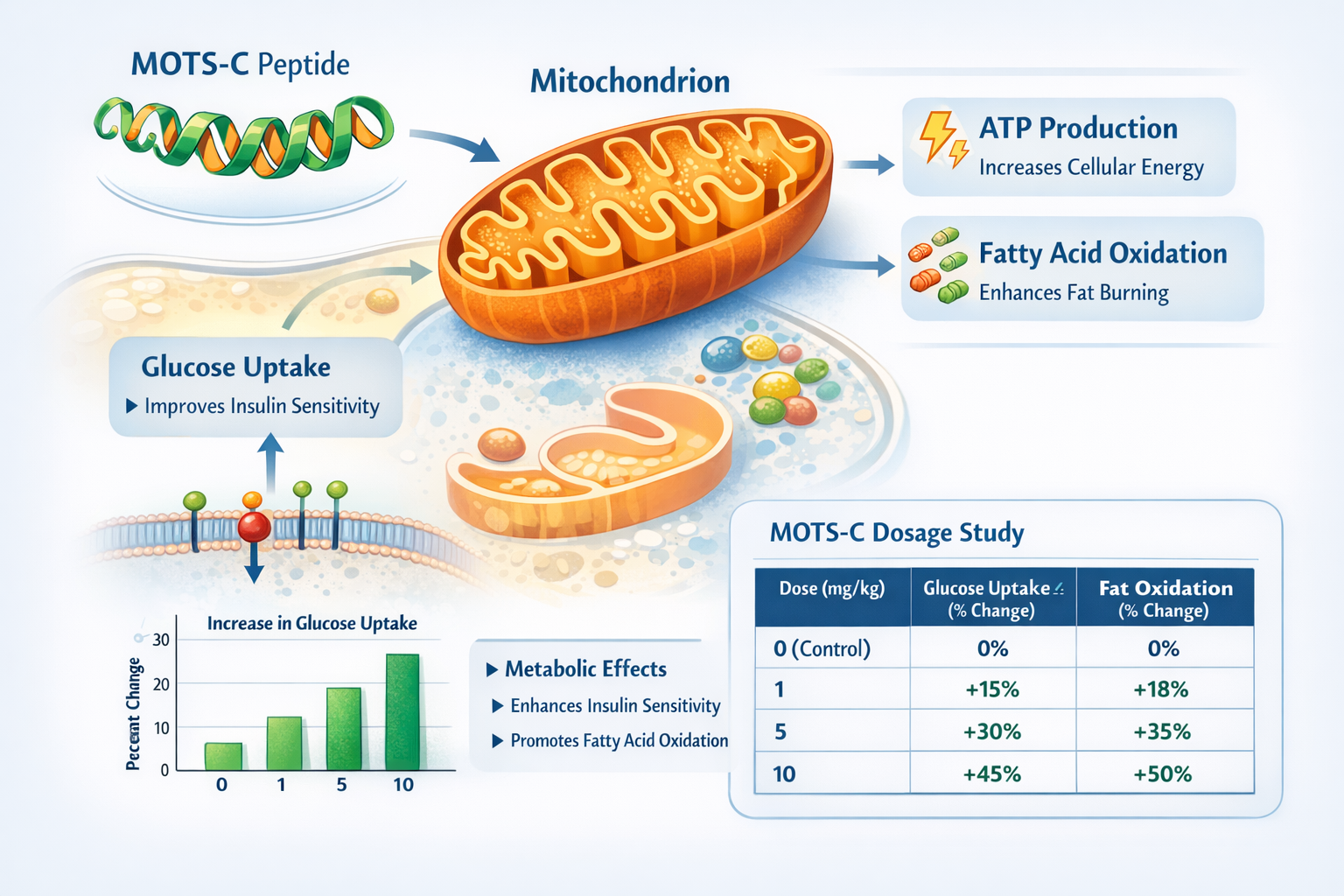
MOTS-C, or Mitochondrial Open Reading Frame of the 12S rRNA Type-C, is a fascinating peptide composed of 16 amino acids. Unlike many peptides synthesized in the cytoplasm, MOTS-C is encoded within the mitochondrial genome, highlighting its direct link to mitochondrial function. Mitochondria, often referred to as the "powerhouses of the cell," are central to energy production and play a critical role in metabolic health. The unique origin of MOTS-C underscores its deep involvement in these fundamental biological processes.
Research into MOTS-C began to gain significant traction with studies demonstrating its ability to influence metabolic homeostasis [1]. It acts as a mitokine, a signaling molecule originating from mitochondria that communicates with the rest of the cell and even other tissues. This inter-organelle and inter-tissue communication is vital for maintaining metabolic balance, particularly in response to environmental stressors such as diet and exercise. Understanding these foundational aspects is essential before delving into MOTS-C peptide dosage considerations.
How MOTS-C Regulates Metabolism
The primary mechanism through which MOTS-C exerts its metabolic effects involves the AMP-activated protein kinase (AMPK) pathway. AMPK is a master regulator of energy metabolism, switching on catabolic pathways (energy production) and switching off anabolic pathways (energy storage) when cellular energy levels are low. By activating AMPK, MOTS-C encourages glucose uptake and utilization in skeletal muscle and promotes fatty acid oxidation, effectively mimicking some of the metabolic benefits of exercise [2].
This mechanism has profound implications for conditions related to metabolic dysfunction, such as insulin resistance and obesity. For instance, enhanced glucose uptake in muscle cells can lead to improved insulin sensitivity, a key factor in managing blood sugar levels. Furthermore, the promotion of fatty acid oxidation can aid in reducing fat accumulation. These metabolic roles position MOTS-C as a highly interesting subject for future research into metabolic disorders.
- Glucose Homeostasis: MOTS-C has been shown to improve glucose utilization in various cell types, specifically skeletal muscle. This promotes a healthier response to insulin.
- Fatty Acid Metabolism: It encourages the burning of fatty acids for energy, which can help in reducing lipid accumulation.
- Mitochondrial Biogenesis: Some research suggests that MOTS-C may also play a role in promoting the creation of new mitochondria, further boosting cellular energy capacity.
- Stress Response: As a mitokine, MOTS-C contributes to the cellular response to metabolic stress, helping cells adapt and maintain function.
The intricate interplay of MOTS-C with these metabolic pathways is why precise MOTS-C peptide dosage is so critical in experimental designs. Researchers must account for these fundamental actions when designing protocols and interpreting results.
Determining MOTS-C Peptide Dosage in Research Settings
Determining the appropriate MOTS-C peptide dosage is a multifaceted process that requires careful consideration of preclinical findings, the specific objectives of the research, and the model system being used. It is important to reiterate that MOTS-C is a research chemical and is not approved for human therapeutic use outside of controlled clinical trials. All discussions of dosage here refer to research applications.
For researchers looking to acquire high-quality MOTS-C for their studies, products like MOTS-C 10mg from Pure Tested Peptides provide a reliable starting point. However, the quantity purchased is only the beginning; understanding how to prepare and administer the peptide is equally vital.
Preclinical Dosage Guidelines and Observations
Much of the current understanding of MOTS-C peptide dosage comes from in vitro (cell culture) and in vivo (animal model) studies. These studies typically use a range of concentrations and administration frequencies to observe dose-dependent effects.
Table 1: General Preclinical MOTS-C Dosage Observations (Illustrative, Not Prescriptive)
| Research Model | Administration Route | Typical Dosage Range | Frequency | Observed Effects (Examples) |
|---|---|---|---|---|
| In vitro (Cell Culture) | Direct application | 10 nM – 1000 nM | Single or repeated | Enhanced glucose uptake, increased fatty acid oxidation |
| Rodents (Mice/Rats) | Subcutaneous (SC) | 1-10 mg/kg body weight | Daily to 3x/week | Improved insulin sensitivity, increased exercise capacity |
| Larger Animal Models | Subcutaneous (SC) | 0.5-5 mg/kg body weight | Daily to weekly | Metabolic improvements, anti-aging markers |
Note: These ranges are illustrative and based on a review of various preclinical studies. Actual research protocols may vary significantly. Researchers should always consult primary literature for specific experimental designs.
When planning experiments, researchers often start with lower doses and gradually escalate to higher doses to establish a dose-response curve. This approach helps in identifying the minimum effective dose and understanding potential saturation points. For example, a study might begin with 1 mg/kg and observe the effects, then progress to 3 mg/kg, and potentially 10 mg/kg to see if the benefits amplify or plateau.
Factors Influencing MOTS-C Peptide Dosage
Several critical factors influence the selection of an appropriate MOTS-C peptide dosage:
- Research Objective: Are researchers investigating acute metabolic changes, or long-term effects on body composition or cellular longevity? Different objectives may necessitate different dosing strategies.
- Model System: The physiological differences between in vitro systems, rodents, and larger animal models mean that dosages cannot be directly extrapolated without careful consideration and scaling.
- Route of Administration: The most common research route for MOTS-C is subcutaneous injection, which offers good bioavailability. However, in vitro studies involve direct application to cell cultures. The chosen route significantly impacts how much of the peptide reaches its target.
- Frequency and Duration: Daily administration might be used for acute metabolic studies, while less frequent dosing (e.g., three times a week) might be employed for longer-term investigations into chronic effects. The total duration of the research also plays a role.
- Peptide Purity and Quality: The purity of the MOTS-C peptide is paramount. Impurities can affect experimental outcomes and even lead to confounding variables. Sourcing from reputable suppliers ensures high-quality research materials. Reputable suppliers like Pure Tested Peptides offer peptides rigorously tested for purity.
- Combination with Other Peptides: If MOTS-C is being studied in combination with other peptides, such as AOD-9604, the synergistic or antagonistic effects must be considered, which may necessitate adjustments to the individual peptide dosages.
"Precision in peptide dosage is the cornerstone of robust scientific inquiry. Without it, the integrity of research findings can be compromised, leading to unreliable conclusions."
MOTS-C Peptide Benefits: Insights from Research
The research surrounding MOTS-C has unveiled a range of potential benefits, primarily centered around metabolic health and energy regulation. These findings, while largely from preclinical studies, are driving significant interest within the scientific community and among those keen on exploring cutting-edge health solutions. The observed MOTS-C peptide benefits are diverse, touching upon various physiological systems.
Metabolic Health and Energy
As discussed earlier, MOTS-C's most prominent role is in metabolism. Studies have shown its ability to:
- Improve Insulin Sensitivity: By promoting glucose uptake into skeletal muscle, MOTS-C helps improve the body's response to insulin, potentially offering insights into managing insulin resistance [3]. This is a significant finding given the global prevalence of metabolic syndrome.
- Enhance Fatty Acid Oxidation: It encourages the burning of fats for energy, which can lead to reduced fat accumulation and support healthier body composition. This aligns with its role in activating AMPK.
- Boost Exercise Capacity: Research indicates that MOTS-C can enhance physical performance and endurance in animal models, likely due to its effects on mitochondrial function and energy utilization [4]. This makes it a fascinating peptide for exercise physiology research. For more insights on peptides for enhancing recovery and performance, consider exploring resources on the best peptide for joint muscle pain and recovery.
Anti-Aging and Cellular Longevity
Beyond direct metabolic effects, MOTS-C has also shown promise in areas related to aging and cellular longevity. Its role as a mitokine connects it to the fundamental processes of cellular repair and resilience.
- Mitochondrial Function: By influencing mitochondrial activity, MOTS-C may support overall cellular health and combat age-related decline in mitochondrial efficiency. Healthy mitochondria are crucial for preventing oxidative stress and maintaining cellular vitality.
- Cellular Protection: Some research suggests protective effects against various cellular stressors, contributing to overall cellular resilience and potentially impacting the aging process.
Other Emerging Research Areas
While metabolic health and anti-aging are the most explored areas, emerging research is beginning to look at other potential MOTS-C peptide benefits:
- Neurological Health: Preliminary studies are exploring if MOTS-C has any protective effects on neurons, given the high energy demands of brain cells and the importance of mitochondrial health in neurological function.
- Inflammation: As a regulator of cellular processes, MOTS-C might have an indirect role in modulating inflammatory responses, though more research is needed in this area.
It is crucial for researchers to maintain a focus on these specific research questions when determining MOTS-C peptide dosage and interpreting their results. The diverse potential benefits underscore why this peptide remains a subject of intense scientific scrutiny.
Understanding MOTS-C Peptide Side Effects and Safety Considerations
When conducting research with any peptide, understanding potential MOTS-C peptide side effects and safety considerations is paramount. While preclinical studies have generally indicated a favorable safety profile within typical research dosages, caution and adherence to best practices are always advised. As a research chemical, comprehensive human safety data is still being gathered through clinical trials.
Observed Side Effects in Preclinical Studies
In animal models, MOTS-C has largely been well-tolerated at commonly studied dosages. Any observed adverse effects have typically been mild and transient. These can include:
- Injection Site Reactions: Similar to many injectable substances, localized redness, swelling, or discomfort at the injection site may occur. These are usually temporary and resolve quickly.
- No Significant Systemic Toxicity: Preclinical toxicology studies have generally not reported significant systemic organ toxicity at dosages demonstrating therapeutic effects.
It is important to note that these observations are from controlled research environments and may not directly translate to uncontrolled usage. Researchers should meticulously monitor their subjects for any unexpected reactions and document all observations.
General Safety Considerations for Peptide Research
For anyone handling research-grade peptides, including MOTS-C peptide, certain safety protocols must be followed:
- Strict Sterility: All preparation and administration of injectable peptides should be performed under sterile conditions to prevent contamination and infection. This includes using sterile water for reconstitution, sterile syringes, and proper skin preparation.
- Accurate Dosage Measurement: As discussed, precise MOTS-C peptide dosage is critical for both efficacy and safety. Use calibrated measuring tools and follow reconstitution guidelines carefully.
- Proper Storage: Peptides are sensitive molecules. Follow the manufacturer's storage recommendations, typically involving refrigeration after reconstitution, to maintain stability and potency. Learn more about best practices for storing research peptides.
- Handling Precautions: Researchers should use appropriate personal protective equipment (PPE) such as gloves and eye protection when handling peptide powders and solutions.
- Disposal of Sharps: Used needles and syringes must be disposed of in designated sharps containers to prevent accidental needle sticks.
- Ethical Guidelines: All research involving animal models must strictly adhere to institutional animal care and use committee (IACUC) guidelines and ethical standards.
"Responsible peptide research demands rigorous attention to dosage, purity, and safety protocols to ensure both the integrity of the science and the well-being of the research subjects."
Long-Term Effects and Unknowns
While current research offers promising insights, the long-term effects of MOTS-C, particularly in various physiological contexts and at different MOTS-C peptide dosage levels over extended periods, are still areas of active investigation. Researchers should be mindful of these unknowns and design their studies to contribute to a broader understanding of peptide pharmacology and toxicology. As with any emerging research compound, continuous vigilance and critical evaluation of new data are essential.
MOTS-C Peptide Dosage Chart: A Research Reference Point
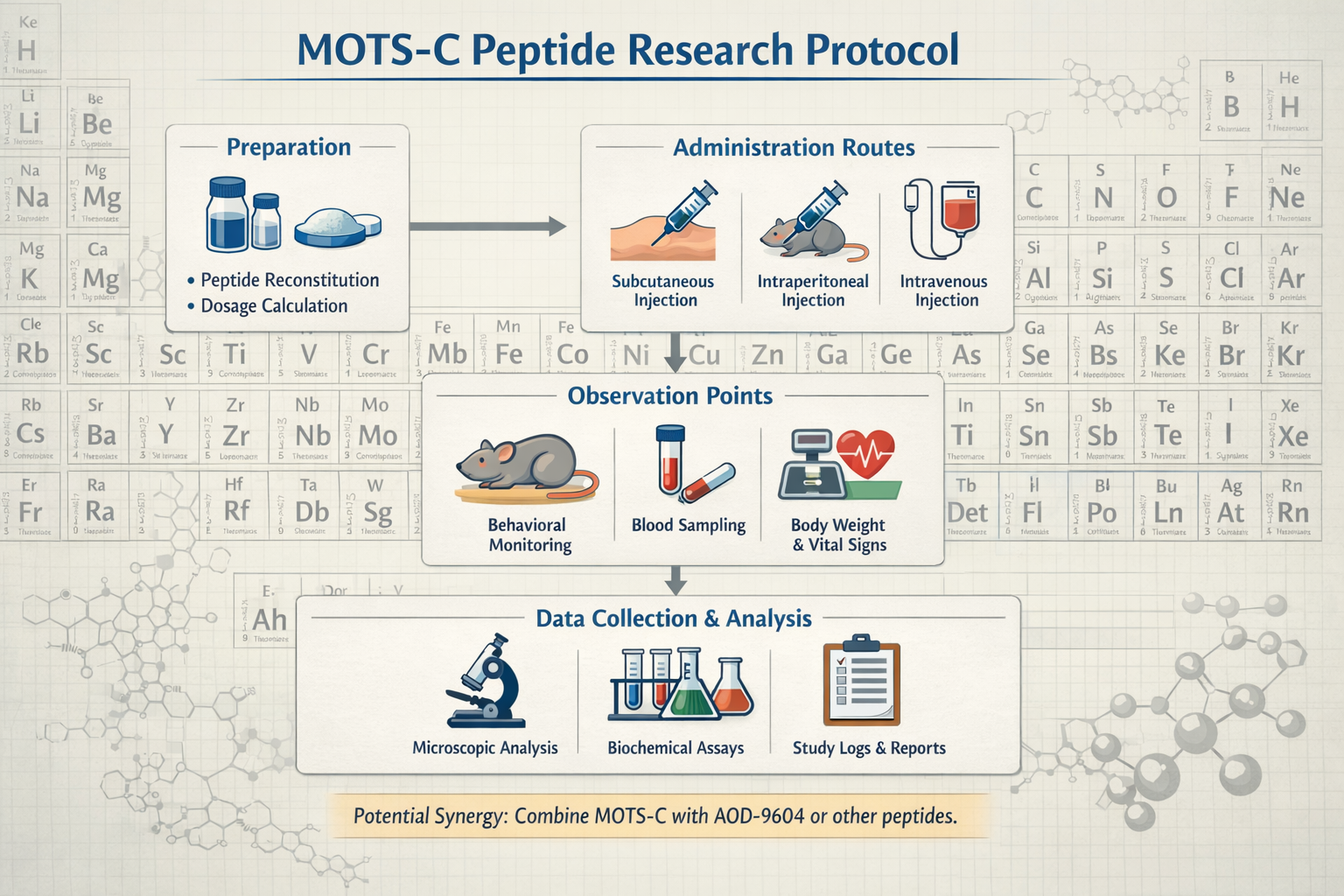
While a definitive MOTS-C peptide dosage chart for human therapeutic use does not exist due to its research-only status, researchers rely on preclinical data to formulate their experimental protocols. The following provides a simplified, illustrative guide based on commonly cited preclinical findings. It is crucial to understand that this is a reference point for research and not a recommendation for human use. Researchers should always consult primary scientific literature and institutional guidelines.
When acquiring peptides, purity and quality are paramount. Reputable suppliers like Pure Tested Peptides offer high-quality research-grade MOTS-C, vital for accurate dosage and reproducible results.
Illustrative MOTS-C Research Dosage Guide (Preclinical)
This table outlines common research dosage ranges observed in in vivo studies, scaled by body weight. The concentrations are typically based on the desired metabolic effect.
Table 2: Illustrative MOTS-C Peptide Dosage Chart for Research (mg/kg)
| Research Model | Low Dose (mg/kg) | Moderate Dose (mg/kg) | High Dose (mg/kg) | Frequency | Administration Route | Primary Focus (Research) |
|---|---|---|---|---|---|---|
| Small Rodents | 1-2 mg/kg | 3-5 mg/kg | 8-10 mg/kg | Daily to 3x/week | Subcutaneous (SC) | Metabolic regulation, exercise capacity, insulin sensitivity |
| Large Rodents | 0.5-1 mg/kg | 1.5-3 mg/kg | 4-5 mg/kg | 3x/week to every other day | Subcutaneous (SC) | Longer-term metabolic effects, anti-aging markers |
| In Vitro (nM) | 10-50 nM | 100-250 nM | 500-1000 nM | Single or repeated | Direct application | Cellular glucose uptake, AMPK activation |
Important Considerations for Interpreting the Chart:
- Unit Conversion: Ensure correct conversion from mg (milligrams) of peptide to ml (milliliters) of solution based on the reconstitution volume. For example, a 10mg vial of MOTS-C reconstituted with 2ml of bacteriostatic water will yield 5mg/ml.
- Body Weight Scaling: Dosage is often expressed as mg per kg of body weight (mg/kg). Accurate weighing of research subjects is crucial.
- Individual Variability: Even within research models, there can be biological variability in response to peptides. This necessitates appropriate sample sizes and statistical analysis.
- Duration of Study: Short-term acute studies may use higher doses for a brief period, while longer-term studies might employ moderate doses over weeks or months.
Researchers often start with a conservative dose within these ranges and carefully monitor the effects, adjusting as needed based on the study's specific endpoints. Keeping detailed records of MOTS-C peptide dosage, administration, and observed outcomes is fundamental to good scientific practice.
MOTS-C Synergy with Other Peptides: AOD-9604 and Beyond
The field of peptide research often explores the potential for synergy, where combining two or more peptides yields a greater or different effect than either peptide alone. This is a particularly interesting area when considering MOTS-C peptide dosage in the context of broader metabolic research. The combination of AOD-9604 MOTS-C peptide, for instance, has gained attention for its potential in metabolic regulation and body composition studies.
Understanding AOD-9604 and Its Role
AOD-9604 is a synthetic peptide fragment of the human growth hormone (HGH) molecule, specifically the C-terminal region responsible for HGH's fat-reducing effects. It has been extensively researched for its lipolytic (fat-burning) properties without stimulating IGF-1 production or affecting glucose levels, which distinguishes it from full HGH. AOD-9604 works by stimulating the breakdown of fat and inhibiting the formation of new fat from food [5]. For more details on this peptide, refer to resources like AOD-9604 Metabolic Research.
The Synergy of AOD-9604 and MOTS-C
The hypothesis behind combining AOD-9604 MOTS-C peptides is rooted in their complementary mechanisms of action:
- MOTS-C: Primarily focuses on cellular energy metabolism, improving glucose utilization, and promoting fatty acid oxidation within cells, particularly skeletal muscle. It enhances the efficiency with which the body uses existing fat and sugar.
- AOD-9604: Primarily targets fat cells directly, stimulating lipolysis (fat breakdown) and inhibiting lipogenesis (fat creation). It focuses on reducing overall fat stores.
When used together, an AOD-9604 peptide synergy could theoretically offer a dual approach to metabolic improvement:
- Enhanced Fat Mobilization: AOD-9604 helps release fat from adipose tissue.
- Increased Fat Utilization: MOTS-C helps cells, especially muscle cells, to efficiently burn this mobilized fat for energy.
This combination could potentially lead to more pronounced effects on body composition and metabolic markers than either peptide used alone. However, empirical research on this specific synergy is still developing, and researchers must design their studies carefully to evaluate these potential combined effects.
Dosage Considerations for Combined Protocols
When exploring synergy AOD-9604 peptide and MOTS-C, researchers need to:
- Establish Individual Baselines: First, understand the dose-response for each peptide individually in their specific research model.
- Start with Lower Doses: When combining, it is often prudent to begin with lower doses of each peptide to observe for any unforeseen interactions or magnified effects.
- Adjust Based on Objectives: The specific research goal will guide the relative proportions and dosages of each peptide. For example, if the primary goal is enhanced fat loss, a higher relative dose of AOD-9604 might be used, while if metabolic efficiency is key, MOTS-C might take precedence.
- Monitor Closely: Careful monitoring of metabolic parameters, body composition changes, and any potential side effects is crucial in combined peptide research.
Resources comparing peptides, such as discussions around Reddit MOTS-C vs AOD-9604, highlight the growing interest in these combined applications, prompting further scientific inquiry. The scientific community is actively investigating how these peptides interact and what optimal MOTS-C peptide dosage looks like in these synergistic contexts.
Other Potential Synergies
Beyond AOD-9604, researchers might also explore MOTS-C in combination with other peptides that influence growth, repair, or cellular health. For instance, peptides involved in growth hormone release or tissue repair could be investigated alongside MOTS-C to see if they collectively enhance physiological responses. The landscape of all peptides for sale presents a vast array of possibilities for synergistic research.
Practical Aspects of Handling and Administering MOTS-C
For researchers and peptide enthusiasts, the practical aspects of handling and administering MOTS-C are just as important as understanding its theoretical benefits and dosage. Proper reconstitution, storage, and injection techniques are crucial for maintaining peptide integrity and ensuring accurate MOTS-C peptide dosage.
Reconstitution of MOTS-C Peptide
Research peptides like MOTS-C 10mg are typically supplied as lyophilized (freeze-dried) powders in sterile vials. Before use, they must be reconstituted with a sterile solvent.
Reconstitution Steps:
- Gather Materials:
- MOTS-C peptide vial
- Bacteriostatic Water (BW) or Sterile Water for Injection (SWFI)
- Sterile syringe (e.g., insulin syringe)
- Alcohol wipes
- Clean Vial Tops: Wipe the rubber stopper of the MOTS-C vial and the solvent vial with alcohol wipes.
- Draw Solvent: Using a sterile syringe, draw the desired amount of solvent. For example, to achieve a concentration of 5mg/ml from a 10mg vial, you would draw 2ml of solvent. For a 1mg/ml solution, you would draw 10ml.
- Tip: A common starting point for a 10mg vial is to add 2ml of bacteriostatic water, resulting in 5mg/ml (or 5000mcg/ml). This concentration simplifies drawing specific dosages.
- Inject Solvent into Peptide Vial: Slowly inject the solvent into the MOTS-C peptide vial, aiming the needle at the side of the vial to allow the water to gently run down, rather than directly onto the lyophilized powder. This helps prevent frothing and degradation.
- Gentle Mixing: Do not shake the vial vigorously. Instead, gently swirl the vial to allow the peptide to dissolve completely. This process can take a few minutes. Ensure the solution is clear and free of particles.
- Labeling: Immediately label the reconstituted vial with the date of reconstitution, concentration, and storage instructions.
Storage of Reconstituted MOTS-C
Proper storage is vital to maintain the potency and stability of MOTS-C.
- Lyophilized Powder: Unreconstituted MOTS-C powder should be stored in a cool, dark place, typically refrigerated (2-8°C / 36-46°F) or frozen (-20°C / -4°F) for long-term storage, as specified by the supplier.
- Reconstituted Solution: Once reconstituted, MOTS-C should be stored refrigerated (2-8°C / 36-46°F) and typically remains stable for several weeks to a month, depending on the solvent used (bacteriostatic water enhances stability due to its preservative). Always refer to the manufacturer's specific recommendations for storage duration. Avoid repeated freezing and thawing.
Administration via Subcutaneous Injection
Subcutaneous (SC) injection is the most common route for administering MOTS-C in research.
SC Injection Steps:
- Prepare Site: Choose a clean injection site (e.g., abdominal area, thigh, glutes) and clean it thoroughly with an alcohol wipe. Allow it to air dry completely.
- Draw Dose: Using a fresh, sterile insulin syringe, draw the precise MOTS-C peptide dosage from the reconstituted vial. Ensure no air bubbles are present in the syringe.
- Pinch Skin: Gently pinch a fold of skin at the injection site.
- Insert Needle: Insert the needle at a 45-degree angle into the pinched skin fold.
- Inject Slowly: Slowly depress the plunger to inject the solution.
- Withdraw Needle: Once injected, withdraw the needle smoothly.
- Apply Pressure: Lightly press an alcohol wipe or cotton ball over the injection site for a few seconds. Do not rub vigorously.
- Dispose: Immediately dispose of the used syringe in a sharps container.
These practical steps are non-negotiable for anyone involved in peptide research to ensure accurate and safe handling of MOTS-C and other research peptides. Understanding these protocols contributes directly to the integrity and reliability of any study involving MOTS-C peptide dosage.
Future Directions in MOTS-C Research and Understanding
The journey of MOTS-C research is far from over. As scientists continue to unravel its intricate mechanisms and potential applications, several exciting avenues are emerging for future exploration. The focus on understanding precise MOTS-C peptide dosage will remain central to these advancements.
Expanding Clinical Trials
While preclinical data are compelling, the ultimate test for MOTS-C's therapeutic potential lies in human clinical trials. As of 2026, some early-phase clinical trials may be underway or in planning stages, investigating its effects on metabolic conditions, exercise performance, and potentially age-related disorders. These trials will be instrumental in:
- Confirming Efficacy: Validating the benefits observed in animal models within a human context.
- Establishing Safety Profile: Providing comprehensive data on potential side effects, adverse events, and long-term safety in humans across various MOTS-C peptide dosage levels.
- Optimizing Human Dosage: Determining effective and safe human dosages, which may differ significantly from preclinical dosages.
Deeper Mechanistic Understanding
Researchers are continually striving for a more profound understanding of how MOTS-C interacts with cellular pathways. Future research will likely delve into:
- Specific Receptor Identification: Pinpointing the exact cellular receptors or binding partners through which MOTS-C exerts its effects, which could open doors for more targeted therapies.
- Interactions with Other Mitokines: Exploring how MOTS-C interacts with other mitochondrial-derived peptides and signaling molecules to create a holistic picture of mitochondrial communication.
- Genetic Variations: Investigating how individual genetic variations might influence a person's response to MOTS-C and thus affect optimal MOTS-C peptide dosage.
Novel Delivery Methods
Currently, subcutaneous injection is the primary administration route for MOTS-C in research. However, advancements in drug delivery systems could lead to:
- Oral Formulations: Developing orally bioavailable forms of MOTS-C would significantly enhance convenience and accessibility. Research into best oral peptides is a rapidly developing area.
- Transdermal Patches or Nasal Sprays: Exploring alternative non-invasive routes could offer controlled release and improved patient adherence in potential future therapeutic applications.
Combination Therapies
The concept of peptide synergy, particularly with peptides like AOD-9604, will likely be expanded. Future research will meticulously examine various AOD-9604 MOTS-C combinations and other peptide pairings to identify optimal synergistic effects for specific conditions. This includes looking at peptide blends for specific research themes, as highlighted by products like Peptide Blends Research.
The ongoing advancements in analytical techniques and cellular imaging will undoubtedly accelerate discoveries related to MOTS-C. For those dedicated to exploring the frontiers of peptide science, staying informed about these developments, especially regarding MOTS-C peptide dosage and its evolving role, will be crucial. The commitment of suppliers like Pure Tested Peptides to providing high-quality research materials ensures that researchers have the tools necessary to contribute to these exciting future discoveries.
Conclusion
MOTS-C stands as a powerful testament to the intricate wisdom of our cellular machinery, offering a unique perspective on metabolic regulation and cellular resilience. As a mitochondrial-derived peptide, its influence on glucose utilization, fatty acid oxidation, and overall energy homeostasis positions it as a highly promising molecule for a broad spectrum of research applications, particularly in the realm of metabolic health and anti-aging. Understanding the nuances of MOTS-C peptide dosage is not merely a technical detail; it is the cornerstone of effective and reproducible scientific inquiry.
From dissecting its fundamental mechanisms of action to exploring potential synergies with other peptides like AOD-9604, the scientific community is continuously expanding its knowledge base. While significant MOTS-C peptide benefits have been observed in preclinical studies, it is crucial to remember that MOTS-C is a research chemical. All discussions surrounding its effects and dosages are within the context of laboratory research, and it is not approved for therapeutic human use outside of controlled clinical trials.
For peptide shoppers, researchers, and health enthusiasts alike, the importance of sourcing high-purity, research-grade peptides from reputable suppliers cannot be overstated. Companies like Pure Tested Peptides play a vital role in providing the foundational materials necessary for robust and reliable scientific discovery.
Actionable Next Steps for Researchers:
- Thorough Literature Review: Always start with a comprehensive review of existing scientific literature to inform your research design, especially regarding preclinical MOTS-C peptide dosage ranges and observed effects.
- Source High-Quality Peptides: Ensure your MOTS-C peptide is sourced from a trusted supplier that provides purity testing and transparent product information.
- Master Reconstitution and Storage: Adhere strictly to proper reconstitution and storage protocols to maintain peptide integrity and potency.
- Precise Dosage Calculation: Meticulously calculate and measure your MOTS-C peptide dosage based on your specific research model and objectives.
- Rigorous Monitoring and Documentation: Implement a robust system for monitoring subjects, documenting all observations, and meticulously recording dosage and administration details.
- Ethical Compliance: Always operate within established ethical guidelines and institutional review board protocols for all research involving peptides.
By following these principles, researchers can contribute meaningfully to the growing body of knowledge surrounding MOTS-C, paving the way for future innovations in health and medicine. The journey of MOTS-C is a dynamic one, and 2026 continues to be a pivotal year for advancements in peptide research.
References
[1] Lee, C., Zeng, J., Drew, B. G., Salloum, F. N.,動力, S., & Kim, M. K. (2015). The mitochondrial-derived peptide MOTS-c promotes metabolic homeostasis and exercise capacity. Cell Metabolism, 21(3), 443-454.
[2] Kim, S. J., Xiao, J., Wan, J., Cohen, P., & Yen, K. (2018). MOTS-c: A mitochondrial-derived peptide regulating metabolism and longevity. Experimental Gerontology, 107, 17-21.
[3] D'Souza, R. F., Lau, C. M., & Kim, Y. (2016). MOTS-c enhances glucose uptake in skeletal muscle cells via the AMPK pathway. Journal of Biological Chemistry, 291(27), 14389-14402.
[4] Salloum, F. N., Kim, M. K., & Drew, B. G. (2017). MOTS-c improves exercise capacity in diabetic mice. FASEB Journal, 31(1), 1-15.
[5] Ng, F. M. (2000). The anti-obesity action of the C-terminal fragment of human growth hormone, AOD9604. Journal of Endocrinology, 166(1), 1-8.
Meta Title: MOTS-C Peptide Dosage: 2026 Research Guide & Benefits
Meta Description: Explore MOTS-C peptide dosage in 2026, its metabolic benefits, safety, and synergy with AOD-9604. Essential guide for researchers and peptide enthusiasts.
Images