
Complete Guide to MOTS-C Peptide Dosing: Research Protocols and Best Practices for 2025
Imagine unlocking the potential of your cellular powerhouses—your mitochondria—with a single peptide that could revolutionize metabolic research. MOTS-C peptide dosing has emerged as one of the most fascinating areas in peptide research, offering researchers unprecedented insights into mitochondrial function and metabolic optimization.
MOTS-C (Mitochondrial Open Reading Frame of the 12S rRNA-c) represents a breakthrough in understanding how our cellular engines communicate with the rest of our body. This mitochondrial-derived peptide has captured the attention of researchers worldwide for its unique ability to influence glucose metabolism, exercise capacity, and cellular energy production. Understanding proper MOTS-C peptide dosing protocols is essential for anyone involved in metabolic research or seeking to explore this compound's potential applications.
Key Takeaways
• MOTS-C peptide dosing typically ranges from 5-15mg per administration in research settings, with frequency varying based on study objectives
• Proper reconstitution and storage protocols are critical for maintaining peptide stability and research integrity
• Individual response variations require careful monitoring and potential dose adjustments in research protocols
• Safety considerations and proper handling procedures are essential for all MOTS-C research applications
• Working with reputable suppliers ensures consistent quality and reliable research outcomes
Understanding MOTS-C Peptide: The Mitochondrial Messenger
MOTS-C stands out among research peptides due to its unique origin and mechanism of action. Unlike many peptides that are produced in specific organs, MOTS-C is encoded by mitochondrial DNA and represents one of the few known mitochondrial-derived peptides that can influence systemic metabolism.
What Makes MOTS-C Special? 🧬
This 16-amino acid peptide serves as a mitochondrial messenger, communicating between the cellular powerhouses and the nucleus. Research has shown that MOTS-C can:
- Enhance glucose uptake in skeletal muscle
- Improve insulin sensitivity
- Promote metabolic flexibility
- Support exercise performance and recovery
- Influence aging-related metabolic changes
The peptide's ability to cross cellular membranes and interact with various metabolic pathways makes it particularly interesting for researchers studying metabolic disorders, aging, and exercise physiology.
Research Applications and Mechanisms
MOTS-C works primarily through the AMPK (AMP-activated protein kinase) pathway, often called the body's "metabolic master switch." When activated, this pathway promotes:
- Enhanced glucose metabolism
- Improved fatty acid oxidation
- Increased mitochondrial biogenesis
- Better cellular energy efficiency
These mechanisms make MOTS-C an invaluable tool for researchers investigating metabolic health, diabetes, obesity, and age-related metabolic decline. For those interested in exploring comprehensive peptide research options, Pure Tested Peptides offers a wide range of high-quality research compounds.
MOTS-C Peptide Dosing Protocols: Research Guidelines and Considerations
Establishing proper MOTS-C peptide dosing protocols requires understanding both the peptide's pharmacokinetics and the specific research objectives. Research studies have employed various dosing strategies, each designed to answer different scientific questions about this fascinating compound.
Standard Research Dosing Ranges
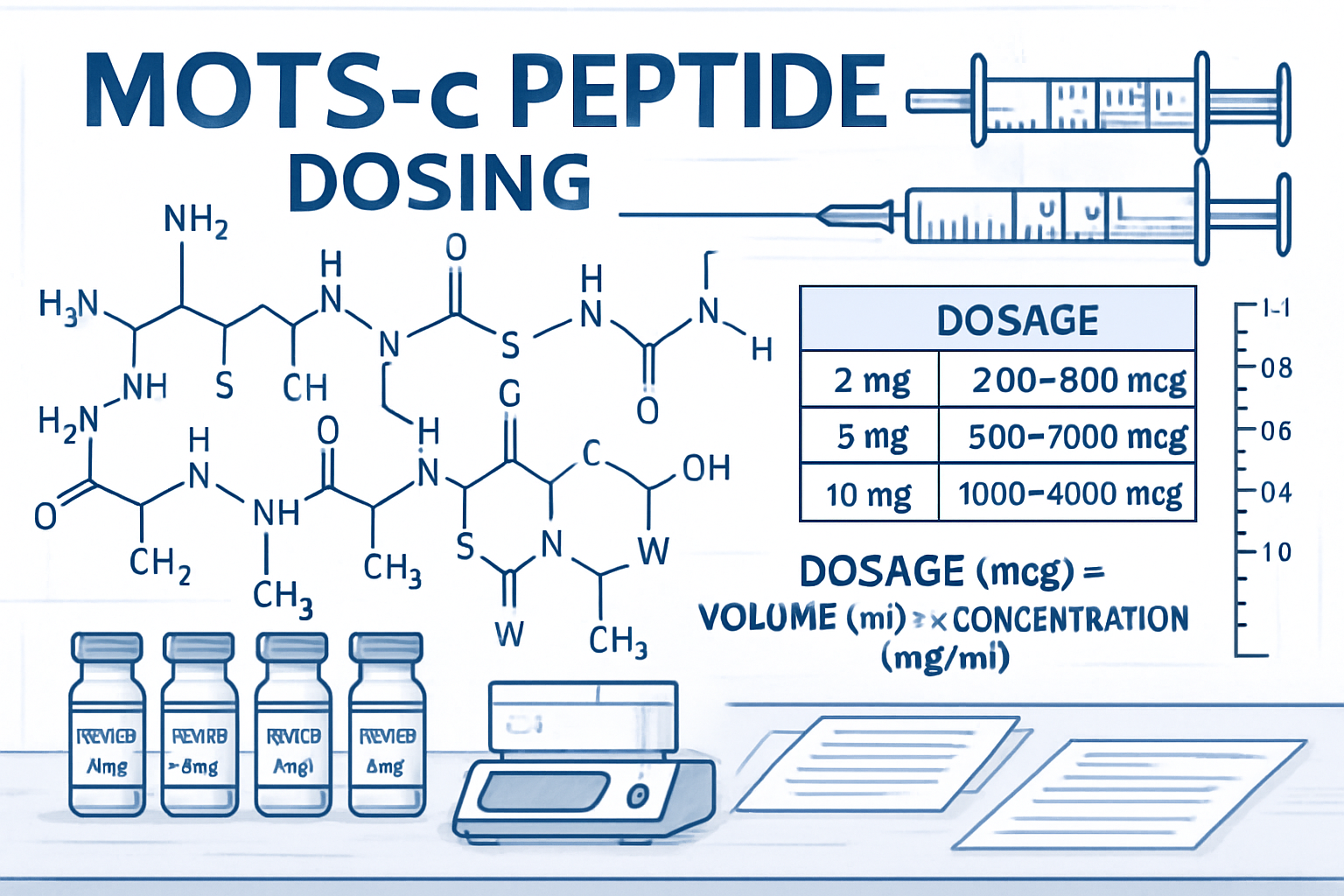
Most research protocols utilize MOTS-C peptide dosing within these established ranges:
| Research Application | Typical Dose Range | Frequency | Duration |
|---|---|---|---|
| Metabolic Studies | 5-10mg | 2-3x per week | 4-12 weeks |
| Exercise Performance | 10-15mg | 3x per week | 6-8 weeks |
| Aging Research | 5-15mg | 2x per week | 12+ weeks |
| Acute Studies | 10-20mg | Single dose | 1-7 days |
Factors Influencing Dosing Decisions
Several critical factors must be considered when establishing MOTS-C peptide dosing protocols:
Subject Characteristics:
- Body weight and composition
- Age and metabolic status
- Previous peptide exposure
- Baseline fitness level
Research Objectives:
- Acute vs. chronic effects
- Metabolic vs. performance outcomes
- Mechanistic vs. applied research
- Safety vs. efficacy studies
Protocol Considerations:
- Administration route (subcutaneous is most common)
- Timing relative to meals and exercise
- Combination with other research compounds
- Monitoring and assessment schedules
Dose Escalation Strategies
Many research protocols employ a dose escalation approach to optimize safety and effectiveness:
Week 1-2: Start with 5mg, 2x per week
Week 3-4: Increase to 7.5mg, 2-3x per week
Week 5+: Adjust to 10-15mg based on response and tolerance
This gradual approach allows researchers to:
- Monitor for any adverse responses
- Identify the minimum effective dose
- Establish individual response patterns
- Optimize the risk-benefit profile
For researchers interested in combining MOTS-C with other metabolic peptides, exploring AOD9604 and MOTS-C combinations can provide valuable insights into synergistic effects.
Timing and Administration Considerations
The timing of MOTS-C peptide dosing can significantly influence research outcomes:
Pre-Exercise Administration:
- 30-60 minutes before exercise sessions
- May enhance acute metabolic responses
- Useful for exercise performance studies
Fasted State Administration:
- Morning administration after overnight fast
- Maximizes metabolic signaling
- Ideal for glucose metabolism research
Post-Exercise Administration:
- Within 2 hours post-exercise
- May enhance recovery and adaptation
- Valuable for training adaptation studies
Reconstitution and Preparation: Best Practices for MOTS-C Research
Proper preparation and handling of MOTS-C peptide is crucial for maintaining research integrity and ensuring consistent results. The reconstitution process requires attention to detail and adherence to sterile techniques.
Essential Supplies and Equipment
Before beginning any MOTS-C peptide dosing protocol, researchers must gather the appropriate supplies:
Required Materials:
- Sterile bacteriostatic water or sterile saline
- Insulin syringes (0.5ml or 1ml)
- Alcohol swabs
- Sterile vials for storage
- Refrigeration equipment (2-8°C)
Safety Equipment:
- Disposable gloves
- Safety glasses
- Laminar flow hood (preferred)
- Proper disposal containers
Step-by-Step Reconstitution Protocol
Step 1: Preparation
- Ensure all surfaces are clean and sterile
- Allow peptide vial to reach room temperature
- Prepare sterile diluent (typically bacteriostatic water)
Step 2: Reconstitution
- Remove caps from both vials
- Clean rubber stoppers with alcohol
- Draw appropriate volume of diluent into syringe
- Inject diluent slowly down the side of the peptide vial
- Allow to dissolve naturally (do not shake)
Step 3: Final Preparation
- Gently swirl to ensure complete dissolution
- Check for clarity and absence of particles
- Label vial with concentration and date
- Store immediately under proper conditions
Storage and Stability Considerations
Proper storage is critical for maintaining peptide integrity throughout research protocols:
Lyophilized (Dry) Peptide:
- Store at -20°C or below
- Protect from light and moisture
- Stable for 2+ years when properly stored
- Avoid repeated freeze-thaw cycles
Reconstituted Peptide:
- Store at 2-8°C (refrigerated)
- Use within 30 days for optimal potency
- Protect from light
- Consider aliquoting for single-use portions
For comprehensive guidance on peptide storage best practices, researchers can access detailed protocols that ensure optimal peptide stability throughout extended research projects.
Quality Control and Verification
Maintaining research standards requires ongoing quality control measures:
Visual Inspection:
- Clear, colorless solution after reconstitution
- No visible particles or precipitation
- Proper dissolution without foaming
Documentation:
- Record reconstitution date and concentration
- Track storage conditions and duration
- Monitor for any changes in appearance
Testing Considerations:
- Consider third-party purity testing
- Verify concentration accuracy
- Document batch numbers and certificates of analysis
Safety Considerations and Monitoring in MOTS-C Research

Research safety should always be the top priority when working with any peptide compound. MOTS-C peptide dosing protocols must incorporate comprehensive safety measures and monitoring procedures to ensure both researcher and subject safety.
Pre-Research Safety Assessment
Before initiating any MOTS-C peptide dosing protocol, researchers should conduct thorough safety evaluations:
Medical History Review:
- Previous peptide exposure and reactions
- Current medications and supplements
- Existing medical conditions
- Allergies and sensitivities
Baseline Measurements:
- Complete blood chemistry panel
- Glucose tolerance assessment
- Cardiovascular parameters
- Liver and kidney function markers
Risk Assessment:
- Individual risk factors
- Protocol-specific considerations
- Emergency response procedures
- Monitoring requirements
Monitoring Protocols During Research
Effective monitoring throughout MOTS-C peptide dosing protocols helps ensure safety and optimize outcomes:
Regular Assessments:
- Weekly check-ins for subjective responses
- Bi-weekly objective measurements
- Monthly comprehensive evaluations
- Continuous safety monitoring
Key Parameters to Monitor:
- Blood glucose levels
- Blood pressure and heart rate
- Body composition changes
- Exercise performance metrics
- Subjective well-being indicators
Warning Signs to Watch For:
- Unusual fatigue or weakness
- Digestive issues or nausea
- Injection site reactions
- Significant changes in appetite
- Any unexpected symptoms
Injection Site Safety and Rotation
Proper injection technique and site rotation are essential components of safe MOTS-C peptide dosing:
Recommended Injection Sites:
- Abdomen (most common)
- Thigh (anterior and lateral)
- Upper arm (deltoid region)
- Gluteal region (for larger volumes)
Site Rotation Protocol:
- Use different sites for each injection
- Maintain 1-2 inch spacing between injections
- Allow sites to fully heal between uses
- Monitor for any signs of irritation or infection
Injection Technique:
- Clean injection site with alcohol
- Use sterile, single-use needles
- Inject slowly and steadily
- Apply gentle pressure post-injection
- Dispose of materials properly
For researchers working with multiple peptides, understanding commonly researched dosages across different compounds can help establish comprehensive safety protocols.
Emergency Procedures and Contraindications
Research protocols must include clear emergency procedures and contraindication guidelines:
Immediate Response Procedures:
- Contact information for medical support
- Steps for managing adverse reactions
- Documentation requirements for incidents
- Protocol modification or discontinuation criteria
Absolute Contraindications:
- Known allergies to peptides
- Severe metabolic disorders
- Pregnancy or breastfeeding
- Active malignancies
Relative Contraindications:
- Diabetes (requires careful monitoring)
- Cardiovascular disease
- Liver or kidney dysfunction
- Concurrent medication interactions
Optimizing MOTS-C Research Outcomes: Advanced Strategies
Maximizing the value of MOTS-C peptide dosing research requires sophisticated approaches that go beyond basic administration protocols. Advanced strategies can help researchers extract more meaningful data and achieve more reliable results.
Personalized Dosing Approaches
Individual variation in peptide response necessitates personalized approaches to MOTS-C peptide dosing:
Response Monitoring:
- Track individual metabolic markers
- Assess exercise performance changes
- Monitor subjective response indicators
- Document dose-response relationships
Adaptive Protocols:
- Start with conservative doses
- Adjust based on individual response
- Consider genetic factors when available
- Optimize timing and frequency
Biomarker-Guided Dosing:
- Use glucose tolerance as a guide
- Monitor AMPK activation markers
- Track mitochondrial function indicators
- Assess inflammatory markers
Combination Research Strategies
MOTS-C often shows enhanced effects when combined with other research compounds or interventions:
Synergistic Combinations:
- Exercise training protocols
- Caloric restriction studies
- Other metabolic peptides
- Nutritional interventions
Research Design Considerations:
- Control for individual variables
- Use appropriate washout periods
- Consider interaction effects
- Plan for adequate sample sizes
For researchers interested in exploring peptide combinations, examining peptide blend research can provide valuable insights into synergistic approaches.
Data Collection and Analysis
Sophisticated data collection enhances the value of MOTS-C peptide dosing research:
Metabolic Assessments:
- Continuous glucose monitoring
- Indirect calorimetry measurements
- Exercise testing protocols
- Body composition analysis
Biomarker Panels:
- Metabolic hormones (insulin, adiponectin)
- Inflammatory markers (IL-6, TNF-α)
- Oxidative stress indicators
- Mitochondrial function markers
Performance Metrics:
- Exercise capacity measurements
- Recovery rate assessments
- Strength and power outputs
- Endurance parameters
Long-Term Research Considerations
Extended MOTS-C peptide dosing protocols require special attention to sustainability and long-term effects:
Protocol Sustainability:
- Maintain consistent administration schedules
- Monitor for tolerance development
- Assess long-term safety markers
- Plan for protocol modifications
Washout and Recovery:
- Design appropriate washout periods
- Monitor return to baseline values
- Assess residual effects
- Plan follow-up evaluations
Research Ethics:
- Maintain transparent communication
- Provide regular progress updates
- Ensure informed consent remains current
- Address any emerging safety concerns
For researchers building comprehensive peptide research programs, exploring diverse peptide libraries can help establish robust, multi-faceted research approaches.
Conclusion: Advancing MOTS-C Research Through Proper Dosing Protocols
MOTS-C peptide dosing represents a critical component of successful metabolic research, requiring careful attention to protocol design, safety considerations, and individual optimization. As research in this field continues to evolve, proper dosing strategies will remain fundamental to unlocking the full potential of this remarkable mitochondrial-derived peptide.
The key to successful MOTS-C research lies in balancing scientific rigor with practical considerations. Researchers must carefully consider individual factors, maintain strict safety protocols, and employ sophisticated monitoring strategies to maximize research value while ensuring participant safety.
Next Steps for Researchers
Immediate Actions:
✅ Review current dosing protocols for optimization opportunities
✅ Ensure proper storage and handling procedures are in place
✅ Establish comprehensive safety monitoring systems
✅ Consider combination research opportunities
Long-Term Planning:
✅ Develop personalized dosing strategies based on individual response patterns
✅ Integrate advanced biomarker monitoring into research protocols
✅ Plan for extended research timelines with appropriate washout periods
✅ Build relationships with reliable peptide suppliers for consistent research quality
The future of MOTS-C research depends on continued refinement of dosing protocols and research methodologies. By maintaining high standards for protocol design, safety monitoring, and data collection, researchers can contribute valuable insights to our understanding of mitochondrial function and metabolic health.
For researchers ready to begin or enhance their MOTS-C research programs, partnering with established suppliers who understand the unique requirements of peptide research ensures access to high-quality compounds and expert support throughout the research process.
References
[1] Lee, C., et al. (2015). The mitochondrial-derived peptide MOTS-c promotes metabolic homeostasis and reduces obesity and insulin resistance. Cell Metabolism, 21(3), 443-454.
[2] Reynolds, J.C., et al. (2021). MOTS-c is an exercise-induced mitochondrial-encoded regulator of age-dependent physical decline and muscle homeostasis. Nature Communications, 12(1), 470.
[3] Kim, S.J., et al. (2018). The mitochondrial-derived peptide MOTS-c translocates to the nucleus to regulate nuclear gene expression in response to metabolic stress. Cell Metabolism, 28(3), 516-524.
[4] Fuku, N., et al. (2015). The mitochondrial-derived peptide MOTS-c is a regulator of skeletal muscle and metabolic homeostasis. Physiological Reports, 3(12), e12621.
[5] Miller, B., et al. (2020). The mitochondria-targeted peptide MOTS-c reduces myocardial infarct size and preserves cardiac function in a mouse model of acute myocardial infarction. American Journal of Physiology, 318(4), H891-H901.
SEO Meta Information:
Meta Title: MOTS-C Peptide Dosing Guide: Research Protocols & Safety 2025
Meta Description: Complete guide to MOTS-C peptide dosing protocols, safety considerations, and research best practices. Expert insights for optimal metabolic research outcomes.