Unlocking Metabolic Potential: A Deep Dive into the MOTS-c Peptide Stack in 2026 Research
The pursuit of optimizing human metabolic health and performance continues to drive cutting-edge research in the peptide science community. Among the most intriguing discoveries is the mitochondrial-derived peptide MOTS-c, a remarkable molecule gaining significant attention for its profound effects on cellular energy, insulin sensitivity, and exercise capacity. As we navigate 2026, researchers are increasingly exploring the synergistic potential of combining MOTS-c with other peptides, creating what is known as a mots c peptide stack. This comprehensive article will explore the scientific underpinnings of MOTS-c, its reported benefits, the rationale behind stacking it with other research peptides, and crucial considerations for laboratory researchers.
Key Takeaways
- MOTS-c is a mitochondrial-derived peptide crucial for metabolic homeostasis, exhibiting potential benefits for insulin sensitivity, exercise capacity, and longevity.
- A mots c peptide stack often combines MOTS-c with other research peptides like CJC-1295, Ipamorelin, or BPC-157 to explore enhanced effects on metabolism, body composition, and tissue repair.
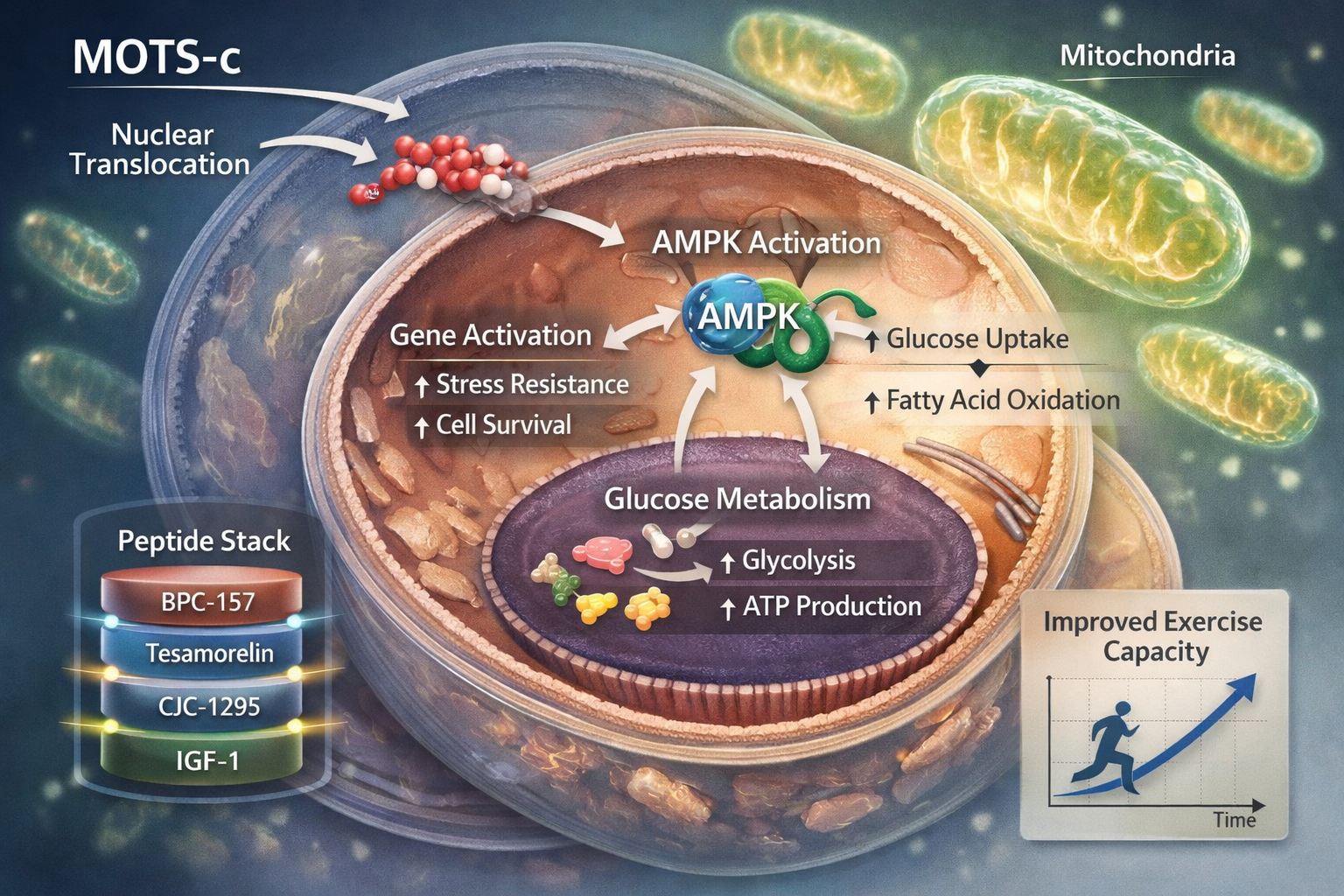
- Research suggests MOTS-c works by regulating gene expression during metabolic stress, activating pathways like AMPK, and improving mitochondrial function.
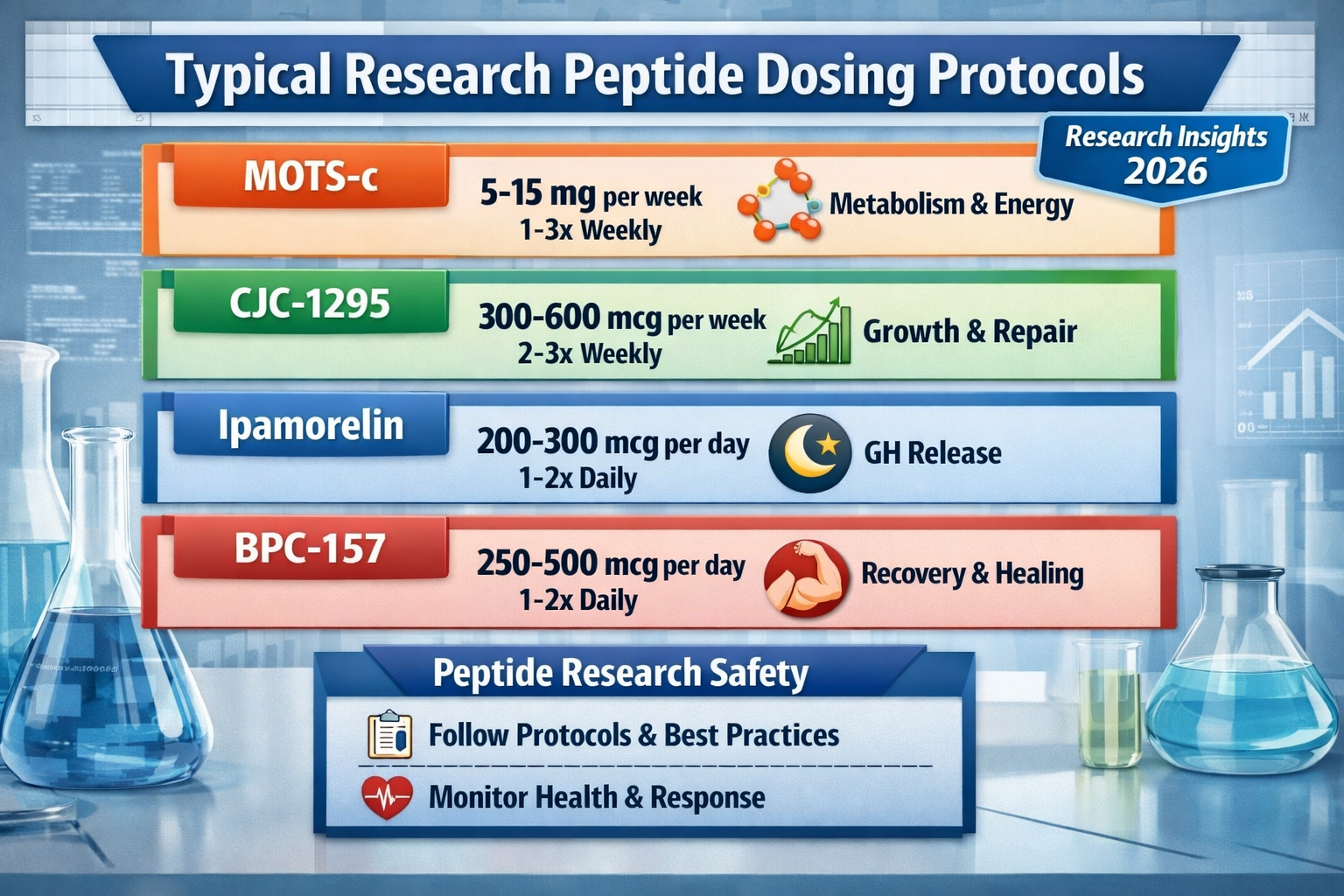
- Typical research protocols for MOTS-c involve subcutaneous administration of 5-15 mg, 2-3 times per week, though optimal dosing for various stacks is still under investigation.
- While animal studies show a favorable safety profile, MOTS-c and its stacks are experimental research compounds not approved for human therapeutic use as of 2026.
Understanding MOTS-c: The Mitochondrial Powerhouse Peptide
MOTS-c, an acronym for Mitochondrial Open Reading Frame of the 12S rRNA-c, is a fascinating 16-amino acid peptide derived from the mitochondrial genome. Unlike many peptides synthesized in the nucleus, MOTS-c is unique in its mitochondrial origin, highlighting its intimate connection with cellular energy production and metabolic regulation. Its discovery has opened new avenues for understanding and potentially addressing metabolic dysfunction.
The Science Behind MOTS-c's Action
At a fundamental level, MOTS-c is a key player in maintaining metabolic homeostasis. Preclinical studies have illuminated several critical mechanisms through which MOTS-c exerts its effects:
- Mitochondrial Function Enhancement: MOTS-c is deeply involved in regulating mitochondrial activity, which is the powerhouse of the cell. By improving mitochondrial efficiency, it helps cells produce energy more effectively. This enhancement is crucial for overall cellular health and metabolic balance.
- AMPK Pathway Activation: Research indicates that MOTS-c can activate the AMP-activated protein kinase (AMPK) pathway. AMPK is often referred to as a "master regulator" of metabolism, involved in glucose uptake, fatty acid oxidation, and energy balance. Activation of this pathway is a hallmark of improved metabolic health.
- Gene Expression Regulation: During periods of metabolic stress, MOTS-c has been observed to translocate from the mitochondria to the nucleus. Once in the nucleus, it regulates the expression of adaptive nuclear genes. This regulation particularly affects genes involved in antioxidant response and glucose metabolism, helping the cell cope with stressors and maintain optimal function.
- Skeletal Muscle Insulin Sensitivity: A significant area of research revolves around MOTS-c's impact on insulin sensitivity. Studies published as recently as 2024 have demonstrated that MOTS-c administration improved skeletal muscle insulin sensitivity and reduced age-dependent insulin resistance in animal models. This finding suggests a promising role for MOTS-c in research related to metabolic syndrome and type 2 diabetes.
"MOTS-c operates at the core of cellular energy metabolism, influencing everything from glucose uptake to mitochondrial health. Its role as an exercise mimetic is particularly intriguing for research into age-related metabolic decline."
Investigating MOTS-c's Broader Metabolic Impact
Beyond its direct cellular mechanisms, MOTS-c has demonstrated several broader metabolic effects in preclinical research:
- Exercise-Mimetic Properties: One of the most compelling aspects of MOTS-c is its ability to mimic some of the benefits of exercise. Studies have shown that it can improve physical performance and endurance capacity even without concurrent exercise training. This makes it a subject of great interest for research into conditions involving age-related physical decline or impaired mobility.
- Prevention of Diet-Induced Obesity and Insulin Resistance: In preclinical models, MOTS-c administration has been shown to prevent diet-induced obesity and insulin resistance. This occurs by improving mitochondrial function and increasing glucose uptake in skeletal muscle tissue, reinforcing its potential in metabolic research.
- Regulation of Methionine-Folate Cycle and Purine Biosynthesis: The peptide's mechanism involves regulating these critical pathways, which are essential for cellular energy metabolism. This broad influence may explain its wide-ranging metabolic effects observed in various studies.
- Longevity Research: Interestingly, MOTS-c levels naturally decline with age. Genetic variants in the mitochondrial 12S rRNA gene that affect MOTS-c expression have been associated with longevity in human population studies, particularly in Japanese cohorts, pointing towards its role in healthy aging research.
For researchers interested in exploring the foundational principles of peptide research and development, insights into adaptive capacity and peptide mapping can provide valuable context for understanding MOTS-c's intricate actions.
The Synergy of a MOTS-c Peptide Stack
While MOTS-c itself offers compelling research avenues, its potential is often explored in combination with other peptides. A mots c peptide stack involves combining MOTS-c with other research compounds to investigate synergistic effects, aiming for enhanced outcomes in metabolic health, body composition, and recovery. The rationale is that different peptides target distinct pathways, and their combined action might yield more comprehensive benefits than any single peptide alone.
Common Peptides in a MOTS-c Peptide Stack
Several peptides are commonly considered when formulating a mots c peptide stack for research purposes, each bringing its own set of potential benefits:
-
Growth Hormone Secretagogues (GHSs): Peptides like CJC-1295 and Ipamorelin are frequently stacked with MOTS-c. These GHSs work by stimulating the body's natural production of growth hormone (GH).
- CJC-1295: A growth hormone-releasing hormone (GHRH) analog that enhances GH secretion.
- Ipamorelin: A selective growth hormone secretagogue that stimulates GH release without significantly impacting other hormones like cortisol or prolactin.
- Synergistic Potential: When combined with MOTS-c, researchers speculate on synergistic effects on fat loss, lean muscle preservation, and improved body composition. The metabolic enhancement from MOTS-c could potentially amplify the anabolic and lipolytic effects of increased GH. While anecdotal reports in research communities are positive, controlled human clinical trials validating these specific combinations remain limited as of early 2026.
- For those interested in exploring various peptide blends for research, understanding the individual components is key.
-
BPC-157: Known as Body Protection Compound-157, this peptide is widely researched for its regenerative and protective properties across various body systems.
- Research Focus: BPC-157 is studied for its potential in tissue repair, wound healing, gut health, and anti-inflammatory effects.
- Stacking Rationale: In online research communities, stacking MOTS-c with BPC-157 is reported for combined metabolic and tissue repair benefits. The idea is to leverage MOTS-c's metabolic optimization alongside BPC-157's restorative actions, potentially supporting overall cellular resilience and recovery. However, it is crucial to note that this specific combination lacks extensive peer-reviewed clinical evidence and remains largely experimental in the research setting. Researchers can find more information on BPC-157 and TB500 for broader wound healing insights.
-
Tesamorelin: Another GHRH analog, Tesamorelin is specifically approved for HIV-associated lipodystrophy. Its research applications often focus on reducing visceral adipose tissue.
- Stacking Rationale: Combining Tesamorelin with MOTS-c could potentially offer a dual approach to metabolic fat management, with MOTS-c addressing overall metabolic efficiency and insulin sensitivity, and Tesamorelin targeting specific fat deposits.
-
Retatrutide: A newer multimodal agonist targeting GLP-1, GIP, and glucagon receptors, Retatrutide is being researched for its potent effects on weight management and glucose control.
- Can you stack MOTS-c with Retatrutide? The question of whether one can stack MOTS-c with Retatrutide is a burgeoning area of inquiry. A retatrutide mots c stack or mots c retatrutide stack would theoretically aim to combine the profound weight loss and glycemic control benefits of Retatrutide with the exercise-mimetic and mitochondrial-enhancing properties of MOTS-c. The concept is to provide a comprehensive metabolic overhaul, addressing both macronutrient metabolism and cellular energy production. While highly speculative and purely for research, the potential for such a powerful combination of mots c and retatrutide stack is certainly being discussed in advanced research circles. Researchers exploring advanced metabolic research may also be interested in Cagrilintide synergy with GLP1 for comparison.
Considerations for a MOTS-c Peptide Stack
When designing research protocols for a mots c peptide stack, several factors warrant careful consideration:
- Research Goals: What specific biological pathways or outcomes are being investigated? This will dictate the choice of peptides to include in the stack.
- Mechanistic Understanding: A thorough understanding of each peptide's mechanism of action is crucial to predict potential synergies or antagonisms.
- Dosing and Administration: Each peptide has its own typical research dosing parameters and administration routes. When combining, researchers must carefully consider how these interact.
- Safety Profile: While MOTS-c has a favorable safety profile in animal studies, combining it with other compounds means monitoring for any unforeseen effects becomes even more critical.
"The idea behind a mots c peptide stack is to leverage the unique strengths of multiple peptides to create a more comprehensive effect on metabolic health, body composition, and cellular resilience in a controlled research setting."
Research Protocols and Dosing Considerations for MOTS-c Stacks
Establishing appropriate research protocols and understanding typical dosing parameters are paramount for any scientific investigation involving peptides, especially when considering a mots c peptide stack. Given that these are research-grade compounds and not approved for human therapeutic use as of 2026, all protocols must adhere strictly to ethical research guidelines and be conducted in a controlled laboratory environment.
Typical MOTS-c Research Dosing
For MOTS-c specifically, preclinical and some early clinical research contexts have explored various dosing ranges. The typical dosing protocol for MOTS-c in research settings ranges from 5-15 mg administered subcutaneously 2-3 times per week.
Key Research Dosing Parameters for MOTS-c:
| Parameter | Typical Research Range | Notes
This section delves into various aspects of 5 amino 1 mq as a critical component in the pursuit of enhanced cellular and metabolic research.
The search for novel compounds capable of optimizing cellular function and potentially mitigating aspects of age-related decline is a continuous endeavor in scientific research. Among the compounds attracting considerable interest in recent years is 5-amino-1-methylquinoline, commonly referred to as 5 amino 1 mq. This fascinating molecule is not a peptide but rather a small molecule that has shown promise in modulating cellular metabolism, particularly concerning the enzyme nicotinamide N-methyltransferase (NNMT).
The Mechanism of 5-amino-1-MQ
5-amino-1-MQ operates primarily by inhibiting NNMT. NNMT is an enzyme found in various tissues, including fat cells and the liver. Its primary role is to methylate nicotinamide (a form of vitamin B3), thereby reducing the pool of available nicotinamide for the salvage pathway that synthesizes NAD+. NAD+ (nicotinamide adenine dinucleotide) is a critical coenzyme involved in hundreds of cellular processes, including energy metabolism, DNA repair, and gene expression.
By inhibiting NNMT, 5 amino 1 mq is hypothesized to:
- Increase NAD+ Levels: A reduction in NNMT activity is thought to preserve nicotinamide, allowing more of it to be converted into NAD+. Higher intracellular NAD+ levels are associated with improved mitochondrial function, enhanced cellular energy production, and activation of sirtuins, a class of proteins known for their roles in cellular longevity and metabolic regulation.
- Modulate Fat Metabolism: Research suggests that NNMT plays a role in promoting fat accumulation and inflammation in adipose tissue. By inhibiting NNMT, 5-amino-1-MQ could potentially influence adipocyte metabolism, leading to reduced fat storage and improved metabolic health markers in preclinical models.
- Influence Gene Expression: Through its impact on NAD+ and subsequent activation of NAD+-dependent enzymes (like sirtuins), 5 amino 1 mq may indirectly influence gene expression patterns related to metabolism, inflammation, and cellular stress responses.
For detailed research into the mechanisms and applications of this compound, exploring 5-amino-1MQ peptides for sale can provide valuable insights into its availability and research context.
Research Applications of 5-amino-1-MQ
Researchers are investigating 5-amino-1-MQ for its potential in several key areas:
- Metabolic Health: Given its impact on NAD+ metabolism and fat accumulation, 5 amino 1 mq is being studied for its potential role in addressing aspects of metabolic dysfunction, including obesity, insulin resistance, and fatty liver disease in animal models.
- Aging Research: The connection between NAD+ levels and the aging process is a robust area of scientific inquiry. By potentially boosting NAD+, 5 amino 1 mq is of interest in research focused on mitigating age-related decline and promoting healthy cellular function.
- Mitochondrial Biogenesis: Enhanced NAD+ levels can stimulate mitochondrial biogenesis, the process by which new mitochondria are formed. This could lead to improved energy production and cellular resilience.
Dosing and Administration in Research
The typical 5 amino 1 mq dosing in preclinical studies has varied depending on the animal model and the specific research objective. It is often administered orally in research settings.
General Research Considerations for 5-amino-1-MQ:
- Oral Bioavailability: 5 amino 1 mq capsules are a common form for administration in research due to their oral bioavailability.
- Dose Range: Preclinical research often utilizes doses that, when extrapolated, would be in the range of 50-150 mg per day for larger animal models, though these are approximations and not human recommendations. The 5 amino 1 mq dosage is highly dependent on the specific study design and animal model.
- Combination Research: Researchers often explore combining 5-amino-1-MQ with other compounds. For example, the combination of nmn + 5 amino 1-mq is of significant interest. NMN (nicotinamide mononucleotide) is a direct precursor to NAD+, and combining it with an NNMT inhibitor like 5-amino-1-MQ could theoretically create a synergistic effect, both providing the building blocks for NAD+ and reducing its degradation. This approach aims to maximize intracellular NAD+ levels for enhanced metabolic benefits.
Further details on research with this compound can be found by searching for 5-amino-1mq.
5 Amino 1 MQ Reddit and Community Discussions
Online communities, such as those found on Reddit, often feature discussions among research enthusiasts about various experimental compounds, including 5 amino 1 mq peptide-related insights, although 5 amino 1 mq is not a peptide but a small molecule. These discussions can offer anecdotal reports and hypotheses, but it is crucial to remember that they are not a substitute for rigorous scientific research and should be approached with caution. Researchers rely on peer-reviewed literature and controlled studies for reliable data.
The exploration of compounds like 5 amino 1 mq represents a dynamic area in metabolic research. By targeting key enzymatic pathways, researchers aim to uncover novel strategies for improving cellular health and addressing complex metabolic challenges. As of 2026, investigations continue to deepen our understanding of this molecule's full potential.
Safety Profile and Regulatory Status for MOTS-c and Stacks (2026)
Understanding the safety profile and regulatory status of research compounds is critical for any institution or individual involved in scientific exploration. As of 2026, MOTS-c and the various peptides it might be stacked with are strictly for research use only and are not approved by the Food and Drug Administration (FDA) or similar regulatory bodies for any medical indications in humans.
MOTS-c Safety in Preclinical Research
In animal studies, MOTS-c has generally exhibited a favorable safety profile with minimal reported adverse effects. These studies often involve controlled environments and meticulous monitoring, which is standard practice in preclinical research. However, it is paramount to emphasize that "favorable safety profile in animal studies" does not directly translate to "safe for human therapeutic use." Long-term human safety data for MOTS-c remains limited, and comprehensive clinical trials in humans are still necessary to fully establish its safety and efficacy for any potential medical application.
Safety Considerations for a MOTS-c Peptide Stack
When researching a mots c peptide stack, the safety considerations become more complex due to the interaction of multiple compounds. Each peptide within the stack (e.g., CJC-1295, Ipamorelin, BPC-157, or even the theoretical mots c retatrutide stack) carries its own individual research safety profile and potential side effects, which could be altered when combined.
Key Safety Points for Research Stacks:
- Individual Peptide Profiles: Researchers must be intimately familiar with the known preclinical safety data for each component of the stack.
- Interaction Effects: The most significant unknown in stacking is the potential for unforeseen interactions between peptides. These interactions could lead to additive, synergistic, or even antagonistic effects on biological systems, including potential adverse reactions. Rigorous observation and data collection are essential.
- Purity and Sourcing: The purity of research peptides is crucial. Impurities can introduce unexpected variables and potential hazards. Sourcing from reputable suppliers, such as Pure Tested Peptides, that provide third-party testing results is vital to ensure the quality and purity of the research materials. Learn more about building a diverse peptide library.
- Administration Routes: Most research peptides are administered via subcutaneous injection. Proper aseptic technique is necessary to prevent infection and other complications at the injection site.
- Dosing Accuracy: Precise dosing is critical. Accidental overdosing or underdosing of any component in a mots c peptide stack could skew research results or potentially lead to adverse outcomes in animal models.
Regulatory Status in 2026
As of the current year, 2026, MOTS-c and its various research stacks are classified as research chemicals. This means:
- Not FDA-Approved: They have not undergone the extensive clinical trials required by the FDA or other national health authorities (e.g., EMA in Europe) to be approved as drugs for treating, diagnosing, curing, or preventing any disease in humans.
- For Laboratory Use Only: Their sale and use are restricted to legitimate scientific research and laboratory settings. They are not intended for human consumption or self-administration.
- Strict Guidelines: Researchers must adhere to local, national, and institutional guidelines regarding the handling, storage, and disposal of research chemicals. Best practices for storing research peptides are critical for maintaining product integrity and safety.
Researchers exploring the potential of peptides like the 5 amino 1 mq peptide should always consult official scientific literature and regulatory guidelines. The ongoing investigations into MOTS-c and its combinations underscore the dynamic nature of peptide science, but also highlight the importance of responsible and ethical research practices.
Future Research Directions for the MOTS-c Peptide Stack
The burgeoning interest in MOTS-c and the conceptualization of a mots c peptide stack point towards several exciting avenues for future research. As of 2026, the scientific community is keen to delve deeper into both the isolated and combinatorial effects of these powerful molecules.
Unraveling Synergistic Mechanisms
A primary focus for future research will be to rigorously investigate the precise mechanistic synergies when MOTS-c is combined with other peptides. For instance, how does MOTS-c's ability to enhance insulin sensitivity interact at a molecular level with the growth hormone-releasing effects of CJC-1295 or Ipamorelin? Are there shared or convergent pathways that lead to enhanced fat metabolism or lean muscle preservation? Controlled studies using advanced cellular and molecular biology techniques will be crucial to answer these questions definitively.
Furthermore, exploring the reported benefits of a mots c peptide stack with compounds like BPC-157 will require dedicated research to understand if MOTS-c's metabolic improvements genuinely enhance BPC-157's tissue repair capabilities or vice versa. This could involve examining markers of inflammation, cellular regeneration, and metabolic markers simultaneously in preclinical models.
Optimizing Dosing and Administration in Research
While typical research dosing for individual peptides exists, the optimal dosing strategy for a mots c peptide stack remains largely unexplored. Future research will likely focus on:
- Dose-Response Relationships: Establishing precise dose-response curves for combinations of peptides in various animal models to identify optimal concentrations for specific research outcomes.
- Timing and Frequency: Investigating whether specific timing or frequency of administration for each component in a stack yields superior results. For example, is there an ideal sequence for administering MOTS-c and a GHS?
- Alternative Delivery Methods: While subcutaneous injection is common, research into alternative, less invasive delivery methods for peptide stacks could also emerge, though this is often a long-term endeavor.
Broader Metabolic and Longevity Research
Given MOTS-c's association with longevity and metabolic health, future research on the mots c peptide stack will undoubtedly expand into broader areas, including:
- Age-Related Metabolic Disorders: Further investigating the potential of these stacks in mitigating age-related insulin resistance, sarcopenia (muscle loss), and other metabolic declines in older animal models.
- Mitochondrial Health Biomarkers: Identifying and validating new biomarkers that can accurately measure improvements in mitochondrial function and cellular energy efficiency following the administration of MOTS-c stacks.
- Genetic and Environmental Interactions: Exploring how genetic predispositions and environmental factors (like diet and exercise) interact with the effects of a mots c peptide stack. This could lead to more personalized research strategies.
Clinical Translation Challenges
While promising, it is critical to acknowledge the significant hurdles in translating preclinical research on MOTS-c and its stacks to human therapeutic applications. Future research will need to address these challenges, which include:
- Comprehensive Human Clinical Trials: Conducting rigorous, multi-phase human clinical trials to establish safety, efficacy, and optimal dosing in human populations. This is a lengthy and costly process.
- Regulatory Pathways: Navigating complex regulatory approval processes, which require extensive data on pharmacology, toxicology, and manufacturing.
- Standardization: Developing standardized manufacturing and quality control processes to ensure consistent product purity and potency, especially for complex peptide blends.
The field of peptide research, particularly concerning advanced combinations like the mots c peptide stack, is dynamic and holds immense promise. However, disciplined scientific inquiry, adherence to ethical standards, and a cautious approach to interpretation are paramount as we move forward in 2026 and beyond. Researchers looking to contribute to this field can explore resources from Pure Tested Peptides to ensure high-quality research materials.
Conclusion
The mots c peptide stack represents a fascinating frontier in metabolic and cellular research as we progress through 2026. MOTS-c, a unique mitochondrial-derived peptide, has demonstrated remarkable potential in preclinical studies for enhancing insulin sensitivity, improving exercise capacity, and fostering metabolic homeostasis. Its ability to activate critical pathways like AMPK and regulate gene expression underscores its foundational role in cellular energy management.
When combined with other powerful research peptides such as CJC-1295, Ipamorelin, BPC-157, or even the speculative Retatrutide, researchers are exploring complex synergies aimed at optimizing body composition, accelerating recovery, and mitigating age-related metabolic decline. These stacks are designed to leverage the distinct yet complementary mechanisms of action of each peptide, pushing the boundaries of what is possible in metabolic science.
It is crucial to reiterate that all discussions regarding the mots c peptide stack and its components are strictly within the context of laboratory research. As of 2026, these compounds are not approved for human therapeutic use by regulatory bodies like the FDA. Researchers must adhere to stringent ethical guidelines, maintain meticulous records, and source high-purity peptides from reputable suppliers like Pure Tested Peptides to ensure the validity and safety of their investigations.
The future of peptide research, particularly for advanced combinations like the mots c peptide stack, holds immense promise. Continued dedicated scientific inquiry, focusing on rigorous preclinical and eventual clinical studies, will be essential to fully elucidate their mechanisms, optimize their application in research models, and ultimately understand their potential impact on health and longevity.
Actionable Next Steps for Researchers:
- Deep Dive into Literature: Continuously review the latest peer-reviewed scientific publications on MOTS-c and other relevant peptides to stay abreast of new findings and refine research hypotheses.
- Rigorous Protocol Design: Develop well-controlled experimental designs that meticulously account for variables, dosing, and measurement of outcomes when studying peptide stacks.
- Quality Sourcing: Prioritize sourcing research-grade peptides from suppliers that provide comprehensive Certificates of Analysis (CoA) and third-party testing to ensure purity and potency. You can explore a wide range of all peptides for sale from trusted providers.
- Ethical Compliance: Ensure all research adheres to the highest ethical standards and complies with all relevant institutional, national, and international guidelines for the handling and use of research chemicals.
- Collaborative Research: Consider collaborations with other research institutions to pool resources, expertise, and accelerate the pace of discovery in this complex and promising field.