Peptide NAD: Unlocking the Science Behind Cellular Energy and Longevity
Imagine a molecule so fundamental to life that without it, your cells would cease to function within seconds. Peptide NAD represents one of the most exciting frontiers in cellular health research, offering unprecedented insights into how we might enhance energy production, combat aging, and optimize human performance at the most basic biological level.
Key Takeaways
- Peptide NAD is a crucial coenzyme involved in over 500 enzymatic reactions that power cellular energy production
- NAD+ levels naturally decline with age, potentially contributing to various age-related health challenges
- Research suggests peptide supplementation may help restore optimal NAD+ levels and support cellular function
- Multiple delivery methods exist for NAD+ enhancement, each with unique benefits and applications
- Understanding peptide NAD can help consumers make informed decisions about cellular health optimization
What is Peptide NAD and Why Does It Matter? 🧬
Peptide NAD (Nicotinamide Adenine Dinucleotide) stands as one of the most essential molecules in human biology. This remarkable coenzyme exists in every living cell, serving as a critical player in energy metabolism, DNA repair, and cellular communication.
NAD exists in two primary forms: NAD+ (the oxidized form) and NADH (the reduced form). The constant cycling between these two states powers the fundamental processes that keep cells alive and functioning optimally. Without adequate NAD+ levels, cells cannot produce energy efficiently, leading to a cascade of biological challenges.
Research has revealed that NAD+ levels decline significantly as we age – dropping by approximately 50% every 20 years after age 40. This decline correlates with many age-related changes in cellular function, making peptide NAD supplementation an area of intense scientific interest.
The importance of maintaining optimal NAD+ levels extends beyond basic cellular function. This coenzyme activates sirtuins, a family of proteins often called "longevity genes" that help regulate cellular stress responses and DNA repair mechanisms.
The Science Behind Peptide NAD Function
Understanding how peptide NAD works requires examining its role in cellular metabolism. NAD+ serves as an electron carrier in the process of cellular respiration, helping convert nutrients into usable energy in the form of ATP (adenosine triphosphate).
Key Biological Pathways 🔬
Energy Production: NAD+ plays a central role in glycolysis, the citric acid cycle, and the electron transport chain – the three main pathways that cells use to extract energy from food.
DNA Repair: The enzyme PARP (Poly ADP-ribose polymerase) requires NAD+ to function properly. PARP helps repair damaged DNA, making adequate NAD+ levels crucial for maintaining genetic integrity.
Sirtuin Activation: Sirtuins are NAD+-dependent enzymes that regulate various cellular processes including inflammation, stress resistance, and metabolic function. Research into peptide applications has shown promising results in this area.
Circadian Rhythm Regulation: NAD+ levels naturally fluctuate throughout the day, helping regulate the body's internal clock and sleep-wake cycles.
The decline in NAD+ levels with aging appears to contribute to reduced energy production, impaired DNA repair, and decreased cellular resilience. This has led researchers to investigate various methods of restoring optimal NAD+ levels through supplementation.
Factors Affecting NAD+ Levels
Several factors can influence natural NAD+ production and utilization:
| Factor | Impact on NAD+ | Description |
|---|---|---|
| Age | ⬇️ Decreases | Natural decline begins in early adulthood |
| Exercise | ⬆️ Increases | Physical activity stimulates NAD+ production |
| Caloric Restriction | ⬆️ Increases | Mild stress response enhances NAD+ synthesis |
| Alcohol | ⬇️ Decreases | Metabolism depletes NAD+ stores |
| Sleep Deprivation | ⬇️ Decreases | Disrupts natural NAD+ cycling |
| Chronic Stress | ⬇️ Decreases | Increases NAD+ consumption |
Peptide NAD Supplementation Methods and Delivery Systems
The challenge with peptide NAD supplementation lies in effectively delivering this molecule to cells where it's needed most. NAD+ itself cannot easily cross cell membranes, leading researchers to develop various precursors and delivery methods.
Primary NAD+ Precursors
Nicotinamide Riboside (NR): A form of vitamin B3 that cells can convert into NAD+. Research suggests NR supplementation can effectively raise NAD+ levels in various tissues.
Nicotinamide Mononucleotide (NMN): Another NAD+ precursor that has shown promise in research studies. NMN appears to be readily absorbed and converted to NAD+ in cells.
Nicotinic Acid (Niacin): The original form of vitamin B3, though it can cause flushing in some individuals at higher doses.
Nicotinamide (Nam): A form of B3 that doesn't cause flushing but may have feedback inhibition effects at high doses.
Delivery Methods for Optimal Absorption
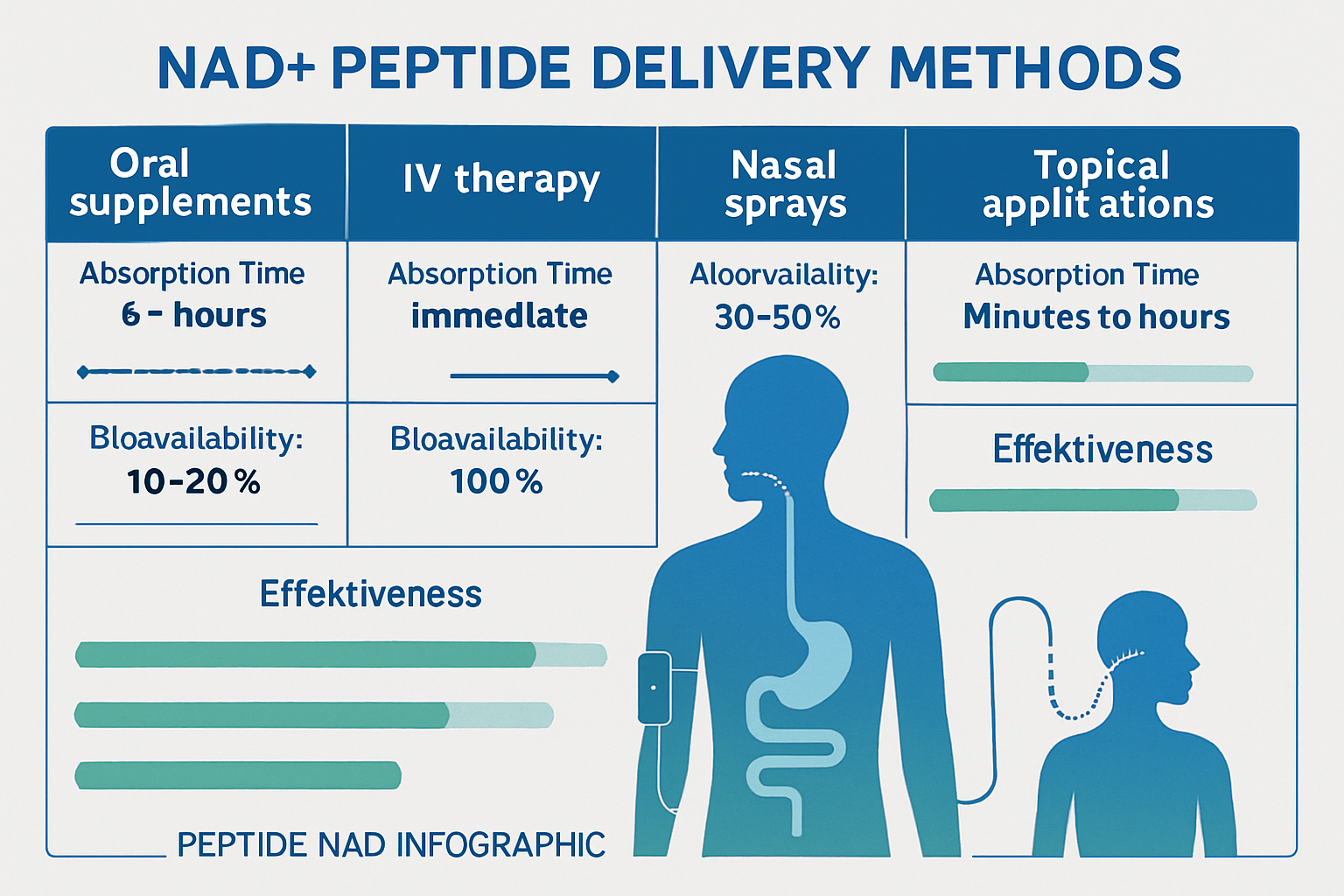
Different delivery systems offer varying levels of bioavailability and effectiveness:
Oral Supplements: The most common and convenient method, though absorption can vary significantly between individuals. Quality peptide sources ensure proper formulation and purity.
Sublingual Administration: Allows for direct absorption through mucous membranes, potentially bypassing digestive system limitations.
Nasal Spray Delivery: Provides rapid absorption and may allow direct access to the brain through nasal passages.
Topical Applications: Emerging research explores transdermal delivery methods for localized NAD+ enhancement.
Intravenous Therapy: The most direct method, though typically reserved for clinical settings due to complexity and cost.
Research Applications and Current Studies 📊
The field of peptide NAD research continues to expand rapidly, with studies investigating applications across multiple areas of human health and performance.
Metabolic Health Research
Studies have examined how NAD+ supplementation affects metabolic function, including glucose metabolism, insulin sensitivity, and fat oxidation. Research suggests that restoring NAD+ levels may help support healthy metabolic function as we age.
One area of particular interest involves the relationship between NAD+ and metabolic flexibility – the body's ability to efficiently switch between different fuel sources. Metabolic research with peptides has shown promising preliminary results.
Cognitive Function Studies
The brain has exceptionally high energy demands, making adequate NAD+ levels crucial for optimal cognitive function. Research has investigated whether NAD+ supplementation might support:
- Memory formation and recall
- Focus and attention span
- Processing speed
- Neuroprotection against age-related changes
Exercise Performance Research
Athletes and fitness enthusiasts have shown interest in NAD+ supplementation for its potential effects on:
- Energy production during exercise
- Recovery time between training sessions
- Muscle function and endurance
- Adaptation to training stress
Research into peptide combinations has explored how NAD+ precursors might work synergistically with other compounds.
Cellular Aging Studies
Perhaps the most exciting area of peptide NAD research involves its potential role in cellular aging processes. Studies have examined:
- DNA repair efficiency
- Mitochondrial function
- Cellular stress resistance
- Inflammation markers
Safety Considerations and Best Practices ⚠️
While peptide NAD supplementation appears generally well-tolerated in research studies, understanding proper protocols and potential considerations remains important.
Common Considerations
Most research participants tolerate NAD+ precursors well, though some may experience:
- Mild digestive discomfort (especially with higher doses)
- Flushing (particularly with nicotinic acid forms)
- Sleep changes (due to effects on circadian rhythms)
- Energy level fluctuations (as cellular metabolism adjusts)
Dosage Guidelines from Research
Research studies have used varying dosages depending on the specific NAD+ precursor and study objectives:
- NR: Studies typically range from 250-1000mg daily
- NMN: Research doses often range from 250-500mg daily
- Timing: Many studies suggest taking NAD+ precursors in the morning to align with natural circadian rhythms
Quality and Purity Standards
When considering peptide NAD supplementation, quality becomes paramount. Proper storage and handling help maintain compound stability and effectiveness.
Look for suppliers that provide:
- Third-party testing for purity and potency
- Certificates of analysis (COAs) for each batch
- Proper packaging to protect from light and moisture
- Clear labeling with exact compound specifications
Future Directions in Peptide NAD Research 🔬
The future of peptide NAD research holds tremendous promise, with several exciting areas of investigation on the horizon.
Personalized NAD+ Protocols
Researchers are working to understand how individual factors like genetics, age, lifestyle, and health status might influence optimal NAD+ supplementation protocols. This could lead to personalized approaches that maximize benefits for each individual.
Novel Delivery Systems
Scientists continue developing new methods to enhance NAD+ bioavailability and target specific tissues. This includes research into:
- Liposomal encapsulation for improved absorption
- Targeted delivery systems for specific organs
- Combination formulas with synergistic compounds
- Time-release formulations for sustained NAD+ support
Biomarker Development
Researchers are working to identify reliable biomarkers that can measure NAD+ status in individuals. This would allow for more precise monitoring of supplementation effects and optimization of protocols.
Combination Therapies
Future research may explore how peptide NAD supplementation works in combination with other interventions like:
- Exercise protocols
- Dietary modifications
- Other peptide compounds
- Lifestyle interventions
Building comprehensive research approaches will help scientists understand the full potential of NAD+ enhancement strategies.
Practical Implementation for Consumers 💡
For consumers interested in exploring peptide NAD supplementation, several practical considerations can help guide decision-making.
Starting Considerations
Consult Healthcare Providers: Before beginning any supplementation protocol, discussing plans with qualified healthcare providers ensures safety and appropriateness for individual circumstances.
Start Gradually: Many research protocols begin with lower doses and gradually increase to assess tolerance and response.
Monitor Response: Keeping track of energy levels, sleep quality, and overall well-being can help evaluate the effects of supplementation.
Quality First: Choosing high-quality sources with proper testing and documentation helps ensure safety and effectiveness.
Lifestyle Factors That Support NAD+ Function
Supplementation works best as part of a comprehensive approach that includes:
Regular Exercise: Physical activity naturally stimulates NAD+ production and enhances cellular energy metabolism.
Quality Sleep: Proper sleep supports natural NAD+ cycling and cellular repair processes.
Stress Management: Chronic stress depletes NAD+ levels, making stress reduction techniques valuable.
Balanced Nutrition: Adequate intake of B-vitamins and other nutrients supports natural NAD+ synthesis pathways.
Tracking and Optimization
Establishing baseline measurements before beginning supplementation can help track progress and optimize protocols over time.
Consider monitoring:
- Energy levels throughout the day
- Sleep quality and duration
- Exercise performance and recovery
- Cognitive function and focus
- Overall sense of well-being
Conclusion
Peptide NAD represents one of the most promising areas of research in cellular health and longevity science. As our understanding of NAD+ biology continues to expand, the potential applications for supporting human health and performance grow increasingly exciting.
The science clearly demonstrates that NAD+ plays crucial roles in energy production, DNA repair, and cellular communication. The age-related decline in NAD+ levels offers a compelling target for intervention, and research into various supplementation strategies continues to yield promising results.
For consumers interested in exploring peptide NAD supplementation, the key lies in approaching it thoughtfully and systematically. Working with qualified healthcare providers, choosing high-quality sources, and maintaining realistic expectations while monitoring response can help maximize potential benefits.
Next Steps for Interested Consumers:
- Research thoroughly – Continue learning about NAD+ biology and current research findings
- Consult professionals – Discuss supplementation plans with qualified healthcare providers
- Choose quality sources – Select suppliers with proper testing and documentation
- Start conservatively – Begin with lower doses to assess individual response
- Monitor progress – Track relevant metrics to evaluate effectiveness
- Stay informed – Keep up with emerging research and developments in the field
The future of peptide NAD research holds tremendous promise for advancing our understanding of cellular health and developing new strategies for supporting optimal human function throughout the lifespan. As this field continues to evolve, staying informed and making evidence-based decisions will help consumers navigate this exciting frontier in health optimization.
SEO Meta Information:
Meta Title: Peptide NAD: Complete Guide to Cellular Energy & Longevity 2025
Meta Description: Discover how peptide NAD supports cellular energy, DNA repair, and healthy aging. Complete guide to NAD+ supplementation, research, and practical applications.