The Ultimate Guide to Choosing a Peptide Receptor Agonists Supplier in 2026
The peptide therapeutics market has exploded into a multi-billion dollar industry, with GLP-1 receptor agonists alone generating over $18 billion in global sales during 2024[2]. As researchers, fitness enthusiasts, and wellness professionals seek access to cutting-edge peptide receptor agonists, finding a reliable peptide receptor agonists supplier has become more critical than ever. With new triple-action formulations entering development and generic alternatives approaching market entry, the landscape of peptide sourcing demands careful navigation and informed decision-making.
Selecting the right peptide receptor agonists supplier isn't just about price—it's about purity, testing protocols, regulatory compliance, and product authenticity. This comprehensive guide walks through everything needed to identify trustworthy suppliers, understand emerging peptide technologies, and make informed purchasing decisions in 2026's rapidly evolving marketplace.
Key Takeaways
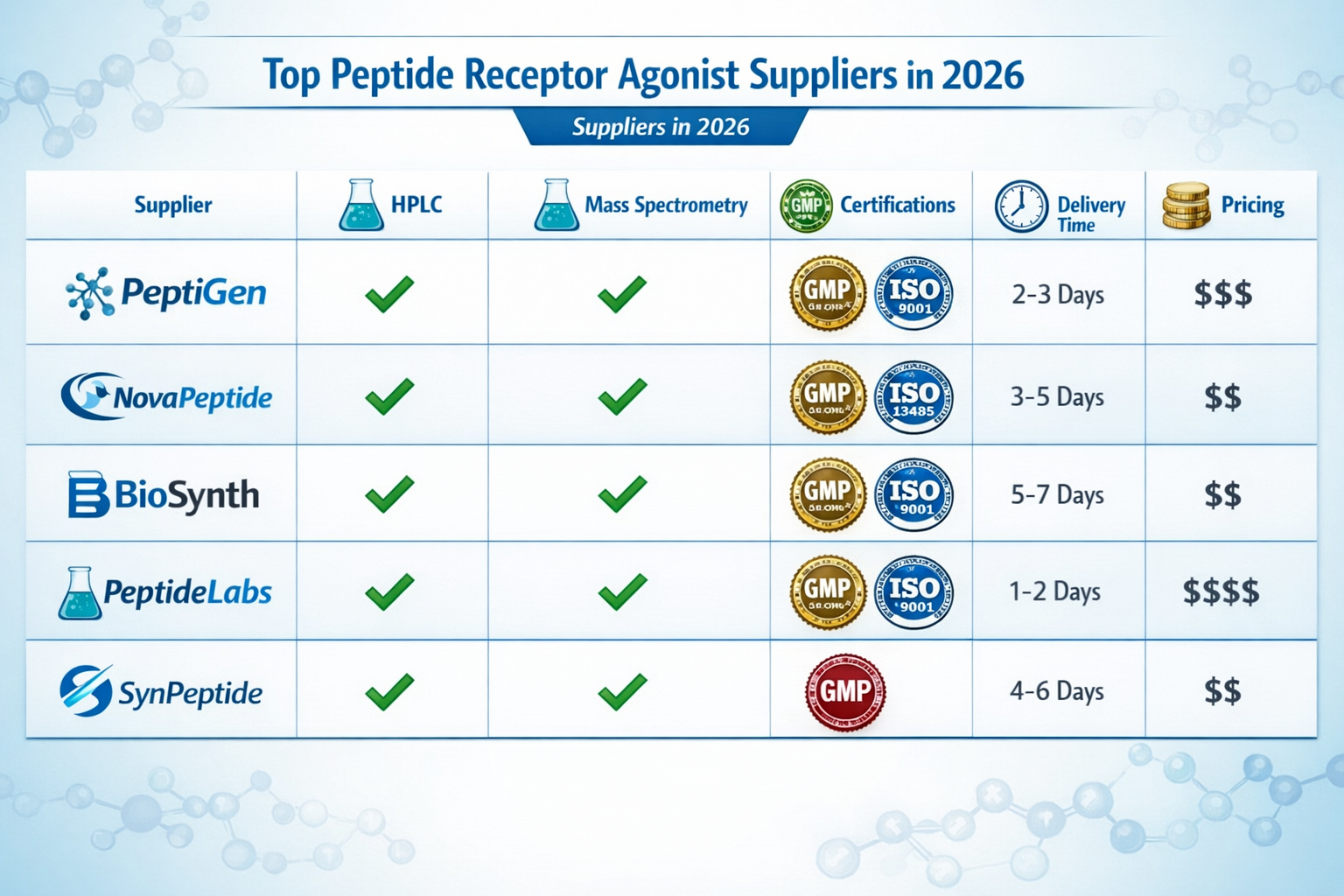
- Quality verification is paramount: Look for suppliers providing third-party testing, Certificates of Analysis (COA), and HPLC/mass spectrometry verification for all peptide receptor agonists
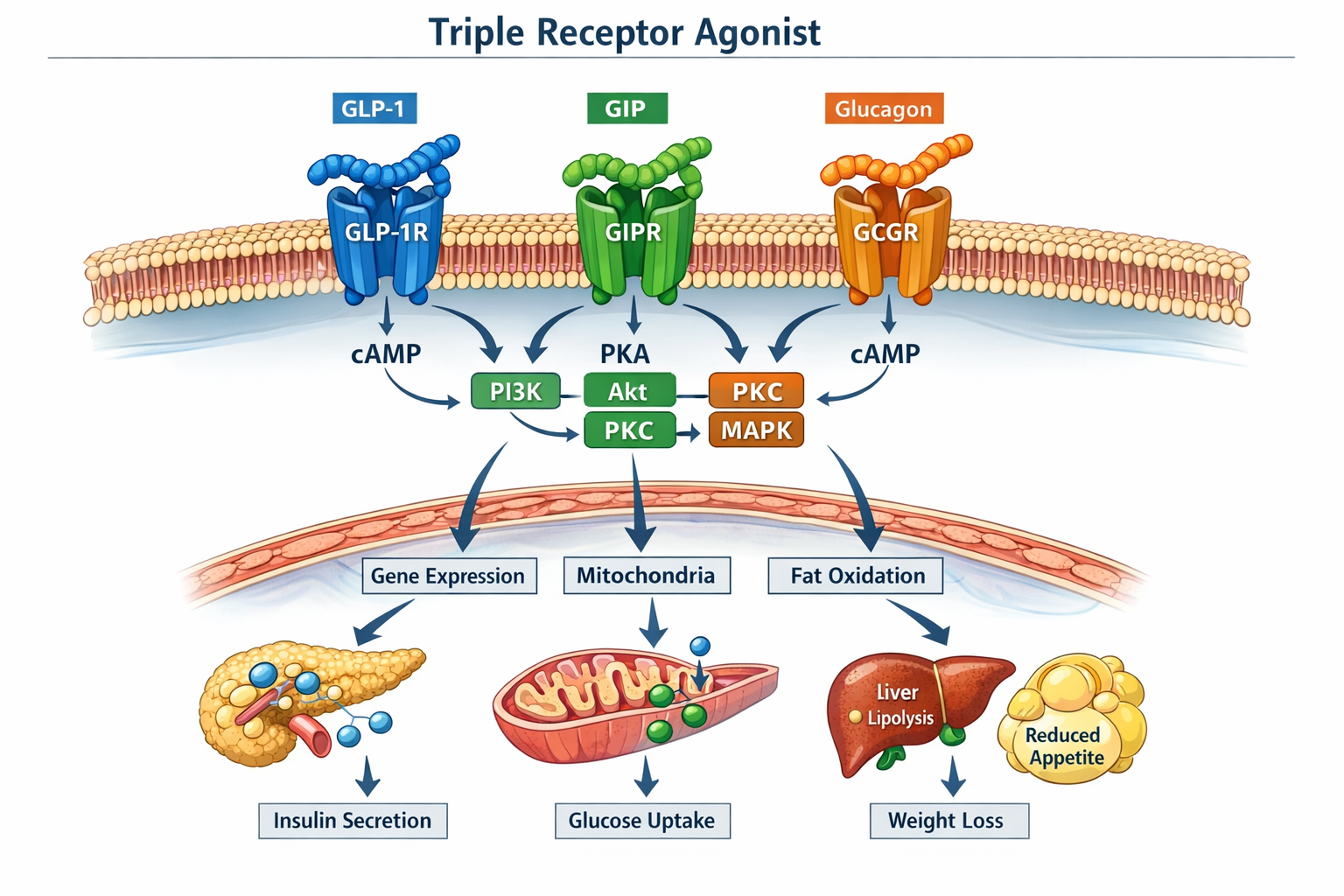
- Next-generation formulations are arriving: Triple receptor agonists (GLP-1R/GIPR/GCGR) and once-monthly formulations represent the cutting edge of peptide technology in 2026
- Market dynamics are shifting rapidly: Generic semaglutide filings and new supplier entries are creating more options but require increased due diligence
- Regulatory compliance matters: Reputable peptide receptor agonist suppliers maintain proper documentation and operate within research chemical guidelines
- Pricing varies significantly: Understanding market benchmarks helps identify both value opportunities and suspiciously low-quality offerings
Understanding Peptide Receptor Agonists: The Science Behind the Demand
Peptide receptor agonists are specialized molecules designed to bind with and activate specific cellular receptors, triggering targeted biological responses. These compounds have revolutionized research into metabolic health, body composition, and cellular signaling pathways.
What Makes Receptor Agonists Different
Unlike traditional peptides that may serve structural or enzymatic functions, receptor agonists for peptide research specifically target cell surface receptors to initiate signal transduction cascades. The most studied examples include:
- GLP-1 receptor agonists: Activate glucagon-like peptide-1 receptors involved in glucose metabolism and satiety signaling
- GIP receptor agonists: Target glucose-dependent insulinotropic polypeptide receptors for enhanced metabolic effects
- Dual and triple agonists: Simultaneously activate multiple receptor pathways for synergistic outcomes
The GIP receptor and its importance in metabolic research has gained significant attention as scientists explore multi-receptor targeting strategies.
The Rise of Multi-Receptor Targeting
In January 2026, Ascletis Pharma advanced ASC37 injection—a GLP-1R/GIPR/GCGR triple receptor agonist—to clinical development status, representing the next generation of peptide therapeutics[3]. This triple-action approach addresses limitations of single-receptor compounds by:
✅ Enhancing metabolic efficiency through complementary receptor pathways
✅ Improving tolerability profiles by distributing activity across multiple targets
✅ Extending duration of action with ultra-long-acting formulations
✅ Addressing supply constraints that have plagued single-agonist products
When sourcing from a peptide receptor agonists supplier, understanding these technological advances helps researchers identify cutting-edge compounds versus legacy formulations. Exploring all peptides for sale provides perspective on the breadth of available receptor agonist options.
Current Market Leaders and Emerging Alternatives
Novo Nordisk and Eli Lilly currently dominate the commercial peptide receptor agonist space, with Wegovy (semaglutide) and Zepbound (tirzepatide) commanding premium pricing between $299-$450 for lowest-dose formulations[5]. However, the research chemical market offers alternatives for non-clinical applications.
The pharmaceutical landscape is shifting rapidly. Adalvo announced semaglutide generic filing plans for February 2026, including the high-demand 2mg strength that currently gives Novo Nordisk over 30% US market control[2]. This regulatory movement signals increasing accessibility and competitive pricing pressure across the sector.
Top 7 Criteria for Evaluating a Peptide Receptor Agonists Supplier
Choosing a reliable peptide receptor agonists supplier requires systematic evaluation across multiple quality and operational dimensions. These seven criteria separate professional research suppliers from questionable sources.
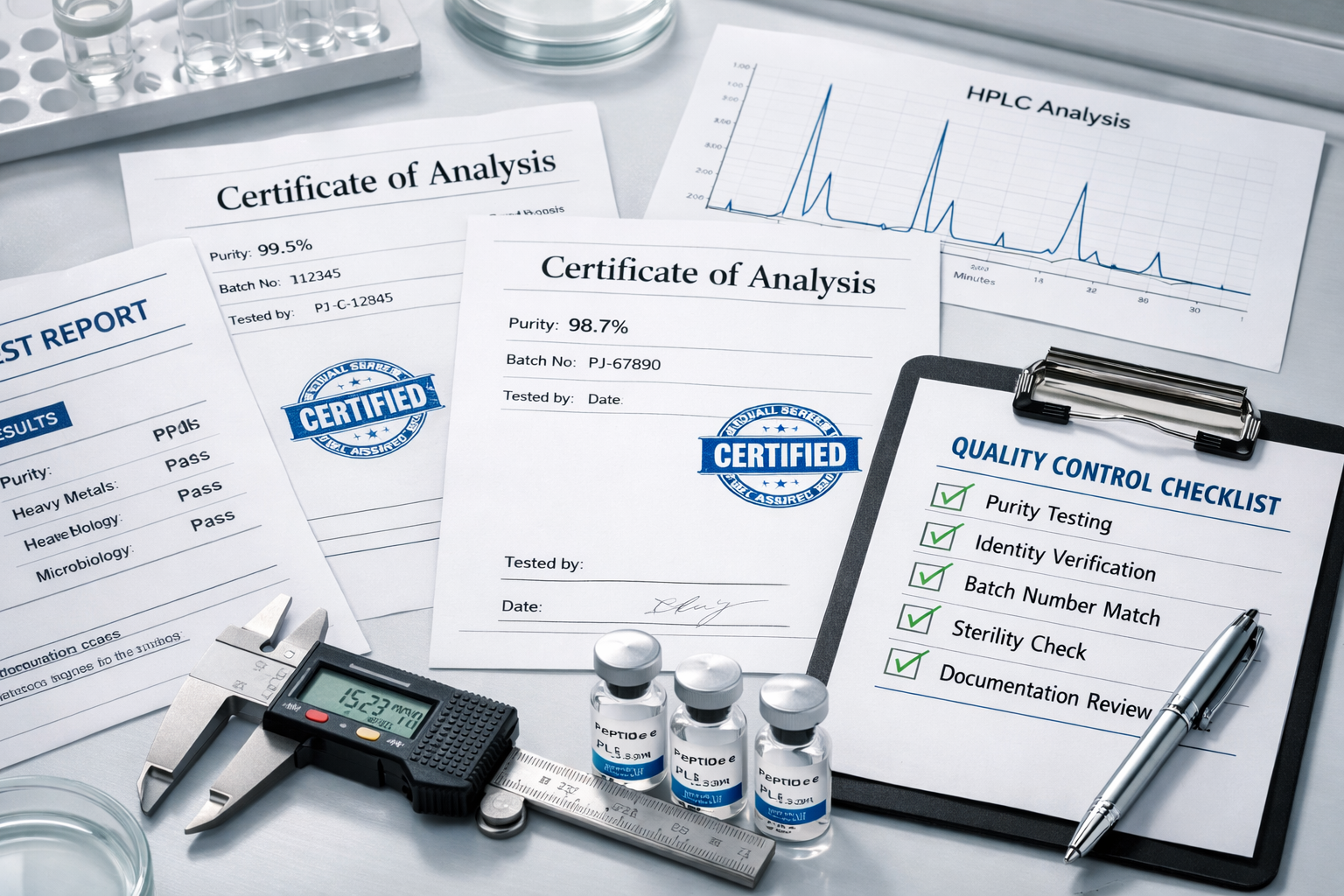
1. Third-Party Testing and Certificates of Analysis 🔬
Legitimate peptide receptor agonist suppliers provide comprehensive testing documentation for every batch. Essential verification includes:
| Testing Method | What It Verifies | Acceptable Standards |
|---|---|---|
| HPLC (High-Performance Liquid Chromatography) | Purity percentage and compound identity | ≥98% purity |
| Mass Spectrometry | Molecular weight confirmation | Within 0.1% of theoretical mass |
| Amino Acid Analysis | Sequence accuracy | 100% sequence match |
| Endotoxin Testing | Bacterial contamination levels | <1.0 EU/mg |
| Sterility Testing | Microbial contamination | No growth detected |
A reputable peptide receptor agonists supplier makes Certificates of Analysis readily available before purchase, not upon request after payment. The peptide purity testing made simple guide provides deeper insight into interpretation of testing documentation.
2. Regulatory Compliance and Proper Labeling
Quality suppliers clearly label products as "For Research Purposes Only" and maintain compliance with research chemical regulations. Red flags include:
❌ Making therapeutic claims or medical advice
❌ Marketing for human consumption
❌ Lacking proper chemical identification
❌ Omitting batch numbers or manufacturing dates
Professional peptide receptor agonist suppliers understand regulatory boundaries and operate transparently within them. When evaluating where to buy peptides online in the USA, compliance should be a primary consideration.
3. Storage and Handling Protocols
Peptide receptor agonists require specific storage conditions to maintain stability and potency. Superior suppliers demonstrate proper handling through:
- Temperature-controlled shipping with ice packs or dry ice for temperature-sensitive compounds
- Light-protected packaging using amber vials or opaque containers
- Lyophilized (freeze-dried) formulations for extended shelf stability
- Clear reconstitution instructions when applicable
- Expiration dating based on stability testing
A peptide receptor agonists supplier that ships room-temperature peptides in clear glass without cold packs likely lacks proper quality systems. This becomes especially critical for advanced formulations like those discussed in GLP-3 triple agonist research planning.
4. Transparent Sourcing and Manufacturing Information
While proprietary details remain protected, trustworthy suppliers provide general transparency about:
- Country of manufacture and facility certifications
- Synthesis methodology (solid-phase vs. liquid-phase peptide synthesis)
- Quality management systems (GMP, ISO certifications)
- Supply chain security measures
The best peptide receptor agonist suppliers willingly discuss their quality processes and can articulate their competitive advantages beyond just pricing.
5. Customer Support and Technical Expertise
Knowledgeable support staff distinguish professional suppliers from dropshippers. Quality indicators include:
📞 Responsive communication via multiple channels (email, phone, chat)
📚 Technical knowledge about peptide properties, storage, and handling
🔄 Post-purchase support for questions about reconstitution or storage
📊 Research resources like dosage calculators and protocol guides
When exploring specialized compounds like tesa peptide or SS-31 peptides for sale, expert guidance becomes invaluable for research planning.
6. Pricing Transparency and Value Proposition
While cost matters, the lowest price rarely indicates the best value for peptide receptor agonists. Evaluate pricing through:
- Per-milligram cost calculations rather than per-vial pricing
- Purity-adjusted pricing (98% pure at $X vs. 95% pure at lower cost)
- Bulk pricing options for ongoing research programs
- Shipping cost transparency (some suppliers inflate shipping to offset low product prices)
Suspiciously low pricing often correlates with underdosed products, contaminated batches, or outright counterfeit compounds. Understanding peptide supplier comparisons helps establish realistic market benchmarks.
7. Product Range and Inventory Consistency
Established peptide receptor agonist suppliers maintain consistent inventory of core products while expanding offerings based on research trends. Positive indicators include:
✔️ Diverse peptide catalog covering multiple receptor classes
✔️ Consistent stock availability of popular compounds
✔️ New product introduction aligned with emerging research
✔️ Batch-to-batch consistency in quality metrics
Suppliers with erratic inventory, frequent stockouts, or constantly changing product lines may lack stable manufacturing relationships. Reviewing all peptides for sale catalogs provides insight into supplier depth and specialization.
Emerging Peptide Receptor Agonist Technologies in 2026
The peptide receptor agonist supplier landscape is rapidly evolving as pharmaceutical innovation drives new formulation approaches and delivery mechanisms. Understanding these advances helps researchers access cutting-edge compounds.
Triple Receptor Agonists: The Next Frontier
Triple receptor agonists simultaneously activate GLP-1, GIP, and glucagon receptors, offering potential advantages over single or dual agonists. Ascletis plans FDA submission for ASC37 in Q2 2026, with Phase I studies expected in the second half of the year[3].
These next-generation peptide receptor agonists address several limitations:
- Enhanced metabolic effects through complementary receptor pathways
- Improved tolerability by distributing activity across multiple targets
- Reduced dosing frequency with once-monthly subcutaneous administration
- Better durability of metabolic improvements
Research into GLP-3 the newest GLP-1 triple agonist provides detailed analysis of this emerging compound class. When selecting a peptide receptor agonists supplier, inquire about access to these advanced formulations.
Once-Monthly Formulations and Ultra-Long-Acting Platforms
Traditional peptide receptor agonists require daily or weekly administration, creating compliance challenges. Ultra-long-acting formulations now extend dosing intervals to monthly schedules through:
- Modified peptide structures with extended half-lives
- Depot injection technologies for sustained release
- Albumin-binding modifications that slow clearance
- Polyethylene glycol (PEG) conjugation for prolonged circulation
Ascletis' platform technology enables once-monthly subcutaneous administration across their ASC35, ASC36, and ASC37 candidates[3]. This represents a significant advancement for research applications requiring consistent, long-term peptide exposure.
Oral Peptide Formulations Breaking Barriers
While injectable peptide receptor agonists dominate current research, oral formulations are advancing rapidly. Oral semaglutide already exists commercially, and additional oral small-molecule GLP-1 receptor agonists are expected to gain FDA approval in 2026[8].
Oral peptide delivery overcomes traditional bioavailability challenges through:
🔹 Absorption enhancers that facilitate intestinal uptake
🔹 Protective coatings preventing gastric degradation
🔹 Permeation enhancers improving membrane transport
🔹 Enteric formulations targeting specific intestinal segments
A forward-thinking peptide receptor agonists supplier stays current with these delivery innovations, offering both traditional injectable and emerging oral formulations where available.
Amylin Analogs Entering the Competition
Amylin analogs represent an alternative approach to metabolic peptide research. In a landmark deal, Roche and Zealand Pharma signed a $5.3 billion collaboration for petrelintide development, with 50/50 profit sharing in major markets[1].
AbbVie also entered the obesity peptide field through Gubra's GUBamy, a once-weekly amylin analog that reported positive interim Phase 1 results in April 2025[1]. These developments signal growing interest in amylin-based approaches as complements or alternatives to GLP-1 receptor agonists.
When evaluating a peptide receptor agonist supplier, ask about their amylin analog offerings and plans to expand beyond traditional GLP-1 compounds. Diversification indicates supplier sophistication and market awareness.
Combination Therapy Approaches
Research increasingly explores combination peptide protocols that stack multiple receptor agonists or blend peptides with complementary mechanisms. Popular research combinations include:
- GLP-1 agonists + growth hormone secretagogues for body composition research
- Dual agonists + mitochondrial peptides for metabolic optimization
- Receptor agonists + tissue repair peptides for comprehensive wellness studies
The GLOW peptide blend benefits demonstrate how synergistic formulations can address multiple research objectives simultaneously. A comprehensive peptide receptor agonists supplier offers both individual compounds and researched blend formulations.
Red Flags: Warning Signs of Questionable Peptide Receptor Agonist Suppliers
Not all suppliers maintain equivalent quality standards. Recognizing warning signs protects researchers from wasted resources and potentially dangerous products.
Absence of Testing Documentation
The most critical red flag is unwillingness or inability to provide Certificates of Analysis. Legitimate suppliers test every batch and make results readily available. Excuses like "testing is proprietary" or "available upon request after purchase" indicate questionable practices.
Compare suppliers using resources like Bachem and reference standards for building robust peptide benchmarks to understand industry-standard testing protocols.
Unrealistic Pricing
While competitive pricing is desirable, prices significantly below market averages often indicate:
❌ Underdosed products (labeled 10mg but containing 5mg)
❌ Lower purity (85-90% instead of 98%+)
❌ Contaminated batches with impurities or degradation products
❌ Counterfeit products containing different compounds entirely
Calculate per-milligram costs across multiple suppliers to establish realistic benchmarks. A peptide receptor agonists supplier offering prices 50% below competitors likely compromises quality somewhere in their supply chain.
Therapeutic Claims and Medical Advice
Reputable research chemical suppliers never make therapeutic claims or provide medical advice. Red flags include:
- Suggesting specific doses for human use
- Making disease treatment claims
- Providing medical consultation
- Marketing for bodybuilding or weight loss rather than research
Professional peptide receptor agonist suppliers clearly label products "For Research Purposes Only" and avoid crossing into medical territory. This protects both supplier and researcher from regulatory complications.
Poor Communication and Support
Suppliers who are difficult to contact or provide vague responses raise concerns about their operations. Warning signs include:
📧 Email-only contact with slow response times
🚫 No phone support or physical address
❓ Generic responses that don't address specific questions
🔇 Disappearing after purchase with no post-sale support
Quality peptide receptor agonists suppliers maintain professional communication standards and provide knowledgeable technical support throughout the customer relationship.
Inconsistent Product Quality
Even suppliers with good reputations can experience quality issues. Monitor for:
- Batch-to-batch variation in appearance, reconstitution, or effects
- Changing packaging or labeling without explanation
- Frequent stock issues suggesting supply chain instability
- Shifting product specifications (purity percentages that vary)
Establishing relationships with multiple peptide receptor agonist suppliers provides backup options if quality concerns emerge with a primary source.
Specialized Peptide Receptor Agonists: Sourcing Advanced Compounds
Beyond mainstream GLP-1 receptor agonists, specialized compounds require particular attention to supplier expertise and quality systems.
Growth Hormone Secretagogues and GHRH Analogs
Growth hormone-releasing hormone (GHRH) analogs like tesa represent important research tools for studying growth hormone dynamics. When sourcing these compounds from a peptide receptor agonists supplier, verify:
- Sequence accuracy through amino acid analysis
- Proper lyophilization for stability
- Storage recommendations specific to GHRH compounds
- Reconstitution protocols using appropriate bacteriostatic water
Resources like tesa peptide guides and tesa dosage calculator help researchers plan protocols with these specialized receptor agonists.
Mitochondrial-Targeting Peptides
SS-31 (Elamipretide) and similar mitochondrial peptides require special handling due to their unique mechanisms. When evaluating a peptide receptor agonist supplier for mitochondrial compounds, consider:
- Oxidation prevention through proper storage and packaging
- Purity requirements (mitochondrial peptides are particularly sensitive to contaminants)
- Specialized testing beyond standard HPLC
- Technical documentation explaining mitochondrial targeting mechanisms
Explore SS-31 mitochondrial research themes and SS-31 mechanism and research for comprehensive background on these specialized compounds. Finding SS-31 peptide for sale from qualified suppliers requires careful vetting.
Metabolic Research Peptides
Advanced metabolic research compounds like MOTS-C and other mitochondrial-derived peptides demand supplier expertise in emerging peptide classes. Quality indicators include:
✔️ Up-to-date catalog reflecting current research trends
✔️ Technical literature explaining novel mechanisms
✔️ Proper characterization of newly available compounds
✔️ Research support for protocol development
The MOTS-C mitochondrial peptide guide and MOTS-C mechanism and research resources provide context for sourcing these specialized metabolic peptides from qualified peptide receptor agonists suppliers.
Dual-Mechanism Compounds
Dual receptor agonists like tirzepatide (GLP-1/GIP) combine multiple mechanisms in single molecules. When sourcing from a peptide receptor agonist supplier, verify:
- Multi-receptor binding confirmation through appropriate assays
- Ratio verification for compounds with specific receptor affinity profiles
- Stability data for complex dual-mechanism structures
- Comparative benchmarking against reference standards
Understanding GLP1-T research breakdown on dual receptor agonism helps researchers evaluate supplier knowledge and product authenticity for these advanced formulations.
Building Long-Term Relationships with Peptide Receptor Agonist Suppliers
Successful research programs benefit from stable, reliable sourcing relationships rather than constantly switching suppliers based on marginal price differences.
Establishing Supplier Partnerships
Long-term partnerships with quality peptide receptor agonists suppliers provide advantages including:
💼 Preferential pricing for consistent customers
📦 Priority allocation during supply constraints
🔬 Custom synthesis options for specialized research needs
📊 Batch reservation ensuring consistency across long-term studies
Communicate research timelines and anticipated needs to help suppliers plan inventory and potentially negotiate volume pricing. Professional suppliers appreciate customers who provide visibility into future requirements.
Quality Consistency Monitoring
Even with trusted suppliers, implement ongoing quality verification:
- Document batch numbers and correlate with observed characteristics
- Request COAs for every order, not just initial purchases
- Monitor reconstitution behavior (clarity, dissolution time)
- Track storage stability over time
- Compare new batches against retained samples from previous orders
Maintaining detailed records enables quick identification of quality shifts and provides documentation for supplier discussions if concerns arise. When working with all peptides for sale from a supplier, systematic tracking becomes essential.
Diversification Strategy
While building primary supplier relationships, maintain backup sourcing options:
- Secondary supplier for critical compounds
- Alternative sources for commonly used peptides
- Emergency contacts for time-sensitive needs
- Geographic diversity to mitigate regional supply disruptions
This balanced approach provides supply security without sacrificing the benefits of concentrated purchasing with preferred peptide receptor agonist suppliers.
Feedback and Communication
Professional suppliers value constructive feedback about:
- Product quality and consistency
- Packaging and shipping effectiveness
- Documentation clarity and completeness
- Customer service responsiveness
- Website usability and information availability
Suppliers who welcome feedback and implement improvements demonstrate commitment to customer relationships and continuous quality enhancement. This dialogue strengthens partnerships and improves outcomes for both parties.
Navigating the Regulatory Landscape for Peptide Receptor Agonists
Understanding regulatory frameworks helps researchers source peptide receptor agonists appropriately and avoid legal complications.
Research Chemical Classification
Most peptide receptor agonists available from research suppliers are classified as research chemicals, meaning:
- Not approved for human consumption or medical use
- Intended for laboratory research and in vitro studies
- Require proper labeling as "For Research Purposes Only"
- Subject to regulatory oversight regarding marketing and distribution
Legitimate peptide receptor agonist suppliers clearly communicate these limitations and never suggest human use or make therapeutic claims.
FDA and International Regulations
The FDA does not approve research chemicals for human use, but regulates their marketing and distribution. Key regulatory considerations include:
📋 Proper labeling requirements for research compounds
🚫 Prohibited therapeutic claims in marketing materials
⚖️ Import/export regulations for international sourcing
🔍 Quality standards for manufacturing facilities
Regeneron's licensing of a GLP-1/GIP receptor agonist from Chinese biotech Hansoh Pharma in June 2025[1] demonstrates the global nature of peptide development and the importance of understanding international regulatory frameworks.
State and Local Considerations
Beyond federal regulations, some state and local jurisdictions impose additional requirements on research chemical purchases. Researchers should:
- Verify local regulations before ordering
- Maintain proper documentation of research purposes
- Store compounds securely according to local requirements
- Dispose of materials properly following applicable guidelines
Reputable peptide receptor agonists suppliers can often provide guidance on regulatory compliance in different jurisdictions.
Future Regulatory Trends
The regulatory landscape continues evolving as peptide therapeutics gain prominence. Anticipated developments include:
- Increased scrutiny of research chemical marketing
- Enhanced quality standards for manufacturing
- Stricter import controls for certain compounds
- Greater enforcement against therapeutic claims
Staying informed about regulatory changes helps researchers maintain compliant sourcing practices and avoid disruptions to ongoing studies.
Cost Optimization Strategies for Peptide Receptor Agonist Procurement
Strategic purchasing approaches maximize research budgets without compromising quality when sourcing from peptide receptor agonists suppliers.
Bulk Purchasing Considerations
Volume purchasing often provides significant per-unit savings:
| Purchase Quantity | Typical Discount | Considerations |
|---|---|---|
| Single vial | Standard pricing | Maximum flexibility |
| 3-5 vials | 10-15% discount | Suitable for short-term studies |
| 10+ vials | 20-30% discount | Requires storage planning |
| Custom synthesis | Variable pricing | For specialized needs |
When buying in bulk from a peptide receptor agonist supplier, ensure:
✅ Adequate storage capacity with proper temperature control
✅ Realistic usage timeline before expiration
✅ Consistent batch quality through COA review
✅ Proper inventory tracking to prevent waste
Lyophilized vs. Reconstituted Pricing
Lyophilized (freeze-dried) peptides typically cost more initially but offer advantages:
- Extended shelf life (2+ years frozen vs. weeks refrigerated)
- Shipping flexibility (no cold chain requirements)
- Dosing precision (reconstitute to desired concentration)
- Reduced waste (reconstitute only what's needed)
Calculate total cost of ownership including storage, shipping, and potential waste rather than just initial purchase price when comparing options from peptide receptor agonists suppliers.
Subscription and Loyalty Programs
Some peptide receptor agonist suppliers offer programs providing:
🎁 Automatic discounts for repeat customers
📅 Scheduled deliveries at reduced rates
🎯 Exclusive access to new products
💰 Accumulated credits toward future purchases
Evaluate whether program benefits justify any commitment requirements or minimum purchase obligations.
Generic vs. Brand-Name Considerations
As generic semaglutide approaches market entry with Adalvo's February 2026 filing[2], researchers will face choices between:
- Reference standard compounds from established manufacturers
- Generic equivalents at potentially lower costs
- Research-grade alternatives from specialized suppliers
Quality peptide receptor agonists suppliers transparently communicate whether products are reference standards, generic equivalents, or research-grade alternatives, allowing informed cost-benefit decisions.
Future Outlook: The Peptide Receptor Agonist Supplier Market in 2026 and Beyond
The peptide receptor agonist supplier landscape continues rapid evolution driven by pharmaceutical innovation, regulatory changes, and market dynamics.
Market Expansion and Accessibility
Ozempic's $18 billion in global sales during 2024 with a 3-year compound annual growth rate exceeding 42%[2] demonstrates massive commercial interest that cascades into research markets. This expansion drives:
- Increased supplier competition improving quality and pricing
- Greater product variety as new compounds emerge
- Enhanced testing standards as the market matures
- Improved accessibility for researchers worldwide
The entry of major pharmaceutical companies into peptide development—including AbbVie, Regeneron, and Roche[1]—signals continued innovation and eventual availability of next-generation compounds through research channels.
Technology Integration
Peptide receptor agonists suppliers increasingly leverage technology for:
📱 Mobile-friendly ordering and account management
🔬 Digital COA access with QR code verification
📊 Batch tracking systems for quality monitoring
💬 AI-powered customer support for technical questions
Suppliers investing in technological infrastructure demonstrate commitment to long-term market presence and customer service excellence.
Sustainability and Ethical Sourcing
Growing emphasis on sustainable peptide synthesis and ethical manufacturing practices influences supplier selection. Progressive suppliers address:
- Green chemistry approaches minimizing environmental impact
- Waste reduction protocols in manufacturing
- Energy-efficient production methods
- Transparent supply chains with ethical labor practices
Researchers increasingly consider these factors alongside traditional quality and pricing metrics when evaluating peptide receptor agonist suppliers.
Personalization and Custom Synthesis
Advanced peptide receptor agonists suppliers offer custom synthesis services for:
- Modified peptide sequences
- Novel delivery formulations
- Specific purity requirements
- Unique packaging configurations
This capability becomes valuable for specialized research applications not served by standard catalog products. Exploring comprehensive catalog tours helps identify suppliers with both breadth and customization capabilities.
Collaborative Research Models
Forward-thinking suppliers develop collaborative relationships with research institutions, offering:
- Sponsored research programs with product support
- Technical consultation for protocol development
- Publication support for research findings
- Early access to emerging compounds
These partnerships benefit both suppliers (through market intelligence and validation) and researchers (through enhanced support and resources).
Conclusion: Making Informed Decisions About Peptide Receptor Agonist Suppliers
Selecting the right peptide receptor agonists supplier fundamentally impacts research quality, budget efficiency, and project success. As the peptide therapeutics market continues explosive growth—with triple receptor agonists advancing to clinical trials, generic alternatives approaching market entry, and major pharmaceutical companies investing billions in development—researchers face both unprecedented opportunities and increased complexity in sourcing decisions.
Quality verification remains paramount. Never compromise on third-party testing, Certificates of Analysis, and proper documentation regardless of pricing pressures. The cost difference between high-purity and contaminated peptides pales compared to wasted research time and potentially misleading results.
Build relationships with suppliers who demonstrate technical expertise, regulatory compliance, and commitment to customer success. While price matters, the lowest cost rarely delivers the best value when factoring in purity, consistency, and support.
Stay informed about emerging technologies—from once-monthly formulations to oral delivery systems to triple receptor agonists—ensuring access to cutting-edge research tools as they become available. The peptide receptor agonist supplier landscape will continue evolving rapidly through 2026 and beyond.
Actionable Next Steps
- Audit current suppliers against the seven evaluation criteria outlined in this guide
- Request Certificates of Analysis for recent purchases and verify testing completeness
- Calculate per-milligram costs across multiple suppliers to establish pricing benchmarks
- Identify backup sources for critical compounds to ensure supply continuity
- Document quality metrics for ongoing monitoring of batch-to-batch consistency
- Explore emerging compounds like triple agonists and amylin analogs for research applications
- Review regulatory compliance of sourcing practices and storage protocols
The peptide revolution continues accelerating, offering researchers powerful tools for exploring metabolic health, body composition, cellular signaling, and longevity. By partnering with quality peptide receptor agonists suppliers and maintaining rigorous sourcing standards, researchers position themselves to contribute meaningfully to this exciting scientific frontier.
For comprehensive access to quality-verified peptide receptor agonists with full testing documentation, explore all peptides for sale from established research suppliers committed to advancing peptide science through 2026 and beyond.
References
[1] Obesity Deals 2025 – https://www.labiotech.eu/best-biotech/obesity-deals-2025/
[2] Adalvo To File Semaglutide In February 2026 Includ – https://www.adalvo.com/newsroom/adalvo-to-file-semaglutide-in-february-2026-includ
[3] Ascletis Selects A Next Generation Once Monthly Subcutaneously Administered Glp 1rgiprgcgr Triple Peptide Agonist Asc37 For Clinical Development 302665194 – https://www.prnewswire.com/news-releases/ascletis-selects-a-next-generation-once-monthly-subcutaneously-administered-glp-1rgiprgcgr-triple-peptide-agonist-asc37-for-clinical-development-302665194.html
[5] Glp 1 Announcement May Affect Prices For Group Health Plans – https://www.segalco.com/consulting-insights/glp-1-announcement-may-affect-prices-for-group-health-plans
[8] New Role For Glp 1 Drugs Improving Survival In People With Severe Psychiatric Disorders – https://www.news-medical.net/news/20260125/New-role-for-GLP-1-drugs-Improving-survival-in-people-with-severe-psychiatric-disorders.aspx
SEO Meta Title and Description
Meta Title: Peptide Receptor Agonists Supplier Guide 2026 | Quality Sources
Meta Description: Discover how to choose a reliable peptide receptor agonists supplier in 2026. Compare testing standards, pricing, and emerging triple agonist technologies.