Peptides NAD+: The Science-Backed Solution for Cellular Energy and Longevity
Imagine if there was a way to rewind your cellular clock, boost your energy levels, and potentially slow down the aging process at the molecular level. This isn't science fiction—it's the reality of peptides NAD+, one of the most promising developments in modern wellness research. As scientists continue to unlock the secrets of cellular energy production, NAD+ peptides have emerged as a powerful tool for supporting the body's natural repair mechanisms and energy metabolism.
Key Takeaways
• NAD+ peptides are specialized compounds that help boost cellular energy production and support DNA repair mechanisms
• These peptides work by increasing levels of nicotinamide adenine dinucleotide (NAD+), a crucial coenzyme that declines with age
• Research suggests NAD+ peptides may support mitochondrial function, cognitive health, and overall cellular longevity
• Quality and purity are essential when selecting NAD+ peptide products for research purposes
• Understanding proper dosing, timing, and combination strategies can maximize the potential benefits of NAD+ peptide supplementation
Understanding NAD+ and Its Critical Role in Cellular Function
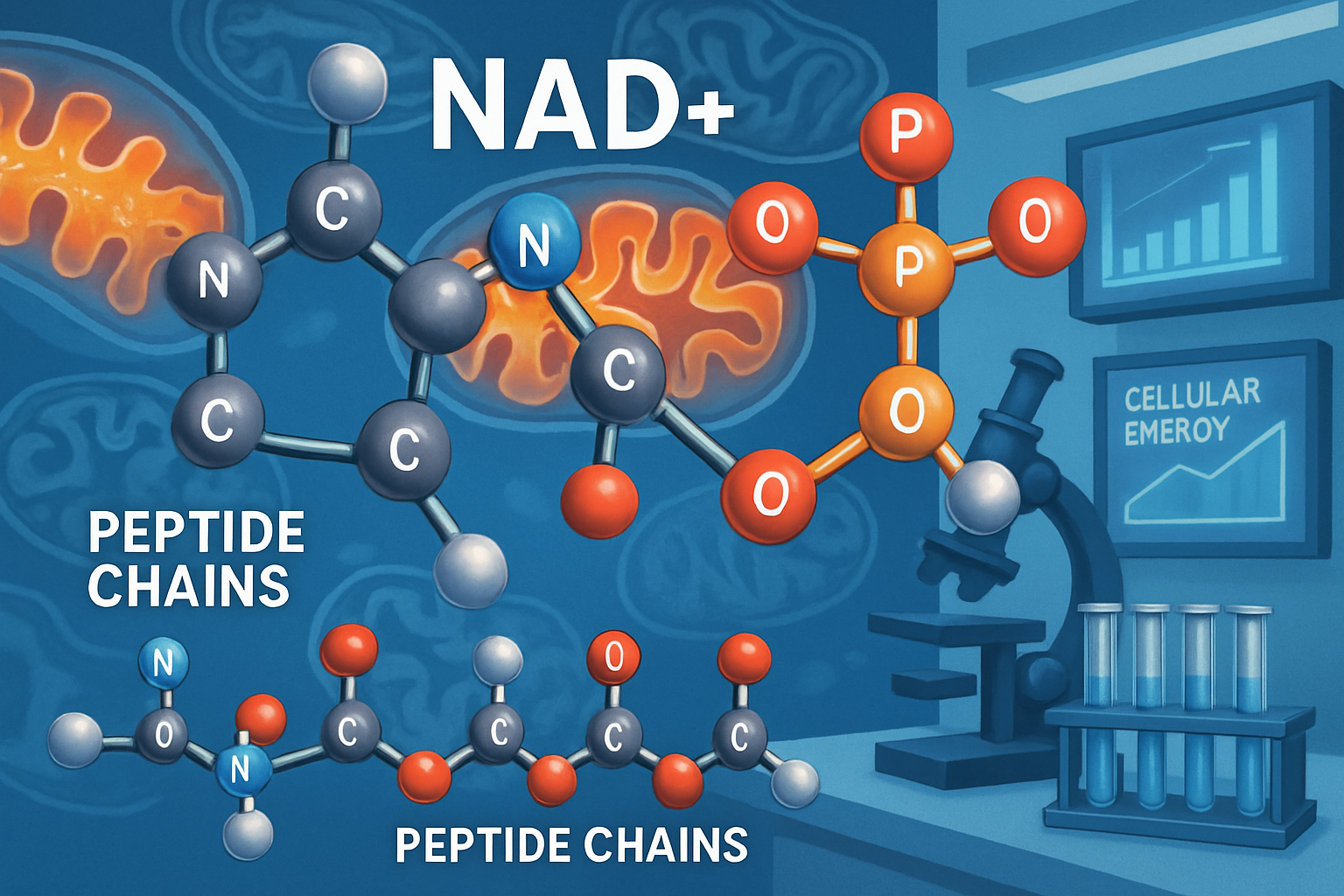
Nicotinamide adenine dinucleotide (NAD+) is one of the most important molecules in every cell of the human body. This coenzyme plays a vital role in hundreds of metabolic processes, from converting food into energy to repairing damaged DNA. As we age, NAD+ levels naturally decline, which many researchers believe contributes to the aging process and age-related health challenges.
The relationship between NAD+ and cellular health is profound. This molecule serves as a critical component in the electron transport chain, the cellular process that generates ATP (adenosine triphosphate)—the energy currency of cells. When NAD+ levels are optimal, cells can efficiently produce energy, repair damage, and maintain their normal functions.
The Science Behind NAD+ Depletion
Research has shown that NAD+ levels can decline by as much as 50% between ages 40 and 60. This dramatic reduction affects multiple cellular processes:
- Mitochondrial dysfunction leading to reduced energy production
- Impaired DNA repair mechanisms
- Decreased protein synthesis and cellular maintenance
- Reduced activation of longevity-promoting enzymes called sirtuins
For researchers interested in exploring high-quality peptide options, NAD+ peptides offer a promising avenue for supporting cellular energy metabolism and potentially addressing age-related NAD+ decline.
How Peptides NAD+ Work at the Cellular Level
Peptides NAD+ represent an innovative approach to supporting cellular NAD+ levels. Unlike traditional NAD+ supplements that may face absorption challenges, peptide-based formulations are designed to enhance bioavailability and cellular uptake. These specialized compounds work through several mechanisms:
- Direct NAD+ precursor delivery to cells
- Enhanced absorption through peptide transport systems
- Targeted cellular uptake for improved efficiency
- Sustained release for prolonged cellular support
The Research Behind Peptides NAD+ and Longevity
The scientific community has shown increasing interest in NAD+ research, with numerous studies exploring its potential applications in aging, metabolism, and cellular health. Understanding this research landscape helps illuminate why peptides NAD+ have gained attention among wellness researchers and practitioners.
Mitochondrial Function and Energy Production
Mitochondria, often called the "powerhouses of the cell," rely heavily on NAD+ for energy production. Research has demonstrated that declining NAD+ levels correlate with mitochondrial dysfunction, which manifests as:
- Reduced cellular energy output
- Increased oxidative stress
- Impaired cellular repair mechanisms
- Accelerated aging processes
Studies suggest that supporting NAD+ levels through peptide supplementation may help maintain mitochondrial function and cellular energy production. This is particularly relevant for tissues with high energy demands, such as the brain, heart, and muscles.
Sirtuin Activation and Cellular Longevity
One of the most exciting aspects of NAD+ research involves its relationship with sirtuins—a family of proteins often referred to as "longevity genes." These enzymes require NAD+ as a cofactor and play crucial roles in:
- DNA repair and maintenance
- Metabolic regulation
- Stress resistance
- Cellular survival pathways
Research indicates that adequate NAD+ levels are essential for optimal sirtuin function. When NAD+ levels decline, sirtuin activity decreases, potentially accelerating aging processes and reducing cellular resilience.
For those interested in comprehensive peptide research, exploring diverse peptide libraries can provide valuable insights into how different compounds work synergistically to support cellular health.
Cognitive Function and Neuroprotection
The brain is one of the most energy-demanding organs in the body, making it particularly sensitive to NAD+ levels. Research has explored the potential connections between NAD+ status and:
- Cognitive performance
- Memory formation and retention
- Neuroprotection against age-related decline
- Brain energy metabolism
Some studies suggest that maintaining optimal NAD+ levels through peptide supplementation may support cognitive function and brain health, though more research is needed to fully understand these relationships.
Practical Applications of Peptides NAD+ in Wellness Research
Understanding how to effectively incorporate peptides NAD+ into research protocols requires knowledge of dosing strategies, timing considerations, and potential synergistic combinations. This practical approach helps maximize the potential benefits while ensuring safety and efficacy.
Dosing Strategies and Protocols
Research suggests that NAD+ peptide dosing should be individualized based on several factors:
Age-Related Considerations:
- Younger individuals (20-40): Lower maintenance doses
- Middle-aged (40-60): Moderate therapeutic doses
- Older adults (60+): Higher therapeutic doses
Timing Optimization:
- Morning administration to support daytime energy metabolism
- Pre-workout timing for enhanced cellular energy
- Consistent daily dosing for sustained NAD+ support
For researchers seeking guidance on commonly researched dosages, understanding these protocols can help inform study design and implementation.
Synergistic Combinations and Stack Protocols
Many researchers explore combining peptides NAD+ with other compounds to potentially enhance outcomes. Popular combination strategies include:
Metabolic Support Stacks:
- NAD+ peptides + metabolic enhancing compounds
- Energy production optimization protocols
- Mitochondrial support combinations
Longevity-Focused Protocols:
- NAD+ peptides + DNA repair supporting compounds
- Cellular maintenance combinations
- Anti-aging research stacks
Cognitive Enhancement Approaches:
- NAD+ peptides + brain-supporting compounds
- Neuroprotective combinations
- Cognitive performance protocols
Quality Considerations and Product Selection
When selecting NAD+ peptides for research purposes, several quality factors are crucial:
Purity Standards:
- Third-party testing verification
- Certificate of analysis (COA) availability
- Contamination screening results
Manufacturing Quality:
- GMP-certified facilities
- Proper storage and handling
- Batch consistency tracking
Formulation Considerations:
- Bioavailability optimization
- Stability and shelf-life
- Dosing accuracy and consistency
Researchers can access detailed quality documentation to ensure they're working with properly tested and verified peptide products.
Safety Profile and Considerations for Peptides NAD+

While peptides NAD+ are generally well-tolerated in research settings, understanding the safety profile and potential considerations is essential for responsible research practices. This knowledge helps researchers design appropriate protocols and monitor for any unexpected responses.
Known Safety Parameters
Research on NAD+ peptides has generally shown favorable safety profiles when used appropriately:
Common Observations:
- Well-tolerated at recommended research doses
- Minimal reported adverse effects in studies
- Good biocompatibility with cellular systems
Monitoring Considerations:
- Baseline health assessments before research initiation
- Regular monitoring during extended research periods
- Documentation of any unusual responses or effects
Contraindications and Precautions
Certain conditions may warrant additional caution when researching NAD+ peptides:
Research Limitations:
- Limited long-term safety data
- Individual response variability
- Potential interactions with certain compounds
Special Populations:
- Pregnancy and lactation (research not recommended)
- Severe health conditions (requires medical oversight)
- Medication interactions (consultation advised)
For comprehensive information about best practices in peptide research, proper storage and handling protocols are essential for maintaining product integrity and research validity.
Optimizing Research Protocols
Successful NAD+ peptide research requires attention to several protocol optimization strategies:
Environmental Factors:
- Proper storage conditions (temperature, humidity)
- Light protection for photosensitive compounds
- Contamination prevention measures
Documentation Requirements:
- Detailed research logs and observations
- Baseline and follow-up measurements
- Protocol adherence tracking
Quality Assurance:
- Regular product testing and verification
- Batch consistency monitoring
- Research outcome documentation
Future Directions in NAD+ Peptide Research
The field of peptides NAD+ research continues to evolve rapidly, with new discoveries and applications emerging regularly. Understanding these future directions helps researchers stay current with developments and identify promising areas for investigation.
Emerging Research Applications
Scientists are exploring numerous novel applications for NAD+ peptides:
Metabolic Health:
- Diabetes and insulin sensitivity research
- Obesity and weight management studies
- Metabolic syndrome investigations
Cardiovascular Research:
- Heart health and function studies
- Vascular aging research
- Circulation and endothelial function
Athletic Performance:
- Exercise recovery optimization
- Endurance and stamina research
- Muscle function and maintenance
Technological Advances
New technologies are enhancing NAD+ peptide research capabilities:
Delivery System Innovations:
- Improved bioavailability formulations
- Targeted delivery mechanisms
- Extended-release technologies
Measurement and Monitoring:
- Advanced NAD+ level testing methods
- Real-time cellular energy monitoring
- Biomarker development for research tracking
Researchers interested in exploring advanced peptide combinations can benefit from understanding how different compounds work together to support cellular function.
Clinical Translation Potential
The promising research on NAD+ peptides is driving interest in clinical applications:
Therapeutic Development:
- Age-related condition research
- Neurodegenerative disease studies
- Metabolic disorder investigations
Preventive Applications:
- Healthy aging research protocols
- Longevity optimization studies
- Wellness maintenance approaches
Choosing Quality NAD+ Peptide Products for Research
Selecting appropriate peptides NAD+ for research requires careful evaluation of multiple factors. Quality, purity, and reliability are paramount when conducting serious scientific investigations or wellness research protocols.
Key Quality Indicators
When evaluating NAD+ peptide products, several quality markers indicate reliable research-grade materials:
Testing and Verification:
- Comprehensive third-party testing results
- Heavy metal contamination screening
- Microbial safety testing
- Potency and purity verification
Manufacturing Standards:
- FDA-registered facilities
- Good Manufacturing Practice (GMP) compliance
- Proper quality control procedures
- Batch-to-batch consistency tracking
Documentation and Support:
- Complete certificates of analysis
- Detailed product specifications
- Research support and guidance
- Technical documentation availability
Research-Grade vs. Consumer Products
Understanding the distinction between research-grade and consumer NAD+ products is crucial:
Research-Grade Characteristics:
- Higher purity standards (typically >98%)
- Extensive testing and documentation
- Consistent batch quality
- Professional research support
Consumer Product Limitations:
- Variable quality standards
- Limited testing documentation
- Inconsistent potency
- Lack of research support
For researchers seeking reliable sources, Pure Tested Peptides provides comprehensive quality documentation and research-grade peptide products designed specifically for scientific investigation.
Storage and Handling Best Practices
Proper storage and handling are essential for maintaining NAD+ peptide integrity:
Temperature Control:
- Refrigerated storage (2-8°C) for reconstituted peptides
- Freezer storage (-20°C) for long-term preservation
- Room temperature stability for lyophilized products
Environmental Protection:
- Light protection to prevent degradation
- Moisture control and proper sealing
- Contamination prevention measures
Handling Protocols:
- Sterile technique for reconstitution
- Proper mixing and dissolution procedures
- Accurate measurement and dosing
Conclusion
Peptides NAD+ represent a fascinating frontier in cellular health and longevity research. As our understanding of NAD+ biology continues to expand, these specialized compounds offer promising avenues for supporting cellular energy production, DNA repair mechanisms, and overall wellness optimization.
The research landscape surrounding NAD+ peptides continues to evolve, with new studies regularly providing insights into their potential applications and mechanisms of action. From supporting mitochondrial function to potentially activating longevity pathways, these compounds offer multiple therapeutic targets for researchers and wellness practitioners.
Key Action Steps for Researchers
For those interested in exploring NAD+ peptide research, consider these important steps:
- Establish clear research objectives and protocols before beginning any investigation
- Source high-quality, research-grade peptides from reputable suppliers with comprehensive testing
- Implement proper storage and handling procedures to maintain product integrity
- Document all research activities thoroughly for reproducibility and analysis
- Stay current with emerging research and best practices in the field
Moving Forward with NAD+ Research
The future of peptides NAD+ research looks promising, with continued scientific investigation likely to reveal new applications and optimization strategies. Whether exploring cellular energy metabolism, longevity pathways, or wellness optimization, NAD+ peptides offer valuable tools for advancing our understanding of human health and aging.
As this field continues to mature, researchers who establish strong foundations in quality sourcing, proper protocols, and thorough documentation will be best positioned to contribute meaningful insights to the growing body of NAD+ research literature.
SEO Meta Information:
Meta Title: Peptides NAD+: Complete Guide to Cellular Energy Research 2025
Meta Description: Discover how peptides NAD+ support cellular energy, longevity, and wellness. Complete research guide with dosing, quality factors, and applications.