
Description
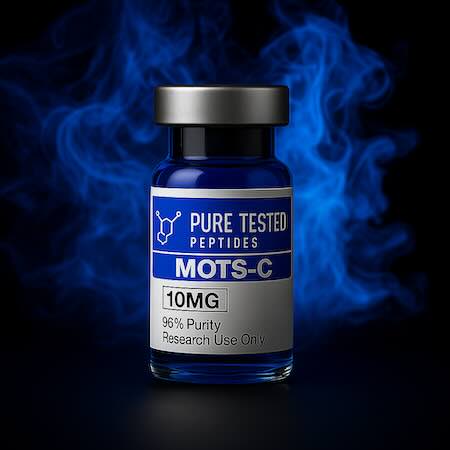
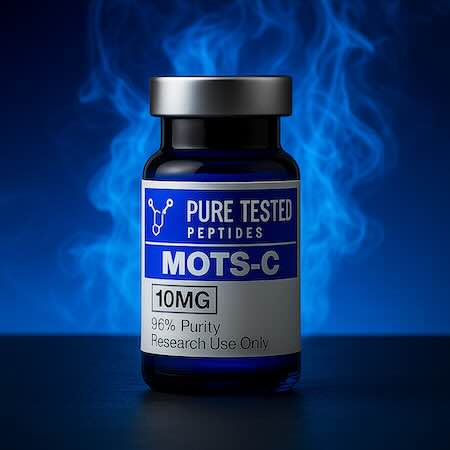
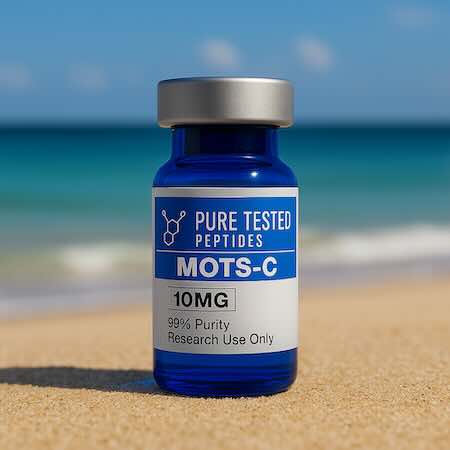
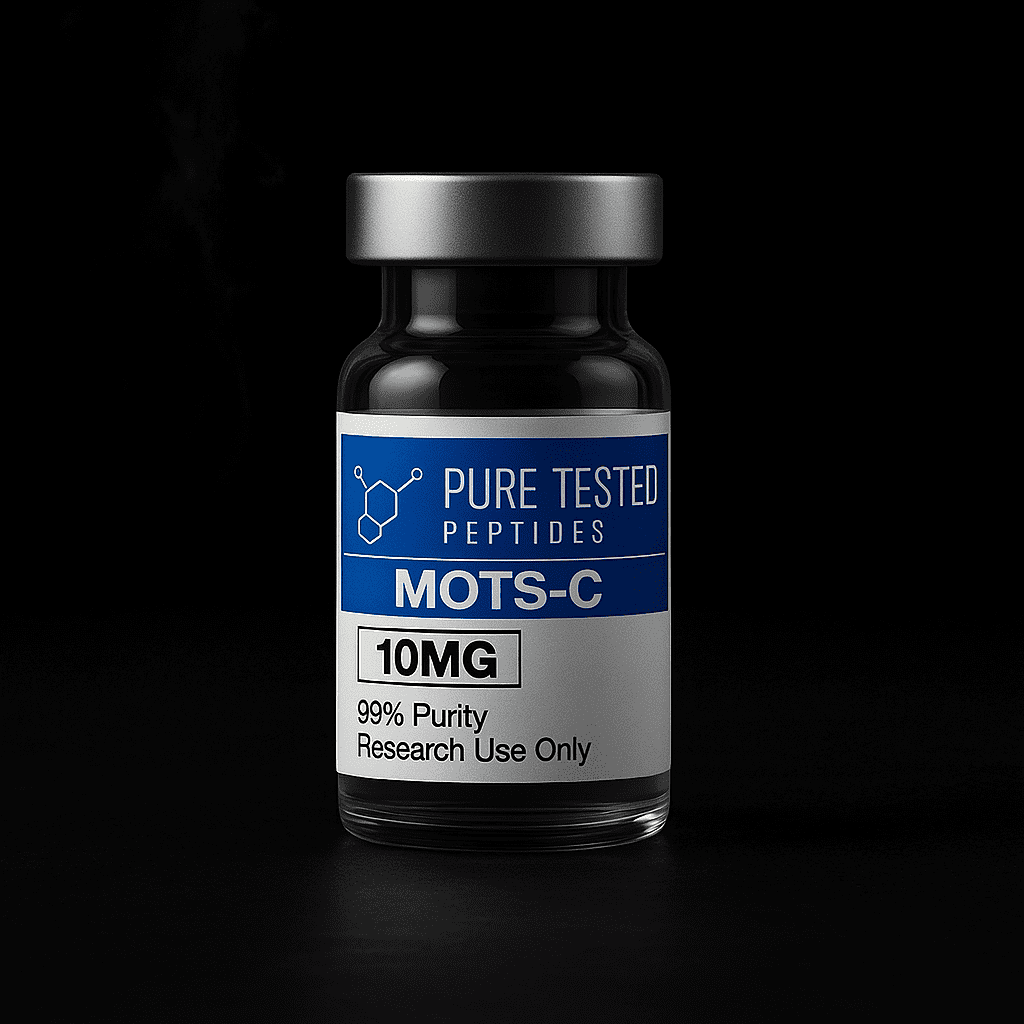
Buy MOTS-C Peptide | 10mg | 99% Pure
Mitochondrial-Derived Peptide for Longevity & Metabolic Research | Third-Party Tested | USA-Manufactured
Product Specifications
✓ Made in USA
✓ Same-Day Shipping
✓ COA Included
✓ For Research Use Only
What is MOTS-C Peptide?
MOTS-C (Mitochondrial Open Reading Frame of the 12S rRNA-c) is a 16-amino acid peptide encoded by the mitochondrial genome. Discovered in 2015, MOTS-C represents a groundbreaking class of signaling molecules called mitochondrial-derived peptides (MDPs) that regulate metabolic homeostasis and cellular energy production.
Unlike nuclear-encoded peptides, MOTS-C originates from mitochondrial DNA, specifically the 12S rRNA region. This unique origin allows MOTS-C to function as a retrograde signaling molecule—communicating from mitochondria to the nucleus to coordinate metabolic responses to cellular energy status.
Key Research Applications:
- Mitochondrial function and biogenesis studies
- Metabolic homeostasis investigation
- AMPK pathway research
- Exercise physiology and adaptation
- Aging and longevity research
- Insulin sensitivity mechanisms
Mechanism of Action: Mitochondrial-Nuclear Communication
1. AMPK Activation
MOTS-C’s primary mechanism involves activation of AMP-activated protein kinase (AMPK), the cell’s master energy sensor. Upon cellular stress or energy depletion, MOTS-C translocates from cytoplasm to the nucleus where it activates AMPK signaling cascades.
AMPK activation promotes:
- Glucose uptake in skeletal muscle independent of insulin
- Fatty acid oxidation and mitochondrial biogenesis
- Inhibition of hepatic gluconeogenesis
- Enhanced cellular energy production
2. Nuclear Translocation & Gene Regulation
Under metabolic stress, MOTS-C translocates to the nucleus and binds to specific DNA regions, regulating the expression of genes involved in:
- Antioxidant response pathways
- Metabolic adaptation to stress
- Mitochondrial function optimization
3. Folate-Methionine Metabolism
MOTS-C interacts with the folate cycle and one-carbon metabolism, influencing nucleotide biosynthesis and methylation reactions critical for cellular function and longevity.
Why Mitochondrial-Derived Peptides Matter
MOTS-C represents a paradigm shift in understanding how mitochondria communicate with the rest of the cell. Rather than being mere “powerhouses,” mitochondria actively regulate whole-body metabolism through peptide signaling molecules encoded in their own DNA. This discovery has profound implications for aging research, metabolic disease investigation, and understanding cellular energy homeostasis.
MOTS-C in Scientific Research
Published Research & Key Findings
Discovery & Metabolic Effects (Lee et al., 2015)
Study Design: Initial characterization in cell culture and mouse models
Key Findings: MOTS-C prevented age-dependent and diet-induced insulin resistance. Improved glucose tolerance in mice fed high-fat diet. Regulated metabolic homeostasis via AMPK-dependent mechanisms.
Research Implications: Established MOTS-C as a novel metabolic regulator with potential applications in diabetes and obesity research.
Citation: Lee C, Zeng J, Drew BG, et al. The mitochondrial-derived peptide MOTS-c promotes metabolic homeostasis and reduces obesity and insulin resistance. Cell Metab. 2015;21(3):443-454.
Nuclear Translocation Mechanism (Kim et al., 2018)
Study Design: Cellular localization studies and stress response investigation
Key Findings: MOTS-C translocates to the nucleus under metabolic stress. Regulates nuclear gene expression in response to glucose restriction. Acts as metabolic stress sensor linking mitochondria to nuclear gene regulation.
Research Implications: Revealed novel mechanism of mitochondrial-nuclear communication in metabolic adaptation.
Citation: Kim KH, Son JM, Benayoun BA, Lee C. The Mitochondrial-Encoded Peptide MOTS-c Translocates to the Nucleus to Regulate Nuclear Gene Expression in Response to Metabolic Stress. Cell Metab. 2018;28(3):516-524.e7.
Exercise Performance & Muscle Function (Reynolds et al., 2021)
Study Design: Exercise capacity testing in aged mice, skeletal muscle analysis
Key Findings: MOTS-C treatment restored exercise capacity in aged mice to youthful levels. Enhanced mitochondrial respiration in skeletal muscle. Improved endurance and reduced physical decline.
Research Implications: Suggests MOTS-C may play a role in age-related physical performance decline and muscle metabolism.
Citation: Reynolds JC, Lai RW, Woodward JO, et al. MOTS-c is an exercise-induced mitochondrial-encoded regulator of age-dependent physical decline and muscle homeostasis. Nat Commun. 2021;12(1):470.
Longevity & Healthspan Extension (Fuku et al., 2015)
Study Design: Population genetics study in centenarians, functional validation in model organisms
Key Findings: Specific m.1382A>C polymorphism in MOTS-c sequence associated with exceptional longevity in Japanese population. Functional studies showed this variant maintains MOTS-c activity into advanced age.
Research Implications: Links mitochondrial-derived peptides to human longevity, opening new avenues for aging research.
Citation: Fuku N, Pareja-Galeano H, Zempo H, et al. The mitochondrial-derived peptide MOTS-c: a player in exceptional longevity? Aging Cell. 2015;14(6):921-923.
MOTS-C vs Other Longevity Peptides
MOTS-C vs Humanin
Similarity: Both are mitochondrial-derived peptides encoded by mitochondrial DNA.
Difference: Humanin (24 amino acids) primarily provides cytoprotection against apoptosis and neurodegenerative processes, while MOTS-C (16 amino acids) focuses on metabolic regulation and energy homeostasis.
Research Use: MOTS-C is preferred for metabolic and exercise studies; Humanin for neuroprotection research.
MOTS-C vs Epithalon
Mechanism: Epithalon acts on the pineal gland and telomerase, while MOTS-C works through AMPK and mitochondrial signaling.
Research Focus: Epithalon research centers on telomere biology and pineal function; MOTS-C on metabolic health and mitochondrial communication.
MOTS-C vs Metformin
Similarity: Both activate AMPK and improve insulin sensitivity.
Difference: MOTS-C is an endogenous peptide with additional nuclear signaling functions; metformin is a small molecule drug with different tissue distribution and side effect profile.
Research Advantage: MOTS-C represents a physiological regulator, useful for understanding normal metabolic signaling pathways.
Reconstitution & Handling Guidelines
Reconstitution Protocol
- Solvent Selection: Use bacteriostatic water (0.9% benzyl alcohol) for standard protocols or sterile water for immediate use.
- Volume: Add 2mL of solvent to 10mg vial for 5mg/mL concentration.
- Mixing Technique: Gently swirl vial. Do not shake. Allow complete dissolution (1-2 minutes).
- Visual Inspection: Solution should be clear and colorless. Discard if cloudiness or particles appear.
Storage After Reconstitution
- Refrigerated (2-8°C): Stable for up to 14 days
- Frozen (-20°C): Not recommended after reconstitution
- Room Temperature: Use within 4-6 hours
Research Dosing Framework
Published research in animal models typically uses doses ranging from 0.5mg/kg to 15mg/kg depending on study objectives:
- Metabolic studies: 5-15mg/kg in mice (IP or SC administration)
- Exercise performance: 5mg/kg administered 30 minutes before exercise tests
- Chronic studies: Daily or every-other-day administration for 2-8 weeks
Dosing Calculator
Concentration: 5mg/mL (10mg vial + 2mL solvent)
Example: For 0.5mg dose → 0.1mL (100 units on insulin syringe)
Example: For 2mg dose → 0.4mL (400 units on insulin syringe)
Example: For 5mg dose → 1.0mL (1000 units or 1mL)
Quality Assurance & Third-Party Testing
Our Testing Standards
Every batch of MOTS-C undergoes comprehensive third-party analysis to verify purity, sequence accuracy, and safety for research use.
Testing Methods:
- HPLC (High-Performance Liquid Chromatography): Confirms ≥99% purity
- Mass Spectrometry (MALDI-TOF or ESI-MS): Verifies molecular weight (2,174.53 ± 1 Da)
- Amino Acid Analysis: Confirms sequence accuracy and composition
- Endotoxin Testing: LAL assay ensures <1.0 EU/mg
- Peptide Content Assay: Quantifies actual peptide content (corrects for moisture and salts)
Synthesis & Manufacturing
- Solid-phase peptide synthesis (SPPS) in USA cGMP facilities
- Multiple purification steps including preparative HPLC
- Lyophilization in controlled, sterile environment
- Fill-finish in Class 10,000 cleanroom
- Nitrogen-sealed vials for oxidation protection
Frequently Asked Questions
What makes MOTS-C unique among peptides?
MOTS-C is one of the few peptides encoded by mitochondrial DNA rather than nuclear DNA. This unique origin allows it to serve as a retrograde signaling molecule that communicates mitochondrial status to the nucleus, regulating whole-body metabolism from the cellular level.
How should MOTS-C be stored?
Store lyophilized MOTS-C at -20°C (freezer) for maximum stability (2+ years). After reconstitution with bacteriostatic water, store at 2-8°C (refrigerator) and use within 14 days. Avoid freeze-thaw cycles of reconstituted solution.
What is the optimal reconstitution method for MOTS-C?
Reconstitute with 2mL bacteriostatic water for a 5mg/mL concentration. Add water slowly down the side of the vial, then gently swirl (do not shake) until dissolved. This concentration is convenient for most research applications and stable for 14 days refrigerated.
Can MOTS-C be used in cell culture studies?
Yes. MOTS-C has been extensively studied in various cell lines including C2C12 myoblasts, HepG2 hepatocytes, and primary skeletal muscle cells. Typical in vitro concentrations range from 1-100 μM depending on the research objective. Add MOTS-C directly to culture medium.
What is the relationship between MOTS-C and exercise?
Research shows MOTS-C levels increase with exercise and that exogenous MOTS-C administration can enhance exercise capacity, particularly in aged subjects. Studies suggest MOTS-C mediates some metabolic adaptations to physical activity, making it valuable for exercise physiology research.
Is MOTS-C related to aging and longevity?
Population studies found specific MOTS-C genetic variants associated with exceptional longevity in centenarians. Animal studies demonstrate MOTS-C can improve age-related metabolic decline and restore youthful exercise capacity in aged mice. These findings make MOTS-C a key tool in longevity research.
How does MOTS-C compare to NAD+ precursors for mitochondrial research?
MOTS-C and NAD+ precursors (NMN, NR) work through different mechanisms. NAD+ precursors boost cellular NAD+ levels to support sirtuins and other NAD-dependent processes. MOTS-C is a signaling peptide that activates AMPK and regulates gene expression. They can be complementary tools in mitochondrial research.
What safety data exists for MOTS-C?
Animal studies have shown MOTS-C to be well-tolerated at doses up to 15mg/kg with no reported adverse effects in metabolic or longevity studies. As an endogenous peptide (naturally produced by the body), MOTS-C represents a physiological signaling molecule. Detailed safety data is available in published literature.
Important Research Notice
FOR RESEARCH USE ONLY. This product is intended for laboratory and research applications only. It is not intended for human consumption, diagnostic purposes, or therapeutic use. Researchers must comply with all applicable federal, state, and local regulations.
Information provided represents published scientific literature and is for educational purposes only. It does not constitute medical advice or health claims.