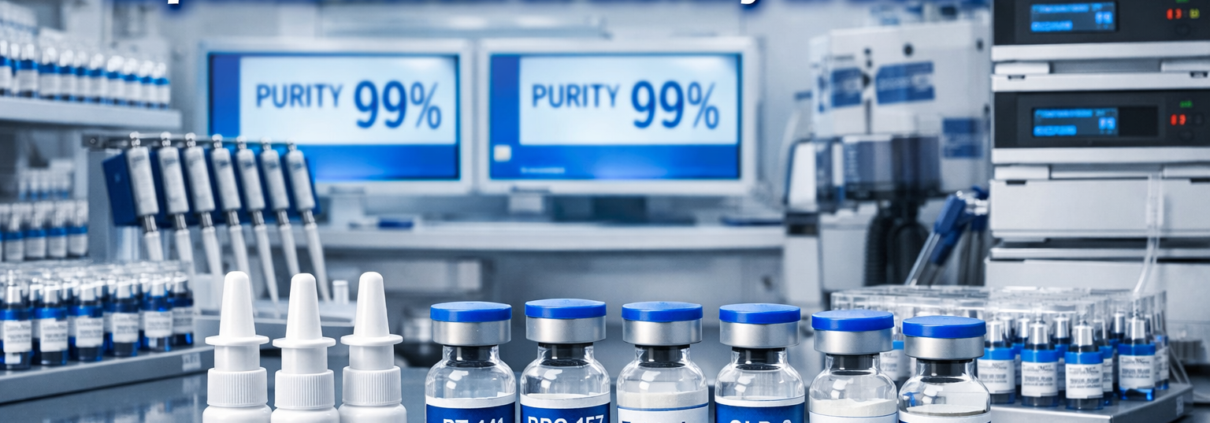
Imagine walking into a laboratory where every vial tells a story of precision, every batch number represents unwavering quality, and every peptide holds the potential to unlock groundbreaking research discoveries. That’s exactly what researchers experienced in early 2026 when Pure Tested Peptides announced a massive expansion of their research peptide library, introducing cutting-edge formulations like PT-141 nasal spray, BPC157/TB500 combinations, Epithalon peptide, GLP-3 peptide, GLP-1T peptide, GLP-3 Reta peptide, CJC1295 Ipamorelin peptide, MOTS-C peptide, Selank nasal spray, Semax nasal spray, and 5-Amino-1MQ peptide—all backed by the company’s commitment to 2026 peptide science excellence.[1]
This expansion represents more than just adding products to a catalog. It signals a fundamental shift in how research-grade peptides are sourced, verified, and delivered to laboratories across the nation. With guaranteed 99% purity, transparent third-party testing, USA-based operations in Lutz, Florida, 24/7 customer service, and lightning-fast shipping, Pure Tested Peptides has positioned itself as the go-to supplier for serious researchers who refuse to compromise on quality.[1]
Key Takeaways
✅ Massive Library Expansion: Pure Tested Peptides now offers an extensive collection including PT-141 nasal spray, BPC157/TB500 blends, Epithalon, multiple GLP variants, CJC1295 Ipamorelin combinations, MOTS-C, cognitive enhancement nasal sprays, and metabolic modulators.[1]
✅ Uncompromising Quality Standards: Every peptide undergoes rigorous analytical testing with guaranteed 99% purity, third-party HPLC and MS verification, and complete Certificate of Analysis (COA) documentation for full traceability.
✅ Innovative Delivery Systems: The company now offers convenient nasal spray formulations for compounds like PT-141, Selank, and Semax, representing advanced peptide delivery technology adapted for research applications.[1]
✅ Proprietary Research Blends: Exclusive formulations like the Wolverine Stack, Glow blend, and Klow blend allow researchers to explore synergistic peptide interactions without sourcing multiple individual compounds.[1]
✅ Superior Customer Experience: Operating from Florida with 4-5 day domestic delivery, round-the-clock support, and comprehensive educational resources, Pure Tested Peptides eliminates common frustrations in peptide procurement.[1][3]
What Sets Pure Tested Peptides Apart in 2026 Peptide Science
The research peptide industry has experienced explosive growth, with suppliers emerging across the globe promising quality and reliability. However, not all peptide providers maintain the same rigorous standards. Pure Tested Peptides has distinguished itself through several critical differentiators that matter to serious researchers.
Guaranteed 99% Purity with Transparent Testing
In an industry where purity claims often lack verification, Pure Tested Peptides stands behind a guaranteed 99% purity standard for all compounds in their expanded library.[1][3] This isn’t marketing language—it’s a verifiable commitment backed by comprehensive testing protocols.
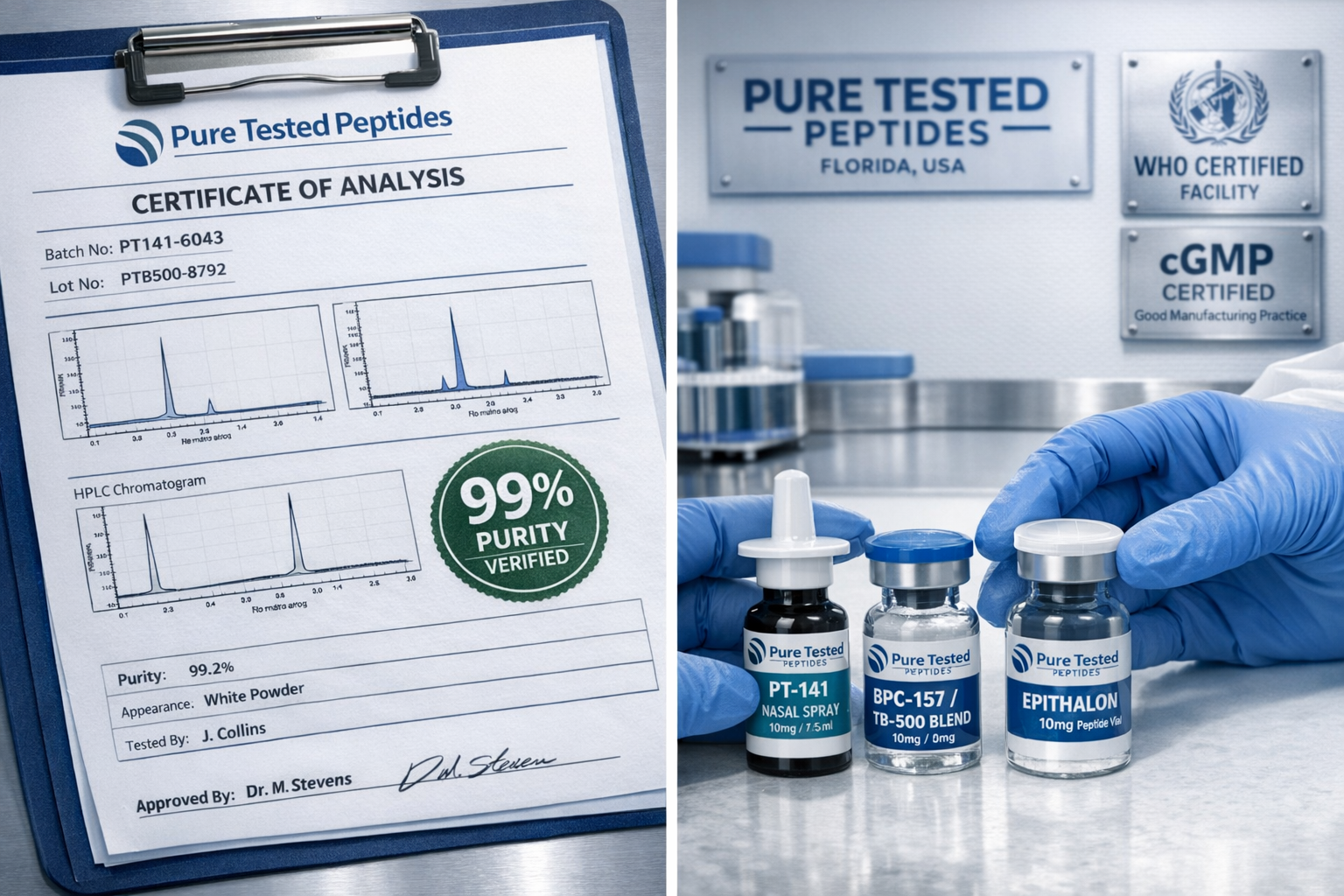
Every batch undergoes analytical verification using High-Performance Liquid Chromatography (HPLC) and Mass Spectrometry (MS) analysis conducted by independent third-party laboratories.[3] Researchers receive detailed Certificates of Analysis (COAs) that document:
- Exact purity percentages for each batch
- Identity confirmation through spectral analysis
- Lot tracking numbers for reproducibility across studies
- Testing methodology details for validation purposes
- Storage and handling recommendations for compound stability
This level of transparency allows researchers to associate specific observations with exact batch numbers—essential for data comparison and protocol reproducibility across multi-phase studies.[2]
USA-Based Operations with WHO/GMP Certification
Operating from their facility in Florida, Pure Tested Peptides maintains complete control over their supply chain, quality assurance processes, and distribution logistics. This domestic operation provides several advantages:
🏭 Regulatory Compliance: The facility maintains WHO/GMP and ISO 9001:2015 certifications, ensuring world-class manufacturing processes align with international quality standards.[3]
📦 Faster Delivery Times: Domestic researchers benefit from rapid delivery within the USA, minimizing laboratory downtime and enabling rapid protocol initiation.[3]
💬 Accessible Support: Time zone alignment and cultural familiarity facilitate clearer communication regarding technical specifications and research applications.
24/7 Customer Service and Educational Support
Pure Tested Peptides recognizes that peptide research doesn’t operate on a 9-to-5 schedule. Their round-the-clock customer service ensures researchers can access support whenever questions arise about product specifications, storage recommendations, or reconstitution protocols.[1]
Beyond basic customer service, the company emphasizes education and informed decision-making. Their website features comprehensive product descriptions, research context documentation, and accessible explanations that help researchers understand the properties and potential applications of each compound in their expanding library.[1]
For those exploring longevity peptide research, the company provides detailed guides that contextualize compounds like Epithalon, MOTS-C, and other age-related research peptides within current scientific understanding.
The 2026 Peptide Library: Hottest Research Compounds
Pure Tested Peptides’ expanded library represents a carefully curated collection designed to support diverse research objectives across multiple scientific disciplines. Let’s explore the standout compounds making waves in 2026 peptide science.
PT-141 Nasal Spray: Neurochemical Research Innovation
One of the most significant additions to the Pure Tested Peptides catalog is PT-141 in convenient nasal spray format.[1] This melanocortin receptor agonist has attracted considerable research interest for its unique neurochemical properties and central nervous system interactions.
The nasal spray delivery system represents Pure Tested Peptides’ commitment to adapting peptide formats while preserving analytical integrity.[1] This administration route offers several research advantages:
- Rapid absorption through nasal mucosa
- Bypassing first-pass metabolism for more direct CNS access
- Convenient dosing for protocol standardization
- Reduced handling complexity compared to reconstitution procedures
Researchers interested in PT-141’s mechanisms can explore detailed documentation through the company’s PT-141 peptide research guide, which provides context on receptor interactions, dosing considerations, and quality control workflows.
BPC-157/TB-500 Combination: Synergistic Research Potential
The BPC157/TB500 blend represents Pure Tested Peptides’ understanding that many research protocols benefit from investigating peptide combinations rather than isolated compounds.[1] This pairing has generated substantial interest in tissue research and cellular signaling studies.
BPC-157 (Body Protection Compound-157) is a pentadecapeptide derived from a protective gastric protein, while TB-500 (Thymosin Beta-4) is a naturally occurring peptide present in virtually all animal and human cells. When combined, these peptides offer researchers the opportunity to explore potential synergistic mechanisms across multiple biological pathways.
The company’s BPC-157 core peptides documentation provides comprehensive sourcing guidance and research context for laboratories incorporating this compound into their protocols.
Epithalon Peptide: Longevity Research Applications
Epithalon (also known as Epitalon) has emerged as a cornerstone compound in longevity and cellular aging research.[1] This tetrapeptide (Ala-Glu-Asp-Gly) has been extensively studied for its potential effects on telomerase activity and circadian regulation.
Pure Tested Peptides’ commitment to this research area extends beyond simply offering the compound. Their Epithalon peptides product line includes detailed batch documentation and storage recommendations critical for maintaining compound stability throughout extended research protocols.
Researchers exploring age-related mechanisms can access comprehensive information through the company’s longevity peptide research resources, which contextualize Epithalon within broader geroscience investigations.
GLP-3 Peptide, GLP-1T Peptide, and GLP-3 Reta Peptide: Metabolic Research Frontiers
The expansion into GLP-3 peptide, GLP-1T peptide, and GLP-3 Reta peptide represents Pure Tested Peptides’ response to the explosive growth in metabolic and incretin research.[1] These compounds have attracted significant attention in 2026 as researchers explore novel approaches to glucose regulation, satiety signaling, and metabolic homeostasis.
The glucagon-like peptide family represents some of the most actively researched compounds in contemporary peptide science. Pure Tested Peptides’ offerings in this category include:
GLP-3 Peptide: A next-generation incretin receptor agonist being investigated for its metabolic signaling properties and potential advantages over earlier GLP-1 variants.
GLP-1T Peptide: A modified GLP-1 analog designed for extended half-life and enhanced receptor binding characteristics.
GLP-3 Reta Peptide: A dual-acting compound that engages multiple incretin pathways simultaneously, offering researchers the opportunity to investigate synergistic metabolic mechanisms.
For comprehensive background on this compound class, researchers can reference the company’s GLP-1 peptide sourcing guide, which provides generational context and research concepts essential for protocol design.
CJC-1295 Ipamorelin Peptide: Growth Hormone Research Combinations
The CJC-1295 Ipamorelin peptide blend has become one of Pure Tested Peptides’ most requested formulations for growth hormone secretagogue research.[1] This combination offers researchers the ability to investigate both GHRH (Growth Hormone Releasing Hormone) and ghrelin receptor pathways simultaneously.
CJC-1295 is a modified GHRH analog with extended half-life due to Drug Affinity Complex (DAC) technology, while Ipamorelin is a selective growth hormone secretagogue receptor (GHSR) agonist known for its specificity and reduced side effect profile in research models.
The company also offers proprietary blends like their Tesamorelin/Ipamorelin combination, which provides an alternative GHRH analog for researchers comparing different growth hormone research approaches. These peptide blend research options eliminate the need to source and mix individual compounds from multiple suppliers.
MOTS-C Peptide: Mitochondrial Research Applications
MOTS-C (Mitochondrial Open Reading Frame of the 12S rRNA-c) represents a fascinating class of mitochondrial-derived peptides that have captured research attention in 2026.[1] This 16-amino acid peptide is encoded within the mitochondrial genome and has been investigated for its potential roles in metabolic regulation and cellular energy homeostasis.
Research interest in MOTS-C has grown substantially as scientists explore the communication between mitochondria and nuclear genomes. Pure Tested Peptides’ MOTS-C peptide offerings include comprehensive documentation on storage requirements and reconstitution protocols specific to this mitochondrial peptide.
The company’s educational resources, including their article on MOTS-C as a mitochondrial peptide, provide researchers with scientific context for incorporating this compound into metabolic and aging research protocols.
Selank Nasal Spray and Semax Nasal Spray: Cognitive Research Tools
The addition of Selank nasal spray and Semax nasal spray to the Pure Tested Peptides library reflects growing research interest in nootropic peptides and cognitive enhancement mechanisms.[1] Both compounds are synthetic peptide analogs with distinct neurochemical properties.
Selank is a heptapeptide analog of tuftsin with anxiolytic and cognitive research applications. Semax is a heptapeptide analog of ACTH(4-10) that has been studied for its potential neuroprotective and cognitive enhancement properties.
The nasal spray formulation offers researchers several advantages:
- Direct CNS access via olfactory and trigeminal pathways
- Standardized dosing for protocol consistency
- Reduced degradation compared to oral administration
- Convenient application in behavioral research models
Pure Tested Peptides’ nasal spray peptide collection includes detailed specifications on concentration, excipients, and storage requirements essential for maintaining compound integrity.
5-Amino-1MQ Peptide: Metabolic Modulation Research
5-Amino-1MQ represents one of the newest additions to the research peptide landscape, and Pure Tested Peptides has positioned itself at the forefront of providing this compound to qualified researchers.[1] This small molecule peptide has attracted attention for its potential effects on NNMT (Nicotinamide N-Methyltransferase) enzyme activity.
Research into 5-Amino-1MQ explores its potential role in metabolic regulation, cellular energy production, and NAD+ metabolism. The compound’s mechanism differs substantially from traditional metabolic peptides, offering researchers novel pathways to investigate.
For researchers interested in broader metabolic modulation approaches, Pure Tested Peptides maintains comprehensive resources on metabolic modulation research lines that contextualize 5-Amino-1MQ within the larger landscape of metabolic research peptides.
Proprietary Blends and Innovative Formulations
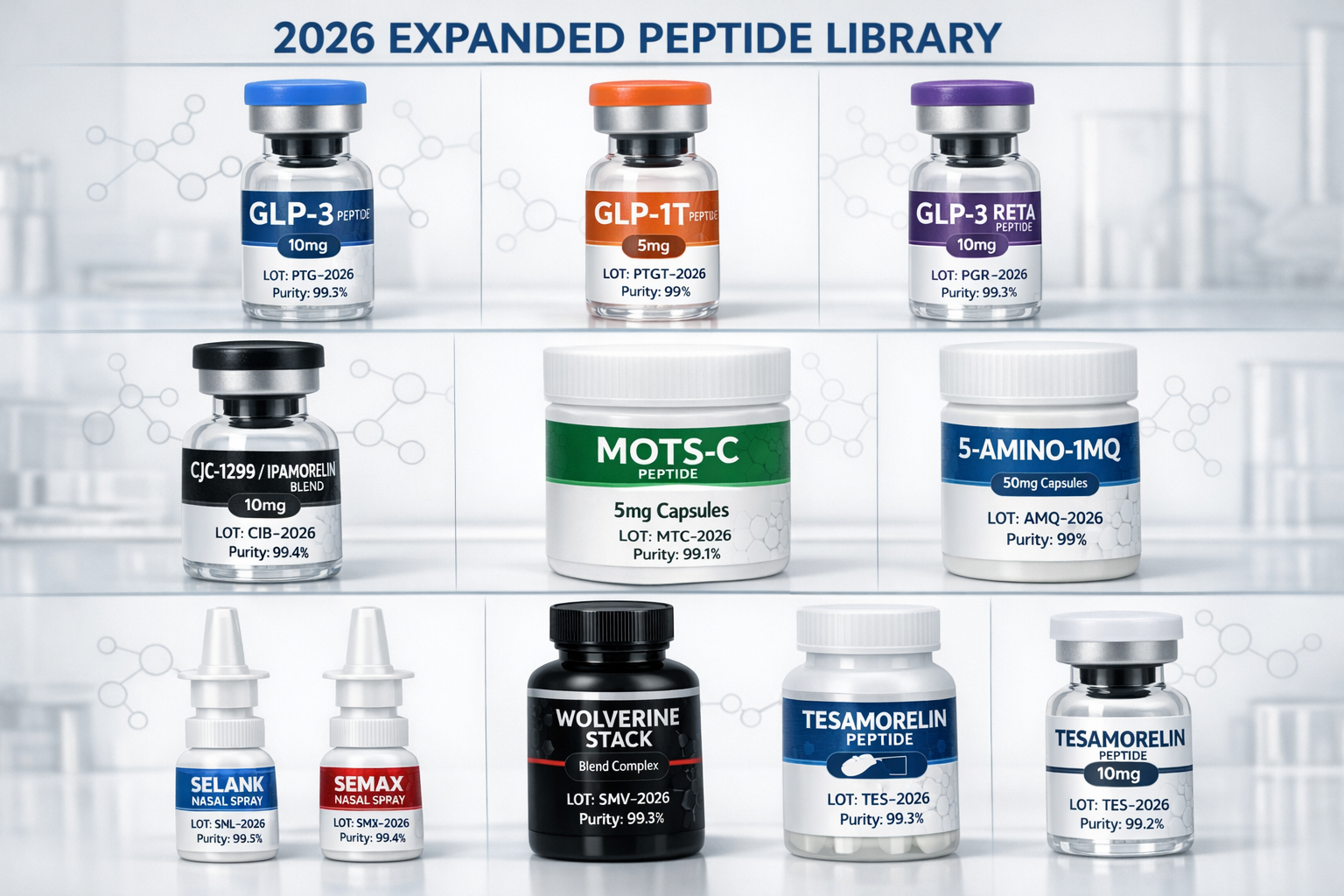
Beyond individual compounds, Pure Tested Peptides has developed several proprietary formulations designed to support specific research objectives while simplifying sourcing logistics.
The Wolverine Stack: Multi-Pathway Research
The Wolverine Stack represents Pure Tested Peptides’ most comprehensive research blend, combining multiple peptides with complementary mechanisms into a single formulation.[1] This stack allows researchers to investigate synergistic effects across tissue repair, growth signaling, and recovery pathways without the complexity of sourcing and mixing multiple individual compounds.
While the exact formulation remains proprietary, the Wolverine Stack typically includes combinations of:
- Tissue repair peptides (BPC-157, TB-500)
- Growth hormone secretagogues (CJC-1295, Ipamorelin)
- Recovery and regeneration compounds
This approach to peptide research reflects a growing recognition that biological systems rarely respond to isolated interventions—instead, multiple pathways interact in complex ways that may be better investigated through combination approaches.
Glow Blend and Klow Blend: Specialized Research Applications
Pure Tested Peptides introduced Glow blend peptide and Klow blend peptide specifically for investigative research into synergistic peptide interactions.[1] These formulations allow researchers to explore multi-pathway mechanisms with compounds that have been pre-combined in optimal ratios.
The Glow blend focuses on compounds associated with cellular regeneration, collagen synthesis, and tissue quality research. The Klow blend emphasizes metabolic and energy-related pathways. Both represent the company’s commitment to innovation in peptide formulation beyond simple individual compound offerings.
Researchers can explore detailed information about these proprietary blends through Pure Tested Peptides’ Glow and Klow peptide blend resources, which provide context on the rationale behind these combinations.
GHK-Cu Peptide: Copper-Binding Research Compounds
Pure Tested Peptides has significantly increased investment in GHK-Cu peptide verification processes, recognizing the growing research interest in copper-binding peptides and their biological signaling properties.[1] GHK-Cu (Glycyl-L-Histidyl-L-Lysine-Copper) is a naturally occurring copper complex that has been extensively studied for its effects on tissue remodeling and cellular signaling.
The company’s enhanced quality control for GHK-Cu includes specific verification of copper binding, peptide sequence confirmation, and stability testing under various storage conditions. Their GHK-Cu peptide sourcing guide provides researchers with comprehensive information on handling this unique compound class.
Quality Assurance and Testing Protocols
Pure Tested Peptides’ expansion hasn’t come at the expense of quality—instead, the company has simultaneously enhanced its testing and verification protocols to maintain consistency across their growing library.
Third-Party Verification and Certificates of Analysis
Every peptide in the Pure Tested Peptides catalog undergoes analytical testing to verify identity and purity.[1] The company maintains validated testing methods and detailed batch records essential for reproducibility across studies.
The verification process includes:
Identity Confirmation: Mass spectrometry analysis confirms the exact molecular weight and sequence of each peptide, ensuring researchers receive the compound specified in their order.
Purity Quantification: HPLC analysis determines the percentage of target peptide versus impurities, degradation products, or synthesis byproducts. Pure Tested Peptides guarantees 99% purity across their library.[3]
Endotoxin Testing: For peptides intended for certain research applications, endotoxin levels are verified to ensure they meet appropriate specifications.
Stability Documentation: Storage stability data helps researchers understand optimal handling conditions and expected shelf life under various storage scenarios.
Each Certificate of Analysis includes the specific lot number, testing date, methodology employed, and results for all quality parameters. This documentation is essential for regulatory compliance and scientific reproducibility.
Batch Tracking and Reproducibility
One often-overlooked aspect of peptide research is the importance of batch-to-batch consistency. Pure Tested Peptides addresses this through comprehensive lot tracking that enables researchers to associate observations with exact batch numbers.[2]
This traceability becomes critical when:
- Comparing results across different experimental phases
- Validating findings in replication studies
- Troubleshooting unexpected outcomes by ruling out compound variability
- Publishing research that requires detailed materials documentation
The company’s commitment to lab-tested peptides with complete documentation sets them apart from suppliers who provide minimal verification or inconsistent batch tracking.
Logistics, Shipping, and Customer Experience
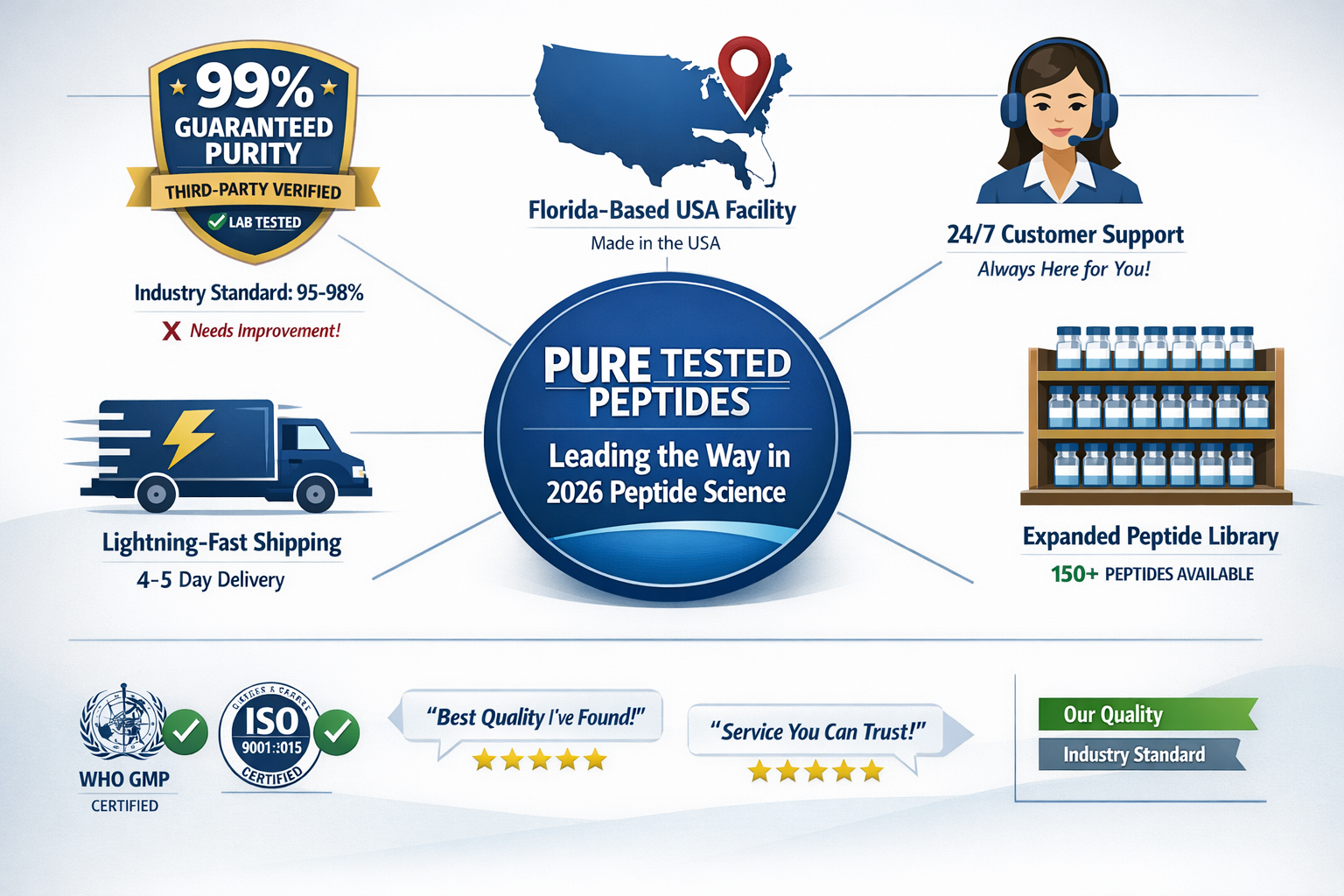
Even the highest-quality peptides lose value if they’re degraded during shipping or arrive too late for time-sensitive protocols. Pure Tested Peptides has invested heavily in logistics infrastructure to ensure compounds reach researchers in optimal condition.
Lightning-Fast Domestic Delivery
Operating from their Florida facility, Pure Tested Peptides offers 4-5 day domestic delivery within the USA.[3] This rapid turnaround minimizes laboratory downtime and enables researchers to initiate protocols without extended waiting periods.
The shipping process includes:
- Temperature-controlled packaging appropriate for each peptide’s stability requirements
- Discreet packaging that protects research confidentiality
- Tracking information provided immediately upon shipment
- Signature confirmation options for high-value orders
- Expedited shipping available for urgent research needs
International Research Support
While based in the USA, Pure Tested Peptides serves an international research community with dedicated support teams to navigate customs, documentation, and international shipping requirements.[3] This global reach ensures researchers worldwide can access the same quality standards maintained for domestic customers.
Responsive Customer Service
The company’s 24/7 customer service commitment means researchers can get answers whenever questions arise.[1] Support staff are trained not just in order processing, but in understanding peptide specifications, storage requirements, and research applications.
Customer service extends beyond reactive support to proactive education. The company maintains extensive resources on what’s new in peptide research, helping researchers stay current with emerging compounds and evolving research methodologies.
Industry Context: The 2026 Peptide Research Landscape
Pure Tested Peptides’ expansion doesn’t exist in isolation—it reflects broader trends in the rapidly evolving peptide research industry.
Competitive Landscape and Industry Standards
The peptide research market has experienced significant consolidation and expansion in 2026. Competing suppliers like Peptide Hubs launched six precision peptides on February 1, 2026 (Copper Peptide GHK-Cu, GHRP-6, Adipotide, Selank, IGF-1 LR3, and Chonluten), indicating rapid industry-wide expansion in research peptide offerings.[3]
This competitive environment has driven quality improvements across the industry. Leading manufacturers now commonly offer peptides synthesized with over 99% purity, backed by third-party verification through HPLC and MS analysis with Certificates of Analysis.[3]
However, not all suppliers maintain equivalent standards. Researchers must evaluate:
- Actual testing documentation versus marketing claims
- Batch-to-batch consistency through lot tracking
- Facility certifications and quality management systems
- Customer service responsiveness and technical expertise
- Delivery reliability and proper handling during shipping
Regulatory Considerations for Research Peptides
The regulatory landscape for research peptides continues to evolve in 2026. Pure Tested Peptides clearly labels all products for research purposes only, ensuring compliance with current regulations governing peptide distribution.[1]
Researchers should understand that:
- Research peptides are not approved for human consumption
- Proper institutional oversight and protocols are required for research use
- Documentation and traceability are essential for regulatory compliance
- Quality standards protect both research integrity and regulatory standing
The company’s commitment to clear labeling, comprehensive documentation, and transparent quality practices helps researchers maintain compliance while advancing their scientific objectives.[1]
Emerging Peptide Research Trends
Several trends are shaping peptide research in 2026:
Combination Therapies: Growing recognition that synergistic peptide combinations may offer advantages over isolated compounds, reflected in Pure Tested Peptides’ proprietary blends.[1]
Novel Delivery Systems: Expansion beyond traditional injection formats to include nasal sprays, topical formulations, and other administration routes that may offer research advantages.[1]
Mitochondrial Peptides: Increasing interest in compounds like MOTS-C that represent communication between mitochondrial and nuclear genomes.
Metabolic Research: Explosive growth in GLP-family peptides and metabolic modulators driven by public health concerns about obesity and metabolic disease.
Longevity Science: Sustained research interest in peptides like Epithalon that may influence aging mechanisms and healthspan extension.
Pure Tested Peptides’ expanded library positions researchers to participate in all these emerging research areas with access to high-quality compounds and comprehensive support.
Practical Considerations for Researchers
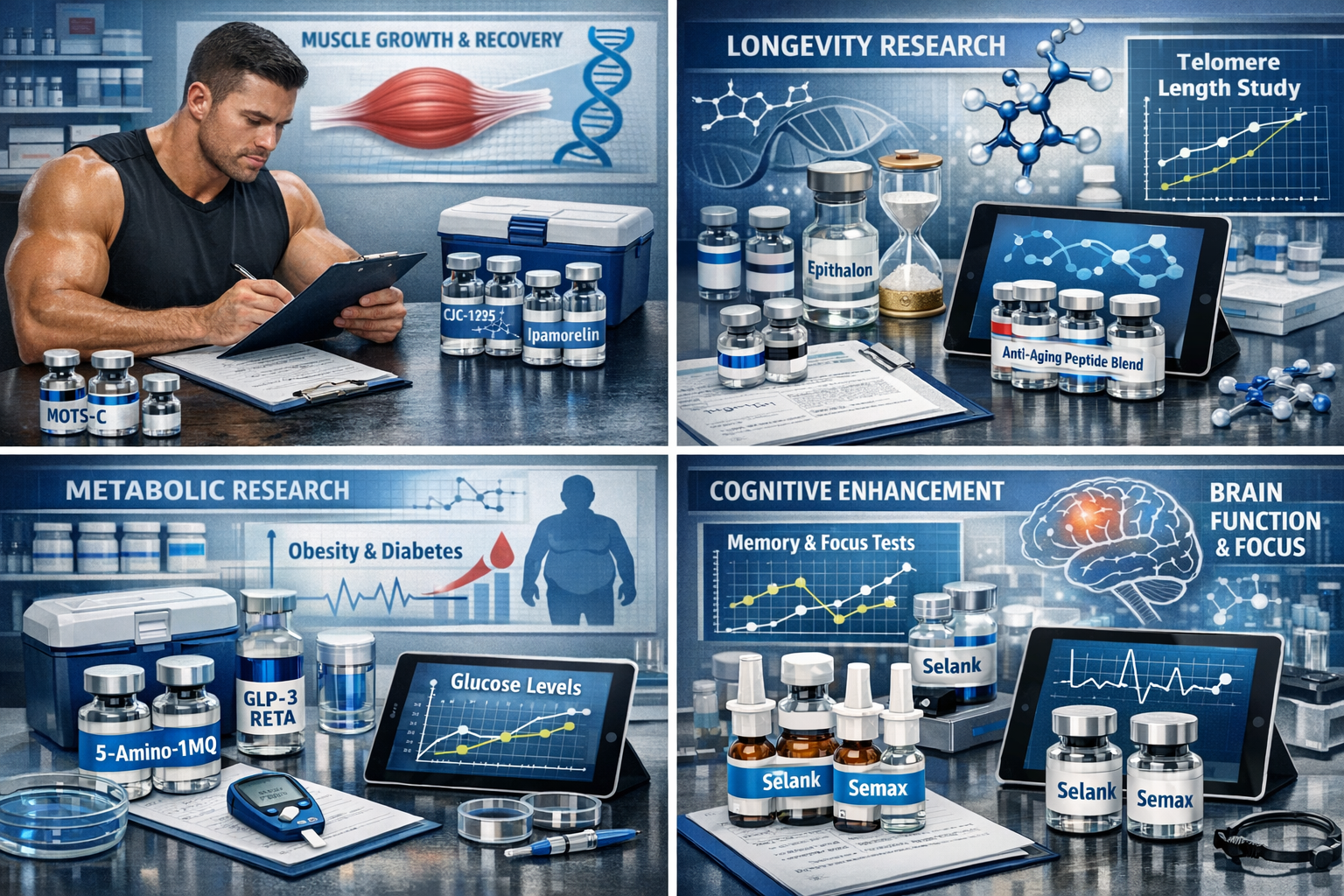
Successfully incorporating peptides from Pure Tested Peptides’ expanded library requires attention to practical details beyond simply placing an order.
Selecting the Right Peptides for Your Research
With such an extensive library now available, researchers should consider:
Research Objectives: Clearly define whether you’re investigating metabolic pathways, cognitive mechanisms, tissue repair, longevity, or other research areas. This focus guides compound selection.
Mechanism of Action: Understand how each peptide interacts with biological systems. Pure Tested Peptides provides educational resources to help researchers grasp the fundamental mechanisms of compounds in their library.
Combination Potential: Consider whether proprietary blends like the Wolverine Stack or individual compounds better suit your research design. Combinations may offer synergistic insights but add complexity to interpretation.
Delivery Format: Evaluate whether traditional lyophilized peptides requiring reconstitution or convenient nasal spray formats better serve your protocol requirements.
Budget and Timeline: Balance the comprehensiveness of your research design with available resources and time constraints.
Storage and Handling Best Practices
Peptide stability depends critically on proper storage and handling:
Lyophilized Peptides: Store at -20°C or colder in original sealed vials. Minimize freeze-thaw cycles. Protect from light and moisture.
Reconstituted Peptides: Use immediately or store at 4°C for short-term use (typically up to 2 weeks, depending on the specific peptide). For longer storage, aliquot and freeze at -20°C or -80°C.
Nasal Spray Formulations: Follow specific storage instructions provided with each product. Generally, store refrigerated and use within the specified timeframe after opening.
Documentation: Record lot numbers, reconstitution dates, storage conditions, and any observations about appearance or stability in your laboratory notebook.
Protocol Development and Optimization
Pure Tested Peptides supports researchers through the protocol development process with educational resources and responsive customer service. Consider:
Starting with Literature Review: Understand how other researchers have used similar compounds in comparable research models.
Dose-Response Studies: Begin with a range of concentrations to identify optimal dosing for your specific research questions.
Positive and Negative Controls: Design experiments with appropriate controls to isolate peptide effects from other variables.
Replication: Plan for sufficient replication to ensure findings are reproducible and not artifacts of batch variation or procedural inconsistencies.
Documentation: Maintain detailed records linking specific observations to exact lot numbers, enabling you to trace any unexpected results to potential batch variations.
Real-World Research Applications
While Pure Tested Peptides serves researchers across diverse disciplines, several application areas have seen particularly strong growth with the expanded library.
Fitness and Performance Research
Fitness enthusiasts and performance researchers have shown substantial interest in compounds like:
- CJC-1295 Ipamorelin blends for growth hormone research
- BPC-157/TB-500 combinations for tissue and recovery investigations
- MOTS-C for metabolic and mitochondrial research
- 5-Amino-1MQ for metabolic modulation studies
The company’s buy peptides online USA platform provides convenient access to these compounds with the quality assurance serious researchers demand.
Longevity and Aging Research
The expanding field of geroscience has driven demand for:
- Epithalon for telomerase and circadian research
- MOTS-C for mitochondrial aging mechanisms
- GHK-Cu for tissue remodeling and cellular signaling
- Proprietary blends combining multiple longevity-related pathways
Researchers in this area benefit from Pure Tested Peptides’ comprehensive longevity peptide research documentation, which contextualizes individual compounds within broader aging research frameworks.
Metabolic and Obesity Research
The metabolic research community has embraced Pure Tested Peptides’ expanded GLP-family offerings:
- GLP-3 peptide for next-generation incretin research
- GLP-1T peptide for extended-action metabolic studies
- GLP-3 Reta peptide for dual-pathway investigations
- 5-Amino-1MQ for alternative metabolic modulation approaches
These compounds support research into satiety signaling, glucose regulation, energy homeostasis, and metabolic disease mechanisms.
Cognitive and Neurological Research
The addition of nasal spray formulations has particularly benefited cognitive research:
- Selank nasal spray for anxiolytic and cognitive research
- Semax nasal spray for neuroprotective investigations
- PT-141 nasal spray for melanocortin receptor studies
The convenient delivery format and direct CNS access make these compounds valuable tools for behavioral and neurochemical research protocols.
Conclusion: Advancing Research Through Quality and Innovation
Pure Tested Peptides’ expansion of their research peptide library in 2026 represents more than a business decision—it’s a commitment to advancing scientific discovery through uncompromising quality, innovative formulations, and comprehensive researcher support. From PT-141 nasal spray and BPC157/TB500 combinations to cutting-edge compounds like Epithalon peptide, GLP-3 peptide, GLP-1T peptide, GLP-3 Reta peptide, CJC1295 Ipamorelin peptide, MOTS-C peptide, Selank nasal spray, Semax nasal spray, and 5-Amino-1MQ peptide, the company has positioned itself at the forefront of 2026 peptide science.[1]
The differentiators that set Pure Tested Peptides apart—guaranteed 99% purity with transparent third-party testing, USA-based operations with WHO/GMP certification, 24/7 customer service, lightning-fast shipping, and an ever-expanding library of research compounds—create a comprehensive ecosystem that supports researchers from initial protocol design through publication.[1][3]
Actionable Next Steps for Researchers
Evaluate Your Research Needs: Review your current and planned research protocols to identify which peptides from Pure Tested Peptides’ expanded library could advance your scientific objectives.
Explore Educational Resources: Take advantage of the company’s comprehensive guides, research context documentation, and peptide blog content to deepen your understanding of available compounds.
Review Quality Documentation: Request Certificates of Analysis for compounds you’re considering to verify they meet your quality standards and research requirements.
Consult with Support Staff: Leverage Pure Tested Peptides’ 24/7 customer service to discuss specific research applications, storage requirements, or protocol considerations.
Start with Pilot Studies: Consider beginning with smaller quantities to optimize your protocols before scaling up to larger research initiatives.
Maintain Detailed Records: Document lot numbers, storage conditions, and observations to ensure reproducibility and enable troubleshooting if needed.
Stay Current: Subscribe to updates about new additions to the library and emerging research trends in peptide science.
The landscape of peptide research continues to evolve rapidly, with new compounds, delivery systems, and applications emerging regularly. Pure Tested Peptides’ commitment to expanding their library while maintaining uncompromising quality standards ensures that researchers have access to the tools they need to push the boundaries of scientific knowledge in 2026 and beyond.
Whether you’re investigating metabolic pathways, exploring longevity mechanisms, studying cognitive enhancement, or researching tissue repair and regeneration, Pure Tested Peptides’ expanded library offers the quality, variety, and support necessary for rigorous scientific investigation. The company’s Florida-based operations, transparent testing protocols, and dedication to researcher education create a partnership that extends beyond simple supplier-customer transactions to genuine support for advancing scientific discovery.
References
[1] Pure Tested Peptides Expands Research 1219289960 – https://www.digitaljournal.com/pr/news/access-newswire/pure-tested-peptides-expands-research-1219289960.html