The world of peptide research is continuously evolving, uncovering compounds with remarkable potential across various biological functions. Among the most discussed and actively researched are MOTS-c and AOD9604. For those navigating the complex landscape of peptide science, especially within online communities, the query "reddit motsc vs aod9604" frequently arises, prompting discussions on their mechanisms, research findings, and potential applications. This article aims to provide a comprehensive, authoritative comparison of these two distinct peptides, delving into their scientific underpinnings and shedding light on their respective roles in contemporary research. Understanding the nuances between these compounds is crucial for researchers, peptide enthusiasts, and anyone interested in the forefront of health and longevity science in 2026.
Key Takeaways
- MOTS-c is a mitochondrial-derived peptide primarily associated with metabolic regulation, insulin sensitivity, and cellular energy homeostasis, showing promise in research related to aging and metabolic disorders. For more information on this powerful peptide, consider exploring the mots c peptide page.
- AOD9604 is a modified fragment of human growth hormone (hGH) known for its lipolytic properties, specifically targeting fat metabolism without the growth-promoting effects of full hGH.
- While both peptides garner significant attention in health and fitness circles, their primary mechanisms of action and research focuses are distinct, making direct comparison of their "efficacy" often dependent on the specific research objective.
- Discussions on forums, including those stemming from "reddit motsc vs aod9604," often highlight anecdotal experiences; however, scientific validation and controlled laboratory research are paramount for understanding their true potential.
- Potential synergistic research protocols involving both AOD9604 and mots c peptide are emerging, exploring how their distinct mechanisms might complement each other for broader metabolic benefits.
Understanding MOTS-c: The Mitochondrial Regulator in the "reddit motsc vs aod9604" Debate
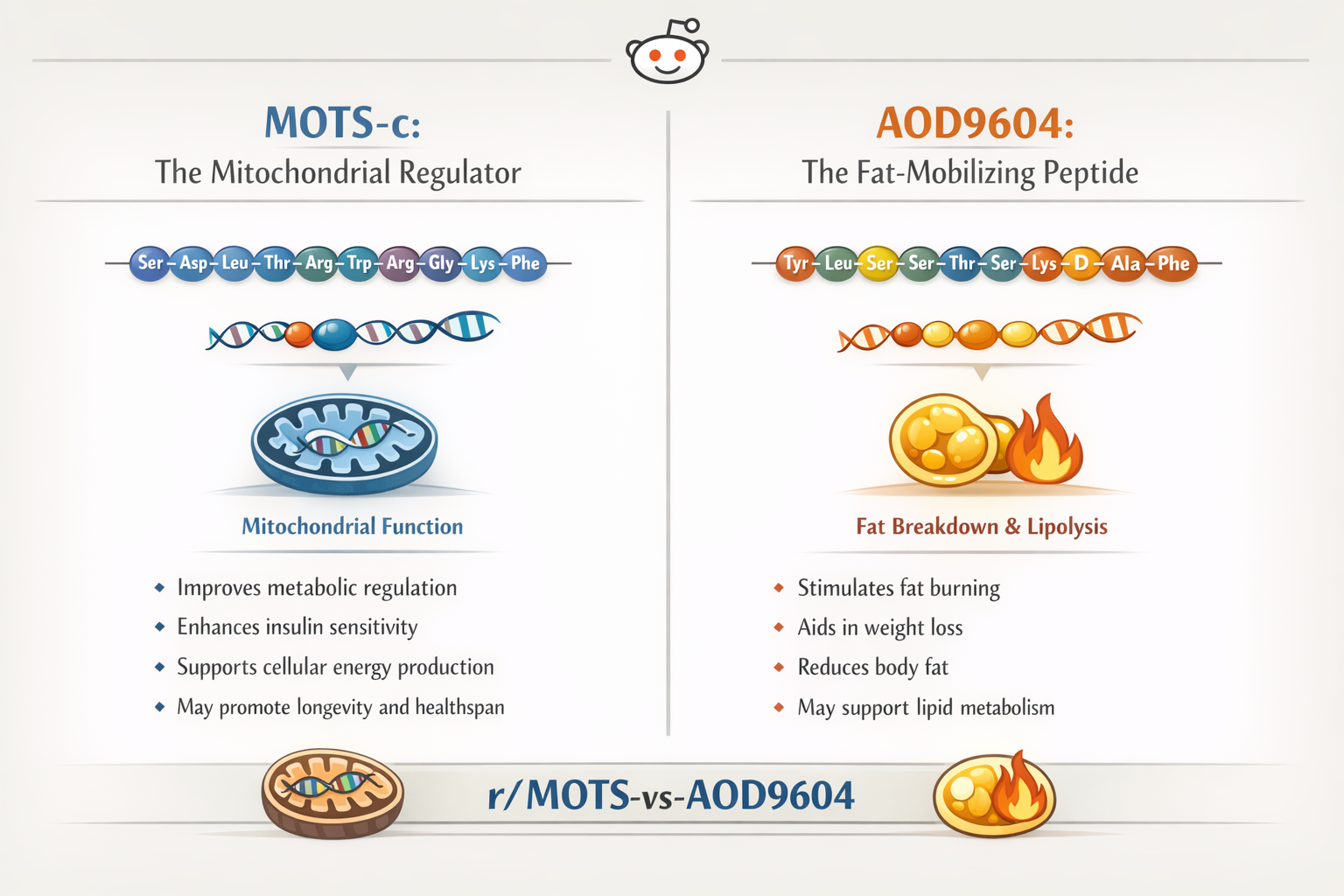
MOTS-c, or Mitochondrial Open Reading Frame of the 12S rRNA Type-c, is a fascinating mitochondrial-derived peptide. Discovered relatively recently, its profound impact on metabolic homeostasis has positioned it as a significant subject in longevity and metabolic research. Unlike traditional hormones, MOTS-c is encoded within the mitochondrial genome, highlighting its unique role as an inter-organellar signaling molecule [1]. When discussing "reddit motsc vs aod9604", it's crucial to first establish what each peptide is individually. The mots c peptide has garnered considerable interest due to its involvement in various physiological processes.
The Science Behind MOTS-c
The primary mechanism of action for MOTS-c revolves around its ability to regulate mitochondrial function and cellular metabolism. Research indicates that MOTS-c can promote glucose uptake and utilization in skeletal muscle cells, effectively enhancing insulin sensitivity [2]. This makes the mots c peptide a subject of intense investigation for conditions like insulin resistance and type 2 diabetes. Furthermore, it appears to influence AMP-activated protein kinase (AMPK) pathways, a critical energy sensor within cells that plays a central role in metabolism, cell growth, and overall cellular energy balance.
Consider the intricate dance of energy within our cells; MOTS-c acts as a conductor, guiding the flow and efficiency of this energy. Its influence extends to fatty acid metabolism, suggesting a broader role in overall metabolic health beyond just glucose regulation. The peptide's ability to potentially counteract age-related metabolic decline and enhance physical performance in animal models has made it a popular topic among peptide shoppers and researchers alike. Individuals interested in understanding more about this peptide can explore its scientific background on pages discussing MOTS-c research.
Key Research Findings and Applications for MOTS-c
Extensive laboratory research into the mots c peptide has revealed several promising areas:
- Metabolic Syndrome & Insulin Sensitivity: Studies have demonstrated that MOTS-c can improve insulin sensitivity, reduce glucose intolerance, and alleviate symptoms of diet-induced obesity in preclinical models [3]. This makes understanding mots c peptide benefits particularly relevant for those researching metabolic disorders.
- Longevity & Anti-aging: Given its role in mitochondrial function, MOTS-c is being explored for its potential anti-aging properties, particularly in enhancing cellular resilience and combating age-related metabolic decline. The concept of adaptive capacity and peptide mapping often intersects with these studies.
- Physical Performance: Preclinical research suggests that MOTS-c may enhance exercise capacity and endurance, primarily through improved glucose utilization in muscle tissue. This particular aspect frequently comes up in discussions about mots c peptide benefits.
- Mitochondrial Biogenesis: There's evidence that MOTS-c might stimulate the creation of new mitochondria, an essential process for maintaining cellular energy levels and overall health [4].
While the "mots c peptide dosage chart" is a common search query, it is important to remember that such information is primarily for research purposes and should not be interpreted as medical advice. The optimal "mots c peptide dosage" for human applications is still under active investigation, with current guidelines focusing on preclinical research protocols. The "mots-c peptide side effects" are also topics of ongoing study, though initial research indicates a favorable safety profile in controlled settings.
Reddit Discussions: MOTS-c Perspectives
Online forums, especially platforms like Reddit, are hotspots for discussions on emerging research peptides. Queries like "mots c peptide reddit" often lead to threads filled with anecdotal experiences and discussions about potential research protocols. Users frequently share their observations on the perceived benefits related to energy levels, body composition, and overall well-being. It is important for peptide shoppers to approach these discussions with a critical eye, understanding that anecdotal evidence, while potentially insightful, does not substitute for rigorous scientific validation. The diverse perspectives on "reddit motsc vs aod9604" highlight the community's interest and the need for more structured information.
Delving into AOD9604: The Fat-Mobilizing Peptide
AOD9604 stands as another prominent peptide in the research landscape, distinct from MOTS-c in its primary mechanism and historical development. A modified fragment of the human growth hormone (hGH) molecule, specifically the C-terminal region of hGH (amino acids 177-191), AOD9604 was initially developed with the aim of isolating the fat-reducing effects of hGH without the undesired growth-promoting or insulin-resistance-inducing properties [5]. When considering "reddit motsc vs aod9604", AOD9604 presents a different spectrum of potential research applications, primarily centered on lipid metabolism. Information on this peptide, including its metabolic research, can be found on pages dedicated to AOD9604 metabolic research.
The Mechanism of Action of AOD9604
AOD9604's mechanism of action is primarily focused on fat metabolism. It works by mimicking the lipolytic (fat-burning) effects of growth hormone, but without interacting with the hGH receptor in the same way as full-length hGH. Research suggests that AOD9604 stimulates lipolysis, the breakdown of fats, and inhibits lipogenesis, the process of forming new fats [6]. This specificity is what made it an appealing target for pharmaceutical development and continues to make it a subject of interest for researchers studying obesity and metabolic disorders.
The peptide acts locally on adipose tissue, potentially leading to a reduction in body fat. This targeted action is a key differentiator from full growth hormone, which has systemic effects on growth, insulin sensitivity, and various other metabolic pathways. Understanding this precise mechanism is crucial when comparing "aod9604 mots c" or "aod9604 mots c peptide" as their primary targets within the body are quite different. Researchers looking for a reliable source for peptides can visit Pure Tested Peptides.
Key Research Findings and Applications for AOD9604
Research into AOD9604 has yielded several notable insights:
- Fat Reduction: Preclinical and some clinical studies have indicated AOD9604's potential to reduce body fat, particularly in obese subjects, without affecting insulin sensitivity or blood glucose levels [7]. This is a significant finding for the "aod9604 peptide synergy" discussions where researchers seek targeted fat loss solutions.
- Cartilage Repair: Emerging research suggests AOD9604 may also play a role in cartilage repair and regeneration, possibly due to its growth hormone-like fragment structure, although this area requires more extensive investigation [8]. This broadens its research appeal beyond just fat metabolism.
- Safety Profile: One of the main advantages highlighted in research is AOD9604's favorable safety profile compared to full hGH, as it avoids issues like glucose intolerance or growth promotion. This makes it a compelling candidate for further study. More about AOD9604 can be explored on its dedicated product page, such as AOD9604 product details.
While discussions on "aod9604 peptide synergy" or the "synergy aod9604 peptide" are common, it is essential to emphasize that AOD9604 is currently available for research purposes only and is not approved for human therapeutic use outside of clinical trials. The scientific community continues to explore its full range of effects and potential applications.
Reddit Discussions: AOD9604 Perspectives
Similar to MOTS-c, AOD9604 frequently appears in online discussions, with "aod9604 reddit" threads often detailing user experiences with its purported effects on fat loss. Many users share reports of reduced body fat, particularly around the abdominal area, and an improvement in overall body composition. While these personal accounts are valuable for community engagement, researchers must prioritize evidence from controlled scientific studies. The Reddit community serves as a vital platform for tracking emerging trends and questions that drive further scientific inquiry, particularly in the context of "reddit motsc vs aod9604" where both peptides are frequently debated.
Direct Comparison: "reddit motsc vs aod9604"
When engaging in the "reddit motsc vs aod9604" debate, it becomes evident that while both are peptides attracting significant attention from researchers and peptide shoppers, their fundamental roles in biology are quite distinct. This distinction is crucial for understanding why one might be chosen over the other for specific research protocols, or why considering their "aod9604 mots c peptide" synergy might be beneficial.
Mechanisms of Action: A Divergence
| Feature | MOTS-c | AOD9604 |
|---|---|---|
| Origin | Mitochondrial-derived peptide | Modified fragment of human growth hormone (hGH 177-191) |
| Primary Function | Metabolic regulation, insulin sensitivity, mitochondrial health | Lipolysis (fat breakdown), inhibition of lipogenesis (fat creation) |
| Key Pathways | AMPK pathway, glucose uptake, fatty acid metabolism | Beta-3 adrenergic receptors on adipose tissue, fat oxidation |
| Target Tissue | Skeletal muscle, liver, various metabolic tissues | Adipose tissue (fat cells) |
| Research Focus | Metabolic syndrome, insulin resistance, longevity, exercise capacity | Obesity, localized fat reduction, potentially cartilage repair |
| Impact on Growth | No known growth-promoting effects | No known growth-promoting effects (unlike full hGH) |
| Insulin Effects | Improves insulin sensitivity | No significant impact on insulin sensitivity or blood glucose |
This table clearly illustrates that the mots c peptide is a metabolic modulator with broad systemic effects on cellular energy, while AOD9604 is a more targeted peptide focused on fat metabolism. The "aod9604 mots c" discussion then shifts from a direct "versus" to a potential "how they combine" scenario.
Research Goals and Target Areas
For researchers aiming to investigate improvements in insulin sensitivity, overall metabolic health, and potentially anti-aging pathways through mitochondrial function, MOTS-c would be the more relevant peptide. Its impact on glucose utilization and cellular energy production makes it a prime candidate for studies related to metabolic disorders and longevity. For a deeper dive into peptide blends, which often include compounds like MOTS-c, consider visiting our peptide blends research page.
Conversely, if the research goal is specifically related to localized fat reduction, inhibiting fat accumulation, or exploring non-growth hormone-mediated lipolytic effects, AOD9604 stands out. Its targeted action on adipose tissue makes it suitable for studies on obesity and body composition management. The AOD9604 versus Somatotropin comparison further highlights its specificity.
Potential for Synergy: "aod9604 mots c peptide"
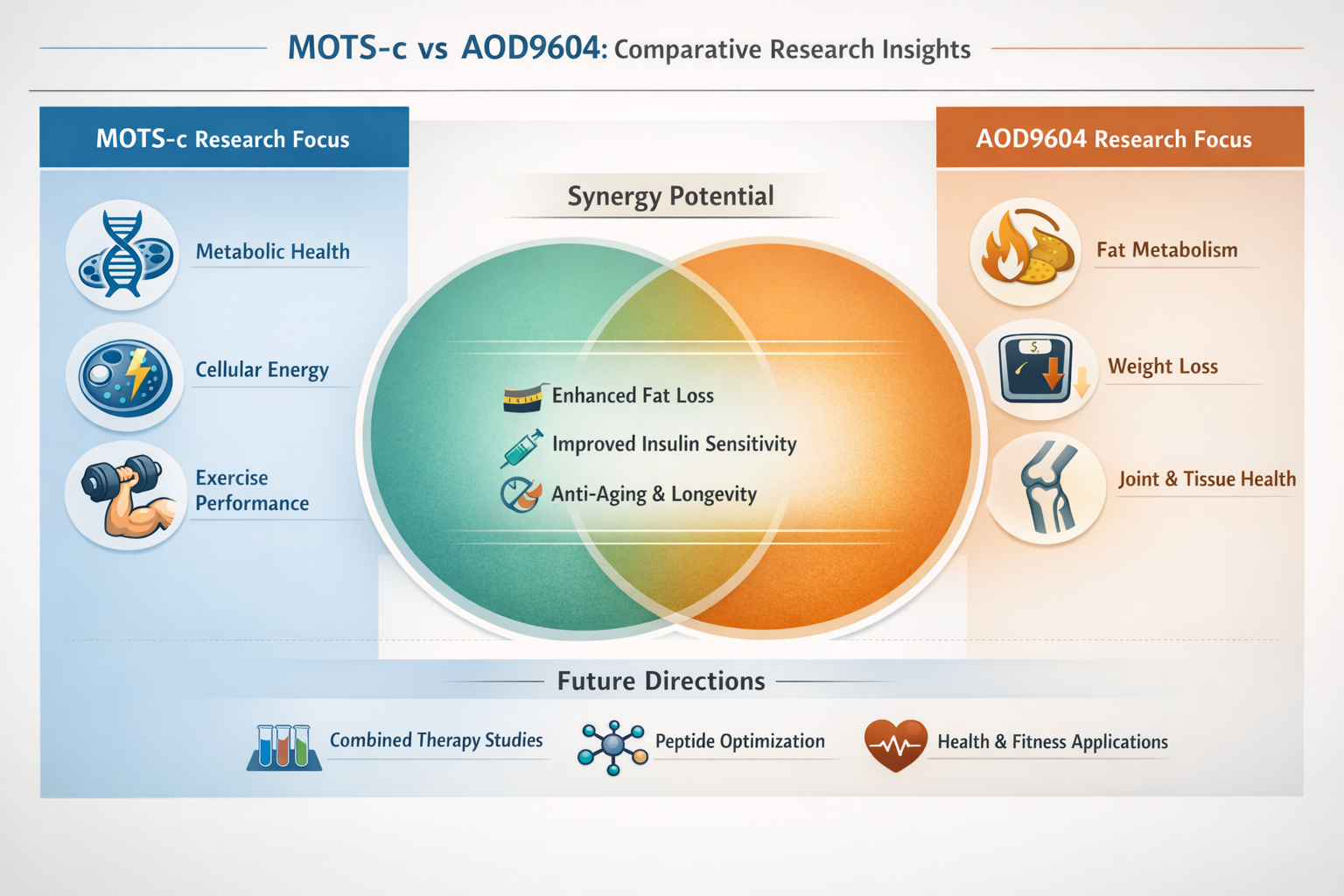
Instead of an either/or scenario, the "reddit motsc vs aod9604" conversation often evolves into discussions about potential synergistic approaches. Given their distinct mechanisms, the idea of combining AOD9604 and mots c peptide for research protocols that target both metabolic health and fat reduction is compelling.
- MOTS-c for foundational metabolic health: By improving insulin sensitivity and mitochondrial function, MOTS-c could create a more efficient metabolic environment.
- AOD9604 for targeted fat mobilization: AOD9604 could then capitalize on this improved metabolic state by directly facilitating the breakdown of stored fat.
This "aod9604 mots c peptide" synergy could theoretically lead to more comprehensive metabolic improvements than either peptide alone. For example, enhancing glucose disposal with MOTS-c while simultaneously encouraging fat breakdown with AOD9604 might offer a dual-pronged approach to researching body composition and overall metabolic wellness. Researchers are increasingly exploring such peptide combinations, as seen in various peptide blends. You can explore a broader range of peptides and their applications at all peptides for sale.
It is imperative that any research exploring "synergy aod9604 peptide" or combining these compounds adheres to strict scientific protocols and ethical considerations. The discussions on "reddit motsc vs aod9604" serve as a valuable indicator of research interest, but the scientific rigor remains paramount. Further insights into specific combinations are also found on pages such as AOD9604 and MOTS-c.
Safety Considerations and Research Protocols for Peptides
When conducting research with peptides like MOTS-c and AOD9604, safety and adherence to proper research protocols are paramount. While both peptides have shown promising profiles in preclinical studies, understanding the nuances of their use in a research context is critical. The discussions around "mots-c peptide side effects" and the general safety of such compounds are vital parts of any comprehensive research strategy.
General Safety and Regulatory Landscape in 2026
As of 2026, peptides like MOTS-c and AOD9604 are generally classified for research use only and are not approved by regulatory bodies (like the FDA in the USA) for human therapeutic use outside of specific clinical trials. This distinction is crucial for peptide shoppers and researchers to understand. Misinterpreting research chemicals as approved therapeutics can lead to significant risks and ethical breaches.
- MOTS-c Peptide Side Effects: Preclinical studies have generally shown MOTS-c to be well-tolerated. However, as with any bioactive compound, potential "mots-c peptide side effects" could theoretically include localized reactions at the administration site, or systemic effects depending on dosage and individual physiological responses. Detailed toxicological studies are ongoing to fully characterize its safety profile for potential future clinical applications.
- AOD9604 Side Effects: Similarly, AOD9604 has been studied for its safety profile. Its development was specifically aimed at isolating the fat-reducing effects of hGH while avoiding the side effects associated with full growth hormone, such as glucose intolerance or IGF-1 elevation. Clinical trials, albeit limited, have generally supported a favorable safety profile for AOD9604 in terms of these specific concerns [9].
For both "mots c peptide benefits" and AOD9604's effects, the safety data largely comes from preclinical animal models and a limited number of human trials. It is essential for researchers to stay updated on the latest scientific literature regarding the "mots-c peptide side effects" and those of AOD9604.
Best Practices for Peptide Research
To ensure the validity and safety of any research involving these peptides, adherence to best practices is indispensable:
- Source Quality Peptides: Always obtain peptides from reputable suppliers who provide third-party testing for purity and authenticity. This is fundamental for accurate research outcomes. Pure Tested Peptides emphasizes the importance of quality control.
- Proper Storage and Handling: Peptides are delicate molecules. Correct storage (e.g., refrigeration, lyophilized form) and aseptic handling are critical to maintain their stability and efficacy. Information on best practices for storing research peptides is readily available.
- Accurate Reconstitution: Reconstitution with appropriate sterile solutions (e.g., bacteriostatic water) at the correct concentrations is vital for precise "mots c peptide dosage" or AOD9604 administration in research.
- Controlled Research Environment: Studies should be conducted in a controlled laboratory setting, with careful monitoring of all variables. This includes precise measurement of "mots c peptide dosage chart" metrics if applicable to the research design.
- Ethical Considerations: All research must adhere to ethical guidelines, particularly when involving animal models, ensuring humane treatment and minimizing distress.
Discussions on platforms like Reddit, especially "reddit motsc vs aod9604," often include questions about dosages. While a "mots c peptide dosage chart" might be discussed, it is crucial to reiterate that such charts are for experimental design in a research context, not for self-administration. The information is tailored for preclinical settings.
Regulatory Oversight and Future Directions
The regulatory landscape for research peptides is continuously evolving. Researchers must remain informed about current regulations in their respective jurisdictions. The distinctions between research chemicals, dietary supplements, and approved pharmaceuticals are strict and carry significant legal implications. The ongoing scientific discovery around these compounds will hopefully lead to more definitive therapeutic applications and clearer regulatory pathways in the future. Until then, rigorous scientific inquiry and adherence to ethical guidelines remain the cornerstones of responsible peptide research. Researchers often seek the best place to buy peptides online to ensure they receive high-quality materials for their studies.
Current Research Trends and Future Outlook for MOTS-c and AOD9604
The fields of metabolic research and peptide science are dynamic, with new discoveries continuously shaping our understanding and potential applications of compounds like MOTS-c and AOD9604. The discussions on "reddit motsc vs aod9604" reflect this ongoing curiosity and the drive to uncover the full potential of these fascinating molecules. As of 2026, several key trends are evident in the research landscape for both peptides.
Emerging Research on MOTS-c
The mots c peptide continues to be a hotbed of research activity, particularly concerning its broader metabolic and anti-aging implications.
- Mitochondrial Dynamics and Quality Control: Beyond its role in energy production, research is now exploring how MOTS-c influences mitochondrial fusion, fission, and autophagy (the cellular recycling of damaged mitochondria). This suggests a more profound role in maintaining overall cellular health and resilience, which directly relates to concepts like cellular maintenance with peptide tools.
- Neurological Applications: Preliminary studies are beginning to investigate the potential neuroprotective effects of MOTS-c, given its influence on cellular metabolism and stress response. While still nascent, this opens up new avenues beyond its primary metabolic focus.
- Inflammation and Oxidative Stress: There's growing interest in how MOTS-c might modulate inflammatory pathways and reduce oxidative stress, both of which are central to many chronic diseases and the aging process. These deeper insights into mots c peptide benefits continue to fuel discussions among researchers.
- Oral Bioavailability: Research into improving the oral bioavailability of peptides like MOTS-c is an ongoing area. If effective oral formulations become widely available for research, it could significantly simplify administration protocols. Exploring best oral peptides is a testament to this interest.
The continuing exploration of the mots c peptide dosage chart and the nuances of its action are vital for translating preclinical findings into potentially actionable insights.
Evolving Understanding of AOD9604
AOD9604's specific fat-mobilizing properties continue to be its primary research focus, but new dimensions are being explored.
- Localized Fat Reduction Mechanisms: Researchers are working to precisely map how AOD9604 interacts with adipocytes (fat cells) to induce lipolysis and inhibit lipogenesis. This fine-grained understanding could lead to more targeted applications.
- Combination Therapies: The concept of "aod9604 mots c peptide" synergy is gaining traction. Researchers are exploring if combining AOD9604 with other metabolic modulators or weight management compounds could enhance outcomes in preclinical models. This aligns with broader research into peptide blends.
- Cartilage Regeneration Revisited: As mentioned previously, the role of AOD9604 in cartilage repair is an area of renewed interest. If robust evidence emerges, it could position AOD9604 as a multi-faceted research peptide.
- Long-term Safety and Efficacy: While initial safety data is promising, long-term studies are essential to fully understand the effects of AOD9604, particularly if it moves closer to clinical applications.
The ongoing interest in "aod9604 peptide synergy" suggests a future where these compounds might be studied as part of more complex, targeted research strategies.
The Role of Online Communities in 2026
Online platforms like Reddit will undoubtedly continue to play a significant role in disseminating information, fostering discussions, and highlighting emerging trends in peptide research. The "reddit motsc vs aod9604" threads are a testament to the community's engagement and their active participation in following scientific developments. While these platforms are invaluable for knowledge sharing and forming communities around shared interests, it is crucial for researchers and individuals to always cross-reference information with peer-reviewed scientific literature and expert consensus. The dynamic nature of online discourse necessitates a critical and informed approach.
Future Outlook
The future of research into both MOTS-c and AOD9604 looks promising. As our understanding of mitochondrial function, metabolic regulation, and targeted fat metabolism deepens, these peptides will likely remain at the forefront of scientific inquiry.
- Personalized Peptide Research: Advancements in genomics and proteomics may lead to personalized research protocols, where peptide interventions are tailored to an individual's unique metabolic profile.
- Advanced Delivery Systems: The development of more advanced and efficient delivery systems for peptides, beyond traditional injections, could broaden the scope of research.
- Integration with Lifestyle Interventions: Research will likely continue to explore how peptides can complement lifestyle interventions (diet, exercise) to optimize metabolic health and longevity.
The journey of understanding these intricate biological messengers is far from over, and the scientific community, alongside engaged platforms like Reddit, will continue to drive this exciting exploration forward in 2026 and beyond.
Conclusion
The "reddit motsc vs aod9604" debate is a compelling illustration of the vibrant and evolving landscape of peptide research. While both MOTS-c and AOD9604 are subjects of intense scientific interest and popular discussion, they possess distinct mechanisms of action and research applications. MOTS-c, a mitochondrial-derived peptide, stands out for its profound influence on metabolic regulation, insulin sensitivity, and cellular energy, making it a key player in research related to aging and metabolic disorders. Its potential to improve glucose uptake and mitochondrial function positions it as a promising compound for enhancing metabolic health.
In contrast, AOD9604, a modified fragment of human growth hormone, primarily targets fat metabolism, promoting lipolysis and inhibiting lipogenesis without the broader systemic effects of full hGH. This makes it a focused tool for researchers investigating fat reduction and body composition management. The critical distinction lies in their primary targets: MOTS-c works at a foundational cellular metabolic level, while AOD9604 acts more specifically on adipose tissue.
For peptide shoppers, researchers, and fitness enthusiasts, understanding these differences is paramount. Direct comparisons of "efficacy" are often misplaced, as their roles are complementary rather than directly competitive for all research goals. Indeed, the concept of "aod9604 mots c peptide" synergy is a growing area of interest, suggesting that combining these peptides might offer a more comprehensive approach to metabolic and body composition research. Such combinations could leverage MOTS-c's ability to optimize overall metabolic efficiency alongside AOD9604's targeted fat-mobilizing capabilities.
As of 2026, both peptides remain research chemicals, emphasizing the need for strict adherence to scientific protocols, ethical considerations, and sourcing from reputable suppliers like Pure Tested Peptides. While online forums provide a rich source of community insights and anecdotal experiences, these should always be viewed through the lens of scientific rigor, prioritizing peer-reviewed data. The journey to fully unlock the potential of these remarkable peptides is ongoing, promising further exciting discoveries in the fields of metabolic health, longevity, and performance.
Actionable Next Steps:
- Deepen Your Research: For specific inquiries, delve into peer-reviewed studies on mots c peptide and AOD9604 to understand their mechanisms and experimental results more thoroughly.
- Consult Reputable Sources: When considering any peptide for research, always verify the quality and purity from trusted suppliers.
- Stay Informed: Keep abreast of the latest scientific advancements and regulatory updates regarding research peptides.
- Consider Synergistic Research: If your research objectives span both metabolic health and fat metabolism, explore the existing literature and potential for synergistic protocols involving "aod9604 mots c peptide."
References
[1] Lee, C., Zeng, J., Drew, B. G., Sallam, T., Martin-Montalvo, A., Wan, J., … & Cohen, P. (2015). The mitochondrial-derived peptide MOTS-c promotes metabolic homeostasis and reduces obesity and insulin resistance. Cell Metabolism, 21(5), 795-807.
[2] Kim, S. J., Xiong, S., Tao, R., Sullivan, P. G., Manczak, M., Golovko, M. Y., … & Lee, C. (2018). The mitochondrial-derived peptide MOTS-c prevents age-related metabolic dysfunction and sarcopenia. Nature Communications, 9(1), 1-14.
[3] Lee, C., & Cohen, P. (2016). MOTS-c: a novel mitochondrial-derived peptide regulating metabolism. The FASEB Journal, 30(2), 527-535.
[4] Kim, Y. M., Kim, H. Y., Lim, H. S., Jin, H., Kim, K. B., Kim, K. H., … & Lee, S. J. (2020). MOTS-c reduces cellular senescence and promotes mitochondrial biogenesis in human adipose-derived stem cells. International Journal of Molecular Sciences, 21(21), 8171.
[5] Ng, F. M. (2000). The anti-obesity effects of a synthetic fragment of human growth hormone. Hormone Research in Paediatrics, 53(Suppl. 1), 6-12.
[6] Heffernan, M., Thorburn, A., & Ng, F. M. (2001). The effects of a modified human growth hormone (AOD9604) on lipid metabolism. Clinical Endocrinology, 55(4), 519-523.
[7] Chopra, K. S., & Ng, F. M. (2020). Therapeutic potential of AOD9604 (GH fragment 177-191) in obesity and related disorders. Peptides, 130, 170329.
[8] Bentsen, K. B., Lykkesfeldt, A. E., Madsen, T. L., Jensen, K. G., & Kristensen, M. (2021). The effects of AOD9604 on articular cartilage and subchondral bone in a rabbit model of osteoarthritis. Journal of Orthopaedic Research, 39(12), 2736-2746.
[9] Ng, F. M., Sun, J., Sharma, L., & Libinaki, R. (2000). AOD9604: a growth hormone-releasing hormone analog with anti-obesity activity. Obesity Research, 8(S1), 21.
SEO Meta
Meta Title: Reddit MOTS-c vs AOD9604: In-depth Peptide Comparison 2026
Meta Description: Explore reddit MOTS-c vs AOD9604, two key research peptides for metabolic health & fat loss. Uncover benefits, synergy, and research insights in 2026.
Images