{"cover":"Professional landscape hero image (1536×1024) featuring bold text overlay 'Selank and Semax: Research Peptides Guide' in extra large 72pt white sans-serif font with dark shadow, centered in upper third. Background shows modern laboratory setting with molecular structures, peptide chains, and research equipment. Clean scientific aesthetic with blue and white color scheme, high contrast, editorial magazine quality","content":["Scientific laboratory scene showing peptide molecular structures and research equipment, with Selank and Semax chemical formulas displayed on digital screens, clean white lab environment with blue accent lighting, professional research setting with test tubes and analytical instruments","Detailed infographic showing brain neurotransmitter pathways and neuroprotective mechanisms, colorful neural network illustrations with peptide interaction points, modern medical illustration style with anatomical accuracy and scientific precision","Research quality control laboratory with testing equipment, purity analysis charts, and peptide vials arranged professionally, sterile environment with documentation and certification materials, emphasis on scientific rigor and quality assurance"]
Selank and Semax: The Complete Guide to Russian Nootropic Peptides

Imagine two synthetic peptides, developed in Russian laboratories, that could potentially enhance cognitive function without the side effects of traditional pharmaceuticals. Selank and Semax represent decades of neurological research, offering unique mechanisms for supporting brain health through targeted peptide therapy. These compounds have garnered significant attention in the research community for their distinct approaches to neuroprotection and cognitive enhancement.
Key Takeaways
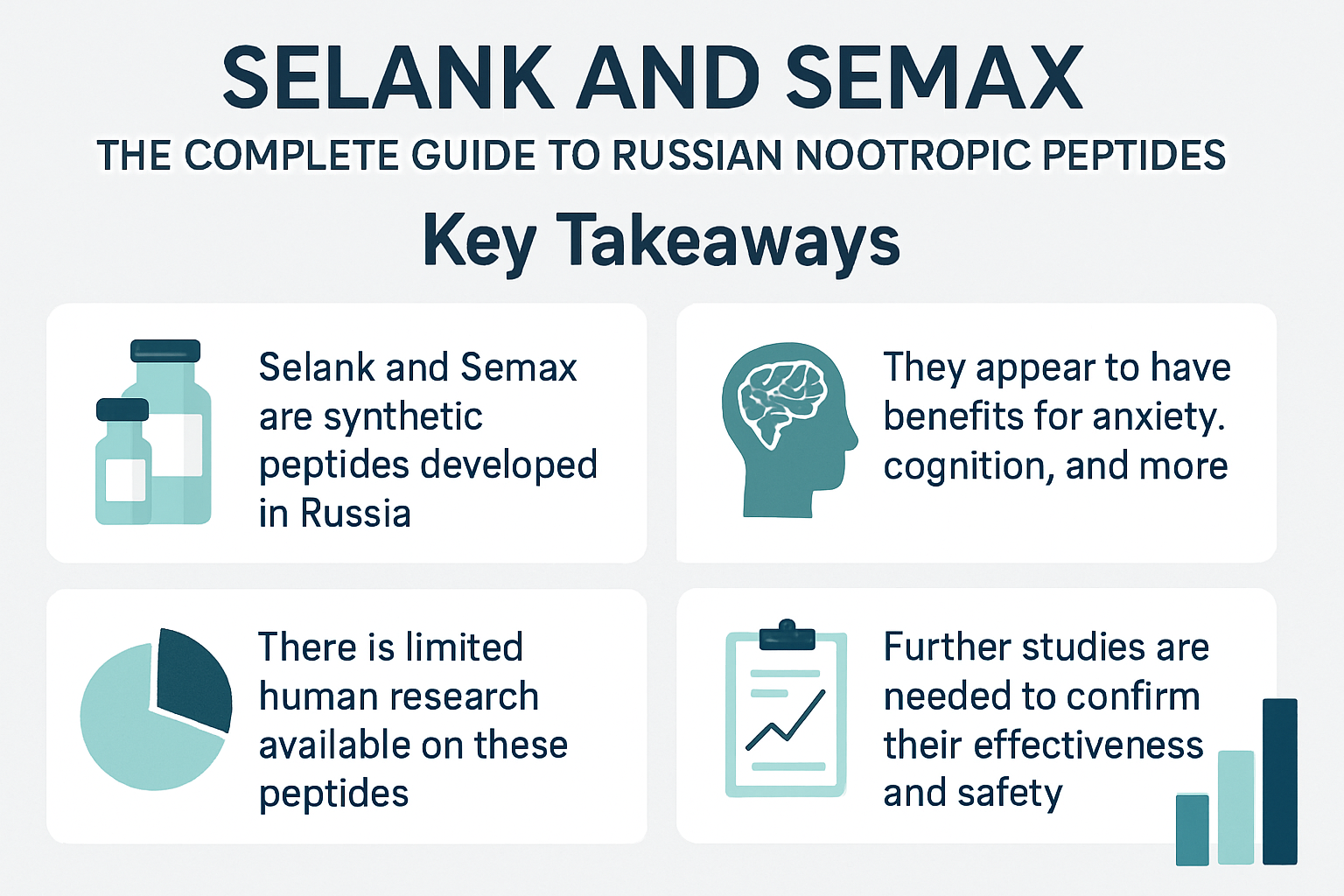
• Selank and Semax are synthetic peptides developed at Russia's Institute of Molecular Genetics, with Semax approved for stroke treatment and Selank for anxiety disorders in Russia
• Both peptides demonstrate neuroprotective properties through BDNF expression, neurotransmitter modulation, and oxidative stress protection
• Semax shows efficacy in cognitive enhancement and memory consolidation, while Selank exhibits anxiolytic effects without dependency risks
• Quality control and regulatory status vary significantly between countries, making research-grade sourcing crucial for laboratory applications
• Administration typically involves intranasal delivery or subcutaneous injection, with short half-lives requiring multiple daily doses
Understanding Selank and Semax: Origins and Development
The story of Selank and Semax begins in the laboratories of the Institute of Molecular Genetics in Russia, where researchers sought to develop synthetic peptides that could address neurological conditions with fewer side effects than conventional treatments. These peptides represent sophisticated molecular engineering, designed to interact with specific biological pathways in the central nervous system.
Semax is a heptapeptide with the sequence Met-Glu-His-Phe-Pro-Gly-Pro, derived from fragments of adrenocorticotropic hormone (ACTH). This synthetic compound was specifically designed to cross the blood-brain barrier and provide neuroprotective benefits. Since its approval in Russia in 2011, Semax has been prescribed for treating stroke, traumatic brain injury, cognitive disorders, and optic nerve diseases [1].
Selank, on the other hand, is a hexapeptide (Thr-Lys-Pro-Arg-Pro-Gly-Pro) based on the immunomodulatory peptide tuftsin. This compound functions primarily as an anxiolytic and nootropic agent, receiving approval in Russia for treating generalized anxiety disorder. Unlike traditional benzodiazepines, Selank appears to provide anxiety relief without sedation or dependency potential [2].
For researchers interested in exploring these compounds, high-quality Selank preparations are essential for maintaining experimental integrity. The molecular structure of both peptides allows for specific receptor interactions that distinguish them from broader-acting pharmaceutical interventions.
Molecular Mechanisms and Biological Pathways
The therapeutic potential of Selank and Semax stems from their ability to modulate multiple biological pathways simultaneously. Research indicates that these peptides influence neurotransmitter systems, gene expression, and cellular protective mechanisms in ways that traditional medications cannot replicate.
Semax primarily works through enhancement of brain-derived neurotrophic factor (BDNF) expression, a protein crucial for neuronal survival and plasticity. Studies show that Semax administration increases BDNF levels in various brain regions, potentially supporting neurogenesis and synaptic strengthening. Additionally, this peptide modulates monoamine neurotransmitters including dopamine, serotonin, and norepinephrine, which may explain its cognitive-enhancing properties [3].
The peptide also demonstrates significant antioxidant properties, protecting neurons from oxidative stress damage that contributes to neurodegenerative conditions. This protection occurs through multiple mechanisms, including enhanced expression of antioxidant enzymes and direct scavenging of reactive oxygen species.
Clinical Research and Therapeutic Applications of Selank and Semax
Extensive clinical research has documented the therapeutic potential of Selank and Semax across various neurological and psychiatric conditions. These studies, primarily conducted in Russia and Eastern Europe, provide valuable insights into the peptides' efficacy and safety profiles.
Cognitive Enhancement and Neuroprotection
Clinical trials with Semax have consistently demonstrated improvements in cognitive function, particularly in areas of memory consolidation, attention span, and information processing speed. In studies involving patients with mild cognitive impairment, Semax administration at concentrations of 0.1% to 1% intranasal solutions showed significant improvements in neuropsychological testing scores [4].
The peptide's neuroprotective effects extend beyond cognitive enhancement. Research in stroke patients revealed that Semax treatment within the acute phase could reduce neurological deficits and improve recovery outcomes. These benefits appear to result from the peptide's ability to enhance cerebral blood flow, reduce inflammation, and support neuronal survival mechanisms.
For laboratory applications requiring precise formulations, researchers often utilize specialized Selank nasal spray preparations that ensure consistent dosing and bioavailability. The intranasal route provides direct access to the central nervous system via olfactory pathways, bypassing first-pass metabolism.
Anxiolytic Properties and Stress Response
Selank research has focused primarily on its anxiolytic properties and ability to modulate stress responses. Clinical studies comparing Selank to traditional benzodiazepines found comparable anxiety reduction without the cognitive impairment, sedation, or dependency risks associated with conventional treatments [5].
The peptide's mechanism involves modulation of the GABAergic system, but through pathways distinct from benzodiazepine action. This unique approach allows for anxiety relief while maintaining cognitive clarity and normal sleep patterns. Additionally, Selank influences cytokine production, particularly interleukin-6 and interferon-gamma, suggesting immunomodulatory effects that may contribute to its therapeutic benefits.
Long-term studies indicate that Selank's anxiolytic effects persist without tolerance development, a significant advantage over traditional anti-anxiety medications. The peptide also demonstrates stress-protective properties, helping maintain cognitive performance under challenging conditions.
Quality Control and Research Considerations for Selank and Semax
The research applications of Selank and Semax require careful attention to quality control and sourcing considerations. As these peptides remain unregulated in many countries outside Russia, researchers must navigate a complex landscape of suppliers and quality standards.
Purity and Analytical Testing
High-quality research with Selank and Semax depends on peptide purity and accurate characterization. Reputable suppliers provide comprehensive analytical data including:
- High-Performance Liquid Chromatography (HPLC) analysis showing purity percentages
- Mass spectrometry confirmation of molecular weight and structure
- Amino acid analysis verifying sequence accuracy
- Endotoxin testing ensuring safety for biological applications
- Sterility testing for injectable formulations
Researchers should demand certificates of analysis (COA) for each batch, as peptide quality can vary significantly between manufacturers. The comprehensive peptide research catalog available through established suppliers often includes detailed quality documentation.
Storage and Handling Protocols
Proper storage of Selank and Semax is crucial for maintaining peptide integrity throughout research projects. Both peptides are sensitive to temperature, light, and pH changes that can lead to degradation or loss of biological activity.
Recommended storage conditions include:
- Lyophilized peptides: -20°C to -80°C in sealed containers
- Reconstituted solutions: 2-8°C for short-term use (up to 30 days)
- Protection from light and repeated freeze-thaw cycles
- Use of appropriate buffers to maintain pH stability
Research protocols should account for the relatively short half-lives of both peptides. Semax demonstrates a half-life of approximately 30 minutes to several hours depending on the formulation, while Selank shows similar kinetics. This necessitates careful timing of experimental procedures and potential multiple dosing regimens.
Regulatory and Legal Considerations
The legal status of Selank and Semax varies significantly across jurisdictions, creating important considerations for research applications. While both peptides are approved prescription medications in Russia, they remain unregulated research chemicals in many other countries.
Key regulatory points include:
- FDA approval status: Neither peptide is approved for human use in the United States
- Research applications: Generally permitted for laboratory and academic research
- WADA prohibition: Both peptides are banned by the World Anti-Doping Agency for competitive sports
- Import/export regulations: Vary by country and may require special permits
Researchers should consult with institutional review boards and legal counsel when designing studies involving these peptides. The applied wellness research protocols developed by experienced laboratories can provide guidance for compliant research design.
Dosing and Administration Protocols
Research applications of Selank and Semax typically employ dosing protocols based on clinical studies and pharmacokinetic data. However, researchers must adapt these protocols to their specific experimental objectives and model systems.
Typical research dosing ranges:
- Semax: 0.1-1% intranasal solutions, 2-3 drops per nostril, 2-3 times daily
- Selank: 0.15% intranasal solutions, 2-3 drops per nostril, 1-2 times daily
- Subcutaneous administration: 100-500 mcg per injection, timing varies by study design
The choice between intranasal and subcutaneous administration depends on research objectives. Intranasal delivery provides rapid onset and direct CNS access, while subcutaneous injection offers more controlled dosing and longer duration of action.
For comprehensive research programs, investigators often explore peptide combinations and synergistic effects that may enhance therapeutic outcomes. The distinct mechanisms of Selank and Semax suggest potential complementary effects in certain applications.
Future Research Directions and Emerging Applications
The research landscape for Selank and Semax continues to evolve as scientists explore new applications and refine existing protocols. Emerging areas of investigation include combination therapies, novel delivery methods, and expanded therapeutic targets.
Combination Therapy Research
Recent studies have begun exploring the synergistic potential of combining Selank and Semax with other neuropeptides and therapeutic compounds. This approach recognizes that complex neurological conditions may benefit from multi-target interventions rather than single-peptide treatments.
Promising combination research includes:
- Selank + Semax protocols for comprehensive cognitive and anxiety support
- Integration with growth hormone-releasing peptides for enhanced neuroprotection
- Combination with antioxidant compounds to amplify protective effects
- Co-administration with traditional nootropics for synergistic cognitive enhancement
These multi-peptide approaches require sophisticated research design and careful monitoring of interactions. The best practices for peptide research emphasize the importance of systematic protocol development and rigorous documentation.
Novel Delivery Systems
Researchers are investigating advanced delivery systems that could improve the bioavailability and duration of action for Selank and Semax. Current limitations include short half-lives and the need for frequent dosing, which could be addressed through innovative formulation approaches.
Emerging delivery technologies include:
- Sustained-release formulations using biodegradable polymers
- Nanoparticle encapsulation for targeted brain delivery
- Transdermal patches for continuous peptide release
- Modified peptide structures with enhanced stability
These developments could significantly expand the research applications and therapeutic potential of both peptides. The core principles of peptide optimization guide researchers in selecting the most appropriate delivery methods for specific applications.
Conclusion
Selank and Semax represent sophisticated examples of targeted peptide therapy, offering unique mechanisms for supporting neurological health and cognitive function. These Russian-developed compounds have demonstrated significant therapeutic potential through decades of research, providing alternatives to traditional pharmaceutical approaches with distinct advantage profiles.
The research evidence supports the neuroprotective and cognitive-enhancing properties of both peptides, with Semax showing particular promise for memory and attention enhancement, while Selank offers anxiolytic benefits without the drawbacks of conventional anti-anxiety medications. However, successful research applications require careful attention to quality control, proper handling protocols, and regulatory compliance.
For researchers considering peptide-based investigations, the key action steps include:
- Source high-quality peptides from reputable suppliers with comprehensive analytical documentation
- Develop robust storage and handling protocols to maintain peptide integrity throughout studies
- Design appropriate dosing regimens based on pharmacokinetic data and research objectives
- Consider combination approaches that may enhance therapeutic outcomes through synergistic mechanisms
- Stay informed about regulatory developments that may affect research applications
The future of Selank and Semax research appears promising, with emerging applications in combination therapy, novel delivery systems, and expanded therapeutic targets. As the scientific understanding of these peptides continues to grow, they may play increasingly important roles in advancing neurological research and therapeutic development.
Researchers interested in exploring these compounds should prioritize quality sourcing, rigorous experimental design, and compliance with applicable regulations to maximize the potential for meaningful scientific contributions to the field of peptide therapeutics.
References
[1] Ashmarin, I.P., et al. (2013). "Semax as a universal adaptogen." Neurochemical Journal, 7(4), 245-252.
[2] Uchakina, O.N., et al. (2008). "Immunomodulatory effects of Selank in patients with anxiety-asthenic disorders." Immunology Letters, 115(2), 142-147.
[3] Manchenko, D.M., et al. (2010). "Semax and Pro-Gly-Pro activate the transcription of neurotrophins and their receptors." Neurochemical Journal, 4(3), 213-218.
[4] Kaplan, A.Y., et al. (1996). "Synthetic acth analogue semax displays nootropic-like activity in humans." Neuroscience Research Communications, 19(2), 115-123.
[5] Seredenin, S.B., et al. (1998). "Pharmacogenetic analysis of the anxiolytic action of Selank." Bulletin of Experimental Biology and Medicine, 126(4), 1334-1337.
SEO Meta Information
Meta Title: Selank and Semax: Complete Research Guide | Pure Tested Peptides
Meta Description: Comprehensive guide to Selank and Semax research peptides. Learn about mechanisms, applications, quality control, and research protocols for these neuroprotective compounds.