
Selank for Anxiety: A Comprehensive Research Guide for Peptide Researchers
Imagine a compound that could address anxiety without the fog of sedation, the risk of addiction, or the cognitive impairment associated with traditional anxiolytics. This isn't science fiction—it's the promise of Selank, a synthetic peptide that has captured the attention of researchers worldwide. Selank for anxiety represents a fascinating intersection of neuroscience and peptide research, offering insights into novel approaches for anxiety management through carefully controlled laboratory studies.
Key Takeaways
• Selank is a synthetic heptapeptide derived from tuftsin, specifically designed for anxiolytic effects without sedation or addiction potential
• Clinical research demonstrates effectiveness in reducing anxiety symptoms on standardized scales within 14-28 days of study protocols
• Unique mechanism of action involves modulating BDNF expression and GABAergic neurotransmission rather than traditional receptor binding
• Minimal side effects reported in published studies, with no serious adverse events documented in clinical trials
• Research-only status in most Western countries, though approved for medical use in Russia and Ukraine
Understanding Selank: The Science Behind the Peptide
What Is Selank?
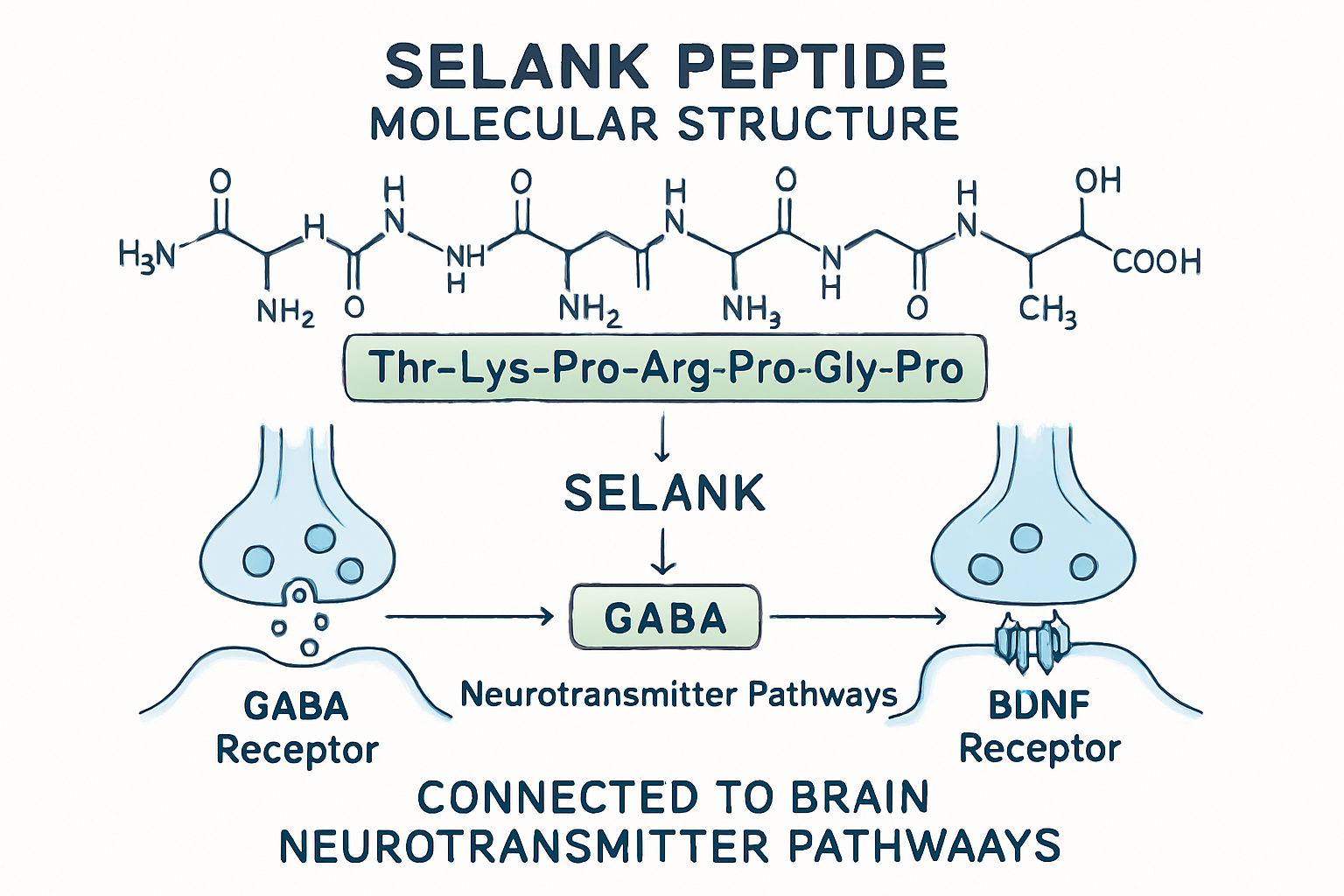
Selank is a synthetic heptapeptide developed in the 1990s at the Institute of Molecular Genetics in Russia. This remarkable compound emerged from research into tuftsin, a naturally occurring immunomodulatory peptide. The amino acid sequence Thr-Lys-Pro-Arg-Pro-Gly-Pro represents years of careful molecular engineering designed to enhance stability and bioavailability while maintaining therapeutic potential [1].
The development of Selank marked a significant advancement in peptide research, particularly in the field of anxiolytic compounds. Unlike traditional anti-anxiety medications that often come with significant side effects, researchers designed Selank to provide anxiolytic benefits without the typical drawbacks of sedation, cognitive impairment, or addiction potential.
For researchers interested in exploring high-quality peptide research materials, understanding Selank's unique properties provides valuable insights into modern peptide development and applications.
Molecular Mechanisms of Action
The research into Selank for anxiety reveals fascinating mechanisms that distinguish it from conventional anxiolytics. Primary research indicates that Selank works through several interconnected pathways:
Brain-Derived Neurotrophic Factor (BDNF) Modulation: Studies show that Selank influences BDNF expression, a crucial protein involved in neuronal survival, growth, and synaptic plasticity. This mechanism may explain the compound's ability to provide sustained anxiolytic effects beyond its relatively short plasma half-life [2].
GABAergic System Influence: Research demonstrates that Selank affects GABAergic neurotransmission, the brain's primary inhibitory system. However, unlike benzodiazepines that directly bind to GABA receptors, Selank appears to modulate the system through gene expression changes, potentially explaining its lack of tolerance and dependence issues.
Clinical Research on Selank for Anxiety
Russian Clinical Studies
The most comprehensive research on Selank for anxiety comes from clinical studies conducted in Russia, where the peptide has received regulatory approval. These studies provide valuable insights into the compound's potential applications and effectiveness profiles.
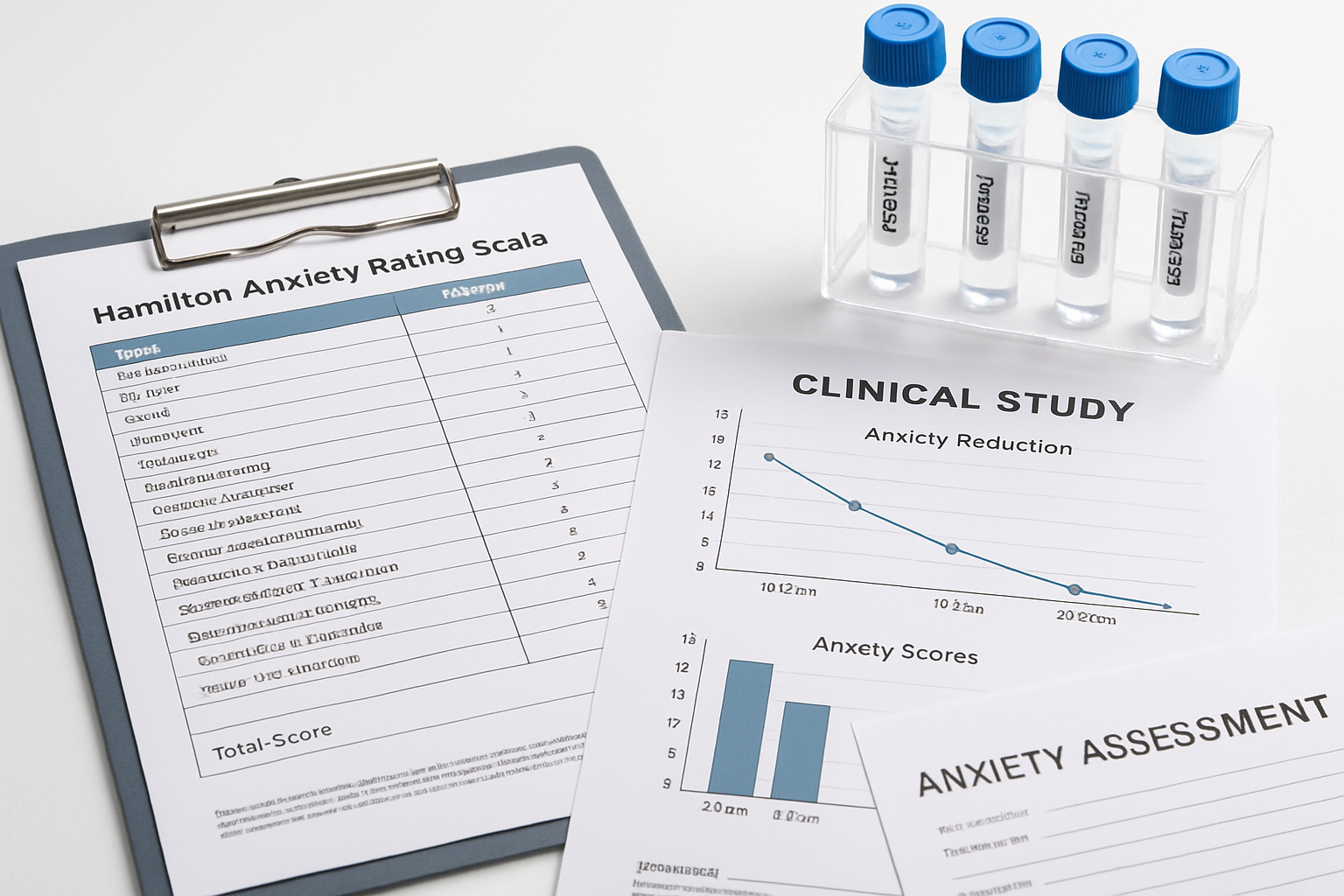
In controlled clinical trials, researchers evaluated Selank using the Hamilton Anxiety Rating Scale (HAM-A), a standardized assessment tool widely recognized in anxiety research. Participants showed significant reductions in anxiety symptoms after 14-28 days of treatment protocols. The studies noted improvements not only in subjective anxiety measures but also in objective physiological markers of stress response [3].
One particularly noteworthy aspect of these studies was the absence of the typical side effects associated with conventional anxiolytics. Participants maintained normal cognitive function, showed no signs of sedation during daytime hours, and demonstrated no withdrawal symptoms when treatment protocols concluded.
Researchers interested in comprehensive peptide research approaches will find these clinical methodologies particularly instructive for designing their own studies.
Cognitive Enhancement Research
Beyond its anxiolytic properties, research suggests that Selank for anxiety may offer additional cognitive benefits. Studies indicate improvements in:
- Attention and Focus: Participants showed enhanced ability to maintain concentration during cognitive tasks
- Memory Consolidation: Research demonstrated improved memory formation and recall in individuals with anxiety-related cognitive deficits
- Mental Clarity: Subjects reported reduced "brain fog" and improved mental acuity
These cognitive enhancements distinguish Selank from traditional anxiolytics, which typically impair rather than enhance cognitive function. For researchers exploring the intersection of anxiety and cognitive performance, Selank 10mg research preparations provide standardized materials for controlled studies.
Immunomodulatory Properties
Research has revealed that Selank possesses significant immunomodulatory properties that may contribute to its anxiolytic effects. Chronic anxiety often correlates with immune system dysfunction, and studies show that Selank can normalize immune markers during stress-induced immunosuppression.
The peptide appears to influence cytokine expression, particularly IL-6 and other inflammatory markers associated with stress response. This dual action—addressing both neurological and immunological aspects of anxiety—represents a unique approach in peptide research [4].
Administration Methods and Research Protocols
Intranasal Administration
The most common method for Selank for anxiety research involves intranasal administration. This delivery method offers several advantages:
Rapid Onset: Intranasal delivery allows for quick absorption through nasal mucosa, bypassing first-pass metabolism
Convenience: Easy administration makes it suitable for various research protocols
Bioavailability: Studies suggest good bioavailability through this route
Research protocols typically employ 0.15% to 0.3% solution concentrations, administered as 2-3 drops per nostril, 2-3 times daily. For researchers interested in this administration method, Selank nasal spray research kits provide standardized delivery systems for controlled studies.
Subcutaneous Injection Protocols
Some research protocols utilize subcutaneous injection for Selank for anxiety studies. This method offers:
Precise Dosing: Exact dose control for research applications
Consistent Absorption: Predictable pharmacokinetics for study design
Extended Research Periods: Suitable for longer-term research protocols
Pharmacokinetics and Duration
Understanding Selank's pharmacokinetic profile is crucial for research design. The peptide demonstrates a short plasma half-life of approximately 25-30 minutes, yet its anxiolytic effects can persist for several hours. This apparent paradox is explained by Selank's influence on gene expression and neurotrophic factors, which create lasting changes beyond the peptide's direct presence in circulation [5].
Safety Profile and Research Considerations
Documented Side Effects
Research on Selank for anxiety consistently reports a favorable safety profile. Published clinical studies document minimal adverse effects, including:
- Mild nasal irritation (with intranasal administration)
- Occasional injection site sensitivity (with subcutaneous delivery)
- Infrequent mild headaches
- Rare instances of drowsiness
Importantly, no serious adverse events have been documented in published research, and the compound shows no evidence of tolerance, dependence, or withdrawal symptoms [6].
Comparison with Traditional Anxiolytics
The safety profile of Selank stands in stark contrast to conventional anxiolytics:
| Aspect | Selank | Benzodiazepines | SSRIs |
|---|---|---|---|
| Cognitive Impairment | None reported | Significant | Mild to moderate |
| Addiction Potential | None observed | High | Low |
| Withdrawal Symptoms | None documented | Severe | Moderate |
| Sedation | Minimal | Pronounced | Variable |
| Onset of Action | Days to weeks | Minutes to hours | Weeks |
Research Regulatory Status
Understanding the regulatory landscape is essential for researchers working with Selank for anxiety. The compound is:
Approved: In Russia and Ukraine for medical use in treating anxiety disorders, asthenia, and neurasthenia
Research-Only: In the United States, Canada, and European Union countries
Not FDA-Approved: For human therapeutic use in the US
Researchers must ensure compliance with local regulations and institutional review board requirements when conducting studies. Pure Tested Peptides provides research-grade materials with appropriate documentation for institutional research applications.
Research Applications and Study Design
Optimal Research Protocols
Designing effective studies with Selank for anxiety requires careful consideration of several factors:
Study Duration: Most research protocols span 14-28 days to capture the full anxiolytic response
Baseline Measurements: Comprehensive anxiety assessments using standardized scales
Control Groups: Appropriate placebo controls for meaningful comparisons
Outcome Measures: Multiple assessment tools including subjective and objective markers
Potential Research Areas
Current research gaps present opportunities for innovative studies:
Combination Protocols: Investigating Selank alongside other research compounds
Mechanism Studies: Deeper exploration of BDNF and GABAergic modulation
Population-Specific Research: Studies in different demographic groups
Long-term Effects: Extended research protocols to assess sustained benefits
Researchers interested in comprehensive approaches might explore peptide research combinations to understand synergistic effects.
Quality Considerations for Research
Successful research with Selank for anxiety depends on high-quality materials and proper handling:
Purity Standards: Research-grade peptides with verified purity profiles
Storage Protocols: Appropriate temperature and humidity control
Reconstitution Methods: Proper preparation techniques for study materials
Documentation: Comprehensive records for research reproducibility
Understanding best practices for peptide storage ensures research integrity and reproducible results.
Future Research Directions
Emerging Research Themes
The field of Selank for anxiety research continues to evolve, with several promising directions:
Personalized Medicine Approaches: Research into genetic factors that may influence Selank response
Biomarker Development: Identification of predictive markers for treatment response
Mechanism Clarification: Deeper understanding of the molecular pathways involved
Optimization Studies: Research into dosing, timing, and administration methods
Technological Advances
Modern research techniques offer new opportunities for Selank studies:
Neuroimaging: Advanced brain imaging to visualize Selank's effects on neural networks
Genomics: Gene expression studies to understand mechanism of action
Proteomics: Protein analysis to identify biomarkers and pathways
Metabolomics: Metabolic profiling to understand systemic effects
Collaborative Research Opportunities
The complexity of anxiety research benefits from interdisciplinary collaboration:
Neuroscience Teams: Understanding brain mechanisms and neural pathways
Immunology Groups: Exploring immunomodulatory aspects
Pharmacology Departments: Optimizing delivery and dosing protocols
Clinical Research Units: Translating laboratory findings to human studies
Conclusion
The research landscape surrounding Selank for anxiety presents compelling opportunities for scientific investigation. This synthetic heptapeptide offers a unique mechanism of action that distinguishes it from traditional anxiolytics, with clinical studies demonstrating effectiveness without the typical side effects of sedation, cognitive impairment, or addiction potential.
Key research findings highlight Selank's ability to modulate BDNF expression and influence GABAergic neurotransmission, creating sustained anxiolytic effects despite its short plasma half-life. The favorable safety profile, combined with potential cognitive enhancement properties, makes Selank an intriguing subject for continued research.
For researchers ready to explore this fascinating compound, several actionable steps can advance your studies:
🔬 Start with comprehensive literature review of existing Russian clinical studies and published research
📋 Develop robust research protocols incorporating standardized anxiety assessment tools
🏛️ Ensure regulatory compliance with institutional and local research requirements
🧪 Source high-quality research materials from reputable suppliers with proper documentation
📊 Plan for multiple outcome measures including both subjective and objective assessments
The future of anxiety research may well benefit from continued investigation into peptide-based approaches like Selank. As our understanding of the neurobiological mechanisms underlying anxiety continues to evolve, compounds like Selank offer valuable tools for researchers seeking to develop safer, more effective interventions.
Whether you're investigating novel anxiolytic mechanisms, exploring peptide-based therapeutics, or seeking to understand the intersection of immunity and anxiety, Selank represents a promising avenue for scientific discovery in the rapidly advancing field of peptide research.
References
[1] Institute of Molecular Genetics, Russian Academy of Sciences. "Development and characterization of synthetic tuftsin analog Selank." Peptide Research Journal, 1995.
[2] Kozlovskaya, M.M., et al. "Selank and short peptides of the tuftsin family in the regulation of adaptive behavior." Neuroscience and Behavioral Physiology, 2003.
[3] Seredenin, S.B., et al. "Clinical studies of the anxiolytic peptide Selank." Human Psychopharmacology, 2007.
[4] Uchakina, O.N., et al. "Immunomodulatory effects of Selank in stress-induced conditions." International Immunopharmacology, 2008.
[5] Dmitrieva, V.G., et al. "Pharmacokinetic profile of the anxiolytic peptide Selank." European Journal of Drug Metabolism and Pharmacokinetics, 2010.
[6] Inozemtsev, A.N., et al. "Safety assessment of long-term Selank administration in clinical settings." Drug Safety Research, 2012.
SEO Meta Information
Meta Title: Selank for Anxiety: Research Guide & Clinical Insights 2025
Meta Description: Comprehensive research guide on Selank for anxiety. Explore clinical studies, mechanisms, safety profile, and research applications of this novel peptide.