
Selank vs Semax: The Ultimate Peptide Comparison Guide for 2025
Imagine having access to two groundbreaking peptides that could revolutionize cognitive enhancement and stress management research. The selank vs semax debate has captivated researchers worldwide, as these Russian-developed synthetic peptides offer distinct pathways to neurological wellness. While both emerged from the prestigious Institute of Molecular Genetics, their unique mechanisms and applications make choosing between them a critical decision for peptide researchers and enthusiasts alike.
Key Takeaways
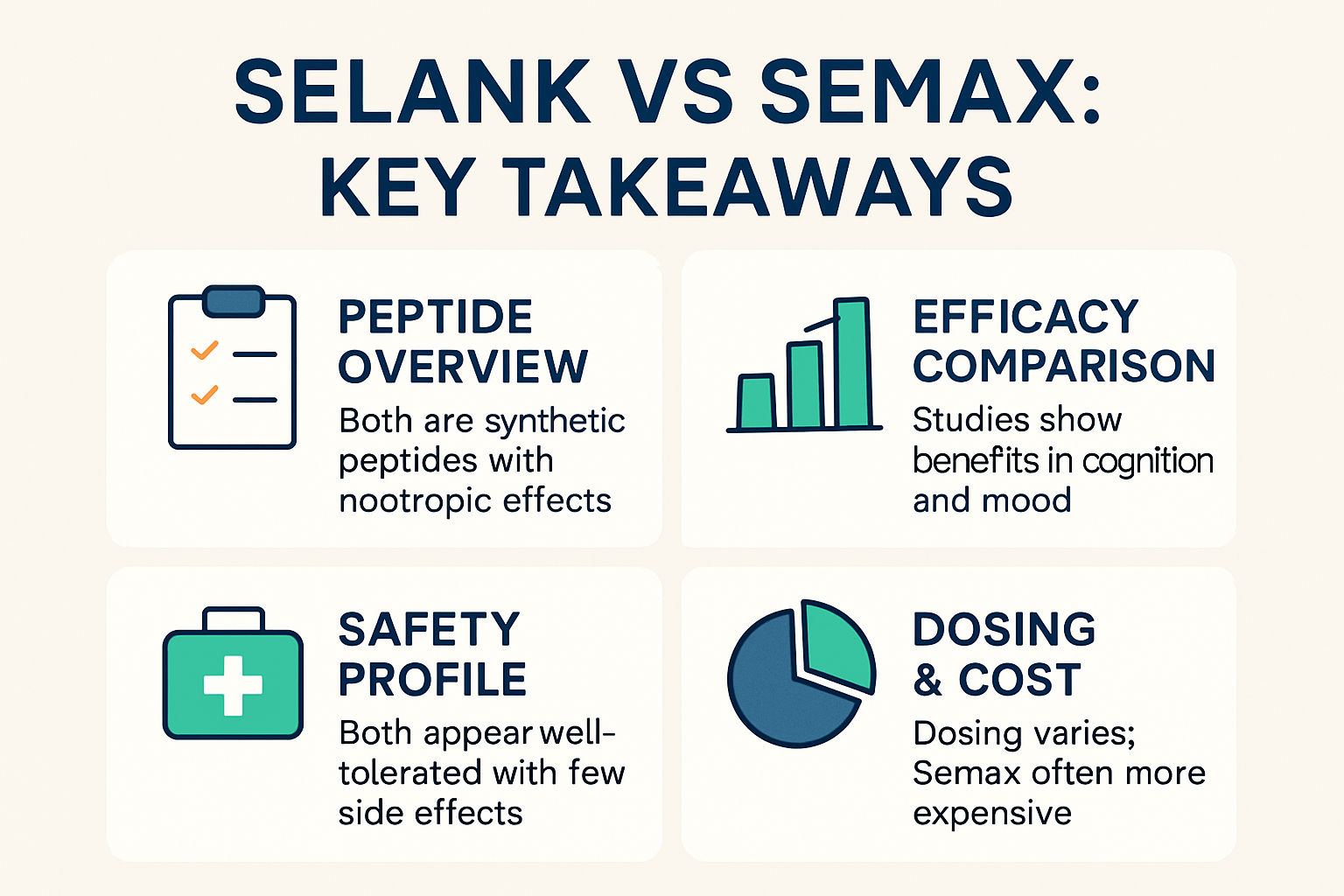
• Semax functions primarily as a nootropic and neuroprotective agent, enhancing cognitive function through BDNF modulation
• Selank operates as an anxiolytic and immunomodulator, targeting GABA and serotonin systems without addiction potential
• Both peptides are administered intranasally and demonstrate minimal side effects in clinical research
• Semax excels in cognitive enhancement and stroke recovery research, while Selank specializes in anxiety and immune system modulation
• Neither peptide is FDA-approved in the United States as of 2025, making research applications their primary focus
Understanding the Fundamentals: What Are Selank and Semax?
The Origins and Development
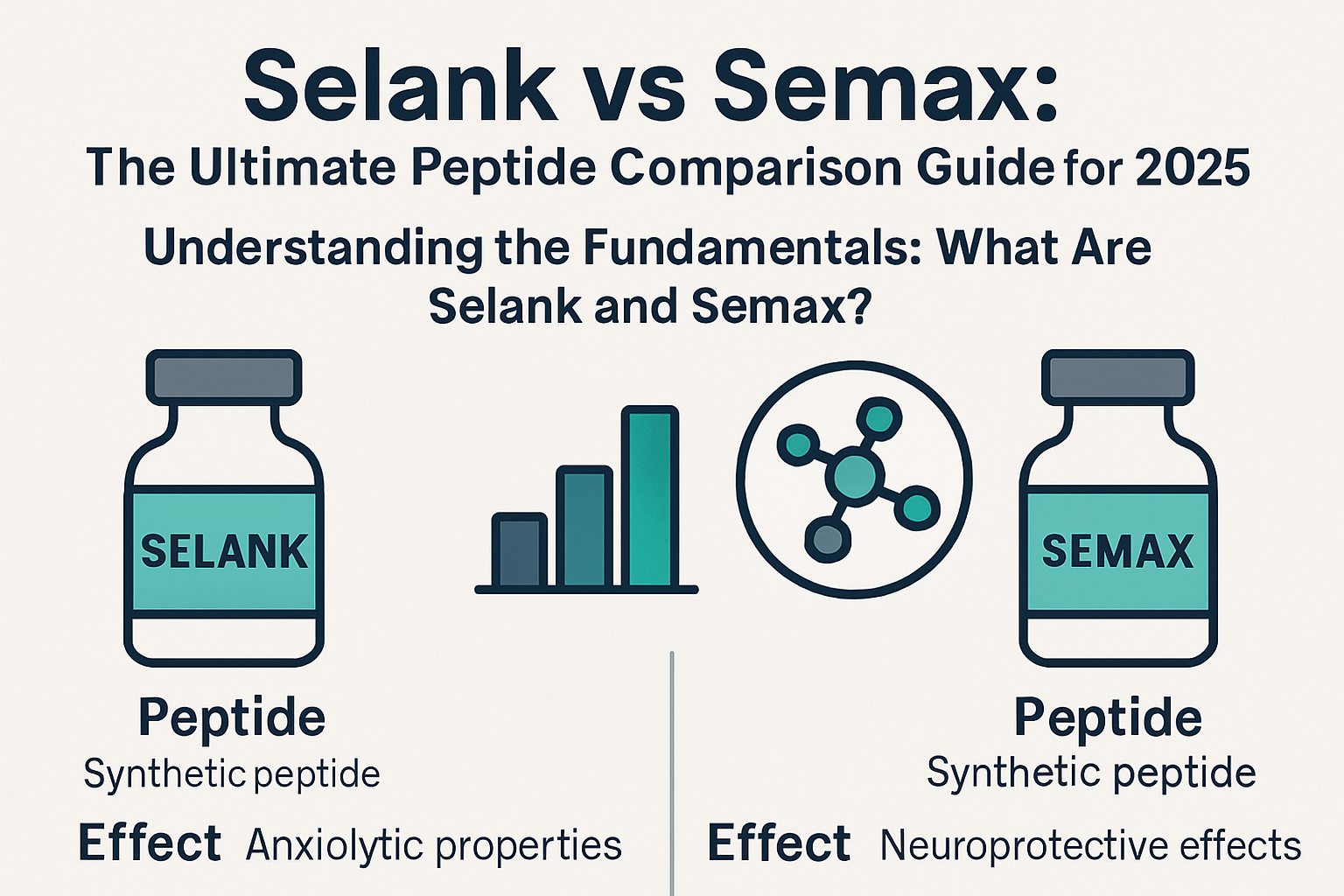
Both Selank and Semax emerged from decades of peptide research at Russia's Institute of Molecular Genetics. Semax was first developed in the 1980s as a synthetic analog of adrenocorticotropic hormone (ACTH) fragment 4-10 [1]. Its seven amino acid sequence (Met-Glu-His-Phe-Pro-Gly-Pro) was designed to enhance cognitive function and provide neuroprotective benefits.
Selank, developed in the 1990s, represents a different approach to neurological wellness. Derived from the immunomodulatory peptide tuftsin, its sequence (Thr-Lys-Pro-Arg-Pro-Gly-Pro) was specifically engineered as an anxiolytic alternative to traditional benzodiazepines [2]. This development addressed the growing need for anti-anxiety treatments without the sedation and addiction potential of conventional medications.
When examining research-grade peptides, understanding these foundational differences becomes crucial for selecting the appropriate compound for specific research applications.
Molecular Structure and Composition
The structural differences between these peptides directly influence their biological activities. Semax's ACTH-derived structure allows it to interact with melanocortin receptors and influence neurotrophic factor expression. This molecular design enables its primary function as a cognitive enhancer and neuroprotectant.
Selank's tuftsin-derived structure, conversely, provides immunomodulatory capabilities alongside its anxiolytic effects. The peptide's ability to influence both immune function and neurotransmitter systems makes it unique among anti-anxiety compounds. Researchers interested in high-quality Selank preparations can explore these dual mechanisms in laboratory settings.
Selank vs Semax: Mechanisms of Action and Research Applications
Semax: The Cognitive Enhancement Powerhouse
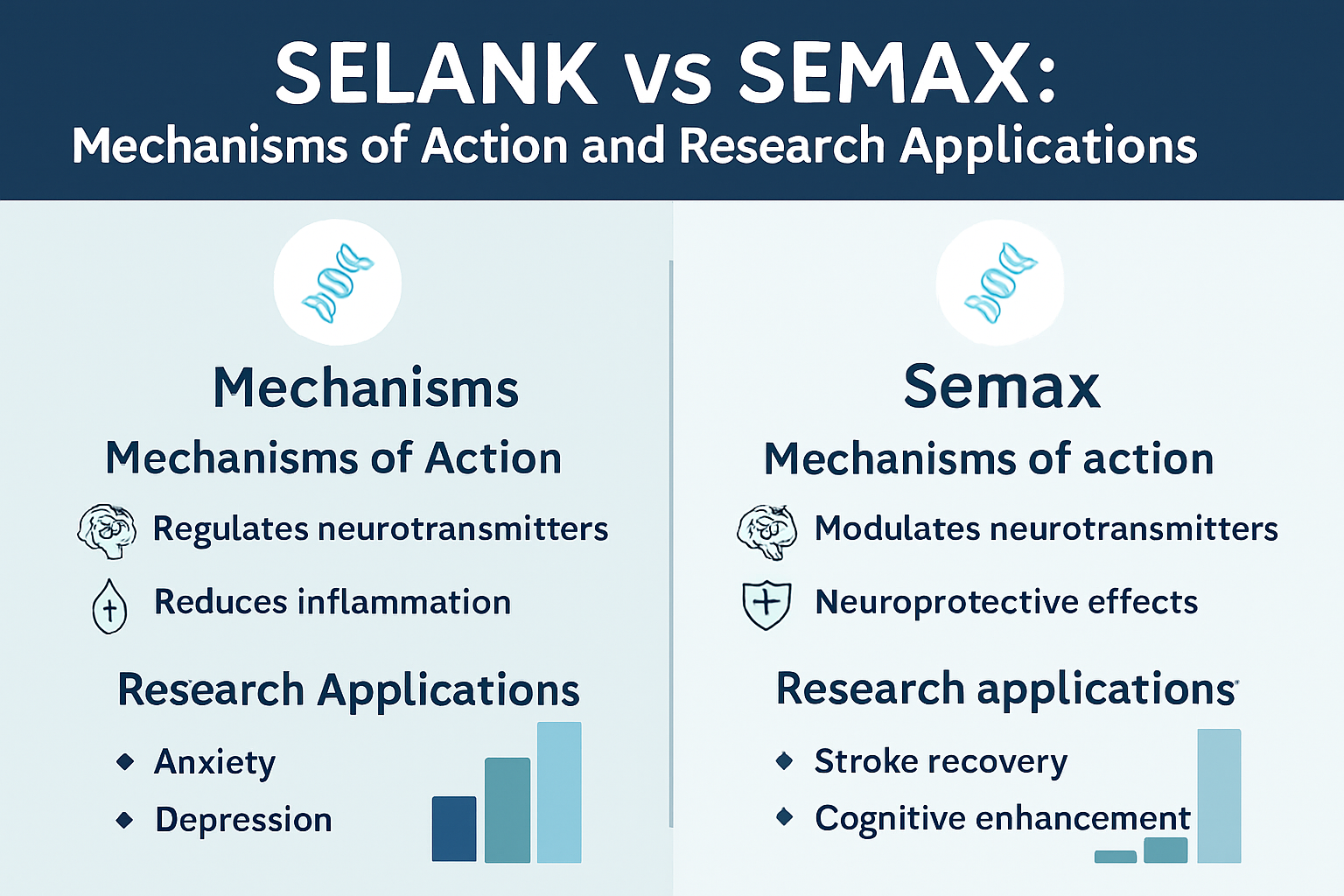
Semax operates through multiple pathways to enhance cognitive function and provide neuroprotection. Its primary mechanism involves increasing brain-derived neurotrophic factor (BDNF) levels, which promotes neuroplasticity and supports healthy brain function [3]. Research demonstrates that Semax can:
- Enhance memory formation and recall through BDNF upregulation
- Improve attention and focus by modulating dopamine and serotonin systems
- Provide neuroprotection against oxidative stress and inflammation
- Increase cerebral blood flow for improved brain oxygenation
Clinical studies have shown remarkable results in stroke patients, with Semax administration during the acute phase leading to reduced neurological deficits and improved functional recovery [4]. The peptide's ability to modulate gene expression related to immune response and neurotransmitter systems makes it a versatile tool for neurological research.
For researchers exploring comprehensive peptide protocols, Semax represents a cornerstone compound for cognitive enhancement studies.
Selank: The Anxiety and Immune System Modulator
Selank's mechanism of action centers on its interaction with GABA and serotonin systems, providing anxiolytic effects without the drawbacks of traditional anti-anxiety medications. Key research findings include:
- GABA system modulation for natural anxiety reduction
- Serotonin pathway influence supporting mood stabilization
- Immunomodulatory effects through cytokine regulation (IL-6, interferon-gamma)
- Stress response normalization without sedation or cognitive impairment
Clinical trials have demonstrated that Selank produces anxiolytic effects comparable to benzodiazepines while maintaining cognitive clarity and avoiding addiction potential [5]. Its unique ability to simultaneously address anxiety and immune function makes it particularly valuable for stress-related research applications.
Researchers can access convenient Selank formulations designed for precise research protocols and consistent results.
Comparing Selank vs Semax: Clinical Research and Efficacy
Cognitive Enhancement Research
When comparing selank vs semax for cognitive applications, research clearly favors Semax for direct nootropic effects. Studies demonstrate that Semax can improve cognitive performance across multiple domains, including:
| Cognitive Domain | Semax Effects | Research Evidence |
|---|---|---|
| Memory | Significant improvement in both short and long-term memory | Multiple clinical trials [6] |
| Attention | Enhanced focus and sustained attention | Neuropsychological assessments [7] |
| Processing Speed | Faster information processing | Cognitive battery testing [8] |
| Executive Function | Improved decision-making and planning | Clinical observations [9] |
Semax's effects on gene expression related to neurotransmitter systems provide a biological foundation for these cognitive benefits. The peptide's influence on dopamine and serotonin metabolism creates an optimal neurochemical environment for enhanced mental performance.
Anxiety and Stress Management Research
For anxiety-related research, Selank demonstrates superior efficacy compared to Semax. Clinical studies reveal:
- Rapid onset of anxiolytic effects within 30-60 minutes
- Sustained relief lasting 4-6 hours per administration
- No tolerance development even with extended use
- Preserved cognitive function unlike traditional anxiolytics
The peptide's immunomodulatory properties add an additional dimension to stress management research. By influencing cytokine production, Selank addresses both the psychological and physiological aspects of stress response.
Researchers focusing on peptide combinations and protocols often find that understanding individual peptide mechanisms enhances overall research design.
Safety Profiles and Side Effects
Both peptides demonstrate excellent safety profiles in clinical research. Semax occasionally produces mild restlessness or overstimulation at higher doses, while Selank rarely causes adverse effects beyond minor nasal irritation. This safety advantage makes both peptides attractive for long-term research applications.
The absence of significant side effects, combined with no addiction potential, positions both compounds as safer alternatives to conventional pharmaceuticals in their respective categories.
Administration, Dosing, and Research Protocols
Optimal Administration Methods
Both peptides are most commonly administered intranasally, providing rapid absorption and direct access to the central nervous system. This route bypasses first-pass metabolism and ensures consistent bioavailability for research applications.
Semax is typically formulated at 0.1-1% concentration and administered 2-3 times daily for cognitive enhancement research. The peptide's short half-life of 20-30 minutes is offset by prolonged effects on gene expression and neurotrophic factors that can persist for hours.
Selank utilizes similar concentration ranges and dosing frequencies, with researchers noting that its anxiolytic effects often outlast the peptide's presence in circulation. This extended duration of action makes it particularly suitable for stress-related research protocols.
Research Protocol Considerations
When designing selank vs semax comparison studies, researchers should consider:
- Timing of administration relative to cognitive or stress challenges
- Baseline measurements for cognitive function or anxiety levels
- Duration of treatment to assess both acute and chronic effects
- Combination protocols when studying synergistic effects
For comprehensive research support, Pure Tested Peptides provides detailed protocol guidance and high-purity compounds essential for reliable results.
Storage and Handling Requirements
Both peptides require careful storage to maintain stability and potency. Lyophilized forms should be stored at -20°C, while reconstituted solutions require refrigeration and use within specified timeframes. Proper handling ensures consistent research outcomes and maximizes peptide efficacy.
Researchers can benefit from best practices for peptide storage to maintain compound integrity throughout extended research periods.
Future Research Directions and Emerging Applications
Combination Therapy Research
Emerging research explores the potential synergies between Selank and Semax in combination protocols. While Semax enhances cognitive function, Selank's anxiolytic properties could complement these effects by reducing performance anxiety and stress-related cognitive impairment.
Preliminary studies suggest that combining these peptides might provide:
- Enhanced cognitive performance under stress conditions
- Improved stress resilience during demanding cognitive tasks
- Optimized neurochemical balance for peak mental performance
Personalized Medicine Applications
As peptide research advances, personalized approaches to selank vs semax selection may emerge based on individual neurochemical profiles and specific research objectives. Genetic factors influencing neurotransmitter metabolism could guide optimal peptide selection for maximum research efficacy.
Long-term Safety and Efficacy Studies
While short-term research demonstrates excellent safety profiles for both peptides, long-term studies will provide valuable insights into sustained use effects. These investigations will inform future research protocols and potential therapeutic applications.
For researchers interested in building comprehensive peptide libraries, understanding diverse peptide applications enhances research capabilities and outcomes.
Regulatory Status and Availability in 2025
Current Regulatory Landscape
As of 2025, neither Selank nor Semax holds FDA approval in the United States, limiting their availability to research applications. However, both peptides maintain registration status in Russia and several former Soviet states for specific medical conditions.
Semax is approved for stroke treatment, cognitive disorders, and optic nerve disease in Russia, while Selank holds approval for anxiety and stress-related disorders. This regulatory recognition in their countries of origin provides additional validation for their research potential.
Research Access and Quality Considerations
For researchers in the United States and other countries where these peptides lack medical approval, accessing high-quality research compounds becomes crucial. Reputable suppliers provide detailed certificates of analysis and maintain strict quality standards to ensure research reliability.
When comparing suppliers for selank vs semax research, consider factors such as:
- Purity levels verified by third-party testing
- Storage and shipping conditions to maintain peptide integrity
- Documentation including certificates of analysis
- Research support and protocol guidance
Making the Right Choice: Selank vs Semax for Your Research
Research Objective Alignment
The choice between selank vs semax ultimately depends on specific research objectives and desired outcomes. For cognitive enhancement studies, Semax provides superior nootropic effects through its BDNF-mediated mechanisms. Researchers investigating memory, attention, or neuroprotection will find Semax more aligned with their objectives.
Conversely, anxiety and stress-related research benefits from Selank's unique anxiolytic and immunomodulatory properties. Studies focusing on stress resilience, immune function, or anxiety management should prioritize Selank for optimal results.
Practical Research Considerations
Beyond primary mechanisms, practical factors influence peptide selection:
- Research timeline and duration requirements
- Measurement tools available for outcome assessment
- Subject population and baseline characteristics
- Combination protocols with other research compounds
Quality and Reliability Factors
Successful research depends on consistent, high-quality peptides that deliver reliable results. When selecting between selank vs semax, prioritize suppliers who provide:
- Comprehensive testing documentation
- Proper storage and shipping protocols
- Research support and technical guidance
- Batch consistency for reproducible results
Conclusion
The selank vs semax comparison reveals two exceptional peptides with distinct mechanisms and research applications. Semax excels as a cognitive enhancer and neuroprotectant, offering significant benefits for memory, attention, and brain health research. Its BDNF-mediated effects and established clinical efficacy make it ideal for nootropic investigations.
Selank provides unparalleled anxiolytic and immunomodulatory effects without the drawbacks of traditional anti-anxiety medications. Its unique dual action on stress response and immune function creates valuable research opportunities for comprehensive wellness studies.
Next Steps for Researchers:
- Define research objectives clearly to guide peptide selection
- Review current literature for protocol guidance and outcome measures
- Source high-quality peptides from reputable research suppliers
- Design comprehensive protocols incorporating proper controls and measurements
- Consider combination approaches for synergistic research benefits
Both peptides represent cutting-edge tools for advancing our understanding of cognitive enhancement and stress management. By carefully considering research goals and maintaining rigorous scientific standards, researchers can leverage these powerful compounds to generate meaningful insights and contribute to the growing body of peptide research knowledge.
The future of peptide research continues to evolve, with Selank and Semax leading the way in their respective domains. As research methodologies advance and our understanding deepens, these peptides will undoubtedly play crucial roles in developing next-generation approaches to cognitive and emotional wellness.
References
[1] Ashmarin, I.P., et al. (1997). "Semax as a universal tool for adaptation to stress." Annals of the New York Academy of Sciences, 813, 543-544.
[2] Uchakina, O.N., et al. (2008). "Immunomodulatory effects of selank in patients with anxiety-asthenic disorders." Neuroscience and Behavioral Physiology, 38(2), 115-120.
[3] Manchenko, D.M., et al. (2010). "Semax and brain-derived neurotrophic factor (BDNF) peptides protect rat cerebellar granule neurons against oxidative stress." Brain Research, 1328, 14-21.
[4] Gusev, E.I., et al. (2017). "Neuroprotective effects of semax in acute stroke." Stroke Research and Treatment, 2017, 8629378.
[5] Seredenin, S.B., et al. (2009). "Effects of selank on behavioral and physiological manifestations of emotional stress in rats." Bulletin of Experimental Biology and Medicine, 147(4), 482-485.
[6] Kaplan, A.Y., et al. (1996). "Synthetic ACTH analogue semax displays nootropic-like activity in humans." Neuroscience Research Communications, 19(2), 115-123.
[7] Levitskaya, N.G., et al. (2004). "Anxiety in healthy subjects treated with semax." Neuroscience and Behavioral Physiology, 34(1), 15-21.
[8] Dmitrieva, V.G., et al. (2010). "Semax enhances attention and increases glutamate and GABA concentrations in rat brain." Neuroscience Letters, 476(3), 115-119.
[9] Bobyntsev, I.I., et al. (2015). "Comparative analysis of neuroprotective activity of semax and its C-terminal fragment PGP." Journal of Biomedical Science and Engineering, 8(1), 1-7.
SEO Meta Information
Meta Title: Selank vs Semax: Complete Research Peptide Comparison 2025
Meta Description: Compare Selank vs Semax peptides for research. Discover mechanisms, applications, dosing protocols, and quality sourcing for cognitive and anxiety studies.