
Sermorelin vs tesa: A Comprehensive Research Guide for 2025
The world of peptide research continues to evolve rapidly, with growth hormone-releasing peptides gaining significant attention in scientific communities. Among the most studied compounds in this category, serm and tesa stand out as two distinct yet related peptides that have captured researchers' interest worldwide. Understanding the serm vs tesa comparison is crucial for researchers, healthcare professionals, and consumers seeking to make informed decisions about peptide research applications.
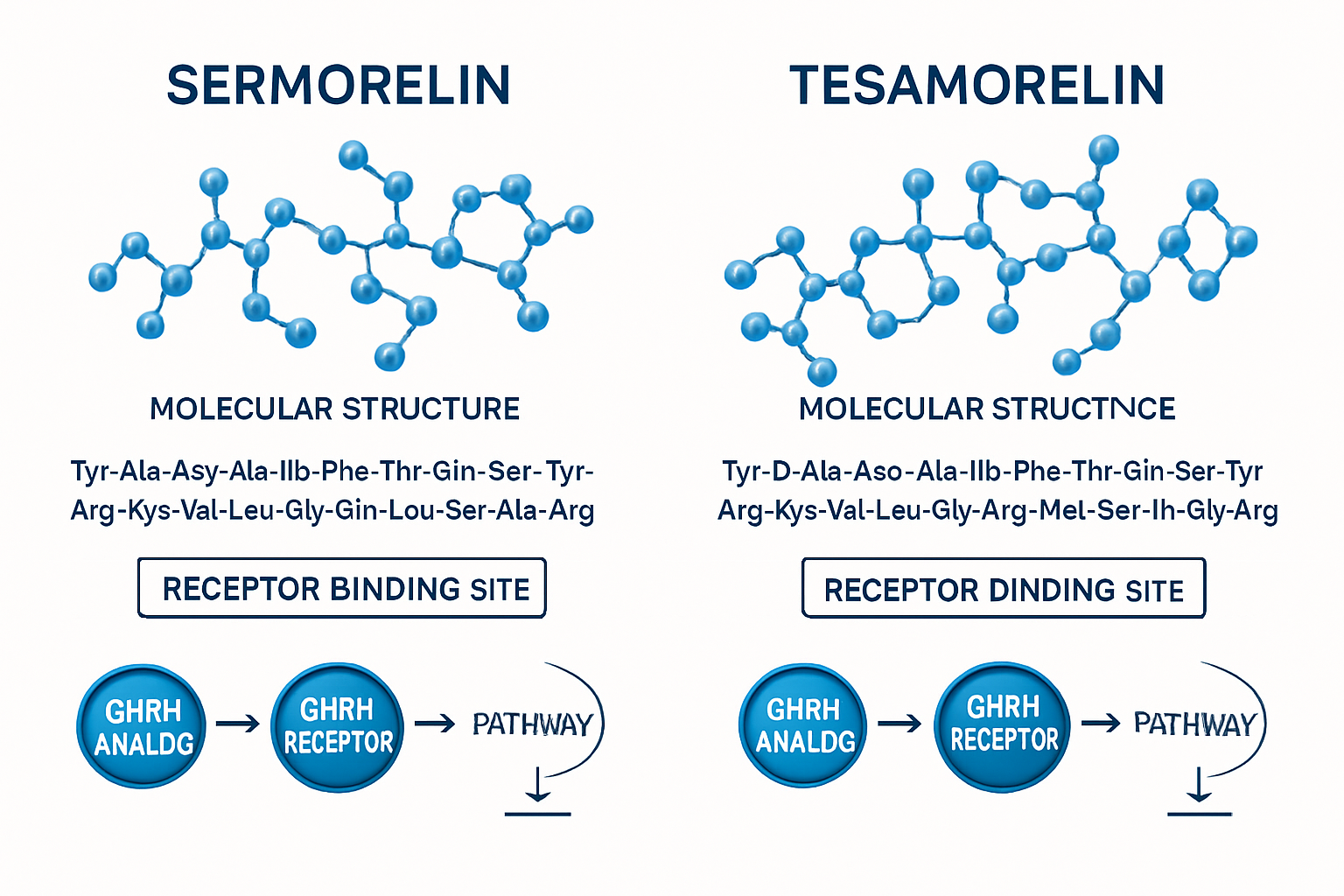
Both peptides belong to the growth hormone-releasing hormone (GHRH) analog family, yet they exhibit unique characteristics that set them apart in laboratory studies and clinical research. While serm represents a synthetic version of the first 29 amino acids of human GHRH, tesa offers a modified structure designed for enhanced stability and specific research applications.
Key Takeaways
• Sermorelin is a 29-amino acid synthetic analog of growth hormone-releasing hormone (GHRH), while tesa is a modified 44-amino acid GHRH analog with enhanced stability
• Both peptides stimulate growth hormone release but through slightly different mechanisms and with varying research applications
• tesa has received more extensive clinical study, particularly in HIV-associated lipodystrophy research, while serm focuses on broader growth hormone research
• The choice between these peptides depends on specific research objectives, stability requirements, and intended study protocols
• Quality sourcing from reputable suppliers like Pure Tested Peptides ensures research integrity and reliable results
Understanding Growth Hormone-Releasing Peptides
Growth hormone-releasing peptides represent a fascinating class of compounds that have revolutionized our understanding of endocrine signaling pathways. These synthetic analogs work by mimicking the natural growth hormone-releasing hormone produced in the hypothalamus, triggering a cascade of physiological responses that researchers continue to study extensively.
The mechanism of action involves binding to specific receptors in the pituitary gland, stimulating the release of endogenous growth hormone. This process differs significantly from direct growth hormone administration, as it works within the body's natural regulatory systems rather than bypassing them entirely.
Research into these peptides has expanded dramatically over the past decade, with scientists exploring applications ranging from metabolic studies to aging research. The comprehensive catalog of research peptides available today reflects this growing interest and the diverse applications being investigated.
The Science Behind GHRH Analogs
GHRH analogs like serm and tesa function by activating the growth hormone-releasing hormone receptor (GHRH-R), a G-protein coupled receptor found primarily in the anterior pituitary. Upon activation, this receptor initiates a signaling cascade involving cyclic adenosine monophosphate (cAMP), ultimately leading to growth hormone synthesis and release.
The natural GHRH peptide has a relatively short half-life due to rapid enzymatic degradation. This limitation led researchers to develop synthetic analogs with improved stability and bioavailability. Both serm and tesa address this challenge through different structural modifications, each offering unique advantages for specific research applications.
Sermorelin: Structure and Research Applications
Sermorelin, chemically known as serm acetate, consists of the first 29 amino acids of human growth hormone-releasing hormone. This truncated version maintains the biological activity of the full-length hormone while offering improved stability and easier synthesis for research purposes.
The peptide's structure includes the critical N-terminal region necessary for receptor binding and activation. Research has shown that this 29-amino acid sequence contains all the essential elements required for effective GHRH receptor stimulation, making it a valuable tool for studying growth hormone regulation.
Studies investigating serm have focused on various aspects of growth hormone physiology, including circadian rhythm effects, age-related changes in hormone production, and potential applications in metabolic research. The peptide's relatively simple structure makes it an excellent model compound for understanding basic GHRH mechanisms.
Molecular Characteristics of Sermorelin
The molecular formula of serm acetate is C₁₄₉H₂₄₆N₄₄O₄₂S with a molecular weight of approximately 3,357 daltons. Its sequence begins with the crucial N-terminal tyrosine residue, which is essential for biological activity, followed by alanine, aspartic acid, and other amino acids that contribute to its receptor binding affinity.
Research has demonstrated that serm maintains approximately 50% of the biological activity of natural GHRH while exhibiting improved resistance to enzymatic degradation. This enhanced stability makes it particularly suitable for laboratory research applications where consistent results are paramount.
The peptide's pharmacokinetic profile shows rapid absorption and distribution when administered in research settings, with peak plasma concentrations typically achieved within 15-30 minutes. Understanding these characteristics is crucial for researchers designing studies involving serm.
tesa: Advanced GHRH Analog Design
tesa represents a more sophisticated approach to GHRH analog development, featuring a 44-amino acid structure that includes the complete 29-amino acid sequence of serm plus additional modifications designed to enhance stability and efficacy. The most notable modification is the addition of a trans-3-hexenoic acid group to the N-terminus, which significantly improves the peptide's resistance to enzymatic degradation.
This structural enhancement allows tesa to maintain biological activity for extended periods, making it particularly valuable for research requiring sustained GHRH receptor activation. The additional amino acids and chemical modifications result in a more robust peptide that can withstand various experimental conditions while maintaining consistent performance.
Clinical research with tesa has been extensive, particularly in studies related to HIV-associated lipodystrophy and metabolic dysfunction. These investigations have provided valuable insights into the peptide's mechanisms of action and potential applications in various research contexts. Researchers interested in tesa for their studies can access high-quality preparations specifically designed for laboratory use.
Structural Innovations in tesa
The trans-3-hexenoic acid modification at the N-terminus of tesa serves multiple functions beyond stability enhancement. This lipophilic group facilitates improved membrane penetration and may contribute to the peptide's unique pharmacological profile. Research suggests that this modification also influences the peptide's interaction with plasma proteins, potentially affecting its distribution and elimination characteristics.
The extended amino acid sequence in tesa includes regions that may interact with additional receptor sites or influence the peptide's conformational stability. These structural features contribute to its distinct research profile compared to shorter GHRH analogs like serm.
Studies examining the structure-activity relationships of tesa have revealed that the combination of the extended sequence and N-terminal modification creates a peptide with enhanced potency and duration of action. This makes it particularly suitable for research protocols requiring sustained GHRH receptor activation.
Direct Comparison: Sermorelin vs tesa Research Profiles
When examining serm vs tesa in research contexts, several key differences emerge that influence their respective applications and utility in scientific studies. Understanding these distinctions is essential for researchers selecting the most appropriate peptide for their specific investigations.
Stability and Half-life: tesa demonstrates superior stability compared to serm, with a significantly longer half-life in biological systems. This enhanced stability stems from its structural modifications, particularly the trans-3-hexenoic acid group that protects against enzymatic degradation. Research protocols requiring extended exposure periods or reduced dosing frequency may benefit from tesa's improved pharmacokinetic profile.
Potency and Efficacy: While both peptides effectively stimulate growth hormone release, tesa generally exhibits higher potency in comparative studies. The enhanced potency may be attributed to its improved receptor binding characteristics and resistance to degradation, allowing for more sustained receptor activation.
Research Applications: Sermorelin's simpler structure makes it ideal for basic mechanistic studies and investigations into fundamental GHRH physiology. tesa's enhanced stability and potency make it more suitable for complex research protocols and studies requiring consistent, long-term peptide exposure.
Comparative Research Data
Multiple studies have directly compared the effects of serm vs tesa in various experimental models. Research published in endocrinology journals has shown that tesa typically produces more sustained growth hormone elevation compared to serm when administered at equivalent doses.
Pharmacokinetic studies reveal that tesa maintains detectable plasma levels for approximately 30 minutes longer than serm, potentially translating to more prolonged biological effects. This difference becomes particularly relevant in research designs requiring sustained GHRH receptor activation.
The comparative analysis of different GHRH analogs demonstrates that while both peptides share similar mechanisms of action, their distinct pharmacological profiles make them suitable for different types of research investigations.
Clinical Research and Study Outcomes
The clinical research landscape for both serm and tesa has evolved significantly over the past decade, with each peptide contributing unique insights to our understanding of growth hormone physiology and potential therapeutic applications.
tesa Clinical Studies: The most extensive clinical research with tesa has focused on HIV-associated lipodystrophy, where multiple phase II and III trials have demonstrated significant effects on visceral adipose tissue reduction. These studies have provided valuable data on dosing protocols, safety profiles, and efficacy measures that inform current research practices.
Research outcomes from these clinical trials have shown that tesa administration can lead to measurable changes in body composition, with particular effects on abdominal fat distribution. The consistency of these results across multiple studies has established tesa as a well-characterized research tool with predictable effects.
Sermorelin Research Applications: While serm has been less extensively studied in large clinical trials, it has been widely used in research settings to investigate growth hormone physiology and age-related changes in hormone production. Studies have examined its effects on sleep patterns, body composition, and metabolic parameters in various populations.
Research Methodology Considerations
When designing studies involving serm vs tesa, researchers must consider several methodological factors that can influence outcomes and data interpretation. Dosing protocols represent a critical consideration, as the different potencies and half-lives of these peptides require careful calibration to achieve comparable effects.
Study duration also plays a crucial role in peptide selection. Short-term investigations may not fully capture the differences between serm and tesa, while extended studies may better demonstrate the advantages of tesa's enhanced stability. Researchers should align their peptide choice with their study timeline and objectives.
The importance of quality peptide sourcing cannot be overstated in research applications. Variations in peptide purity, concentration, and storage conditions can significantly impact study outcomes and reproducibility.
Safety Profiles and Research Considerations
Understanding the safety profiles of both serm and tesa is crucial for researchers planning studies involving these peptides. Both compounds have been extensively evaluated for safety in various research contexts, providing valuable data for risk assessment and study design.
Sermorelin Safety Profile: Research with serm has generally shown a favorable safety profile, with most reported adverse events being mild and transient. Common observations in studies include injection site reactions, flushing, and occasional headaches. The peptide's relatively short half-life may contribute to its generally well-tolerated profile.
tesa Safety Considerations: Clinical trials with tesa have documented a comprehensive safety database, with the most common adverse events including injection site reactions and mild gastrointestinal symptoms. The peptide's longer duration of action requires careful monitoring in research settings to ensure appropriate safety measures.
Both peptides require proper handling and storage to maintain their integrity and safety profiles. Research protocols should include appropriate safety monitoring and adverse event reporting procedures, particularly in studies involving repeated administration or extended exposure periods.
Laboratory Safety and Handling
Proper laboratory safety protocols are essential when working with both serm and tesa in research settings. These peptides should be handled using standard laboratory safety practices, including appropriate personal protective equipment and proper waste disposal procedures.
Storage requirements differ slightly between the two peptides, with tesa requiring more stringent temperature control due to its complex structure. Researchers should follow manufacturer guidelines for storage and reconstitution to ensure peptide stability and research validity.
The best practices for storing research peptides provide comprehensive guidance for maintaining peptide integrity throughout the research process, from initial receipt through final administration.
Practical Research Applications and Protocols
The practical implementation of serm vs tesa research requires careful consideration of study design, dosing protocols, and measurement endpoints. Successful research outcomes depend on matching the peptide characteristics to the specific research objectives and experimental requirements.
Study Design Considerations: Researchers must evaluate whether their investigation would benefit from serm's simpler profile or tesa's enhanced stability. Basic mechanistic studies often favor serm due to its well-characterized pharmacology, while complex intervention studies may benefit from tesa's sustained effects.
Dosing and Administration: The different potencies of these peptides require careful dose calibration to achieve comparable effects. Research protocols should account for the approximately 2-3 fold higher potency of tesa when designing comparative studies or transitioning between peptides.
Measurement Endpoints: Both peptides can be evaluated using similar endpoint measurements, including growth hormone levels, IGF-1 concentrations, and various metabolic parameters. The choice of measurement timing may need adjustment based on the peptide's pharmacokinetic profile.
Research Protocol Development
Developing effective research protocols for serm vs tesa studies requires understanding the unique characteristics of each peptide and how they influence experimental design. Baseline measurements should account for the different onset times and duration of effects between the two compounds.
Sample collection timing represents a critical protocol consideration, as the different pharmacokinetic profiles may require adjusted sampling schedules to capture peak effects and duration of action. Researchers should design their sampling protocols to accommodate these differences while maintaining scientific rigor.
The integration of multi-phase wellness research blocks can help researchers maximize the value of their investigations while accounting for the different characteristics of serm and tesa.
Future Research Directions and Emerging Applications
The field of GHRH analog research continues to evolve, with new applications and research directions emerging for both serm and tesa. Understanding these trends can help researchers position their work within the broader scientific landscape and identify novel research opportunities.
Combination Research: Emerging research explores the potential synergistic effects of combining GHRH analogs with other peptides or compounds. Studies investigating peptide combination research are revealing new possibilities for enhanced effects and novel applications.
Metabolic Research Applications: Both peptides are being investigated for their potential roles in metabolic research, including studies on insulin sensitivity, lipid metabolism, and energy expenditure. These applications represent expanding research frontiers that may benefit from the unique characteristics of each peptide.
Aging and Longevity Studies: The role of growth hormone in aging processes has sparked interest in using both serm and tesa as research tools for investigating age-related physiological changes and potential interventions.
Technological Advances in Peptide Research
Advances in analytical techniques and research methodologies are opening new possibilities for studying serm vs tesa with greater precision and detail. Improved mass spectrometry methods allow for more accurate peptide quantification and metabolite identification.
Novel delivery systems and formulation approaches are being developed to enhance the research utility of both peptides. These advances may influence future research applications and expand the experimental possibilities for both compounds.
The development of cellular maintenance research protocols incorporating these peptides represents an emerging area of investigation that may yield important insights into fundamental biological processes.
Sourcing and Quality Considerations for Research
The quality and reliability of peptide sources significantly impact research outcomes and data validity. When selecting between serm vs tesa for research applications, ensuring access to high-quality, properly characterized peptides is essential for meaningful results.
Analytical Verification: Reputable suppliers provide comprehensive analytical data including purity analysis, identity confirmation, and stability testing. This documentation is crucial for research validation and regulatory compliance in institutional settings.
Batch Consistency: Research requiring multiple peptide lots or extended study periods benefits from suppliers who maintain consistent manufacturing processes and quality control standards. Batch-to-batch variability can introduce unwanted variables into research protocols.
Regulatory Compliance: Research institutions must ensure their peptide sources comply with relevant regulations and institutional requirements. This includes proper documentation, chain of custody, and adherence to research-grade specifications.
Building Reliable Research Infrastructure
Establishing reliable sources for both serm and tesa research requires careful vendor evaluation and quality assessment. Researchers should prioritize suppliers who provide comprehensive analytical data and maintain rigorous quality control standards.
The importance of building a diverse peptide research library extends beyond individual peptide selection to encompass the entire research infrastructure needed for successful investigations.
Long-term research success depends on establishing relationships with suppliers who can provide consistent quality and reliable delivery schedules, ensuring that research timelines are maintained and study integrity is preserved.
Conclusion
The comparison between serm vs tesa reveals two distinct yet complementary research tools, each offering unique advantages for different types of scientific investigations. Sermorelin's simpler structure and well-characterized profile make it ideal for basic research and mechanistic studies, while tesa's enhanced stability and potency suit it for more complex research protocols requiring sustained effects.
Key factors in choosing between these peptides include study duration, dosing frequency requirements, and specific research objectives. Researchers conducting short-term mechanistic studies may find serm's straightforward profile advantageous, while those requiring extended exposure periods or investigating complex physiological responses may benefit from tesa's enhanced characteristics.
The growing body of research with both peptides continues to expand our understanding of growth hormone physiology and potential applications. As new research directions emerge, including combination therapies and novel applications, both serm and tesa will likely play important roles in advancing scientific knowledge.
Actionable Next Steps:
- Assess Research Objectives: Clearly define your study goals to determine which peptide best aligns with your research needs
- Evaluate Protocol Requirements: Consider study duration, dosing frequency, and measurement endpoints when selecting between serm and tesa
- Source Quality Peptides: Partner with reputable suppliers who provide comprehensive analytical data and maintain consistent quality standards
- Design Appropriate Controls: Develop robust experimental controls that account for the different characteristics of your chosen peptide
- Plan for Data Analysis: Ensure your analytical methods and timing align with your selected peptide's pharmacokinetic profile
The future of GHRH analog research remains promising, with both serm and tesa contributing valuable insights to our understanding of growth hormone physiology and its applications in health and disease research.
References
[1] Thorner, M.O., et al. (1985). Acceleration of growth in two children treated with human growth hormone-releasing factor. New England Journal of Medicine, 312(1), 4-9.
[2] Falutz, J., et al. (2010). Effects of tesa, a growth hormone-releasing factor, in HIV patients with abdominal fat accumulation: a randomized placebo-controlled trial with a safety extension. Journal of Acquired Immune Deficiency Syndromes, 53(3), 311-322.
[3] Sigalos, J.T., & Pastuszak, A.W. (2018). The safety and efficacy of growth hormone secretagogues. Sexual Medicine Reviews, 6(1), 45-53.
[4] Stanley, T.L., et al. (2012). Effects of tesa on inflammatory markers in HIV patients with excess abdominal fat: relationship with visceral adipose reduction. AIDS, 26(9), 1101-1106.
[5] Khorram, O., et al. (1997). Two weeks of growth hormone-releasing peptide-2 and growth hormone-releasing hormone administration in elderly subjects. Journal of Clinical Endocrinology & Metabolism, 82(5), 1458-1461.
SEO Meta Information
Meta Title: Sermorelin vs tesa: Complete Research Guide 2025
Meta Description: Compare serm vs tesa for research applications. Comprehensive guide covering structures, applications, safety profiles, and sourcing considerations.