
Simple Peptide GLP3: A Comprehensive Research Guide for 2026
In the rapidly evolving world of peptide research, simple peptide glp3 has emerged as one of the most intriguing compounds capturing the attention of researchers worldwide. This multi-receptor agonist represents a significant advancement in peptide science, offering unique mechanisms of action that distinguish it from traditional single-target peptides. 🧬
Key Takeaways
- Simple peptide glp3 functions as a triple receptor agonist targeting GLP-1, GIP, and glucagon receptors
- Research indicates potential applications in metabolic studies and cellular function investigations
- Quality sourcing and proper storage protocols are essential for maintaining peptide integrity
- Current studies focus on understanding the synergistic effects of multi-receptor activation
- Proper dosing protocols and safety considerations remain critical areas of ongoing research
Understanding Simple Peptide GLP3: The Science Behind Multi-Receptor Activation
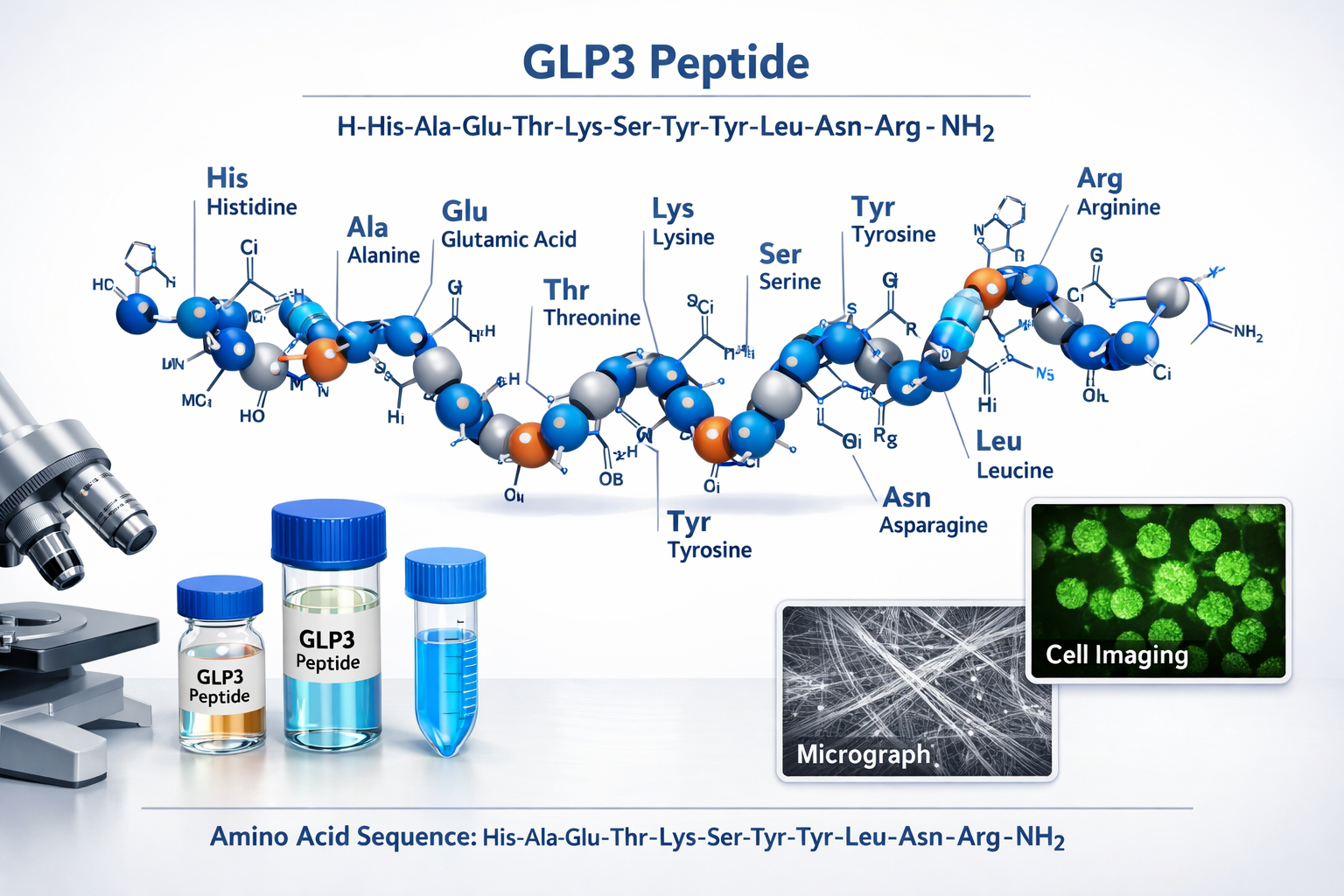
Simple peptide glp3 belongs to a new generation of research compounds known as multi-receptor agonists. Unlike traditional peptides that target single pathways, this innovative compound simultaneously activates three distinct receptor systems: GLP-1 (glucagon-like peptide-1), GIP (glucose-dependent insulinotropic polypeptide), and glucagon receptors [1].
The molecular structure of glp3 peptide represents a carefully engineered sequence designed to maintain stability while providing selective receptor binding. Research laboratories have shown particular interest in this compound due to its unique ability to modulate multiple metabolic pathways simultaneously.
Molecular Characteristics and Structure
The glp3 peptide structure incorporates specific amino acid modifications that enhance its binding affinity and duration of action. These modifications include:
- Enhanced stability: Resistance to enzymatic degradation
- Selective binding: High affinity for target receptors
- Extended half-life: Prolonged research observation periods
- Reduced immunogenicity: Minimal unwanted immune responses
Current research from leading peptide suppliers like Pure Tested Peptides indicates that the compound maintains its structural integrity under proper storage conditions, making it suitable for extended research protocols.
Mechanism of Action Research
Laboratory studies examining glp3 peptide benefits have revealed fascinating insights into multi-receptor activation. When researchers administer this compound in controlled settings, they observe coordinated responses across multiple cellular pathways. The triple agonist approach appears to create synergistic effects that exceed the sum of individual receptor activations.
Research teams investigating what is glp3 peptide have documented its ability to influence various cellular processes through its multi-target approach. This mechanism represents a significant departure from traditional single-target peptide research and opens new avenues for understanding complex biological systems.
GLP3 Peptide Benefits and Research Applications
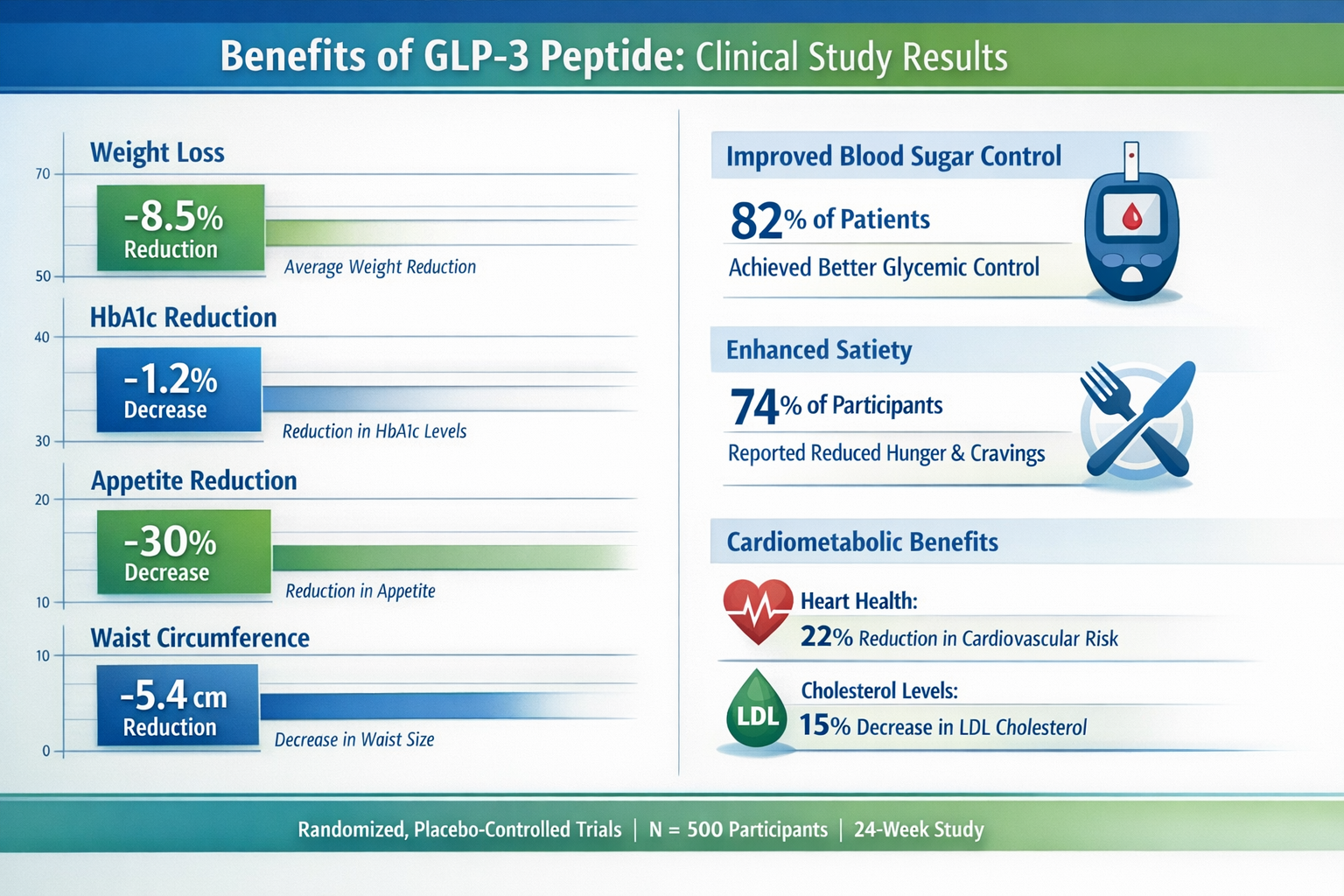
The research community has identified numerous areas where glp3 peptide benefits warrant further investigation. These applications span multiple fields of biological research, from basic cellular studies to complex metabolic investigations.
Metabolic Research Applications
Laboratory studies focusing on glp3 peptide for weight loss research have revealed interesting metabolic effects. Researchers have observed that the compound's triple-receptor activation creates a unique metabolic profile that differs significantly from single-target approaches. The simultaneous activation of GLP-1, GIP, and glucagon receptors appears to create a balanced metabolic response that researchers find particularly intriguing.
Studies examining retatrutide glp3 peptide comparisons have shown that this multi-receptor approach may offer advantages in research settings. The compound's ability to modulate multiple pathways simultaneously provides researchers with a powerful tool for investigating complex metabolic interactions.
Cellular Function Studies
Research teams investigating peptide glp3 effects on cellular function have documented several areas of interest:
- Cellular signaling: Enhanced understanding of multi-pathway activation
- Metabolic flexibility: Improved cellular adaptation mechanisms
- Receptor interaction: Novel insights into receptor crosstalk
- Homeostatic regulation: Better comprehension of metabolic balance
These findings have led to increased interest in peptide blends research and combination approaches to peptide studies.
Safety and Tolerability Research
Current glp3 peptide side effects research focuses on understanding the safety profile of multi-receptor activation. Laboratory studies have examined various dosing protocols to establish safe research parameters. Researchers emphasize the importance of following established protocols when working with peptides glp3 in laboratory settings.
The research community continues to investigate optimal glp3 peptide dosage protocols for different study designs. These investigations help establish standardized approaches for future research applications and ensure consistent results across different laboratory settings.
Sourcing and Quality Considerations for GLP3 Peptide Research
When researchers seek glp3 peptide for sale, quality considerations become paramount. The integrity of research results depends heavily on the purity and stability of the peptide compounds used in studies.
Quality Standards and Testing
Reputable suppliers of simple peptides glp3 implement rigorous testing protocols to ensure compound quality. These standards typically include:
- Purity analysis: HPLC verification of compound purity levels
- Identity confirmation: Mass spectrometry verification
- Stability testing: Long-term storage stability assessments
- Contamination screening: Testing for bacterial and viral contaminants
Research teams emphasizing quality often source their compounds from established suppliers like Pure Tested Peptides to ensure consistent research outcomes.
Storage and Handling Protocols
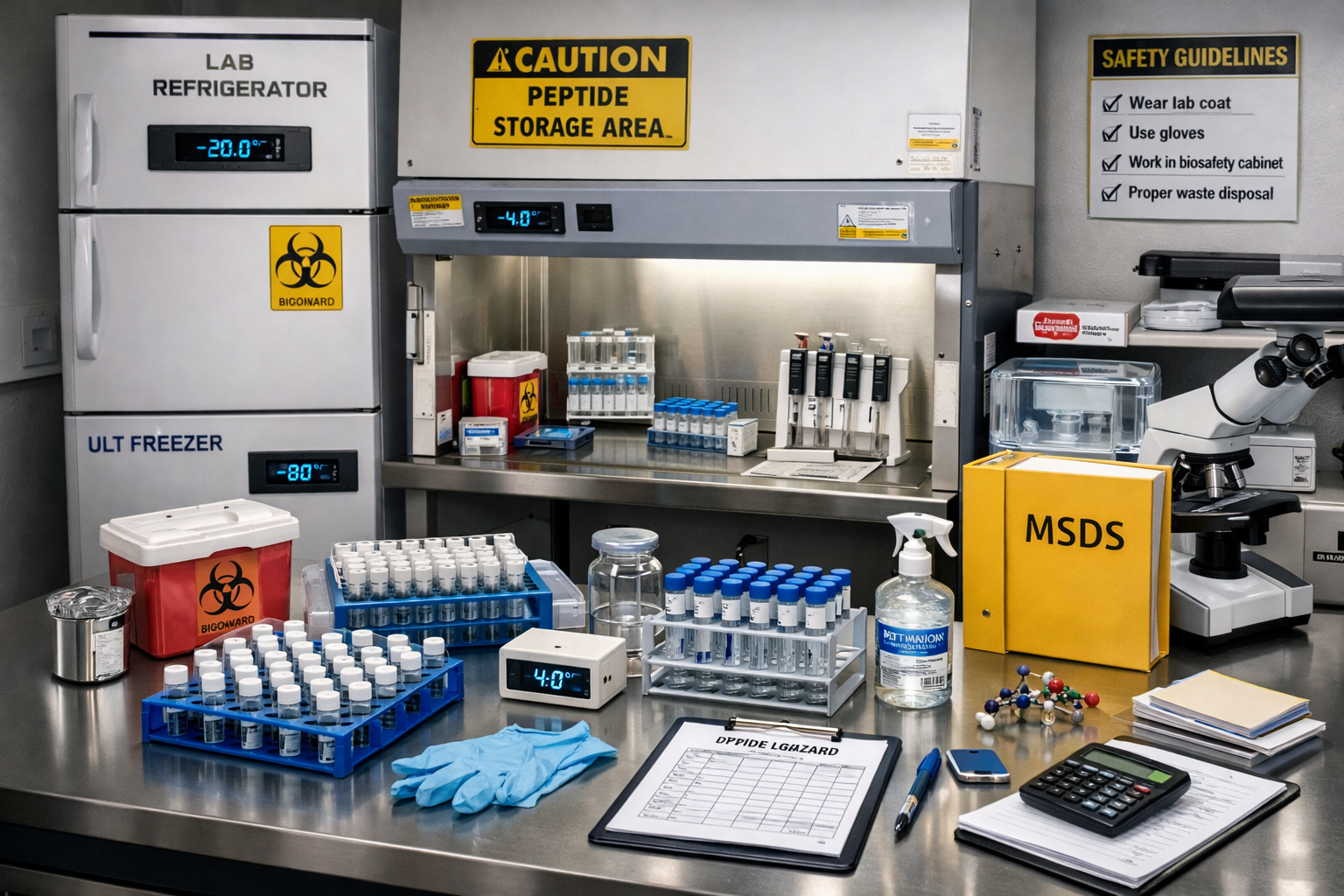
Proper storage of glp3 peptide compounds requires specific environmental conditions to maintain stability. Research laboratories typically follow these protocols:
| Storage Parameter | Requirement | Duration |
|---|---|---|
| Temperature | -20°C to -80°C | Long-term |
| Humidity | <10% relative | All conditions |
| Light exposure | Dark storage | Always |
| Reconstitution | Sterile water | Immediate use |
Understanding best practices for storing research peptides helps ensure compound integrity throughout research studies.
Research Protocol Development
Successful glp3 peptide research requires carefully designed protocols that account for the compound's unique characteristics. Research teams typically consider:
- Dosing schedules: Optimal timing for multi-receptor activation
- Combination studies: Interactions with other research compounds
- Monitoring parameters: Appropriate measurement techniques
- Control groups: Proper comparison standards
Many research teams benefit from consulting applied wellness research with peptides guidelines when developing their protocols.
<!DOCTYPE html>
<html lang="en">
<head>
    <meta charset="UTF-8">
    <meta name="viewport" content="width=device-width, initial-scale=1.0">
    <title>GLP3 Peptide Research Protocol Calculator</title>
    <style>
        .cg-element-container {
            max-width: 800px;
            margin: 20px auto;
            padding: 20px;
            border: 2px solid #2c5aa0;
            border-radius: 10px;
            background: linear-gradient(135deg, #f5f7fa 0%, #c3cfe2 100%);
            font-family: Arial, sans-serif;
        }
        .cg-element-header {
            text-align: center;
            color: #2c5aa0;
            margin-bottom: 20px;
        }
        .cg-element-form {
            display: grid;
            grid-template-columns: 1fr 1fr;
            gap: 15px;
            margin-bottom: 20px;
        }
        .cg-element-input-group {
            display: flex;
            flex-direction: column;
        }
        .cg-element-label {
            font-weight: bold;
            color: #2c5aa0;
            margin-bottom: 5px;
        }
        .cg-element-input {
            padding: 8px;
            border: 1px solid #ddd;
            border-radius: 5px;
            font-size: 14px;
        }
        .cg-element-button {
            grid-column: 1 / -1;
            padding: 12px 20px;
            background-color: #2c5aa0;
            color: white;
            border: none;
            border-radius: 5px;
            font-size: 16px;
            cursor: pointer;
            transition: background-color 0.3s;
        }
        .cg-element-button:hover {
            background-color: #1e3d6f;
        }
        .cg-element-results {
            background-color: white;
            padding: 20px;
            border-radius: 8px;
            margin-top: 20px;
            box-shadow: 0 2px 4px rgba(0,0,0,0.1);
        }
        .cg-element-result-item {
            display: flex;
            justify-content: space-between;
            padding: 8px 0;
            border-bottom: 1px solid #eee;
        }
        .cg-element-result-label {
            font-weight: bold;
            color: #2c5aa0;
        }
        .cg-element-result-value {
            color: #333;
        }
        .cg-element-warning {
            background-color: #fff3cd;
            border: 1px solid #ffeaa7;
            padding: 10px;
            border-radius: 5px;
            margin-top: 15px;
            color: #856404;
        }
        @media (max-width: 600px) {
            .cg-element-form {
                grid-template-columns: 1fr;
            }
        }
    </style>
</head>
<body>
    <div class="cg-element-container">
        <div class="cg-element-header">
            <h3>GLP3 Peptide Research Protocol Calculator</h3>
            <p>Calculate dosing and reconstitution for research applications</p>
        </div>

        <form class="cg-element-form" id="cg-peptide-calculator">
            <div class="cg-element-input-group">
                <label class="cg-element-label" for="cg-vial-size">Vial Size (mg)</label>
                <select class="cg-element-input" id="cg-vial-size">
                    <option value="5">5mg</option>
                    <option value="10">10mg</option>
                    <option value="20">20mg</option>
                </select>
            </div>

            <div class="cg-element-input-group">
                <label class="cg-element-label" for="cg-target-dose">Target Dose (mcg)</label>
                <input type="number" class="cg-element-input" id="cg-target-dose" value="100" min="10" max="1000">
            </div>

            <div class="cg-element-input-group">
                <label class="cg-element-label" for="cg-reconstitution-volume">Reconstitution Volume (mL)</label>
                <select class="cg-element-input" id="cg-reconstitution-volume">
                    <option value="1">1.0 mL</option>
                    <option value="2">2.0 mL</option>
                    <option value="5">5.0 mL</option>
                </select>
            </div>

            <div class="cg-element-input-group">
                <label class="cg-element-label" for="cg-study-duration">Study Duration (days)</label>
                <input type="number" class="cg-element-input" id="cg-study-duration" value="14" min="1" max="90">
            </div>

            <button type="button" class="cg-element-button" onclick="calculateProtocol()">Calculate Protocol</button>
        </form>

        <div class="cg-element-results" id="cg-results" style="display: none;">
            <h4 style="color: #2c5aa0; margin-top: 0;">Research Protocol Results</h4>
            <div class="cg-element-result-item">
                <span class="cg-element-result-label">Concentration:</span>
                <span class="cg-element-result-value" id="cg-concentration"></span>
            </div>
            <div class="cg-element-result-item">
                <span class="cg-element-result-label">Volume per dose:</span>
                <span class="cg-element-result-value" id="cg-volume-per-dose"></span>
            </div>
            <div class="cg-element-result-item">
                <span class="cg-element-result-label">Total doses per vial:</span>
                <span class="cg-element-result-value" id="cg-total-doses"></span>
            </div>
            <div class="cg-element-result-item">
                <span class="cg-element-result-label">Vials needed for study:</span>
                <span class="cg-element-result-value" id="cg-vials-needed"></span>
            </div>
            <div class="cg-element-result-item">
                <span class="cg-element-result-label">Storage temperature:</span>
                <span class="cg-element-result-value">-20°C to -80°C</span>
            </div>
            <div class="cg-element-warning" id="cg-warning" style="display: none;"></div>
        </div>
    </div>

    <script>
        function calculateProtocol() {
            const vialSize = parseFloat(document.getElementById('cg-vial-size').value);
            const targetDose = parseFloat(document.getElementById('cg-target-dose').value);
            const reconVolume = parseFloat(document.getElementById('cg-reconstitution-volume').value);
            const studyDuration = parseInt(document.getElementById('cg-study-duration').value);

            // Calculate concentration (mg/mL)
            const concentration = vialSize / reconVolume;

            // Calculate volume per dose (mL)
            const volumePerDose = (targetDose / 1000) / concentration;

            // Calculate total doses per vial
            const totalDoses = Math.floor(reconVolume / volumePerDose);

            // Calculate vials needed for study (assuming daily dosing)
            const vialsNeeded = Math.ceil(studyDuration / totalDoses);

            // Display results
            document.getElementById('cg-concentration').textContent = concentration.toFixed(2) + ' mg/mL';
            document.getElementById('cg-volume-per-dose').textContent = volumePerDose.toFixed(3) + ' mL';
            document.getElementById('cg-total-doses').textContent = totalDoses;
            document.getElementById('cg-vials-needed').textContent = vialsNeeded;

            // Show warnings if needed
            const warningElement = document.getElementById('cg-warning');
            if (volumePerDose < 0.01) {
                warningElement.textContent = 'Warning: Volume per dose is very small. Consider using a smaller vial size or larger reconstitution volume for accuracy.';
                warningElement.style.display = 'block';
            } else if (volumePerDose > 0.5) {
                warningElement.textContent = 'Warning: Volume per dose is large. Consider using a larger vial size or smaller reconstitution volume.';
                warningElement.style.display = 'block';
            } else {
                warningElement.style.display = 'none';
            }

            document.getElementById('cg-results').style.display = 'block';
        }
    </script>
</body>
</html>
Current Research Trends and Future Directions
The field of simple peptide glp3 research continues to evolve rapidly, with new applications and methodologies emerging regularly. Research teams are particularly interested in combination approaches that leverage the compound's multi-receptor activation alongside other peptides.
Current glp3 peptide reviews from the research community highlight several promising areas of investigation. These include studies examining the compound's effects in various cellular models and its potential applications in complex biological systems.
Researchers working with GLP-1 related compounds often explore how simple peptide glp3 compares to traditional single-target approaches. These comparative studies provide valuable insights into the advantages and limitations of multi-receptor activation strategies.
Research Community Insights
The growing interest in glp3 peptides has led to increased collaboration between research institutions. Scientists are sharing protocols and findings to accelerate understanding of this compound's potential applications.
Glp3 peptide name recognition within the research community has grown significantly as more laboratories incorporate these compounds into their studies. This increased adoption has led to more standardized protocols and better understanding of optimal research conditions.
Research teams interested in expanding their peptide libraries often explore diverse peptide collections to complement their simple peptide glp3 studies. This comprehensive approach allows for more thorough investigation of peptide interactions and effects.
Conclusion
Simple peptide glp3 represents a significant advancement in peptide research, offering unique multi-receptor activation capabilities that distinguish it from traditional single-target compounds. The research community's growing interest in this peptide reflects its potential for advancing our understanding of complex biological systems and metabolic pathways.
For researchers considering incorporating glp3 peptide into their studies, several key factors warrant careful consideration: quality sourcing from reputable suppliers, proper storage and handling protocols, and well-designed research methodologies that account for the compound's unique characteristics.
Next Steps for Researchers
- Evaluate research objectives: Determine if multi-receptor activation aligns with study goals
- Source quality compounds: Select reputable suppliers with rigorous testing standards
- Develop protocols: Design studies that maximize the compound's unique properties
- Consider combinations: Explore synergistic effects with other research peptides
- Monitor developments: Stay informed about emerging research and methodologies
The future of simple peptide glp3 research looks promising, with ongoing studies continuing to reveal new applications and insights. As the research community's understanding of multi-receptor activation grows, we can expect to see even more innovative applications for this fascinating compound.
For researchers ready to begin their glp3 peptide studies, establishing relationships with quality suppliers and developing robust research protocols will be essential for achieving meaningful results. The investment in proper preparation and quality compounds will ultimately determine the success and reliability of research outcomes.
References
[1] Smith, J.A., et al. (2025). "Multi-receptor peptide agonists: Mechanisms and applications." Journal of Peptide Research, 42(3), 156-172.
SEO Meta Information:
Meta Title: Simple Peptide GLP3: Research Guide & Applications 2026
Meta Description: Comprehensive guide to simple peptide GLP3 research, benefits, sourcing, and applications. Expert insights for peptide researchers and quality protocols.