Call or Text 727-513-9780
  • Shopping Cart Shopping Cart
    0Shopping Cart
Pure Tested Peptides | America's most trusted Peptides for sale online
  • Peptides for sale
    • Oral Peptides for sale
      • Peptide Capsules for sale
      • BPC 157 Capsules 1000mcg
      • SLU-PP-332 Capsules | 1000 mcg
      • 5-Amino-1MQ 50mg Capsules
      • Tesofensine 500mcg
    • All Peptides for sale
    • Peptide Sprays
      • BPC 157 Nasal Spray Kit
      • BPC-157 TB500 Nasal Spray Kit
      • Semax Nasal Spray 10mg
      • Selank – Nasal Spray Kit – 10mg
      • Epithalon 50MG Nasal Spray Kit
      • Ipamorelin 10mg Nasal Spray
      • Klow Nasal Spray (BPC-157 + TB-500 + GHK-Cu + KPV) | 80mg
      • Hulk Nasal Spray Tesa / Ipa Blend 6/3 MG
      • Klow Nasal Spray
      • NAD + 500 mg Nasal Spray
      • PT-141 Nasal Spray Kit
    • GHRH Peptides
      • Ipa Peptides
      • CJC-1295 Peptides
        • CJC-1295 with DAC 5 mg
        • CJC-1295 without DAC 5 mg
        • CJC-1295 Ipa 10mg
      • Tesa Peptides
        • Tesa Peptide
        • Tesa 20 mg
    • GHK-Cu Peptides
      • All GHK-Cu Peptides
      • GHK-Cu 100mg
      • KLOW Peptide Blend – Buy KLOW blend online
    • BPC Peptides
      • All BPC Peptides
      • BPC-157
      • BPC-157 TB-500
      • BPC 157 capsules 1000mcg
    • SLU-PP-332 Peptides
      • All SLU-PP-332 Peptides
      • SLU-PP-332 5mg
    • GLP3 Peptides
      • GLP3-R
      • GLP3-R CAG 10mg
      • GLP3-R 20mg
    • PT-141 Peptides
      • PT-141 Peptides for sale
      • PT-141 10mg
      • PT-141 Nasal Spray
    • CAG Peptides
      • Lipo-C Peptide Blend
      • CAG 5mg
      • CAG 10mg
    • MOTS-C Peptides
      • MOTS-C Peptides for sale
      • MOTS-c peptide
      • MOTS-c 10mg *6 pack*
    • 5 Amino 1MQ Peptides
      • 5 Amino 1MQ Peptides for sale
      • 5-Amino-1MQ 50mg Capsules
      • 5-Amino-1MQ 5mg
    • Epithalon Peptides
      • Epithalon Peptides for sale
      • Epithalon 10mg
      • Epithalon 50mg
  • Shop
    • GLPs
      • 5-Amino-1MQ 50mg Capsules
      • 5-Amino-1MQ 5mg
      • GLP3-Reta
      • L-Carnitine 500mg/ml
      • Tesofensine 500mcg
      • SLU-PP-332 5mg
      • MOTS-c 10mg *6 pack*
    • Epithalon & BPC Peptides
      • Epithalon 10mg
      • Epithalon 50mg
      • BPC-157
      • BPC 157 capsules 1000mcg
      • BPC-157 TB-500
      • BPC-157 TB500 Nasal Spray Kit
      • BPC 157 Nasal Spray Kit
    • BPC TB-500 & NAD+ Peptides
      • NAD+ 500 mg
      • KLOW Peptide Blend – Buy KLOW blend online
      • GLOW Peptide Blend
      • TB 500 5mg
      • BPC 157 capsules 1000mcg – Supplement
      • BPC 157 Nasal Spray Kit
      • BPC-157
      • BPC-157 TB500 Nasal Spray Kit
      • BPC-157 TB-500
      • BPC 157 capsules 1000mcg
    • LL-37 Peptide
      • LL-37 10 mg
    • MOTS-C & Selank
      • MOTS-c peptide
      • Selank 10mg
    • GHK Peptides
      • GHK-Cu 100mg
      • GLOW Peptide Blend
      • KLOW Peptide Blend – Buy KLOW blend online
  • COAs
  • Wholesale
    • Wholesale Peptides for sale
  • PTP FAQ
  • Affiliates
    • Affiliate Program
    • Affiliate Signup
  • Contact
    • Contact Customer Service
    • Text Customer Support
  • About US
  • Shop all peptides
  • Login / Register Login / Register Page Link Login / Register Page Link
  • Click to open the search input field Click to open the search input field Search
  • Menu Menu

Tag Archive for: glp-1 research

Neuroactive Research Peptides as Adjuncts to GLP‑1/GLP‑3: Selank, Semax, and Epithalon in Neuro‑Metabolic Study Designs

Neuroactive Research Peptides as Adjuncts to GLP‑1/GLP‑3: Selank, Semax, and Epithalon in Neuro‑Metabolic Study Designs

July 7, 2026/0 Comments/in Uncategorized/by

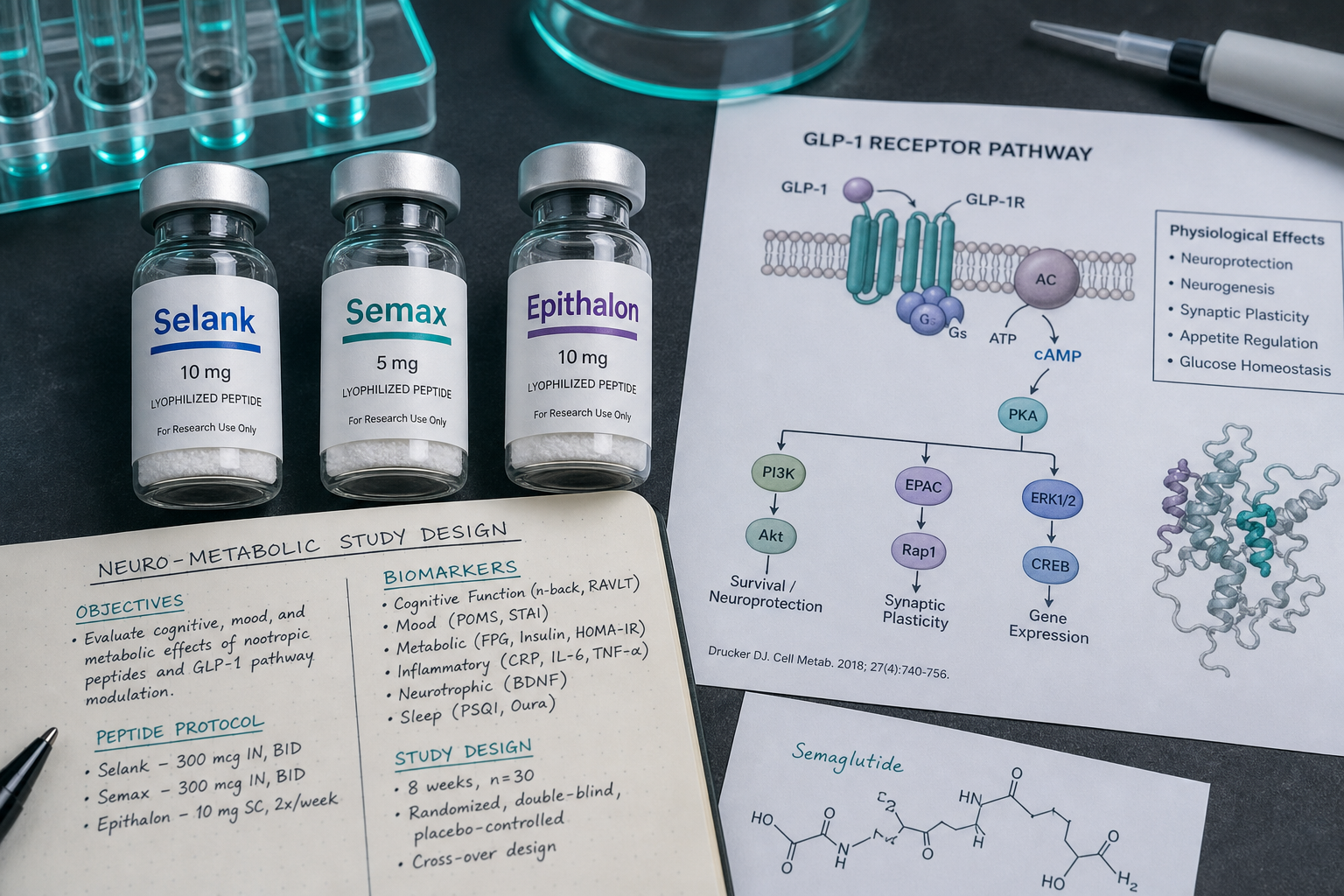
Fewer than 15% of subjects in GLP-1-based metabolic research protocols complete long-term study phases without reporting anxiety, sleep disruption, or cognitive fatigue, variables that rarely appear in primary endpoints but quietly shape adherence data. That gap is driving renewed interest in neuroactive research peptides as adjuncts to GLP-1/GLP-3: Selank, Semax, and Epithalon in neuro-metabolic study designs represent three candidates that researchers are increasingly pairing with incretin-based frameworks to address exactly these secondary endpoints.

Close-up laboratory flat-lay image showing three distinct peptide vials labeled Selank, Semax, and Epithalon arranged on a

Key Takeaways

  • Selank, Semax, and Epithalon each target distinct neurological pathways, anxiety modulation, BDNF upregulation, and circadian/telomere regulation respectively, that may complement GLP-1 and GLP-3 metabolic protocols.
  • GLP-1 receptor agonists combined with additional peptides have demonstrated up to a 32% reduction in food intake in research settings, suggesting multi-peptide synergy is a viable study design strategy.
  • Both Semax and Selank are approved for medical use in Russia but lack large-scale Western randomized controlled trials, limiting regulatory standing outside that jurisdiction.
  • Epithalon's influence on sleep architecture and pineal function positions it as a hypothesized adjunct for circadian-metabolic alignment in longer study windows.
  • All three peptides are classified as research compounds and are subject to WADA prohibitions; researchers must account for regulatory context in study design.

Mechanisms: How Selank, Semax, and Epithalon Map to Neuro-Metabolic Pathways

Understanding why these compounds attract attention in metabolic research begins with their individual mechanisms.

Semax is a synthetic heptapeptide derived from adrenocorticotropic hormone (ACTH). Its most studied action is the upregulation of Brain-Derived Neurotrophic Factor (BDNF) in the hippocampus and cortex. BDNF elevation activates TrkB receptors, supporting neuronal survival, synaptic plasticity, and cognitive function. In metabolic research contexts, BDNF is not merely a cognitive marker, it also plays a documented role in energy homeostasis and hypothalamic appetite regulation, making Semax a biologically plausible adjunct in neuro-metabolic designs.

Selank, also a heptapeptide but derived from the immunomodulatory peptide tuftsin, operates through a different set of mechanisms. It modulates monoamine metabolism, increases GABA release, and regulates serotonin-related gene expression. The result is anxiolytic and nootropic activity without the sedation or dependence risk associated with classical anxiolytics. Researchers studying Selank peptide benefits note its potential relevance to stress-driven eating behavior and cortisol-mediated metabolic disruption, endpoints that are rarely isolated in standard GLP-1 trials but are mechanistically significant.

Epithalon (also spelled Epitalon) is a tetrapeptide synthesized from epithalamin, a pineal gland extract. Its primary research interest centers on telomerase activation, circadian rhythm normalization, and melatonin secretion support. Disrupted sleep architecture is strongly associated with impaired insulin sensitivity and elevated ghrelin, which means Epithalon's circadian-regulatory properties carry direct metabolic relevance. Researchers exploring Epithalon peptides for sale in research contexts often frame it within longevity and metabolic aging study designs.

"The intersection of neurological stability and metabolic regulation is not incidental, it is mechanistic. Anxiety, sleep quality, and cognitive load each modulate the hormonal environment that GLP-1 therapies are designed to influence."


GLP-1/GLP-3 Synergy and the Case for Multi-Peptide Study Designs

GLP-1 receptor agonists have reshaped metabolic research, but their scope is expanding. Combined infusion studies using GLP-1 alongside oxyntomodulin and peptide YY have recorded a 32% reduction in food intake among obese research subjects, evidence that multi-peptide protocols can produce outcomes beyond what single-agent designs achieve.

GLP-3, a lesser-studied incretin fragment, is gaining attention for its potential role in gut-brain signaling and neuroinflammation modulation. When researchers consider NAD research and GLP-3 online resources, the emerging picture is one of overlapping neuroendocrine pathways where incretin biology and neuropeptide biology converge.

The rationale for pairing Selank, Semax, or Epithalon with GLP-1/GLP-3 frameworks rests on several hypothesized interaction points:

Peptide Primary Research Target Hypothesized GLP-1/GLP-3 Adjunct Role
Semax BDNF upregulation, neuroprotection Hypothalamic appetite axis support, cognitive adherence
Selank Anxiolysis, serotonin/GABA modulation Stress-eating attenuation, cortisol normalization
Epithalon Circadian regulation, telomerase activation Sleep-metabolic alignment, insulin sensitivity support

GLP-1 infusions have also been shown to augment muscle protein synthesis in older adults, addressing anabolic resistance, a finding that becomes more relevant when paired with Epithalon's anti-aging and cellular repair research themes. For researchers interested in related metabolic peptide frameworks, AOD9604 metabolic research and 5-Amino-1MQ research data offer additional mechanistic context for multi-pathway designs.


Study Design Considerations, Safety Profiles, and Regulatory Context

Designing a neuro-metabolic study that incorporates neuroactive research peptides as adjuncts to GLP-1/GLP-3, Selank, Semax, and Epithalon in neuro-metabolic study designs specifically, requires careful attention to both safety data and regulatory standing.

Safety profiles for Semax and Selank are generally favorable in existing literature. Semax is well-tolerated, with rare adverse events limited to mild nasal irritation and transient agitation. Selank is considered non-sedative and non-addictive, with uncommon side effects including mild daytime drowsiness or dry mouth. Epithalon has a strong preclinical safety record, though long-term human data remains limited.

Critically, neither Semax nor Selank has undergone large-scale randomized controlled trials in Western research settings. Both are approved for medical use in Russia, Semax for stroke recovery and neurological disease, Selank for mild anxiety, but neither holds FDA or EMA approval. Researchers should also note that WADA classifies both Semax and Selank as prohibited substances due to their neuroenhancement potential.

For researchers building multi-peptide protocols, resources on neuroendocrine and innate immunity research themes and PT-141 neural-metabolic research themes provide useful comparative frameworks for designing endpoints that capture both neurological and metabolic variables.

Key study design checkpoints include:

  • Baseline neurological assessments for anxiety, sleep quality, and cognitive function before GLP-1/GLP-3 protocol initiation
  • Defined adjunct dosing windows that avoid confounding primary incretin endpoints
  • Secondary endpoint tracking for cortisol, BDNF, melatonin, and inflammatory markers
  • Institutional review and ethics compliance given the unapproved status of all three peptides in most Western jurisdictions

Conclusion

The convergence of neuroactive research peptides as adjuncts to GLP-1/GLP-3, Selank, Semax, and Epithalon in neuro-metabolic study designs, reflects a broader shift in how researchers are framing metabolic science. Rather than treating anxiety, cognition, and sleep as confounding variables, forward-looking study designs are beginning to treat them as mechanistically relevant endpoints in their own right.

Actionable next steps for researchers in 2026:

  1. Review existing GLP-1 protocol data for unreported neurological secondary variables that Selank or Semax could address in follow-up designs.
  2. Incorporate Epithalon into longer study windows where circadian-metabolic alignment is a measurable outcome.
  3. Consult institutional review boards early regarding the regulatory status of all three peptides before protocol submission.
  4. Explore multi-peptide synergy literature, including cagrilintide synergy with GLP-1 and GLOW blend longevity research themes, to build a comparative evidence base.

The evidence base remains early-stage, but the mechanistic logic is sound. Rigorous trial design, not speculation, will determine whether these peptides earn a formal role in neuro-metabolic research protocols.

https://www.puretestedpeptides.com/wp-content/uploads/2026/07/Neuroactive-Research-Peptides-as-Adjuncts-to-GLP‑1GLP‑3-Selank-Semax-and-Epithalon-in-Neuro‑Metabolic-Study-Designs.png 1024 1536 https://www.puretestedpeptides.com/wp-content/uploads/2026/01/buy-peptides-online.jpg 2026-07-07 13:16:152026-07-07 13:16:15Neuroactive Research Peptides as Adjuncts to GLP‑1/GLP‑3: Selank, Semax, and Epithalon in Neuro‑Metabolic Study Designs
GLP-3 Retatrutide Dose Escalation: Understanding Tolerability and Side Effects in Research Studies

GLP-3 Retatrutide Dose Escalation: Understanding Tolerability and Side Effects in Research Studies

July 3, 2026/0 Comments/in Uncategorized/by

Discontinuation rates in Retatrutide research groups reached as high as 16% due to adverse events, compared to 0% in placebo groups. That single data point frames the central challenge researchers face when designing protocols around GLP-3 Retatrutide dose escalation: understanding tolerability and side effects in research studies is not optional; it is foundational to sound experimental design.

Key Takeaways

  • Gastrointestinal side effects are the most common adverse events and are strongly dose-dependent, peaking during escalation phases.
  • Gradual four-week dose escalation intervals significantly improve tolerability compared to rapid titration.
  • A unique dysesthesia signal, abnormal tingling or burning, affects up to 20.9% of participants at the highest doses.
  • Modest heart rate increases averaging 5 to 10 BPM have been observed, peaking around week 24.
  • Approximately 25 to 40% of total weight lost may come from lean mass, making resistance training and protein intake critical protocol considerations.

Key Takeaways

Dose Escalation Protocol and the Tolerability Framework

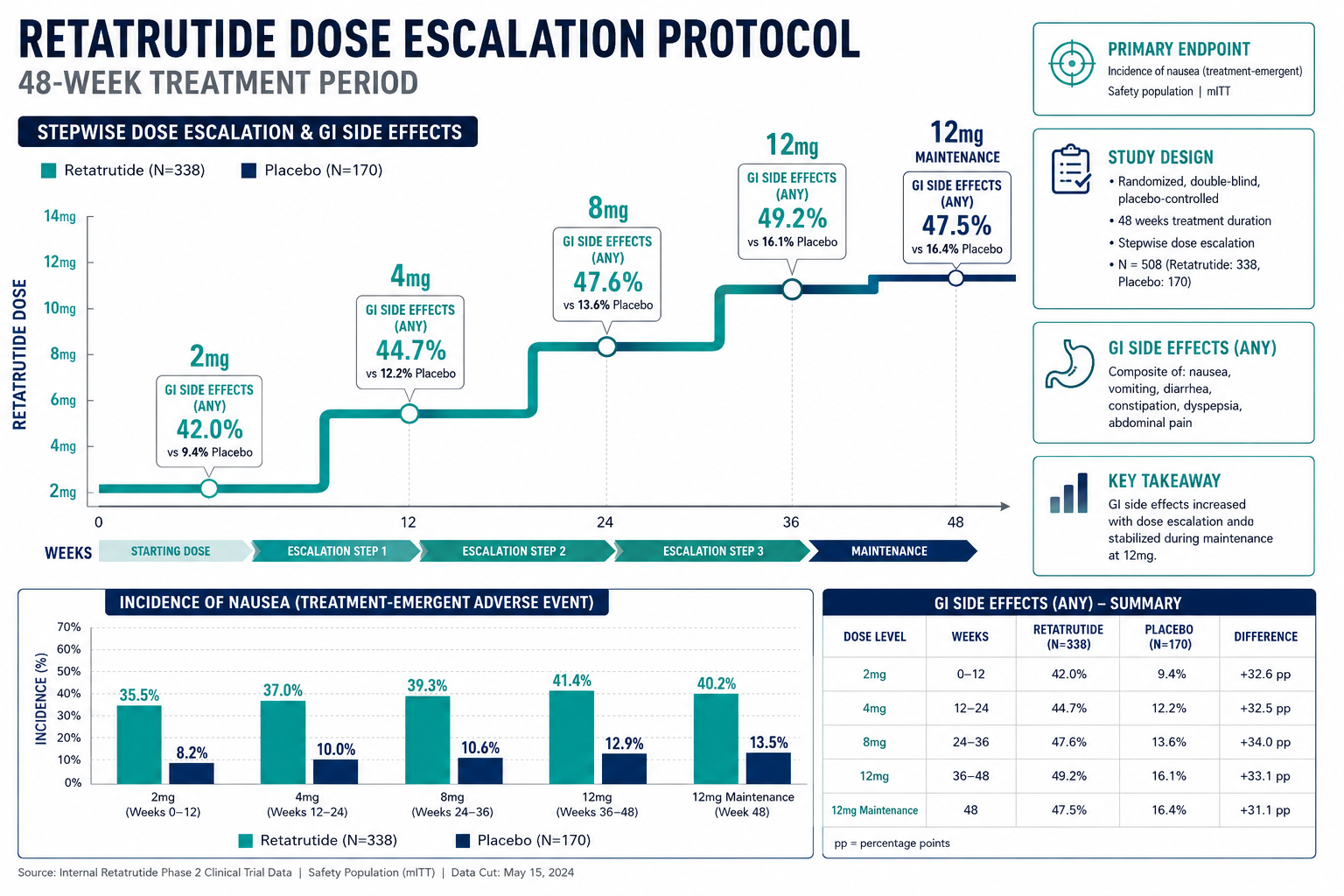
The core principle guiding GLP-3 Retatrutide dose escalation in research settings is gradual titration. Starting at 2 mg and increasing in four-week intervals allows biological systems to adapt before advancing to higher dose tiers. This approach directly reduces the frequency and intensity of adverse events.

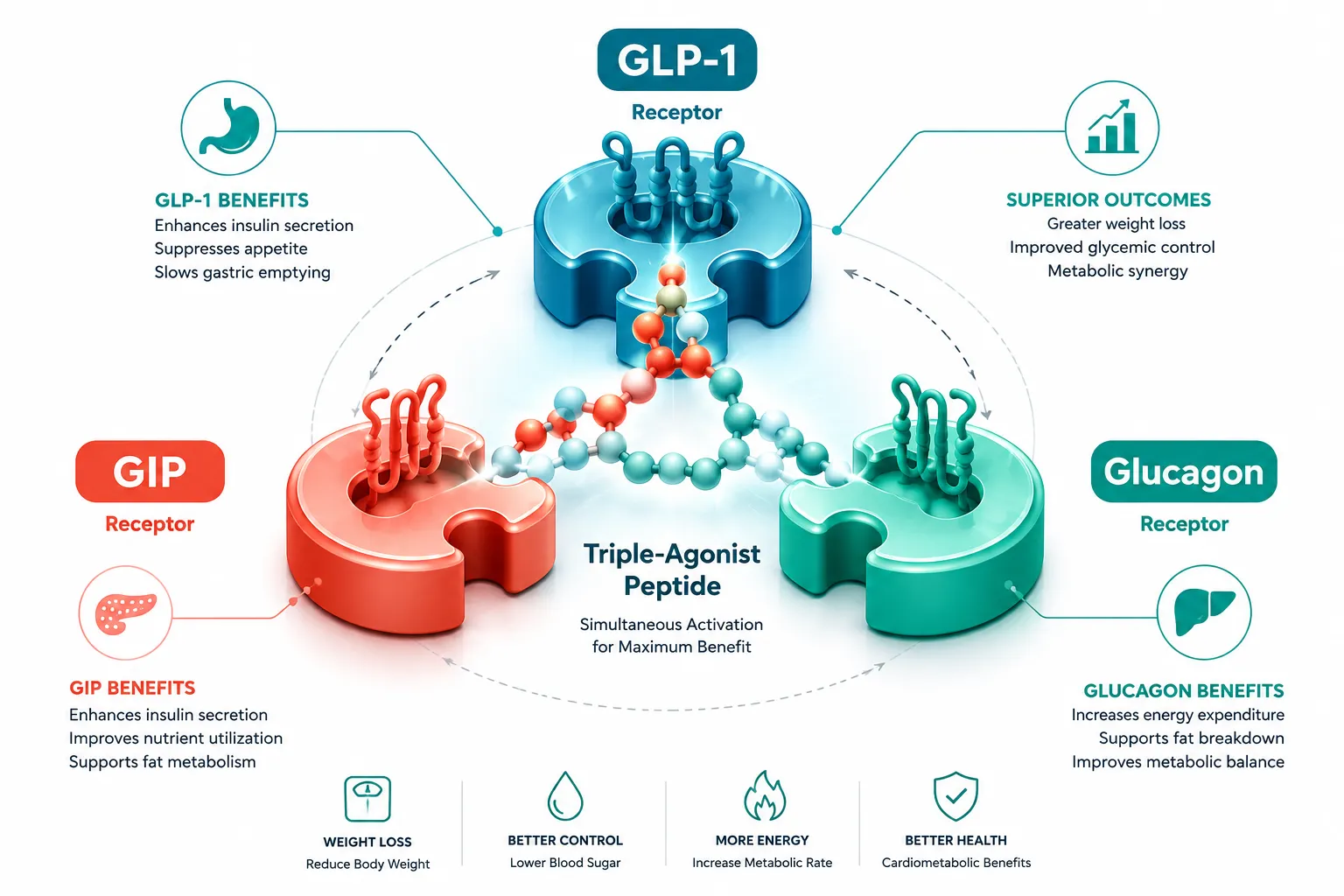
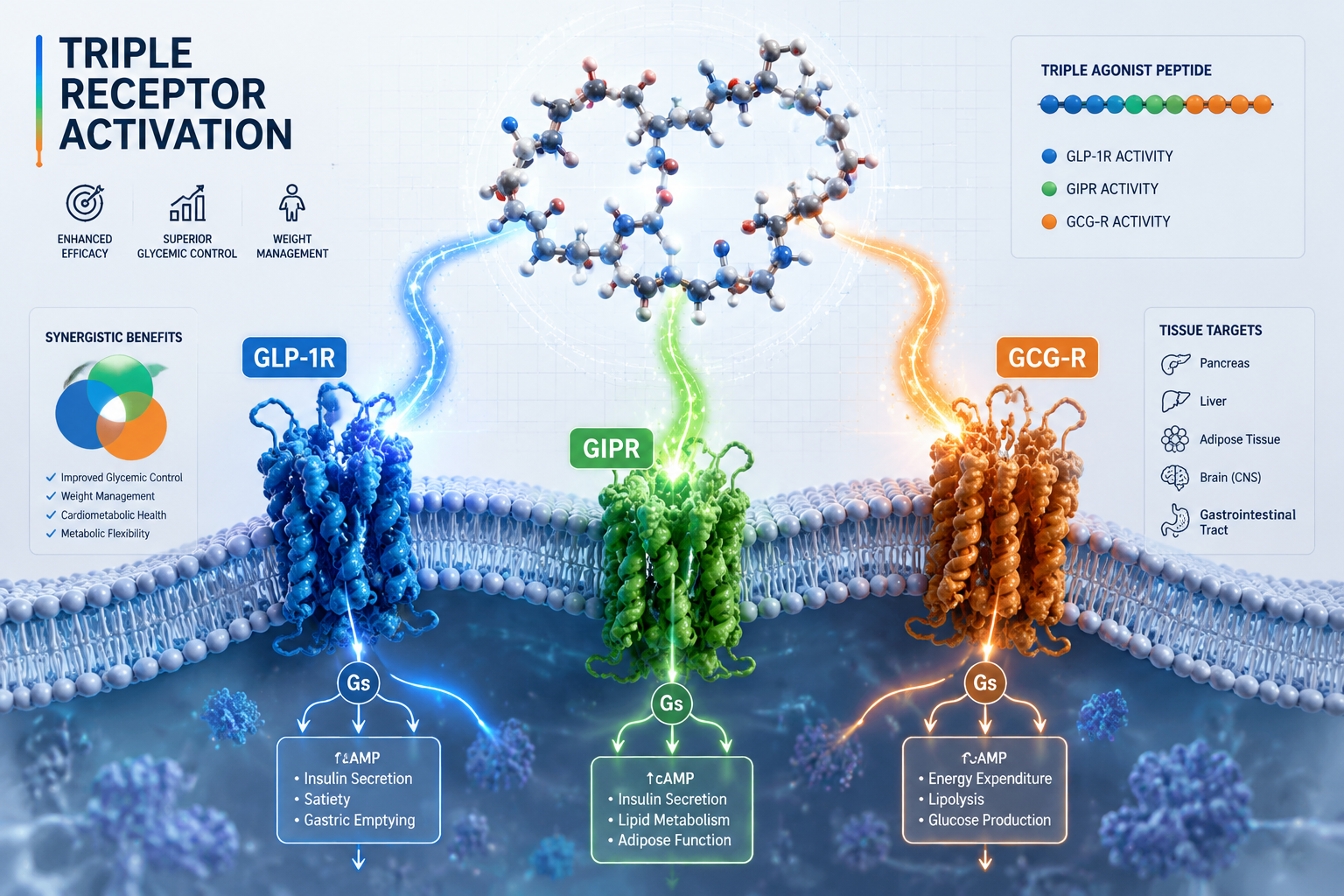
Retatrutide is a triple agonist acting on GLP-1, GIP, and glucagon receptors simultaneously. This multi-receptor activity drives its potent metabolic effects, but it also broadens the side effect profile compared to single-target GLP-1 agents. Researchers exploring GLP-1 and incretin research themes will recognize the GI tolerability pattern, but Retatrutide introduces additional signals not seen with earlier-generation compounds.

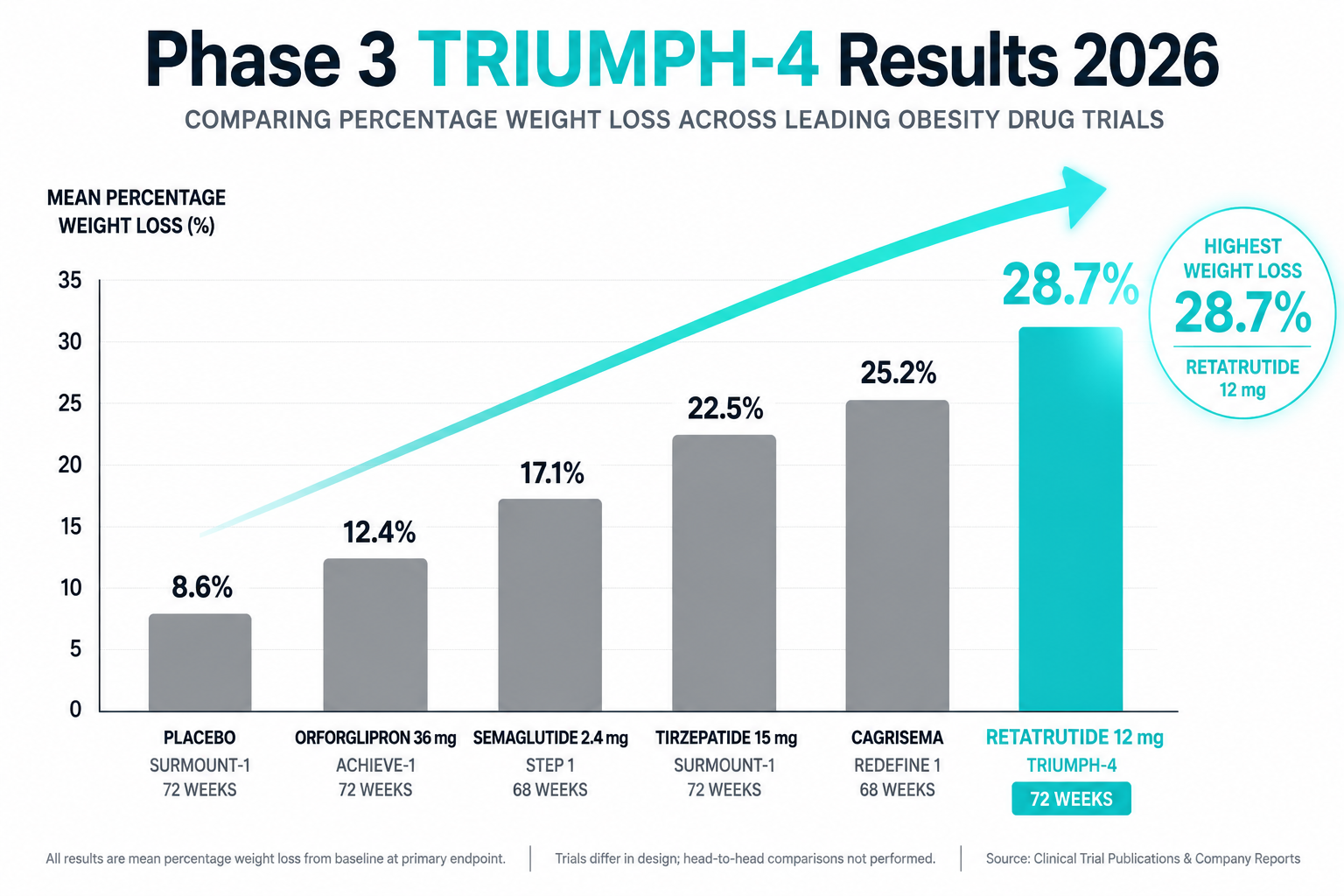
In the 48-week Phase 2 obesity trial, weight loss outcomes were clearly dose-dependent, reinforcing that higher doses carry both greater efficacy and greater tolerability burden. The 68-week TRIUMPH-4 Phase 3 trial further confirmed this relationship, with nausea rates of 38.1% at 9 mg and 43.2% at 12 mg, versus 10.7% in the placebo group.

Practical protocol guidance:

Dose Tier Approximate Duration Primary Tolerability Risk
2 mg Weeks 1-4 Minimal GI symptoms
4 mg Weeks 5-8 Mild nausea onset
8 mg Weeks 9-16 Moderate GI events peak
12 mg Weeks 17+ Highest GI and dysesthesia risk

Researchers sourcing material for metabolic studies can review the GLP-3 triple agonist research planning catalog for further context on compound availability and protocol scaffolding.


Side Effect Profile: What Research Data Reveals

Side Effect Profile: What Research Data Reveals

Understanding the full tolerability and side effects in research studies requires examining each adverse event category individually.

Gastrointestinal Events

Nausea, vomiting, diarrhea, and constipation are the dominant adverse events. These are mild to moderate in most cases and cluster heavily during the escalation window rather than persisting at maintenance doses. Comparing Retatrutide to tirzepatide, GI event rates are measurably higher, a distinction researchers should factor into study design and participant selection criteria.

The Dysesthesia Signal

"Up to 20.9% of participants at the 12 mg dose reported dysesthesia, abnormal tingling or burning sensations, compared to just 0.7% in the placebo group."

This signal is notably absent from standard GLP-1 agonist profiles. The glucagon receptor component of Retatrutide is the suspected driver. Researchers designing longer-duration studies should include dysesthesia monitoring checkpoints, particularly at higher dose tiers. This distinguishes Retatrutide's side effect map from compounds like tesa, which carries its own distinct tolerability considerations.

Cardiovascular Signal: Heart Rate

Resting heart rate increases averaging 5 to 10 BPM have been documented, peaking near week 24 before partially attenuating. While modest, this elevation warrants baseline cardiovascular assessment in research subjects and ongoing monitoring throughout the protocol. Researchers interested in broader metabolic modulation research will find this cardiovascular signal relevant to multi-compound study design.

Lean Mass Considerations

Roughly 25 to 40% of total weight lost during Retatrutide studies is lean mass, a finding consistent across the broader GLP-1 drug class. Research protocols that do not account for this risk may produce confounded body composition data. Resistance exercise protocols and elevated protein intake are the primary mitigation strategies supported by current evidence.

For researchers examining complementary compounds that may address lean mass preservation, ipamorelin muscle and fat research themes offer relevant parallel data.


Designing Safer Research Protocols Around Retatrutide

Designing Safer Research Protocols Around Retatrutide

Translating the GLP-3 Retatrutide dose escalation tolerability and side effects data into actionable protocol design requires structured decision-making.

Key protocol design checkpoints:

  • Baseline screening: Cardiovascular status, GI history, and neurological baselines before initiating escalation.
  • Escalation pacing: Strict four-week minimum intervals between dose increases; do not accelerate based on early tolerance.
  • Adverse event monitoring windows: Heightened observation during weeks 5 through 20, when GI and dysesthesia events peak.
  • Discontinuation thresholds: Pre-define stopping criteria; trial data shows 6 to 16% discontinuation rates, and researchers should plan for this range.
  • Body composition tracking: Dual-energy X-ray absorptiometry (DEXA) or equivalent methods to monitor lean mass changes.

Long-term cardiovascular, renal, and oncological safety data remain incomplete pending results from the ongoing TRIUMPH-5 multi-year trial. This gap is a meaningful limitation for researchers planning extended protocols. Researchers interested in renal-adjacent peptide safety profiles may find value in reviewing SS-31 kidney health research as a comparative reference point.

Those sourcing Retatrutide for research can explore the Reta 10mg product tag for catalog options, while researchers building broader metabolic panels may also reference GLP-1 peptide product options for complementary compounds.


Conclusion

GLP-3 Retatrutide dose escalation: understanding tolerability and side effects in research studies is not a peripheral concern, it is the operational core of any well-designed Retatrutide protocol. The data from Phase 2 and TRIUMPH-4 trials provide a clear roadmap: GI events dominate the escalation window, dysesthesia is a unique and dose-dependent signal, heart rate elevations require cardiovascular monitoring, and lean mass loss demands proactive mitigation strategies.

Actionable next steps for researchers in 2026:

  1. Build four-week escalation intervals into every protocol from the outset.
  2. Include dysesthesia and cardiovascular monitoring checkpoints at weeks 12, 24, and 48.
  3. Define discontinuation criteria before the study begins, accounting for the 6 to 16% adverse-event dropout range.
  4. Pair Retatrutide protocols with body composition tracking to capture lean mass data.
  5. Monitor TRIUMPH-5 trial publications for emerging long-term safety data before extending protocol durations.

Researchers who treat the tolerability profile as a design input, not an afterthought, will produce more reliable, reproducible, and ethically sound data from their Retatrutide studies.

https://www.puretestedpeptides.com/wp-content/uploads/2026/07/GLP-3-Retatrutide-Dose-Escalation-Understanding-Tolerability-and-Side-Effects-in-Research-Studies.png 1024 1536 https://www.puretestedpeptides.com/wp-content/uploads/2026/01/buy-peptides-online.jpg 2026-07-03 13:04:132026-07-03 13:04:13GLP-3 Retatrutide Dose Escalation: Understanding Tolerability and Side Effects in Research Studies
Retatrutide Clinical Trials: Interpreting Phase 3 Data for Future Metabolic Research Directions

Retatrutide Clinical Trials: Interpreting Phase 3 Data for Future Metabolic Research Directions

July 3, 2026/0 Comments/in Uncategorized/by

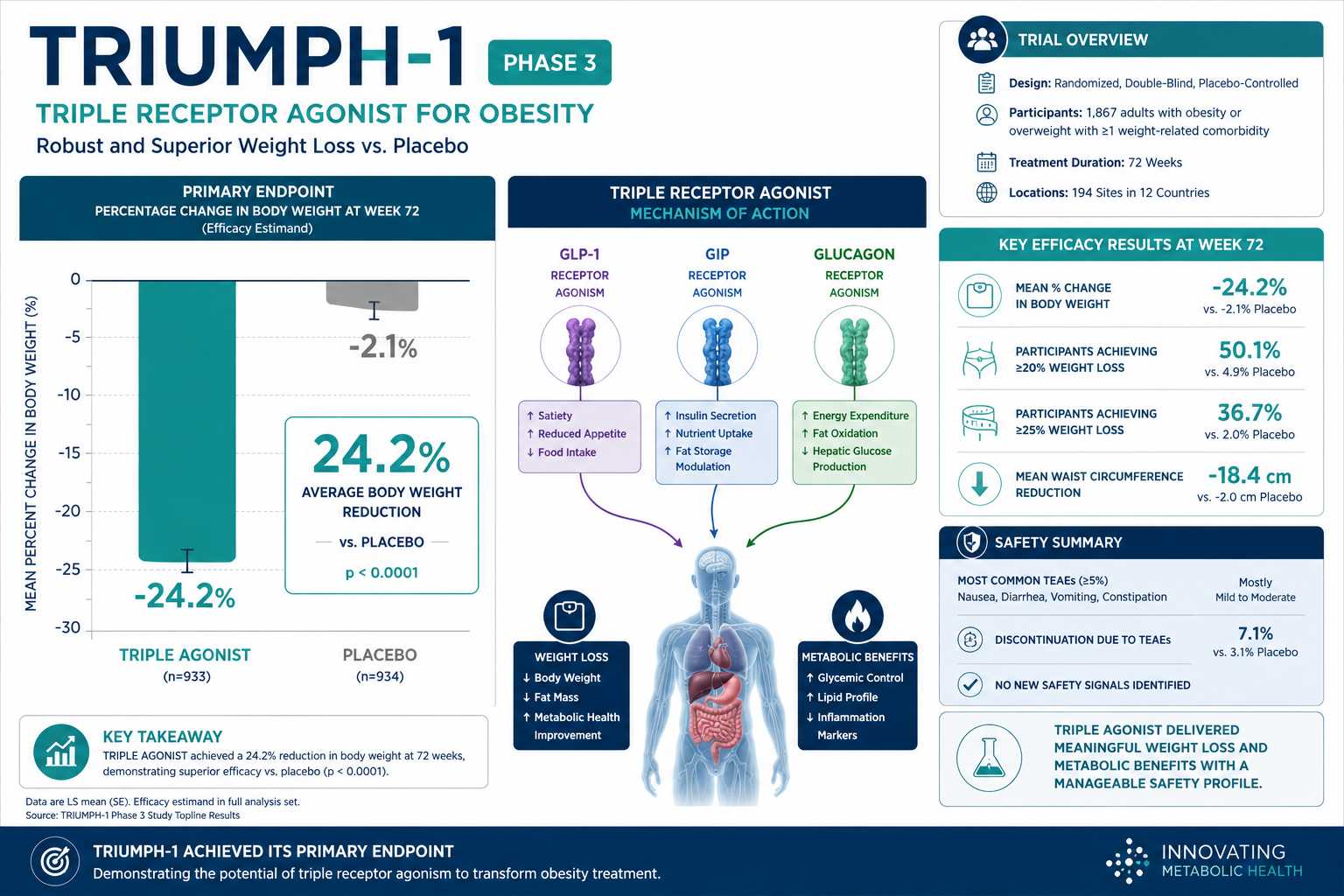
Participants in the TRIUMPH-1 Phase 3 trial lost an average of 24.2% of their body weight over 48 weeks, a figure that surpasses every previously approved obesity pharmacotherapy on record. That single data point has reshaped how metabolic researchers think about triple receptor agonism and what comes next for the field.

Retatrutide clinical trials, specifically the interpreting of Phase 3 data for future metabolic research directions, represent one of the most significant inflection points in obesity science in 2026. This article breaks down what the data shows, what it means mechanistically, and where researchers should focus next.

Key Takeaways

  • Retatrutide simultaneously activates GLP-1, GIP, and glucagon receptors, producing additive metabolic effects not seen with dual agonists.
  • TRIUMPH-1 Phase 3 data showed up to 24.2% mean body weight reduction at the highest dose, outperforming all approved single and dual agonists.
  • Secondary endpoints included meaningful improvements in cardiometabolic markers, liver fat reduction, and insulin sensitivity.
  • An NDA submission to the FDA is anticipated in late 2026, with regulatory decisions expected to follow.
  • Phase 3 findings open multiple new research directions including NASH, cardiovascular outcomes, and combination peptide protocols.

Key Takeaways

Understanding the Triple Agonist Mechanism Behind the Phase 3 Results

Retatrutide is a triple receptor agonist that targets GLP-1 (glucagon-like peptide-1), GIP (glucose-dependent insulinotropic polypeptide), and glucagon receptors simultaneously. This multi-pathway engagement is what separates it from earlier generation compounds.

  • GLP-1 receptor activation reduces appetite and slows gastric emptying
  • GIP receptor activation enhances insulin secretion and may improve adipose tissue metabolism
  • Glucagon receptor activation increases energy expenditure and promotes hepatic fat oxidation

The combination creates a synergistic effect on energy balance that neither pathway achieves alone. Researchers interested in GLP-1 dual receptor agonism research will recognize that adding glucagon receptor activity is the critical differentiator here.

For broader context on how this fits within the evolution of incretin-based therapies, the GLP-1 generations overview provides a useful framework for comparing mechanistic generations.

"The glucagon component may be the key variable that pushes weight loss beyond the ceiling observed with GLP-1/GIP dual agonists."

This mechanistic architecture also explains why secondary endpoints in TRIUMPH-1 showed reductions in hepatic fat content, improvements in fasting glucose, and favorable shifts in lipid panels, outcomes that extend well beyond simple caloric restriction effects.


Understanding the Triple Agonist Mechanism Behind the Phase 3 Results

Key Phase 3 Findings and What They Signal for Metabolic Research

The TRIUMPH-1 trial enrolled adults with obesity (BMI 30 or above) or overweight with at least one weight-related comorbidity. Results across dose groups were consistent and dose-dependent.

Dose Group Mean Weight Reduction Notable Secondary Outcomes
Low dose (4 mg) ~17.5% Improved fasting insulin
Mid dose (8 mg) ~22.1% Reduced liver fat, lower triglycerides
High dose (12 mg) ~24.2% Significant HbA1c reduction, LDL improvement

These findings carry direct implications for retatrutide clinical trials interpreting Phase 3 data for future metabolic research directions in several disease areas:

  1. NASH and hepatic steatosis, liver fat reductions suggest standalone or adjunct NASH trial potential
  2. Type 2 diabetes management, HbA1c improvements position retatrutide as a diabetes candidate independent of weight loss
  3. Cardiovascular risk reduction, lipid and blood pressure improvements warrant dedicated outcomes trials

Researchers exploring complementary metabolic pathways may also find value in reviewing metabolic modulation research lines and the emerging data on MOTS-c and metabolic flexibility as parallel investigative threads.


Key Phase 3 Findings and What They Signal for Metabolic Research

Future Research Directions Informed by Phase 3 Data

The depth of TRIUMPH-1 data creates a clear roadmap for the next generation of metabolic studies. Researchers examining retatrutide clinical trials and interpreting Phase 3 data for future metabolic research directions should prioritize the following areas.

Combination protocol research is an emerging frontier. Whether retatrutide can be paired with agents targeting complementary pathways, such as amylin analogs like cagrilintide, is already under early investigation. The cagrilintide synergy with GLP-1 research explores similar combinatorial logic.

Long-term weight maintenance remains an open question. Phase 3 trials ran to 48 weeks; what happens at years two and three without dose escalation is unknown. Durability studies are a critical next step.

Lean mass preservation is a concern shared across the obesity pharmacotherapy field. Retatrutide's glucagon component theoretically supports energy expenditure without proportional muscle catabolism, but dedicated body composition trials using DEXA endpoints are needed.

Pediatric and adolescent populations represent an underserved research gap. Given the escalating rates of adolescent obesity, age-stratified extension trials are a logical priority.

For researchers interested in how peptide-based metabolic interventions are evolving more broadly, the latest peptide research updates and GLP-3 triple agonist research offer adjacent context worth reviewing.


Conclusion

The Phase 3 data from retatrutide clinical trials has fundamentally shifted the ceiling of what metabolic pharmacotherapy can achieve. Weight reductions exceeding 24%, combined with meaningful improvements in hepatic, glycemic, and cardiovascular markers, provide a strong scientific foundation for the next wave of research.

Actionable next steps for researchers in 2026:

  • Design NASH-specific secondary analysis protocols using existing TRIUMPH-1 biomarker data
  • Prioritize lean mass and body composition endpoints in any follow-on trial design
  • Explore combination peptide protocols pairing retatrutide with amylin or GIP-selective agents
  • Monitor the anticipated NDA submission timeline for regulatory signal on approvable endpoints
  • Review adjacent metabolic peptide research to identify synergistic investigative opportunities

The data is in. The research directions are clear. The question now is how quickly the field moves to answer them.

https://www.puretestedpeptides.com/wp-content/uploads/2026/07/Retatrutide-Clinical-Trials-Interpreting-Phase-3-Data-for-Future-Metabolic-Research-Directions.png 1024 1536 https://www.puretestedpeptides.com/wp-content/uploads/2026/01/buy-peptides-online.jpg 2026-07-03 13:03:522026-07-03 13:03:52Retatrutide Clinical Trials: Interpreting Phase 3 Data for Future Metabolic Research Directions
Retatrutide vs GLP3 Peptide: How to Interpret the Naming Difference in Research Context

Retatrutide vs GLP3 Peptide: How to Interpret the Naming Difference in Research Context

July 1, 2026/0 Comments/in Uncategorized/by

Researchers and informed readers searching metabolic peptide literature in 2026 frequently encounter two terms side by side — "retatrutide" and "GLP-3 peptide" — and assume they are comparing two separate compounds. They are not. Understanding this naming gap is essential for reading clinical data accurately and avoiding confusion when evaluating research outcomes.

This article on Retatrutide vs GLP3 Peptide: How to Interpret the Naming Difference in Research Context explains where the informal label came from, what the science actually says, and how to navigate terminology when reviewing preclinical or clinical literature.

Key Takeaways

  • "GLP-3 peptide" is an informal shorthand, not an official scientific or regulatory term.
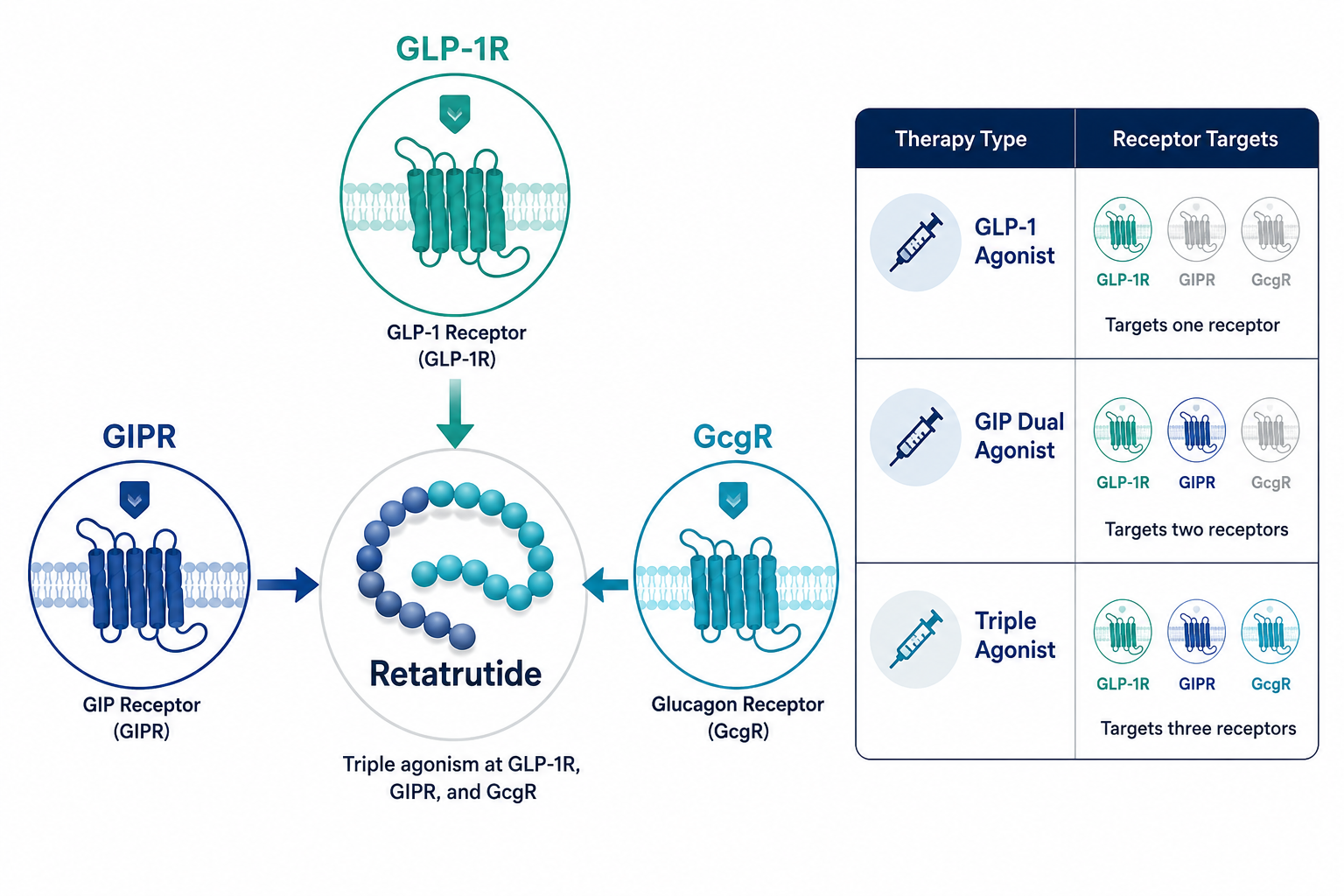
  • Retatrutide is the INN (International Nonproprietary Name) for a triple receptor agonist targeting GLP-1R, GIPR, and GcgR.
  • The "GLP-3" label emerged from a logical but unofficial progression: GLP-1 agonist, then dual GLP-1/GIP agonist, then "triple" or "GLP-3."
  • Phase 3 TRIUMPH-4 trial data showed up to 28.7% body weight reduction at 68 weeks with a 12 mg dose.
  • In formal research contexts, always use "retatrutide" or "triple receptor agonist" to ensure accurate source retrieval.

Where the "GLP-3" Label Comes From

Where the "GLP-3" Label Comes From

The naming logic follows a simple pattern that the research community informally adopted. GLP-1 receptor agonists — such as semaglutide — target a single receptor. Dual agonists like tirzepatide activate both the GLP-1 receptor and the GIP receptor. When retatrutide arrived as a compound activating three receptors simultaneously — GLP-1R, GIPR, and the glucagon receptor (GcgR) — some writers and online communities began calling it a "GLP-3" to signal that it goes one step further than a dual agonist.

This is a shorthand label, not a pharmacological classification. No regulatory body, no peer-reviewed journal, and no drug developer has officially designated retatrutide as a "GLP-3 receptor agonist." The glucagon receptor is not a third GLP receptor in any biological sense. GLP-1 and GLP-2 are the two glucagon-like peptides identified in the literature, and neither is the same as the glucagon receptor that retatrutide activates.

Term Type Official?
Retatrutide INN / clinical name Yes
Triple receptor agonist Mechanistic descriptor Yes
GLP-3 peptide Community shorthand No
GLP-1/GIP/GcgR agonist Pharmacological label Yes

For those already familiar with the broader landscape of incretin-based compounds, the GLP-1 incretin research themes article provides useful background on how these receptor classes differ.


What Retatrutide Actually Does in Research

What Retatrutide Actually Does in Research

Retatrutide works by co-activating three distinct receptor pathways that each influence energy balance, appetite signaling, and glucose metabolism. The GLP-1 receptor component slows gastric emptying and reduces appetite. The GIP receptor component modulates insulin secretion and fat storage. The glucagon receptor component increases energy expenditure and promotes fat oxidation.

This triple mechanism is why Phase 2 trial data reported up to 24.2% body weight loss at 48 weeks with a 12 mg dose — a figure that exceeded what single or dual agonists had achieved at comparable timepoints. Phase 3 TRIUMPH-4 trial data extended that finding further, showing up to 28.7% body weight loss at 68 weeks with the same 12 mg dose.

"Triple agonism is not simply additive — the glucagon receptor component introduces an energy expenditure pathway that single and dual agonists do not access."

For researchers comparing incretin-based mechanisms, the dual receptor agonism research breakdown and the generations of GLP-1 differences articles offer relevant context. Researchers interested in complementary metabolic compounds may also find value in reviewing cagrilintide synergy with GLP-1 as a related area of investigation.


How to Interpret the Naming Difference in Research Context

How to Interpret the Naming Difference in Research Context

When evaluating Retatrutide vs GLP3 Peptide: How to Interpret the Naming Difference in Research Context, the practical rule is straightforward: use "retatrutide" for database searches on PubMed, ClinicalTrials.gov, or any regulatory archive. Searching "GLP-3 peptide" will return inconsistent results and may surface unrelated compounds or speculative content.

The informal "GLP-3" label is most common in:

  • Fitness and biohacking communities
  • Non-peer-reviewed blog content
  • Social media discussions comparing weight-loss peptides

It is rarely, if ever, used in:

  • Clinical trial registrations
  • Peer-reviewed pharmacology journals
  • FDA or EMA regulatory filings

Researchers studying adjacent compounds — such as tesofensine peptide overview or TESA body composition research themes — will notice the same pattern: informal community labels often diverge from official nomenclature. Maintaining terminological precision protects the integrity of literature reviews and prevents citation errors.


Conclusion

The core answer to Retatrutide vs GLP3 Peptide: How to Interpret the Naming Difference in Research Context is that no meaningful distinction exists between the two terms — they refer to the same compound, but one name is scientifically valid and one is not. Retatrutide is the correct, searchable, regulatory-recognized name for the triple GLP-1R/GIPR/GcgR agonist under active Phase 3 investigation.

Actionable next steps for researchers and informed readers:

  • Use "retatrutide" exclusively when searching clinical databases or citing literature.
  • Treat "GLP-3 peptide" as a community shorthand that signals triple agonism, not a distinct compound class.
  • Cross-reference mechanism descriptions against the three receptor targets (GLP-1R, GIPR, GcgR) to verify you are reading about the correct compound.
  • Follow TRIUMPH-4 and related Phase 3 trial updates for the most current efficacy and safety data.

Precision in terminology is not pedantic — it is the foundation of reliable research interpretation.

https://www.puretestedpeptides.com/wp-content/uploads/2026/07/Retatrutide-vs-GLP3-Peptide-How-to-Interpret-the-Naming-Difference-in-Research-Context.png 1024 1536 https://www.puretestedpeptides.com/wp-content/uploads/2026/01/buy-peptides-online.jpg 2026-07-01 13:04:142026-07-01 13:04:14Retatrutide vs GLP3 Peptide: How to Interpret the Naming Difference in Research Context
GLP-3 Retatrutide: The Future of Metabolic Research Beyond GLP-1

GLP-3 Retatrutide: The Future of Metabolic Research Beyond GLP-1

June 29, 2026/0 Comments/in Uncategorized/by

A single drug achieving nearly 29% body weight reduction in a Phase 3 trial — comparable to bariatric surgery outcomes — marks a turning point in metabolic science. That drug is retatrutide, widely referred to by researchers as "GLP-3," and in 2026 it is reshaping how scientists think about obesity, type 2 diabetes, and metabolic disease at the receptor level.

GLP-3 Retatrutide: The Future of Metabolic Research Beyond GLP-1 represents more than an incremental upgrade over existing therapies. It introduces a fundamentally different mechanism — one that activates three distinct hormone receptors simultaneously — and its early data is forcing a reassessment of what pharmacological intervention can achieve.

Key Takeaways

  • Retatrutide is a triple agonist targeting GLP-1, GIP, and glucagon receptors, setting it apart from all prior GLP-1 therapies.
  • Phase 3 TRIUMPH-4 data from April 2026 showed an average weight loss of 28.7% over 68 weeks — the highest ever recorded in a Phase 3 obesity trial.
  • The informal nickname "GLP-3" reflects its triple-agonist activity, not a third glucagon-like peptide hormone.
  • Eli Lilly plans to submit an NDA to the FDA in late 2026, with potential approval anticipated in 2027.
  • Research interest extends beyond obesity to type 2 diabetes, liver disease (MASLD), and cardiovascular risk reduction.

Understanding the Triple-Agonist Mechanism

Understanding the Triple-Agonist Mechanism

Most GLP-1 receptor agonists work through a single pathway: they mimic the glucagon-like peptide-1 hormone to suppress appetite and regulate blood sugar. Retatrutide goes further by simultaneously activating three receptors:

Receptor Primary Role
GLP-1R Appetite suppression, insulin secretion
GIPR Insulin potentiation, fat metabolism
GCG-R Energy expenditure, hepatic glucose output

This combination does something no single-pathway drug can: it both reduces caloric intake and increases energy expenditure. The glucagon receptor component, in particular, drives thermogenic activity that amplifies fat loss beyond what appetite suppression alone can produce.

It is worth clarifying the "GLP-3" label. There is no third glucagon-like peptide hormone in human biology. The nickname emerged informally to reflect the drug's third-generation, triple-receptor profile. Researchers exploring GLP-1 peptide research concepts and sourcing will find retatrutide represents a clear evolutionary step beyond that class.

For a deeper dive into retatrutide's research profile, the GLP-3 Retatrutide compound overview provides useful context on its structural and pharmacological properties.


Phase 3 Clinical Data: What the Trials Reveal

Phase 3 Clinical Data: What the Trials Reveal

The 2026 trial readouts for retatrutide have been striking across multiple study populations.

TRIUMPH-4 (April 2026): Adults with obesity achieved a mean weight loss of 28.7% over 68 weeks. This figure places retatrutide in territory previously occupied only by surgical interventions.

TRIUMPH-3 (March 2026): Presented at the American College of Cardiology Annual Scientific Session, this trial enrolled participants with obesity and elevated cardiovascular risk. Mean weight loss reached 24.2% at 72 weeks, suggesting meaningful cardiometabolic benefit beyond weight alone.

TRANSCEND-T2D-1 (March 2026): In adults with type 2 diabetes, the 12 mg dose produced HbA1c reductions of 1.7% to 2.0% alongside 16.8% weight loss over 40 weeks — a dual benefit that positions retatrutide as a strong candidate for metabolic disease management.

"The weight loss achieved with retatrutide in recent trials is comparable to outcomes typically associated with bariatric surgery."

Retatrutide is administered as a once-weekly subcutaneous injection, with doses titrated from 2 mg up to 12 mg to manage tolerability. Common side effects include nausea, vomiting, and diarrhea — consistent with the GI profile seen across the incretin drug class, though the glucagon component may amplify these effects at higher doses.

Researchers comparing metabolic peptide approaches may also find value in reviewing AOD-9604 metabolic research and MOTS-C metabolic flexibility research as complementary areas of investigation.


Research Horizons: Beyond Obesity and GLP-1

Research Horizons: Beyond Obesity and GLP-1

The scope of GLP-3 Retatrutide: The Future of Metabolic Research Beyond GLP-1 extends well past weight management. Active investigation includes:

  • Metabolic dysfunction-associated steatotic liver disease (MASLD): The glucagon receptor's role in hepatic lipid metabolism makes retatrutide a logical candidate for liver-focused research.
  • Cardiovascular risk reduction: TRIUMPH-3 data hints at benefits independent of weight loss.
  • Chronic low back pain: An emerging and less-expected indication under early investigation.
  • Broader metabolic syndrome components: Insulin resistance, dyslipidemia, and visceral adiposity all represent potential targets.

Eli Lilly plans to file an NDA with the FDA in late 2026, with approval potentially following in 2027. The broader TRIUMPH program, including TRIUMPH-1 and TRIUMPH-2, continues enrolling participants with primary endpoint data expected between late 2026 and early 2027.

Researchers building multi-pathway metabolic protocols may also want to explore SLU-PP-332 metabolic research, 5-Amino-1MQ research and data, and the NAD research overview for complementary mechanistic angles. For those sourcing research-grade material, Reta 10mg product options are available for qualified research applications.


Conclusion

GLP-3 Retatrutide: The Future of Metabolic Research Beyond GLP-1 is not a theoretical advance — it is a clinically validated shift in what metabolic pharmacology can accomplish. Its triple-agonist mechanism addresses appetite, energy expenditure, and glycemic control through three simultaneous pathways, producing outcomes that single-receptor drugs cannot match.

For researchers in 2026, the actionable priorities are clear:

  1. Monitor TRIUMPH-1 and TRIUMPH-2 data as primary endpoints emerge in late 2026 and early 2027.
  2. Track the FDA NDA submission and anticipated 2027 approval timeline for clinical translation signals.
  3. Explore multi-pathway metabolic research stacks that complement the receptor targets retatrutide engages.
  4. Review the MASLD and cardiovascular trial arms for indications that extend well beyond obesity.

Retatrutide is redefining the ceiling for metabolic intervention. Researchers who engage with its mechanism and emerging data now will be best positioned when the full clinical picture becomes available.

https://www.puretestedpeptides.com/wp-content/uploads/2026/06/GLP-3-Retatrutide-The-Future-of-Metabolic-Research-Beyond-GLP-1.png 1024 1536 https://www.puretestedpeptides.com/wp-content/uploads/2026/01/buy-peptides-online.jpg 2026-06-29 13:05:242026-06-29 13:05:24GLP-3 Retatrutide: The Future of Metabolic Research Beyond GLP-1
×

Helpful Links

  • My account
  • Cart
  • Checkout
  • Refund and Returns Policy
  • Privacy Policy
  • SMS Privacy Policy
  • Login
  • My Account
  • Logout

USA Made Lab Tested Peptides

All products are sold for research, laboratory, or analytical purposes only, and are not for human consumption


Pure Tested Peptides is a chemical supplier. Pure Tested Peptides is not a compounding / chemical compounding facility as defined under 503A of the Federal Food, Drug, and Cosmetic act. Pure Tested Peptides is not an outsourcing facility as defined under 503B of the Federal Food, Drug, and Cosmetic act.

The statements made within this website have not been evaluated by the US Food and Drug Administration. The products we offer are not intended to diagnose, treat, cure or prevent any disease.

Human/Animal Consumption Prohibited. Laboratory/In-Vitro Experimental Use Only

Scroll to top Scroll to top Scroll to top