

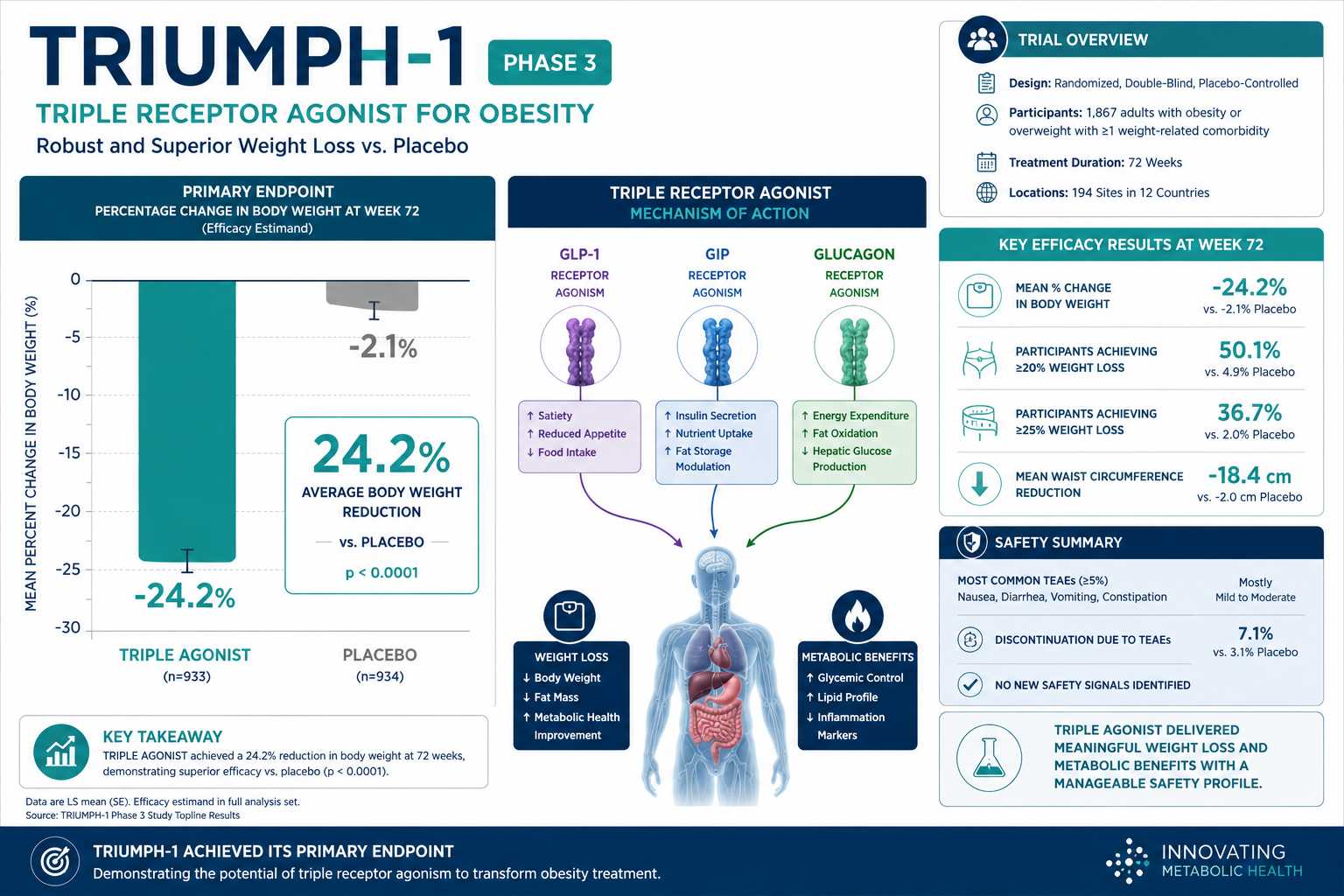
Participants in the TRIUMPH-1 Phase 3 trial lost an average of 24.2% of their body weight over 48 weeks, a figure that surpasses every previously approved obesity pharmacotherapy on record. That single data point has reshaped how metabolic researchers think about triple receptor agonism and what comes next for the field.
Retatrutide clinical trials, specifically the interpreting of Phase 3 data for future metabolic research directions, represent one of the most significant inflection points in obesity science in 2026. This article breaks down what the data shows, what it means mechanistically, and where researchers should focus next.
Key Takeaways
- Retatrutide simultaneously activates GLP-1, GIP, and glucagon receptors, producing additive metabolic effects not seen with dual agonists.
- TRIUMPH-1 Phase 3 data showed up to 24.2% mean body weight reduction at the highest dose, outperforming all approved single and dual agonists.
- Secondary endpoints included meaningful improvements in cardiometabolic markers, liver fat reduction, and insulin sensitivity.
- An NDA submission to the FDA is anticipated in late 2026, with regulatory decisions expected to follow.
- Phase 3 findings open multiple new research directions including NASH, cardiovascular outcomes, and combination peptide protocols.
Understanding the Triple Agonist Mechanism Behind the Phase 3 Results
Retatrutide is a triple receptor agonist that targets GLP-1 (glucagon-like peptide-1), GIP (glucose-dependent insulinotropic polypeptide), and glucagon receptors simultaneously. This multi-pathway engagement is what separates it from earlier generation compounds.
- GLP-1 receptor activation reduces appetite and slows gastric emptying
- GIP receptor activation enhances insulin secretion and may improve adipose tissue metabolism
- Glucagon receptor activation increases energy expenditure and promotes hepatic fat oxidation
The combination creates a synergistic effect on energy balance that neither pathway achieves alone. Researchers interested in GLP-1 dual receptor agonism research will recognize that adding glucagon receptor activity is the critical differentiator here.
For broader context on how this fits within the evolution of incretin-based therapies, the GLP-1 generations overview provides a useful framework for comparing mechanistic generations.
"The glucagon component may be the key variable that pushes weight loss beyond the ceiling observed with GLP-1/GIP dual agonists."
This mechanistic architecture also explains why secondary endpoints in TRIUMPH-1 showed reductions in hepatic fat content, improvements in fasting glucose, and favorable shifts in lipid panels, outcomes that extend well beyond simple caloric restriction effects.
Key Phase 3 Findings and What They Signal for Metabolic Research
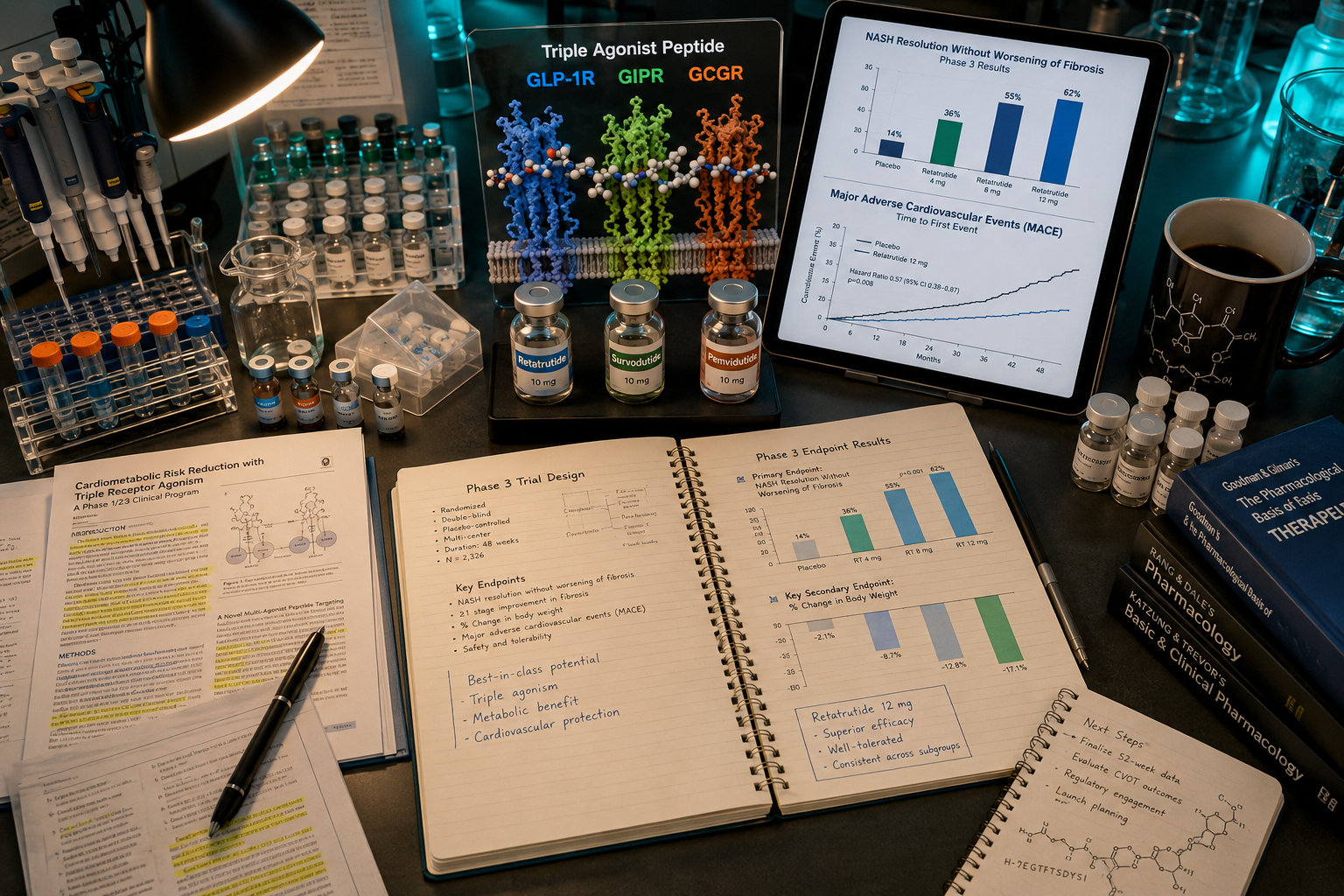
The TRIUMPH-1 trial enrolled adults with obesity (BMI 30 or above) or overweight with at least one weight-related comorbidity. Results across dose groups were consistent and dose-dependent.
| Dose Group | Mean Weight Reduction | Notable Secondary Outcomes |
|---|---|---|
| Low dose (4 mg) | ~17.5% | Improved fasting insulin |
| Mid dose (8 mg) | ~22.1% | Reduced liver fat, lower triglycerides |
| High dose (12 mg) | ~24.2% | Significant HbA1c reduction, LDL improvement |
These findings carry direct implications for retatrutide clinical trials interpreting Phase 3 data for future metabolic research directions in several disease areas:
- NASH and hepatic steatosis, liver fat reductions suggest standalone or adjunct NASH trial potential
- Type 2 diabetes management, HbA1c improvements position retatrutide as a diabetes candidate independent of weight loss
- Cardiovascular risk reduction, lipid and blood pressure improvements warrant dedicated outcomes trials
Researchers exploring complementary metabolic pathways may also find value in reviewing metabolic modulation research lines and the emerging data on MOTS-c and metabolic flexibility as parallel investigative threads.

Future Research Directions Informed by Phase 3 Data
The depth of TRIUMPH-1 data creates a clear roadmap for the next generation of metabolic studies. Researchers examining retatrutide clinical trials and interpreting Phase 3 data for future metabolic research directions should prioritize the following areas.
Combination protocol research is an emerging frontier. Whether retatrutide can be paired with agents targeting complementary pathways, such as amylin analogs like cagrilintide, is already under early investigation. The cagrilintide synergy with GLP-1 research explores similar combinatorial logic.
Long-term weight maintenance remains an open question. Phase 3 trials ran to 48 weeks; what happens at years two and three without dose escalation is unknown. Durability studies are a critical next step.
Lean mass preservation is a concern shared across the obesity pharmacotherapy field. Retatrutide's glucagon component theoretically supports energy expenditure without proportional muscle catabolism, but dedicated body composition trials using DEXA endpoints are needed.
Pediatric and adolescent populations represent an underserved research gap. Given the escalating rates of adolescent obesity, age-stratified extension trials are a logical priority.
For researchers interested in how peptide-based metabolic interventions are evolving more broadly, the latest peptide research updates and GLP-3 triple agonist research offer adjacent context worth reviewing.
Conclusion
The Phase 3 data from retatrutide clinical trials has fundamentally shifted the ceiling of what metabolic pharmacotherapy can achieve. Weight reductions exceeding 24%, combined with meaningful improvements in hepatic, glycemic, and cardiovascular markers, provide a strong scientific foundation for the next wave of research.
Actionable next steps for researchers in 2026:
- Design NASH-specific secondary analysis protocols using existing TRIUMPH-1 biomarker data
- Prioritize lean mass and body composition endpoints in any follow-on trial design
- Explore combination peptide protocols pairing retatrutide with amylin or GIP-selective agents
- Monitor the anticipated NDA submission timeline for regulatory signal on approvable endpoints
- Review adjacent metabolic peptide research to identify synergistic investigative opportunities
The data is in. The research directions are clear. The question now is how quickly the field moves to answer them.
Leave a Reply
Want to join the discussion?Feel free to contribute!