Call or Text 727-513-9780
  • Shopping Cart Shopping Cart
    0Shopping Cart
Pure Tested Peptides | America's most trusted Peptides for sale online
  • Peptides for sale
    • Oral Peptides for sale
      • Peptide Capsules for sale
      • BPC 157 Capsules 1000mcg
      • SLU-PP-332 Capsules | 1000 mcg
      • 5-Amino-1MQ 50mg Capsules
      • Tesofensine 500mcg
    • All Peptides for sale
    • Peptide Sprays
      • BPC 157 Nasal Spray Kit
      • BPC-157 TB500 Nasal Spray Kit
      • Semax Nasal Spray 10mg
      • Selank – Nasal Spray Kit – 10mg
      • Epithalon 50MG Nasal Spray Kit
      • Ipamorelin 10mg Nasal Spray
      • Klow Nasal Spray (BPC-157 + TB-500 + GHK-Cu + KPV) | 80mg
      • Hulk Nasal Spray Tesa / Ipa Blend 6/3 MG
      • Klow Nasal Spray
      • NAD + 500 mg Nasal Spray
      • PT-141 Nasal Spray Kit
    • GHRH Peptides
      • Ipa Peptides
      • CJC-1295 Peptides
        • CJC-1295 with DAC 5 mg
        • CJC-1295 without DAC 5 mg
        • CJC-1295 Ipa 10mg
      • Tesa Peptides
        • Tesa Peptide
        • Tesa 20 mg
    • GHK-Cu Peptides
      • All GHK-Cu Peptides
      • GHK-Cu 100mg
      • KLOW Peptide Blend – Buy KLOW blend online
    • BPC Peptides
      • All BPC Peptides
      • BPC-157
      • BPC-157 TB-500
      • BPC 157 capsules 1000mcg
    • SLU-PP-332 Peptides
      • All SLU-PP-332 Peptides
      • SLU-PP-332 5mg
    • GLP3 Peptides
      • GLP3-R
      • GLP3-R CAG 10mg
      • GLP3-R 20mg
    • PT-141 Peptides
      • PT-141 Peptides for sale
      • PT-141 10mg
      • PT-141 Nasal Spray
    • CAG Peptides
      • Lipo-C Peptide Blend
      • CAG 5mg
      • CAG 10mg
    • MOTS-C Peptides
      • MOTS-C Peptides for sale
      • MOTS-c peptide
      • MOTS-c 10mg *6 pack*
    • 5 Amino 1MQ Peptides
      • 5 Amino 1MQ Peptides for sale
      • 5-Amino-1MQ 50mg Capsules
      • 5-Amino-1MQ 5mg
    • Epithalon Peptides
      • Epithalon Peptides for sale
      • Epithalon 10mg
      • Epithalon 50mg
  • Shop
    • GLPs
      • 5-Amino-1MQ 50mg Capsules
      • 5-Amino-1MQ 5mg
      • GLP3-Reta
      • L-Carnitine 500mg/ml
      • Tesofensine 500mcg
      • SLU-PP-332 5mg
      • MOTS-c 10mg *6 pack*
    • Epithalon & BPC Peptides
      • Epithalon 10mg
      • Epithalon 50mg
      • BPC-157
      • BPC 157 capsules 1000mcg
      • BPC-157 TB-500
      • BPC-157 TB500 Nasal Spray Kit
      • BPC 157 Nasal Spray Kit
    • BPC TB-500 & NAD+ Peptides
      • NAD+ 500 mg
      • KLOW Peptide Blend – Buy KLOW blend online
      • GLOW Peptide Blend
      • TB 500 5mg
      • BPC 157 capsules 1000mcg – Supplement
      • BPC 157 Nasal Spray Kit
      • BPC-157
      • BPC-157 TB500 Nasal Spray Kit
      • BPC-157 TB-500
      • BPC 157 capsules 1000mcg
    • LL-37 Peptide
      • LL-37 10 mg
    • MOTS-C & Selank
      • MOTS-c peptide
      • Selank 10mg
    • GHK Peptides
      • GHK-Cu 100mg
      • GLOW Peptide Blend
      • KLOW Peptide Blend – Buy KLOW blend online
  • COAs
  • Wholesale
    • Wholesale Peptides for sale
  • PTP FAQ
  • Affiliates
    • Affiliate Program
    • Affiliate Signup
  • Contact
    • Contact Customer Service
    • Text Customer Support
  • About US
  • Shop all peptides
  • Login / Register Login / Register Page Link Login / Register Page Link
  • Click to open the search input field Click to open the search input field Search
  • Menu Menu

Tag Archive for: obesity pharmacotherapy

Retatrutide Clinical Trials: Interpreting Phase 3 Data for Future Metabolic Research Directions

Retatrutide Clinical Trials: Interpreting Phase 3 Data for Future Metabolic Research Directions

July 3, 2026/0 Comments/in Uncategorized/by

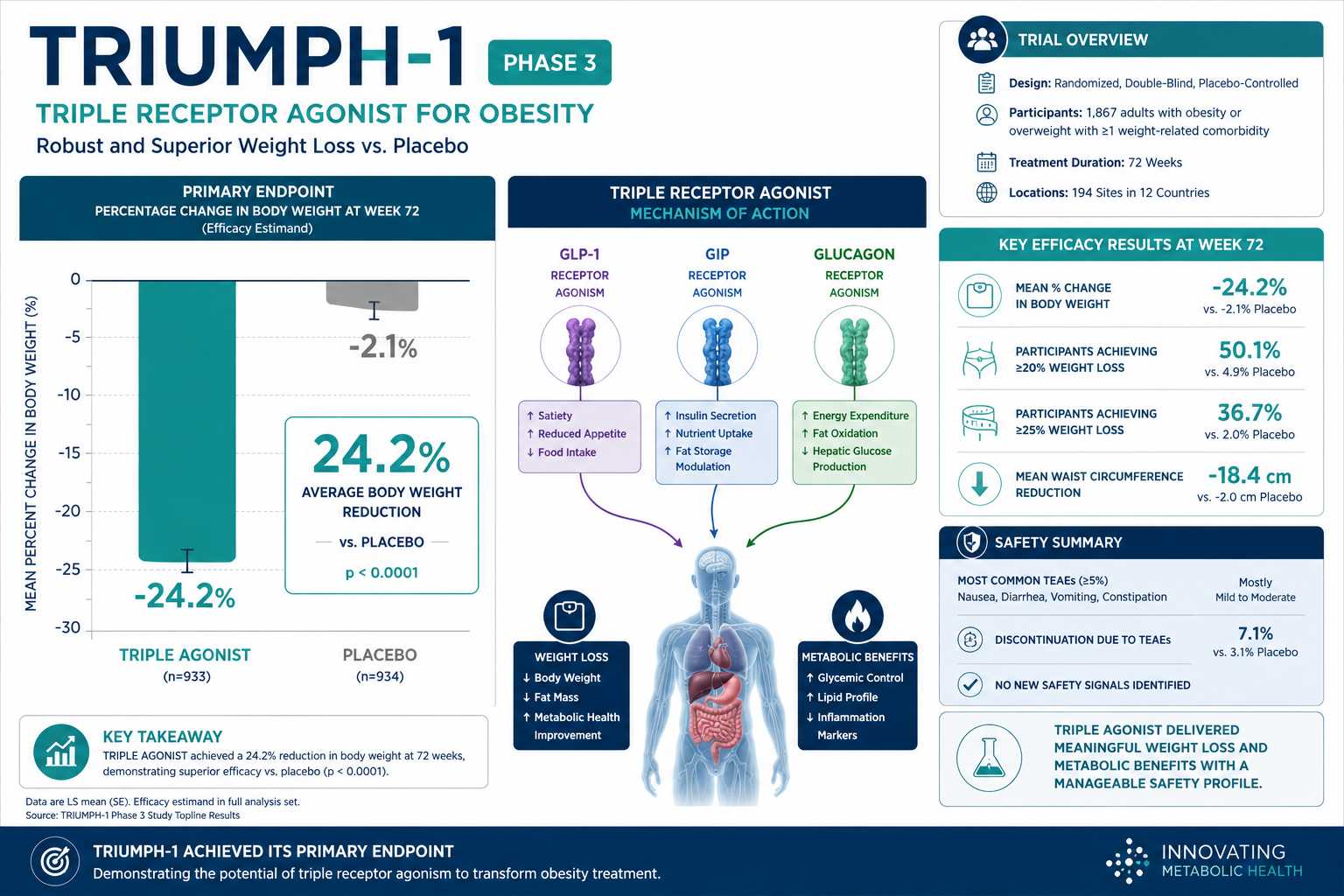
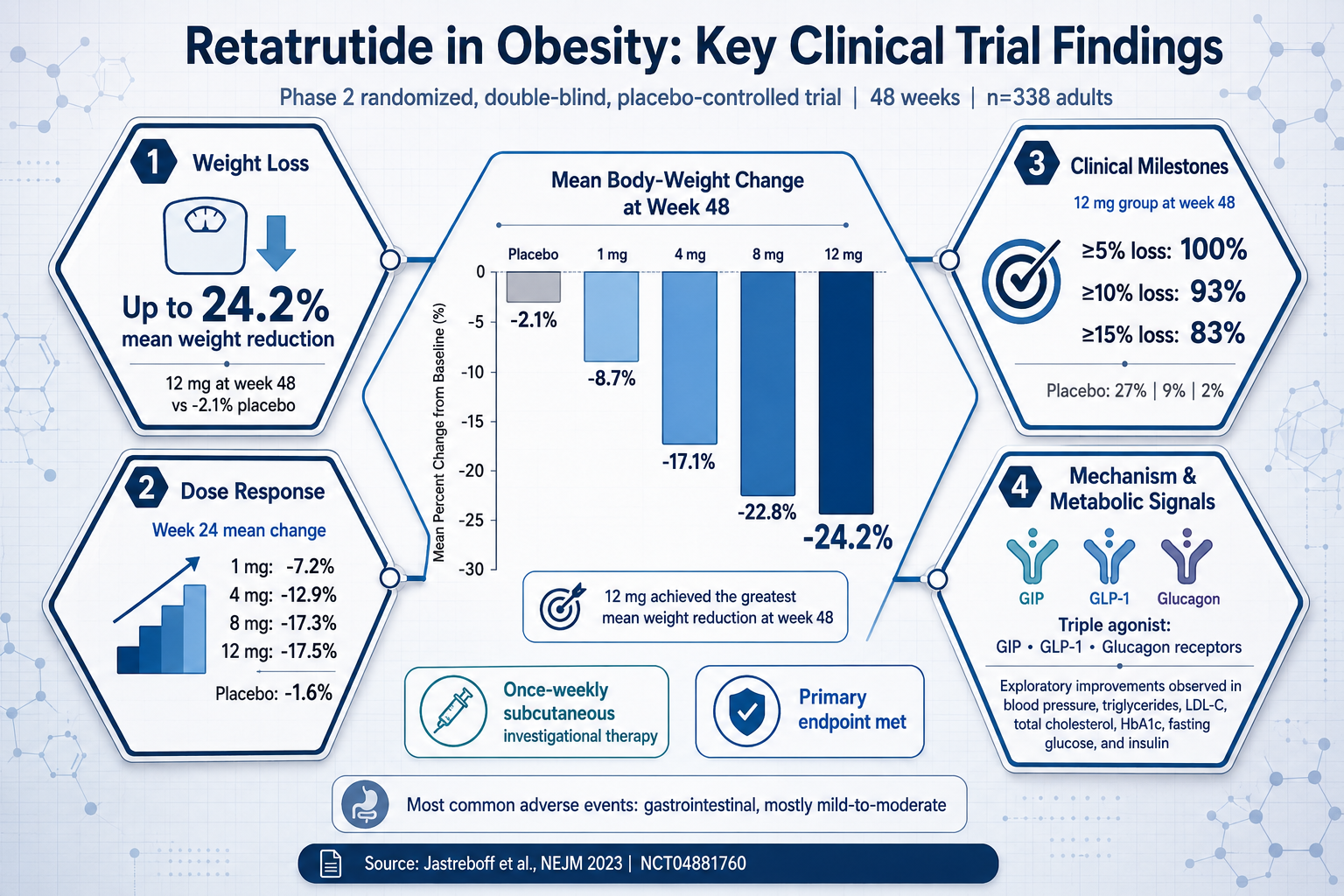
Participants in the TRIUMPH-1 Phase 3 trial lost an average of 24.2% of their body weight over 48 weeks, a figure that surpasses every previously approved obesity pharmacotherapy on record. That single data point has reshaped how metabolic researchers think about triple receptor agonism and what comes next for the field.

Retatrutide clinical trials, specifically the interpreting of Phase 3 data for future metabolic research directions, represent one of the most significant inflection points in obesity science in 2026. This article breaks down what the data shows, what it means mechanistically, and where researchers should focus next.

Key Takeaways

  • Retatrutide simultaneously activates GLP-1, GIP, and glucagon receptors, producing additive metabolic effects not seen with dual agonists.
  • TRIUMPH-1 Phase 3 data showed up to 24.2% mean body weight reduction at the highest dose, outperforming all approved single and dual agonists.
  • Secondary endpoints included meaningful improvements in cardiometabolic markers, liver fat reduction, and insulin sensitivity.
  • An NDA submission to the FDA is anticipated in late 2026, with regulatory decisions expected to follow.
  • Phase 3 findings open multiple new research directions including NASH, cardiovascular outcomes, and combination peptide protocols.

Key Takeaways

Understanding the Triple Agonist Mechanism Behind the Phase 3 Results

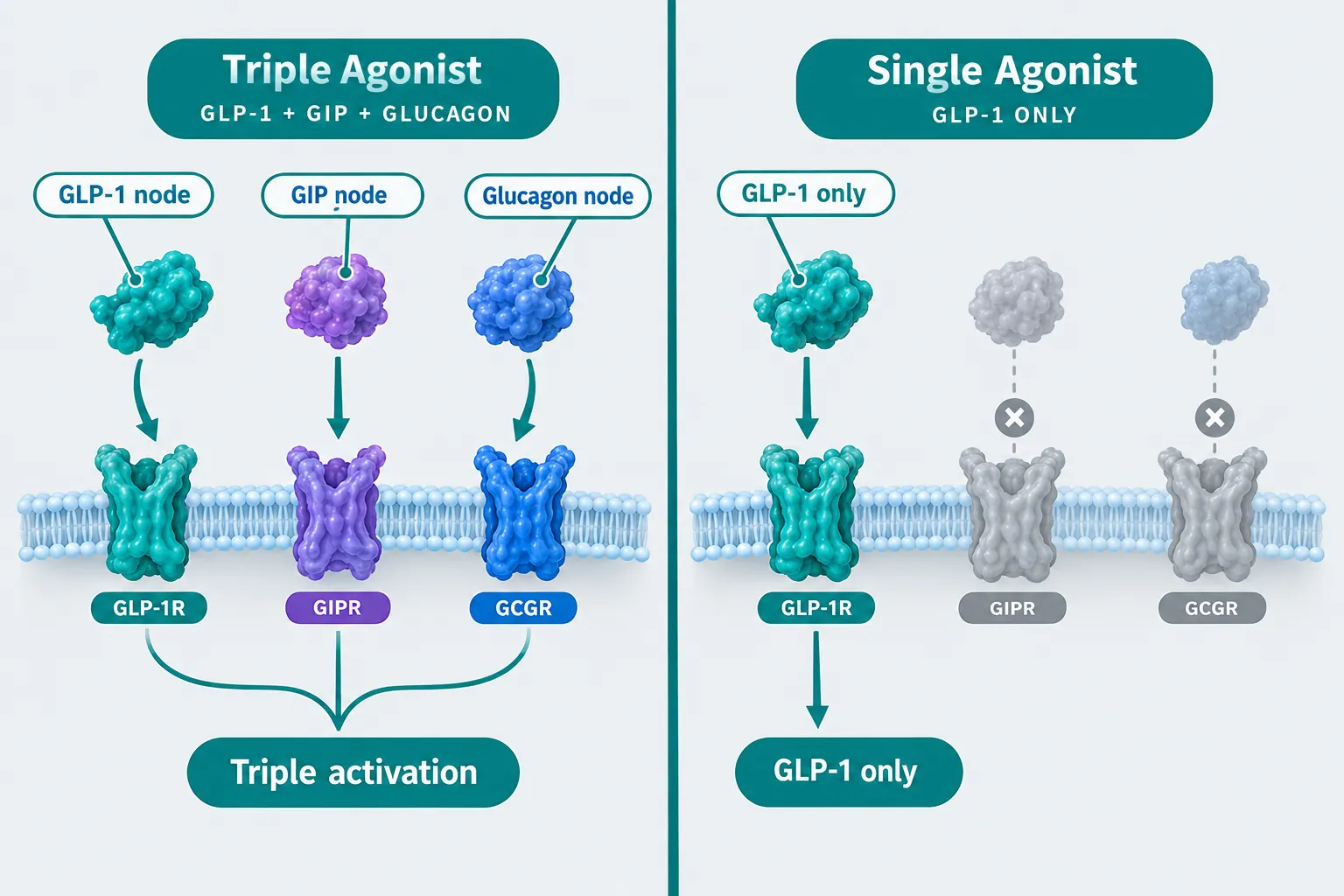
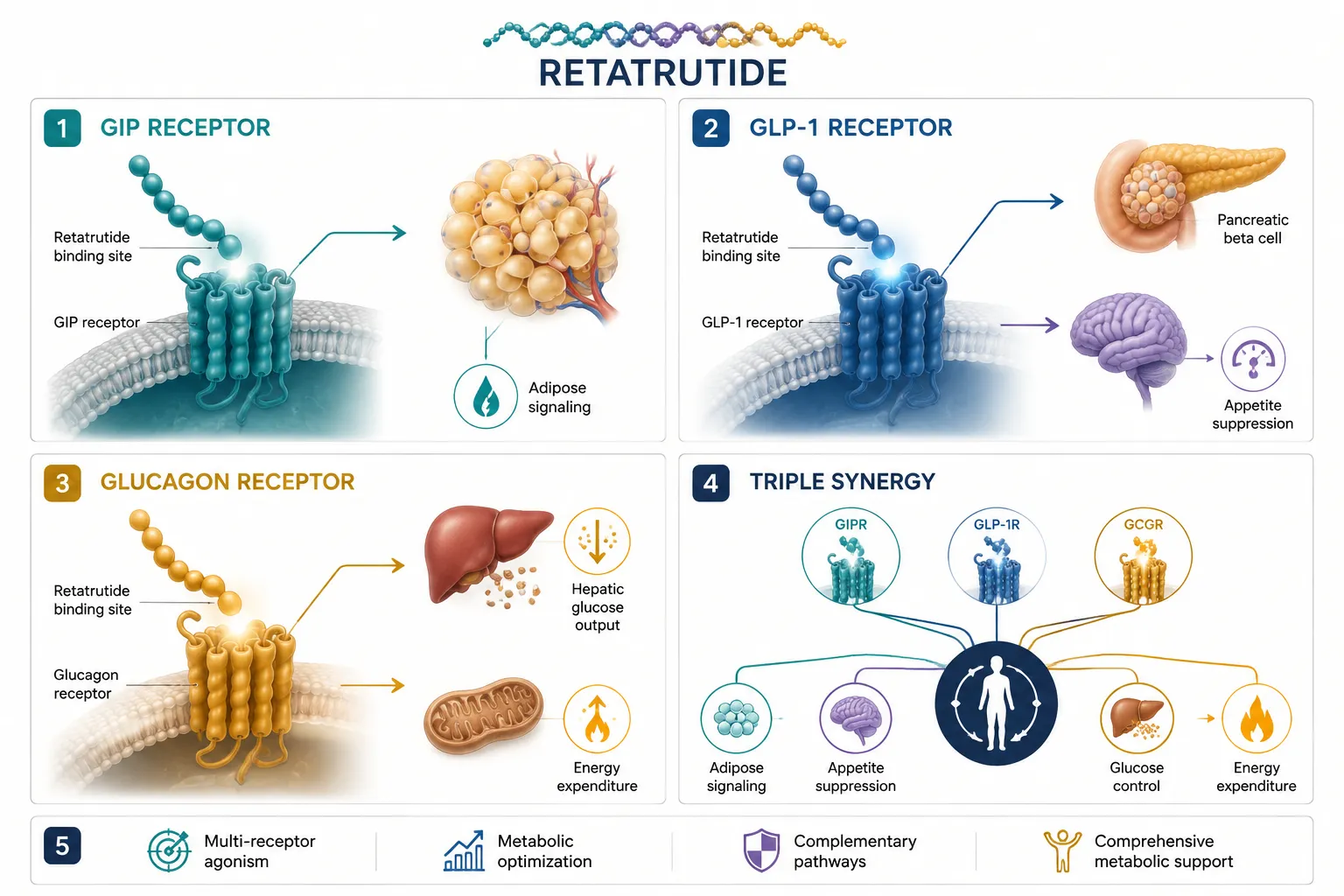
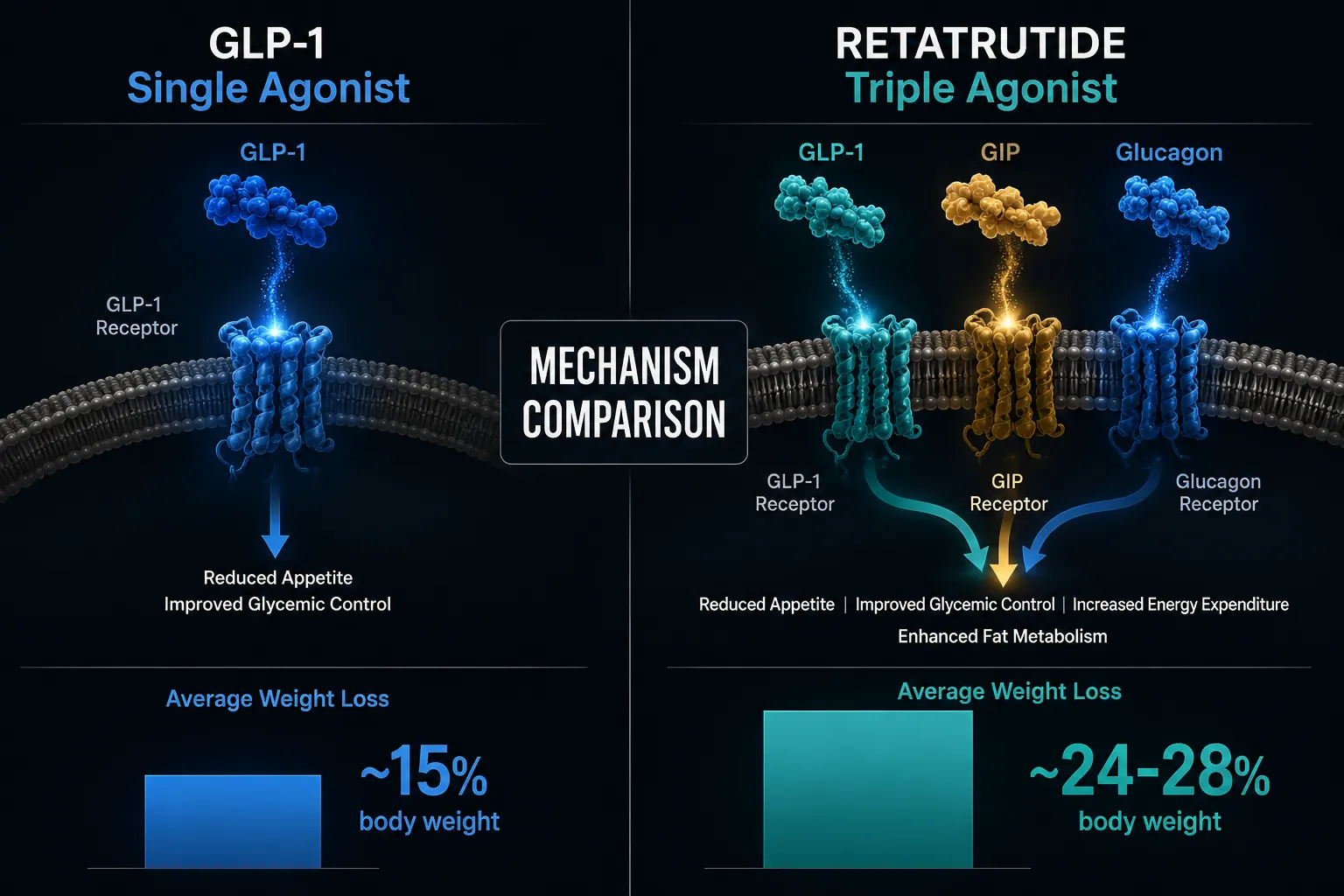
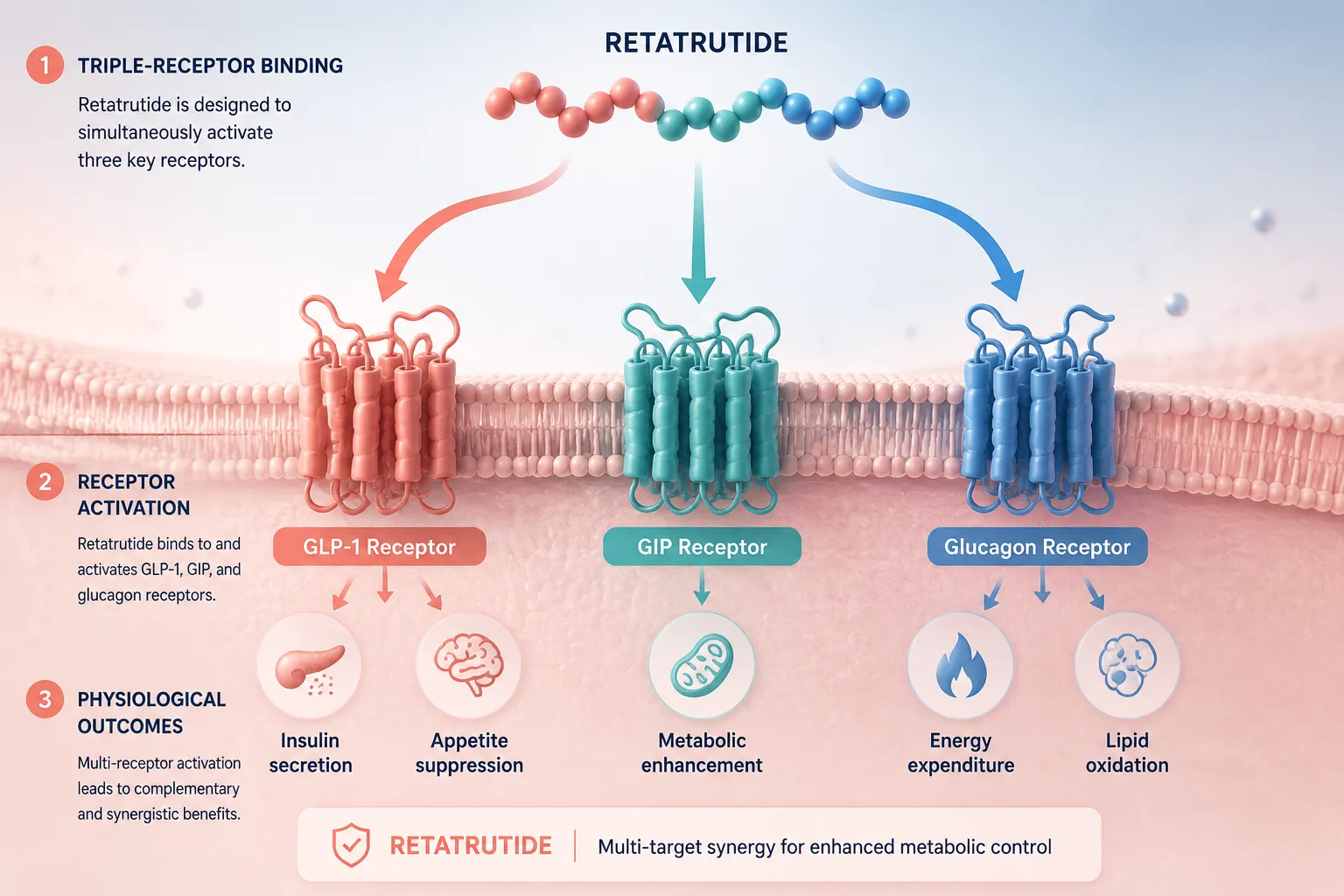
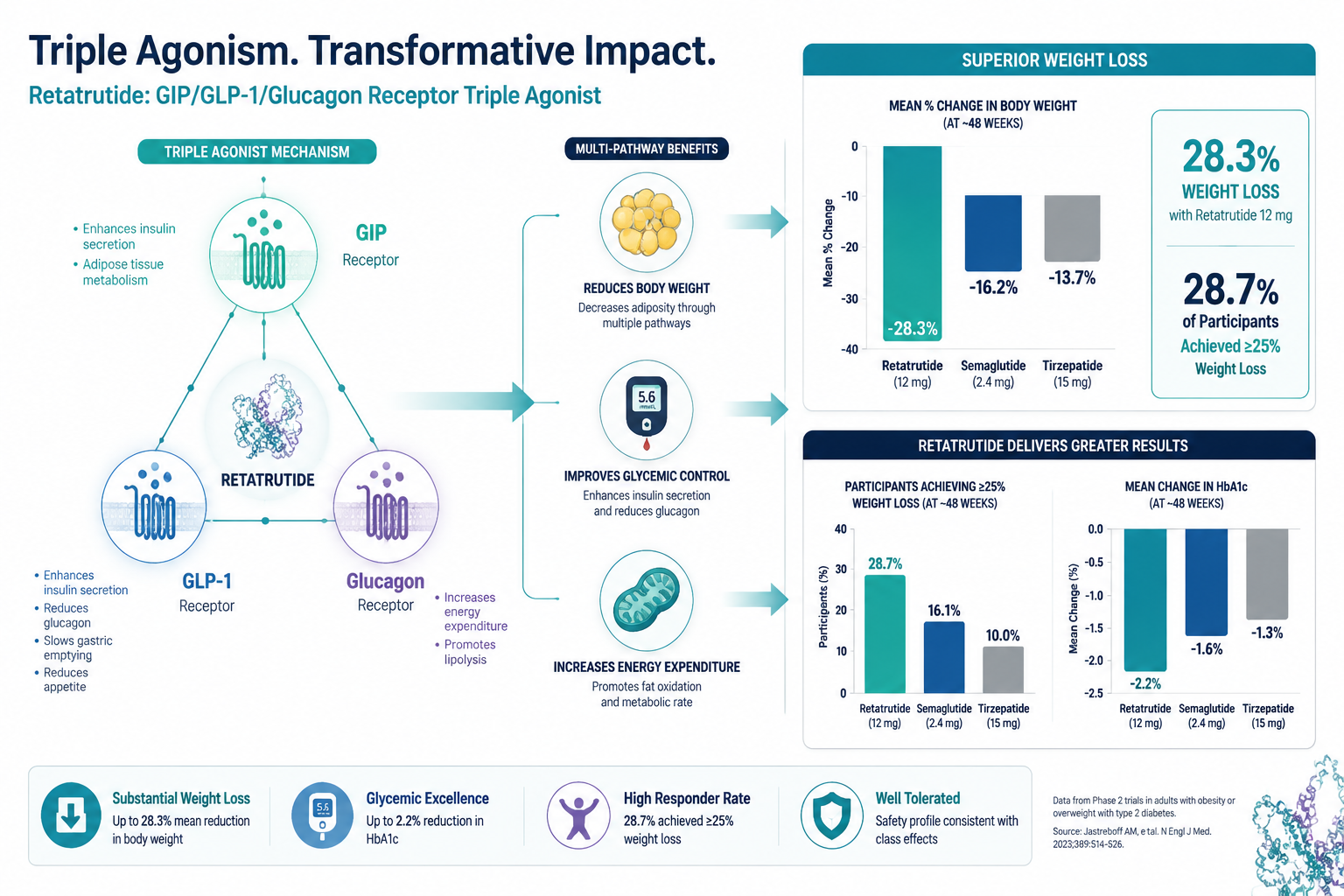
Retatrutide is a triple receptor agonist that targets GLP-1 (glucagon-like peptide-1), GIP (glucose-dependent insulinotropic polypeptide), and glucagon receptors simultaneously. This multi-pathway engagement is what separates it from earlier generation compounds.

  • GLP-1 receptor activation reduces appetite and slows gastric emptying
  • GIP receptor activation enhances insulin secretion and may improve adipose tissue metabolism
  • Glucagon receptor activation increases energy expenditure and promotes hepatic fat oxidation

The combination creates a synergistic effect on energy balance that neither pathway achieves alone. Researchers interested in GLP-1 dual receptor agonism research will recognize that adding glucagon receptor activity is the critical differentiator here.

For broader context on how this fits within the evolution of incretin-based therapies, the GLP-1 generations overview provides a useful framework for comparing mechanistic generations.

"The glucagon component may be the key variable that pushes weight loss beyond the ceiling observed with GLP-1/GIP dual agonists."

This mechanistic architecture also explains why secondary endpoints in TRIUMPH-1 showed reductions in hepatic fat content, improvements in fasting glucose, and favorable shifts in lipid panels, outcomes that extend well beyond simple caloric restriction effects.


Understanding the Triple Agonist Mechanism Behind the Phase 3 Results

Key Phase 3 Findings and What They Signal for Metabolic Research

The TRIUMPH-1 trial enrolled adults with obesity (BMI 30 or above) or overweight with at least one weight-related comorbidity. Results across dose groups were consistent and dose-dependent.

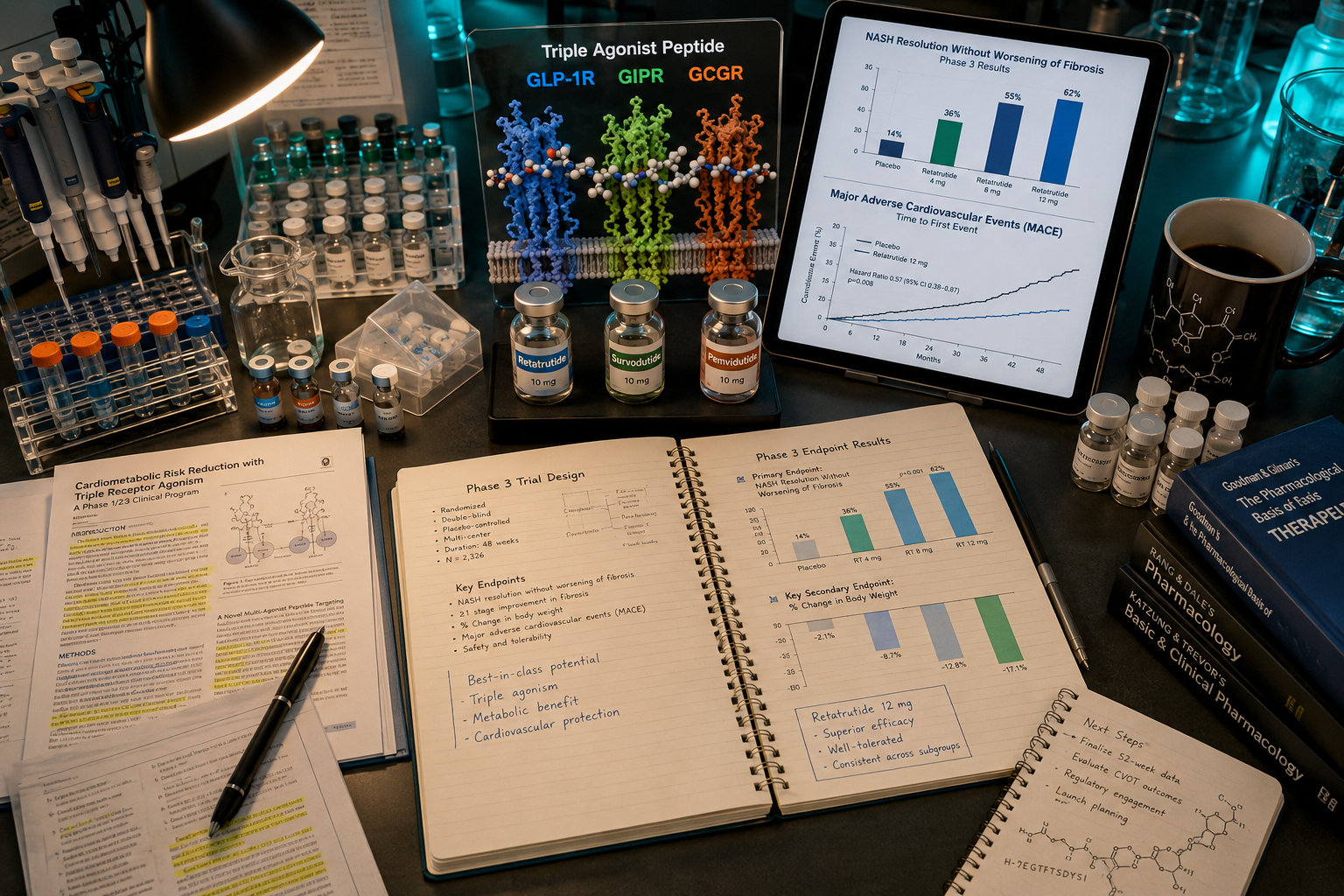
Dose Group Mean Weight Reduction Notable Secondary Outcomes
Low dose (4 mg) ~17.5% Improved fasting insulin
Mid dose (8 mg) ~22.1% Reduced liver fat, lower triglycerides
High dose (12 mg) ~24.2% Significant HbA1c reduction, LDL improvement

These findings carry direct implications for retatrutide clinical trials interpreting Phase 3 data for future metabolic research directions in several disease areas:

  1. NASH and hepatic steatosis, liver fat reductions suggest standalone or adjunct NASH trial potential
  2. Type 2 diabetes management, HbA1c improvements position retatrutide as a diabetes candidate independent of weight loss
  3. Cardiovascular risk reduction, lipid and blood pressure improvements warrant dedicated outcomes trials

Researchers exploring complementary metabolic pathways may also find value in reviewing metabolic modulation research lines and the emerging data on MOTS-c and metabolic flexibility as parallel investigative threads.


Key Phase 3 Findings and What They Signal for Metabolic Research

Future Research Directions Informed by Phase 3 Data

The depth of TRIUMPH-1 data creates a clear roadmap for the next generation of metabolic studies. Researchers examining retatrutide clinical trials and interpreting Phase 3 data for future metabolic research directions should prioritize the following areas.

Combination protocol research is an emerging frontier. Whether retatrutide can be paired with agents targeting complementary pathways, such as amylin analogs like cagrilintide, is already under early investigation. The cagrilintide synergy with GLP-1 research explores similar combinatorial logic.

Long-term weight maintenance remains an open question. Phase 3 trials ran to 48 weeks; what happens at years two and three without dose escalation is unknown. Durability studies are a critical next step.

Lean mass preservation is a concern shared across the obesity pharmacotherapy field. Retatrutide's glucagon component theoretically supports energy expenditure without proportional muscle catabolism, but dedicated body composition trials using DEXA endpoints are needed.

Pediatric and adolescent populations represent an underserved research gap. Given the escalating rates of adolescent obesity, age-stratified extension trials are a logical priority.

For researchers interested in how peptide-based metabolic interventions are evolving more broadly, the latest peptide research updates and GLP-3 triple agonist research offer adjacent context worth reviewing.


Conclusion

The Phase 3 data from retatrutide clinical trials has fundamentally shifted the ceiling of what metabolic pharmacotherapy can achieve. Weight reductions exceeding 24%, combined with meaningful improvements in hepatic, glycemic, and cardiovascular markers, provide a strong scientific foundation for the next wave of research.

Actionable next steps for researchers in 2026:

  • Design NASH-specific secondary analysis protocols using existing TRIUMPH-1 biomarker data
  • Prioritize lean mass and body composition endpoints in any follow-on trial design
  • Explore combination peptide protocols pairing retatrutide with amylin or GIP-selective agents
  • Monitor the anticipated NDA submission timeline for regulatory signal on approvable endpoints
  • Review adjacent metabolic peptide research to identify synergistic investigative opportunities

The data is in. The research directions are clear. The question now is how quickly the field moves to answer them.

https://www.puretestedpeptides.com/wp-content/uploads/2026/07/Retatrutide-Clinical-Trials-Interpreting-Phase-3-Data-for-Future-Metabolic-Research-Directions.png 1024 1536 https://www.puretestedpeptides.com/wp-content/uploads/2026/01/buy-peptides-online.jpg 2026-07-03 13:03:522026-07-03 13:03:52Retatrutide Clinical Trials: Interpreting Phase 3 Data for Future Metabolic Research Directions
GLP-3 Retatrutide: Latest Research on Its Impact on Liver Fat Reduction and MASLD Management

GLP-3 Retatrutide: Latest Research on Its Impact on Liver Fat Reduction and MASLD Management

July 3, 2026/0 Comments/in Uncategorized/by

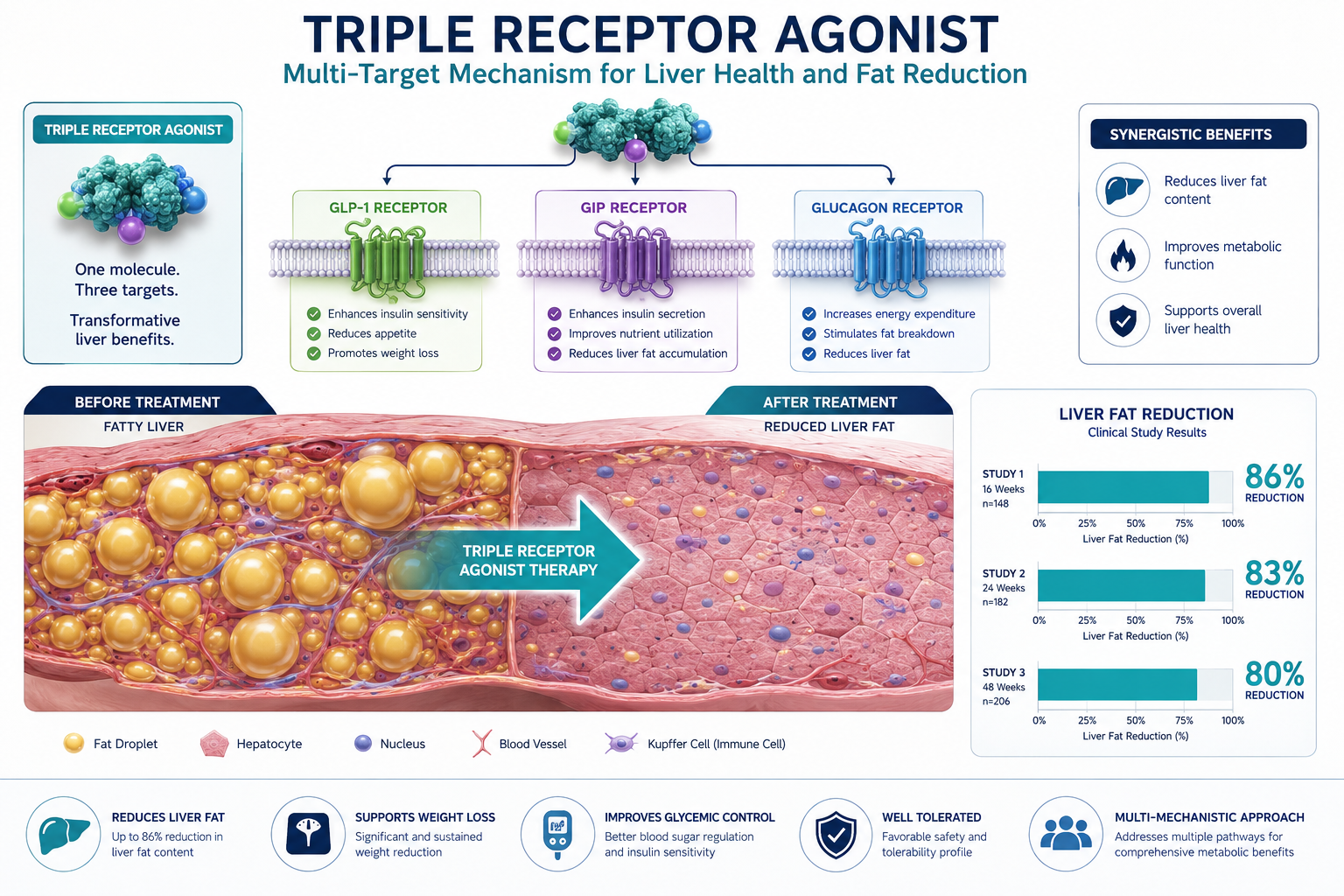
More than 80% of participants with fatty liver disease who received retatrutide in a phase 2 trial had their liver fat completely normalized by week 48, a result researchers described as among the largest liver-fat reductions ever reported in an obesity or MASLD trial. That single data point has reshaped how the research community thinks about triple receptor agonists and metabolic liver disease.

This article examines what the most current evidence says about GLP-3 Retatrutide: Latest Research on Its Impact on Liver Fat Reduction and MASLD Management, who may benefit most, and what questions still need answering.

Key Takeaways

  • Retatrutide is a triple agonist targeting GLP-1, GIP, and glucagon receptors simultaneously.
  • Phase 2 data show mean relative liver fat reductions exceeding 80% at 48 weeks.
  • More than 90% of participants on the 12 mg dose achieved liver fat normalization below the 5% MRI threshold.
  • Weight loss of nearly 24-26% accompanied the liver fat improvements, suggesting dual metabolic benefit.
  • The safety profile mirrors other incretin-based therapies, with no new hepatotoxicity signal identified.

Key Takeaways

What Is Retatrutide and Why Does It Matter for MASLD

Metabolic Dysfunction-Associated Steatotic Liver Disease (MASLD), formerly called NAFLD, affects an estimated 25% of the global adult population. It ranges from simple fat accumulation in liver cells to progressive inflammation, fibrosis, and cirrhosis. Until recently, no pharmacological agent had demonstrated the ability to reliably normalize liver fat across a broad patient population.

Retatrutide changes that conversation. Unlike semaglutide or tirzepatide, which act on one or two receptors, retatrutide simultaneously activates three receptors:

Receptor Primary Role
GLP-1 Appetite suppression, insulin secretion
GIP Energy metabolism, fat storage regulation
Glucagon Hepatic fat oxidation, energy expenditure

The glucagon component is particularly relevant for liver fat. Glucagon receptor activation directly stimulates hepatic fat burning, meaning retatrutide works on the liver through a mechanism that single or dual agonists do not fully replicate. Researchers interested in the broader landscape of GLP-1 peptide research will recognize this as a meaningful mechanistic step forward.


Phase 2 Trial Data: Retatrutide and Liver Fat Reduction

Phase 2 Trial Data: Retatrutide and Liver Fat Reduction

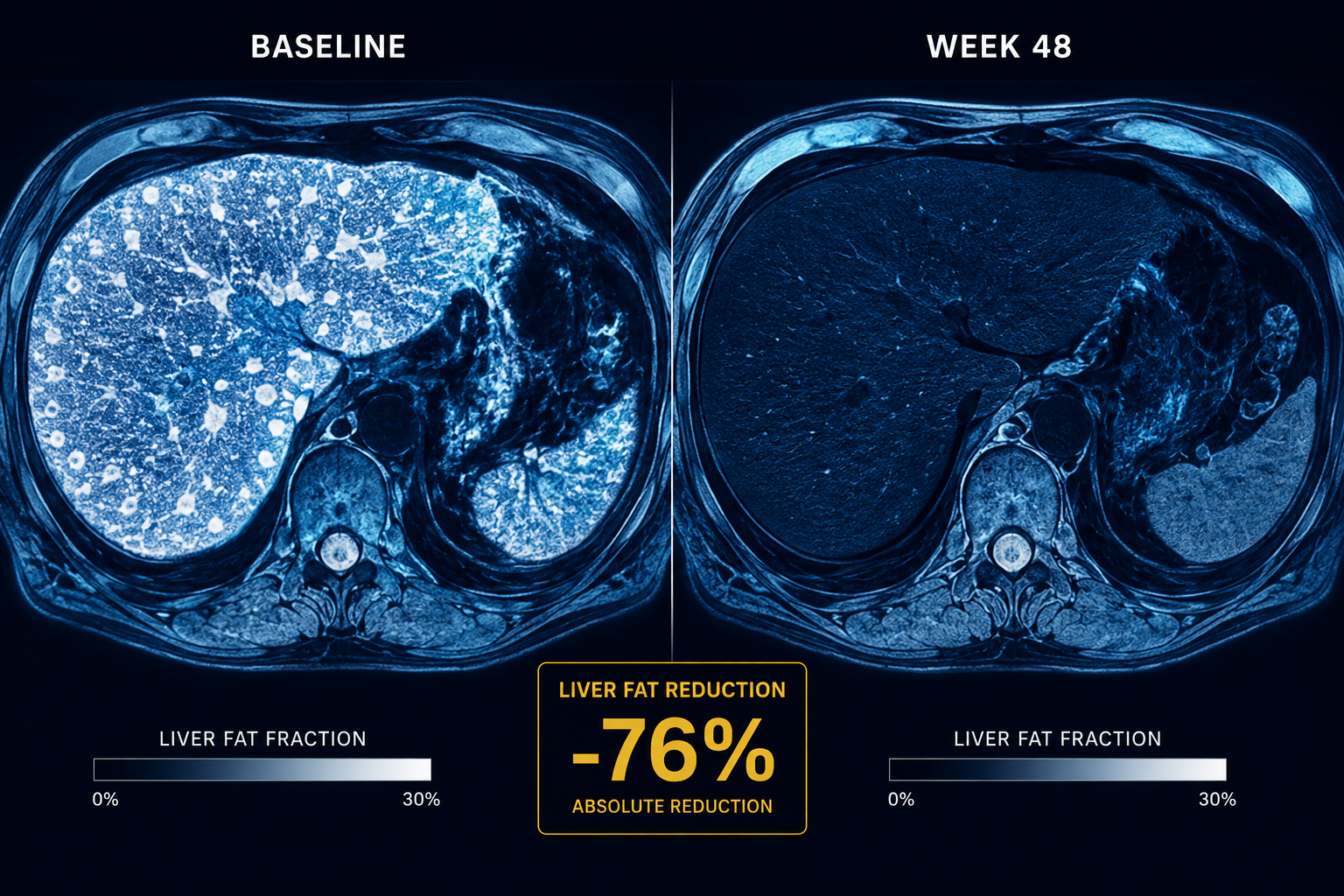
The most compelling evidence comes from a pre-specified MASLD sub-study within the obesity phase 2 trial. Participants with confirmed hepatic steatosis received weekly injections of either 8 mg or 12 mg retatrutide for 48 weeks, with liver fat measured by MRI-PDFF, the gold-standard imaging method.

The headline results:

  • Mean relative liver fat reduction exceeded 80% in both dose groups
  • More than 80% of participants on either dose achieved at least a 70% relative reduction in liver fat
  • Hepatic steatosis resolved in over 85% of participants on 8 mg
  • Over 90% achieved liver fat normalization (below the 5% MRI threshold) on 12 mg

A Virginia Commonwealth University-led analysis of the same sub-study reported that 81.7% relative liver fat reduction occurred with 8 mg and 86% with 12 mg. Average body weight fell by 23.8% and 25.9% respectively, underscoring that retatrutide delivers simultaneous, substantial benefits to both body weight and liver health.

"These are not incremental improvements. Resolving fatty liver in more than 9 out of 10 participants represents a potential paradigm shift in MASLD pharmacotherapy."

For context on how peptide-based approaches compare in metabolic research, the MOTS-c metabolic flexibility research page offers useful background on mitochondrial and metabolic mechanisms.


2026 Research Updates and Remaining Questions

2026 Research Updates and Remaining Questions

A 2026 ENDO meeting presentation reviewing phase 2 data confirmed weight reductions up to 24.2%, HbA1c reductions up to 2.16%, and liver fat normalization in up to 86% of MASLD participants. The safety profile remained consistent with other incretin-based therapies, primarily dose-dependent gastrointestinal side effects, with no new hepatotoxicity signal.

However, critical gaps remain:

  • No liver biopsy data, histological confirmation of fibrosis regression is still pending from phase 3
  • Long-term durability beyond 48 weeks has not been established
  • Head-to-head comparisons with tirzepatide or semaglutide in MASLD-specific populations are lacking

Phase 3 trials are underway in 2026, and the field is watching closely for histological endpoints that would confirm whether the dramatic MRI improvements translate to reduced fibrosis and cirrhosis risk.

Those following the evolution of retatrutide peptide research will find the upcoming phase 3 data particularly significant. Related metabolic research on compounds like tesa for fat loss and AOD-9604 provides additional context for how peptide science is advancing metabolic health broadly. Researchers also tracking longevity peptide research themes may find retatrutide's hepatic effects relevant to long-term metabolic aging.


Conclusion

The evidence on GLP-3 Retatrutide: Latest Research on Its Impact on Liver Fat Reduction and MASLD Management is, by any measure, striking. Phase 2 data consistently show liver fat normalization rates above 85-90%, weight loss approaching 25%, and a safety profile that does not introduce new hepatic risk. The triple-receptor mechanism, particularly glucagon receptor activation, appears to be the key driver of effects that surpass what single or dual agonists have achieved.

Actionable next steps for researchers and clinicians:

  1. Monitor phase 3 trial readouts for histological fibrosis data, which will determine whether MRI improvements predict long-term liver health outcomes.
  2. Review the GLP-1 Retatrutide product research page for the latest compound specifications and purity standards relevant to preclinical study design.
  3. Consider how retatrutide's metabolic profile compares to other peptides in your research stack by exploring the full peptide catalog.
  4. Stay current with ENDO and EASL 2026 conference updates, where phase 3 interim data are expected to be presented.

The next 12-18 months will determine whether retatrutide becomes the first agent to achieve broad regulatory approval specifically for MASLD, a milestone the field has been working toward for decades.

https://www.puretestedpeptides.com/wp-content/uploads/2026/07/GLP-3-Retatrutide-Latest-Research-on-Its-Impact-on-Liver-Fat-Reduction-and-MASLD-Management.png 1024 1536 https://www.puretestedpeptides.com/wp-content/uploads/2026/01/buy-peptides-online.jpg 2026-07-03 13:03:342026-07-03 13:03:34GLP-3 Retatrutide: Latest Research on Its Impact on Liver Fat Reduction and MASLD Management
Retatrutide Phase 3 Results: What the New GLP-3 Data Mean for Obesity and Glycemic Research

Retatrutide Phase 3 Results: What the New GLP-3 Data Mean for Obesity and Glycemic Research

June 24, 2026/0 Comments/in Uncategorized/by

A single drug producing nearly 30% average body-weight loss in a randomized Phase 3 trial would have seemed implausible a decade ago. In 2026, that is exactly what the latest retatrutide Phase 3 results are showing — and the implications for obesity and glycemic research extend well beyond the scale.

Wide-angle infographic-style illustration showing three interconnected receptor icons labeled GIP, GLP-1, and Glucagon

Key Takeaways

  • Retatrutide is a first-in-class GIP/GLP-1/glucagon triple agonist being developed by Eli Lilly for obesity and related metabolic conditions.
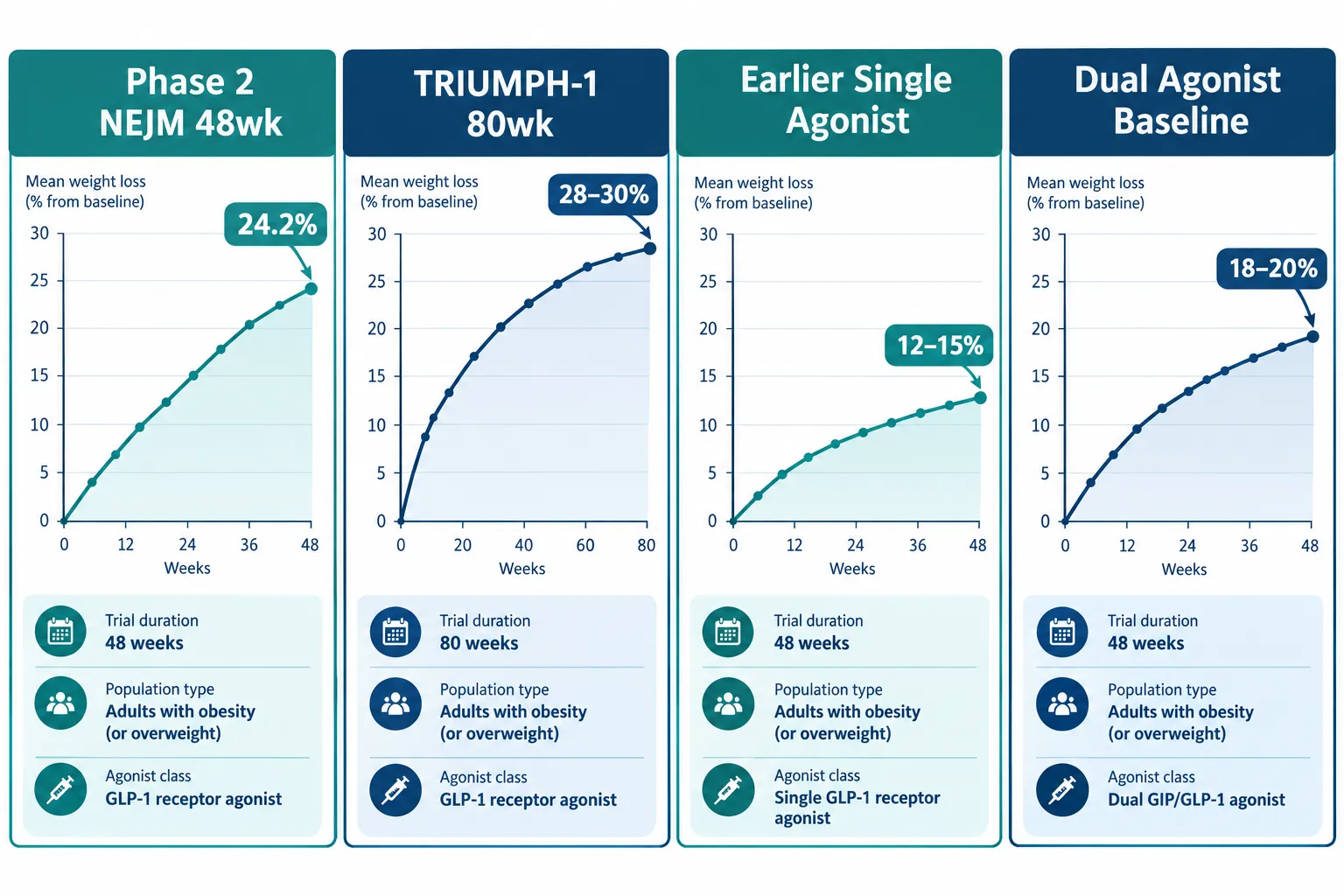
  • The TRIUMPH-1 Phase 3 trial showed mean weight loss of 28.3% at 80 weeks on the 12 mg dose, with 45.3% of participants losing 30% or more of body weight.
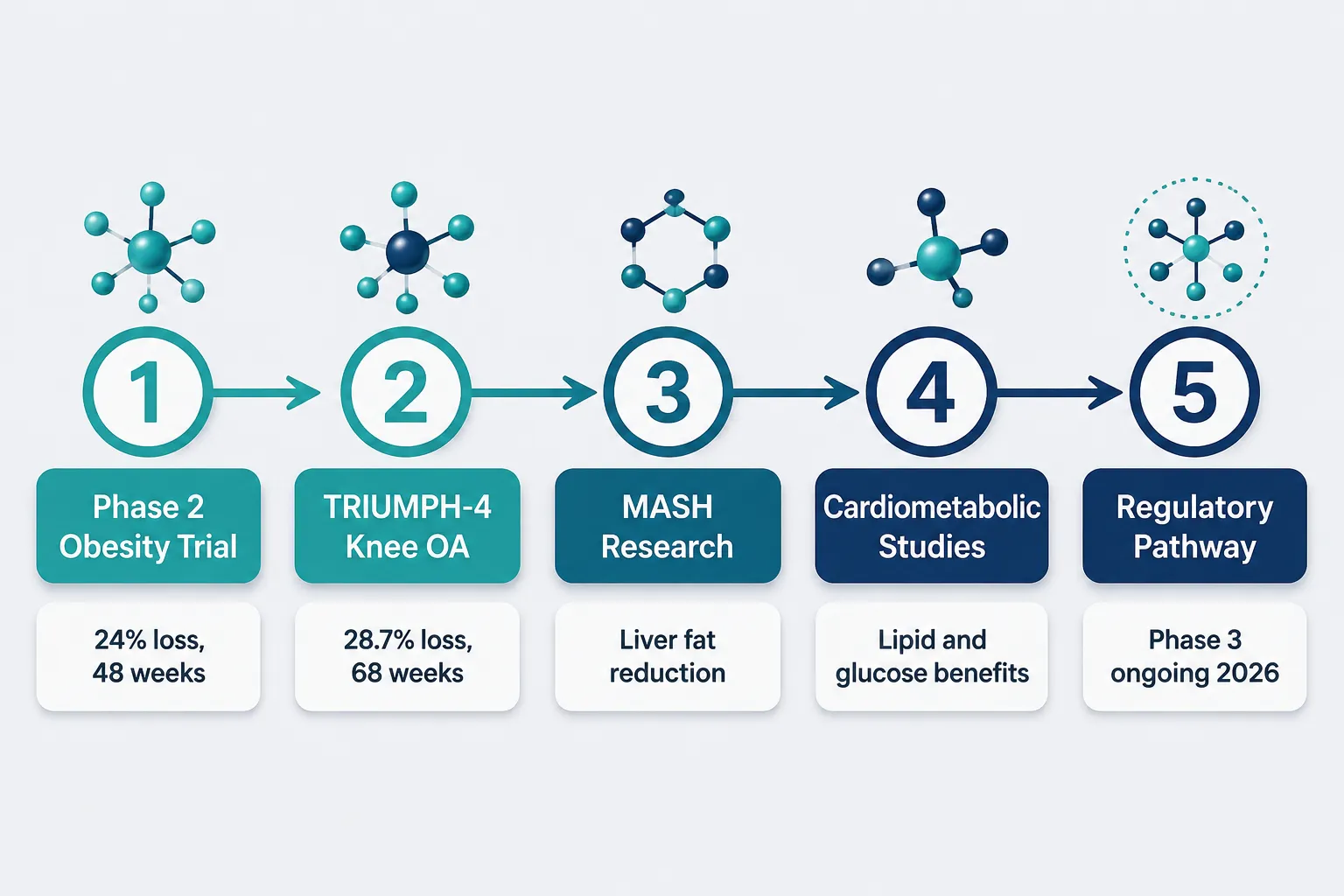
  • TRIUMPH-4 reported 28.7% mean weight loss at 68 weeks — the largest Phase 3 weight-loss signal ever recorded for a GLP-1-class compound.
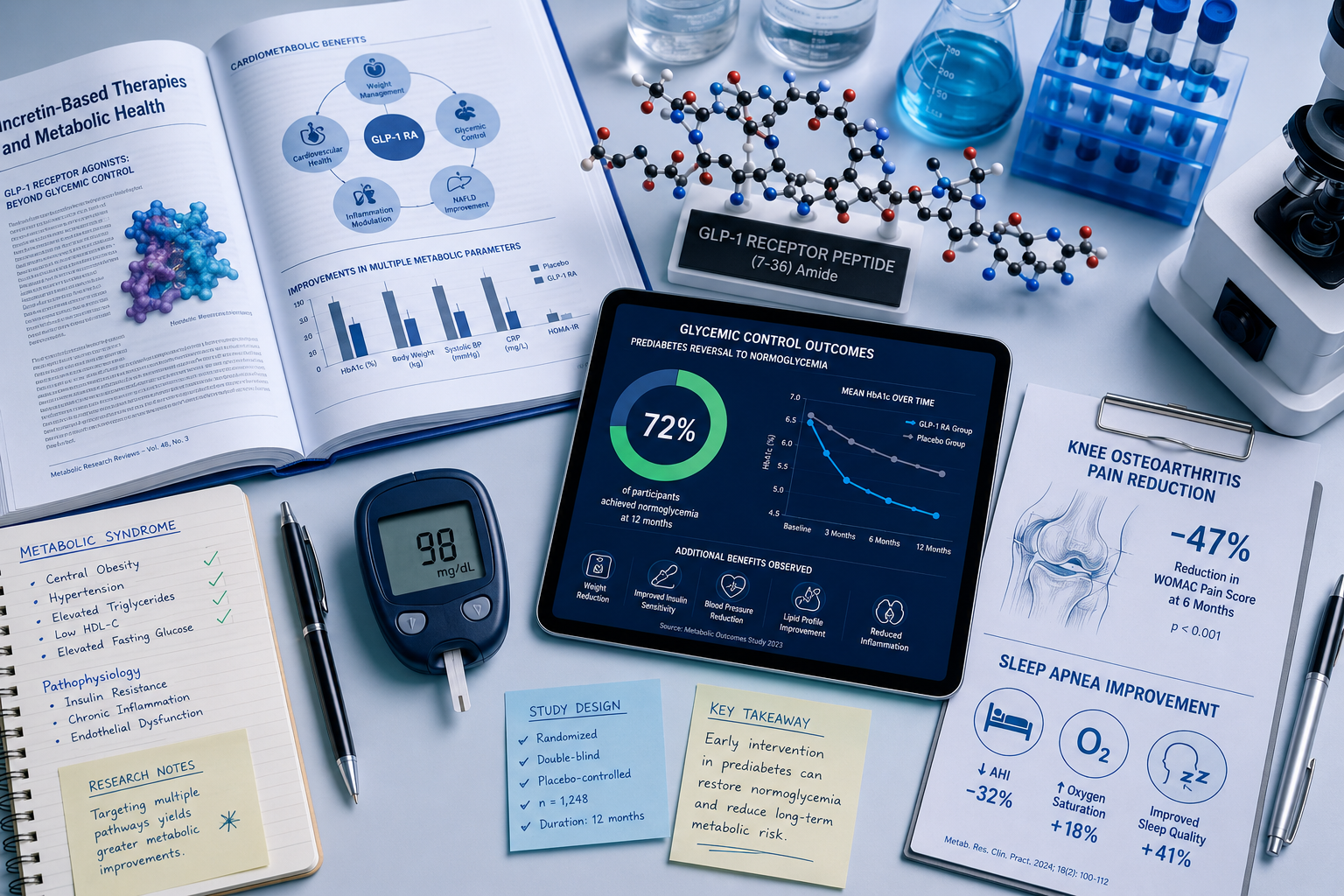
  • Secondary endpoints include a 72% reversion of prediabetes to normoglycemia and a 75.8% reduction in knee osteoarthritis pain.
  • June 2026 Lilly data confirm consistent benefits across multiple obesity-related conditions, including sleep apnea and type 2 diabetes.

What Makes Retatrutide Different From Earlier GLP-1 Agents

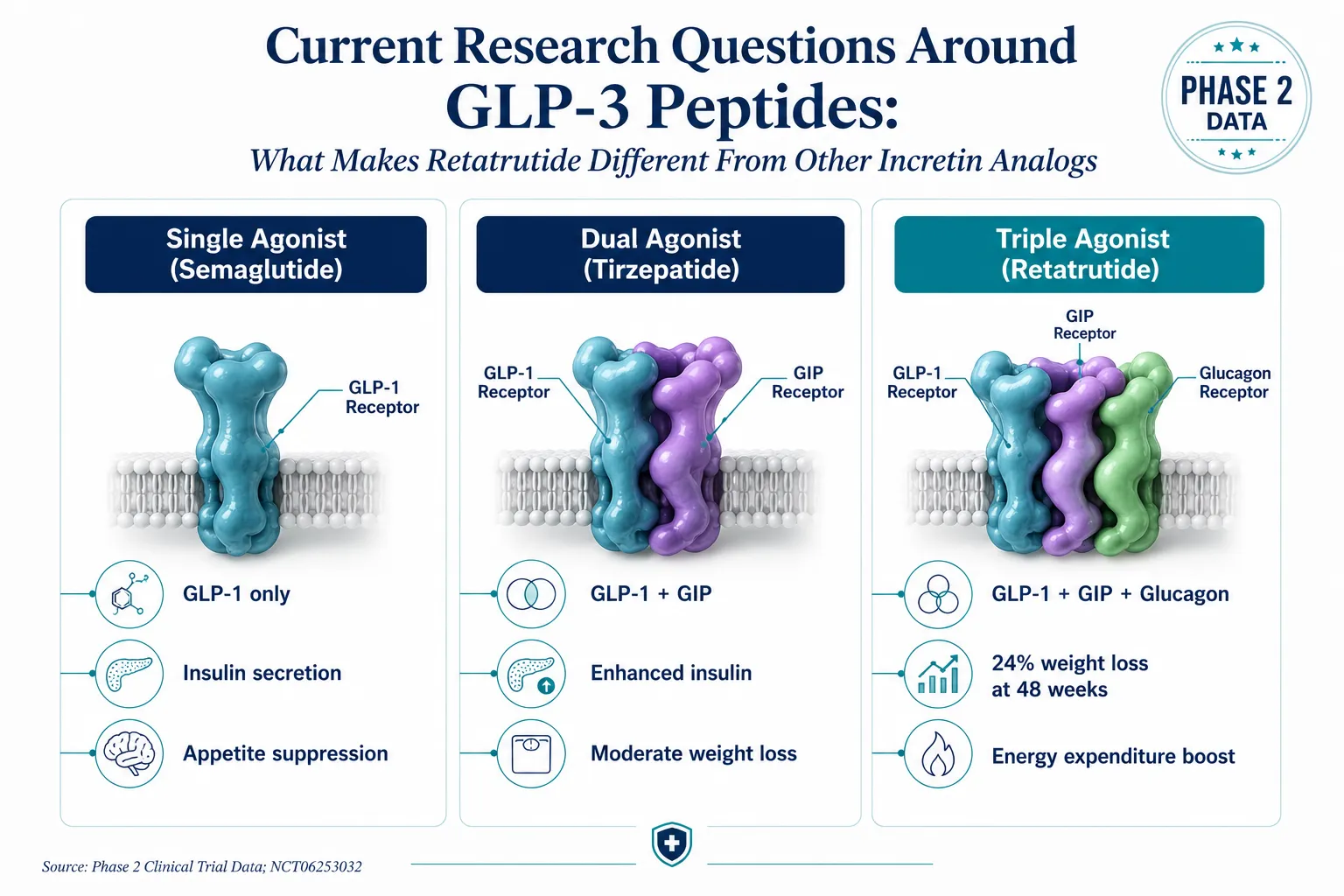
Most researchers familiar with GLP-1 peptide research and generational differences know that each successive agent in this class has pushed weight-loss benchmarks higher. Semaglutide averaged roughly 15% weight loss in Phase 3. Tirzepatide, a dual GIP/GLP-1 agonist, reached approximately 22%. Retatrutide adds a third target — the glucagon receptor — creating a triple-agonist profile that amplifies energy expenditure alongside appetite suppression and insulin sensitization.

This triple mechanism is central to understanding the retatrutide Phase 3 results. By activating glucagon receptors, retatrutide increases hepatic glucose output and thermogenesis, effects that single and dual agonists do not fully capture. Researchers studying GLP-3 and retatrutide compound data have noted that this added axis may explain why the efficacy ceiling appears higher than with prior agents.


TRIUMPH-1 and TRIUMPH-4: Breaking Down the Phase 3 Data

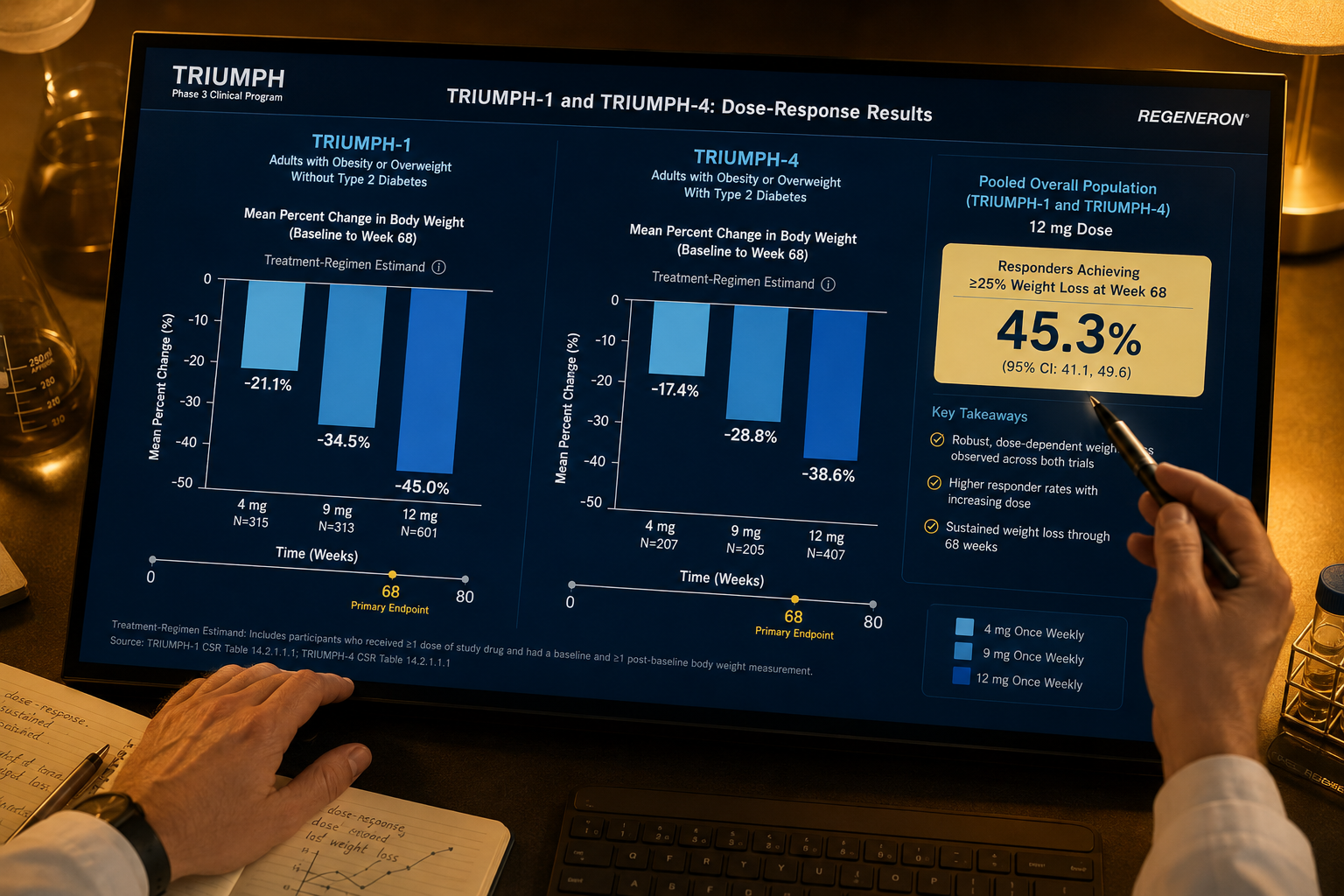
The TRIUMPH-1 trial enrolled 2,339 adults with obesity or overweight with at least one weight-related complication. At 80 weeks, mean weight loss was dose-dependent:

Dose Mean Weight Loss
4 mg 19.0%
9 mg 25.9%
12 mg 28.3% (~70 lb)
Placebo 2.2%

Notably, 45.3% of participants on 12 mg achieved 30% or greater weight loss — a threshold that previously required bariatric surgery. In a prespecified extension of participants with a baseline BMI of 35 or higher, continued 12 mg treatment to 104 weeks produced approximately 30.3% mean weight loss, equivalent to roughly 85 lb over two years.

"A 30% reduction in body weight through a once-weekly injectable represents a fundamental shift in what pharmacotherapy can achieve."

TRIUMPH-4, reported in December 2025 and now widely cited in 2026 analyses, reinforced these findings. Mean body-weight reduction reached 28.7% at 68 weeks on 12 mg once weekly, versus 2.1% on placebo. This figure is described as the largest weight-loss signal ever reported in a randomized Phase 3 trial of any GLP-1-class compound, exceeding the Phase 3 performance of both semaglutide and tirzepatide.

Secondary outcomes from TRIUMPH-4 are equally striking:

  • 75.8% reduction in knee osteoarthritis pain scores
  • ~20% reduction in LDL cholesterol
  • ~72% reversion of prediabetes to normoglycemia

For researchers already exploring metabolic peptides such as MOTS-c and its mitochondrial metabolic signaling, these multi-system effects align with a broader understanding that adiposity drives dysfunction across multiple organ systems simultaneously.

TRIUMPH-1 and TRIUMPH-4: Breaking Down the Phase 3 Data


Glycemic Research Implications and the June 2026 Lilly Update

On June 6, 2026, Eli Lilly released additional Phase 3 data confirming that retatrutide produced substantial weight loss alongside meaningful improvements in knee osteoarthritis pain, moderate-to-severe obstructive sleep apnea, and type 2 diabetes. The TRANSCEND-T2D-1 trial arm demonstrated strong glycemic control paired with double-digit weight loss in patients with established type 2 diabetes — a combination that positions retatrutide as a potential platform therapy rather than a single-indication drug.

This breadth of effect is relevant to researchers studying body composition and metabolic research themes or SLU-PP-332 metabolic modulation, because it highlights how upstream energy-balance interventions can cascade into downstream glycemic, inflammatory, and structural improvements.

The 72% prediabetes reversion rate is particularly significant. It suggests that weight loss of sufficient magnitude may normalize glucose regulation in a large proportion of at-risk individuals, reducing the pipeline burden on diabetes-specific interventions.

Researchers also tracking NAD+ energetics and longevity research may find the mitochondrial and thermogenic components of glucagon receptor activation worth examining in parallel, as both pathways converge on cellular energy efficiency.

Glycemic Research Implications and the June 2026 Lilly Update


Conclusion

The retatrutide Phase 3 results represent a meaningful advance in obesity and glycemic research. TRIUMPH-1 and TRIUMPH-4 together establish a new efficacy benchmark — approximately 28 to 30% body-weight reduction — that no prior pharmacological agent has achieved in randomized controlled trials. The secondary endpoints, particularly the 72% prediabetes reversion rate and the reductions in osteoarthritis pain and LDL cholesterol, indicate that the benefits extend well beyond the scale.

Actionable next steps for researchers and clinicians:

  • Review the full TRIUMPH-1 and TRIUMPH-4 datasets as they become available in peer-reviewed journals in 2026.
  • Monitor the TRANSCEND-T2D-1 readouts for glycemic-specific endpoints relevant to type 2 diabetes management protocols.
  • Consider how triple-agonist mechanisms intersect with other metabolic research areas, including GLP-1 peptide sourcing and research concepts and growth hormone axis compounds like tesa.
  • Track Eli Lilly's regulatory submission timeline, as approval decisions will shape clinical access and research availability throughout 2026 and beyond.

The retatrutide Phase 3 results confirm that the next generation of metabolic pharmacotherapy has arrived — and the data demand serious attention from anyone working at the intersection of obesity and glycemic research.

https://www.puretestedpeptides.com/wp-content/uploads/2026/06/Retatrutide-Phase-3-Results-What-the-New-GLP-3-Data-Mean-for-Obesity-and-Glycemic-Research.png 1024 1536 https://www.puretestedpeptides.com/wp-content/uploads/2026/01/buy-peptides-online.jpg 2026-06-24 13:07:172026-06-24 13:07:17Retatrutide Phase 3 Results: What the New GLP-3 Data Mean for Obesity and Glycemic Research
Retatrutide Clinical Trial Landscape: How GLP-3 Obesity Studies Are Designed and Where Research Peptides Fit

Retatrutide Clinical Trial Landscape: How GLP-3 Obesity Studies Are Designed and Where Research Peptides Fit

June 14, 2026/0 Comments/in Uncategorized/by

{"cover":"Professional landscape format (1536×1024) hero image with bold text overlay: 'Retatrutide Clinical Trial Landscape: GLP-3 Obesity Studies & Research Peptides' in extra large 72pt white bold sans-serif font with dark semi-transparent overlay box, centered upper-third composition. Background shows a high-tech clinical research laboratory with scientists in white coats reviewing molecular structure diagrams on large screens, blue and teal lighting, peptide molecule renderings floating in background. Color scheme: deep navy blue, crisp white, electric teal accents. Magazine cover aesthetic, editorial quality, high contrast.","content":["Wide-angle editorial illustration (1536×1024) of a clinical trial design flowchart for obesity research, showing randomized double-blind study phases labeled Phase 2 and Phase 3, participant icons arranged in multicenter trial grid, endpoint metrics panels showing percentage weight loss bars and HbA1c reduction graphs, TRIUMPH program branding elements, clean medical infographic style with navy blue and white color palette, professional scientific publication aesthetic","Detailed molecular diagram (1536×1024) showing triple-receptor agonist mechanism with three distinct G-protein coupled receptor pathways labeled GLP-1R, GIPR, and GCGR, color-coded binding arrows, peptide chain illustration in center, surrounding panels showing insulin secretion and hepatic glucose regulation icons, dark background with glowing teal and gold molecular bonds, scientific visualization style, editorial medical illustration quality","Split-composition editorial image (1536×1024) showing a clear visual divide between a formal FDA-regulated clinical trial setting on the left — researchers in lab coats with official documentation and controlled drug vials — and a research laboratory setting on the right with research-use-only peptide vials, analytical testing equipment, and purity certification documents. Bold dividing line with text 'Clinical Trial vs Research Use Only', professional blue and amber color contrast, documentary photography style"}

Professional landscape hero image () with : "Retatrutide Clinical Trial Landscape: How GLP-3 Obesity Studies Are Designed

A single drug achieving 28% average body weight loss over 18 months — results previously seen only with bariatric surgery — has placed retatrutide at the center of obesity pharmacotherapy in 2026. Understanding the Retatrutide Clinical Trial Landscape: How GLP-3 Obesity Studies Are Designed and Where Research Peptides Fit requires looking closely at how these trials are structured, what endpoints they measure, and how research-use peptides relate to regulated clinical compounds.

Key Takeaways

  • Retatrutide is a triple-agonist peptide targeting GLP-1R, GIPR, and GCGR receptors simultaneously
  • The TRIUMPH Phase 3 program enrolls over 5,800 participants across four multicenter, randomized, double-blind studies
  • Phase 2 data showed up to 24.2% mean weight reduction at 48 weeks
  • Primary endpoints include percentage body weight loss, HbA1c reduction, and complication-specific outcomes
  • Research peptides and clinical-trial drugs occupy entirely separate regulatory and scientific categories

How the TRIUMPH Phase 3 Program Is Structured

How the TRIUMPH Phase 3 Program Is Structured

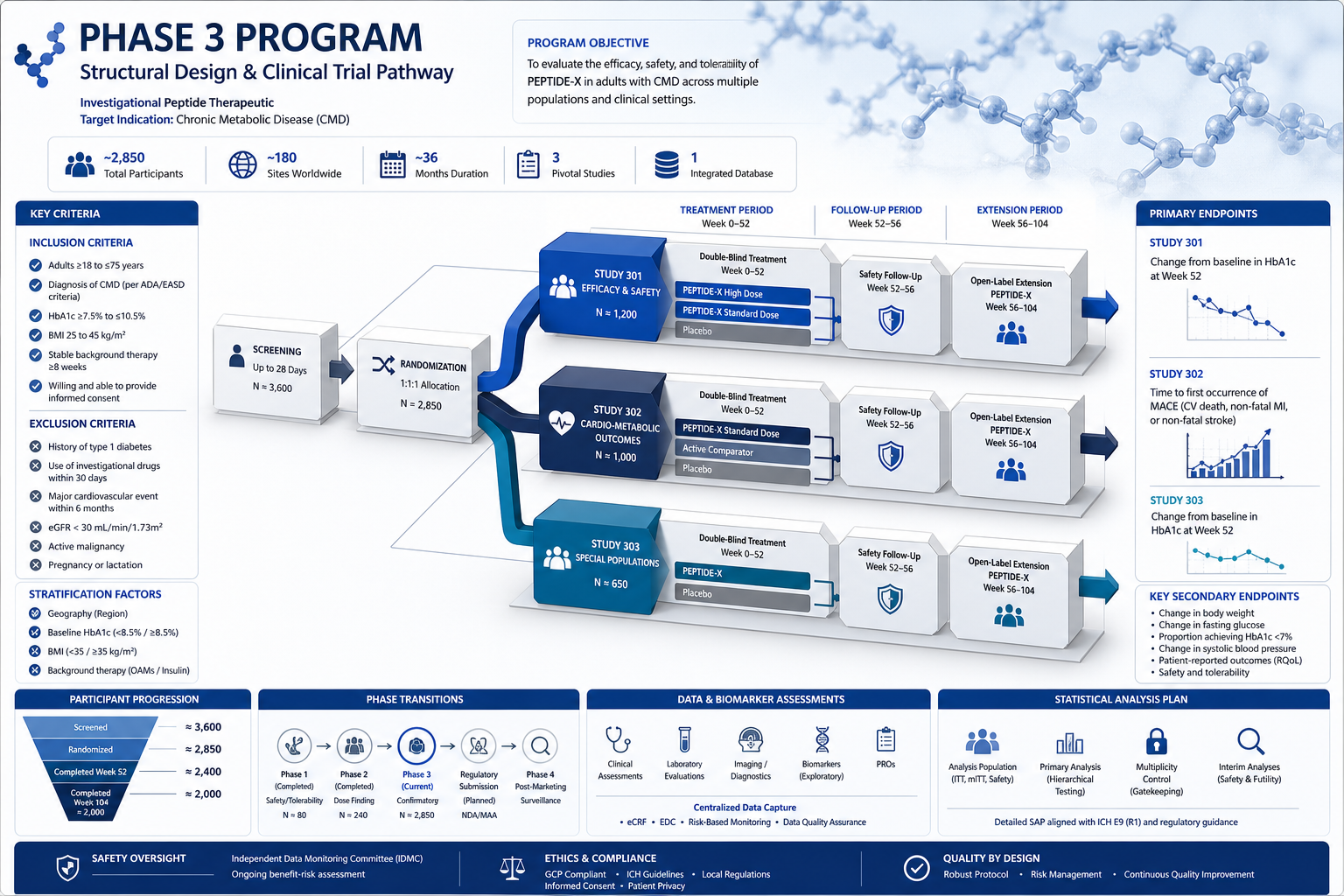
The TRIUMPH program is the backbone of the current Retatrutide clinical trial landscape. It consists of four multicenter, randomized, double-blind, placebo-controlled studies enrolling more than 5,800 participants. This scale places it among the largest obesity drug programs ever conducted.

What makes TRIUMPH notable is its basket trial design. Rather than studying a single condition in isolation, the program simultaneously evaluates retatrutide across multiple adiposity-related disease states:

Study Focus Primary Endpoint
General obesity Percentage body weight loss
Obstructive sleep apnea (OSA) Apnea-hypopnea index reduction
Knee osteoarthritis (OA) Pain and function scores
Cardiovascular risk Major adverse cardiac events

This design generates efficiency. Researchers can assess whether weight loss translates into measurable improvements in comorbidities — a critical question for regulatory review and real-world clinical value.

Standard endpoints tracked across studies include:

  • Percentage body weight reduction from baseline
  • HbA1c change (a marker of blood glucose control)
  • Waist circumference reduction
  • Adverse event frequency and severity grading

Phase 2 Results That Justified Phase 3 Investment

In a Phase 2 trial of 338 adults with obesity or overweight, retatrutide produced a mean weight reduction of up to 24.2% at 48 weeks. Gastrointestinal side effects were the most common adverse events, described as dose-related and mostly mild to moderate. These results gave Eli Lilly sufficient confidence to launch the full TRIUMPH program, with FDA approval potentially targeted by the end of 2026.


The Triple-Receptor Mechanism Behind the Numbers

The Triple-Receptor Mechanism Behind the Numbers

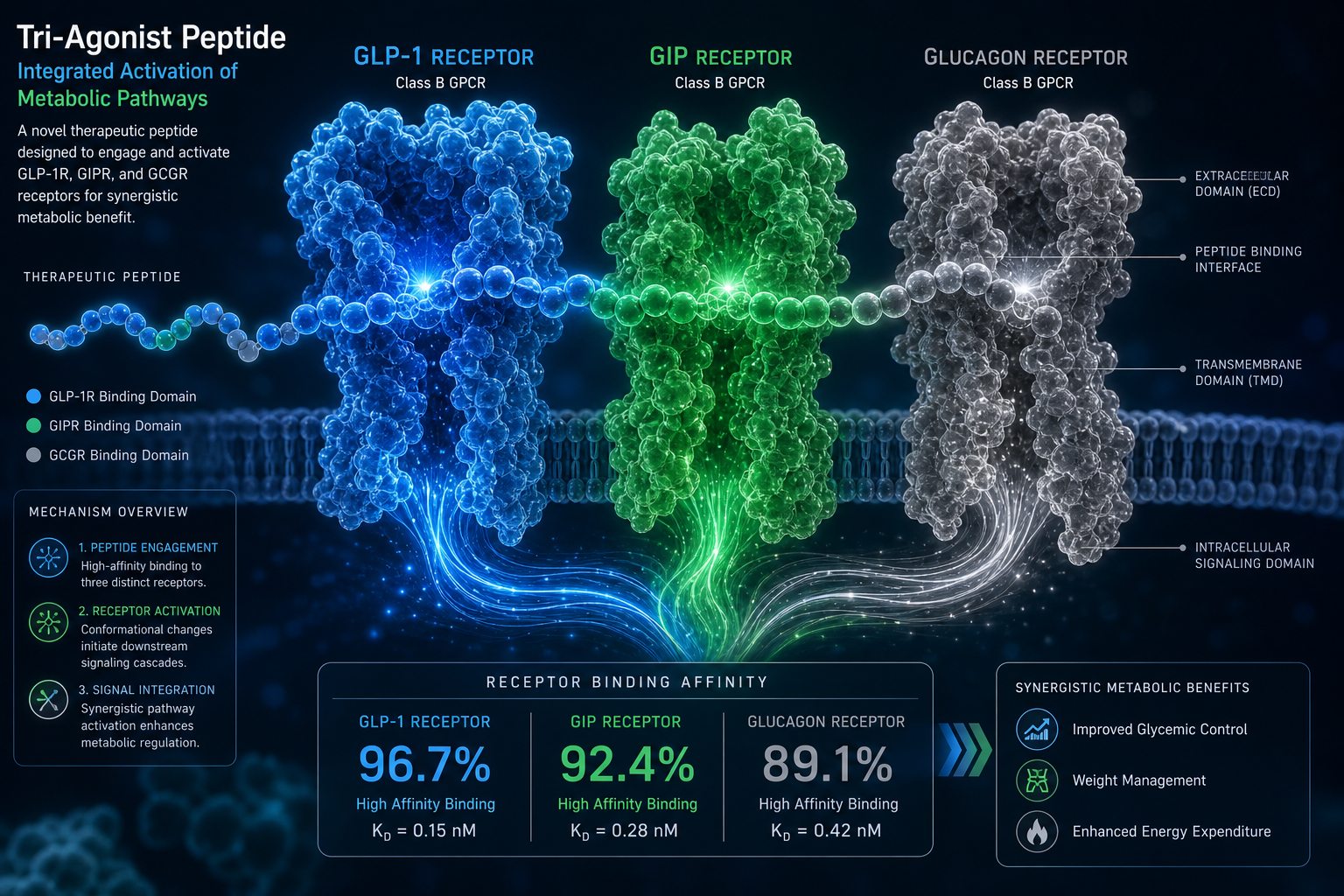
Retatrutide is often loosely called a "GLP-3" compound in popular media, but its pharmacology is more precise. It is a triple agonist binding three distinct G-protein coupled receptors:

  1. GLP-1R (glucagon-like peptide-1 receptor) — stimulates insulin secretion and reduces appetite
  2. GIPR (glucose-dependent insulinotropic polypeptide receptor) — enhances insulin response and supports fat metabolism
  3. GCGR (glucagon receptor) — regulates hepatic glucose output and increases energy expenditure

The glucagon receptor component is what differentiates retatrutide from dual GLP-1/GIP agonists like tirzepatide. Industry experts suggest this third pathway may be the key driver behind the surgery-level weight loss numbers. For broader context on how incretin-based mechanisms work in obesity research, the GLP-1 and incretin research themes page provides useful background.

Researchers studying related metabolic pathways may also find value in reviewing body composition research themes involving tesa and IPA muscle and fat research themes, which explore adjacent hormonal axes in preclinical models.


Where Research Peptides Fit — and Where They Do Not

Where Research Peptides Fit — and Where They Do Not

This is the most important distinction in the Retatrutide clinical trial landscape: how GLP-3 obesity studies are designed and where research peptides fit.

Retatrutide is an investigational drug. It is not FDA-approved. It is manufactured under strict Good Manufacturing Practice (GMP) conditions, administered only within regulated trial protocols, and tracked through rigorous pharmacovigilance systems.

Research peptides occupy a completely separate category. They are synthesized compounds supplied strictly for laboratory and preclinical research purposes — not for human administration. Their value lies in enabling scientists to study receptor biology, metabolic pathways, and molecular mechanisms before and alongside clinical programs.

"The clinical trial pipeline and the research peptide ecosystem serve different scientific functions — one generates regulatory evidence, the other generates foundational knowledge."

For researchers exploring the GLP-3 and retatrutide space at the preclinical level, the dedicated GLP-3 retatrutide research page and the retatrutide compound overview offer relevant compound information. Those studying complementary metabolic pathways may also consult resources on cagrilintide synergy with GLP-1 and longevity peptide research.

Key distinctions at a glance:

Feature Clinical Trial Drug Research Peptide
Regulatory status IND/NDA pathway Research use only
Human administration Protocol-controlled Not permitted
Purity standards GMP-certified Analytical grade
Purpose Generate efficacy/safety data Preclinical mechanistic study

Conclusion

The retatrutide clinical trial landscape represents one of the most ambitious obesity drug programs in pharmaceutical history. The TRIUMPH Phase 3 program's basket design, rigorous endpoints, and triple-receptor mechanism all point toward a potential paradigm shift in how obesity and its complications are treated medically.

Actionable next steps for researchers and science-informed readers:

  • Follow TRIUMPH trial updates through ClinicalTrials.gov for endpoint data as it becomes available
  • Review Phase 2 published data in peer-reviewed journals to understand dose-response relationships
  • Clearly distinguish between FDA-regulated investigational drugs and research-use-only peptides when discussing or sourcing compounds
  • Explore adjacent metabolic research areas — such as incretin biology and body composition pathways — to build a fuller mechanistic picture

The science is advancing rapidly. Staying grounded in trial design fundamentals and regulatory boundaries is the most reliable way to engage with it responsibly.

https://www.puretestedpeptides.com/wp-content/uploads/2026/06/Retatrutide-Clinical-Trial-Landscape-How-GLP-3-Obesity-Studies-Are-Designed-and-Where-Research-Peptides-Fit.png 1024 1536 https://www.puretestedpeptides.com/wp-content/uploads/2026/01/buy-peptides-online.jpg 2026-06-14 13:05:082026-06-14 13:05:08Retatrutide Clinical Trial Landscape: How GLP-3 Obesity Studies Are Designed and Where Research Peptides Fit
×

Helpful Links

  • My account
  • Cart
  • Checkout
  • Refund and Returns Policy
  • Privacy Policy
  • SMS Privacy Policy
  • Login
  • My Account
  • Logout

USA Made Lab Tested Peptides

All products are sold for research, laboratory, or analytical purposes only, and are not for human consumption


Pure Tested Peptides is a chemical supplier. Pure Tested Peptides is not a compounding / chemical compounding facility as defined under 503A of the Federal Food, Drug, and Cosmetic act. Pure Tested Peptides is not an outsourcing facility as defined under 503B of the Federal Food, Drug, and Cosmetic act.

The statements made within this website have not been evaluated by the US Food and Drug Administration. The products we offer are not intended to diagnose, treat, cure or prevent any disease.

Human/Animal Consumption Prohibited. Laboratory/In-Vitro Experimental Use Only

Scroll to top Scroll to top Scroll to top