

Roughly 30 million Americans take an NSAID on any given day, yet the drugs most trusted for pain relief actively suppress some of the same biological signals that drive tissue regeneration. That tension sits at the heart of the polypeptide peptides vs NSAIDs debate, and it is exactly what naproxen and diclofenac teach tissue-repair researchers about BPC-157 and TB-500.
Key Takeaways
- NSAIDs block COX enzymes to reduce pain but do not rebuild damaged tissue.
- BPC-157 and TB-500 operate through angiogenesis, cell migration, and anti-inflammatory signaling rather than enzyme inhibition.
- The two approaches are mechanistically complementary, not interchangeable.
- Both BPC-157 and TB-500 remain under FDA review (Interim Category 2 as of 2026) and are used in research contexts only.
- Purity and sourcing quality are critical variables when evaluating any peptide for research purposes.
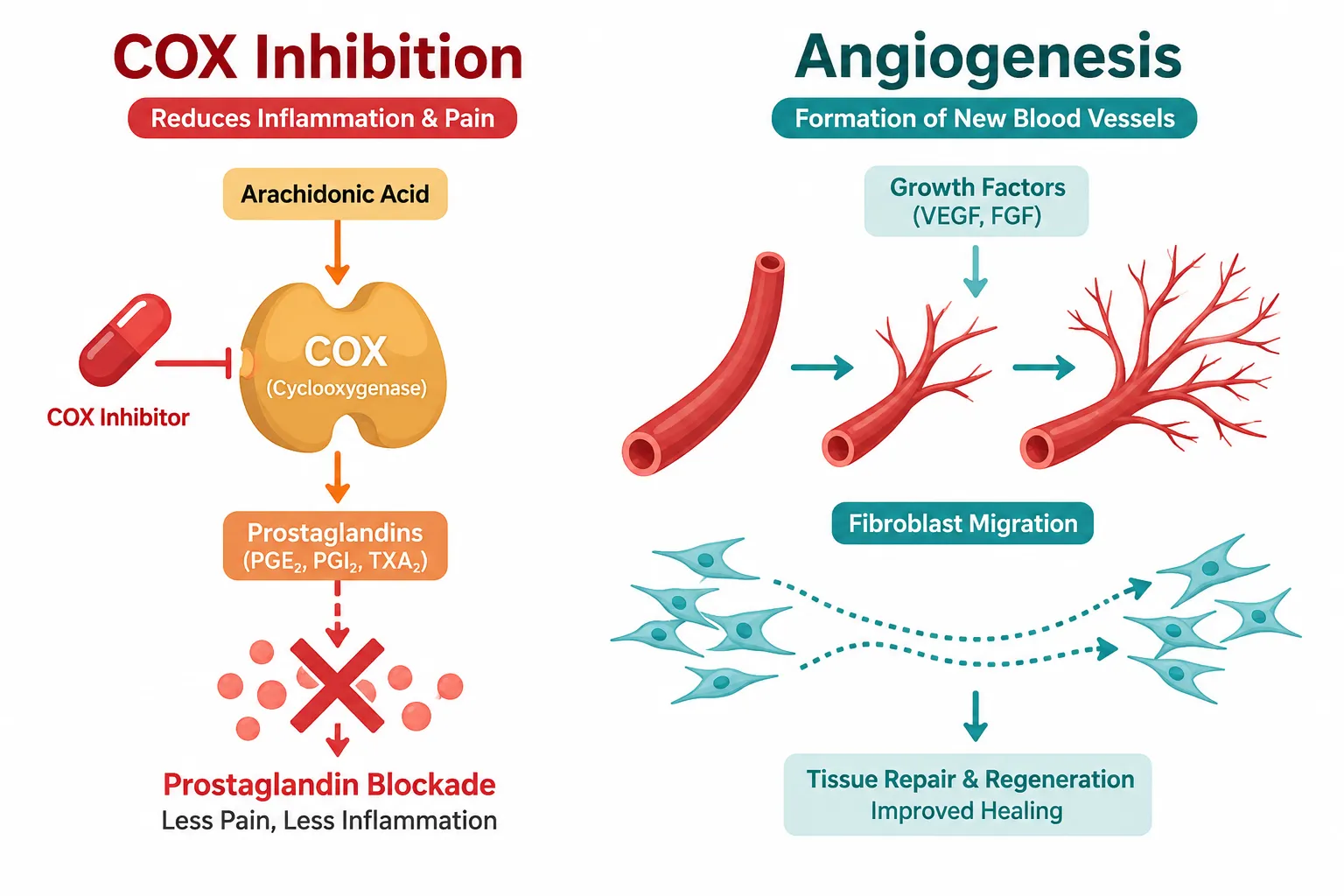
How NSAIDs Work, and What They Reveal by Contrast
Naproxen and diclofenac inhibit cyclooxygenase enzymes (COX-1 and COX-2), cutting prostaglandin synthesis and dialing down the inflammatory cascade. The result is measurable pain relief and reduced swelling, which is why both drugs have decades of clinical approval behind them.
The limitation, however, is instructive. By suppressing prostaglandins broadly, NSAIDs also blunt the early-phase inflammatory signals that recruit fibroblasts and initiate vascular remodeling. In other words, they quiet the alarm without sending the repair crew.
Key NSAID trade-offs for tissue-repair researchers:
| Mechanism | Benefit | Research Concern |
|---|---|---|
| COX-1/COX-2 inhibition | Rapid pain and swelling control | May impair early healing signals |
| Prostaglandin suppression | Reduced acute inflammation | Gastrointestinal and cardiovascular risk |
| Systemic distribution | Broad anti-inflammatory effect | Non-selective tissue targeting |
This pharmacological profile creates a useful benchmark. When researchers study polypeptide peptides like BPC-157 and TB-500, they are asking a different question: can a molecule reduce harmful inflammation while simultaneously promoting active repair?
Polypeptide Peptides vs NSAIDs: Mechanisms of BPC-157 and TB-500
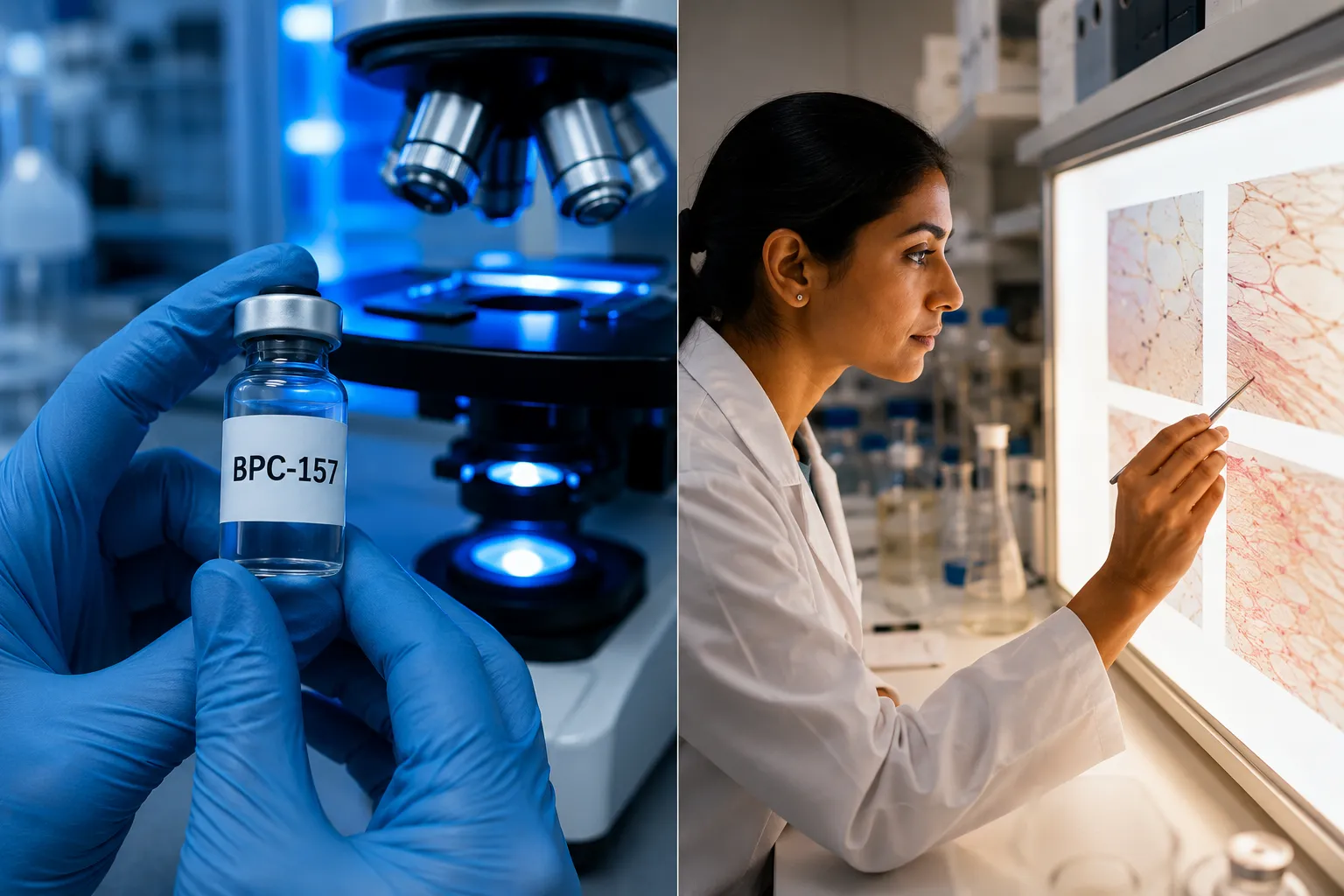
BPC-157 is a 15-amino-acid sequence derived from human gastric juice. Its primary research interest lies in angiogenesis, the formation of new blood vessels, and fibroblast migration. Animal models have shown meaningful effects on tendon healing, gastrointestinal lesions, and vascular repair. Researchers studying BPC-157 nasal spray and capsule delivery formats have explored how route of administration affects these outcomes.
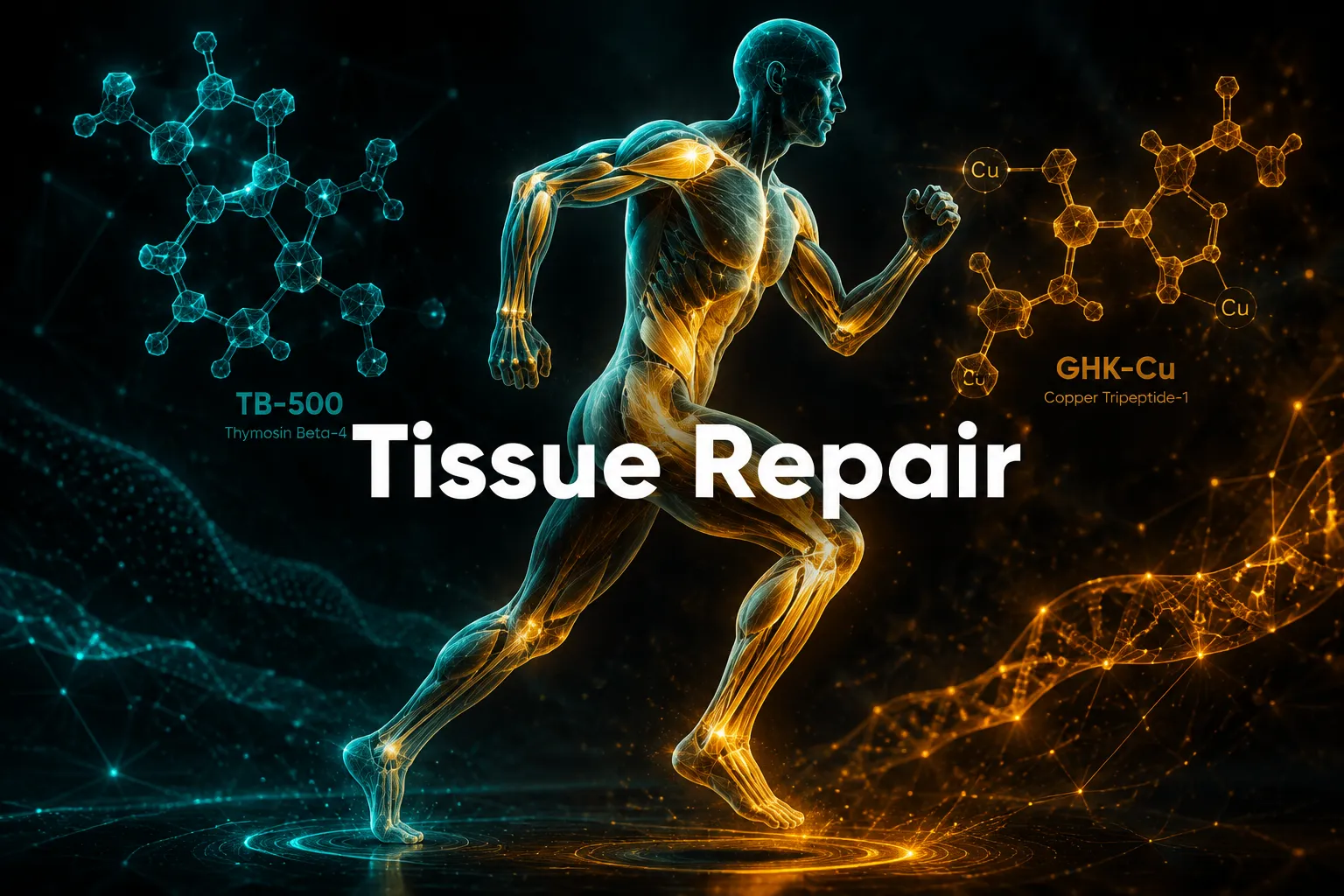
TB-500 is a synthetic fragment of Thymosin beta-4, a 44-amino-acid protein found in nearly all tissues. Its mechanism centers on actin regulation, which governs how cells move through damaged tissue. TB-500 promotes cell migration and reduces localized inflammation, with a broader systemic reach than BPC-157. For a deeper look at how these two compounds interact at the cellular level, the TB-500 and BPC-157 regeneration research overview provides useful context.
"BPC-157 sends the repair crew; TB-500 clears the road for them to move."
Where NSAIDs suppress a signal, these peptides amplify a different one. That distinction matters enormously when designing tissue-repair research protocols.
GHK-Cu adds another layer. This copper-binding tripeptide supports extracellular matrix remodeling and collagen synthesis. Researchers interested in how it complements peptide-based repair strategies can explore the GHK-Cu extracellular matrix research for mechanistic detail.
Regulatory Status, Research Context, and Sourcing
As of 2026, both BPC-157 and TB-500 are classified under FDA Interim Category 2, meaning they are under active review but not approved for therapeutic use in humans. This places them firmly in the research domain. NSAIDs like naproxen and diclofenac, by contrast, carry full FDA approval with established dosing guidelines and long-term safety data.
For researchers working with polypeptide peptides, this regulatory gap underscores why sourcing quality is non-negotiable. Impurities or incorrect concentrations can compromise experimental data entirely. Resources like the peptide purity testing guide outline what to look for in certificates of analysis, and understanding peptide supplier comparisons helps researchers evaluate vendor credibility.
Those exploring broader regenerative peptide models may also find value in the longevity peptide research landscape, which situates BPC-157 and TB-500 within a wider class of repair-oriented compounds. The TB-500 cytoskeletal remodeling research offers additional mechanistic depth for those focused on soft-tissue models.
Conclusion
The polypeptide peptides vs NSAIDs comparison is not a competition, it is a map. Naproxen and diclofenac define the ceiling of enzyme-inhibition strategies: effective for pain management, limited for active repair. BPC-157 and TB-500 operate on a different axis entirely, targeting angiogenesis, cell migration, and structural remodeling rather than simply silencing inflammation.
Actionable next steps for researchers:
- Review current animal-model literature on BPC-157 tendon and gut repair before designing protocols.
- Evaluate TB-500 studies for soft-tissue migration endpoints distinct from NSAID outcomes.
- Verify peptide purity through third-party certificates of analysis before any research use.
- Monitor FDA Interim Category 2 updates for both compounds throughout 2026.
- Consider GHK-Cu as a complementary variable in extracellular matrix repair models.
Understanding what NSAIDs cannot do is, paradoxically, one of the clearest arguments for studying what polypeptide peptides might.
Leave a Reply
Want to join the discussion?Feel free to contribute!