

Only one isomer of clomiphene citrate drives the hypothalamic-pituitary-gonadal (HPG) axis upward, and that isomer is enclomiphene. Understanding Enclomiphene, Estrogen Receptor Signaling, and Luteinizing Phase Biology: What Hormone Researchers Should Measure requires bridging classical reproductive endocrinology with modern selective estrogen receptor modulator (serm) pharmacology. For researchers designing rigorous in vitro or preclinical protocols in 2026, knowing which endpoints to track, and why, is the difference between publishable data and noise.
Key Takeaways
- Enclomiphene is the trans-isomer of clomiphene and acts as a selective estrogen receptor antagonist at the hypothalamic level.
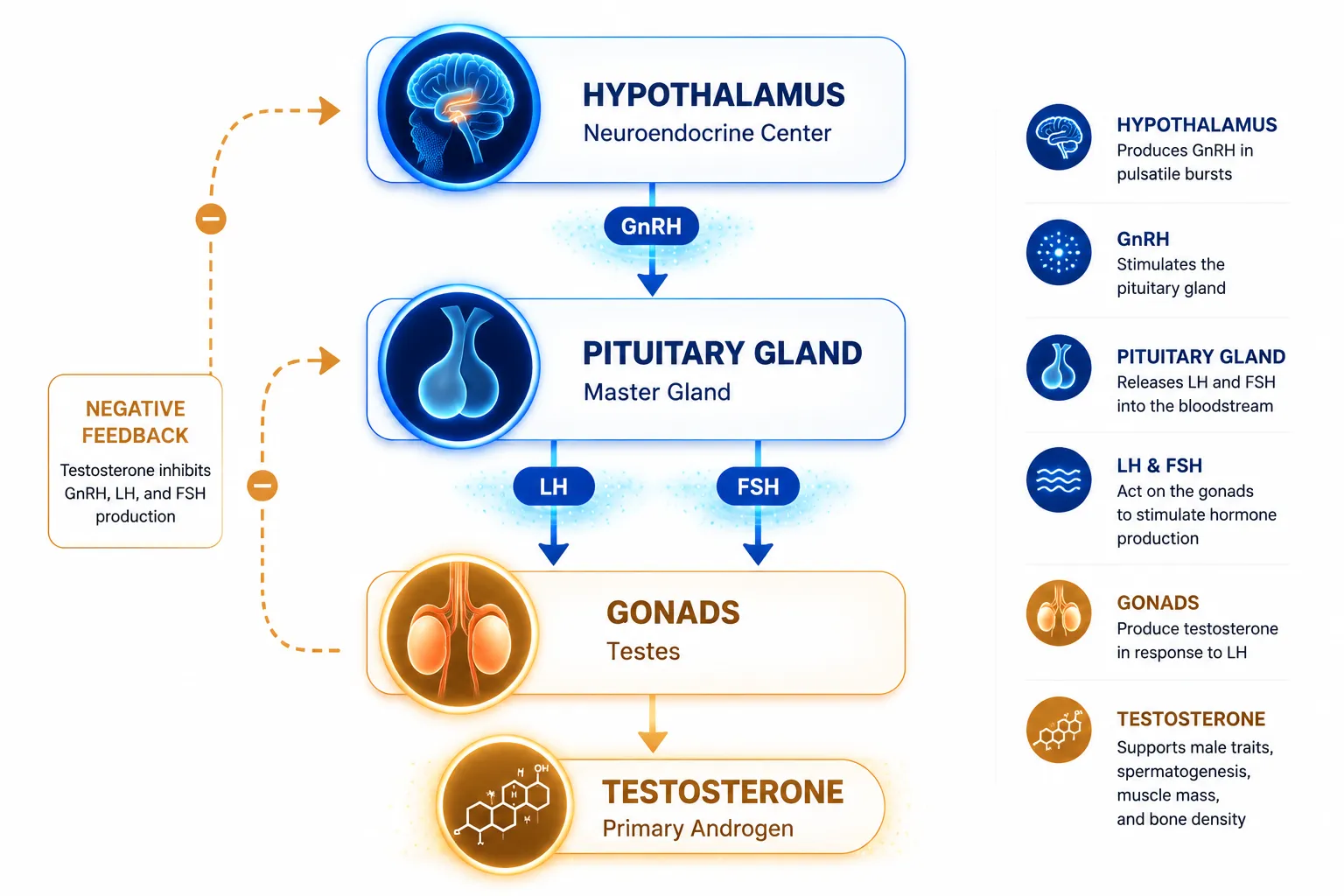
- Blocking estrogen receptor alpha (ERa) in the hypothalamus removes negative feedback, elevating GnRH pulse frequency and downstream LH and FSH secretion.
- The luteinizing phase is the primary hormonal window where LH surge dynamics are most measurable and most relevant to serm research.
- Core endpoints for enclomiphene experiments include LH, FSH, total testosterone, free testosterone, and estradiol (E2).
- Researchers should also monitor sex hormone-binding globulin (SHBG) and LH pulse frequency as secondary markers.
The HPG Axis and Luteinizing Phase Biology
The HPG axis operates through a precise feedback loop. The hypothalamus releases gonadotropin-releasing hormone (GnRH) in pulses. Those pulses stimulate the anterior pituitary to secrete luteinizing hormone (LH) and follicle-stimulating hormone (FSH). LH then acts on Leydig cells (in males) or theca cells (in females) to drive steroidogenesis.
The luteinizing phase, the period surrounding the LH surge, is the most dynamic window in this cycle. During this phase:
- LH concentrations can spike 5- to 10-fold above baseline
- Estradiol peaks just before the LH surge, triggering positive feedback at the pituitary
- Progesterone begins rising post-surge
This feedback architecture is exactly where enclomiphene exerts its effect. By occupying estrogen receptors at the hypothalamus without activating them, enclomiphene prevents estradiol from signaling "enough hormone, slow down." The result is sustained GnRH pulsatility and elevated gonadotropin output.
Researchers studying body composition peptides, such as those exploring tesa and its somatotropic mechanisms, will recognize this axis-level thinking as foundational to any endocrine research design.
How Enclomiphene Modulates Estrogen Receptor Signaling

Enclomiphene's selectivity is its defining research value. Unlike its sister isomer zuclomiphene, which carries partial agonist activity and a longer half-life, enclomiphene acts predominantly as a pure antagonist at hypothalamic ERa receptors.
Receptor-Level Mechanism
| Receptor Site | Enclomiphene Action | Research Implication |
|---|---|---|
| Hypothalamic ERa | Antagonist | Removes negative feedback; raises GnRH pulse rate |
| Pituitary ER | Weak antagonist | Amplifies LH and FSH response |
| Peripheral ER (bone, liver) | Minimal activity | Reduces confounding estrogenic effects |
This tissue-selective profile makes enclomiphene a cleaner research tool than full clomiphene citrate for isolating HPG axis dynamics. Researchers studying mitochondrial and cellular signaling cascades, such as those working with SS-31 and its mitochondrial dynamics, will appreciate how receptor selectivity reduces experimental confounders.
"The value of enclomiphene in preclinical models lies not just in what it activates, but in what it leaves undisturbed."
Because enclomiphene does not strongly activate peripheral estrogen receptors, downstream effects on hepatic SHBG production are less pronounced than with full clomiphene. This is a critical variable to measure in any serm protocol.
Enclomiphene, Estrogen Receptor Signaling, and Luteinizing Phase Biology: What Hormone Researchers Should Measure
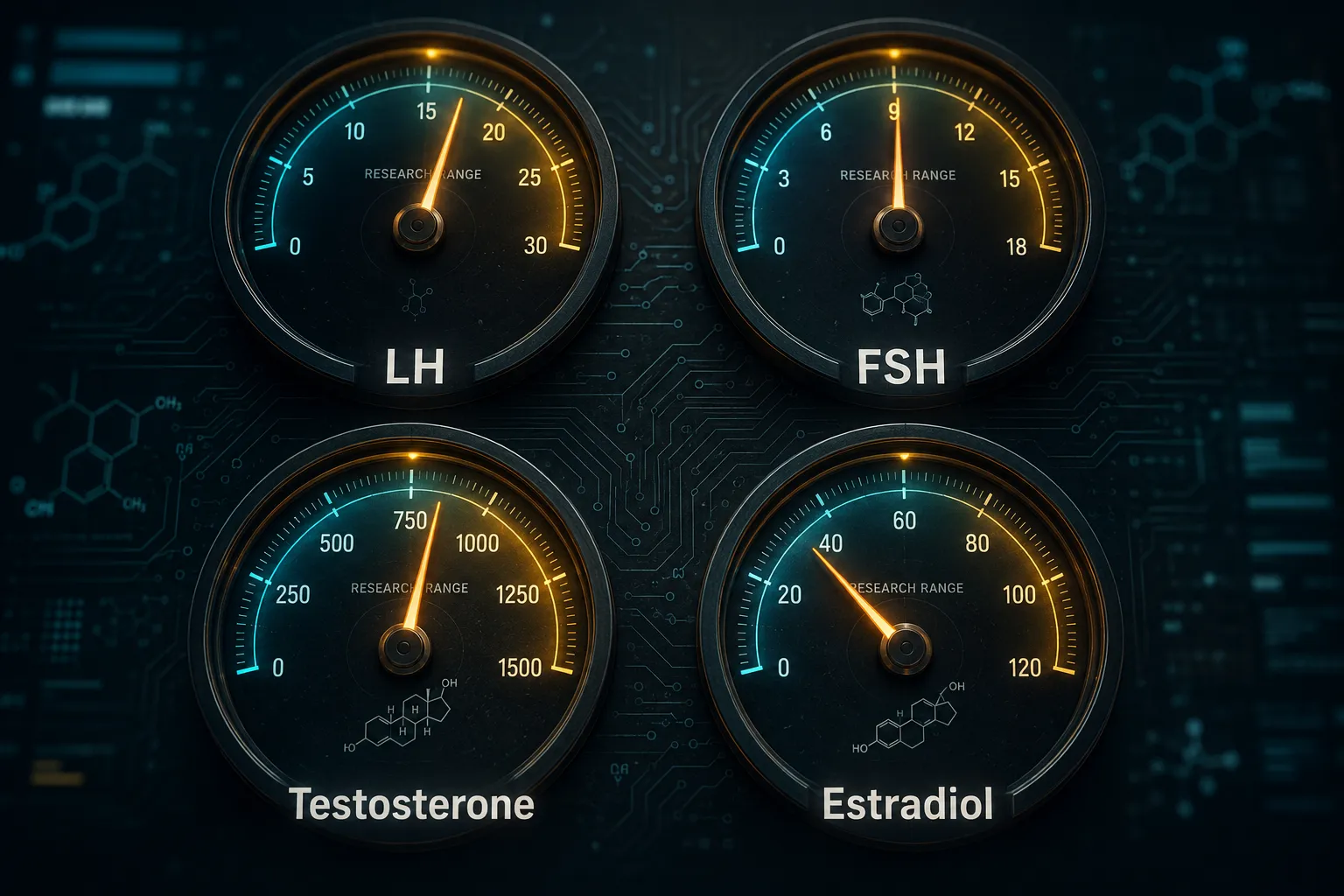
Designing a research-grade enclomiphene experiment requires a structured panel of endpoints. Below are the primary and secondary markers researchers should capture.
Primary Endpoints
1. Luteinizing Hormone (LH)
Measure both basal LH and pulsatile LH frequency. Enclomiphene's primary mechanism should produce measurable increases in LH pulse amplitude within 24-72 hours of administration in most preclinical models.
2. Follicle-Stimulating Hormone (FSH)
FSH rises alongside LH but with different kinetics. Tracking FSH independently confirms HPG axis activation rather than isolated LH secretion.
3. Total and Free Testosterone
Downstream steroidogenesis is the functional output of LH signaling. Both total and free testosterone should be measured to account for SHBG-binding changes.
4. Estradiol (E2)
As testosterone rises, aromatase activity converts a fraction to estradiol. Monitoring E2 is essential for understanding the feedback loop's re-equilibration point.
Secondary Endpoints
- SHBG, Enclomiphene's limited hepatic ER activity means SHBG changes are smaller than with full clomiphene, but still measurable
- LH pulse frequency, Requires frequent sampling (every 10-20 minutes) over a 4-8 hour window; more informative than single-point LH values
- Progesterone, Relevant in female models to confirm ovulatory response post-LH surge
Researchers exploring multi-peptide endocrine protocols, including those examining GLP-1 incretin research themes or longevity-focused compound blends, should note that hormonal cross-talk between metabolic and reproductive axes can influence these endpoints.
Timing Considerations
Endpoint timing matters as much as endpoint selection. Recommended sampling windows:
- Baseline: 7 days pre-administration
- Acute response: 24, 48, and 72 hours post-first dose
- Steady-state: Day 14 and Day 28
- Washout: 14 days post-cessation
For researchers also examining growth hormone secretagogue interactions, resources like tesa body composition research themes offer parallel frameworks for longitudinal hormonal tracking.
Conclusion
Understanding Enclomiphene, Estrogen Receptor Signaling, and Luteinizing Phase Biology: What Hormone Researchers Should Measure is not purely academic, it directly shapes protocol quality. Enclomiphene's clean antagonism at hypothalamic ERa makes it one of the most targeted tools available for studying HPG axis dynamics without the confounding estrogenic noise of full clomiphene.
Actionable next steps for researchers:
- Build a baseline hormonal panel (LH, FSH, total testosterone, free testosterone, E2, SHBG) before any serm administration
- Use pulsatile LH sampling, not single-point measurements, to capture true axis activation
- Track E2 and SHBG in parallel to understand feedback re-equilibration
- Pre-register sampling timepoints to prevent post-hoc endpoint selection bias
- Cross-reference findings with metabolic axis data, particularly if co-administering peptides that influence GH or insulin signaling
Researchers seeking high-documentation research compounds to pair with endocrine studies can review BPC-157 core peptides documentation and AOD-9604 research method notes for complementary protocol frameworks.
Leave a Reply
Want to join the discussion?Feel free to contribute!