

A tetrapeptide developed in the 1980s at the St. Petersburg Institute of Bioregulation and Gerontology has quietly accumulated more than three decades of research interest, yet remains one of the most debated compounds in longevity science. Epithalon peptide and telomerase regulation: investigating its impact on cellular senescence and lifespan research models is a topic that sits at the crossroads of molecular biology, gerontology, and translational medicine, raising important questions about what science can, and cannot yet, confirm about aging at the cellular level.
Key Takeaways
- Epithalon is a synthetic tetrapeptide (Ala-Glu-Asp-Gly) originally derived from the pineal gland protein epithalamin.
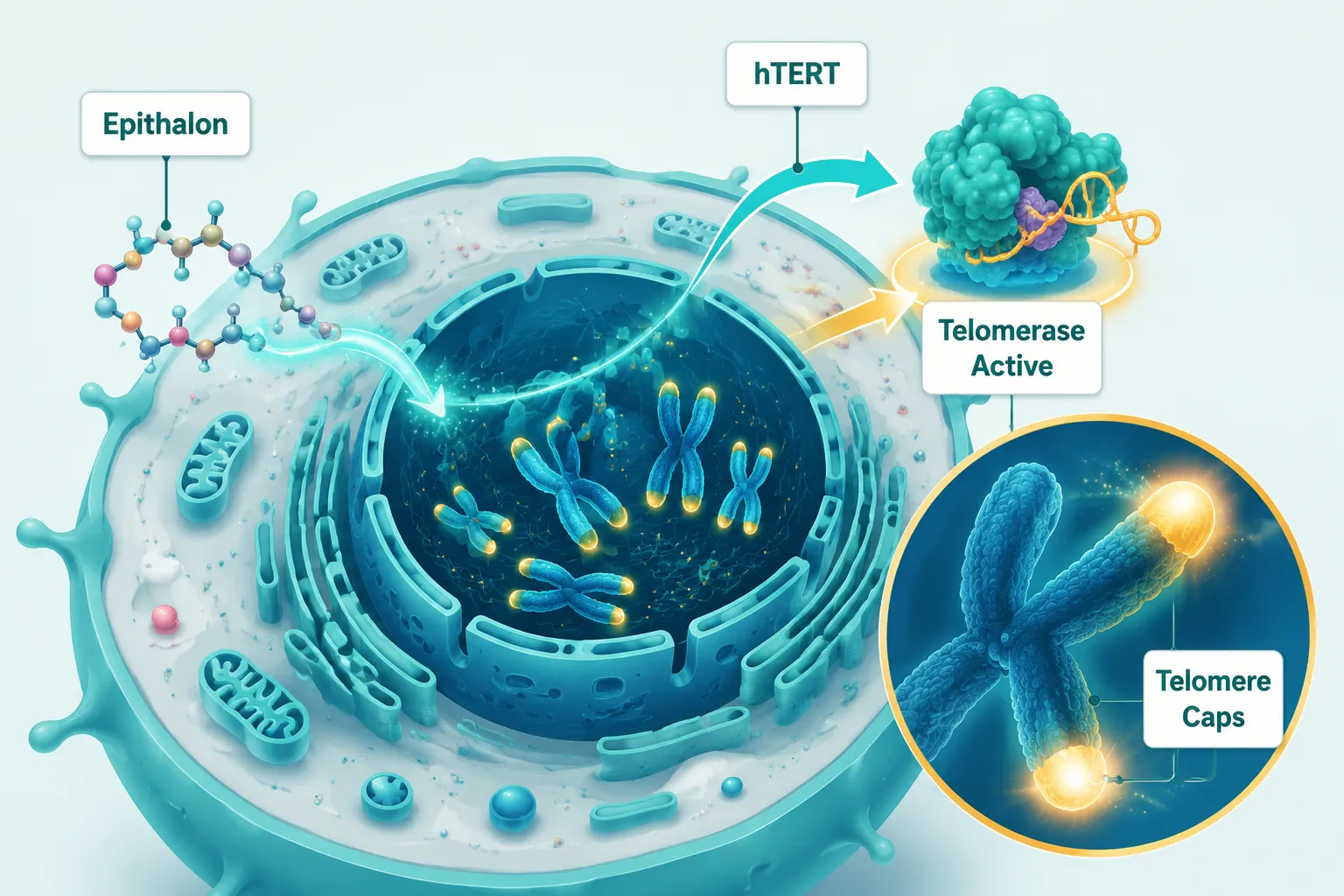
- Research suggests Epithalon may activate telomerase by upregulating hTERT expression, potentially delaying cellular senescence.
- Animal studies report lifespan extensions of 10-25%, but findings have not been replicated in large-scale human clinical trials.
- A significant portion of existing research originates from a single laboratory, raising reproducibility concerns.
- As of 2026, Epithalon is not FDA-approved and is classified as a Category 2 substance banned from compounding.
What Is Epithalon and How Does It Relate to Telomerase?
Epithalon (also spelled Epitalon) is a synthetic version of epithalamin, a natural polypeptide extracted from the bovine pineal gland. Its amino acid sequence, Ala-Glu-Asp-Gly, is short but biologically significant in preclinical models.
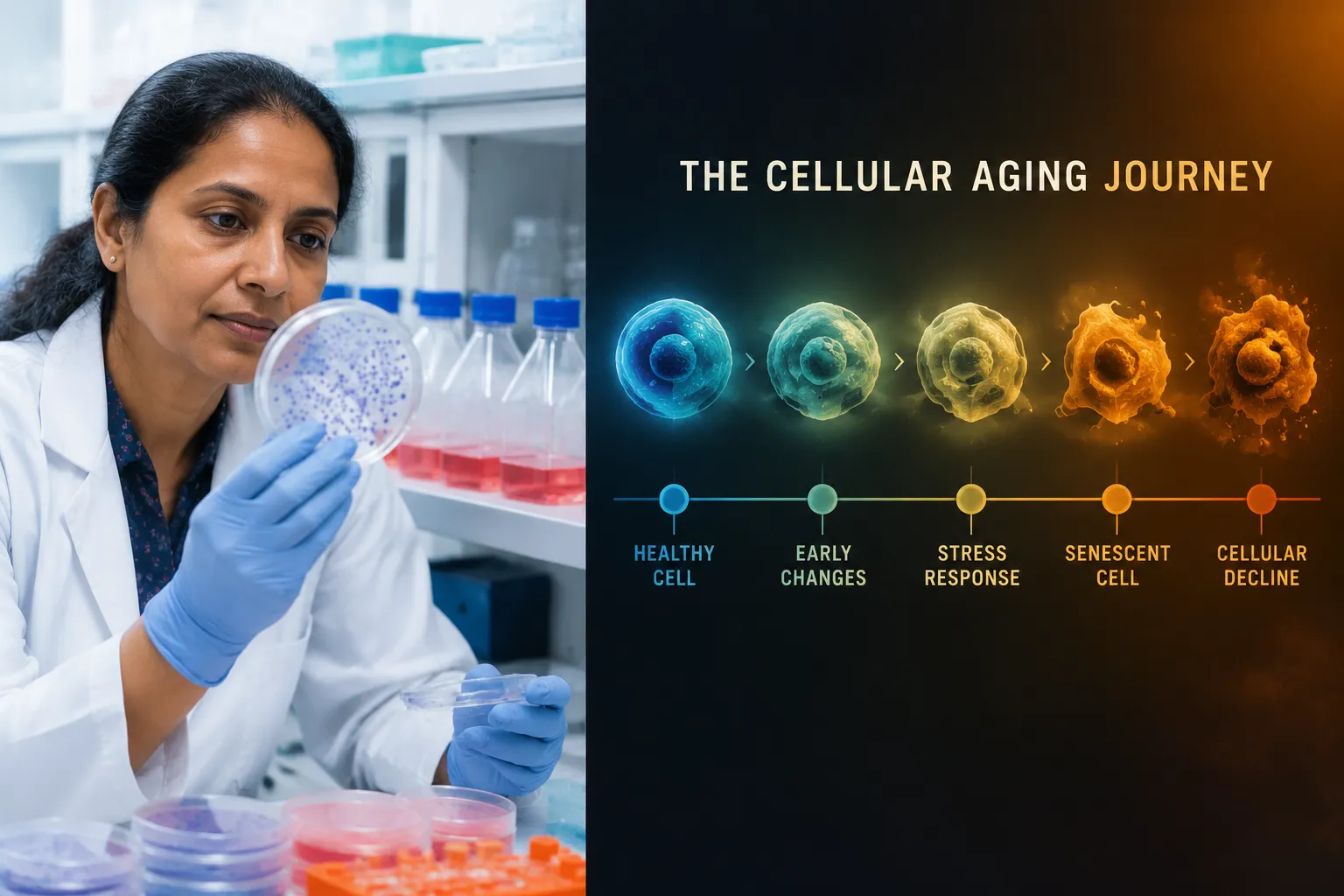
Telomeres are protective caps at the ends of chromosomes. Each time a cell divides, telomeres shorten. When they become critically short, the cell enters a state called cellular senescence, it stops dividing and begins secreting inflammatory signals. Telomerase is the enzyme that can rebuild telomere length, but most adult somatic cells express it at very low levels.
Epithalon is proposed to activate telomerase by upregulating hTERT (human telomerase reverse transcriptase), the catalytic subunit of the telomerase enzyme. Research published as early as 2003 by Khavinson et al. demonstrated telomerase induction in human fetal fibroblasts, and more recent work by Al-Dulaimi et al. in 2025 reported similar telomere elongation effects in human somatic cells.
"If telomerase can be selectively reactivated in aging cells, the implications for cellular longevity research are profound, provided safety and reproducibility standards are met."
This mechanism places Epithalon alongside other compounds studied in aging support and longevity research, including peptides that target mitochondrial and neuroendocrine pathways.
Epithalon Peptide and Telomerase Regulation: What the Research Models Show
Animal Lifespan Studies
Preclinical rodent studies have reported that Epithalon administration extends median lifespan by 10 to 25%. These findings have fueled significant interest in the compound as a potential anti-aging intervention.
| Model | Reported Effect | Limitation |
|---|---|---|
| Rodent lifespan studies | 10-25% median lifespan extension | Animal models only |
| Human fetal fibroblasts | Telomere elongation observed | In vitro, not in vivo |
| Human cohort studies | Improved melatonin and antioxidant markers | Observational, no RCTs |
Beyond telomere effects, Epithalon may also influence circadian rhythm regulation and melatonin production, suggesting a multifaceted role in the aging process. Some studies also point to potential antioxidant properties, which could contribute independently to its proposed anti-aging effects.
Research into peptides with multi-pathway activity, such as those explored in GHK-Cu extracellular matrix research and Humanin cellular protection studies, provides useful context for understanding how short peptides can exert broad biological effects.
Human Data: Promising but Preliminary
While some human cohort data report improvements in biomarkers such as melatonin secretion and antioxidant enzyme activity, these studies are primarily observational. They lack the methodological rigor of randomized controlled trials (RCTs), making it difficult to draw causal conclusions.
A critical concern is that a substantial portion of Epithalon research originates from a single laboratory. This concentration of data raises legitimate questions about reproducibility and generalizability. Independent replication across multiple research institutions is a standard requirement for scientific validation.
For comparison, peptides like SS-31 (Elamipretide) have progressed through Phase 2 and Phase 3 clinical trials and received FDA approval for Barth syndrome in 2025, demonstrating a far more robust evidence pathway. Researchers interested in mitochondrial peptide science can explore SS-31 mitochondrial dynamics research for a contrasting evidence profile.
Regulatory Status, Safety Considerations, and Research Context
Where Epithalon Stands in 2026
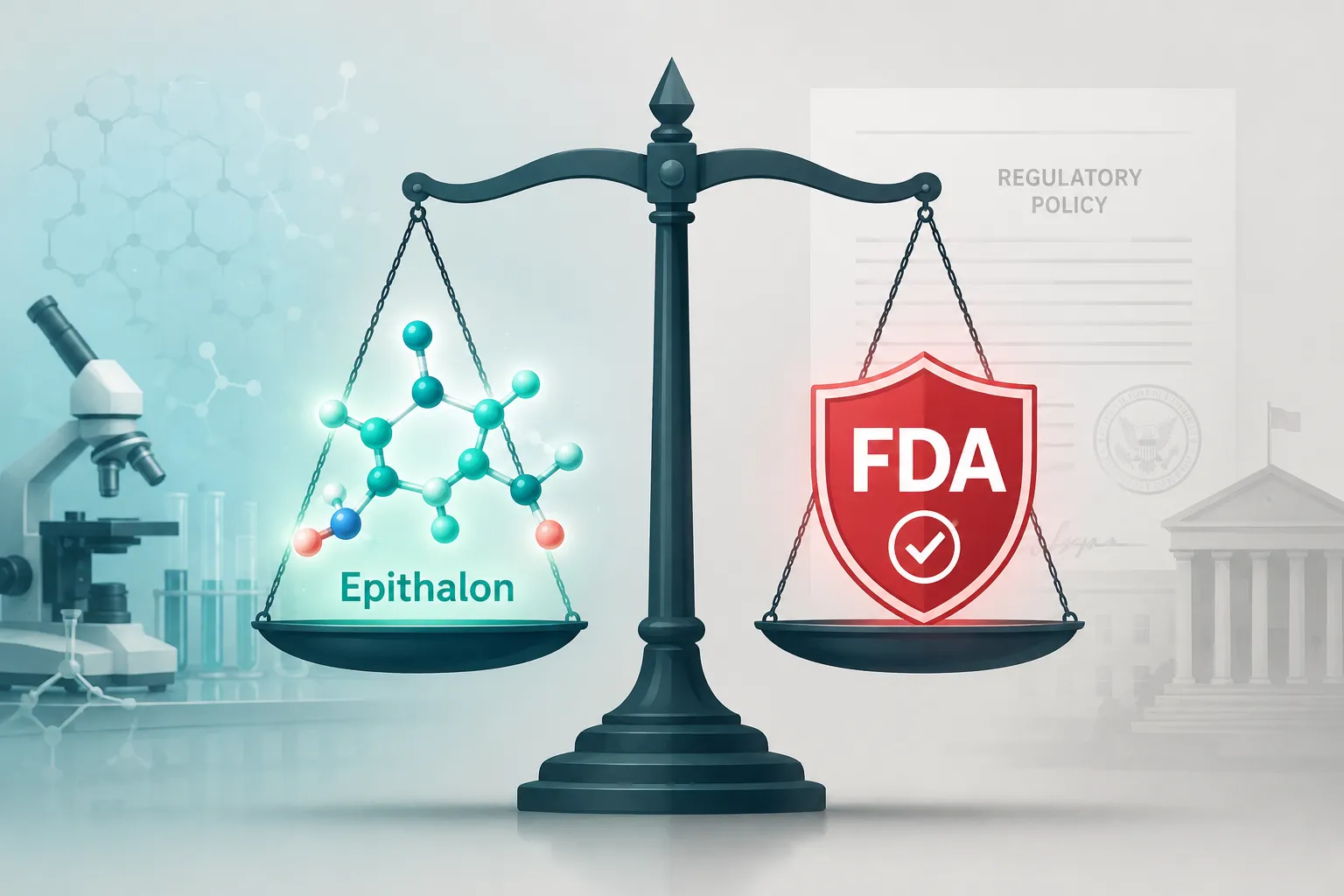
As of 2026, Epithalon is not approved by the FDA for any medical use. It is currently classified as a Category 2 substance, meaning it is banned from pharmaceutical compounding in the United States. This regulatory status reflects the absence of large-scale, independently replicated clinical trials confirming both efficacy and safety in human populations.
The safety profile of Epithalon in humans remains uncertain. Without robust Phase 2 or Phase 3 trial data, the risk-benefit profile cannot be definitively characterized. Researchers and institutions working with this compound do so strictly within preclinical and in vitro research frameworks.
Placing Epithalon Within Broader Longevity Research
Epithalon does not exist in isolation. It is one of several peptide-based compounds being investigated for their potential roles in aging biology. Related research themes include:
- NAD+ pathway modulation, explored in NAD+ energetics and longevity research
- Thymic peptide complexes, covered in Crystagen thymic complex research
- Multi-peptide longevity blends, such as those reviewed in Glow blend longevity research themes
- Vesugen, Vilon, and Chonluten, short bioregulatory peptides with overlapping research interest, detailed in Vesugen Vilon Chonluten longevity research
Understanding Epithalon in this broader context helps researchers avoid over-relying on any single compound and instead build more comprehensive models of cellular aging.
Conclusion
Epithalon peptide and telomerase regulation: investigating its impact on cellular senescence and lifespan research models reveals a compound with genuinely interesting preclinical data, and significant evidentiary gaps. The proposed mechanism involving hTERT upregulation and telomere elongation is scientifically coherent, and animal lifespan data are intriguing. However, the concentration of research within a single laboratory, the absence of RCTs, and the current FDA classification as a Category 2 substance all underscore the need for caution.
Actionable next steps for researchers and science-interested readers:
- Prioritize peer-reviewed, independently replicated studies when evaluating Epithalon's evidence base.
- Compare Epithalon's data quality against better-characterized peptides before drawing conclusions.
- Monitor emerging literature for independent replication of telomerase activation findings.
- Stay current with regulatory updates, as the classification of research peptides can change.
- Explore related longevity peptide research through verified, quality-tested sources to build a fuller picture of the aging biology landscape.
The science of telomere biology and cellular senescence is advancing rapidly. Epithalon remains a compound worth watching, with rigorous, independent scrutiny as the standard.
Leave a Reply
Want to join the discussion?Feel free to contribute!