Call or Text 727-513-9780
  • Shopping Cart Shopping Cart
    0Shopping Cart
Pure Tested Peptides | America's most trusted Peptides for sale online
  • Peptides for sale
    • Oral Peptides for sale
      • Peptide Capsules for sale
      • BPC 157 Capsules 1000mcg
      • SLU-PP-332 Capsules | 1000 mcg
      • 5-Amino-1MQ 50mg Capsules
      • Tesofensine 500mcg
    • All Peptides for sale
    • Peptide Sprays
      • BPC 157 Nasal Spray Kit
      • BPC-157 TB500 Nasal Spray Kit
      • Semax Nasal Spray 10mg
      • Selank – Nasal Spray Kit – 10mg
      • Epithalon 50MG Nasal Spray Kit
      • Ipamorelin 10mg Nasal Spray
      • Klow Nasal Spray (BPC-157 + TB-500 + GHK-Cu + KPV) | 80mg
      • Hulk Nasal Spray Tesa / Ipa Blend 6/3 MG
      • Klow Nasal Spray
      • NAD + 500 mg Nasal Spray
      • PT-141 Nasal Spray Kit
    • GHRH Peptides
      • Ipa Peptides
      • CJC-1295 Peptides
        • CJC-1295 with DAC 5 mg
        • CJC-1295 without DAC 5 mg
        • CJC-1295 Ipa 10mg
      • Tesa Peptides
        • Tesa Peptide
        • Tesa 20 mg
    • GHK-Cu Peptides
      • All GHK-Cu Peptides
      • GHK-Cu 100mg
      • KLOW Peptide Blend – Buy KLOW blend online
    • BPC Peptides
      • All BPC Peptides
      • BPC-157
      • BPC-157 TB-500
      • BPC 157 capsules 1000mcg
    • SLU-PP-332 Peptides
      • All SLU-PP-332 Peptides
      • SLU-PP-332 5mg
    • GLP3 Peptides
      • GLP3-R
      • GLP3-R CAG 10mg
      • GLP3-R 20mg
    • PT-141 Peptides
      • PT-141 Peptides for sale
      • PT-141 10mg
      • PT-141 Nasal Spray
    • CAG Peptides
      • Lipo-C Peptide Blend
      • CAG 5mg
      • CAG 10mg
    • MOTS-C Peptides
      • MOTS-C Peptides for sale
      • MOTS-c peptide
      • MOTS-c 10mg *6 pack*
    • 5 Amino 1MQ Peptides
      • 5 Amino 1MQ Peptides for sale
      • 5-Amino-1MQ 50mg Capsules
      • 5-Amino-1MQ 5mg
    • Epithalon Peptides
      • Epithalon Peptides for sale
      • Epithalon 10mg
      • Epithalon 50mg
  • Shop
    • GLPs
      • 5-Amino-1MQ 50mg Capsules
      • 5-Amino-1MQ 5mg
      • GLP3-Reta
      • L-Carnitine 500mg/ml
      • Tesofensine 500mcg
      • SLU-PP-332 5mg
      • MOTS-c 10mg *6 pack*
    • Epithalon & BPC Peptides
      • Epithalon 10mg
      • Epithalon 50mg
      • BPC-157
      • BPC 157 capsules 1000mcg
      • BPC-157 TB-500
      • BPC-157 TB500 Nasal Spray Kit
      • BPC 157 Nasal Spray Kit
    • BPC TB-500 & NAD+ Peptides
      • NAD+ 500 mg
      • KLOW Peptide Blend – Buy KLOW blend online
      • GLOW Peptide Blend
      • TB 500 5mg
      • BPC 157 capsules 1000mcg – Supplement
      • BPC 157 Nasal Spray Kit
      • BPC-157
      • BPC-157 TB500 Nasal Spray Kit
      • BPC-157 TB-500
      • BPC 157 capsules 1000mcg
    • LL-37 Peptide
      • LL-37 10 mg
    • MOTS-C & Selank
      • MOTS-c peptide
      • Selank 10mg
    • GHK Peptides
      • GHK-Cu 100mg
      • GLOW Peptide Blend
      • KLOW Peptide Blend – Buy KLOW blend online
  • COAs
  • Wholesale
    • Wholesale Peptides for sale
  • PTP FAQ
  • Affiliates
    • Selank Peptide: Advanced Pharmacological Mechanisms Underlying Its Anxiolytic and Nootropic Effects in Research
      • 5-Amino-1MQ Peptide: Detailed Mechanisms of NNMT Inhibition and Its Impact on Cellular Metabolism Research
        • MOTS-C Peptide: Unraveling Its Role in Mitochondrial Dynamics and Energy Metabolism Research
          • Epithalon Peptide and Telomerase Regulation: Investigating Its Impact on Cellular Senescence and Lifespan Research Models
            • GLP2-T vs GLP2 Tirz Peptide: Understanding the Naming, Mechanistic Nuances, and Research Implications for Gut Health
      • Peptides and Polypeptides in Modern Pharmacology: What Research on Metoprolol, Prednisone, and Amlodipine Reveals
        • Polypeptide Peptides vs NSAIDs: What Naproxen and Diclofenac Teach Tissue-Repair Researchers About BPC‑157 and TB‑500
          • Peptides and Polypeptides in Endocrine Pharmacology: How GLP-1, GLP-2, and GLP-3 Retatrutide Differ From Classic Drugs Like Prednisone and Amlodipine
          • 5‑Amino‑1MQ Peptide and NNMT Inhibition: How It Compares With Statins Like Atorvastatin in Adipose and Lipid Metabolism Research
      • Enclomiphene, Estrogen Receptor Signaling, and Luteinizing Phase Biology: What Hormone Researchers Should Measure
        • Mesenchymal Stem Cells, BPC‑157, and GHK‑Cu: How Tissue Repair Peptides Compare With Classic NSAIDs Like Naproxen in Injury Models
          • Peptide Calculator Use Cases Beyond Growth Hormone: Working Through GLP‑3 Retatrutide, MOTS‑c, and BPC‑157 Research Dosing
        • Polypeptide Peptides in Endocrine and Metabolic Pharmacology: Lessons From Amlodipine, Prednisone, and Metoprolol
        • Peptides Calculator for Advanced Blends: Worked Examples for Tesamorelin, CJC‑1295, and Ipamorelin Stacks
          • Peptides and Polypeptides in Human Physiology: How Molecular Size Shapes Research Applications
            • Selank Peptide: Advanced Pharmacological Mechanisms Underlying Its Anxiolytic and Nootropic Effects in Research
          • 5-Amino-1MQ Peptide: Detailed Mechanisms of NNMT Inhibition and Its Impact on Cellular Metabolism Research
            • MOTS-C Peptide: Unraveling Its Role in Mitochondrial Dynamics and Energy Metabolism Research
              • Epithalon Peptide and Telomerase Regulation: Investigating Its Impact on Cellular Senescence and Lifespan Research Models
                • GLP2-T vs GLP2 Tirz Peptide: Understanding the Naming, Mechanistic Nuances, and Research Implications for Gut Health
                  • Peptides and Polypeptides in Endocrine Pharmacology: How GLP-1, GLP-2, and GLP-3 Retatrutide Differ From Classic Drugs Like Prednisone and Amlodipine
                    • Polypeptide Peptides vs NSAIDs: What Naproxen and Diclofenac Teach Tissue-Repair Researchers About BPC‑157 and TB‑500
                      • Peptides and Polypeptides in Modern Pharmacology: What Research on Metoprolol, Prednisone, and Amlodipine Reveals
                        • 5‑Amino‑1MQ Peptide and NNMT Inhibition: How It Compares With Statins Like Atorvastatin in Adipose and Lipid Metabolism Research
                        • Enclomiphene, Estrogen Receptor Signaling, and Luteinizing Phase Biology: What Hormone Researchers Should Measure
                        • Mesenchymal Stem Cells, BPC‑157, and GHK‑Cu: How Tissue Repair Peptides Compare With Classic NSAIDs Like Naproxen in Injury Models
                        • Peptide Calculator Use Cases Beyond Growth Hormone: Working Through GLP‑3 Retatrutide, MOTS‑c, and BPC‑157 Research Dosing
                        • Polypeptide Peptides in Endocrine and Metabolic Pharmacology: Lessons From Amlodipine, Prednisone, and Metoprolol
                        • Peptides Calculator for Advanced Blends: Worked Examples for Tesamorelin, CJC‑1295, and Ipamorelin Stacks
                        • Peptides and Polypeptides in Human Physiology: How Molecular Size Shapes Research Applications
                        • Selank Peptide: Advanced Pharmacological Mechanisms Underlying Its Anxiolytic and Nootropic Effects in Research
                        • MOTS-C Peptide: Unraveling Its Role in Mitochondrial Dynamics and Energy Metabolism Research
                        • Peptides and Polypeptides in Modern Pharmacology: What Research on Metoprolol, Prednisone, and Amlodipine Reveals
                        • Peptides and Polypeptides in Endocrine Pharmacology: How GLP-1, GLP-2, and GLP-3 Retatrutide Differ From Classic Drugs Like Prednisone and Amlodipine
                        • 5-Amino-1MQ Peptide: Detailed Mechanisms of NNMT Inhibition and Its Impact on Cellular Metabolism Research
                        • Mesenchymal Stem Cells, BPC‑157, and GHK‑Cu: How Tissue Repair Peptides Compare With Classic NSAIDs Like Naproxen in Injury Models
                        • Peptide Calculator Use Cases Beyond Growth Hormone: Working Through GLP‑3 Retatrutide, MOTS‑c, and BPC‑157 Research Dosing
                        • GLP2-T vs GLP2 Tirz Peptide: Understanding the Naming, Mechanistic Nuances, and Research Implications for Gut Health
                        • Polypeptide Peptides in Endocrine and Metabolic Pharmacology: Lessons From Amlodipine, Prednisone, and Metoprolol
                        • Polypeptide Peptides vs NSAIDs: What Naproxen and Diclofenac Teach Tissue-Repair Researchers About BPC‑157 and TB‑500
                        • Peptides and Polypeptides in Human Physiology: How Molecular Size Shapes Research Applications
                        • Peptides Calculator for Advanced Blends: Worked Examples for Tesamorelin, CJC‑1295, and Ipamorelin Stacks
                        • 5‑Amino‑1MQ Peptide and NNMT Inhibition: How It Compares With Statins Like Atorvastatin in Adipose and Lipid Metabolism Research
                        • Enclomiphene, Estrogen Receptor Signaling, and Luteinizing Phase Biology: What Hormone Researchers Should Measure
                        • Epithalon Peptide and Telomerase Regulation: Investigating Its Impact on Cellular Senescence and Lifespan Research Models
                        • Best research protocol Klow blend
                        • best time to take BPC-157
                        • best time to take DSIP (Delta Sleep Inducing Peptide)
                        • best time to take CJC-1295
                        • best time to take AOD-9604
                        • best time to take Follistatin 344
                        • best time to take Ipamorelin
                        • best time to take MK-677 (Ibutamoren)
                        • best time to take Ligandrol (LGD-4033) — research compound
                        • best time to take Ostarine (MK-2866) — research compound
                        • best time to take GHK-CU
                        • best time to take TB-500
                        • best time to take MOTS-c
                        • best time to take Semax
                        • best time to take RAD-140 (Testolone) — research compound
                        • best time to take Thymosin Alpha-1
                        • best time to take PEG-MGF
                        • Biolife Plasma, Octapharma Plasma, and Research Peptides: How Plasma Donation Labs Differ From Peptide Suppliers
                        • best time to take YK-11 — research compound
                        • best time to take PT-141 (Bremelanotide)
                        • Best research protocol Klow blend
  • Contact
    • Contact Customer Service
    • Text Customer Support
  • About US
  • Shop all peptides
  • Affiliate Program
    • Affiliate Signup
  • Login / Register Login / Register Page Link Login / Register Page Link
  • Click to open the search input field Click to open the search input field Search
  • Menu Menu
5‑Amino‑1MQ and MOTS‑c Synergy in Metabolic Research: Designing NNMT and Mitochondrial Biogenesis Stacks

5‑Amino‑1MQ and MOTS‑c Synergy in Metabolic Research: Designing NNMT and Mitochondrial Biogenesis Stacks

July 22, 2026/0 Comments/in Uncategorized/by

Obesity-related metabolic dysfunction now affects more than one billion adults worldwide, yet most single-target interventions produce only modest, short-lived improvements. That reality has pushed researchers toward multi-pathway stacking strategies, and few combinations look as mechanistically compelling as 5‑Amino‑1MQ and MOTS‑c synergy in metabolic research: designing NNMT and mitochondrial biogenesis stacks. These two agents work at distinct but interconnected nodes of cellular energy regulation, raising the possibility that their combined use could address metabolic disease more completely than either compound alone.

Key Takeaways

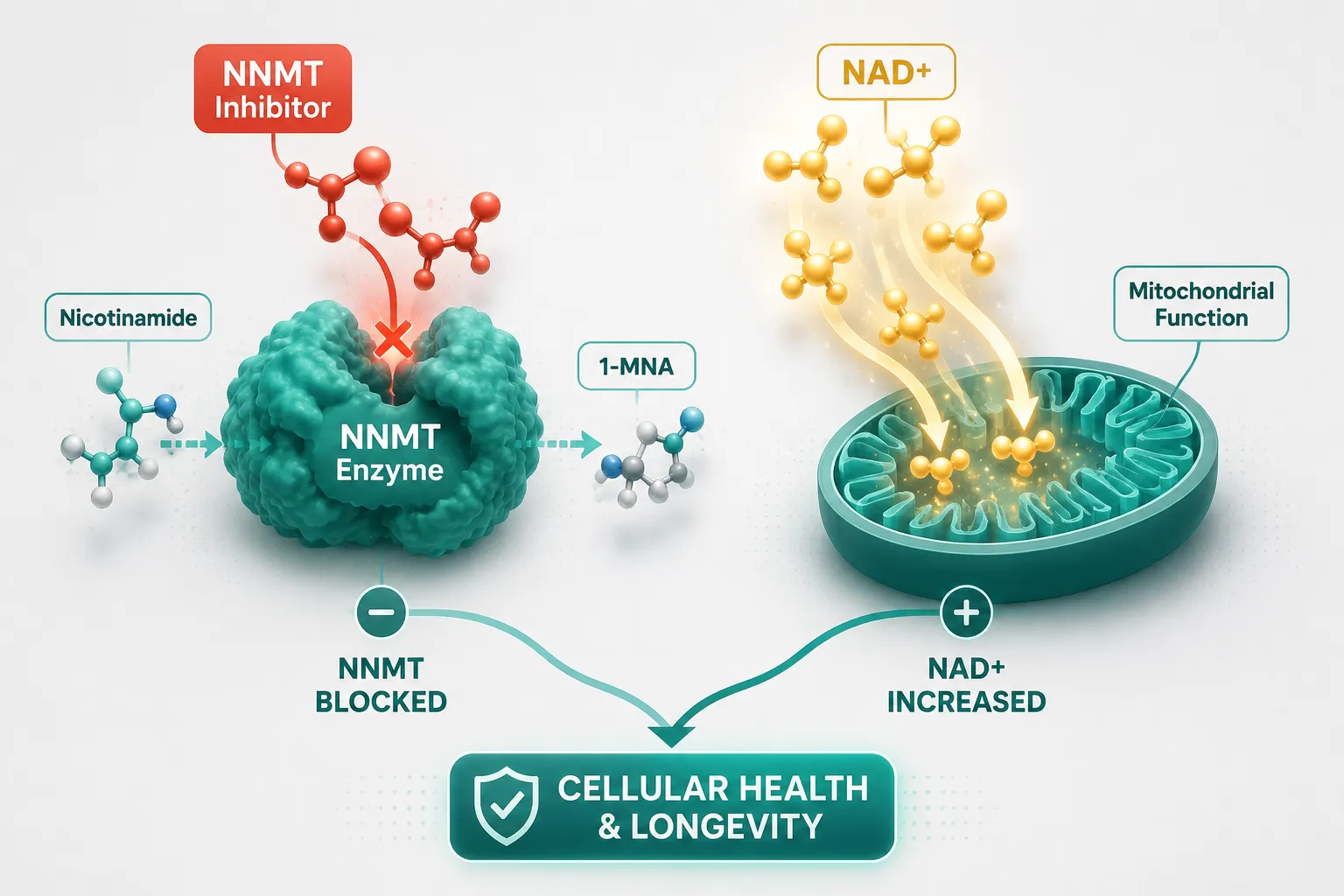
  • 5‑Amino‑1MQ inhibits NNMT, raising intracellular NAD+ and suppressing adipogenesis in preclinical obesity models.
  • MOTS‑c is a mitochondrial-derived peptide that activates AMPK, improving insulin sensitivity and driving mitochondrial biogenesis.
  • The two agents operate on complementary pathways, making their combination a theoretically sound multi-target research stack.
  • Preclinical data support visceral fat reduction and improved glucose handling, but human trials remain limited.
  • Researchers designing stacks should define clear endpoints, monitor NAD+ flux, and account for potential off-target interactions.
Key Takeaways

Mechanistic Foundations: How Each Agent Works

5‑Amino‑1MQ and NNMT Inhibition

Nicotinamide N-methyltransferase (NNMT) is an enzyme that methylates nicotinamide, diverting it away from NAD+ synthesis. In obese individuals, NNMT is overexpressed in adipose tissue, which depletes NAD+ precursor pools and promotes fat storage. 5‑Amino‑1MQ is a small-molecule inhibitor that selectively blocks NNMT activity.

By restoring NAD+ precursor availability, 5‑Amino‑1MQ:

  • Elevates cellular NAD+ concentrations
  • Activates sirtuins and other NAD+-dependent enzymes
  • Suppresses preadipocyte differentiation into mature fat cells
  • Increases basal energy expenditure in rodent models

In obese rodents, NNMT inhibition with 5‑Amino‑1MQ produced significant reductions in visceral fat without changes in food intake, a finding that points to a direct metabolic shift rather than appetite suppression.

For researchers exploring related NAD+ biology, NAD+ scientific evidence and research provides useful context on how NAD+ flux connects to broader metabolic outcomes.

MOTS‑c and Mitochondrial Signaling

MOTS‑c is a 16-amino-acid peptide encoded in mitochondrial DNA. It operates through the folate-purine-AMPK pathway, activating AMP-activated protein kinase (AMPK), the cell's master energy sensor. AMPK activation triggers:

  • Enhanced glucose uptake in skeletal muscle
  • Improved insulin sensitivity
  • Stimulation of mitochondrial biogenesis
  • Suppression of lipogenesis

Published research in Cell Metabolism demonstrated that MOTS‑c reduces obesity and restores insulin sensitivity in animal models, effects that were linked directly to AMPK pathway engagement. For a deeper look at how MOTS‑c influences mitochondrial dynamics, see this overview of MOTS-c and mitochondrial dynamics.

The Synergistic Case: Designing NNMT and Mitochondrial Biogenesis Stacks
The Synergistic Case: Designing NNMT and Mitochondrial Biogenesis Stacks

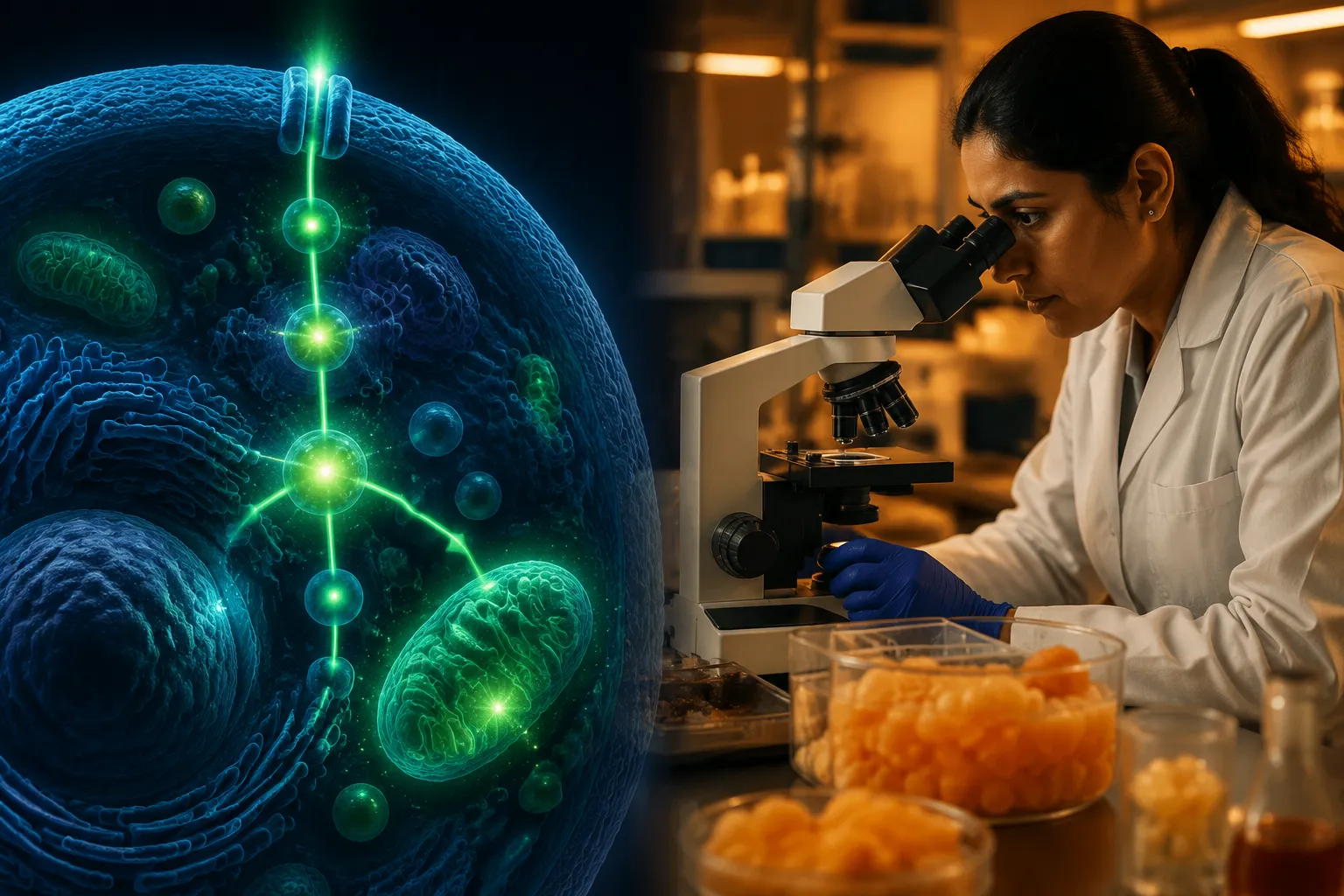
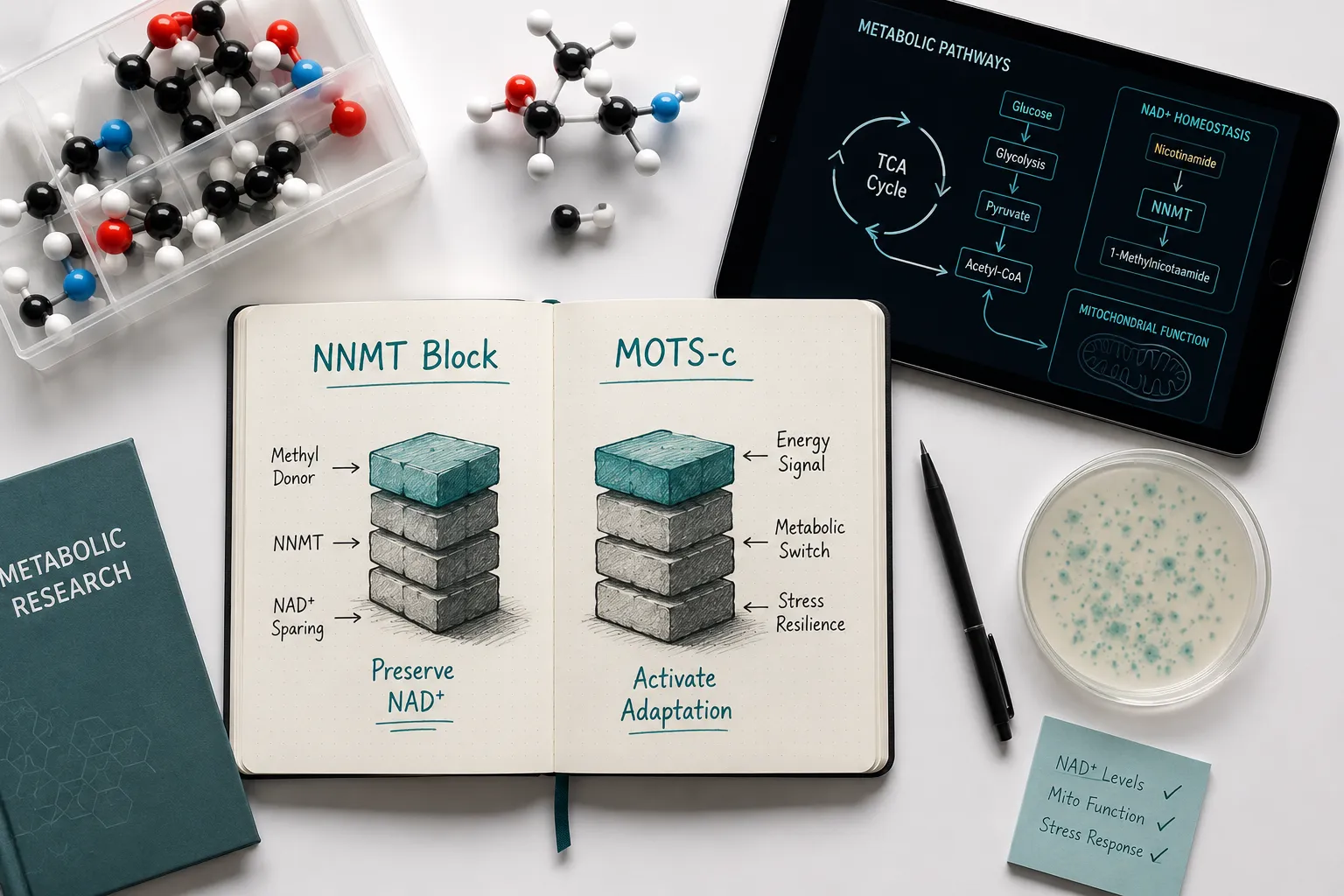
The rationale behind 5‑Amino‑1MQ and MOTS‑c synergy in metabolic research: designing NNMT and mitochondrial biogenesis stacks rests on pathway complementarity. The two agents do not simply duplicate each other, they intervene at different, reinforcing points.

Feature 5‑Amino‑1MQ MOTS‑c
Primary target NNMT enzyme AMPK pathway
Key effect Raises NAD+ Drives mitochondrial biogenesis
Route Oral (50-150 mg/day) Subcutaneous injection (5-10 mg, 2-3x/week)
Main research model Adipose tissue, obesity Skeletal muscle, insulin resistance

Why the combination is theoretically powerful:

  • NNMT inhibition increases NAD+, which fuels sirtuin activity and primes cells for mitochondrial expansion.
  • MOTS‑c then activates AMPK, directly stimulating the mitochondrial biogenesis machinery that elevated NAD+ has prepared.
  • Together, they may reduce visceral fat, improve glucose disposal, and increase metabolic flexibility, three endpoints that are difficult to achieve simultaneously with a single agent.

"Targeting both the substrate supply side (NAD+ via NNMT inhibition) and the signaling side (AMPK via MOTS-c) creates a more complete metabolic intervention than either approach alone."

Researchers interested in complementary mitochondrial peptide stacks may also find value in reviewing SS-31 and MOTS-c combination research, which explores how mitochondria-protective peptides can be layered.

Proposed Research Endpoints

When designing a stack protocol, clear measurable endpoints are essential. Recommended markers include:

  • Visceral adipose tissue volume (MRI or CT-based)
  • Fasting insulin and HOMA-IR for insulin resistance tracking
  • Mitochondrial copy number in muscle biopsies
  • Intracellular NAD+/NADH ratio as a direct readout of NNMT inhibition
  • VO2 max or respiratory exchange ratio for metabolic flexibility

Pitfalls, Limitations, and Research Considerations
Pitfalls, Limitations, and Research Considerations

No stack design is without risk, and 5‑Amino‑1MQ and MOTS‑c synergy in metabolic research: designing NNMT and mitochondrial biogenesis stacks is no exception.

Key Pitfalls to Address

1. NAD+ Overcorrection
Excessive NAD+ elevation can dysregulate methylation balance. Researchers should monitor S-adenosylmethionine (SAM) and homocysteine levels when using NNMT inhibitors at higher doses.

2. AMPK Pathway Crosstalk
AMPK activation by MOTS‑c interacts with mTOR signaling. In anabolic research contexts, such as muscle hypertrophy models, this crosstalk may produce competing signals that complicate interpretation.

3. Dosing Timing
Because 5‑Amino‑1MQ is oral and MOTS‑c is injected, synchronizing their pharmacodynamic peaks requires careful scheduling. Current preclinical data do not yet define an optimal co-administration window.

4. Limited Human Data
Both compounds have strong rodent-model evidence but limited controlled human trials as of 2026. Extrapolating dose-response curves from animal studies introduces meaningful uncertainty.

5. Regulatory Status
Neither compound is approved for therapeutic use in humans. Both remain research-use-only agents in most jurisdictions. Researchers should consult applicable institutional and regulatory guidelines before designing protocols.

For researchers building broader metabolic stacks, SLU-PP-332 metabolic modulation research and ipamorelin muscle and fat research themes offer additional pathway perspectives that may complement NNMT and AMPK-focused designs.

Staying current on the evolving landscape is also worthwhile, the latest peptide research updates regularly covers new findings relevant to mitochondrial and metabolic stacks.

Conclusion

The intersection of NNMT inhibition and mitochondrial peptide signaling represents one of the more mechanistically coherent frontiers in metabolic research today. 5‑Amino‑1MQ and MOTS‑c synergy in metabolic research: designing NNMT and mitochondrial biogenesis stacks offers a dual-pathway framework that addresses both the substrate supply of cellular energy (NAD+) and the downstream machinery that converts that energy into metabolic output (mitochondrial biogenesis via AMPK).

Actionable next steps for researchers:

  1. Define specific, measurable endpoints before protocol design, particularly NAD+/NADH ratios and HOMA-IR.
  2. Use the lowest effective doses in initial studies to establish safety margins before escalating.
  3. Monitor methylation markers alongside metabolic outcomes when using 5‑Amino‑1MQ.
  4. Review complementary mitochondrial peptide data, including MOTS-c and elamipretide combination research, to understand how stacking additional mitochondrial agents affects outcomes.
  5. Track emerging human trial data closely, as the field is advancing rapidly in 2026.

The theoretical case is strong. Rigorous, well-controlled preclinical and early-phase human research will determine whether this stack delivers on its considerable promise.

Tags: 5-amino-1mq, ampk activation, insulin resistance, metabolic research, mitochondrial biogenesis, mitochondrial peptides, mots-c, nad+ metabolism, nnmt inhibition, obesity research, peptide stacking, research peptides
https://www.puretestedpeptides.com/wp-content/uploads/2026/07/5-amino-1mq-and-mots-c-synergy-in-metabolic-research-designing-nnmt-and-mitochon.webp 1024 1536 https://www.puretestedpeptides.com/wp-content/uploads/2026/01/buy-peptides-online.jpg 2026-07-22 13:05:432026-07-22 13:05:435‑Amino‑1MQ and MOTS‑c Synergy in Metabolic Research: Designing NNMT and Mitochondrial Biogenesis Stacks
You might also like
GLP-1 vs GLP-3 vs GLP-2: Peptide Classification and Research Applications GLP-1 vs GLP-3 vs GLP-2: Peptide Classification and Research Applications
Retatrutide for Research: Mechanism, Structure, and GLP-1/GLP-3 Dual Action GLP2 Tirz Peptide: What It Is, Why the Name Exists, and How Researchers Should Interpret It
Mitochondria, NNMT Inhibition, and Peptide Modulators: Where MOTS‑c and 5‑Amino‑1MQ Fit in Cellular Energy Research Mitochondria, NNMT Inhibition, and Peptide Modulators: Where MOTS‑c and 5‑Amino‑1MQ Fit in Cellular Energy Research
Tesofensine Peptide Research: Mechanism, Appetite Suppression, and Neuropeptide Y Pathways Tesofensine Peptide Research: Mechanism, Appetite Suppression, and Neuropeptide Y Pathways
Retatrutide for Research: Mechanism, Structure, and GLP-1/GLP-3 Dual Action Retatrutide for Research: Mechanism, Structure, and GLP-1/GLP-3 Dual Action
0 replies

Leave a Reply

Want to join the discussion?
Feel free to contribute!

Leave a Reply Cancel reply

Your email address will not be published. Required fields are marked *

×

Helpful Links

  • My account
  • Cart
  • Checkout
  • Refund and Returns Policy
  • Privacy Policy
  • SMS Privacy Policy
  • Login
  • My Account
  • Logout

USA Made Lab Tested Peptides

All products are sold for research, laboratory, or analytical purposes only, and are not for human consumption


Pure Tested Peptides is a chemical supplier. Pure Tested Peptides is not a compounding / chemical compounding facility as defined under 503A of the Federal Food, Drug, and Cosmetic act. Pure Tested Peptides is not an outsourcing facility as defined under 503B of the Federal Food, Drug, and Cosmetic act.

The statements made within this website have not been evaluated by the US Food and Drug Administration. The products we offer are not intended to diagnose, treat, cure or prevent any disease.

Human/Animal Consumption Prohibited. Laboratory/In-Vitro Experimental Use Only

Link to: CJC‑1295 with DAC vs. Without DAC: Expanding on Half‑Life Differences Using Tesamorelin and Ipamorelin Blend Case Studies Link to: CJC‑1295 with DAC vs. Without DAC: Expanding on Half‑Life Differences Using Tesamorelin and Ipamorelin Blend Case Studies CJC‑1295 with DAC vs. Without DAC: Expanding on Half‑Life Differences Using...CJC‑1295 with DAC vs. Without DAC: Expanding on Half‑Life Differences Using Tesamorelin and Ipamorelin Blend Case Studies Link to: Collagen Biology and Regenerative Peptides: How GHK‑Cu, Glow Blend, and Klow Blend Affect Extracellular Matrix Research Link to: Collagen Biology and Regenerative Peptides: How GHK‑Cu, Glow Blend, and Klow Blend Affect Extracellular Matrix Research Collagen Biology and Regenerative Peptides: How GHK‑Cu, Glow Blend, and Klow Blend Affect Extracellular Matrix ResearchCollagen Biology and Regenerative Peptides: How GHK‑Cu, Glow Blend, and Klow...
Scroll to top Scroll to top Scroll to top