

Nicotinamide N-methyltransferase (NNMT) quietly governs one of the most consequential metabolic switches in human biology, yet it remained largely overlooked by researchers until the past decade. The emergence of 5-Amino-1MQ as a targeted NNMT inhibitor has fundamentally changed that picture. As a small-molecule compound, the 5-Amino-1MQ Peptide: Detailed Mechanisms of NNMT Inhibition and Its Impact on Cellular Metabolism Research field now stands at an inflection point, offering researchers a precise tool to probe how a single enzyme can redirect cellular energy, fat storage, and longevity-related signaling across multiple tissue types.
Key Takeaways
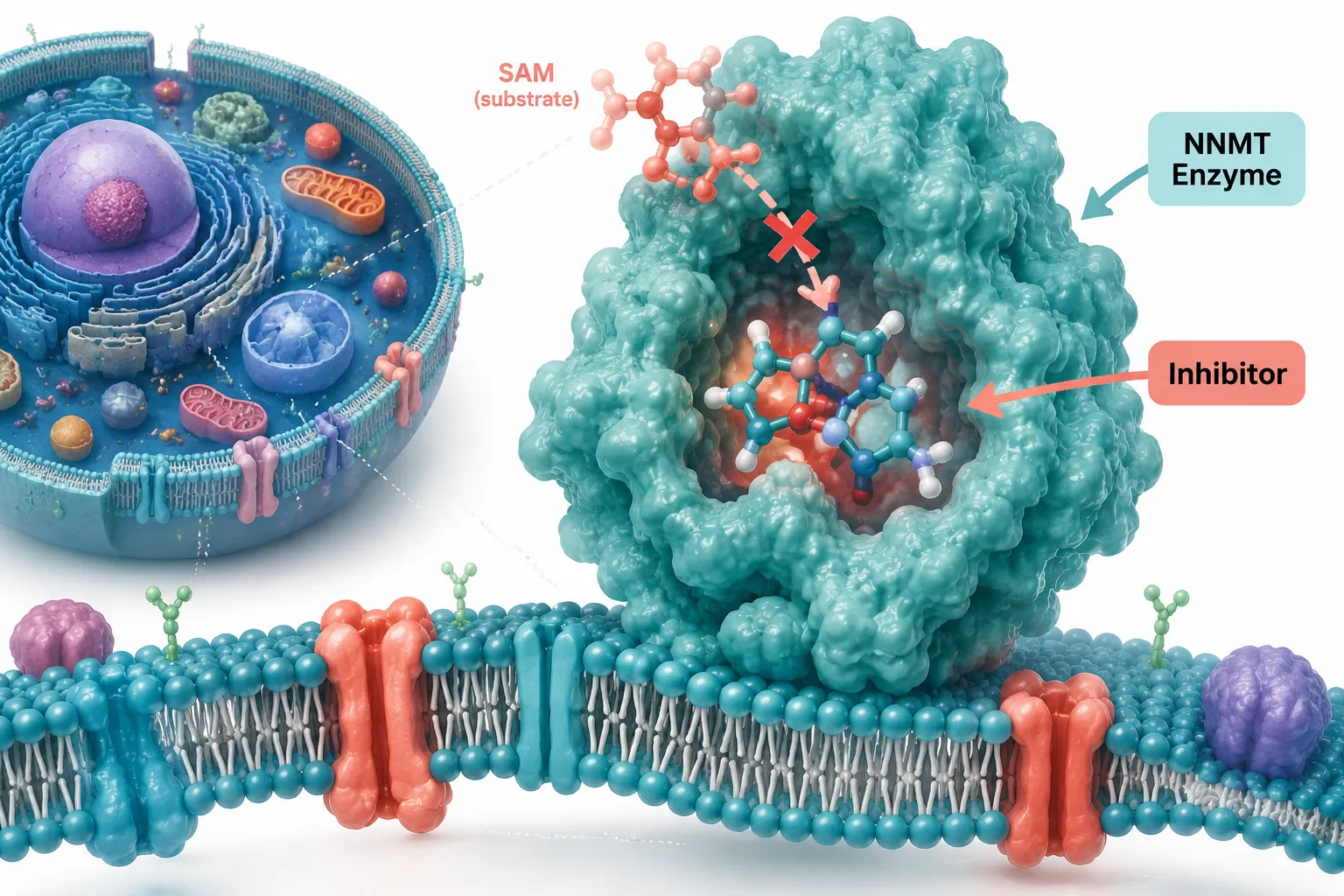
- 5-Amino-1MQ competitively inhibits NNMT by occupying the enzyme's substrate-binding pocket, blocking SAM-dependent methylation.
- Inhibition elevates intracellular SAM and NAD+ levels, reshaping the methyl donor economy of the cell.
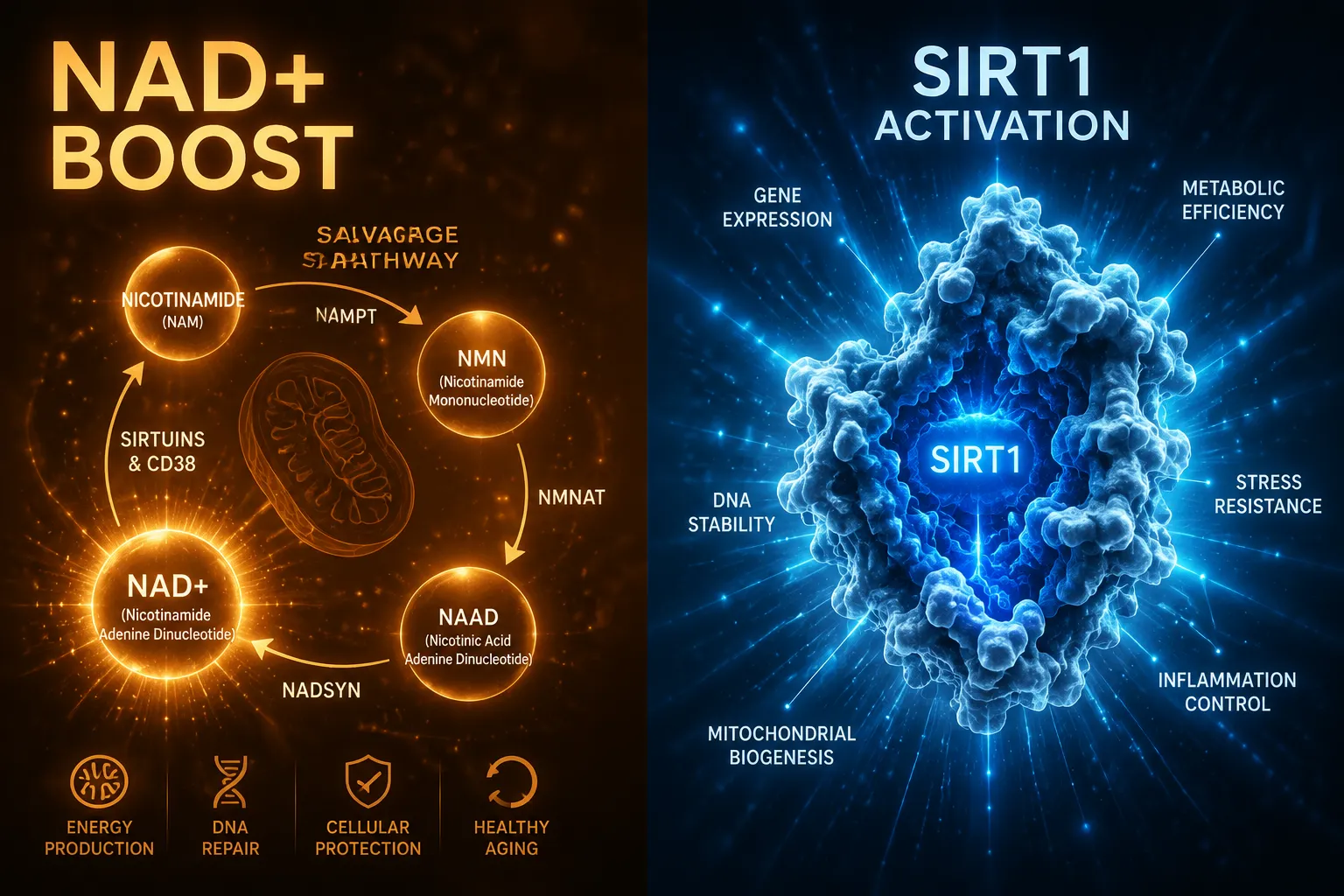
- Elevated NAD+ activates SIRT1, linking NNMT inhibition directly to mitochondrial efficiency and metabolic gene expression.
- Cellular readouts in adipocytes show measurable reductions in 1-MNA output, increased oxygen consumption, and altered lipid flux.
- Research in 2026 continues to expand the compound's relevance to obesity, metabolic syndrome, and cellular aging models.
What Is NNMT and Why Does It Matter for Metabolism
NNMT catalyzes the transfer of a methyl group from S-adenosylmethionine (SAM) to nicotinamide, producing 1-methylnicotinamide (1-MNA) and S-adenosylhomocysteine (SAH). This reaction is deceptively simple, yet its downstream consequences are far-reaching.
When NNMT is overactive, a state observed in adipose tissue, liver cells, and certain tumor microenvironments, the enzyme consumes large quantities of SAM. This depletes the cell's methyl donor pool, suppresses NAD+ biosynthesis through the salvage pathway, and ultimately blunts the activity of NAD+-dependent enzymes like SIRT1.
Key insight: Elevated NNMT activity effectively starves the cell of two critical resources, SAM and NAD+, simultaneously impairing epigenetic regulation and mitochondrial energy output.
This dual depletion creates a metabolic environment that favors fat accumulation, reduced thermogenesis, and impaired cellular repair. Researchers studying longevity peptide research pathways have increasingly recognized NNMT as a high-value target precisely because of this broad metabolic reach.
The Core Mechanism: How 5-Amino-1MQ Inhibits NNMT
Competitive Binding at the Active Site
5-Amino-1MQ (5-amino-1-methylquinolinium) is a small, positively charged molecule structurally similar to nicotinamide. This resemblance is not coincidental, it allows the compound to compete directly with nicotinamide for the NNMT active site.
Binding studies demonstrate that 5-Amino-1MQ occupies the substrate-binding pocket with an IC50 in the low nanomolar range, making it one of the most potent competitive NNMT inhibitors characterized to date. Crucially, its selectivity profile shows minimal off-target activity against related methyltransferases, reducing the risk of unintended metabolic interference in research models.
Restoring the SAM-Cycle Balance
By blocking NNMT, 5-Amino-1MQ halts the unnecessary consumption of SAM. Intracellular SAM concentrations rise, restoring the cell's capacity for:
- DNA and histone methylation, supporting proper gene expression patterns
- Phosphatidylcholine synthesis, essential for membrane integrity
- Polyamine biosynthesis, relevant to cell growth regulation
This restoration of the methyl donor pool represents one of the most significant upstream effects of NNMT inhibition, with consequences that ripple through multiple metabolic networks.
Impact on NAD+ Salvage, SIRT1, and Cellular Metabolism Research
The 5-Amino-1MQ Peptide: Detailed Mechanisms of NNMT Inhibition and Its Impact on Cellular Metabolism Research narrative becomes especially compelling when examining the NAD+ salvage pathway.
Elevating NAD+ Through Pathway Redirection
When NNMT is inhibited, nicotinamide is no longer diverted into 1-MNA production. Instead, it re-enters the NAD+ salvage pathway via nicotinamide phosphoribosyltransferase (NAMPT), increasing intracellular NAD+ concentrations. This shift has measurable consequences for energy metabolism.
Higher NAD+ levels directly activate SIRT1, a NAD+-dependent deacetylase that regulates:
- Mitochondrial biogenesis via PGC-1alpha
- Fatty acid oxidation gene networks
- Inflammatory cytokine suppression
- Cellular stress response pathways
This connection to mitochondrial function aligns with research into other metabolically active compounds. For example, MOTS-c mechanism and research similarly targets mitochondrial efficiency, underscoring a broader theme in metabolic peptide science.
Adipocyte-Specific Cellular Readouts
In adipocyte cell models, 5-Amino-1MQ treatment produces several quantifiable changes:
| Cellular Marker | Direction of Change |
|---|---|
| 1-MNA output | Decreased |
| Intracellular NAD+ | Increased |
| Oxygen consumption rate | Increased |
| Lipid droplet accumulation | Decreased |
| SIRT1 activity | Increased |
These readouts confirm that NNMT inhibition shifts adipocytes from a storage-dominant to an oxidation-dominant metabolic state. Researchers studying adipotide and fat-targeting peptide research will find these findings particularly relevant given the overlapping interest in adipose tissue remodeling.
The EC50 values observed in cellular respiration assays fall within a therapeutically relevant range, supporting the compound's utility as a research probe for metabolic disorders including obesity and type 2 diabetes models.
Broader Research Implications in 2026

The 5-Amino-1MQ Peptide: Detailed Mechanisms of NNMT Inhibition and Its Impact on Cellular Metabolism Research field has grown substantially. Current research directions in 2026 include:
- Metabolic syndrome models: Investigating whether NNMT inhibition can reverse diet-induced insulin resistance
- Aging biology: Examining SIRT1 activation as a mediator of cellular longevity programs, an area explored alongside longevity-focused peptide research
- Combination approaches: Pairing 5-Amino-1MQ with other metabolically active compounds in peptide blend research to assess additive or synergistic effects
- Delivery optimization: Advances in innovative peptide delivery systems are improving bioavailability in preclinical models
Researchers sourcing compounds for these investigations should prioritize purity and verified testing. Exploring lab-tested peptides ensures experimental reproducibility and data integrity.
Conclusion
The mechanistic clarity surrounding 5-Amino-1MQ makes it an exceptionally valuable tool in cellular metabolism research. By competitively inhibiting NNMT at the active site, the compound restores SAM availability, redirects nicotinamide into NAD+ biosynthesis, and activates SIRT1-driven metabolic programs, all measurable through established cellular assays in adipocyte and other tissue models.
Actionable next steps for researchers:
- Establish baseline NNMT activity in your target cell model before introducing 5-Amino-1MQ to quantify inhibition efficacy.
- Use 1-MNA output as a primary biomarker to confirm on-target NNMT inhibition in cellular assays.
- Pair oxygen consumption rate measurements with NAD+/NADH ratio analysis to capture the full metabolic shift.
- Consider combination protocols with other metabolically relevant compounds and review current peptide research resources to identify complementary agents.
- Ensure all research-grade compounds are sourced from verified, purity-tested suppliers to maintain experimental validity.
As 2026 research continues to reveal the depth of NNMT's influence on metabolic health, 5-Amino-1MQ stands as one of the most precisely characterized inhibitors available, a compound that transforms a single enzymatic target into a window onto the broader architecture of cellular energy regulation.
Leave a Reply
Want to join the discussion?Feel free to contribute!