Call or Text 727-513-9780
  • Shopping Cart Shopping Cart
    0Shopping Cart
Pure Tested Peptides | America's most trusted Peptides for sale online
  • Peptides for sale
    • Oral Peptides for sale
      • Peptide Capsules for sale
      • BPC 157 Capsules 1000mcg
      • SLU-PP-332 Capsules | 1000 mcg
      • 5-Amino-1MQ 50mg Capsules
      • Tesofensine 500mcg
    • All Peptides for sale
    • Peptide Sprays
      • BPC 157 Nasal Spray Kit
      • BPC-157 TB500 Nasal Spray Kit
      • Semax Nasal Spray 10mg
      • Selank – Nasal Spray Kit – 10mg
      • Epithalon 50MG Nasal Spray Kit
      • Ipamorelin 10mg Nasal Spray
      • Klow Nasal Spray (BPC-157 + TB-500 + GHK-Cu + KPV) | 80mg
      • Hulk Nasal Spray Tesa / Ipa Blend 6/3 MG
      • Klow Nasal Spray
      • NAD + 500 mg Nasal Spray
      • PT-141 Nasal Spray Kit
    • GHRH Peptides
      • Ipa Peptides
      • CJC-1295 Peptides
        • CJC-1295 with DAC 5 mg
        • CJC-1295 without DAC 5 mg
        • CJC-1295 Ipa 10mg
      • Tesa Peptides
        • Tesa Peptide
        • Tesa 20 mg
    • GHK-Cu Peptides
      • All GHK-Cu Peptides
      • GHK-Cu 100mg
      • KLOW Peptide Blend – Buy KLOW blend online
    • BPC Peptides
      • All BPC Peptides
      • BPC-157
      • BPC-157 TB-500
      • BPC 157 capsules 1000mcg
    • SLU-PP-332 Peptides
      • All SLU-PP-332 Peptides
      • SLU-PP-332 5mg
    • GLP3 Peptides
      • GLP3-R
      • GLP3-R CAG 10mg
      • GLP3-R 20mg
    • PT-141 Peptides
      • PT-141 Peptides for sale
      • PT-141 10mg
      • PT-141 Nasal Spray
    • CAG Peptides
      • Lipo-C Peptide Blend
      • CAG 5mg
      • CAG 10mg
    • MOTS-C Peptides
      • MOTS-C Peptides for sale
      • MOTS-c peptide
      • MOTS-c 10mg *6 pack*
    • 5 Amino 1MQ Peptides
      • 5 Amino 1MQ Peptides for sale
      • 5-Amino-1MQ 50mg Capsules
      • 5-Amino-1MQ 5mg
    • Epithalon Peptides
      • Epithalon Peptides for sale
      • Epithalon 10mg
      • Epithalon 50mg
  • Shop
    • GLPs
      • 5-Amino-1MQ 50mg Capsules
      • 5-Amino-1MQ 5mg
      • GLP3-Reta
      • L-Carnitine 500mg/ml
      • Tesofensine 500mcg
      • SLU-PP-332 5mg
      • MOTS-c 10mg *6 pack*
    • Epithalon & BPC Peptides
      • Epithalon 10mg
      • Epithalon 50mg
      • BPC-157
      • BPC 157 capsules 1000mcg
      • BPC-157 TB-500
      • BPC-157 TB500 Nasal Spray Kit
      • BPC 157 Nasal Spray Kit
    • BPC TB-500 & NAD+ Peptides
      • NAD+ 500 mg
      • KLOW Peptide Blend – Buy KLOW blend online
      • GLOW Peptide Blend
      • TB 500 5mg
      • BPC 157 capsules 1000mcg – Supplement
      • BPC 157 Nasal Spray Kit
      • BPC-157
      • BPC-157 TB500 Nasal Spray Kit
      • BPC-157 TB-500
      • BPC 157 capsules 1000mcg
    • LL-37 Peptide
      • LL-37 10 mg
    • MOTS-C & Selank
      • MOTS-c peptide
      • Selank 10mg
    • GHK Peptides
      • GHK-Cu 100mg
      • GLOW Peptide Blend
      • KLOW Peptide Blend – Buy KLOW blend online
  • COAs
  • Wholesale
    • Wholesale Peptides for sale
  • PTP FAQ
  • Affiliates
    • Selank Peptide: Advanced Pharmacological Mechanisms Underlying Its Anxiolytic and Nootropic Effects in Research
      • 5-Amino-1MQ Peptide: Detailed Mechanisms of NNMT Inhibition and Its Impact on Cellular Metabolism Research
        • MOTS-C Peptide: Unraveling Its Role in Mitochondrial Dynamics and Energy Metabolism Research
          • Epithalon Peptide and Telomerase Regulation: Investigating Its Impact on Cellular Senescence and Lifespan Research Models
            • GLP2-T vs GLP2 Tirz Peptide: Understanding the Naming, Mechanistic Nuances, and Research Implications for Gut Health
      • Peptides and Polypeptides in Modern Pharmacology: What Research on Metoprolol, Prednisone, and Amlodipine Reveals
        • Polypeptide Peptides vs NSAIDs: What Naproxen and Diclofenac Teach Tissue-Repair Researchers About BPC‑157 and TB‑500
          • Peptides and Polypeptides in Endocrine Pharmacology: How GLP-1, GLP-2, and GLP-3 Retatrutide Differ From Classic Drugs Like Prednisone and Amlodipine
          • 5‑Amino‑1MQ Peptide and NNMT Inhibition: How It Compares With Statins Like Atorvastatin in Adipose and Lipid Metabolism Research
      • Enclomiphene, Estrogen Receptor Signaling, and Luteinizing Phase Biology: What Hormone Researchers Should Measure
        • Mesenchymal Stem Cells, BPC‑157, and GHK‑Cu: How Tissue Repair Peptides Compare With Classic NSAIDs Like Naproxen in Injury Models
          • Peptide Calculator Use Cases Beyond Growth Hormone: Working Through GLP‑3 Retatrutide, MOTS‑c, and BPC‑157 Research Dosing
        • Polypeptide Peptides in Endocrine and Metabolic Pharmacology: Lessons From Amlodipine, Prednisone, and Metoprolol
        • Peptides Calculator for Advanced Blends: Worked Examples for Tesamorelin, CJC‑1295, and Ipamorelin Stacks
          • Peptides and Polypeptides in Human Physiology: How Molecular Size Shapes Research Applications
            • Selank Peptide: Advanced Pharmacological Mechanisms Underlying Its Anxiolytic and Nootropic Effects in Research
          • 5-Amino-1MQ Peptide: Detailed Mechanisms of NNMT Inhibition and Its Impact on Cellular Metabolism Research
            • MOTS-C Peptide: Unraveling Its Role in Mitochondrial Dynamics and Energy Metabolism Research
              • Epithalon Peptide and Telomerase Regulation: Investigating Its Impact on Cellular Senescence and Lifespan Research Models
                • GLP2-T vs GLP2 Tirz Peptide: Understanding the Naming, Mechanistic Nuances, and Research Implications for Gut Health
                  • Peptides and Polypeptides in Endocrine Pharmacology: How GLP-1, GLP-2, and GLP-3 Retatrutide Differ From Classic Drugs Like Prednisone and Amlodipine
                    • Polypeptide Peptides vs NSAIDs: What Naproxen and Diclofenac Teach Tissue-Repair Researchers About BPC‑157 and TB‑500
                      • Peptides and Polypeptides in Modern Pharmacology: What Research on Metoprolol, Prednisone, and Amlodipine Reveals
                        • 5‑Amino‑1MQ Peptide and NNMT Inhibition: How It Compares With Statins Like Atorvastatin in Adipose and Lipid Metabolism Research
                        • Enclomiphene, Estrogen Receptor Signaling, and Luteinizing Phase Biology: What Hormone Researchers Should Measure
                        • Mesenchymal Stem Cells, BPC‑157, and GHK‑Cu: How Tissue Repair Peptides Compare With Classic NSAIDs Like Naproxen in Injury Models
                        • Peptide Calculator Use Cases Beyond Growth Hormone: Working Through GLP‑3 Retatrutide, MOTS‑c, and BPC‑157 Research Dosing
                        • Polypeptide Peptides in Endocrine and Metabolic Pharmacology: Lessons From Amlodipine, Prednisone, and Metoprolol
                        • Peptides Calculator for Advanced Blends: Worked Examples for Tesamorelin, CJC‑1295, and Ipamorelin Stacks
                        • Peptides and Polypeptides in Human Physiology: How Molecular Size Shapes Research Applications
                        • Selank Peptide: Advanced Pharmacological Mechanisms Underlying Its Anxiolytic and Nootropic Effects in Research
                        • MOTS-C Peptide: Unraveling Its Role in Mitochondrial Dynamics and Energy Metabolism Research
                        • Peptides and Polypeptides in Modern Pharmacology: What Research on Metoprolol, Prednisone, and Amlodipine Reveals
                        • Peptides and Polypeptides in Endocrine Pharmacology: How GLP-1, GLP-2, and GLP-3 Retatrutide Differ From Classic Drugs Like Prednisone and Amlodipine
                        • 5-Amino-1MQ Peptide: Detailed Mechanisms of NNMT Inhibition and Its Impact on Cellular Metabolism Research
                        • Mesenchymal Stem Cells, BPC‑157, and GHK‑Cu: How Tissue Repair Peptides Compare With Classic NSAIDs Like Naproxen in Injury Models
                        • Peptide Calculator Use Cases Beyond Growth Hormone: Working Through GLP‑3 Retatrutide, MOTS‑c, and BPC‑157 Research Dosing
                        • GLP2-T vs GLP2 Tirz Peptide: Understanding the Naming, Mechanistic Nuances, and Research Implications for Gut Health
                        • Polypeptide Peptides in Endocrine and Metabolic Pharmacology: Lessons From Amlodipine, Prednisone, and Metoprolol
                        • Polypeptide Peptides vs NSAIDs: What Naproxen and Diclofenac Teach Tissue-Repair Researchers About BPC‑157 and TB‑500
                        • Peptides and Polypeptides in Human Physiology: How Molecular Size Shapes Research Applications
                        • Peptides Calculator for Advanced Blends: Worked Examples for Tesamorelin, CJC‑1295, and Ipamorelin Stacks
                        • 5‑Amino‑1MQ Peptide and NNMT Inhibition: How It Compares With Statins Like Atorvastatin in Adipose and Lipid Metabolism Research
                        • Enclomiphene, Estrogen Receptor Signaling, and Luteinizing Phase Biology: What Hormone Researchers Should Measure
                        • Epithalon Peptide and Telomerase Regulation: Investigating Its Impact on Cellular Senescence and Lifespan Research Models
                        • Best research protocol Klow blend
                        • best time to take BPC-157
                        • best time to take DSIP (Delta Sleep Inducing Peptide)
                        • best time to take CJC-1295
                        • best time to take AOD-9604
                        • best time to take Follistatin 344
                        • best time to take Ipamorelin
                        • best time to take MK-677 (Ibutamoren)
                        • best time to take Ligandrol (LGD-4033) — research compound
                        • best time to take Ostarine (MK-2866) — research compound
                        • best time to take GHK-CU
                        • best time to take TB-500
                        • best time to take MOTS-c
                        • best time to take Semax
                        • best time to take RAD-140 (Testolone) — research compound
                        • best time to take Thymosin Alpha-1
                        • best time to take PEG-MGF
                        • Biolife Plasma, Octapharma Plasma, and Research Peptides: How Plasma Donation Labs Differ From Peptide Suppliers
                        • best time to take YK-11 — research compound
                        • best time to take PT-141 (Bremelanotide)
                        • Best research protocol Klow blend
                        • 5-Amino-1MQ and MOTS-C Synergy: Metabolic Signaling, Mitochondria, and Research Design
                        • BPC-157 and TB-500: Investigating Their Combined Effects on Angiogenesis and Cellular Migration in Tissue Repair Models
                        • BPC-157 Peptide: Gut Barrier Function, Inflammation, and Tissue-Recovery Research
                        • 5‑Amino‑1MQ and MOTS‑c Synergy in Metabolic Research: Designing NNMT and Mitochondrial Biogenesis Stacks
                        • CJC-1295 with DAC vs. Without DAC: Half-Life, Release Kinetics, and Research Implications
                        • CJC‑1295 with DAC vs. Without DAC: Expanding on Half‑Life Differences Using Tesamorelin and Ipamorelin Blend Case Studies
                        • Collagen Biology and Copper‑Binding Peptides: How GHK‑Cu, Glow Blend, and Klow Blend Interact with Skin and Connective Tissue
                        • Collagen Biology and Regenerative Peptides: How GHK‑Cu, Glow Blend, and Klow Blend Affect Extracellular Matrix Research
                    • DNA, Telomeres, and Longevity Peptides: Positioning Epithalon and MOTS‑c in Genetic Aging Research
                      • Enclomiphene Citrate: serm Mechanism, Testosterone Research, and Stack Compatibility
                        • Enclomiphene vs Enclomiphene Citrate: Formulation, Bioavailability, and Research Distinctions
                        • Epithalon Peptide Research: Telomerase Activation, Aging, and Pineal Gland Function
                        • Estrogen Receptor Signaling and Enclomiphene: How Selective Modulators Compare with Classic Polypeptide Hormones
                        • GHK-Cu Peptide: Advanced Mechanisms in Extracellular Matrix Remodeling and Wound Healing Research
                        • GHK-Cu Peptide: Collagen Synthesis, Wound Repair, and Skin-Barrier Research Models
                        • GLP-1 vs GLP-3 vs GLP-2: Peptide Classification and Research Applications
                        • GLP-2 Peptide Research Guide: Gut Barrier Function, Nutrient Absorption, and Intestinal Recovery Models
                        • GLP-3 Retatrutide vs. GLP-1 Drugs: What Triple-Agonist Biology Changes in Research Models
                        • Ipamorelin and Tesamorelin Combination: Synergistic GH Secretagogue Research and Dosing Protocols
                        • GLP2 Tirz Peptide: What It Is, Why the Name Exists, and How Researchers Should Interpret It
                        • Klow Blend Peptide Nasal Spray: What the Formulation Is Trying to Do in Cognitive Research
                        • Mitochondria, NNMT Inhibition, and Peptide Modulators: Where MOTS‑c and 5‑Amino‑1MQ Fit in Cellular Energy Research
                        • MOTS-c Peptide: Mitochondrial Function, Energy Metabolism, and What Researchers Measure
                        • MOTS-c vs. 5-Amino-1MQ: Which Metabolic Research Questions Each Compound Actually Answers
                        • Nasal Spray Peptides: Bioavailability, Administration, and Semax/Selank Research Applications
                        • PT-141 Peptide Research: Mechanism of Action and Melanocortin Receptor Signaling
                        • Retatrutide for Research: Mechanism, Structure, and GLP-1/GLP-3 Dual Action
                        • Retatrutide for Obesity and Type 2 Diabetes: What the Latest Trial Data Suggest
                        • Tesofensine Peptide Research: Mechanism, Appetite Suppression, and Neuropeptide Y Pathways
  • Contact
    • Contact Customer Service
    • Text Customer Support
  • About US
  • Shop all peptides
  • Affiliate Program
    • Affiliate Signup
  • Login / Register Login / Register Page Link Login / Register Page Link
  • Click to open the search input field Click to open the search input field Search
  • Menu Menu
Current Research Questions Around GLP-3 Peptides: What Makes Retatrutide Different From Other Incretin Analogs

Current Research Questions Around GLP-3 Peptides: What Makes Retatrutide Different From Other Incretin Analogs

August 21, 2026/0 Comments/in Uncategorized/by

{"cover":"Professional landscape format (1536×1024) hero image with bold text overlay 'Current Research Questions Around GLP-3' in crisp white sans-serif on a deep teal semi-transparent overlay panel, centered with 8% safe margins from every edge. Background: high-resolution editorial illustration of a molecular peptide chain structure with triple-receptor binding sites rendered in luminous blue and gold against a clean dark navy gradient, suggesting advanced biochemical research. Magazine cover aesthetic, pharmaceutical science editorial quality, modern bold typography, no characters touching edges.","content":["Annotated mechanism-of-action diagram, landscape format (1536×1024): central illustration of a stylized human torso cross-section showing three receptor sites labeled 'GLP-1 Receptor,' 'GIP Receptor,' and 'Glucagon Receptor' with color-coded callout lines in teal, amber, and coral. Left panel heading: 'Single Agonist GLP-1' with 3 bullet labels: 'One receptor target,' 'Appetite suppression,' 'Insulin release.' Right panel heading: 'Triple Agonist Retatrutide' with 4 bullet labels: 'Three receptor targets,' 'Enhanced fat oxidation,' 'Glucagon modulation,' 'Broader metabolic reach.' Clean white background, medical-illustration style, navy-and-teal palette, editorial infographic polish.","Split-screen landscape format (1536×1024) editorial comparison: left half shows a simplified molecular diagram of semaglutide binding to a single GLP-1 receptor node, labeled 'Dual or Single Agonist' with sub-labels 'GLP-1 only' and 'Tirzepatide: GLP-1 + GIP.' Right half shows retatrutide binding to three glowing receptor nodes in a triangular arrangement, labeled 'Triple Agonist' with sub-labels 'GLP-1,' 'GIP,' 'Glucagon.' Bold dividing line down the center, cool blue left palette contrasting warm amber-gold right palette, crisp scientific illustration style, high-contrast editorial quality, no pricing or checkmark grids.","Numbered step-by-step research framework flow diagram, landscape format (1536×1024): five horizontally arranged research-question cards on a clean light-gray background. Card 1 labeled 'Receptor Selectivity' with sub-label 'Relative agonist ratios.' Card 2 labeled 'Durability' with sub-label 'Long-term weight maintenance.' Card 3 labeled 'GI Tolerability' with sub-label 'Triple-agonist side effects.' Card 4 labeled 'CV Outcomes' with sub-label 'MACE endpoint data.' Card 5 labeled 'Real-World Use' with sub-label 'Adherence and titration.' Connecting arrows between cards, teal accent color on card headers, navy body text, clean sans-serif typography, editorial medical-research infographic style, fully inside 5% safe margins."]
Professional landscape hero image () with a reading "Current Research Questions Around GLP-3". CRITICAL TYPOGRAPHY RULES:

Only one in three adults with obesity achieves durable weight loss through lifestyle intervention alone, a statistic that has driven a decade of accelerating research into incretin-based pharmacotherapy. At the frontier of that work sits retatrutide, a molecule that has forced researchers to reframe the current research questions around GLP-3 peptides: what makes retatrutide different from other incretin analogs is not just its potency, but the fundamental complexity it introduces into receptor biology, trial design, and long-term outcome prediction.

Key Takeaways

  • Retatrutide is a triple agonist targeting GLP-1, GIP, and glucagon receptors simultaneously, distinguishing it from single and dual incretin analogs.
  • Phase 2 data showed weight loss exceeding 24% over 48 weeks, surpassing earlier benchmarks set by semaglutide and tirzepatide.
  • The glucagon receptor arm introduces unique metabolic and hepatic effects not seen in GLP-1 or dual GIP/GLP-1 agents.
  • Open research questions center on receptor selectivity ratios, long-term durability, cardiovascular endpoints, and GI tolerability at scale.
  • Phase 3 TRIUMPH obesity trial data emerging in 2026 is actively reshaping how researchers define "third-generation" incretin therapy.

What Is a GLP-3 Peptide and Where Does the Term Come From

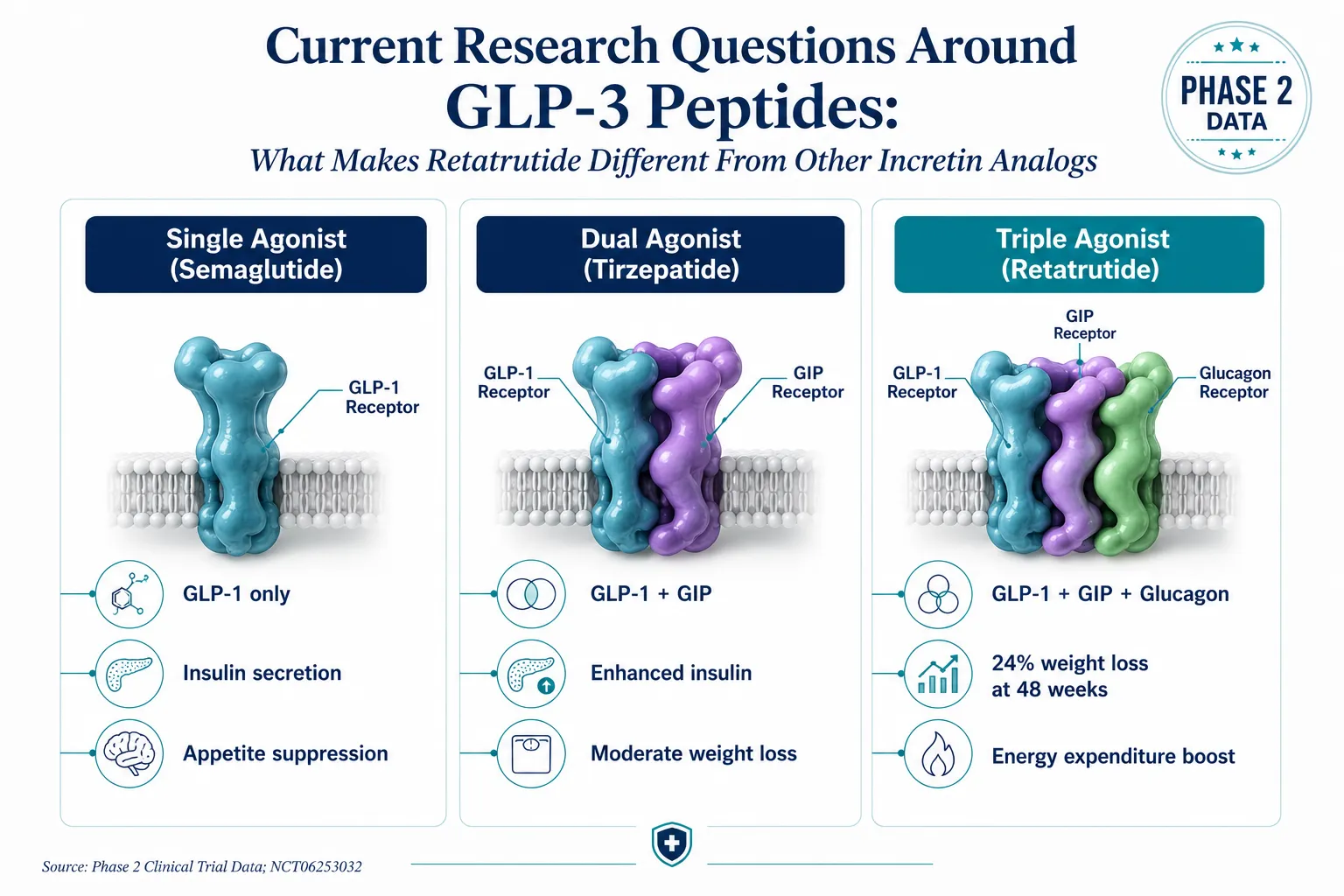
The label "GLP-3" circulates in research literature and supplement markets, but its meaning is contested. Glucagon-like peptide-3 refers to a cleavage product of proglucagon, the same precursor protein that yields GLP-1 and GLP-2. Unlike GLP-1, GLP-3 has no confirmed endogenous receptor and no established pharmacological action in humans as of 2026. This makes the term a source of genuine naming confusion in the research community.

For a deeper look at how GLP-2 naming conventions create similar product-label problems, the article on GLP2-T peptide and GLP2 Tirz peptide naming confusion is a useful reference. Understanding peptide classification frameworks helps clarify why these distinctions matter in both research and procurement contexts.
What Is a GLP-3 Peptide and Where Does the Term Come From

The practical implication: when researchers discuss "GLP-3 activity" in the context of retatrutide, they are typically using the term loosely to describe the glucagon receptor component of the triple-agonist mechanism, not a discrete GLP-3 receptor pathway. Precision in terminology is a live methodological debate.

How the Triple-Agonist Mechanism Sets Retatrutide Apart

The central question in current research questions around GLP-3 peptides, what makes retatrutide different from other incretin analogs, comes down to receptor architecture.

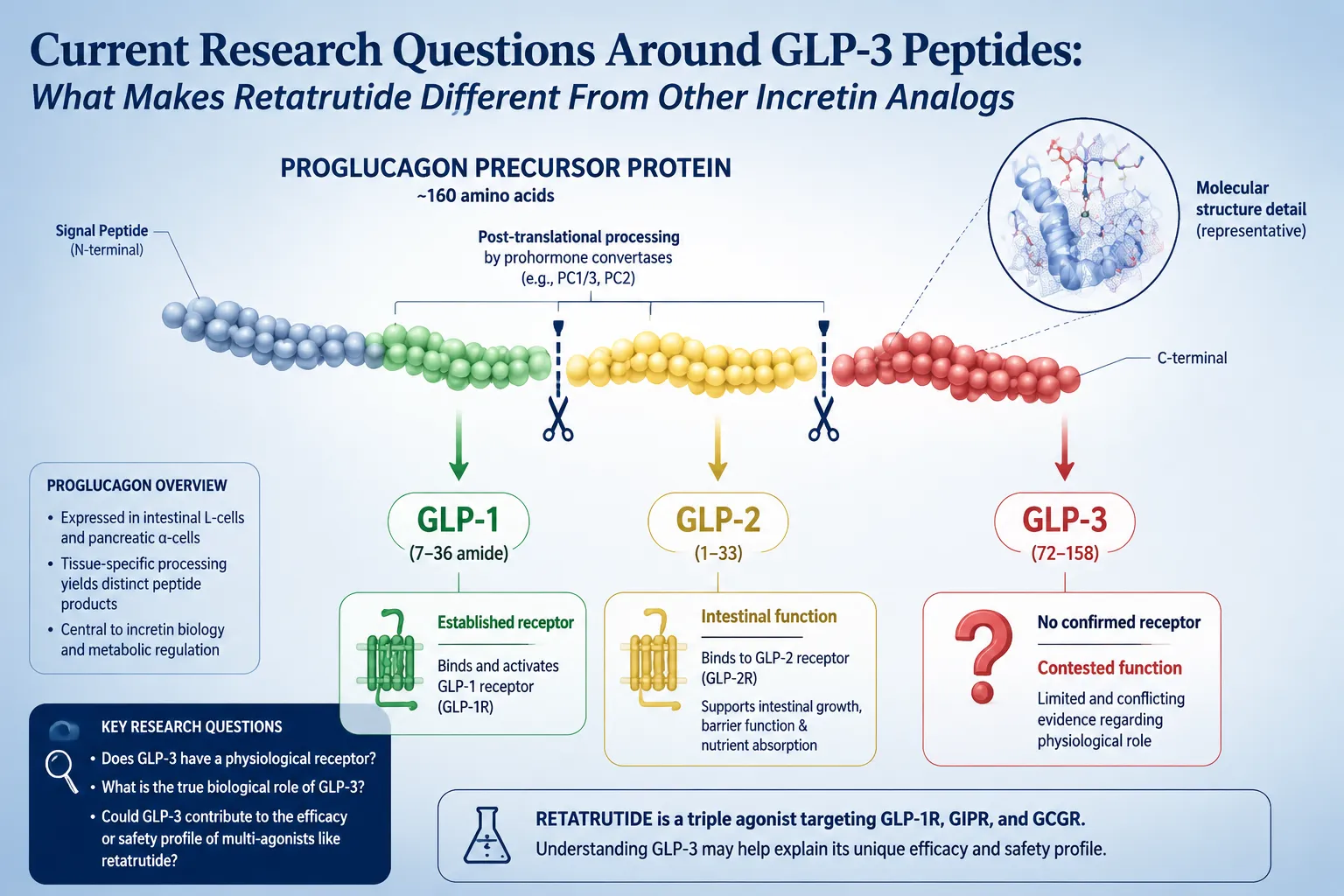
Single agonists like semaglutide act exclusively on the GLP-1 receptor, driving insulin secretion, appetite suppression, and gastric slowing. Dual agonists like tirzepatide add GIP receptor co-activation, which appears to amplify fat cell lipolysis and improve insulin sensitivity beyond GLP-1 alone. Retatrutide adds a third arm: glucagon receptor agonism.

Compound GLP-1 GIP Glucagon Receptor
Semaglutide Yes No No
Tirzepatide Yes Yes No
Retatrutide Yes Yes Yes

The glucagon receptor component is where most open research questions cluster. Glucagon is classically associated with raising blood glucose, the opposite of what metabolic therapies aim to achieve. Yet at the specific agonist ratios engineered into retatrutide, glucagon receptor activation appears to drive hepatic fat oxidation and thermogenesis without clinically significant hyperglycemia in trial populations. Whether this balance holds across diverse real-world populations remains an active area of investigation.

Researchers exploring metabolic peptide mechanisms may also find value in reviewing top research peptides for metabolic health to contextualize where triple agonism sits relative to other investigated compounds.
How the Triple-Agonist Mechanism Sets Retatrutide Apart

Key Research Questions Shaping the 2026 Trial Landscape

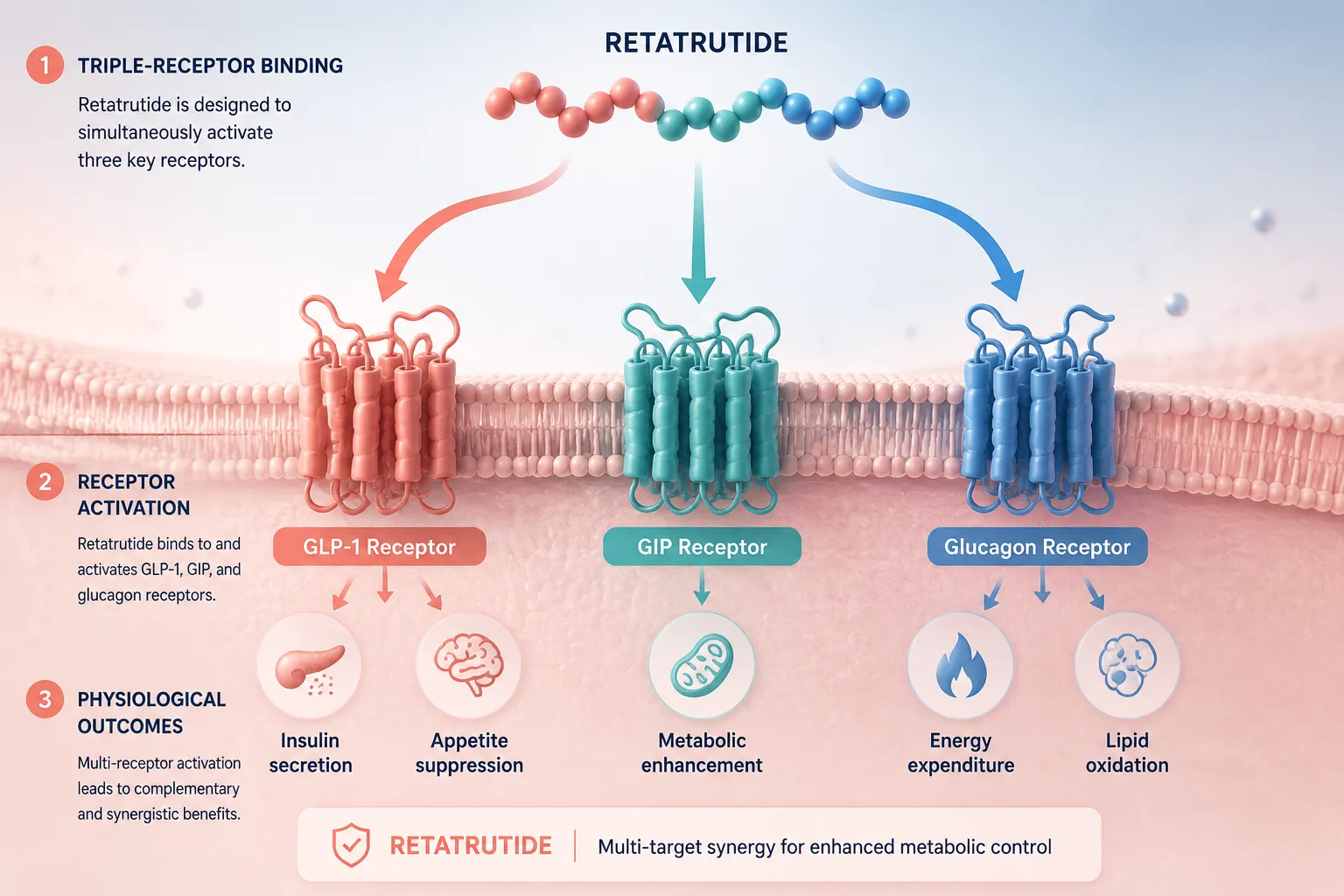
The current research questions around GLP-3 peptides: what makes retatrutide different from other incretin analogs cannot be answered by efficacy data alone. Researchers are working through several interconnected frameworks.

1. Optimal receptor selectivity ratios
Retatrutide's glucagon agonism is intentionally partial. A core question is whether the current ratio of GLP-1:GIP:glucagon activity is optimal, or whether future analogs should titrate these ratios differently for specific indications such as type 2 diabetes versus pure obesity management.

2. Long-term weight durability
Phase 2 data showed mean weight loss above 24% at 48 weeks, a figure that exceeded both semaglutide and tirzepatide benchmarks. However, durability after discontinuation remains poorly characterized. Early 2026 TRIUMPH trial data is beginning to address this, but multi-year follow-up is still needed.

3. Hepatic and MASLD endpoints
The glucagon receptor arm may offer distinct advantages in metabolic dysfunction-associated steatotic liver disease. Detailed discussion of this angle appears in the dedicated article on retatrutide and MASLD triple-agonist research.

4. Cardiovascular outcomes
Phase 3 data from the cardiovascular outcomes arm, with results emerging in mid-2026, is examining major adverse cardiovascular events (MACE). This is a critical gap because GLP-1 agents have established CV benefits, but the glucagon component introduces theoretical concerns about heart rate and blood pressure that require dedicated endpoint adjudication.

5. GI tolerability at scale
Triple agonism amplifies the nausea, vomiting, and diarrhea profile common to GLP-1 class drugs. Titration protocols in TRIUMPH have been refined to manage this, but discontinuation rates in broader populations, including those with comorbidities, remain a research priority.

6. Comparative effectiveness versus tirzepatide
No head-to-head randomized controlled trial between retatrutide and tirzepatide exists as of 2026. Indirect comparisons from separate trials carry significant methodological limitations, making this one of the most cited gaps in the incretin literature.
Key Research Questions Shaping the 2026 Trial Landscape

Researchers interested in how peptide measurement standards affect endpoint reliability will find that assay consistency is a recurring methodological concern across all three agonist pathways. For context on how other metabolic peptides are evaluated, the AOD 9604 research method notes on storage and traceability illustrate the quality-control demands that apply broadly to research-grade compounds.

What "Third-Generation" Incretin Therapy Actually Means

The phrase "third-generation incretin" is increasingly used to describe retatrutide and similar multi-receptor candidates. The generational framing maps roughly as follows: first-generation equals GLP-1 mono-agonists; second-generation equals dual GLP-1/GIP agonists; third-generation equals triple agonists incorporating glucagon receptor activity.

"The shift from dual to triple agonism is not merely additive, it introduces qualitatively different metabolic signaling that requires new endpoints, new safety frameworks, and new comparative benchmarks."

This framing has practical implications for trial design. Standard obesity trials measuring body weight as a primary endpoint may underestimate the hepatic and thermogenic contributions of glucagon receptor agonism. Researchers are actively debating whether body composition, liver fat fraction, and resting energy expenditure should become co-primary endpoints in future triple-agonist studies.

Regulatory agencies in the US and EU are watching the 2026 Phase 3 readouts closely. If TRIUMPH delivers cardiovascular non-inferiority or superiority data, the approval pathway could accelerate significantly. Market analysts anticipate a potential regulatory submission by late 2026 or early 2027, though this remains speculative pending full data disclosure.

Conclusion

The current research questions around GLP-3 peptides, and what makes retatrutide different from other incretin analogs, extend well beyond weight loss percentages. The glucagon receptor dimension opens new mechanistic territory, raises legitimate safety questions, and demands more sophisticated trial designs than the incretin field has used previously.

Actionable next steps for researchers and clinicians following this space:

  • Track TRIUMPH trial publications as they emerge through 2026 for durability and cardiovascular endpoint data.
  • Evaluate receptor selectivity ratio data critically; not all triple agonists will carry the same risk-benefit profile.
  • Monitor head-to-head comparative trial announcements, as indirect comparisons with tirzepatide remain methodologically limited.
  • Apply rigorous peptide quality and measurement standards when working with any incretin-class compound in a research context.
  • Follow evolving regulatory guidance on composite endpoints for multi-receptor agonists, as endpoint definitions are still being standardized.

The science is moving fast. Staying grounded in mechanism-level questions, rather than headline efficacy numbers alone, is the most reliable way to interpret what comes next.

Tags: glp-1 receptor, glp-3 peptides, incretin analogs, metabolic research, obesity pharmacotherapy, retatrutide, tirzepatide comparison, triple agonist
https://www.puretestedpeptides.com/wp-content/uploads/2026/08/current-research-questions-around-glp-3-peptides-what-makes-retatrutide-differen.webp 1024 1536 https://www.puretestedpeptides.com/wp-content/uploads/2026/01/buy-peptides-online.jpg 2026-08-21 13:04:452026-08-21 13:04:45Current Research Questions Around GLP-3 Peptides: What Makes Retatrutide Different From Other Incretin Analogs
You might also like
Tesofensine, Enclomiphene, and Peptide-Based Approaches: How Small Molecules Fit Alongside GLP-3 and GH Secretagogues in Metabolic Research Tesofensine, Enclomiphene, and Peptide-Based Approaches: How Small Molecules Fit Alongside GLP-3 and GH Secretagogues in Metabolic Research
Retatrutide and MASLD: How Triple-Agonist Research Is Reframing Liver-Fat Endpoints Retatrutide and MASLD: How Triple-Agonist Research Is Reframing Liver-Fat Endpoints
GLP-3 Retatrutide and Triple-Agonist Peptides: How Phase 3 Obesity Data Are Shaping Next-Generation Metabolic Research GLP-3 Retatrutide and Triple-Agonist Peptides: How Phase 3 Obesity Data Are Shaping Next-Generation Metabolic Research
Retatrutide Phase 3 and Beyond: What Ongoing Obesity Trials Mean for Research Readers Retatrutide Phase 3 and Beyond: What Ongoing Obesity Trials Mean for Research Readers
What Is GLP3 Peptide? How Researchers Distinguish It From Retatrutide in Search Intent and Lab Context What Is GLP3 Peptide? How Researchers Distinguish It From Retatrutide in Search Intent and Lab Context
Retatrutide (GLP-3) Peptide: Triple GLP Receptor Agonist Mechanism and Research Applications Retatrutide (GLP-3) Peptide: Triple GLP Receptor Agonist Mechanism and Research Applications
Triple Agonist Therapies Beyond GLP‑3: What Retatrutide’s Success Means for Future Multi-Target Peptide Design Triple Agonist Therapies Beyond GLP‑3: What Retatrutide’s Success Means for Future Multi-Target Peptide Design
Adenosine Triphosphate, Cellular Energy, and Metabolic Peptides: How MOTS‑c and 5‑Amino‑1MQ Influence ATP-Linked Pathways Adenosine Triphosphate, Cellular Energy, and Metabolic Peptides: How MOTS‑c and 5‑Amino‑1MQ Influence ATP-Linked Pathways
0 replies

Leave a Reply

Want to join the discussion?
Feel free to contribute!

Leave a Reply Cancel reply

Your email address will not be published. Required fields are marked *

×

Helpful Links

  • My account
  • Cart
  • Checkout
  • Refund and Returns Policy
  • Privacy Policy
  • SMS Privacy Policy
  • Login
  • My Account
  • Logout

USA Made Lab Tested Peptides

All products are sold for research, laboratory, or analytical purposes only, and are not for human consumption


Pure Tested Peptides is a chemical supplier. Pure Tested Peptides is not a compounding / chemical compounding facility as defined under 503A of the Federal Food, Drug, and Cosmetic act. Pure Tested Peptides is not an outsourcing facility as defined under 503B of the Federal Food, Drug, and Cosmetic act.

The statements made within this website have not been evaluated by the US Food and Drug Administration. The products we offer are not intended to diagnose, treat, cure or prevent any disease.

Human/Animal Consumption Prohibited. Laboratory/In-Vitro Experimental Use Only

Link to: Intranasal Semax and Selank in 2026: Why Nasal Delivery Keeps Surging in Research Interest Link to: Intranasal Semax and Selank in 2026: Why Nasal Delivery Keeps Surging in Research Interest Intranasal Semax and Selank in 2026: Why Nasal Delivery Keeps Surging in Research...Intranasal Semax and Selank in 2026: Why Nasal Delivery Keeps Surging in Research Interest Link to: What Retatrutide Means for GLP-3 Research in 2026: Mechanism, Nomenclature, and Market Search Behavior Link to: What Retatrutide Means for GLP-3 Research in 2026: Mechanism, Nomenclature, and Market Search Behavior What Retatrutide Means for GLP-3 Research in 2026: Mechanism, Nomenclature, and Market Search BehaviorWhat Retatrutide Means for GLP-3 Research in 2026: Mechanism, Nomenclature,...
Scroll to top Scroll to top Scroll to top