Call or Text 727-513-9780
  • Shopping Cart Shopping Cart
    0Shopping Cart
Pure Tested Peptides | America's most trusted Peptides for sale online
  • Peptides for sale
    • Oral Peptides for sale
      • Peptide Capsules for sale
      • BPC 157 Capsules 1000mcg
      • SLU-PP-332 Capsules | 1000 mcg
      • 5-Amino-1MQ 50mg Capsules
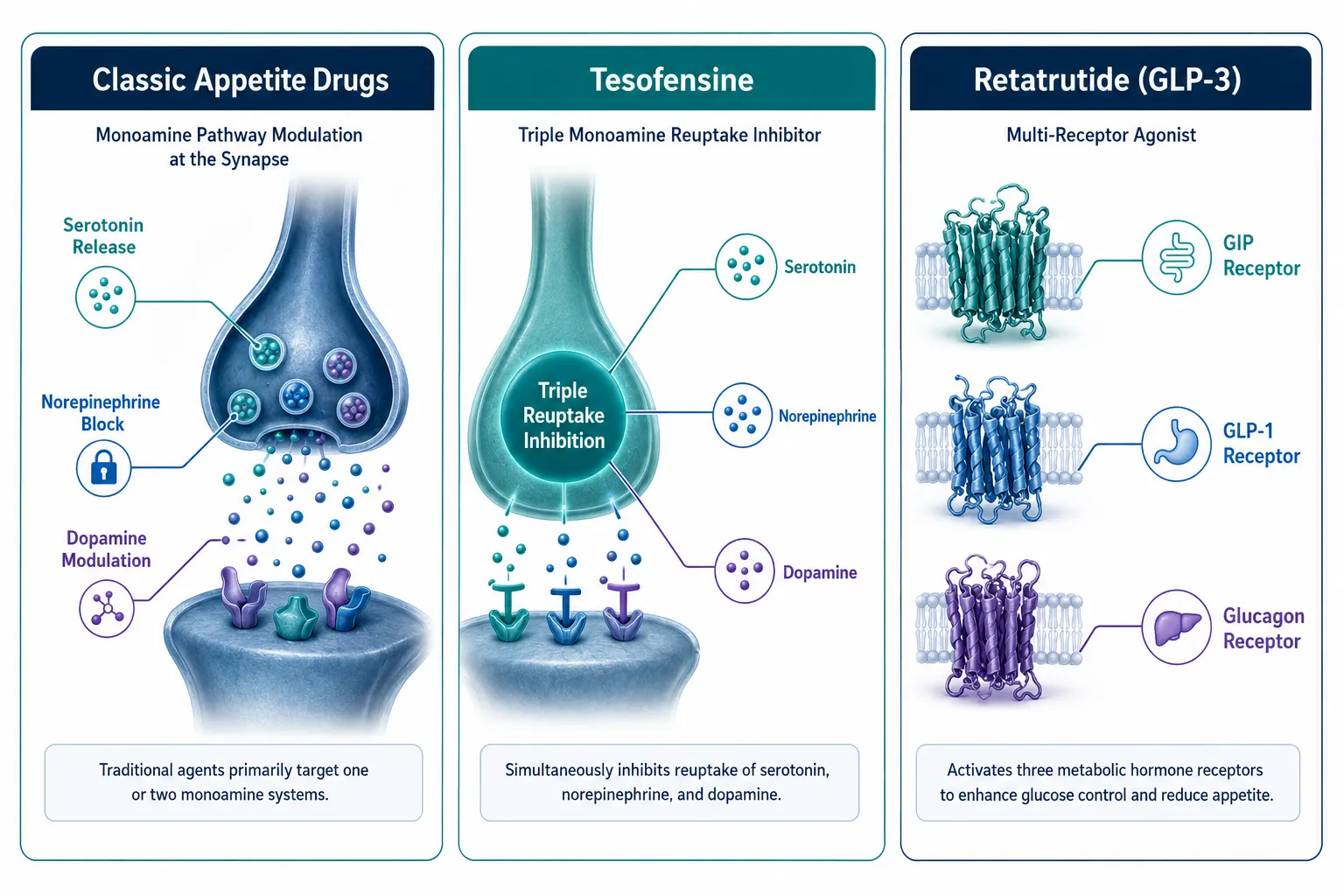
      • Tesofensine 500mcg
    • All Peptides for sale
    • Peptide Sprays
      • BPC 157 Nasal Spray Kit
      • BPC-157 TB500 Nasal Spray Kit
      • Semax Nasal Spray 10mg
      • Selank – Nasal Spray Kit – 10mg
      • Epithalon 50MG Nasal Spray Kit
      • Ipamorelin 10mg Nasal Spray
      • Klow Nasal Spray (BPC-157 + TB-500 + GHK-Cu + KPV) | 80mg
      • Hulk Nasal Spray Tesa / Ipa Blend 6/3 MG
      • Klow Nasal Spray
      • NAD + 500 mg Nasal Spray
      • PT-141 Nasal Spray Kit
    • GHRH Peptides
      • Ipa Peptides
      • CJC-1295 Peptides
        • CJC-1295 with DAC 5 mg
        • CJC-1295 without DAC 5 mg
        • CJC-1295 Ipa 10mg
      • Tesa Peptides
        • Tesa Peptide
        • Tesa 20 mg
    • GHK-Cu Peptides
      • All GHK-Cu Peptides
      • GHK-Cu 100mg
      • KLOW Peptide Blend – Buy KLOW blend online
    • BPC Peptides
      • All BPC Peptides
      • BPC-157
      • BPC-157 TB-500
      • BPC 157 capsules 1000mcg
    • SLU-PP-332 Peptides
      • All SLU-PP-332 Peptides
      • SLU-PP-332 5mg
    • GLP3 Peptides
      • GLP3-R
      • GLP3-R CAG 10mg
      • GLP3-R 20mg
    • PT-141 Peptides
      • PT-141 Peptides for sale
      • PT-141 10mg
      • PT-141 Nasal Spray
    • CAG Peptides
      • Lipo-C Peptide Blend
      • CAG 5mg
      • CAG 10mg
    • MOTS-C Peptides
      • MOTS-C Peptides for sale
      • MOTS-c peptide
      • MOTS-c 10mg *6 pack*
    • 5 Amino 1MQ Peptides
      • 5 Amino 1MQ Peptides for sale
      • 5-Amino-1MQ 50mg Capsules
      • 5-Amino-1MQ 5mg
    • Epithalon Peptides
      • Epithalon Peptides for sale
      • Epithalon 10mg
      • Epithalon 50mg
  • Shop
    • GLPs
      • 5-Amino-1MQ 50mg Capsules
      • 5-Amino-1MQ 5mg
      • GLP3-Reta
      • L-Carnitine 500mg/ml
      • Tesofensine 500mcg
      • SLU-PP-332 5mg
      • MOTS-c 10mg *6 pack*
    • Epithalon & BPC Peptides
      • Epithalon 10mg
      • Epithalon 50mg
      • BPC-157
      • BPC 157 capsules 1000mcg
      • BPC-157 TB-500
      • BPC-157 TB500 Nasal Spray Kit
      • BPC 157 Nasal Spray Kit
    • BPC TB-500 & NAD+ Peptides
      • NAD+ 500 mg
      • KLOW Peptide Blend – Buy KLOW blend online
      • GLOW Peptide Blend
      • TB 500 5mg
      • BPC 157 capsules 1000mcg – Supplement
      • BPC 157 Nasal Spray Kit
      • BPC-157
      • BPC-157 TB500 Nasal Spray Kit
      • BPC-157 TB-500
      • BPC 157 capsules 1000mcg
    • LL-37 Peptide
      • LL-37 10 mg
    • MOTS-C & Selank
      • MOTS-c peptide
      • Selank 10mg
    • GHK Peptides
      • GHK-Cu 100mg
      • GLOW Peptide Blend
      • KLOW Peptide Blend – Buy KLOW blend online
  • COAs
  • Wholesale
    • Wholesale Peptides for sale
  • PTP FAQ
  • Affiliates
    • Affiliate Program
    • Affiliate Signup
  • Contact
    • Contact Customer Service
    • Text Customer Support
  • About US
  • Shop all peptides
  • Login / Register Login / Register Page Link Login / Register Page Link
  • Click to open the search input field Click to open the search input field Search
  • Menu Menu

Tag Archive for: triple agonist

GLP3 Peptide vs. Retatrutide: Understanding the Nomenclature and Research Implications

GLP3 Peptide vs. Retatrutide: Understanding the Nomenclature and Research Implications

July 12, 2026/0 Comments/in Uncategorized/by

Researchers searching for "GLP3 peptide" in 2026 are often looking for the same compound, yet the terminology they use can lead them to entirely different bodies of literature, products, and regulatory contexts. The conversation around GLP3 Peptide vs. Retatrutide: Understanding the Nomenclature and Research Implications matters because imprecise language in peptide science does not just cause confusion; it can distort research intent, misalign sourcing decisions, and obscure a compound's actual clinical standing.

Editorial () showing a conceptual split-screen illustration: left half features the text label 'GLP-3 Descriptor' in over an

Key Takeaways

  • "GLP-3" is an informal, community-driven descriptor, not an official scientific classification for retatrutide.
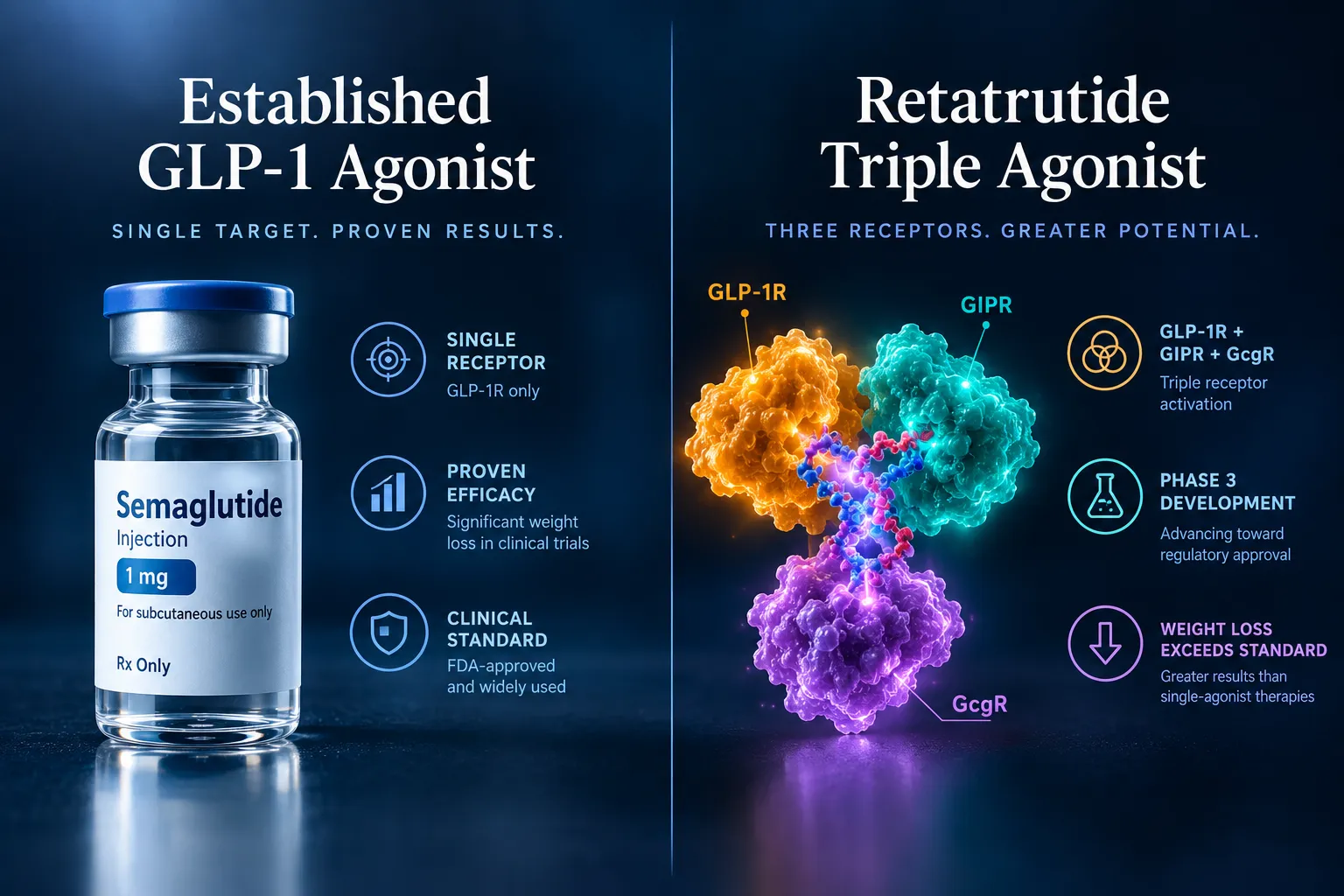
  • Retatrutide is a specific triple agonist targeting GLP-1, GIP, and glucagon receptors, developed by Eli Lilly.
  • Phase 3 trials show up to 28.7% mean body weight reduction over approximately 68 weeks.
  • As of 2026, retatrutide has not received FDA approval and carries no official brand name.
  • Understanding this nomenclature gap is critical for accurate research, sourcing, and clinical interpretation.

What "GLP-3" Actually Means, and What It Does Not

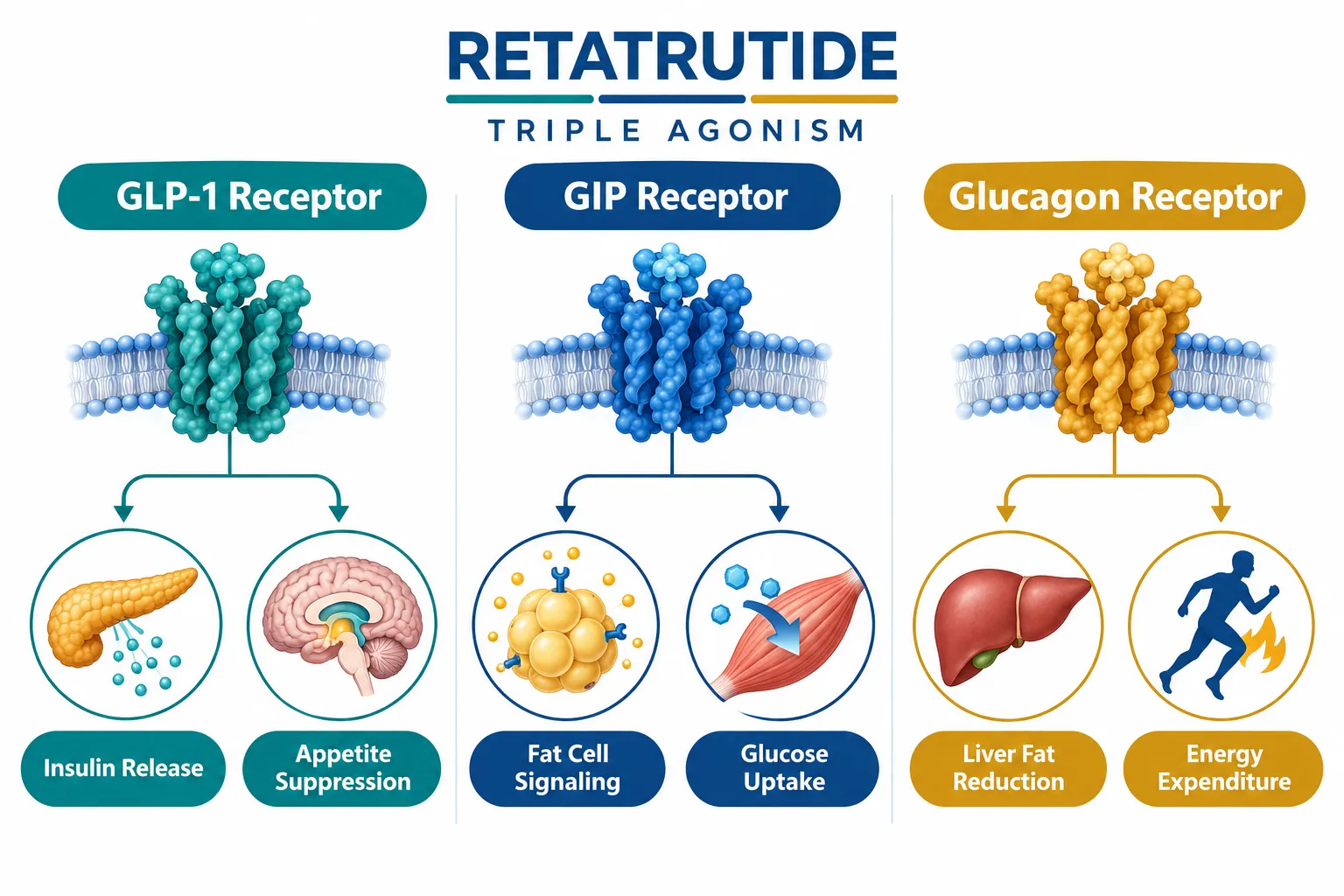
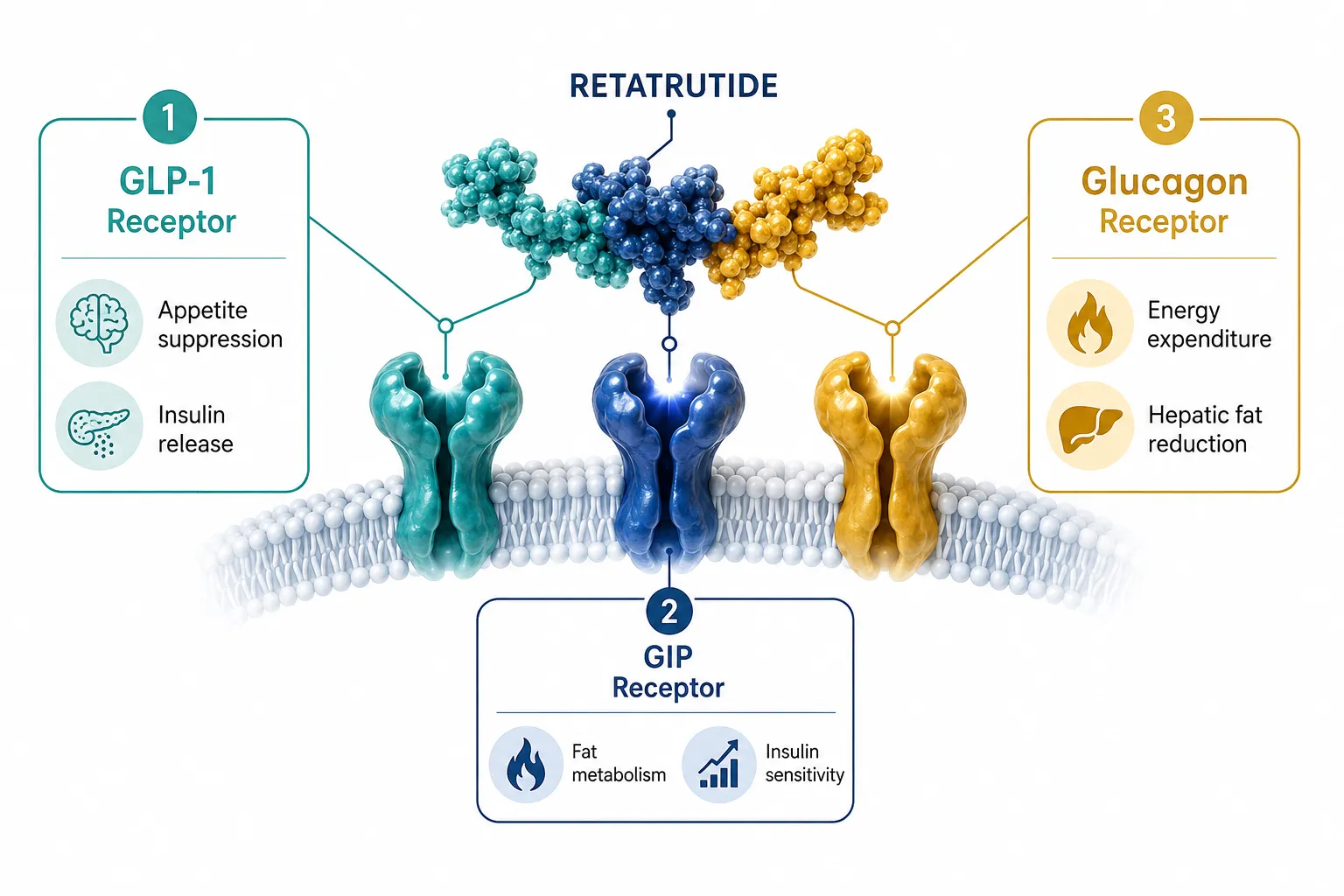
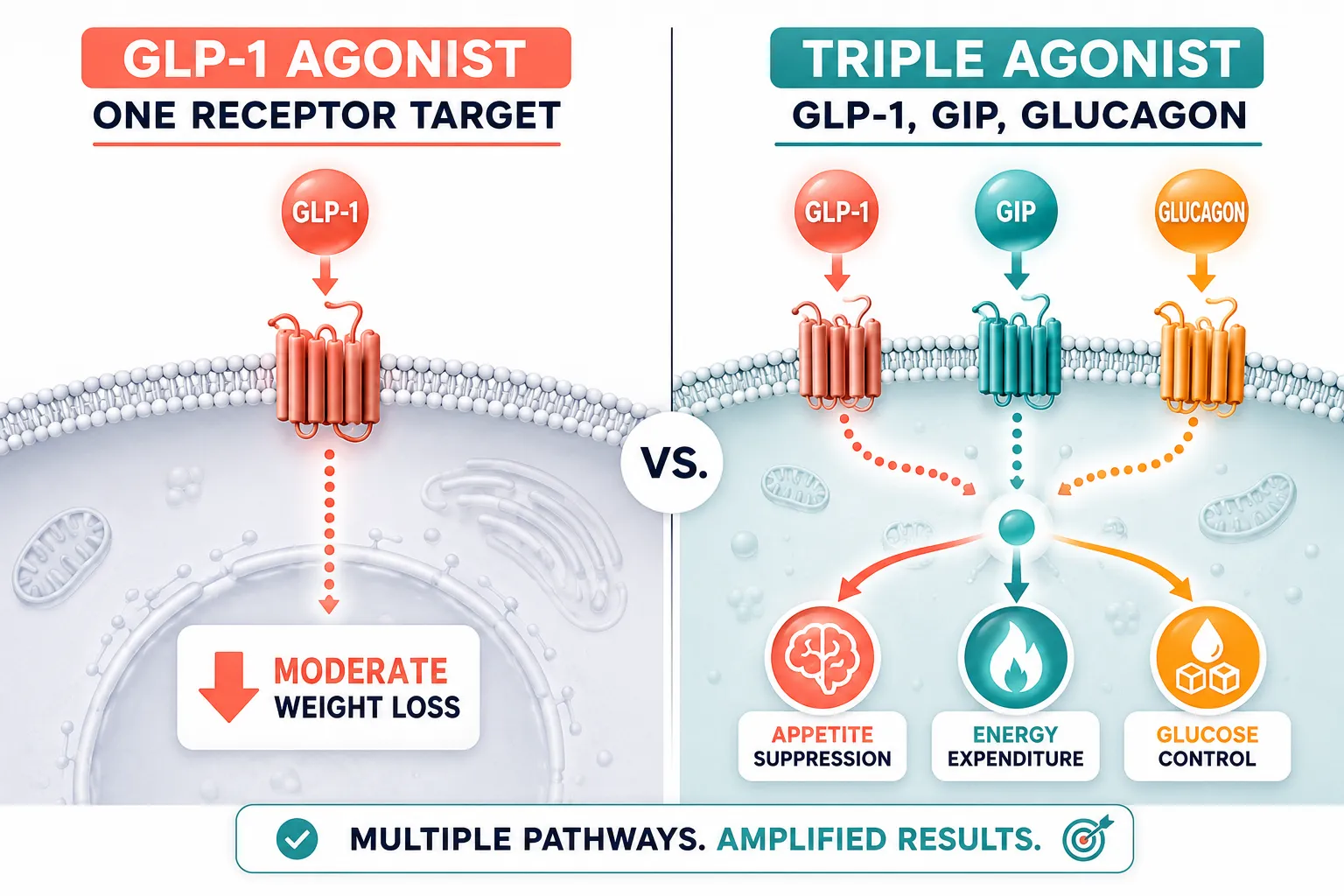
The label "GLP-3" did not originate in a peer-reviewed journal or a regulatory filing. It emerged organically in biohacking communities and research forums as shorthand for retatrutide's triple-receptor mechanism, activating glucagon-like peptide-1 (GLP-1), glucose-dependent insulinotropic polypeptide (GIP), and glucagon receptors simultaneously.

This is a meaningful distinction. GLP-1 and GLP-2 are actual endogenous peptides with defined biological roles. There is no naturally occurring "GLP-3" in human physiology. When researchers or enthusiasts use the term, they are borrowing the naming convention to signal a step beyond dual agonists like tirzepatide, not describing a distinct peptide family.
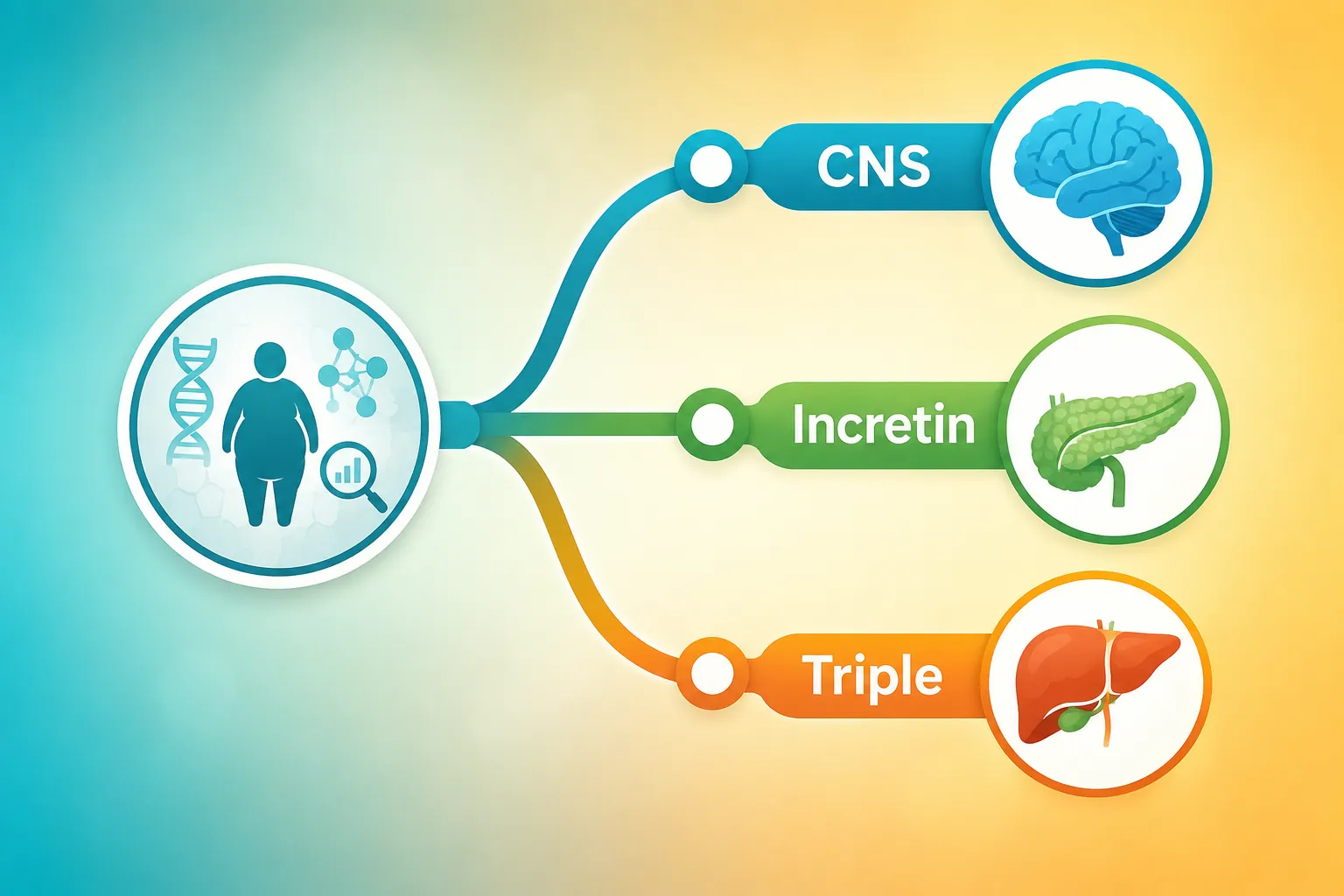
"GLP-3" functions as a category label born from search behavior, not from biochemistry.

For anyone exploring the newest GLP-1 triple agonist research, recognizing this distinction prevents conflating informal community terminology with peer-reviewed compound classifications. Related resources on GLP-3 and Retatrutide provide further context on how this terminology has evolved in the research space.


Retatrutide: The Compound Behind the Label

Retatrutide is a once-weekly subcutaneous injection developed by Eli Lilly. Its mechanism is what drives the "GLP-3" nickname, by activating three metabolic receptors at once, it amplifies both appetite suppression and energy expenditure beyond what single or dual agonists can achieve.

Clinical trial results have been striking:

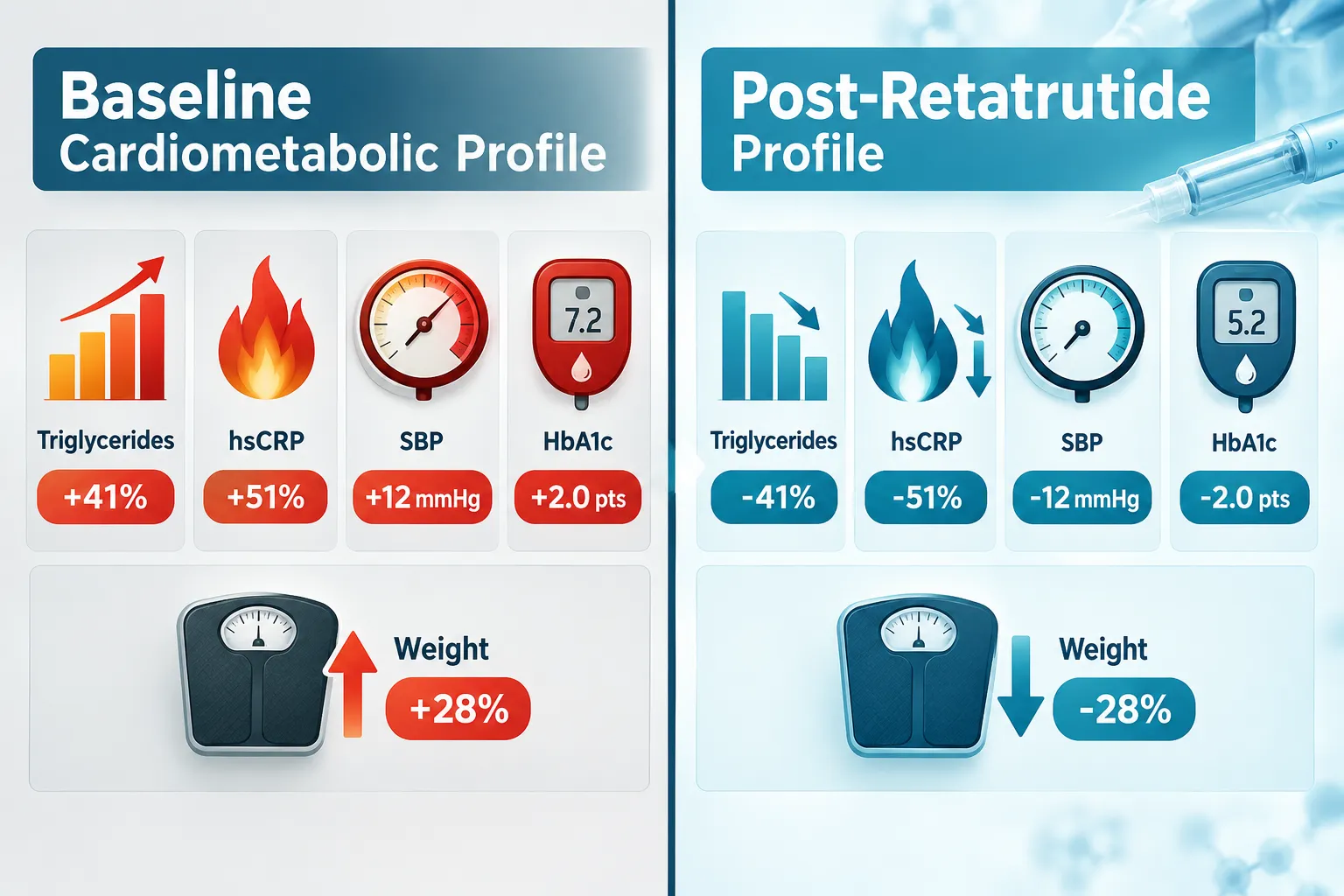
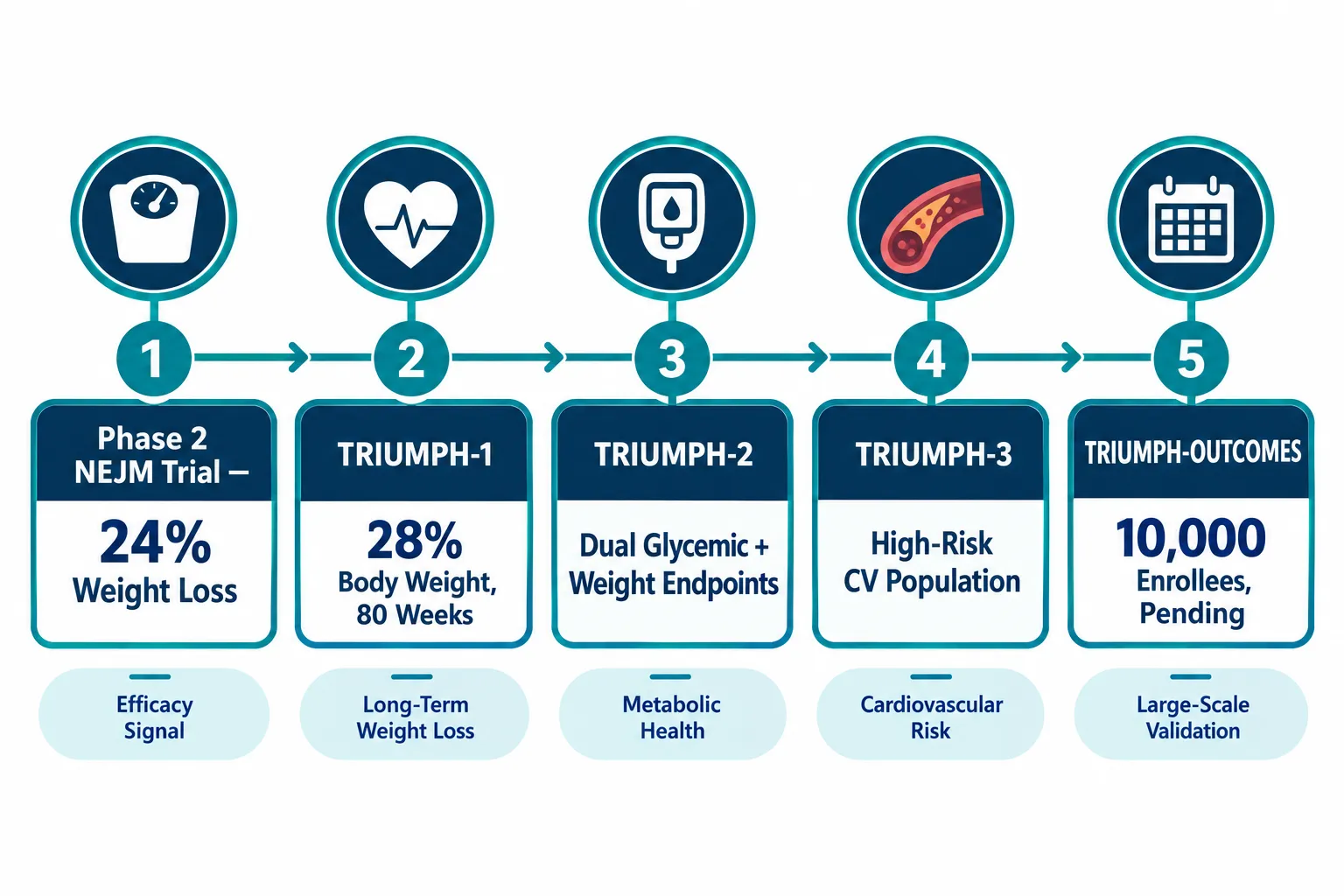
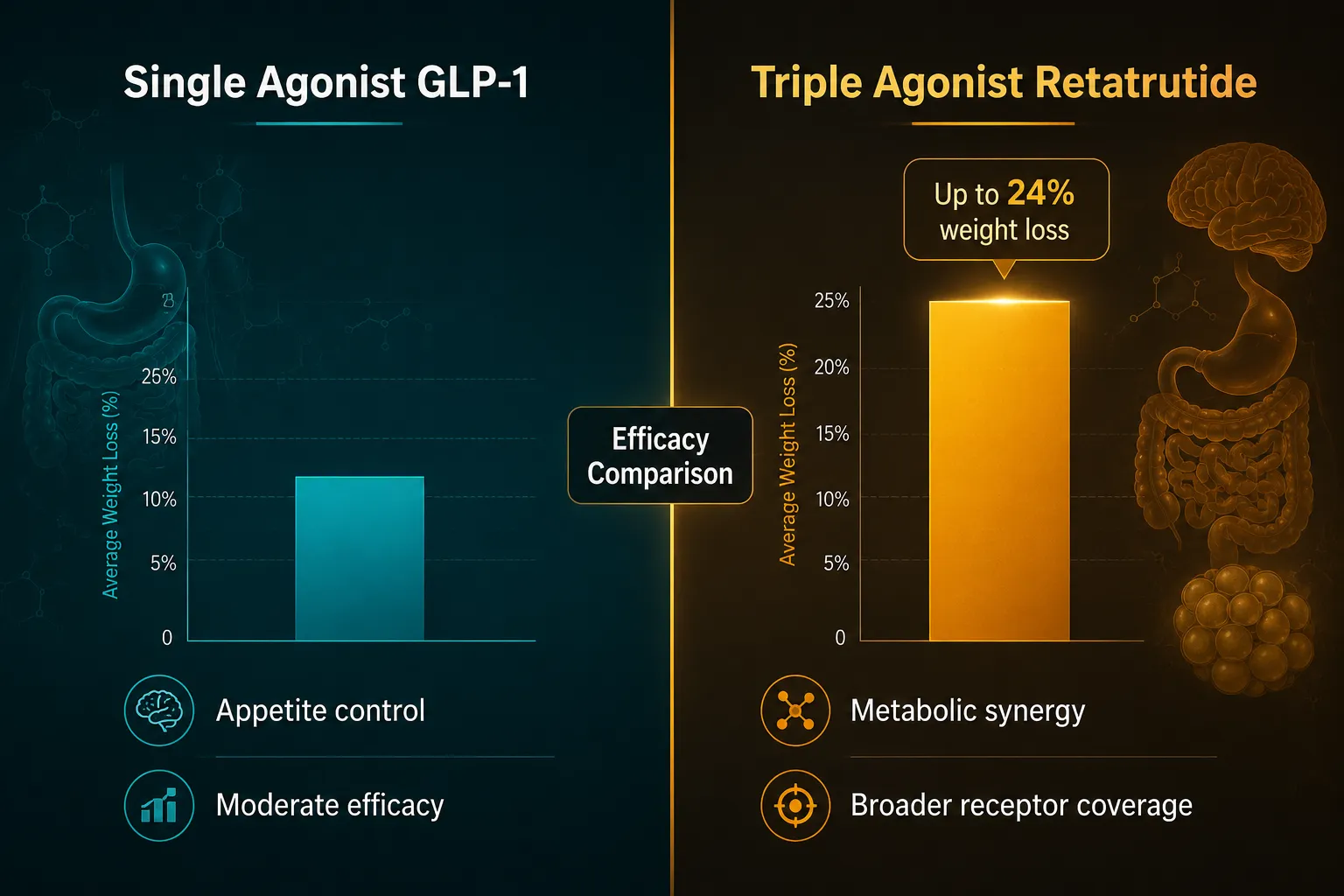
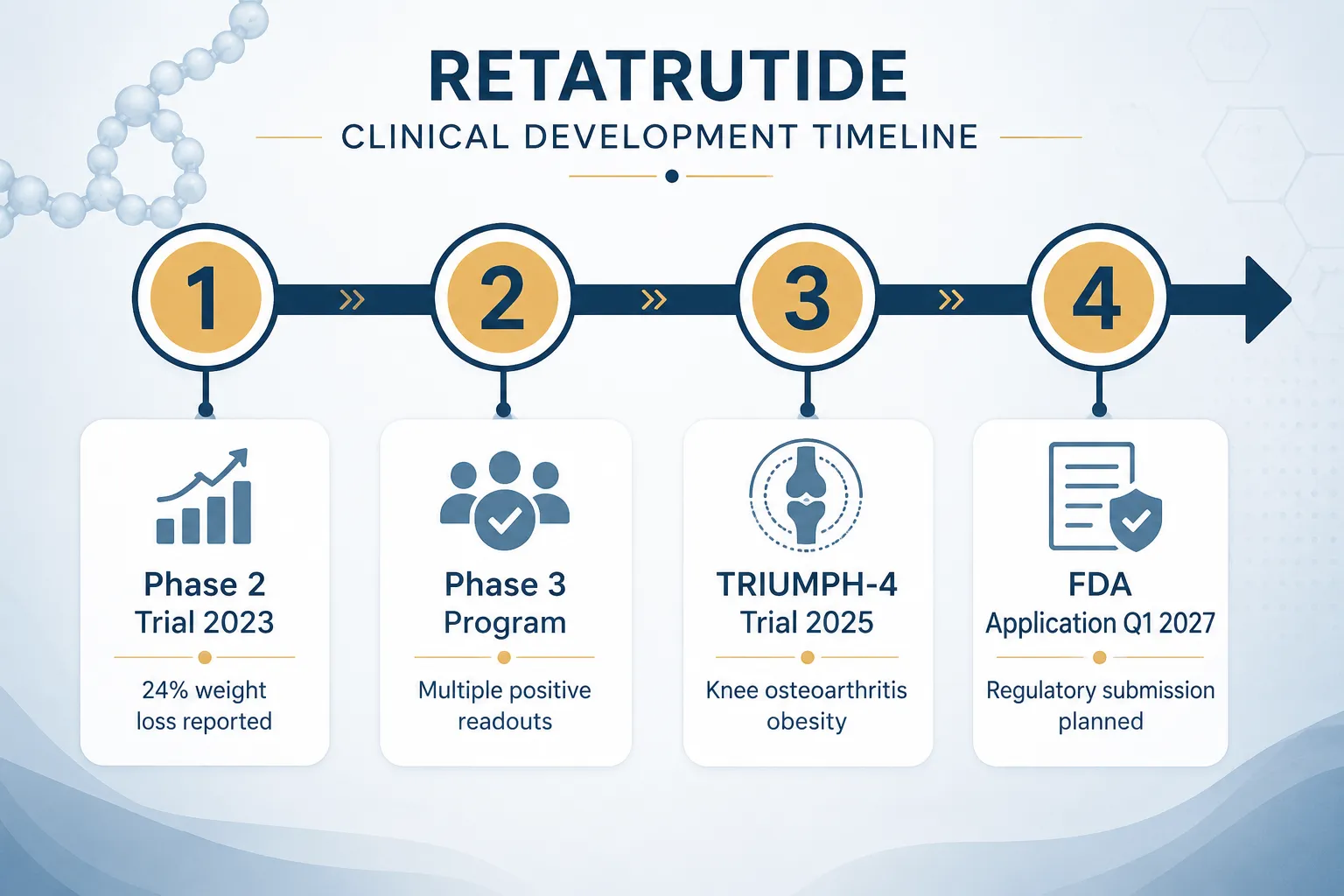
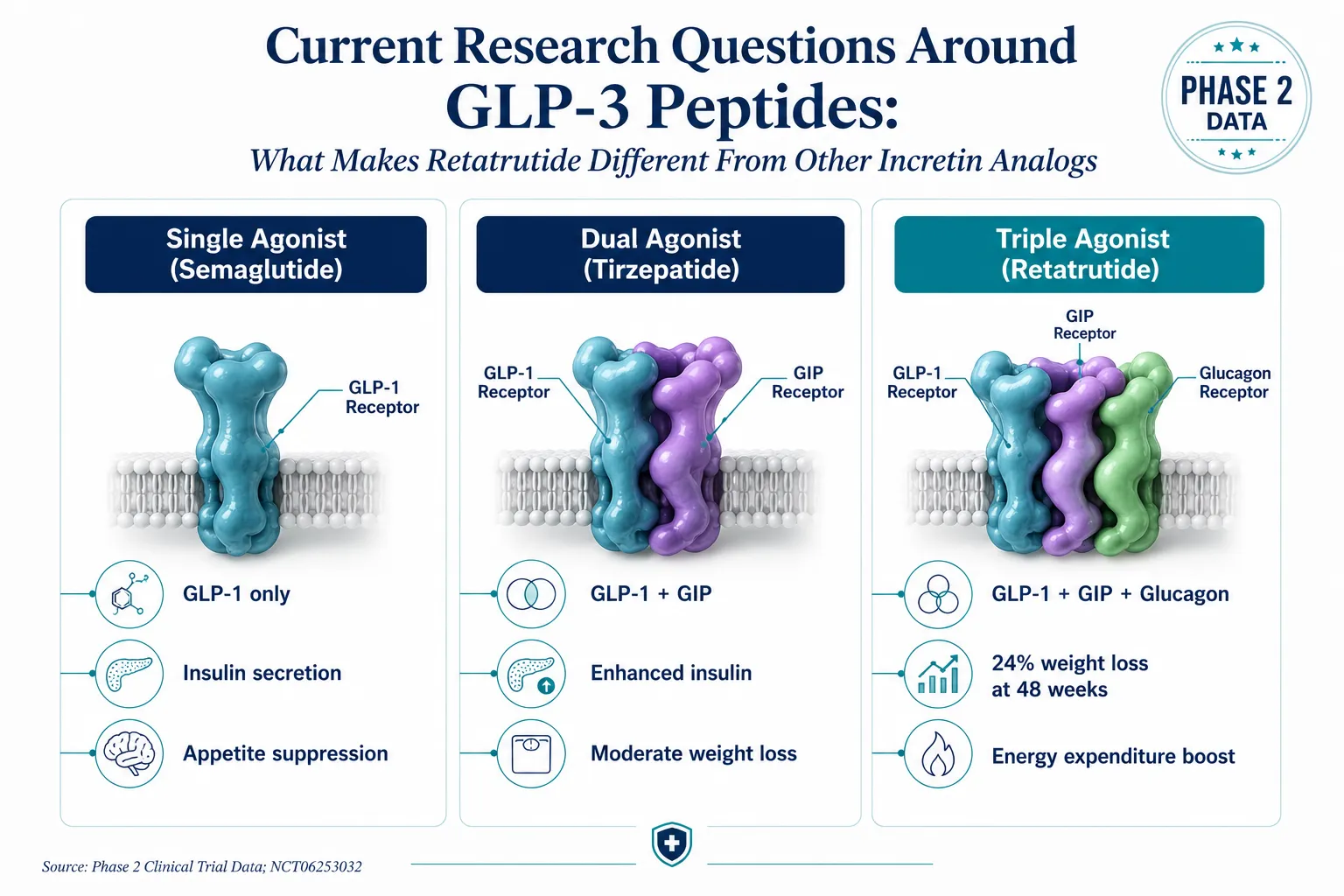
  • Phase 2 trials demonstrated a mean body weight reduction of 24.2% at 48 weeks using a 12 mg dose.
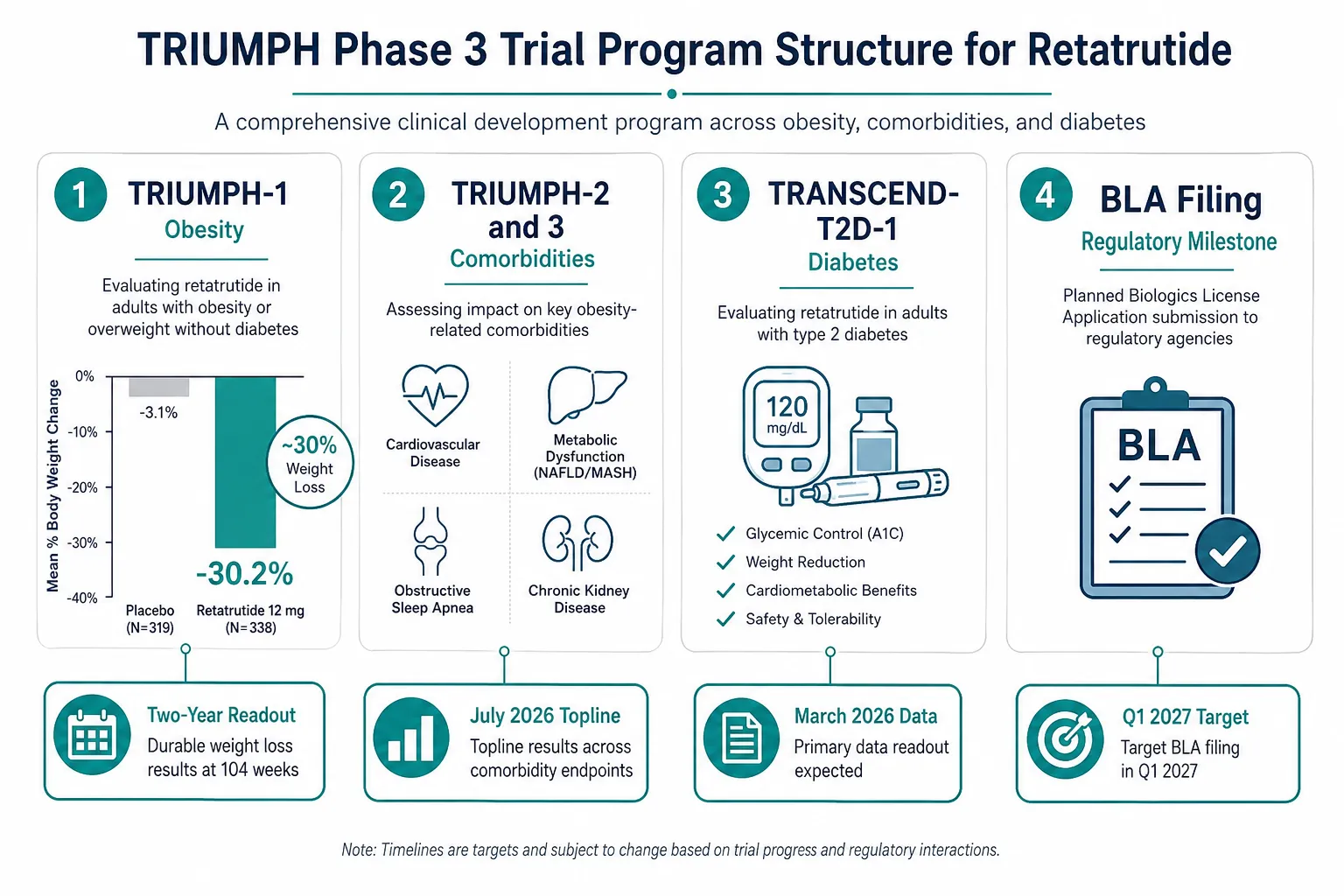
  • Phase 3 data from the TRIUMPH program reported up to 28.7% weight loss over approximately 68 weeks.
  • These figures surpass outcomes associated with semaglutide (Ozempic/Wegovy) and tirzepatide (Mounjaro/Zepbound).

Common side effects observed in trials include:

  • Nausea
  • Diarrhea
  • Vomiting
  • Constipation

Discontinuation rates at higher doses ranged from roughly 12-18%, compared to approximately 4% for placebo, a consideration for any research protocol design.

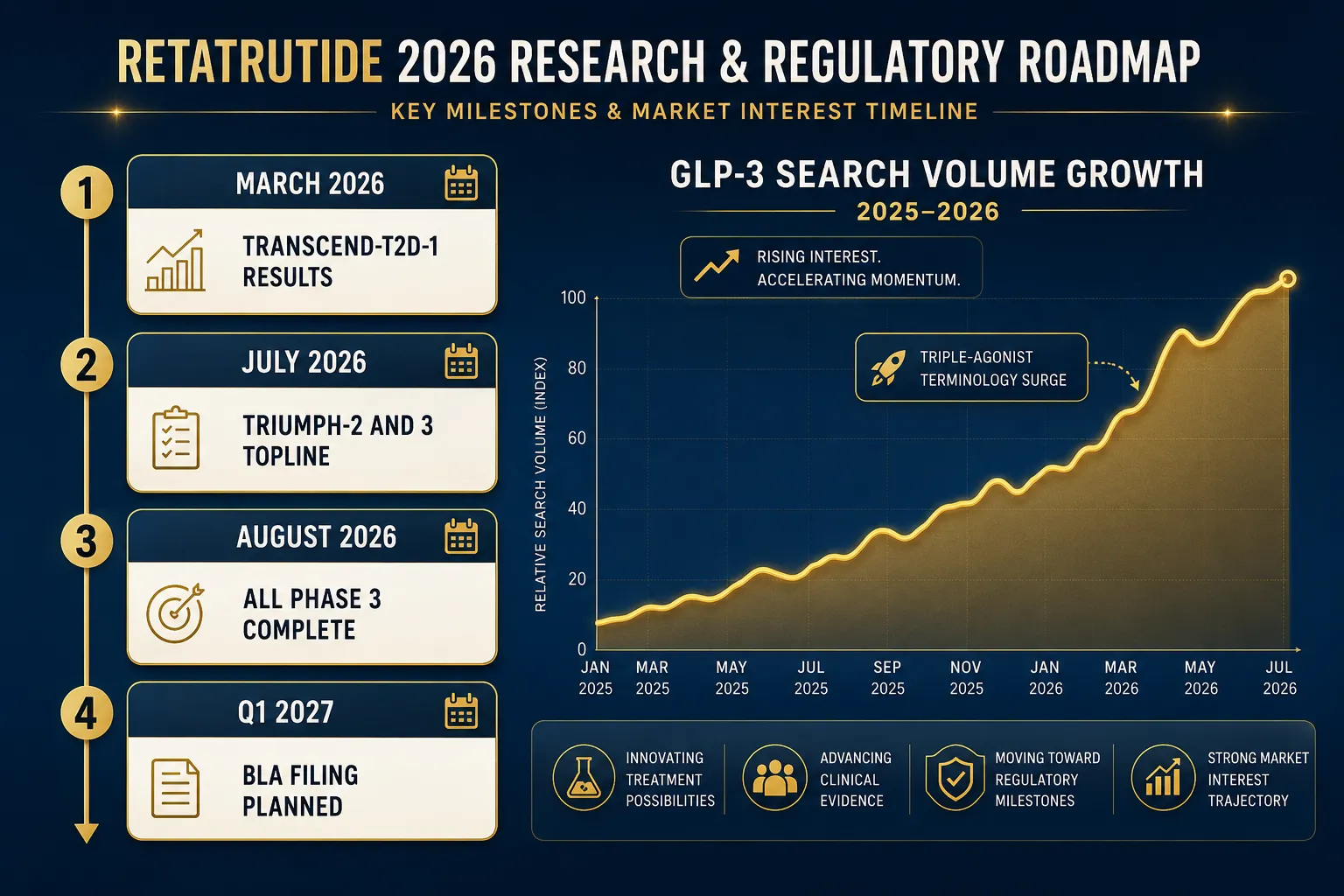
As of 2026, retatrutide remains in Phase 3 trials and has not been approved by the FDA. Eli Lilly is expected to pursue approval pending successful trial completion, possibly by the end of 2026. It currently carries no official brand name.

For researchers interested in how metabolic peptides interact with broader longevity pathways, the longevity peptide research overview offers relevant context. Those examining synergistic mechanisms may also find value in reviewing cagrilintide synergy with GLP-1 as a comparative framework.

Retatrutide: The Compound Behind the Label


Why the Nomenclature Gap Has Real Research Implications

Understanding GLP3 Peptide vs. Retatrutide: Understanding the Nomenclature and Research Implications is not purely academic. The terminology used when sourcing, citing, or designing studies around this compound has downstream consequences.

Three key implications stand out:

  1. Search intent misalignment, Researchers querying "GLP-3 peptide" may encounter products or literature that conflate the informal term with unrelated compounds, creating sourcing errors.
  2. Regulatory blind spots, Because retatrutide has no approved brand name yet, informal labels like "GLP-3" or "Reta" circulate in research communities without the traceability that official nomenclature provides.
  3. Comparative analysis errors, Treating "GLP-3" as equivalent to "triple agonist" as a class, rather than as a nickname for one specific molecule, can skew meta-analyses or literature reviews.

Researchers working with metabolic peptides should cross-reference compound identifiers carefully. Resources covering NAD research and where to buy peptides online illustrate how sourcing decisions intersect with nomenclature clarity in the broader peptide research space.

For those tracking the full pipeline of investigational metabolic compounds, reviewing tesofensine peptide research and MOTS-c mitochondrial research themes provides useful comparative framing for how novel compounds acquire informal labels before formal approval.

Why the Nomenclature Gap Has Real Research Implications


Conclusion

The debate around GLP3 Peptide vs. Retatrutide: Understanding the Nomenclature and Research Implications ultimately comes down to precision. Retatrutide is a well-defined, clinically investigated compound with Phase 3 data supporting extraordinary weight loss outcomes. "GLP-3" is a useful shorthand, but only when both parties in a research conversation understand it as informal nomenclature, not a recognized scientific category.

Actionable next steps for researchers and practitioners:

  • Always use "retatrutide" as the primary identifier in formal documentation, protocols, and sourcing requests.
  • Treat "GLP-3" and "Reta" as search and community terms, helpful for discovery, unreliable for precision.
  • Monitor the TRIUMPH Phase 3 program and FDA submission timelines, as approval could reshape how the compound is officially labeled and referenced.
  • Cross-reference any sourced material against verified compound identifiers to avoid conflation with unrelated peptides.

Clarity in nomenclature is not a minor detail, in peptide research, it is the foundation of reproducible, credible science.

https://www.puretestedpeptides.com/wp-content/uploads/2026/07/glp3-peptide-vs-retatrutide-understanding-the-nomenclature-and-research-implicat.png 1024 1536 https://www.puretestedpeptides.com/wp-content/uploads/2026/01/buy-peptides-online.jpg 2026-07-12 13:02:542026-07-12 13:02:54GLP3 Peptide vs. Retatrutide: Understanding the Nomenclature and Research Implications
GLP-3, GLP-1, and GLP-2 Explained: A Researcher’s Guide to the Peptide Family

GLP-3, GLP-1, and GLP-2 Explained: A Researcher’s Guide to the Peptide Family

June 28, 2026/0 Comments/in Uncategorized/by

The term "GLP-3" now appears in clinical trial press releases, investor calls, and research databases — yet no such peptide exists in standard biochemistry textbooks. That naming gap reveals something important: the glucagon-like peptide family is evolving faster than its own vocabulary. This guide to GLP-3, GLP-1, and GLP-2 explained as a peptide family cuts through the marketing language to focus on mechanism, receptor biology, and what the evidence actually shows.

Key Takeaways

  • GLP-1 and GLP-2 are both derived from the same precursor protein, proglucagon, through tissue-specific processing.
  • GLP-1 targets the GLP-1 receptor to regulate insulin secretion and appetite; GLP-2 targets a separate receptor to support intestinal growth and repair.
  • "GLP-3" is an informal nickname for retatrutide, a triple agonist hitting GLP-1, GIP, and glucagon receptors — not a distinct endogenous peptide.
  • Multiple next-generation agents in 2026 are blurring receptor boundaries, making precise terminology more important than ever.
  • Researchers should distinguish receptor pharmacology from peptide taxonomy to avoid conflating mechanism with marketing.

GLP-1, GLP-2, and GLP-3 peptide family molecular overview

The Proglucagon Origin: Where GLP-1 and GLP-2 Begin

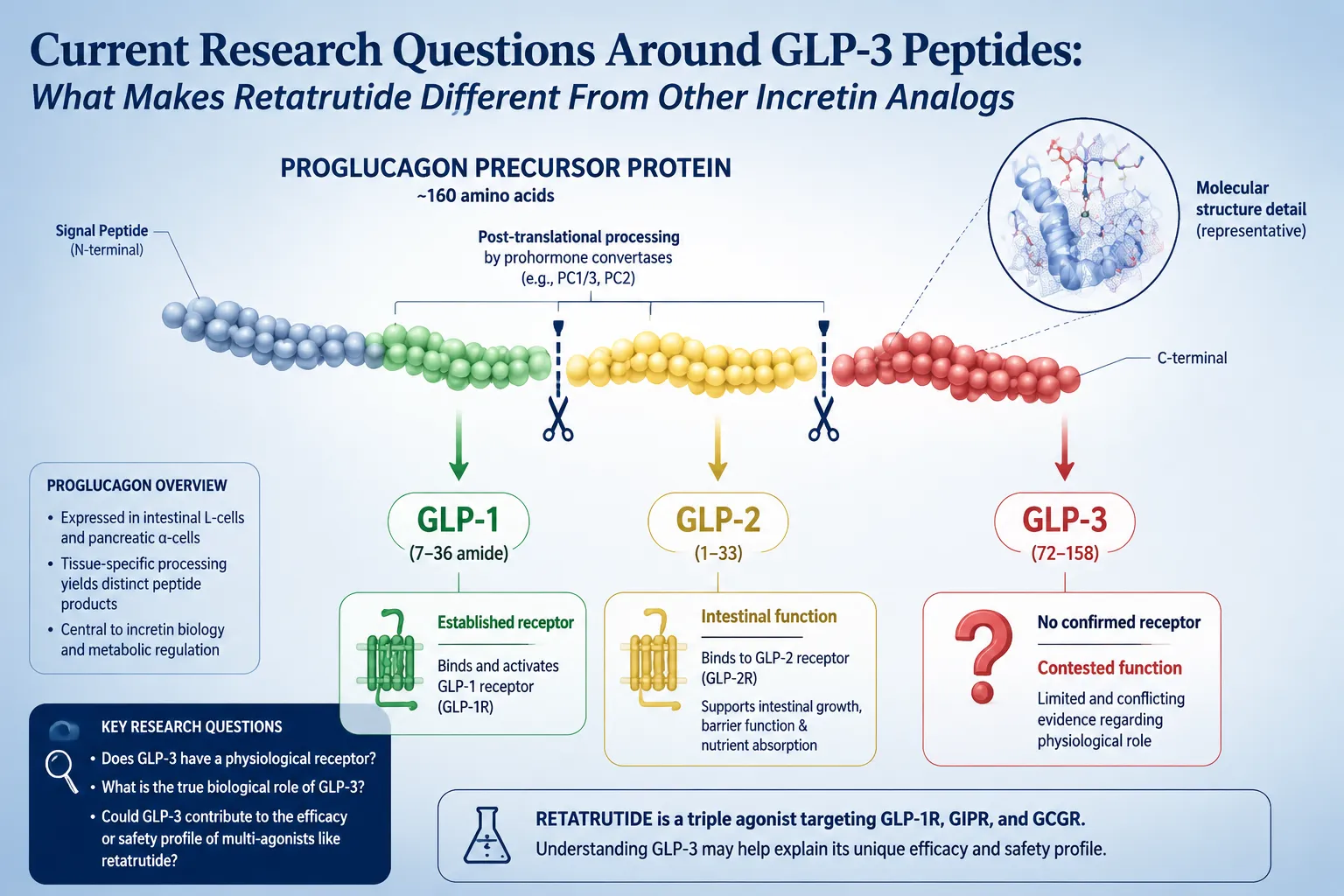
Understanding GLP-3, GLP-1, and GLP-2 explained as a peptide family starts with a single precursor: proglucagon. This 160-amino-acid protein is encoded by the GCG gene and processed differently depending on the tissue.

Tissue-specific cleavage produces distinct peptides:

Tissue Primary Products
Pancreatic alpha cells Glucagon, glicentin-related peptide
Intestinal L-cells GLP-1, GLP-2, oxyntomodulin
Brain neurons GLP-1, glicentin

This differential processing is controlled by prohormone convertases — PC2 in the pancreas and PC1/3 in the gut and brain. The result is that GLP-1 and GLP-2 are co-secreted from intestinal L-cells in a roughly 1:1 molar ratio following nutrient ingestion.

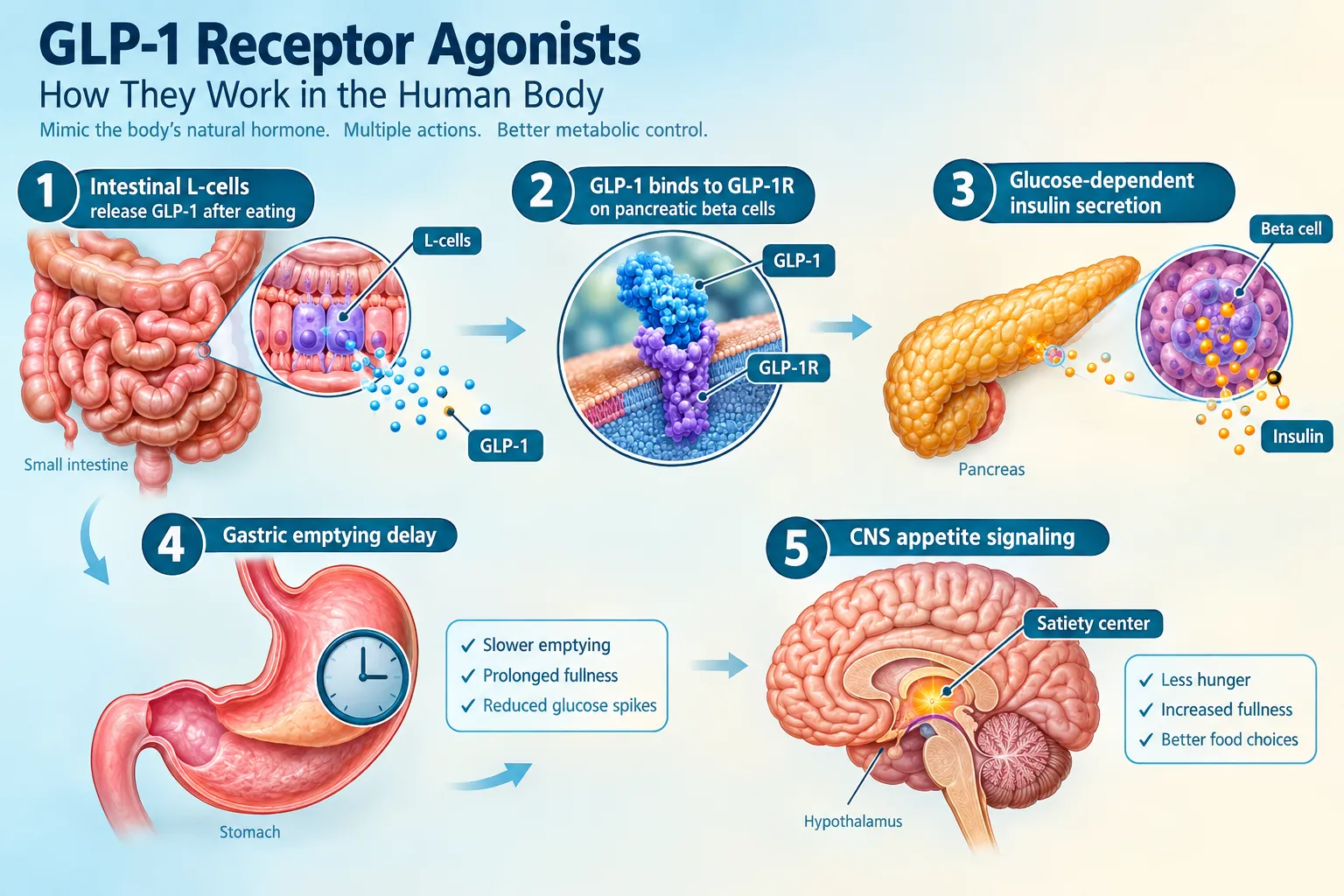
GLP-1 (glucagon-like peptide-1) is a 30-amino-acid incretin hormone. It binds the GLP-1 receptor (GLP-1R), a class B G-protein-coupled receptor expressed in pancreatic beta cells, the vagus nerve, the hypothalamus, and the heart. Activation drives glucose-dependent insulin secretion, suppresses glucagon, slows gastric emptying, and reduces appetite. Its plasma half-life is under two minutes due to rapid degradation by DPP-4 enzyme.

GLP-2 (glucagon-like peptide-2) is a 33-amino-acid peptide that binds its own distinct receptor, GLP-2R, expressed primarily in intestinal enteroendocrine cells, submucosal neurons, and the hypothalamus. Its core functions center on intestinal epithelial growth, barrier integrity, and nutrient absorption — not glucose regulation. Teduglutide (Gattex/Revestive), a GLP-2 analog, is the only approved agent in this class and generates over $800 million annually. As of 2026, at least six novel GLP-2 analog programs are in active clinical development targeting short bowel syndrome, Crohn's disease, and gut barrier dysfunction. Researchers exploring GLP-1 incretin research themes will find the GLP-2 pathway a compelling parallel.

"GLP-1 and GLP-2 are not interchangeable — they share a precursor but act on entirely different receptor systems with non-overlapping physiological roles."


What "GLP-3" Actually Means: Receptor Taxonomy vs. Peptide Naming

Researcher comparing GLP peptide vials and clinical trial data

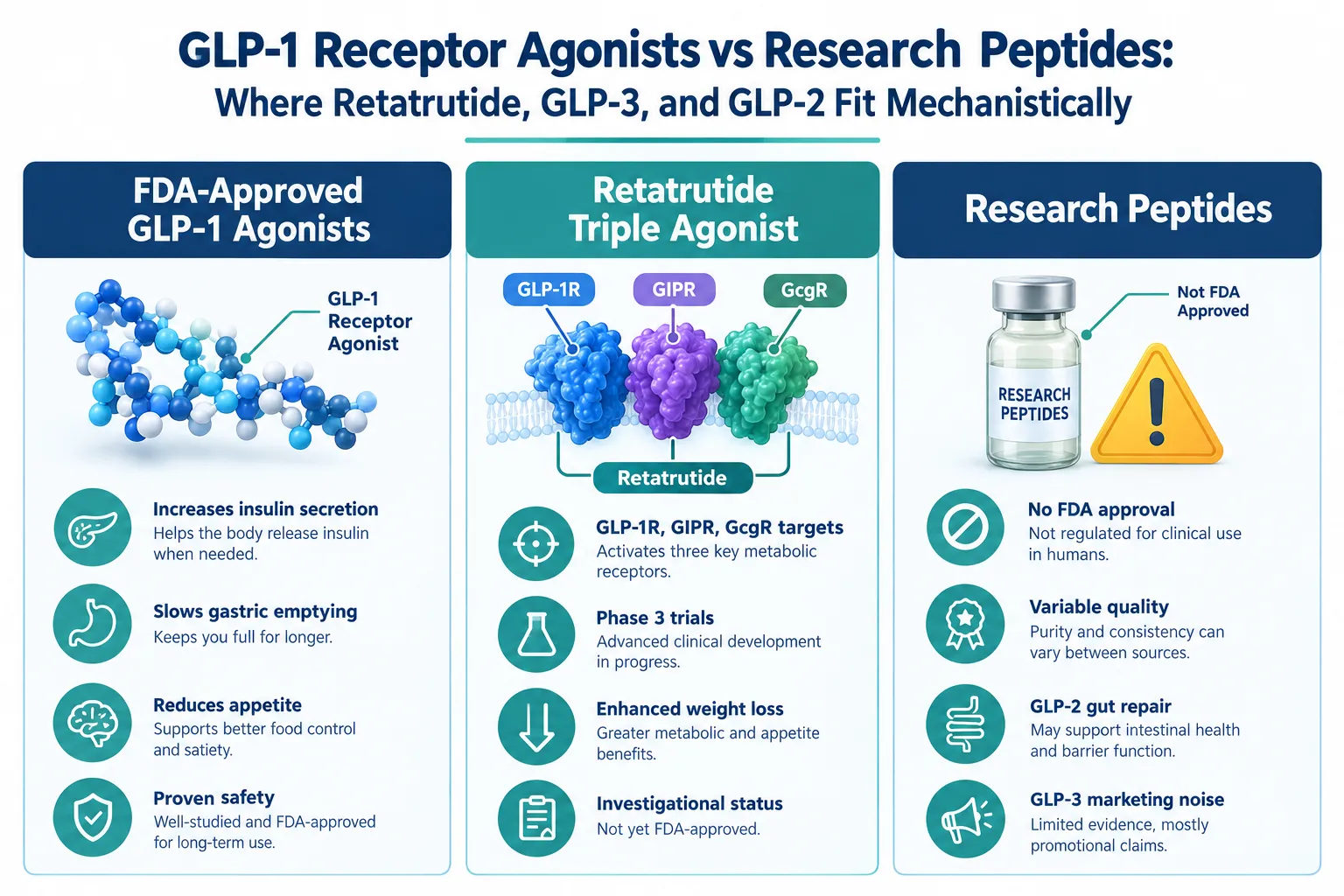
The phrase "GLP-3" does not describe a third endogenous glucagon-like peptide. It is an informal shorthand for retatrutide, a synthetic triple agonist developed by Eli Lilly that simultaneously targets three receptors: GLP-1R, GIP receptor (GIPR), and glucagon receptor (GCGR). The "3" refers to the number of receptor targets, not a peptide sequence.

This distinction matters enormously for researchers. Calling retatrutide "GLP-3" is pharmacologically imprecise. The correct terminology is triple receptor agonist or GLP-1/GIP/glucagon tri-agonist. Retatrutide is not FDA-approved as of 2026 and remains available only through clinical trials. Phase 3 data have shown up to 28.7% weight loss, with approval anticipated no earlier than 2027. For more on this compound's research profile, see the dedicated retatrutide and GLP-3 research overview.

Why does the naming confusion persist?

  • Dual agonists like tirzepatide (GLP-1/GIP) were informally called "GLP-2" by some media outlets before that term was corrected.
  • The pharmaceutical pipeline moves faster than regulatory taxonomy.
  • Marketing teams favor simple numerical progressions.

Researchers should also note the generational differences across GLP-1 drug classes to contextualize where triple agonists sit in the therapeutic timeline.


The 2026 Pipeline: Next-Generation Agents Across the GLP Family

Next-generation GLP peptide pipeline timeline and weight-loss data chart

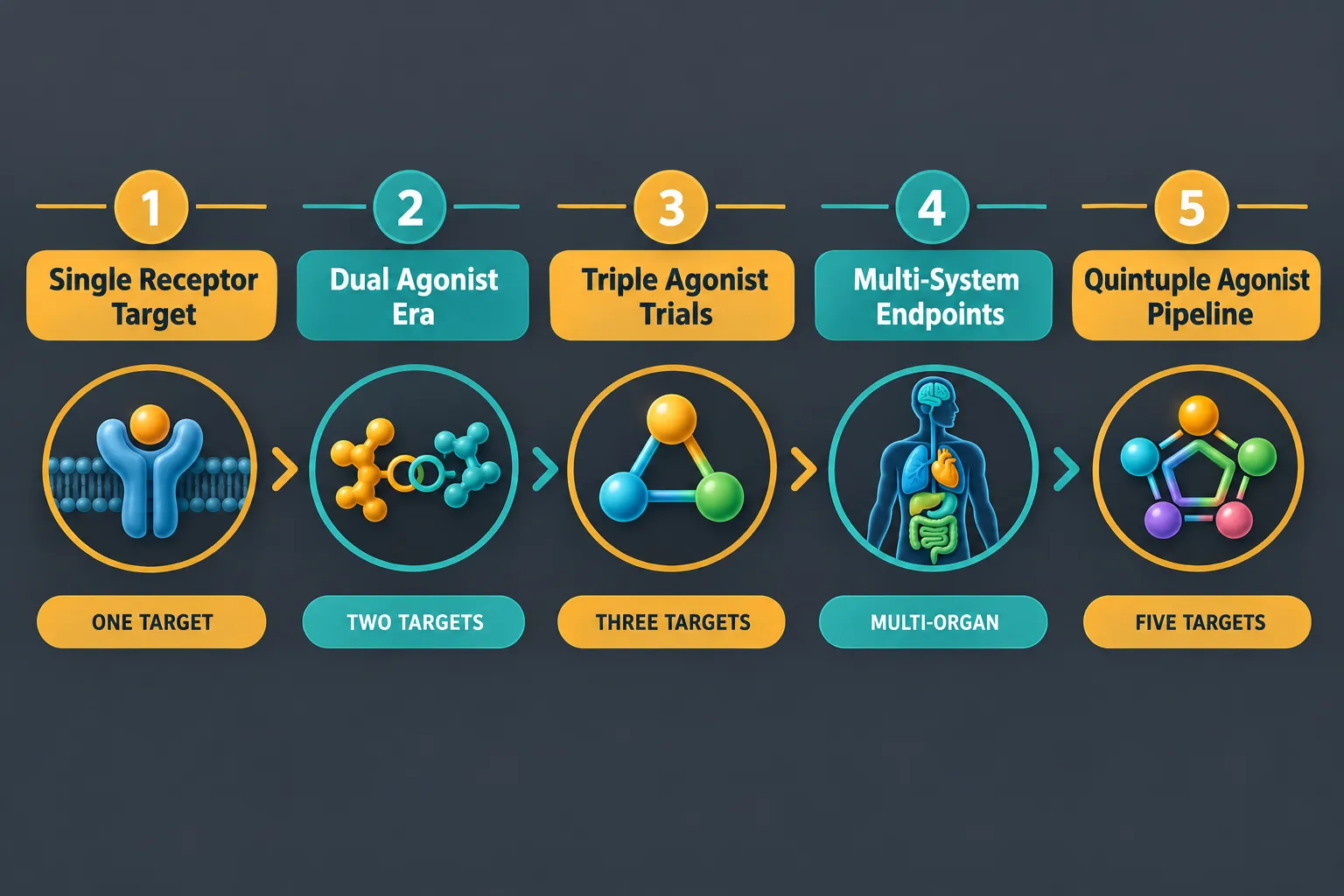
The peptide family landscape in 2026 is defined by receptor combination strategies rather than single-target approaches. Key agents include:

Orforglipron (Foundayo) — Eli Lilly
A once-daily oral GLP-1 receptor agonist. In the ACHIEVE-3 trial, the 17.2 mg dose produced 57.1% greater relative A1C reduction and 73.6% greater relative weight loss compared to oral semaglutide 14 mg. Lilly plans FDA submission by end of Q2 2026.

PF-08653944 — Pfizer
An ultra-long-acting injectable GLP-1 RA achieving 12.3% mean placebo-adjusted weight loss at 28 weeks in the VESPER-3 Phase 2b study, with weight loss continuing after transitioning from weekly to monthly dosing. Ten Phase 3 trials are anticipated in 2026.

Amycretin — Novo Nordisk
A single molecule activating both amylin and GLP-1 receptors, showing 22% weight loss in 36 weeks in Phase 1b/2a trials. Both oral and injectable formulations advance to Phase 3 in 2026.

Survodutide — Boehringer Ingelheim
A dual glucagon/GLP-1 agonist showing 18.7% weight loss at 46 weeks in Phase 2, with 62% of MASH patients achieving disease resolution. Phase 3 trials span 14 countries.

Researchers interested in the broader metabolic peptide landscape can explore metabolic modulation research lines and GIP receptor biology for mechanistic context. Those studying adjacent metabolic compounds may also find value in reviewing AOD9604 metabolic research and SLU-PP-332 metabolic research as comparative reference points.


Conclusion

The GLP peptide family is one of the most productive areas in current biomedical research, but imprecise language creates real confusion. GLP-1 and GLP-2 are endogenous peptides with distinct receptors and non-overlapping functions — both derived from proglucagon but acting on entirely separate physiological systems. "GLP-3" is not a peptide; it is a colloquial label for a triple-receptor agonist strategy.

Actionable next steps for researchers:

  • Anchor all literature searches to receptor nomenclature (GLP-1R, GLP-2R, GIPR, GCGR) rather than informal drug nicknames.
  • Track the orforglipron and retatrutide Phase 3 readouts expected in 2026-2027 as benchmark data for receptor combination strategies.
  • Distinguish between endogenous peptide biology and synthetic analog pharmacology when designing assay protocols.
  • Review the GLP-1 peptide product research library for current research-grade compound availability.

Precise taxonomy is not pedantry — it is the foundation of reproducible science.

https://www.puretestedpeptides.com/wp-content/uploads/2026/06/GLP-3-GLP-1-and-GLP-2-Explained-A-Researchers-Guide-to-the-Peptide-Family.png 1024 1536 https://www.puretestedpeptides.com/wp-content/uploads/2026/01/buy-peptides-online.jpg 2026-06-28 13:27:522026-06-28 13:27:52GLP-3, GLP-1, and GLP-2 Explained: A Researcher’s Guide to the Peptide Family
GLP-3, GLP-1, and GLP-2 Explained: A Researcher’s Guide to the Peptide Family

GLP-3, GLP-1, and GLP-2 Explained: A Researcher’s Guide to the Peptide Family

June 28, 2026/0 Comments/in Uncategorized/by

The term "GLP-3" now appears in clinical trial press releases, investor calls, and research databases — yet no such peptide exists in standard biochemistry textbooks. That naming gap reveals something important: the glucagon-like peptide family is evolving faster than its own vocabulary. This guide to GLP-3, GLP-1, and GLP-2 explained as a peptide family cuts through the marketing language to focus on mechanism, receptor biology, and what the evidence actually shows.

Key Takeaways

  • GLP-1 and GLP-2 are both derived from the same precursor protein, proglucagon, through tissue-specific processing.
  • GLP-1 targets the GLP-1 receptor to regulate insulin secretion and appetite; GLP-2 targets a separate receptor to support intestinal growth and repair.
  • "GLP-3" is an informal nickname for retatrutide, a triple agonist hitting GLP-1, GIP, and glucagon receptors — not a distinct endogenous peptide.
  • Multiple next-generation agents in 2026 are blurring receptor boundaries, making precise terminology more important than ever.
  • Researchers should distinguish receptor pharmacology from peptide taxonomy to avoid conflating mechanism with marketing.

GLP-1, GLP-2, and GLP-3 peptide family molecular overview

The Proglucagon Origin: Where GLP-1 and GLP-2 Begin

Understanding GLP-3, GLP-1, and GLP-2 explained as a peptide family starts with a single precursor: proglucagon. This 160-amino-acid protein is encoded by the GCG gene and processed differently depending on the tissue.

Tissue-specific cleavage produces distinct peptides:

Tissue Primary Products
Pancreatic alpha cells Glucagon, glicentin-related peptide
Intestinal L-cells GLP-1, GLP-2, oxyntomodulin
Brain neurons GLP-1, glicentin

This differential processing is controlled by prohormone convertases — PC2 in the pancreas and PC1/3 in the gut and brain. The result is that GLP-1 and GLP-2 are co-secreted from intestinal L-cells in a roughly 1:1 molar ratio following nutrient ingestion.

GLP-1 (glucagon-like peptide-1) is a 30-amino-acid incretin hormone. It binds the GLP-1 receptor (GLP-1R), a class B G-protein-coupled receptor expressed in pancreatic beta cells, the vagus nerve, the hypothalamus, and the heart. Activation drives glucose-dependent insulin secretion, suppresses glucagon, slows gastric emptying, and reduces appetite. Its plasma half-life is under two minutes due to rapid degradation by DPP-4 enzyme.

GLP-2 (glucagon-like peptide-2) is a 33-amino-acid peptide that binds its own distinct receptor, GLP-2R, expressed primarily in intestinal enteroendocrine cells, submucosal neurons, and the hypothalamus. Its core functions center on intestinal epithelial growth, barrier integrity, and nutrient absorption — not glucose regulation. Teduglutide (Gattex/Revestive), a GLP-2 analog, is the only approved agent in this class and generates over $800 million annually. As of 2026, at least six novel GLP-2 analog programs are in active clinical development targeting short bowel syndrome, Crohn's disease, and gut barrier dysfunction. Researchers exploring GLP-1 incretin research themes will find the GLP-2 pathway a compelling parallel.

"GLP-1 and GLP-2 are not interchangeable — they share a precursor but act on entirely different receptor systems with non-overlapping physiological roles."


What "GLP-3" Actually Means: Receptor Taxonomy vs. Peptide Naming

Researcher comparing GLP peptide vials and clinical trial data

The phrase "GLP-3" does not describe a third endogenous glucagon-like peptide. It is an informal shorthand for retatrutide, a synthetic triple agonist developed by Eli Lilly that simultaneously targets three receptors: GLP-1R, GIP receptor (GIPR), and glucagon receptor (GCGR). The "3" refers to the number of receptor targets, not a peptide sequence.

This distinction matters enormously for researchers. Calling retatrutide "GLP-3" is pharmacologically imprecise. The correct terminology is triple receptor agonist or GLP-1/GIP/glucagon tri-agonist. Retatrutide is not FDA-approved as of 2026 and remains available only through clinical trials. Phase 3 data have shown up to 28.7% weight loss, with approval anticipated no earlier than 2027. For more on this compound's research profile, see the dedicated retatrutide and GLP-3 research overview.

Why does the naming confusion persist?

  • Dual agonists like tirzepatide (GLP-1/GIP) were informally called "GLP-2" by some media outlets before that term was corrected.
  • The pharmaceutical pipeline moves faster than regulatory taxonomy.
  • Marketing teams favor simple numerical progressions.

Researchers should also note the generational differences across GLP-1 drug classes to contextualize where triple agonists sit in the therapeutic timeline.


The 2026 Pipeline: Next-Generation Agents Across the GLP Family

Next-generation GLP peptide pipeline timeline and weight-loss data chart

The peptide family landscape in 2026 is defined by receptor combination strategies rather than single-target approaches. Key agents include:

Orforglipron (Foundayo) — Eli Lilly
A once-daily oral GLP-1 receptor agonist. In the ACHIEVE-3 trial, the 17.2 mg dose produced 57.1% greater relative A1C reduction and 73.6% greater relative weight loss compared to oral semaglutide 14 mg. Lilly plans FDA submission by end of Q2 2026.

PF-08653944 — Pfizer
An ultra-long-acting injectable GLP-1 RA achieving 12.3% mean placebo-adjusted weight loss at 28 weeks in the VESPER-3 Phase 2b study, with weight loss continuing after transitioning from weekly to monthly dosing. Ten Phase 3 trials are anticipated in 2026.

Amycretin — Novo Nordisk
A single molecule activating both amylin and GLP-1 receptors, showing 22% weight loss in 36 weeks in Phase 1b/2a trials. Both oral and injectable formulations advance to Phase 3 in 2026.

Survodutide — Boehringer Ingelheim
A dual glucagon/GLP-1 agonist showing 18.7% weight loss at 46 weeks in Phase 2, with 62% of MASH patients achieving disease resolution. Phase 3 trials span 14 countries.

Researchers interested in the broader metabolic peptide landscape can explore metabolic modulation research lines and GIP receptor biology for mechanistic context. Those studying adjacent metabolic compounds may also find value in reviewing AOD9604 metabolic research and SLU-PP-332 metabolic research as comparative reference points.


Conclusion

The GLP peptide family is one of the most productive areas in current biomedical research, but imprecise language creates real confusion. GLP-1 and GLP-2 are endogenous peptides with distinct receptors and non-overlapping functions — both derived from proglucagon but acting on entirely separate physiological systems. "GLP-3" is not a peptide; it is a colloquial label for a triple-receptor agonist strategy.

Actionable next steps for researchers:

  • Anchor all literature searches to receptor nomenclature (GLP-1R, GLP-2R, GIPR, GCGR) rather than informal drug nicknames.
  • Track the orforglipron and retatrutide Phase 3 readouts expected in 2026-2027 as benchmark data for receptor combination strategies.
  • Distinguish between endogenous peptide biology and synthetic analog pharmacology when designing assay protocols.
  • Review the GLP-1 peptide product research library for current research-grade compound availability.

Precise taxonomy is not pedantry — it is the foundation of reproducible science.

https://www.puretestedpeptides.com/wp-content/uploads/2026/06/GLP-3-GLP-1-and-GLP-2-Explained-A-Researchers-Guide-to-the-Peptide-Family.png 1024 1536 https://www.puretestedpeptides.com/wp-content/uploads/2026/01/buy-peptides-online.jpg 2026-06-28 13:27:522026-06-28 13:27:52GLP-3, GLP-1, and GLP-2 Explained: A Researcher’s Guide to the Peptide Family
GLP-3, GLP-1, and GLP-2 Explained: A Researcher’s Guide to the Peptide Family

GLP-3, GLP-1, and GLP-2 Explained: A Researcher’s Guide to the Peptide Family

June 28, 2026/0 Comments/in Uncategorized/by

The term "GLP-3" now appears in clinical trial press releases, investor calls, and research databases — yet no such peptide exists in standard biochemistry textbooks. That naming gap reveals something important: the glucagon-like peptide family is evolving faster than its own vocabulary. This guide to GLP-3, GLP-1, and GLP-2 explained as a peptide family cuts through the marketing language to focus on mechanism, receptor biology, and what the evidence actually shows.

Key Takeaways

  • GLP-1 and GLP-2 are both derived from the same precursor protein, proglucagon, through tissue-specific processing.
  • GLP-1 targets the GLP-1 receptor to regulate insulin secretion and appetite; GLP-2 targets a separate receptor to support intestinal growth and repair.
  • "GLP-3" is an informal nickname for retatrutide, a triple agonist hitting GLP-1, GIP, and glucagon receptors — not a distinct endogenous peptide.
  • Multiple next-generation agents in 2026 are blurring receptor boundaries, making precise terminology more important than ever.
  • Researchers should distinguish receptor pharmacology from peptide taxonomy to avoid conflating mechanism with marketing.

GLP-1, GLP-2, and GLP-3 peptide family molecular overview

The Proglucagon Origin: Where GLP-1 and GLP-2 Begin

Understanding GLP-3, GLP-1, and GLP-2 explained as a peptide family starts with a single precursor: proglucagon. This 160-amino-acid protein is encoded by the GCG gene and processed differently depending on the tissue.

Tissue-specific cleavage produces distinct peptides:

Tissue Primary Products
Pancreatic alpha cells Glucagon, glicentin-related peptide
Intestinal L-cells GLP-1, GLP-2, oxyntomodulin
Brain neurons GLP-1, glicentin

This differential processing is controlled by prohormone convertases — PC2 in the pancreas and PC1/3 in the gut and brain. The result is that GLP-1 and GLP-2 are co-secreted from intestinal L-cells in a roughly 1:1 molar ratio following nutrient ingestion.

GLP-1 (glucagon-like peptide-1) is a 30-amino-acid incretin hormone. It binds the GLP-1 receptor (GLP-1R), a class B G-protein-coupled receptor expressed in pancreatic beta cells, the vagus nerve, the hypothalamus, and the heart. Activation drives glucose-dependent insulin secretion, suppresses glucagon, slows gastric emptying, and reduces appetite. Its plasma half-life is under two minutes due to rapid degradation by DPP-4 enzyme.

GLP-2 (glucagon-like peptide-2) is a 33-amino-acid peptide that binds its own distinct receptor, GLP-2R, expressed primarily in intestinal enteroendocrine cells, submucosal neurons, and the hypothalamus. Its core functions center on intestinal epithelial growth, barrier integrity, and nutrient absorption — not glucose regulation. Teduglutide (Gattex/Revestive), a GLP-2 analog, is the only approved agent in this class and generates over $800 million annually. As of 2026, at least six novel GLP-2 analog programs are in active clinical development targeting short bowel syndrome, Crohn's disease, and gut barrier dysfunction. Researchers exploring GLP-1 incretin research themes will find the GLP-2 pathway a compelling parallel.

"GLP-1 and GLP-2 are not interchangeable — they share a precursor but act on entirely different receptor systems with non-overlapping physiological roles."


What "GLP-3" Actually Means: Receptor Taxonomy vs. Peptide Naming

Researcher comparing GLP peptide vials and clinical trial data

The phrase "GLP-3" does not describe a third endogenous glucagon-like peptide. It is an informal shorthand for retatrutide, a synthetic triple agonist developed by Eli Lilly that simultaneously targets three receptors: GLP-1R, GIP receptor (GIPR), and glucagon receptor (GCGR). The "3" refers to the number of receptor targets, not a peptide sequence.

This distinction matters enormously for researchers. Calling retatrutide "GLP-3" is pharmacologically imprecise. The correct terminology is triple receptor agonist or GLP-1/GIP/glucagon tri-agonist. Retatrutide is not FDA-approved as of 2026 and remains available only through clinical trials. Phase 3 data have shown up to 28.7% weight loss, with approval anticipated no earlier than 2027. For more on this compound's research profile, see the dedicated retatrutide and GLP-3 research overview.

Why does the naming confusion persist?

  • Dual agonists like tirzepatide (GLP-1/GIP) were informally called "GLP-2" by some media outlets before that term was corrected.
  • The pharmaceutical pipeline moves faster than regulatory taxonomy.
  • Marketing teams favor simple numerical progressions.

Researchers should also note the generational differences across GLP-1 drug classes to contextualize where triple agonists sit in the therapeutic timeline.


The 2026 Pipeline: Next-Generation Agents Across the GLP Family

Next-generation GLP peptide pipeline timeline and weight-loss data chart

The peptide family landscape in 2026 is defined by receptor combination strategies rather than single-target approaches. Key agents include:

Orforglipron (Foundayo) — Eli Lilly
A once-daily oral GLP-1 receptor agonist. In the ACHIEVE-3 trial, the 17.2 mg dose produced 57.1% greater relative A1C reduction and 73.6% greater relative weight loss compared to oral semaglutide 14 mg. Lilly plans FDA submission by end of Q2 2026.

PF-08653944 — Pfizer
An ultra-long-acting injectable GLP-1 RA achieving 12.3% mean placebo-adjusted weight loss at 28 weeks in the VESPER-3 Phase 2b study, with weight loss continuing after transitioning from weekly to monthly dosing. Ten Phase 3 trials are anticipated in 2026.

Amycretin — Novo Nordisk
A single molecule activating both amylin and GLP-1 receptors, showing 22% weight loss in 36 weeks in Phase 1b/2a trials. Both oral and injectable formulations advance to Phase 3 in 2026.

Survodutide — Boehringer Ingelheim
A dual glucagon/GLP-1 agonist showing 18.7% weight loss at 46 weeks in Phase 2, with 62% of MASH patients achieving disease resolution. Phase 3 trials span 14 countries.

Researchers interested in the broader metabolic peptide landscape can explore metabolic modulation research lines and GIP receptor biology for mechanistic context. Those studying adjacent metabolic compounds may also find value in reviewing AOD9604 metabolic research and SLU-PP-332 metabolic research as comparative reference points.


Conclusion

The GLP peptide family is one of the most productive areas in current biomedical research, but imprecise language creates real confusion. GLP-1 and GLP-2 are endogenous peptides with distinct receptors and non-overlapping functions — both derived from proglucagon but acting on entirely separate physiological systems. "GLP-3" is not a peptide; it is a colloquial label for a triple-receptor agonist strategy.

Actionable next steps for researchers:

  • Anchor all literature searches to receptor nomenclature (GLP-1R, GLP-2R, GIPR, GCGR) rather than informal drug nicknames.
  • Track the orforglipron and retatrutide Phase 3 readouts expected in 2026-2027 as benchmark data for receptor combination strategies.
  • Distinguish between endogenous peptide biology and synthetic analog pharmacology when designing assay protocols.
  • Review the GLP-1 peptide product research library for current research-grade compound availability.

Precise taxonomy is not pedantry — it is the foundation of reproducible science.

https://www.puretestedpeptides.com/wp-content/uploads/2026/06/GLP-3-GLP-1-and-GLP-2-Explained-A-Researchers-Guide-to-the-Peptide-Family.png 1024 1536 https://www.puretestedpeptides.com/wp-content/uploads/2026/01/buy-peptides-online.jpg 2026-06-28 13:27:512026-06-28 13:27:51GLP-3, GLP-1, and GLP-2 Explained: A Researcher’s Guide to the Peptide Family
GLP-3, GLP-1, and GLP-2 Explained: A Researcher’s Guide to the Peptide Family

GLP-3, GLP-1, and GLP-2 Explained: A Researcher’s Guide to the Peptide Family

June 28, 2026/0 Comments/in Uncategorized/by

The term "GLP-3" now appears in clinical trial press releases, investor calls, and research databases — yet no such peptide exists in standard biochemistry textbooks. That naming gap reveals something important: the glucagon-like peptide family is evolving faster than its own vocabulary. This guide to GLP-3, GLP-1, and GLP-2 explained as a peptide family cuts through the marketing language to focus on mechanism, receptor biology, and what the evidence actually shows.

Key Takeaways

  • GLP-1 and GLP-2 are both derived from the same precursor protein, proglucagon, through tissue-specific processing.
  • GLP-1 targets the GLP-1 receptor to regulate insulin secretion and appetite; GLP-2 targets a separate receptor to support intestinal growth and repair.
  • "GLP-3" is an informal nickname for retatrutide, a triple agonist hitting GLP-1, GIP, and glucagon receptors — not a distinct endogenous peptide.
  • Multiple next-generation agents in 2026 are blurring receptor boundaries, making precise terminology more important than ever.
  • Researchers should distinguish receptor pharmacology from peptide taxonomy to avoid conflating mechanism with marketing.

GLP-1, GLP-2, and GLP-3 peptide family molecular overview

The Proglucagon Origin: Where GLP-1 and GLP-2 Begin

Understanding GLP-3, GLP-1, and GLP-2 explained as a peptide family starts with a single precursor: proglucagon. This 160-amino-acid protein is encoded by the GCG gene and processed differently depending on the tissue.

Tissue-specific cleavage produces distinct peptides:

Tissue Primary Products
Pancreatic alpha cells Glucagon, glicentin-related peptide
Intestinal L-cells GLP-1, GLP-2, oxyntomodulin
Brain neurons GLP-1, glicentin

This differential processing is controlled by prohormone convertases — PC2 in the pancreas and PC1/3 in the gut and brain. The result is that GLP-1 and GLP-2 are co-secreted from intestinal L-cells in a roughly 1:1 molar ratio following nutrient ingestion.

GLP-1 (glucagon-like peptide-1) is a 30-amino-acid incretin hormone. It binds the GLP-1 receptor (GLP-1R), a class B G-protein-coupled receptor expressed in pancreatic beta cells, the vagus nerve, the hypothalamus, and the heart. Activation drives glucose-dependent insulin secretion, suppresses glucagon, slows gastric emptying, and reduces appetite. Its plasma half-life is under two minutes due to rapid degradation by DPP-4 enzyme.

GLP-2 (glucagon-like peptide-2) is a 33-amino-acid peptide that binds its own distinct receptor, GLP-2R, expressed primarily in intestinal enteroendocrine cells, submucosal neurons, and the hypothalamus. Its core functions center on intestinal epithelial growth, barrier integrity, and nutrient absorption — not glucose regulation. Teduglutide (Gattex/Revestive), a GLP-2 analog, is the only approved agent in this class and generates over $800 million annually. As of 2026, at least six novel GLP-2 analog programs are in active clinical development targeting short bowel syndrome, Crohn's disease, and gut barrier dysfunction. Researchers exploring GLP-1 incretin research themes will find the GLP-2 pathway a compelling parallel.

"GLP-1 and GLP-2 are not interchangeable — they share a precursor but act on entirely different receptor systems with non-overlapping physiological roles."


What "GLP-3" Actually Means: Receptor Taxonomy vs. Peptide Naming

Researcher comparing GLP peptide vials and clinical trial data

The phrase "GLP-3" does not describe a third endogenous glucagon-like peptide. It is an informal shorthand for retatrutide, a synthetic triple agonist developed by Eli Lilly that simultaneously targets three receptors: GLP-1R, GIP receptor (GIPR), and glucagon receptor (GCGR). The "3" refers to the number of receptor targets, not a peptide sequence.

This distinction matters enormously for researchers. Calling retatrutide "GLP-3" is pharmacologically imprecise. The correct terminology is triple receptor agonist or GLP-1/GIP/glucagon tri-agonist. Retatrutide is not FDA-approved as of 2026 and remains available only through clinical trials. Phase 3 data have shown up to 28.7% weight loss, with approval anticipated no earlier than 2027. For more on this compound's research profile, see the dedicated retatrutide and GLP-3 research overview.

Why does the naming confusion persist?

  • Dual agonists like tirzepatide (GLP-1/GIP) were informally called "GLP-2" by some media outlets before that term was corrected.
  • The pharmaceutical pipeline moves faster than regulatory taxonomy.
  • Marketing teams favor simple numerical progressions.

Researchers should also note the generational differences across GLP-1 drug classes to contextualize where triple agonists sit in the therapeutic timeline.


The 2026 Pipeline: Next-Generation Agents Across the GLP Family

Next-generation GLP peptide pipeline timeline and weight-loss data chart

The peptide family landscape in 2026 is defined by receptor combination strategies rather than single-target approaches. Key agents include:

Orforglipron (Foundayo) — Eli Lilly
A once-daily oral GLP-1 receptor agonist. In the ACHIEVE-3 trial, the 17.2 mg dose produced 57.1% greater relative A1C reduction and 73.6% greater relative weight loss compared to oral semaglutide 14 mg. Lilly plans FDA submission by end of Q2 2026.

PF-08653944 — Pfizer
An ultra-long-acting injectable GLP-1 RA achieving 12.3% mean placebo-adjusted weight loss at 28 weeks in the VESPER-3 Phase 2b study, with weight loss continuing after transitioning from weekly to monthly dosing. Ten Phase 3 trials are anticipated in 2026.

Amycretin — Novo Nordisk
A single molecule activating both amylin and GLP-1 receptors, showing 22% weight loss in 36 weeks in Phase 1b/2a trials. Both oral and injectable formulations advance to Phase 3 in 2026.

Survodutide — Boehringer Ingelheim
A dual glucagon/GLP-1 agonist showing 18.7% weight loss at 46 weeks in Phase 2, with 62% of MASH patients achieving disease resolution. Phase 3 trials span 14 countries.

Researchers interested in the broader metabolic peptide landscape can explore metabolic modulation research lines and GIP receptor biology for mechanistic context. Those studying adjacent metabolic compounds may also find value in reviewing AOD9604 metabolic research and SLU-PP-332 metabolic research as comparative reference points.


Conclusion

The GLP peptide family is one of the most productive areas in current biomedical research, but imprecise language creates real confusion. GLP-1 and GLP-2 are endogenous peptides with distinct receptors and non-overlapping functions — both derived from proglucagon but acting on entirely separate physiological systems. "GLP-3" is not a peptide; it is a colloquial label for a triple-receptor agonist strategy.

Actionable next steps for researchers:

  • Anchor all literature searches to receptor nomenclature (GLP-1R, GLP-2R, GIPR, GCGR) rather than informal drug nicknames.
  • Track the orforglipron and retatrutide Phase 3 readouts expected in 2026-2027 as benchmark data for receptor combination strategies.
  • Distinguish between endogenous peptide biology and synthetic analog pharmacology when designing assay protocols.
  • Review the GLP-1 peptide product research library for current research-grade compound availability.

Precise taxonomy is not pedantry — it is the foundation of reproducible science.

https://www.puretestedpeptides.com/wp-content/uploads/2026/06/GLP-3-GLP-1-and-GLP-2-Explained-A-Researchers-Guide-to-the-Peptide-Family.png 1024 1536 https://www.puretestedpeptides.com/wp-content/uploads/2026/01/buy-peptides-online.jpg 2026-06-28 13:27:512026-06-28 13:27:51GLP-3, GLP-1, and GLP-2 Explained: A Researcher’s Guide to the Peptide Family
GLP-3 Retatrutide vs. Polypeptide Peptides: A Comparative Research Guide to Metabolic Signaling Pathways

GLP-3 Retatrutide vs. Polypeptide Peptides: A Comparative Research Guide to Metabolic Signaling Pathways

June 19, 2026/0 Comments/in Uncategorized/by

Metabolic peptide research has shifted dramatically — where single-receptor agents once dominated laboratory inquiry, a new class of multi-target molecules is redefining what researchers expect from incretin-based signaling. This guide to GLP-3 Retatrutide vs. Polypeptide Peptides: A Comparative Research Guide to Metabolic Signaling Pathways examines how retatrutide's triple-receptor mechanism compares to conventional polypeptide agents, giving researchers a clear framework for understanding the underlying biology.

Key Takeaways

  • Retatrutide simultaneously activates three metabolic receptors: GLP-1R, GIPR, and the glucagon receptor (GcgR).
  • Conventional polypeptide peptides typically act on one or two receptor targets, producing narrower metabolic effects.
  • Triple agonism reshapes energy balance through complementary, overlapping signaling pathways.
  • Understanding receptor-level distinctions helps researchers design more targeted metabolic studies.
  • The term "GLP-3" is an informal research label — retatrutide's formal classification reflects its triple-agonist pharmacology.

Key Takeaways

Understanding the GLP-3 Label and Retatrutide's Classification

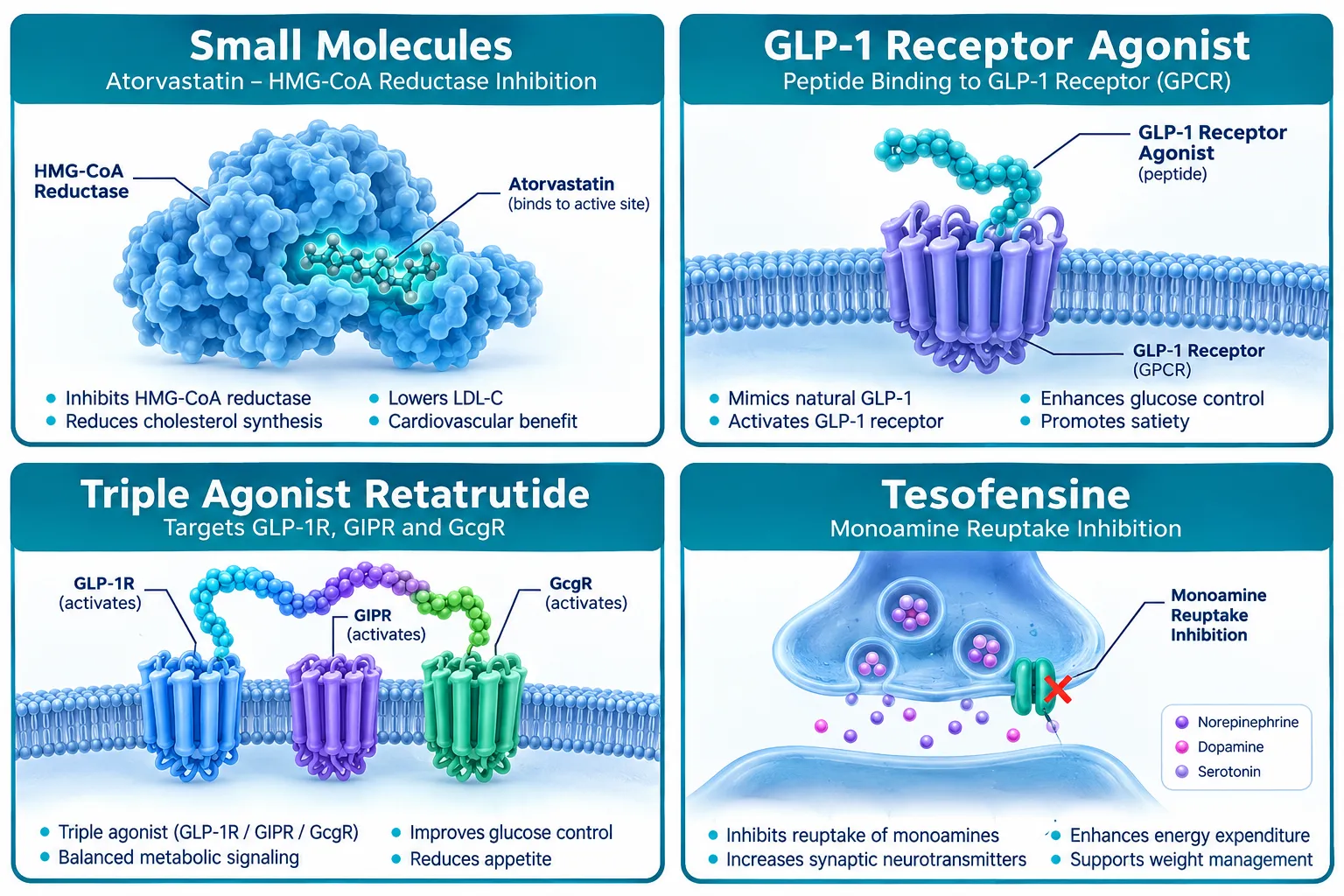
The label "GLP-3" circulates in research communities as shorthand for retatrutide, but it requires clarification. Retatrutide is not a third member of the glucagon-like peptide family in the classical sense. It is a synthetic triple agonist engineered to activate three distinct G-protein-coupled receptors simultaneously.

Conventional polypeptide peptides — including native GLP-1, GIP, and glucagon analogs — are typically single-receptor or, at most, dual-receptor agents. Their signaling is more contained. Retatrutide's design deliberately crosses those boundaries, which is why researchers studying GLP-3 Retatrutide incretin research themes often need a broader mechanistic framework than standard incretin models provide.

For context on how incretin generations have evolved, the overview of GLP-1 generations and their differences provides useful background on the progression from first-generation GLP-1 analogs to today's multi-agonist compounds.


Receptor-Level Mechanisms: How Retatrutide Differs from Conventional Polypeptide Peptides

This section of the GLP-3 Retatrutide vs. Polypeptide Peptides: A Comparative Research Guide to Metabolic Signaling Pathways focuses on what happens at the receptor level — the core distinction between retatrutide and standard polypeptide agents.

Receptor-Level Mechanisms: How Retatrutide Differs from Conventional Polypeptide Peptides

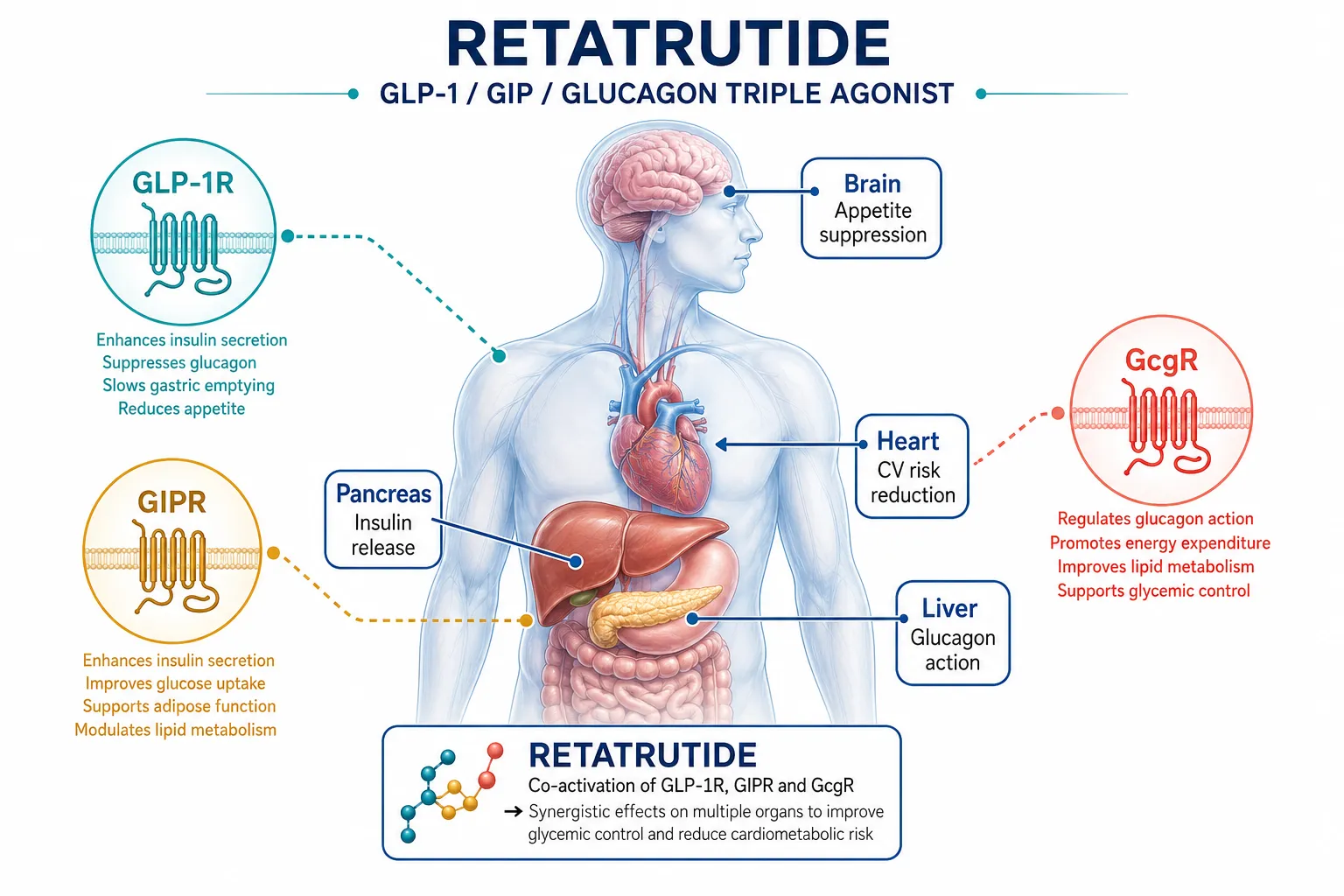
GLP-1 Receptor Activation

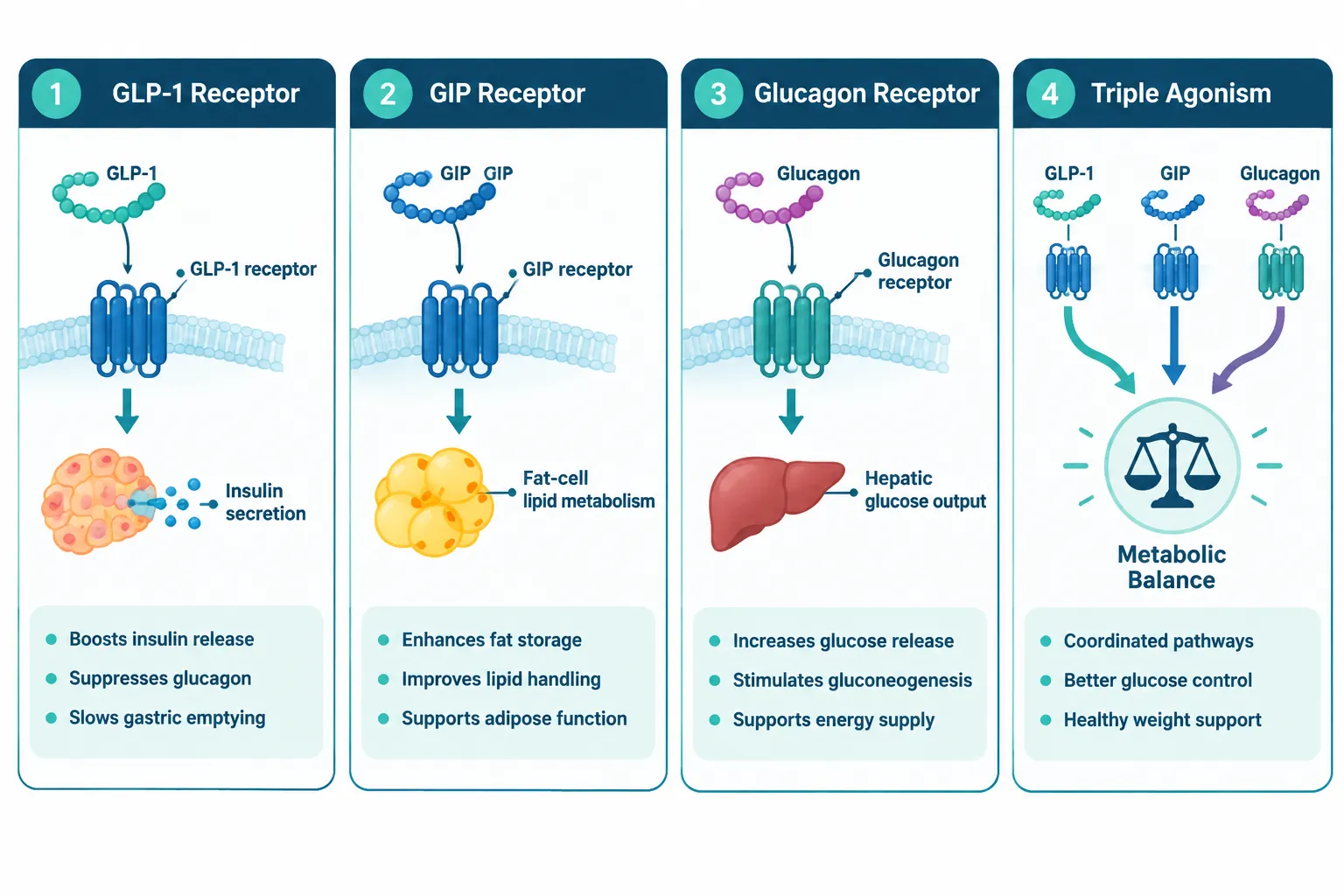
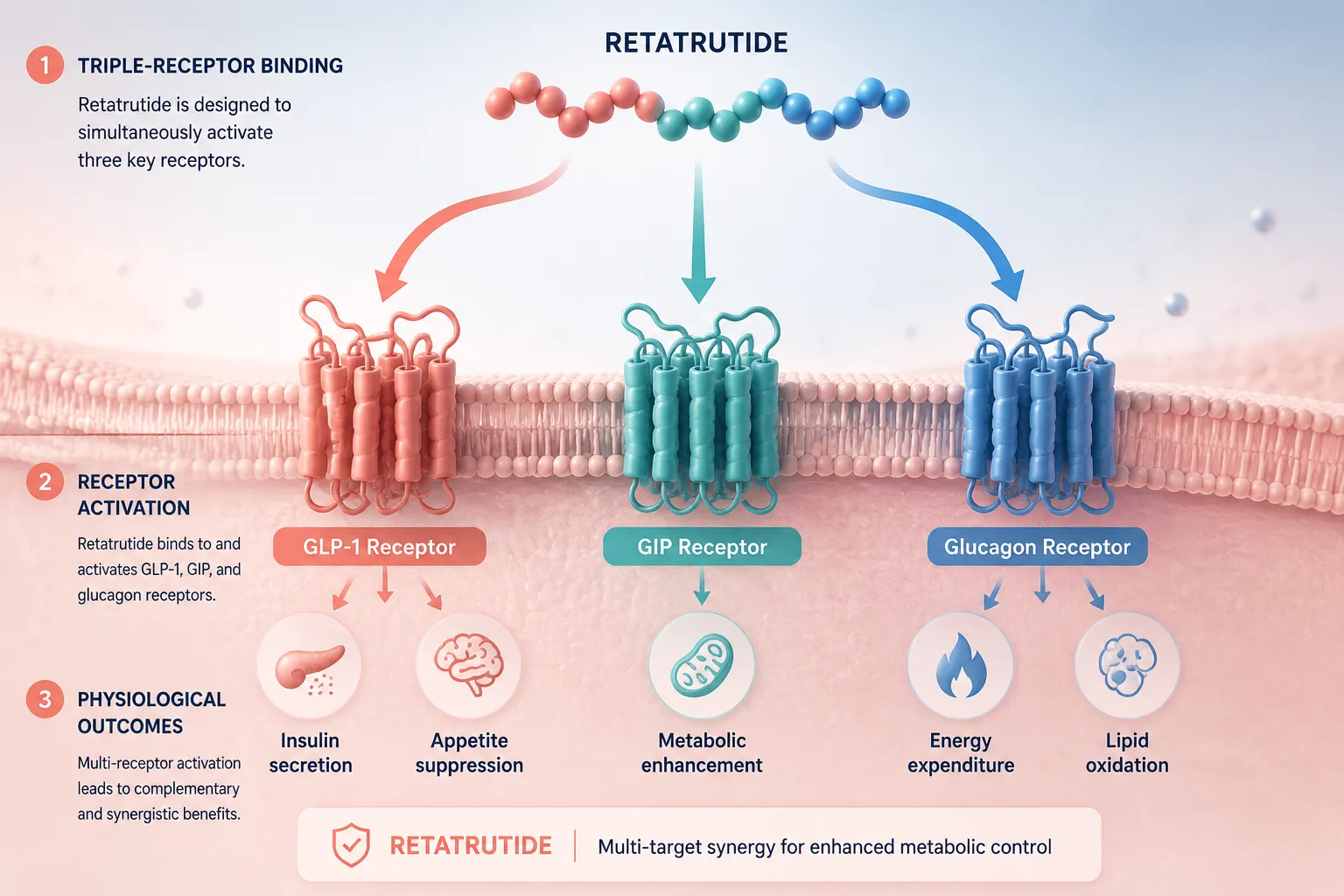
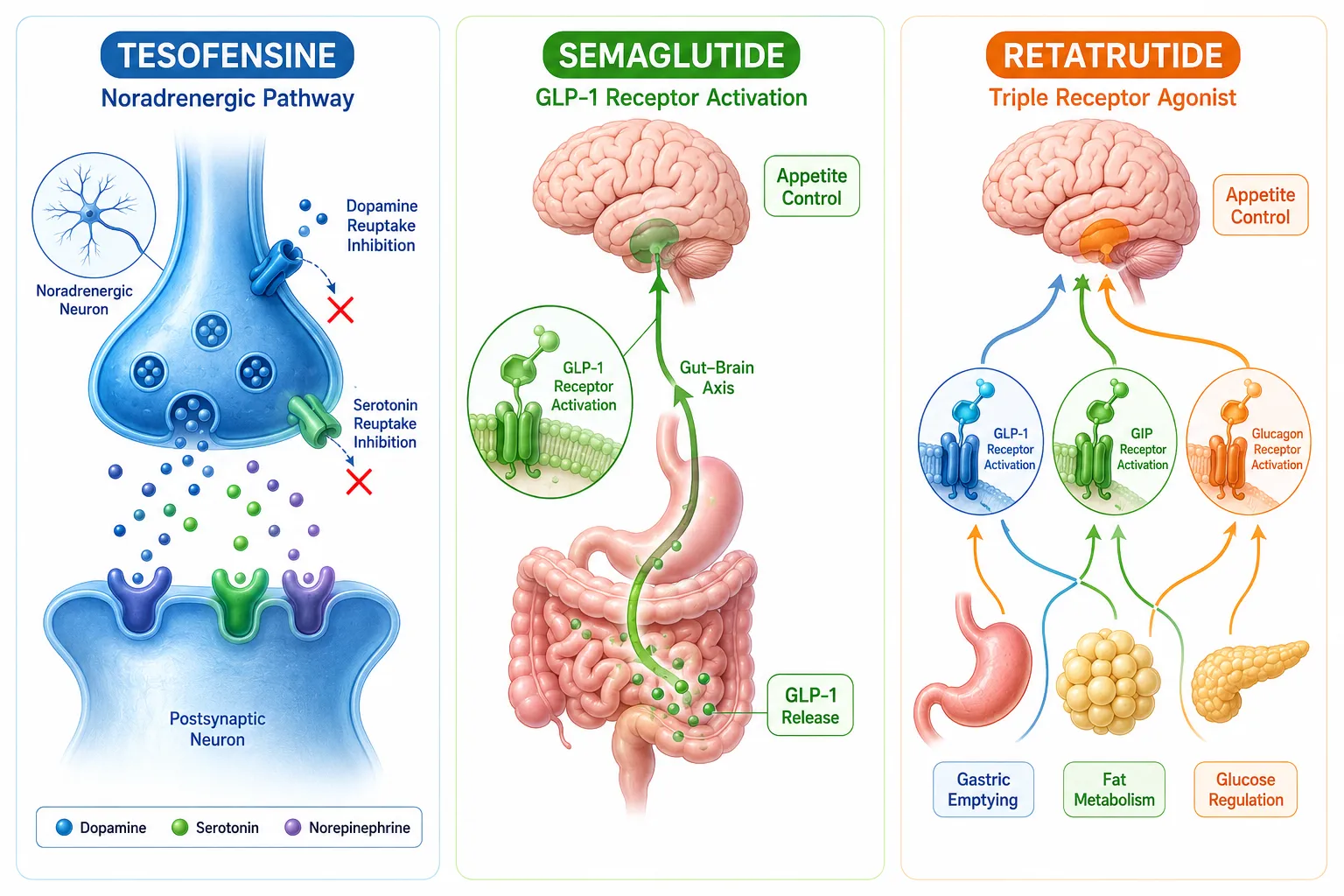
GLP-1R activation is shared by both retatrutide and conventional GLP-1 analogs. This pathway drives glucose-dependent insulin secretion, slows gastric emptying, and reduces appetite through both central nervous system and vagal nerve signaling. Single-agonist GLP-1 peptides operate primarily through this mechanism alone.

GIP Receptor Activation

GIPR activation adds a second layer. GIP further potentiates insulin release and modulates adipose tissue metabolism. Emerging research also suggests GIPR signaling may influence reward-related feeding behavior. Most traditional polypeptide peptides do not engage this receptor.

Glucagon Receptor Activation

GcgR activation is where retatrutide most clearly separates itself. Glucagon receptor signaling increases hepatic glucose output and, critically for metabolic research, raises resting energy expenditure. This thermogenic component is largely absent from conventional incretin peptides.

Receptor Retatrutide GLP-1 Analogs GIP Analogs
GLP-1R Yes Yes No
GIPR Yes No Yes
GcgR Yes No No
Thermogenic effect Yes Minimal Minimal

Researchers exploring complementary metabolic peptides such as MOTS-C, the mitochondrial peptide, will recognize that energy expenditure modulation is a recurring theme across multiple research-stage compounds — though the mechanisms differ significantly.


Metabolic Signaling Pathways: Triple Agonism vs. Conventional Peptide Approaches

The practical research value of the GLP-3 Retatrutide vs. Polypeptide Peptides: A Comparative Research Guide to Metabolic Signaling Pathways comparison lies in understanding how these mechanisms interact at the systems level.

Metabolic Signaling Pathways: Triple Agonism vs. Conventional Peptide Approaches

Triple agonism creates overlapping, reinforcing signals across three metabolic axes:

  • Insulin axis — amplified through both GLP-1R and GIPR co-activation
  • Appetite axis — suppressed via central GLP-1R pathways and potentially GIPR reward modulation
  • Energy expenditure axis — elevated through GcgR-driven thermogenesis

Conventional polypeptide peptides typically address one or two of these axes. Researchers studying body composition agents like Tesamorelin and its metabolic effects or AOD-9604 research methodology will note that each compound targets a narrower physiological window.

"Multi-receptor engagement is not simply additive — the convergence of three distinct signaling pathways creates metabolic effects that single-agonist models cannot fully replicate."

For researchers building broader metabolic panels, understanding cagrilintide's synergy with GLP-1 pathways also illustrates how combination approaches are increasingly central to advanced metabolic research design.

Those sourcing research-grade material can review GLP-3 Retatrutide product details for specification and traceability information.


Conclusion

The distinction between retatrutide and conventional polypeptide peptides is not merely a matter of degree — it reflects a fundamentally different approach to metabolic receptor engagement. Where single or dual-agonist peptides offer focused, well-characterized signaling, retatrutide's triple-agonist profile introduces a more complex, multi-axis mechanism that researchers must account for in study design.

Actionable next steps for researchers:

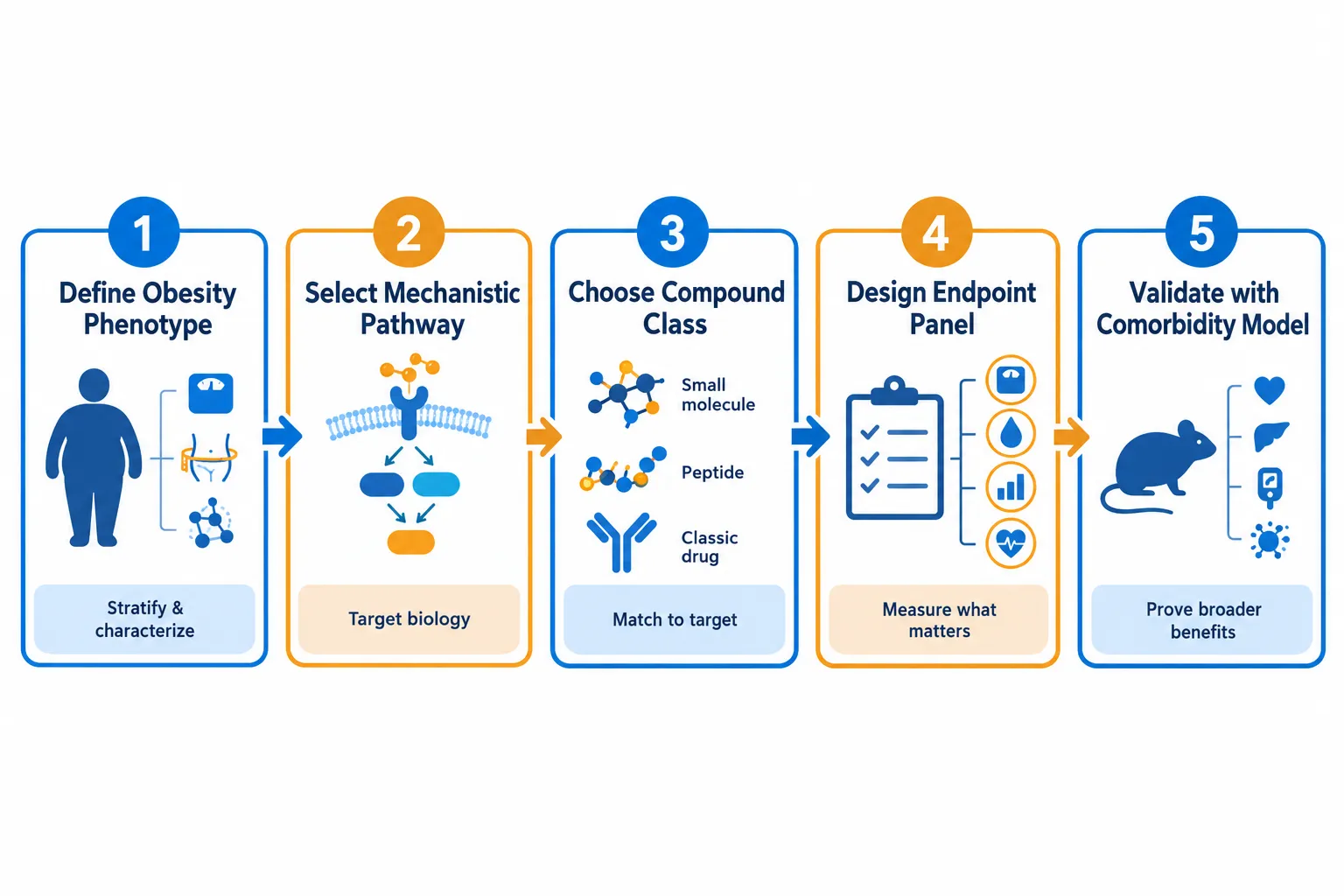
  1. Map which receptor pathways are relevant to your specific metabolic research question before selecting a peptide agent.
  2. Review the GLP-1 generations overview to contextualize retatrutide within the broader incretin research landscape.
  3. Cross-reference thermogenic and energy expenditure data when comparing triple-agonist results against single-receptor peptide benchmarks.
  4. Consult available innovative peptide delivery systems research to ensure study protocols reflect current best practices.

Understanding these mechanistic foundations is the starting point for rigorous, reproducible metabolic peptide research in 2026.

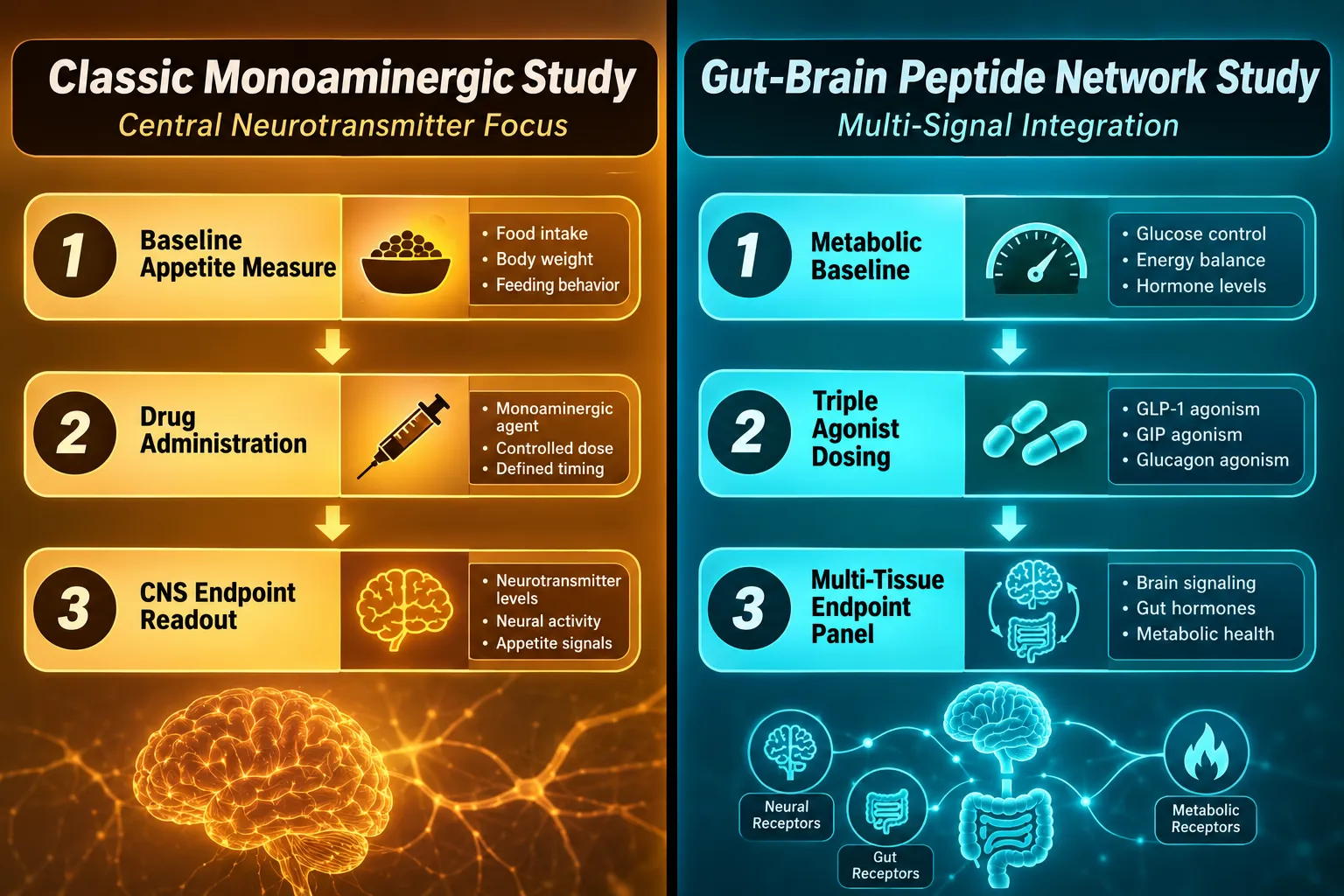
https://www.puretestedpeptides.com/wp-content/uploads/2026/06/GLP-3-Retatrutide-vs.-Polypeptide-Peptides-A-Comparative-Research-Guide-to-Metabolic-Signaling-Pathways.png 1024 1024 https://www.puretestedpeptides.com/wp-content/uploads/2026/01/buy-peptides-online.jpg 2026-06-19 13:42:052026-06-19 13:42:05GLP-3 Retatrutide vs. Polypeptide Peptides: A Comparative Research Guide to Metabolic Signaling Pathways
×

Helpful Links

  • My account
  • Cart
  • Checkout
  • Refund and Returns Policy
  • Privacy Policy
  • SMS Privacy Policy
  • Login
  • My Account
  • Logout

USA Made Lab Tested Peptides

All products are sold for research, laboratory, or analytical purposes only, and are not for human consumption


Pure Tested Peptides is a chemical supplier. Pure Tested Peptides is not a compounding / chemical compounding facility as defined under 503A of the Federal Food, Drug, and Cosmetic act. Pure Tested Peptides is not an outsourcing facility as defined under 503B of the Federal Food, Drug, and Cosmetic act.

The statements made within this website have not been evaluated by the US Food and Drug Administration. The products we offer are not intended to diagnose, treat, cure or prevent any disease.

Human/Animal Consumption Prohibited. Laboratory/In-Vitro Experimental Use Only

Scroll to top Scroll to top Scroll to top