

GLP-3 Retatrutide: Researching Its Triple-Agonist Mechanism Beyond GLP-1 and GLP-2 Pathways
A single molecule that targets three distinct metabolic receptors at once, and produces nearly 24% mean body weight reduction in 48 weeks, represents a genuine shift in how researchers think about obesity pharmacology. Retatrutide has generated significant scientific attention not because it refines the GLP-1 pathway, but because it moves decisively beyond it. Understanding GLP-3 Retatrutide: Researching Its Triple-Agonist Mechanism Beyond GLP-1 and GLP-2 Pathways requires a clear look at what makes its receptor engagement fundamentally different from anything that came before it.
Key Takeaways
- Retatrutide is a unimolecular triple receptor agonist acting on GLP-1, GIP, and glucagon receptors simultaneously, not GLP-2 or GLP-3 receptors.
- Phase 2 trial data showed up to approximately 24% mean weight loss at 48 weeks, surpassing earlier dual and single agonists.
- The glucagon receptor component adds a unique energy-expenditure dimension that single or dual agonists cannot replicate.
- Phase 3 trials have produced multiple positive readouts, with an FDA application planned for Q1 2027.
- Researchers are actively studying retatrutide's effects beyond weight loss, including glycemic control, liver fat reduction, and joint health.
What "Triple Agonism" Actually Means in Retatrutide Research
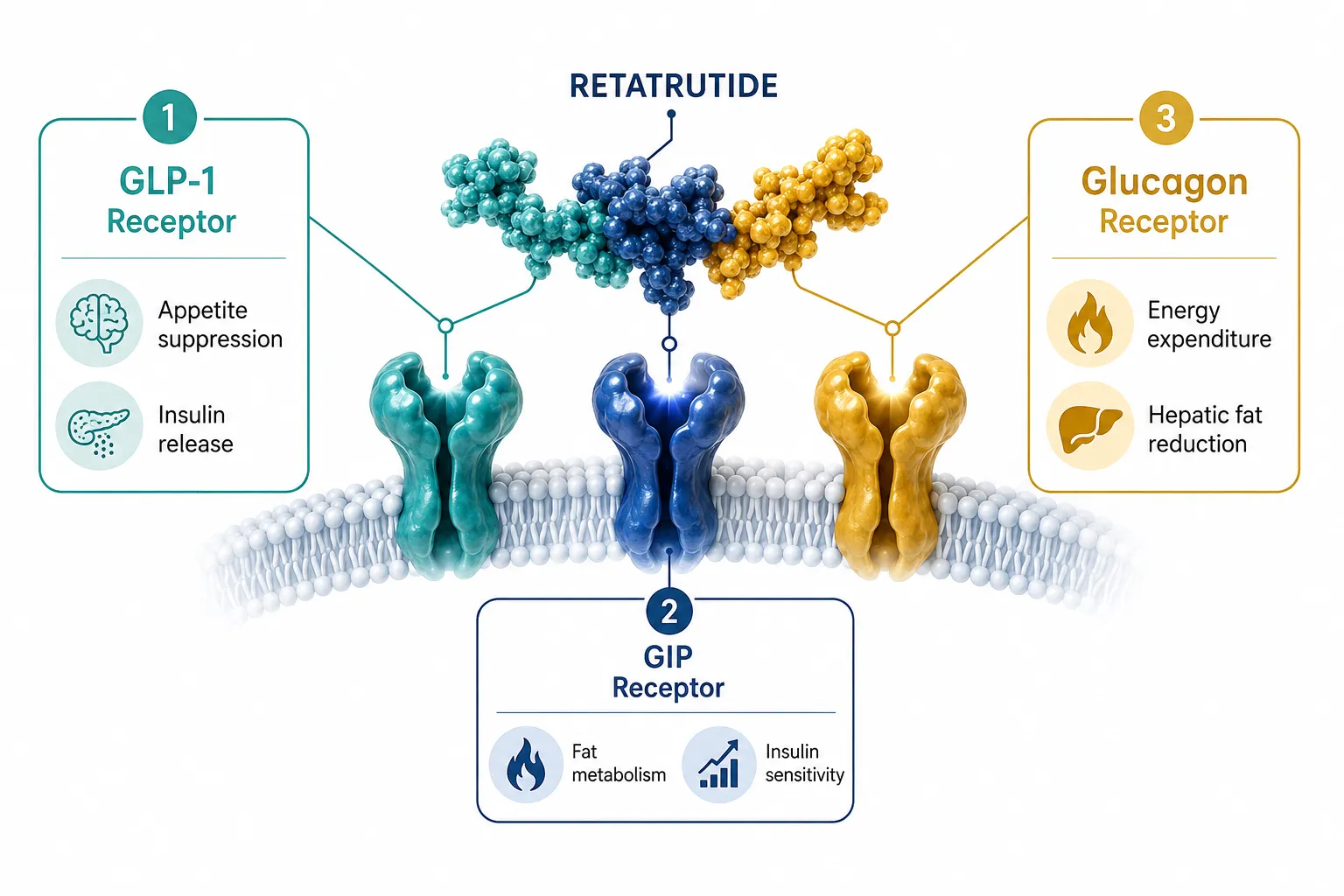
The phrase "triple agonist" is sometimes used loosely, so precision matters here. Retatrutide is a single synthetic peptide molecule engineered to activate three separate G-protein-coupled receptors: the glucagon-like peptide-1 receptor (GLP-1R), the glucose-dependent insulinotropic polypeptide receptor (GIPR), and the glucagon receptor (GCGR). This is what researchers and industry analysts describe when they discuss triple agonism in this context.
It is worth clarifying a common point of confusion. Despite the informal label "GLP-3 Retatrutide" that sometimes appears in research discussions, retatrutide does not act on a GLP-3 receptor. The GLP-3 designation in that phrase refers to the compound's position in a third generation of GLP-based therapeutics, beyond GLP-1 single agonists like semaglutide and beyond dual agonists like tirzepatide. The mechanism itself is firmly rooted in GLP-1, GIP, and glucagon receptor biology.
Why does this distinction matter? Each receptor contributes a different metabolic function:
| Receptor | Primary Research Function |
|---|---|
| GLP-1R | Appetite suppression, insulin secretion, gastric slowing |
| GIPR | Insulin sensitivity, fat tissue metabolism, complementary appetite effects |
| GCGR | Hepatic glucose output, energy expenditure, liver fat reduction |
The glucagon receptor component is particularly significant. Glucagon receptor activation increases thermogenesis and promotes the breakdown of stored liver fat. In isolation, glucagon would raise blood sugar, a clear problem. But when combined with GLP-1 and GIP receptor activity, the insulin-stimulating effects counterbalance that risk, allowing the energy-expenditure benefits to emerge without dangerous hyperglycemia.
Comparing Retatrutide to Single and Dual Agonists
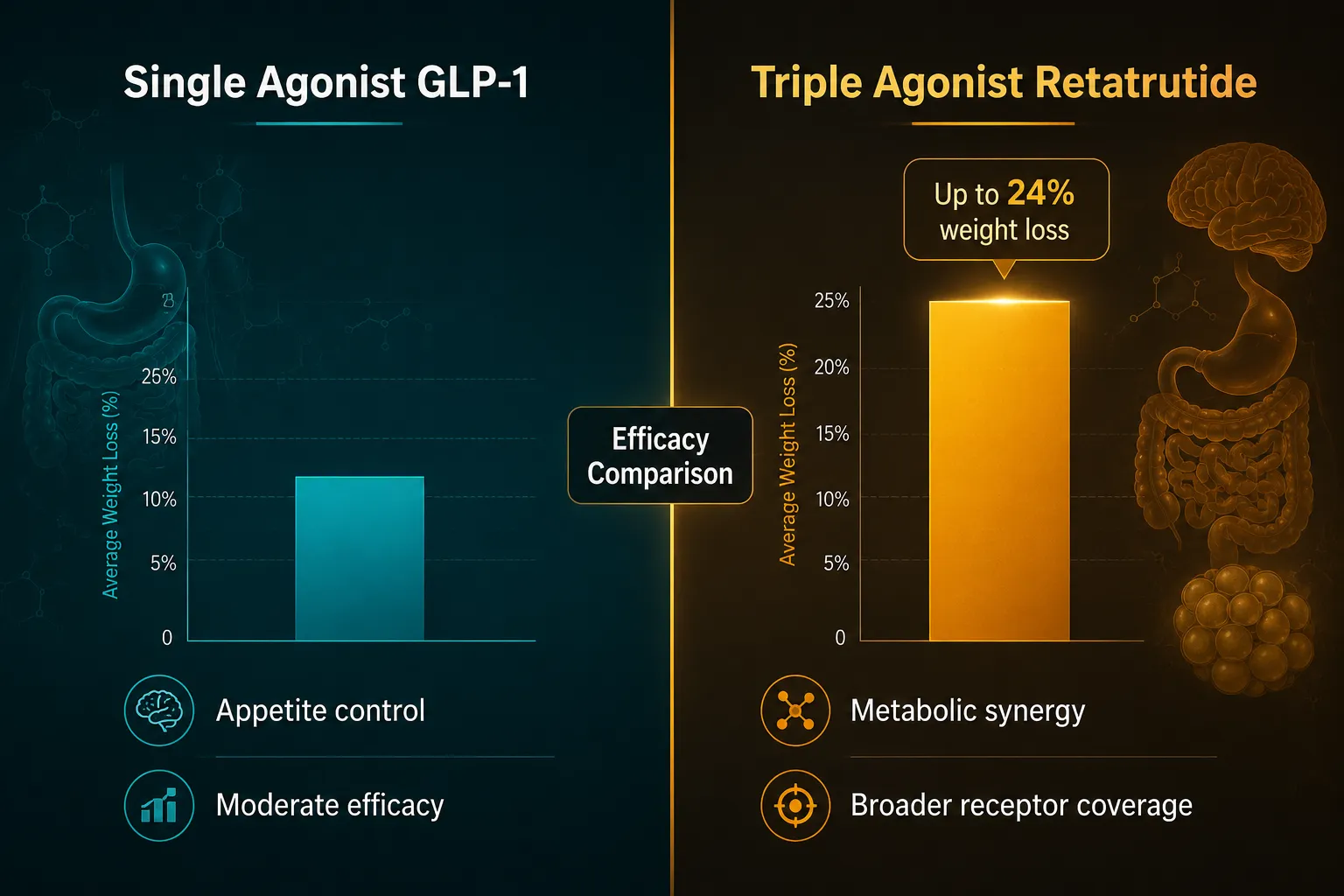
To appreciate the research significance of GLP-3 Retatrutide: Researching Its Triple-Agonist Mechanism Beyond GLP-1 and GLP-2 Pathways, it helps to place the molecule within the broader incretin landscape. Comparing it to existing agents reveals how each additional receptor target layers on a new dimension of metabolic effect.
When researchers examine Semaglutide vs Retatrutide data, the weight-loss gap is striking. Semaglutide, a GLP-1 single agonist, produces roughly 15% mean body weight reduction in clinical trials. Tirzepatide, a GLP-1/GIP dual agonist, reaches approximately 20-22%. Retatrutide's Phase 2 data showed up to approximately 24% mean weight loss at 48 weeks, a meaningful step beyond what dual agonism achieves. For context on dual-agonist research, tirzepatide research provides useful background on how the GIP receptor addition first expanded efficacy beyond GLP-1 alone.
"Retatrutide may represent the most effective obesity pharmacotherapy studied to date in a clinical trial setting."
Beyond weight loss, researchers have documented additional metabolic benefits. These include reductions in liver fat content (relevant to metabolic-associated steatotic liver disease), improvements in blood lipid profiles, and reductions in cardiovascular risk markers. The stress pathway research context is relevant here, as chronic metabolic stress underlies many of these comorbidities.
Safety profile observations from Phase 2 and Phase 3 data:
- Most common adverse events are gastrointestinal: nausea, vomiting, diarrhea
- Intensity is generally similar to or slightly more pronounced than GLP-1 single agonists
- Dose-escalation protocols help manage tolerability
- No novel safety signals have emerged that are unique to the triple-agonist mechanism
Clinical Development and the Road to Regulatory Review
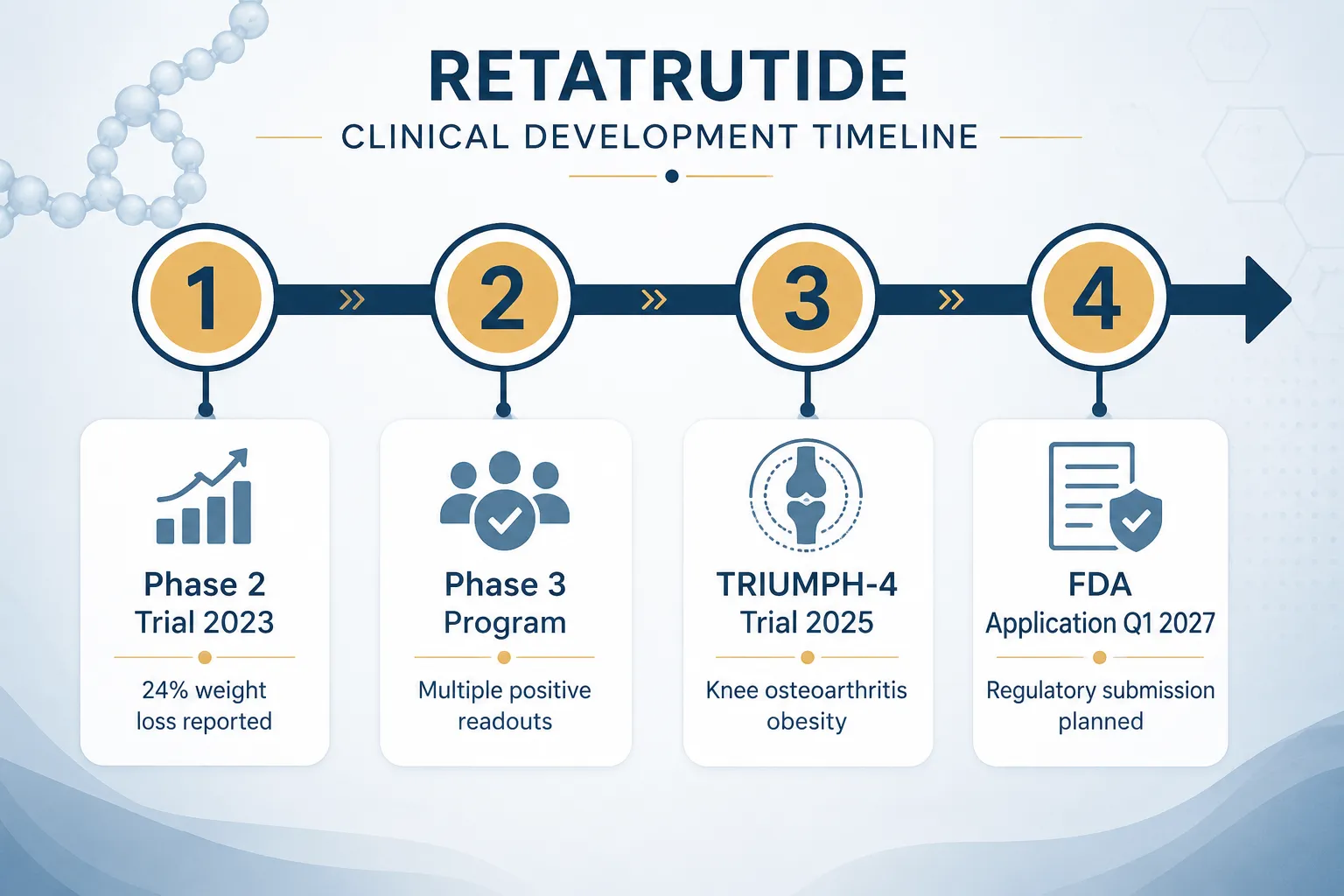
The clinical program for retatrutide has expanded well beyond initial obesity endpoints. As of 2026, multiple Phase 3 trials have produced positive readouts, and the compound's developer has reported encouraging data across several therapeutic areas.
Key milestones in the current research timeline include:
- Phase 2 obesity trial, Published data demonstrated up to approximately 24% mean weight loss at 48 weeks, establishing the efficacy benchmark.
- TRIUMPH-4 trial, A late-stage trial examining retatrutide in people with knee osteoarthritis and obesity reported topline results in late 2025, reflecting interest in the compound's anti-inflammatory and weight-offloading potential.
- Type 2 diabetes program, Late-stage trial data reported in early 2026 showed meaningful glycemic control alongside substantial weight reduction, a combination that positions retatrutide favorably against existing diabetes therapies.
- FDA regulatory application, A submission to the U.S. Food and Drug Administration is planned for Q1 2027, according to reporting from mid-2026.
The breadth of these investigations reflects how the triple receptor agonist mechanism opens research doors that single-pathway agents cannot. Researchers studying tissue recovery research and somatotropin research have also noted interest in how systemic metabolic improvements from multi-receptor engagement may support broader physiological outcomes.
Analyst and expert perspectives, labeled here as forward-looking assessments, suggest retatrutide could capture a significant share of the obesity and metabolic disease treatment market if regulatory approval proceeds as planned. Some industry observers have characterized it as a potential "game changer" in the incretin drug class.
Conclusion
The research picture around GLP-3 Retatrutide: Researching Its Triple-Agonist Mechanism Beyond GLP-1 and GLP-2 Pathways is one of the most compelling in contemporary metabolic medicine. By simultaneously engaging GLP-1, GIP, and glucagon receptors within a single molecule, retatrutide achieves a layered metabolic effect that no single or dual agonist can replicate. The glucagon receptor component, carefully balanced by the insulin-stimulating effects of GLP-1R and GIPR activation, is the key pharmacological innovation that separates this compound from its predecessors.
Actionable next steps for researchers and clinicians following this space:
- Monitor Phase 3 trial publications as they emerge through 2026 and into 2027 for full safety and efficacy datasets.
- Review structural pharmacology literature, particularly Cell Discovery analyses from 2024-2025, for deeper mechanistic insights.
- Track the FDA application timeline, currently projected for Q1 2027, as the regulatory review process will shape clinical availability.
- Consider how the glucagon receptor component may interact with other metabolic interventions in research protocols.
The incretin landscape has moved far beyond GLP-1 alone. Retatrutide's triple-agonist profile represents the current frontier of that progression, and the data, so far, supports the scientific interest it has generated.


Leave a Reply
Want to join the discussion?Feel free to contribute!