

Retatrutide Phase 3 Diabetes Data: Designing Research Models Around A1C, Glucose Exposure, Weight Loss, and Dose Escalation
Only one drug in the current cardiometabolic pipeline simultaneously activates GLP-1, GIP, and glucagon receptors, and its Phase 3 data are now reshaping how researchers design glycemic studies. Retatrutide Phase 3 diabetes data, drawn from the TRANSCEND and TRIUMPH trial programs, offer an unusually rich dataset for modeling the relationship between A1C reduction, glucose area under the curve (AUC), body weight loss, and structured dose escalation. For researchers building preclinical or translational models, understanding how to separate direct glycemic effects from weight-mediated effects is now a central methodological challenge.
Key Takeaways
- Retatrutide Phase 3 diabetes data from TRANSCEND-T2D and TRIUMPH-2 provide robust endpoints for A1C, fasting glucose, and body weight in type 2 diabetes populations.
- Glucose AUC and A1C timing data allow researchers to model direct glycemic receptor effects independently of body-weight-mediated insulin sensitization.
- Dose escalation protocols in Phase 3 trials (ranging from 2 mg to 24 mg weekly) are critical variables when designing exposure-response research models.
- Placebo-adjusted analysis is essential for isolating the true pharmacodynamic signal in both glycemic and weight outcomes.
- The dual burden of hyperglycemia and obesity in trial populations makes retatrutide a uniquely informative compound for integrated cardiometabolic research.
Understanding the Phase 3 Trial Architecture
The TRANSCEND-T2D program is the dedicated diabetes efficacy arm of retatrutide's Phase 3 development. TRANSCEND-T2D-1 enrolled adults with type 2 diabetes and suboptimal glycemic control, using A1C reduction as the primary endpoint alongside fasting plasma glucose and body weight. The trial design included a structured dose escalation schedule, beginning at 2 mg weekly and titrating upward over several weeks to target maintenance doses of 8 mg or 12 mg.
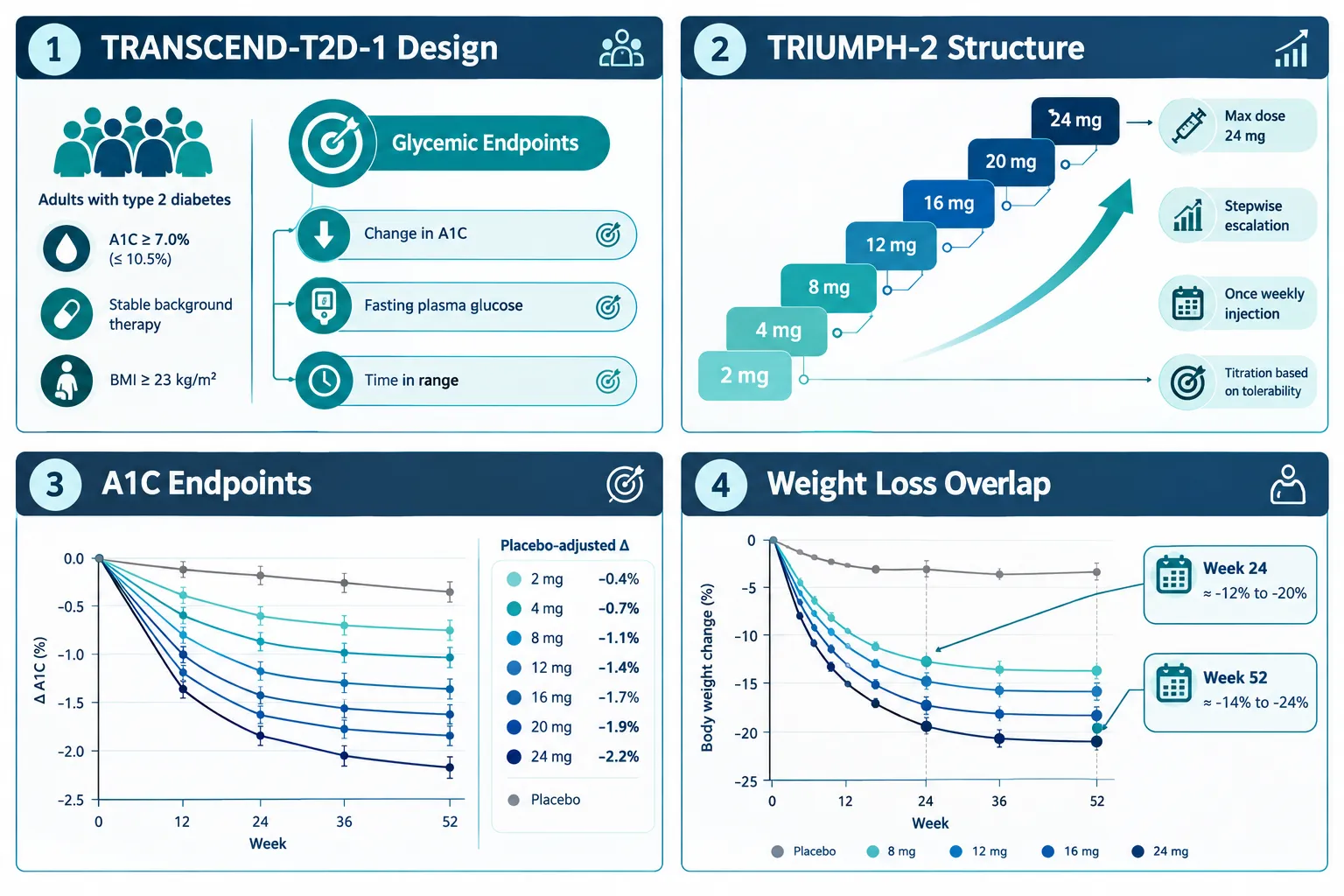
What makes this data particularly valuable for research modeling is the granularity of glycemic endpoints. A1C was measured at multiple timepoints, and continuous glucose monitoring data in select cohorts provided glucose AUC profiles across fasting and postprandial windows. This allows researchers to distinguish early pharmacodynamic effects, driven by direct receptor activation, from later improvements that correlate more closely with cumulative weight loss.
The broader TRANSCEND-T2D program extends follow-up to 52 weeks and beyond, providing chronic exposure data that are essential for modeling long-term glucose normalization trajectories. Researchers exploring Retatrutide Endpoints will find the TRANSCEND dataset particularly useful for establishing dose-response relationships across glycemic variables.
Separating Glycemic Effects from Weight-Mediated Effects in Retatrutide Phase 3 Diabetes Data
This is the core methodological question that Retatrutide Phase 3 diabetes data: designing research models around A1C, glucose exposure, weight loss, and dose escalation must address. Retatrutide produces two partially overlapping but mechanistically distinct effects: direct incretin-mediated glycemic control and indirect glycemic improvement driven by fat mass reduction and restored insulin sensitivity.
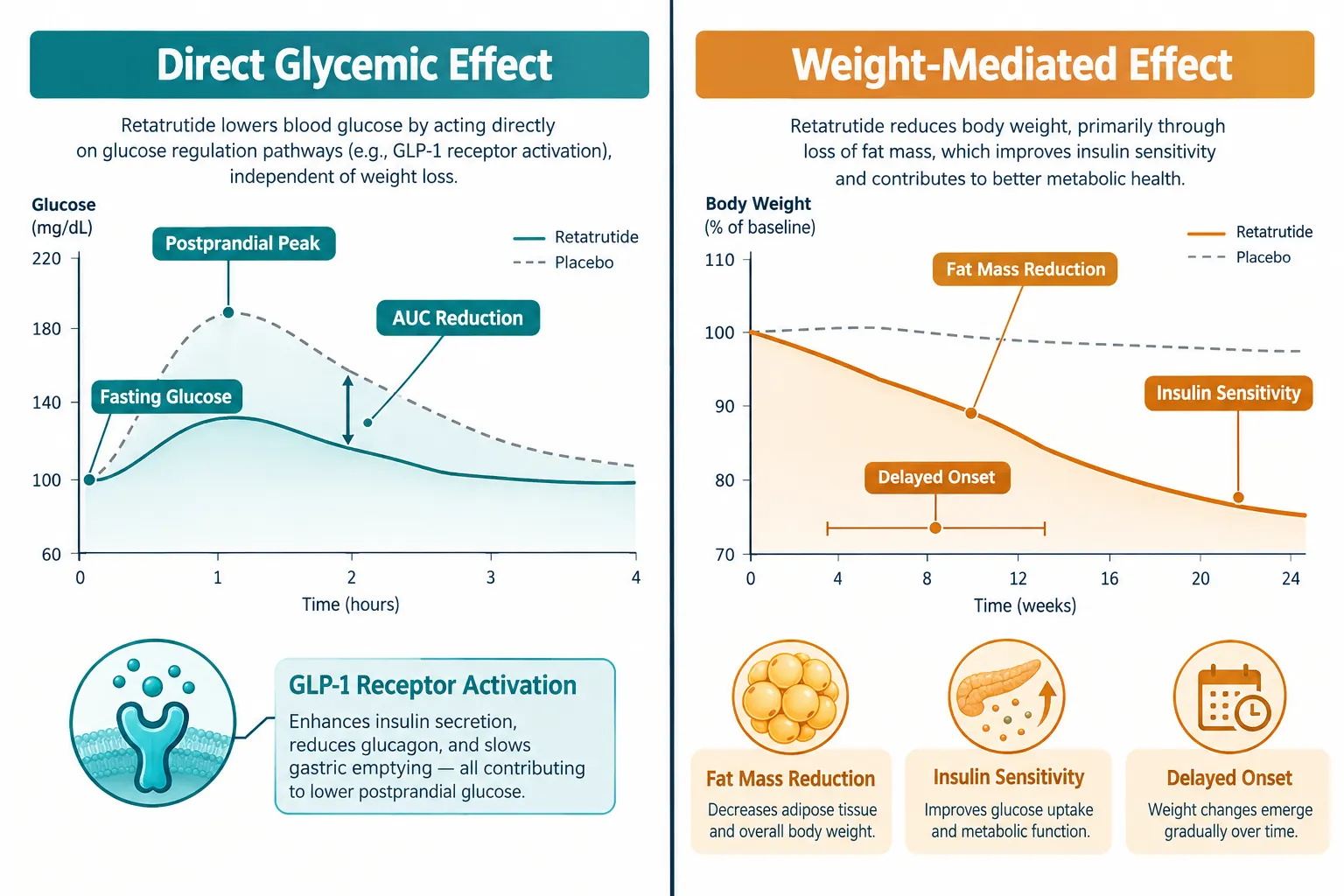
Direct glycemic effects are detectable early, often within the first four weeks, before significant weight loss has accumulated. These include:
- Reduced fasting plasma glucose via GLP-1 receptor-mediated insulin secretion
- Suppressed glucagon secretion through glucagon receptor agonism at pharmacological doses
- Improved postprandial glucose AUC through slowed gastric emptying
Weight-mediated glycemic effects emerge later and are characterized by:
- Progressive improvement in insulin sensitivity correlated with fat mass reduction
- Declining HOMA-IR scores tracking body weight trajectory
- A1C reductions that continue after glucose-lowering receptor effects plateau
"Placebo-adjusted A1C delta at Week 12 versus Week 52 provides a practical window for separating these two mechanisms in research model design."
The TRIUMPH-2 trial, which enrolled participants with both obesity and type 2 diabetes, is especially informative here. TRIUMPH-2 reported substantial A1C reductions alongside body weight losses exceeding 20% from baseline at higher doses. By comparing A1C trajectories against weight-loss kinetics, researchers can use time-lagged regression models to quantify the independent glycemic contribution of the drug's receptor activity.
For researchers interested in related dual-mechanism compounds, the Cagrilintide And Retatrutide combination data offer a complementary framework for modeling additive glycemic and weight effects.
Dose Escalation as a Research Variable: Modeling Exposure-Response Relationships
Dose escalation design is not merely a safety protocol, it is a primary research variable in Retatrutide Phase 3 diabetes data: designing research models around A1C, glucose exposure, weight loss, and dose escalation. The Phase 3 programs used weekly subcutaneous dosing with escalation steps at defined intervals, creating a natural dose-exposure ladder that researchers can exploit for pharmacokinetic-pharmacodynamic (PK-PD) modeling.
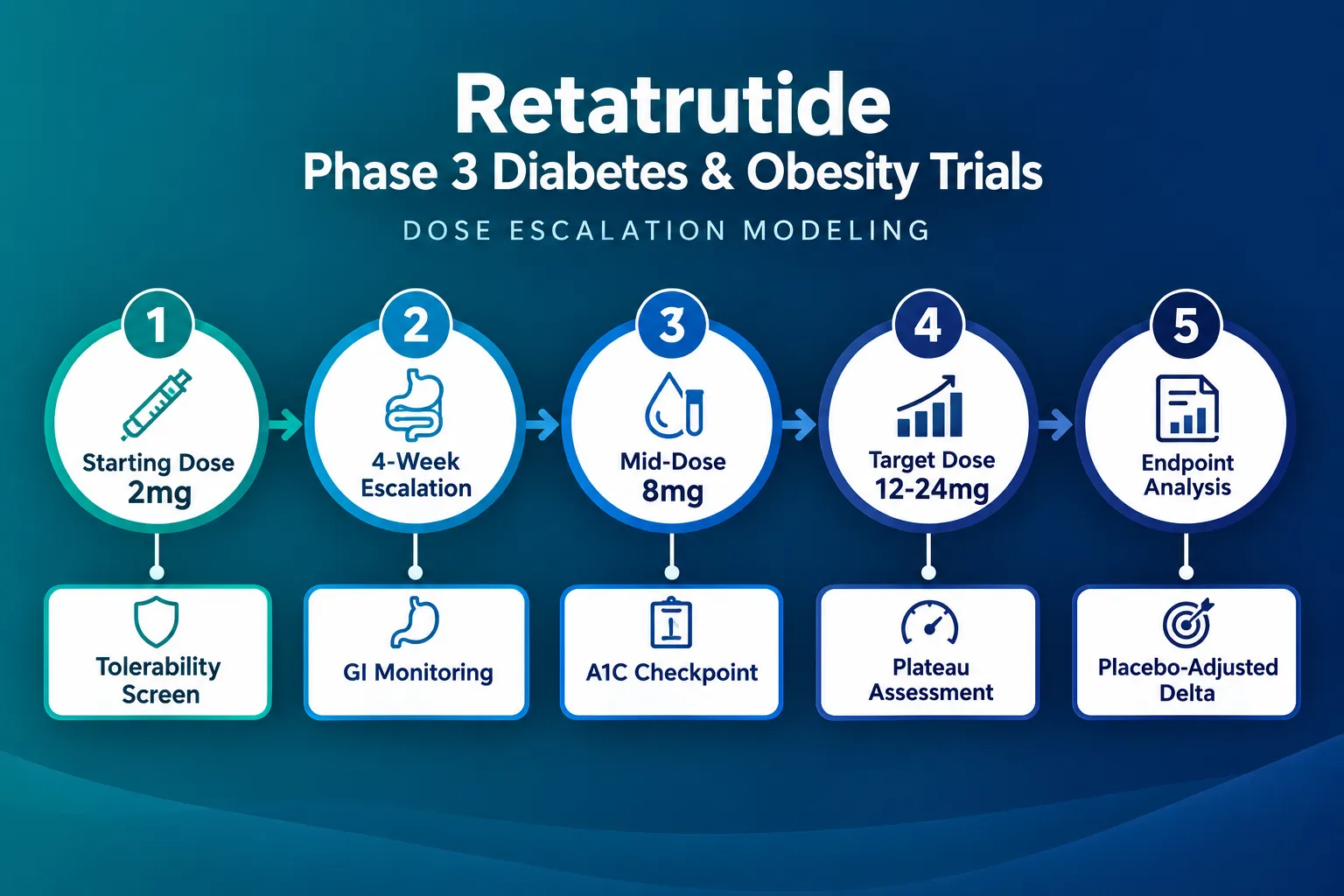
Key dose escalation parameters from Phase 3 data include:
| Escalation Stage | Weekly Dose | Primary Research Signal |
|---|---|---|
| Initiation | 2 mg | Tolerability, early GLP-1 effect |
| Mid-escalation | 4-8 mg | A1C inflection, glucose AUC shift |
| Maintenance | 12-24 mg | Maximum weight loss, sustained A1C |
Phase 3b studies without diabetes populations provide a useful comparator, allowing researchers to isolate the weight-loss contribution to glycemic improvement by modeling the delta between diabetic and non-diabetic cohorts at equivalent doses.
For researchers sourcing compounds for preclinical work, GLP-1 Retatrutide and GLP-3 Retatrutide Buy Online USA pages provide relevant product information. Those evaluating quantity options may also review Reta 20mg For Sale and GLP-3 Reta 30mg For Sale for research-grade availability.
The TRIUMPH-1 and TRIUMPH-4 trials, focused primarily on obesity without diabetes, extend the dose-response dataset by providing weight-loss curves at equivalent dose levels without the confounding variable of baseline hyperglycemia. This cross-trial comparison is a powerful tool for building research models that quantify the glycemic benefit attributable solely to weight reduction.
Conclusion
Retatrutide Phase 3 diabetes data: designing research models around A1C, glucose exposure, weight loss, and dose escalation represents one of the most data-rich opportunities in current cardiometabolic research. The TRANSCEND and TRIUMPH programs together provide a structured, multi-dose, multi-timepoint dataset that enables researchers to disentangle direct receptor-mediated glycemic effects from weight-loss-driven improvements.
Actionable next steps for researchers:
- Use early-timepoint A1C and glucose AUC data (Weeks 4-12) to establish direct glycemic receptor effect baselines before significant weight loss accumulates.
- Apply placebo-adjusted analysis at each dose level to isolate the true pharmacodynamic signal from regression to the mean.
- Leverage the TRIUMPH-2 versus TRIUMPH-1 cross-trial comparison to quantify the weight-mediated glycemic contribution at matched dose levels.
- Incorporate dose escalation timing as a covariate in PK-PD models to account for exposure-dependent receptor desensitization.
- Validate preclinical models against the Phase 3 dose-response ladder before extrapolating to novel endpoints.
The depth of available Phase 3 data makes retatrutide a uniquely powerful reference compound for integrated glycemic and metabolic research model design in 2026.


Leave a Reply
Want to join the discussion?Feel free to contribute!