Tesamorelin and Ipamorelin Peptides: Mechanism, Synergy, and Growth Hormone Research Design
Growth hormone secretion declines at roughly 14% per decade after age 30, a biological reality that has driven significant scientific interest in peptides capable of modulating the somatotropic axis. Among the most studied compounds in this space, Tesamorelin and Ipamorelin peptides: mechanism, synergy, and growth hormone research design represent a compelling area of inquiry precisely because these two molecules work through fundamentally different receptor pathways, yet produce overlapping downstream effects on GH pulsatility.
Understanding why researchers pair them requires a clear grasp of each compound's mechanism before any discussion of combined protocols.
Key Takeaways
- Tesamorelin is a GHRH analog; Ipamorelin is a ghrelin-mimetic, they act on separate receptor classes.
- Their mechanistic difference is the primary rationale for studying them together in GH research.
- Tesamorelin carries FDA approval for HIV-associated lipodystrophy, giving it a documented clinical reference point.
- Ipamorelin is noted for high GH selectivity with minimal cortisol or prolactin stimulation.
- Rigorous research design requires defined purity standards, controlled dosing schedules, and outcome-specific biomarker tracking.
How Each Peptide Works: Distinct Receptor Pathways
Tesamorelin: A GHRH Analog
Tesamorelin is a synthetic analog of growth hormone-releasing hormone (GHRH), a 44-amino-acid hypothalamic peptide. Its structure mirrors endogenous GHRH but includes a trans-3-hexenoic acid modification at the N-terminus that extends its plasma half-life beyond that of native GHRH.
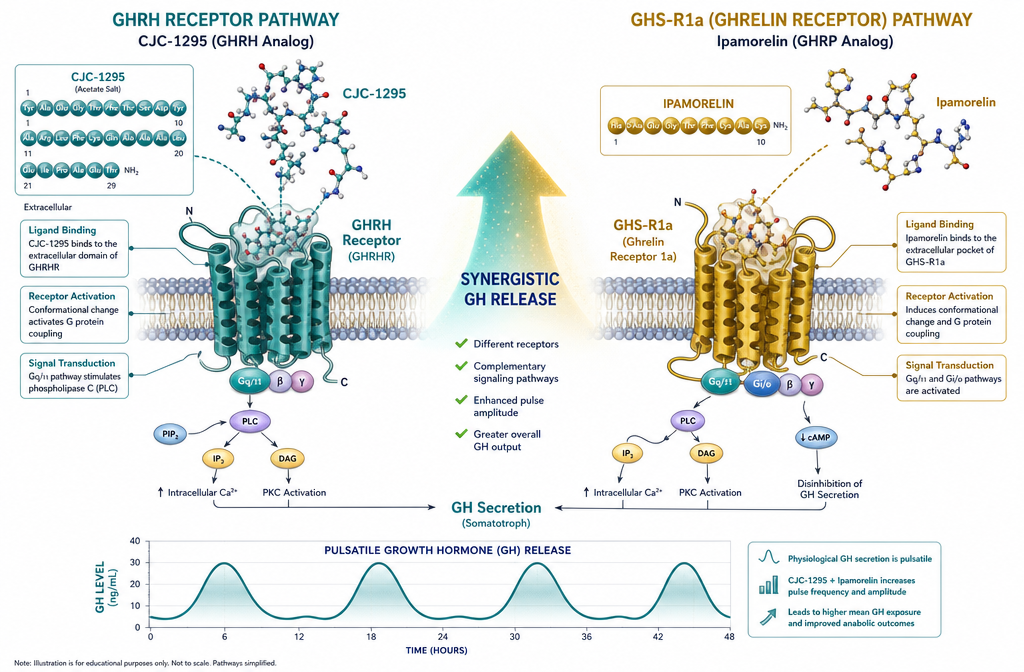
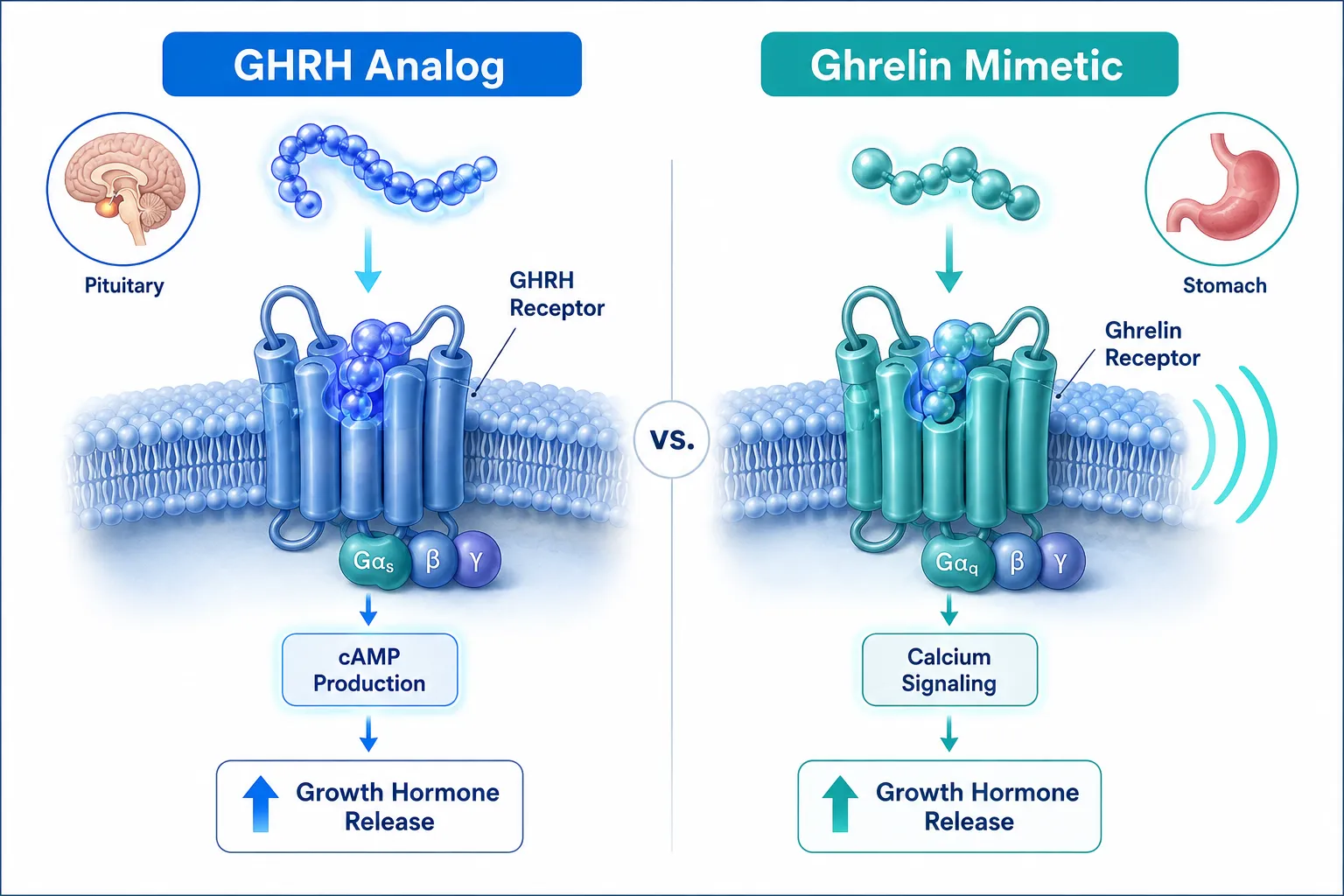
It binds selectively to the GHRH receptor (GHRHR) on somatotroph cells in the anterior pituitary. This binding triggers adenylyl cyclase activation, raises intracellular cAMP, and stimulates both GH synthesis and pulsatile release. Because it works through the same receptor as endogenous GHRH, the resulting GH secretion retains physiological feedback sensitivity, IGF-1 and somatostatin can still suppress output, which is a meaningful safety consideration in research contexts.
For a deeper look at documented effects, see the overview of Tesamorelin peptide benefits and the comparison resource on Tesamorelin vs Sermorelin to understand how GHRH analogs differ from one another.
Ipamorelin: A Ghrelin-Mimetic GHRP
Ipamorelin belongs to the growth hormone-releasing peptide (GHRP) class. It is a pentapeptide that acts as a selective agonist at the GHS-R1a receptor (ghrelin receptor), which is expressed both in the pituitary and the hypothalamus.
Unlike earlier GHRPs such as GHRP-2 or GHRP-6, Ipamorelin demonstrates high selectivity for GH release with minimal stimulation of cortisol, prolactin, or ACTH, a profile that makes it attractive for clean mechanistic studies. See the comparison of GHRP-2 peptide vs Sermorelin for context on how selectivity profiles vary across this peptide class.
Mechanistic Synergy: Why These Two Pathways Are Studied Together

The scientific rationale for studying Tesamorelin and Ipamorelin peptides: mechanism, synergy, and growth hormone research design together rests on a well-characterized phenomenon: GHRH and ghrelin-mimetics act synergistically, not additively.
When both receptor pathways are activated simultaneously:
- GHRH (via Tesamorelin) amplifies the number of somatotrophs ready to release GH.
- GHS-R1a agonism (via Ipamorelin) suppresses somatostatin tone at the hypothalamic level while directly stimulating pituitary release.
- The combined signal produces a GH pulse that exceeds the sum of each compound's individual effect.
This synergy has been documented in multiple preclinical models and forms the mechanistic basis for multi-peptide research stacks. Researchers exploring this combination can reference the Ipamorelin vs Tesamorelin breakdown for a side-by-side mechanistic comparison, as well as the safety discussion on combining Tesamorelin with CJC Ipamorelin.
Key mechanistic differences at a glance:
| Feature | Tesamorelin | Ipamorelin |
|---|---|---|
| Receptor target | GHRHR (pituitary) | GHS-R1a (pituitary + hypothalamus) |
| Peptide class | GHRH analog | GHRP / ghrelin mimetic |
| Cortisol stimulation | Minimal | Very low |
| Feedback sensitivity | Preserved | Partially preserved |
| Half-life | ~26 minutes | ~2 hours |
Growth Hormone Research Design: Structuring a Rigorous Protocol

Sound research design is what separates meaningful data from noise. For studies examining Tesamorelin and Ipamorelin peptides: mechanism, synergy, and growth hormone research design, the following structural elements are non-negotiable.
Purity and Source Verification
Research-grade peptides must arrive with third-party HPLC and mass spectrometry certificates. Impurities at even low concentrations can confound GH assay results. Researchers sourcing multi-peptide blends should review documentation such as the Tesamorelin CJC1295 Ipamorelin 12mg blend for formulation reference, and consult the CJC-1295 Ipamorelin assay planning and sourcing checklist to build a traceable procurement workflow.
Biomarker Selection
Relevant outcome measures include:
- Serum IGF-1, the most stable surrogate for integrated GH secretion
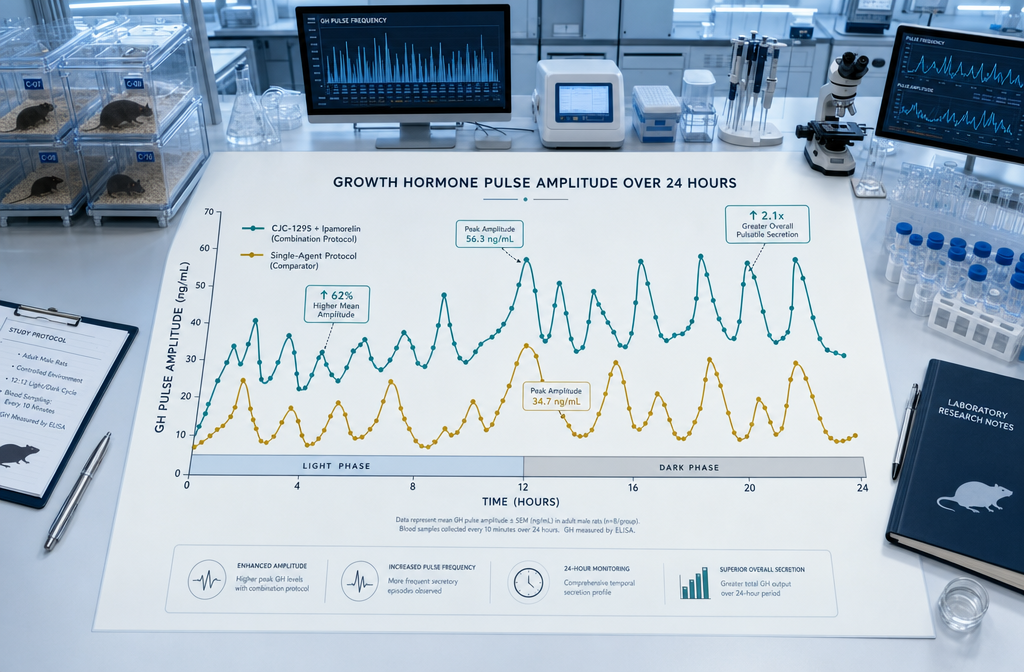
- 24-hour GH pulse amplitude and frequency, via frequent sampling
- Fasting insulin and glucose, given GH's counter-regulatory role
- Lipid panels, particularly relevant given Tesamorelin's documented effects on visceral adipose tissue
Dosing Schedule Considerations
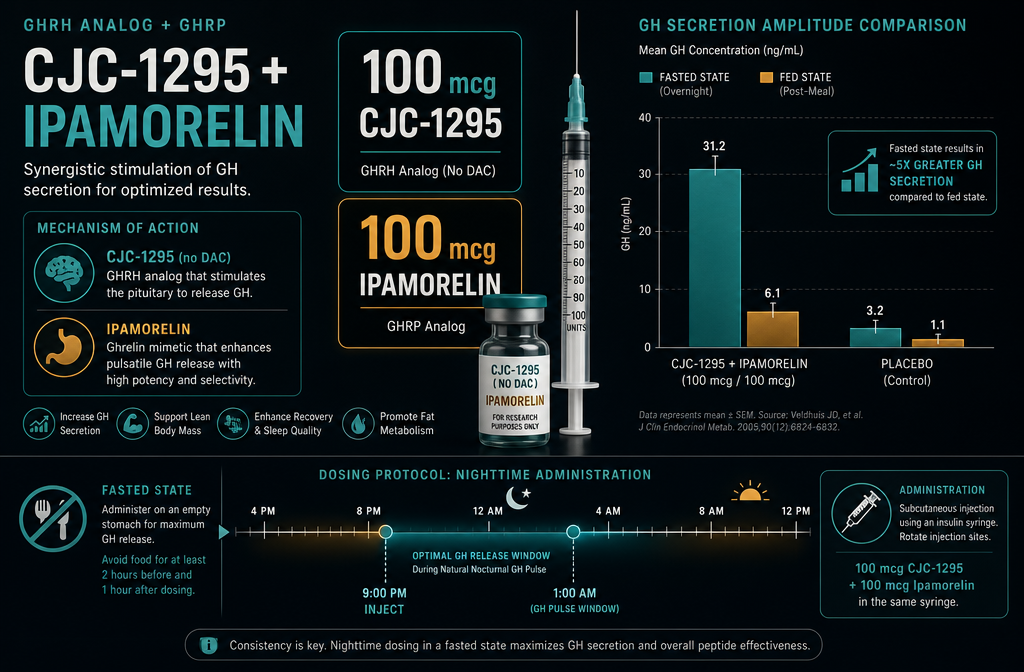
GH is secreted in pulses, predominantly during sleep. Research protocols typically time administration to align with or amplify natural pulsatility. The Tesamorelin dosage chart provides a structured reference for dose-range planning.
Controls must include a vehicle-only arm, and washout periods should account for the extended IGF-1 half-life (~15 hours) to avoid carryover effects between experimental phases.
Conclusion
The scientific case for studying Tesamorelin and Ipamorelin together is mechanistic, not merely additive. A GHRH analog and a ghrelin-mimetic operate on distinct receptor systems that converge on somatotroph activation, producing synergistic GH output that neither compound achieves alone.
Actionable next steps for researchers:
- Confirm peptide purity via independent HPLC documentation before any in vitro or in vivo work.
- Select biomarkers (IGF-1, GH pulse profiling) that match the specific research question being asked.
- Review the mechanistic literature on GHRH/ghrelin receptor co-activation before designing dosing schedules.
- Use validated sourcing checklists and dosage reference charts to maintain traceability across experimental runs.
- Compare individual compound profiles rigorously before choosing a combination, using resources like the Ipamorelin vs Tesamorelin analysis.
Mechanism-first thinking, not protocol hype, is what produces reproducible, publication-worthy results in GH peptide research.