GLP-2-T and GLP2 Tirz Peptides: Why Naming Matters for Translational Research and Trial Design
A single mislabeled peptide in a vendor catalog can quietly derail months of preclinical work. As of 2026, the confusion surrounding GLP-2-T and GLP2 Tirz nomenclature has moved from a minor nuisance to a documented problem in translational research and trial design, one that experts are now actively working to resolve.
The core issue is straightforward but consequential: two structurally and mechanistically distinct compound classes are being sold, cited, and sometimes studied under overlapping names. Understanding why GLP-2-T and GLP2 Tirz peptides: why naming matters for translational research and trial design is not a semantic debate, it is a question of scientific integrity and patient safety.
Key Takeaways
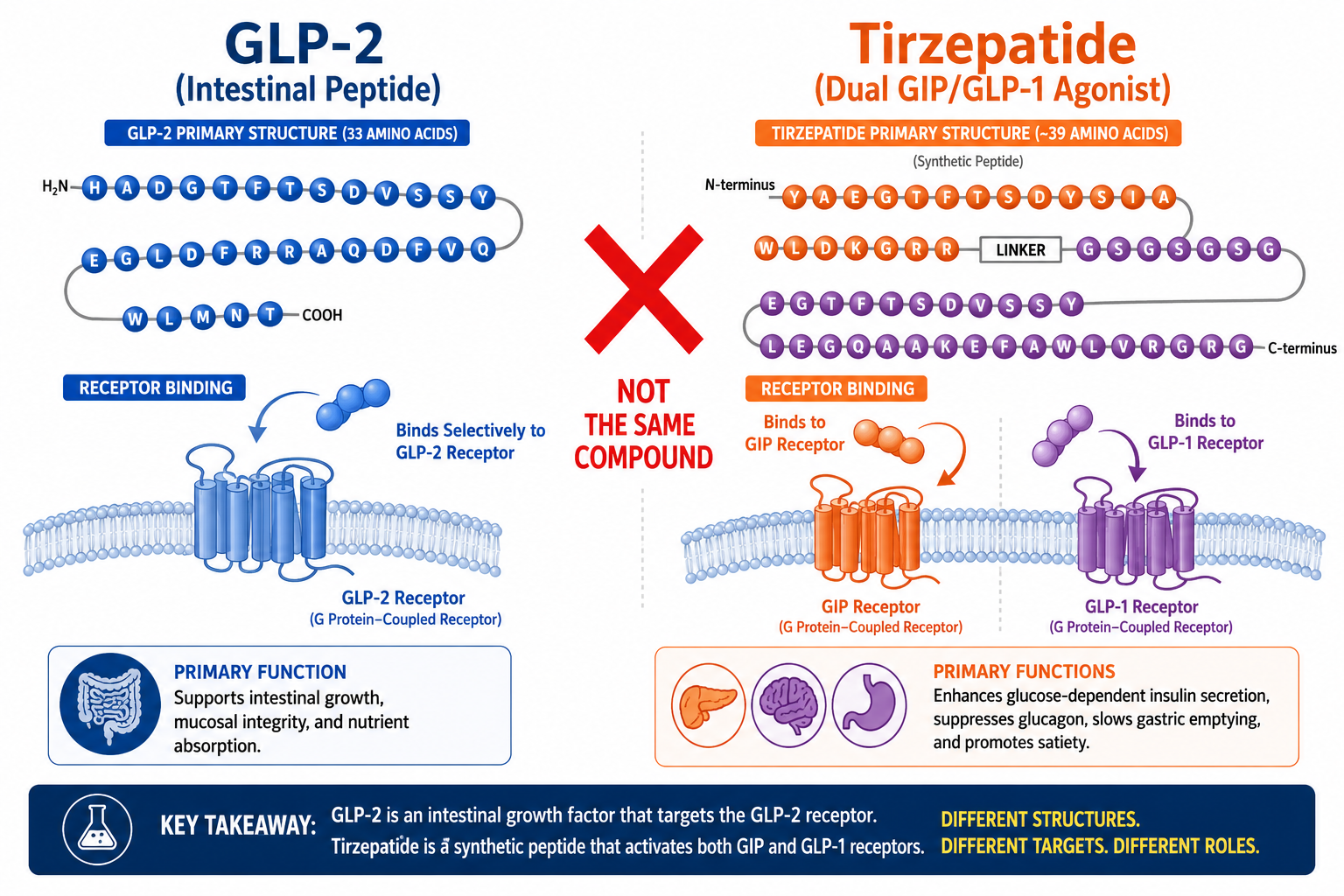
- GLP-2 refers to a gut-specific peptide that acts on GLP-2 receptors to promote mucosal growth; GLP2 Tirz is a vendor alias increasingly applied to tirzepatide, a dual GIP/GLP-1 receptor agonist.
- These two compound classes have entirely different receptor targets, mechanisms of action, and translational endpoints.
- Vendor catalogs in 2026 show widespread aliasing of tirzepatide under GLP-2-adjacent labels, creating literature search contamination and protocol errors.
- Experts recommend reverting to International Nonproprietary Names (INN) and explicit receptor labeling in all research documentation.
- Early industry movement toward clearer disclosures is underway, but standardization is not yet complete.
Understanding the Two Compound Classes Behind the Naming Confusion
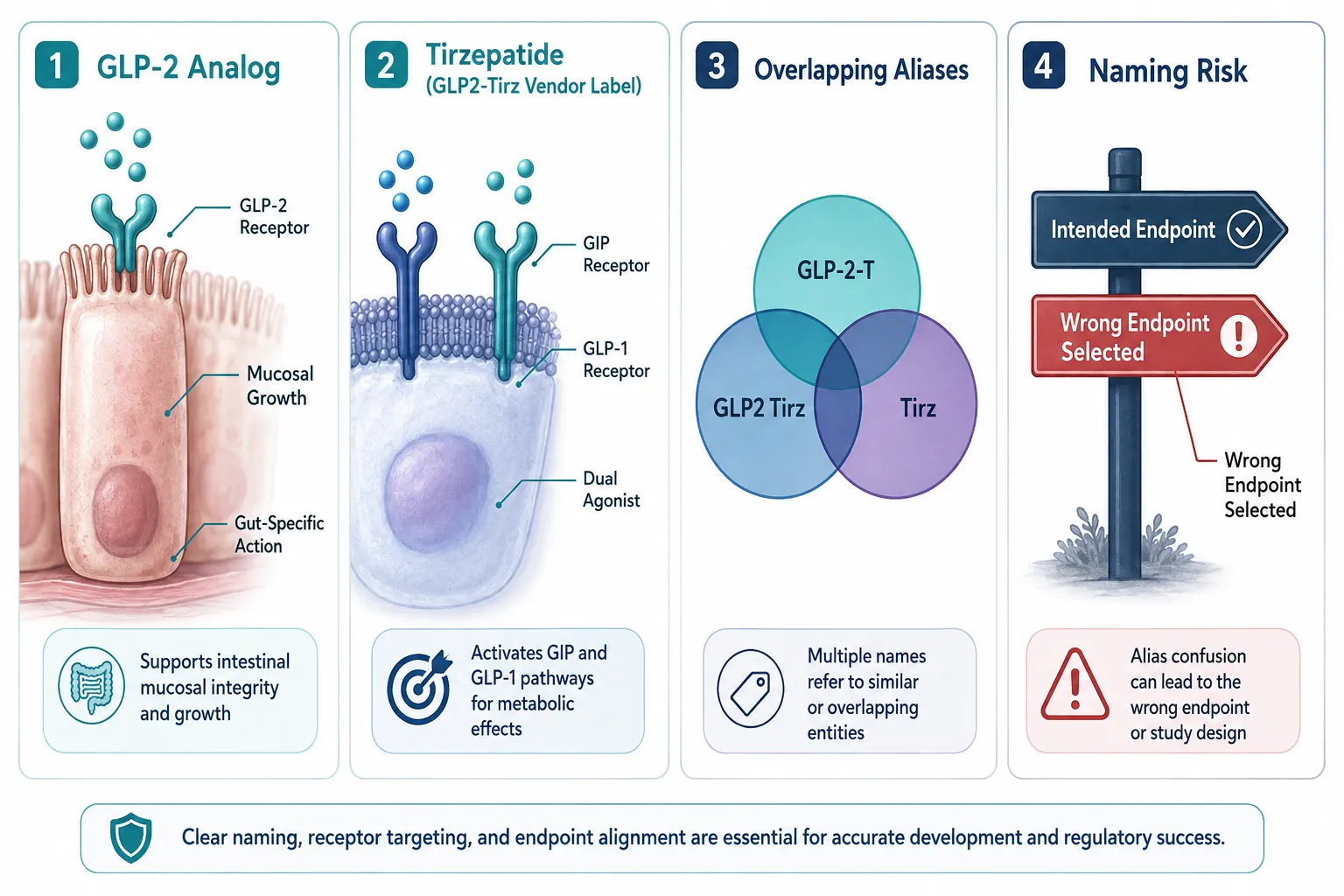
GLP-2 (glucagon-like peptide-2) is a 33-amino-acid peptide secreted by intestinal L-cells. It binds selectively to the GLP-2 receptor, driving intestinal mucosal growth, reducing gut permeability, and supporting nutrient absorption. Analogs of GLP-2, such as teduglutide, are approved for short bowel syndrome and have a well-defined mechanistic profile tied entirely to gut biology.
Tirzepatide, on the other hand, is a dual agonist targeting both the GIP (glucose-dependent insulinotropic polypeptide) receptor and the GLP-1 receptor. It has no meaningful activity at the GLP-2 receptor. Its translational endpoints center on metabolic outcomes: glycemic control, body weight reduction, and insulin sensitivity. For researchers exploring GLP-1 peptides, tirzepatide represents a distinct pharmacological category from GLP-2 analogs.
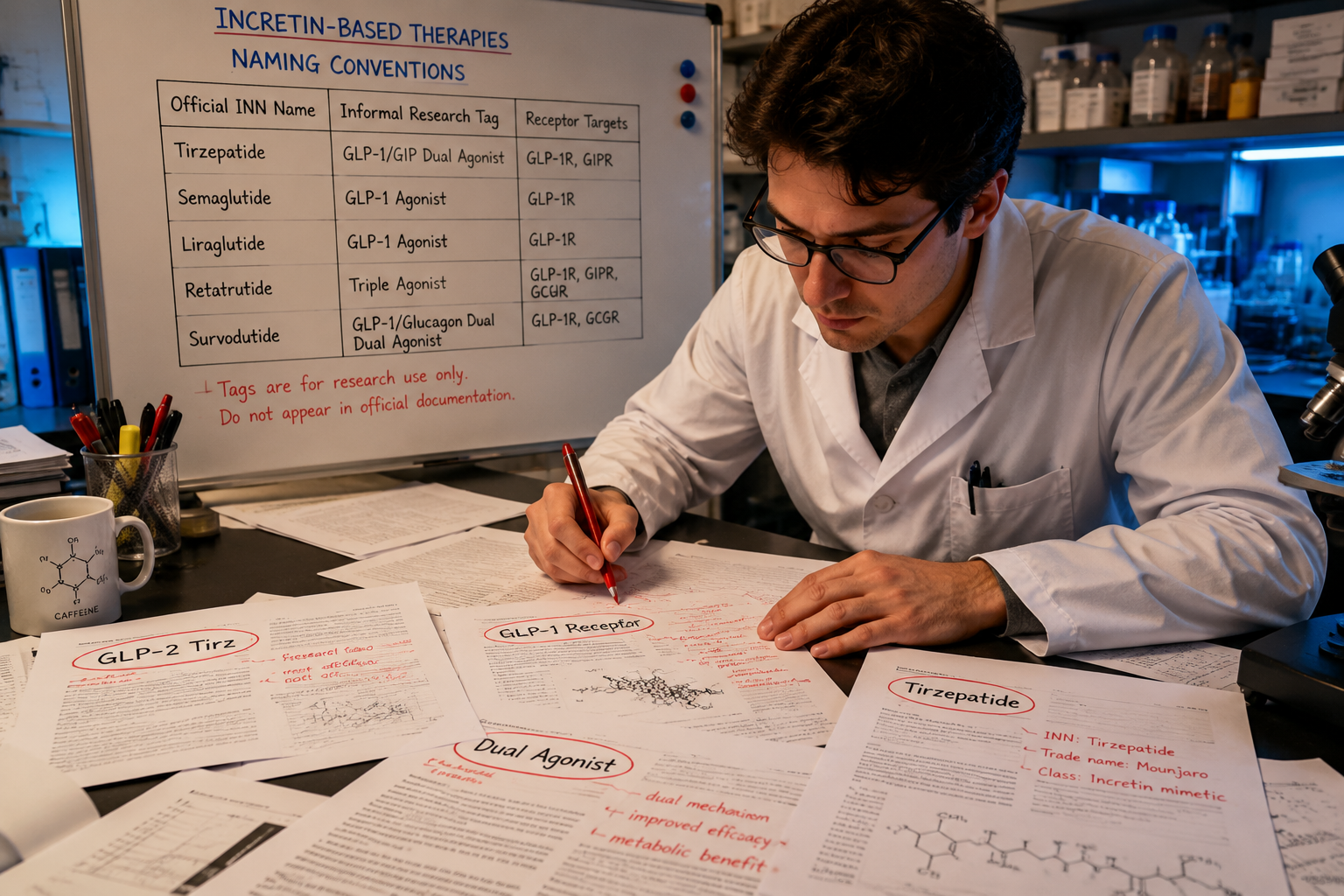
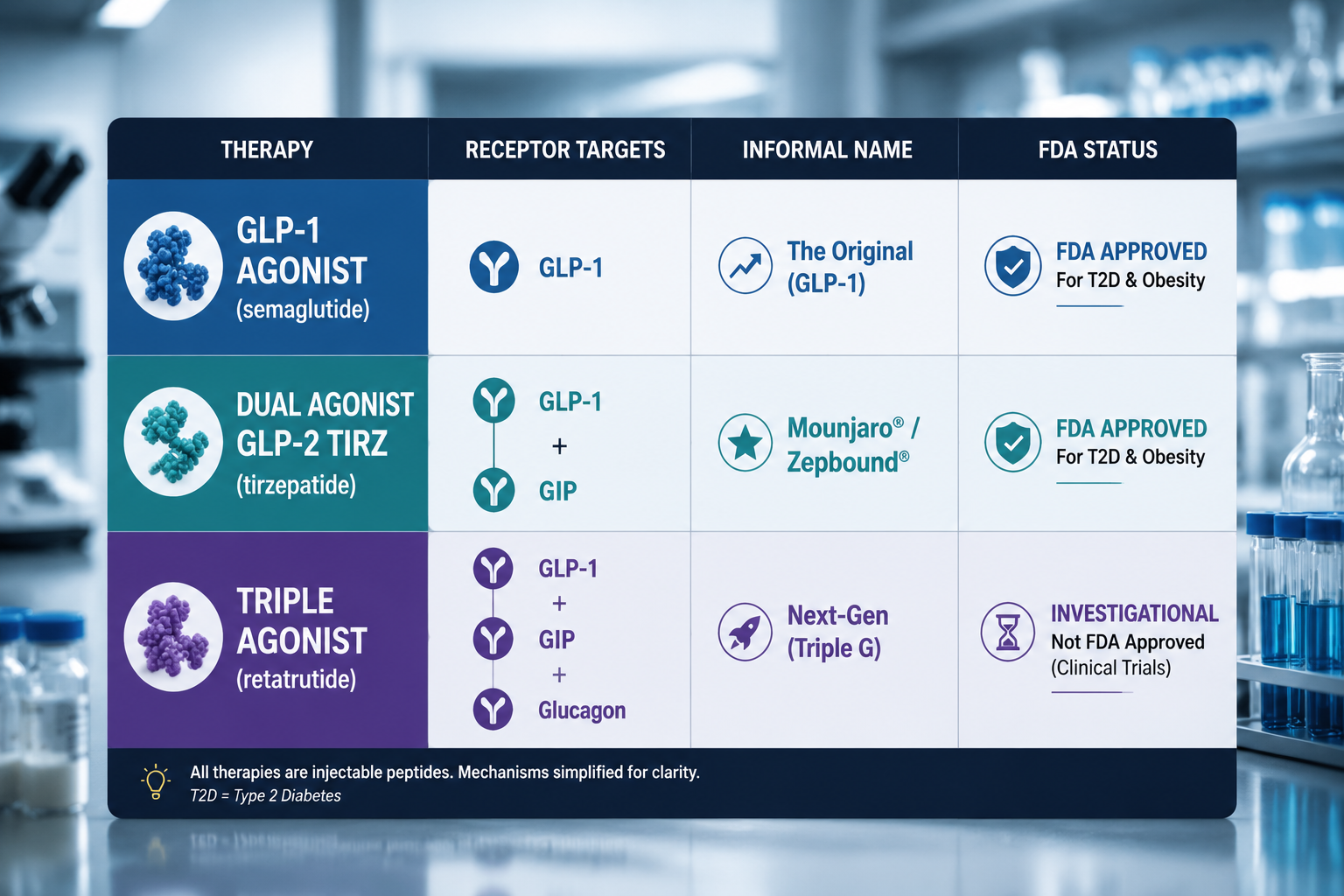
The problem emerges in vendor catalogs and informal research communications. The shorthand "GLP2-T" or "GLP2 Tirz" has been applied to tirzepatide by multiple suppliers, likely because tirzepatide's name contains "tirz" and its GLP-class designation invites casual abbreviation. Meanwhile, mechanistic literature uses "GLP-2-T" to denote modified GLP-2 analogs. The result is a naming collision with real consequences.
Key distinction: GLP-2 analogs act on the gut epithelium. Tirzepatide acts on pancreatic and hypothalamic GIP/GLP-1 receptors. Conflating these in a protocol is not a minor error, it is a fundamental mechanistic mismatch.
How Naming Errors Enter Research Protocols and Trial Design
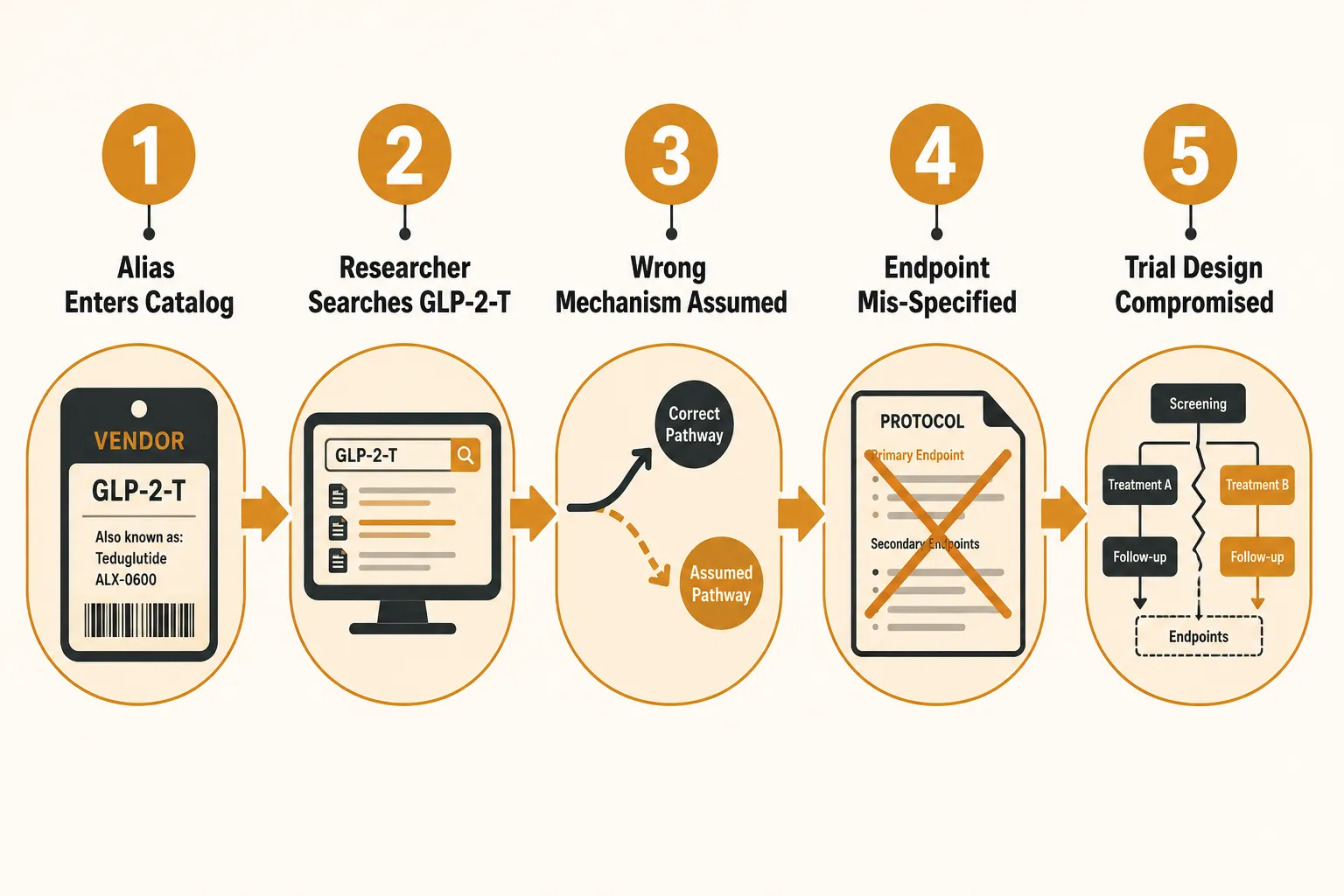
The pathway from naming confusion to flawed trial design follows a predictable sequence. A researcher queries a database or vendor catalog using "GLP-2-T." They retrieve results that include both genuine GLP-2 analog literature and tirzepatide vendor listings. Without careful cross-referencing of CAS numbers or INN designations, the wrong compound profile gets incorporated into a protocol.
This matters most at three points in research design:
1. Endpoint selection
GLP-2 analog studies measure intestinal villus height, crypt depth, tight junction protein expression, and gut permeability markers. Tirzepatide studies measure HbA1c, body mass index, fasting glucose, and lipid panels. A protocol built on the wrong compound assumption will specify endpoints that cannot detect the actual mechanism at work.
2. Inclusion and exclusion criteria
Subjects enrolled for a GLP-2 mechanism study, for example, patients with inflammatory bowel conditions or short bowel syndrome, are categorically different from subjects appropriate for a tirzepatide metabolic study. Naming errors upstream can produce inclusion criteria that are scientifically incoherent.
3. Literature search contamination
Systematic reviews and meta-analyses depend on clean search terms. When "GLP2-T" retrieves a mix of GLP-2 analog and tirzepatide studies, pooled analyses become unreliable. This is not a hypothetical risk, it is an active problem flagged by researchers in 2026.
Researchers working with related GLP-class compounds, including those exploring GLP-1 Tirz 60mg GA2 formulations, should verify receptor specificity before drawing mechanistic parallels. Similarly, those following retatrutide Phase 3 and beyond developments will recognize that multi-receptor agonist nomenclature is already complex enough without additional aliasing.
Expert Recommendations and the Path Toward Standardization
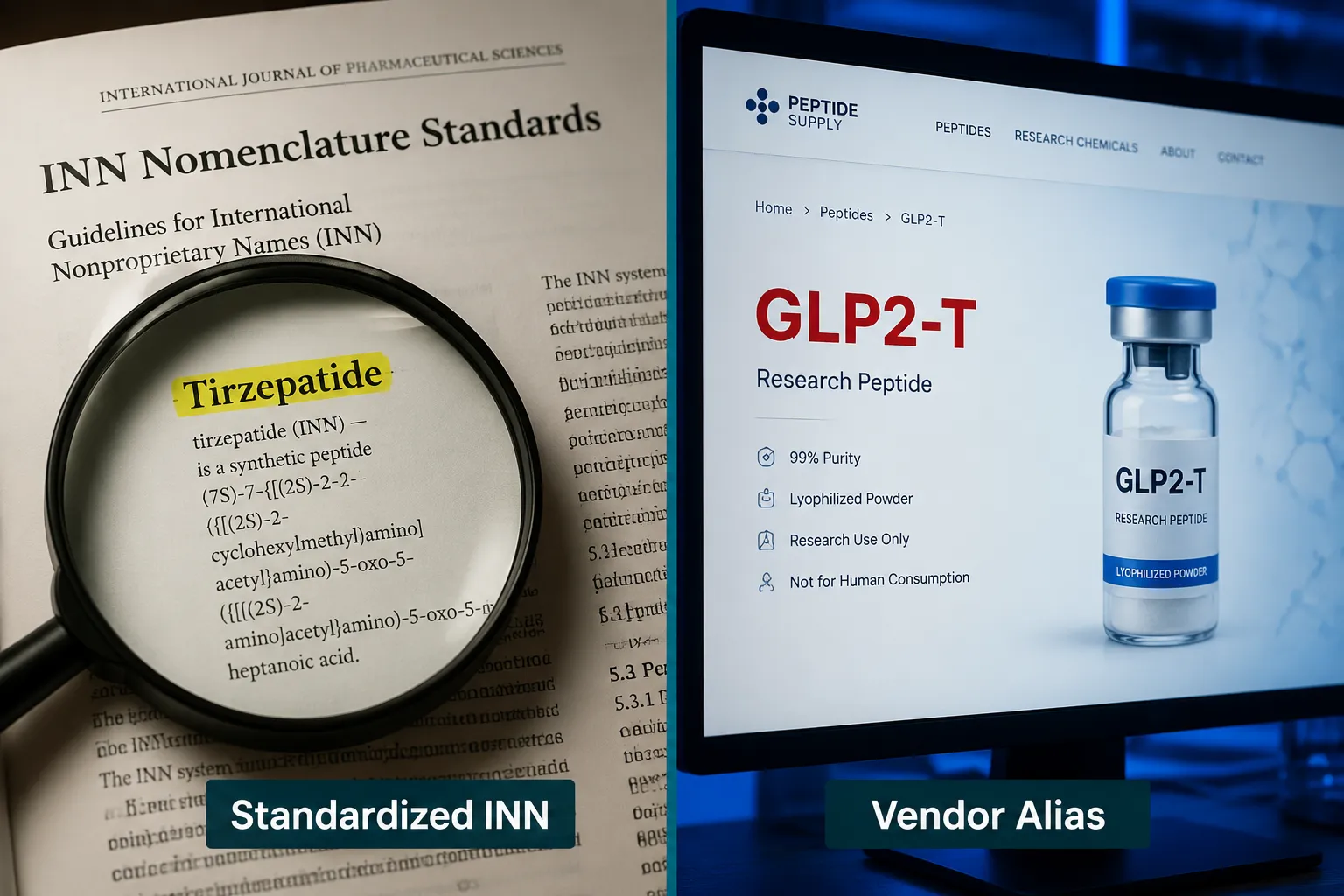
The expert consensus emerging in 2026 is clear: all research documentation, vendor communications, and trial protocols should use INN designations (tirzepatide, teduglutide) and explicit receptor labels (GIP/GLP-1 dual agonist; GLP-2 receptor agonist) rather than shorthand aliases.
Specific recommendations include:
- Always cross-reference CAS numbers when sourcing peptides from vendor catalogs, particularly for GLP2-T tagged products where alias use is documented.
- State receptor targets explicitly in Methods sections, "dual GIP/GLP-1 receptor agonist (tirzepatide)" rather than "GLP2 Tirz."
- Audit literature search strings in systematic reviews to exclude alias contamination before pooling data.
- Request certificates of analysis that include INN and CAS number, not just catalog shorthand.
Some vendors are beginning to add clarifying disclosures to listings, a positive early sign. However, marketplace data from mid-2026 shows that alias use remains widespread across supplier catalogs, meaning researchers cannot yet rely on vendor labeling alone.
The broader principle applies across peptide research categories. Nomenclature discipline is equally important in adjacent fields, researchers working with compounds like those covered in BPC-157 TB-500 peptide research or BDNF peptides understand that precise naming underpins reproducible science.
For those sourcing research-grade GLP-class compounds, oral peptides for sale resources that include full INN disclosure represent the current best practice standard.
Conclusion
The confusion surrounding GLP-2-T and GLP2 Tirz peptides: why naming matters for translational research and trial design is a concrete, solvable problem, but only if researchers, vendors, and trial designers treat it as a priority rather than a footnote.
Actionable next steps for researchers and trial designers:
- Verify every GLP-class compound against its INN and CAS number before incorporating it into a protocol.
- Rewrite any Methods section that uses "GLP2-T" or "GLP2 Tirz" without explicit receptor designation.
- Audit systematic review search strings for alias contamination before finalizing inclusion criteria.
- Advocate for vendor disclosure standards that require INN labeling alongside catalog shorthand.
- Treat mechanistic divergence, gut epithelial vs. metabolic receptor targets, as a hard boundary when selecting translational endpoints.
Standardization is coming, but it is not here yet. Until it is, the responsibility falls on individual researchers to close the gap between what a label says and what a compound does.