

Retatrutide Phase 3 and Beyond: What Ongoing Obesity Trials Mean for Research Readers
Obesity now affects more than one billion people worldwide, and the pharmaceutical pipeline has never moved faster to address it. At the center of that momentum is retatrutide, a triple-receptor agonist that produced weight-loss results in Phase 2 trials that surprised even seasoned researchers. For anyone tracking the obesity drug pipeline, understanding Retatrutide Phase 3 and Beyond: What Ongoing Obesity Trials Mean for Research Readers is no longer optional, it is essential context for interpreting what comes next without overreading early signals.
Key Takeaways
- Retatrutide simultaneously activates GLP-1, GIP, and glucagon receptors, setting it apart from dual-agonist competitors.
- Phase 2 data showed up to 24% mean body weight reduction at 48 weeks, among the highest figures recorded in an obesity drug trial.
- Phase 3 trials (the TRIUMPH program) are actively enrolling and will provide the larger, longer-term safety and efficacy data that Phase 2 cannot.
- Research readers should distinguish between statistically significant results and clinically meaningful outcomes before drawing conclusions.
- The broader GLP-1 and multi-agonist peptide research space is expanding rapidly, with retatrutide representing one of several active pipelines.
Understanding the Triple-Agonist Mechanism Behind the Headlines
Retatrutide (LY3437943) is developed by Eli Lilly. Unlike semaglutide or tirzepatide, it targets three receptors simultaneously: GLP-1 (glucagon-like peptide-1), GIP (glucose-dependent insulinotropic polypeptide), and glucagon receptors. This triple action is the core reason researchers are watching it so closely.
- GLP-1 receptor activation suppresses appetite and slows gastric emptying.
- GIP receptor activation enhances insulin secretion and may improve the tolerability of GLP-1 effects.
- Glucagon receptor activation increases energy expenditure and promotes fat breakdown in the liver.
The combination theoretically creates a stronger metabolic effect than any single pathway alone. For readers exploring the broader landscape of metabolic peptides, it is worth noting that GLP-1 class peptides represent a rapidly growing category of research compounds, and retatrutide sits at the frontier of that category.
"Triple agonism is not just additive, it may be synergistic, which is why the Phase 2 weight-loss numbers were so striking."
What Phase 2 Results Actually Showed, and What They Did Not
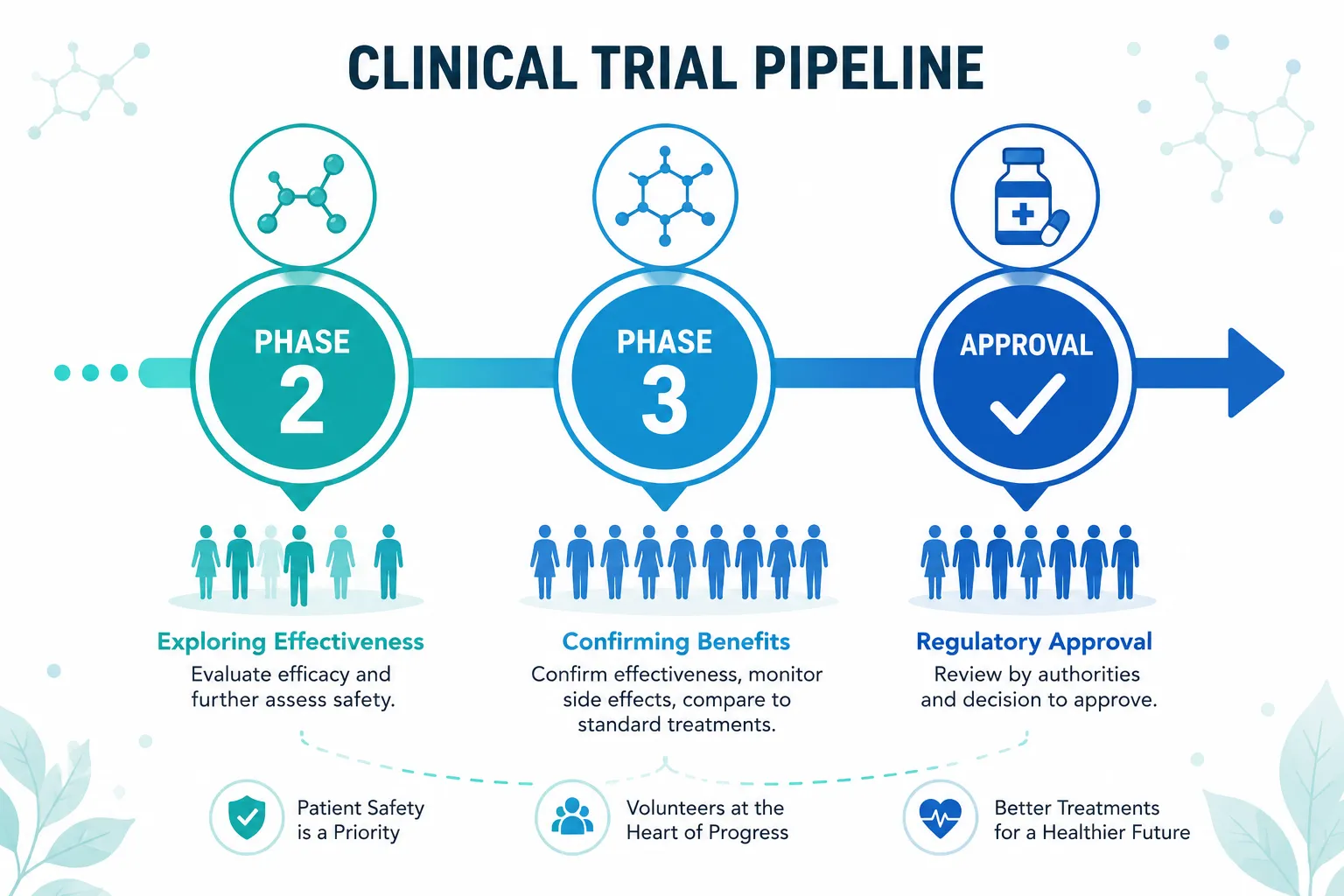
The Phase 2 SURMOUNT-adjacent trial published in 2023 enrolled 338 adults with obesity or overweight. At the highest dose (12 mg weekly), participants lost a mean of 24.2% of body weight at 48 weeks. That figure circulated widely and generated significant excitement.
However, research readers should apply careful filters before extrapolating:
| What Phase 2 Established | What Phase 2 Did Not Establish |
|---|---|
| Dose-response relationship | Long-term cardiovascular outcomes |
| Short-term tolerability profile | Safety in diverse real-world populations |
| Preliminary efficacy signals | Durability of weight loss after discontinuation |
| Biomarker improvements (lipids, glucose) | Regulatory-grade safety data |
Phase 2 trials are designed to find the right dose and detect obvious safety signals, not to confirm that a drug is safe and effective for broad clinical use. The sample size is intentionally small. Adverse events that occur in fewer than 1 in 100 patients may not appear at all.
For context on how peptide research benchmarks are established before large trials, the Bachem reference standards and peptide benchmarking guide provides useful background on how analytical rigor shapes compound evaluation.
Retatrutide Phase 3 and Beyond: What Ongoing Obesity Trials Mean for Research Readers

The TRIUMPH Phase 3 program is the critical next step. As of 2026, multiple arms of this program are actively running, covering:
- Adults with obesity (BMI 30 or above)
- Adults with obesity and type 2 diabetes
- Cardiovascular outcomes in high-risk populations
- Adolescents with obesity (a newer, closely watched cohort)
Phase 3 trials typically enroll thousands of participants across multiple countries and run for one to five years. This scale is what allows researchers to detect rarer adverse events, assess durability, and compare outcomes across demographic subgroups.
What research readers should watch for in Phase 3 reporting:
- Primary endpoint clarity, Is the trial powered for weight loss, cardiovascular events, or both?
- Dropout and completion rates, High dropout can bias results in either direction.
- Comparator arms, Is retatrutide being tested against placebo, tirzepatide, or standard of care?
- Safety signal monitoring, Thyroid C-cell findings (a concern with GLP-1 agents in rodents) will be tracked closely.
Understanding how multi-receptor peptides interact with metabolic pathways is also relevant to adjacent research areas. Readers interested in related receptor research may find the MC4R research tag useful for exploring how central appetite-regulation pathways connect to broader obesity biology.
How to Interpret Ongoing Trial Data Without Overreading It

One of the most common mistakes in following active drug trials is treating interim data as definitive. Here is a practical framework for staying grounded:
Apply the "so what" test to every headline. A statistically significant result means the finding is unlikely to be due to chance, it does not automatically mean the effect is large enough to matter clinically.
Track the full publication, not the press release. Pharmaceutical companies release top-line results before peer-reviewed data is available. The full dataset often reveals nuances, particularly around adverse event rates and subgroup performance, that headlines omit.
Compare effect sizes in context. Retatrutide's Phase 2 weight-loss figures exceeded those of tirzepatide at comparable time points. But tirzepatide itself exceeded semaglutide. Each comparison requires matching dose, duration, and population characteristics.
Monitor regulatory milestones, not just trial milestones. A successful Phase 3 trial is necessary but not sufficient for approval. The FDA and EMA review manufacturing consistency, labeling, and risk-management plans alongside efficacy data.
For research readers building a broader understanding of the peptide research landscape, including how compounds like GLP-3 class agents are being characterized, staying current with the research blog provides ongoing context across multiple peptide categories.
Those specifically tracking retatrutide's compound profile for research purposes can also review available Reta 10mg research material listings for sourcing context.
Conclusion
Retatrutide Phase 3 and Beyond: What Ongoing Obesity Trials Mean for Research Readers comes down to one discipline: calibrated patience. The Phase 2 data is genuinely remarkable, but it is a starting point, not a conclusion. Phase 3 will answer the questions that matter most: long-term safety, cardiovascular impact, durability after treatment ends, and performance across diverse populations.
Actionable next steps for research readers in 2026:
- Bookmark ClinicalTrials.gov entries for the TRIUMPH program and set alerts for status updates.
- Read full peer-reviewed publications rather than relying on company press releases.
- Cross-reference retatrutide findings with the broader multi-agonist literature, including tirzepatide and emerging GLP-1/glucagon dual agents.
- Apply the Phase 2 vs. Phase 3 interpretive framework above every time new data surfaces.
- Explore how adjacent peptide mechanisms, including peptide supplier quality standards, affect the reliability of research-grade compounds used in parallel studies.
The obesity treatment pipeline is moving at an unprecedented pace. Staying analytically rigorous, rather than reactive, is what separates informed research readers from those chasing headlines.


Leave a Reply
Want to join the discussion?Feel free to contribute!