Call or Text 727-513-9780
  • Shopping Cart Shopping Cart
    0Shopping Cart
Pure Tested Peptides | America's most trusted Peptides for sale online
  • Peptides for sale
    • Oral Peptides for sale
      • Peptide Capsules for sale
      • BPC 157 Capsules 1000mcg
      • SLU-PP-332 Capsules | 1000 mcg
      • 5-Amino-1MQ 50mg Capsules
      • Tesofensine 500mcg
    • All Peptides for sale
    • Peptide Sprays
      • BPC 157 Nasal Spray Kit
      • BPC-157 TB500 Nasal Spray Kit
      • Semax Nasal Spray 10mg
      • Selank – Nasal Spray Kit – 10mg
      • Epithalon 50MG Nasal Spray Kit
      • Ipamorelin 10mg Nasal Spray
      • Klow Nasal Spray (BPC-157 + TB-500 + GHK-Cu + KPV) | 80mg
      • Hulk Nasal Spray Tesa / Ipa Blend 6/3 MG
      • Klow Nasal Spray
      • NAD + 500 mg Nasal Spray
      • PT-141 Nasal Spray Kit
    • GHRH Peptides
      • Ipa Peptides
      • CJC-1295 Peptides
        • CJC-1295 with DAC 5 mg
        • CJC-1295 without DAC 5 mg
        • CJC-1295 Ipa 10mg
      • Tesa Peptides
        • Tesa Peptide
        • Tesa 20 mg
    • GHK-Cu Peptides
      • All GHK-Cu Peptides
      • GHK-Cu 100mg
      • KLOW Peptide Blend – Buy KLOW blend online
    • BPC Peptides
      • All BPC Peptides
      • BPC-157
      • BPC-157 TB-500
      • BPC 157 capsules 1000mcg
    • SLU-PP-332 Peptides
      • All SLU-PP-332 Peptides
      • SLU-PP-332 5mg
    • GLP3 Peptides
      • GLP3-R
      • GLP3-R CAG 10mg
      • GLP3-R 20mg
    • PT-141 Peptides
      • PT-141 Peptides for sale
      • PT-141 10mg
      • PT-141 Nasal Spray
    • CAG Peptides
      • Lipo-C Peptide Blend
      • CAG 5mg
      • CAG 10mg
    • MOTS-C Peptides
      • MOTS-C Peptides for sale
      • MOTS-c peptide
      • MOTS-c 10mg *6 pack*
    • 5 Amino 1MQ Peptides
      • 5 Amino 1MQ Peptides for sale
      • 5-Amino-1MQ 50mg Capsules
      • 5-Amino-1MQ 5mg
    • Epithalon Peptides
      • Epithalon Peptides for sale
      • Epithalon 10mg
      • Epithalon 50mg
  • Shop
    • GLPs
      • 5-Amino-1MQ 50mg Capsules
      • 5-Amino-1MQ 5mg
      • GLP3-Reta
      • L-Carnitine 500mg/ml
      • Tesofensine 500mcg
      • SLU-PP-332 5mg
      • MOTS-c 10mg *6 pack*
    • Epithalon & BPC Peptides
      • Epithalon 10mg
      • Epithalon 50mg
      • BPC-157
      • BPC 157 capsules 1000mcg
      • BPC-157 TB-500
      • BPC-157 TB500 Nasal Spray Kit
      • BPC 157 Nasal Spray Kit
    • BPC TB-500 & NAD+ Peptides
      • NAD+ 500 mg
      • KLOW Peptide Blend – Buy KLOW blend online
      • GLOW Peptide Blend
      • TB 500 5mg
      • BPC 157 capsules 1000mcg – Supplement
      • BPC 157 Nasal Spray Kit
      • BPC-157
      • BPC-157 TB500 Nasal Spray Kit
      • BPC-157 TB-500
      • BPC 157 capsules 1000mcg
    • LL-37 Peptide
      • LL-37 10 mg
    • MOTS-C & Selank
      • MOTS-c peptide
      • Selank 10mg
    • GHK Peptides
      • GHK-Cu 100mg
      • GLOW Peptide Blend
      • KLOW Peptide Blend – Buy KLOW blend online
  • COAs
  • Wholesale
    • Wholesale Peptides for sale
  • PTP FAQ
  • Affiliates
    • Selank Peptide: Advanced Pharmacological Mechanisms Underlying Its Anxiolytic and Nootropic Effects in Research
      • 5-Amino-1MQ Peptide: Detailed Mechanisms of NNMT Inhibition and Its Impact on Cellular Metabolism Research
        • MOTS-C Peptide: Unraveling Its Role in Mitochondrial Dynamics and Energy Metabolism Research
          • Epithalon Peptide and Telomerase Regulation: Investigating Its Impact on Cellular Senescence and Lifespan Research Models
            • GLP2-T vs GLP2 Tirz Peptide: Understanding the Naming, Mechanistic Nuances, and Research Implications for Gut Health
      • Peptides and Polypeptides in Modern Pharmacology: What Research on Metoprolol, Prednisone, and Amlodipine Reveals
        • Polypeptide Peptides vs NSAIDs: What Naproxen and Diclofenac Teach Tissue-Repair Researchers About BPC‑157 and TB‑500
          • Peptides and Polypeptides in Endocrine Pharmacology: How GLP-1, GLP-2, and GLP-3 Retatrutide Differ From Classic Drugs Like Prednisone and Amlodipine
          • 5‑Amino‑1MQ Peptide and NNMT Inhibition: How It Compares With Statins Like Atorvastatin in Adipose and Lipid Metabolism Research
      • Enclomiphene, Estrogen Receptor Signaling, and Luteinizing Phase Biology: What Hormone Researchers Should Measure
        • Mesenchymal Stem Cells, BPC‑157, and GHK‑Cu: How Tissue Repair Peptides Compare With Classic NSAIDs Like Naproxen in Injury Models
          • Peptide Calculator Use Cases Beyond Growth Hormone: Working Through GLP‑3 Retatrutide, MOTS‑c, and BPC‑157 Research Dosing
        • Polypeptide Peptides in Endocrine and Metabolic Pharmacology: Lessons From Amlodipine, Prednisone, and Metoprolol
        • Peptides Calculator for Advanced Blends: Worked Examples for Tesamorelin, CJC‑1295, and Ipamorelin Stacks
          • Peptides and Polypeptides in Human Physiology: How Molecular Size Shapes Research Applications
            • Selank Peptide: Advanced Pharmacological Mechanisms Underlying Its Anxiolytic and Nootropic Effects in Research
          • 5-Amino-1MQ Peptide: Detailed Mechanisms of NNMT Inhibition and Its Impact on Cellular Metabolism Research
            • MOTS-C Peptide: Unraveling Its Role in Mitochondrial Dynamics and Energy Metabolism Research
              • Epithalon Peptide and Telomerase Regulation: Investigating Its Impact on Cellular Senescence and Lifespan Research Models
                • GLP2-T vs GLP2 Tirz Peptide: Understanding the Naming, Mechanistic Nuances, and Research Implications for Gut Health
                  • Peptides and Polypeptides in Endocrine Pharmacology: How GLP-1, GLP-2, and GLP-3 Retatrutide Differ From Classic Drugs Like Prednisone and Amlodipine
                    • Polypeptide Peptides vs NSAIDs: What Naproxen and Diclofenac Teach Tissue-Repair Researchers About BPC‑157 and TB‑500
                      • Peptides and Polypeptides in Modern Pharmacology: What Research on Metoprolol, Prednisone, and Amlodipine Reveals
                        • 5‑Amino‑1MQ Peptide and NNMT Inhibition: How It Compares With Statins Like Atorvastatin in Adipose and Lipid Metabolism Research
                        • Enclomiphene, Estrogen Receptor Signaling, and Luteinizing Phase Biology: What Hormone Researchers Should Measure
                        • Mesenchymal Stem Cells, BPC‑157, and GHK‑Cu: How Tissue Repair Peptides Compare With Classic NSAIDs Like Naproxen in Injury Models
                        • Peptide Calculator Use Cases Beyond Growth Hormone: Working Through GLP‑3 Retatrutide, MOTS‑c, and BPC‑157 Research Dosing
                        • Polypeptide Peptides in Endocrine and Metabolic Pharmacology: Lessons From Amlodipine, Prednisone, and Metoprolol
                        • Peptides Calculator for Advanced Blends: Worked Examples for Tesamorelin, CJC‑1295, and Ipamorelin Stacks
                        • Peptides and Polypeptides in Human Physiology: How Molecular Size Shapes Research Applications
                        • Selank Peptide: Advanced Pharmacological Mechanisms Underlying Its Anxiolytic and Nootropic Effects in Research
                        • MOTS-C Peptide: Unraveling Its Role in Mitochondrial Dynamics and Energy Metabolism Research
                        • Peptides and Polypeptides in Modern Pharmacology: What Research on Metoprolol, Prednisone, and Amlodipine Reveals
                        • Peptides and Polypeptides in Endocrine Pharmacology: How GLP-1, GLP-2, and GLP-3 Retatrutide Differ From Classic Drugs Like Prednisone and Amlodipine
                        • 5-Amino-1MQ Peptide: Detailed Mechanisms of NNMT Inhibition and Its Impact on Cellular Metabolism Research
                        • Mesenchymal Stem Cells, BPC‑157, and GHK‑Cu: How Tissue Repair Peptides Compare With Classic NSAIDs Like Naproxen in Injury Models
                        • Peptide Calculator Use Cases Beyond Growth Hormone: Working Through GLP‑3 Retatrutide, MOTS‑c, and BPC‑157 Research Dosing
                        • GLP2-T vs GLP2 Tirz Peptide: Understanding the Naming, Mechanistic Nuances, and Research Implications for Gut Health
                        • Polypeptide Peptides in Endocrine and Metabolic Pharmacology: Lessons From Amlodipine, Prednisone, and Metoprolol
                        • Polypeptide Peptides vs NSAIDs: What Naproxen and Diclofenac Teach Tissue-Repair Researchers About BPC‑157 and TB‑500
                        • Peptides and Polypeptides in Human Physiology: How Molecular Size Shapes Research Applications
                        • Peptides Calculator for Advanced Blends: Worked Examples for Tesamorelin, CJC‑1295, and Ipamorelin Stacks
                        • 5‑Amino‑1MQ Peptide and NNMT Inhibition: How It Compares With Statins Like Atorvastatin in Adipose and Lipid Metabolism Research
                        • Enclomiphene, Estrogen Receptor Signaling, and Luteinizing Phase Biology: What Hormone Researchers Should Measure
                        • Epithalon Peptide and Telomerase Regulation: Investigating Its Impact on Cellular Senescence and Lifespan Research Models
                        • Best research protocol Klow blend
                        • best time to take BPC-157
                        • best time to take DSIP (Delta Sleep Inducing Peptide)
                        • best time to take CJC-1295
                        • best time to take AOD-9604
                        • best time to take Follistatin 344
                        • best time to take Ipamorelin
                        • best time to take MK-677 (Ibutamoren)
                        • best time to take Ligandrol (LGD-4033) — research compound
                        • best time to take Ostarine (MK-2866) — research compound
                        • best time to take GHK-CU
                        • best time to take TB-500
                        • best time to take MOTS-c
                        • best time to take Semax
                        • best time to take RAD-140 (Testolone) — research compound
                        • best time to take Thymosin Alpha-1
                        • best time to take PEG-MGF
                        • Biolife Plasma, Octapharma Plasma, and Research Peptides: How Plasma Donation Labs Differ From Peptide Suppliers
                        • best time to take YK-11 — research compound
                        • best time to take PT-141 (Bremelanotide)
                        • Best research protocol Klow blend
                        • 5-Amino-1MQ and MOTS-C Synergy: Metabolic Signaling, Mitochondria, and Research Design
                        • BPC-157 and TB-500: Investigating Their Combined Effects on Angiogenesis and Cellular Migration in Tissue Repair Models
                        • BPC-157 Peptide: Gut Barrier Function, Inflammation, and Tissue-Recovery Research
                        • 5‑Amino‑1MQ and MOTS‑c Synergy in Metabolic Research: Designing NNMT and Mitochondrial Biogenesis Stacks
                        • CJC-1295 with DAC vs. Without DAC: Half-Life, Release Kinetics, and Research Implications
                        • CJC‑1295 with DAC vs. Without DAC: Expanding on Half‑Life Differences Using Tesamorelin and Ipamorelin Blend Case Studies
                        • Collagen Biology and Copper‑Binding Peptides: How GHK‑Cu, Glow Blend, and Klow Blend Interact with Skin and Connective Tissue
                        • Collagen Biology and Regenerative Peptides: How GHK‑Cu, Glow Blend, and Klow Blend Affect Extracellular Matrix Research
                    • DNA, Telomeres, and Longevity Peptides: Positioning Epithalon and MOTS‑c in Genetic Aging Research
                      • Enclomiphene Citrate: serm Mechanism, Testosterone Research, and Stack Compatibility
                        • Enclomiphene vs Enclomiphene Citrate: Formulation, Bioavailability, and Research Distinctions
                        • Epithalon Peptide Research: Telomerase Activation, Aging, and Pineal Gland Function
                        • Estrogen Receptor Signaling and Enclomiphene: How Selective Modulators Compare with Classic Polypeptide Hormones
                        • GHK-Cu Peptide: Advanced Mechanisms in Extracellular Matrix Remodeling and Wound Healing Research
                        • GHK-Cu Peptide: Collagen Synthesis, Wound Repair, and Skin-Barrier Research Models
                        • GLP-1 vs GLP-3 vs GLP-2: Peptide Classification and Research Applications
                        • GLP-2 Peptide Research Guide: Gut Barrier Function, Nutrient Absorption, and Intestinal Recovery Models
                        • GLP-3 Retatrutide vs. GLP-1 Drugs: What Triple-Agonist Biology Changes in Research Models
                        • Ipamorelin and Tesamorelin Combination: Synergistic GH Secretagogue Research and Dosing Protocols
                        • GLP2 Tirz Peptide: What It Is, Why the Name Exists, and How Researchers Should Interpret It
                        • Klow Blend Peptide Nasal Spray: What the Formulation Is Trying to Do in Cognitive Research
                        • Mitochondria, NNMT Inhibition, and Peptide Modulators: Where MOTS‑c and 5‑Amino‑1MQ Fit in Cellular Energy Research
                        • MOTS-c Peptide: Mitochondrial Function, Energy Metabolism, and What Researchers Measure
                        • MOTS-c vs. 5-Amino-1MQ: Which Metabolic Research Questions Each Compound Actually Answers
                        • Nasal Spray Peptides: Bioavailability, Administration, and Semax/Selank Research Applications
                        • PT-141 Peptide Research: Mechanism of Action and Melanocortin Receptor Signaling
                        • Retatrutide for Research: Mechanism, Structure, and GLP-1/GLP-3 Dual Action
                        • Retatrutide for Obesity and Type 2 Diabetes: What the Latest Trial Data Suggest
                        • Tesofensine Peptide Research: Mechanism, Appetite Suppression, and Neuropeptide Y Pathways
  • Contact
    • Contact Customer Service
    • Text Customer Support
  • About US
  • Shop all peptides
  • Affiliate Program
    • Affiliate Signup
  • Login / Register Login / Register Page Link Login / Register Page Link
  • Click to open the search input field Click to open the search input field Search
  • Menu Menu

Tag Archive for: peptide pipeline

Retatrutide Phase 3 and Beyond: What Ongoing Obesity Trials Mean for Research Readers

Retatrutide Phase 3 and Beyond: What Ongoing Obesity Trials Mean for Research Readers

July 28, 2026/0 Comments/in Uncategorized/by

Obesity now affects more than one billion people worldwide, and the pharmaceutical pipeline has never moved faster to address it. At the center of that momentum is retatrutide, a triple-receptor agonist that produced weight-loss results in Phase 2 trials that surprised even seasoned researchers. For anyone tracking the obesity drug pipeline, understanding Retatrutide Phase 3 and Beyond: What Ongoing Obesity Trials Mean for Research Readers is no longer optional, it is essential context for interpreting what comes next without overreading early signals.

Key Takeaways

  • Retatrutide simultaneously activates GLP-1, GIP, and glucagon receptors, setting it apart from dual-agonist competitors.
  • Phase 2 data showed up to 24% mean body weight reduction at 48 weeks, among the highest figures recorded in an obesity drug trial.
  • Phase 3 trials (the TRIUMPH program) are actively enrolling and will provide the larger, longer-term safety and efficacy data that Phase 2 cannot.
  • Research readers should distinguish between statistically significant results and clinically meaningful outcomes before drawing conclusions.
  • The broader GLP-1 and multi-agonist peptide research space is expanding rapidly, with retatrutide representing one of several active pipelines.

Understanding the Triple-Agonist Mechanism Behind the Headlines

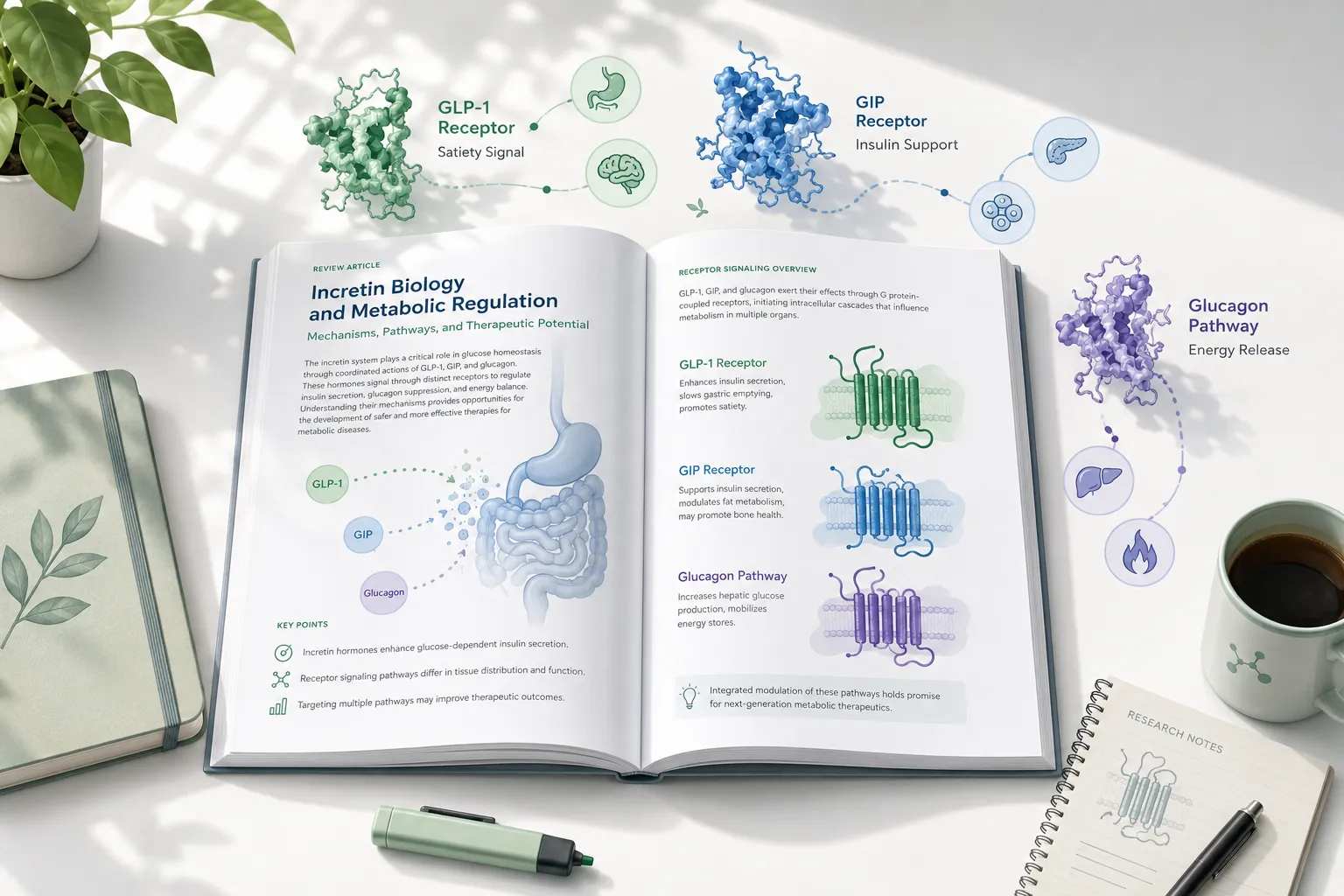
Retatrutide (LY3437943) is developed by Eli Lilly. Unlike semaglutide or tirzepatide, it targets three receptors simultaneously: GLP-1 (glucagon-like peptide-1), GIP (glucose-dependent insulinotropic polypeptide), and glucagon receptors. This triple action is the core reason researchers are watching it so closely.

  • GLP-1 receptor activation suppresses appetite and slows gastric emptying.
  • GIP receptor activation enhances insulin secretion and may improve the tolerability of GLP-1 effects.
  • Glucagon receptor activation increases energy expenditure and promotes fat breakdown in the liver.

The combination theoretically creates a stronger metabolic effect than any single pathway alone. For readers exploring the broader landscape of metabolic peptides, it is worth noting that GLP-1 class peptides represent a rapidly growing category of research compounds, and retatrutide sits at the frontier of that category.

"Triple agonism is not just additive, it may be synergistic, which is why the Phase 2 weight-loss numbers were so striking."

What Phase 2 Results Actually Showed, and What They Did Not
What Phase 2 Results Actually Showed, and What They Did Not

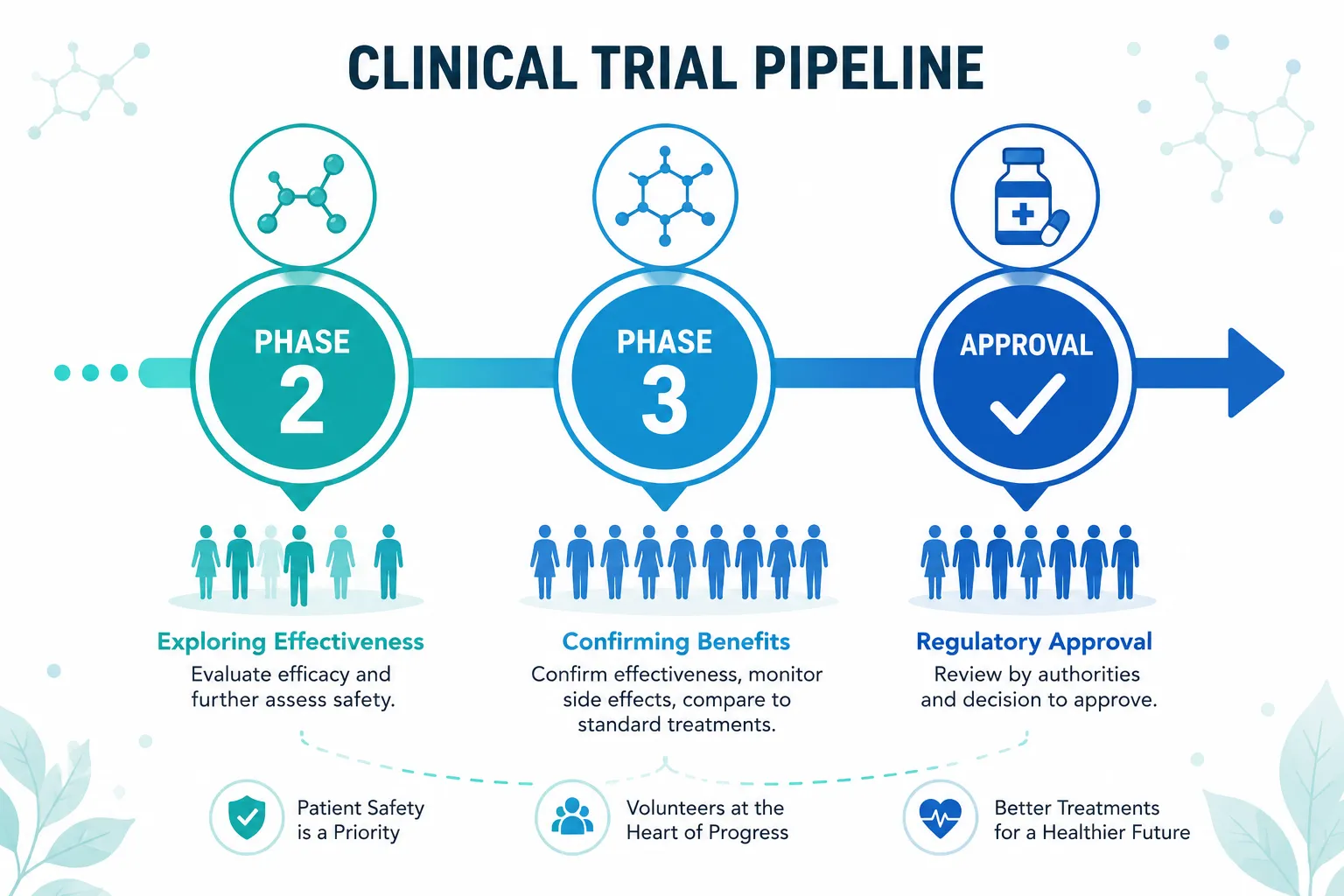
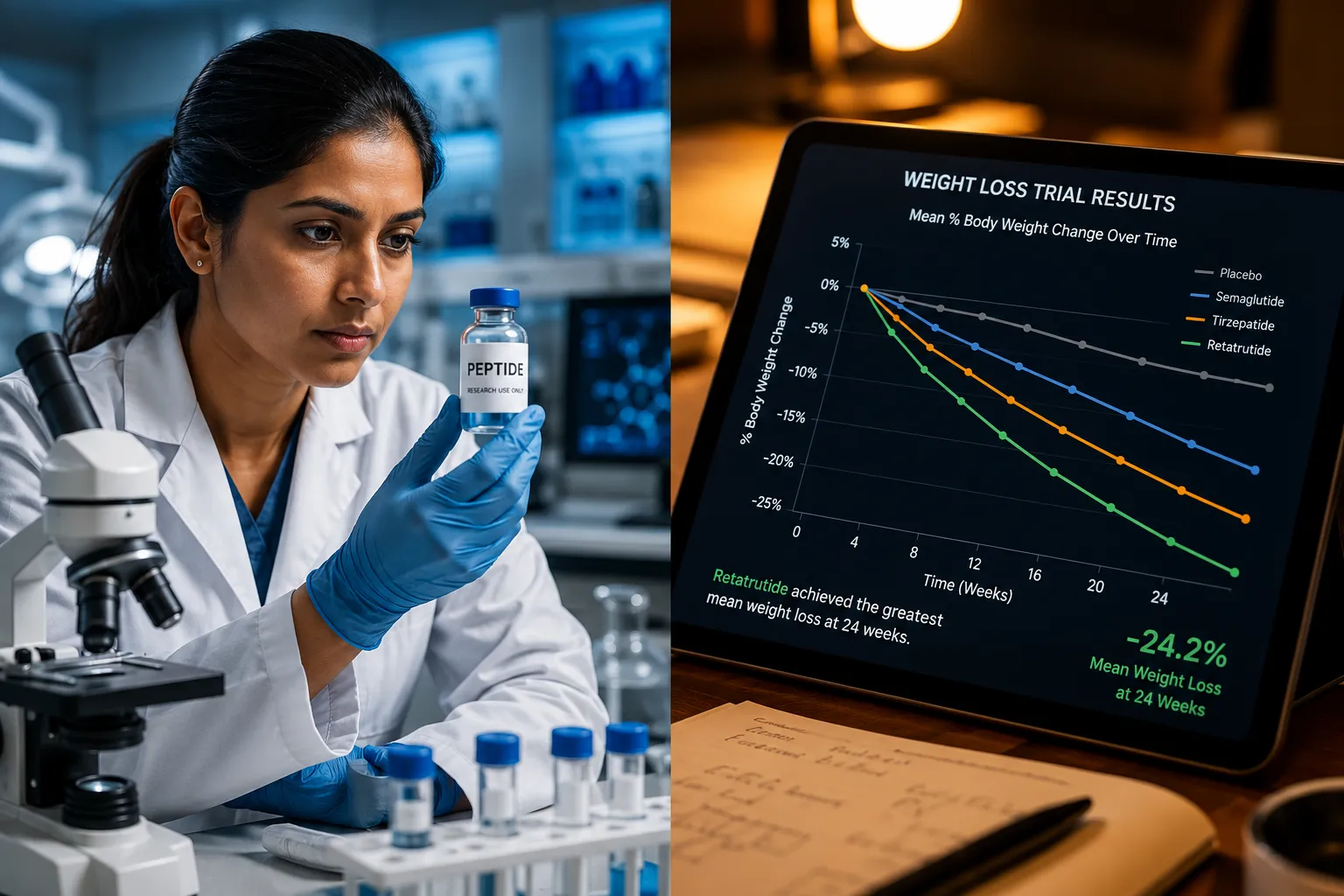
The Phase 2 SURMOUNT-adjacent trial published in 2023 enrolled 338 adults with obesity or overweight. At the highest dose (12 mg weekly), participants lost a mean of 24.2% of body weight at 48 weeks. That figure circulated widely and generated significant excitement.

However, research readers should apply careful filters before extrapolating:

What Phase 2 Established What Phase 2 Did Not Establish
Dose-response relationship Long-term cardiovascular outcomes
Short-term tolerability profile Safety in diverse real-world populations
Preliminary efficacy signals Durability of weight loss after discontinuation
Biomarker improvements (lipids, glucose) Regulatory-grade safety data

Phase 2 trials are designed to find the right dose and detect obvious safety signals, not to confirm that a drug is safe and effective for broad clinical use. The sample size is intentionally small. Adverse events that occur in fewer than 1 in 100 patients may not appear at all.

For context on how peptide research benchmarks are established before large trials, the Bachem reference standards and peptide benchmarking guide provides useful background on how analytical rigor shapes compound evaluation.

Retatrutide Phase 3 and Beyond: What Ongoing Obesity Trials Mean for Research Readers
Retatrutide Phase 3 and Beyond: What Ongoing Obesity Trials Mean for Research Readers

The TRIUMPH Phase 3 program is the critical next step. As of 2026, multiple arms of this program are actively running, covering:

  • Adults with obesity (BMI 30 or above)
  • Adults with obesity and type 2 diabetes
  • Cardiovascular outcomes in high-risk populations
  • Adolescents with obesity (a newer, closely watched cohort)

Phase 3 trials typically enroll thousands of participants across multiple countries and run for one to five years. This scale is what allows researchers to detect rarer adverse events, assess durability, and compare outcomes across demographic subgroups.

What research readers should watch for in Phase 3 reporting:

  1. Primary endpoint clarity, Is the trial powered for weight loss, cardiovascular events, or both?
  2. Dropout and completion rates, High dropout can bias results in either direction.
  3. Comparator arms, Is retatrutide being tested against placebo, tirzepatide, or standard of care?
  4. Safety signal monitoring, Thyroid C-cell findings (a concern with GLP-1 agents in rodents) will be tracked closely.

Understanding how multi-receptor peptides interact with metabolic pathways is also relevant to adjacent research areas. Readers interested in related receptor research may find the MC4R research tag useful for exploring how central appetite-regulation pathways connect to broader obesity biology.

How to Interpret Ongoing Trial Data Without Overreading It
How to Interpret Ongoing Trial Data Without Overreading It

One of the most common mistakes in following active drug trials is treating interim data as definitive. Here is a practical framework for staying grounded:

Apply the "so what" test to every headline. A statistically significant result means the finding is unlikely to be due to chance, it does not automatically mean the effect is large enough to matter clinically.

Track the full publication, not the press release. Pharmaceutical companies release top-line results before peer-reviewed data is available. The full dataset often reveals nuances, particularly around adverse event rates and subgroup performance, that headlines omit.

Compare effect sizes in context. Retatrutide's Phase 2 weight-loss figures exceeded those of tirzepatide at comparable time points. But tirzepatide itself exceeded semaglutide. Each comparison requires matching dose, duration, and population characteristics.

Monitor regulatory milestones, not just trial milestones. A successful Phase 3 trial is necessary but not sufficient for approval. The FDA and EMA review manufacturing consistency, labeling, and risk-management plans alongside efficacy data.

For research readers building a broader understanding of the peptide research landscape, including how compounds like GLP-3 class agents are being characterized, staying current with the research blog provides ongoing context across multiple peptide categories.

Those specifically tracking retatrutide's compound profile for research purposes can also review available Reta 10mg research material listings for sourcing context.

Conclusion

Retatrutide Phase 3 and Beyond: What Ongoing Obesity Trials Mean for Research Readers comes down to one discipline: calibrated patience. The Phase 2 data is genuinely remarkable, but it is a starting point, not a conclusion. Phase 3 will answer the questions that matter most: long-term safety, cardiovascular impact, durability after treatment ends, and performance across diverse populations.

Actionable next steps for research readers in 2026:

  • Bookmark ClinicalTrials.gov entries for the TRIUMPH program and set alerts for status updates.
  • Read full peer-reviewed publications rather than relying on company press releases.
  • Cross-reference retatrutide findings with the broader multi-agonist literature, including tirzepatide and emerging GLP-1/glucagon dual agents.
  • Apply the Phase 2 vs. Phase 3 interpretive framework above every time new data surfaces.
  • Explore how adjacent peptide mechanisms, including peptide supplier quality standards, affect the reliability of research-grade compounds used in parallel studies.

The obesity treatment pipeline is moving at an unprecedented pace. Staying analytically rigorous, rather than reactive, is what separates informed research readers from those chasing headlines.

https://www.puretestedpeptides.com/wp-content/uploads/2026/07/retatrutide-phase-3-and-beyond-what-ongoing-obesity-trials-mean-for-research-rea-1.webp 1024 1536 https://www.puretestedpeptides.com/wp-content/uploads/2026/01/buy-peptides-online.jpg 2026-07-28 13:04:352026-07-28 13:04:35Retatrutide Phase 3 and Beyond: What Ongoing Obesity Trials Mean for Research Readers
×

Helpful Links

  • My account
  • Cart
  • Checkout
  • Refund and Returns Policy
  • Privacy Policy
  • SMS Privacy Policy
  • Login
  • My Account
  • Logout

USA Made Lab Tested Peptides

All products are sold for research, laboratory, or analytical purposes only, and are not for human consumption


Pure Tested Peptides is a chemical supplier. Pure Tested Peptides is not a compounding / chemical compounding facility as defined under 503A of the Federal Food, Drug, and Cosmetic act. Pure Tested Peptides is not an outsourcing facility as defined under 503B of the Federal Food, Drug, and Cosmetic act.

The statements made within this website have not been evaluated by the US Food and Drug Administration. The products we offer are not intended to diagnose, treat, cure or prevent any disease.

Human/Animal Consumption Prohibited. Laboratory/In-Vitro Experimental Use Only

Scroll to top Scroll to top Scroll to top