

Metoprolol, Beta-Blockers, and Incretin Peptide Research: What Labs Track When Combining GLP-3 Retatrutide With Cardioactive Drugs
Roughly 40% of adults with obesity also carry a diagnosis of cardiovascular disease, making the overlap between metabolic therapies and heart-active medications not a niche concern but a near-universal research challenge. As retatrutide advances through Phase 3 TRIUMPH trials with striking cardiometabolic data, the question of how this triple-incretin agonist interacts with beta-blockers like metoprolol has become one of the most pressing topics in preclinical and translational lab design for 2026.
This guide addresses the core of that challenge: what measurements, markers, and safety checkpoints researchers track when studying metoprolol, beta-blockers, and incretin peptide research, specifically what labs track when combining GLP-3 retatrutide with cardioactive drugs in structured experimental frameworks.
Key Takeaways
- Retatrutide activates GLP-1, GIP, and glucagon receptors simultaneously, creating a multi-axis effect on heart rate, blood pressure, and glucose that overlaps directly with beta-blocker pharmacology.
- Metoprolol and other beta-blockers can mask hypoglycemia symptoms, a risk that becomes more complex when combined with incretin agents that lower glucose through multiple pathways.
- Researchers tracking this combination should monitor cardiac rhythm, hemodynamics, glucose metabolism, and renal function as a minimum panel.
- Emerging arrhythmia signals from triple-incretin agonist data make QTc interval and Holter monitoring critical additions to any lab protocol.
- Purity and consistency of research-grade peptides are foundational to reproducible results in this interaction space.
Understanding the Pharmacological Overlap
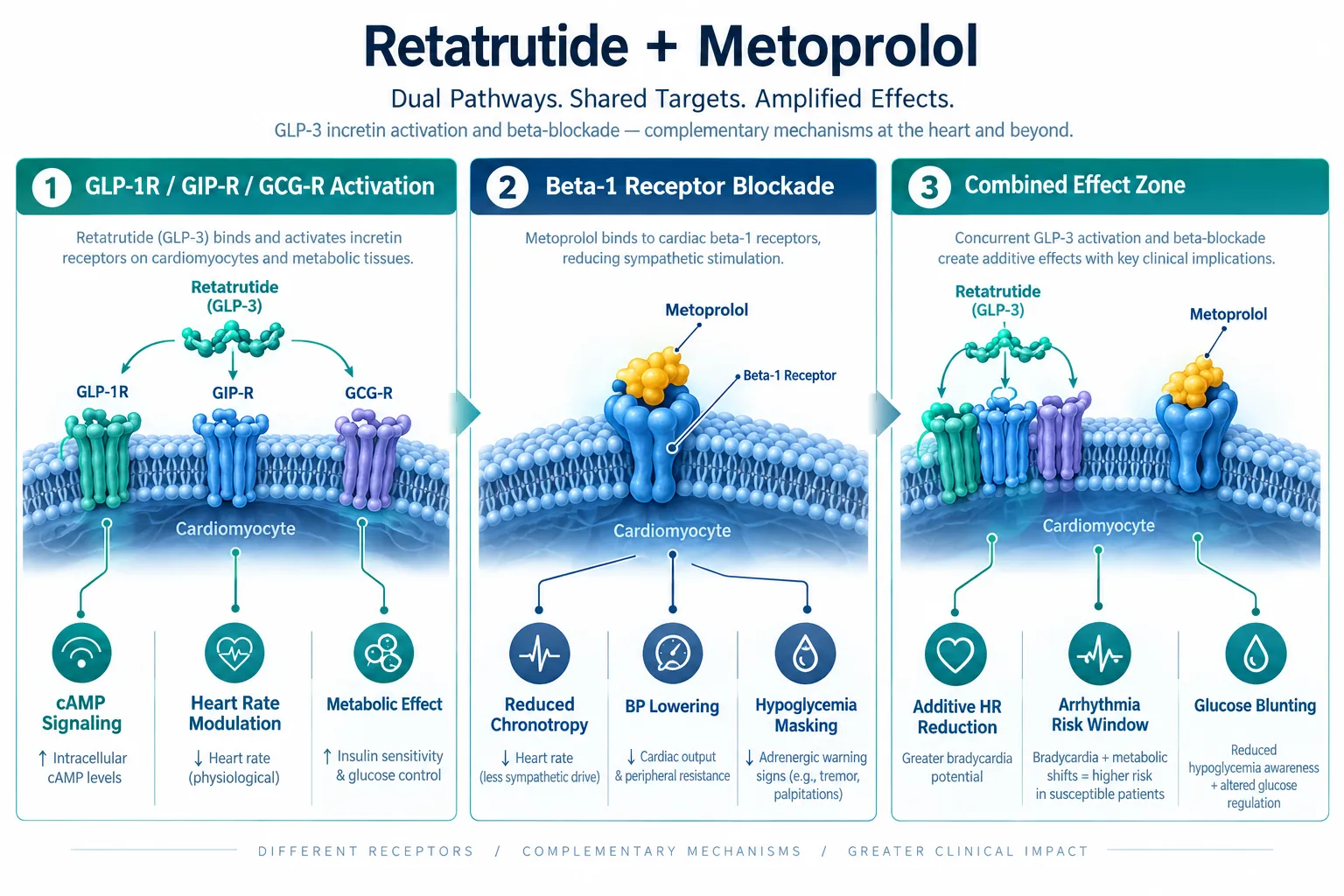
Retatrutide is a triple-receptor agonist targeting GLP-1R, GIPR, and glucagon receptors. Each of these pathways carries cardiovascular relevance. GLP-1 receptor activation raises cyclic AMP in cardiac tissue, which increases heart rate and cardiac output. Glucagon receptor activation has similar chronotropic effects. In isolation, these actions are manageable. When layered onto a beta-blocker framework, the dynamics shift.
Metoprolol is a selective beta-1 adrenergic antagonist. Its primary cardiac effects include reduced heart rate, lower blood pressure, and decreased myocardial oxygen demand. When a researcher or clinician introduces a GLP-class incretin peptide alongside metoprolol, the two agents are working on overlapping but mechanistically distinct pathways, one suppressing adrenergic drive, the other stimulating cAMP-mediated chronotropy.
The result is not simply additive or subtractive. The net heart rate effect depends on receptor density, dose, and individual variability. In vitro models studying GLP-3 peptide interactions need to account for this bidirectional tension explicitly in their experimental design.
A second layer of complexity involves glucose regulation. Beta-blockers are known to blunt the sympathoadrenal response to hypoglycemia, the very response that triggers awareness of low blood sugar. Incretin peptides lower glucose through multiple mechanisms. When combined, the hypoglycemia masking effect of metoprolol can obscure a glucose drop that the incretin agent has contributed to, creating a safety blind spot that labs must monitor actively.
Core Lab Panels for Metoprolol, Beta-Blockers, and Incretin Peptide Research
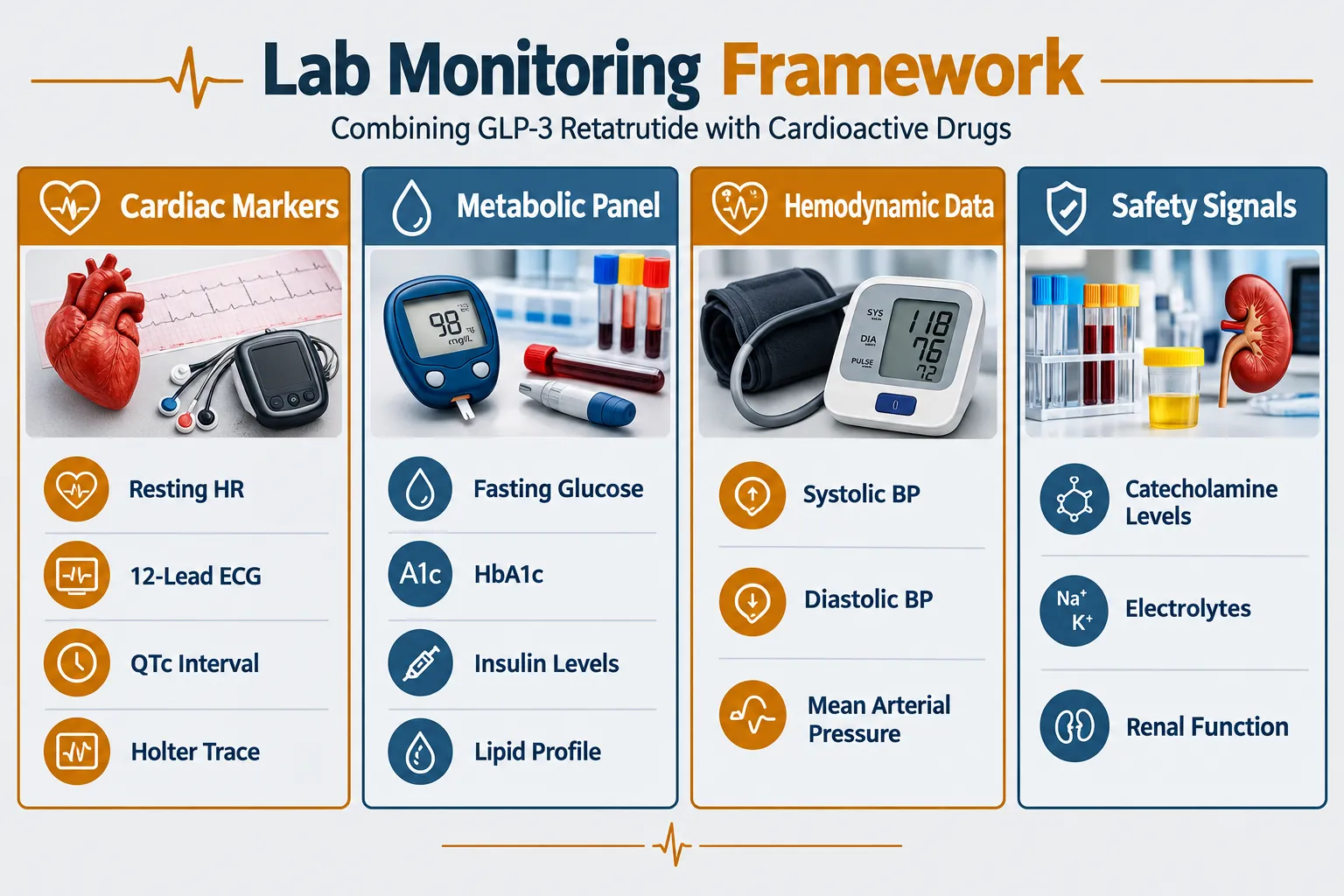
Designing a rigorous monitoring protocol for this combination requires tracking across four domains: cardiac rhythm, hemodynamics, metabolic markers, and safety biomarkers.
Cardiac Rhythm and Electrophysiology
The most immediate concern when combining GLP-3 retatrutide with cardioactive drugs is arrhythmia risk. Emerging data from triple-incretin agonist research has flagged QTc prolongation as a signal requiring active surveillance. Labs should include:
- 12-lead ECG at baseline and at defined intervals
- QTc interval measurement using Fridericia or Bazett correction
- Holter monitoring for continuous rhythm capture over 24-48 hours
- Resting heart rate tracked across all time points
When peptide dosing protocols are adjusted, rhythm data should be recaptured to identify dose-dependent changes.
Hemodynamic Monitoring
Blood pressure response is a critical variable. Retatrutide has shown meaningful reductions in systolic blood pressure in TRIUMPH trial data. Metoprolol compounds this effect. Labs should record:
| Measurement | Frequency |
|---|---|
| Systolic blood pressure | Every experimental session |
| Diastolic blood pressure | Every experimental session |
| Mean arterial pressure | Calculated at each time point |
| Orthostatic BP change | Standing vs. supine, at peak drug effect |
Orthostatic hypotension is a real concern in this combination and should not be treated as a secondary endpoint.
Metabolic and Glucose Panel
Given the hypoglycemia masking risk described above, glucose monitoring must be granular:
- Fasting glucose at baseline and post-dose
- Insulin and C-peptide levels
- HbA1c for longer study windows
- Glucagon levels, given retatrutide's direct glucagon receptor activity
Researchers sourcing GLP-3 retatrutide for lab use should confirm purity documentation, as impurities in the peptide can introduce confounding metabolic signals.
Safety Biomarkers
A complete panel also includes:
- Serum electrolytes (potassium and magnesium, given arrhythmia risk)
- Catecholamine levels (epinephrine, norepinephrine) to detect suppressed stress response
- Renal function markers (creatinine, eGFR) given the renal clearance pathways of both drug classes
- Liver enzymes for hepatic safety tracking
Designing the Monitoring Protocol: What Labs Track When Combining GLP-3 Retatrutide With Cardioactive Drugs
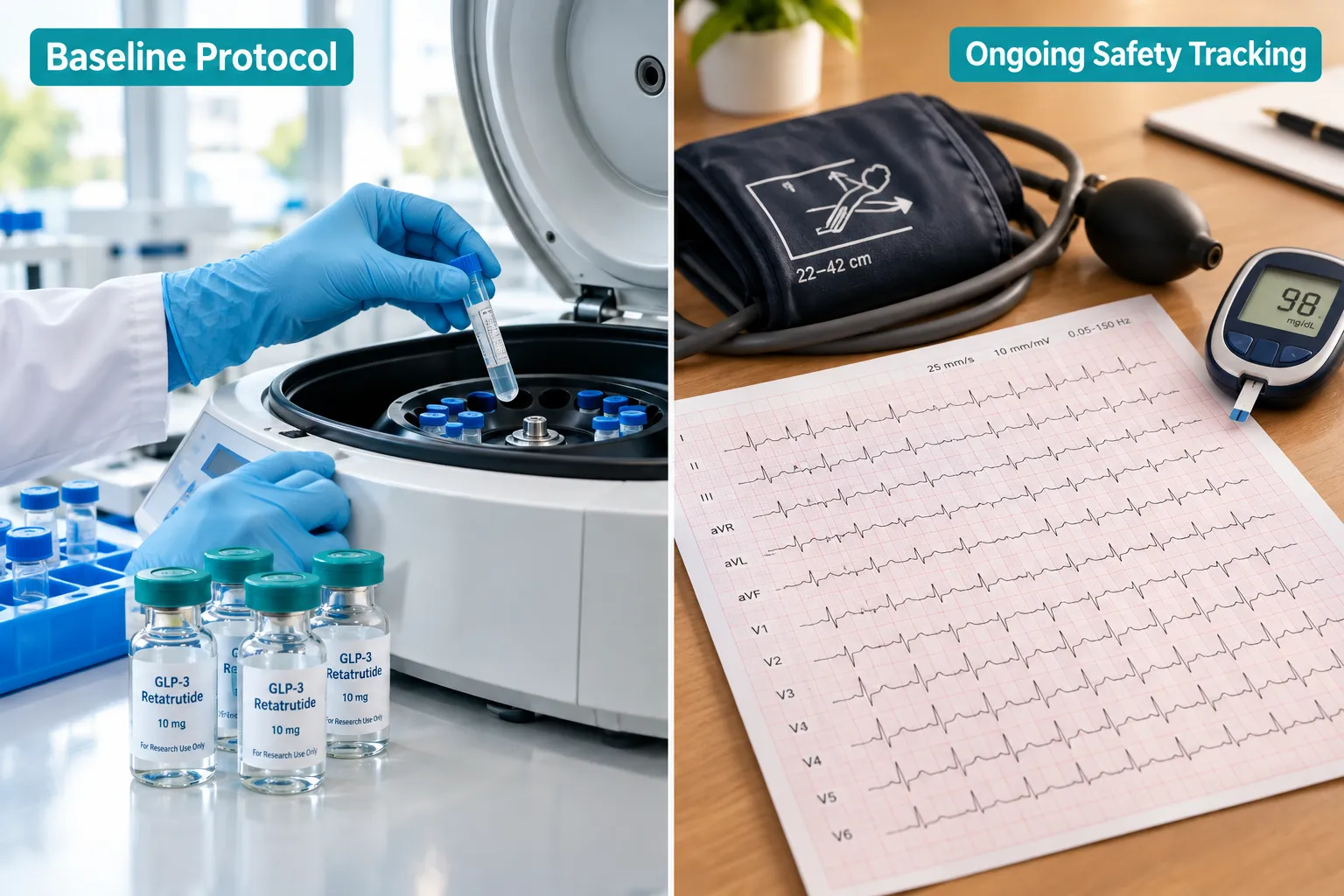
A well-structured protocol for studying metoprolol, beta-blockers, and incretin peptide research does not treat these measurements as isolated checkboxes. It builds them into a timeline that reflects the pharmacokinetics of both agents.
Retatrutide has a long half-life, approximately 6 days in clinical data, which means steady-state effects accumulate across a study window. Metoprolol, by contrast, has a much shorter half-life of 3-7 hours for standard formulations. This mismatch means:
- Baseline measurements must be captured before either agent is introduced.
- Acute monitoring should align with metoprolol's peak effect window (1-2 hours post-dose).
- Trough monitoring should capture the period when metoprolol is at its lowest plasma level but retatrutide remains pharmacologically active.
- Washout tracking should extend beyond retatrutide's half-life to confirm return to baseline cardiac and metabolic parameters.
Researchers working with GLP-3 nasal spray formulations or alternative delivery formats should adjust absorption timing windows accordingly, as pharmacokinetic profiles differ from injectable preparations.
For labs using complementary cardioprotective peptides alongside this combination, resources on SS-31 peptide research considerations may provide useful parallel monitoring frameworks, given SS-31's mitochondrial cardioprotective mechanism.
Sensory and Neurological Safety Signals
Phase 3 retatrutide data has introduced a newer sensory safety signal, peripheral sensory changes in a subset of subjects. While the mechanism is not fully characterized, labs studying this combination should include basic neurological assessments and track any reported sensory changes systematically. This is particularly relevant when beta-blockers are co-administered, as they can independently affect peripheral circulation.
Conclusion
The intersection of GLP-3 retatrutide and beta-blocker pharmacology is not a simple additive equation. For researchers designing protocols around metoprolol, beta-blockers, and incretin peptide research, what labs track when combining GLP-3 retatrutide with cardioactive drugs must span cardiac rhythm, hemodynamics, glucose metabolism, electrolytes, and emerging sensory signals, all mapped against the distinct pharmacokinetic timelines of each agent.
Actionable next steps for research teams in 2026:
- Establish a pre-study baseline panel covering all four monitoring domains before any agent is introduced.
- Build time-matched monitoring windows that reflect both the short half-life of metoprolol and the extended half-life of retatrutide.
- Treat hypoglycemia masking as a primary, not secondary, safety concern in any protocol combining beta-blockers with incretin peptides.
- Confirm third-party purity testing on all research-grade peptides used; explore GLP-3 peptide options with documented quality assurance.
- Document sensory safety signals as a standard endpoint given the emerging data from triple-incretin agonist trials.
Rigorous lab design in this space is not just a procedural formality, it is the foundation for generating data that can meaningfully inform the next generation of cardiometabolic research.


Leave a Reply
Want to join the discussion?Feel free to contribute!