Call or Text 727-513-9780
  • Shopping Cart Shopping Cart
    0Shopping Cart
Pure Tested Peptides | America's most trusted Peptides for sale online
  • Peptides for sale
    • Oral Peptides for sale
      • Peptide Capsules for sale
      • BPC 157 Capsules 1000mcg
      • SLU-PP-332 Capsules | 1000 mcg
      • 5-Amino-1MQ 50mg Capsules
      • Tesofensine 500mcg
    • All Peptides for sale
    • Peptide Sprays
      • BPC 157 Nasal Spray Kit
      • BPC-157 TB500 Nasal Spray Kit
      • Semax Nasal Spray 10mg
      • Selank – Nasal Spray Kit – 10mg
      • Epithalon 50MG Nasal Spray Kit
      • Ipamorelin 10mg Nasal Spray
      • Klow Nasal Spray (BPC-157 + TB-500 + GHK-Cu + KPV) | 80mg
      • Hulk Nasal Spray Tesa / Ipa Blend 6/3 MG
      • Klow Nasal Spray
      • NAD + 500 mg Nasal Spray
      • PT-141 Nasal Spray Kit
    • GHRH Peptides
      • Ipa Peptides
      • CJC-1295 Peptides
        • CJC-1295 with DAC 5 mg
        • CJC-1295 without DAC 5 mg
        • CJC-1295 Ipa 10mg
      • Tesa Peptides
        • Tesa Peptide
        • Tesa 20 mg
    • GHK-Cu Peptides
      • All GHK-Cu Peptides
      • GHK-Cu 100mg
      • KLOW Peptide Blend – Buy KLOW blend online
    • BPC Peptides
      • All BPC Peptides
      • BPC-157
      • BPC-157 TB-500
      • BPC 157 capsules 1000mcg
    • SLU-PP-332 Peptides
      • All SLU-PP-332 Peptides
      • SLU-PP-332 5mg
    • GLP3 Peptides
      • GLP3-R
      • GLP3-R CAG 10mg
      • GLP3-R 20mg
    • PT-141 Peptides
      • PT-141 Peptides for sale
      • PT-141 10mg
      • PT-141 Nasal Spray
    • CAG Peptides
      • Lipo-C Peptide Blend
      • CAG 5mg
      • CAG 10mg
    • MOTS-C Peptides
      • MOTS-C Peptides for sale
      • MOTS-c peptide
      • MOTS-c 10mg *6 pack*
    • 5 Amino 1MQ Peptides
      • 5 Amino 1MQ Peptides for sale
      • 5-Amino-1MQ 50mg Capsules
      • 5-Amino-1MQ 5mg
    • Epithalon Peptides
      • Epithalon Peptides for sale
      • Epithalon 10mg
      • Epithalon 50mg
  • Shop
    • GLPs
      • 5-Amino-1MQ 50mg Capsules
      • 5-Amino-1MQ 5mg
      • GLP3-Reta
      • L-Carnitine 500mg/ml
      • Tesofensine 500mcg
      • SLU-PP-332 5mg
      • MOTS-c 10mg *6 pack*
    • Epithalon & BPC Peptides
      • Epithalon 10mg
      • Epithalon 50mg
      • BPC-157
      • BPC 157 capsules 1000mcg
      • BPC-157 TB-500
      • BPC-157 TB500 Nasal Spray Kit
      • BPC 157 Nasal Spray Kit
    • BPC TB-500 & NAD+ Peptides
      • NAD+ 500 mg
      • KLOW Peptide Blend – Buy KLOW blend online
      • GLOW Peptide Blend
      • TB 500 5mg
      • BPC 157 capsules 1000mcg – Supplement
      • BPC 157 Nasal Spray Kit
      • BPC-157
      • BPC-157 TB500 Nasal Spray Kit
      • BPC-157 TB-500
      • BPC 157 capsules 1000mcg
    • LL-37 Peptide
      • LL-37 10 mg
    • MOTS-C & Selank
      • MOTS-c peptide
      • Selank 10mg
    • GHK Peptides
      • GHK-Cu 100mg
      • GLOW Peptide Blend
      • KLOW Peptide Blend – Buy KLOW blend online
  • COAs
  • Wholesale
    • Wholesale Peptides for sale
  • PTP FAQ
  • Affiliates
    • Selank Peptide: Advanced Pharmacological Mechanisms Underlying Its Anxiolytic and Nootropic Effects in Research
      • 5-Amino-1MQ Peptide: Detailed Mechanisms of NNMT Inhibition and Its Impact on Cellular Metabolism Research
        • MOTS-C Peptide: Unraveling Its Role in Mitochondrial Dynamics and Energy Metabolism Research
          • Epithalon Peptide and Telomerase Regulation: Investigating Its Impact on Cellular Senescence and Lifespan Research Models
            • GLP2-T vs GLP2 Tirz Peptide: Understanding the Naming, Mechanistic Nuances, and Research Implications for Gut Health
      • Peptides and Polypeptides in Modern Pharmacology: What Research on Metoprolol, Prednisone, and Amlodipine Reveals
        • Polypeptide Peptides vs NSAIDs: What Naproxen and Diclofenac Teach Tissue-Repair Researchers About BPC‑157 and TB‑500
          • Peptides and Polypeptides in Endocrine Pharmacology: How GLP-1, GLP-2, and GLP-3 Retatrutide Differ From Classic Drugs Like Prednisone and Amlodipine
          • 5‑Amino‑1MQ Peptide and NNMT Inhibition: How It Compares With Statins Like Atorvastatin in Adipose and Lipid Metabolism Research
      • Enclomiphene, Estrogen Receptor Signaling, and Luteinizing Phase Biology: What Hormone Researchers Should Measure
        • Mesenchymal Stem Cells, BPC‑157, and GHK‑Cu: How Tissue Repair Peptides Compare With Classic NSAIDs Like Naproxen in Injury Models
          • Peptide Calculator Use Cases Beyond Growth Hormone: Working Through GLP‑3 Retatrutide, MOTS‑c, and BPC‑157 Research Dosing
        • Polypeptide Peptides in Endocrine and Metabolic Pharmacology: Lessons From Amlodipine, Prednisone, and Metoprolol
        • Peptides Calculator for Advanced Blends: Worked Examples for Tesamorelin, CJC‑1295, and Ipamorelin Stacks
          • Peptides and Polypeptides in Human Physiology: How Molecular Size Shapes Research Applications
            • Selank Peptide: Advanced Pharmacological Mechanisms Underlying Its Anxiolytic and Nootropic Effects in Research
          • 5-Amino-1MQ Peptide: Detailed Mechanisms of NNMT Inhibition and Its Impact on Cellular Metabolism Research
            • MOTS-C Peptide: Unraveling Its Role in Mitochondrial Dynamics and Energy Metabolism Research
              • Epithalon Peptide and Telomerase Regulation: Investigating Its Impact on Cellular Senescence and Lifespan Research Models
                • GLP2-T vs GLP2 Tirz Peptide: Understanding the Naming, Mechanistic Nuances, and Research Implications for Gut Health
                  • Peptides and Polypeptides in Endocrine Pharmacology: How GLP-1, GLP-2, and GLP-3 Retatrutide Differ From Classic Drugs Like Prednisone and Amlodipine
                    • Polypeptide Peptides vs NSAIDs: What Naproxen and Diclofenac Teach Tissue-Repair Researchers About BPC‑157 and TB‑500
                      • Peptides and Polypeptides in Modern Pharmacology: What Research on Metoprolol, Prednisone, and Amlodipine Reveals
                        • 5‑Amino‑1MQ Peptide and NNMT Inhibition: How It Compares With Statins Like Atorvastatin in Adipose and Lipid Metabolism Research
                        • Enclomiphene, Estrogen Receptor Signaling, and Luteinizing Phase Biology: What Hormone Researchers Should Measure
                        • Mesenchymal Stem Cells, BPC‑157, and GHK‑Cu: How Tissue Repair Peptides Compare With Classic NSAIDs Like Naproxen in Injury Models
                        • Peptide Calculator Use Cases Beyond Growth Hormone: Working Through GLP‑3 Retatrutide, MOTS‑c, and BPC‑157 Research Dosing
                        • Polypeptide Peptides in Endocrine and Metabolic Pharmacology: Lessons From Amlodipine, Prednisone, and Metoprolol
                        • Peptides Calculator for Advanced Blends: Worked Examples for Tesamorelin, CJC‑1295, and Ipamorelin Stacks
                        • Peptides and Polypeptides in Human Physiology: How Molecular Size Shapes Research Applications
                        • Selank Peptide: Advanced Pharmacological Mechanisms Underlying Its Anxiolytic and Nootropic Effects in Research
                        • MOTS-C Peptide: Unraveling Its Role in Mitochondrial Dynamics and Energy Metabolism Research
                        • Peptides and Polypeptides in Modern Pharmacology: What Research on Metoprolol, Prednisone, and Amlodipine Reveals
                        • Peptides and Polypeptides in Endocrine Pharmacology: How GLP-1, GLP-2, and GLP-3 Retatrutide Differ From Classic Drugs Like Prednisone and Amlodipine
                        • 5-Amino-1MQ Peptide: Detailed Mechanisms of NNMT Inhibition and Its Impact on Cellular Metabolism Research
                        • Mesenchymal Stem Cells, BPC‑157, and GHK‑Cu: How Tissue Repair Peptides Compare With Classic NSAIDs Like Naproxen in Injury Models
                        • Peptide Calculator Use Cases Beyond Growth Hormone: Working Through GLP‑3 Retatrutide, MOTS‑c, and BPC‑157 Research Dosing
                        • GLP2-T vs GLP2 Tirz Peptide: Understanding the Naming, Mechanistic Nuances, and Research Implications for Gut Health
                        • Polypeptide Peptides in Endocrine and Metabolic Pharmacology: Lessons From Amlodipine, Prednisone, and Metoprolol
                        • Polypeptide Peptides vs NSAIDs: What Naproxen and Diclofenac Teach Tissue-Repair Researchers About BPC‑157 and TB‑500
                        • Peptides and Polypeptides in Human Physiology: How Molecular Size Shapes Research Applications
                        • Peptides Calculator for Advanced Blends: Worked Examples for Tesamorelin, CJC‑1295, and Ipamorelin Stacks
                        • 5‑Amino‑1MQ Peptide and NNMT Inhibition: How It Compares With Statins Like Atorvastatin in Adipose and Lipid Metabolism Research
                        • Enclomiphene, Estrogen Receptor Signaling, and Luteinizing Phase Biology: What Hormone Researchers Should Measure
                        • Epithalon Peptide and Telomerase Regulation: Investigating Its Impact on Cellular Senescence and Lifespan Research Models
                        • Best research protocol Klow blend
                        • best time to take BPC-157
                        • best time to take DSIP (Delta Sleep Inducing Peptide)
                        • best time to take CJC-1295
                        • best time to take AOD-9604
                        • best time to take Follistatin 344
                        • best time to take Ipamorelin
                        • best time to take MK-677 (Ibutamoren)
                        • best time to take Ligandrol (LGD-4033) — research compound
                        • best time to take Ostarine (MK-2866) — research compound
                        • best time to take GHK-CU
                        • best time to take TB-500
                        • best time to take MOTS-c
                        • best time to take Semax
                        • best time to take RAD-140 (Testolone) — research compound
                        • best time to take Thymosin Alpha-1
                        • best time to take PEG-MGF
                        • Biolife Plasma, Octapharma Plasma, and Research Peptides: How Plasma Donation Labs Differ From Peptide Suppliers
                        • best time to take YK-11 — research compound
                        • best time to take PT-141 (Bremelanotide)
                        • Best research protocol Klow blend
                        • 5-Amino-1MQ and MOTS-C Synergy: Metabolic Signaling, Mitochondria, and Research Design
                        • BPC-157 and TB-500: Investigating Their Combined Effects on Angiogenesis and Cellular Migration in Tissue Repair Models
                        • BPC-157 Peptide: Gut Barrier Function, Inflammation, and Tissue-Recovery Research
                        • 5‑Amino‑1MQ and MOTS‑c Synergy in Metabolic Research: Designing NNMT and Mitochondrial Biogenesis Stacks
                        • CJC-1295 with DAC vs. Without DAC: Half-Life, Release Kinetics, and Research Implications
                        • CJC‑1295 with DAC vs. Without DAC: Expanding on Half‑Life Differences Using Tesamorelin and Ipamorelin Blend Case Studies
                        • Collagen Biology and Copper‑Binding Peptides: How GHK‑Cu, Glow Blend, and Klow Blend Interact with Skin and Connective Tissue
                        • Collagen Biology and Regenerative Peptides: How GHK‑Cu, Glow Blend, and Klow Blend Affect Extracellular Matrix Research
                    • DNA, Telomeres, and Longevity Peptides: Positioning Epithalon and MOTS‑c in Genetic Aging Research
                      • Enclomiphene Citrate: serm Mechanism, Testosterone Research, and Stack Compatibility
                        • Enclomiphene vs Enclomiphene Citrate: Formulation, Bioavailability, and Research Distinctions
                        • Epithalon Peptide Research: Telomerase Activation, Aging, and Pineal Gland Function
                        • Estrogen Receptor Signaling and Enclomiphene: How Selective Modulators Compare with Classic Polypeptide Hormones
                        • GHK-Cu Peptide: Advanced Mechanisms in Extracellular Matrix Remodeling and Wound Healing Research
                        • GHK-Cu Peptide: Collagen Synthesis, Wound Repair, and Skin-Barrier Research Models
                        • GLP-1 vs GLP-3 vs GLP-2: Peptide Classification and Research Applications
                        • GLP-2 Peptide Research Guide: Gut Barrier Function, Nutrient Absorption, and Intestinal Recovery Models
                        • GLP-3 Retatrutide vs. GLP-1 Drugs: What Triple-Agonist Biology Changes in Research Models
                        • Ipamorelin and Tesamorelin Combination: Synergistic GH Secretagogue Research and Dosing Protocols
                        • GLP2 Tirz Peptide: What It Is, Why the Name Exists, and How Researchers Should Interpret It
                        • Klow Blend Peptide Nasal Spray: What the Formulation Is Trying to Do in Cognitive Research
                        • Mitochondria, NNMT Inhibition, and Peptide Modulators: Where MOTS‑c and 5‑Amino‑1MQ Fit in Cellular Energy Research
                        • MOTS-c Peptide: Mitochondrial Function, Energy Metabolism, and What Researchers Measure
                        • MOTS-c vs. 5-Amino-1MQ: Which Metabolic Research Questions Each Compound Actually Answers
                        • Nasal Spray Peptides: Bioavailability, Administration, and Semax/Selank Research Applications
                        • PT-141 Peptide Research: Mechanism of Action and Melanocortin Receptor Signaling
                        • Retatrutide for Research: Mechanism, Structure, and GLP-1/GLP-3 Dual Action
                        • Retatrutide for Obesity and Type 2 Diabetes: What the Latest Trial Data Suggest
                        • Tesofensine Peptide Research: Mechanism, Appetite Suppression, and Neuropeptide Y Pathways
  • Contact
    • Contact Customer Service
    • Text Customer Support
  • About US
  • Shop all peptides
  • Affiliate Program
    • Affiliate Signup
  • Login / Register Login / Register Page Link Login / Register Page Link
  • Click to open the search input field Click to open the search input field Search
  • Menu Menu
Peptides Calculator for GLP-3, MOTS-c, and BPC-157: How Researchers Estimate Dosing and Concentration Safely

Peptides Calculator for GLP-3, MOTS-c, and BPC-157: How Researchers Estimate Dosing and Concentration Safely

September 2, 2026/0 Comments/in Uncategorized/by

{"cover":"Professional landscape format (1536×1024) hero image with bold text overlay 'Peptides Calculator for GLP-3, MOTS-c' in crisp white modern sans-serif on a deep navy semi-transparent overlay panel, centered with 8% safe margins from every edge, no character touches the edge. Background: bright editorial flat-lay of a laboratory bench with glass vials of peptide solutions, a digital tablet showing a dosing calculator interface, a precision scale, and molecular structure diagrams on white paper. Clean studio lighting, teal and navy palette, pharmaceutical research aesthetic, magazine cover quality.","content":["Four-panel labelled infographic diagram (1536×1024) for peptide calculator core functions: Panel 1 labeled 'Peptide Mass (mg)' shows a vial with callout arrow; Panel 2 labeled 'Reconstitution Volume (mL)' shows a syringe drawing from vial; Panel 3 labeled 'Concentration (mcg/mL)' shows a formula block; Panel 4 labeled 'Dose Volume (mL)' shows a calculator display. Thin callout lines, clean white background, teal-and-navy editorial palette, medical-guide polish, all labels 1-5 words, inside 5% safe margins.","Numbered step-by-step process flow diagram (1536×1024) showing allometric scaling for MOTS-c and BPC-157 research dosing: Step 1 'Animal Study Dose' with mouse icon and callout; Step 2 'Body Surface Area Conversion' with scaling formula block; Step 3 'Species Correction Factor' with human silhouette; Step 4 'Adjusted Research Dose' with vial and syringe. Warm amber and slate-blue palette, clean sans-serif labels 1-5 words each, numbered nodes connected by arrows, editorial scientific illustration style, 5% safe margins throughout.","Split-screen editorial image (1536×1024): left half shows an annotated close-up of a peptide reconstitution setup, bacteriostatic water vial, lyophilized peptide vial, insulin syringe, with three callout labels: 'Lyophilized Powder', 'Bacteriostatic Water', 'Measured Draw Volume'; right half shows a tablet screen mockup of a cross-peptide calculator interface with labeled fields: 'GLP-class Input', 'MOTS-c Protocol', 'BPC-157 Schedule'. High-contrast studio lighting, crisp white and teal palette, research laboratory context, magazine-quality composition."]
Professional landscape hero image () with a reading "Peptides Calculator for GLP-3, MOTS-c". CRITICAL TYPOGRAPHY RULES:

Fewer than 15% of peptide research protocols in preclinical settings include a documented concentration calculation, yet dosing errors at the bench level remain one of the most common sources of unreliable data. A well-structured Peptides Calculator for GLP-3, MOTS-c, and BPC-157: How Researchers Estimate Dosing and Concentration Safely is not a convenience tool; it is a foundational element of rigorous experimental design. This guide breaks down the lab math, scaling logic, and safety checkpoints that researchers rely on when working with GLP-class, mitochondrial, and tissue-repair peptides in 2026.

Key Takeaways

  • A peptide calculator converts lyophilized mass, solvent volume, and target dose into precise draw volumes for each research compound.
  • GLP-3 lacks a standardized reference dose; researchers currently extrapolate from GLP-1 analog modeling and apply conservative escalation schedules.
  • MOTS-c dosing in animal models varies widely; allometric scaling to human-equivalent doses requires body surface area correction.
  • BPC-157 has no FDA-approved dose, but recent pilot and Phase 2 musculoskeletal data are beginning to anchor practical research ranges.
  • Cross-peptide calculators that handle multiple compound classes in a single interface reduce transcription errors and improve protocol reproducibility.

What a Peptides Calculator Actually Does
What a Peptides Calculator Actually Does

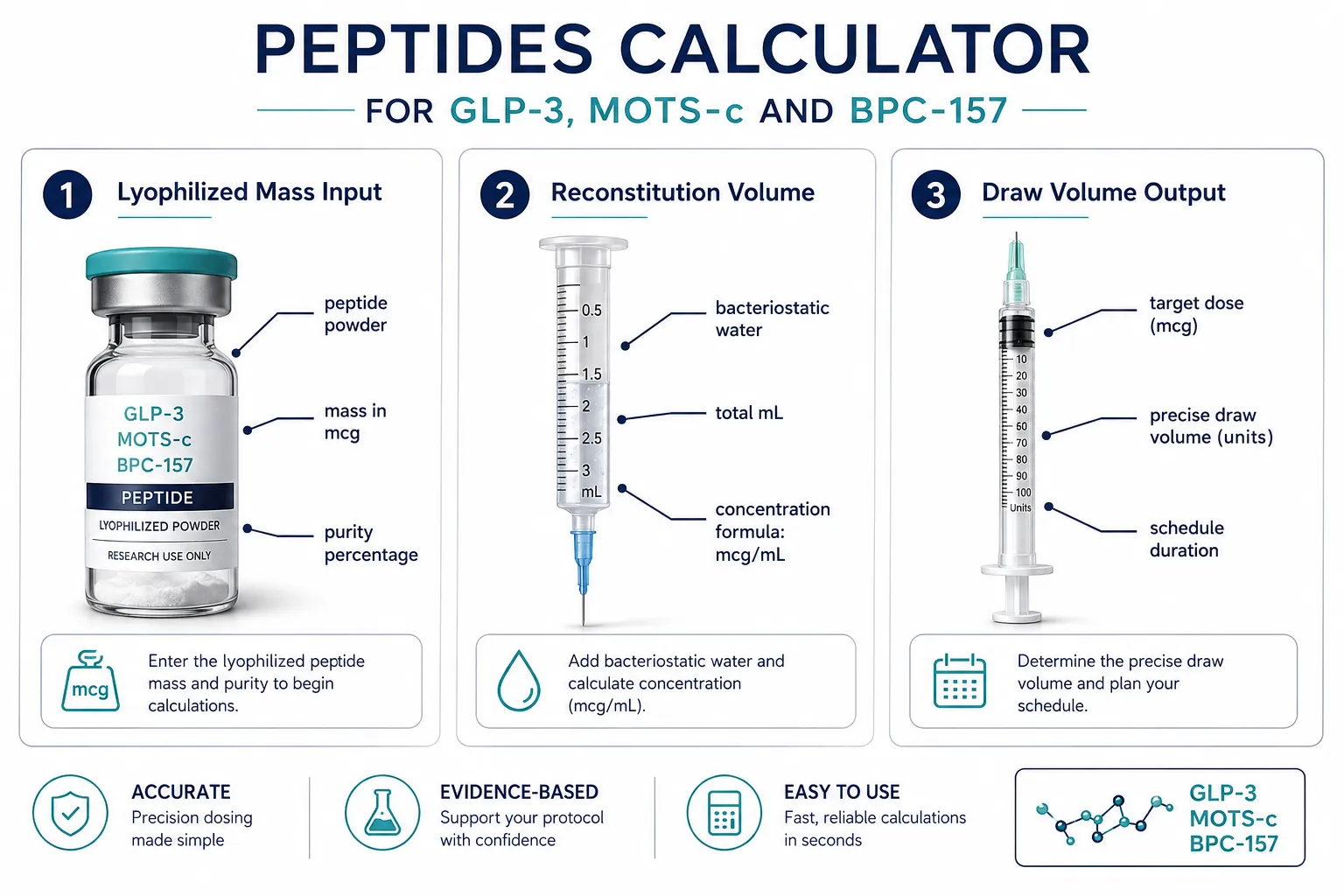
At its core, a peptides calculator solves one equation repeatedly: Concentration (mcg/mL) = Peptide Mass (mcg) / Reconstitution Volume (mL). From that single value, every downstream calculation, dose volume, total vial yield, and schedule duration, flows automatically.

For researchers working with synergistic peptide combinations, the calculator must handle multiple compounds simultaneously without conflating their individual concentration curves. The standard workflow looks like this:

  1. Input lyophilized mass (commonly 5 mg, 10 mg, or custom vial size)
  2. Enter reconstitution solvent volume (bacteriostatic water in mL)
  3. Set target dose in micrograms (mcg) or milligrams (mg)
  4. Read draw volume in mL or units on an insulin syringe

Most modern tools also incorporate half-life modeling, particularly relevant for GLP-1 analogs, and escalation schedule builders that map dose increases across days or weeks. Cross-peptide calculators go further, allowing a researcher to input GLP-class, MOTS-c, and BPC-157 parameters in a single interface, reducing the risk of transcription errors between separate spreadsheets.

"The calculator does not determine whether a dose is appropriate, it determines whether the math behind a chosen dose is internally consistent."

Applying a Peptides Calculator for GLP-3, MOTS-c, and BPC-157: Compound-Specific Considerations
Applying a Peptides Calculator for GLP-3, MOTS-c, and BPC-157: Compound-Specific Considerations

GLP-3 and GLP-Class Peptides

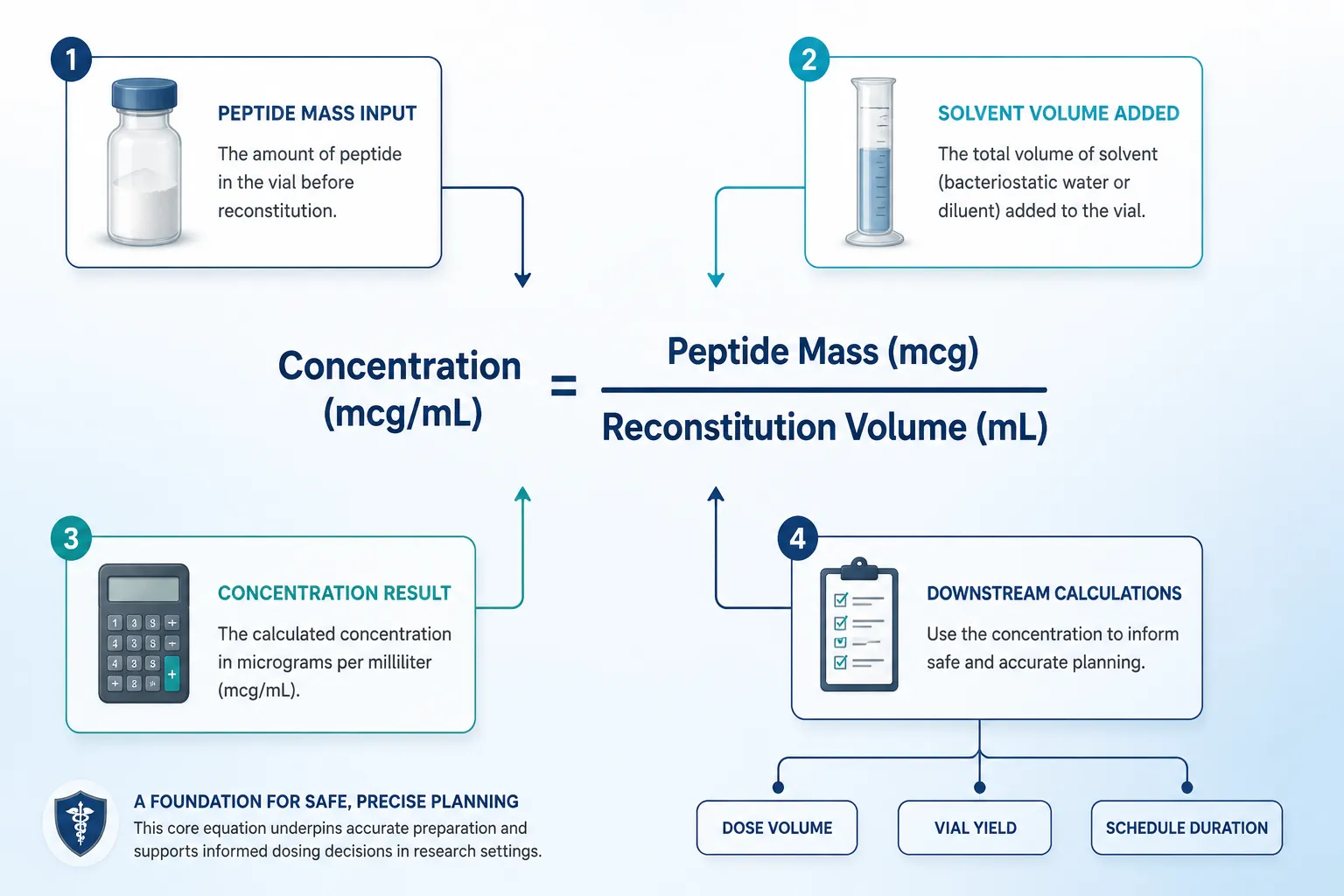
GLP-3 (glucagon-like peptide-3) remains far less characterized than GLP-1 or GLP-2. No standardized reference dose exists in published literature as of 2026. Researchers typically approach GLP-3 by borrowing the labeled dose conversion framework developed for GLP-1 analogs, inputting known receptor affinity ratios and applying a conservative multiplier to the GLP-1 baseline.

Practical steps for GLP-class calculator use:

  • Enter molecular weight to confirm molar concentration
  • Apply half-life correction if modeling sustained-release analogs
  • Build an escalation schedule starting at the lowest published analog equivalent
  • Flag any dose that exceeds the GLP-1 human-equivalent threshold until more GLP-3 data emerges

Researchers interested in small molecule obesity research will find that GLP-class calculators increasingly integrate receptor selectivity filters, though GLP-3 fields remain largely manual in most tools.

MOTS-c

MOTS-c is a mitochondria-derived peptide with highly variable dosing across animal studies, published rodent protocols range from 0.5 mg/kg to 15 mg/kg, a 30-fold spread. This variability makes allometric scaling essential before any human-equivalent estimate can be made.

Allometric scaling formula used in most calculators:

Human Equivalent Dose (HED) = Animal Dose (mg/kg) x (Animal Km / Human Km)

Standard Km factors: mouse = 3, rat = 6, human = 37. A 5 mg/kg mouse dose therefore converts to roughly 0.4 mg/kg HED, a critical reduction that a manual calculation can easily miss.

For those reviewing SS-31 and MOTS-c mitochondrial peptide protocols, pairing allometric scaling with a biomarker monitoring schedule (lactate, ATP markers) is considered standard practice in current translational frameworks.

BPC-157

BPC-157 (Body Protection Compound-157) has no FDA-approved dose and limited controlled human data. However, a recent Phase 2 musculoskeletal trial and earlier pilot studies have begun to anchor a practical research range of 200-500 mcg per administration in human-model contexts, administered via subcutaneous or intramuscular routes.

A BPC-157 calculator entry typically includes:

  • Vial size (commonly 5 mg)
  • Reconstitution with 2.5 mL bacteriostatic water = 2,000 mcg/mL
  • Target dose of 250 mcg = 0.125 mL draw volume

Researchers can cross-reference translational research design principles to confirm that their BPC-157 protocol aligns with current Phase 2 reporting standards before finalizing a schedule.

Safety Frameworks and Regulatory Limits When Using Peptide Dosing Calculators
Safety Frameworks and Regulatory Limits When Using Peptide Dosing Calculators

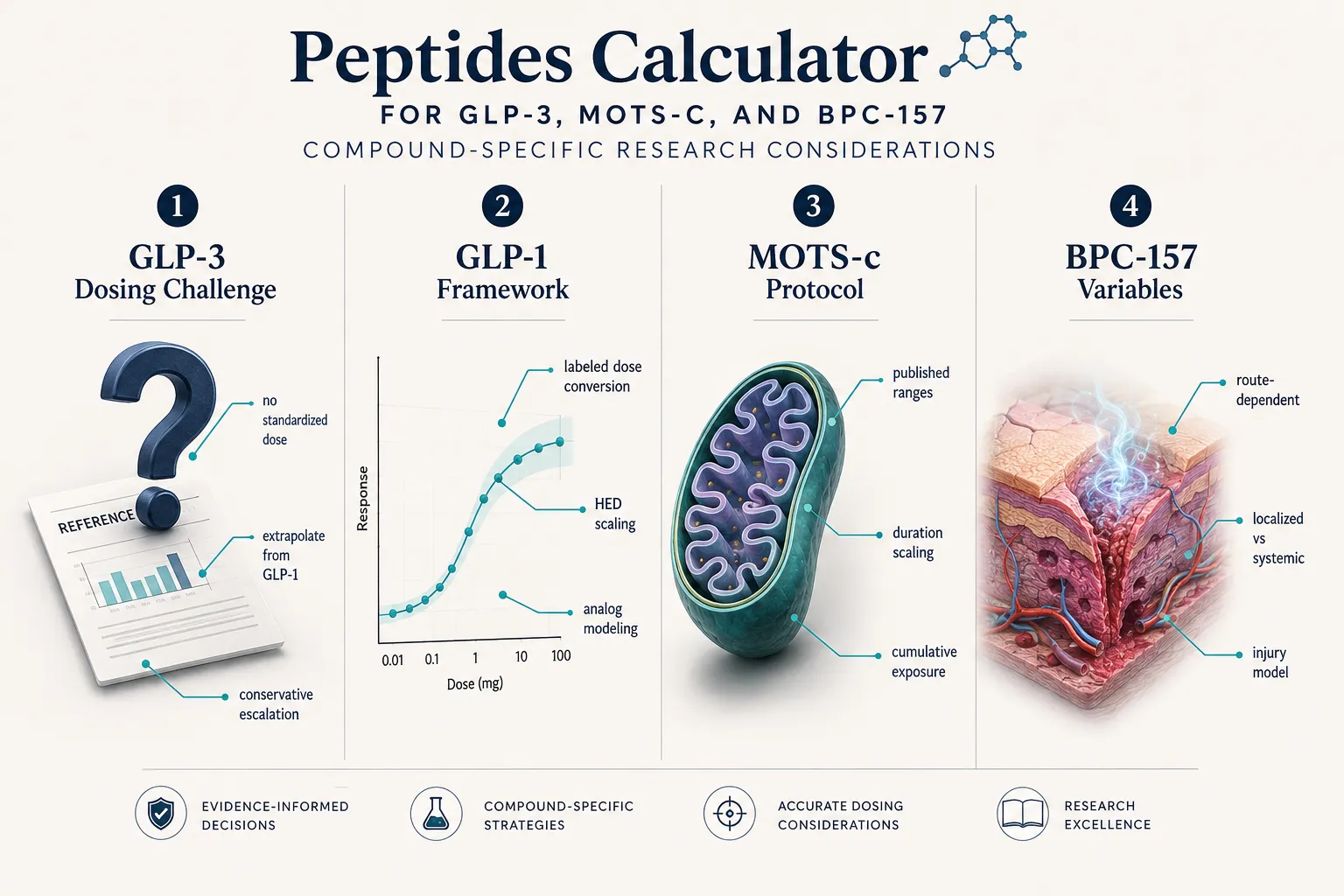
A calculator produces mathematically correct outputs, it does not validate biological safety. Researchers must layer three additional frameworks over any calculator result.

1. Allometric and Duration Scaling
Beyond single-dose HED conversion, cumulative exposure matters. A peptide administered daily for 30 days carries a different risk profile than a single acute dose. Calculators that include duration-adjusted exposure modeling flag when total cumulative dose approaches thresholds seen in toxicology studies.

2. Biomarker Monitoring Checkpoints
Responsible protocols pair dose schedules with defined biomarker checkpoints, liver enzymes, kidney function markers, and peptide-specific indicators (e.g., insulin markers for GLP-class compounds). Some cross-peptide platforms now include monitoring schedule templates alongside the dosing math.

3. Regulatory and Purity Verification
No calculator output is meaningful if the source compound lacks verified purity. Researchers sourcing compounds should confirm certificate of analysis (CoA) data and consider wholesale peptides for sale only from suppliers with third-party tested documentation. Regulatory status in 2026 remains unchanged: BPC-157 and MOTS-c are not approved therapeutic agents in any major jurisdiction, and GLP-3 analogs remain investigational.

A note on future tools: speculative developments suggest that AI-assisted peptide calculators may eventually incorporate real-time biomarker feedback loops, but no validated platform of this type exists commercially as of 2026.

Peptide Common Research Vial Size Typical Reconstitution Resulting Concentration
GLP-class analogs 1-5 mg 1-2 mL BW 500-5,000 mcg/mL
MOTS-c 5-10 mg 2-5 mL BW 1,000-5,000 mcg/mL
BPC-157 5 mg 2.5 mL BW 2,000 mcg/mL

Conclusion

A reliable Peptides Calculator for GLP-3, MOTS-c, and BPC-157: How Researchers Estimate Dosing and Concentration Safely is only as useful as the protocol framework surrounding it. The actionable next steps for any researcher in 2026 are clear:

  • Verify compound purity with a CoA before any calculation has practical meaning.
  • Apply allometric scaling for MOTS-c and any compound where animal data is the primary reference.
  • Use escalation schedule builders for GLP-class peptides rather than starting at maximum estimated doses.
  • Document every calculator input and output as part of the formal research record.
  • Layer biomarker monitoring checkpoints at defined intervals throughout the protocol.

The math is straightforward. The discipline around the math is what separates reproducible research from noise.

Tags: allometric scaling, bpc-157 dosing, glp-3 peptide, mots-c research, peptide reconstitution, peptides calculator, research peptide protocols, translational research design
https://www.puretestedpeptides.com/wp-content/uploads/2026/09/peptides-calculator-for-glp-3-mots-c-and-bpc-157-how-researchers-estimate-dosing.webp 1024 1536 https://www.puretestedpeptides.com/wp-content/uploads/2026/01/buy-peptides-online.jpg 2026-09-02 13:04:232026-09-02 13:04:23Peptides Calculator for GLP-3, MOTS-c, and BPC-157: How Researchers Estimate Dosing and Concentration Safely
You might also like
Peptides 101 for Research-Use Only Buyers: Structure, Mechanisms, and Where GLP-3, MOTS-c, and 5-Amino-1MQ Fit In Peptides 101 for Research-Use Only Buyers: Structure, Mechanisms, and Where GLP-3, MOTS-c, and 5-Amino-1MQ Fit In
Retatrutide (GLP-3) Peptide: Triple GLP Receptor Agonist Mechanism and Research Applications Retatrutide (GLP-3) Peptide: Triple GLP Receptor Agonist Mechanism and Research Applications
Peptides and Polypeptides Explained: Connecting DNA, Mitochondria, and Modern Research-Use Compounds Like MOTS-c and 5-Amino-1MQ Peptides and Polypeptides Explained: Connecting DNA, Mitochondria, and Modern Research-Use Compounds Like MOTS-c and 5-Amino-1MQ
GHK-Cu Peptide: Copper Complex Chemistry, Research Stability, and Lab Use Considerations GHK-Cu Peptide: Copper Complex Chemistry, Research Stability, and Lab Use Considerations
Tesofensine Mechanism Explained: Noradrenergic Appetite Modulation vs Incretin-Based GLP‑3 and GLP‑1 Pathways Tesofensine Mechanism Explained: Noradrenergic Appetite Modulation vs Incretin-Based GLP‑3 and GLP‑1 Pathways
Peptides 201: From Simple Peptides to Complex Polypeptides in Mitochondrial Research With MOTS-c and 5-Amino-1MQ Peptides 201: From Simple Peptides to Complex Polypeptides in Mitochondrial Research With MOTS-c and 5-Amino-1MQ
Peptides and Polypeptides in Modern Research: How MOTS-c, 5-Amino-1MQ, and GLP-3 Retatrutide Fit Into the Big Picture Peptides and Polypeptides in Modern Research: How MOTS-c, 5-Amino-1MQ, and GLP-3 Retatrutide Fit Into the Big Picture
Retatrutide and MASLD: Interpreting Liver-Fat Reductions and Microbiome Signals From Emerging GLP‑3 Data Retatrutide and MASLD: Interpreting Liver-Fat Reductions and Microbiome Signals From Emerging GLP‑3 Data
0 replies

Leave a Reply

Want to join the discussion?
Feel free to contribute!

Leave a Reply Cancel reply

Your email address will not be published. Required fields are marked *

×

Helpful Links

  • My account
  • Cart
  • Checkout
  • Refund and Returns Policy
  • Privacy Policy
  • SMS Privacy Policy
  • Login
  • My Account
  • Logout

USA Made Lab Tested Peptides

All products are sold for research, laboratory, or analytical purposes only, and are not for human consumption


Pure Tested Peptides is a chemical supplier. Pure Tested Peptides is not a compounding / chemical compounding facility as defined under 503A of the Federal Food, Drug, and Cosmetic act. Pure Tested Peptides is not an outsourcing facility as defined under 503B of the Federal Food, Drug, and Cosmetic act.

The statements made within this website have not been evaluated by the US Food and Drug Administration. The products we offer are not intended to diagnose, treat, cure or prevent any disease.

Human/Animal Consumption Prohibited. Laboratory/In-Vitro Experimental Use Only

Link to: Where to Buy Research‑Grade GLP-3 Retatrutide and GLP-2-T Peptides: Purity, Certificates of Analysis, and Vendor Red Flags Link to: Where to Buy Research‑Grade GLP-3 Retatrutide and GLP-2-T Peptides: Purity, Certificates of Analysis, and Vendor Red Flags Where to Buy Research‑Grade GLP-3 Retatrutide and GLP-2-T Peptides: Purity,...Where to Buy Research‑Grade GLP-3 Retatrutide and GLP-2-T Peptides: Purity, Certificates of Analysis, and Vendor Red Flags Link to: Best Research‑Use GH Secretagogue Peptides: Comparing CJC‑1295 (With and Without DAC), Ipamorelin, and Tesamorelin Link to: Best Research‑Use GH Secretagogue Peptides: Comparing CJC‑1295 (With and Without DAC), Ipamorelin, and Tesamorelin Best Research‑Use GH Secretagogue Peptides: Comparing CJC‑1295 (With and Without DAC), Ipamorelin, and TesamorelinBest Research‑Use GH Secretagogue Peptides: Comparing CJC‑1295 (With and...
Scroll to top Scroll to top Scroll to top