Call or Text 727-513-9780
  • Shopping Cart Shopping Cart
    0Shopping Cart
Pure Tested Peptides | America's most trusted Peptides for sale online
  • Peptides for sale
    • Oral Peptides for sale
      • Peptide Capsules for sale
      • BPC 157 Capsules 1000mcg
      • SLU-PP-332 Capsules | 1000 mcg
      • 5-Amino-1MQ 50mg Capsules
      • Tesofensine 500mcg
    • All Peptides for sale
    • Peptide Sprays
      • BPC 157 Nasal Spray Kit
      • BPC-157 TB500 Nasal Spray Kit
      • Semax Nasal Spray 10mg
      • Selank – Nasal Spray Kit – 10mg
      • Epithalon 50MG Nasal Spray Kit
      • Ipamorelin 10mg Nasal Spray
      • Klow Nasal Spray (BPC-157 + TB-500 + GHK-Cu + KPV) | 80mg
      • Hulk Nasal Spray Tesa / Ipa Blend 6/3 MG
      • Klow Nasal Spray
      • NAD + 500 mg Nasal Spray
      • PT-141 Nasal Spray Kit
    • GHRH Peptides
      • Ipa Peptides
      • CJC-1295 Peptides
        • CJC-1295 with DAC 5 mg
        • CJC-1295 without DAC 5 mg
        • CJC-1295 Ipa 10mg
      • Tesa Peptides
        • Tesa Peptide
        • Tesa 20 mg
    • GHK-Cu Peptides
      • All GHK-Cu Peptides
      • GHK-Cu 100mg
      • KLOW Peptide Blend – Buy KLOW blend online
    • BPC Peptides
      • All BPC Peptides
      • BPC-157
      • BPC-157 TB-500
      • BPC 157 capsules 1000mcg
    • SLU-PP-332 Peptides
      • All SLU-PP-332 Peptides
      • SLU-PP-332 5mg
    • GLP3 Peptides
    • PT-141 Peptides
      • PT-141 Peptides for sale
      • PT-141 10mg
      • PT-141 Nasal Spray
    • CAG Peptides
      • Lipo-C Peptide Blend
      • CAG 5mg
      • CAG 10mg
    • MOTS-C Peptides
      • MOTS-C Peptides for sale
      • MOTS-c peptide
      • MOTS-c 10mg *6 pack*
    • 5 Amino 1MQ Peptides
      • 5 Amino 1MQ Peptides for sale
      • 5-Amino-1MQ 50mg Capsules
      • 5-Amino-1MQ 5mg
    • Epithalon Peptides
      • Epithalon Peptides for sale
      • Epithalon 10mg
      • Epithalon 50mg
  • Shop
    • GLPs
      • 5-Amino-1MQ 50mg Capsules
      • 5-Amino-1MQ 5mg
      • L-Carnitine 500mg/ml
      • Tesofensine 500mcg
      • SLU-PP-332 5mg
      • MOTS-c 10mg *6 pack*
    • Epithalon & BPC Peptides
      • Epithalon 10mg
      • Epithalon 50mg
      • BPC-157
      • BPC 157 capsules 1000mcg
      • BPC-157 TB-500
      • BPC-157 TB500 Nasal Spray Kit
      • BPC 157 Nasal Spray Kit
    • BPC TB-500 & NAD+ Peptides
      • NAD+ 500 mg
      • KLOW Peptide Blend – Buy KLOW blend online
      • GLOW Peptide Blend
      • TB 500 5mg
      • BPC 157 capsules 1000mcg – Supplement
      • BPC 157 Nasal Spray Kit
      • BPC-157
      • BPC-157 TB500 Nasal Spray Kit
      • BPC-157 TB-500
      • BPC 157 capsules 1000mcg
    • LL-37 Peptide
      • LL-37 10 mg
    • MOTS-C & Selank
      • MOTS-c peptide
      • Selank 10mg
    • GHK Peptides
      • GHK-Cu 100mg
      • GLOW Peptide Blend
      • KLOW Peptide Blend – Buy KLOW blend online
  • COAs
  • Wholesale
    • Wholesale Peptides for sale
  • PTP FAQ
  • Affiliates
    • Selank Peptide: Advanced Pharmacological Mechanisms Underlying Its Anxiolytic and Nootropic Effects in Research
      • 5-Amino-1MQ Peptide: Detailed Mechanisms of NNMT Inhibition and Its Impact on Cellular Metabolism Research
        • MOTS-C Peptide: Unraveling Its Role in Mitochondrial Dynamics and Energy Metabolism Research
          • Epithalon Peptide and Telomerase Regulation: Investigating Its Impact on Cellular Senescence and Lifespan Research Models
            • GLP2-T vs GLP2 Tirz Peptide: Understanding the Naming, Mechanistic Nuances, and Research Implications for Gut Health
      • Peptides and Polypeptides in Modern Pharmacology: What Research on Metoprolol, Prednisone, and Amlodipine Reveals
        • Polypeptide Peptides vs NSAIDs: What Naproxen and Diclofenac Teach Tissue-Repair Researchers About BPC‑157 and TB‑500
          • Peptides and Polypeptides in Endocrine Pharmacology: How GLP-1, GLP-2, and GLP-3 Retatrutide Differ From Classic Drugs Like Prednisone and Amlodipine
          • 5‑Amino‑1MQ Peptide and NNMT Inhibition: How It Compares With Statins Like Atorvastatin in Adipose and Lipid Metabolism Research
      • Enclomiphene, Estrogen Receptor Signaling, and Luteinizing Phase Biology: What Hormone Researchers Should Measure
        • Mesenchymal Stem Cells, BPC‑157, and GHK‑Cu: How Tissue Repair Peptides Compare With Classic NSAIDs Like Naproxen in Injury Models
          • Peptide Calculator Use Cases Beyond Growth Hormone: Working Through GLP‑3 Retatrutide, MOTS‑c, and BPC‑157 Research Dosing
        • Polypeptide Peptides in Endocrine and Metabolic Pharmacology: Lessons From Amlodipine, Prednisone, and Metoprolol
        • Peptides Calculator for Advanced Blends: Worked Examples for Tesamorelin, CJC‑1295, and Ipamorelin Stacks
          • Peptides and Polypeptides in Human Physiology: How Molecular Size Shapes Research Applications
            • Selank Peptide: Advanced Pharmacological Mechanisms Underlying Its Anxiolytic and Nootropic Effects in Research
          • 5-Amino-1MQ Peptide: Detailed Mechanisms of NNMT Inhibition and Its Impact on Cellular Metabolism Research
            • MOTS-C Peptide: Unraveling Its Role in Mitochondrial Dynamics and Energy Metabolism Research
              • Epithalon Peptide and Telomerase Regulation: Investigating Its Impact on Cellular Senescence and Lifespan Research Models
                • GLP2-T vs GLP2 Tirz Peptide: Understanding the Naming, Mechanistic Nuances, and Research Implications for Gut Health
                  • Peptides and Polypeptides in Endocrine Pharmacology: How GLP-1, GLP-2, and GLP-3 Retatrutide Differ From Classic Drugs Like Prednisone and Amlodipine
                    • Polypeptide Peptides vs NSAIDs: What Naproxen and Diclofenac Teach Tissue-Repair Researchers About BPC‑157 and TB‑500
                      • Peptides and Polypeptides in Modern Pharmacology: What Research on Metoprolol, Prednisone, and Amlodipine Reveals
                        • 5‑Amino‑1MQ Peptide and NNMT Inhibition: How It Compares With Statins Like Atorvastatin in Adipose and Lipid Metabolism Research
                        • Enclomiphene, Estrogen Receptor Signaling, and Luteinizing Phase Biology: What Hormone Researchers Should Measure
                        • Mesenchymal Stem Cells, BPC‑157, and GHK‑Cu: How Tissue Repair Peptides Compare With Classic NSAIDs Like Naproxen in Injury Models
                        • Peptide Calculator Use Cases Beyond Growth Hormone: Working Through GLP‑3 Retatrutide, MOTS‑c, and BPC‑157 Research Dosing
                        • Polypeptide Peptides in Endocrine and Metabolic Pharmacology: Lessons From Amlodipine, Prednisone, and Metoprolol
                        • Peptides Calculator for Advanced Blends: Worked Examples for Tesamorelin, CJC‑1295, and Ipamorelin Stacks
                        • Peptides and Polypeptides in Human Physiology: How Molecular Size Shapes Research Applications
                        • Selank Peptide: Advanced Pharmacological Mechanisms Underlying Its Anxiolytic and Nootropic Effects in Research
                        • MOTS-C Peptide: Unraveling Its Role in Mitochondrial Dynamics and Energy Metabolism Research
                        • Peptides and Polypeptides in Modern Pharmacology: What Research on Metoprolol, Prednisone, and Amlodipine Reveals
                        • Peptides and Polypeptides in Endocrine Pharmacology: How GLP-1, GLP-2, and GLP-3 Retatrutide Differ From Classic Drugs Like Prednisone and Amlodipine
                        • 5-Amino-1MQ Peptide: Detailed Mechanisms of NNMT Inhibition and Its Impact on Cellular Metabolism Research
                        • Mesenchymal Stem Cells, BPC‑157, and GHK‑Cu: How Tissue Repair Peptides Compare With Classic NSAIDs Like Naproxen in Injury Models
                        • Peptide Calculator Use Cases Beyond Growth Hormone: Working Through GLP‑3 Retatrutide, MOTS‑c, and BPC‑157 Research Dosing
                        • GLP2-T vs GLP2 Tirz Peptide: Understanding the Naming, Mechanistic Nuances, and Research Implications for Gut Health
                        • Polypeptide Peptides in Endocrine and Metabolic Pharmacology: Lessons From Amlodipine, Prednisone, and Metoprolol
                        • Polypeptide Peptides vs NSAIDs: What Naproxen and Diclofenac Teach Tissue-Repair Researchers About BPC‑157 and TB‑500
                        • Peptides and Polypeptides in Human Physiology: How Molecular Size Shapes Research Applications
                        • Peptides Calculator for Advanced Blends: Worked Examples for Tesamorelin, CJC‑1295, and Ipamorelin Stacks
                        • 5‑Amino‑1MQ Peptide and NNMT Inhibition: How It Compares With Statins Like Atorvastatin in Adipose and Lipid Metabolism Research
                        • Enclomiphene, Estrogen Receptor Signaling, and Luteinizing Phase Biology: What Hormone Researchers Should Measure
                        • Epithalon Peptide and Telomerase Regulation: Investigating Its Impact on Cellular Senescence and Lifespan Research Models
                        • Best research protocol Klow blend
                        • best time to take BPC-157
                        • best time to take DSIP (Delta Sleep Inducing Peptide)
                        • best time to take CJC-1295
                        • best time to take AOD-9604
                        • best time to take Follistatin 344
                        • best time to take Ipamorelin
                        • best time to take MK-677 (Ibutamoren)
                        • best time to take Ligandrol (LGD-4033) — research compound
                        • best time to take Ostarine (MK-2866) — research compound
                        • best time to take GHK-CU
                        • best time to take TB-500
                        • best time to take MOTS-c
                        • best time to take Semax
                        • best time to take RAD-140 (Testolone) — research compound
                        • best time to take Thymosin Alpha-1
                        • best time to take PEG-MGF
                        • Biolife Plasma, Octapharma Plasma, and Research Peptides: How Plasma Donation Labs Differ From Peptide Suppliers
                        • best time to take YK-11 — research compound
                        • best time to take PT-141 (Bremelanotide)
                        • Best research protocol Klow blend
                        • 5-Amino-1MQ and MOTS-C Synergy: Metabolic Signaling, Mitochondria, and Research Design
                        • BPC-157 and TB-500: Investigating Their Combined Effects on Angiogenesis and Cellular Migration in Tissue Repair Models
                        • BPC-157 Peptide: Gut Barrier Function, Inflammation, and Tissue-Recovery Research
                        • 5‑Amino‑1MQ and MOTS‑c Synergy in Metabolic Research: Designing NNMT and Mitochondrial Biogenesis Stacks
                        • CJC-1295 with DAC vs. Without DAC: Half-Life, Release Kinetics, and Research Implications
                        • CJC‑1295 with DAC vs. Without DAC: Expanding on Half‑Life Differences Using Tesamorelin and Ipamorelin Blend Case Studies
                        • Collagen Biology and Copper‑Binding Peptides: How GHK‑Cu, Glow Blend, and Klow Blend Interact with Skin and Connective Tissue
                        • Collagen Biology and Regenerative Peptides: How GHK‑Cu, Glow Blend, and Klow Blend Affect Extracellular Matrix Research
                    • DNA, Telomeres, and Longevity Peptides: Positioning Epithalon and MOTS‑c in Genetic Aging Research
                      • Enclomiphene Citrate: serm Mechanism, Testosterone Research, and Stack Compatibility
                        • Enclomiphene vs Enclomiphene Citrate: Formulation, Bioavailability, and Research Distinctions
                        • Epithalon Peptide Research: Telomerase Activation, Aging, and Pineal Gland Function
                        • Estrogen Receptor Signaling and Enclomiphene: How Selective Modulators Compare with Classic Polypeptide Hormones
                        • GHK-Cu Peptide: Advanced Mechanisms in Extracellular Matrix Remodeling and Wound Healing Research
                        • GHK-Cu Peptide: Collagen Synthesis, Wound Repair, and Skin-Barrier Research Models
                        • GLP-1 vs GLP-3 vs GLP-2: Peptide Classification and Research Applications
                        • GLP-2 Peptide Research Guide: Gut Barrier Function, Nutrient Absorption, and Intestinal Recovery Models
                        • GLP-3 Retatrutide vs. GLP-1 Drugs: What Triple-Agonist Biology Changes in Research Models
                        • Ipamorelin and Tesamorelin Combination: Synergistic GH Secretagogue Research and Dosing Protocols
                        • GLP2 Tirz Peptide: What It Is, Why the Name Exists, and How Researchers Should Interpret It
                        • Klow Blend Peptide Nasal Spray: What the Formulation Is Trying to Do in Cognitive Research
                        • Mitochondria, NNMT Inhibition, and Peptide Modulators: Where MOTS‑c and 5‑Amino‑1MQ Fit in Cellular Energy Research
                        • MOTS-c Peptide: Mitochondrial Function, Energy Metabolism, and What Researchers Measure
                        • MOTS-c vs. 5-Amino-1MQ: Which Metabolic Research Questions Each Compound Actually Answers
                        • Nasal Spray Peptides: Bioavailability, Administration, and Semax/Selank Research Applications
                        • PT-141 Peptide Research: Mechanism of Action and Melanocortin Receptor Signaling
                        • Retatrutide for Research: Mechanism, Structure, and GLP-1/GLP-3 Dual Action
                        • Retatrutide for Obesity and Type 2 Diabetes: What the Latest Trial Data Suggest
                        • Tesofensine Peptide Research: Mechanism, Appetite Suppression, and Neuropeptide Y Pathways
  • Contact
    • Contact Customer Service
    • Text Customer Support
  • About US
  • Shop all peptides
  • Affiliate Program
    • Affiliate Signup
  • Login / Register Login / Register Page Link Login / Register Page Link
  • Click to open the search input field Click to open the search input field Search
  • Menu Menu

Tag Archive for: translational research design

Peptides Calculator for GLP-3, MOTS-c, and BPC-157: How Researchers Estimate Dosing and Concentration Safely

Peptides Calculator for GLP-3, MOTS-c, and BPC-157: How Researchers Estimate Dosing and Concentration Safely

September 2, 2026/0 Comments/in Uncategorized/by

{"cover":"Professional landscape format (1536×1024) hero image with bold text overlay 'Peptides Calculator for GLP-3, MOTS-c' in crisp white modern sans-serif on a deep navy semi-transparent overlay panel, centered with 8% safe margins from every edge, no character touches the edge. Background: bright editorial flat-lay of a laboratory bench with glass vials of peptide solutions, a digital tablet showing a dosing calculator interface, a precision scale, and molecular structure diagrams on white paper. Clean studio lighting, teal and navy palette, pharmaceutical research aesthetic, magazine cover quality.","content":["Four-panel labelled infographic diagram (1536×1024) for peptide calculator core functions: Panel 1 labeled 'Peptide Mass (mg)' shows a vial with callout arrow; Panel 2 labeled 'Reconstitution Volume (mL)' shows a syringe drawing from vial; Panel 3 labeled 'Concentration (mcg/mL)' shows a formula block; Panel 4 labeled 'Dose Volume (mL)' shows a calculator display. Thin callout lines, clean white background, teal-and-navy editorial palette, medical-guide polish, all labels 1-5 words, inside 5% safe margins.","Numbered step-by-step process flow diagram (1536×1024) showing allometric scaling for MOTS-c and BPC-157 research dosing: Step 1 'Animal Study Dose' with mouse icon and callout; Step 2 'Body Surface Area Conversion' with scaling formula block; Step 3 'Species Correction Factor' with human silhouette; Step 4 'Adjusted Research Dose' with vial and syringe. Warm amber and slate-blue palette, clean sans-serif labels 1-5 words each, numbered nodes connected by arrows, editorial scientific illustration style, 5% safe margins throughout.","Split-screen editorial image (1536×1024): left half shows an annotated close-up of a peptide reconstitution setup, bacteriostatic water vial, lyophilized peptide vial, insulin syringe, with three callout labels: 'Lyophilized Powder', 'Bacteriostatic Water', 'Measured Draw Volume'; right half shows a tablet screen mockup of a cross-peptide calculator interface with labeled fields: 'GLP-class Input', 'MOTS-c Protocol', 'BPC-157 Schedule'. High-contrast studio lighting, crisp white and teal palette, research laboratory context, magazine-quality composition."]
Professional landscape hero image () with a reading "Peptides Calculator for GLP-3, MOTS-c". CRITICAL TYPOGRAPHY RULES:

Fewer than 15% of peptide research protocols in preclinical settings include a documented concentration calculation, yet dosing errors at the bench level remain one of the most common sources of unreliable data. A well-structured Peptides Calculator for GLP-3, MOTS-c, and BPC-157: How Researchers Estimate Dosing and Concentration Safely is not a convenience tool; it is a foundational element of rigorous experimental design. This guide breaks down the lab math, scaling logic, and safety checkpoints that researchers rely on when working with GLP-class, mitochondrial, and tissue-repair peptides in 2026.

Key Takeaways

  • A peptide calculator converts lyophilized mass, solvent volume, and target dose into precise draw volumes for each research compound.
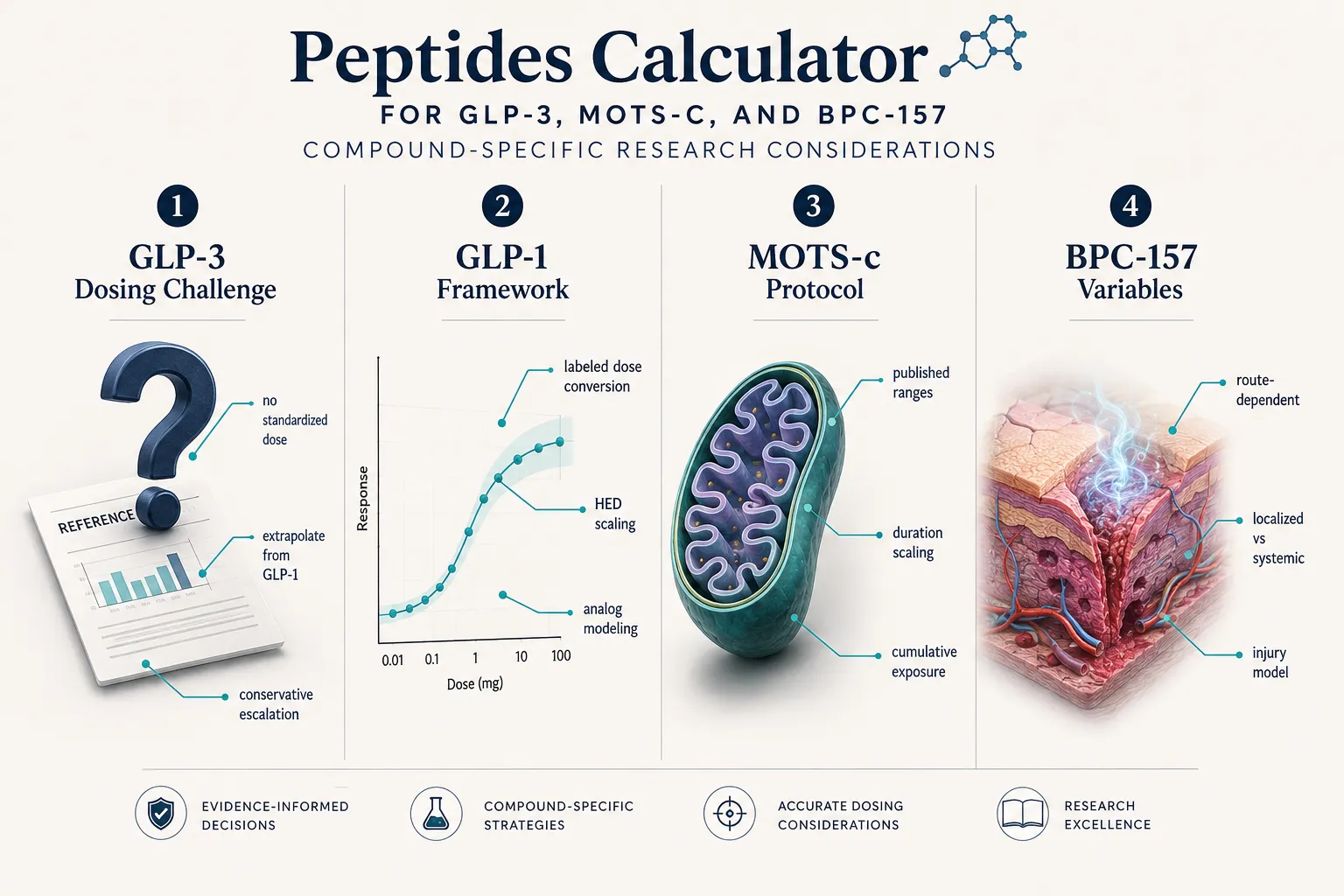
  • GLP-3 lacks a standardized reference dose; researchers currently extrapolate from GLP-1 analog modeling and apply conservative escalation schedules.
  • MOTS-c dosing in animal models varies widely; allometric scaling to human-equivalent doses requires body surface area correction.
  • BPC-157 has no FDA-approved dose, but recent pilot and Phase 2 musculoskeletal data are beginning to anchor practical research ranges.
  • Cross-peptide calculators that handle multiple compound classes in a single interface reduce transcription errors and improve protocol reproducibility.

What a Peptides Calculator Actually Does
What a Peptides Calculator Actually Does

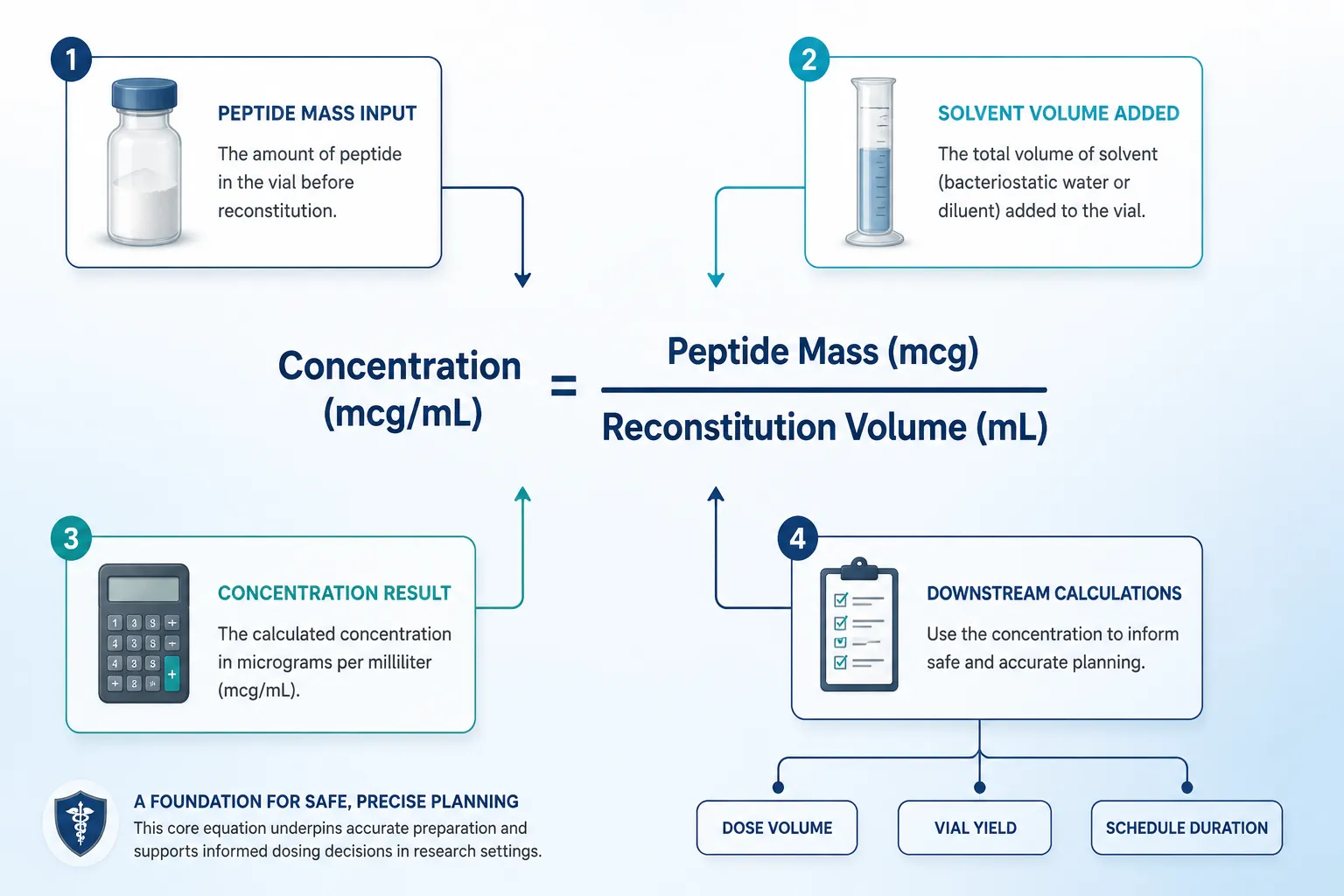
At its core, a peptides calculator solves one equation repeatedly: Concentration (mcg/mL) = Peptide Mass (mcg) / Reconstitution Volume (mL). From that single value, every downstream calculation, dose volume, total vial yield, and schedule duration, flows automatically.

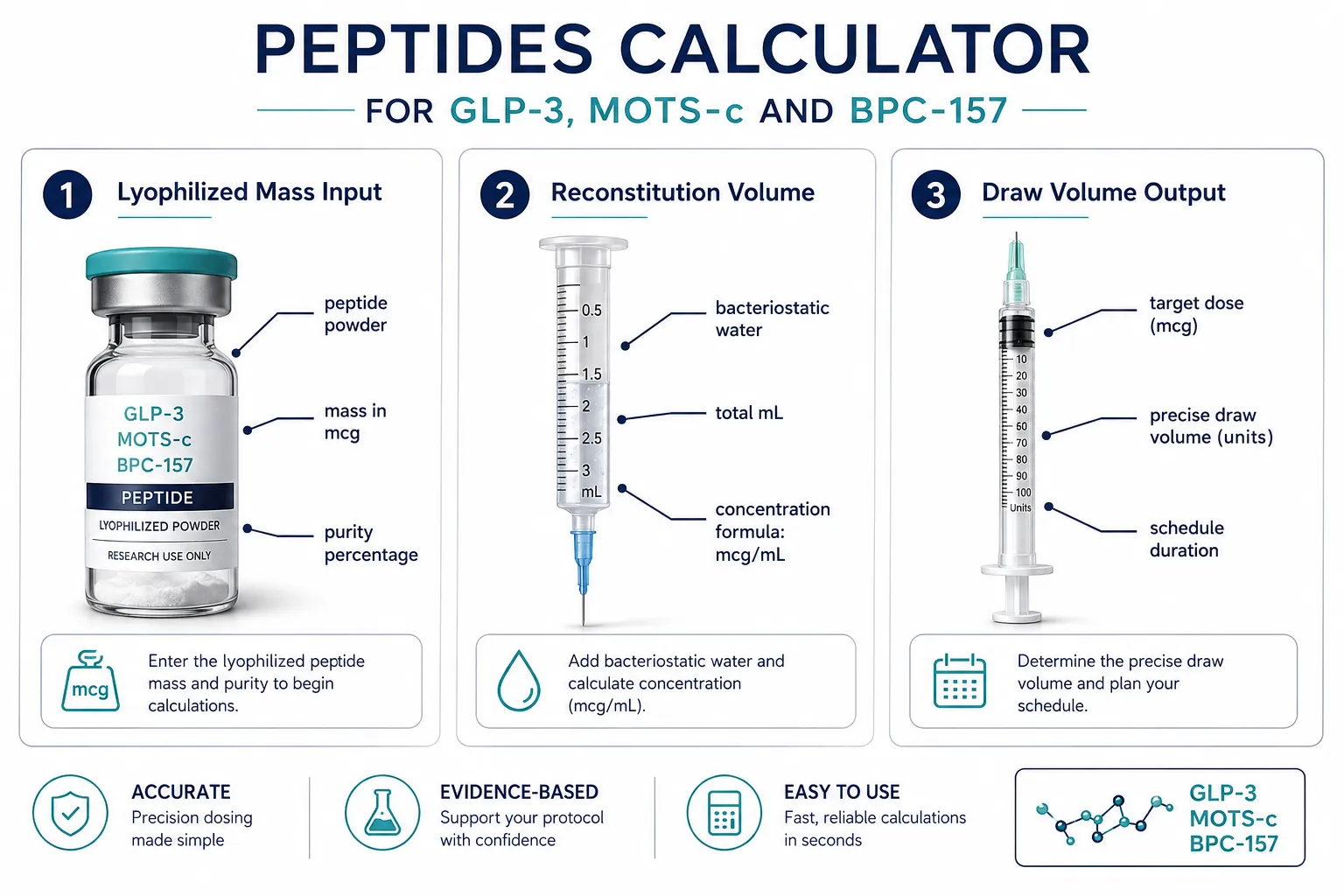
For researchers working with synergistic peptide combinations, the calculator must handle multiple compounds simultaneously without conflating their individual concentration curves. The standard workflow looks like this:

  1. Input lyophilized mass (commonly 5 mg, 10 mg, or custom vial size)
  2. Enter reconstitution solvent volume (bacteriostatic water in mL)
  3. Set target dose in micrograms (mcg) or milligrams (mg)
  4. Read draw volume in mL or units on an insulin syringe

Most modern tools also incorporate half-life modeling, particularly relevant for GLP-1 analogs, and escalation schedule builders that map dose increases across days or weeks. Cross-peptide calculators go further, allowing a researcher to input GLP-class, MOTS-c, and BPC-157 parameters in a single interface, reducing the risk of transcription errors between separate spreadsheets.

"The calculator does not determine whether a dose is appropriate, it determines whether the math behind a chosen dose is internally consistent."

Applying a Peptides Calculator for GLP-3, MOTS-c, and BPC-157: Compound-Specific Considerations
Applying a Peptides Calculator for GLP-3, MOTS-c, and BPC-157: Compound-Specific Considerations

GLP-3 and GLP-Class Peptides

GLP-3 (glucagon-like peptide-3) remains far less characterized than GLP-1 or GLP-2. No standardized reference dose exists in published literature as of 2026. Researchers typically approach GLP-3 by borrowing the labeled dose conversion framework developed for GLP-1 analogs, inputting known receptor affinity ratios and applying a conservative multiplier to the GLP-1 baseline.

Practical steps for GLP-class calculator use:

  • Enter molecular weight to confirm molar concentration
  • Apply half-life correction if modeling sustained-release analogs
  • Build an escalation schedule starting at the lowest published analog equivalent
  • Flag any dose that exceeds the GLP-1 human-equivalent threshold until more GLP-3 data emerges

Researchers interested in small molecule obesity research will find that GLP-class calculators increasingly integrate receptor selectivity filters, though GLP-3 fields remain largely manual in most tools.

MOTS-c

MOTS-c is a mitochondria-derived peptide with highly variable dosing across animal studies, published rodent protocols range from 0.5 mg/kg to 15 mg/kg, a 30-fold spread. This variability makes allometric scaling essential before any human-equivalent estimate can be made.

Allometric scaling formula used in most calculators:

Human Equivalent Dose (HED) = Animal Dose (mg/kg) x (Animal Km / Human Km)

Standard Km factors: mouse = 3, rat = 6, human = 37. A 5 mg/kg mouse dose therefore converts to roughly 0.4 mg/kg HED, a critical reduction that a manual calculation can easily miss.

For those reviewing SS-31 and MOTS-c mitochondrial peptide protocols, pairing allometric scaling with a biomarker monitoring schedule (lactate, ATP markers) is considered standard practice in current translational frameworks.

BPC-157

BPC-157 (Body Protection Compound-157) has no FDA-approved dose and limited controlled human data. However, a recent Phase 2 musculoskeletal trial and earlier pilot studies have begun to anchor a practical research range of 200-500 mcg per administration in human-model contexts, administered via subcutaneous or intramuscular routes.

A BPC-157 calculator entry typically includes:

  • Vial size (commonly 5 mg)
  • Reconstitution with 2.5 mL bacteriostatic water = 2,000 mcg/mL
  • Target dose of 250 mcg = 0.125 mL draw volume

Researchers can cross-reference translational research design principles to confirm that their BPC-157 protocol aligns with current Phase 2 reporting standards before finalizing a schedule.

Safety Frameworks and Regulatory Limits When Using Peptide Dosing Calculators
Safety Frameworks and Regulatory Limits When Using Peptide Dosing Calculators

A calculator produces mathematically correct outputs, it does not validate biological safety. Researchers must layer three additional frameworks over any calculator result.

1. Allometric and Duration Scaling
Beyond single-dose HED conversion, cumulative exposure matters. A peptide administered daily for 30 days carries a different risk profile than a single acute dose. Calculators that include duration-adjusted exposure modeling flag when total cumulative dose approaches thresholds seen in toxicology studies.

2. Biomarker Monitoring Checkpoints
Responsible protocols pair dose schedules with defined biomarker checkpoints, liver enzymes, kidney function markers, and peptide-specific indicators (e.g., insulin markers for GLP-class compounds). Some cross-peptide platforms now include monitoring schedule templates alongside the dosing math.

3. Regulatory and Purity Verification
No calculator output is meaningful if the source compound lacks verified purity. Researchers sourcing compounds should confirm certificate of analysis (CoA) data and consider wholesale peptides for sale only from suppliers with third-party tested documentation. Regulatory status in 2026 remains unchanged: BPC-157 and MOTS-c are not approved therapeutic agents in any major jurisdiction, and GLP-3 analogs remain investigational.

A note on future tools: speculative developments suggest that AI-assisted peptide calculators may eventually incorporate real-time biomarker feedback loops, but no validated platform of this type exists commercially as of 2026.

Peptide Common Research Vial Size Typical Reconstitution Resulting Concentration
GLP-class analogs 1-5 mg 1-2 mL BW 500-5,000 mcg/mL
MOTS-c 5-10 mg 2-5 mL BW 1,000-5,000 mcg/mL
BPC-157 5 mg 2.5 mL BW 2,000 mcg/mL

Conclusion

A reliable Peptides Calculator for GLP-3, MOTS-c, and BPC-157: How Researchers Estimate Dosing and Concentration Safely is only as useful as the protocol framework surrounding it. The actionable next steps for any researcher in 2026 are clear:

  • Verify compound purity with a CoA before any calculation has practical meaning.
  • Apply allometric scaling for MOTS-c and any compound where animal data is the primary reference.
  • Use escalation schedule builders for GLP-class peptides rather than starting at maximum estimated doses.
  • Document every calculator input and output as part of the formal research record.
  • Layer biomarker monitoring checkpoints at defined intervals throughout the protocol.

The math is straightforward. The discipline around the math is what separates reproducible research from noise.

https://www.puretestedpeptides.com/wp-content/uploads/2026/09/peptides-calculator-for-glp-3-mots-c-and-bpc-157-how-researchers-estimate-dosing.webp 1024 1536 https://www.puretestedpeptides.com/wp-content/uploads/2026/01/buy-peptides-online.jpg 2026-09-02 13:04:232026-09-02 13:04:23Peptides Calculator for GLP-3, MOTS-c, and BPC-157: How Researchers Estimate Dosing and Concentration Safely
Epithalon Peptide: Telomerase Activation and Cellular Senescence Research Applications

Epithalon Peptide: Telomerase Activation and Cellular Senescence Research Applications

August 30, 2026/0 Comments/in Uncategorized/by

A tetrapeptide made of just four amino acids, Alanine, Glutamic acid, Aspartic acid, and Glycine, has generated decades of scientific debate over whether it holds a key to slowing cellular aging at its most fundamental level. Epithalon peptide: telomerase activation and cellular senescence research applications sit at the center of that debate, drawing attention from gerontologists, reproductive biologists, and translational researchers alike. As of 2026, the compound remains strictly a research tool, yet the mechanistic data emerging from cell-line studies continues to sharpen understanding of how telomere dynamics govern the aging process.

Key Takeaways

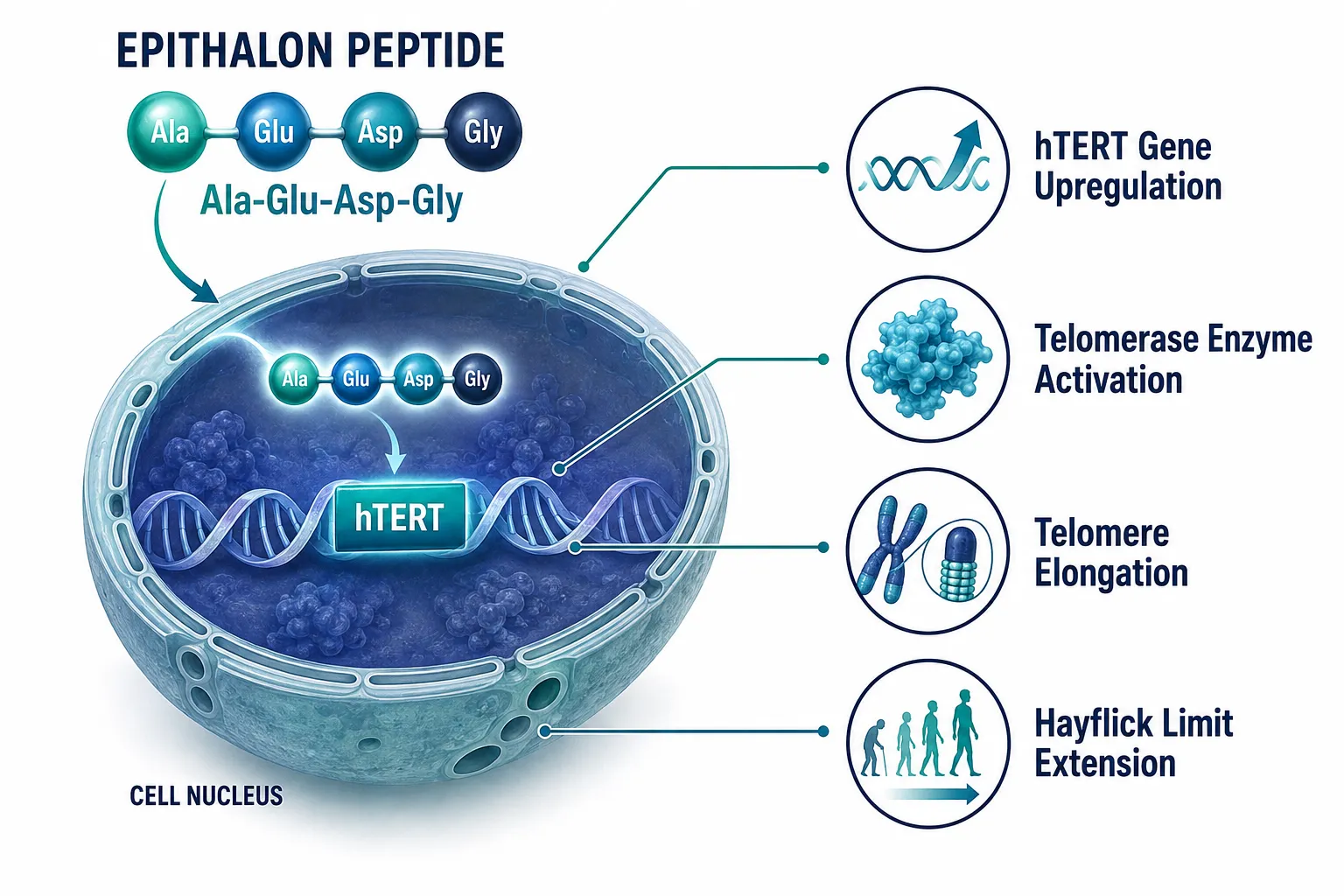
  • Epithalon (Ala-Glu-Asp-Gly) activates telomerase by upregulating the catalytic subunit hTERT, producing measurable telomere elongation in human somatic cell cultures.
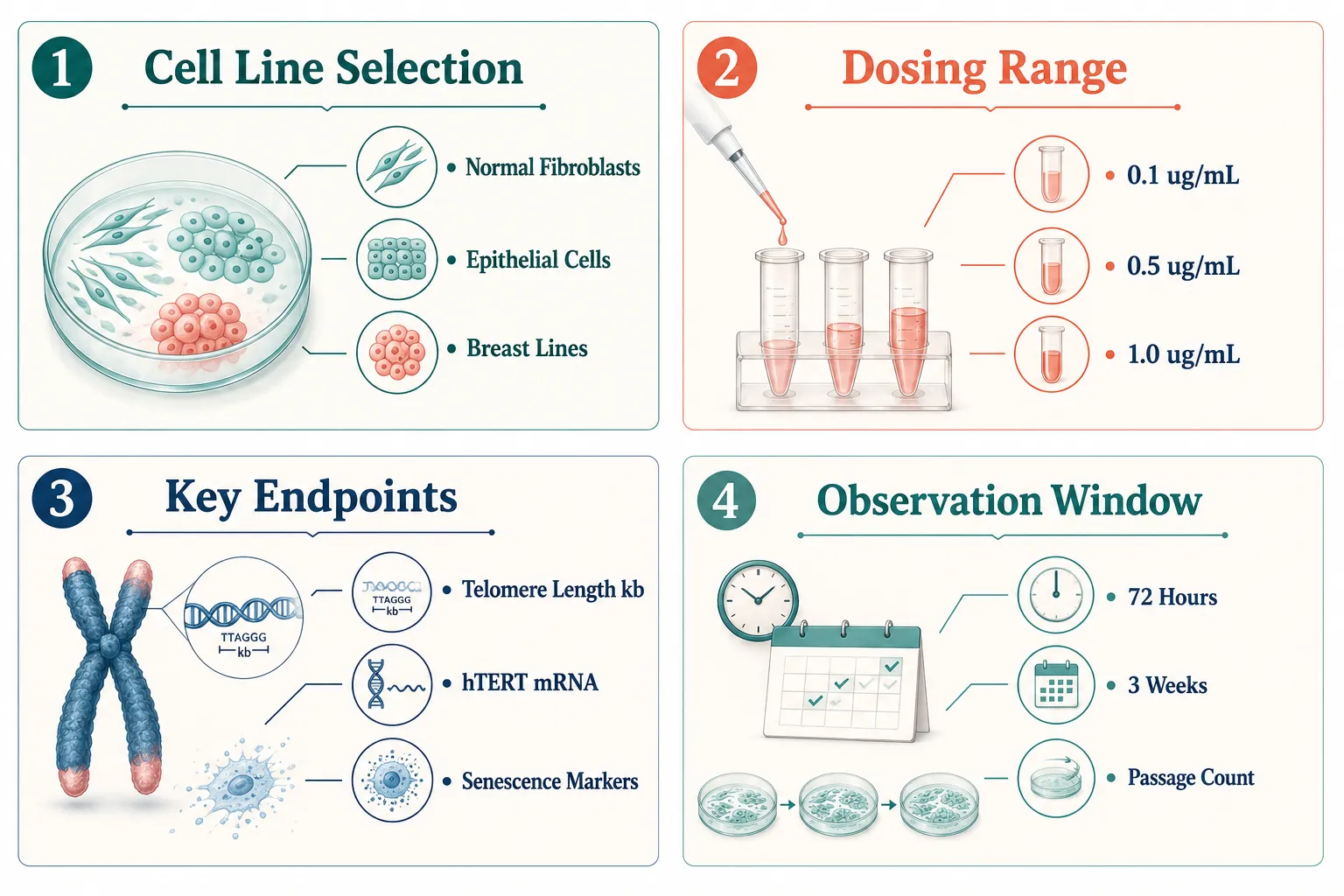
  • In vitro studies report telomere length increases from roughly 2.4 kb to as much as 8 kb at doses of 0.1-1.0 micrograms per milliliter over three weeks.
  • Rodent models have reported lifespan extensions of approximately 12-24%, though no controlled human clinical trials have replicated these findings.
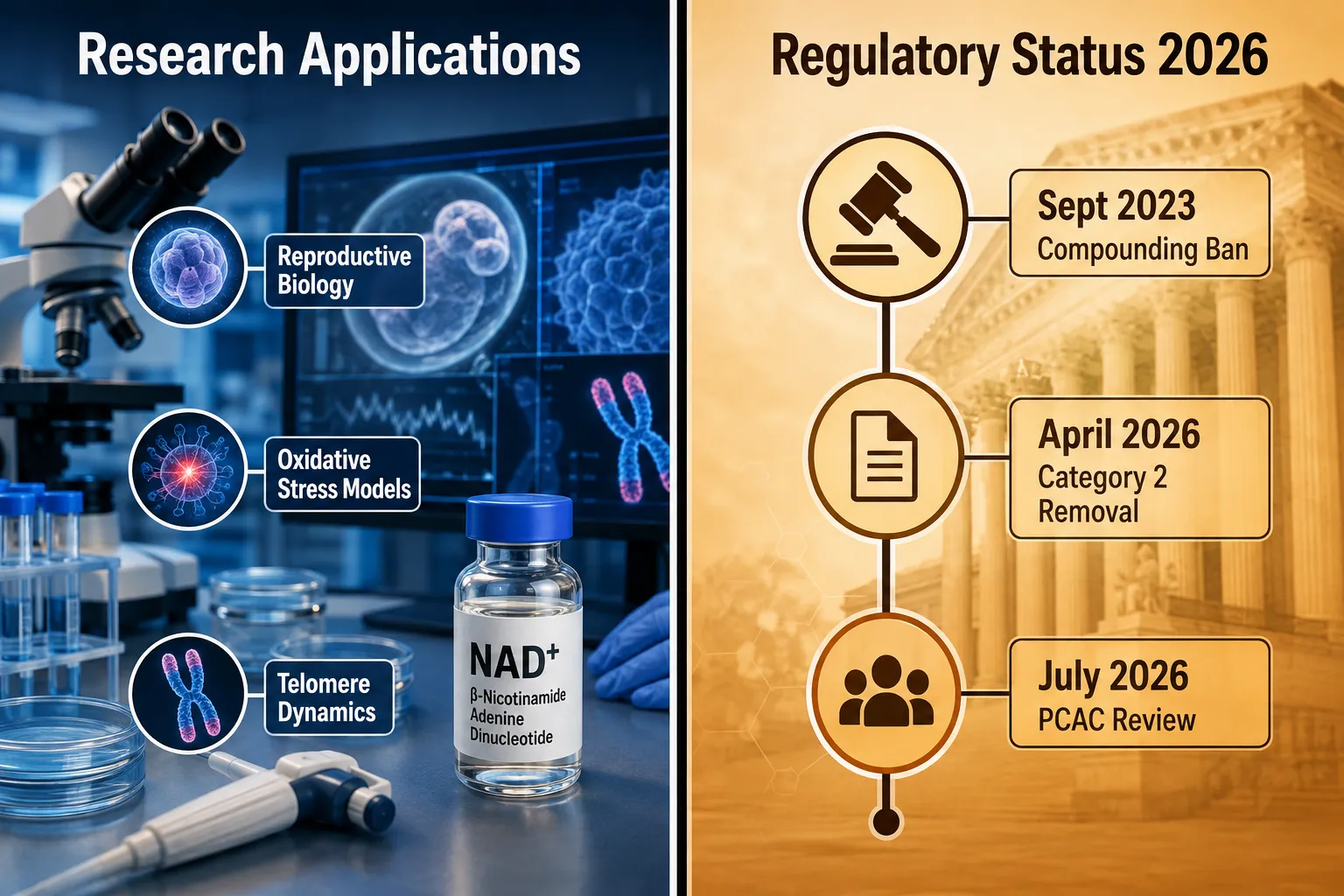
  • Epithalon carries no FDA, EMA, or MHRA approval; it was removed from the FDA Category 2 bulk drug list in April 2026 and is scheduled for regulatory review in July 2026.
  • Human evidence is currently graded as low-quality (Grade D), meaning researchers must treat all findings as preliminary and hypothesis-generating only.

Mechanism of Action: How Epithalon Activates Telomerase

Mechanism of Action: How Epithalon Activates Telomerase

Understanding telomerase activation is essential before interpreting Epithalon's research profile. Telomerase is a ribonucleoprotein enzyme that adds repetitive nucleotide sequences to the ends of chromosomes, counteracting the progressive shortening that occurs with each cell division. In most adult somatic cells, telomerase activity is suppressed, which is a primary driver of replicative senescence.

Epithalon's primary mechanism involves inducing expression of hTERT, the catalytic subunit of telomerase, in human somatic cell cultures. A 2026 mechanistic review confirmed that this induction increases telomerase enzymatic activity to a degree sufficient to extend cellular lifespan beyond the Hayflick limit in vitro. A 2024 study at the Institute of Bioregulation and Gerontology in St. Petersburg quantified this effect: telomerase activity increased by approximately 30-40% in human fibroblast cultures within 72 hours, with the most pronounced changes occurring during the G1 phase of the cell cycle.

Key mechanistic steps observed in research models:

  • Epithalon binds to regulatory regions influencing hTERT gene transcription
  • Increased hTERT mRNA is detected within hours of exposure
  • Telomerase enzymatic activity rises in a dose-dependent pattern
  • Telomere elongation follows over days to weeks of sustained exposure

These findings position Epithalon as a valuable signaling peptides research tool for dissecting the upstream regulation of telomerase in normal aging cells.

Epithalon Peptide: Telomerase Activation and Cellular Senescence Research Applications in Cell-Line Studies

Epithalon Peptide: Telomerase Activation and Cellular Senescence Research Applications in Cell-Line Studies

The most rigorous recent work comes from a 2025 Brunel University replication study. Researchers treated four human cell lines, two breast cancer lines and two normal mammary epithelial lines, with Epithalon at concentrations ranging from 0.1 to 1.0 micrograms per milliliter for three weeks. The results showed dose-dependent telomere elongation, with baseline telomere lengths near 2.4 kilobases extending to approximately 8 kilobases in some lines. Critically, the authors framed Epithalon as a tool compound for telomere biology research, not a clinically validated therapy.

A separate 2025 human cell-line study confirmed that Epithalon increased telomere length in normal epithelial and fibroblast cells by upregulating both hTERT mRNA and telomerase activity, corroborating earlier Russian data in a Western laboratory context.

Tracking senescence markers alongside telomere measurements is considered best practice in this research area. Useful endpoints for study design include:

Endpoint Measurement Method Relevance
Telomere length (kb) Q-FISH or Southern blot Direct senescence indicator
hTERT mRNA expression RT-qPCR Mechanistic confirmation
Beta-galactosidase activity Histochemical staining Classic senescence marker
Reactive oxygen species Fluorescent probes Oxidative stress component
Cell passage number Manual counting Replicative lifespan proxy

For researchers designing experiments, a translational research design framework that pairs molecular endpoints with functional senescence assays will yield the most interpretable data.

Epithalon Peptide: Telomerase Activation and Cellular Senescence Research Applications Beyond Standard Cell Lines

Epithalon Peptide: Telomerase Activation and Cellular Senescence Research Applications Beyond Standard Cell Lines

Research interest in Epithalon has expanded beyond standard fibroblast and epithelial models. A 2025 study by Ullah et al. demonstrated that Epithalon stimulates telomerase activity in bovine cumulus cells and cumulus-oocyte complexes, opening a pathway for studying reproductive aging and in vitro oocyte senescence. A complementary 2022 oocyte study found that appropriately dosed Epithalon can reduce oxidative stress-related damage associated with post-ovulatory aging, suggesting relevance to experimental models of oxidative stress-induced cellular senescence.

These findings connect to broader skin biology research and tissue recovery research contexts, where controlling cellular senescence in specialized cell populations is a growing priority.

Regulatory and safety context researchers must understand in 2026:

  • Epithalon has no FDA, EMA, or MHRA approval and no active IND, NDA, or BLA filing
  • It was banned from U.S. compounding pharmacies in September 2023 due to concerns including immunogenicity, aggregation risk, and insufficient clinical data
  • The FDA removed Epithalon from its Category 2 bulk drug substances list effective April 22, 2026, with a Pharmacy Compounding Advisory Committee review scheduled for July 24, 2026
  • Telomerase activation carries a theoretical long-term carcinogenic risk that regulators have flagged as a key concern
  • All human evidence is currently classified as Grade D, based primarily on small Soviet-era and Russian cohort data with no modern Phase 3 trials

"In vitro telomerase activation should not be equated with proven clinical anti-aging effects, the mechanistic data is compelling, but the clinical translation gap remains wide."

Researchers exploring therapeutic peptides in aging models should build study designs that explicitly account for this gap, using Epithalon as a mechanistic probe rather than a presumed intervention.

Conclusion

Epithalon peptide: telomerase activation and cellular senescence research applications represent one of the most mechanistically detailed areas of peptide aging biology available to researchers in 2026. The compound reliably upregulates hTERT, increases telomerase activity by measurable margins, and produces telomere elongation across multiple human cell-line models. Rodent lifespan data adds biological plausibility, and emerging reproductive biology findings expand the experimental toolkit further.

Actionable next steps for researchers:

  1. Design studies with paired molecular endpoints (hTERT mRNA, telomerase activity) and functional senescence assays (beta-galactosidase, passage number) to build interpretable datasets.
  2. Use dose ranges of 0.1-1.0 micrograms per milliliter as a validated starting point, with observation windows of at least 72 hours for acute mechanistic work and three weeks for telomere length outcomes.
  3. Monitor the July 2026 PCAC review outcomes, as regulatory conclusions will shape future research access and compounding pathways.
  4. Frame all findings within the Grade D human evidence classification and avoid extrapolating in vitro telomerase activation to clinical anti-aging conclusions.
  5. Pair Epithalon with established senescence marker panels to contribute data that moves the field toward higher evidence grades.

The science is genuinely interesting. The regulatory and safety landscape demands that researchers approach it with rigorous methodology and transparent reporting.

https://www.puretestedpeptides.com/wp-content/uploads/2026/08/epithalon-peptide-telomerase-activation-and-cellular-senescence-research-applica-2.webp 672 1008 https://www.puretestedpeptides.com/wp-content/uploads/2026/01/buy-peptides-online.jpg 2026-08-30 13:14:152026-08-30 13:14:15Epithalon Peptide: Telomerase Activation and Cellular Senescence Research Applications
GLP-2-T and GLP2 Tirz Peptides: Why Naming Matters for Translational Research and Trial Design

GLP-2-T and GLP2 Tirz Peptides: Why Naming Matters for Translational Research and Trial Design

August 16, 2026/0 Comments/in Uncategorized/by

A single mislabeled peptide in a vendor catalog can quietly derail months of preclinical work. As of 2026, the confusion surrounding GLP-2-T and GLP2 Tirz nomenclature has moved from a minor nuisance to a documented problem in translational research and trial design, one that experts are now actively working to resolve.

The core issue is straightforward but consequential: two structurally and mechanistically distinct compound classes are being sold, cited, and sometimes studied under overlapping names. Understanding why GLP-2-T and GLP2 Tirz peptides: why naming matters for translational research and trial design is not a semantic debate, it is a question of scientific integrity and patient safety.

Key Takeaways

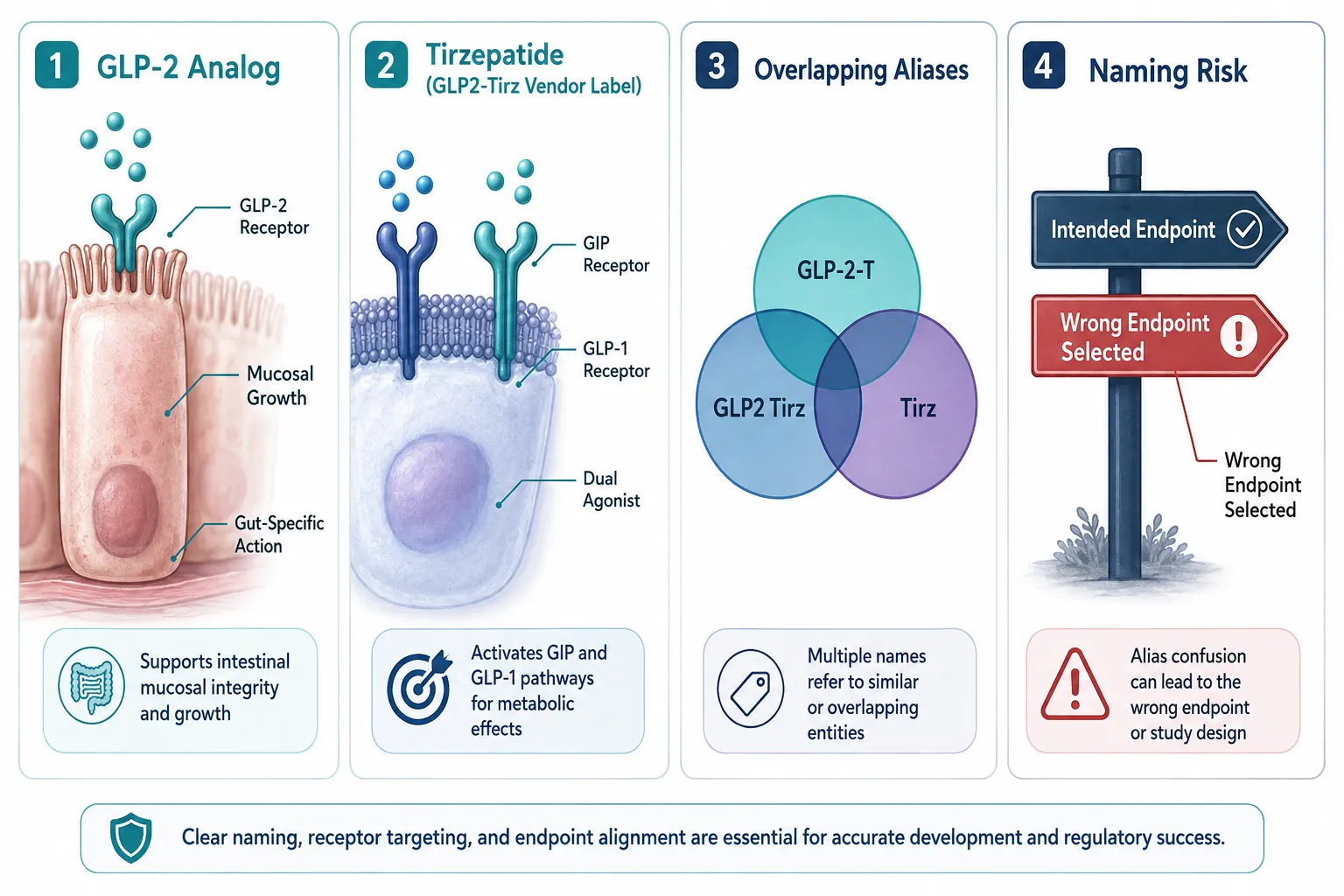
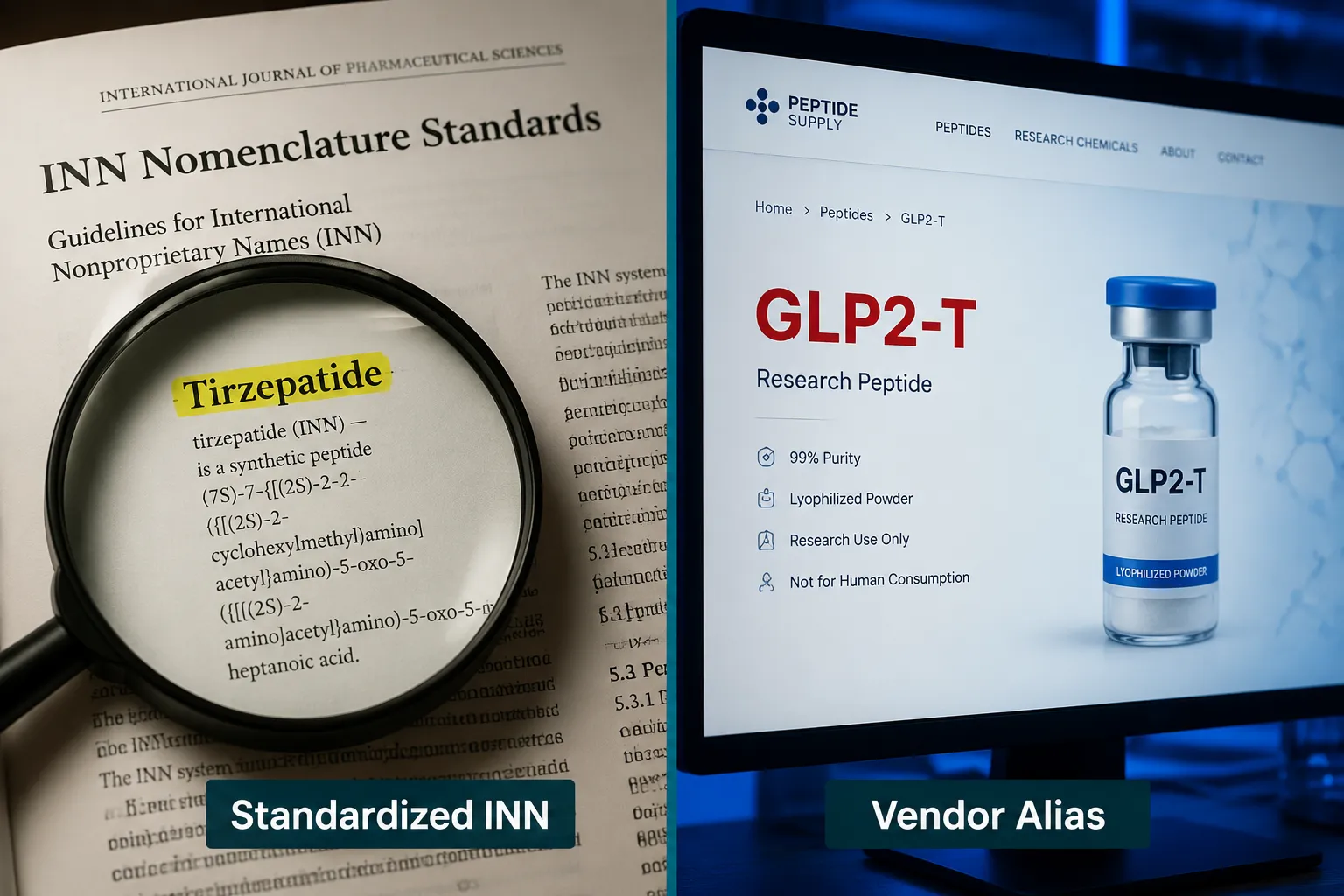
  • GLP-2 refers to a gut-specific peptide that acts on GLP-2 receptors to promote mucosal growth; GLP2 Tirz is a vendor alias increasingly applied to tirzepatide, a dual GIP/GLP-1 receptor agonist.
  • These two compound classes have entirely different receptor targets, mechanisms of action, and translational endpoints.
  • Vendor catalogs in 2026 show widespread aliasing of tirzepatide under GLP-2-adjacent labels, creating literature search contamination and protocol errors.
  • Experts recommend reverting to International Nonproprietary Names (INN) and explicit receptor labeling in all research documentation.
  • Early industry movement toward clearer disclosures is underway, but standardization is not yet complete.

Understanding the Two Compound Classes Behind the Naming Confusion

Understanding the Two Compound Classes Behind the Naming Confusion

GLP-2 (glucagon-like peptide-2) is a 33-amino-acid peptide secreted by intestinal L-cells. It binds selectively to the GLP-2 receptor, driving intestinal mucosal growth, reducing gut permeability, and supporting nutrient absorption. Analogs of GLP-2, such as teduglutide, are approved for short bowel syndrome and have a well-defined mechanistic profile tied entirely to gut biology.

Tirzepatide, on the other hand, is a dual agonist targeting both the GIP (glucose-dependent insulinotropic polypeptide) receptor and the GLP-1 receptor. It has no meaningful activity at the GLP-2 receptor. Its translational endpoints center on metabolic outcomes: glycemic control, body weight reduction, and insulin sensitivity. For researchers exploring GLP-1 peptides, tirzepatide represents a distinct pharmacological category from GLP-2 analogs.

The problem emerges in vendor catalogs and informal research communications. The shorthand "GLP2-T" or "GLP2 Tirz" has been applied to tirzepatide by multiple suppliers, likely because tirzepatide's name contains "tirz" and its GLP-class designation invites casual abbreviation. Meanwhile, mechanistic literature uses "GLP-2-T" to denote modified GLP-2 analogs. The result is a naming collision with real consequences.

Key distinction: GLP-2 analogs act on the gut epithelium. Tirzepatide acts on pancreatic and hypothalamic GIP/GLP-1 receptors. Conflating these in a protocol is not a minor error, it is a fundamental mechanistic mismatch.

How Naming Errors Enter Research Protocols and Trial Design

How Naming Errors Enter Research Protocols and Trial Design

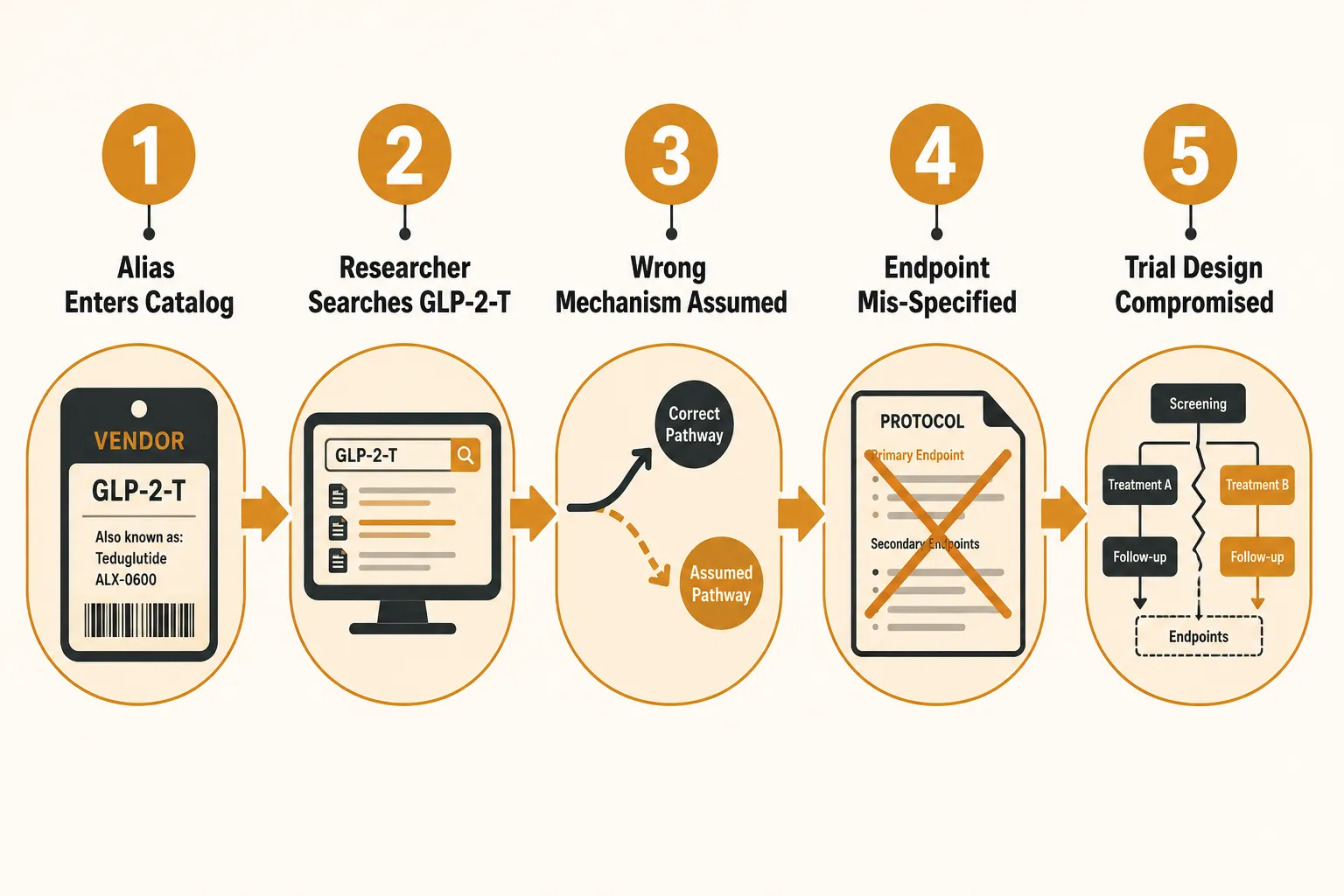
The pathway from naming confusion to flawed trial design follows a predictable sequence. A researcher queries a database or vendor catalog using "GLP-2-T." They retrieve results that include both genuine GLP-2 analog literature and tirzepatide vendor listings. Without careful cross-referencing of CAS numbers or INN designations, the wrong compound profile gets incorporated into a protocol.

This matters most at three points in research design:

1. Endpoint selection
GLP-2 analog studies measure intestinal villus height, crypt depth, tight junction protein expression, and gut permeability markers. Tirzepatide studies measure HbA1c, body mass index, fasting glucose, and lipid panels. A protocol built on the wrong compound assumption will specify endpoints that cannot detect the actual mechanism at work.

2. Inclusion and exclusion criteria
Subjects enrolled for a GLP-2 mechanism study, for example, patients with inflammatory bowel conditions or short bowel syndrome, are categorically different from subjects appropriate for a tirzepatide metabolic study. Naming errors upstream can produce inclusion criteria that are scientifically incoherent.

3. Literature search contamination
Systematic reviews and meta-analyses depend on clean search terms. When "GLP2-T" retrieves a mix of GLP-2 analog and tirzepatide studies, pooled analyses become unreliable. This is not a hypothetical risk, it is an active problem flagged by researchers in 2026.

Researchers working with related GLP-class compounds, including those exploring GLP-1 Tirz 60mg GA2 formulations, should verify receptor specificity before drawing mechanistic parallels. Similarly, those following retatrutide Phase 3 and beyond developments will recognize that multi-receptor agonist nomenclature is already complex enough without additional aliasing.

Expert Recommendations and the Path Toward Standardization

Expert Recommendations and the Path Toward Standardization

The expert consensus emerging in 2026 is clear: all research documentation, vendor communications, and trial protocols should use INN designations (tirzepatide, teduglutide) and explicit receptor labels (GIP/GLP-1 dual agonist; GLP-2 receptor agonist) rather than shorthand aliases.

Specific recommendations include:

  • Always cross-reference CAS numbers when sourcing peptides from vendor catalogs, particularly for GLP2-T tagged products where alias use is documented.
  • State receptor targets explicitly in Methods sections, "dual GIP/GLP-1 receptor agonist (tirzepatide)" rather than "GLP2 Tirz."
  • Audit literature search strings in systematic reviews to exclude alias contamination before pooling data.
  • Request certificates of analysis that include INN and CAS number, not just catalog shorthand.

Some vendors are beginning to add clarifying disclosures to listings, a positive early sign. However, marketplace data from mid-2026 shows that alias use remains widespread across supplier catalogs, meaning researchers cannot yet rely on vendor labeling alone.

The broader principle applies across peptide research categories. Nomenclature discipline is equally important in adjacent fields, researchers working with compounds like those covered in BPC-157 TB-500 peptide research or BDNF peptides understand that precise naming underpins reproducible science.

For those sourcing research-grade GLP-class compounds, oral peptides for sale resources that include full INN disclosure represent the current best practice standard.

Conclusion

The confusion surrounding GLP-2-T and GLP2 Tirz peptides: why naming matters for translational research and trial design is a concrete, solvable problem, but only if researchers, vendors, and trial designers treat it as a priority rather than a footnote.

Actionable next steps for researchers and trial designers:

  1. Verify every GLP-class compound against its INN and CAS number before incorporating it into a protocol.
  2. Rewrite any Methods section that uses "GLP2-T" or "GLP2 Tirz" without explicit receptor designation.
  3. Audit systematic review search strings for alias contamination before finalizing inclusion criteria.
  4. Advocate for vendor disclosure standards that require INN labeling alongside catalog shorthand.
  5. Treat mechanistic divergence, gut epithelial vs. metabolic receptor targets, as a hard boundary when selecting translational endpoints.

Standardization is coming, but it is not here yet. Until it is, the responsibility falls on individual researchers to close the gap between what a label says and what a compound does.

https://www.puretestedpeptides.com/wp-content/uploads/2026/08/glp-2-t-and-glp2-tirz-peptides-why-naming-matters-for-translational-research-and.webp 1024 1536 https://www.puretestedpeptides.com/wp-content/uploads/2026/01/buy-peptides-online.jpg 2026-08-16 13:04:022026-08-16 13:04:02GLP-2-T and GLP2 Tirz Peptides: Why Naming Matters for Translational Research and Trial Design
×

Helpful Links

  • My account
  • Cart
  • Checkout
  • Refund and Returns Policy
  • Privacy Policy
  • SMS Privacy Policy
  • Login
  • My Account
  • Logout

USA Made Lab Tested Peptides

All products are sold for research, laboratory, or analytical purposes only, and are not for human consumption


Pure Tested Peptides is a chemical supplier. Pure Tested Peptides is not a compounding / chemical compounding facility as defined under 503A of the Federal Food, Drug, and Cosmetic act. Pure Tested Peptides is not an outsourcing facility as defined under 503B of the Federal Food, Drug, and Cosmetic act.

The statements made within this website have not been evaluated by the US Food and Drug Administration. The products we offer are not intended to diagnose, treat, cure or prevent any disease.

Human/Animal Consumption Prohibited. Laboratory/In-Vitro Experimental Use Only

Scroll to top Scroll to top Scroll to top