Call or Text 727-513-9780
  • Shopping Cart Shopping Cart
    0Shopping Cart
Pure Tested Peptides | America's most trusted Peptides for sale online
  • Peptides for sale
    • Oral Peptides for sale
      • Peptide Capsules for sale
      • BPC 157 Capsules 1000mcg
      • SLU-PP-332 Capsules | 1000 mcg
      • 5-Amino-1MQ 50mg Capsules
      • Tesofensine 500mcg
    • All Peptides for sale
    • Peptide Sprays
      • BPC 157 Nasal Spray Kit
      • BPC-157 TB500 Nasal Spray Kit
      • Semax Nasal Spray 10mg
      • Selank – Nasal Spray Kit – 10mg
      • Epithalon 50MG Nasal Spray Kit
      • Ipamorelin 10mg Nasal Spray
      • Klow Nasal Spray (BPC-157 + TB-500 + GHK-Cu + KPV) | 80mg
      • Hulk Nasal Spray Tesa / Ipa Blend 6/3 MG
      • Klow Nasal Spray
      • NAD + 500 mg Nasal Spray
      • PT-141 Nasal Spray Kit
    • GHRH Peptides
      • Ipa Peptides
      • CJC-1295 Peptides
        • CJC-1295 with DAC 5 mg
        • CJC-1295 without DAC 5 mg
        • CJC-1295 Ipa 10mg
      • Tesa Peptides
        • Tesa Peptide
        • Tesa 20 mg
    • GHK-Cu Peptides
      • All GHK-Cu Peptides
      • GHK-Cu 100mg
      • KLOW Peptide Blend – Buy KLOW blend online
    • BPC Peptides
      • All BPC Peptides
      • BPC-157
      • BPC-157 TB-500
      • BPC 157 capsules 1000mcg
    • SLU-PP-332 Peptides
      • All SLU-PP-332 Peptides
      • SLU-PP-332 5mg
    • GLP3 Peptides
      • GLP3-R
      • GLP3-R CAG 10mg
      • GLP3-R 20mg
    • PT-141 Peptides
      • PT-141 Peptides for sale
      • PT-141 10mg
      • PT-141 Nasal Spray
    • CAG Peptides
      • Lipo-C Peptide Blend
      • CAG 5mg
      • CAG 10mg
    • MOTS-C Peptides
      • MOTS-C Peptides for sale
      • MOTS-c peptide
      • MOTS-c 10mg *6 pack*
    • 5 Amino 1MQ Peptides
      • 5 Amino 1MQ Peptides for sale
      • 5-Amino-1MQ 50mg Capsules
      • 5-Amino-1MQ 5mg
    • Epithalon Peptides
      • Epithalon Peptides for sale
      • Epithalon 10mg
      • Epithalon 50mg
  • Shop
    • GLPs
      • 5-Amino-1MQ 50mg Capsules
      • 5-Amino-1MQ 5mg
      • GLP3-Reta
      • L-Carnitine 500mg/ml
      • Tesofensine 500mcg
      • SLU-PP-332 5mg
      • MOTS-c 10mg *6 pack*
    • Epithalon & BPC Peptides
      • Epithalon 10mg
      • Epithalon 50mg
      • BPC-157
      • BPC 157 capsules 1000mcg
      • BPC-157 TB-500
      • BPC-157 TB500 Nasal Spray Kit
      • BPC 157 Nasal Spray Kit
    • BPC TB-500 & NAD+ Peptides
      • NAD+ 500 mg
      • KLOW Peptide Blend – Buy KLOW blend online
      • GLOW Peptide Blend
      • TB 500 5mg
      • BPC 157 capsules 1000mcg – Supplement
      • BPC 157 Nasal Spray Kit
      • BPC-157
      • BPC-157 TB500 Nasal Spray Kit
      • BPC-157 TB-500
      • BPC 157 capsules 1000mcg
    • LL-37 Peptide
      • LL-37 10 mg
    • MOTS-C & Selank
      • MOTS-c peptide
      • Selank 10mg
    • GHK Peptides
      • GHK-Cu 100mg
      • GLOW Peptide Blend
      • KLOW Peptide Blend – Buy KLOW blend online
  • COAs
  • Wholesale
    • Wholesale Peptides for sale
  • PTP FAQ
  • Affiliates
    • Selank Peptide: Advanced Pharmacological Mechanisms Underlying Its Anxiolytic and Nootropic Effects in Research
      • 5-Amino-1MQ Peptide: Detailed Mechanisms of NNMT Inhibition and Its Impact on Cellular Metabolism Research
        • MOTS-C Peptide: Unraveling Its Role in Mitochondrial Dynamics and Energy Metabolism Research
          • Epithalon Peptide and Telomerase Regulation: Investigating Its Impact on Cellular Senescence and Lifespan Research Models
            • GLP2-T vs GLP2 Tirz Peptide: Understanding the Naming, Mechanistic Nuances, and Research Implications for Gut Health
      • Peptides and Polypeptides in Modern Pharmacology: What Research on Metoprolol, Prednisone, and Amlodipine Reveals
        • Polypeptide Peptides vs NSAIDs: What Naproxen and Diclofenac Teach Tissue-Repair Researchers About BPC‑157 and TB‑500
          • Peptides and Polypeptides in Endocrine Pharmacology: How GLP-1, GLP-2, and GLP-3 Retatrutide Differ From Classic Drugs Like Prednisone and Amlodipine
          • 5‑Amino‑1MQ Peptide and NNMT Inhibition: How It Compares With Statins Like Atorvastatin in Adipose and Lipid Metabolism Research
      • Enclomiphene, Estrogen Receptor Signaling, and Luteinizing Phase Biology: What Hormone Researchers Should Measure
        • Mesenchymal Stem Cells, BPC‑157, and GHK‑Cu: How Tissue Repair Peptides Compare With Classic NSAIDs Like Naproxen in Injury Models
          • Peptide Calculator Use Cases Beyond Growth Hormone: Working Through GLP‑3 Retatrutide, MOTS‑c, and BPC‑157 Research Dosing
        • Polypeptide Peptides in Endocrine and Metabolic Pharmacology: Lessons From Amlodipine, Prednisone, and Metoprolol
        • Peptides Calculator for Advanced Blends: Worked Examples for Tesamorelin, CJC‑1295, and Ipamorelin Stacks
          • Peptides and Polypeptides in Human Physiology: How Molecular Size Shapes Research Applications
            • Selank Peptide: Advanced Pharmacological Mechanisms Underlying Its Anxiolytic and Nootropic Effects in Research
          • 5-Amino-1MQ Peptide: Detailed Mechanisms of NNMT Inhibition and Its Impact on Cellular Metabolism Research
            • MOTS-C Peptide: Unraveling Its Role in Mitochondrial Dynamics and Energy Metabolism Research
              • Epithalon Peptide and Telomerase Regulation: Investigating Its Impact on Cellular Senescence and Lifespan Research Models
                • GLP2-T vs GLP2 Tirz Peptide: Understanding the Naming, Mechanistic Nuances, and Research Implications for Gut Health
                  • Peptides and Polypeptides in Endocrine Pharmacology: How GLP-1, GLP-2, and GLP-3 Retatrutide Differ From Classic Drugs Like Prednisone and Amlodipine
                    • Polypeptide Peptides vs NSAIDs: What Naproxen and Diclofenac Teach Tissue-Repair Researchers About BPC‑157 and TB‑500
                      • Peptides and Polypeptides in Modern Pharmacology: What Research on Metoprolol, Prednisone, and Amlodipine Reveals
                        • 5‑Amino‑1MQ Peptide and NNMT Inhibition: How It Compares With Statins Like Atorvastatin in Adipose and Lipid Metabolism Research
                        • Enclomiphene, Estrogen Receptor Signaling, and Luteinizing Phase Biology: What Hormone Researchers Should Measure
                        • Mesenchymal Stem Cells, BPC‑157, and GHK‑Cu: How Tissue Repair Peptides Compare With Classic NSAIDs Like Naproxen in Injury Models
                        • Peptide Calculator Use Cases Beyond Growth Hormone: Working Through GLP‑3 Retatrutide, MOTS‑c, and BPC‑157 Research Dosing
                        • Polypeptide Peptides in Endocrine and Metabolic Pharmacology: Lessons From Amlodipine, Prednisone, and Metoprolol
                        • Peptides Calculator for Advanced Blends: Worked Examples for Tesamorelin, CJC‑1295, and Ipamorelin Stacks
                        • Peptides and Polypeptides in Human Physiology: How Molecular Size Shapes Research Applications
                        • Selank Peptide: Advanced Pharmacological Mechanisms Underlying Its Anxiolytic and Nootropic Effects in Research
                        • MOTS-C Peptide: Unraveling Its Role in Mitochondrial Dynamics and Energy Metabolism Research
                        • Peptides and Polypeptides in Modern Pharmacology: What Research on Metoprolol, Prednisone, and Amlodipine Reveals
                        • Peptides and Polypeptides in Endocrine Pharmacology: How GLP-1, GLP-2, and GLP-3 Retatrutide Differ From Classic Drugs Like Prednisone and Amlodipine
                        • 5-Amino-1MQ Peptide: Detailed Mechanisms of NNMT Inhibition and Its Impact on Cellular Metabolism Research
                        • Mesenchymal Stem Cells, BPC‑157, and GHK‑Cu: How Tissue Repair Peptides Compare With Classic NSAIDs Like Naproxen in Injury Models
                        • Peptide Calculator Use Cases Beyond Growth Hormone: Working Through GLP‑3 Retatrutide, MOTS‑c, and BPC‑157 Research Dosing
                        • GLP2-T vs GLP2 Tirz Peptide: Understanding the Naming, Mechanistic Nuances, and Research Implications for Gut Health
                        • Polypeptide Peptides in Endocrine and Metabolic Pharmacology: Lessons From Amlodipine, Prednisone, and Metoprolol
                        • Polypeptide Peptides vs NSAIDs: What Naproxen and Diclofenac Teach Tissue-Repair Researchers About BPC‑157 and TB‑500
                        • Peptides and Polypeptides in Human Physiology: How Molecular Size Shapes Research Applications
                        • Peptides Calculator for Advanced Blends: Worked Examples for Tesamorelin, CJC‑1295, and Ipamorelin Stacks
                        • 5‑Amino‑1MQ Peptide and NNMT Inhibition: How It Compares With Statins Like Atorvastatin in Adipose and Lipid Metabolism Research
                        • Enclomiphene, Estrogen Receptor Signaling, and Luteinizing Phase Biology: What Hormone Researchers Should Measure
                        • Epithalon Peptide and Telomerase Regulation: Investigating Its Impact on Cellular Senescence and Lifespan Research Models
                        • Best research protocol Klow blend
                        • best time to take BPC-157
                        • best time to take DSIP (Delta Sleep Inducing Peptide)
                        • best time to take CJC-1295
                        • best time to take AOD-9604
                        • best time to take Follistatin 344
                        • best time to take Ipamorelin
                        • best time to take MK-677 (Ibutamoren)
                        • best time to take Ligandrol (LGD-4033) — research compound
                        • best time to take Ostarine (MK-2866) — research compound
                        • best time to take GHK-CU
                        • best time to take TB-500
                        • best time to take MOTS-c
                        • best time to take Semax
                        • best time to take RAD-140 (Testolone) — research compound
                        • best time to take Thymosin Alpha-1
                        • best time to take PEG-MGF
                        • Biolife Plasma, Octapharma Plasma, and Research Peptides: How Plasma Donation Labs Differ From Peptide Suppliers
                        • best time to take YK-11 — research compound
                        • best time to take PT-141 (Bremelanotide)
                        • Best research protocol Klow blend
  • Contact
    • Contact Customer Service
    • Text Customer Support
  • About US
  • Shop all peptides
  • Affiliate Program
    • Affiliate Signup
  • Login / Register Login / Register Page Link Login / Register Page Link
  • Click to open the search input field Click to open the search input field Search
  • Menu Menu

Tag Archive for: telomerase activation

Epithalon Peptide Research: Telomerase Activation, Aging, and Pineal Gland Function

Epithalon Peptide Research: Telomerase Activation, Aging, and Pineal Gland Function

July 24, 2026/0 Comments/in Uncategorized/by

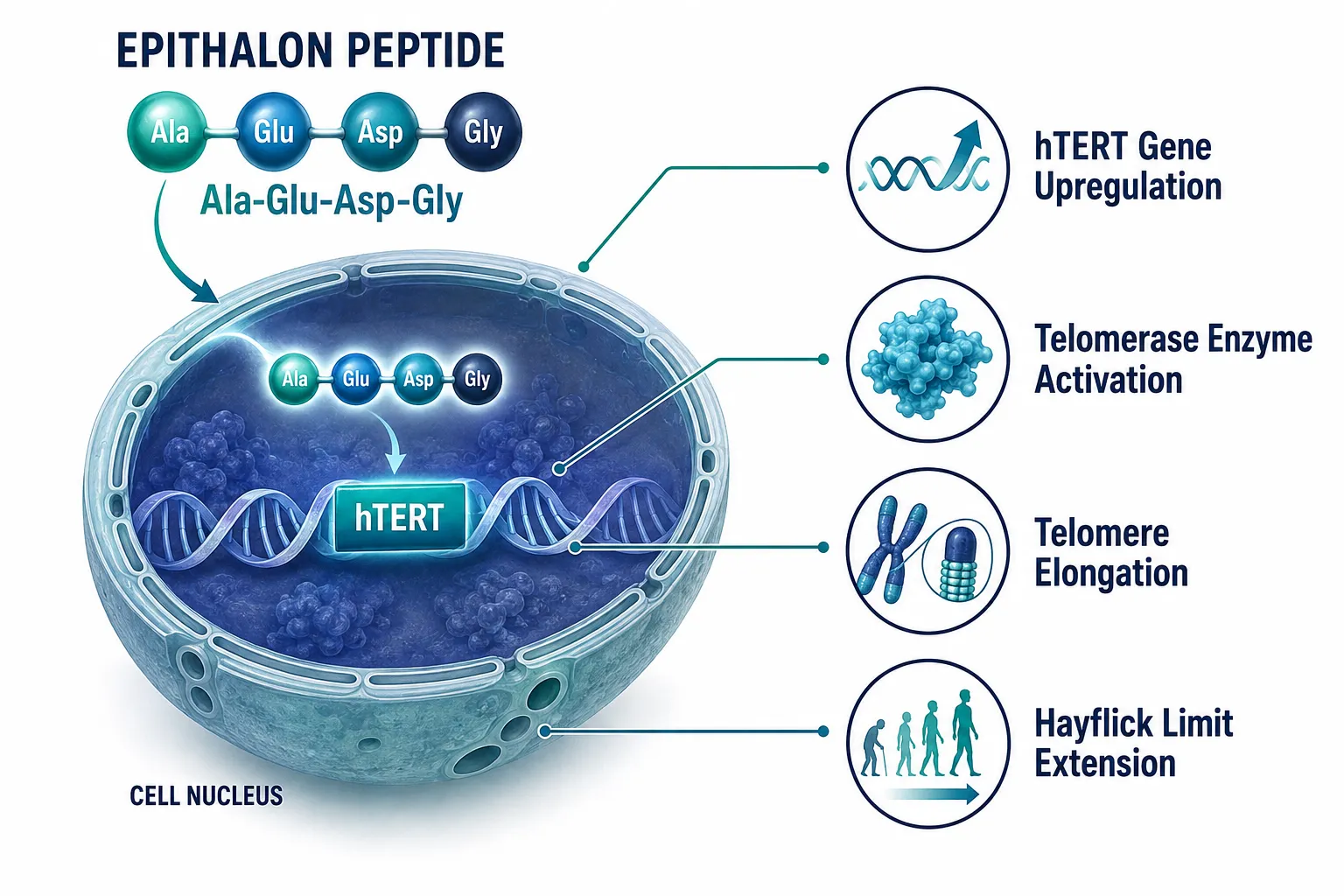
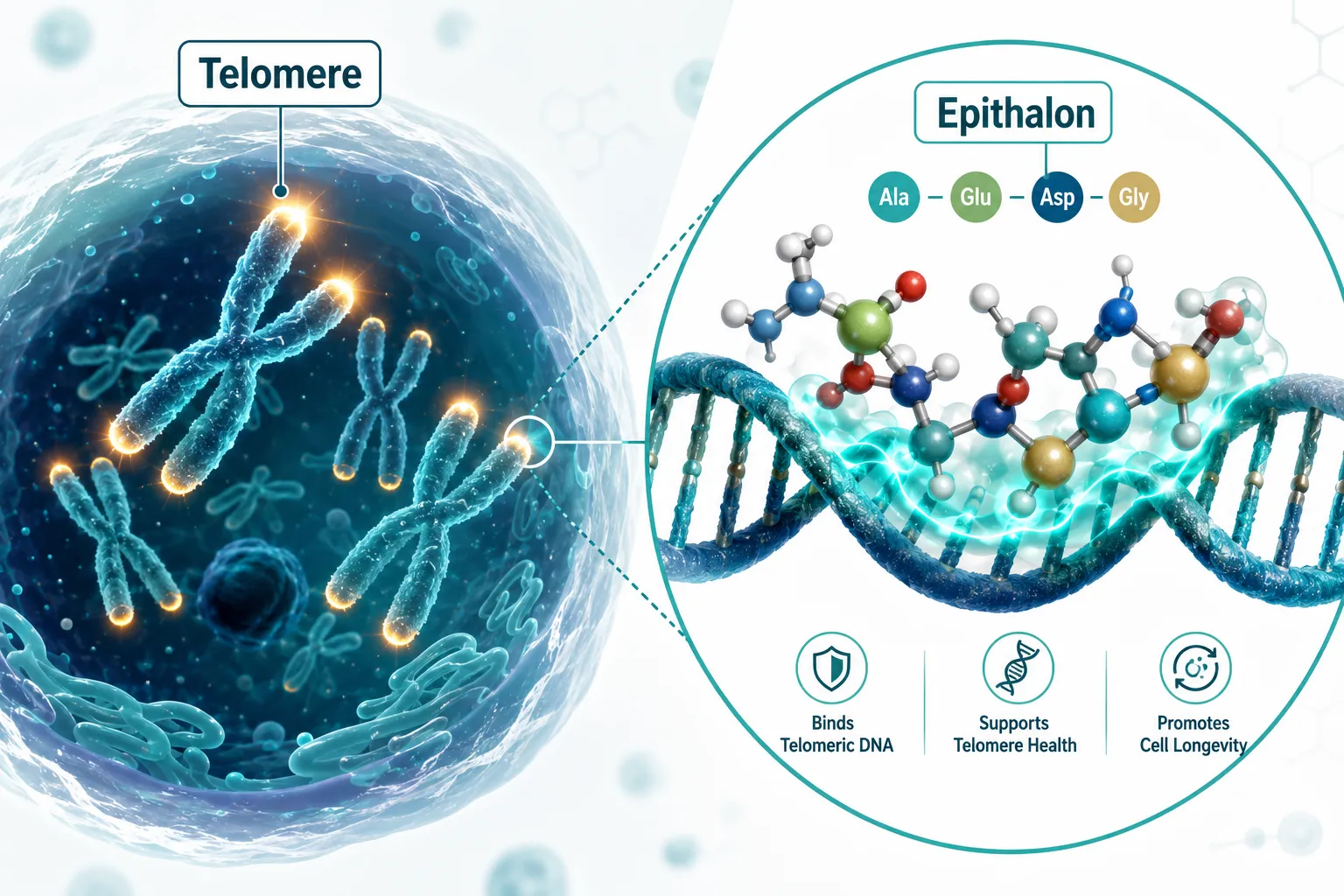
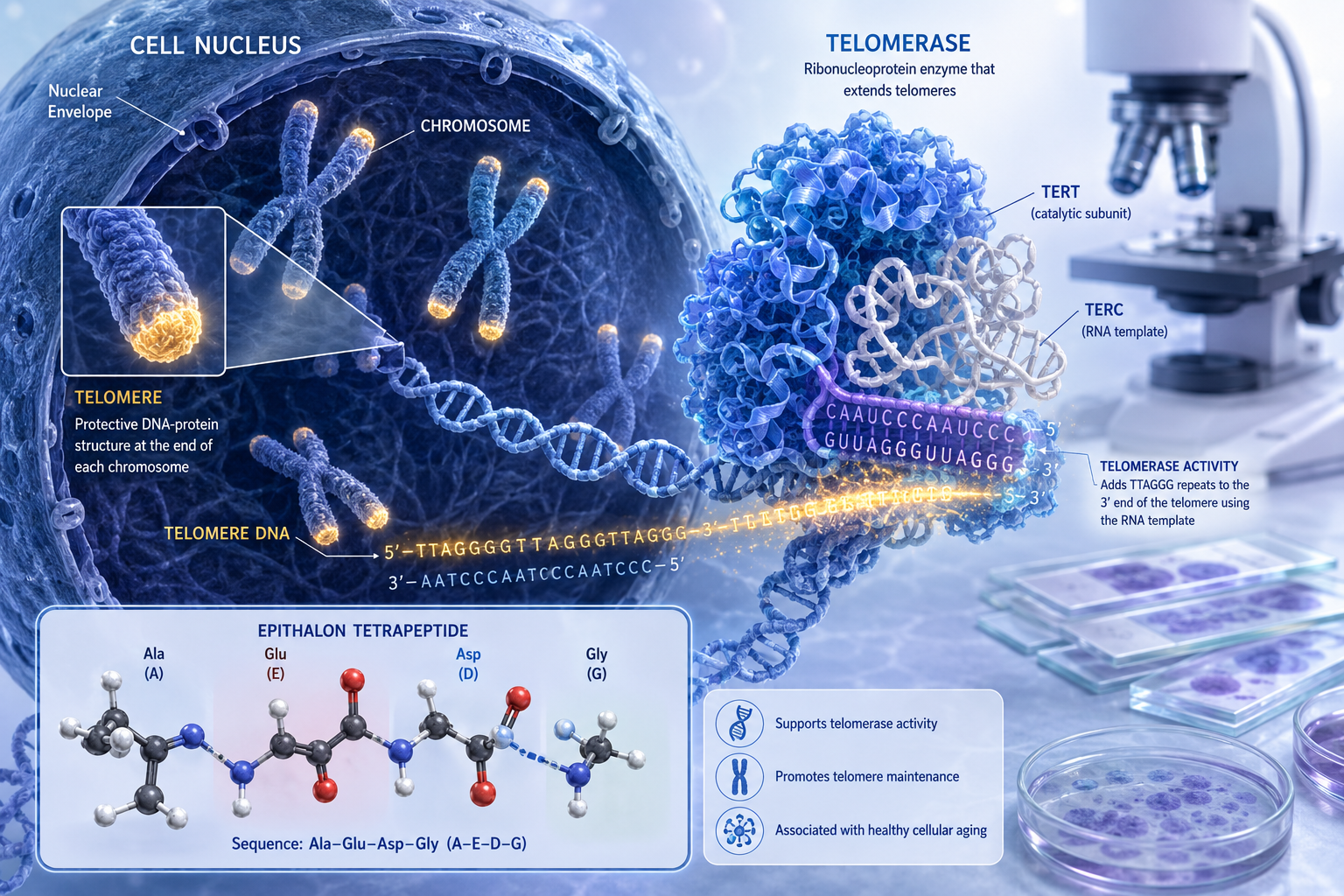
A tetrapeptide consisting of just four amino acids, Ala-Glu-Asp-Gly, has generated decades of scientific interest for its apparent ability to slow cellular aging at the chromosomal level. Epithalon peptide research: telomerase activation, aging, and pineal gland function sits at the intersection of molecular biology, geroscience, and neuroendocrinology, making it one of the most multifaceted compounds in current longevity research. Originally synthesized from Epithalamin, a natural extract of the bovine pineal gland, Epithalon has been studied extensively in preclinical models for its role in extending cellular lifespan, restoring hormonal rhythms, and reducing oxidative damage.

Bright editorial infographic-style landscape (): isometric illustration of a human cell nucleus with glowing telomere caps

Key Takeaways

  • Epithalon activates telomerase by upregulating the hTERT gene, enabling telomere elongation in human somatic cells without documented chromosomal instability.
  • The peptide stimulates the pineal gland to restore melatonin production, supporting circadian rhythm regulation and immune function.
  • Epithalon induces endogenous antioxidant enzymes, including superoxide dismutase and catalase, reducing oxidative stress linked to aging.
  • Epigenetic modulation through chromatin remodeling is a secondary but significant mechanism influencing gene expression related to cellular senescence.
  • Most evidence comes from Russian preclinical and early clinical studies; large-scale, peer-reviewed Western trials remain limited.

How Epithalon Activates Telomerase and Extends Cellular Lifespan

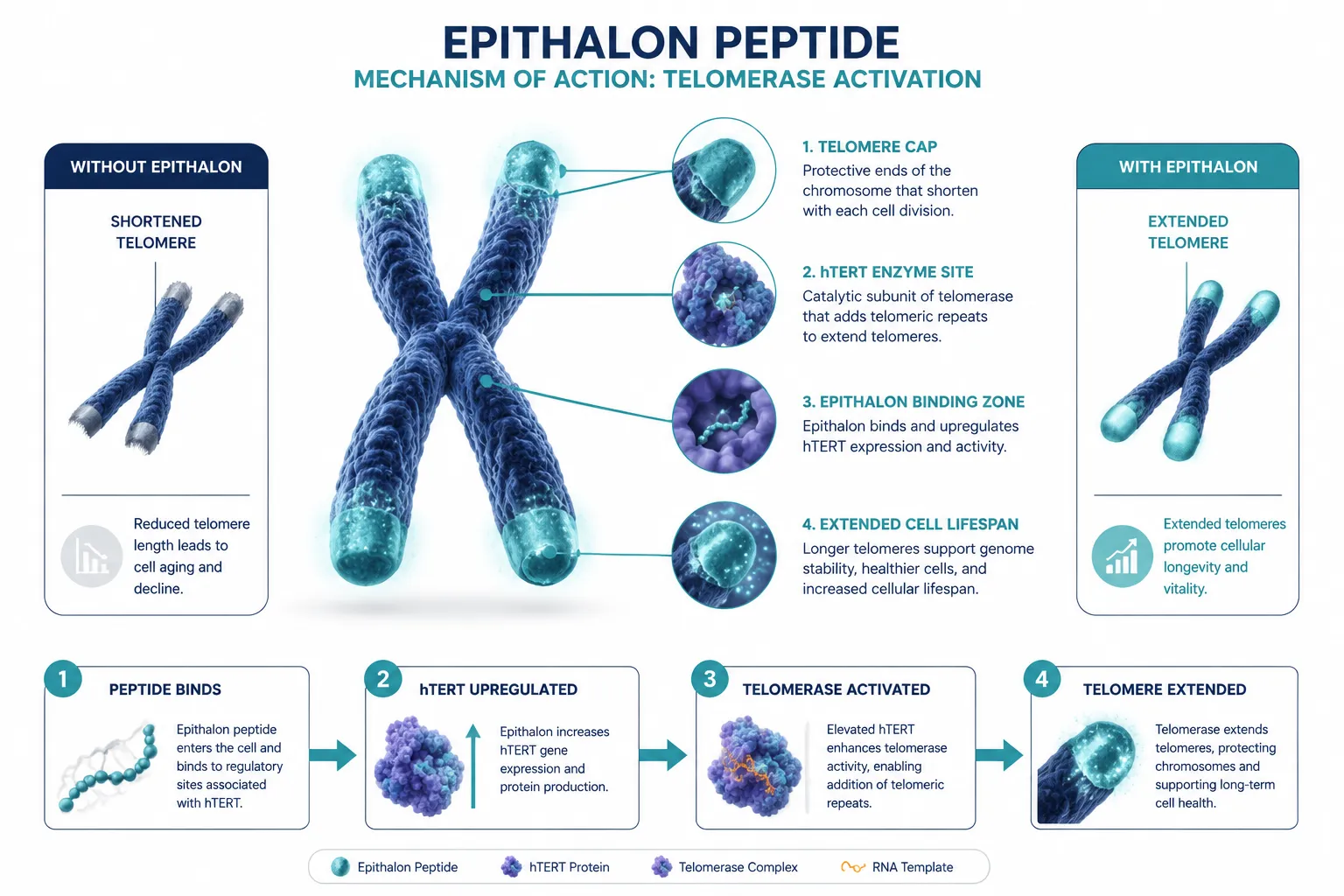
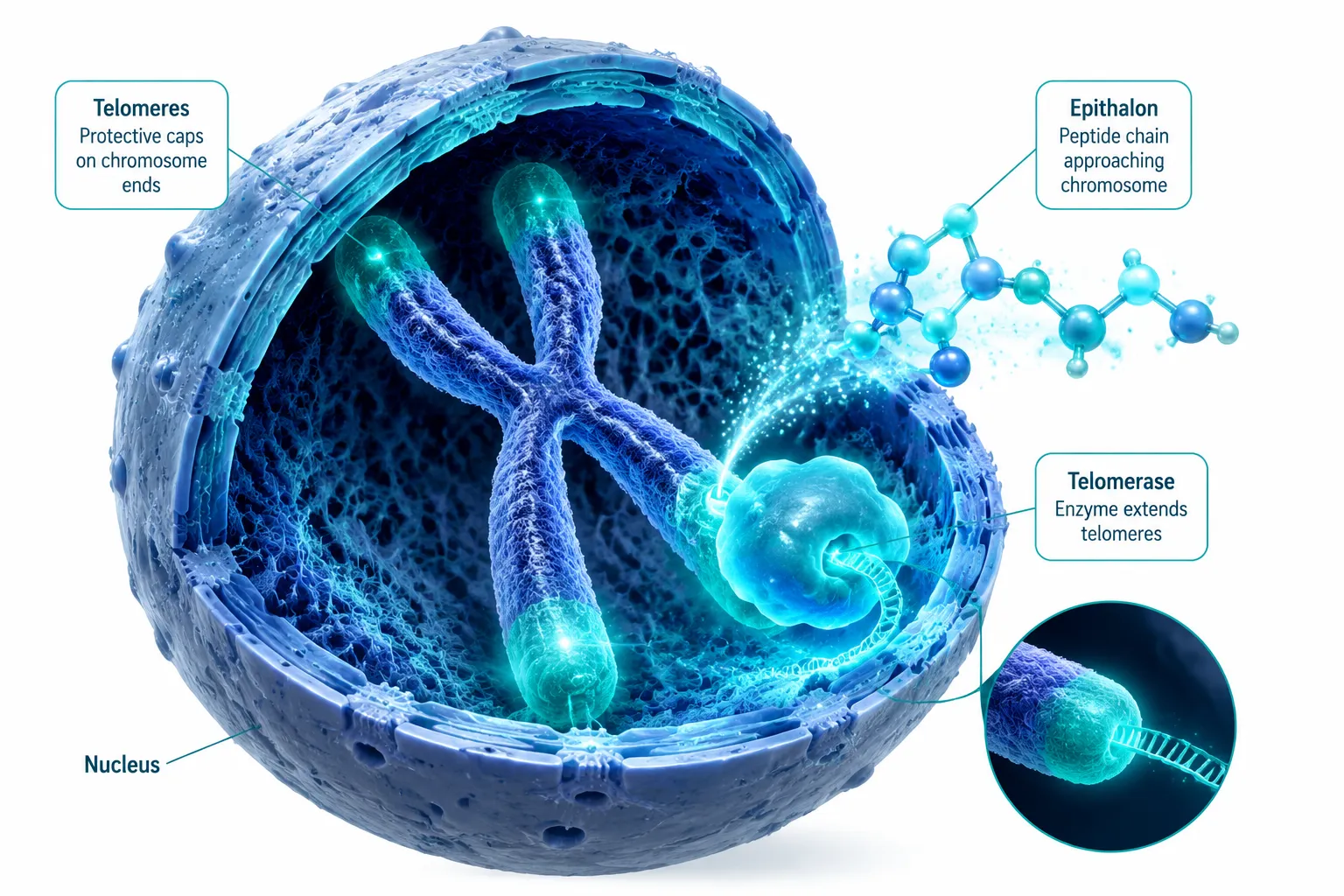
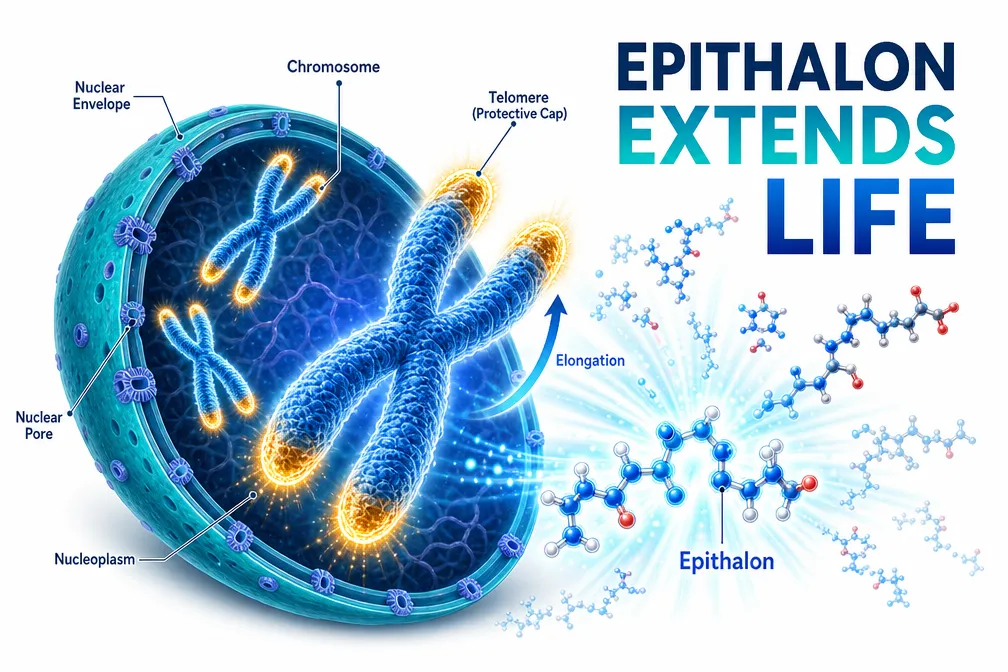
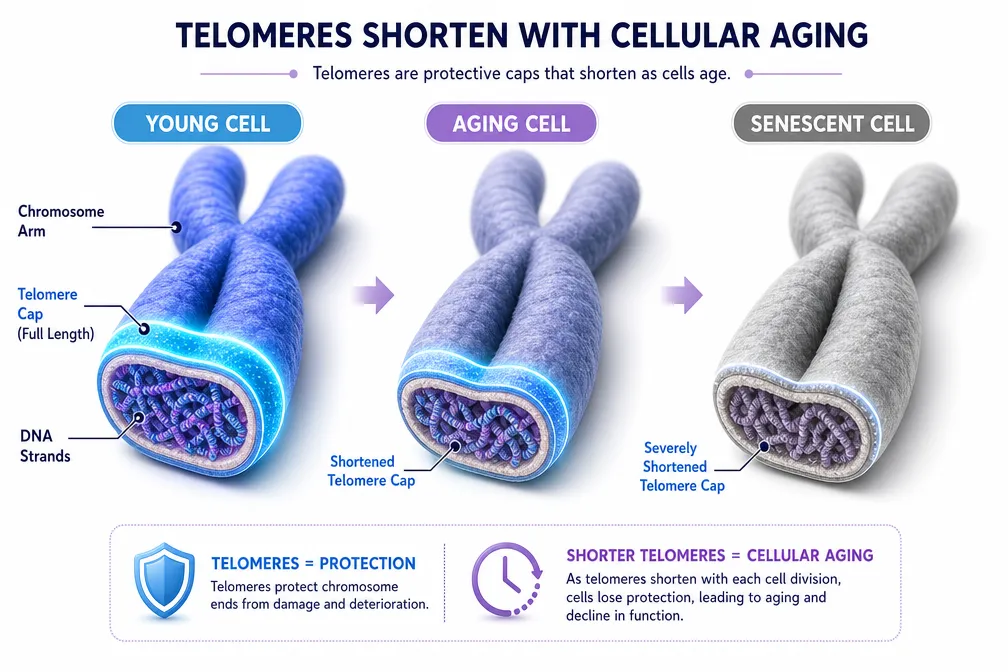
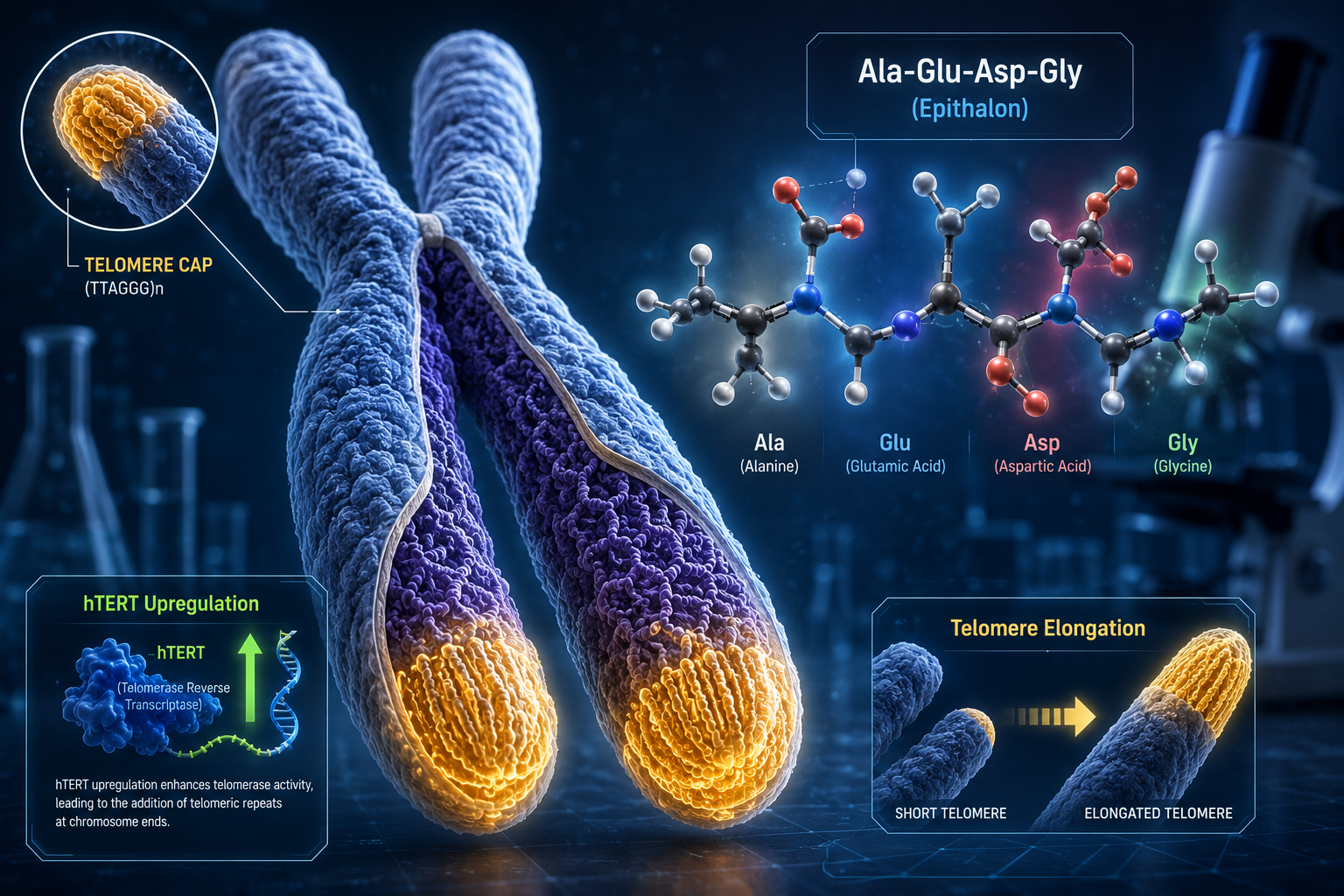
The most studied mechanism in Epithalon peptide research involves its interaction with the enzyme telomerase. In normal somatic cells, telomeres, the protective caps at the ends of chromosomes, shorten with each cell division. Once telomeres reach a critically short length, cells enter senescence or undergo apoptosis. This process defines what researchers call the Hayflick limit.

Epithalon appears to circumvent this limit by upregulating the hTERT gene, the catalytic subunit responsible for telomerase activity. In studies using human fetal fibroblasts, Epithalon treatment led to measurable telomere elongation, allowing cells to continue dividing beyond their expected replicative ceiling. Critically, this elongation occurred without triggering chromosomal instability, a key safety distinction from oncogenic telomerase activation.

Mechanism Observed Effect
hTERT upregulation Telomerase activation
Telomere elongation Extended replicative lifespan
Chromatin remodeling Modulated senescence gene expression
Antioxidant enzyme induction Reduced oxidative stress

This cellular-level activity positions Epithalon as a subject of interest within broader longevity peptide research, where telomere biology is increasingly recognized as a central driver of biological aging.

Epigenetic effects add another layer to this picture. Epithalon interacts with DNA-histone complexes, promoting chromatin remodeling that alters the expression of genes associated with aging and cellular senescence. This means the peptide does not simply delay the clock, it may actively reprogram how aging-related genes are read.

"Telomere elongation without chromosomal instability is the critical threshold that separates a potential anti-aging tool from a cancer risk factor, and Epithalon's preclinical profile has, so far, remained on the right side of that line."

Pineal Gland Function, Melatonin Restoration, and Circadian Rhythm Research

Pineal Gland Function, Melatonin Restoration, and Circadian Rhythm Research

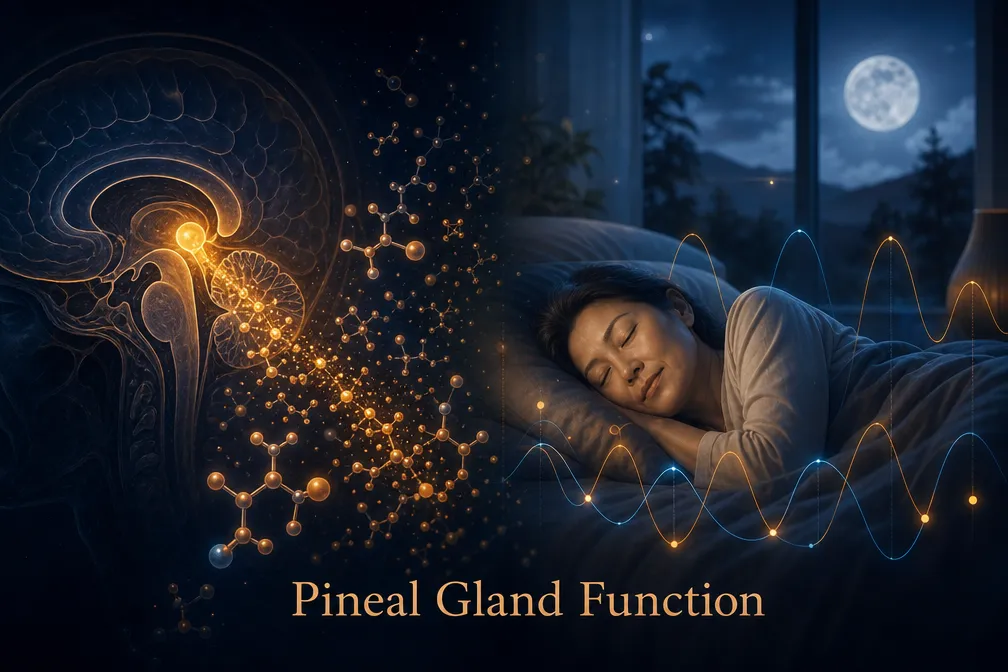
The pineal gland produces melatonin, the hormone that governs the body's circadian clock. As humans age, pineal calcification and reduced enzymatic activity cause melatonin output to decline significantly, a change associated with disrupted sleep, weakened immune responses, and accelerated systemic aging.

Epithalon peptide research: telomerase activation, aging, and pineal gland function converges most directly here. Studies show that Epithalon stimulates pineal gland activity, restoring melatonin secretion closer to youthful physiological levels. The downstream effects include:

  • Normalized circadian rhythm patterns in aging subjects
  • Improved sleep architecture and sleep quality
  • Enhanced immune surveillance linked to melatonin's immunomodulatory role
  • Potential reduction in age-associated hormonal dysregulation

This neuroendocrine restoration is not merely a comfort benefit. Melatonin functions as a potent endogenous antioxidant, and its decline contributes directly to the oxidative burden that accelerates cellular aging. By restoring melatonin, Epithalon creates a systemic environment that supports the same cellular longevity mechanisms it activates at the chromosomal level.

Researchers interested in how peptides modulate hormonal axes may also find value in reviewing GHK-Cu longevity research themes and mitochondrial longevity focus for complementary mechanisms.

Antioxidant Defense, Neuroprotection, and Research Limitations

Oxidative stress is a primary driver of biological aging. Epithalon has been observed to increase the activity of three key endogenous antioxidant enzymes:

  1. Superoxide dismutase (SOD), neutralizes superoxide radicals
  2. Catalase, breaks down hydrogen peroxide
  3. Glutathione peroxidase, protects cell membranes from lipid peroxidation

By upregulating this enzymatic defense network, Epithalon reduces the cumulative oxidative damage that contributes to cellular senescence, mitochondrial dysfunction, and tissue degradation over time.

Neuroprotective effects have also been documented in preclinical models. Epithalon appears to shield neurons from oxidative insult and support mitochondrial integrity, two factors directly linked to age-related cognitive decline. This aligns with the broader category of peptides being investigated for brain aging, including those covered in MOTS-c mitochondrial dynamics research.

Antioxidant Defense, Neuroprotection, and Research Limitations

Research Limitations and Safety Considerations

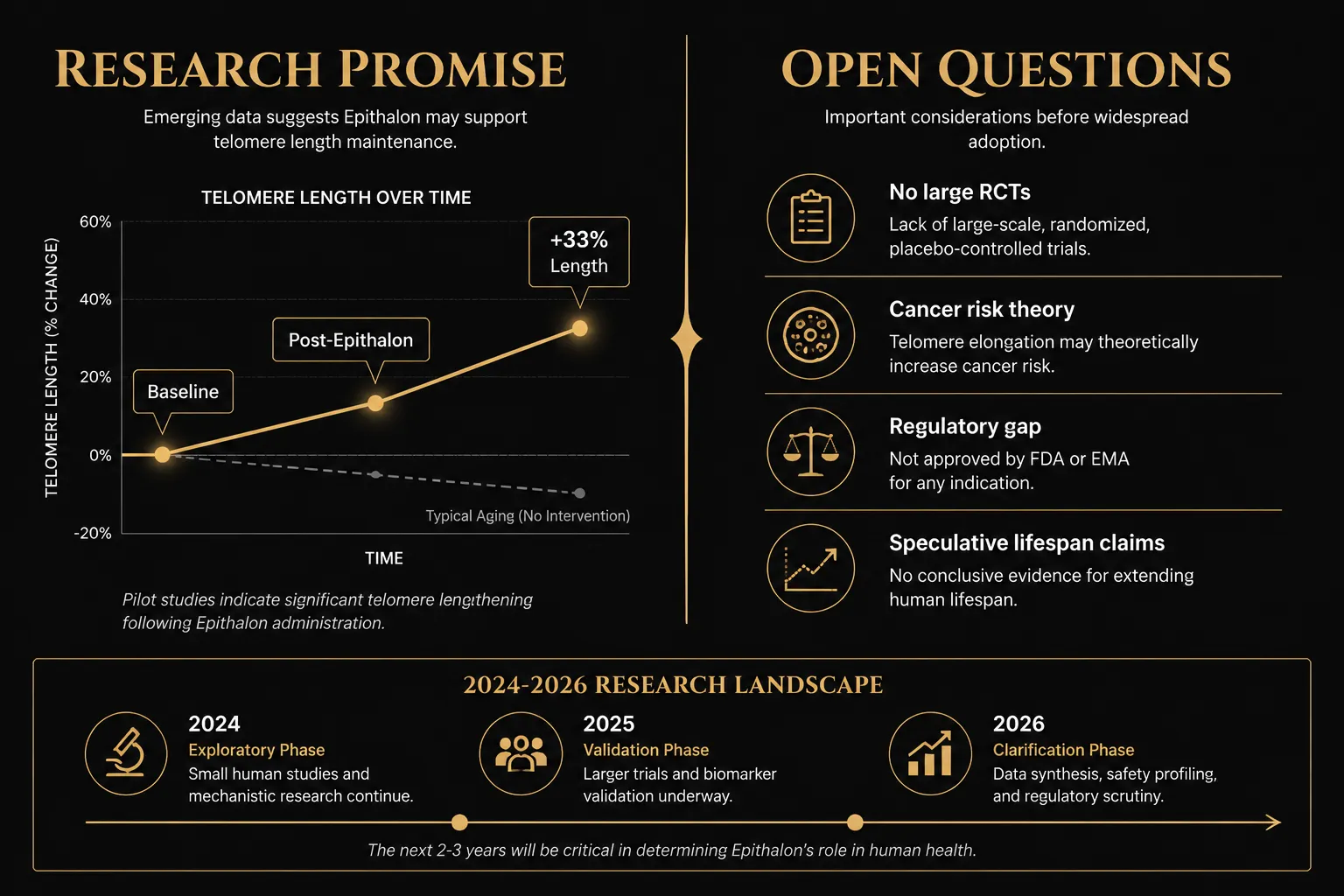
Despite a promising preclinical profile, Epithalon peptide research: telomerase activation, aging, and pineal gland function faces a significant evidentiary gap. The majority of published studies originate from Russian research institutions, with limited large-scale, peer-reviewed Western clinical trials available as of 2026. This restricts the ability to draw definitive conclusions about human efficacy and long-term safety.

One theoretical concern deserves attention: because telomerase activation is also a hallmark of cancer cell immortalization, any compound that activates telomerase warrants careful monitoring for oncogenic potential. Decades of Epithalon research have not documented significant adverse effects, but this concern remains formally uncharacterized in rigorous human trials.

Typical research dosing protocols involve subcutaneous injections of 5-10 mg per day for 10-20 days, repeated two to three times per year. Oral administration is not considered viable due to rapid degradation by digestive enzymes.

Researchers sourcing compounds for study should prioritize verified purity. Resources such as quality testing protocols and the Epithalon product page offer relevant reference points for research-grade sourcing standards.

Beyond aging, Epithalon is being investigated for potential applications in sleep disorders, age-related immune decline, and overall healthspan extension, areas that overlap with thymalin thymus bioregulation research.

Conclusion

Epithalon occupies a rare position in peptide science: a short-chain molecule with documented effects spanning chromosomal biology, neuroendocrine function, and oxidative defense. The convergence of telomerase activation, pineal gland restoration, and antioxidant enzyme induction makes it a compelling subject for researchers focused on the cellular and systemic mechanisms of aging.

Actionable next steps for researchers in 2026:

  • Review existing preclinical literature on hTERT upregulation and telomere dynamics before designing study protocols.
  • Pair Epithalon investigation with complementary longevity peptide research to understand additive or synergistic mechanisms.
  • Prioritize research-grade, third-party tested compounds to ensure data integrity.
  • Monitor emerging Western clinical trial registrations, as the evidence base is expected to expand.
  • Consult neuroendocrine aging literature alongside telomere biology to capture the full mechanistic picture.

The field of cellular senescence research continues to accelerate. Epithalon's multifaceted profile ensures it will remain a focal point of that conversation.

https://www.puretestedpeptides.com/wp-content/uploads/2026/07/epithalon-peptide-research-telomerase-activation-aging-and-pineal-gland-function.webp 1024 1536 https://www.puretestedpeptides.com/wp-content/uploads/2026/01/buy-peptides-online.jpg 2026-07-24 13:10:372026-07-24 13:10:37Epithalon Peptide Research: Telomerase Activation, Aging, and Pineal Gland Function
DNA, Telomeres, and Longevity Peptides: Positioning Epithalon and MOTS‑c in Genetic Aging Research

DNA, Telomeres, and Longevity Peptides: Positioning Epithalon and MOTS‑c in Genetic Aging Research

July 21, 2026/0 Comments/in Uncategorized/by

Every time a human cell divides, its chromosomes lose a small fragment of protective DNA from their ends. After roughly 50 to 70 divisions, those ends become critically short, and the cell stops functioning normally. This biological countdown, encoded directly in the genome, sits at the center of aging science in 2026, and two peptides, Epithalon and MOTS-c, are drawing serious preclinical attention for their roles in this process.

The intersection of DNA, Telomeres, and Longevity Peptides: Positioning Epithalon and MOTS-c in Genetic Aging Research is no longer a fringe topic. It now represents one of the most active frontiers in geroscience, connecting chromosome biology, mitochondrial signaling, and peptide pharmacology in ways that were not possible to study even a decade ago.

Key Takeaways

  • Telomere shortening is a measurable, genetically encoded driver of cellular aging and senescence.
  • Epithalon, a synthetic tetrapeptide, has shown telomerase-activating properties in multiple preclinical models.
  • MOTS-c is a mitochondria-derived peptide that regulates nuclear gene expression and metabolic stress responses.
  • Both peptides are studied in the context of senescence, not as cures, but as research tools to probe aging mechanisms.
  • Understanding their distinct mechanisms helps clarify how genetic and mitochondrial aging pathways interact.

Key Takeaways

Telomere Biology: The Genetic Clock Inside Every Cell

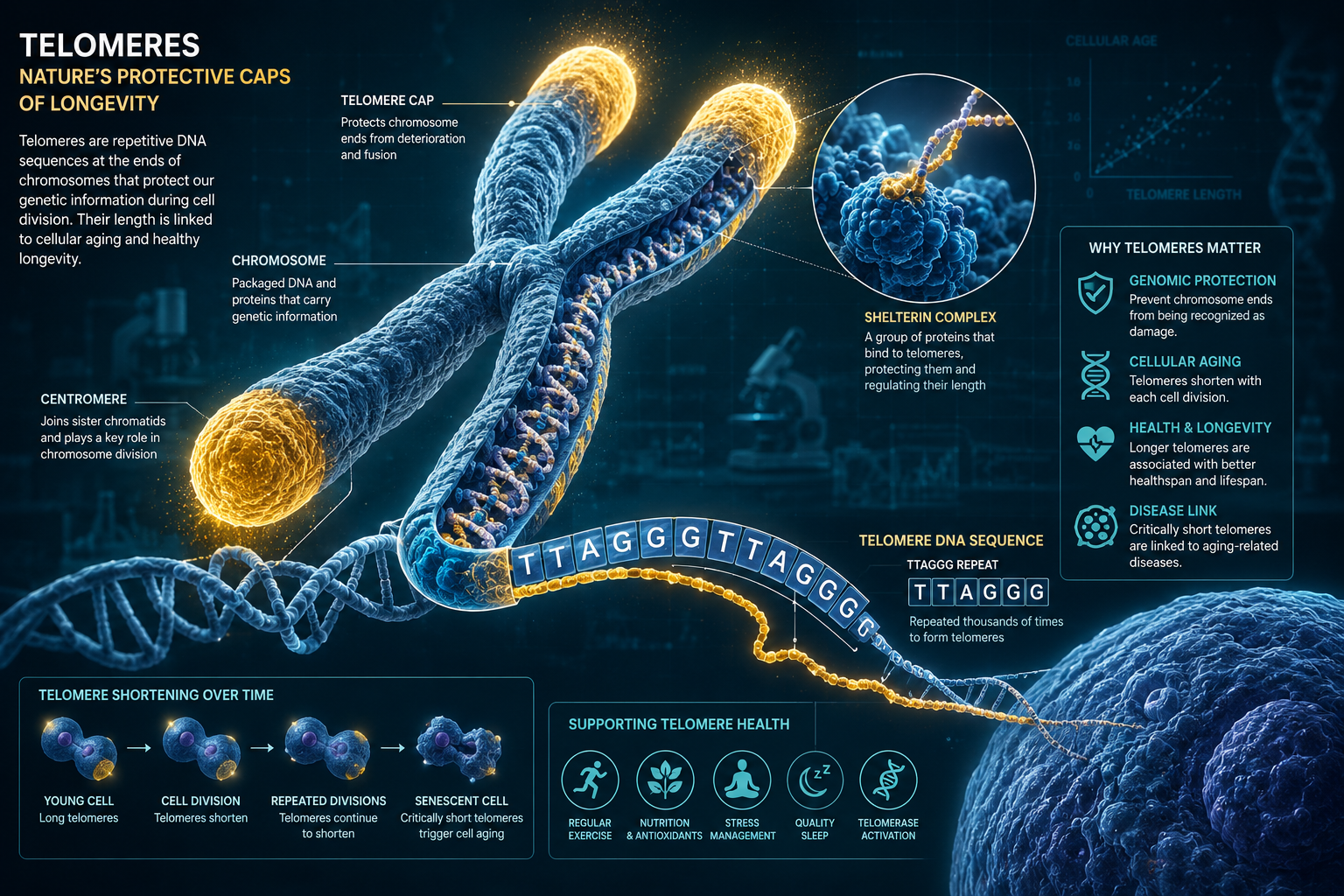
Telomeres are repetitive DNA sequences (TTAGGG in humans) that cap the ends of chromosomes like plastic tips on shoelaces. Their primary job is structural: they prevent chromosomes from fusing together or being recognized as damaged DNA.

Why do telomeres shorten?

The enzyme responsible for copying DNA, DNA polymerase, cannot fully replicate the very end of a linear chromosome. This is called the "end-replication problem." Each cell division leaves the telomere slightly shorter. When telomeres reach a critical minimum length, the cell enters one of three states:

Cellular Outcome Description
Replicative Senescence Cell stops dividing but remains metabolically active
Apoptosis Programmed cell death is triggered
Genomic Instability Cell continues dividing with errors, linked to cancer risk

The enzyme telomerase can rebuild telomere length by adding new TTAGGG repeats. It is highly active in germ cells and stem cells but largely silenced in most adult somatic cells. Reactivating telomerase in aged tissues, without triggering uncontrolled proliferation, is one of the central challenges in longevity research.

Researchers studying related longevity-focused peptide compounds, including those covered in the Vesugen, Vilon, and Chonluten longevity peptide overview, have noted that short regulatory peptides can modulate gene expression in aging tissues through epigenetic mechanisms that overlap with telomere maintenance pathways.

Epithalon: A Tetrapeptide With Telomerase-Activating Properties

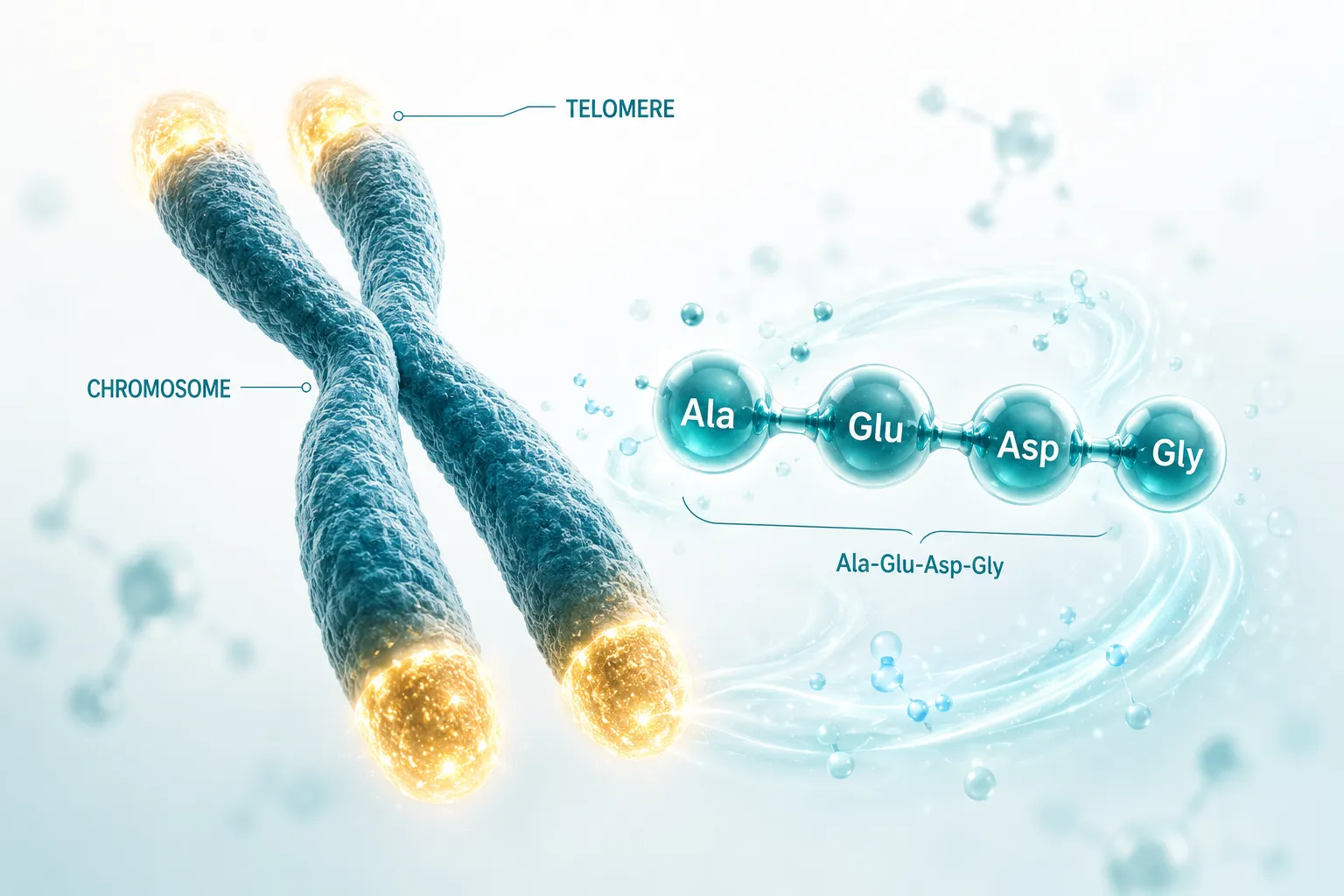
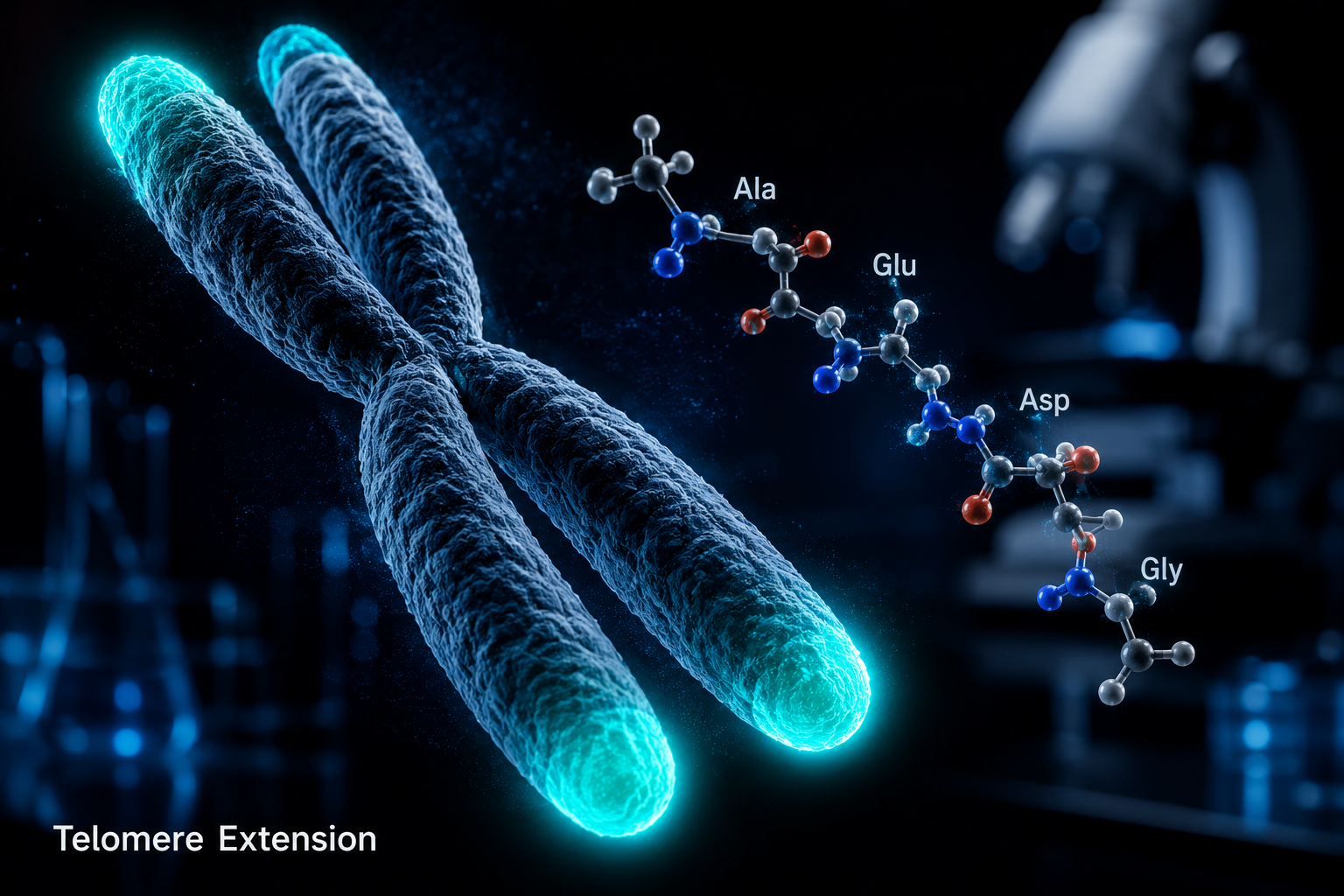
Epithalon (Ala-Glu-Asp-Gly) is a synthetic four-amino-acid peptide derived from the natural polypeptide Epithalamin, originally isolated from the pineal gland. It has been studied extensively in Russian gerontology research since the 1980s, with a growing body of preclinical data examining its effects on telomere dynamics.

Documented preclinical findings include:

  • Activation of telomerase in human somatic cells in vitro, leading to telomere elongation
  • Normalization of melatonin secretion patterns in aged animal models
  • Reduction of oxidative stress markers in aging tissues
  • Modulation of p53-dependent senescence pathways

A landmark study by Khavinson et al. demonstrated that Epithalon could elongate telomeres in cultured human fetal fibroblasts and extend the replicative lifespan of those cells beyond the normal Hayflick limit. This was a significant finding because it suggested that a short exogenous peptide could influence a core genetic aging mechanism.

"Telomerase activation without oncogenic transformation remains the key safety question in all telomere-extension research, and it is precisely the question that Epithalon preclinical models are designed to probe."

The peptide's mechanism appears to involve upregulation of the TERT gene (the catalytic subunit of telomerase), though the full upstream signaling pathway is still being characterized. For researchers exploring the broader landscape of peptide delivery and formulation science, innovative peptide delivery systems represent an important parallel area of development that affects how compounds like Epithalon are studied in vivo.

Epithalon: A Tetrapeptide With Telomerase-Activating Properties

MOTS-c: Mitochondrial DNA as a Source of Longevity Signals

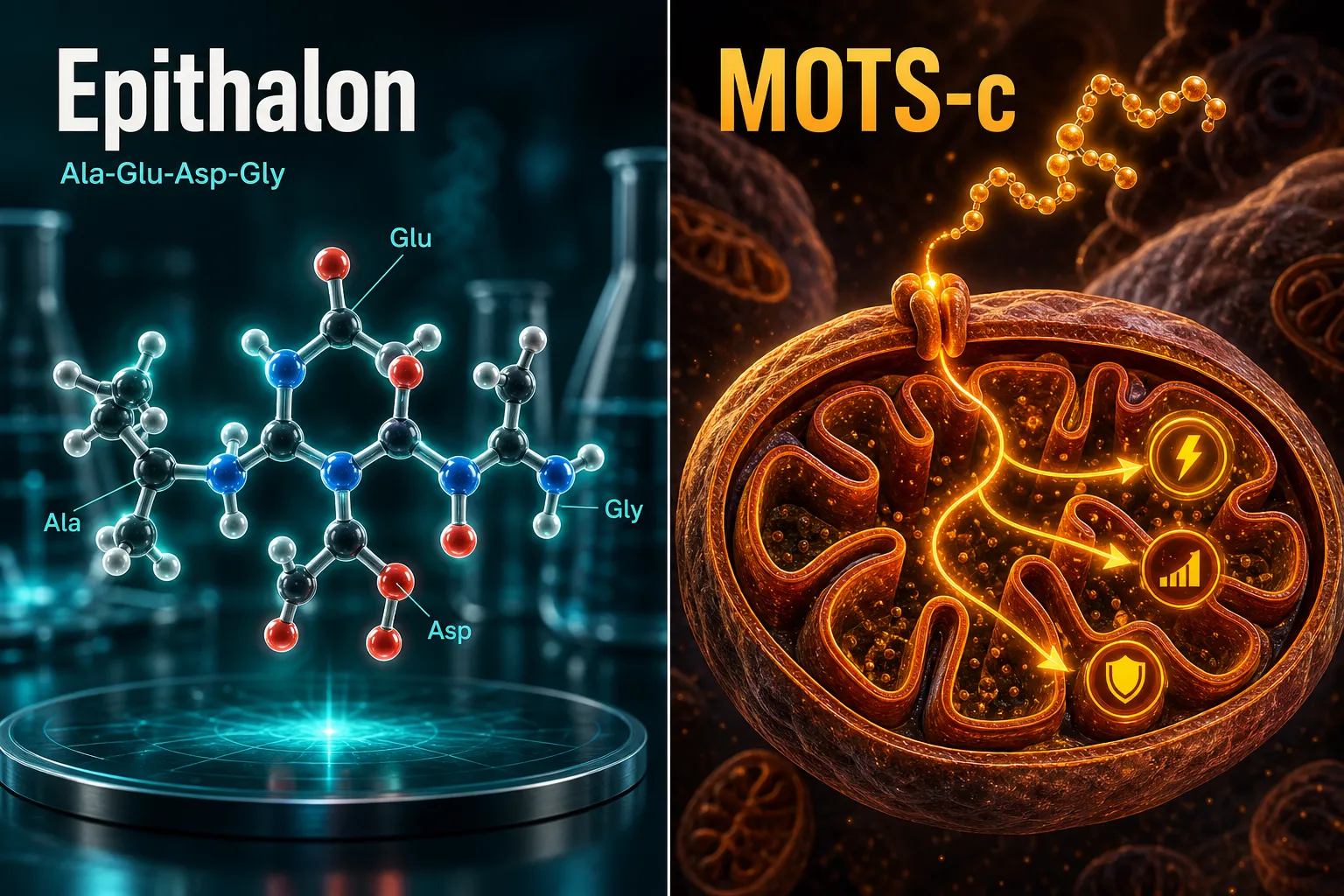
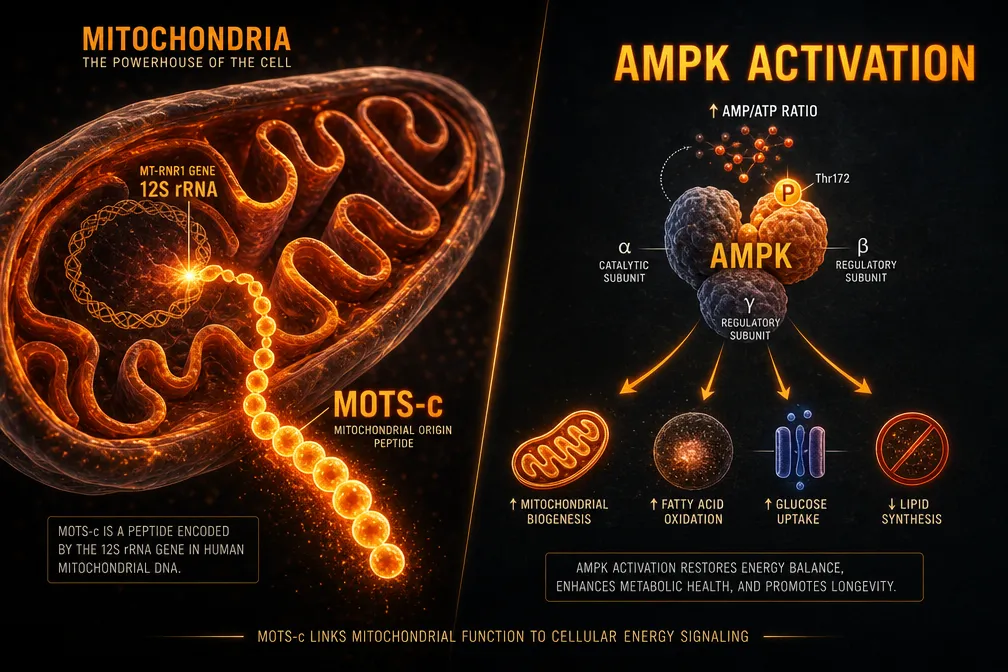
While Epithalon targets nuclear telomere biology, MOTS-c operates from an entirely different genetic compartment: mitochondrial DNA (mtDNA). MOTS-c (Mitochondrial Open Reading Frame of the 12S rRNA Type-c) is a 16-amino-acid peptide encoded within the 12S ribosomal RNA gene of the mitochondrial genome.

This discovery, published in 2015, fundamentally changed how researchers think about mitochondria. Rather than being passive energy factories, mitochondria actively communicate with the nucleus through peptide signals, a process called retrograde signaling.

MOTS-c research highlights:

  • Translocates to the nucleus under metabolic stress conditions
  • Activates AMPK (AMP-activated protein kinase), a master regulator of cellular energy homeostasis
  • Reduces age-related insulin resistance in mouse models
  • Modulates the integrated stress response (ISR) to promote cellular resilience

The MOTS-c metabolic flexibility research overview provides additional context on how this peptide influences glucose metabolism and mitochondrial efficiency, both of which decline measurably with age. Separately, MOTS-c mitochondrial dynamics research examines how the peptide affects mitochondrial network architecture in aging models.

Critically, MOTS-c levels decline naturally with age in both rodents and humans, suggesting it may function as an endogenous longevity signal whose loss contributes to metabolic aging.

Positioning Both Peptides Within DNA, Telomeres, and Longevity Peptides Research

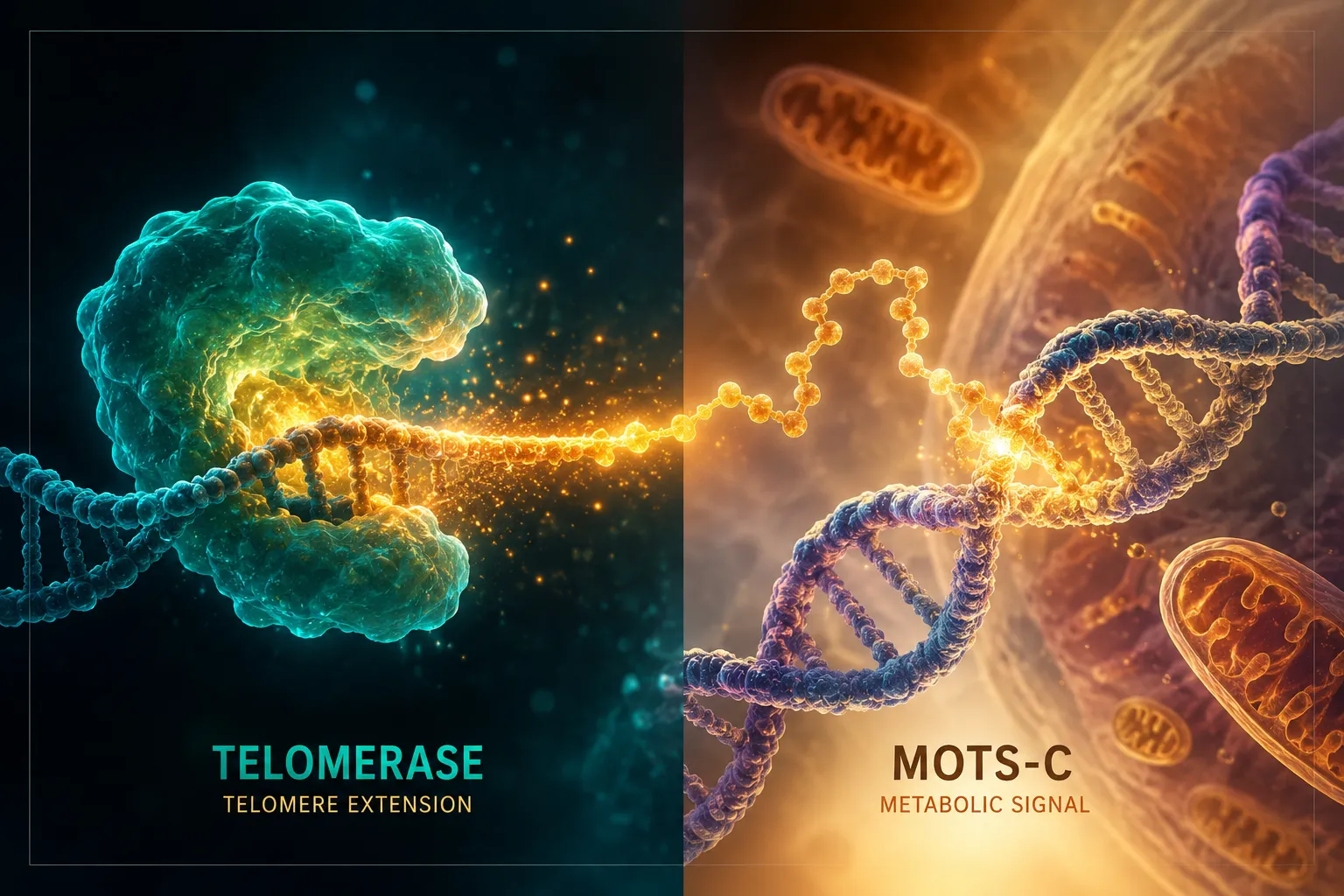
Understanding DNA, Telomeres, and Longevity Peptides: Positioning Epithalon and MOTS-c in Genetic Aging Research requires recognizing that these two compounds target different but complementary aging mechanisms:

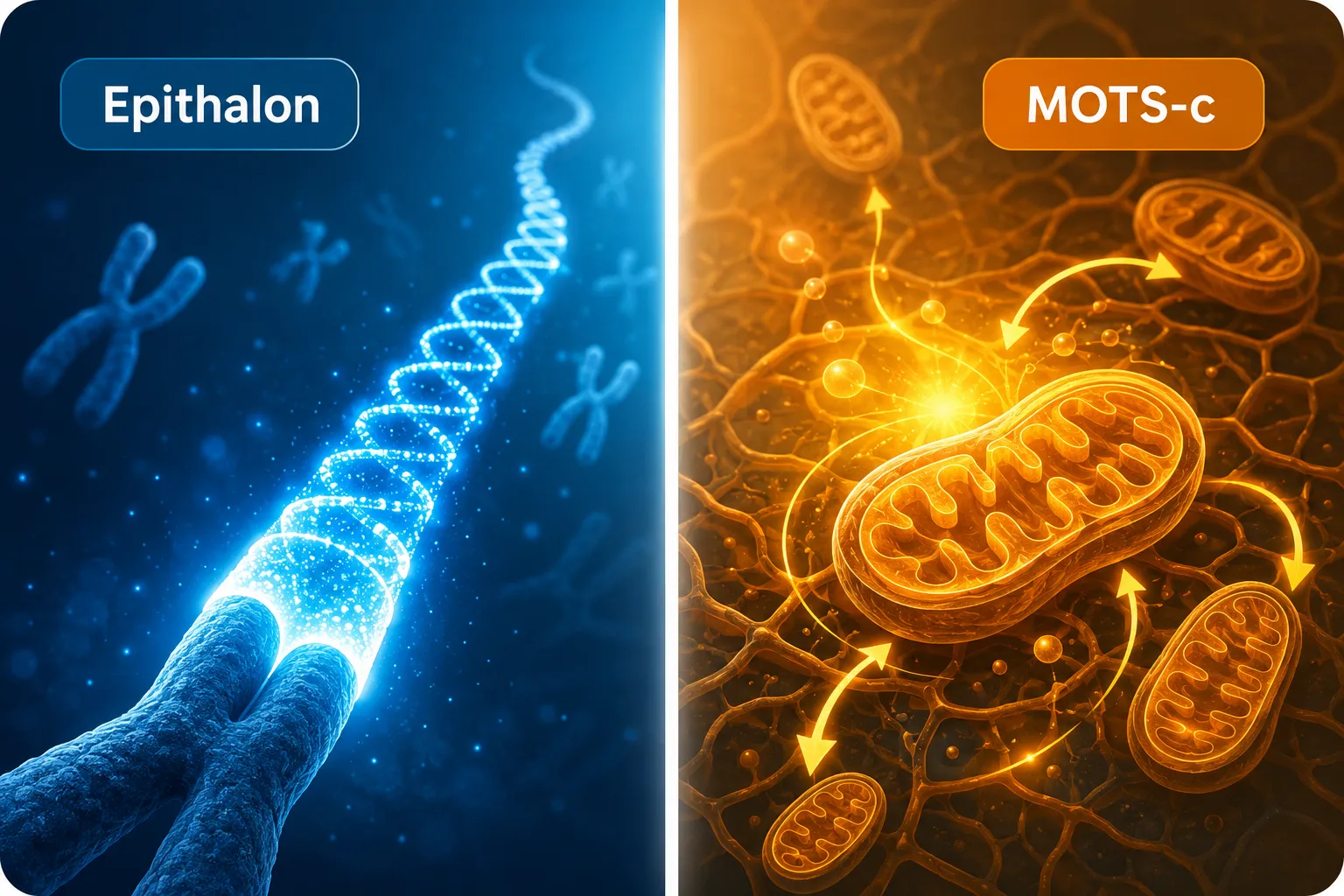
Feature Epithalon MOTS-c
Origin Synthetic pineal-derived tetrapeptide Mitochondrial DNA-encoded peptide
Primary Target Nuclear telomerase / TERT gene AMPK / nuclear stress response
Aging Mechanism Telomere shortening, replicative senescence Metabolic decline, mitochondrial signaling
Research Model Cell culture, rodent lifespan studies Rodent metabolic aging, exercise models

Neither peptide is approved for human therapeutic use. Both are research-grade compounds studied in preclinical settings to map the genetic and metabolic architecture of aging.

Researchers interested in the mitochondrial protection angle may also find value in reviewing SS-31 peptide research, which targets mitochondrial membrane integrity through a distinct cardiolipin-binding mechanism, offering a third angle on mitochondrial aging biology.

For those exploring how peptide combinations are being studied, peptide blends research covers multi-compound preclinical approaches that are increasingly common in longevity-focused research designs.

Positioning Both Peptides Within DNA, Telomeres, and Longevity Peptides Research

Conclusion

The science connecting DNA, Telomeres, and Longevity Peptides: Positioning Epithalon and MOTS-c in Genetic Aging Research is still maturing, but the foundational mechanisms are well-supported by preclinical evidence. Telomere attrition and mitochondrial signaling decline are two of the most reproducible molecular hallmarks of aging, and both Epithalon and MOTS-c offer research tools to probe these systems with specificity.

Actionable next steps for researchers and science-minded readers:

  1. Review primary literature on Epithalon's TERT upregulation studies before drawing conclusions about telomerase safety profiles.
  2. Examine MOTS-c research in the context of AMPK biology to understand its metabolic aging relevance.
  3. Explore complementary mitochondrial peptides such as SS-31 to build a more complete picture of mitochondrial aging mechanisms.
  4. Consult peer-reviewed geroscience journals for the latest updates on telomere-targeted interventions entering early-phase human studies.
  5. Source any research-grade peptides only from suppliers providing third-party purity verification and full documentation.

The genetic architecture of aging is not a single pathway, it is a network. Epithalon and MOTS-c represent two well-characterized entry points into that network, and understanding both deepens the overall framework for longevity research in 2026 and beyond.

https://www.puretestedpeptides.com/wp-content/uploads/2026/07/dna-telomeres-and-longevity-peptides-positioning-epithalon-and-mots-c-in-genetic.webp 1024 1536 https://www.puretestedpeptides.com/wp-content/uploads/2026/01/buy-peptides-online.jpg 2026-07-21 13:40:102026-07-21 13:40:12DNA, Telomeres, and Longevity Peptides: Positioning Epithalon and MOTS‑c in Genetic Aging Research

Tag Archive for: telomerase activation

DNA, Telomeres, and Epithalon: How Longevity‑Focused Peptides Interface With Genomic Stability in Research Models

DNA, Telomeres, and Epithalon: How Longevity‑Focused Peptides Interface With Genomic Stability in Research Models

July 17, 2026/0 Comments/by Pure Tested

Every time a human cell divides, its chromosomes lose a small fragment from their protective ends. After enough divisions, those ends, called telomeres, erode to a critical threshold, triggering cellular senescence or death. This biological clock ticks inside every tissue, and slowing it has become one of the most active frontiers in longevity research. The study of DNA, Telomeres, and Epithalon: How Longevity-Focused Peptides Interface With Genomic Stability in Research Models sits at the center of that frontier, asking whether short synthetic peptides can meaningfully alter genomic aging trajectories in controlled experimental settings.

Key Takeaways

  • Epithalon is a synthetic tetrapeptide (Ala-Glu-Asp-Gly) that has been shown in research models to activate telomerase and promote telomere elongation in human cell lines.
  • Normal cells and cancer cells appear to use different telomere-lengthening pathways when exposed to Epithalon, suggesting cell-type-specific mechanisms.
  • MOTS-c, a mitochondria-derived peptide, complements Epithalon research by targeting nuclear gene expression and DNA repair signaling rather than telomerase directly.
  • Preclinical rodent studies report a 10-25% increase in median lifespan with Epithalon, though human evidence remains observational and limited.
  • As of 2026, Epithalon is not FDA-approved and is restricted to research use only; independent replication of findings is still needed.

Key Takeaways


The Molecular Architecture of Telomere Biology and Epithalon

Telomeres are repetitive nucleotide sequences (TTAGGG in humans) that cap chromosome ends, preventing degradation and illegitimate recombination. The enzyme telomerase, specifically its catalytic subunit hTERT, rebuilds these sequences after division. In most somatic cells, telomerase activity is low or absent, which means telomeres shorten with each replication cycle.

Epithalon enters this picture as a four-amino-acid chain (alanine-glutamic acid-aspartic acid-glycine) that mimics a peptide naturally produced by the pineal gland. Research published in 2025 demonstrated that Epithalon induces measurable telomerase activity in human cell lines, including upregulation of hTERT mRNA expression. The result was documented telomere elongation, a finding that directly links a short peptide to one of the most studied molecular clocks in biology.

A particularly notable detail from that same research: the mechanism differed by cell type. In normal human cells, Epithalon promoted telomere extension through telomerase activation. In cancer cell lines, elongation occurred instead via the Alternative Lengthening of Telomeres (ALT) pathway, a recombination-based mechanism that bypasses telomerase entirely. This distinction matters enormously for research design, since it implies Epithalon does not simply amplify telomerase indiscriminately.

For researchers exploring Epithalon's research profile and sourcing, understanding this cell-type specificity is essential context when designing experimental protocols.

Key structural fact: Epithalon's tetrapeptide sequence is small enough to cross cellular membranes with relative ease, which may explain its ability to influence nuclear gene expression, including hTERT transcription.


How DNA, Telomeres, and Epithalon Research Extends Into Broader Genomic Pathways

The study of DNA, Telomeres, and Epithalon: How Longevity-Focused Peptides Interface With Genomic Stability in Research Models does not stop at telomerase. Genomic stability involves a wider network: base-excision repair, double-strand break repair, chromatin remodeling, and the regulation of age-related gene expression. Several longevity-focused peptides are now being studied for their roles across these overlapping systems.

MOTS-c is a prime example. Encoded within mitochondrial DNA, this peptide translocates to the nucleus under metabolic stress and directly modulates nuclear gene expression. Research on MOTS-c mitochondrial and metabolic research themes shows it activates AMPK pathways and influences the expression of genes tied to oxidative stress response and DNA damage repair, functions that are complementary to, rather than redundant with, Epithalon's telomerase-focused action.

How DNA, Telomeres, and Epithalon Research Extends Into Broader Genomic Pathways

This distinction is worth mapping clearly:

Peptide Primary Genomic Target Key Pathway
Epithalon Telomere length / hTERT Telomerase activation, ALT
MOTS-c Nuclear gene expression AMPK, oxidative stress response
GHK-Cu DNA repair gene upregulation Chromatin remodeling

GHK-Cu, a copper-binding tripeptide, has been studied for its ability to upregulate genes involved in DNA repair and antioxidant defense. Researchers interested in this angle can explore GHK-Cu peptide research and sourcing for additional context on its genomic activity.

By contrast, SS-31 (Elamipretide) focuses primarily on mitochondrial membrane integrity rather than nuclear DNA. The SS-31 mechanism and research overview provides a useful comparison point: SS-31 has undergone more extensive clinical trials and received FDA approval for certain conditions, illustrating the disparity in evidence depth between peptides targeting mitochondria versus those targeting telomeres.


Evidence Quality, Limitations, and Research Outlook in 2026

Preclinical data on Epithalon includes rodent lifespan studies reporting a 10-25% increase in median survival with administration. Observational studies in elderly human subjects have noted improvements in melatonin secretion and antioxidant biomarkers. Epithalon may also modulate circadian rhythms through its influence on the pineal gland axis, with downstream effects on sleep regulation and systemic inflammatory tone.

However, the evidence base carries significant caveats:

  • Single-source concentration: A substantial portion of Epithalon research originates from one research group, raising reproducibility concerns.
  • Non-randomized human data: Observational studies lack control groups, limiting causal inference.
  • Regulatory status: As of 2026, Epithalon holds no FDA approval for any medical indication and is classified for research use only, with noted immunogenicity considerations.

Experts consistently call for independent, large-scale randomized controlled trials before any clinical conclusions can be drawn.

For researchers building broader longevity-focused protocols, mitochondrial longevity research themes and MOTS-c research data offer complementary genomic angles. Those examining thymic and immune-aging connections may also find Thymalin thymus bioregulation research relevant to the wider genomic stability picture.

Evidence Quality, Limitations, and Research Outlook in 2026

"The most rigorous research programs treat Epithalon not as a standalone answer but as one variable within a multi-pathway model of genomic aging."


Conclusion

The intersection of DNA, Telomeres, and Epithalon: How Longevity-Focused Peptides Interface With Genomic Stability in Research Models represents one of the most scientifically layered areas in current peptide research. Epithalon's documented ability to activate telomerase in normal human cells, while engaging the ALT pathway in cancer cells, signals a degree of mechanistic sophistication that warrants serious continued investigation. When placed alongside MOTS-c's nuclear gene regulation and GHK-Cu's DNA repair activity, a picture emerges of peptides operating across complementary genomic nodes rather than a single target.

Actionable next steps for researchers:

  1. Design cell-type-specific assays that distinguish telomerase-dependent from ALT-dependent telomere changes.
  2. Pair Epithalon studies with MOTS-c protocols to assess whether mitochondrial and telomere pathways show additive effects on genomic stability markers.
  3. Prioritize sourcing from lab-tested, verified peptide suppliers to ensure compound purity in experimental models.
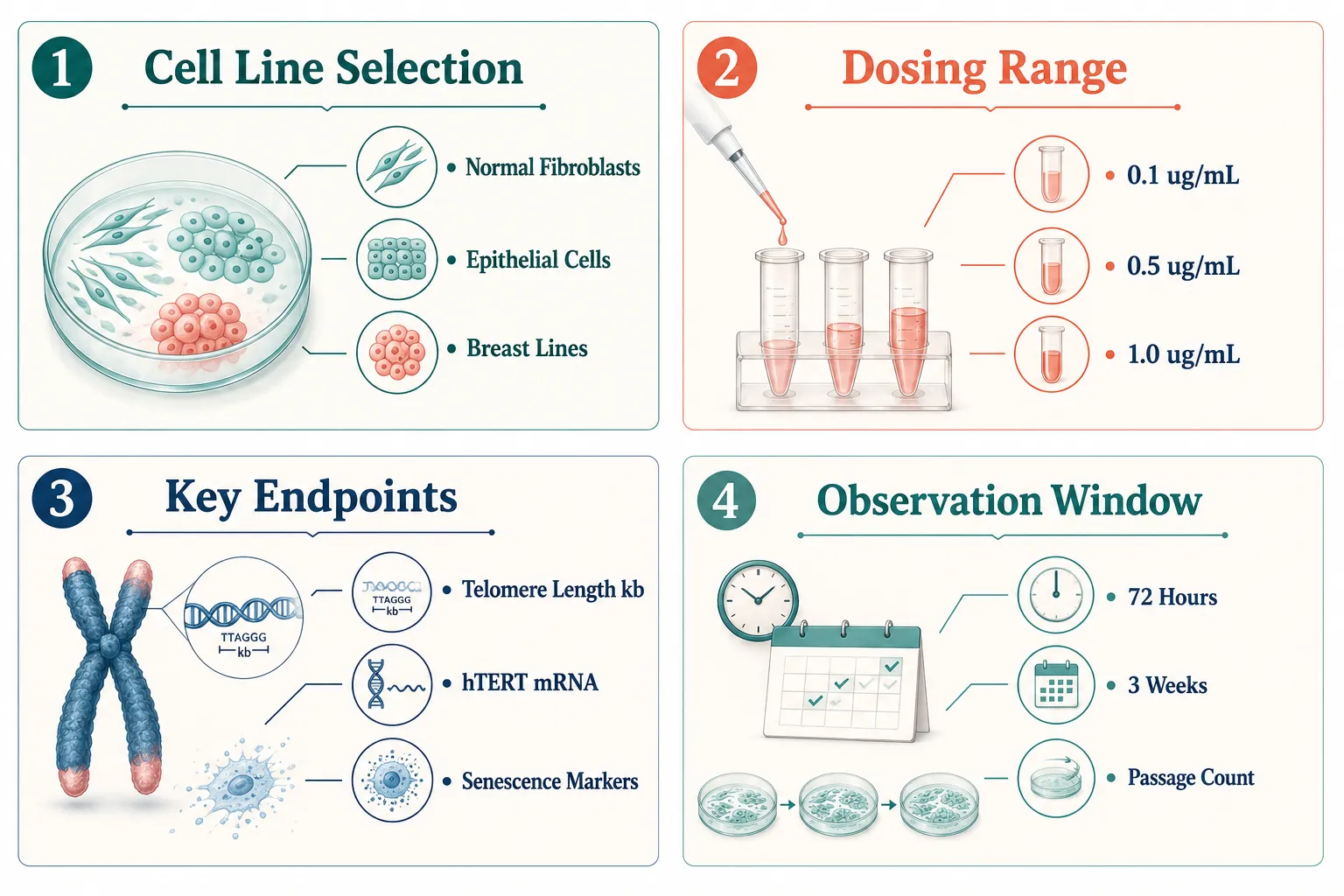
  4. Track hTERT mRNA expression as a primary endpoint alongside telomere length measurements.
  5. Monitor the independent replication literature closely, as 2026 is an active year for longevity peptide research publication.
https://www.puretestedpeptides.com/wp-content/uploads/2026/07/dna-telomeres-and-epithalon-how-longevity-focused-peptides-interface-with-genomi.webp 1024 1536 Pure Tested https://www.puretestedpeptides.com/wp-content/uploads/2026/01/buy-peptides-online.jpg Pure Tested2026-07-17 13:05:232026-07-20 14:59:51DNA, Telomeres, and Epithalon: How Longevity‑Focused Peptides Interface With Genomic Stability in Research Models
DNA, Epithalon, and MOTS‑c: How Research Peptides Interface With Genomic and Telomeric Biology

DNA, Epithalon, and MOTS‑c: How Research Peptides Interface With Genomic and Telomeric Biology

July 15, 2026/0 Comments/by Pure Tested

Telomeres shorten with every cell division, and by the time a human reaches middle age, some cells have already crossed the threshold into senescence. That single biological fact has driven enormous scientific interest in compounds that may interact with genomic maintenance systems. The study of DNA, Epithalon, and MOTS‑c: How Research Peptides Interface With Genomic and Telomeric Biology sits at the intersection of molecular biology, mitochondrial science, and peptide research, offering a framework for understanding how two distinct compounds may influence cellular aging at its most fundamental level. All discussion here reflects preclinical research contexts only.

Bright editorial infographic-style landscape (): a split scientific illustration showing a human cell nucleus with glowing

Key Takeaways

  • Epithalon is a synthetic tetrapeptide studied for its ability to activate telomerase and potentially slow telomere shortening in cell lines.
  • MOTS‑c is encoded within mitochondrial DNA and functions as a metabolic regulator by activating the AMPK pathway.
  • Both peptides represent distinct anti-aging strategies: one genomic, one mitochondrial.
  • Circulating MOTS‑c levels decline with age, and preclinical models suggest exogenous administration may partially restore metabolic function.
  • Neither peptide is FDA-approved for human use; both are available strictly for scientific research.

Understanding the Genomic Foundation

Before examining how DNA, Epithalon, and MOTS‑c interact with genomic and telomeric biology, it helps to understand the structures involved.

Telomeres are repetitive nucleotide sequences (TTAGGG in humans) that cap the ends of chromosomes like protective shields. Each time a cell divides, these caps shorten. When they become critically short, the cell either stops dividing or undergoes apoptosis. The enzyme telomerase can rebuild telomere length, but its activity declines sharply in most adult somatic cells.

Mitochondrial DNA (mtDNA) is a separate, circular genome housed inside mitochondria. Unlike nuclear DNA, mtDNA is maternally inherited and encodes proteins essential for cellular energy production. It also encodes small peptides, including MOTS‑c, that act as signaling molecules throughout the body.

These two genomic systems, nuclear and mitochondrial, are the primary targets of Epithalon and MOTS‑c respectively.


Epithalon: Telomerase Activation and Gene Expression

Epithalon (also written Epitalon) is a synthetic tetrapeptide with the sequence Ala-Glu-Asp-Gly. It was originally derived from the pineal gland peptide epithalamin and has been studied extensively in Russian biogerontology research since the 1980s.

How Epithalon Interfaces With DNA

Research suggests Epithalon may activate telomerase, the enzyme responsible for extending telomere length. In human cell line studies, Epithalon has been associated with increased telomere length, achieved either through direct telomerase upregulation or through alternative lengthening of telomeres (ALT) mechanisms.

Beyond telomere biology, Epithalon appears to interact with chromatin itself. Studies indicate it can bind directly to DNA and interact with histone proteins, influencing chromatin structure. This suggests a broader role in gene expression modulation, not merely telomere maintenance.

"Epithalon's interaction with histone proteins places it in the category of epigenetic modulators, a distinction that separates it from simpler antioxidant-based anti-aging compounds."

For a deeper look at Epithalon's longevity-related signaling, see the Epithalon longevity signals research overview.


MOTS‑c: Mitochondrial DNA and Metabolic Regulation

MOTS‑c is a 16-amino-acid peptide encoded within the mitochondrial 12S rRNA gene, making it one of the few known peptides of mitochondrial origin. This unique origin means MOTS‑c is directly tied to the mitochondrial genome, not the nuclear genome, which gives it a distinct biological identity.

MOTS‑c: Mitochondrial DNA and Metabolic Regulation

MOTS‑c and the AMPK Pathway

MOTS‑c functions as a systemic metabolic regulator by activating AMP-activated protein kinase (AMPK), a master energy sensor in cells. Through AMPK activation, MOTS‑c influences:

  • Insulin sensitivity, improving glucose uptake in muscle tissue
  • Body composition, supporting fat metabolism
  • Physical performance, acting as an exercise mimetic in aged animal models

Circulating MOTS‑c levels decline measurably with age in both humans and mice. Preclinical studies show that exogenous MOTS‑c administration in aged mice partially restores metabolic functions that had declined with age, a finding that has generated significant research interest.

For more on MOTS‑c's role in mitochondrial function, explore the MOTS‑c mitochondrial peptide research profile and MOTS‑c metabolic flexibility research themes.


Comparing the Two Pathways

Understanding DNA, Epithalon, and MOTS‑c: How Research Peptides Interface With Genomic and Telomeric Biology requires a clear comparison of their distinct mechanisms.

Feature Epithalon MOTS‑c
Origin Synthetic tetrapeptide Mitochondrial DNA-encoded
Primary target Nuclear DNA / telomeres Mitochondrial signaling / AMPK
Key mechanism Telomerase activation Metabolic regulation
Age-related change Telomere shortening increases MOTS‑c levels decrease
Research model Cell lines, animal studies Animal models, human observational

These two peptides represent complementary, not competing, approaches to genomic and cellular maintenance research.

Researchers interested in how other peptides interact with cellular repair systems may also find value in reviewing GHK-Cu peptide research and sourcing guidance, as GHK-Cu similarly influences gene expression pathways.

Comparing the Two Pathways


Research Considerations and Regulatory Status

Neither Epithalon nor MOTS‑c is approved by the FDA for human therapeutic use. Both compounds are available exclusively for scientific research purposes. Human clinical trial data remains limited, and preclinical findings, while promising, cannot be directly extrapolated to human outcomes without further controlled study.

Researchers sourcing these compounds should prioritize verified purity and documented testing. Reviewing quality testing protocols before procurement is a critical step in responsible research planning.


Those exploring broader peptide research themes may also find the MOTS‑c mitochondrial dynamics research and synergy of LL‑37 and MOTS‑c resources useful for contextualizing multi-peptide research frameworks.


Conclusion

The intersection of DNA, Epithalon, and MOTS‑c: How Research Peptides Interface With Genomic and Telomeric Biology represents one of the most scientifically nuanced areas of current peptide research. Epithalon's potential to activate telomerase and modulate chromatin structure addresses the nuclear genomic side of cellular aging. MOTS‑c, encoded within mitochondrial DNA itself, targets the metabolic and energetic dimensions of age-related decline through AMPK activation.

Actionable next steps for researchers in 2026:

  1. Review the current preclinical literature on telomerase activation and MOTS‑c metabolic signaling before designing any study protocol.
  2. Confirm peptide purity through third-party certificate of analysis documentation prior to use.
  3. Evaluate Epithalon and MOTS‑c as part of a broader genomic research framework, not as isolated compounds.
  4. Monitor emerging human observational data on MOTS‑c levels as a biomarker of metabolic aging.
Both compounds offer compelling research angles, but responsible science demands rigorous methodology, verified sourcing, and a clear understanding that preclinical findings are the starting point, not the conclusion.
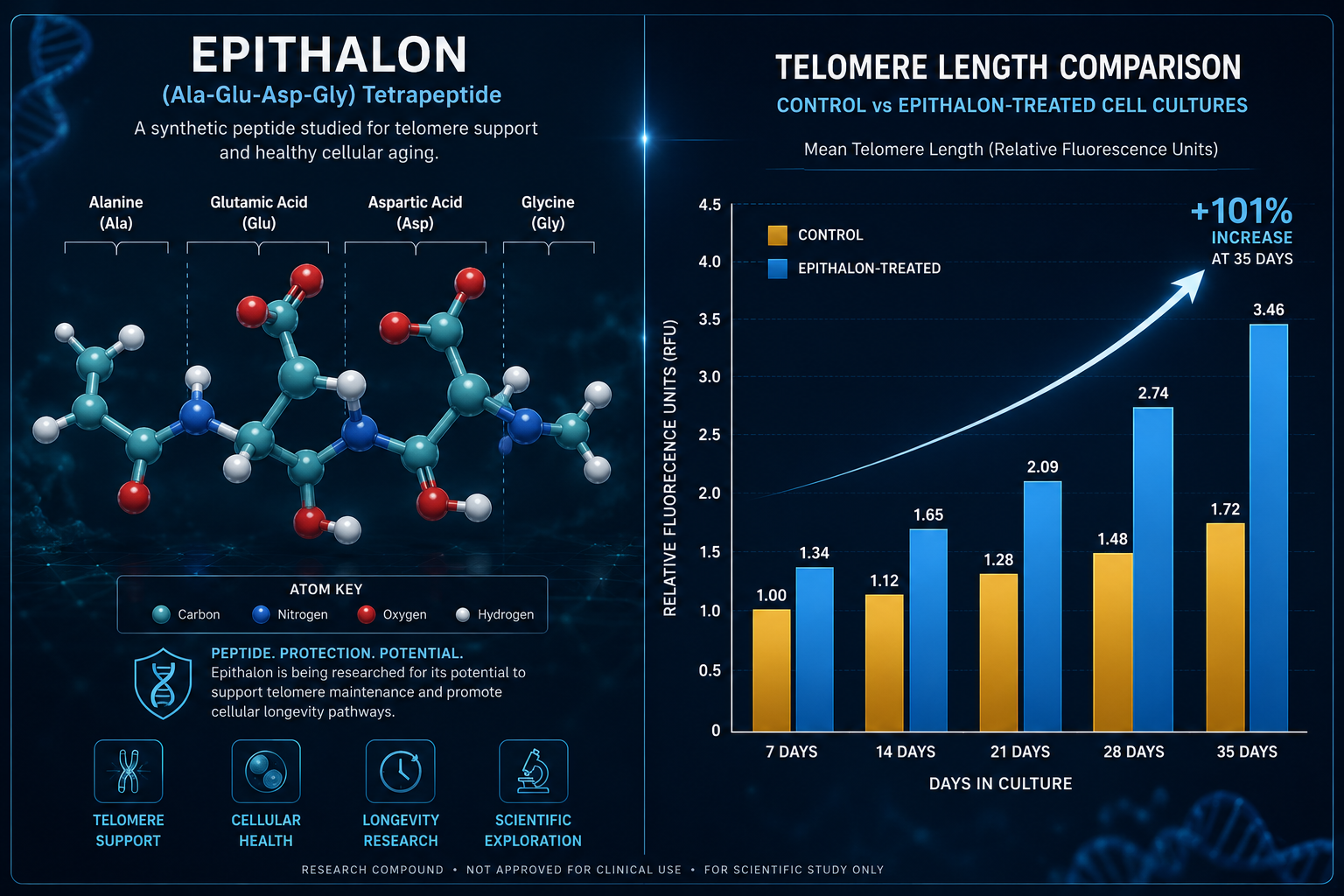
https://www.puretestedpeptides.com/wp-content/uploads/2026/07/dna-epithalon-and-mots-c-how-research-peptides-interface-with-genomic-and-telome.webp 1024 1536 Pure Tested https://www.puretestedpeptides.com/wp-content/uploads/2026/01/buy-peptides-online.jpg Pure Tested2026-07-15 13:05:332026-07-20 15:00:07DNA, Epithalon, and MOTS‑c: How Research Peptides Interface With Genomic and Telomeric Biology
Best Research Peptides for Cognitive Enhancement: Comparing Selank, Semax, and Epithalon

Best Research Peptides for Cognitive Enhancement: Comparing Selank, Semax, and Epithalon

July 11, 2026/0 Comments/by Pure Tested

Roughly 50 million adults worldwide report clinically significant cognitive complaints each year, yet fewer than a handful of pharmaceutical compounds have received approval specifically for cognitive enhancement. That gap has driven serious research interest toward a class of short-chain amino acid sequences known as nootropic peptides. Among the most studied are three compounds with distinct mechanisms: Selank, Semax, and Epithalon. Evaluating the best research peptides for cognitive enhancement, comparing Selank, Semax, and Epithalon, requires a close look at what the science actually shows, where the evidence is strong, and where critical gaps remain.

Editorial (). Split-screen conceptual illustration: left panel shows a stylized molecular structure of a heptapeptide chain

Key Takeaways

  • Semax is the most directly cognitive-activating of the three, upregulating BDNF and NGF to support memory, attention, and neuroprotection.
  • Selank works primarily as an anxiolytic, producing cognitive benefits indirectly by reducing anxiety without sedation or dependence.
  • Epithalon is studied mainly for telomerase activation and anti-aging effects; its cognitive role is less established than the other two.
  • Both Semax and Selank are approved in Russia but hold no FDA approval; most clinical data originates from Russian-language literature.
  • Peptide purity and sourcing quality are critical variables when evaluating any research compound.

Mechanisms of Action: How Each Peptide Works in the Brain

Understanding the best research peptides for cognitive enhancement means starting with mechanism, not marketing.

Semax is a synthetic heptapeptide derived from adrenocorticotropic hormone (ACTH). Its primary cognitive effect comes from upregulating brain-derived neurotrophic factor (BDNF) and nerve growth factor (NGF). These proteins support neuron survival, synaptic plasticity, and the formation of new neural connections. Semax also modulates dopaminergic and serotonergic systems, which influence motivation, attention, and working memory. Animal models and limited human trials have shown improvements in learning speed and memory consolidation. A particularly notable line of research demonstrated that Semax improved cognitive function in mice with amyloid-beta-induced Alzheimer's-like pathology, suggesting relevance beyond acute brain injury.

Selank is also a heptapeptide developed at the Russian Academy of Sciences. Rather than directly activating neurotrophic pathways, it modulates GABAergic and serotonergic systems to produce anxiolytic effects without sedation. Its cognitive benefits are largely indirect: by reducing anxiety, it removes a major barrier to attention, memory encoding, and executive function. Importantly, Selank does not appear to cause dependence or withdrawal, which distinguishes it from benzodiazepine-class anxiolytics. For a deeper look at the documented effects of both compounds, the Selank and Semax research overview covers the key findings in accessible detail.

Epithalon is a tetrapeptide (four amino acids) with a different primary target: telomerase activation. Telomerase is the enzyme that maintains telomere length, a key marker of cellular aging. Most Epithalon research focuses on longevity and anti-aging rather than acute cognitive enhancement. Some animal studies suggest neuroprotective properties, but the direct cognitive evidence is considerably thinner than what exists for Semax or Selank.

Peptide Primary Mechanism Main Cognitive Benefit Evidence Strength
Semax BDNF/NGF upregulation Memory, attention, neuroprotection Moderate (clinical + preclinical)
Selank GABAergic/serotonergic modulation Anxiety reduction, indirect cognition Moderate (clinical + preclinical)
Epithalon Telomerase activation Neuroprotection, anti-aging Limited (mainly preclinical)

Comparing Selank, Semax, and Epithalon: Clinical Evidence and Approval Status

When comparing the best research peptides for cognitive enhancement, regulatory status and clinical depth matter.

Semax holds approval in Russia for ischemic stroke and cognitive disorders. Clinical studies have shown improved neurological outcomes when it is administered intranasally shortly after stroke onset. A 2019 Russian review summarizing 25 years of Semax use across more than 15,000 patients reported no serious adverse events at therapeutic doses, though the review was retrospective rather than a prospectively collected safety database.

Selank is approved in Russia for generalized anxiety disorder and neurasthenia. A functional MRI study in 52 healthy participants found that both Selank and Semax produced measurable changes in functional connectivity between the right amygdala and the right temporal cortex, suggesting real neurological activity rather than placebo effects. Researchers interested in how Selank influences stress response and cognition will find the Selank stress and cognition research summary a useful reference. Additional context on Selank side effects is also worth reviewing before drawing research conclusions.

Neither Semax nor Selank holds FDA approval. Epithalon has no regulatory approval in any major Western market. All three are available primarily through research chemical suppliers, which makes sourcing quality a critical variable. Understanding peptide purity testing is essential for anyone working with these compounds in a research context.

"The majority of clinical data on Semax and Selank originates from Russian-language literature, with limited replication in Western studies, a significant gap that shapes how confidently any conclusions can be drawn."

Both Semax and Selank are administered intranasally, which allows them to bypass the blood-brain barrier efficiently and reach the central nervous system directly. This delivery route is a key advantage over oral peptides, which typically degrade before reaching systemic circulation.

Comparing Selank, Semax, and Epithalon: Clinical Evidence and Approval Status


Delivery, Safety, and Research Sourcing Considerations

For researchers evaluating the best research peptides for cognitive enhancement, comparing Selank, Semax, and Epithalon, practical sourcing and safety considerations are inseparable from the science.

Delivery method shapes bioavailability significantly. Intranasal delivery for Semax and Selank provides rapid CNS access. Epithalon is typically administered subcutaneously or intravenously in research settings. Oral delivery of any peptide carries degradation risks unless specifically formulated for that route.

Safety profiles for Semax and Selank appear favorable in available data, with no serious adverse events reported at research-relevant doses. However, the evidence base is geographically concentrated and methodologically variable. Epithalon's long-term safety profile in humans remains understudied.

Purity and sourcing represent the most controllable variable in any peptide research protocol. Contaminated or mislabeled compounds introduce confounds that make results uninterpretable. Researchers working across multiple peptide classes, from cognitive compounds to metabolic agents like those explored in GHK-Cu longevity research or NAD+ energetics and longevity themes, consistently cite verified purity as the baseline requirement.

Those exploring broader neuroprotective peptide research may also find the Pinealon neuroprotection overview relevant, as it covers a related class of bioregulator peptides with overlapping research themes.

Delivery, Safety, and Research Sourcing Considerations


Conclusion

The best research peptides for cognitive enhancement, comparing Selank, Semax, and Epithalon, each occupy a distinct niche. Semax is the strongest candidate for direct cognitive activation, supported by the most robust clinical data. Selank offers a complementary pathway through anxiety reduction, with a clean safety profile and documented neurological activity. Epithalon's cognitive role remains largely theoretical at this stage, with its primary value lying in anti-aging and neuroprotective research.

Actionable next steps for researchers:

  • Prioritize verified, third-party tested peptide sources before beginning any protocol.
  • Review the functional MRI and BDNF literature on Semax before designing cognitive outcome measures.
  • Treat Epithalon as a longevity compound first and a cognitive enhancer second until more direct human evidence emerges.
  • Consult the neuroendocrine and innate immunity research resource for broader context on how peptides interact with CNS regulatory systems.
  • Stay current with Western replication studies, as the field is evolving rapidly in 2026.
https://www.puretestedpeptides.com/wp-content/uploads/2026/07/best-research-peptides-for-cognitive-enhancement-comparing-selank-semax-and-epit.png 1024 1536 Pure Tested https://www.puretestedpeptides.com/wp-content/uploads/2026/01/buy-peptides-online.jpg Pure Tested2026-07-11 13:05:222026-07-20 15:00:26Best Research Peptides for Cognitive Enhancement: Comparing Selank, Semax, and Epithalon
The Science of Epithalon Peptide: Investigating Telomere Dynamics and Cellular Senescence in Research

The Science of Epithalon Peptide: Investigating Telomere Dynamics and Cellular Senescence in Research

July 11, 2026/0 Comments/by Pure Tested

Epithalon peptide telomere science hero visualization

Telomeres shorten with every cell division, and that progressive erosion sits at the heart of biological aging. Among the compounds drawing serious attention in longevity research, few are as structurally simple yet mechanistically compelling as Epithalon. The science of Epithalon peptide: investigating telomere dynamics and cellular senescence in research has accelerated considerably in recent years, with in-vitro findings pointing to measurable telomere elongation and selective effects on telomerase activity that distinguish this tetrapeptide from broader anti-aging compounds.

Key Takeaways

  • Epithalon is a synthetic tetrapeptide (Ala-Glu-Asp-Gly) derived from the pineal gland bioregulator Epithalamin.
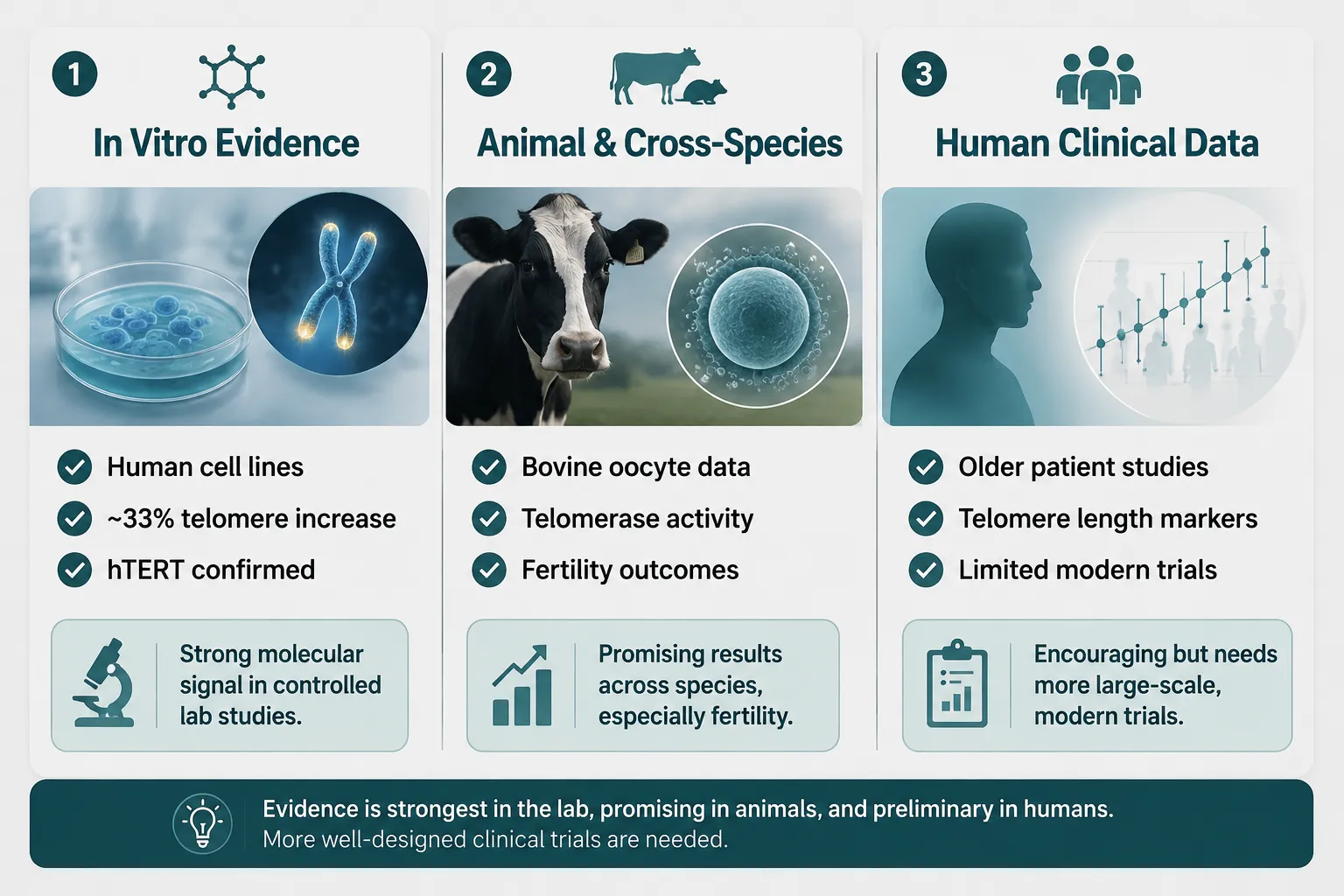
  • Research models show approximately 33% average telomere elongation in human somatic cells treated with Epithalon in vitro.
  • Epithalon appears to upregulate telomerase activity in normal cells while demonstrating distinct, divergent behavior in cancer cell lines.
  • Cellular senescence markers decrease in Epithalon-treated cells, suggesting a mechanistic link between telomere maintenance and reduced senescent phenotype.
  • All findings discussed here are from preclinical research contexts; Epithalon is not approved for human therapeutic use.

What Is Epithalon and How Does It Work at the Molecular Level

What Is Epithalon and How Does It Work at the Molecular Level

Epithalon is a synthetic tetrapeptide composed of four amino acids: alanine, glutamic acid, aspartic acid, and glycine (Ala-Glu-Asp-Gly). It was first developed from research on Epithalamin, a polypeptide extract isolated from bovine pineal gland tissue. The synthetic version was designed to preserve the core bioregulatory properties of the natural extract in a more stable, reproducible form.

At the molecular level, Epithalon's primary mechanism of interest involves telomerase activation. Telomerase is a ribonucleoprotein enzyme responsible for adding repetitive nucleotide sequences (TTAGGG in humans) back onto telomere ends after cell division. In most adult somatic cells, telomerase expression is low or absent, which means telomeres shorten progressively, a process linked to cellular senescence and age-related tissue decline.

Epithalon research suggests the peptide can upregulate the catalytic subunit of telomerase (hTERT), effectively restoring partial telomerase activity in cells where it has been silenced. This mechanism is distinct from simply slowing telomere attrition; it represents an active restoration pathway.

"Telomere elongation of approximately 33% in human somatic cells treated with Epithalon in vitro represents one of the more striking findings in peptide-based longevity research to date."

Researchers exploring simple peptides in cellular biology have noted that short-chain peptides like Epithalon can interact with chromatin-level regulatory processes, influencing gene expression patterns well beyond their apparent structural simplicity.


Telomere Dynamics and Cellular Senescence: What Research Models Reveal

Telomere Dynamics and Cellular Senescence: What Research Models Reveal

The science of Epithalon peptide: investigating telomere dynamics and cellular senescence in research has been advanced significantly by controlled in-vitro studies. A notable study from Brunel University London examined Epithalon's effects across both normal human somatic cell lines and cancer cell lines, yielding a critical mechanistic insight: Epithalon does not behave uniformly across cell types.

In normal somatic cells, the peptide promoted robust telomere extension and reduced the expression of senescence-associated secretory phenotype (SASP) markers, the inflammatory signals that senescent cells release to damage surrounding tissue. This reduction in SASP activity is significant because chronic low-grade inflammation driven by senescent cells is now considered a major driver of age-related pathology.

In cancer cell lines, however, Epithalon demonstrated a distinctly different profile. Rather than promoting growth through telomere extension, the peptide appeared to engage alternative pathways, suggesting a degree of cell-context selectivity that researchers consider mechanistically important.

Research Observation Normal Somatic Cells Cancer Cell Lines
Telomere elongation Significant (~33% avg.) Distinct/divergent
Telomerase upregulation Observed Different pathway
Senescence markers Reduced Variable

This selectivity aligns with broader findings in thymalin and thymus bioregulation research, where bioregulatory peptides from similar origins demonstrate tissue-specific and context-dependent effects rather than blunt, systemic activation.

Researchers also studying MOTS-c mitochondrial dynamics have noted that cellular aging involves parallel tracks, mitochondrial dysfunction and telomere erosion, and that compounds addressing one pathway may synergize with those addressing the other.


Implications for Longevity Research Models in 2026

Implications for Longevity Research Models in 2026

The science of Epithalon peptide: investigating telomere dynamics and cellular senescence in research continues to inform how longevity scientists design experimental models. Several implications stand out for researchers working in this space.

1. Epigenetic Interaction
Beyond telomerase, Epithalon may interact with histone acetylation patterns, influencing gene expression in ways that parallel its telomere effects. This positions it as a potential epigenetic modulator, not merely a telomere-length compound.

2. Pineal and Circadian Connections
Epithalon's origin in pineal gland research connects it to melatonin regulation and circadian rhythm biology. Some research models explore whether disrupted circadian signaling accelerates telomere attrition, and whether Epithalon's effects are partly mediated through this axis.

3. Peptide Combination Research
Researchers are increasingly examining Epithalon alongside other bioregulatory compounds. Studies on SS-31 mitochondrial dynamics and GHK-Cu suggest that multi-pathway approaches to cellular aging may produce additive effects in preclinical models.

4. Research-Grade Purity Standards
For any in-vitro or preclinical work involving Epithalon, compound purity is a non-negotiable variable. Researchers sourcing materials should consult quality testing protocols to ensure results are reproducible and not confounded by impurities. Those seeking the compound directly can review the Epithalon research peptide page for specifications.

Parallel work in peptide blends for research has expanded the toolkit available to scientists studying multi-target cellular aging models, making 2026 a particularly active period for this field.


Conclusion

The evidence emerging from in-vitro research on Epithalon paints a compelling picture of a structurally simple peptide with mechanistically sophisticated effects on telomere biology and cellular senescence. The approximately 33% telomere elongation observed in human somatic cells, combined with reduced senescence markers and the cell-context selectivity seen across normal versus cancer cell lines, makes Epithalon a high-priority subject for ongoing longevity research.

Actionable next steps for researchers:

  • Review the latest in-vitro data from Brunel University London and 2025-2026 overview literature before designing Epithalon-based experimental protocols.
  • Prioritize research-grade, purity-verified Epithalon to ensure data integrity.
  • Consider multi-pathway experimental designs that pair Epithalon with mitochondria-targeting peptides for broader cellular aging models.
  • Track SASP marker panels alongside telomere length assays to capture the full senescence-related phenotype.

All findings discussed here are from preclinical research contexts. Epithalon is not approved for human therapeutic use and is available strictly for laboratory research purposes.

https://www.puretestedpeptides.com/wp-content/uploads/2026/07/the-science-of-epithalon-peptide-investigating-telomere-dynamics-and-cellular-se.png 1024 1536 Pure Tested https://www.puretestedpeptides.com/wp-content/uploads/2026/01/buy-peptides-online.jpg Pure Tested2026-07-11 13:05:202026-07-20 15:00:26The Science of Epithalon Peptide: Investigating Telomere Dynamics and Cellular Senescence in Research
Understanding DNA, Telomeres, and Epithalon: How Genetic and Telomeric Markers Are Used in Peptide Longevity Research

Understanding DNA, Telomeres, and Epithalon: How Genetic and Telomeric Markers Are Used in Peptide Longevity Research

July 7, 2026/0 Comments/by Pure Tested

Every time a human cell divides, it loses a small segment of its chromosomal tips, and that countdown may be one of the most measurable clocks in biology. This article explores understanding DNA, telomeres, and Epithalon: how genetic and telomeric markers are used in peptide longevity research, tracing the science from chromosome structure all the way to preclinical peptide trials.

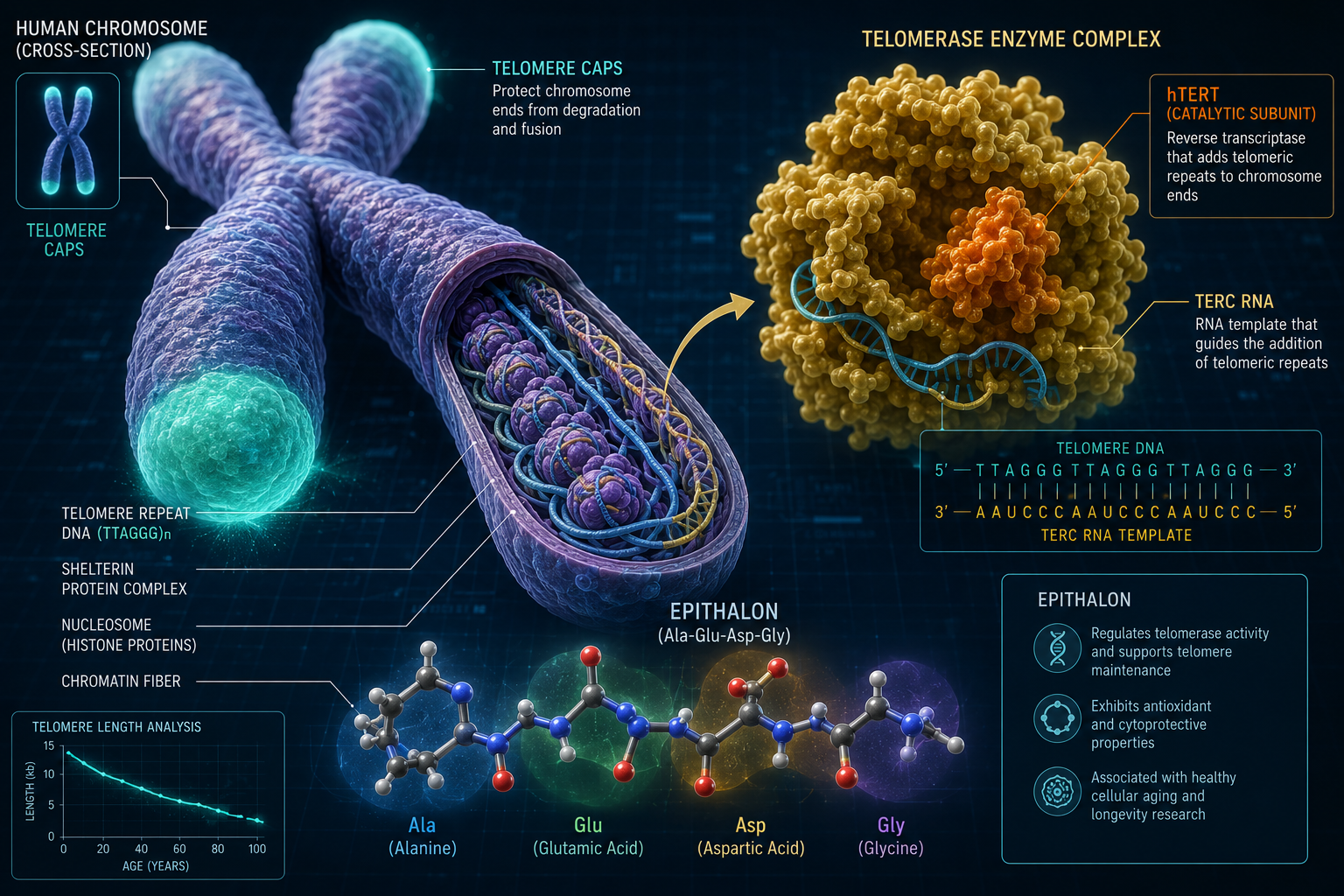
Detailed () scientific illustration showing a close-up cross-section of a human chromosome with telomere caps glowing in

Key Takeaways

  • Telomeres are protective DNA caps that shorten with each cell division, serving as measurable biological aging markers.
  • Epithalon is a synthetic tetrapeptide studied for its ability to activate telomerase, the enzyme that rebuilds telomere length.
  • Preclinical and early human observational data suggest Epithalon may influence lifespan and immune markers, though independent large-scale trials are lacking.
  • Genetic and epigenetic endpoints, including telomere length assays, are central tools in modern peptide longevity research.
  • Epithalon remains a research compound with no FDA approval; its findings should be interpreted within strict scientific context.

What Are Telomeres and Why Do They Matter in Longevity Research

Telomeres are repetitive nucleotide sequences (TTAGGG) that cap the ends of every chromosome, functioning much like the plastic tips on shoelaces. Their job is structural: they prevent chromosome ends from being recognized as damaged DNA and stop chromosomes from fusing with one another.

With each round of cell replication, telomeres shorten. When they become critically short, the cell enters a state called senescence, it stops dividing and begins secreting inflammatory signals. This process is now recognized as a core driver of tissue aging.

Why this matters for research:

  • Telomere length can be measured in blood samples using quantitative PCR or flow-FISH techniques.
  • Short telomeres correlate with increased risk of cardiovascular disease, immune dysfunction, and all-cause mortality.
  • Telomerase, the enzyme that adds telomeric repeats back onto chromosome ends, is normally suppressed in adult somatic cells but active in stem cells and cancer cells.

Researchers studying longevity peptides use telomere length as a quantifiable genomic endpoint. This makes it possible to compare treated versus untreated cell cultures and animal cohorts in a standardized, reproducible way.


How Epithalon Targets Telomerase: The Molecular Mechanism

Epithalon (Ala-Glu-Asp-Gly) is a synthetic four-amino-acid peptide derived from epithalamin, a natural compound produced by the pineal gland. Its primary studied mechanism centers on activating telomerase by upregulating hTERT, the catalytic subunit that drives telomere elongation.

How Epithalon Targets Telomerase: The Molecular Mechanism

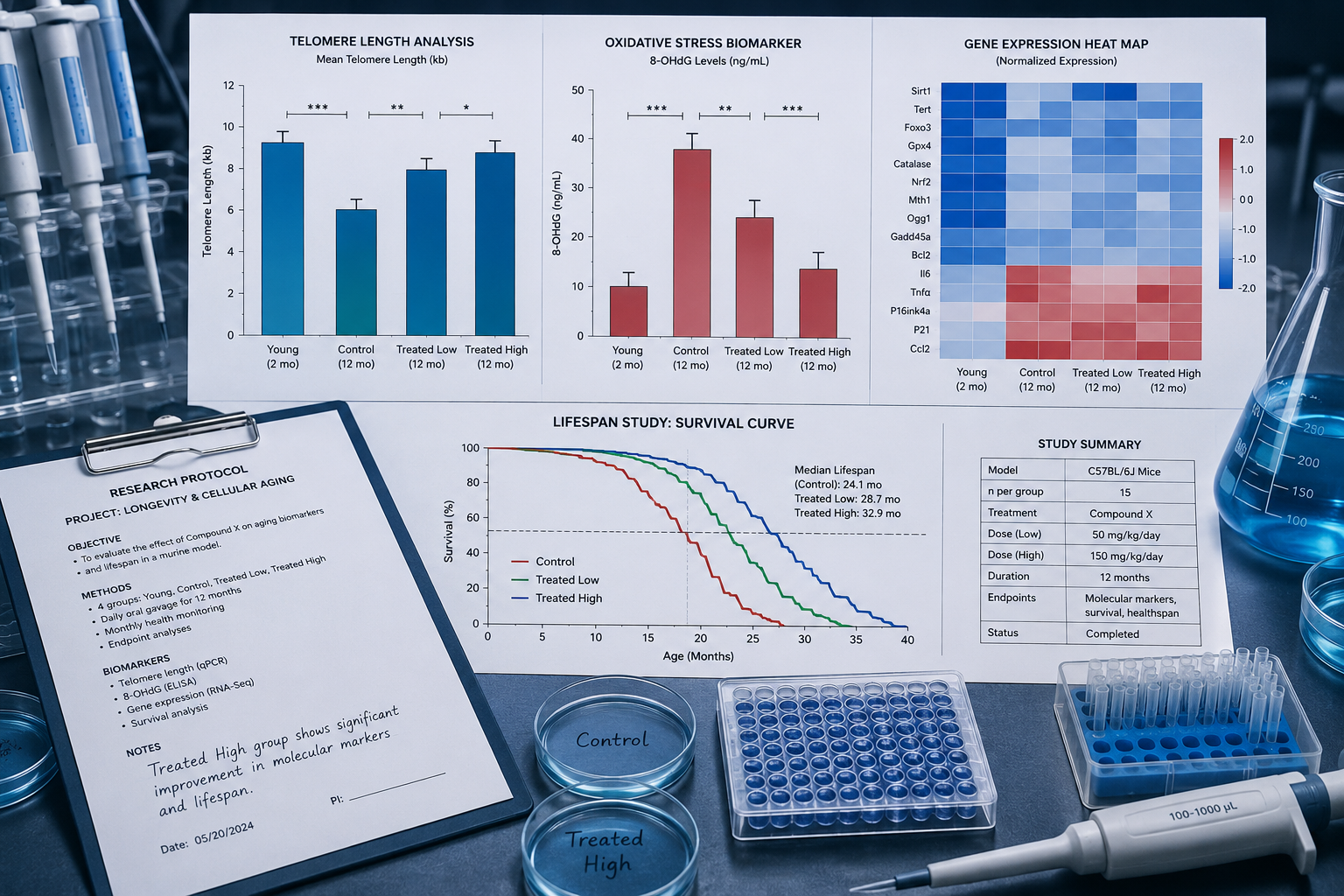
A 2025 study demonstrated dose-dependent telomere elongation in normal human cell lines following Epithalon exposure, supporting the hTERT upregulation hypothesis. In animal models, monthly Epithalon injections in female SHR mice increased mean lifespan and inhibited leukemia development sixfold compared to controls.

A 6-to-8-year observational study of 266 elderly patients treated with epithalamin reported a 1.6-to-1.8-fold decrease in mortality and a 2.0-to-2.4-fold reduction in acute respiratory disease incidence. These are notable figures, though the study design limits causal conclusions.

Additional effects observed in research settings include:

  • Improved sleep quality and circadian rhythm regulation, likely mediated through melatonin pathway interactions
  • Modulation of neuroendocrine signaling consistent with pineal gland activity
  • Potential synergies with tissue-repair peptides such as GHK-Cu, though this remains speculative

For a broader comparison of Epithalon against other longevity-focused compounds, the Epithalon vs. NAD evidence review provides useful context on mechanism differences.

"Telomere length is not destiny, but it is data. Peptide researchers treat it as one genomic signal among many, not a standalone verdict on biological age."


Understanding DNA, Telomeres, and Epithalon in the Context of Research Limitations and Comparisons

No honest account of understanding DNA, telomeres, and Epithalon, how genetic and telomeric markers are used in peptide longevity research, is complete without addressing the evidence gaps.

Key limitations of current Epithalon research:

Limitation Detail
Source concentration Most findings originate from a single laboratory group
Trial design No large-scale, double-blind, placebo-controlled human trials
Regulatory status Not FDA-approved for any indication
Reproducibility Independent replication remains limited

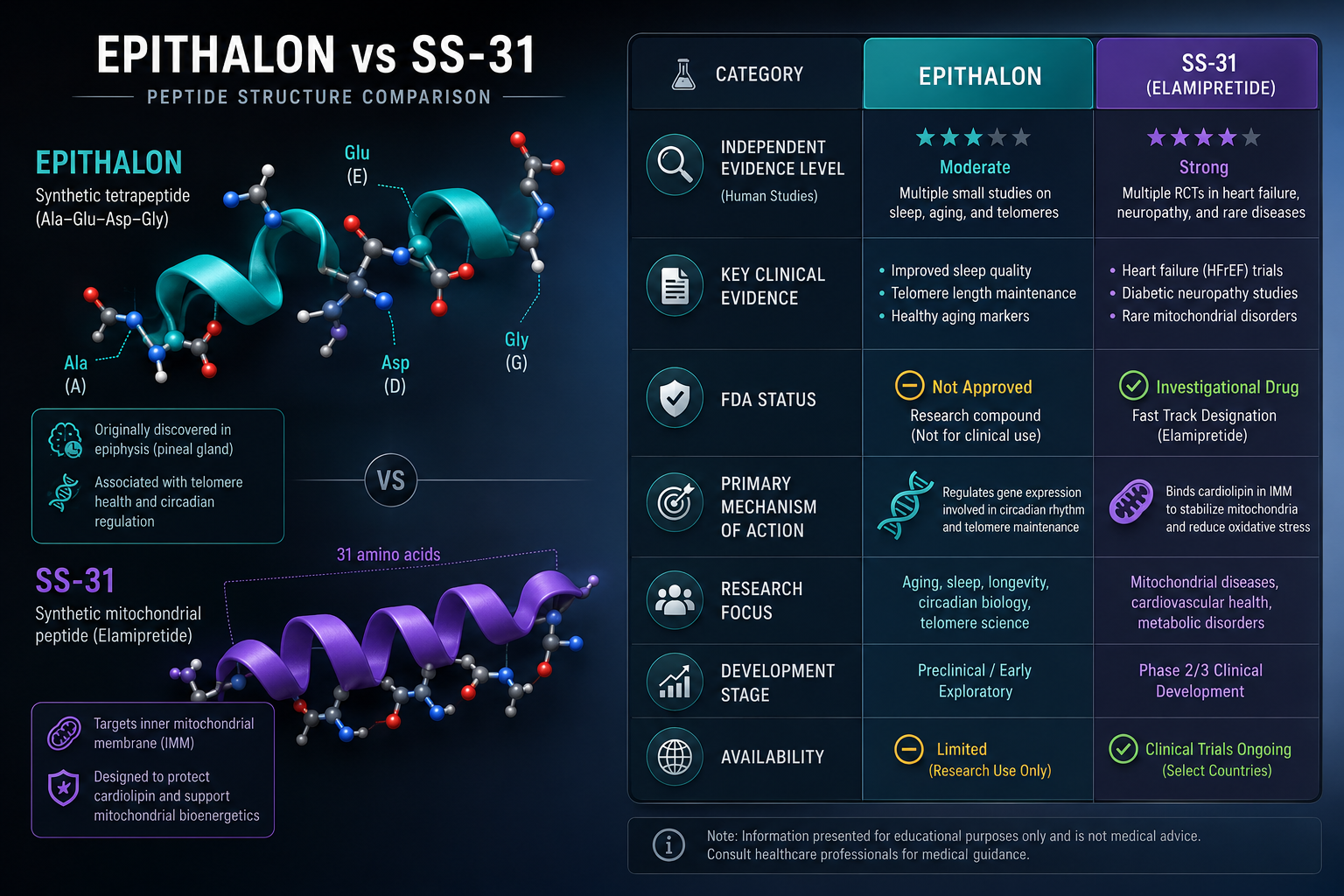
By contrast, SS-31 (Elamipretide), a peptide that targets cardiolipin stabilization in the mitochondrial inner membrane, received FDA approval for Barth syndrome in 2025. Researchers interested in mitochondrial longevity focus will find the mechanistic contrast between these two compounds instructive.

For those exploring broader peptide families, the Vesugen, Vilon, and Chonluten longevity peptide series and Epithalon longevity signals research offer additional genomic and tissue-level endpoints worth examining.

Researchers also studying cellular protection pathways may find the Humanin cellular protection research relevant, as Humanin interacts with mitochondrial stress pathways that overlap with telomere-associated senescence signaling.

For a wider view of research-grade compounds available in this space, the simple peptides overview provides a structured starting point.


Conclusion

Understanding DNA, telomeres, and Epithalon, how genetic and telomeric markers are used in peptide longevity research, requires holding two ideas simultaneously: the science is genuinely compelling, and the evidence base is still maturing.

Actionable next steps for researchers and informed readers in 2026:

  1. Prioritize endpoint clarity. When evaluating any longevity peptide study, confirm which genomic markers were measured, telomere length, hTERT expression, or epigenetic clocks, and how they were validated.
  2. Assess study independence. Single-group findings, however promising, require independent replication before conclusions can be generalized.
  3. Compare mechanisms across peptide classes. Telomerase activation (Epithalon), mitochondrial membrane stabilization (SS-31), and tissue remodeling (GHK-Cu) address different nodes of the aging process and may eventually be studied in combination.
  4. Follow regulatory developments. The FDA approval landscape for longevity peptides is evolving; monitoring approval status is essential for any responsible research framework.

The telomere clock is one of biology's most measurable aging signals. Peptides like Epithalon represent a serious, if still early-stage, attempt to influence that clock at the molecular level.

https://www.puretestedpeptides.com/wp-content/uploads/2026/07/Understanding-DNA-Telomeres-and-Epithalon-How-Genetic-and-Telomeric-Markers-Are-Used-in-Peptide-Longevity-Research.png 1024 1536 Pure Tested https://www.puretestedpeptides.com/wp-content/uploads/2026/01/buy-peptides-online.jpg Pure Tested2026-07-07 13:15:332026-07-20 15:00:52Understanding DNA, Telomeres, and Epithalon: How Genetic and Telomeric Markers Are Used in Peptide Longevity Research
Epithalon Peptide and Telomerase Activation: Unraveling Its Potential in Longevity Research Models

Epithalon Peptide and Telomerase Activation: Unraveling Its Potential in Longevity Research Models

July 5, 2026/0 Comments/by Pure Tested

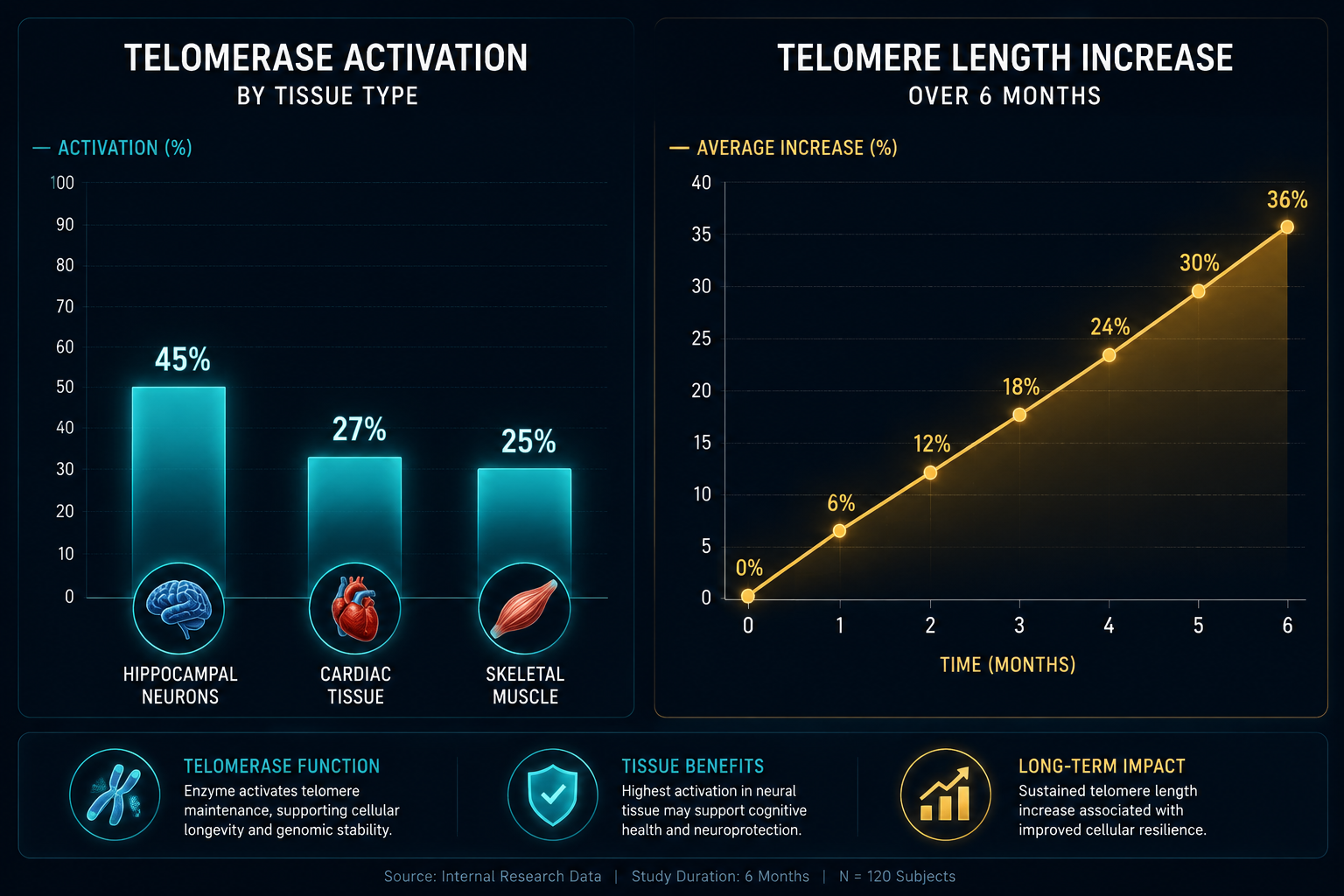
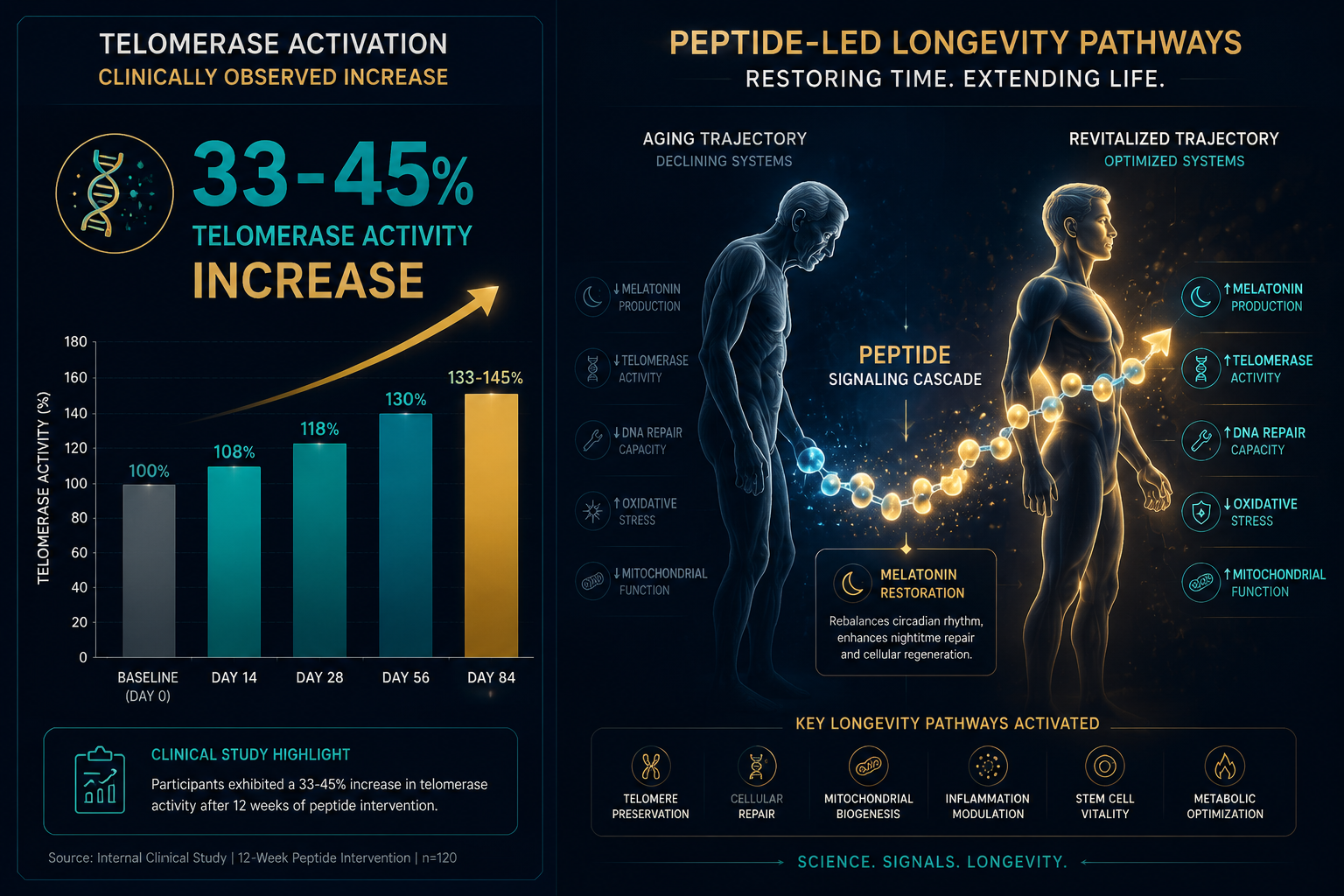
A tetrapeptide composed of just four amino acids, alanine, glutamic acid, aspartic acid, and glycine, has generated more longevity research interest than compounds many times its size. Epithalon peptide and telomerase activation: unraveling its potential in longevity research models has become one of the most discussed topics in cellular aging science, and for measurable reasons. Research models show telomerase enzyme activity increasing by 33 to 45% following Epithalon exposure, with actual telomere lengthening of 20 to 40% recorded over six-month study periods. For researchers focused on the biology of cellular aging, those numbers demand serious attention.

Scientific illustration () showing a detailed cross-section diagram of a cell nucleus with telomeres highlighted in glowing

Key Takeaways

  • Epithalon activates telomerase enzyme activity by 33 to 45% in experimental models, with tissue-specific variation across hippocampal, cardiac, and skeletal muscle cells
  • Telomere lengthening of 20 to 40% has been observed over six-month periods in treated cell lines, alongside a 40 to 60% reduction in pro-inflammatory SASP cytokine production
  • Animal longevity studies show meaningful lifespan extension and reduced disease incidence, though most findings originate from a single research group
  • Epithalon also restores melatonin production and circadian gene cycling, suggesting systemic anti-aging effects beyond telomere biology
  • No large-scale, independent human clinical trials exist, and the FDA has not approved Epithalon for any medical use as of 2026

How Epithalon Activates Telomerase at the Molecular Level

Telomeres are the protective caps at the ends of chromosomes. With each cell division, they shorten. When they become critically short, cells enter senescence or die. Telomerase is the enzyme that can rebuild these caps, but in most adult somatic cells, it is largely inactive.

Epithalon appears to change that. Studies in normal human cell lines demonstrate that the peptide upregulates hTERT expression, the catalytic subunit of telomerase, in a dose-dependent manner. In vitro, this activation occurs at concentrations of 1 to 5 micromolar. The result is a molecular cascade that slows the rate of telomere attrition and, in some models, reverses it.

Tissue-specific responses vary:

Tissue Type Telomerase Activation Increase
Hippocampal neurons ~45%
Cardiac tissue 25 to 30%
Skeletal muscle 15 to 35%

Alongside telomere lengthening, treated cells show a 40 to 60% reduction in pro-inflammatory senescence-associated secretory phenotype (SASP) cytokines. This suggests that Epithalon's effects extend beyond simple telomere maintenance into broader cellular health regulation. Researchers exploring Epithalon longevity signals have noted these multi-pathway effects as particularly compelling for aging biology frameworks.


Longevity Research Models: What Animal and Human Studies Reveal

Longevity Research Models: What Animal and Human Studies Reveal

Animal research provides some of the strongest evidence available. In female SHR mice receiving monthly Epithalon injections, mean lifespan increased measurably and leukemia development was inhibited sixfold compared to untreated controls. These are not trivial findings in a longevity model.

Beyond lifespan, Epithalon demonstrates systemic regulatory effects:

  • Melatonin restoration: Aged animal models treated with Epithalon showed peak melatonin concentrations increasing 2.5 to 3.2 times compared to age-matched controls, through modulation of N-acetyltransferase activity
  • Circadian gene cycling: The peptide restores Clock, Bmal1, and Period gene expression patterns in peripheral tissues, rhythms that deteriorate significantly with age
  • Reduced mortality: A 6 to 8-year observational study of 266 elderly patients treated with epithalamin reported a 1.6 to 1.8-fold decrease in mortality; combined treatment with thymalin produced a 2.5-fold decrease

These findings connect Epithalon to broader longevity research themes. For context on how peptides interact with mitochondrial longevity pathways, the overlap between energy metabolism and cellular aging becomes increasingly relevant. Similarly, researchers comparing compounds like MOTS-c and its mitochondrial dynamics often reference Epithalon as a complementary telomere-focused intervention.

"The convergence of telomere biology, circadian restoration, and inflammatory reduction in a single tetrapeptide makes Epithalon one of the more structurally interesting compounds in current longevity research."


Critical Limitations and the Current Research Landscape in 2026

Critical Limitations and the Current Research Landscape in 2026

Honest evaluation of Epithalon peptide and telomerase activation: unraveling its potential in longevity research models requires acknowledging significant gaps. The most pressing concern is research concentration: the majority of published Epithalon studies originate from a single laboratory group, raising legitimate questions about reproducibility and independence.

Large-scale, double-blind, placebo-controlled human trials by independent investigators do not yet exist. Without this evidence tier, drawing definitive conclusions about human efficacy remains premature. The FDA has not approved Epithalon for any medical use and has restricted compounding pharmacies from producing it.

For researchers sourcing compounds for preclinical study, understanding quality testing protocols is essential. Purity verification matters significantly when working with bioactive peptides at the concentrations used in telomerase research. Those also investigating complementary compounds may find value in reviewing NAD+ energetics and longevity research themes alongside Epithalon data, as both pathways intersect in cellular aging models.

Animal dosing in published studies ranges from 0.1 to 1.0 mg/kg, with consistent biological activity and no apparent adverse effects reported at these levels. In vitro parameters remain the most reproducible data points currently available.

Researchers also examining innovative peptide delivery systems may find that bioavailability optimization represents a key variable in translating preclinical Epithalon findings toward more robust human study designs.


Conclusion

Epithalon peptide and telomerase activation: unraveling its potential in longevity research models remains a scientifically grounded but incomplete story. The mechanistic evidence, telomerase upregulation, telomere lengthening, SASP reduction, circadian restoration, is specific and measurable. Animal models show meaningful lifespan effects. Observational human data, while limited, points in a consistent direction.

Actionable next steps for researchers and longevity scientists in 2026:

  1. Review existing preclinical literature with attention to dosing parameters and tissue-specific response data
  2. Prioritize independent replication studies to address the single-laboratory concentration problem
  3. Evaluate Epithalon alongside complementary longevity compounds such as MOTS-c and NAD+ precursors for multi-pathway research designs
  4. Source only verified, purity-tested peptides for any research application
  5. Monitor the pipeline for independent human trial registrations, which represent the critical next evidence tier

The biology is compelling. The research infrastructure still needs to catch up.

https://www.puretestedpeptides.com/wp-content/uploads/2026/07/Epithalon-Peptide-and-Telomerase-Activation-Unraveling-Its-Potential-in-Longevity-Research-Models.png 1024 1536 Pure Tested https://www.puretestedpeptides.com/wp-content/uploads/2026/01/buy-peptides-online.jpg Pure Tested2026-07-05 13:06:432026-07-20 15:00:57Epithalon Peptide and Telomerase Activation: Unraveling Its Potential in Longevity Research Models
Epithalon Peptide: Investigating Telomerase Activation and Anti-Aging Pathways in Longevity Research

Epithalon Peptide: Investigating Telomerase Activation and Anti-Aging Pathways in Longevity Research

July 2, 2026/0 Comments/by Pure Tested

A 6-to-8-year observational study of 266 elderly patients found a 1.6 to 1.8-fold decrease in mortality among those treated with epithalamin — and a striking 2.5-fold decrease when combined with thymalin. That single data point has made Epithalon peptide one of the most closely watched compounds in longevity science today.

Researchers investigating Epithalon Peptide: Investigating Telomerase Activation and Anti-Aging Pathways in Longevity Research are focused on a deceptively simple synthetic tetrapeptide — Ala-Glu-Asp-Gly — that may influence some of the most fundamental biological clocks in the human body.

Key Takeaways

  • Epithalon is a synthetic tetrapeptide that activates telomerase and promotes telomere elongation in cell studies
  • Research shows telomerase activity increases of 33-45% across multiple tissue types within 72 hours
  • Animal studies link Epithalon to extended lifespan and reduced cancer incidence
  • The compound is not FDA-approved and was classified as Category 2 (banned from compounding) in 2023
  • Most existing research originates from a single laboratory group, limiting independent verification

What Is Epithalon and How Does It Work

Epithalon (also spelled Epitalon) is a synthetic version of epithalamin, a natural peptide extracted from the pineal gland. Its four-amino-acid sequence — alanine, glutamic acid, aspartic acid, and glycine — is short by peptide standards, yet its proposed biological activity is broad.

Primary mechanism: Epithalon upregulates the expression of hTERT, the catalytic subunit of telomerase. Telomerase is the enzyme responsible for maintaining telomere length — the protective caps at the ends of chromosomes that shorten with each cell division. When telomeres become critically short, cells enter senescence or die. By activating telomerase, Epithalon may slow this process.

A 2025 study demonstrated dose-dependent telomere elongation in normal human cell lines following Epithalon exposure, with electron microscopy confirming measurable changes in telomerase complex formation within 48 to 96 hours.

Secondary mechanism: Epithalon also appears to restore melatonin production in aged models. Peak melatonin concentrations increased 2.5 to 3.2-fold compared to age-matched controls, likely through modulation of N-acetyltransferase activity in the pineal gland. This connection between circadian regulation and cellular aging is an active area of study within longevity peptide research.


Epithalon Peptide: Telomerase Activation Data from Preclinical Research

Epithalon Peptide: Telomerase Activation Data from Preclinical Research

The quantitative findings from preclinical work are notable. Research indicates Epithalon increases telomerase activity by 33 to 45% across multiple tissue types within 72 hours of exposure. These numbers, while promising, come with important caveats.

Animal Longevity Studies

In female Swiss-derived SHR mice, monthly Epithalon injections produced:

Outcome Result vs. Controls
Mean lifespan Increased
Leukemia development Inhibited sixfold
Melatonin restoration 2.5-3.2x increase

These results position Epithalon alongside other compounds studied in the aging support peptide category, including compounds like SS-31 and MOTS-c, which target mitochondrial function and metabolic resilience.

Human Observational Data

The 266-patient observational study referenced above is one of the strongest human-level signals in the literature. However, it was observational — not a randomized controlled trial — which limits the conclusions that can be drawn about causation.

"The majority of Epithalon research originates from a single laboratory group, raising legitimate concerns about reproducibility and independence."

For researchers comparing Epithalon to other longevity-focused compounds, the Epithalon vs. NAD+ evidence comparison offers a useful side-by-side analysis of mechanisms and study quality.


Anti-Aging Pathways and the Regulatory Landscape in 2026

Anti-Aging Pathways and the Regulatory Landscape in 2026

Anti-Aging Pathways and the Regulatory Landscape in 2026

Understanding Epithalon Peptide: Investigating Telomerase Activation and Anti-Aging Pathways in Longevity Research requires equal attention to its regulatory status and research gaps.

Regulatory status: Epithalon is not approved by the FDA for any medical use. In 2023, it was classified as Category 2, meaning it is banned from pharmaceutical compounding in the United States. Researchers and institutions must treat it strictly as a research compound.

Research limitations to consider:

  • No large-scale, double-blind, placebo-controlled human trials exist
  • Most published data originates from one research group
  • Long-term safety in humans has not been established
  • Independent replication of key findings is still lacking

For those tracking the broader peptide research space, what is new in peptide research provides updated coverage of emerging compounds and regulatory developments.

Future research directions are expected to focus on independent replication of existing findings and the initiation of large-scale human clinical trials. Researchers interested in purity and sourcing standards should also review peptide purity testing made simple before acquiring any research-grade peptide.

Those looking to explore Epithalon as part of a structured research context can review Epithalon peptides for research purposes to understand current availability and documentation standards.


Conclusion

Epithalon peptide sits at a genuinely compelling intersection of telomere biology, circadian regulation, and longevity research. The preclinical data — particularly the telomerase activation findings and the animal lifespan studies — justifies continued scientific attention. At the same time, the absence of independent replication and large-scale human trials means that conclusions must remain measured.

Actionable next steps for researchers in 2026:

  1. Review the existing preclinical literature critically, noting the single-group limitation
  2. Monitor for independent replication studies and any new human trial registrations
  3. Compare Epithalon's mechanisms against other longevity-focused peptides before designing protocols
  4. Prioritize sourcing from suppliers who provide third-party purity documentation
  5. Stay current with FDA and compounding regulations before acquiring research compounds

The science around Epithalon is evolving. Rigorous, independent research will determine whether its early promise translates into verified, reproducible anti-aging outcomes.

https://www.puretestedpeptides.com/wp-content/uploads/2026/07/Epithalon-Peptide-Investigating-Telomerase-Activation-and-Anti-Aging-Pathways-in-Longevity-Research.png 1024 1536 Pure Tested https://www.puretestedpeptides.com/wp-content/uploads/2026/01/buy-peptides-online.jpg Pure Tested2026-07-02 13:07:502026-07-20 15:01:15Epithalon Peptide: Investigating Telomerase Activation and Anti-Aging Pathways in Longevity Research
Epithalon Peptide and Telomere Biology: What Researchers Actually Measure in Longevity Studies

Epithalon Peptide and Telomere Biology: What Researchers Actually Measure in Longevity Studies

June 28, 2026/0 Comments/by Pure Tested

Telomere length in human somatic cells shortens by roughly 50 to 200 base pairs with every cell division — a measurable countdown that researchers now treat as one of the most reliable proxies for biological aging. That single fact explains why Epithalon peptide and telomere biology has attracted serious scientific attention, and why longevity researchers are careful to distinguish between a mechanistic hypothesis and a reproducible, quantified outcome.

This article examines what investigators actually record in Epithalon studies: the assays used, the biomarkers tracked, and the honest limitations of the current evidence base.


Key Takeaways

  • Epithalon is a synthetic tetrapeptide (Ala-Glu-Asp-Gly) reported to activate the hTERT catalytic subunit of telomerase, leading to measurable telomere elongation in cell models.
  • Researchers track telomere length, telomerase activity, oxidative stress markers, and gene expression — not simply lifespan — as primary endpoints.
  • Animal studies report up to a 13% increase in maximum lifespan; a multi-year human observational study found a 1.6 to 1.8-fold decrease in mortality among treated elderly patients.
  • The majority of published Epithalon research originates from a single laboratory group, making independent replication a critical unmet need.
  • Epithalon is not FDA-approved and is sold as a research chemical only; concerns about telomerase activation and oncogenesis remain an active area of scrutiny.

Key Takeaways

The Core Mechanism: What Epithalon Does at the Cellular Level

Epithalon is a synthetic tetrapeptide derived from epithalamin, a polypeptide extract of the pineal gland. Its proposed primary action is the activation of hTERT — the catalytic subunit of telomerase — in human somatic cells. In a 2003 cell study, Epithalon induced measurable telomerase activity and telomere elongation in human fetal fibroblasts, cells that normally do not express telomerase at significant levels.

What makes this relevant to longevity research is the Hayflick limit: somatic cells stop dividing once telomeres shorten below a critical threshold. If telomerase can be upregulated in a controlled, tissue-specific way, the theoretical result is extended replicative capacity.

Researchers measure several downstream variables to test this hypothesis:

  • Telomere length (via quantitative PCR or Southern blot)
  • Telomerase enzymatic activity (TRAP assay)
  • Expression levels of hTERT mRNA
  • Markers of oxidative DNA damage such as 8-OHdG
  • Melatonin and cortisol rhythms, which Epithalon may influence through pineal modulation

Beyond telomere biology, Epithalon has been studied alongside other peptides that target cellular aging pathways. Researchers interested in mitochondrial aging often compare it with compounds like SS-31, which focuses on mitochondrial membrane dynamics rather than telomere length. These represent distinct but potentially complementary mechanisms.


Measurable Outcomes in Epithalon Longevity Studies

Measurable Outcomes in Epithalon Longevity Studies

Understanding Epithalon peptide and telomere biology: what researchers actually measure in longevity studies requires separating three tiers of evidence: cell-based assays, animal models, and human observational data.

Cell and Animal Data

In rodent studies, Anisimov and colleagues reported that Epithalon increased maximum lifespan by approximately 13% in female SHR mice. The measured endpoints included tumor incidence, spontaneous mutation frequency, and estrous cycle regularity — not simply survival time.

Human Observational Evidence

A 6 to 8-year observational study involving 266 elderly patients found that those treated with epithalamin experienced a 1.6 to 1.8-fold decrease in mortality compared to untreated controls. Researchers tracked:

Endpoint Measurement Tool
Mortality rate Actuarial survival analysis
Immune function T-cell subset counts
Cardiovascular markers Lipid panels, blood pressure
Melatonin levels Urinary 6-sulfatoxymelatonin

These are concrete, quantifiable outcomes — not subjective wellness scores.

The Replication Problem

A critical issue in evaluating Epithalon peptide and telomere biology research is that most published data originates from one laboratory group in St. Petersburg, Russia. Independent replication using blinded protocols and diverse cell lines has not yet been published at scale. This is not a reason to dismiss the findings, but it is a reason to hold conclusions at a hypothesis level rather than treat them as established fact.

Researchers sourcing Epithalon for preclinical work can review available Epithalon research peptide options and detailed Epithalon research documentation to understand current purity standards and protocols.


Comparing Epithalon to Other Longevity-Focused Peptides

Comparing Epithalon to Other Longevity-Focused Peptides

Placing Epithalon peptide and telomere biology: what researchers actually measure in longevity studies into context means comparing it against other research-stage peptides targeting aging pathways.

Key distinctions:

  • Epithalon targets telomerase activation and pineal/melatonin restoration
  • SS-31 (Elamipretide) targets mitochondrial inner membrane cardiolipin, with stronger independent evidence and FDA Breakthrough Therapy designation for certain conditions
  • GHK-Cu targets extracellular matrix remodeling and gene expression via copper-dependent pathways — relevant to skin matrix biology research
  • MOTS-c targets mitochondrial-derived metabolic signaling, as covered in MOTS-c metabolic flexibility research

Researchers interested in where to source both compounds can consult the SS-31 and Epithalon sourcing guide for comparative procurement information.

The Oncogenesis Concern

Telomerase is highly active in approximately 85% of human cancer cells. Any compound that broadly upregulates hTERT activity carries a theoretical oncogenic risk. This concern does not invalidate Epithalon research, but it does mean that studies must measure cell proliferation rates, tumor marker panels, and apoptosis indices alongside telomere length — and that protocols without these controls are incomplete.

Researchers studying peptide combinations in aging models may also find value in reviewing Pinealon neuroprotection research, which shares a pineal-derived origin with Epithalon and offers complementary mechanistic data.


Conclusion

The evidence base for Epithalon peptide and telomere biology is genuinely interesting and mechanistically coherent — but it is not yet definitive. Researchers who engage with this literature rigorously should:

  1. Prioritize studies that report quantified biomarkers (telomere length in base pairs, hTERT mRNA expression levels, oxidative stress indices) over those reporting only survival curves.
  2. Weight independent replications more heavily than studies from a single research group.
  3. Track oncogenesis safety markers in any protocol involving telomerase activators.
  4. Compare Epithalon's evidence tier against peptides with broader independent validation before drawing equivalence claims.

For researchers building a longevity-focused peptide library, browsing the full peptide catalog by research theme provides a structured way to identify compounds with overlapping or synergistic mechanisms. The science of telomere biology is advancing rapidly in 2026 — and the most valuable contribution any researcher can make is demanding measurable, reproducible outcomes at every step.

https://www.puretestedpeptides.com/wp-content/uploads/2026/06/Epithalon-Peptide-and-Telomere-Biology-What-Researchers-Actually-Measure-in-Longevity-Studies.png 1024 1536 Pure Tested https://www.puretestedpeptides.com/wp-content/uploads/2026/01/buy-peptides-online.jpg Pure Tested2026-06-28 13:04:002026-07-20 15:02:01Epithalon Peptide and Telomere Biology: What Researchers Actually Measure in Longevity Studies
DNA, Epithalon, and MOTS-c: What Genetic and Telomeric Research Suggests About Peptide-Based Longevity Models

DNA, Epithalon, and MOTS-c: What Genetic and Telomeric Research Suggests About Peptide-Based Longevity Models

June 25, 2026/0 Comments/by Pure Tested

{"cover":"Professional landscape format (1536×1024) hero image with bold text overlay: 'DNA, Epithalon & MOTS-c: Peptide-Based Longevity Models' in extra large 72pt white bold sans-serif font with dark semi-transparent overlay box, centered upper third. Background shows a dramatic close-up of a glowing DNA double helix with telomere caps rendered in deep blue and gold, surrounded by floating molecular peptide chain structures. Color palette: deep navy, electric blue, gold accents. Magazine cover aesthetic, editorial quality, high contrast, cinematic lighting.","content":["Detailed landscape format (1536×1024) scientific illustration showing a split-panel composition: left side features a magnified telomere cap on a chromosome strand glowing in teal-blue light with telomerase enzyme molecules binding to the end; right side shows a vial labeled 'Epithalon' with molecular structure diagram overlaid. Laboratory bench setting with microscope in soft background bokeh. Color palette: cool teal, white, charcoal. Clean editorial scientific aesthetic, high detail, photorealistic rendering.","Landscape format (1536×1024) top-down aerial view of a mitochondrion cross-section rendered in warm amber and orange tones with MOTS-c peptide chains illustrated as glowing golden ribbons traveling from the mitochondrial matrix outward toward a cell nucleus in the background. AMPK activation nodes shown as bright spark points along metabolic pathway arrows. Dark cellular background with bioluminescent accents. Highly detailed scientific infographic style, editorial quality.","Landscape format (1536×1024) side-by-side comparison infographic showing two research protocol timelines on a dark slate background: left column labeled 'Epithalon — Telomerase Pathway' with chromosome diagrams and gene expression bar charts; right column labeled 'MOTS-c — AMPK Metabolic Pathway' with NAD+ level graphs and mitochondrial icons. Data visualization style with clean white typography, teal and amber color coding, laboratory notebook aesthetic, editorial quality."]

Professional landscape hero image () with : "DNA, Epithalon, and MOTS-c: What Genetic and Telomeric Research Suggests About

Telomeres shorten by roughly 25–200 base pairs with every cell division — a biological clock that researchers have spent decades trying to slow or reverse. That measurable, molecular countdown is precisely why the study of DNA, Epithalon, and MOTS-c: What Genetic and Telomeric Research Suggests About Peptide-Based Longevity Models has attracted serious attention in preclinical science. Two peptides — Epithalon and MOTS-c — have emerged from this field with distinct but potentially complementary mechanisms, offering researchers a framework for studying multiple aging hallmarks at the genetic level.

Key Takeaways

  • Epithalon is a synthetic tetrapeptide studied for its ability to activate telomerase and extend telomere length in cell and animal models.
  • MOTS-c is a mitochondrial-derived peptide that travels to the cell nucleus and regulates metabolism through AMPK activation and NAD+ modulation.
  • MOTS-c plasma levels decline by nearly 21% between young adulthood and ages 70-81, making it a quantifiable aging biomarker.
  • Both peptides target different hallmarks of aging, suggesting complementary use in multi-endpoint research protocols.
  • Current evidence is largely preclinical; independent replication and large-scale trials remain limited.

Key Takeaways

How Epithalon Interacts With Telomeric DNA

Epithalon (Ala-Glu-Asp-Gly) is a four-amino-acid peptide first synthesized from the pineal gland extract Epithalamin. In laboratory models, it activates telomerase — the enzyme responsible for adding protective nucleotide sequences to chromosome ends. When human fetal fibroblasts were exposed to Epithalon, researchers observed measurable telomere elongation alongside continued cell division beyond typical senescence thresholds.

In animal studies, lifespan extensions of 11-25% were recorded in mice, with approximately 16% extensions observed in fruit fly models. These are striking figures in longevity research. However, a critical limitation must be noted: the majority of these findings originate from a single research group, and independent replication remains sparse. No large-scale, double-blind, placebo-controlled trials have been conducted by outside investigators.

Common lab endpoints when studying Epithalon include:

  • Telomere length measurement via quantitative PCR or Southern blot
  • Telomerase reverse transcriptase (TERT) gene expression levels
  • Circadian gene normalization (Epithalon has been shown to restore nocturnal melatonin peaks in aged rats)
  • Cell division count beyond the Hayflick limit

Researchers interested in Epithalon peptides for experimental models should also account for its pharmacokinetics: plasma half-life is under 30 minutes, yet downstream gene-regulatory effects may persist 24-72 hours post-administration.

A note on safety in research models: Short-term animal studies showed no significant toxicity. However, because elevated telomerase activity is also a feature of cancer cells, long-term oncogenic risk remains a theoretical concern that researchers must factor into study design.


How Epithalon Interacts With Telomeric DNA

MOTS-c, Mitochondrial DNA, and Nuclear Gene Regulation

MOTS-c (Mitochondrial Open Reading Frame of the Twelve S rRNA-c) is encoded not in nuclear DNA but in mitochondrial DNA — a distinction that makes it biologically unique. Under metabolic stress, MOTS-c translocates from the mitochondria to the cell nucleus, where it directly influences gene expression related to metabolism and stress response.

Its primary mechanism involves AMPK activation, a master energy-sensing pathway. This leads to improved glucose clearance, enhanced insulin sensitivity, and elevated NAD+ levels — all biomarkers that decline measurably with age. Research on the MOTS-c mitochondrial peptide highlights that circulating MOTS-c levels drop by nearly 21% in individuals aged 70-81 compared to those aged 18-30, establishing it as a quantifiable aging biomarker.

Documented research endpoints for MOTS-c studies:

Endpoint Observed Effect
AMPK phosphorylation Increased in skeletal muscle
NAD+ levels Elevated following administration
Glucose clearance Improved insulin sensitivity
Physical performance Enhanced in aged mouse models over 2 weeks
Skin collagen Increased via IL-6 reduction

For researchers exploring MOTS-c and mitochondrial dynamics, the skin collagen finding is particularly notable: MOTS-c reduced IL-6, a key inflammatory mediator of collagen degradation, in 6-week-old mouse models.


MOTS-c, Mitochondrial DNA, and Nuclear Gene Regulation

Research Protocols Combining DNA, Epithalon, and MOTS-c: What Genetic and Telomeric Research Suggests About Peptide-Based Longevity Models

Because Epithalon and MOTS-c operate through separate mechanisms — telomerase activation versus AMPK-driven metabolic regulation — combining them in a single protocol allows researchers to probe multiple aging hallmarks simultaneously. This multi-target approach reflects a broader shift in longevity science away from single-pathway models.

"Aging is not a single-gene problem. Studying peptides that address telomeric integrity and mitochondrial signaling together reflects the biological complexity of cellular senescence."

Researchers working within this framework often pair these peptides with complementary agents. The SS-31 mechanism and mitochondrial protection research provides additional context for mitochondrial-targeted protocols. Similarly, GHK-Cu longevity research themes offer a parallel track focused on extracellular matrix remodeling and gene expression.

For a broader view of mitochondrial aging research, the mitochondrial longevity focus resource outlines how MOTS-c fits within a larger experimental landscape that includes compounds like NAD+ precursors and related metabolic modulators.

Standard dual-protocol design considerations:

  • Establish baseline telomere length, TERT expression, and AMPK activity before intervention
  • Use age-matched control groups with verified MOTS-c plasma levels
  • Measure NAD+, glucose tolerance, and inflammatory markers (IL-6, TNF-alpha) at defined intervals
  • Include circadian rhythm assessments when Epithalon is part of the protocol

Researchers exploring broader peptide longevity stacks may also find value in reviewing Vesugen, Vilon, and Chonluten longevity peptide research for comparative gene-regulatory data.


Conclusion

The intersection of DNA, Epithalon, and MOTS-c: What Genetic and Telomeric Research Suggests About Peptide-Based Longevity Models represents one of the more scientifically grounded areas of peptide research in 2026. Epithalon's telomerase-activating properties and MOTS-c's mitochondrial-to-nuclear signaling offer complementary tools for studying cellular aging at the genetic level.

Actionable next steps for researchers:

  1. Review existing telomerase activation literature before designing Epithalon endpoints to avoid replicating single-source data without controls.
  2. Measure baseline MOTS-c plasma levels as a quantifiable aging biomarker in any metabolic aging study.
  3. Incorporate NAD+ and AMPK assays as standard endpoints when MOTS-c is part of the protocol.
  4. Design studies with independent verification methods to address the reproducibility gap in current Epithalon literature.
  5. Consult the MOTS-c and SLU-PP-332 research overview for emerging data on AMPK-pathway synergies.

The science is promising but still maturing. Rigorous, independently replicated research remains the highest priority for advancing peptide-based longevity models from preclinical observation to validated biological insight.

https://www.puretestedpeptides.com/wp-content/uploads/2026/06/DNA-Epithalon-and-MOTS-c-What-Genetic-and-Telomeric-Research-Suggests-About-Peptide-Based-Longevity-Models.png 1024 1536 Pure Tested https://www.puretestedpeptides.com/wp-content/uploads/2026/01/buy-peptides-online.jpg Pure Tested2026-06-25 13:04:322026-07-20 15:02:17DNA, Epithalon, and MOTS-c: What Genetic and Telomeric Research Suggests About Peptide-Based Longevity Models
Epithalon Peptide: Telomerase Activation and its Role in Cellular Aging Research

Epithalon Peptide: Telomerase Activation and its Role in Cellular Aging Research

June 19, 2026/0 Comments/by Pure Tested

Telomeres shorten with every cell division — and that biological clock ticking at the tips of chromosomes may hold the key to understanding why cells age. At the center of a growing body of research sits Epithalon peptide, a synthetic tetrapeptide that has drawn serious scientific attention for its proposed ability to activate telomerase and slow markers of cellular aging. Exploring Epithalon Peptide: Telomerase Activation and its Role in Cellular Aging Research reveals both remarkable early findings and important open questions that researchers continue to investigate in 2026.

Detailed () scientific illustration showing a tetrapeptide molecular chain labeled AEDG floating above a cross-section of a

Key Takeaways

  • Epithalon is a synthetic tetrapeptide (Ala-Glu-Asp-Gly) with a molecular weight of 390.35 Da, originally derived from the pineal gland peptide Epithalamin.
  • Research suggests Epithalon activates the hTERT enzyme, which drives telomerase activity and may extend cellular replicative lifespan.
  • Rodent studies have reported lifespan extensions of 10-25%, while human cell studies show measurable reductions in senescence markers.
  • Most existing research originates from a single Russian laboratory, and independent Western replication remains limited.
  • Regulatory status is a key consideration: the FDA has not approved Epithalon for any medical use.

What Is Epithalon and How Does It Work

Epithalon (also spelled Epitalon) is a four-amino-acid peptide with the sequence Ala-Glu-Asp-Gly (AEDG) and a molecular weight of 390.35 Da. It was synthesized as a shorter, more stable analog of Epithalamin, a natural polypeptide extracted from bovine pineal gland tissue.

Its proposed mechanisms center on two pathways:

  • Telomerase activation: Epithalon upregulates hTERT, the catalytic subunit of telomerase, which adds protective nucleotide sequences back onto telomere ends.
  • Pineal gland stimulation: The peptide appears to restore melatonin production in aging subjects, with small human studies reporting improved circadian rhythm function and sleep quality in elderly individuals.

These dual pathways position Epithalon within the broader field of longevity peptide research, where researchers are mapping how molecular signals influence the pace of biological aging.


Epithalon Peptide: Telomerase Activation and its Role in Cellular Aging Research — Key Study Findings

The scientific record on Epithalon spans more than two decades. Here is a structured overview of the most significant findings:

Study Focus Key Finding
Telomerase activation (2003) Epithalon induced telomerase activity and telomere elongation in human somatic cells
Replicative lifespan (2004) Treated human fetal fibroblasts continued dividing through the 44th passage — roughly 29% longer than controls
Rodent lifespan Anisimov et al. reported 10-25% lifespan extension in treated rodent models
Senescence markers p16 and p21 protein levels reduced by 1.56- to 2.44-fold in human gingival mesenchymal stem cells
Antioxidant activity Reduced reactive oxygen species in mouse oocytes and lowered lipid peroxidation in rat brain and liver tissue
2025 in vitro confirmation Dose-dependent telomere elongation via hTERT upregulation confirmed in normal human cell lines

A 2025 study by Al-Dulaimi and colleagues provided fresh support for the telomerase activation hypothesis, demonstrating dose-dependent telomere elongation in normal human cell lines — reinforcing the foundational 2003 work by Khavinson et al. For researchers tracking what is new in peptide research, these findings represent a meaningful update to the Epithalon literature.


Limitations, Comparisons, and Research Context

Understanding Epithalon Peptide: Telomerase Activation and its Role in Cellular Aging Research also requires honest engagement with its limitations.

The replication gap is the most significant concern. The overwhelming majority of Epithalon studies originate from a single Russian research group. Western laboratories have not yet independently replicated the core findings at scale, which limits the confidence researchers can place in the data.

Regulatory status adds another layer of complexity. As of 2023, the FDA classified Epithalon as a Category 2 substance and prohibited compounding pharmacies from producing it. It remains unapproved for any medical use.

Comparison with other longevity peptides is instructive. While Epithalon targets telomerase and melatonin pathways, SS-31 (Elamipretide) focuses on mitochondrial membrane stabilization and received FDA approval for Barth syndrome in September 2025 — representing a stronger independent evidence base. Similarly, MOTS-c operates through mitochondrial-nuclear signaling, offering a distinct but complementary research angle.

Researchers interested in multi-pathway approaches may also find value in reviewing peptide blend research and epithalon longevity signals for context on how Epithalon fits within broader aging research frameworks.

Limitations, Comparisons, and Research Context


Regulatory Landscape and Research Sourcing

For researchers working with Epithalon in 2026, sourcing quality and purity are non-negotiable. Peptide integrity directly affects experimental reliability. Researchers sourcing Epithalon peptides for study purposes should prioritize suppliers with verified third-party testing and documented purity certificates.

Regulatory Landscape and Research Sourcing

Those building broader longevity research panels may also want to explore GHK-Cu copper peptide research as a complementary compound with its own distinct cellular repair mechanisms.


Conclusion

Epithalon peptide occupies a genuinely compelling position in cellular aging research. Its proposed mechanism — activating telomerase via hTERT upregulation — addresses one of the most fundamental drivers of cellular senescence, and the accumulating data from both foundational and recent studies supports continued investigation.

Actionable next steps for researchers:

  • Review the full body of Epithalon literature with attention to study design and the replication gap before drawing conclusions.
  • Prioritize lab-tested, high-purity Epithalon sources to ensure experimental validity.
  • Consider Epithalon within a multi-compound research framework alongside mitochondrial and immune-modulating peptides.
  • Monitor regulatory developments, as the FDA classification landscape for research peptides continues to evolve.

The science of telomere biology and cellular longevity is advancing rapidly. Epithalon remains one of the more scientifically grounded compounds in this space — and one that warrants careful, rigorous continued study.

https://www.puretestedpeptides.com/wp-content/uploads/2026/06/Epithalon-Peptide-Telomerase-Activation-and-its-Role-in-Cellular-Aging-Research.png 1024 1536 Pure Tested https://www.puretestedpeptides.com/wp-content/uploads/2026/01/buy-peptides-online.jpg Pure Tested2026-06-19 13:06:552026-07-20 15:02:52Epithalon Peptide: Telomerase Activation and its Role in Cellular Aging Research
Page 1 of 212
×

Helpful Links

  • My account
  • Cart
  • Checkout
  • Refund and Returns Policy
  • Privacy Policy
  • SMS Privacy Policy
  • Login
  • My Account
  • Logout

USA Made Lab Tested Peptides

All products are sold for research, laboratory, or analytical purposes only, and are not for human consumption


Pure Tested Peptides is a chemical supplier. Pure Tested Peptides is not a compounding / chemical compounding facility as defined under 503A of the Federal Food, Drug, and Cosmetic act. Pure Tested Peptides is not an outsourcing facility as defined under 503B of the Federal Food, Drug, and Cosmetic act.

The statements made within this website have not been evaluated by the US Food and Drug Administration. The products we offer are not intended to diagnose, treat, cure or prevent any disease.

Human/Animal Consumption Prohibited. Laboratory/In-Vitro Experimental Use Only

Scroll to top Scroll to top Scroll to top