

Mesenchymal Stem Cells and Peptide-Based Modulators: How BPC‑157, GHK‑Cu, and Glow Blend Are Used in Regenerative Research Models
Fewer than 5% of injured tissue sites in adult mammals achieve full structural restoration without external intervention, a gap that has pushed regenerative biology toward combining cellular and molecular strategies. Mesenchymal stem cells and peptide-based modulators, including BPC‑157, GHK‑Cu, and Glow Blend, have emerged as a paired research focus precisely because peptides can influence the signaling environment that determines whether transplanted or resident MSCs differentiate, survive, and remodel damaged tissue effectively.
Key Takeaways
- Mesenchymal stem cells (MSCs) are multipotent stromal cells central to injury repair, fibrosis modulation, and wound-healing research.
- BPC‑157 supports angiogenesis and tendon-fibroblast signaling in preclinical models, making it a frequent co-investigative agent alongside MSC studies.
- GHK‑Cu is a copper-binding tripeptide studied for its role in collagen remodeling and anti-fibrotic gene expression.
- Glow Blend combines multiple peptide actives to target overlapping pathways relevant to skin and connective tissue regeneration.
- Purity and documentation of research compounds are critical variables when designing reproducible MSC-peptide co-culture experiments.
Understanding Mesenchymal Stem Cells in Regenerative Research
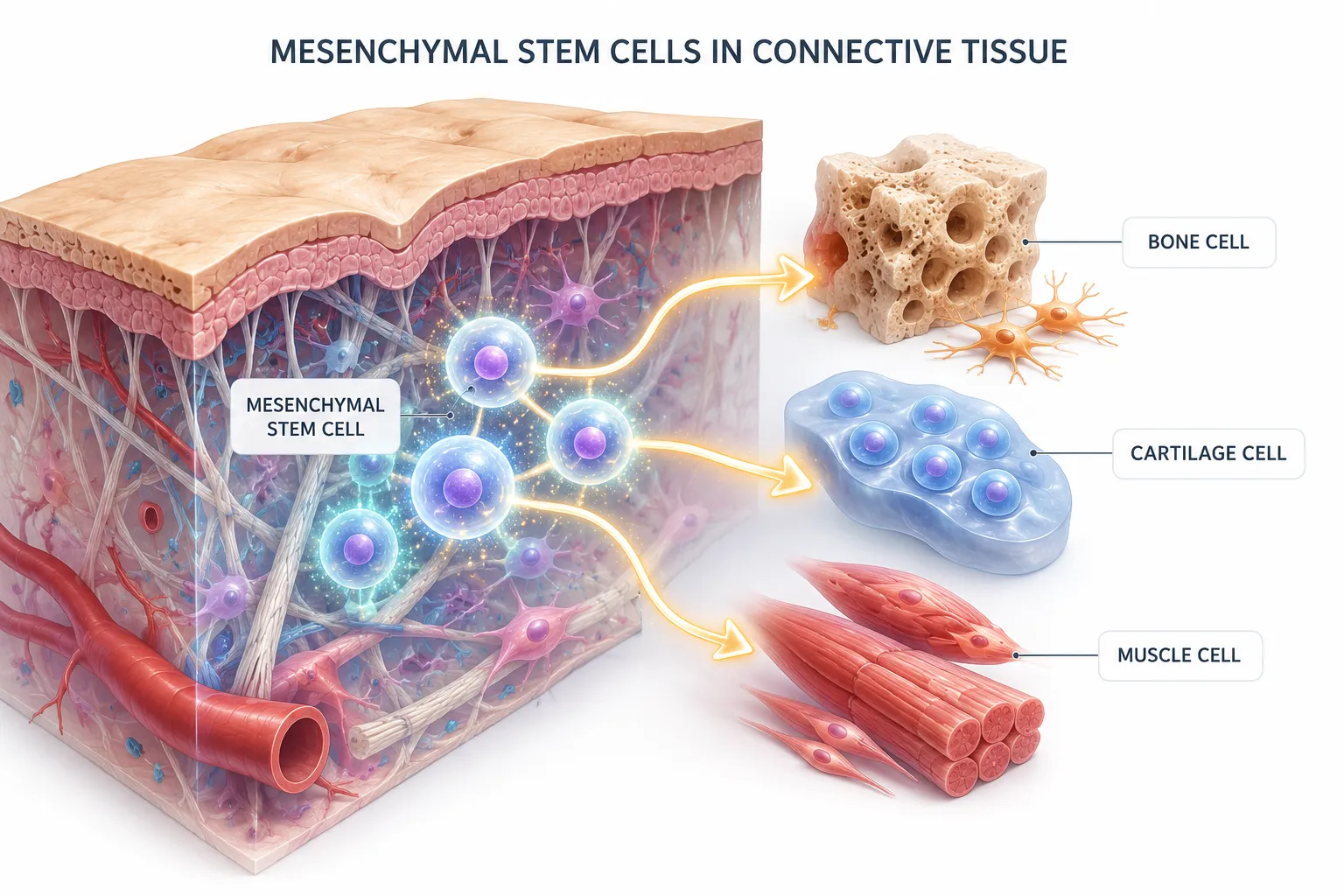
Mesenchymal stem cells are multipotent stromal progenitors found in bone marrow, adipose tissue, umbilical cord, and several other niches. In research models, they are valued for three core properties:
- Multilineage differentiation, capacity to become osteoblasts, chondrocytes, adipocytes, and myofibroblasts under appropriate stimuli.
- Paracrine secretion, release of growth factors (VEGF, TGF-beta, HGF) that modulate the local repair microenvironment.
- Immunomodulation, suppression of pro-inflammatory T-cell and macrophage activity, relevant in fibrosis and autoimmune injury models.
Because MSC behavior is highly context-dependent, researchers often introduce exogenous signaling molecules, including bioactive peptides, to steer differentiation or amplify paracrine output. This is where the study of mesenchymal stem cells and peptide-based modulators becomes particularly productive as a combined research framework.
"The peptide microenvironment does not replace MSC biology, it shapes the conditions under which that biology expresses itself."
Why Peptide Co-Treatment Matters in MSC Models
Peptides are short amino acid chains that interact with receptors, ion channels, and transcription cofactors at low concentrations. Compared to small-molecule drugs, they tend to exhibit higher target specificity and lower off-target cytotoxicity in cell culture settings, two properties that make them attractive as adjuncts in MSC co-culture and in vivo implantation studies.
BPC‑157, GHK‑Cu, and Glow Blend: Mechanisms in Tissue-Repair Models
BPC‑157 in Injury and Angiogenesis Research
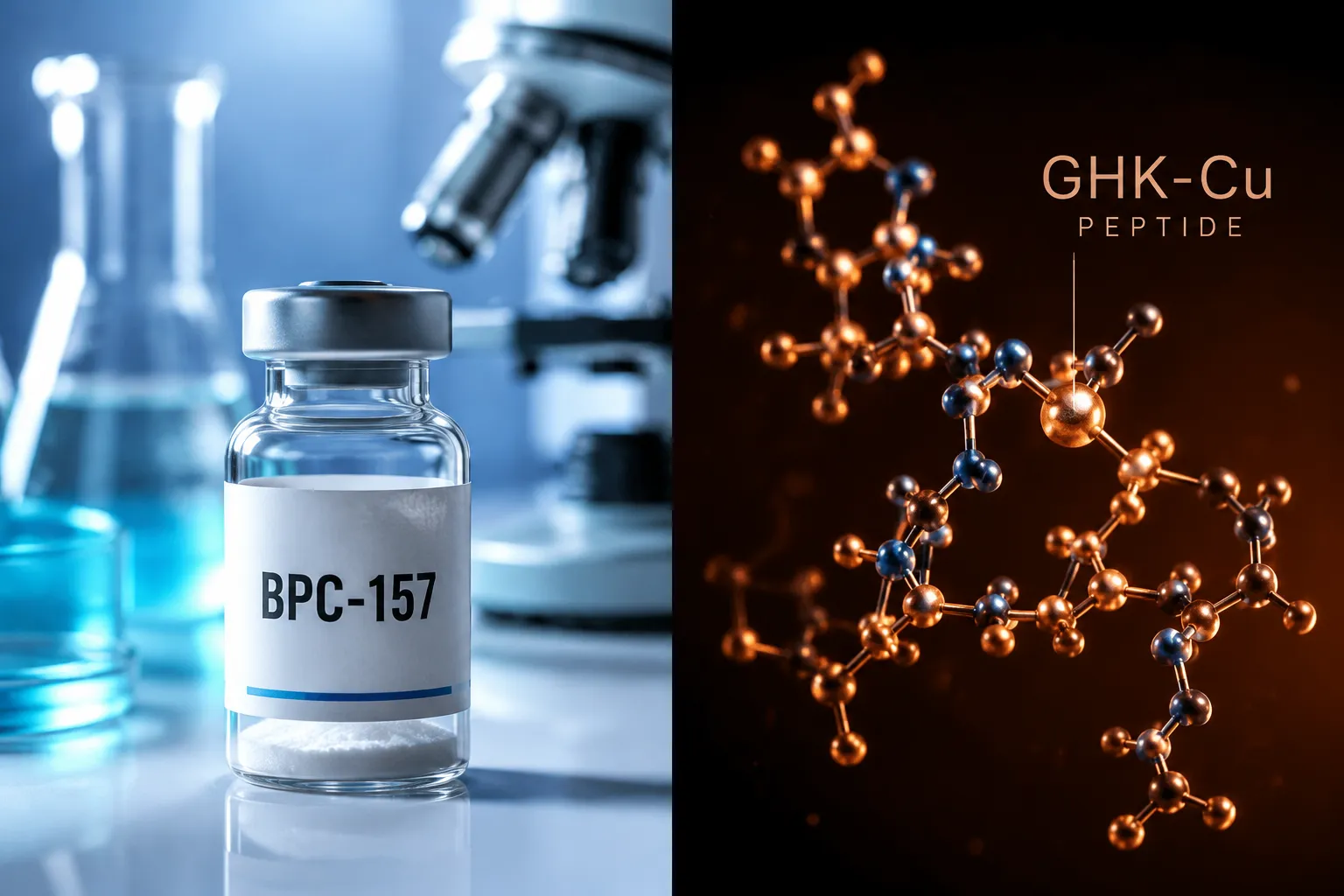
BPC‑157 (Body Protection Compound-157) is a synthetic 15-amino-acid peptide derived from a gastric protein sequence. In preclinical rodent models, it has been studied in the context of:
- Tendon and ligament repair, upregulation of collagen type I synthesis and fibroblast migration.
- Angiogenesis, interaction with the VEGFR2 pathway to promote new vessel formation at injury sites.
- Gut mucosal healing, reduction of inflammatory cytokines in intestinal epithelial models.
When MSCs are seeded into scaffolds pre-treated with BPC‑157 analogs, early data from in vitro wound-scratch assays suggest accelerated cell migration rates. Researchers sourcing compounds for these protocols often consult BPC‑157 core documentation and research guides to verify sequence integrity and purity certificates before designing experiments.
For studies that combine BPC‑157 with another widely researched peptide, the BPC‑157 and TB‑500 combination resource provides useful background on complementary mechanisms in musculoskeletal models.
GHK‑Cu: Copper Peptide Signaling and Collagen Remodeling
GHK‑Cu (glycyl-L-histidyl-L-lysine copper complex) is a naturally occurring tripeptide with high affinity for copper(II) ions. Its research profile in regenerative models includes:
| Pathway | Observed Effect in Preclinical Models |
|---|---|
| Collagen synthesis | Upregulation of collagen I and III gene expression |
| MMP regulation | Modulation of matrix metalloproteinases to reduce fibrosis |
| Antioxidant defense | Activation of superoxide dismutase pathways |
| Stem cell niche | Potential enhancement of MSC adhesion to extracellular matrix |
The anti-fibrotic dimension of GHK‑Cu is especially relevant to MSC research because excessive fibrosis represents a failure mode in many repair models. Researchers looking to source this compound for laboratory use often review GHK‑Cu peptide research sourcing guides to confirm chelation stability and storage requirements.
Glow Blend: Multi-Component Peptide Formulations
Glow Blend represents a category of multi-peptide research formulations designed to engage several regenerative pathways simultaneously. Rather than isolating a single mechanism, blended peptide preparations allow researchers to study synergistic or additive effects on tissue remodeling endpoints. Typical targets in skin and connective tissue models include:
- Fibroblast proliferation and ECM deposition
- Melanocyte signaling and pigmentation normalization
- Keratinocyte migration in wound-closure assays
The Glow Blend product documentation outlines the component profile relevant to researchers designing multi-pathway co-culture experiments.
Applying Mesenchymal Stem Cells and Peptide-Based Modulators in Experimental Protocols
Fibrosis and Wound-Healing Model Design
When designing experiments that integrate mesenchymal stem cells and peptide-based modulators, three protocol variables consistently affect data quality:
- Peptide concentration windows, Most bioactive peptides show bell-curve dose-response relationships; concentrations that stimulate MSC activity at nanomolar levels may become inhibitory at micromolar levels.
- Timing of peptide introduction, Pre-conditioning MSCs with peptides before seeding versus co-administration at implantation produces different differentiation outcomes in fibrosis models.
- Compound purity, Contaminated peptide batches introduce confounding variables. Researchers should prioritize suppliers offering third-party mass spectrometry and HPLC certificates. Resources like quality peptide sourcing references help laboratories establish baseline procurement standards.
Complementary Peptide Agents in MSC Research
Beyond BPC‑157, GHK‑Cu, and Glow Blend, several other peptides appear in the broader MSC research literature:
- TB‑500 (Thymosin Beta-4), studied for actin-cytoskeleton regulation and cell migration; see the TB‑500 research documentation for experimental context.
- Epithalon, a tetrapeptide investigated in telomere-related aging models alongside MSC longevity assays.
- GLP-1 analogs, relevant to MSC studies in metabolic tissue contexts; background available in GLP-1 generational research sourcing notes.
Reproducibility and Documentation Standards
Reproducibility in MSC-peptide research depends on rigorous batch documentation. Every compound introduced into a co-culture system should carry:
- Certificate of Analysis (CoA) with HPLC purity percentage
- Mass spectrometry confirmation of molecular weight
- Endotoxin testing results (critical for cell viability assays)
- Storage and reconstitution records
Researchers working across multiple peptide classes can use consolidated sourcing platforms that provide lab-tested peptide documentation to maintain chain-of-custody records.
Conclusion
The intersection of mesenchymal stem cell biology and peptide-based modulators represents one of the most active areas in preclinical regenerative research as of 2026. BPC‑157 offers a well-characterized angiogenic and fibroblast-signaling profile; GHK‑Cu contributes copper-mediated collagen remodeling and anti-fibrotic gene regulation; and multi-component formulations like Glow Blend allow researchers to probe synergistic pathway interactions in wound-healing and connective tissue models.
Actionable next steps for research teams:
- Audit current peptide suppliers for third-party purity documentation before initiating MSC co-culture studies.
- Design dose-response pilot experiments to establish the optimal peptide concentration window for the specific MSC lineage under investigation.
- Incorporate both single-peptide and blended-peptide conditions in parallel to isolate mechanistic contributions.
- Review published preclinical literature on BPC‑157 and GHK‑Cu to align experimental endpoints with established assay standards.
Rigorous compound sourcing, careful protocol design, and systematic documentation remain the foundation on which reproducible MSC-peptide research is built.


Leave a Reply
Want to join the discussion?Feel free to contribute!