Call or Text 727-513-9780
  • Shopping Cart Shopping Cart
    0Shopping Cart
Pure Tested Peptides | America's most trusted Peptides for sale online
  • Peptides for sale
    • Oral Peptides for sale
      • Peptide Capsules for sale
      • BPC 157 Capsules 1000mcg
      • SLU-PP-332 Capsules | 1000 mcg
      • 5-Amino-1MQ 50mg Capsules
      • Tesofensine 500mcg
    • All Peptides for sale
    • Peptide Sprays
      • BPC 157 Nasal Spray Kit
      • BPC-157 TB500 Nasal Spray Kit
      • Semax Nasal Spray 10mg
      • Selank – Nasal Spray Kit – 10mg
      • Epithalon 50MG Nasal Spray Kit
      • Ipamorelin 10mg Nasal Spray
      • Klow Nasal Spray (BPC-157 + TB-500 + GHK-Cu + KPV) | 80mg
      • Hulk Nasal Spray Tesa / Ipa Blend 6/3 MG
      • Klow Nasal Spray
      • NAD + 500 mg Nasal Spray
      • PT-141 Nasal Spray Kit
    • GHRH Peptides
      • Ipa Peptides
      • CJC-1295 Peptides
        • CJC-1295 with DAC 5 mg
        • CJC-1295 without DAC 5 mg
        • CJC-1295 Ipa 10mg
      • Tesa Peptides
        • Tesa Peptide
        • Tesa 20 mg
    • GHK-Cu Peptides
      • All GHK-Cu Peptides
      • GHK-Cu 100mg
      • KLOW Peptide Blend – Buy KLOW blend online
    • BPC Peptides
      • All BPC Peptides
      • BPC-157
      • BPC-157 TB-500
      • BPC 157 capsules 1000mcg
    • SLU-PP-332 Peptides
      • All SLU-PP-332 Peptides
      • SLU-PP-332 5mg
    • GLP3 Peptides
      • GLP3-R
      • GLP3-R CAG 10mg
      • GLP3-R 20mg
    • PT-141 Peptides
      • PT-141 Peptides for sale
      • PT-141 10mg
      • PT-141 Nasal Spray
    • CAG Peptides
      • Lipo-C Peptide Blend
      • CAG 5mg
      • CAG 10mg
    • MOTS-C Peptides
      • MOTS-C Peptides for sale
      • MOTS-c peptide
      • MOTS-c 10mg *6 pack*
    • 5 Amino 1MQ Peptides
      • 5 Amino 1MQ Peptides for sale
      • 5-Amino-1MQ 50mg Capsules
      • 5-Amino-1MQ 5mg
    • Epithalon Peptides
      • Epithalon Peptides for sale
      • Epithalon 10mg
      • Epithalon 50mg
  • Shop
    • GLPs
      • 5-Amino-1MQ 50mg Capsules
      • 5-Amino-1MQ 5mg
      • GLP3-Reta
      • L-Carnitine 500mg/ml
      • Tesofensine 500mcg
      • SLU-PP-332 5mg
      • MOTS-c 10mg *6 pack*
    • Epithalon & BPC Peptides
      • Epithalon 10mg
      • Epithalon 50mg
      • BPC-157
      • BPC 157 capsules 1000mcg
      • BPC-157 TB-500
      • BPC-157 TB500 Nasal Spray Kit
      • BPC 157 Nasal Spray Kit
    • BPC TB-500 & NAD+ Peptides
      • NAD+ 500 mg
      • KLOW Peptide Blend – Buy KLOW blend online
      • GLOW Peptide Blend
      • TB 500 5mg
      • BPC 157 capsules 1000mcg – Supplement
      • BPC 157 Nasal Spray Kit
      • BPC-157
      • BPC-157 TB500 Nasal Spray Kit
      • BPC-157 TB-500
      • BPC 157 capsules 1000mcg
    • LL-37 Peptide
      • LL-37 10 mg
    • MOTS-C & Selank
      • MOTS-c peptide
      • Selank 10mg
    • GHK Peptides
      • GHK-Cu 100mg
      • GLOW Peptide Blend
      • KLOW Peptide Blend – Buy KLOW blend online
  • COAs
  • Wholesale
    • Wholesale Peptides for sale
  • PTP FAQ
  • Affiliates
    • Selank Peptide: Advanced Pharmacological Mechanisms Underlying Its Anxiolytic and Nootropic Effects in Research
      • 5-Amino-1MQ Peptide: Detailed Mechanisms of NNMT Inhibition and Its Impact on Cellular Metabolism Research
        • MOTS-C Peptide: Unraveling Its Role in Mitochondrial Dynamics and Energy Metabolism Research
          • Epithalon Peptide and Telomerase Regulation: Investigating Its Impact on Cellular Senescence and Lifespan Research Models
            • GLP2-T vs GLP2 Tirz Peptide: Understanding the Naming, Mechanistic Nuances, and Research Implications for Gut Health
      • Peptides and Polypeptides in Modern Pharmacology: What Research on Metoprolol, Prednisone, and Amlodipine Reveals
        • Polypeptide Peptides vs NSAIDs: What Naproxen and Diclofenac Teach Tissue-Repair Researchers About BPC‑157 and TB‑500
          • Peptides and Polypeptides in Endocrine Pharmacology: How GLP-1, GLP-2, and GLP-3 Retatrutide Differ From Classic Drugs Like Prednisone and Amlodipine
          • 5‑Amino‑1MQ Peptide and NNMT Inhibition: How It Compares With Statins Like Atorvastatin in Adipose and Lipid Metabolism Research
      • Enclomiphene, Estrogen Receptor Signaling, and Luteinizing Phase Biology: What Hormone Researchers Should Measure
        • Mesenchymal Stem Cells, BPC‑157, and GHK‑Cu: How Tissue Repair Peptides Compare With Classic NSAIDs Like Naproxen in Injury Models
          • Peptide Calculator Use Cases Beyond Growth Hormone: Working Through GLP‑3 Retatrutide, MOTS‑c, and BPC‑157 Research Dosing
        • Polypeptide Peptides in Endocrine and Metabolic Pharmacology: Lessons From Amlodipine, Prednisone, and Metoprolol
        • Peptides Calculator for Advanced Blends: Worked Examples for Tesamorelin, CJC‑1295, and Ipamorelin Stacks
          • Peptides and Polypeptides in Human Physiology: How Molecular Size Shapes Research Applications
            • Selank Peptide: Advanced Pharmacological Mechanisms Underlying Its Anxiolytic and Nootropic Effects in Research
          • 5-Amino-1MQ Peptide: Detailed Mechanisms of NNMT Inhibition and Its Impact on Cellular Metabolism Research
            • MOTS-C Peptide: Unraveling Its Role in Mitochondrial Dynamics and Energy Metabolism Research
              • Epithalon Peptide and Telomerase Regulation: Investigating Its Impact on Cellular Senescence and Lifespan Research Models
                • GLP2-T vs GLP2 Tirz Peptide: Understanding the Naming, Mechanistic Nuances, and Research Implications for Gut Health
                  • Peptides and Polypeptides in Endocrine Pharmacology: How GLP-1, GLP-2, and GLP-3 Retatrutide Differ From Classic Drugs Like Prednisone and Amlodipine
                    • Polypeptide Peptides vs NSAIDs: What Naproxen and Diclofenac Teach Tissue-Repair Researchers About BPC‑157 and TB‑500
                      • Peptides and Polypeptides in Modern Pharmacology: What Research on Metoprolol, Prednisone, and Amlodipine Reveals
                        • 5‑Amino‑1MQ Peptide and NNMT Inhibition: How It Compares With Statins Like Atorvastatin in Adipose and Lipid Metabolism Research
                        • Enclomiphene, Estrogen Receptor Signaling, and Luteinizing Phase Biology: What Hormone Researchers Should Measure
                        • Mesenchymal Stem Cells, BPC‑157, and GHK‑Cu: How Tissue Repair Peptides Compare With Classic NSAIDs Like Naproxen in Injury Models
                        • Peptide Calculator Use Cases Beyond Growth Hormone: Working Through GLP‑3 Retatrutide, MOTS‑c, and BPC‑157 Research Dosing
                        • Polypeptide Peptides in Endocrine and Metabolic Pharmacology: Lessons From Amlodipine, Prednisone, and Metoprolol
                        • Peptides Calculator for Advanced Blends: Worked Examples for Tesamorelin, CJC‑1295, and Ipamorelin Stacks
                        • Peptides and Polypeptides in Human Physiology: How Molecular Size Shapes Research Applications
                        • Selank Peptide: Advanced Pharmacological Mechanisms Underlying Its Anxiolytic and Nootropic Effects in Research
                        • MOTS-C Peptide: Unraveling Its Role in Mitochondrial Dynamics and Energy Metabolism Research
                        • Peptides and Polypeptides in Modern Pharmacology: What Research on Metoprolol, Prednisone, and Amlodipine Reveals
                        • Peptides and Polypeptides in Endocrine Pharmacology: How GLP-1, GLP-2, and GLP-3 Retatrutide Differ From Classic Drugs Like Prednisone and Amlodipine
                        • 5-Amino-1MQ Peptide: Detailed Mechanisms of NNMT Inhibition and Its Impact on Cellular Metabolism Research
                        • Mesenchymal Stem Cells, BPC‑157, and GHK‑Cu: How Tissue Repair Peptides Compare With Classic NSAIDs Like Naproxen in Injury Models
                        • Peptide Calculator Use Cases Beyond Growth Hormone: Working Through GLP‑3 Retatrutide, MOTS‑c, and BPC‑157 Research Dosing
                        • GLP2-T vs GLP2 Tirz Peptide: Understanding the Naming, Mechanistic Nuances, and Research Implications for Gut Health
                        • Polypeptide Peptides in Endocrine and Metabolic Pharmacology: Lessons From Amlodipine, Prednisone, and Metoprolol
                        • Polypeptide Peptides vs NSAIDs: What Naproxen and Diclofenac Teach Tissue-Repair Researchers About BPC‑157 and TB‑500
                        • Peptides and Polypeptides in Human Physiology: How Molecular Size Shapes Research Applications
                        • Peptides Calculator for Advanced Blends: Worked Examples for Tesamorelin, CJC‑1295, and Ipamorelin Stacks
                        • 5‑Amino‑1MQ Peptide and NNMT Inhibition: How It Compares With Statins Like Atorvastatin in Adipose and Lipid Metabolism Research
                        • Enclomiphene, Estrogen Receptor Signaling, and Luteinizing Phase Biology: What Hormone Researchers Should Measure
                        • Epithalon Peptide and Telomerase Regulation: Investigating Its Impact on Cellular Senescence and Lifespan Research Models
                        • Best research protocol Klow blend
                        • best time to take BPC-157
                        • best time to take DSIP (Delta Sleep Inducing Peptide)
                        • best time to take CJC-1295
                        • best time to take AOD-9604
                        • best time to take Follistatin 344
                        • best time to take Ipamorelin
                        • best time to take MK-677 (Ibutamoren)
                        • best time to take Ligandrol (LGD-4033) — research compound
                        • best time to take Ostarine (MK-2866) — research compound
                        • best time to take GHK-CU
                        • best time to take TB-500
                        • best time to take MOTS-c
                        • best time to take Semax
                        • best time to take RAD-140 (Testolone) — research compound
                        • best time to take Thymosin Alpha-1
                        • best time to take PEG-MGF
                        • Biolife Plasma, Octapharma Plasma, and Research Peptides: How Plasma Donation Labs Differ From Peptide Suppliers
                        • best time to take YK-11 — research compound
                        • best time to take PT-141 (Bremelanotide)
                        • Best research protocol Klow blend
                        • 5-Amino-1MQ and MOTS-C Synergy: Metabolic Signaling, Mitochondria, and Research Design
                        • BPC-157 and TB-500: Investigating Their Combined Effects on Angiogenesis and Cellular Migration in Tissue Repair Models
                        • BPC-157 Peptide: Gut Barrier Function, Inflammation, and Tissue-Recovery Research
                        • 5‑Amino‑1MQ and MOTS‑c Synergy in Metabolic Research: Designing NNMT and Mitochondrial Biogenesis Stacks
                        • CJC-1295 with DAC vs. Without DAC: Half-Life, Release Kinetics, and Research Implications
                        • CJC‑1295 with DAC vs. Without DAC: Expanding on Half‑Life Differences Using Tesamorelin and Ipamorelin Blend Case Studies
                        • Collagen Biology and Copper‑Binding Peptides: How GHK‑Cu, Glow Blend, and Klow Blend Interact with Skin and Connective Tissue
                        • Collagen Biology and Regenerative Peptides: How GHK‑Cu, Glow Blend, and Klow Blend Affect Extracellular Matrix Research
                    • DNA, Telomeres, and Longevity Peptides: Positioning Epithalon and MOTS‑c in Genetic Aging Research
                      • Enclomiphene Citrate: serm Mechanism, Testosterone Research, and Stack Compatibility
                        • Enclomiphene vs Enclomiphene Citrate: Formulation, Bioavailability, and Research Distinctions
                        • Epithalon Peptide Research: Telomerase Activation, Aging, and Pineal Gland Function
                        • Estrogen Receptor Signaling and Enclomiphene: How Selective Modulators Compare with Classic Polypeptide Hormones
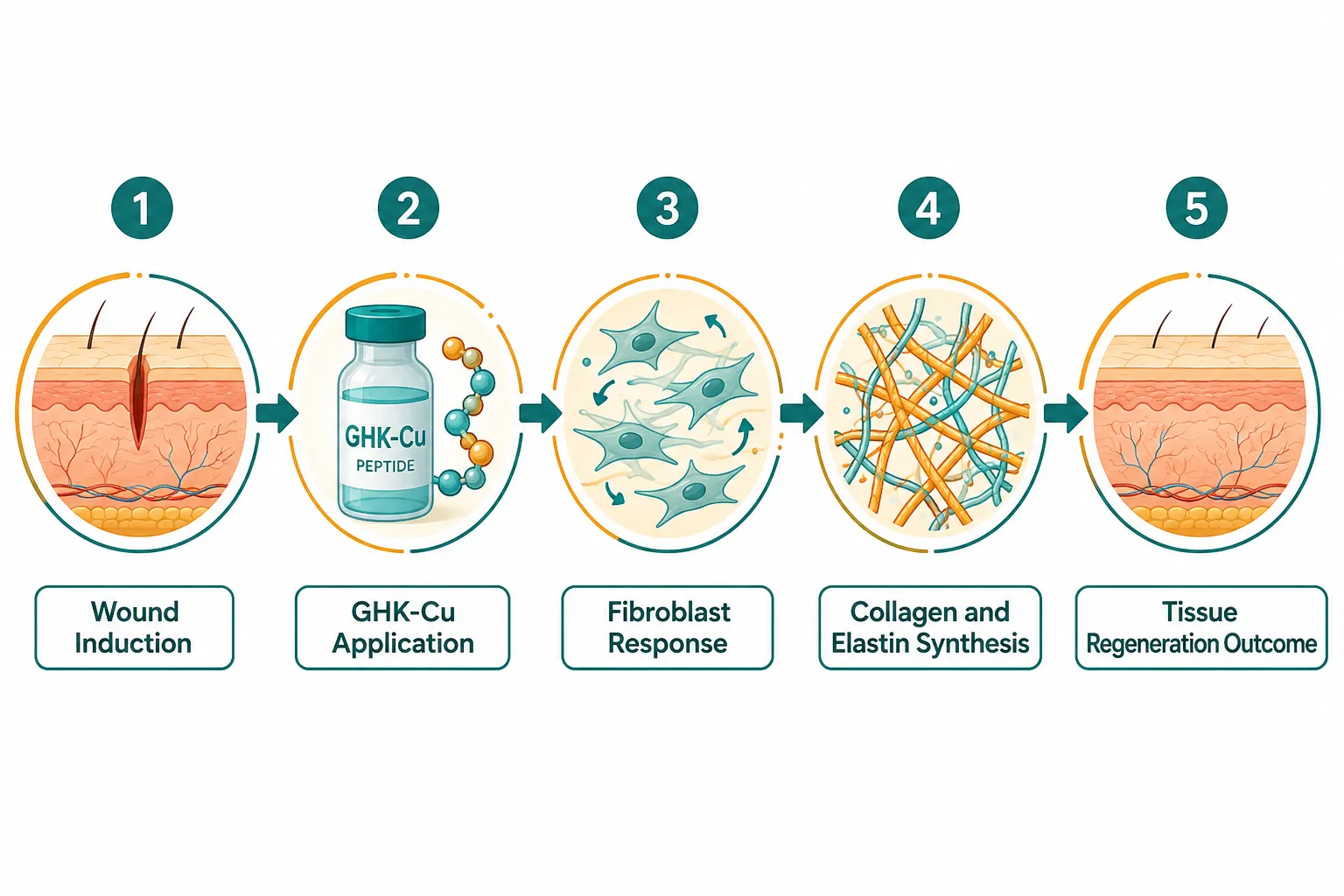
                        • GHK-Cu Peptide: Advanced Mechanisms in Extracellular Matrix Remodeling and Wound Healing Research
                        • GHK-Cu Peptide: Collagen Synthesis, Wound Repair, and Skin-Barrier Research Models
                        • GLP-1 vs GLP-3 vs GLP-2: Peptide Classification and Research Applications
                        • GLP-2 Peptide Research Guide: Gut Barrier Function, Nutrient Absorption, and Intestinal Recovery Models
                        • GLP-3 Retatrutide vs. GLP-1 Drugs: What Triple-Agonist Biology Changes in Research Models
                        • Ipamorelin and Tesamorelin Combination: Synergistic GH Secretagogue Research and Dosing Protocols
                        • GLP2 Tirz Peptide: What It Is, Why the Name Exists, and How Researchers Should Interpret It
                        • Klow Blend Peptide Nasal Spray: What the Formulation Is Trying to Do in Cognitive Research
                        • Mitochondria, NNMT Inhibition, and Peptide Modulators: Where MOTS‑c and 5‑Amino‑1MQ Fit in Cellular Energy Research
                        • MOTS-c Peptide: Mitochondrial Function, Energy Metabolism, and What Researchers Measure
                        • MOTS-c vs. 5-Amino-1MQ: Which Metabolic Research Questions Each Compound Actually Answers
                        • Nasal Spray Peptides: Bioavailability, Administration, and Semax/Selank Research Applications
                        • PT-141 Peptide Research: Mechanism of Action and Melanocortin Receptor Signaling
                        • Retatrutide for Research: Mechanism, Structure, and GLP-1/GLP-3 Dual Action
                        • Retatrutide for Obesity and Type 2 Diabetes: What the Latest Trial Data Suggest
                        • Tesofensine Peptide Research: Mechanism, Appetite Suppression, and Neuropeptide Y Pathways
  • Contact
    • Contact Customer Service
    • Text Customer Support
  • About US
  • Shop all peptides
  • Affiliate Program
    • Affiliate Signup
  • Login / Register Login / Register Page Link Login / Register Page Link
  • Click to open the search input field Click to open the search input field Search
  • Menu Menu

Tag Archive for: glow blend

GHK-Cu vs Glow Blend vs Klow Blend: What Each Copper- and Skin-Focused Formula Is Used For in Research

GHK-Cu vs Glow Blend vs Klow Blend: What Each Copper- and Skin-Focused Formula Is Used For in Research

August 12, 2026/0 Comments/in Uncategorized/by

Copper peptides have generated more than three decades of peer-reviewed attention, yet researchers in 2026 still encounter significant confusion when supplier catalogs list "GHK-Cu," "Glow Blend," and "Klow Blend" as separate SKUs. These are not interchangeable names for the same compound. Understanding the compositional differences, and the distinct experimental goals each formula serves, is essential before designing any copper- or skin-focused research protocol.

This article breaks down GHK-Cu vs Glow Blend vs Klow Blend: What Each Copper- and Skin-Focused Formula Is Used For in Research, covering composition, proposed mechanisms, and the practical reasons blend naming drives search demand among researchers.

Key Takeaways

  • GHK-Cu is a single-ingredient tripeptide-copper complex with a well-characterized research profile focused on skin remodeling and wound healing.
  • Glow Blend combines GHK-Cu with complementary skin-focused peptides to address multiple dermal targets simultaneously in a single formulation.
  • Klow Blend incorporates GHK-Cu alongside peptides studied for hair follicle support and scalp health, targeting a different tissue compartment.
  • Blend naming creates search demand because researchers seek pre-combined formulas that reduce preparation complexity in multi-peptide studies.
  • All three formulas are intended for research use only and are not approved for human therapeutic application.

Key Takeaways

What Is GHK-Cu and Why Does It Anchor Every Comparison

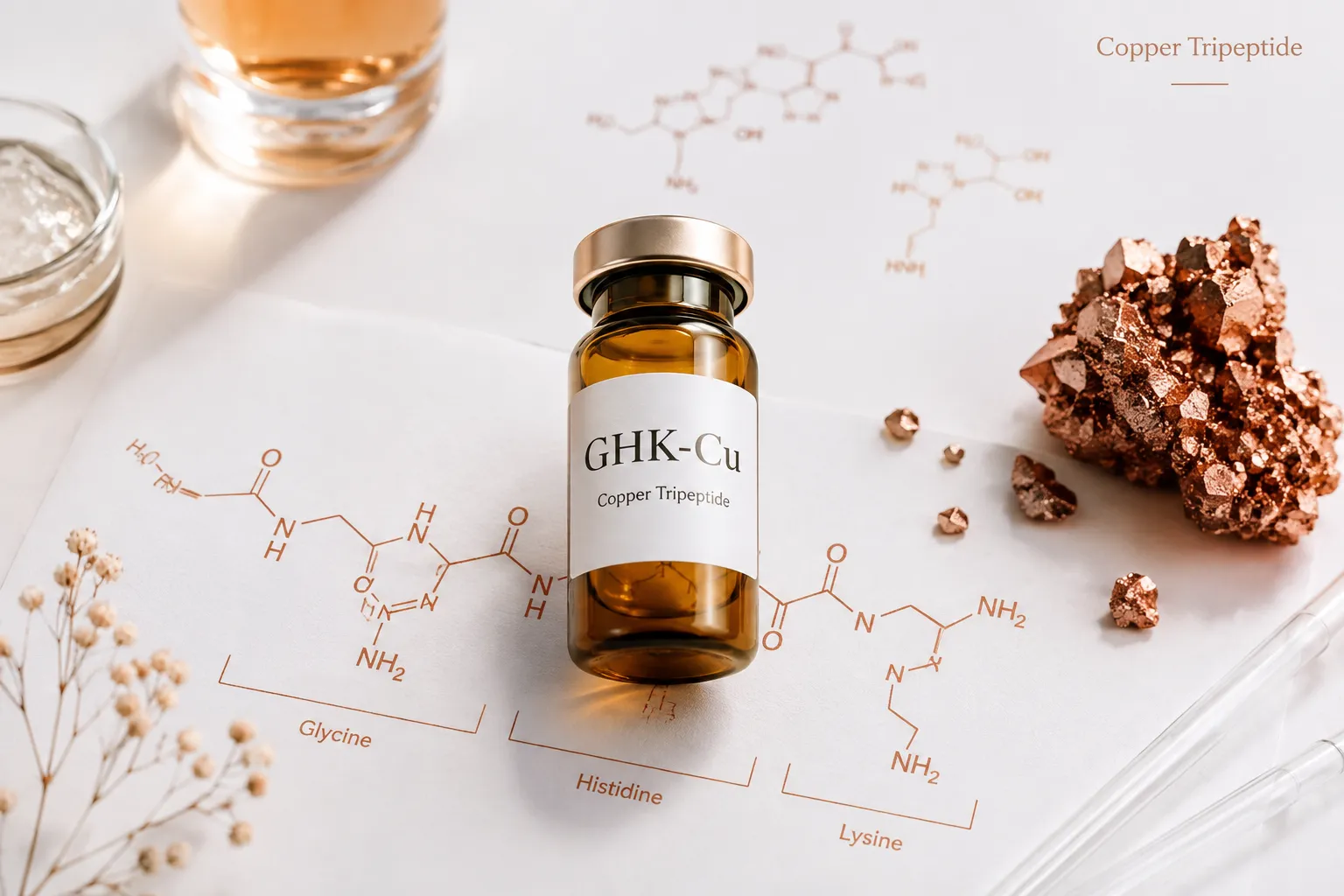
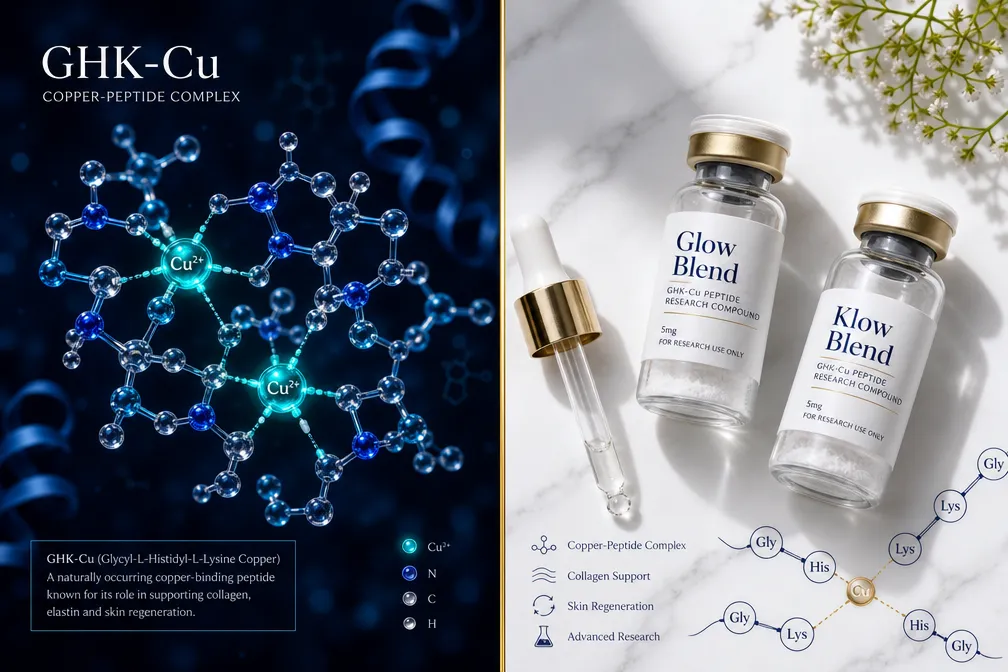
GHK-Cu (glycyl-L-histidyl-L-lysine copper complex) is a naturally occurring tripeptide first isolated from human plasma. Its molecular structure, three amino acids chelated to a copper(II) ion, gives it a high affinity for copper transport across biological membranes.

Core research areas for GHK-Cu include:

  • Collagen and elastin synthesis stimulation
  • Matrix metalloproteinase (MMP) regulation
  • Antioxidant gene expression
  • Wound contraction and tissue remodeling
  • Anti-inflammatory signaling pathways

Decades of in vitro and animal studies have documented GHK-Cu's ability to upregulate genes associated with skin repair. A landmark review by Pickart and Margolina (2018) catalogued over 4,000 human genes modulated by GHK-Cu, positioning it as one of the most studied tripeptides in dermatological research.

For researchers sourcing this compound independently, the GHK-Cu peptide purchase and copper peptide research sourcing guide provides purity benchmarks and quality criteria relevant to experimental design.

Because GHK-Cu is a single active ingredient, researchers can isolate its effects cleanly. This is its primary advantage over blended formulas when the experimental goal is mechanistic clarity.

How Glow Blend and Klow Blend Differ From Single-Ingredient GHK-Cu

When researchers move beyond single-compound studies, pre-formulated blends offer a different value proposition. The question in GHK-Cu vs Glow Blend vs Klow Blend: What Each Copper- and Skin-Focused Formula Is Used For in Research becomes one of experimental scope rather than ingredient quality.

Glow Blend: A Multi-Peptide Skin Remodeling Formula

Glow Blend is a pre-combined formulation that pairs GHK-Cu with additional peptides targeting complementary aspects of dermal biology. The blend is designed for research models where investigators want to assess synergistic effects across multiple skin-repair pathways in a single administration.

Typical research applications for Glow Blend:

  • Photoaging and UV-damage repair models
  • Collagen density studies in aged dermal tissue
  • Comparative efficacy trials against single-ingredient GHK-Cu controls
  • Multi-target anti-inflammatory skin protocols

The rationale for bundling is straightforward: skin aging involves simultaneous degradation of collagen, hyaluronic acid scaffolding, and vascular support structures. A single peptide addresses only one node of that network. Glow Blend allows researchers to probe whether combined peptide delivery produces additive or synergistic outcomes.

Klow Blend: Targeting Hair Follicle and Scalp Research Models

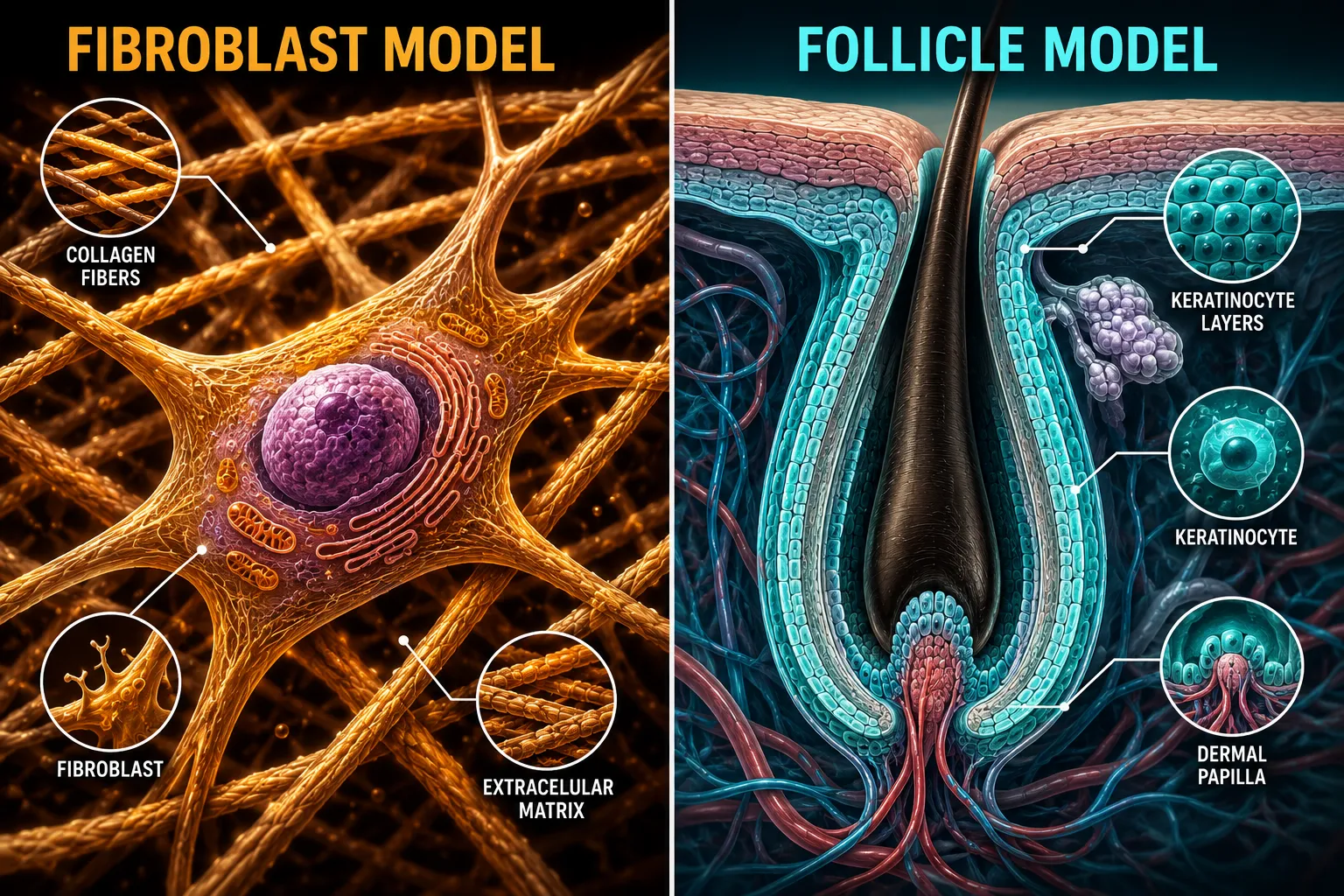
Klow Blend shifts the tissue target from dermal layers to the pilosebaceous unit. While it retains GHK-Cu as a core component, the additional peptides in Klow Blend are selected for their proposed roles in follicle cycling, scalp microcirculation, and keratinocyte activity.

Typical research applications for Klow Blend:

  • Androgenic alopecia models in rodent studies
  • Hair follicle miniaturization reversal protocols
  • Scalp inflammation and sebaceous gland research
  • Delivery vehicle comparisons (topical vs. nasal spray)

Notably, Klow Blend has also been studied in nasal delivery formats. Researchers interested in that delivery route can review research-use nasal spray peptide comparisons including Klow nasal for cognitive and anxiolytic models for context on how the same blend behaves across different administration routes.

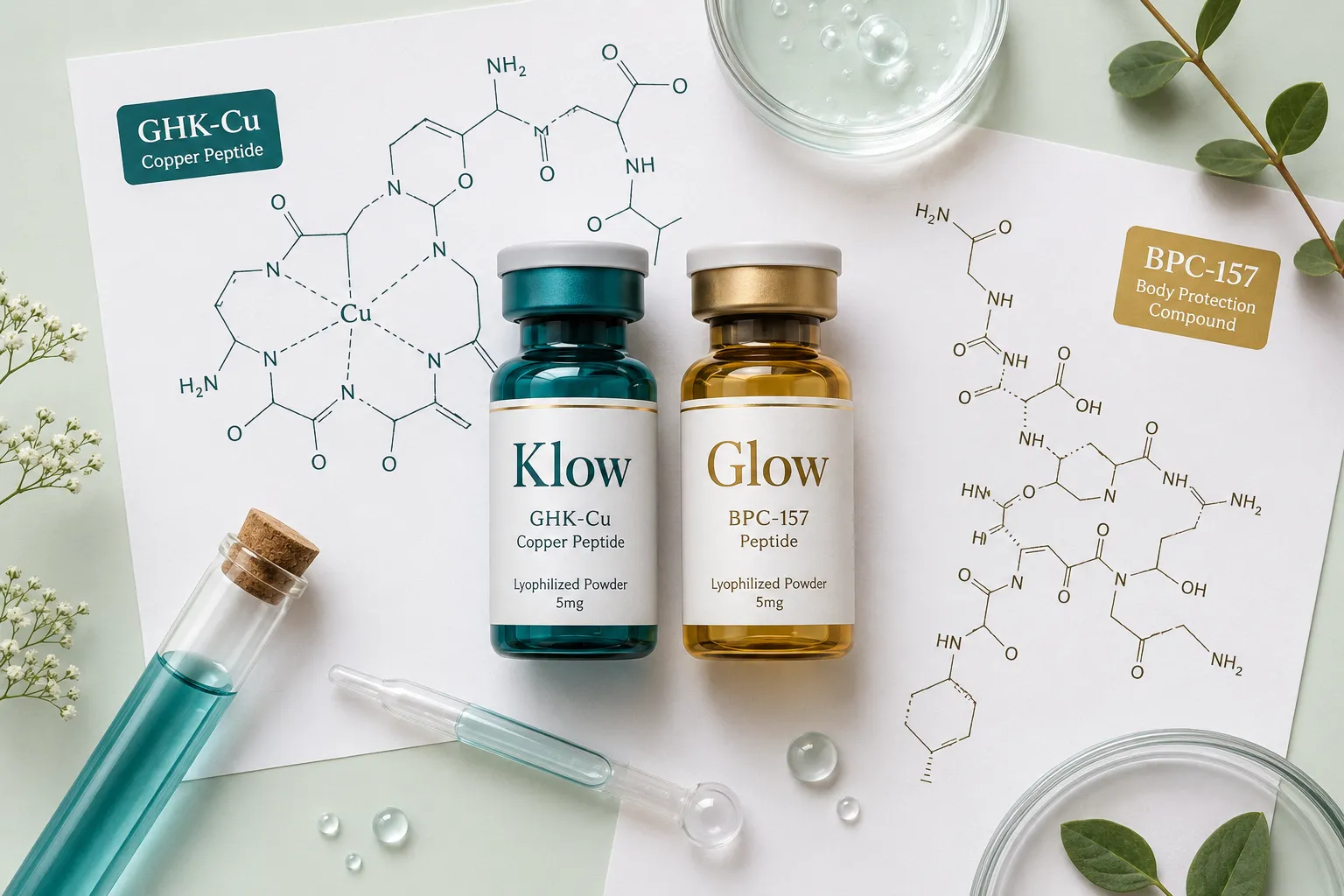
For a comprehensive overview of both blends side by side, the Glow and Klow peptide blends product page details current formulation compositions relevant to research procurement.

Klow Blend: Targeting Hair Follicle and Scalp Research Models

Comparing Research Goals Across All Three Formulas

The table below summarizes the key distinctions that define the GHK-Cu vs Glow Blend vs Klow Blend comparison for research planning purposes.

Parameter GHK-Cu Glow Blend Klow Blend
Ingredient count Single Multi-peptide Multi-peptide
Primary tissue target Dermis / wound sites Dermis / photoaging Hair follicle / scalp
Best for Mechanistic isolation Synergy studies Follicle cycling models
Delivery routes studied Topical, subcutaneous Topical Topical, nasal
Experimental complexity Lower Moderate Moderate-High

"Single-ingredient studies establish mechanism. Multi-ingredient blends test real-world synergy. Both are necessary for a complete research picture."

Researchers building a broader skin and tissue recovery protocol may also consider pairing copper peptide work with synergistic compounds. The Skin Repair Stack combining BPC-157, TB-500, and GHK-Cu represents one such multi-compound research configuration.

For foundational context on how peptide structure influences experimental outcomes, the Peptides 101 guide for research-use buyers covers structure-mechanism relationships applicable across all three formulas discussed here.

Why Blend Naming Drives Search Demand in Peptide Research

The commercial naming of "Glow Blend" and "Klow Blend" is not arbitrary. It solves a practical problem for researchers: preparation complexity. Sourcing, weighing, and combining multiple peptides individually introduces compounding error at each step. Pre-formulated blends reduce that variability.

From an SEO and market perspective, blend names also signal intent. A researcher searching "Klow Blend" is specifically interested in the hair-and-scalp application stack, not a general copper peptide inquiry. This search specificity is why understanding GHK-Cu vs Glow Blend vs Klow Blend: What Each Copper- and Skin-Focused Formula Is Used For in Research matters beyond academic curiosity, it directly shapes how researchers find and evaluate the right compound for their model.

Researchers exploring broader peptide categories alongside copper-focused compounds may find value in the overview of polypeptide peptides from collagen and hormones to advanced research compounds for additional structural context.

Why Blend Naming Drives Search Demand in Peptide Research

Conclusion

The distinction between GHK-Cu, Glow Blend, and Klow Blend is fundamentally a question of experimental scope and tissue targeting. GHK-Cu delivers mechanistic precision as a single-ingredient copper peptide with a robust published literature. Glow Blend expands that scope into multi-pathway dermal remodeling research. Klow Blend redirects the focus toward follicle biology and scalp tissue, with additional delivery format flexibility.

Actionable next steps for researchers:

  1. Define the primary tissue target (dermis vs. follicle) before selecting a formula.
  2. Use single-ingredient GHK-Cu when mechanistic isolation is the priority.
  3. Select Glow Blend or Klow Blend when synergistic multi-peptide effects are the hypothesis.
  4. Verify purity certificates and third-party testing for any sourced compound before experimental use.
  5. Review delivery route data, particularly nasal vs. topical comparisons, when designing administration protocols for Klow Blend studies.

All compounds discussed are for research use only and are not approved for human therapeutic application.

https://www.puretestedpeptides.com/wp-content/uploads/2026/08/ghk-cu-vs-glow-blend-vs-klow-blend-what-each-copper-and-skin-focused-formula-is.webp 1024 1536 https://www.puretestedpeptides.com/wp-content/uploads/2026/01/buy-peptides-online.jpg 2026-08-12 13:03:512026-08-12 13:03:51GHK-Cu vs Glow Blend vs Klow Blend: What Each Copper- and Skin-Focused Formula Is Used For in Research
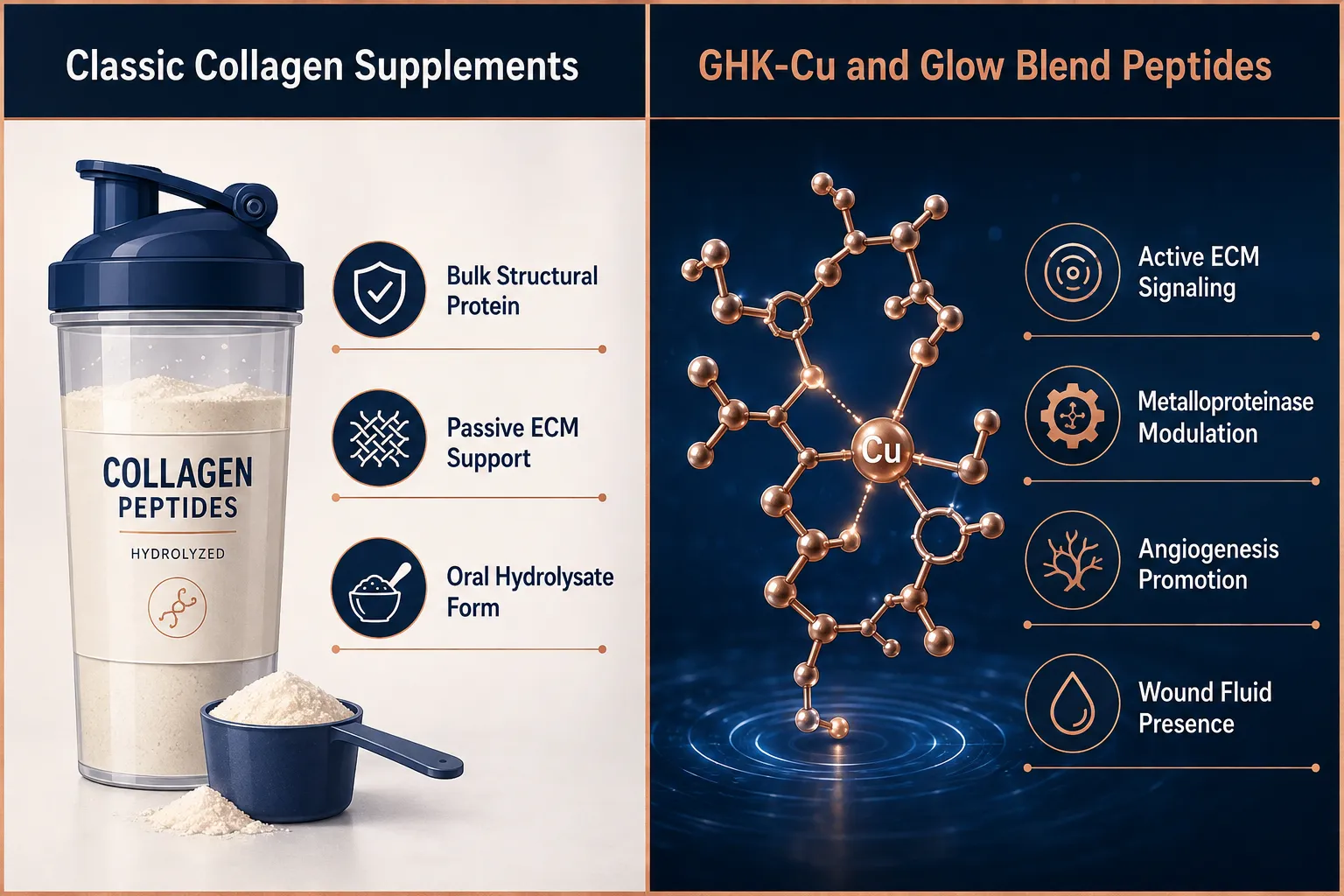
Collagen, GHK-Cu, and Glow Blend: How Classic Collagen Biology Intersects With Copper Peptide Research

Collagen, GHK-Cu, and Glow Blend: How Classic Collagen Biology Intersects With Copper Peptide Research

August 4, 2026/0 Comments/in Uncategorized/by

Collagen accounts for roughly 30% of all protein in the human body, yet most people only think about it when their skin starts to show age. That gap between broad public interest and deeper scientific understanding is exactly where the conversation about Collagen, GHK-Cu, and Glow Blend: How Classic Collagen Biology Intersects With Copper Peptide Research becomes genuinely useful. Understanding the foundational biology of collagen first makes it far easier to appreciate why copper peptide research, and formulations like Glow Blend, has attracted serious scientific attention.

Key Takeaways

  • Collagen synthesis depends on a tightly regulated cellular pathway involving fibroblasts, vitamin C, and enzymatic cross-linking.
  • GHK-Cu (glycyl-L-histidyl-L-lysine copper) is a naturally occurring tripeptide-copper complex studied for its role in activating collagen-related gene expression.
  • Glow Blend formulations combine GHK-Cu with complementary peptides to target multiple steps in skin and tissue remodeling.
  • Research models suggest GHK-Cu may upregulate collagen I and III synthesis while also influencing matrix metalloproteinase (MMP) balance.
  • Sourcing purity-verified peptides is critical for any research application involving copper peptide complexes.

The Collagen Synthesis Pathway: What the Biology Actually Shows

The Collagen Synthesis Pathway: What the Biology Actually Shows

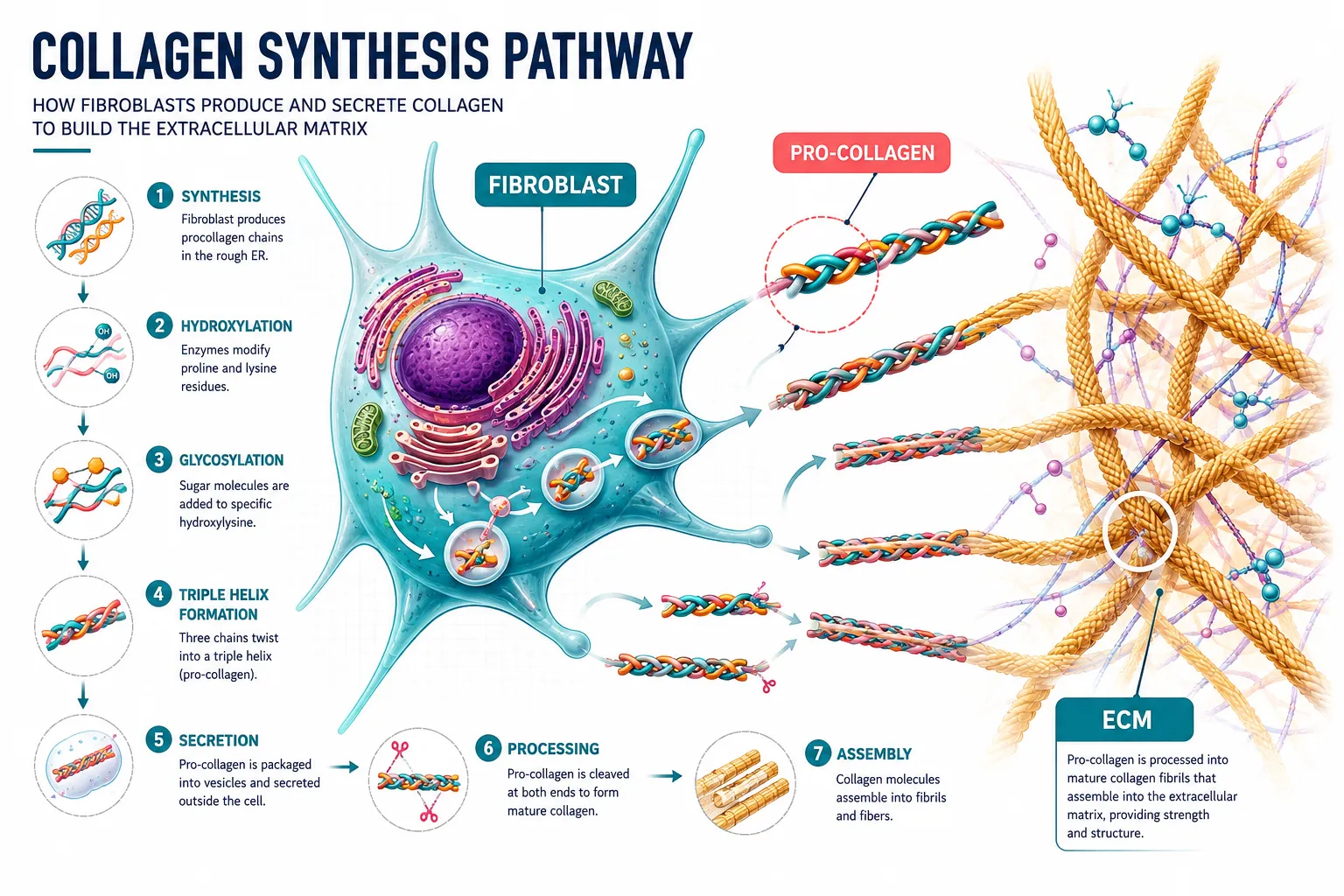
Collagen is not a single molecule, it is a family of at least 28 distinct structural proteins. Types I, II, and III are the most studied in skin and connective tissue contexts. Each collagen molecule begins as a precursor called pro-collagen, assembled inside fibroblast cells through a multi-step process:

  1. Transcription and translation, Genes encode alpha chains that are synthesized on ribosomes.
  2. Hydroxylation, Proline and lysine residues are hydroxylated, a step requiring vitamin C as a cofactor.
  3. Triple helix formation, Three alpha chains coil together into a stable triple-helix structure.
  4. Secretion, Pro-collagen is exported to the extracellular matrix (ECM).
  5. Cross-linking, Lysyl oxidase enzymes cross-link fibrils for tensile strength.

"Collagen remodeling is not a one-way street, synthesis and degradation happen simultaneously, governed by matrix metalloproteinases and their inhibitors."

This balance between synthesis and breakdown is central to understanding how peptide-based interventions are studied. When degradation outpaces production, as it does with UV exposure, aging, and oxidative stress, researchers look for compounds that can tip the balance back toward synthesis. That is where GHK-Cu enters the picture.

GHK-Cu Research: Copper Peptide Science and the Collagen Connection

GHK-Cu Research: Copper Peptide Science and the Collagen Connection

GHK-Cu (glycyl-L-histidyl-L-lysine bound to copper(II)) was first isolated from human plasma in the early 1970s. Decades of subsequent research have examined its behavior in cell culture and animal tissue models. The findings most relevant to Collagen, GHK-Cu, and Glow Blend: How Classic Collagen Biology Intersects With Copper Peptide Research fall into three categories:

Collagen Gene Upregulation

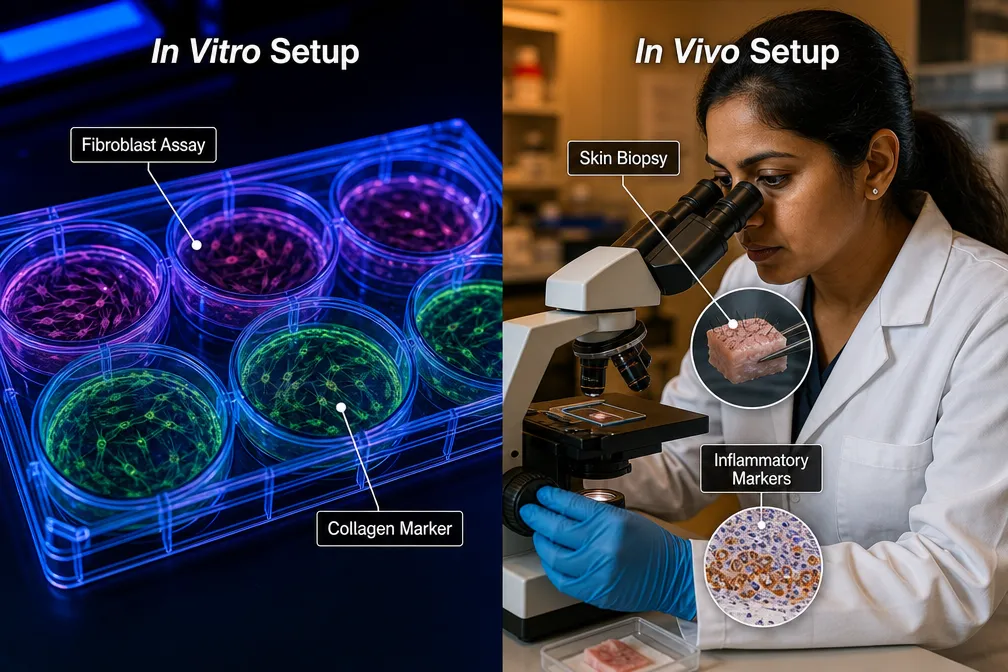
In vitro studies using human fibroblast cultures have shown that GHK-Cu can increase the expression of collagen I and collagen III genes. It appears to do this partly by activating TGF-beta signaling pathways, which are master regulators of ECM production. This is not the same as directly injecting collagen, it is a signaling-level intervention that prompts cells to produce more of their own structural proteins.

MMP Modulation

Matrix metalloproteinases (MMPs) are enzymes that break down collagen. GHK-Cu research has explored its apparent ability to modulate MMP-1 (collagenase) activity while simultaneously supporting tissue inhibitors of metalloproteinases (TIMPs). This dual action, slowing breakdown while encouraging synthesis, is what makes it a compelling subject in tissue remodeling research.

Antioxidant and Anti-Inflammatory Context

Copper in free ionic form is pro-oxidant. However, when chelated within the GHK tripeptide, the complex behaves differently. Research models suggest the chelated form may reduce oxidative stress markers in skin tissue, creating a more favorable environment for collagen-producing fibroblasts to function. For researchers interested in the broader landscape of peptides with anti-inflammatory profiles, comparisons with compounds like those covered in the LL-37 versus SS-31 peptide benefits guide offer useful context.

Those sourcing GHK-Cu for research purposes should consult a detailed GHK-Cu copper peptide sourcing guide to understand purity standards and certificate of analysis requirements before procurement.

Glow Blend Formulations: Combining Collagen Biology With Copper Peptide Research

Glow Blend Formulations: Combining Collagen Biology With Copper Peptide Research

The concept behind a Glow Blend is straightforward: instead of relying on a single peptide, a multi-peptide formulation targets several points in the collagen synthesis and skin remodeling cascade simultaneously. The Glow Blend peptide formulation is one such research-grade product designed with this multi-target approach in mind.

Why Blending Matters in Collagen Research

Single-ingredient approaches have limitations. Collagen synthesis is not controlled by one switch, it involves growth factors, enzymatic activity, cellular redox state, and ECM scaffold integrity. A well-designed blend can address several of these variables at once.

Target Mechanism Relevant Peptide Class
Fibroblast activation GHK-Cu, growth factor peptides
ECM scaffold support Matrikine peptides
Oxidative stress reduction Antioxidant peptides
MMP balance Signaling tripeptides

This is also why researchers studying skin and tissue models increasingly look beyond isolated compounds. Peptides like Epithalon, studied in aging and cellular longevity contexts, and tissue-repair compounds like TB-500 are often examined alongside skin-focused peptides to understand overlapping mechanisms. For those exploring aging-support peptide categories more broadly, the aging support peptide category provides a useful reference point.

Research Considerations for Glow Blend Studies

When designing experiments around Glow Blend or similar formulations, researchers should account for:

  • Peptide stability in the chosen vehicle or buffer system
  • Concentration gradients used in published cell culture studies
  • Endpoint selection, whether measuring gene expression, protein output, or histological markers
  • Purity verification, mass spectrometry and HPLC data from the supplier

For researchers who also study tissue repair peptides, the BPC-157 and TB-500 blend represents another multi-peptide research model with a documented mechanistic rationale, useful for comparative study design.

Conclusion

The intersection of classic collagen biology and copper peptide research is not a niche curiosity, it is a well-supported area of inquiry with decades of published data behind it. Collagen, GHK-Cu, and Glow Blend: How Classic Collagen Biology Intersects With Copper Peptide Research represents a logical progression: start with the foundational science of how collagen is made and degraded, then examine how GHK-Cu interacts with those pathways at the gene and enzyme level, and finally consider how multi-peptide blends like Glow Blend are designed to engage those mechanisms more comprehensively.

Actionable next steps for researchers:

  • Review primary literature on GHK-Cu and TGF-beta signaling before designing skin model experiments.
  • Verify supplier purity documentation before sourcing any copper peptide complex.
  • Consider multi-endpoint study designs that measure both collagen gene expression and MMP activity simultaneously.
  • Explore how complementary peptides in aging-support categories may interact with collagen synthesis pathways.

Rigorous sourcing, clear experimental endpoints, and a grounded understanding of collagen biology remain the foundation of any credible copper peptide research program in 2026.

https://www.puretestedpeptides.com/wp-content/uploads/2026/08/collagen-ghk-cu-and-glow-blend-how-classic-collagen-biology-intersects-with-copp.webp 1024 1536 https://www.puretestedpeptides.com/wp-content/uploads/2026/01/buy-peptides-online.jpg 2026-08-04 13:05:192026-08-04 13:05:19Collagen, GHK-Cu, and Glow Blend: How Classic Collagen Biology Intersects With Copper Peptide Research
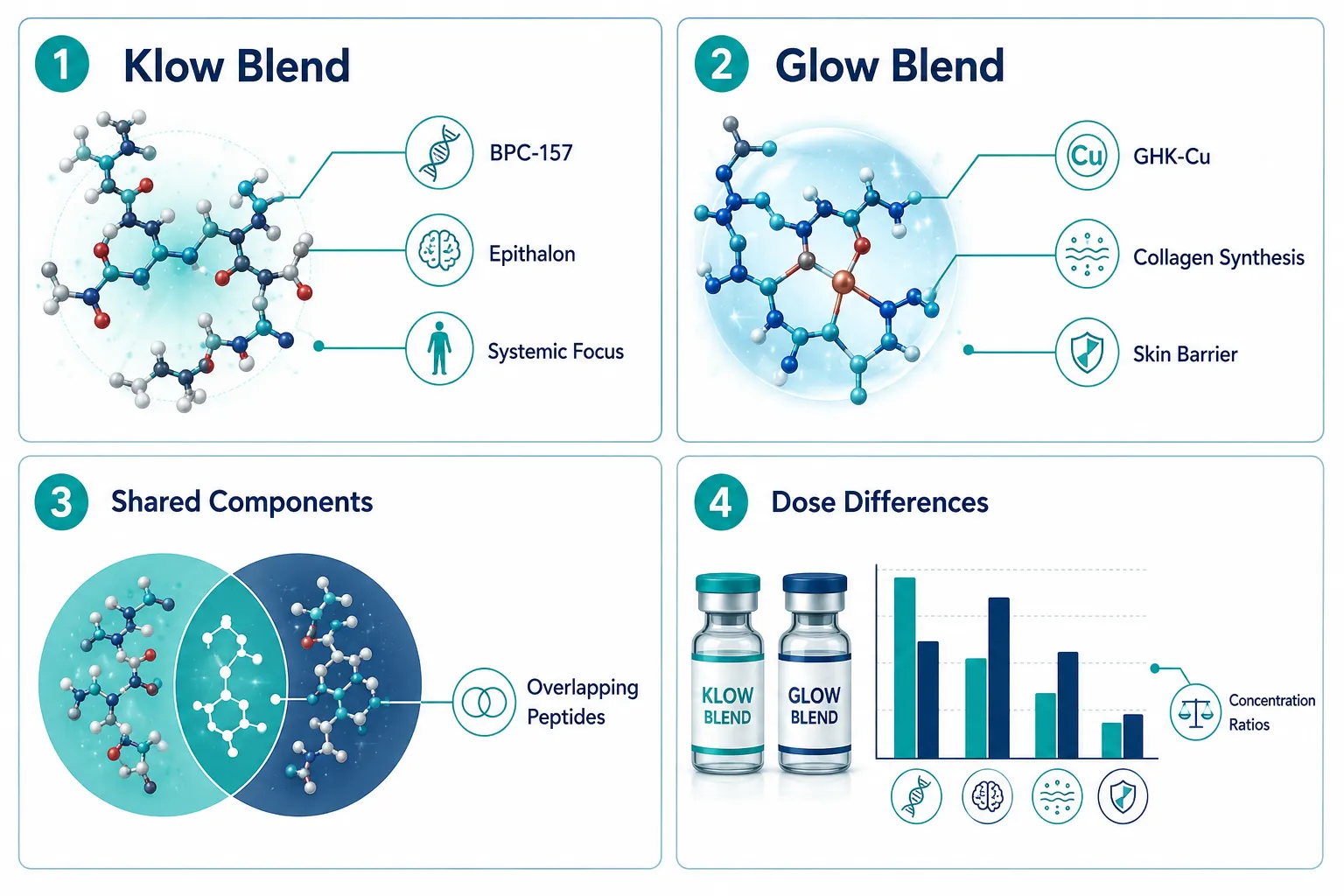
Klow Blend vs Glow Blend in Skin and Hair Research: How GHK‑Cu, BPC‑157, and Other Components Are Combined in Lab Formulations

Klow Blend vs Glow Blend in Skin and Hair Research: How GHK‑Cu, BPC‑157, and Other Components Are Combined in Lab Formulations

August 3, 2026/0 Comments/in Uncategorized/by

Fibroblast cultures treated with copper peptide complexes show measurable collagen upregulation within 48 hours, yet the specific ratio of co-factors in a blend can either amplify or blunt that response entirely. This precision detail is exactly what separates the Klow Blend vs Glow Blend in Skin and Hair Research: How GHK-Cu, BPC-157, and Other Components Are Combined in Lab Formulations discussion from general peptide overviews. Researchers designing skin and hair follicle models need to understand not just which peptides are present, but how their concentrations, sequencing, and supporting molecules interact at the cellular level.

Key Takeaways

  • Klow Blend and Glow Blend are distinct multi-peptide research formulations targeting different aspects of skin and hair biology.
  • GHK-Cu drives collagen synthesis and antioxidant signaling, while BPC-157 supports tissue repair and angiogenesis in fibroblast models.
  • Ratio differences between blends, not just ingredient lists, determine experimental outcomes in keratinocyte and hair follicle assays.
  • Co-factors such as hyaluronic acid, biotin peptides, and growth factors are added to modulate peptide stability and receptor engagement.
  • Strict purity standards and documented sourcing are essential for reproducible lab results with any multi-peptide blend.

Key Takeaways

Defining the Two Formulations: Ingredients and Rationale

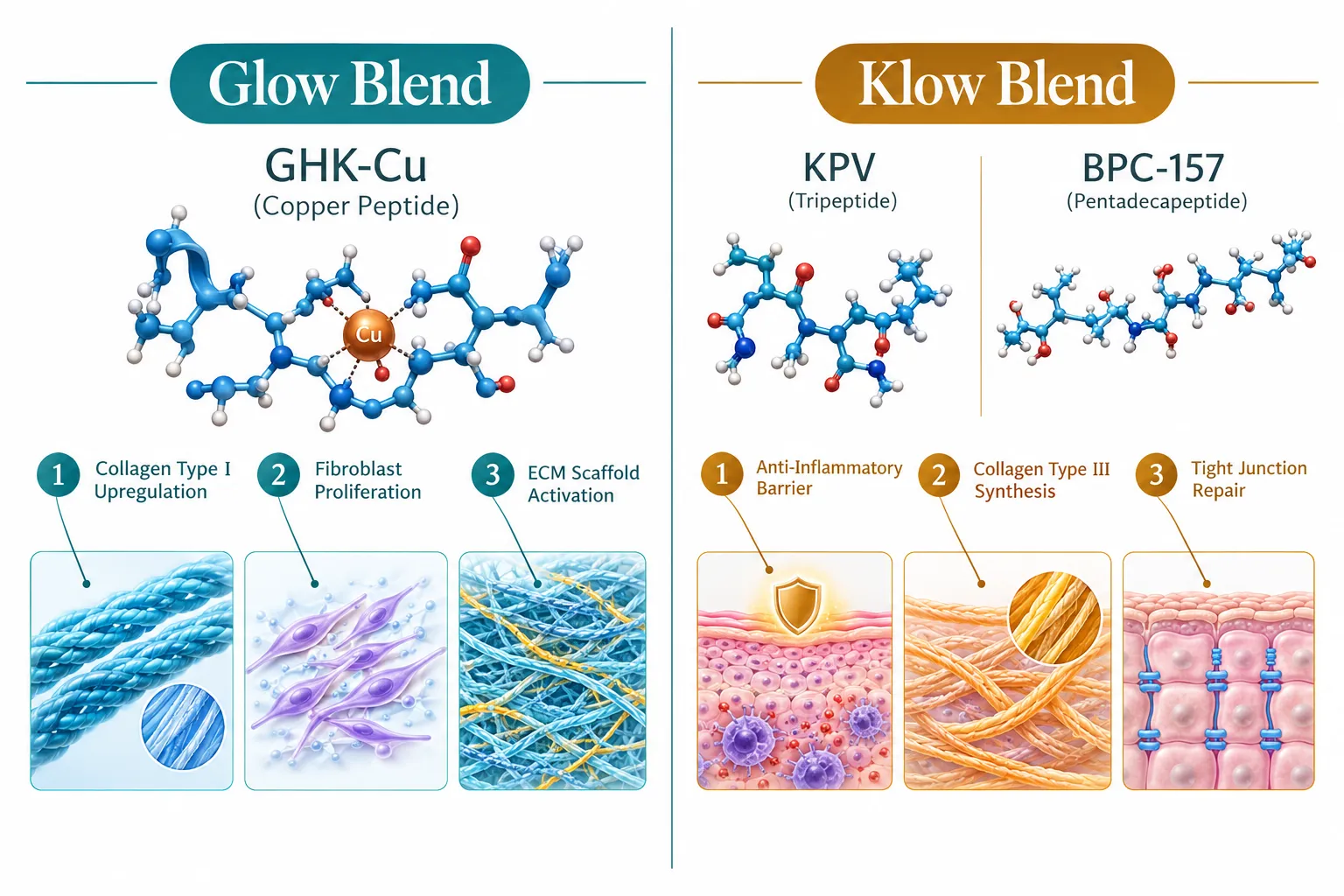
The Glow Blend is formulated primarily around skin luminosity and extracellular matrix support. Its core components typically include GHK-Cu (copper tripeptide-1), a low-molecular-weight peptide known for stimulating fibroblast proliferation and upregulating matrix metalloproteinase inhibitors. Alongside GHK-Cu, Glow Blend formulations often incorporate epidermal growth factor (EGF) analogs and hyaluronic acid precursors to support keratinocyte hydration and barrier integrity.

The Klow Blend, by contrast, is oriented toward hair follicle cycling and scalp tissue repair. Its formulation typically features:

  • BPC-157, a 15-amino-acid peptide derived from gastric juice protein, studied for its role in angiogenesis and tendon-to-bone healing models
  • GHK-Cu at a lower molar ratio than in Glow Blend
  • KGF (keratinocyte growth factor) analogs to stimulate dermal papilla cells
  • Thymosin Beta-4 fragments (similar to TB-500 peptide) for cytoskeletal remodeling

For researchers consulting the BPC-157 core documentation and research guide, BPC-157's inclusion in Klow Blend is supported by its documented ability to promote VEGF expression, a key driver of the vascular supply to hair follicle bulbs.

Key distinction: Glow Blend prioritizes dermal matrix density and surface keratinocyte turnover. Klow Blend prioritizes follicular vascularization and papilla cell activation.

How GHK-Cu, BPC-157, and Other Components Are Combined in Lab Formulations

The phrase "combined in lab formulations" is more technically demanding than it sounds. Peptide blends are not simply mixed in equal parts. Researchers consider molar ratios, pH stability windows, and receptor competition before finalizing a protocol.

GHK-Cu Concentration Thresholds

GHK-Cu demonstrates a well-documented biphasic dose response. At concentrations between 1-10 nM, it upregulates collagen I and III synthesis. Above 1 µM, some fibroblast models show inhibitory feedback. This means Glow Blend formulations that prioritize collagen output are typically prepared at the lower end of this range, while Klow Blend uses GHK-Cu as a supporting rather than primary agent.

BPC-157 and Angiogenic Synergy

BPC-157 does not compete with GHK-Cu for the same receptor pathways, which makes co-formulation feasible. In hair follicle explant models, BPC-157 has been shown to increase dermal microvascular density, creating a more nutrient-rich environment for follicle bulb cells that GHK-Cu then acts upon. This sequential signaling logic is why Klow Blend ratios typically run BPC-157 at 2-3x the molar concentration of GHK-Cu.

Supporting Co-Factors

Both blends use co-factors to extend peptide half-life and improve receptor engagement:

Co-Factor Role in Glow Blend Role in Klow Blend
Hyaluronic acid Hydration scaffold for keratinocytes Minimal inclusion
Biotin peptide conjugates Barrier repair support Follicle cycling support
Thymosin Beta-4 fragments Secondary antioxidant Primary cytoskeletal agent
Zinc gluconate Copper chelation balance Enzyme cofactor for KGF

Researchers exploring related multi-peptide combinations may also find value in reviewing BPC-157 and TB-500 combined research protocols to understand how overlapping repair pathways are managed in blended formats.

Supporting Co-Factors

Experimental Outcomes in Fibroblast, Keratinocyte, and Hair Follicle Models

Understanding the Klow Blend vs Glow Blend in Skin and Hair Research: How GHK-Cu, BPC-157, and Other Components Are Combined in Lab Formulations question ultimately comes down to what the data shows in specific cell models.

Fibroblast Assays

In 2D fibroblast cultures, Glow Blend consistently outperforms Klow Blend on collagen synthesis markers (pro-collagen I C-peptide assays). The higher GHK-Cu concentration drives TGF-beta1 signaling more aggressively. Klow Blend, however, shows superior results in scratch-wound assays, where BPC-157's pro-migratory effects accelerate fibroblast closure rates by approximately 20-30% in published in vitro models.

Keratinocyte Proliferation

Glow Blend's EGF analog component is the dominant driver in keratinocyte proliferation assays. Klow Blend produces modest keratinocyte stimulation, primarily through indirect pathways linked to improved vascular simulation in co-culture systems.

Hair Follicle Organ Culture

This is where Klow Blend demonstrates its clearest advantage. In hair follicle organ culture (HFOC) models, the BPC-157 and KGF analog combination extends the anagen (growth) phase duration by stimulating dermal papilla cell survival. Researchers using TB-500 in related hair and tissue research have noted comparable cytoskeletal effects, reinforcing the mechanistic logic behind Klow Blend's thymosin fragment inclusion.

For labs sourcing reference-grade peptides, Bachem and reference standard benchmarking resources provide critical purity documentation that ensures experimental reproducibility across both blend types.

Hair Follicle Organ Culture

Practical Considerations for Lab Use in 2026

Researchers working with either blend in 2026 should account for several practical variables:

  • Lyophilization stability: BPC-157 degrades faster in aqueous solution than GHK-Cu. Klow Blend formulations require careful reconstitution protocols and cold-chain storage.
  • Purity documentation: Both blends should carry HPLC purity certificates above 98% for reliable cell-based assays.
  • Solvent compatibility: GHK-Cu is water-soluble; some KGF analogs require dilute acetic acid for initial reconstitution before blending.

Labs sourcing multi-peptide research compounds should also review available peptide research supply options to confirm lot-specific documentation before designing assay protocols.

Conclusion

The Klow Blend vs Glow Blend in Skin and Hair Research: How GHK-Cu, BPC-157, and Other Components Are Combined in Lab Formulations comparison reveals that ingredient overlap is far less important than ratio design and cellular target specificity. Glow Blend is the stronger candidate for fibroblast collagen studies and keratinocyte barrier research. Klow Blend is better positioned for hair follicle vascularization and anagen-phase extension models.

Actionable next steps for researchers:

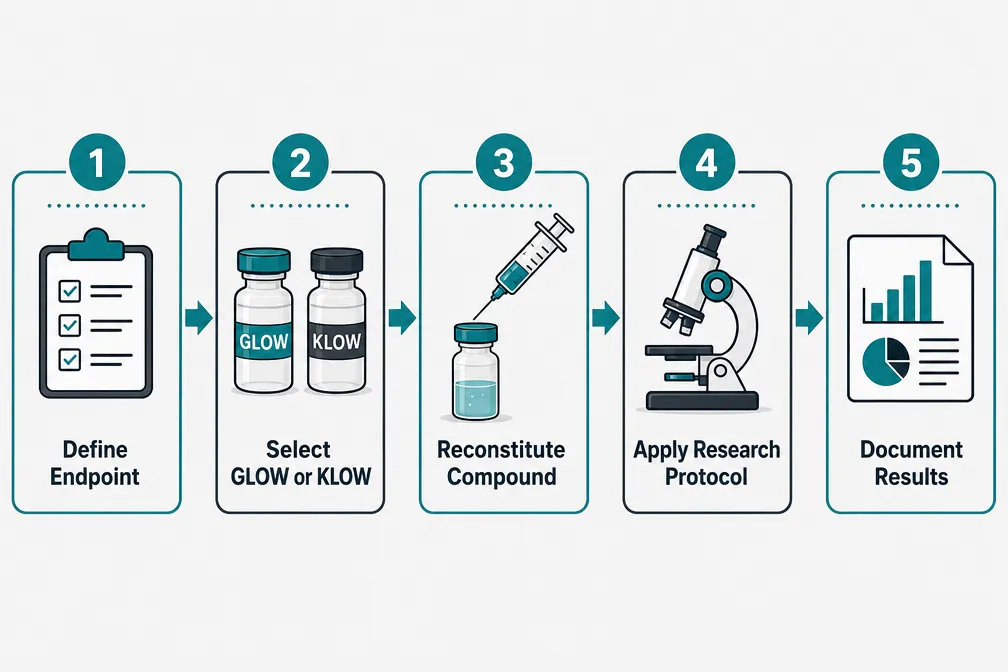
  1. Define the primary cell model (fibroblast, keratinocyte, or follicle organ culture) before selecting a blend.
  2. Request HPLC and mass spectrometry certificates for all peptide components.
  3. Pilot both blends at half the standard concentration to establish dose-response baselines.
  4. Cross-reference BPC-157 and GHK-Cu literature to anticipate receptor interaction effects.
  5. Document reconstitution conditions precisely to ensure inter-assay reproducibility.

Selecting the right formulation is not a matter of preference, it is a matter of matching molecular mechanism to experimental question.

https://www.puretestedpeptides.com/wp-content/uploads/2026/08/klow-blend-vs-glow-blend-in-skin-and-hair-research-how-ghk-cu-bpc-157-and-other.webp 1024 1536 https://www.puretestedpeptides.com/wp-content/uploads/2026/01/buy-peptides-online.jpg 2026-08-03 13:04:152026-08-03 13:04:15Klow Blend vs Glow Blend in Skin and Hair Research: How GHK‑Cu, BPC‑157, and Other Components Are Combined in Lab Formulations
Mesenchymal Stem Cells and Peptide-Based Modulators: How BPC‑157, GHK‑Cu, and Glow Blend Are Used in Regenerative Research Models

Mesenchymal Stem Cells and Peptide-Based Modulators: How BPC‑157, GHK‑Cu, and Glow Blend Are Used in Regenerative Research Models

July 29, 2026/0 Comments/in Uncategorized/by

Fewer than 5% of injured tissue sites in adult mammals achieve full structural restoration without external intervention, a gap that has pushed regenerative biology toward combining cellular and molecular strategies. Mesenchymal stem cells and peptide-based modulators, including BPC‑157, GHK‑Cu, and Glow Blend, have emerged as a paired research focus precisely because peptides can influence the signaling environment that determines whether transplanted or resident MSCs differentiate, survive, and remodel damaged tissue effectively.

Key Takeaways

  • Mesenchymal stem cells (MSCs) are multipotent stromal cells central to injury repair, fibrosis modulation, and wound-healing research.
  • BPC‑157 supports angiogenesis and tendon-fibroblast signaling in preclinical models, making it a frequent co-investigative agent alongside MSC studies.
  • GHK‑Cu is a copper-binding tripeptide studied for its role in collagen remodeling and anti-fibrotic gene expression.
  • Glow Blend combines multiple peptide actives to target overlapping pathways relevant to skin and connective tissue regeneration.
  • Purity and documentation of research compounds are critical variables when designing reproducible MSC-peptide co-culture experiments.

Key Takeaways

Understanding Mesenchymal Stem Cells in Regenerative Research

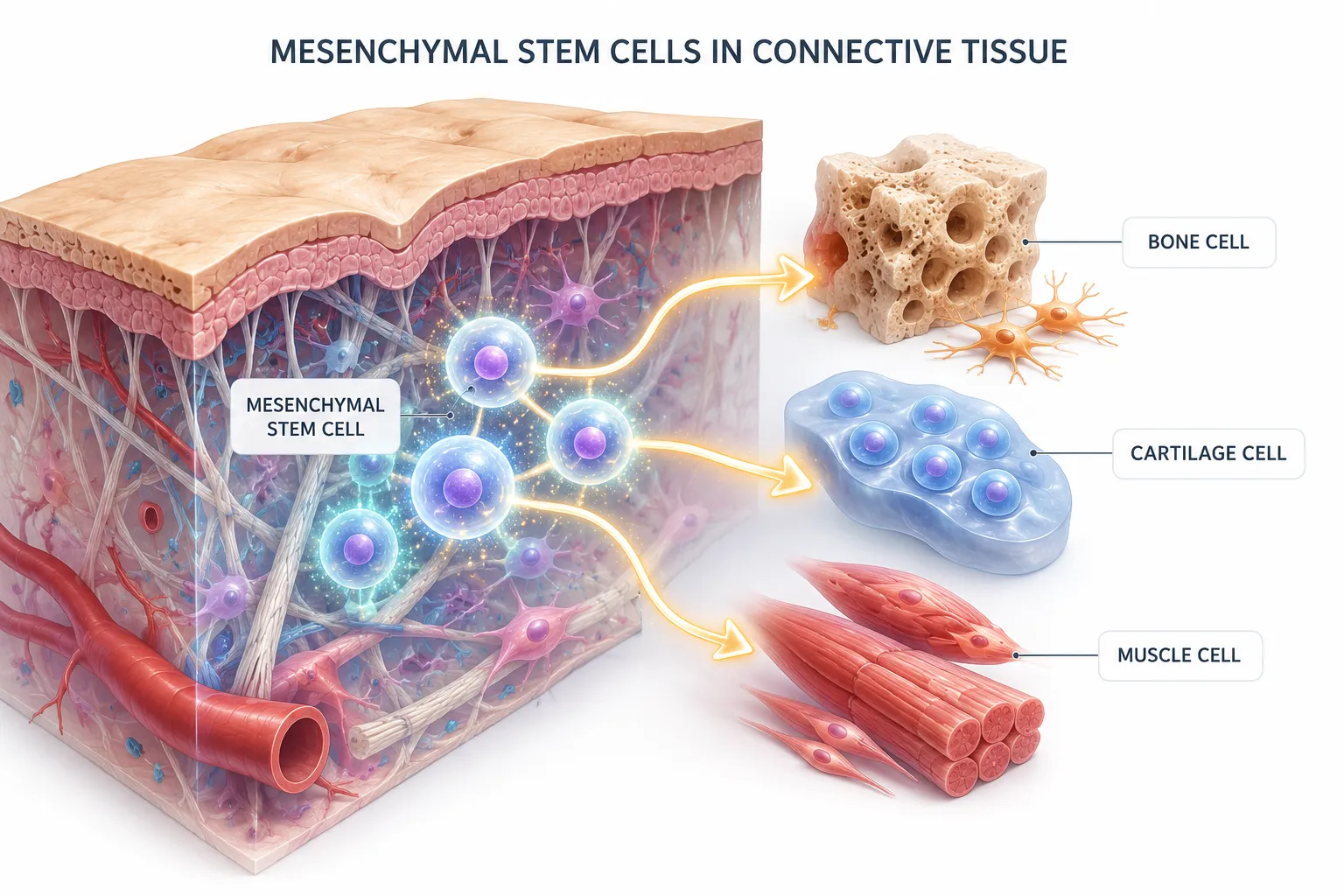
Mesenchymal stem cells are multipotent stromal progenitors found in bone marrow, adipose tissue, umbilical cord, and several other niches. In research models, they are valued for three core properties:

  1. Multilineage differentiation, capacity to become osteoblasts, chondrocytes, adipocytes, and myofibroblasts under appropriate stimuli.
  2. Paracrine secretion, release of growth factors (VEGF, TGF-beta, HGF) that modulate the local repair microenvironment.
  3. Immunomodulation, suppression of pro-inflammatory T-cell and macrophage activity, relevant in fibrosis and autoimmune injury models.

Because MSC behavior is highly context-dependent, researchers often introduce exogenous signaling molecules, including bioactive peptides, to steer differentiation or amplify paracrine output. This is where the study of mesenchymal stem cells and peptide-based modulators becomes particularly productive as a combined research framework.

"The peptide microenvironment does not replace MSC biology, it shapes the conditions under which that biology expresses itself."

Why Peptide Co-Treatment Matters in MSC Models

Peptides are short amino acid chains that interact with receptors, ion channels, and transcription cofactors at low concentrations. Compared to small-molecule drugs, they tend to exhibit higher target specificity and lower off-target cytotoxicity in cell culture settings, two properties that make them attractive as adjuncts in MSC co-culture and in vivo implantation studies.

BPC‑157, GHK‑Cu, and Glow Blend: Mechanisms in Tissue-Repair Models

BPC‑157, GHK‑Cu, and Glow Blend: Mechanisms in Tissue-Repair Models

BPC‑157 in Injury and Angiogenesis Research

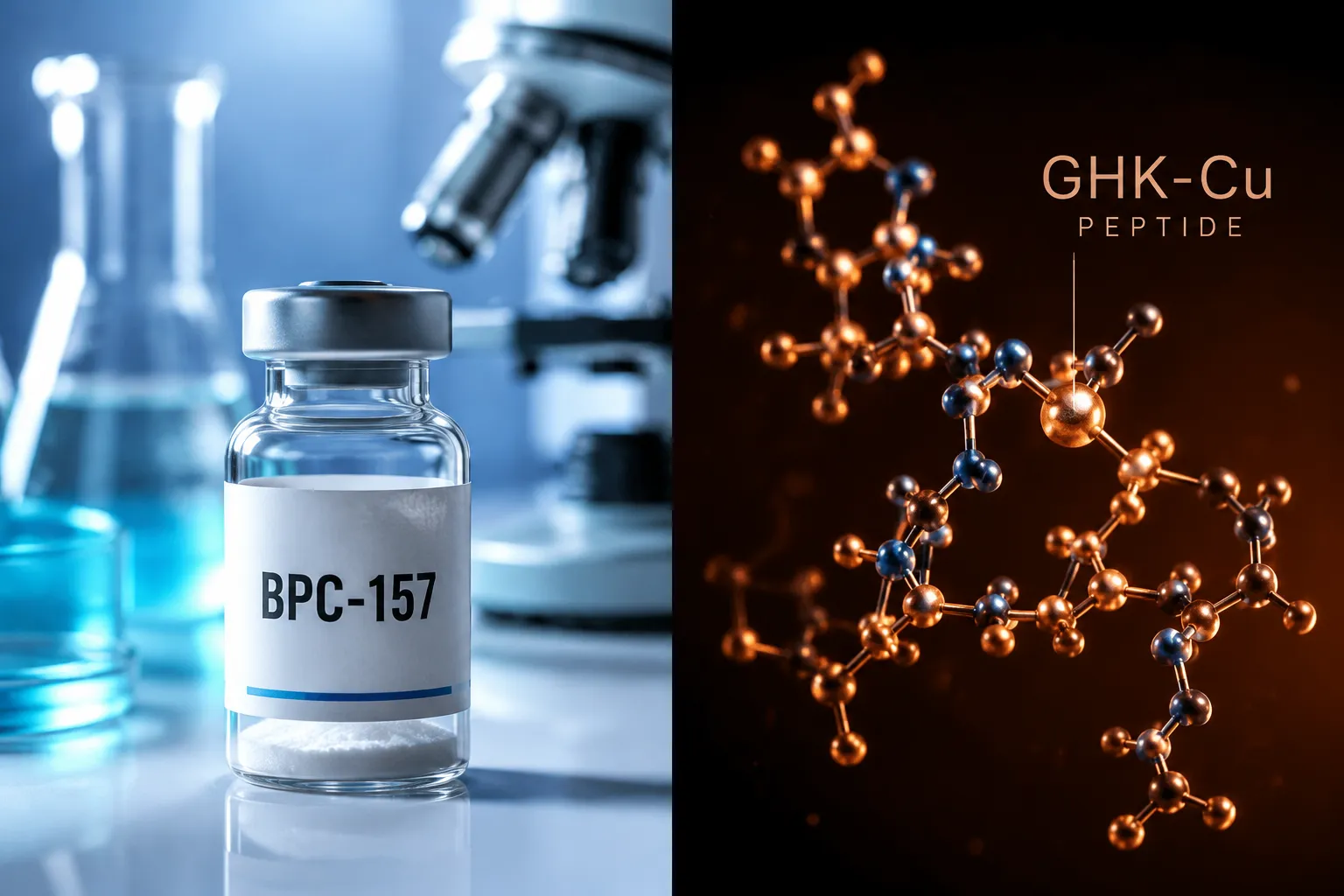
BPC‑157 (Body Protection Compound-157) is a synthetic 15-amino-acid peptide derived from a gastric protein sequence. In preclinical rodent models, it has been studied in the context of:

  • Tendon and ligament repair, upregulation of collagen type I synthesis and fibroblast migration.
  • Angiogenesis, interaction with the VEGFR2 pathway to promote new vessel formation at injury sites.
  • Gut mucosal healing, reduction of inflammatory cytokines in intestinal epithelial models.

When MSCs are seeded into scaffolds pre-treated with BPC‑157 analogs, early data from in vitro wound-scratch assays suggest accelerated cell migration rates. Researchers sourcing compounds for these protocols often consult BPC‑157 core documentation and research guides to verify sequence integrity and purity certificates before designing experiments.

For studies that combine BPC‑157 with another widely researched peptide, the BPC‑157 and TB‑500 combination resource provides useful background on complementary mechanisms in musculoskeletal models.

GHK‑Cu: Copper Peptide Signaling and Collagen Remodeling

GHK‑Cu (glycyl-L-histidyl-L-lysine copper complex) is a naturally occurring tripeptide with high affinity for copper(II) ions. Its research profile in regenerative models includes:

Pathway Observed Effect in Preclinical Models
Collagen synthesis Upregulation of collagen I and III gene expression
MMP regulation Modulation of matrix metalloproteinases to reduce fibrosis
Antioxidant defense Activation of superoxide dismutase pathways
Stem cell niche Potential enhancement of MSC adhesion to extracellular matrix

The anti-fibrotic dimension of GHK‑Cu is especially relevant to MSC research because excessive fibrosis represents a failure mode in many repair models. Researchers looking to source this compound for laboratory use often review GHK‑Cu peptide research sourcing guides to confirm chelation stability and storage requirements.

Glow Blend: Multi-Component Peptide Formulations

Glow Blend represents a category of multi-peptide research formulations designed to engage several regenerative pathways simultaneously. Rather than isolating a single mechanism, blended peptide preparations allow researchers to study synergistic or additive effects on tissue remodeling endpoints. Typical targets in skin and connective tissue models include:

  • Fibroblast proliferation and ECM deposition
  • Melanocyte signaling and pigmentation normalization
  • Keratinocyte migration in wound-closure assays

The Glow Blend product documentation outlines the component profile relevant to researchers designing multi-pathway co-culture experiments.

Applying Mesenchymal Stem Cells and Peptide-Based Modulators in Experimental Protocols

Applying Mesenchymal Stem Cells and Peptide-Based Modulators in Experimental Protocols

Fibrosis and Wound-Healing Model Design

When designing experiments that integrate mesenchymal stem cells and peptide-based modulators, three protocol variables consistently affect data quality:

  1. Peptide concentration windows, Most bioactive peptides show bell-curve dose-response relationships; concentrations that stimulate MSC activity at nanomolar levels may become inhibitory at micromolar levels.
  2. Timing of peptide introduction, Pre-conditioning MSCs with peptides before seeding versus co-administration at implantation produces different differentiation outcomes in fibrosis models.
  3. Compound purity, Contaminated peptide batches introduce confounding variables. Researchers should prioritize suppliers offering third-party mass spectrometry and HPLC certificates. Resources like quality peptide sourcing references help laboratories establish baseline procurement standards.

Complementary Peptide Agents in MSC Research

Beyond BPC‑157, GHK‑Cu, and Glow Blend, several other peptides appear in the broader MSC research literature:

  • TB‑500 (Thymosin Beta-4), studied for actin-cytoskeleton regulation and cell migration; see the TB‑500 research documentation for experimental context.
  • Epithalon, a tetrapeptide investigated in telomere-related aging models alongside MSC longevity assays.
  • GLP-1 analogs, relevant to MSC studies in metabolic tissue contexts; background available in GLP-1 generational research sourcing notes.

Reproducibility and Documentation Standards

Reproducibility in MSC-peptide research depends on rigorous batch documentation. Every compound introduced into a co-culture system should carry:

  • Certificate of Analysis (CoA) with HPLC purity percentage
  • Mass spectrometry confirmation of molecular weight
  • Endotoxin testing results (critical for cell viability assays)
  • Storage and reconstitution records

Researchers working across multiple peptide classes can use consolidated sourcing platforms that provide lab-tested peptide documentation to maintain chain-of-custody records.

Conclusion

The intersection of mesenchymal stem cell biology and peptide-based modulators represents one of the most active areas in preclinical regenerative research as of 2026. BPC‑157 offers a well-characterized angiogenic and fibroblast-signaling profile; GHK‑Cu contributes copper-mediated collagen remodeling and anti-fibrotic gene regulation; and multi-component formulations like Glow Blend allow researchers to probe synergistic pathway interactions in wound-healing and connective tissue models.

Actionable next steps for research teams:

  • Audit current peptide suppliers for third-party purity documentation before initiating MSC co-culture studies.
  • Design dose-response pilot experiments to establish the optimal peptide concentration window for the specific MSC lineage under investigation.
  • Incorporate both single-peptide and blended-peptide conditions in parallel to isolate mechanistic contributions.
  • Review published preclinical literature on BPC‑157 and GHK‑Cu to align experimental endpoints with established assay standards.

Rigorous compound sourcing, careful protocol design, and systematic documentation remain the foundation on which reproducible MSC-peptide research is built.

https://www.puretestedpeptides.com/wp-content/uploads/2026/07/mesenchymal-stem-cells-and-peptide-based-modulators-how-bpc-157-ghk-cu-and-glow.webp 1024 1536 https://www.puretestedpeptides.com/wp-content/uploads/2026/01/buy-peptides-online.jpg 2026-07-29 13:05:512026-07-29 13:05:51Mesenchymal Stem Cells and Peptide-Based Modulators: How BPC‑157, GHK‑Cu, and Glow Blend Are Used in Regenerative Research Models

Tag Archive for: glow blend

Collagen Biology and Copper‑Binding Peptides: How GHK‑Cu, Glow Blend, and Klow Blend Interact with Skin and Connective Tissue

Collagen Biology and Copper‑Binding Peptides: How GHK‑Cu, Glow Blend, and Klow Blend Interact with Skin and Connective Tissue

July 24, 2026/0 Comments/by Pure Tested

Collagen accounts for roughly 30% of all protein in the human body, yet its production begins declining measurably after age 25, a structural shift that drives visible skin aging, slower wound closure, and reduced connective tissue resilience. Understanding the precise biochemistry behind this decline is the first step toward evaluating whether copper-binding peptides such as GHK-Cu, and formulated research blends like Glow and Klow, represent meaningful tools in tissue biology. This article on Collagen Biology and Copper-Binding Peptides: How GHK-Cu, Glow Blend, and Klow Blend Interact with Skin and Connective Tissue offers a rigorous, mechanistic overview grounded in current preclinical evidence.

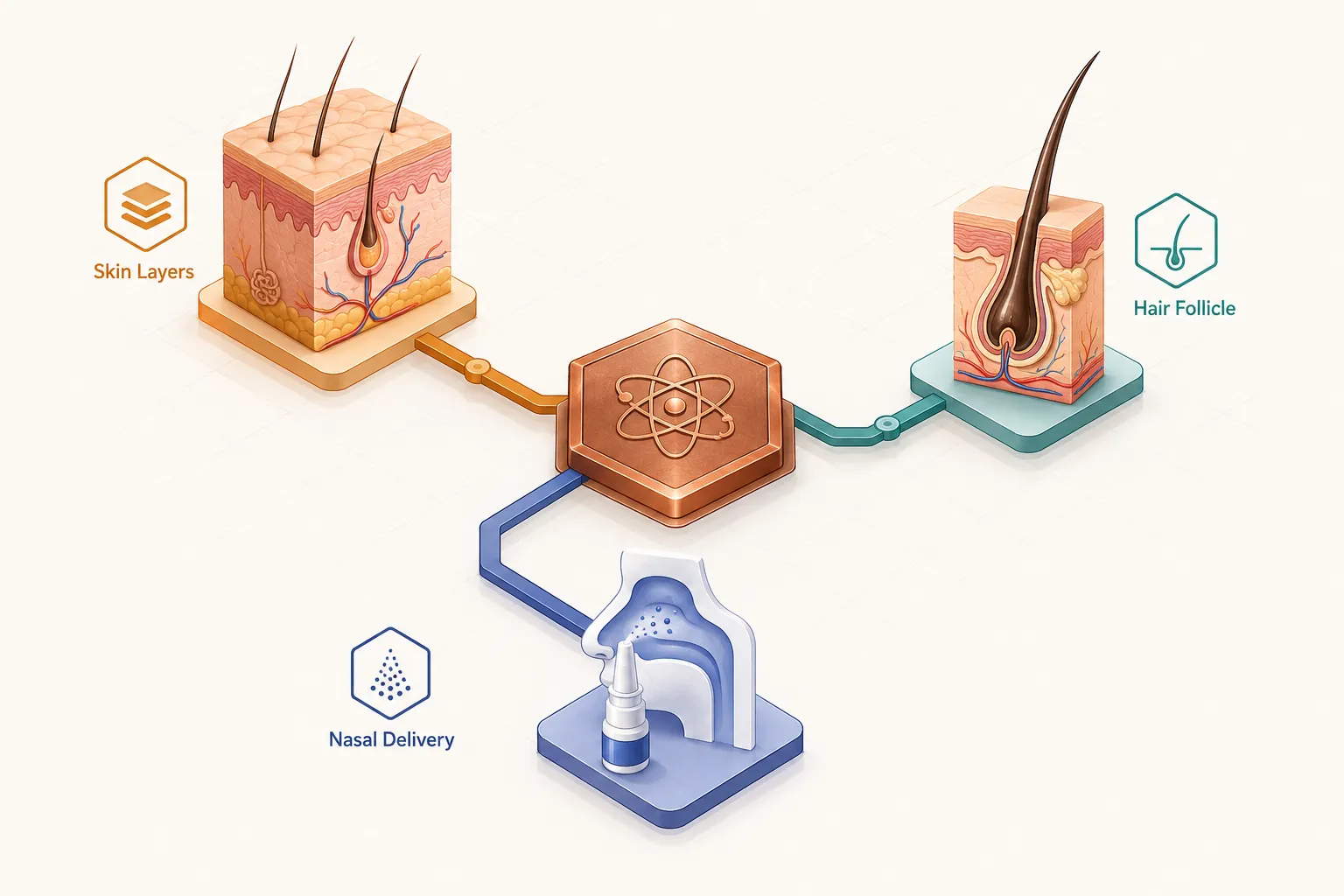
Isometric scientific illustration in bright daylight palette (): a 3D cross-section of human skin dermis showing collagen

Key Takeaways

  • Collagen synthesis, cross-linking, and enzymatic degradation form a tightly regulated cycle that copper-dependent enzymes help govern.
  • GHK-Cu (glycyl-L-histidyl-L-lysine copper) is a naturally occurring tripeptide that stimulates fibroblast activity and upregulates collagen gene expression in preclinical models.
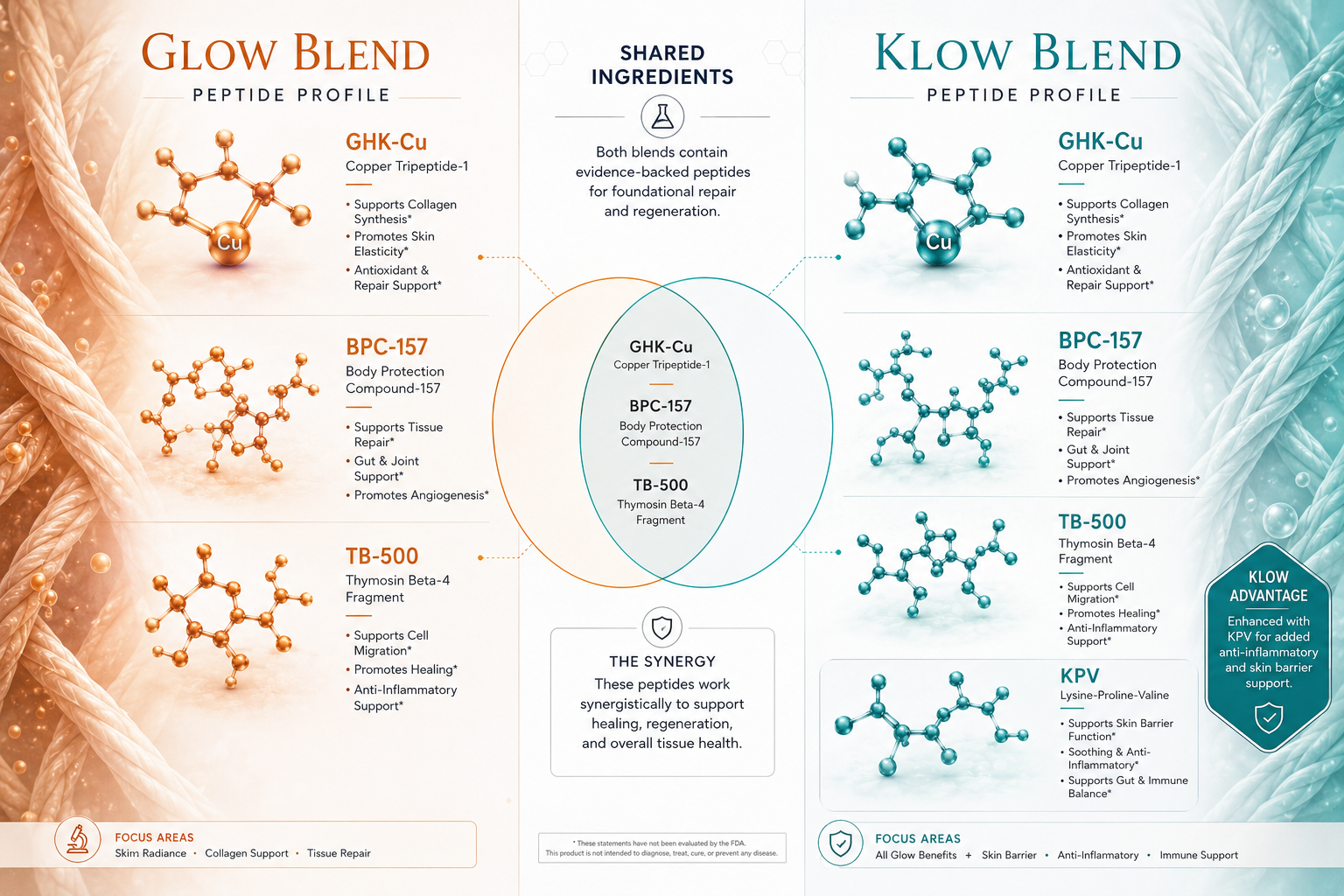
  • Glow Blend combines GHK-Cu, BPC-157, and TB-500 to target skin remodeling and tissue repair through complementary mechanisms.
  • Klow Blend adds KPV, a tripeptide fragment of alpha-melanocyte-stimulating hormone, to address NF-kB-mediated inflammation alongside structural repair.
  • No controlled in vivo or human clinical trials have evaluated these blended formulations as complete combinations; all current evidence is extrapolated from individual peptide studies.

Collagen Biology: Synthesis, Cross-Linking, and Degradation

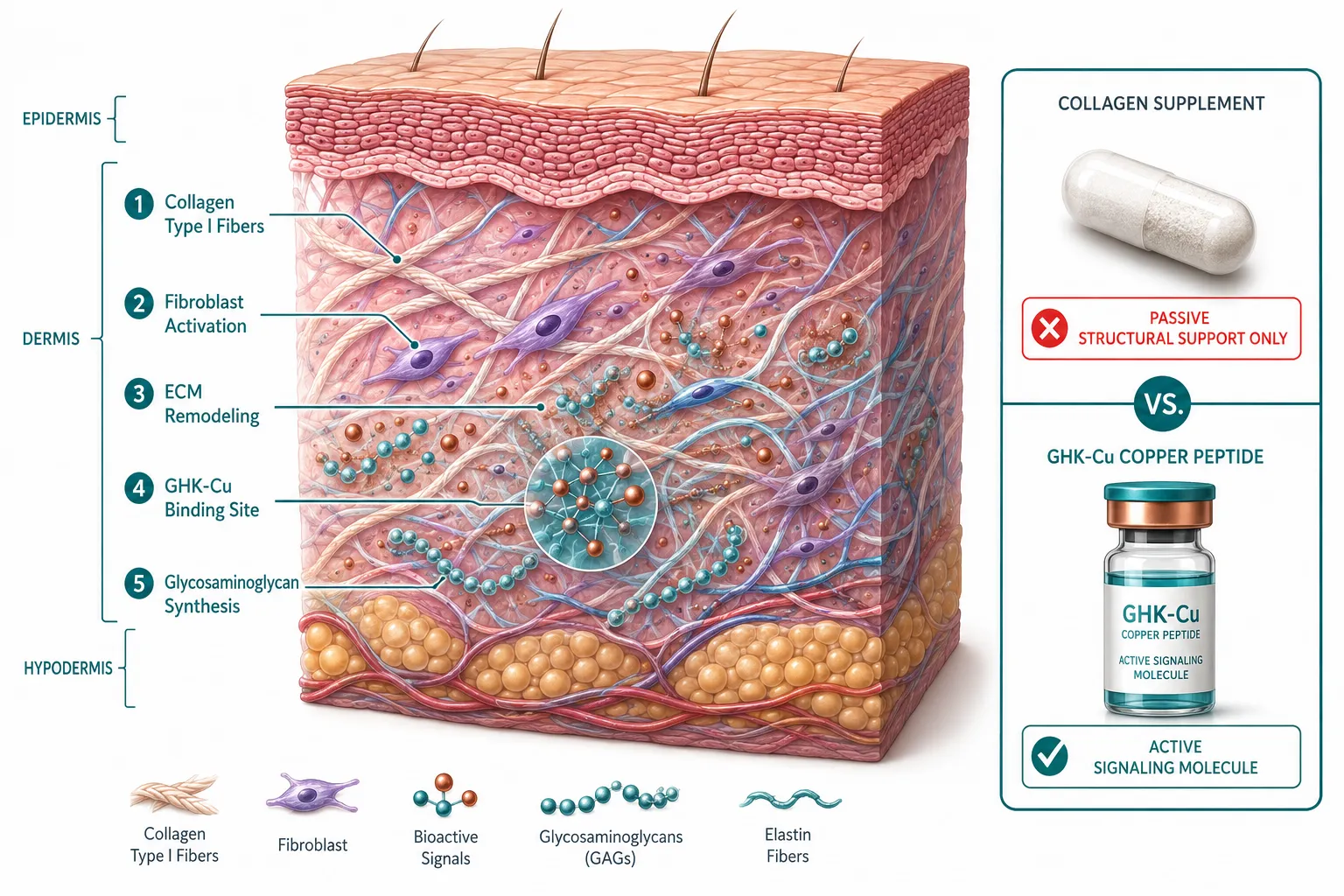
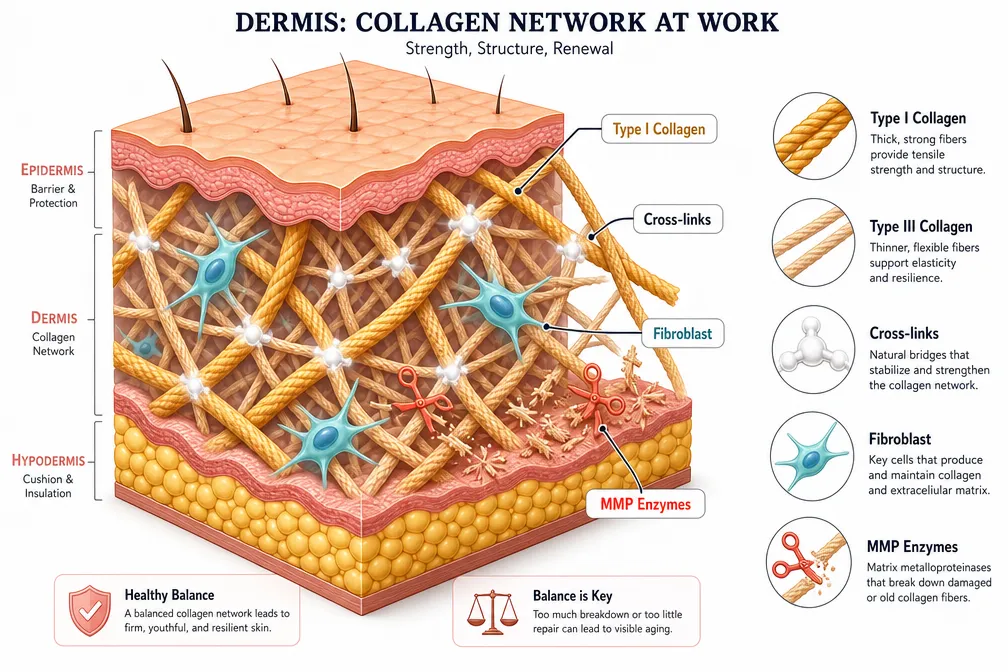
Collagen is not a single protein but a family of at least 28 distinct types, with Type I and Type III dominating the dermis and connective tissue. Each collagen molecule begins as a procollagen precursor inside fibroblast cells. Vitamin C-dependent hydroxylation of proline and lysine residues stabilizes the characteristic triple-helix structure before secretion into the extracellular matrix (ECM).

Once outside the cell, lysyl oxidase, a copper-dependent enzyme, catalyzes the cross-linking of collagen fibrils into tensile, load-bearing fibers. This step is critical: without adequate copper availability, cross-linking is incomplete, and the resulting matrix is structurally weaker.

Degradation is handled primarily by matrix metalloproteinases (MMPs), a family of zinc-dependent endopeptidases. MMP-1 (collagenase) cleaves the triple helix, while MMP-2 and MMP-9 degrade the resulting fragments. Chronic UV exposure, oxidative stress, and systemic inflammation all upregulate MMP activity, accelerating net collagen loss.

Process Key Enzyme Cofactor Required
Procollagen hydroxylation Prolyl hydroxylase Vitamin C, Fe2+
Fibril cross-linking Lysyl oxidase Copper
Collagen degradation MMP-1, MMP-2, MMP-9 Zinc

This enzymatic balance, synthesis versus degradation, is precisely where copper-binding peptides enter the mechanistic picture.

GHK-Cu and the Glow Blend: Mechanistic Interactions in Skin Remodeling

GHK-Cu and the Glow Blend: Mechanistic Interactions in Skin Remodeling

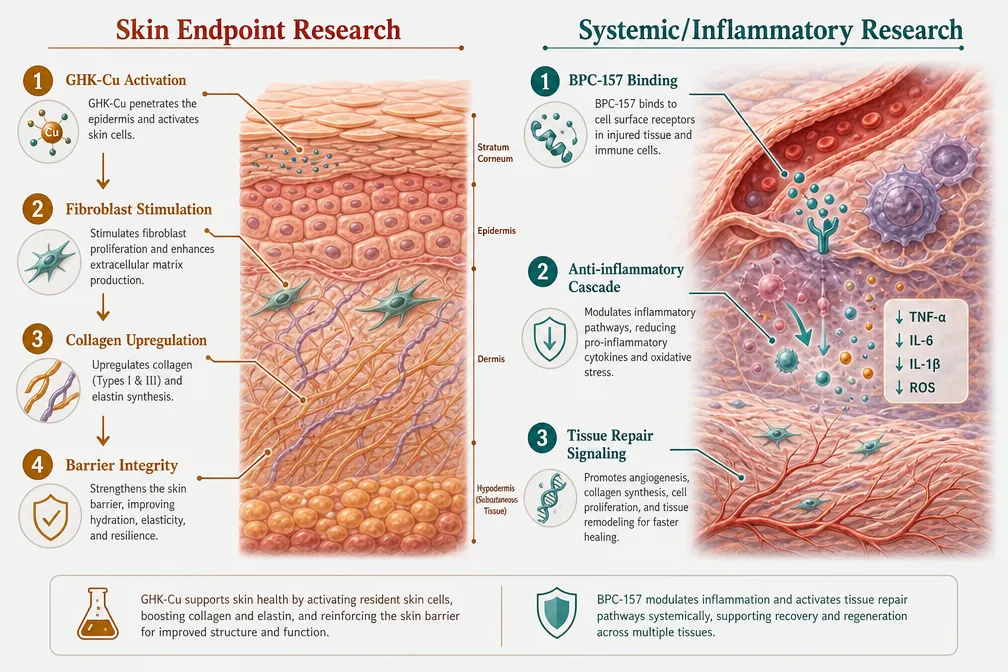
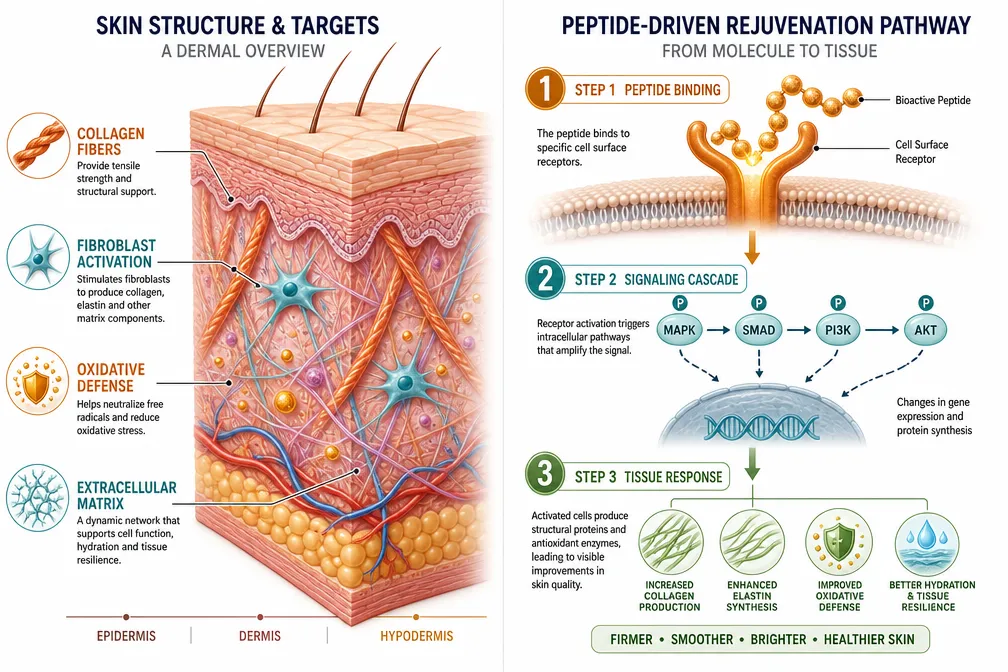
GHK-Cu (glycyl-L-histidyl-L-lysine copper) is a tripeptide found naturally in human plasma, saliva, and urine. Its plasma concentration is highest in youth and declines with age, paralleling the trajectory of collagen density. In preclinical models, GHK-Cu has demonstrated the ability to stimulate fibroblast proliferation, upregulate collagen and glycosaminoglycan synthesis, and simultaneously suppress MMP-1 expression, effectively nudging the synthesis-degradation balance toward net deposition.

Critically, GHK-Cu's molecular weight of approximately 340 daltons allows relatively efficient transdermal penetration compared to larger peptide molecules, though specialized delivery systems improve dermal bioavailability beyond standard aqueous serums. For researchers interested in this area, topical GHK-Cu formulations represent one studied delivery route.

The Glow Blend builds on GHK-Cu by combining it with two additional peptides:

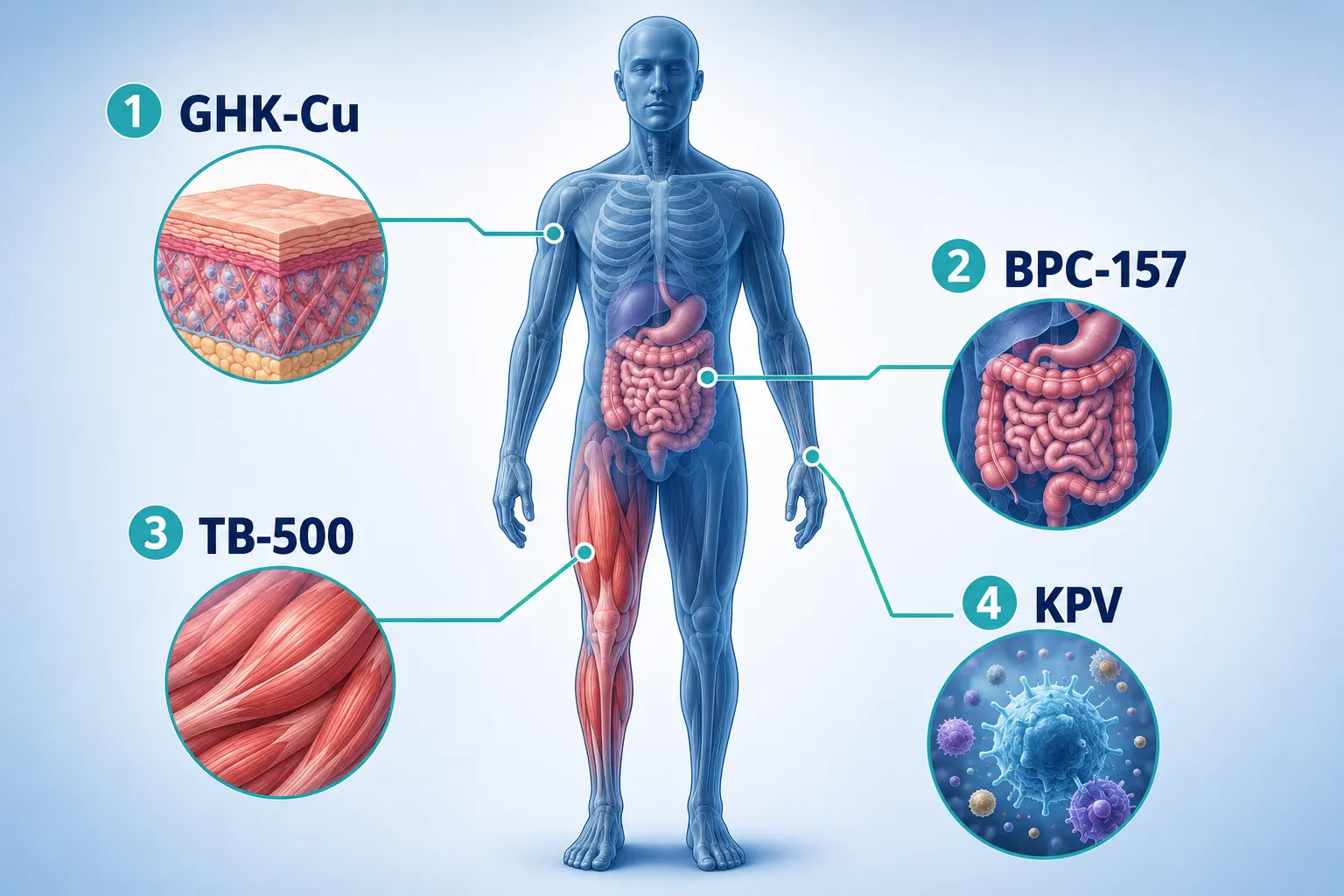
  • BPC-157 (Body Protection Compound-157): A 15-amino-acid peptide derived from gastric juice proteins. In preclinical research, BPC-157 promotes angiogenesis, the formation of new blood vessels, and stabilizes connective tissue by modulating growth factor signaling. Relevant background on BPC-157 and angiogenesis in tendon models illustrates its tissue-repair profile.
  • TB-500 (Thymosin Beta-4 fragment): Enhances cellular migration by upregulating actin polymerization, accelerating the movement of keratinocytes and fibroblasts into wound sites.

The rationale for combining these three is mechanistic complementarity: GHK-Cu drives collagen gene expression, BPC-157 supports vascular supply to healing tissue, and TB-500 accelerates cell recruitment. However, it bears emphasis that no controlled studies have tested this specific combination as a unified formulation. Existing evidence is extrapolated from individual peptide research.

Formulation composition can also vary between vendors, including differences in peptide ratios and excipients, a variable that researchers should account for when reviewing the Glow Blend in any experimental design.

Klow Blend: Adding Anti-Inflammatory Depth to Collagen Biology and Copper-Binding Peptides

Klow Blend: Adding Anti-Inflammatory Depth to Collagen Biology and Copper-Binding Peptides

The Klow Blend extends the Glow Blend framework by incorporating KPV, a C-terminal tripeptide fragment (Lys-Pro-Val) derived from alpha-melanocyte-stimulating hormone (alpha-MSH). KPV's primary mechanism involves suppression of NF-kB, the master transcription factor governing pro-inflammatory cytokine production. By dampening NF-kB signaling, KPV reduces the inflammatory microenvironment that otherwise accelerates MMP activity and impairs fibroblast function.

This addition is biologically logical: chronic low-grade inflammation is one of the primary drivers of collagen degradation in aging skin. Addressing it alongside structural repair creates a dual-axis approach. For additional context on KPV's epithelial barrier research profile, see KPV and epithelial barrier research.

Klow Blend component summary:

  • GHK-Cu: Collagen synthesis stimulation, MMP suppression
  • BPC-157: Angiogenesis, tissue stabilization
  • TB-500: Cell migration, ECM remodeling
  • KPV: NF-kB inhibition, anti-inflammatory modulation

The broader peptide research landscape, including GHK-Cu longevity research themes, continues to explore how copper-binding peptides interact with aging pathways beyond skin alone, including mitochondrial function and systemic inflammation. Researchers exploring adjacent connective tissue peptides may also find the complete peptides for sale catalog useful for sourcing reference-grade compounds.

Regulatory context matters here: none of the peptides in either blend hold FDA approval for therapeutic use. Both Glow and Klow Blend are classified as research-use compounds, not intended for human consumption.

Conclusion

The science of collagen biology and copper-binding peptides reveals a sophisticated interplay between structural synthesis, enzymatic cross-linking, and regulated degradation, a cycle that GHK-Cu is mechanistically positioned to influence through fibroblast stimulation and MMP suppression. The Glow Blend and Klow Blend extend this foundation by layering in angiogenic, migratory, and anti-inflammatory peptide activity through BPC-157, TB-500, and KPV respectively.

Actionable next steps for researchers:

  1. Review individual peptide literature for GHK-Cu, BPC-157, TB-500, and KPV before evaluating blended formulations.
  2. Source research-grade compounds with verified purity documentation to ensure experimental validity.
  3. Design studies that isolate blend variables, including peptide ratios and delivery vehicles, to generate meaningful comparative data.
  4. Monitor emerging controlled trial data, as the field currently lacks in vivo human studies on these specific combinations.
  5. Consult the ultimate guide to peptide therapy research for broader context on peptide research frameworks.

The mechanistic promise is real. The evidentiary gap is equally real. Rigorous experimental design remains the bridge between the two.

https://www.puretestedpeptides.com/wp-content/uploads/2026/07/collagen-biology-and-copper-binding-peptides-how-ghk-cu-glow-blend-and-klow-blen.webp 672 1008 Pure Tested https://www.puretestedpeptides.com/wp-content/uploads/2026/01/buy-peptides-online.jpg Pure Tested2026-07-24 13:05:212026-07-27 13:32:06Collagen Biology and Copper‑Binding Peptides: How GHK‑Cu, Glow Blend, and Klow Blend Interact with Skin and Connective Tissue
Collagen Biology and Regenerative Peptides: How GHK‑Cu, Glow Blend, and Klow Blend Affect Extracellular Matrix Research

Collagen Biology and Regenerative Peptides: How GHK‑Cu, Glow Blend, and Klow Blend Affect Extracellular Matrix Research

July 22, 2026/0 Comments/by Pure Tested

Collagen accounts for roughly 30% of total body protein, yet its synthesis declines measurably after age 25, with some estimates suggesting a loss of approximately 1% per year thereafter. That slow erosion drives a wide range of research questions in regenerative medicine, from wound-healing kinetics to fibroblast signaling. The field of collagen biology and regenerative peptides: how GHK-Cu, Glow Blend, and Klow Blend affect extracellular matrix research has emerged as a particularly productive area, giving investigators precise molecular tools to probe how the extracellular matrix (ECM) responds to targeted peptide stimulation.

Key Takeaways

  • Collagen is the structural backbone of the ECM, and its regulated turnover is central to skin integrity, wound repair, and tissue longevity.
  • GHK-Cu (glycyl-L-histidyl-L-lysine copper complex) is a well-characterized copper peptide that modulates fibroblast activity, collagen synthesis, and matrix metalloproteinase (MMP) regulation.
  • Glow Blend and Klow Blend are proprietary multi-peptide formulations used in research to interrogate ECM remodeling through complementary signaling pathways.
  • Preclinical data suggest these compounds influence wound-healing endpoints, antioxidant defense, and dermal matrix architecture.
  • Researchers sourcing these compounds should prioritize purity verification and documented quality control.

Key Takeaways

The Extracellular Matrix: A Living Scaffold

The ECM is far more than passive connective tissue. It is a dynamic, biochemically active scaffold that regulates cell adhesion, migration, proliferation, and differentiation. Its major structural components include:

Component Primary Role
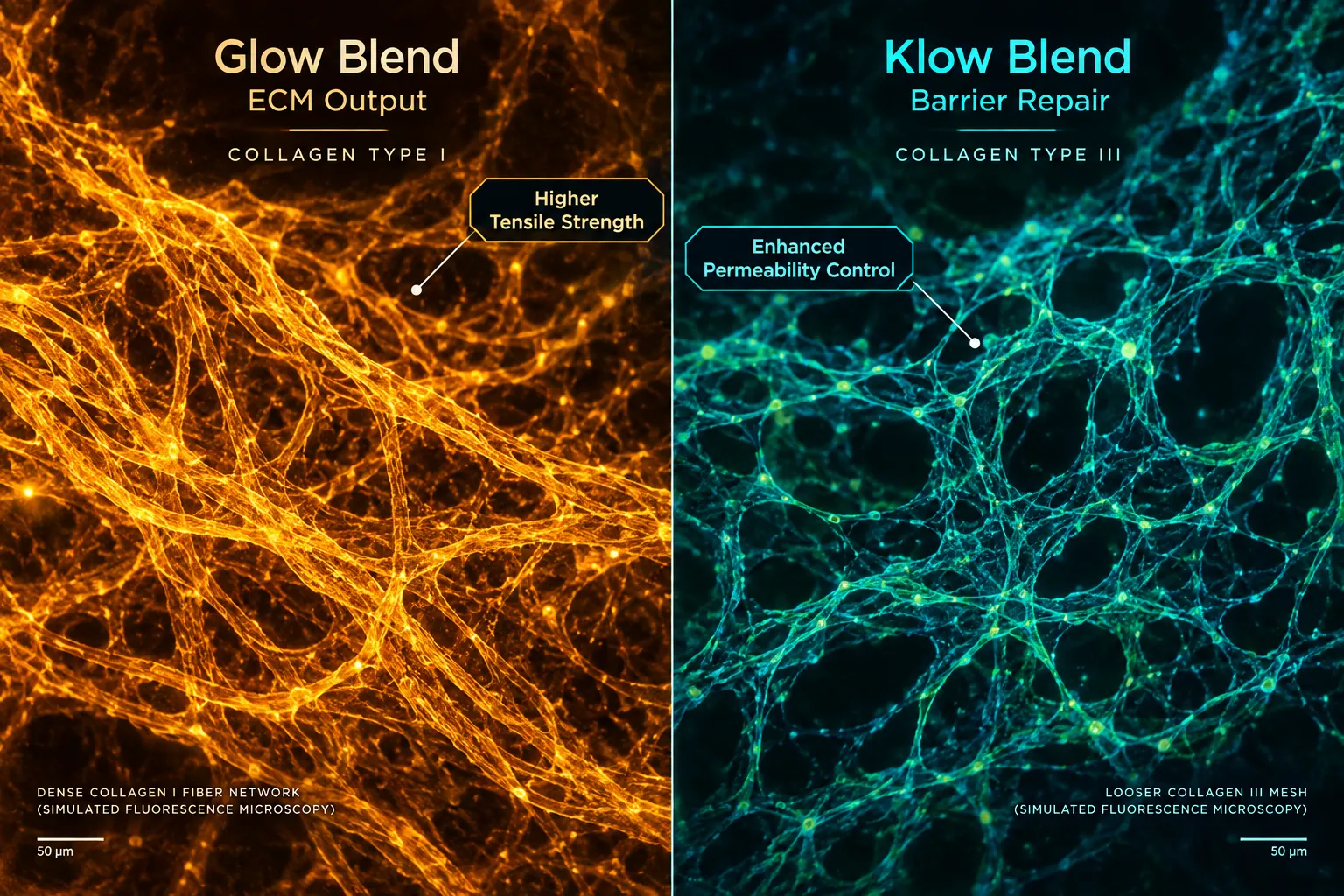
Type I Collagen Tensile strength; dominant in skin and bone
Type III Collagen Early wound repair; vascular walls
Fibronectin Cell attachment and migration guidance
Hyaluronic Acid Hydration and viscoelastic buffering
Matrix Metalloproteinases (MMPs) Controlled ECM degradation and remodeling

Fibroblasts are the principal ECM-producing cells. They synthesize procollagen, secrete fibronectin, and regulate MMP activity in response to growth factors, mechanical cues, and, critically for peptide researchers, bioactive signaling molecules.

Researchers interested in the broader structural biology of the skin matrix can explore the skin matrix biology resource for foundational context.

GHK-Cu: The Copper Peptide at the Center of ECM Research

GHK-Cu (glycyl-L-histidyl-L-lysine complexed with copper) is a naturally occurring tripeptide first isolated from human plasma. It has since become one of the most studied bioactive peptides in regenerative science, and for good reason.

Mechanisms of Action in Fibroblast Biology

GHK-Cu exerts its effects through several intersecting pathways:

  • Collagen and glycosaminoglycan synthesis: GHK-Cu stimulates fibroblasts to upregulate collagen I and III production, as well as elastin and decorin, restoring ECM density.
  • MMP modulation: Rather than simply suppressing degradation, GHK-Cu appears to fine-tune the balance between MMPs and their inhibitors (TIMPs), supporting controlled matrix turnover.
  • Antioxidant and anti-inflammatory signaling: Copper ions facilitate superoxide dismutase activity; GHK-Cu also downregulates pro-inflammatory cytokine expression in stressed tissue.
  • Wound contraction and angiogenesis: Preclinical wound models show accelerated re-epithelialization and capillary formation in GHK-Cu-treated tissue.

"GHK-Cu is now framed as a central ECM-regulating copper peptide in regenerative medicine and aesthetics, one that operates upstream of multiple fibroblast signaling cascades."

Researchers can review sourcing and quality considerations in detail through the GHK-Cu copper peptide research sourcing guide, and explore longevity-oriented research angles at the GHK-Cu longevity research themes page.

Mechanisms of Action in Fibroblast Biology

Collagen Biology and Regenerative Peptides: How GHK-Cu, Glow Blend, and Klow Blend Affect Extracellular Matrix Research in Practice

Understanding how Glow Blend and Klow Blend fit into ECM research requires knowing what distinguishes multi-peptide formulations from single-compound models.

What Are Glow Blend and Klow Blend?

Glow Blend and Klow Blend are proprietary combinations designed to address ECM remodeling from multiple angles simultaneously. Rather than targeting a single receptor or enzyme, these blends pair peptides with complementary mechanisms, for example, combining a collagen-stimulating signal with an anti-inflammatory or antioxidant component.

Key research applications include:

  • Fibroblast proliferation assays: Measuring how blend components alter cell division rates compared to single-peptide controls.
  • Collagen deposition quantification: Using hydroxyproline assays or immunofluorescence to assess matrix density changes.
  • Wound-healing endpoint models: Scratch assays and excisional wound models in preclinical settings.
  • Oxidative stress panels: Evaluating how copper-peptide components modulate reactive oxygen species in dermal tissue.

A broader overview of both formulations and how they compare in research design is available at the Glow and Klow peptide blends overview, while specific benefit profiles are documented at the Glow peptide blend benefits page.

Designing ECM Research Protocols with These Blends

Rigorous experimental design matters. Researchers working with these compounds typically:

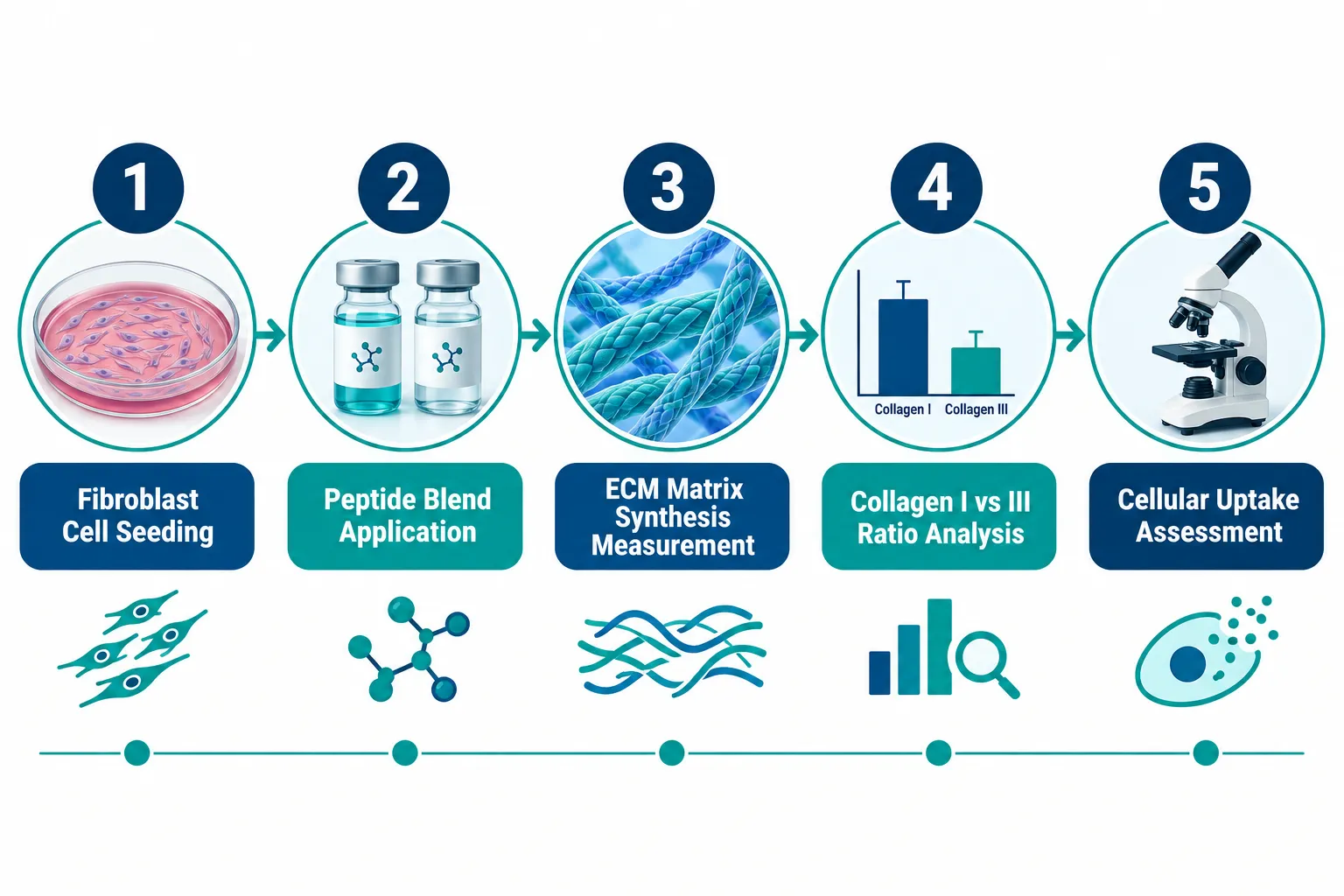
  1. Establish baseline fibroblast viability and collagen output under standard culture conditions.
  2. Apply dose-response curves across a defined concentration range.
  3. Compare single-peptide (e.g., GHK-Cu alone) versus blend conditions to isolate synergistic effects.
  4. Measure both anabolic markers (procollagen I C-peptide, elastin) and catabolic markers (MMP-1, MMP-3).

This approach aligns with the broader methodology discussed in innovative peptide delivery systems research, which addresses how formulation choices affect bioavailability and endpoint reproducibility.

Contextualizing ECM Peptides Within Longevity and Regenerative Research

The study of collagen biology and regenerative peptides sits at the intersection of dermatology, wound care, and longevity science. GHK-Cu does not operate in isolation, its activity intersects with broader tissue repair networks that include growth hormone secretagogues, mitochondrial peptides, and anti-inflammatory compounds.

Researchers mapping the full regenerative landscape may find it useful to cross-reference longevity peptide research themes to understand how ECM-targeted peptides complement systemic approaches to tissue maintenance.

Contextualizing ECM Peptides Within Longevity and Regenerative Research

Conclusion

The science of collagen biology and regenerative peptides, how GHK-Cu, Glow Blend, and Klow Blend affect extracellular matrix research, continues to yield actionable insights for investigators studying fibroblast dynamics, wound repair, and dermal aging. GHK-Cu remains the anchor compound in this space, with a well-documented ability to modulate collagen synthesis, MMP balance, and oxidative stress simultaneously. Proprietary blends like Glow and Klow extend that research toolkit by enabling multi-pathway interrogation in a single experimental condition.

Actionable next steps for researchers:

  • Review published fibroblast assay methodologies before designing ECM endpoints.
  • Source peptides with documented purity certificates and third-party testing to ensure data reproducibility.
  • Use dose-response comparisons between single-peptide and blend conditions to isolate synergistic effects.
  • Cross-reference ECM findings with systemic longevity markers for a more complete picture of regenerative potential.

Prioritizing quality-controlled compounds from verified suppliers is not optional, it is the foundation of reproducible science.

https://www.puretestedpeptides.com/wp-content/uploads/2026/07/collagen-biology-and-regenerative-peptides-how-ghk-cu-glow-blend-and-klow-blend.webp 1024 1536 Pure Tested https://www.puretestedpeptides.com/wp-content/uploads/2026/01/buy-peptides-online.jpg Pure Tested2026-07-22 13:05:442026-07-27 13:32:20Collagen Biology and Regenerative Peptides: How GHK‑Cu, Glow Blend, and Klow Blend Affect Extracellular Matrix Research
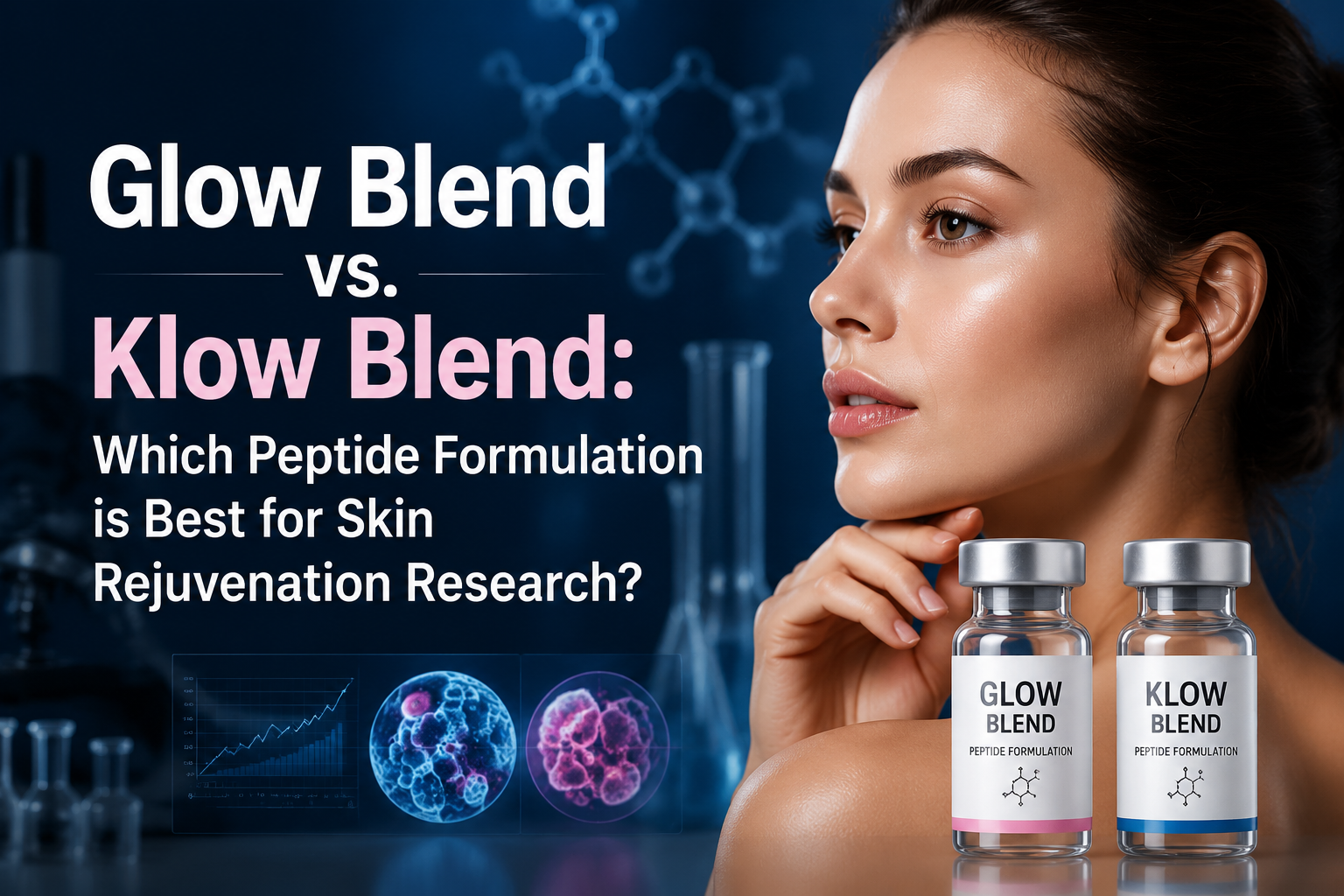
Glow Blend vs. Klow Blend: Which Peptide Formulation is Best for Skin Rejuvenation Research?

Glow Blend vs. Klow Blend: Which Peptide Formulation is Best for Skin Rejuvenation Research?

July 4, 2026/0 Comments/by Pure Tested

{"cover":"Professional landscape format (1536×1024) hero image with bold text overlay: 'Glow Blend vs. Klow Blend: Which Peptide Formulation is Best for Skin Rejuvenation Research?' in extra large 72pt white bold sans-serif font with dark drop shadow, centered upper third. Background features a split-panel laboratory aesthetic: left side glowing amber-gold vials labeled Glow Blend on a clean white lab bench, right side cool blue-tinted vials labeled Klow Blend, with microscopic skin cell imagery subtly overlaid. Color palette: deep navy, gold, white. Magazine cover quality, editorial style, high contrast, cinematic lighting.","content":["Detailed landscape format (1536×1024) scientific comparison infographic showing two peptide vial sets side by side on a sterile lab surface, left vial cluster labeled Glow Blend with GHK-Cu, BPC-157, TB-500 ingredient callouts in gold text, right cluster labeled Klow Blend with added KPV callout in blue text. Molecular structure diagrams float above each set. Clean white background with subtle skin-texture overlay. Professional research aesthetic, annotated diagram style, high contrast labels.","Landscape format (1536×1024) close-up macro photography of human skin cross-section illustration showing collagen fiber networks and cellular repair activity, with split overlay: left half showing smooth rejuvenated skin texture representing Glow Blend effects, right half showing reduced redness and inflammation representing Klow Blend KPV action. Warm amber and cool teal color grading. Scientific diagram aesthetic with subtle peptide molecule graphics, editorial quality, research-focused composition.","Landscape format (1536×1024) overhead flat-lay research planning scene on a dark slate surface: open laboratory notebook with peptide comparison notes, two clearly labeled research vials (Glow Blend and Klow Blend), a magnifying glass, printed assay results, and a checklist. Soft directional lighting from upper left. Color palette: charcoal, white, gold accents. Clean, professional research workspace aesthetic, editorial quality, no people, organized composition emphasizing decision-making in peptide research."]

Professional landscape hero image () with : "Glow Blend vs. Klow Blend: Which Peptide Formulation is Best for Skin

Collagen synthesis declines by roughly 1% per year after age 20, a fact that has driven researchers toward multi-peptide formulations designed to address skin aging at the cellular level. Among the most discussed options in 2026 are two closely related blends: Glow Blend and Klow Blend. The question of Glow Blend vs. Klow Blend: Which Peptide Formulation is Best for Skin Rejuvenation Research? is not simply a matter of preference, it depends on the specific biological pathways a study aims to target.

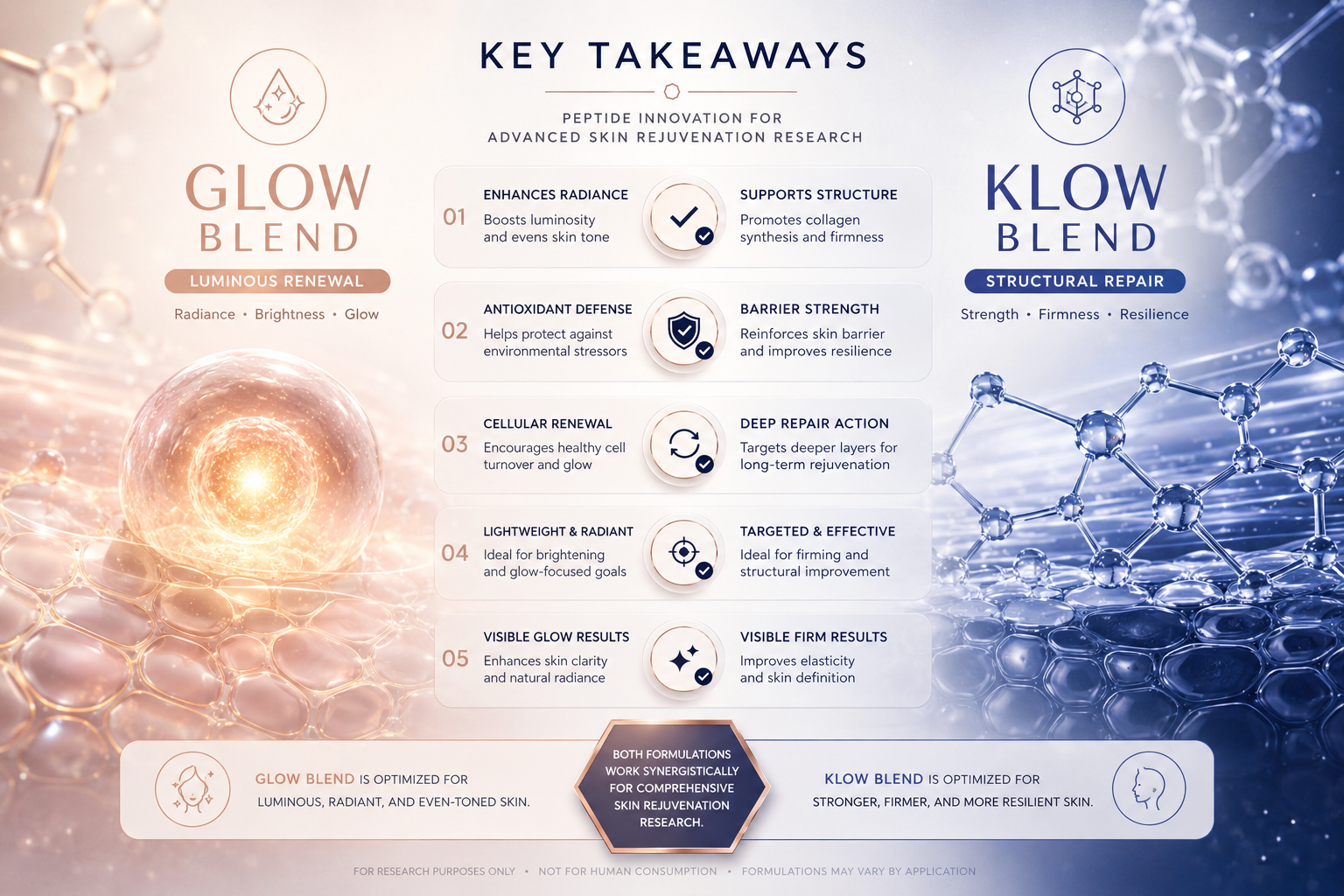
Editorial infographic for 'Key Takeaways' section comparing Glow Blend vs. Klow Blend peptide formulations for skin

Key Takeaways

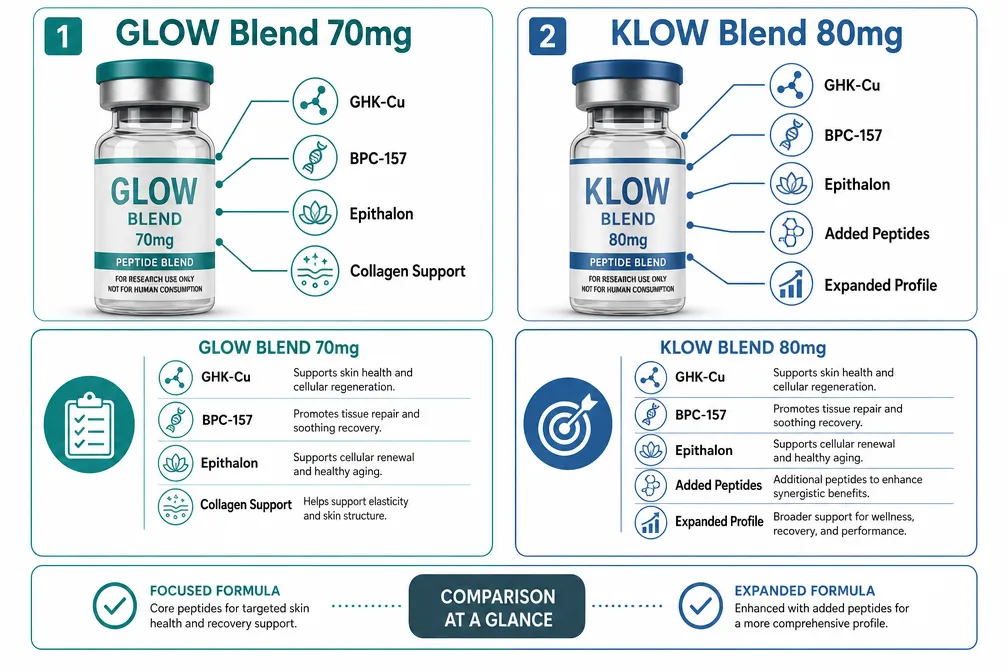
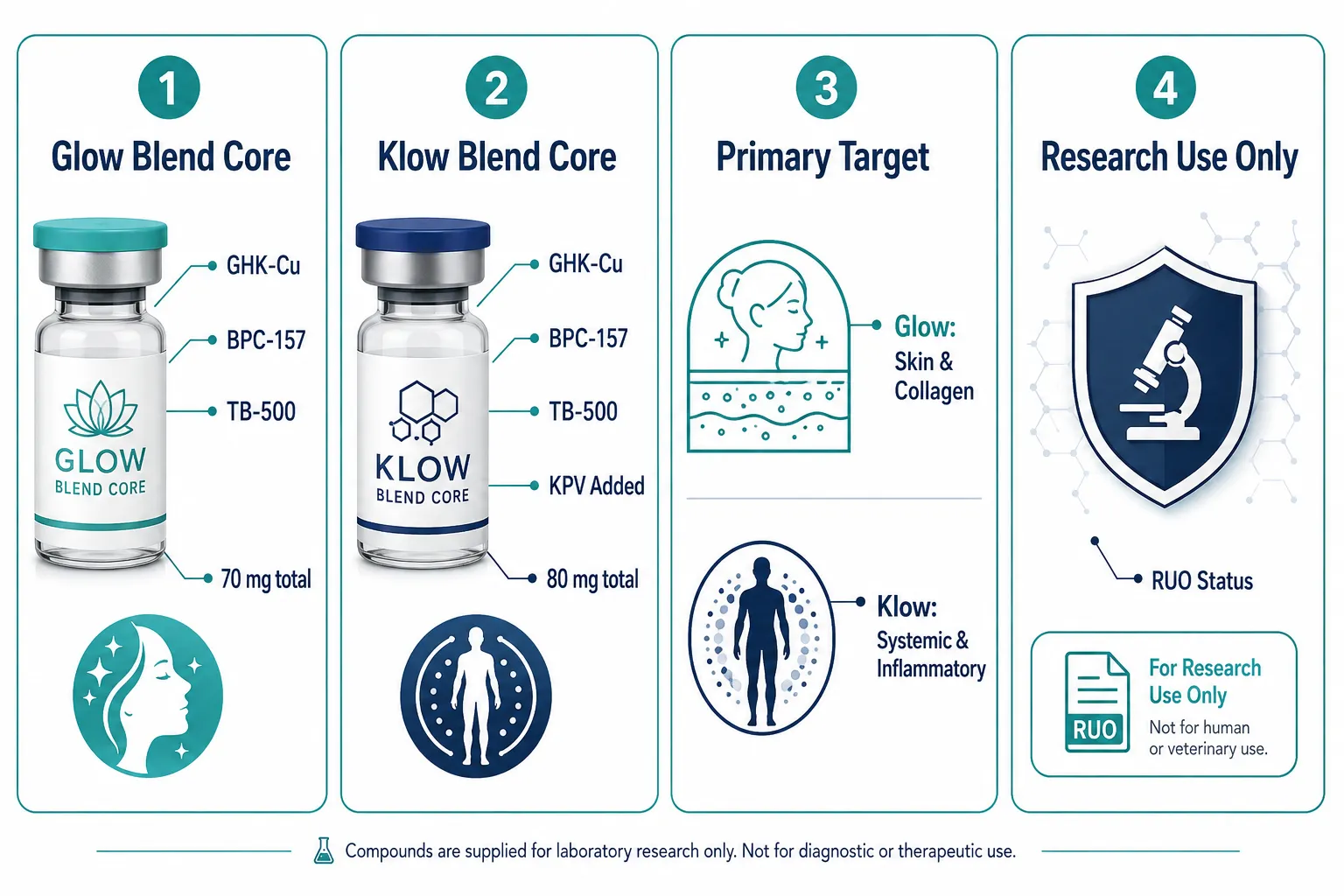
  • Glow Blend and Klow Blend share three core peptides: GHK-Cu, BPC-157, and TB-500.
  • Klow Blend adds KPV, a tripeptide with targeted anti-inflammatory properties.
  • Glow Blend is best suited for collagen-focused and general anti-aging research protocols.
  • Klow Blend is more appropriate for studies involving inflammation-driven skin conditions such as rosacea or post-procedure redness.
  • Choosing between the two depends on the primary research endpoint: structural rejuvenation versus inflammatory modulation.

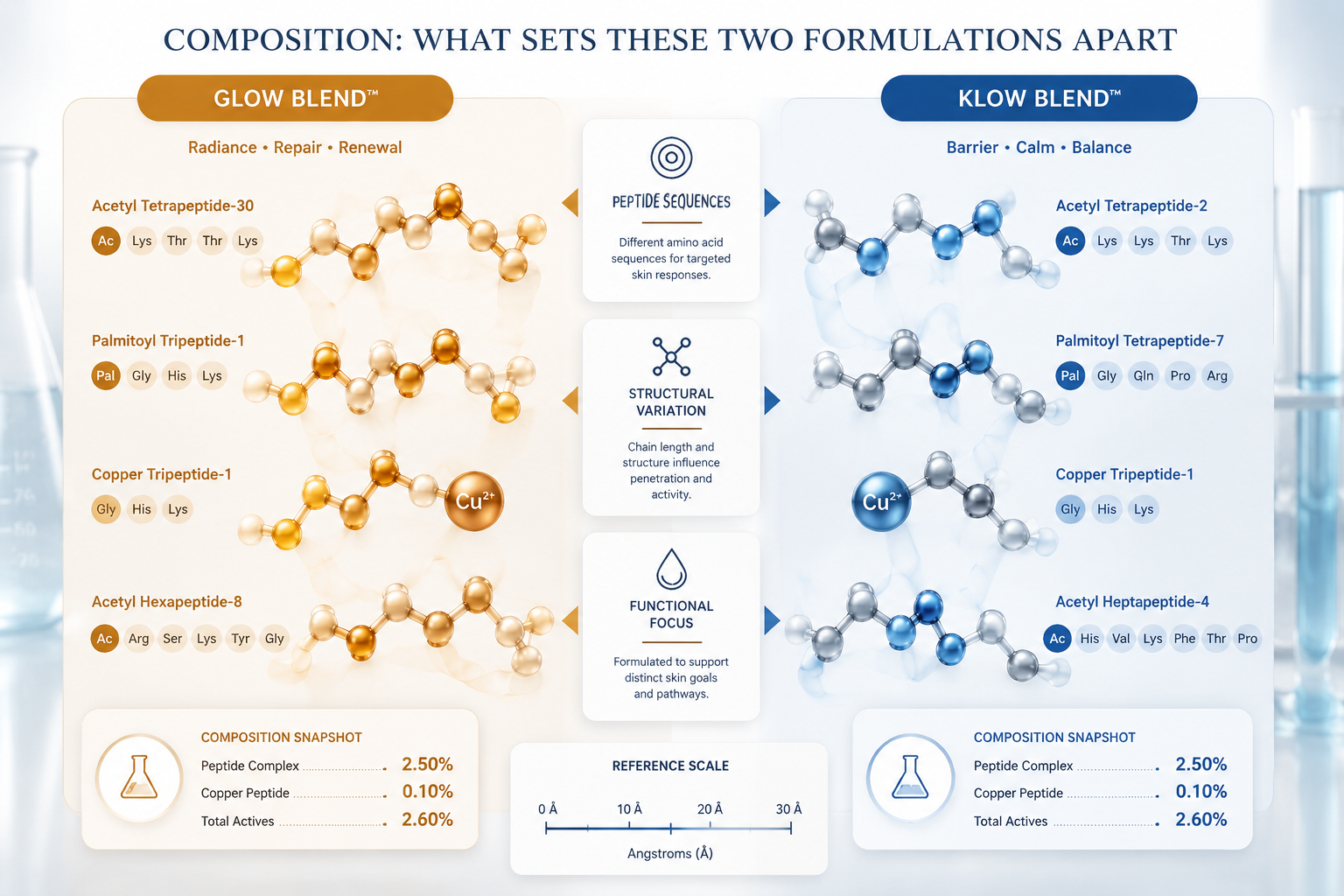
Composition: What Sets These Two Formulations Apart

Both blends are built on a shared foundation of three well-studied peptides.

Peptide Glow Blend Klow Blend
GHK-Cu (50 mg) Yes Yes
BPC-157 (10 mg) Yes Yes
TB-500 (10 mg) Yes Yes
KPV (10 mg) No Yes

The addition of KPV in Klow Blend is the defining difference. KPV is a tripeptide fragment derived from alpha-melanocyte-stimulating hormone. It works primarily by inhibiting NF-kB signaling, which reduces the production of pro-inflammatory cytokines. This makes Klow Blend a more targeted tool for research involving skin inflammation rather than structural remodeling alone.

Researchers exploring the Glow Blend formulation will find it optimized for collagen-centric endpoints, while those examining the Klow Blend formulation gain an additional inflammatory modulation variable.


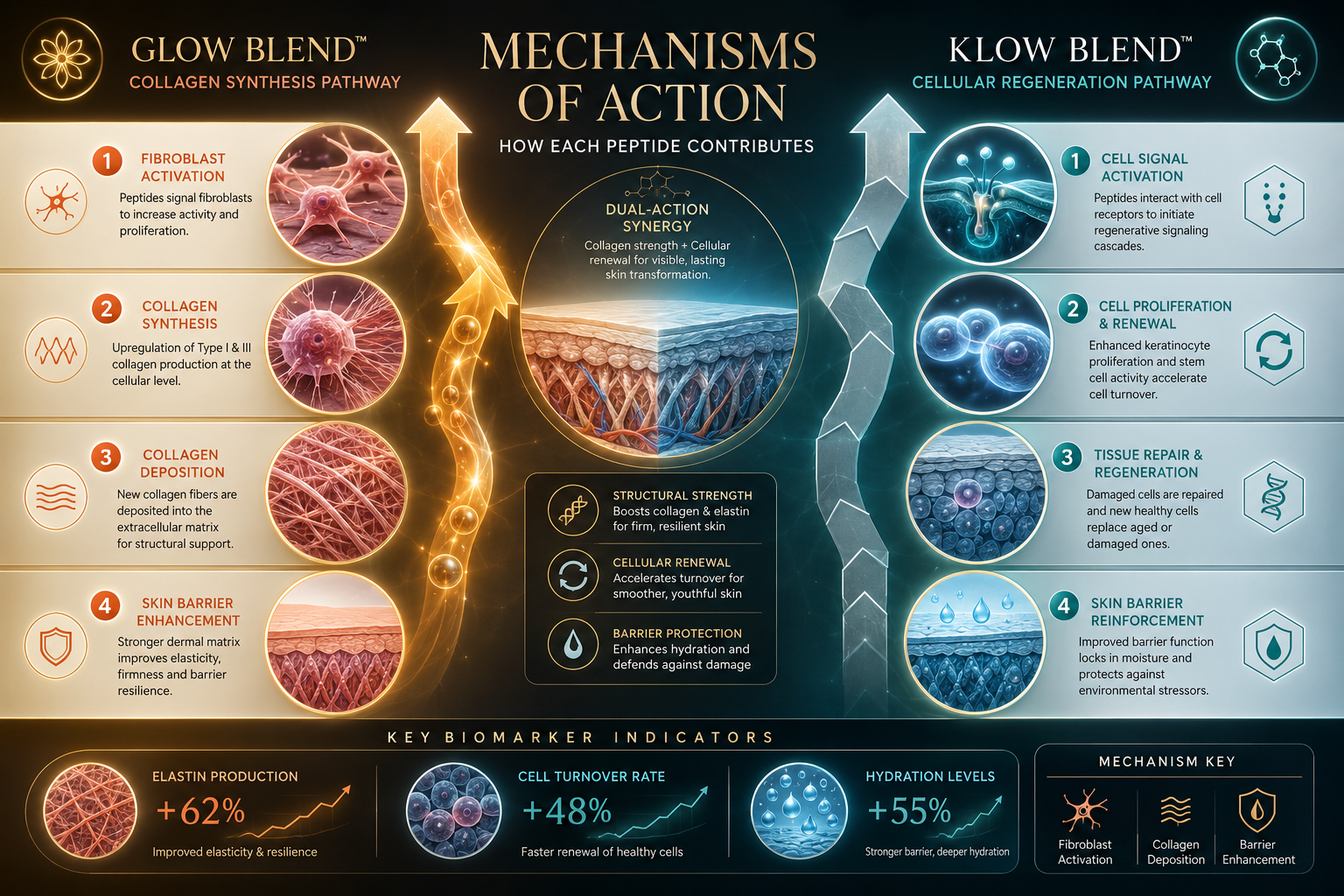
Mechanisms of Action: How Each Peptide Contributes

Understanding the role of each component is essential when evaluating Glow Blend vs. Klow Blend: Which Peptide Formulation is Best for Skin Rejuvenation Research?

GHK-Cu (Copper Peptide)
This peptide stimulates collagen and elastin synthesis, promotes skin remodeling, and supports the activity of antioxidant enzymes. It is considered the primary driver of anti-aging effects in both blends. Researchers interested in the broader regenerative context of copper peptides can also review GHK-Cu research themes.

BPC-157 (Body Protection Compound)
BPC-157 supports tissue repair and promotes angiogenesis, the formation of new blood vessels. This is relevant to skin research because improved vascularization supports nutrient delivery to dermal layers. For additional context on tissue repair peptide research, see BPC-157 and TB-500 research.

TB-500 (Thymosin Beta-4 Fragment)
TB-500 facilitates cell migration, reduces localized inflammation, and accelerates wound-healing responses. It works synergistically with BPC-157 in both formulations.

KPV (Klow Blend Only)
By blocking NF-kB pathways, KPV specifically targets the inflammatory cascade. This makes it highly relevant for studies on rosacea, post-procedure skin recovery, and chronic inflammatory dermatological conditions.

"The distinction between these two blends is not about potency, it is about pathway specificity."

Mechanisms of Action: How Each Peptide Contributes


Choosing the Right Blend for Your Research Protocol

When evaluating Glow Blend vs. Klow Blend: Which Peptide Formulation is Best for Skin Rejuvenation Research?, the answer hinges on the study's primary endpoint.

Choose Glow Blend if the research focuses on:

  • Collagen and elastin production
  • General skin texture and firmness improvement
  • Anti-aging biomarker studies
  • Skin remodeling without an inflammatory component

Choose Klow Blend if the research focuses on:

  • Inflammatory skin conditions (rosacea, eczema-adjacent models)
  • Post-procedure recovery protocols
  • NF-kB pathway modulation
  • Multi-pathway skin rejuvenation with an inflammatory variable

Researchers working on broader longevity and skin health themes may also find value in reviewing Glow Blend longevity research themes and Klow Blend multi-pathway research for additional context on how each formulation fits within wider research frameworks.

For labs sourcing multiple peptide compounds, the wholesale peptides catalog offers relevant procurement options, and reviewing quality testing protocols is strongly recommended before initiating any assay.

Choosing the Right Blend for Your Research Protocol


Conclusion

The Glow Blend vs. Klow Blend: Which Peptide Formulation is Best for Skin Rejuvenation Research? question does not have a single universal answer. Glow Blend is the stronger choice for studies centered on structural skin rejuvenation, collagen synthesis, and general anti-aging endpoints. Klow Blend is better suited when inflammatory modulation is a core variable in the research design.

Actionable next steps for researchers:

  1. Define the primary biological endpoint before selecting a formulation.
  2. Review the full ingredient profiles of both Glow Blend and Klow Blend against your assay requirements.
  3. Verify purity and concentration data through third-party certificates of analysis.
  4. Consider whether a multi-pathway approach (Klow Blend) adds value or introduces confounding variables to your specific protocol.

Selecting the right peptide blend from the outset saves time, reduces variability, and produces more interpretable data.
https://www.puretestedpeptides.com/wp-content/uploads/2026/07/Glow-Blend-vs.-Klow-Blend-Which-Peptide-Formulation-is-Best-for-Skin-Rejuvenation-Research.png 1024 1536 Pure Tested https://www.puretestedpeptides.com/wp-content/uploads/2026/01/buy-peptides-online.jpg Pure Tested2026-07-04 13:04:002026-07-20 15:01:09Glow Blend vs. Klow Blend: Which Peptide Formulation is Best for Skin Rejuvenation Research?
Glow Blend vs Klow Blend: What Researchers Should Know About These Skin-Focused Peptide Formulations

Glow Blend vs Klow Blend: What Researchers Should Know About These Skin-Focused Peptide Formulations

July 1, 2026/0 Comments/by Pure Tested

Fewer than 5% of multi-peptide research blends on the market today include published combination-level safety or efficacy data — yet formulations like Glow Blend and Klow Blend are drawing serious attention from researchers studying skin biology, tissue repair, and inflammation. Understanding the differences between these two products matters before any research protocol is designed.

This guide breaks down the Glow Blend vs Klow Blend: What Researchers Should Know About These Skin-Focused Peptide Formulations comparison with precision — covering ingredient logic, concentration differences, and how to evaluate each blend's research potential.

Key Takeaways

  • Both blends share three core peptides: GHK-Cu, BPC-157, and TB-500
  • Klow Blend adds KPV, a tripeptide with documented anti-inflammatory properties
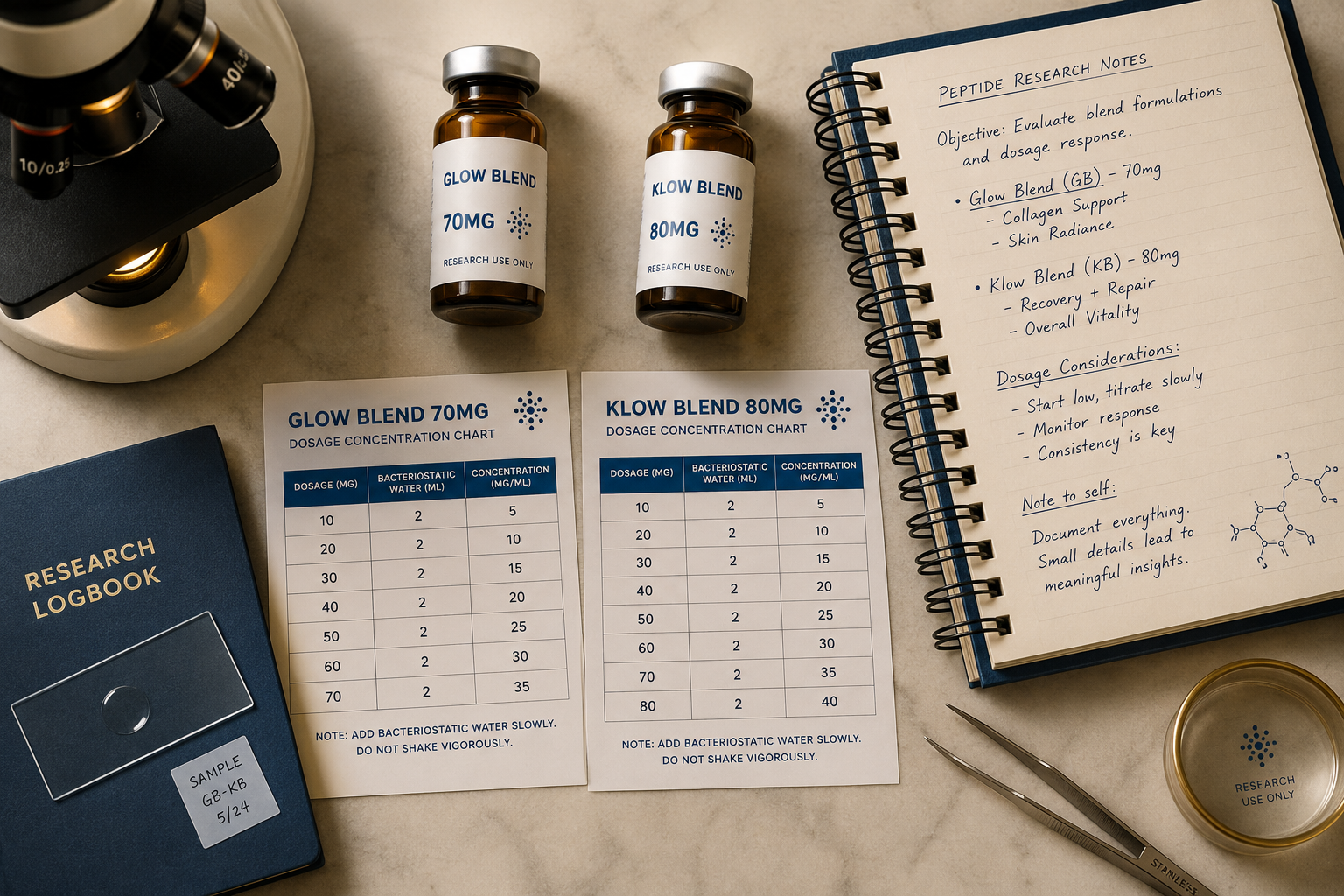
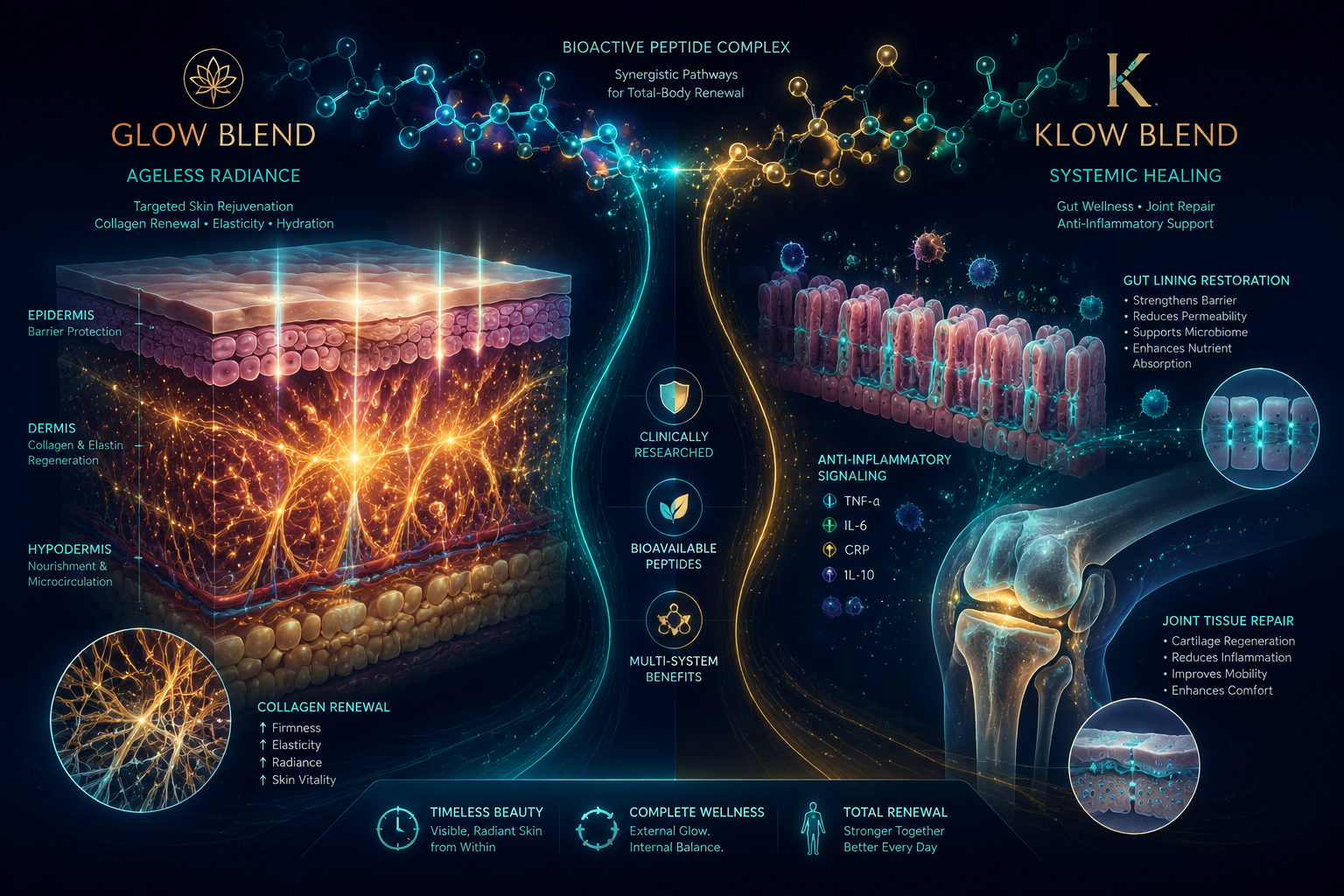
  • Glow Blend (70 mg total) targets skin enhancement; Klow Blend (80 mg total) targets systemic healing
  • Neither blend has been studied as a combined formulation in controlled trials
  • Researchers should evaluate each blend based on the individual peptide evidence available

Key Takeaways

Shared Ingredients and the Logic Behind the Overlap

Both blends are built on the same three-peptide foundation. Researchers familiar with any one of these compounds will recognize the rationale immediately.

GHK-Cu (Copper Tripeptide-1) is the anchor of both formulations. This copper-binding peptide has been studied extensively for its role in extracellular matrix remodeling. Research on GHK-Cu and extracellular matrix dynamics suggests it may stimulate collagen synthesis and support wound healing at the dermal level. Both blends include 50 mg of GHK-Cu.

BPC-157 is a synthetic peptide derived from a gastric protein. It has been examined in preclinical models for tissue repair, angiogenesis, and tendon recovery. For a deeper look at its research profile, the BPC-157 angiogenesis and tendon research overview provides useful context. Both blends include 10 mg.

TB-500 (Thymosin Beta-4 fragment) supports actin regulation and has been linked to cell migration and tissue repair signaling. Both blends include 10 mg.

"The shared foundation of GHK-Cu, BPC-157, and TB-500 gives both blends overlapping potential in skin and tissue research — but the divergence begins with what Klow Blend adds."

Concentration Breakdown: Glow Blend vs Klow Blend

Peptide Glow Blend Klow Blend
GHK-Cu 50 mg 50 mg
BPC-157 10 mg 10 mg
TB-500 10 mg 10 mg
KPV Not included 10 mg
Total 70 mg 80 mg

The addition of KPV is the defining difference. KPV is a tripeptide fragment of alpha-MSH with a focused anti-inflammatory profile. Research on KPV and epithelial barrier function suggests it may help modulate inflammatory signaling in gut and mucosal tissue — which explains why Klow Blend is positioned toward systemic healing rather than cosmetic endpoints.

Pricing reflects the added ingredient: Glow Blend is approximately $145 per vial, while Klow Blend runs approximately $160 per vial.

Concentration Breakdown: Glow Blend vs Klow Blend

Evaluating Research Applications for Each Formulation

Understanding Glow Blend vs Klow Blend: What Researchers Should Know About These Skin-Focused Peptide Formulations means matching each blend to the right research question.

Glow Blend is best suited for:

  • Collagen production and skin texture studies
  • Anti-aging and dermal remodeling research
  • Hair follicle and scalp biology investigations

Researchers interested in topical peptide delivery may also find value in reviewing topical GHK-Cu research themes as a parallel reference point.

Klow Blend is best suited for:

  • Gut repair and intestinal barrier research
  • Joint inflammation and injury recovery models
  • Systemic anti-inflammatory pathway studies

The inclusion of KPV alongside BPC-157 creates a potentially synergistic anti-inflammatory profile. Researchers studying broader innovative peptide delivery systems may find the Klow formulation particularly relevant for mucosal delivery models.

A critical note on combination research: Neither blend has been tested as a complete formulation in peer-reviewed controlled studies. All available evidence is drawn from individual peptide research. Researchers should treat these blends as hypothesis-generating tools rather than validated combination therapies.

For those building broader research frameworks, the longevity peptide research catalog and comprehensive peptide catalog tour offer useful orientation across related compound categories.

Evaluating Research Applications for Each Formulation

Conclusion

The Glow Blend vs Klow Blend: What Researchers Should Know About These Skin-Focused Peptide Formulations comparison ultimately comes down to research focus. Both blends share a strong three-peptide foundation with documented individual-level evidence. Glow Blend is the cleaner choice for skin-focused and anti-aging research protocols. Klow Blend is the stronger candidate when inflammation, gut repair, or systemic tissue recovery is the primary variable.

Actionable next steps for researchers in 2026:

  1. Define the primary research endpoint before selecting a blend
  2. Review individual peptide literature for GHK-Cu, BPC-157, TB-500, and KPV separately
  3. Document baseline inflammatory markers if using Klow Blend in systemic models
  4. Treat combination-level effects as exploratory until controlled data exists
  5. Source from suppliers with verified purity documentation to ensure data integrity
https://www.puretestedpeptides.com/wp-content/uploads/2026/07/Glow-Blend-vs-Klow-Blend-What-Researchers-Should-Know-About-These-Skin-Focused-Peptide-Formulations.png 1024 1536 Pure Tested https://www.puretestedpeptides.com/wp-content/uploads/2026/01/buy-peptides-online.jpg Pure Tested2026-07-01 13:03:432026-07-20 15:01:19Glow Blend vs Klow Blend: What Researchers Should Know About These Skin-Focused Peptide Formulations
Collagen, GHK-Cu, and Glow/Klow Blends: How Peptides and Polypeptides Influence Skin and Connective Tissue Research

Collagen, GHK-Cu, and Glow/Klow Blends: How Peptides and Polypeptides Influence Skin and Connective Tissue Research

June 23, 2026/0 Comments/by Pure Tested

By age 60, the body's circulating levels of GHK-Cu — a copper-binding tripeptide central to collagen biology — have fallen to roughly 40% of what they were at age 20. That single data point has driven a growing body of preclinical research into how peptides and polypeptides can modulate skin structure, wound repair, and connective tissue remodeling. Collagen, GHK-Cu, and Glow/Klow Blends: How Peptides and Polypeptides Influence Skin and Connective Tissue Research sits at the intersection of biochemistry, aging science, and formulation strategy — and understanding the mechanisms matters before drawing any conclusions.

Key Takeaways

  • GHK-Cu is a naturally occurring tripeptide that declines significantly with age and plays a documented role in collagen synthesis and gene expression modulation.
  • The Glow Blend combines GHK-Cu, BPC-157, and TB-500 in a 5:1:1 ratio, targeting skin remodeling through complementary mechanisms.
  • The Klow Blend adds KPV to the Glow formula, introducing an anti-inflammatory component studied in epithelial and gut barrier contexts.
  • No controlled in-vivo study has directly tested these multi-peptide blends against single-agent monotherapy — all synergy claims remain mechanistic extrapolations.
  • Purity, sourcing, and documentation standards are critical considerations when evaluating any peptide research compound.

GHK-Cu molecular structure and age-related collagen decline graph

GHK-Cu and Collagen Biology: The Copper-Peptide Foundation

GHK-Cu (Glycyl-L-Histidyl-L-Lysine-Copper) is a tripeptide that occurs naturally in human plasma, saliva, and urine. At age 20, plasma concentrations sit near 200 ng/ml. By age 60, that figure drops to approximately 80 ng/ml — a decline that parallels well-known changes in skin elasticity and wound-healing capacity.

In in-vitro and animal model research, GHK-Cu has demonstrated several relevant activities:

  • Collagen synthesis stimulation: GHK-Cu upregulates collagen gene expression in fibroblast cultures, promoting the production of Types I and III collagen.
  • Matrix metalloproteinase (MMP) modulation: It appears to balance MMP activity, supporting matrix remodeling without unchecked degradation.
  • Antioxidant and anti-inflammatory effects: The copper-chelating structure helps neutralize reactive oxygen species in cellular environments.
  • Gene expression breadth: Microarray studies suggest GHK-Cu influences the expression of over 4,000 human genes, including pathways tied to tissue repair and inflammation resolution.

"GHK-Cu does not simply stimulate collagen production — it appears to act as a broad biological signal for tissue remodeling and repair."

For researchers exploring copper-binding polypeptides, GHK-Cu peptides for research use represent one of the more well-documented starting points in the skin biology literature. Related work on KPV and epithelial barrier function provides useful mechanistic context for the Klow formulation discussed below.


Glow Blend and Klow Blend side-by-side composition comparison infographic

Glow and Klow Blends: Collagen, GHK-Cu, and Glow/Klow Blends Composition and Mechanisms

The Glow and Klow blends are multi-peptide formulations designed to combine complementary mechanisms into a single research compound. Understanding their composition is essential before evaluating any mechanistic claims.

Glow Blend

The Glow Blend contains three peptides in a 5:1:1 mass ratio:

Peptide Mass Primary Research Focus
GHK-Cu 50 mg Collagen synthesis, gene modulation
BPC-157 10 mg Angiogenesis, tissue stabilization
TB-500 10 mg Cellular migration, cytoskeletal remodeling

BPC-157 has been studied extensively for its role in promoting angiogenesis and stabilizing connective tissue, as detailed in BPC-157 core peptides documentation. TB-500's contribution involves actin-binding activity that supports cellular migration during wound repair. For a broader look at how the Glow formulation fits into longevity-oriented research, the Glow Blend longevity research themes overview offers additional context.

Klow Blend

The Klow Blend expands the Glow formula with a fourth component:

  • KPV (10 mg): A tripeptide derived from alpha-MSH, studied for reducing cellular and gut inflammation via NF-kB pathway modulation.

Total mass is 80 mg at a 50:10:10:10 ratio. The addition of KPV positions Klow toward research contexts where inflammatory modulation alongside structural remodeling is relevant.

Researchers can also review Glow Blend peptide benefits for a component-level breakdown.


Peptide research laboratory vials and connective tissue study materials

Research Limitations and What the Evidence Actually Shows

A critical point in evaluating Collagen, GHK-Cu, and Glow/Klow Blends: How Peptides and Polypeptides Influence Skin and Connective Tissue Research is understanding where the evidence base currently stands.

What is established:

  • Individual components — GHK-Cu, BPC-157, TB-500, and KPV — each have peer-reviewed in-vitro and animal model data supporting their proposed mechanisms.
  • GHK-Cu's influence on collagen gene expression is among the better-characterized effects in the peptide skin biology literature.

What remains unproven:

  • No controlled in-vivo study has tested the four-peptide Klow blend against any single-agent monotherapy.
  • No head-to-head trial compares Glow versus Klow versus individual components in a matched model.
  • All synergy claims are mechanistic extrapolations from single-agent studies — not direct experimental findings.

This distinction matters for anyone interpreting research data or designing study protocols. The mechanistic rationale is logical, but logic is not evidence.

Researchers sourcing compounds for structured studies should prioritize verified purity and documentation. Reviewing certificates of analysis is a standard due-diligence step, and exploring the broader peptide research catalog can help identify complementary compounds relevant to connective tissue and skin biology.


Conclusion

The science connecting GHK-Cu to collagen synthesis and tissue remodeling is well-grounded in preclinical literature. The Glow and Klow blends extend that foundation by combining peptides with distinct but potentially complementary mechanisms — angiogenesis support from BPC-157, cytoskeletal remodeling from TB-500, and inflammatory modulation from KPV. However, the absence of controlled blend-versus-monotherapy studies means the synergy hypothesis, while mechanistically plausible, remains unconfirmed at the in-vivo level.

Actionable next steps for researchers:

  1. Review single-agent literature for each component before drawing conclusions about blend behavior.
  2. Prioritize compounds with third-party certificates of analysis to ensure research-grade purity.
  3. Design protocols that include single-agent controls alongside blend groups to begin generating direct comparative data.

  4. Track the evolving literature on copper-binding polypeptides, as GHK-Cu gene expression research continues to expand.

The field is moving quickly. Rigorous, well-controlled study design will be what separates mechanistic speculation from actionable science.

https://www.puretestedpeptides.com/wp-content/uploads/2026/06/Collagen-GHK-Cu-and-GlowKlow-Blends-How-Peptides-and-Polypeptides-Influence-Skin-and-Connective-Tissue-Research.png 1024 1536 Pure Tested https://www.puretestedpeptides.com/wp-content/uploads/2026/01/buy-peptides-online.jpg Pure Tested2026-06-23 13:19:092026-07-20 15:02:22Collagen, GHK-Cu, and Glow/Klow Blends: How Peptides and Polypeptides Influence Skin and Connective Tissue Research
Collagen, GHK-Cu, and Glow/Klow Blends: How Peptides and Polypeptides Influence Skin and Connective Tissue Research

Collagen, GHK-Cu, and Glow/Klow Blends: How Peptides and Polypeptides Influence Skin and Connective Tissue Research

June 23, 2026/0 Comments/by Pure Tested

By age 60, the body's circulating levels of GHK-Cu — a copper-binding tripeptide central to collagen biology — have fallen to roughly 40% of what they were at age 20. That single data point has driven a growing body of preclinical research into how peptides and polypeptides can modulate skin structure, wound repair, and connective tissue remodeling. Collagen, GHK-Cu, and Glow/Klow Blends: How Peptides and Polypeptides Influence Skin and Connective Tissue Research sits at the intersection of biochemistry, aging science, and formulation strategy — and understanding the mechanisms matters before drawing any conclusions.

Key Takeaways

  • GHK-Cu is a naturally occurring tripeptide that declines significantly with age and plays a documented role in collagen synthesis and gene expression modulation.
  • The Glow Blend combines GHK-Cu, BPC-157, and TB-500 in a 5:1:1 ratio, targeting skin remodeling through complementary mechanisms.
  • The Klow Blend adds KPV to the Glow formula, introducing an anti-inflammatory component studied in epithelial and gut barrier contexts.
  • No controlled in-vivo study has directly tested these multi-peptide blends against single-agent monotherapy — all synergy claims remain mechanistic extrapolations.
  • Purity, sourcing, and documentation standards are critical considerations when evaluating any peptide research compound.

GHK-Cu molecular structure and age-related collagen decline graph

GHK-Cu and Collagen Biology: The Copper-Peptide Foundation

GHK-Cu (Glycyl-L-Histidyl-L-Lysine-Copper) is a tripeptide that occurs naturally in human plasma, saliva, and urine. At age 20, plasma concentrations sit near 200 ng/ml. By age 60, that figure drops to approximately 80 ng/ml — a decline that parallels well-known changes in skin elasticity and wound-healing capacity.

In in-vitro and animal model research, GHK-Cu has demonstrated several relevant activities:

  • Collagen synthesis stimulation: GHK-Cu upregulates collagen gene expression in fibroblast cultures, promoting the production of Types I and III collagen.
  • Matrix metalloproteinase (MMP) modulation: It appears to balance MMP activity, supporting matrix remodeling without unchecked degradation.
  • Antioxidant and anti-inflammatory effects: The copper-chelating structure helps neutralize reactive oxygen species in cellular environments.
  • Gene expression breadth: Microarray studies suggest GHK-Cu influences the expression of over 4,000 human genes, including pathways tied to tissue repair and inflammation resolution.

"GHK-Cu does not simply stimulate collagen production — it appears to act as a broad biological signal for tissue remodeling and repair."

For researchers exploring copper-binding polypeptides, GHK-Cu peptides for research use represent one of the more well-documented starting points in the skin biology literature. Related work on KPV and epithelial barrier function provides useful mechanistic context for the Klow formulation discussed below.


Glow Blend and Klow Blend side-by-side composition comparison infographic

Glow and Klow Blends: Collagen, GHK-Cu, and Glow/Klow Blends Composition and Mechanisms

The Glow and Klow blends are multi-peptide formulations designed to combine complementary mechanisms into a single research compound. Understanding their composition is essential before evaluating any mechanistic claims.

Glow Blend

The Glow Blend contains three peptides in a 5:1:1 mass ratio:

Peptide Mass Primary Research Focus
GHK-Cu 50 mg Collagen synthesis, gene modulation
BPC-157 10 mg Angiogenesis, tissue stabilization
TB-500 10 mg Cellular migration, cytoskeletal remodeling

BPC-157 has been studied extensively for its role in promoting angiogenesis and stabilizing connective tissue, as detailed in BPC-157 core peptides documentation. TB-500's contribution involves actin-binding activity that supports cellular migration during wound repair. For a broader look at how the Glow formulation fits into longevity-oriented research, the Glow Blend longevity research themes overview offers additional context.

Klow Blend

The Klow Blend expands the Glow formula with a fourth component:

  • KPV (10 mg): A tripeptide derived from alpha-MSH, studied for reducing cellular and gut inflammation via NF-kB pathway modulation.

Total mass is 80 mg at a 50:10:10:10 ratio. The addition of KPV positions Klow toward research contexts where inflammatory modulation alongside structural remodeling is relevant.

Researchers can also review Glow Blend peptide benefits for a component-level breakdown.


Peptide research laboratory vials and connective tissue study materials

Research Limitations and What the Evidence Actually Shows

A critical point in evaluating Collagen, GHK-Cu, and Glow/Klow Blends: How Peptides and Polypeptides Influence Skin and Connective Tissue Research is understanding where the evidence base currently stands.

What is established:

  • Individual components — GHK-Cu, BPC-157, TB-500, and KPV — each have peer-reviewed in-vitro and animal model data supporting their proposed mechanisms.
  • GHK-Cu's influence on collagen gene expression is among the better-characterized effects in the peptide skin biology literature.

What remains unproven:

  • No controlled in-vivo study has tested the four-peptide Klow blend against any single-agent monotherapy.
  • No head-to-head trial compares Glow versus Klow versus individual components in a matched model.
  • All synergy claims are mechanistic extrapolations from single-agent studies — not direct experimental findings.

This distinction matters for anyone interpreting research data or designing study protocols. The mechanistic rationale is logical, but logic is not evidence.

Researchers sourcing compounds for structured studies should prioritize verified purity and documentation. Reviewing certificates of analysis is a standard due-diligence step, and exploring the broader peptide research catalog can help identify complementary compounds relevant to connective tissue and skin biology.


Conclusion

The science connecting GHK-Cu to collagen synthesis and tissue remodeling is well-grounded in preclinical literature. The Glow and Klow blends extend that foundation by combining peptides with distinct but potentially complementary mechanisms — angiogenesis support from BPC-157, cytoskeletal remodeling from TB-500, and inflammatory modulation from KPV. However, the absence of controlled blend-versus-monotherapy studies means the synergy hypothesis, while mechanistically plausible, remains unconfirmed at the in-vivo level.

Actionable next steps for researchers:

  1. Review single-agent literature for each component before drawing conclusions about blend behavior.
  2. Prioritize compounds with third-party certificates of analysis to ensure research-grade purity.
  3. Design protocols that include single-agent controls alongside blend groups to begin generating direct comparative data.
  4. Track the evolving literature on copper-binding polypeptides, as GHK-Cu gene expression research continues to expand.

The field is moving quickly. Rigorous, well-controlled study design will be what separates mechanistic speculation from actionable science.

https://www.puretestedpeptides.com/wp-content/uploads/2026/06/Collagen-GHK-Cu-and-GlowKlow-Blends-How-Peptides-and-Polypeptides-Influence-Skin-and-Connective-Tissue-Research.png 1024 1536 Pure Tested https://www.puretestedpeptides.com/wp-content/uploads/2026/01/buy-peptides-online.jpg Pure Tested2026-06-23 13:19:092026-07-20 15:02:22Collagen, GHK-Cu, and Glow/Klow Blends: How Peptides and Polypeptides Influence Skin and Connective Tissue Research
Collagen, GHK-Cu, and Glow/Klow Blends: How Peptides and Polypeptides Influence Skin and Connective Tissue Research

Collagen, GHK-Cu, and Glow/Klow Blends: How Peptides and Polypeptides Influence Skin and Connective Tissue Research

June 23, 2026/0 Comments/by Pure Tested

By age 60, the body's circulating levels of GHK-Cu — a copper-binding tripeptide central to collagen biology — have fallen to roughly 40% of what they were at age 20. That single data point has driven a growing body of preclinical research into how peptides and polypeptides can modulate skin structure, wound repair, and connective tissue remodeling. Collagen, GHK-Cu, and Glow/Klow Blends: How Peptides and Polypeptides Influence Skin and Connective Tissue Research sits at the intersection of biochemistry, aging science, and formulation strategy — and understanding the mechanisms matters before drawing any conclusions.

Key Takeaways

  • GHK-Cu is a naturally occurring tripeptide that declines significantly with age and plays a documented role in collagen synthesis and gene expression modulation.
  • The Glow Blend combines GHK-Cu, BPC-157, and TB-500 in a 5:1:1 ratio, targeting skin remodeling through complementary mechanisms.
  • The Klow Blend adds KPV to the Glow formula, introducing an anti-inflammatory component studied in epithelial and gut barrier contexts.
  • No controlled in-vivo study has directly tested these multi-peptide blends against single-agent monotherapy — all synergy claims remain mechanistic extrapolations.
  • Purity, sourcing, and documentation standards are critical considerations when evaluating any peptide research compound.

GHK-Cu molecular structure and age-related collagen decline graph

GHK-Cu and Collagen Biology: The Copper-Peptide Foundation

GHK-Cu (Glycyl-L-Histidyl-L-Lysine-Copper) is a tripeptide that occurs naturally in human plasma, saliva, and urine. At age 20, plasma concentrations sit near 200 ng/ml. By age 60, that figure drops to approximately 80 ng/ml — a decline that parallels well-known changes in skin elasticity and wound-healing capacity.

In in-vitro and animal model research, GHK-Cu has demonstrated several relevant activities:

  • Collagen synthesis stimulation: GHK-Cu upregulates collagen gene expression in fibroblast cultures, promoting the production of Types I and III collagen.
  • Matrix metalloproteinase (MMP) modulation: It appears to balance MMP activity, supporting matrix remodeling without unchecked degradation.
  • Antioxidant and anti-inflammatory effects: The copper-chelating structure helps neutralize reactive oxygen species in cellular environments.
  • Gene expression breadth: Microarray studies suggest GHK-Cu influences the expression of over 4,000 human genes, including pathways tied to tissue repair and inflammation resolution.

"GHK-Cu does not simply stimulate collagen production — it appears to act as a broad biological signal for tissue remodeling and repair."

For researchers exploring copper-binding polypeptides, GHK-Cu peptides for research use represent one of the more well-documented starting points in the skin biology literature. Related work on KPV and epithelial barrier function provides useful mechanistic context for the Klow formulation discussed below.


Glow Blend and Klow Blend side-by-side composition comparison infographic

Glow and Klow Blends: Collagen, GHK-Cu, and Glow/Klow Blends Composition and Mechanisms

The Glow and Klow blends are multi-peptide formulations designed to combine complementary mechanisms into a single research compound. Understanding their composition is essential before evaluating any mechanistic claims.

Glow Blend

The Glow Blend contains three peptides in a 5:1:1 mass ratio:

Peptide Mass Primary Research Focus
GHK-Cu 50 mg Collagen synthesis, gene modulation
BPC-157 10 mg Angiogenesis, tissue stabilization
TB-500 10 mg Cellular migration, cytoskeletal remodeling

BPC-157 has been studied extensively for its role in promoting angiogenesis and stabilizing connective tissue, as detailed in BPC-157 core peptides documentation. TB-500's contribution involves actin-binding activity that supports cellular migration during wound repair. For a broader look at how the Glow formulation fits into longevity-oriented research, the Glow Blend longevity research themes overview offers additional context.

Klow Blend

The Klow Blend expands the Glow formula with a fourth component:

  • KPV (10 mg): A tripeptide derived from alpha-MSH, studied for reducing cellular and gut inflammation via NF-kB pathway modulation.

Total mass is 80 mg at a 50:10:10:10 ratio. The addition of KPV positions Klow toward research contexts where inflammatory modulation alongside structural remodeling is relevant.

Researchers can also review Glow Blend peptide benefits for a component-level breakdown.


Peptide research laboratory vials and connective tissue study materials

Research Limitations and What the Evidence Actually Shows

A critical point in evaluating Collagen, GHK-Cu, and Glow/Klow Blends: How Peptides and Polypeptides Influence Skin and Connective Tissue Research is understanding where the evidence base currently stands.

What is established:

  • Individual components — GHK-Cu, BPC-157, TB-500, and KPV — each have peer-reviewed in-vitro and animal model data supporting their proposed mechanisms.
  • GHK-Cu's influence on collagen gene expression is among the better-characterized effects in the peptide skin biology literature.

What remains unproven:

  • No controlled in-vivo study has tested the four-peptide Klow blend against any single-agent monotherapy.
  • No head-to-head trial compares Glow versus Klow versus individual components in a matched model.
  • All synergy claims are mechanistic extrapolations from single-agent studies — not direct experimental findings.

This distinction matters for anyone interpreting research data or designing study protocols. The mechanistic rationale is logical, but logic is not evidence.

Researchers sourcing compounds for structured studies should prioritize verified purity and documentation. Reviewing certificates of analysis is a standard due-diligence step, and exploring the broader peptide research catalog can help identify complementary compounds relevant to connective tissue and skin biology.


Conclusion

The science connecting GHK-Cu to collagen synthesis and tissue remodeling is well-grounded in preclinical literature. The Glow and Klow blends extend that foundation by combining peptides with distinct but potentially complementary mechanisms — angiogenesis support from BPC-157, cytoskeletal remodeling from TB-500, and inflammatory modulation from KPV. However, the absence of controlled blend-versus-monotherapy studies means the synergy hypothesis, while mechanistically plausible, remains unconfirmed at the in-vivo level.

Actionable next steps for researchers:

  1. Review single-agent literature for each component before drawing conclusions about blend behavior.
  2. Prioritize compounds with third-party certificates of analysis to ensure research-grade purity.
  3. Design protocols that include single-agent controls alongside blend groups to begin generating direct comparative data.
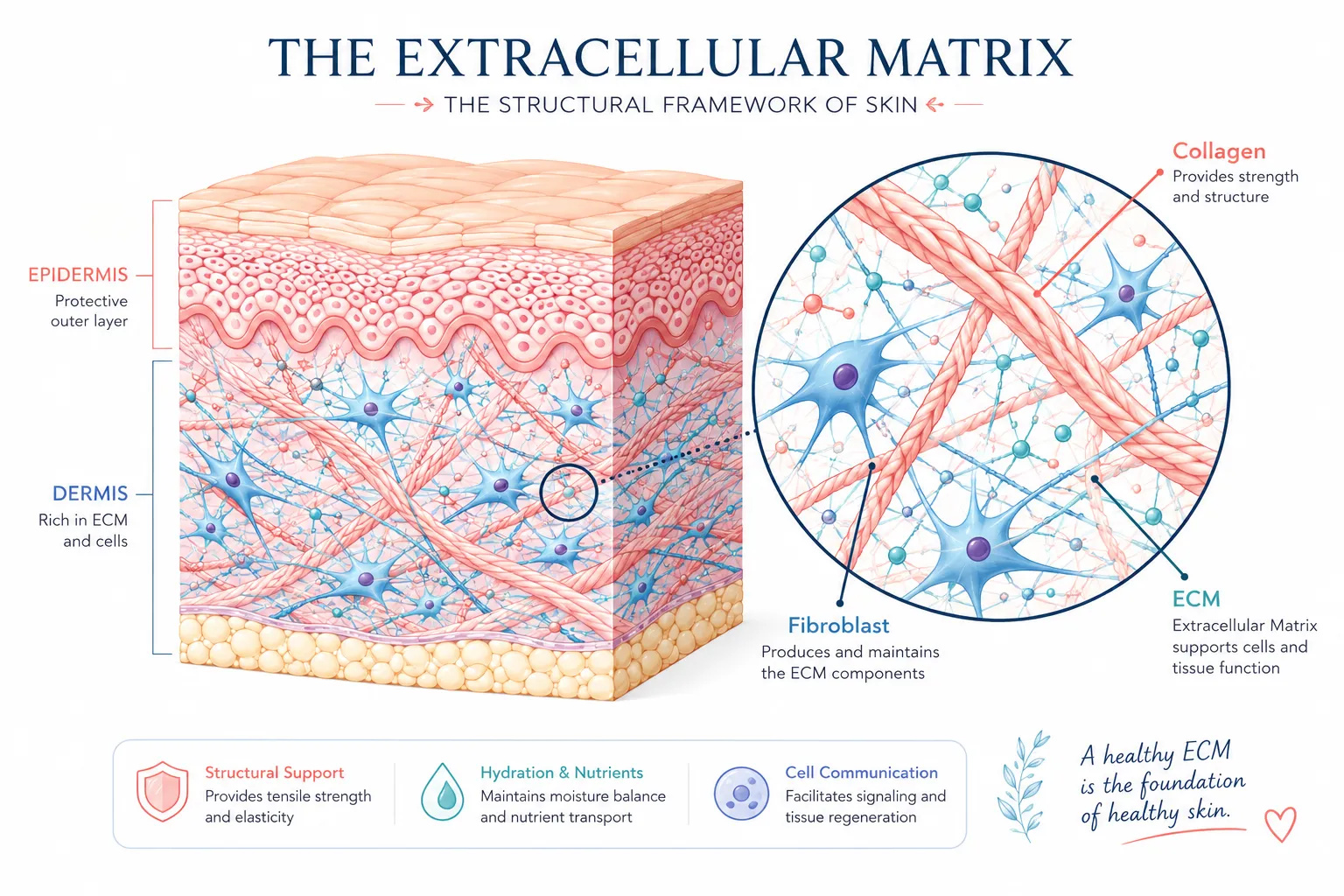
  4. Track the evolving literature on copper-binding polypeptides, as GHK-Cu gene expression research continues to expand.
The field is moving quickly. Rigorous, well-controlled study design will be what separates mechanistic speculation from actionable science.

https://www.puretestedpeptides.com/wp-content/uploads/2026/06/Collagen-GHK-Cu-and-GlowKlow-Blends-How-Peptides-and-Polypeptides-Influence-Skin-and-Connective-Tissue-Research-1.png 1024 1536 Pure Tested https://www.puretestedpeptides.com/wp-content/uploads/2026/01/buy-peptides-online.jpg Pure Tested2026-06-23 13:19:092026-07-20 15:02:23Collagen, GHK-Cu, and Glow/Klow Blends: How Peptides and Polypeptides Influence Skin and Connective Tissue Research
×

Helpful Links

  • My account
  • Cart
  • Checkout
  • Refund and Returns Policy
  • Privacy Policy
  • SMS Privacy Policy
  • Login
  • My Account
  • Logout

USA Made Lab Tested Peptides

All products are sold for research, laboratory, or analytical purposes only, and are not for human consumption


Pure Tested Peptides is a chemical supplier. Pure Tested Peptides is not a compounding / chemical compounding facility as defined under 503A of the Federal Food, Drug, and Cosmetic act. Pure Tested Peptides is not an outsourcing facility as defined under 503B of the Federal Food, Drug, and Cosmetic act.

The statements made within this website have not been evaluated by the US Food and Drug Administration. The products we offer are not intended to diagnose, treat, cure or prevent any disease.

Human/Animal Consumption Prohibited. Laboratory/In-Vitro Experimental Use Only

Scroll to top Scroll to top Scroll to top