

Collagen, GHK-Cu, and Glow Blend: How Research-Use Peptides Advance Skin Matrix and Wound-Healing Models Beyond Classic Collagen Supplements
Collagen supplements generated over 1.5 billion dollars in global retail sales in 2025, yet the molecules driving the most compelling skin-matrix and wound-healing research in 2026 are not the powders in those shakers. The field of Collagen, GHK-Cu, and Glow Blend: How Research-Use Peptides Advance Skin Matrix and Wound-Healing Models Beyond Classic Collagen Supplements represents a meaningful shift in how scientists study dermal repair, moving from passive structural proteins toward active signaling peptides that instruct cells to rebuild tissue.
Key Takeaways
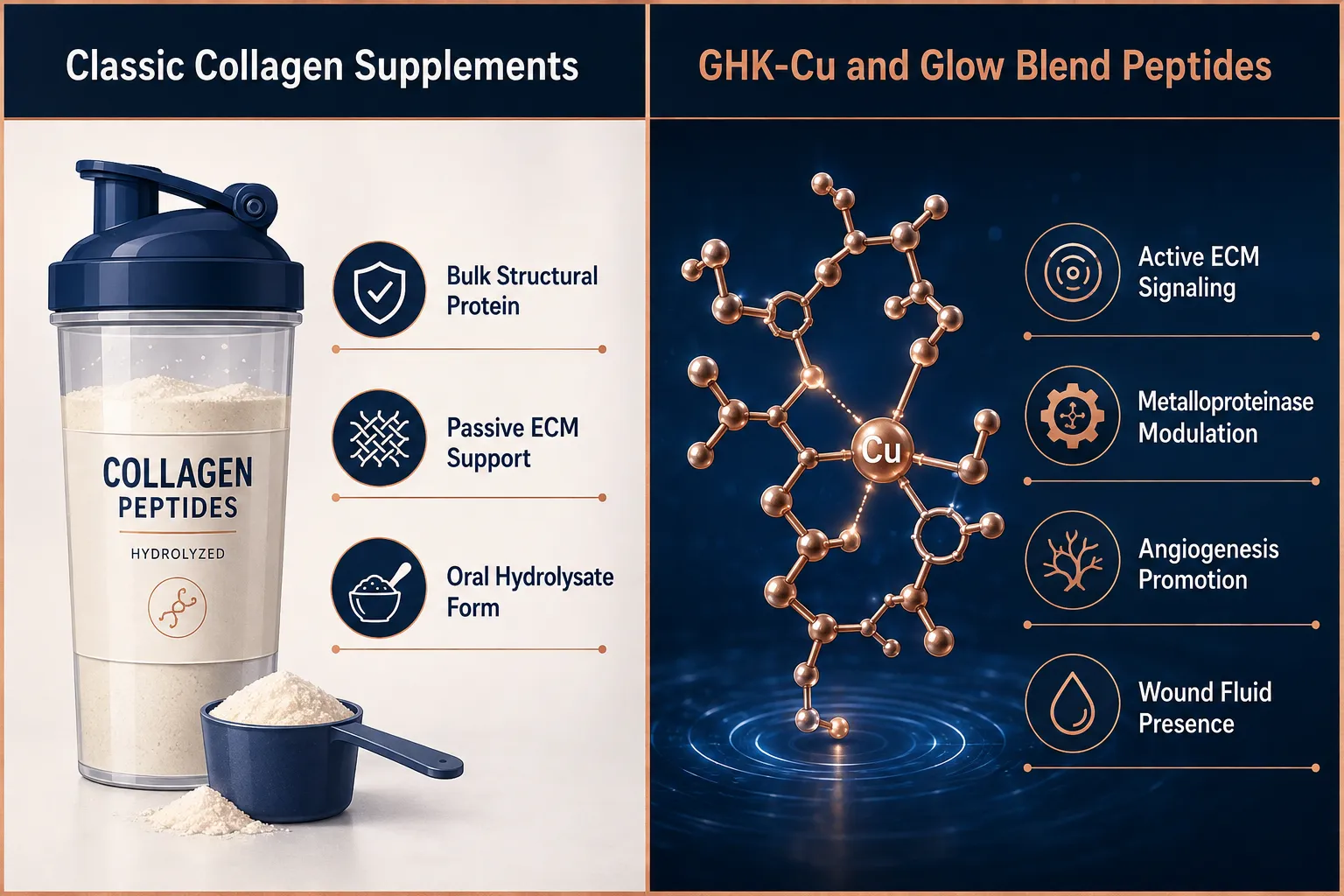
- Classic collagen supplements provide bulk structural protein; research-use peptides such as GHK-Cu act as active signaling molecules that modulate the extracellular matrix (ECM).
- GHK-Cu stimulates synthesis of type I collagen, elastin, and glycosaminoglycans while also regulating metalloproteinase activity and promoting angiogenesis.
- GHK-Cu is naturally present in skin wound fluid at peak concentrations during acute repair, giving it biological relevance in wound-healing models.
- Glow Blend formulations combine copper peptides with complementary compounds to study multi-pathway skin regeneration in controlled research settings.
- Purity and third-party testing are critical when sourcing peptides for any skin tissue research application.
What Classic Collagen Supplements Actually Do, and Where They Fall Short
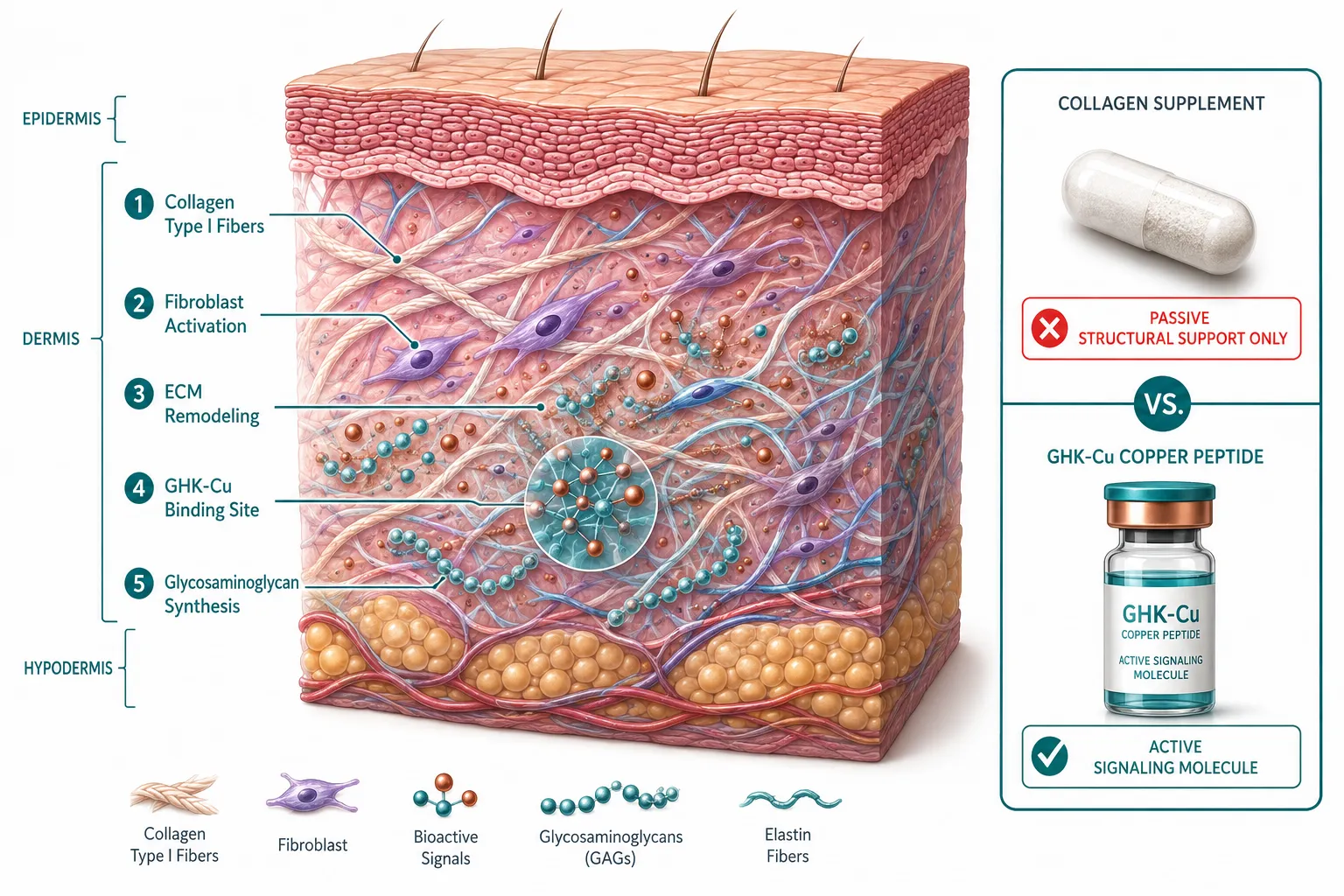
Hydrolyzed collagen supplements work by delivering amino acid precursors, primarily glycine, proline, and hydroxyproline, that cells can use to assemble new collagen fibers. This is passive support. The body receives raw materials, but no direct instruction to activate fibroblasts, regulate matrix metalloproteinases (MMPs), or promote new blood vessel growth.
For general nutritional support, that approach has merit. For skin collagen synthesis research, however, it lacks mechanistic specificity. Scientists studying dermal repair need compounds that interact with defined molecular targets, produce measurable cellular responses, and can be tested in controlled wound models. Classic collagen powders do not meet that standard.
This gap is precisely why skin collagen synthesis research has increasingly turned to bioactive peptides, short amino acid sequences that bind receptors, regulate gene expression, and trigger repair cascades at the cellular level.
Key limitations of classic collagen supplementation in research contexts:
| Feature | Classic Collagen Supplement | GHK-Cu Research Peptide |
|---|---|---|
| Mechanism | Passive amino acid delivery | Active ECM signaling |
| Fibroblast activation | Indirect, minimal | Direct stimulation |
| MMP modulation | None | Documented regulation |
| Angiogenesis | Not observed | Promoted |
| Wound-healing model utility | Low specificity | High specificity |
GHK-Cu: The Copper Peptide Redefining Skin Matrix Research
Understanding Collagen, GHK-Cu, and Glow Blend: How Research-Use Peptides Advance Skin Matrix and Wound-Healing Models Beyond Classic Collagen Supplements requires a close look at what makes GHK-Cu biologically distinct.
GHK-Cu (glycyl-L-histidyl-L-lysine copper complex) is a naturally occurring tripeptide found in human plasma, saliva, and urine. Crucially, the highest concentrations appear in skin wound fluid during the acute repair phase, a detail that gives this peptide strong biological relevance for wound-healing models rather than making it simply a cosmetic additive.
How GHK-Cu Modulates the Extracellular Matrix
Research consistently documents that GHK-Cu:
- Stimulates synthesis of type I collagen, elastin, and glycosaminoglycans, the three structural components that give skin its tensile strength and hydration
- Regulates metalloproteinase activity, preventing excessive ECM breakdown while allowing productive remodeling
- Promotes angiogenesis (new blood vessel formation) and nerve outgrowth, both essential for tissue repair
- Suppresses pro-inflammatory cytokines including TGF-beta and IL-6, reducing chronic inflammation that impairs healing
A 2026 review published in the Aesthetic Surgery Journal concluded that GHK-Cu consistently enhanced ECM synthesis and showed anti-inflammatory effects, supporting its classification as a regenerative adjunct rather than a cosmetic ingredient. The same review reported improved patient satisfaction after laser resurfacing and significant reductions in wrinkle volume and depth compared with controls.
Importantly, GHK-Cu can penetrate the stratum corneum in sufficient concentrations to activate regenerative events in the dermis, a pharmacokinetic property that classic collagen molecules, due to their large molecular weight, cannot replicate.
For researchers exploring tissue repair peptides, GHK-Cu represents a well-characterized tool with a defined mechanism of action and a growing clinical evidence base.
Glow Blend and Multi-Peptide Research Models for Skin Regeneration
"The most informative skin-matrix research in 2026 does not rely on a single compound, it maps how peptide combinations interact across repair pathways."
Glow Blend formulations typically combine GHK-Cu with complementary peptides and cofactors designed to address multiple aspects of skin biology simultaneously. In research settings, these blends allow scientists to study synergistic effects across collagen synthesis, antioxidant defense, and cellular proliferation pathways in a single model.
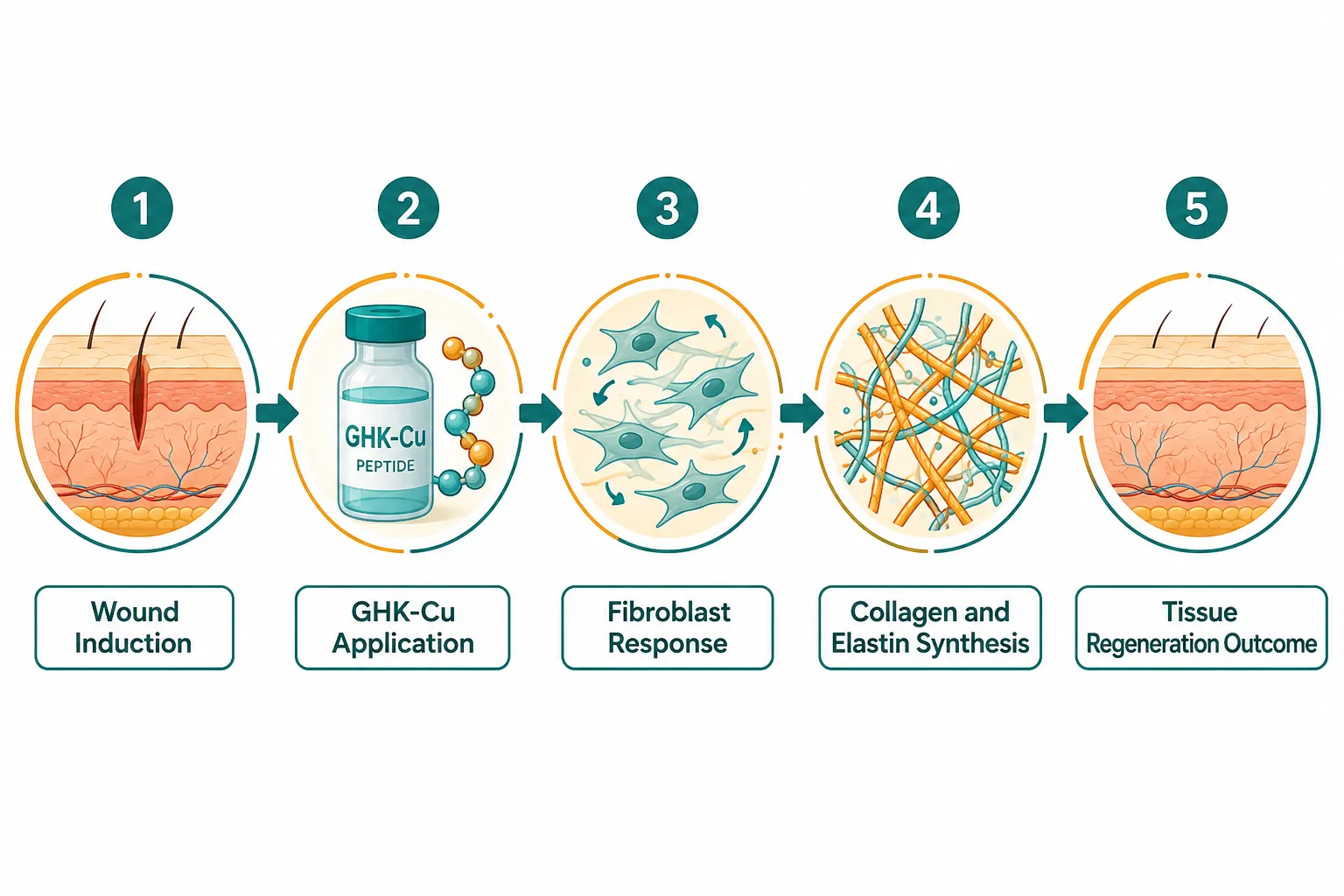
This multi-pathway approach mirrors how the body actually heals. Wound repair is not a single-step process; it involves overlapping phases of inflammation, proliferation, and remodeling, each requiring different molecular signals. A blend that addresses several of these phases simultaneously produces more clinically relevant data than any single compound tested in isolation.
What Research Models Using Glow Blend Typically Examine
- Fibroblast proliferation rates under combined peptide stimulation
- Collagen fiber density and organization measured via histological staining
- MMP-to-TIMP ratios as markers of balanced ECM remodeling
- Angiogenic marker expression (VEGF, CD31) in treated versus control tissue
A prospective clinical trial registered in early 2026 (NCT07437586) is actively evaluating whether a topical GHK-Cu gel can safely accelerate healing of standardized small skin wounds in healthy adults compared with a vehicle gel, a direct test of the mechanistic claims built up through years of in vitro and animal model work.
Researchers sourcing compounds for these models should prioritize verified purity. Reviewing skin peptide sourcing standards and third-party peptide testing protocols is an essential step before any experimental design is finalized.
For broader context on how peptide combinations perform across biological systems, the literature on systemic peptide research provides useful comparative frameworks.
Conclusion
The contrast between classic collagen supplementation and research-use peptides such as GHK-Cu and Glow Blend is not a matter of degree, it is a difference in mechanism. Collagen powders supply raw materials. GHK-Cu and related copper peptides issue cellular instructions: activate fibroblasts, remodel the ECM, suppress inflammation, build new vessels.
For researchers building skin matrix and wound-healing models in 2026, the actionable steps are clear:
- Define the target pathway, collagen synthesis, MMP regulation, angiogenesis, or inflammation, before selecting a peptide or blend.
- Prioritize purity, use only third-party tested compounds to ensure experimental validity.
- Design for mechanism, measure specific biomarkers (collagen type I, elastin, VEGF, MMP ratios) rather than relying on broad outcome proxies.
- Consider multi-peptide models where the research question involves overlapping repair phases.
The science of Collagen, GHK-Cu, and Glow Blend: How Research-Use Peptides Advance Skin Matrix and Wound-Healing Models Beyond Classic Collagen Supplements continues to mature rapidly. Researchers who align their sourcing, model design, and outcome measures with the current mechanistic evidence will be best positioned to generate reproducible, high-impact findings.


Leave a Reply
Want to join the discussion?Feel free to contribute!