Call or Text 727-513-9780
  • Shopping Cart Shopping Cart
    0Shopping Cart
Pure Tested Peptides | America's most trusted Peptides for sale online
  • Peptides for sale
    • Oral Peptides for sale
      • Peptide Capsules for sale
      • BPC 157 Capsules 1000mcg
      • SLU-PP-332 Capsules | 1000 mcg
      • 5-Amino-1MQ 50mg Capsules
      • Tesofensine 500mcg
    • All Peptides for sale
    • Peptide Sprays
      • BPC 157 Nasal Spray Kit
      • BPC-157 TB500 Nasal Spray Kit
      • Semax Nasal Spray 10mg
      • Selank – Nasal Spray Kit – 10mg
      • Epithalon 50MG Nasal Spray Kit
      • Ipamorelin 10mg Nasal Spray
      • Klow Nasal Spray (BPC-157 + TB-500 + GHK-Cu + KPV) | 80mg
      • Hulk Nasal Spray Tesa / Ipa Blend 6/3 MG
      • Klow Nasal Spray
      • NAD + 500 mg Nasal Spray
      • PT-141 Nasal Spray Kit
    • GHRH Peptides
      • Ipa Peptides
      • CJC-1295 Peptides
        • CJC-1295 with DAC 5 mg
        • CJC-1295 without DAC 5 mg
        • CJC-1295 Ipa 10mg
      • Tesa Peptides
        • Tesa Peptide
        • Tesa 20 mg
    • GHK-Cu Peptides
      • All GHK-Cu Peptides
      • GHK-Cu 100mg
      • KLOW Peptide Blend – Buy KLOW blend online
    • BPC Peptides
      • All BPC Peptides
      • BPC-157
      • BPC-157 TB-500
      • BPC 157 capsules 1000mcg
    • SLU-PP-332 Peptides
      • All SLU-PP-332 Peptides
      • SLU-PP-332 5mg
    • GLP3 Peptides
      • GLP3-R
      • GLP3-R CAG 10mg
      • GLP3-R 20mg
    • PT-141 Peptides
      • PT-141 Peptides for sale
      • PT-141 10mg
      • PT-141 Nasal Spray
    • CAG Peptides
      • Lipo-C Peptide Blend
      • CAG 5mg
      • CAG 10mg
    • MOTS-C Peptides
      • MOTS-C Peptides for sale
      • MOTS-c peptide
      • MOTS-c 10mg *6 pack*
    • 5 Amino 1MQ Peptides
      • 5 Amino 1MQ Peptides for sale
      • 5-Amino-1MQ 50mg Capsules
      • 5-Amino-1MQ 5mg
    • Epithalon Peptides
      • Epithalon Peptides for sale
      • Epithalon 10mg
      • Epithalon 50mg
  • Shop
    • GLPs
      • 5-Amino-1MQ 50mg Capsules
      • 5-Amino-1MQ 5mg
      • GLP3-Reta
      • L-Carnitine 500mg/ml
      • Tesofensine 500mcg
      • SLU-PP-332 5mg
      • MOTS-c 10mg *6 pack*
    • Epithalon & BPC Peptides
      • Epithalon 10mg
      • Epithalon 50mg
      • BPC-157
      • BPC 157 capsules 1000mcg
      • BPC-157 TB-500
      • BPC-157 TB500 Nasal Spray Kit
      • BPC 157 Nasal Spray Kit
    • BPC TB-500 & NAD+ Peptides
      • NAD+ 500 mg
      • KLOW Peptide Blend – Buy KLOW blend online
      • GLOW Peptide Blend
      • TB 500 5mg
      • BPC 157 capsules 1000mcg – Supplement
      • BPC 157 Nasal Spray Kit
      • BPC-157
      • BPC-157 TB500 Nasal Spray Kit
      • BPC-157 TB-500
      • BPC 157 capsules 1000mcg
    • LL-37 Peptide
      • LL-37 10 mg
    • MOTS-C & Selank
      • MOTS-c peptide
      • Selank 10mg
    • GHK Peptides
      • GHK-Cu 100mg
      • GLOW Peptide Blend
      • KLOW Peptide Blend – Buy KLOW blend online
  • COAs
  • Wholesale
    • Wholesale Peptides for sale
  • PTP FAQ
  • Affiliates
    • Selank Peptide: Advanced Pharmacological Mechanisms Underlying Its Anxiolytic and Nootropic Effects in Research
      • 5-Amino-1MQ Peptide: Detailed Mechanisms of NNMT Inhibition and Its Impact on Cellular Metabolism Research
        • MOTS-C Peptide: Unraveling Its Role in Mitochondrial Dynamics and Energy Metabolism Research
          • Epithalon Peptide and Telomerase Regulation: Investigating Its Impact on Cellular Senescence and Lifespan Research Models
            • GLP2-T vs GLP2 Tirz Peptide: Understanding the Naming, Mechanistic Nuances, and Research Implications for Gut Health
      • Peptides and Polypeptides in Modern Pharmacology: What Research on Metoprolol, Prednisone, and Amlodipine Reveals
        • Polypeptide Peptides vs NSAIDs: What Naproxen and Diclofenac Teach Tissue-Repair Researchers About BPC‑157 and TB‑500
          • Peptides and Polypeptides in Endocrine Pharmacology: How GLP-1, GLP-2, and GLP-3 Retatrutide Differ From Classic Drugs Like Prednisone and Amlodipine
          • 5‑Amino‑1MQ Peptide and NNMT Inhibition: How It Compares With Statins Like Atorvastatin in Adipose and Lipid Metabolism Research
      • Enclomiphene, Estrogen Receptor Signaling, and Luteinizing Phase Biology: What Hormone Researchers Should Measure
        • Mesenchymal Stem Cells, BPC‑157, and GHK‑Cu: How Tissue Repair Peptides Compare With Classic NSAIDs Like Naproxen in Injury Models
          • Peptide Calculator Use Cases Beyond Growth Hormone: Working Through GLP‑3 Retatrutide, MOTS‑c, and BPC‑157 Research Dosing
        • Polypeptide Peptides in Endocrine and Metabolic Pharmacology: Lessons From Amlodipine, Prednisone, and Metoprolol
        • Peptides Calculator for Advanced Blends: Worked Examples for Tesamorelin, CJC‑1295, and Ipamorelin Stacks
          • Peptides and Polypeptides in Human Physiology: How Molecular Size Shapes Research Applications
            • Selank Peptide: Advanced Pharmacological Mechanisms Underlying Its Anxiolytic and Nootropic Effects in Research
          • 5-Amino-1MQ Peptide: Detailed Mechanisms of NNMT Inhibition and Its Impact on Cellular Metabolism Research
            • MOTS-C Peptide: Unraveling Its Role in Mitochondrial Dynamics and Energy Metabolism Research
              • Epithalon Peptide and Telomerase Regulation: Investigating Its Impact on Cellular Senescence and Lifespan Research Models
                • GLP2-T vs GLP2 Tirz Peptide: Understanding the Naming, Mechanistic Nuances, and Research Implications for Gut Health
                  • Peptides and Polypeptides in Endocrine Pharmacology: How GLP-1, GLP-2, and GLP-3 Retatrutide Differ From Classic Drugs Like Prednisone and Amlodipine
                    • Polypeptide Peptides vs NSAIDs: What Naproxen and Diclofenac Teach Tissue-Repair Researchers About BPC‑157 and TB‑500
                      • Peptides and Polypeptides in Modern Pharmacology: What Research on Metoprolol, Prednisone, and Amlodipine Reveals
                        • 5‑Amino‑1MQ Peptide and NNMT Inhibition: How It Compares With Statins Like Atorvastatin in Adipose and Lipid Metabolism Research
                        • Enclomiphene, Estrogen Receptor Signaling, and Luteinizing Phase Biology: What Hormone Researchers Should Measure
                        • Mesenchymal Stem Cells, BPC‑157, and GHK‑Cu: How Tissue Repair Peptides Compare With Classic NSAIDs Like Naproxen in Injury Models
                        • Peptide Calculator Use Cases Beyond Growth Hormone: Working Through GLP‑3 Retatrutide, MOTS‑c, and BPC‑157 Research Dosing
                        • Polypeptide Peptides in Endocrine and Metabolic Pharmacology: Lessons From Amlodipine, Prednisone, and Metoprolol
                        • Peptides Calculator for Advanced Blends: Worked Examples for Tesamorelin, CJC‑1295, and Ipamorelin Stacks
                        • Peptides and Polypeptides in Human Physiology: How Molecular Size Shapes Research Applications
                        • Selank Peptide: Advanced Pharmacological Mechanisms Underlying Its Anxiolytic and Nootropic Effects in Research
                        • MOTS-C Peptide: Unraveling Its Role in Mitochondrial Dynamics and Energy Metabolism Research
                        • Peptides and Polypeptides in Modern Pharmacology: What Research on Metoprolol, Prednisone, and Amlodipine Reveals
                        • Peptides and Polypeptides in Endocrine Pharmacology: How GLP-1, GLP-2, and GLP-3 Retatrutide Differ From Classic Drugs Like Prednisone and Amlodipine
                        • 5-Amino-1MQ Peptide: Detailed Mechanisms of NNMT Inhibition and Its Impact on Cellular Metabolism Research
                        • Mesenchymal Stem Cells, BPC‑157, and GHK‑Cu: How Tissue Repair Peptides Compare With Classic NSAIDs Like Naproxen in Injury Models
                        • Peptide Calculator Use Cases Beyond Growth Hormone: Working Through GLP‑3 Retatrutide, MOTS‑c, and BPC‑157 Research Dosing
                        • GLP2-T vs GLP2 Tirz Peptide: Understanding the Naming, Mechanistic Nuances, and Research Implications for Gut Health
                        • Polypeptide Peptides in Endocrine and Metabolic Pharmacology: Lessons From Amlodipine, Prednisone, and Metoprolol
                        • Polypeptide Peptides vs NSAIDs: What Naproxen and Diclofenac Teach Tissue-Repair Researchers About BPC‑157 and TB‑500
                        • Peptides and Polypeptides in Human Physiology: How Molecular Size Shapes Research Applications
                        • Peptides Calculator for Advanced Blends: Worked Examples for Tesamorelin, CJC‑1295, and Ipamorelin Stacks
                        • 5‑Amino‑1MQ Peptide and NNMT Inhibition: How It Compares With Statins Like Atorvastatin in Adipose and Lipid Metabolism Research
                        • Enclomiphene, Estrogen Receptor Signaling, and Luteinizing Phase Biology: What Hormone Researchers Should Measure
                        • Epithalon Peptide and Telomerase Regulation: Investigating Its Impact on Cellular Senescence and Lifespan Research Models
                        • Best research protocol Klow blend
                        • best time to take BPC-157
                        • best time to take DSIP (Delta Sleep Inducing Peptide)
                        • best time to take CJC-1295
                        • best time to take AOD-9604
                        • best time to take Follistatin 344
                        • best time to take Ipamorelin
                        • best time to take MK-677 (Ibutamoren)
                        • best time to take Ligandrol (LGD-4033) — research compound
                        • best time to take Ostarine (MK-2866) — research compound
                        • best time to take GHK-CU
                        • best time to take TB-500
                        • best time to take MOTS-c
                        • best time to take Semax
                        • best time to take RAD-140 (Testolone) — research compound
                        • best time to take Thymosin Alpha-1
                        • best time to take PEG-MGF
                        • Biolife Plasma, Octapharma Plasma, and Research Peptides: How Plasma Donation Labs Differ From Peptide Suppliers
                        • best time to take YK-11 — research compound
                        • best time to take PT-141 (Bremelanotide)
                        • Best research protocol Klow blend
                        • 5-Amino-1MQ and MOTS-C Synergy: Metabolic Signaling, Mitochondria, and Research Design
                        • BPC-157 and TB-500: Investigating Their Combined Effects on Angiogenesis and Cellular Migration in Tissue Repair Models
                        • BPC-157 Peptide: Gut Barrier Function, Inflammation, and Tissue-Recovery Research
                        • 5‑Amino‑1MQ and MOTS‑c Synergy in Metabolic Research: Designing NNMT and Mitochondrial Biogenesis Stacks
                        • CJC-1295 with DAC vs. Without DAC: Half-Life, Release Kinetics, and Research Implications
                        • CJC‑1295 with DAC vs. Without DAC: Expanding on Half‑Life Differences Using Tesamorelin and Ipamorelin Blend Case Studies
                        • Collagen Biology and Copper‑Binding Peptides: How GHK‑Cu, Glow Blend, and Klow Blend Interact with Skin and Connective Tissue
                        • Collagen Biology and Regenerative Peptides: How GHK‑Cu, Glow Blend, and Klow Blend Affect Extracellular Matrix Research
                    • DNA, Telomeres, and Longevity Peptides: Positioning Epithalon and MOTS‑c in Genetic Aging Research
                      • Enclomiphene Citrate: serm Mechanism, Testosterone Research, and Stack Compatibility
                        • Enclomiphene vs Enclomiphene Citrate: Formulation, Bioavailability, and Research Distinctions
                        • Epithalon Peptide Research: Telomerase Activation, Aging, and Pineal Gland Function
                        • Estrogen Receptor Signaling and Enclomiphene: How Selective Modulators Compare with Classic Polypeptide Hormones
                        • GHK-Cu Peptide: Advanced Mechanisms in Extracellular Matrix Remodeling and Wound Healing Research
                        • GHK-Cu Peptide: Collagen Synthesis, Wound Repair, and Skin-Barrier Research Models
                        • GLP-1 vs GLP-3 vs GLP-2: Peptide Classification and Research Applications
                        • GLP-2 Peptide Research Guide: Gut Barrier Function, Nutrient Absorption, and Intestinal Recovery Models
                        • GLP-3 Retatrutide vs. GLP-1 Drugs: What Triple-Agonist Biology Changes in Research Models
                        • Ipamorelin and Tesamorelin Combination: Synergistic GH Secretagogue Research and Dosing Protocols
                        • GLP2 Tirz Peptide: What It Is, Why the Name Exists, and How Researchers Should Interpret It
                        • Klow Blend Peptide Nasal Spray: What the Formulation Is Trying to Do in Cognitive Research
                        • Mitochondria, NNMT Inhibition, and Peptide Modulators: Where MOTS‑c and 5‑Amino‑1MQ Fit in Cellular Energy Research
                        • MOTS-c Peptide: Mitochondrial Function, Energy Metabolism, and What Researchers Measure
                        • MOTS-c vs. 5-Amino-1MQ: Which Metabolic Research Questions Each Compound Actually Answers
                        • Nasal Spray Peptides: Bioavailability, Administration, and Semax/Selank Research Applications
                        • PT-141 Peptide Research: Mechanism of Action and Melanocortin Receptor Signaling
                        • Retatrutide for Research: Mechanism, Structure, and GLP-1/GLP-3 Dual Action
                        • Retatrutide for Obesity and Type 2 Diabetes: What the Latest Trial Data Suggest
                        • Tesofensine Peptide Research: Mechanism, Appetite Suppression, and Neuropeptide Y Pathways
  • Contact
    • Contact Customer Service
    • Text Customer Support
  • About US
  • Shop all peptides
  • Affiliate Program
    • Affiliate Signup
  • Login / Register Login / Register Page Link Login / Register Page Link
  • Click to open the search input field Click to open the search input field Search
  • Menu Menu

Tag Archive for: copper peptides

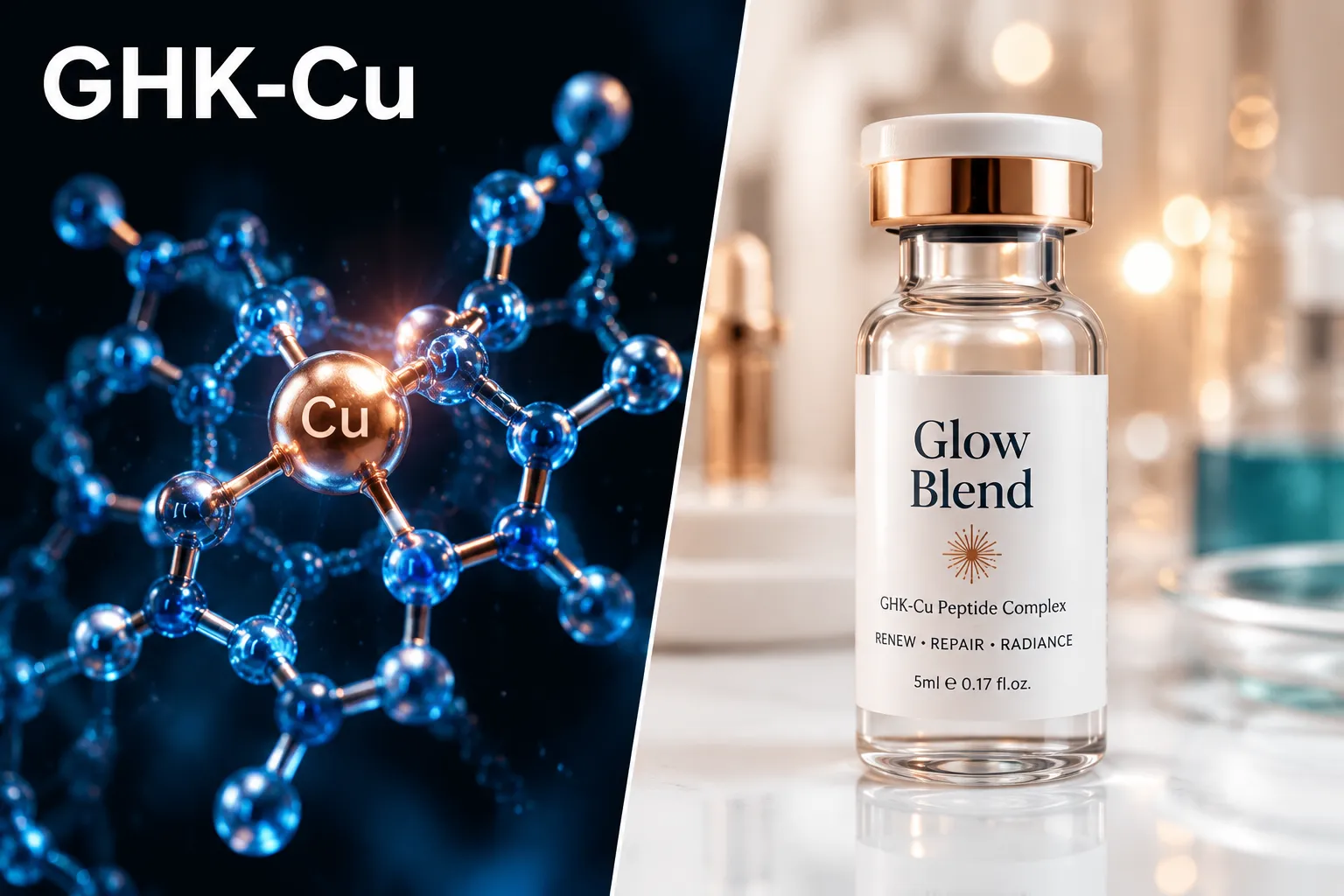
GHK-Cu vs Glow Blend vs Klow Blend: What Each Copper- and Skin-Focused Formula Is Used For in Research

GHK-Cu vs Glow Blend vs Klow Blend: What Each Copper- and Skin-Focused Formula Is Used For in Research

August 12, 2026/0 Comments/in Uncategorized/by

Copper peptides have generated more than three decades of peer-reviewed attention, yet researchers in 2026 still encounter significant confusion when supplier catalogs list "GHK-Cu," "Glow Blend," and "Klow Blend" as separate SKUs. These are not interchangeable names for the same compound. Understanding the compositional differences, and the distinct experimental goals each formula serves, is essential before designing any copper- or skin-focused research protocol.

This article breaks down GHK-Cu vs Glow Blend vs Klow Blend: What Each Copper- and Skin-Focused Formula Is Used For in Research, covering composition, proposed mechanisms, and the practical reasons blend naming drives search demand among researchers.

Key Takeaways

  • GHK-Cu is a single-ingredient tripeptide-copper complex with a well-characterized research profile focused on skin remodeling and wound healing.
  • Glow Blend combines GHK-Cu with complementary skin-focused peptides to address multiple dermal targets simultaneously in a single formulation.
  • Klow Blend incorporates GHK-Cu alongside peptides studied for hair follicle support and scalp health, targeting a different tissue compartment.
  • Blend naming creates search demand because researchers seek pre-combined formulas that reduce preparation complexity in multi-peptide studies.
  • All three formulas are intended for research use only and are not approved for human therapeutic application.

Key Takeaways

What Is GHK-Cu and Why Does It Anchor Every Comparison

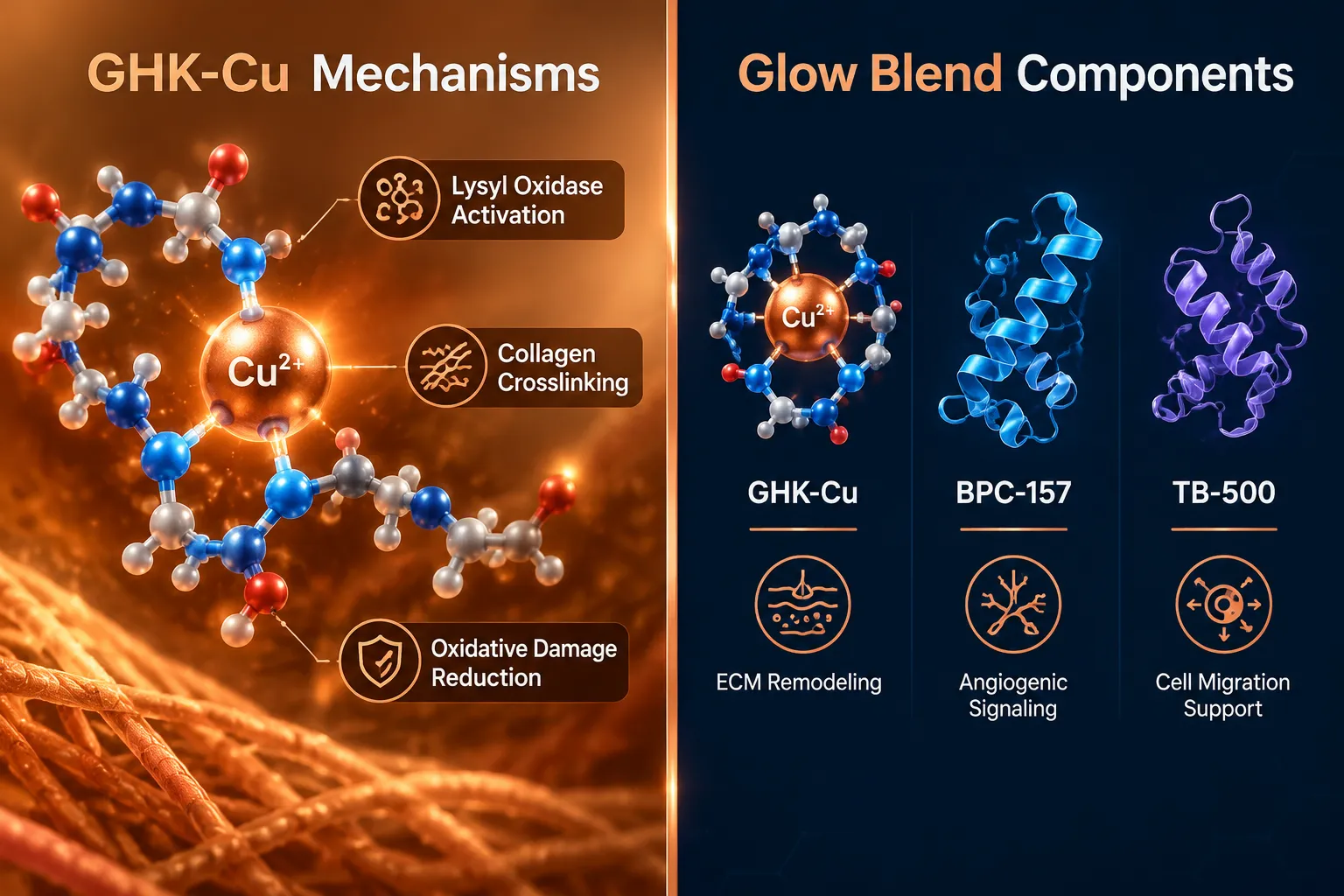
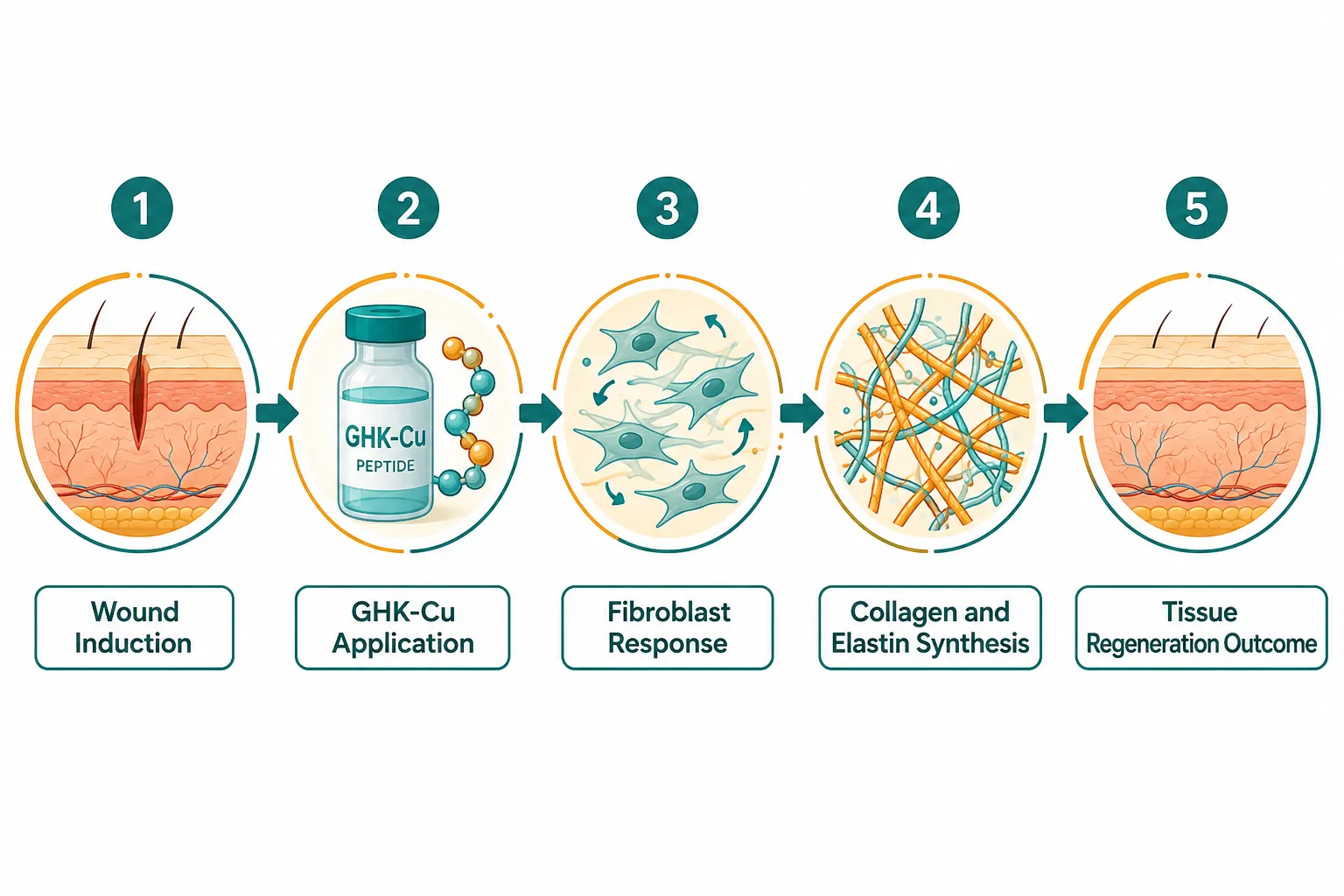
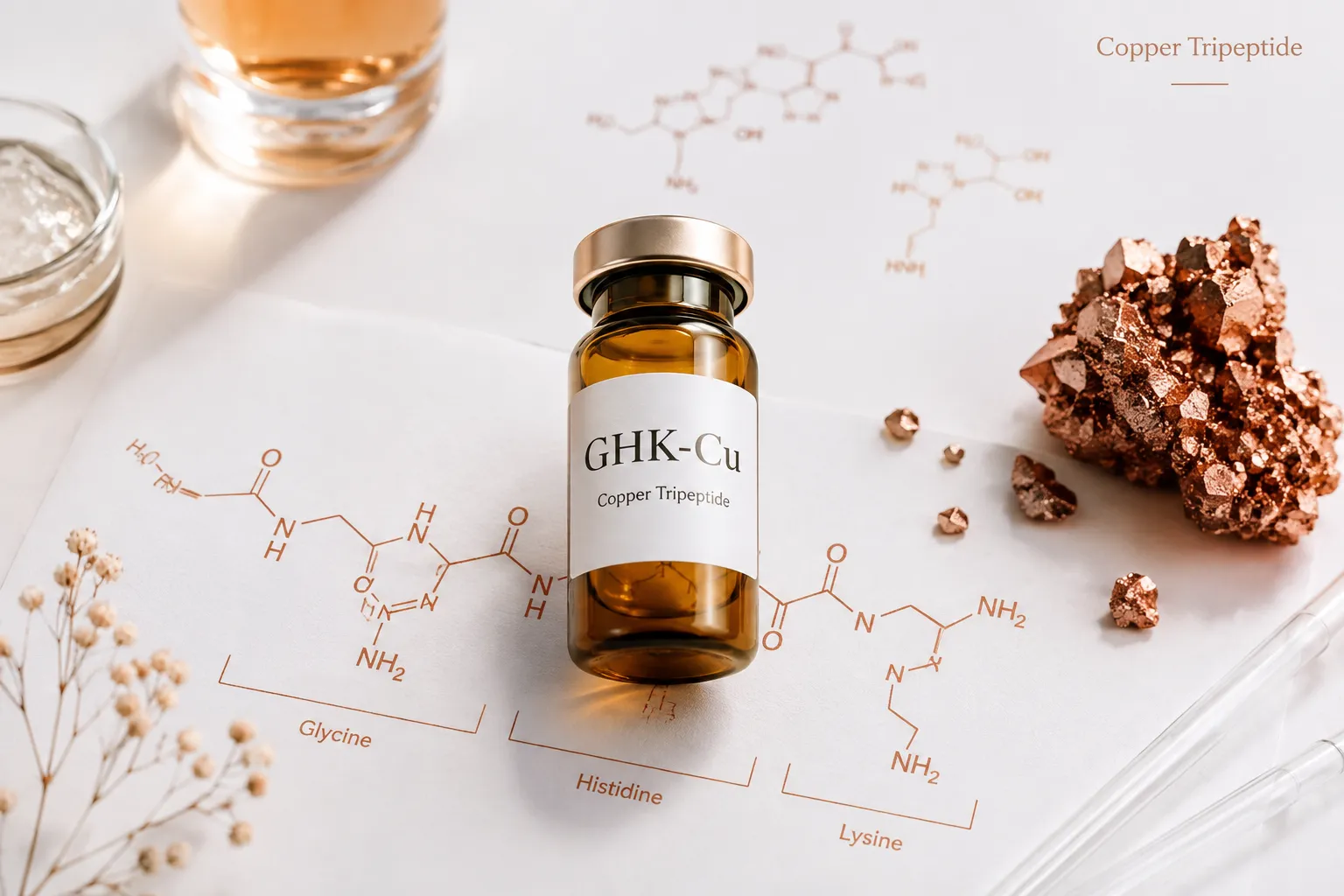
GHK-Cu (glycyl-L-histidyl-L-lysine copper complex) is a naturally occurring tripeptide first isolated from human plasma. Its molecular structure, three amino acids chelated to a copper(II) ion, gives it a high affinity for copper transport across biological membranes.

Core research areas for GHK-Cu include:

  • Collagen and elastin synthesis stimulation
  • Matrix metalloproteinase (MMP) regulation
  • Antioxidant gene expression
  • Wound contraction and tissue remodeling
  • Anti-inflammatory signaling pathways

Decades of in vitro and animal studies have documented GHK-Cu's ability to upregulate genes associated with skin repair. A landmark review by Pickart and Margolina (2018) catalogued over 4,000 human genes modulated by GHK-Cu, positioning it as one of the most studied tripeptides in dermatological research.

For researchers sourcing this compound independently, the GHK-Cu peptide purchase and copper peptide research sourcing guide provides purity benchmarks and quality criteria relevant to experimental design.

Because GHK-Cu is a single active ingredient, researchers can isolate its effects cleanly. This is its primary advantage over blended formulas when the experimental goal is mechanistic clarity.

How Glow Blend and Klow Blend Differ From Single-Ingredient GHK-Cu

When researchers move beyond single-compound studies, pre-formulated blends offer a different value proposition. The question in GHK-Cu vs Glow Blend vs Klow Blend: What Each Copper- and Skin-Focused Formula Is Used For in Research becomes one of experimental scope rather than ingredient quality.

Glow Blend: A Multi-Peptide Skin Remodeling Formula

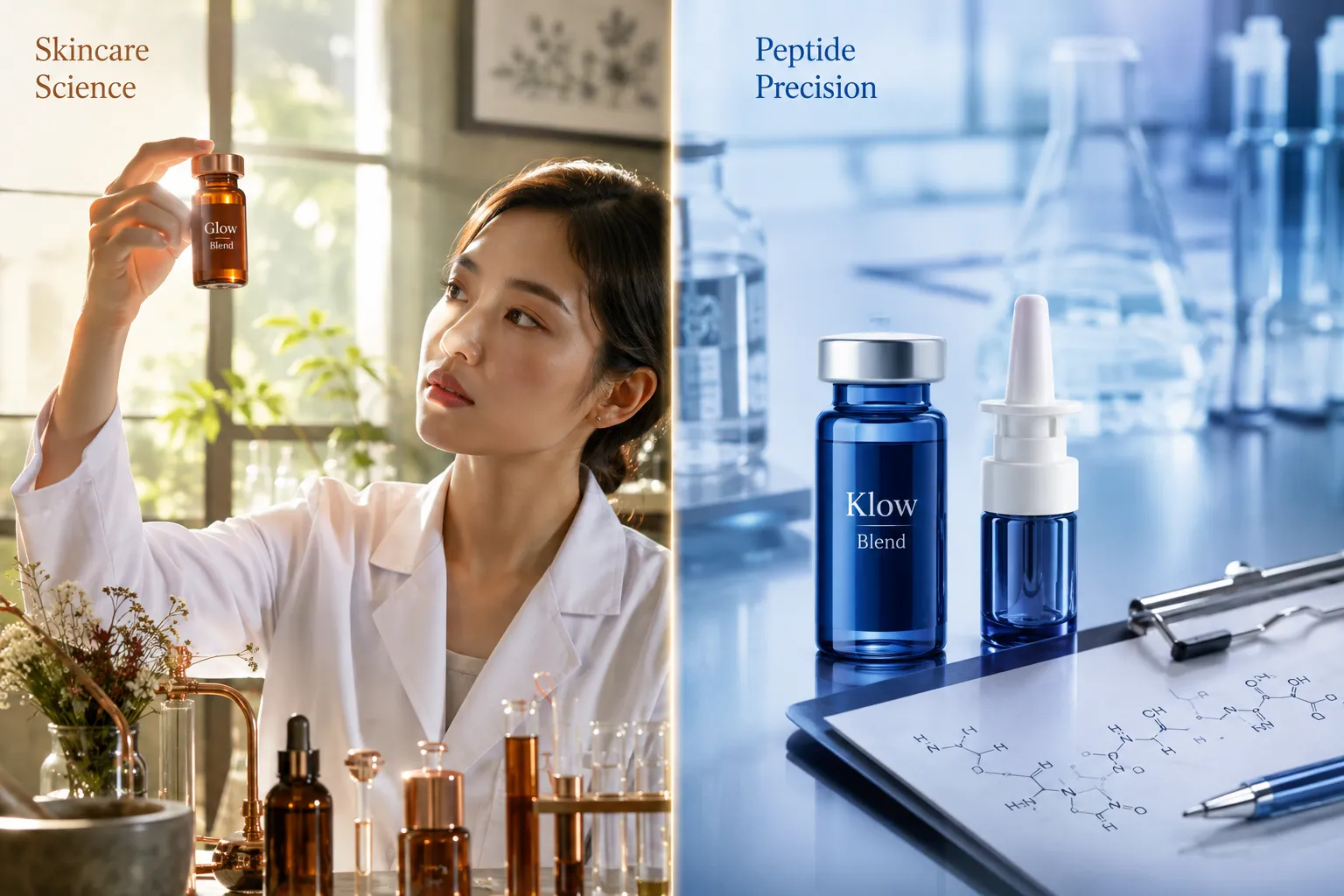
Glow Blend is a pre-combined formulation that pairs GHK-Cu with additional peptides targeting complementary aspects of dermal biology. The blend is designed for research models where investigators want to assess synergistic effects across multiple skin-repair pathways in a single administration.

Typical research applications for Glow Blend:

  • Photoaging and UV-damage repair models
  • Collagen density studies in aged dermal tissue
  • Comparative efficacy trials against single-ingredient GHK-Cu controls
  • Multi-target anti-inflammatory skin protocols

The rationale for bundling is straightforward: skin aging involves simultaneous degradation of collagen, hyaluronic acid scaffolding, and vascular support structures. A single peptide addresses only one node of that network. Glow Blend allows researchers to probe whether combined peptide delivery produces additive or synergistic outcomes.

Klow Blend: Targeting Hair Follicle and Scalp Research Models

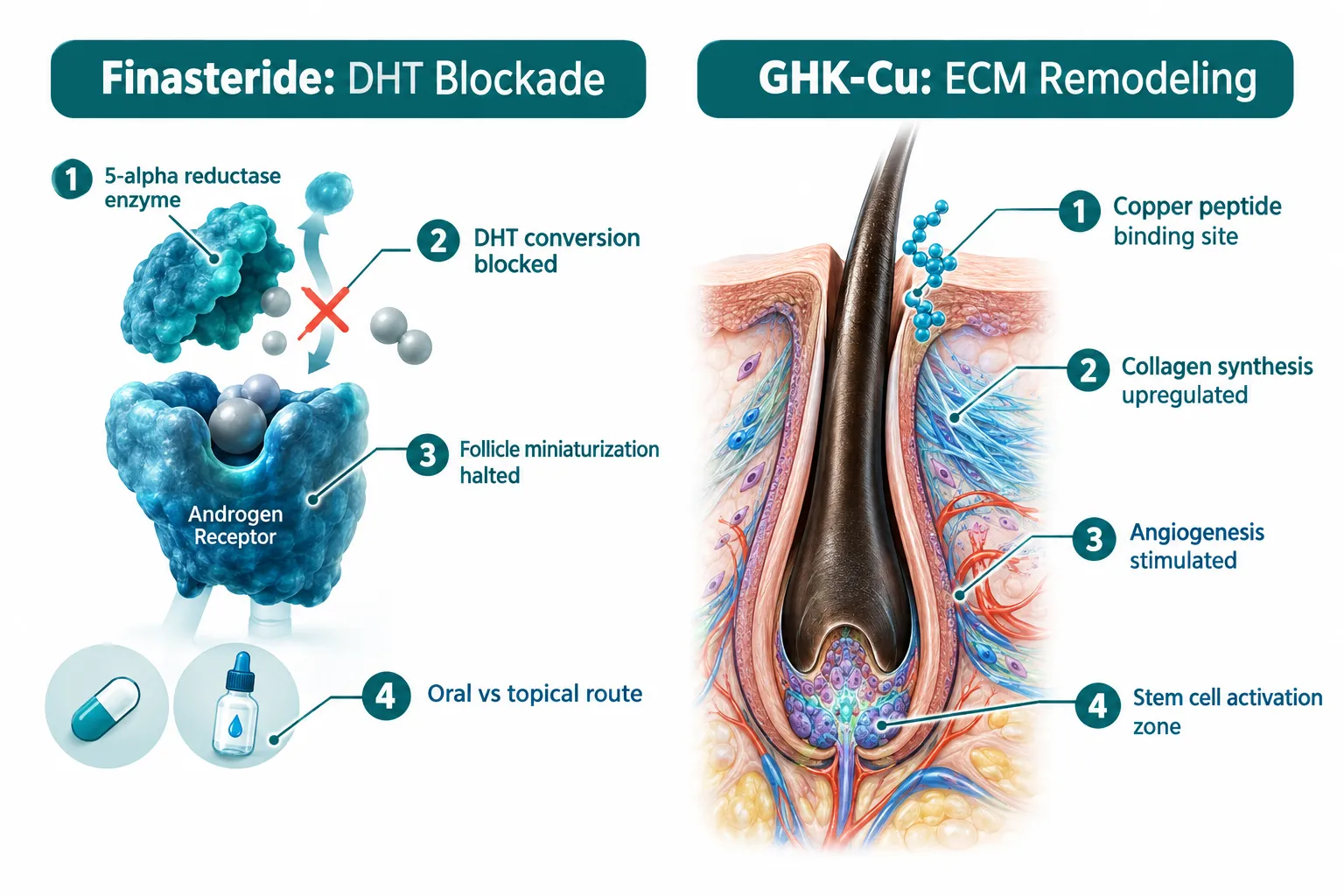
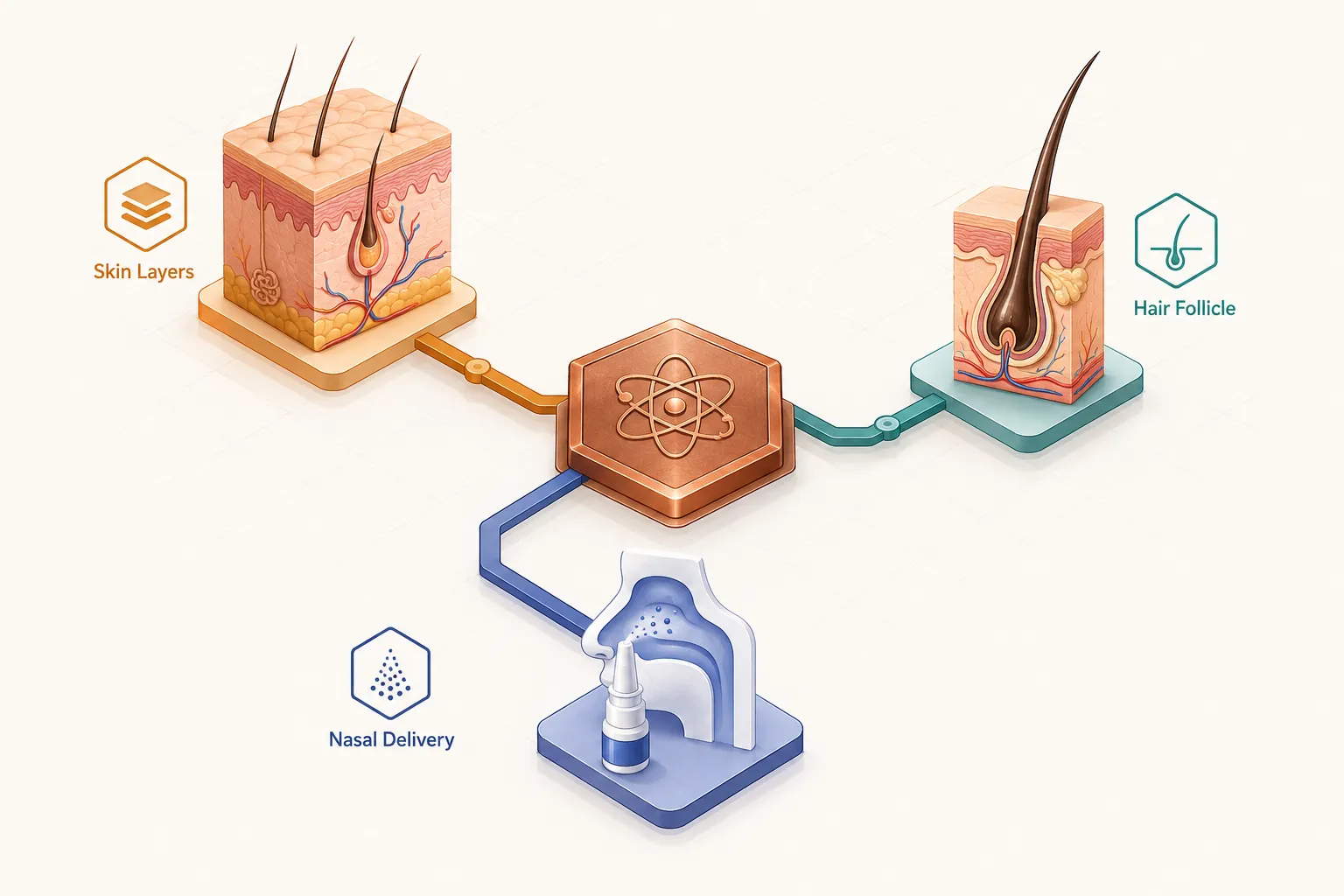
Klow Blend shifts the tissue target from dermal layers to the pilosebaceous unit. While it retains GHK-Cu as a core component, the additional peptides in Klow Blend are selected for their proposed roles in follicle cycling, scalp microcirculation, and keratinocyte activity.

Typical research applications for Klow Blend:

  • Androgenic alopecia models in rodent studies
  • Hair follicle miniaturization reversal protocols
  • Scalp inflammation and sebaceous gland research
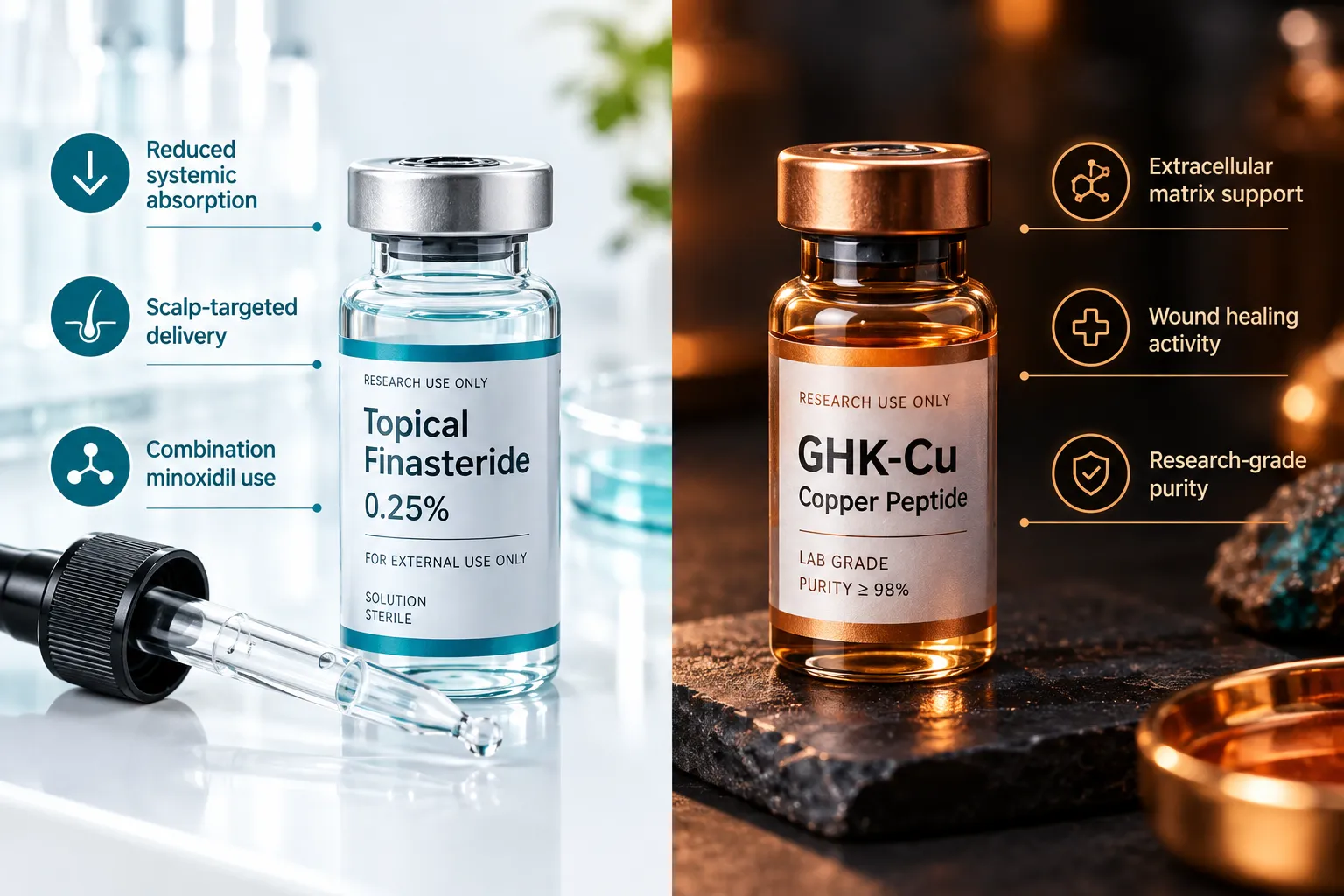
  • Delivery vehicle comparisons (topical vs. nasal spray)

Notably, Klow Blend has also been studied in nasal delivery formats. Researchers interested in that delivery route can review research-use nasal spray peptide comparisons including Klow nasal for cognitive and anxiolytic models for context on how the same blend behaves across different administration routes.

For a comprehensive overview of both blends side by side, the Glow and Klow peptide blends product page details current formulation compositions relevant to research procurement.

Klow Blend: Targeting Hair Follicle and Scalp Research Models

Comparing Research Goals Across All Three Formulas

The table below summarizes the key distinctions that define the GHK-Cu vs Glow Blend vs Klow Blend comparison for research planning purposes.

Parameter GHK-Cu Glow Blend Klow Blend
Ingredient count Single Multi-peptide Multi-peptide
Primary tissue target Dermis / wound sites Dermis / photoaging Hair follicle / scalp
Best for Mechanistic isolation Synergy studies Follicle cycling models
Delivery routes studied Topical, subcutaneous Topical Topical, nasal
Experimental complexity Lower Moderate Moderate-High

"Single-ingredient studies establish mechanism. Multi-ingredient blends test real-world synergy. Both are necessary for a complete research picture."

Researchers building a broader skin and tissue recovery protocol may also consider pairing copper peptide work with synergistic compounds. The Skin Repair Stack combining BPC-157, TB-500, and GHK-Cu represents one such multi-compound research configuration.

For foundational context on how peptide structure influences experimental outcomes, the Peptides 101 guide for research-use buyers covers structure-mechanism relationships applicable across all three formulas discussed here.

Why Blend Naming Drives Search Demand in Peptide Research

The commercial naming of "Glow Blend" and "Klow Blend" is not arbitrary. It solves a practical problem for researchers: preparation complexity. Sourcing, weighing, and combining multiple peptides individually introduces compounding error at each step. Pre-formulated blends reduce that variability.

From an SEO and market perspective, blend names also signal intent. A researcher searching "Klow Blend" is specifically interested in the hair-and-scalp application stack, not a general copper peptide inquiry. This search specificity is why understanding GHK-Cu vs Glow Blend vs Klow Blend: What Each Copper- and Skin-Focused Formula Is Used For in Research matters beyond academic curiosity, it directly shapes how researchers find and evaluate the right compound for their model.

Researchers exploring broader peptide categories alongside copper-focused compounds may find value in the overview of polypeptide peptides from collagen and hormones to advanced research compounds for additional structural context.

Why Blend Naming Drives Search Demand in Peptide Research

Conclusion

The distinction between GHK-Cu, Glow Blend, and Klow Blend is fundamentally a question of experimental scope and tissue targeting. GHK-Cu delivers mechanistic precision as a single-ingredient copper peptide with a robust published literature. Glow Blend expands that scope into multi-pathway dermal remodeling research. Klow Blend redirects the focus toward follicle biology and scalp tissue, with additional delivery format flexibility.

Actionable next steps for researchers:

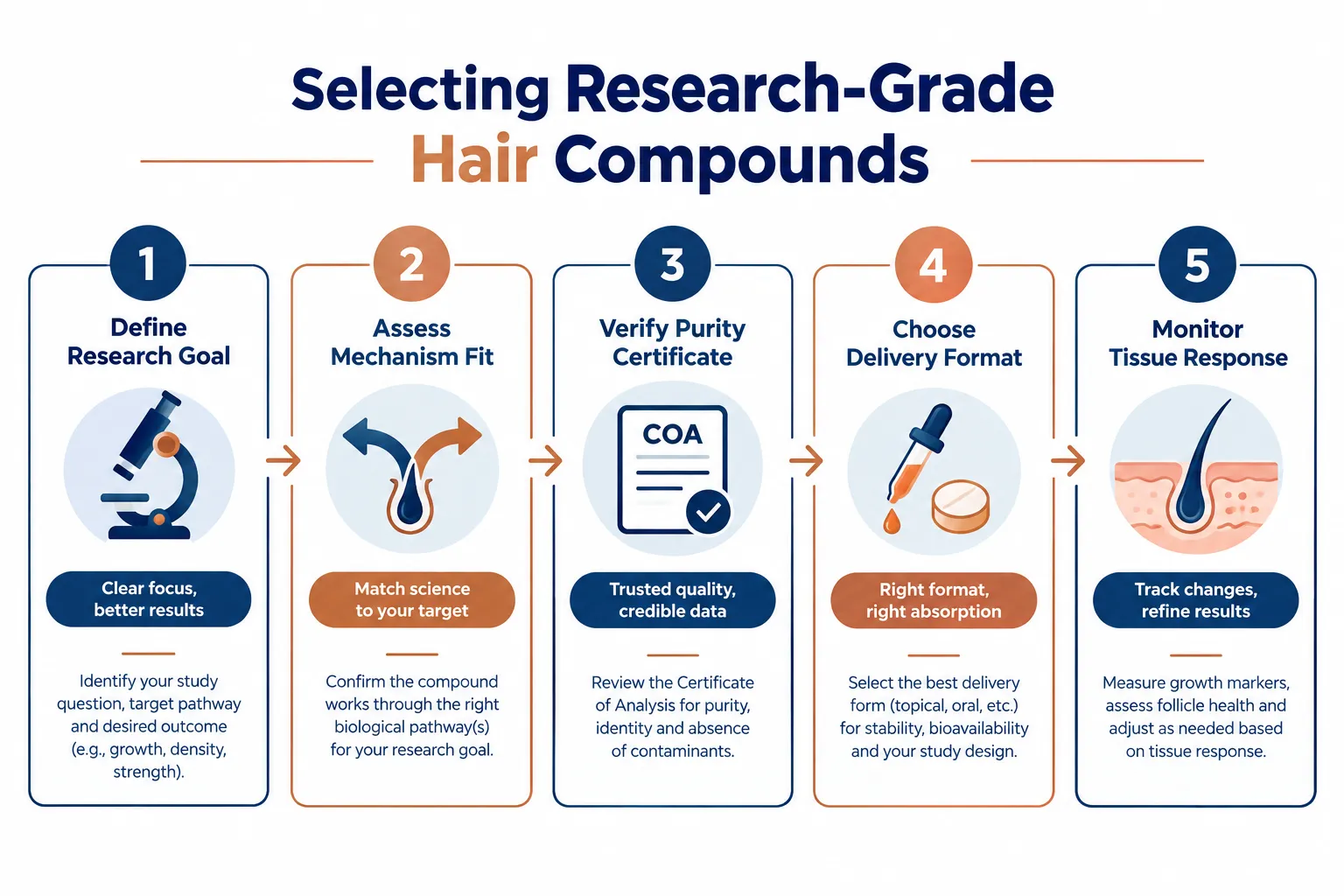
  1. Define the primary tissue target (dermis vs. follicle) before selecting a formula.
  2. Use single-ingredient GHK-Cu when mechanistic isolation is the priority.
  3. Select Glow Blend or Klow Blend when synergistic multi-peptide effects are the hypothesis.
  4. Verify purity certificates and third-party testing for any sourced compound before experimental use.
  5. Review delivery route data, particularly nasal vs. topical comparisons, when designing administration protocols for Klow Blend studies.

All compounds discussed are for research use only and are not approved for human therapeutic application.

https://www.puretestedpeptides.com/wp-content/uploads/2026/08/ghk-cu-vs-glow-blend-vs-klow-blend-what-each-copper-and-skin-focused-formula-is.webp 1024 1536 https://www.puretestedpeptides.com/wp-content/uploads/2026/01/buy-peptides-online.jpg 2026-08-12 13:03:512026-08-12 13:03:51GHK-Cu vs Glow Blend vs Klow Blend: What Each Copper- and Skin-Focused Formula Is Used For in Research
Collagen, GHK-Cu, and Glow Blend: How Classic Collagen Biology Intersects With Copper Peptide Research

Collagen, GHK-Cu, and Glow Blend: How Classic Collagen Biology Intersects With Copper Peptide Research

August 4, 2026/0 Comments/in Uncategorized/by

Collagen accounts for roughly 30% of all protein in the human body, yet most people only think about it when their skin starts to show age. That gap between broad public interest and deeper scientific understanding is exactly where the conversation about Collagen, GHK-Cu, and Glow Blend: How Classic Collagen Biology Intersects With Copper Peptide Research becomes genuinely useful. Understanding the foundational biology of collagen first makes it far easier to appreciate why copper peptide research, and formulations like Glow Blend, has attracted serious scientific attention.

Key Takeaways

  • Collagen synthesis depends on a tightly regulated cellular pathway involving fibroblasts, vitamin C, and enzymatic cross-linking.
  • GHK-Cu (glycyl-L-histidyl-L-lysine copper) is a naturally occurring tripeptide-copper complex studied for its role in activating collagen-related gene expression.
  • Glow Blend formulations combine GHK-Cu with complementary peptides to target multiple steps in skin and tissue remodeling.
  • Research models suggest GHK-Cu may upregulate collagen I and III synthesis while also influencing matrix metalloproteinase (MMP) balance.
  • Sourcing purity-verified peptides is critical for any research application involving copper peptide complexes.

The Collagen Synthesis Pathway: What the Biology Actually Shows

The Collagen Synthesis Pathway: What the Biology Actually Shows

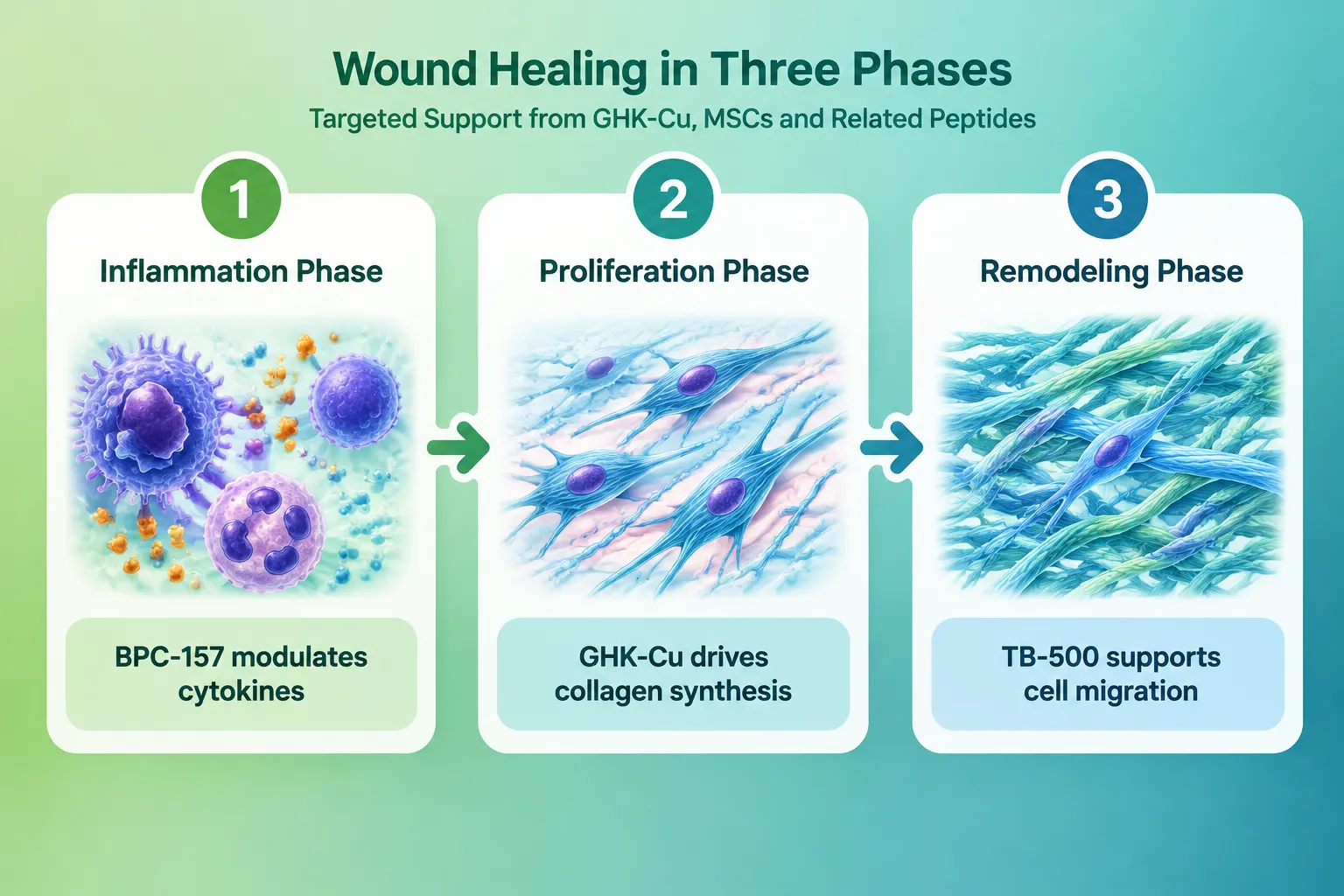
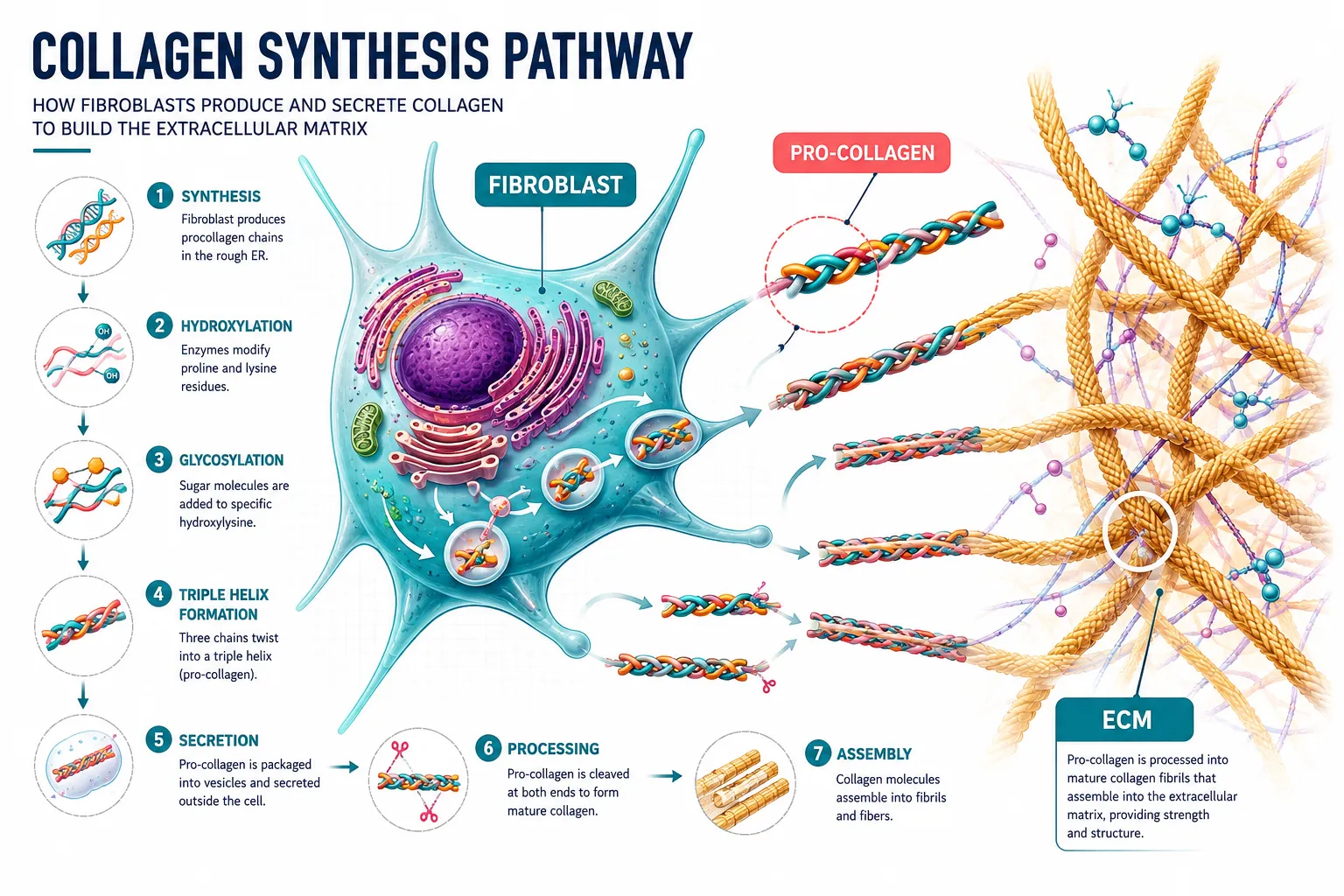
Collagen is not a single molecule, it is a family of at least 28 distinct structural proteins. Types I, II, and III are the most studied in skin and connective tissue contexts. Each collagen molecule begins as a precursor called pro-collagen, assembled inside fibroblast cells through a multi-step process:

  1. Transcription and translation, Genes encode alpha chains that are synthesized on ribosomes.
  2. Hydroxylation, Proline and lysine residues are hydroxylated, a step requiring vitamin C as a cofactor.
  3. Triple helix formation, Three alpha chains coil together into a stable triple-helix structure.
  4. Secretion, Pro-collagen is exported to the extracellular matrix (ECM).
  5. Cross-linking, Lysyl oxidase enzymes cross-link fibrils for tensile strength.

"Collagen remodeling is not a one-way street, synthesis and degradation happen simultaneously, governed by matrix metalloproteinases and their inhibitors."

This balance between synthesis and breakdown is central to understanding how peptide-based interventions are studied. When degradation outpaces production, as it does with UV exposure, aging, and oxidative stress, researchers look for compounds that can tip the balance back toward synthesis. That is where GHK-Cu enters the picture.

GHK-Cu Research: Copper Peptide Science and the Collagen Connection

GHK-Cu Research: Copper Peptide Science and the Collagen Connection

GHK-Cu (glycyl-L-histidyl-L-lysine bound to copper(II)) was first isolated from human plasma in the early 1970s. Decades of subsequent research have examined its behavior in cell culture and animal tissue models. The findings most relevant to Collagen, GHK-Cu, and Glow Blend: How Classic Collagen Biology Intersects With Copper Peptide Research fall into three categories:

Collagen Gene Upregulation

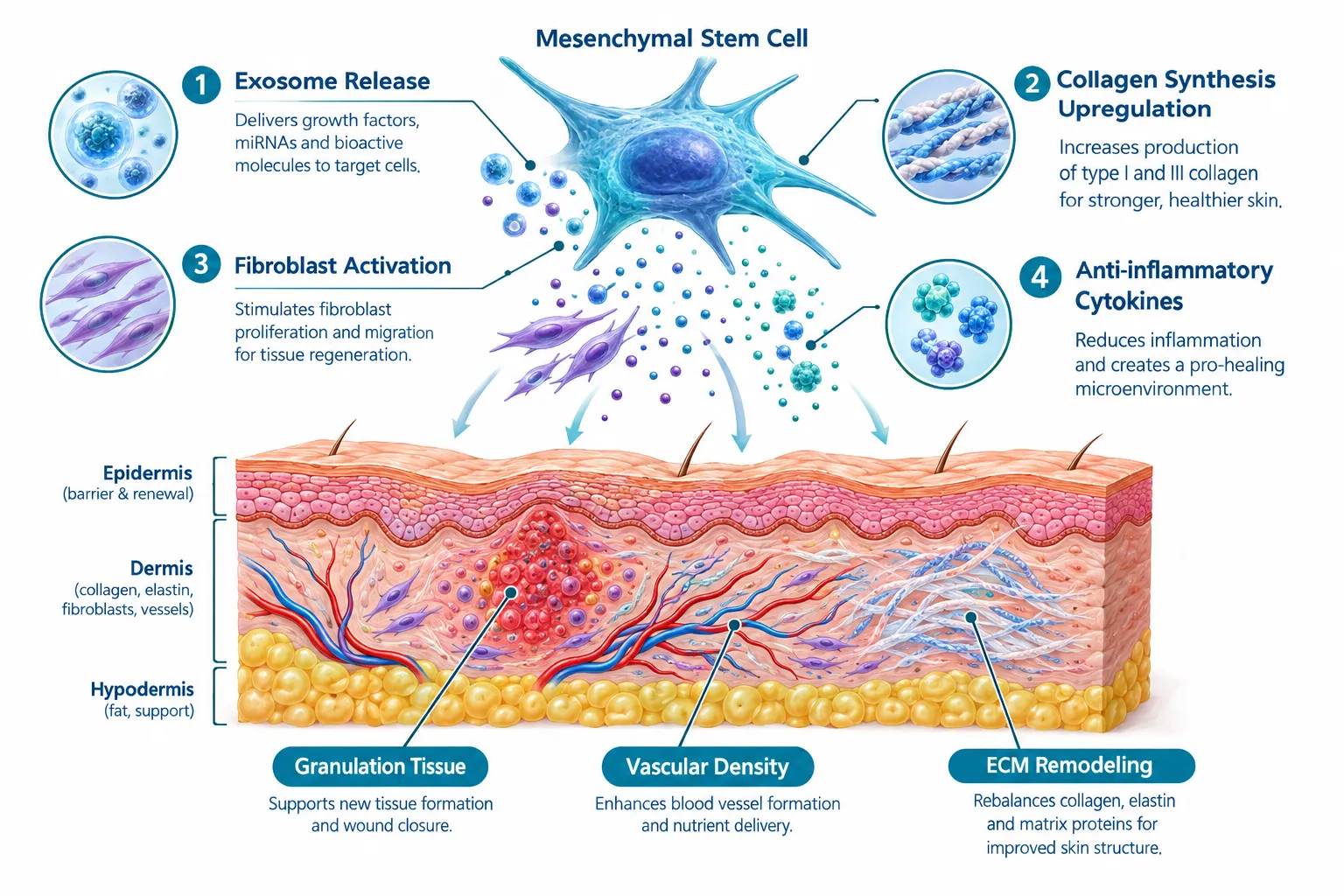
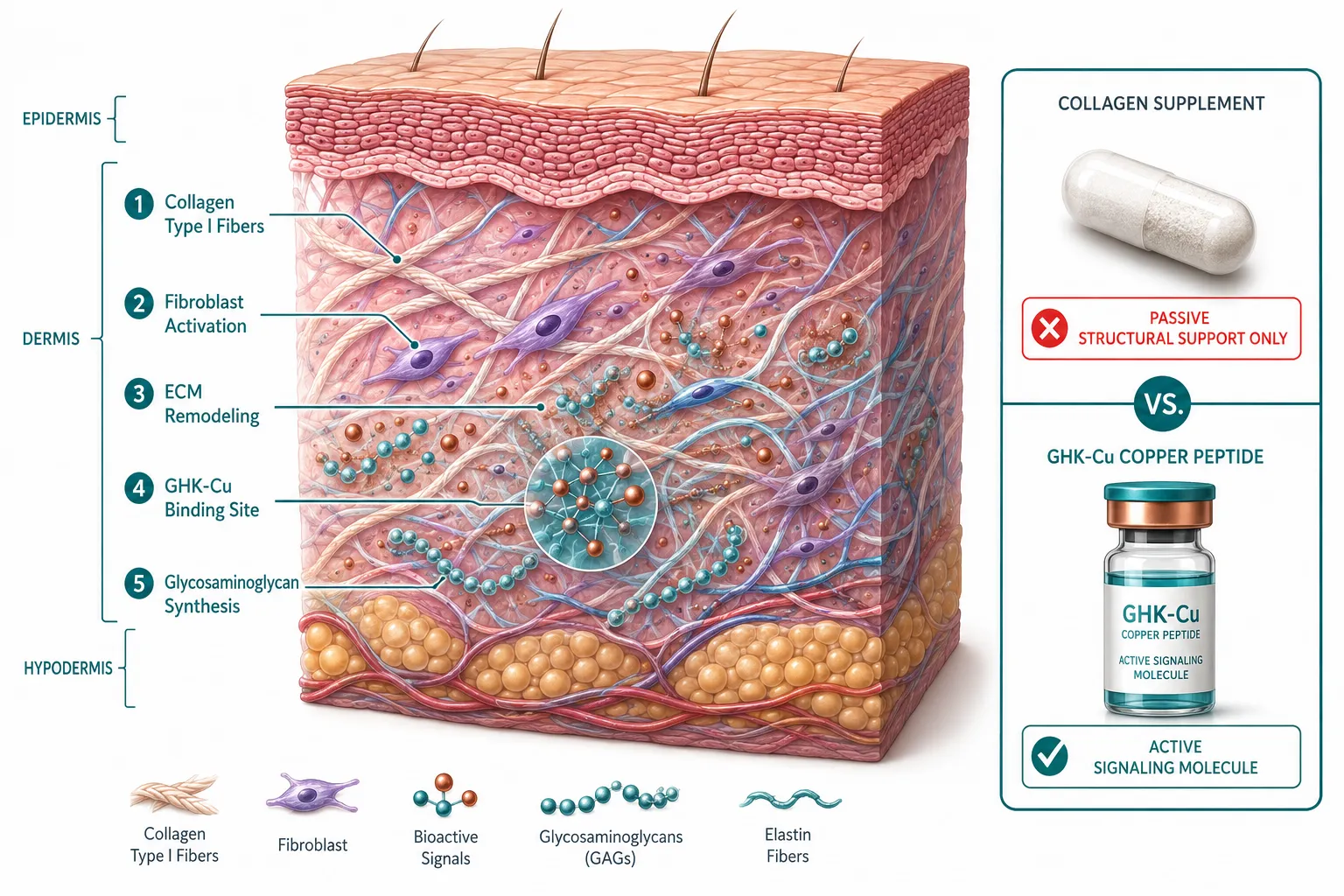
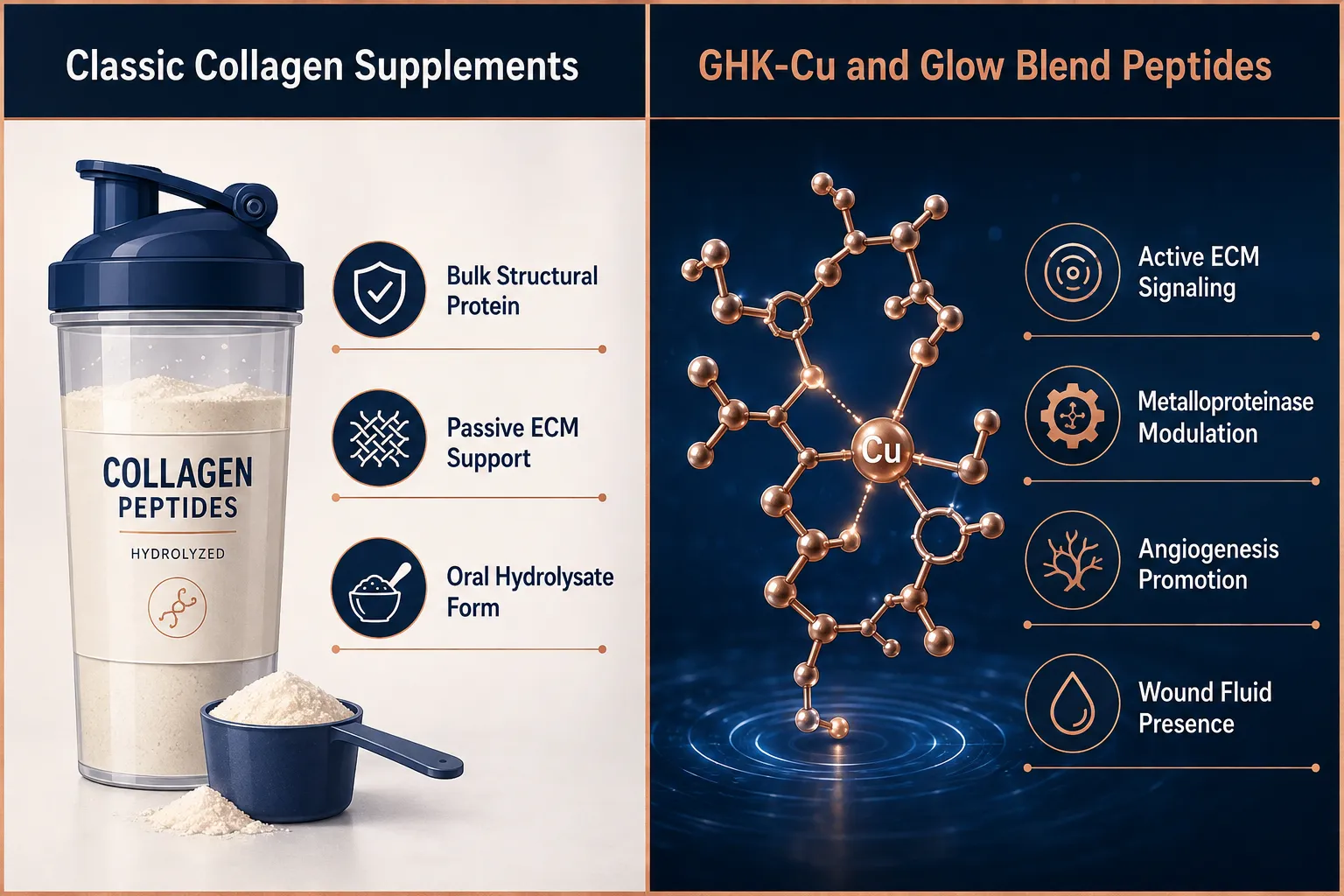
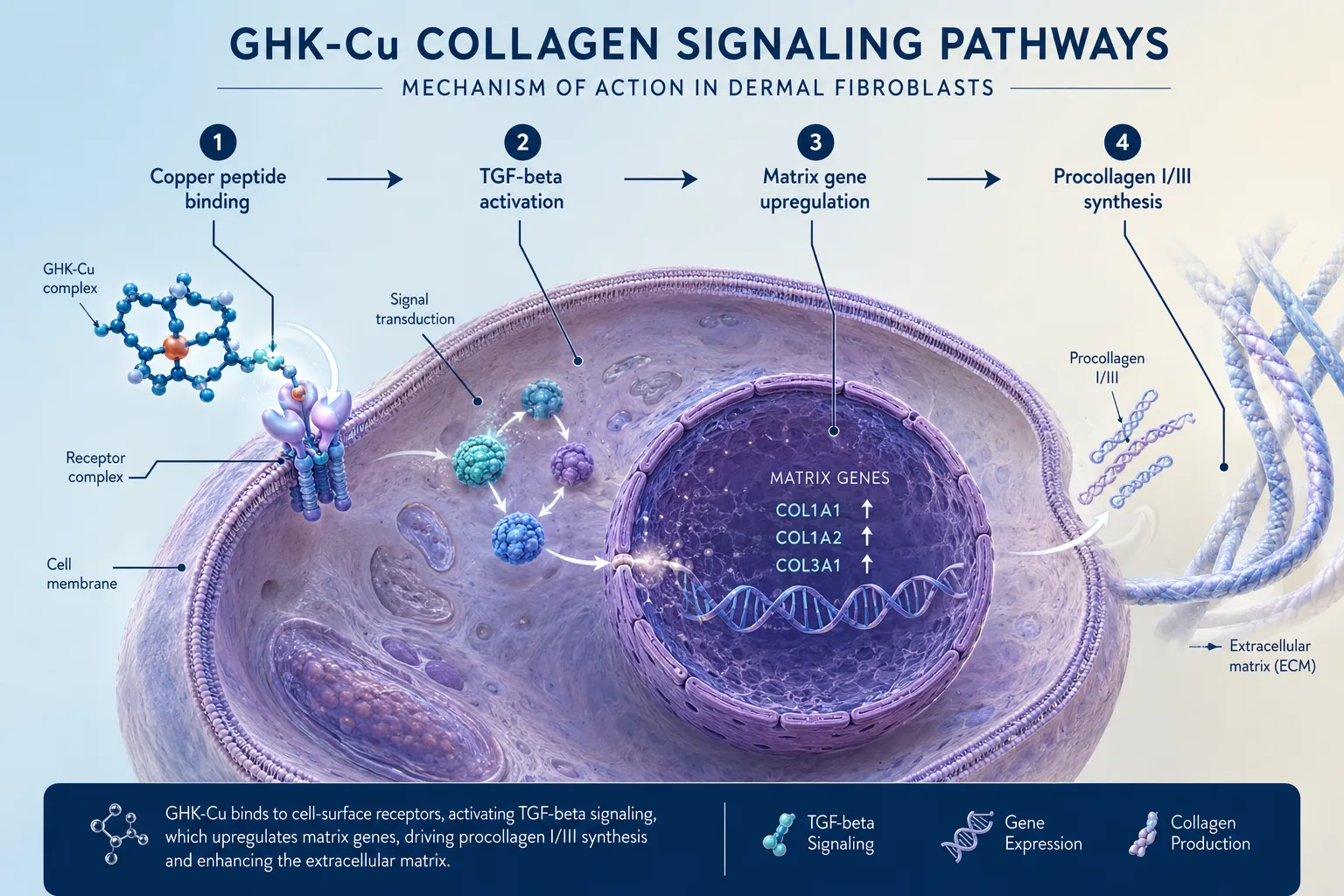
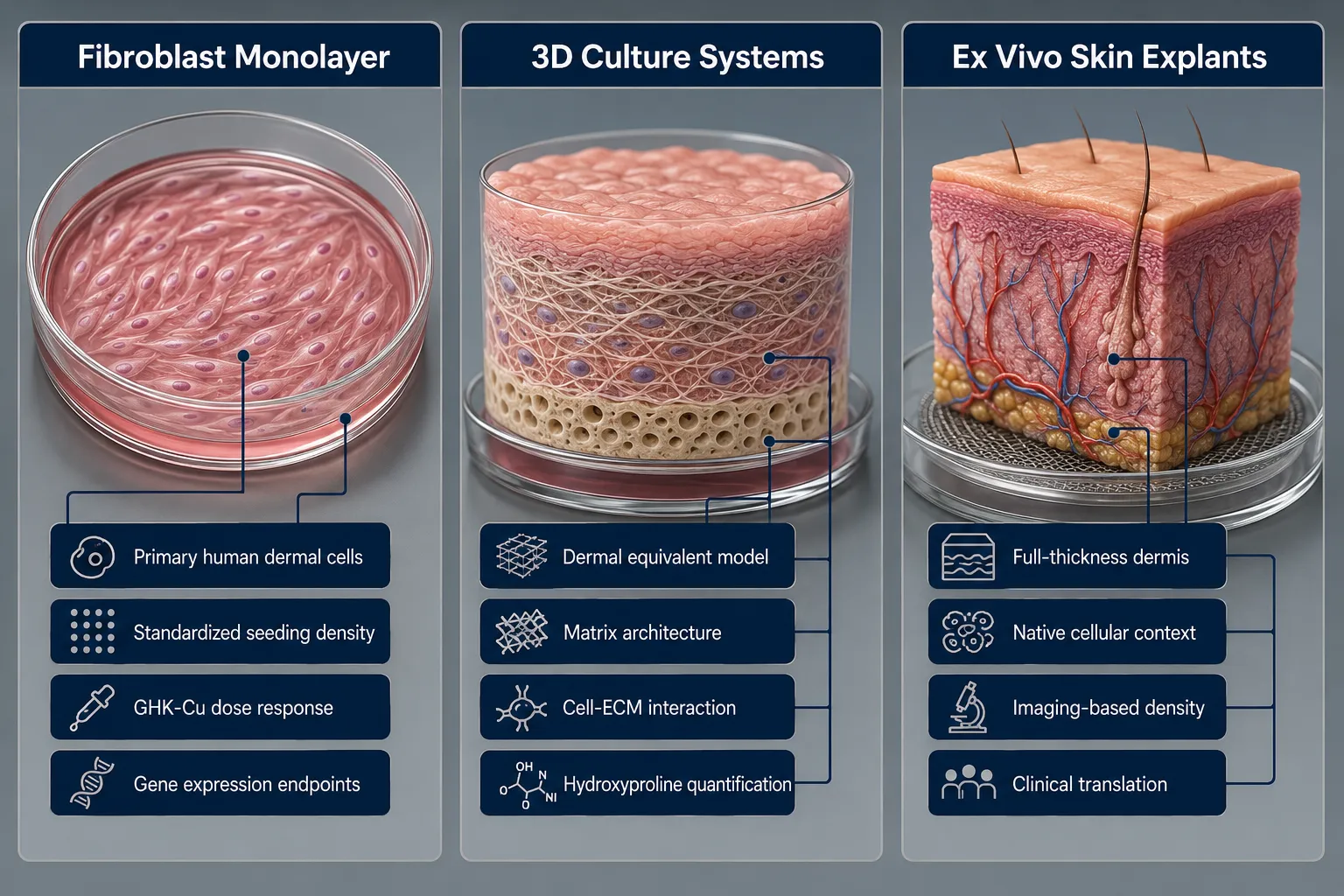
In vitro studies using human fibroblast cultures have shown that GHK-Cu can increase the expression of collagen I and collagen III genes. It appears to do this partly by activating TGF-beta signaling pathways, which are master regulators of ECM production. This is not the same as directly injecting collagen, it is a signaling-level intervention that prompts cells to produce more of their own structural proteins.

MMP Modulation

Matrix metalloproteinases (MMPs) are enzymes that break down collagen. GHK-Cu research has explored its apparent ability to modulate MMP-1 (collagenase) activity while simultaneously supporting tissue inhibitors of metalloproteinases (TIMPs). This dual action, slowing breakdown while encouraging synthesis, is what makes it a compelling subject in tissue remodeling research.

Antioxidant and Anti-Inflammatory Context

Copper in free ionic form is pro-oxidant. However, when chelated within the GHK tripeptide, the complex behaves differently. Research models suggest the chelated form may reduce oxidative stress markers in skin tissue, creating a more favorable environment for collagen-producing fibroblasts to function. For researchers interested in the broader landscape of peptides with anti-inflammatory profiles, comparisons with compounds like those covered in the LL-37 versus SS-31 peptide benefits guide offer useful context.

Those sourcing GHK-Cu for research purposes should consult a detailed GHK-Cu copper peptide sourcing guide to understand purity standards and certificate of analysis requirements before procurement.

Glow Blend Formulations: Combining Collagen Biology With Copper Peptide Research

Glow Blend Formulations: Combining Collagen Biology With Copper Peptide Research

The concept behind a Glow Blend is straightforward: instead of relying on a single peptide, a multi-peptide formulation targets several points in the collagen synthesis and skin remodeling cascade simultaneously. The Glow Blend peptide formulation is one such research-grade product designed with this multi-target approach in mind.

Why Blending Matters in Collagen Research

Single-ingredient approaches have limitations. Collagen synthesis is not controlled by one switch, it involves growth factors, enzymatic activity, cellular redox state, and ECM scaffold integrity. A well-designed blend can address several of these variables at once.

Target Mechanism Relevant Peptide Class
Fibroblast activation GHK-Cu, growth factor peptides
ECM scaffold support Matrikine peptides
Oxidative stress reduction Antioxidant peptides
MMP balance Signaling tripeptides

This is also why researchers studying skin and tissue models increasingly look beyond isolated compounds. Peptides like Epithalon, studied in aging and cellular longevity contexts, and tissue-repair compounds like TB-500 are often examined alongside skin-focused peptides to understand overlapping mechanisms. For those exploring aging-support peptide categories more broadly, the aging support peptide category provides a useful reference point.

Research Considerations for Glow Blend Studies

When designing experiments around Glow Blend or similar formulations, researchers should account for:

  • Peptide stability in the chosen vehicle or buffer system
  • Concentration gradients used in published cell culture studies
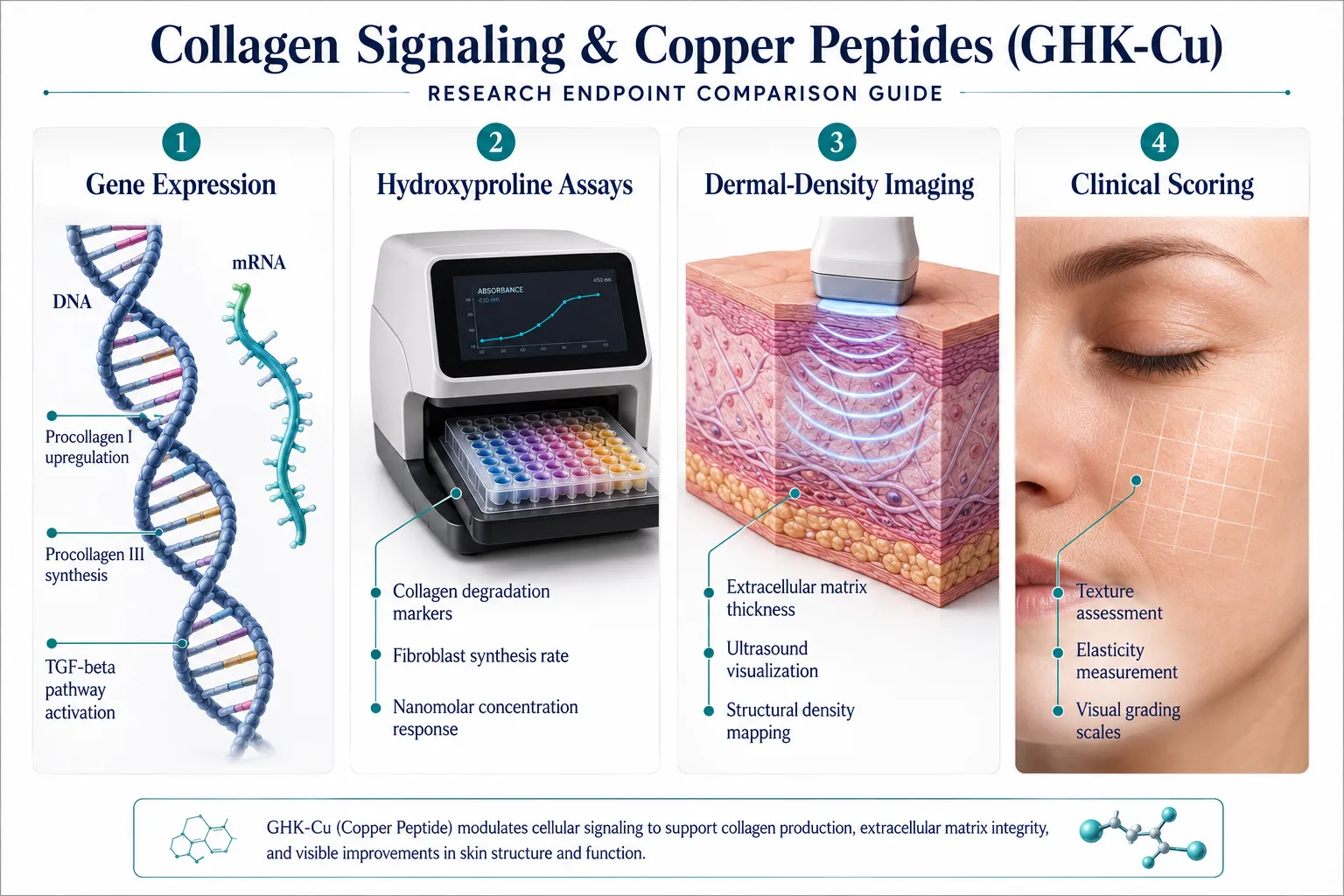
  • Endpoint selection, whether measuring gene expression, protein output, or histological markers
  • Purity verification, mass spectrometry and HPLC data from the supplier

For researchers who also study tissue repair peptides, the BPC-157 and TB-500 blend represents another multi-peptide research model with a documented mechanistic rationale, useful for comparative study design.

Conclusion

The intersection of classic collagen biology and copper peptide research is not a niche curiosity, it is a well-supported area of inquiry with decades of published data behind it. Collagen, GHK-Cu, and Glow Blend: How Classic Collagen Biology Intersects With Copper Peptide Research represents a logical progression: start with the foundational science of how collagen is made and degraded, then examine how GHK-Cu interacts with those pathways at the gene and enzyme level, and finally consider how multi-peptide blends like Glow Blend are designed to engage those mechanisms more comprehensively.

Actionable next steps for researchers:

  • Review primary literature on GHK-Cu and TGF-beta signaling before designing skin model experiments.
  • Verify supplier purity documentation before sourcing any copper peptide complex.
  • Consider multi-endpoint study designs that measure both collagen gene expression and MMP activity simultaneously.
  • Explore how complementary peptides in aging-support categories may interact with collagen synthesis pathways.

Rigorous sourcing, clear experimental endpoints, and a grounded understanding of collagen biology remain the foundation of any credible copper peptide research program in 2026.

https://www.puretestedpeptides.com/wp-content/uploads/2026/08/collagen-ghk-cu-and-glow-blend-how-classic-collagen-biology-intersects-with-copp.webp 1024 1536 https://www.puretestedpeptides.com/wp-content/uploads/2026/01/buy-peptides-online.jpg 2026-08-04 13:05:192026-08-04 13:05:19Collagen, GHK-Cu, and Glow Blend: How Classic Collagen Biology Intersects With Copper Peptide Research
×

Helpful Links

  • My account
  • Cart
  • Checkout
  • Refund and Returns Policy
  • Privacy Policy
  • SMS Privacy Policy
  • Login
  • My Account
  • Logout

USA Made Lab Tested Peptides

All products are sold for research, laboratory, or analytical purposes only, and are not for human consumption


Pure Tested Peptides is a chemical supplier. Pure Tested Peptides is not a compounding / chemical compounding facility as defined under 503A of the Federal Food, Drug, and Cosmetic act. Pure Tested Peptides is not an outsourcing facility as defined under 503B of the Federal Food, Drug, and Cosmetic act.

The statements made within this website have not been evaluated by the US Food and Drug Administration. The products we offer are not intended to diagnose, treat, cure or prevent any disease.

Human/Animal Consumption Prohibited. Laboratory/In-Vitro Experimental Use Only

Scroll to top Scroll to top Scroll to top