Call or Text 727-513-9780
  • Shopping Cart Shopping Cart
    0Shopping Cart
Pure Tested Peptides | America's most trusted Peptides for sale online
  • Peptides for sale
    • Oral Peptides for sale
      • Peptide Capsules for sale
      • BPC 157 Capsules 1000mcg
      • SLU-PP-332 Capsules | 1000 mcg
      • 5-Amino-1MQ 50mg Capsules
      • Tesofensine 500mcg
    • All Peptides for sale
    • Peptide Sprays
      • BPC 157 Nasal Spray Kit
      • BPC-157 TB500 Nasal Spray Kit
      • Semax Nasal Spray 10mg
      • Selank – Nasal Spray Kit – 10mg
      • Epithalon 50MG Nasal Spray Kit
      • Ipamorelin 10mg Nasal Spray
      • Klow Nasal Spray (BPC-157 + TB-500 + GHK-Cu + KPV) | 80mg
      • Hulk Nasal Spray Tesa / Ipa Blend 6/3 MG
      • Klow Nasal Spray
      • NAD + 500 mg Nasal Spray
      • PT-141 Nasal Spray Kit
    • GHRH Peptides
      • Ipa Peptides
      • CJC-1295 Peptides
        • CJC-1295 with DAC 5 mg
        • CJC-1295 without DAC 5 mg
        • CJC-1295 Ipa 10mg
      • Tesa Peptides
        • Tesa Peptide
        • Tesa 20 mg
    • GHK-Cu Peptides
      • All GHK-Cu Peptides
      • GHK-Cu 100mg
      • KLOW Peptide Blend – Buy KLOW blend online
    • BPC Peptides
      • All BPC Peptides
      • BPC-157
      • BPC-157 TB-500
      • BPC 157 capsules 1000mcg
    • SLU-PP-332 Peptides
      • All SLU-PP-332 Peptides
      • SLU-PP-332 5mg
    • GLP3 Peptides
      • GLP3-R
      • GLP3-R CAG 10mg
      • GLP3-R 20mg
    • PT-141 Peptides
      • PT-141 Peptides for sale
      • PT-141 10mg
      • PT-141 Nasal Spray
    • CAG Peptides
      • Lipo-C Peptide Blend
      • CAG 5mg
      • CAG 10mg
    • MOTS-C Peptides
      • MOTS-C Peptides for sale
      • MOTS-c peptide
      • MOTS-c 10mg *6 pack*
    • 5 Amino 1MQ Peptides
      • 5 Amino 1MQ Peptides for sale
      • 5-Amino-1MQ 50mg Capsules
      • 5-Amino-1MQ 5mg
    • Epithalon Peptides
      • Epithalon Peptides for sale
      • Epithalon 10mg
      • Epithalon 50mg
  • Shop
    • GLPs
      • 5-Amino-1MQ 50mg Capsules
      • 5-Amino-1MQ 5mg
      • GLP3-Reta
      • L-Carnitine 500mg/ml
      • Tesofensine 500mcg
      • SLU-PP-332 5mg
      • MOTS-c 10mg *6 pack*
    • Epithalon & BPC Peptides
      • Epithalon 10mg
      • Epithalon 50mg
      • BPC-157
      • BPC 157 capsules 1000mcg
      • BPC-157 TB-500
      • BPC-157 TB500 Nasal Spray Kit
      • BPC 157 Nasal Spray Kit
    • BPC TB-500 & NAD+ Peptides
      • NAD+ 500 mg
      • KLOW Peptide Blend – Buy KLOW blend online
      • GLOW Peptide Blend
      • TB 500 5mg
      • BPC 157 capsules 1000mcg – Supplement
      • BPC 157 Nasal Spray Kit
      • BPC-157
      • BPC-157 TB500 Nasal Spray Kit
      • BPC-157 TB-500
      • BPC 157 capsules 1000mcg
    • LL-37 Peptide
      • LL-37 10 mg
    • MOTS-C & Selank
      • MOTS-c peptide
      • Selank 10mg
    • GHK Peptides
      • GHK-Cu 100mg
      • GLOW Peptide Blend
      • KLOW Peptide Blend – Buy KLOW blend online
  • COAs
  • Wholesale
    • Wholesale Peptides for sale
  • PTP FAQ
  • Affiliates
    • Selank Peptide: Advanced Pharmacological Mechanisms Underlying Its Anxiolytic and Nootropic Effects in Research
      • 5-Amino-1MQ Peptide: Detailed Mechanisms of NNMT Inhibition and Its Impact on Cellular Metabolism Research
        • MOTS-C Peptide: Unraveling Its Role in Mitochondrial Dynamics and Energy Metabolism Research
          • Epithalon Peptide and Telomerase Regulation: Investigating Its Impact on Cellular Senescence and Lifespan Research Models
            • GLP2-T vs GLP2 Tirz Peptide: Understanding the Naming, Mechanistic Nuances, and Research Implications for Gut Health
      • Peptides and Polypeptides in Modern Pharmacology: What Research on Metoprolol, Prednisone, and Amlodipine Reveals
        • Polypeptide Peptides vs NSAIDs: What Naproxen and Diclofenac Teach Tissue-Repair Researchers About BPC‑157 and TB‑500
          • Peptides and Polypeptides in Endocrine Pharmacology: How GLP-1, GLP-2, and GLP-3 Retatrutide Differ From Classic Drugs Like Prednisone and Amlodipine
          • 5‑Amino‑1MQ Peptide and NNMT Inhibition: How It Compares With Statins Like Atorvastatin in Adipose and Lipid Metabolism Research
      • Enclomiphene, Estrogen Receptor Signaling, and Luteinizing Phase Biology: What Hormone Researchers Should Measure
        • Mesenchymal Stem Cells, BPC‑157, and GHK‑Cu: How Tissue Repair Peptides Compare With Classic NSAIDs Like Naproxen in Injury Models
          • Peptide Calculator Use Cases Beyond Growth Hormone: Working Through GLP‑3 Retatrutide, MOTS‑c, and BPC‑157 Research Dosing
        • Polypeptide Peptides in Endocrine and Metabolic Pharmacology: Lessons From Amlodipine, Prednisone, and Metoprolol
        • Peptides Calculator for Advanced Blends: Worked Examples for Tesamorelin, CJC‑1295, and Ipamorelin Stacks
          • Peptides and Polypeptides in Human Physiology: How Molecular Size Shapes Research Applications
            • Selank Peptide: Advanced Pharmacological Mechanisms Underlying Its Anxiolytic and Nootropic Effects in Research
          • 5-Amino-1MQ Peptide: Detailed Mechanisms of NNMT Inhibition and Its Impact on Cellular Metabolism Research
            • MOTS-C Peptide: Unraveling Its Role in Mitochondrial Dynamics and Energy Metabolism Research
              • Epithalon Peptide and Telomerase Regulation: Investigating Its Impact on Cellular Senescence and Lifespan Research Models
                • GLP2-T vs GLP2 Tirz Peptide: Understanding the Naming, Mechanistic Nuances, and Research Implications for Gut Health
                  • Peptides and Polypeptides in Endocrine Pharmacology: How GLP-1, GLP-2, and GLP-3 Retatrutide Differ From Classic Drugs Like Prednisone and Amlodipine
                    • Polypeptide Peptides vs NSAIDs: What Naproxen and Diclofenac Teach Tissue-Repair Researchers About BPC‑157 and TB‑500
                      • Peptides and Polypeptides in Modern Pharmacology: What Research on Metoprolol, Prednisone, and Amlodipine Reveals
                        • 5‑Amino‑1MQ Peptide and NNMT Inhibition: How It Compares With Statins Like Atorvastatin in Adipose and Lipid Metabolism Research
                        • Enclomiphene, Estrogen Receptor Signaling, and Luteinizing Phase Biology: What Hormone Researchers Should Measure
                        • Mesenchymal Stem Cells, BPC‑157, and GHK‑Cu: How Tissue Repair Peptides Compare With Classic NSAIDs Like Naproxen in Injury Models
                        • Peptide Calculator Use Cases Beyond Growth Hormone: Working Through GLP‑3 Retatrutide, MOTS‑c, and BPC‑157 Research Dosing
                        • Polypeptide Peptides in Endocrine and Metabolic Pharmacology: Lessons From Amlodipine, Prednisone, and Metoprolol
                        • Peptides Calculator for Advanced Blends: Worked Examples for Tesamorelin, CJC‑1295, and Ipamorelin Stacks
                        • Peptides and Polypeptides in Human Physiology: How Molecular Size Shapes Research Applications
                        • Selank Peptide: Advanced Pharmacological Mechanisms Underlying Its Anxiolytic and Nootropic Effects in Research
                        • MOTS-C Peptide: Unraveling Its Role in Mitochondrial Dynamics and Energy Metabolism Research
                        • Peptides and Polypeptides in Modern Pharmacology: What Research on Metoprolol, Prednisone, and Amlodipine Reveals
                        • Peptides and Polypeptides in Endocrine Pharmacology: How GLP-1, GLP-2, and GLP-3 Retatrutide Differ From Classic Drugs Like Prednisone and Amlodipine
                        • 5-Amino-1MQ Peptide: Detailed Mechanisms of NNMT Inhibition and Its Impact on Cellular Metabolism Research
                        • Mesenchymal Stem Cells, BPC‑157, and GHK‑Cu: How Tissue Repair Peptides Compare With Classic NSAIDs Like Naproxen in Injury Models
                        • Peptide Calculator Use Cases Beyond Growth Hormone: Working Through GLP‑3 Retatrutide, MOTS‑c, and BPC‑157 Research Dosing
                        • GLP2-T vs GLP2 Tirz Peptide: Understanding the Naming, Mechanistic Nuances, and Research Implications for Gut Health
                        • Polypeptide Peptides in Endocrine and Metabolic Pharmacology: Lessons From Amlodipine, Prednisone, and Metoprolol
                        • Polypeptide Peptides vs NSAIDs: What Naproxen and Diclofenac Teach Tissue-Repair Researchers About BPC‑157 and TB‑500
                        • Peptides and Polypeptides in Human Physiology: How Molecular Size Shapes Research Applications
                        • Peptides Calculator for Advanced Blends: Worked Examples for Tesamorelin, CJC‑1295, and Ipamorelin Stacks
                        • 5‑Amino‑1MQ Peptide and NNMT Inhibition: How It Compares With Statins Like Atorvastatin in Adipose and Lipid Metabolism Research
                        • Enclomiphene, Estrogen Receptor Signaling, and Luteinizing Phase Biology: What Hormone Researchers Should Measure
                        • Epithalon Peptide and Telomerase Regulation: Investigating Its Impact on Cellular Senescence and Lifespan Research Models
                        • Best research protocol Klow blend
                        • best time to take BPC-157
                        • best time to take DSIP (Delta Sleep Inducing Peptide)
                        • best time to take CJC-1295
                        • best time to take AOD-9604
                        • best time to take Follistatin 344
                        • best time to take Ipamorelin
                        • best time to take MK-677 (Ibutamoren)
                        • best time to take Ligandrol (LGD-4033) — research compound
                        • best time to take Ostarine (MK-2866) — research compound
                        • best time to take GHK-CU
                        • best time to take TB-500
                        • best time to take MOTS-c
                        • best time to take Semax
                        • best time to take RAD-140 (Testolone) — research compound
                        • best time to take Thymosin Alpha-1
                        • best time to take PEG-MGF
                        • Biolife Plasma, Octapharma Plasma, and Research Peptides: How Plasma Donation Labs Differ From Peptide Suppliers
                        • best time to take YK-11 — research compound
                        • best time to take PT-141 (Bremelanotide)
                        • Best research protocol Klow blend
                        • 5-Amino-1MQ and MOTS-C Synergy: Metabolic Signaling, Mitochondria, and Research Design
                        • BPC-157 and TB-500: Investigating Their Combined Effects on Angiogenesis and Cellular Migration in Tissue Repair Models
                        • BPC-157 Peptide: Gut Barrier Function, Inflammation, and Tissue-Recovery Research
                        • 5‑Amino‑1MQ and MOTS‑c Synergy in Metabolic Research: Designing NNMT and Mitochondrial Biogenesis Stacks
                        • CJC-1295 with DAC vs. Without DAC: Half-Life, Release Kinetics, and Research Implications
                        • CJC‑1295 with DAC vs. Without DAC: Expanding on Half‑Life Differences Using Tesamorelin and Ipamorelin Blend Case Studies
                        • Collagen Biology and Copper‑Binding Peptides: How GHK‑Cu, Glow Blend, and Klow Blend Interact with Skin and Connective Tissue
                        • Collagen Biology and Regenerative Peptides: How GHK‑Cu, Glow Blend, and Klow Blend Affect Extracellular Matrix Research
                    • DNA, Telomeres, and Longevity Peptides: Positioning Epithalon and MOTS‑c in Genetic Aging Research
                      • Enclomiphene Citrate: serm Mechanism, Testosterone Research, and Stack Compatibility
                        • Enclomiphene vs Enclomiphene Citrate: Formulation, Bioavailability, and Research Distinctions
                        • Epithalon Peptide Research: Telomerase Activation, Aging, and Pineal Gland Function
                        • Estrogen Receptor Signaling and Enclomiphene: How Selective Modulators Compare with Classic Polypeptide Hormones
                        • GHK-Cu Peptide: Advanced Mechanisms in Extracellular Matrix Remodeling and Wound Healing Research
                        • GHK-Cu Peptide: Collagen Synthesis, Wound Repair, and Skin-Barrier Research Models
                        • GLP-1 vs GLP-3 vs GLP-2: Peptide Classification and Research Applications
                        • GLP-2 Peptide Research Guide: Gut Barrier Function, Nutrient Absorption, and Intestinal Recovery Models
                        • GLP-3 Retatrutide vs. GLP-1 Drugs: What Triple-Agonist Biology Changes in Research Models
                        • Ipamorelin and Tesamorelin Combination: Synergistic GH Secretagogue Research and Dosing Protocols
                        • GLP2 Tirz Peptide: What It Is, Why the Name Exists, and How Researchers Should Interpret It
                        • Klow Blend Peptide Nasal Spray: What the Formulation Is Trying to Do in Cognitive Research
                        • Mitochondria, NNMT Inhibition, and Peptide Modulators: Where MOTS‑c and 5‑Amino‑1MQ Fit in Cellular Energy Research
                        • MOTS-c Peptide: Mitochondrial Function, Energy Metabolism, and What Researchers Measure
                        • MOTS-c vs. 5-Amino-1MQ: Which Metabolic Research Questions Each Compound Actually Answers
                        • Nasal Spray Peptides: Bioavailability, Administration, and Semax/Selank Research Applications
                        • PT-141 Peptide Research: Mechanism of Action and Melanocortin Receptor Signaling
                        • Retatrutide for Research: Mechanism, Structure, and GLP-1/GLP-3 Dual Action
                        • Retatrutide for Obesity and Type 2 Diabetes: What the Latest Trial Data Suggest
                        • Tesofensine Peptide Research: Mechanism, Appetite Suppression, and Neuropeptide Y Pathways
  • Contact
    • Contact Customer Service
    • Text Customer Support
  • About US
  • Shop all peptides
  • Affiliate Program
    • Affiliate Signup
  • Login / Register Login / Register Page Link Login / Register Page Link
  • Click to open the search input field Click to open the search input field Search
  • Menu Menu
Mesenchymal Stem Cells and Peptide Signaling: Where MOTS-c, BPC-157, and GHK-Cu Fit in Regenerative Research

Mesenchymal Stem Cells and Peptide Signaling: Where MOTS-c, BPC-157, and GHK-Cu Fit in Regenerative Research

August 15, 2026/0 Comments/in Uncategorized/by

Fewer than a dozen peptides have generated as much laboratory interest in regenerative biology as MOTS-c, BPC-157, and GHK-Cu, yet each sits at a very different stage of scientific validation when placed alongside mesenchymal stem cell (MSC) research. Understanding where the evidence is strong, where it is preliminary, and where it is still largely theoretical is essential for any researcher working at the intersection of peptide pharmacology and stem cell biology in 2026.

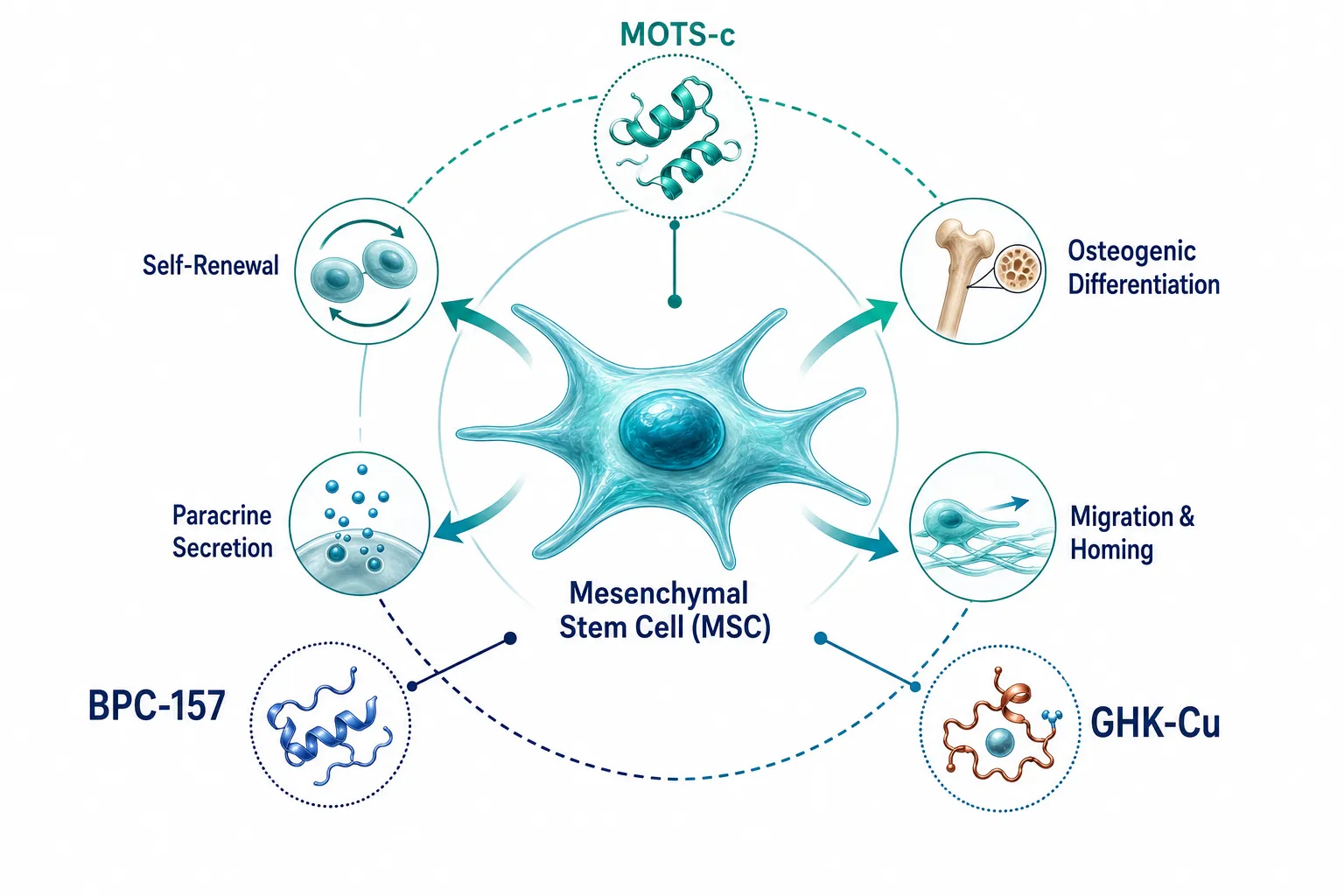
Mesenchymal stem cells and peptide signaling represent one of the most active frontiers in tissue repair science. These multipotent stromal cells, found in bone marrow, adipose tissue, placenta, and other niches, respond dynamically to molecular signals in their environment. Peptides such as MOTS-c, BPC-157, and GHK-Cu appear to modulate that environment in distinct ways, influencing MSC differentiation, migration, survival, and paracrine output. The key word, however, is "appear." Much of this research remains preclinical.

Key Takeaways

  • Mesenchymal stem cells are highly sensitive to peptide signals in their local niche, making them relevant targets for MOTS-c, BPC-157, and GHK-Cu research.
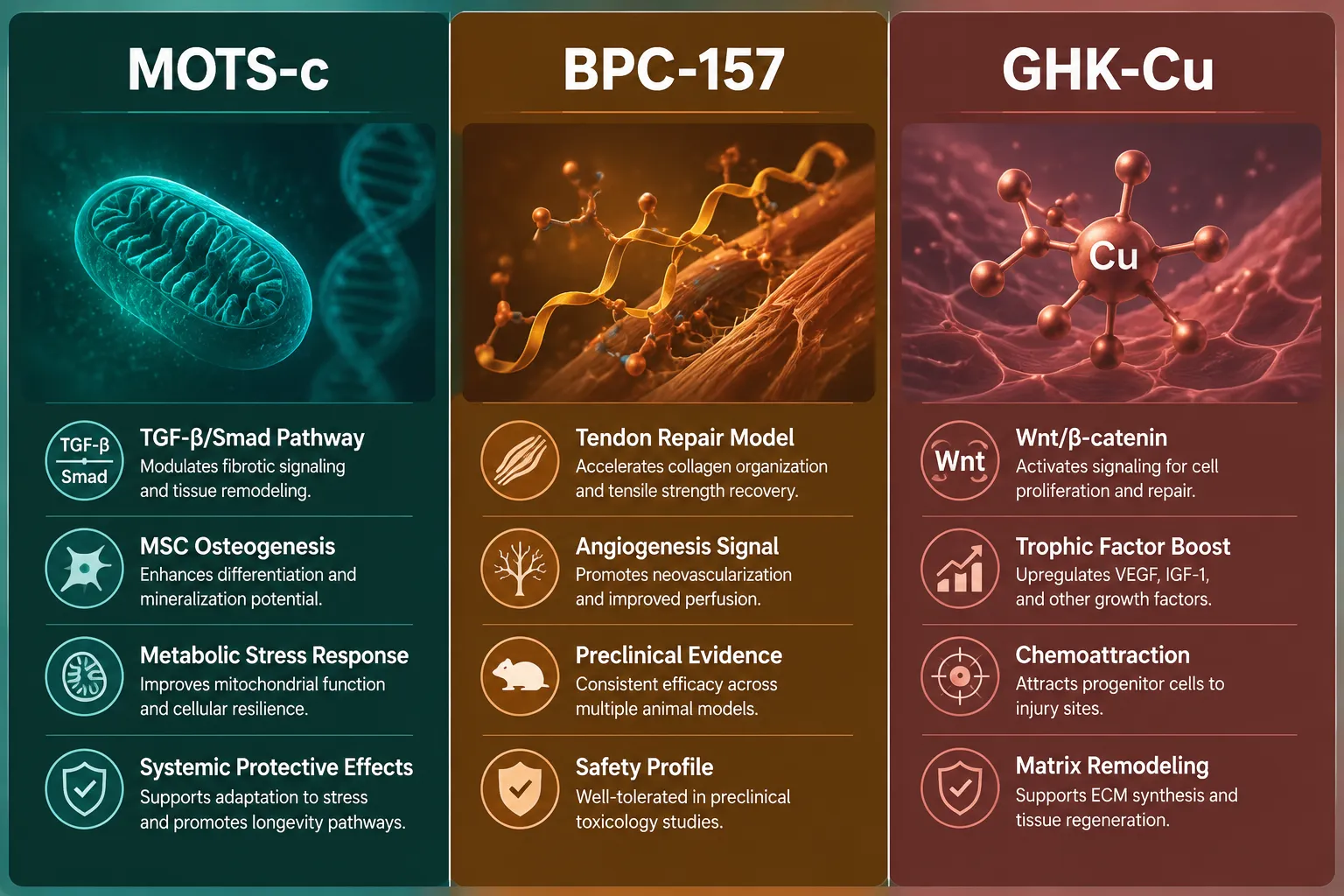
  • MOTS-c shows the most direct MSC-related evidence, including effects on osteogenic differentiation and metabolic homeostasis in stromal cell models.
  • BPC-157 demonstrates strong preclinical musculoskeletal repair data but has limited direct evidence of MSC proliferation effects in vitro.
  • GHK-Cu functions more as a niche modulator, enhancing trophic factor secretion and activating signaling pathways associated with stem cell recruitment.
  • All three peptides remain investigational; none are approved for clinical use in stem cell or regenerative therapies as of 2026.

MSC Biology: Why Peptide Signals Matter
MSC Biology: Why Peptide Signals Matter

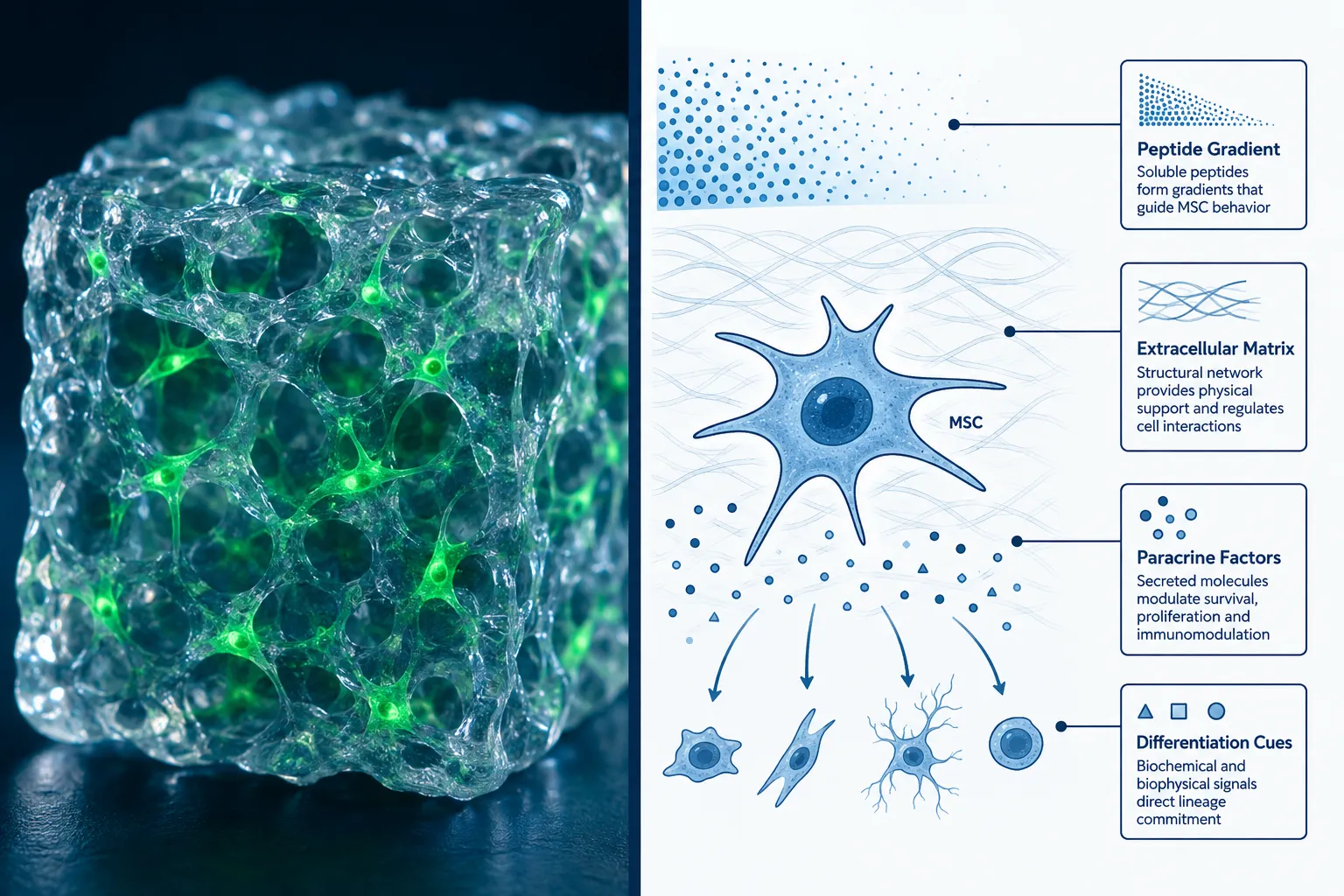
Mesenchymal stem cells are not passive building blocks. They actively sense and respond to biochemical gradients, extracellular matrix cues, and paracrine signals from neighboring cells. This responsiveness is precisely what makes them relevant to peptide signaling research.

MSCs can differentiate into osteoblasts, chondrocytes, adipocytes, and other cell types depending on the signals they receive. They also secrete a broad range of growth factors, cytokines, and extracellular vesicles that influence surrounding tissue. When a peptide alters any part of this signaling environment, whether through receptor binding, metabolic pathway modulation, or matrix interaction, it has the potential to shift MSC behavior in meaningful ways.

Key pathways that govern MSC fate decisions include:

  • TGF-β/Smad signaling, central to osteogenic and chondrogenic differentiation
  • Wnt/β-catenin, regulates self-renewal and lineage commitment
  • PI3K/Akt and MAPK, involved in survival, proliferation, and stress responses
  • p63 and p53 family members, linked to stemness maintenance and aging

Understanding which pathways a given peptide engages, and in what context, is the foundation of responsible regenerative research design.

MOTS-c, BPC-157, and GHK-Cu: Distinct Roles in Regenerative Research
MOTS-c, BPC-157, and GHK-Cu: Distinct Roles in Regenerative Research

MOTS-c and MSC Differentiation

MOTS-c is a mitochondria-derived peptide encoded within the 12S rRNA gene. Its primary research identity is metabolic, it activates AMPK, regulates glucose uptake, and supports mitochondrial homeostasis. What makes it relevant to MSC biology is its demonstrated influence on stromal cell differentiation and survival.

In bone marrow MSC models, MOTS-c has been shown to drive osteogenic differentiation through TGF-β/Smad signaling, making it a candidate of interest in osteoporosis research. In placenta-derived MSC studies, it appears to promote homeostasis under metabolic stress conditions, though the pathway involves stress-response mechanisms rather than straightforward growth promotion. A particularly notable 2025 development involved MOTS-c hydrogel formulations that enhanced disc-derived MSC survival and function in intervertebral disc degeneration models, a direct application of peptide-MSC interface research.

Importantly, MOTS-c effects on human mesenchymal stromal cells appear to be context-dependent. The same peptide can produce different outcomes depending on the MSC source, the culture conditions, and the stress environment. This context-sensitivity is a recurring theme in the broader field of peptide mechanism research from MOTS-c to CJC-1295.

For researchers sourcing this compound, understanding MOTS-c mitochondrial research themes provides useful context on how the peptide's metabolic identity intersects with its emerging stromal cell applications.

"MOTS-c's first Phase 2a human trial (NCT07505745) targets metabolic endpoints, not stem cell outcomes, underscoring how far preclinical MSC findings are from clinical translation."

BPC-157 and Musculoskeletal Repair Models

BPC-157 (Body Protection Compound-157) is a synthetic pentadecapeptide derived from a gastric protein sequence. Its preclinical record in musculoskeletal repair is extensive: tendon healing, bone repair, ligament regeneration, and angiogenesis models have all shown positive signals in animal studies.

The connection to MSC biology is more indirect. A 2025 thesis-level investigation found that BPC-157 does not appear to directly increase MSC proliferation in vitro, which is a meaningful finding for researchers who assumed a direct proliferative mechanism. The peptide's repair-promoting effects are more likely mediated through angiogenic signaling, growth factor upregulation, and inflammatory modulation in the tissue environment, processes that may indirectly support MSC function without acting on MSCs themselves.

The BPC-157 core peptides documentation and research guide covers the mechanistic literature in detail. Researchers should also be aware that BPC-157 carries significant regulatory caution in 2026, including anti-doping scrutiny and non-approval status across major jurisdictions.

GHK-Cu as a Niche Modulator

GHK-Cu (glycyl-L-histidyl-L-lysine copper complex) occupies a different conceptual space. Rather than acting directly on MSC differentiation pathways, GHK-Cu appears to function as a niche modulator, shaping the extracellular environment in ways that support stem cell recruitment and trophic factor secretion.

Research has linked GHK-Cu to activation of Wnt/β-catenin, TGF-β, MAPK, PI3K/Akt, and p63 signaling networks. These are not peripheral pathways; they are core regulators of MSC behavior. By modulating matrix remodeling enzymes, stimulating collagen synthesis, and enhancing chemoattractant gradients, GHK-Cu may create a more permissive environment for endogenous MSC migration and function.

Researchers interested in the copper peptide's broader signaling context can explore GHK-Cu and collagen biology for a detailed look at how classic matrix biology intersects with copper peptide research.

Translational Gaps and Research Design Considerations
Translational Gaps and Research Design Considerations

The gap between preclinical peptide-MSC findings and clinical application is substantial. Several factors complicate direct translation:

Factor Research Implication
MSC source variability Bone marrow, adipose, and placenta-derived MSCs respond differently to the same peptide
Dose and delivery In vivo peptide concentrations rarely match in vitro conditions
Context-dependence Inflammatory, metabolic, or mechanical stress alters peptide-MSC interactions
Regulatory status None of the three peptides are approved for regenerative indications

For researchers designing studies that incorporate these compounds, several principles apply:

  1. Define the MSC source explicitly, findings from one stromal cell population do not automatically transfer to another.
  2. Distinguish direct from indirect effects, a peptide that improves tissue repair may do so without ever acting on an MSC directly.
  3. Use validated reference standards, purity and characterization matter enormously when interpreting signaling data. Resources on building robust peptide benchmarks with reference standards are directly relevant here.
  4. Account for the niche environment, GHK-Cu's effects, in particular, are highly dependent on the extracellular matrix context.

Researchers exploring mitochondrial peptide sourcing for MSC studies should also review quality criteria for research-grade MOTS-c to ensure compound integrity before drawing mechanistic conclusions. Similarly, those working with copper peptide formulations will find sourcing guidance in resources covering GHK-Cu peptides for skin and collagen research.

Conclusion

The intersection of mesenchymal stem cells and peptide signaling, specifically where MOTS-c, BPC-157, and GHK-Cu fit in regenerative research, is a genuinely productive area of inquiry, but one that demands precision and intellectual honesty. MOTS-c has the most direct MSC-related mechanistic evidence, particularly in osteogenic and metabolic stress models. BPC-157 shows compelling tissue repair data that likely operates upstream or in parallel to MSC activity rather than through direct stromal cell stimulation. GHK-Cu presents a compelling case as a niche modulator, activating multiple signaling networks that govern MSC recruitment and function.

Actionable next steps for researchers in 2026:

  • Prioritize mechanistic clarity over outcome assumptions, know whether a peptide acts on MSCs directly or through the niche environment.
  • Select MSC sources deliberately and document them rigorously in study design.
  • Monitor the MOTS-c clinical pipeline (NCT07505745) for translational signals that may inform future MSC-adjacent study designs.
  • Source all three compounds from suppliers with documented purity verification, as impurities can confound signaling data significantly.
  • Treat all three peptides as investigational tools with no approved regenerative indications, design studies accordingly.

The science here is moving fast. Staying grounded in what the evidence actually shows, rather than what it might eventually show, is the mark of rigorous regenerative research.

Tags: bpc-157, copper peptide, ghk-cu, mesenchymal stem cells, mitochondrial peptide, mots-c, msc biology, peptide pharmacology, peptide signaling, regenerative research, stem cell differentiation, tissue repair
https://www.puretestedpeptides.com/wp-content/uploads/2026/08/mesenchymal-stem-cells-and-peptide-signaling-where-mots-c-bpc-157-and-ghk-cu-fit.webp 1024 1536 https://www.puretestedpeptides.com/wp-content/uploads/2026/01/buy-peptides-online.jpg 2026-08-15 13:05:182026-08-15 13:05:18Mesenchymal Stem Cells and Peptide Signaling: Where MOTS-c, BPC-157, and GHK-Cu Fit in Regenerative Research
You might also like
Peptides vs Polypeptides: How Molecular Size and Structure Change Research Questions Peptides vs Polypeptides: How Molecular Size and Structure Change Research Questions
Tesofensine, Enclomiphene, and Peptide-Based Approaches: How Small Molecules Fit Alongside GLP-3 and GH Secretagogues in Metabolic Research Tesofensine, Enclomiphene, and Peptide-Based Approaches: How Small Molecules Fit Alongside GLP-3 and GH Secretagogues in Metabolic Research
Collagen, GHK-Cu, and Glow Blend: How Classic Collagen Biology Intersects With Copper Peptide Research Collagen, GHK-Cu, and Glow Blend: How Classic Collagen Biology Intersects With Copper Peptide Research
What Are Polypeptide Peptides? From Collagen and Hormones to Advanced Research Compounds Like GLP-3 Retatrutide What Are Polypeptide Peptides? From Collagen and Hormones to Advanced Research Compounds Like GLP-3 Retatrutide
Peptides Mechanism 101: From GLP‑3 Retatrutide to CJC‑1295 and MOTS‑c in Cellular and Receptor-Level Research Peptides Mechanism 101: From GLP‑3 Retatrutide to CJC‑1295 and MOTS‑c in Cellular and Receptor-Level Research
Complement-Dependent Cytotoxicity and Peptide Safety: What BPC-157, GHK-Cu, and Nasal Spray Peptides Teach Immunology-Focused Labs Complement-Dependent Cytotoxicity and Peptide Safety: What BPC-157, GHK-Cu, and Nasal Spray Peptides Teach Immunology-Focused Labs
Klow Peptide Nasal Spray: What It Is, How Researchers Evaluate It, and Why Formulation Matters Klow Peptide Nasal Spray: What It Is, How Researchers Evaluate It, and Why Formulation Matters
Retatrutide (GLP-3) Peptide: Triple GLP Receptor Agonist Mechanism and Research Applications Retatrutide (GLP-3) Peptide: Triple GLP Receptor Agonist Mechanism and Research Applications
0 replies

Leave a Reply

Want to join the discussion?
Feel free to contribute!

Leave a Reply Cancel reply

Your email address will not be published. Required fields are marked *

×

Helpful Links

  • My account
  • Cart
  • Checkout
  • Refund and Returns Policy
  • Privacy Policy
  • SMS Privacy Policy
  • Login
  • My Account
  • Logout

USA Made Lab Tested Peptides

All products are sold for research, laboratory, or analytical purposes only, and are not for human consumption


Pure Tested Peptides is a chemical supplier. Pure Tested Peptides is not a compounding / chemical compounding facility as defined under 503A of the Federal Food, Drug, and Cosmetic act. Pure Tested Peptides is not an outsourcing facility as defined under 503B of the Federal Food, Drug, and Cosmetic act.

The statements made within this website have not been evaluated by the US Food and Drug Administration. The products we offer are not intended to diagnose, treat, cure or prevent any disease.

Human/Animal Consumption Prohibited. Laboratory/In-Vitro Experimental Use Only

Link to: Peptides vs Polypeptides: How Molecular Size and Structure Change Research Questions Link to: Peptides vs Polypeptides: How Molecular Size and Structure Change Research Questions Peptides vs Polypeptides: How Molecular Size and Structure Change Research ...Peptides vs Polypeptides: How Molecular Size and Structure Change Research Questions Link to: Polypeptide Peptides in Cardiometabolic Research: How GLP-2-T and GLP-3 Fit With Classic Drug Pathways Link to: Polypeptide Peptides in Cardiometabolic Research: How GLP-2-T and GLP-3 Fit With Classic Drug Pathways Polypeptide Peptides in Cardiometabolic Research: How GLP-2-T and GLP-3 Fit With Classic Drug PathwaysPolypeptide Peptides in Cardiometabolic Research: How GLP-2-T and GLP-3 Fit...
Scroll to top Scroll to top Scroll to top