Call or Text 727-513-9780
  • Shopping Cart Shopping Cart
    0Shopping Cart
Pure Tested Peptides | America's most trusted Peptides for sale online
  • Peptides for sale
    • Oral Peptides for sale
      • Peptide Capsules for sale
      • BPC 157 Capsules 1000mcg
      • SLU-PP-332 Capsules | 1000 mcg
      • 5-Amino-1MQ 50mg Capsules
      • Tesofensine 500mcg
    • All Peptides for sale
    • Peptide Sprays
      • BPC 157 Nasal Spray Kit
      • BPC-157 TB500 Nasal Spray Kit
      • Semax Nasal Spray 10mg
      • Selank – Nasal Spray Kit – 10mg
      • Epithalon 50MG Nasal Spray Kit
      • Ipamorelin 10mg Nasal Spray
      • Klow Nasal Spray (BPC-157 + TB-500 + GHK-Cu + KPV) | 80mg
      • Hulk Nasal Spray Tesa / Ipa Blend 6/3 MG
      • Klow Nasal Spray
      • NAD + 500 mg Nasal Spray
      • PT-141 Nasal Spray Kit
    • GHRH Peptides
      • Ipa Peptides
      • CJC-1295 Peptides
        • CJC-1295 with DAC 5 mg
        • CJC-1295 without DAC 5 mg
        • CJC-1295 Ipa 10mg
      • Tesa Peptides
        • Tesa Peptide
        • Tesa 20 mg
    • GHK-Cu Peptides
      • All GHK-Cu Peptides
      • GHK-Cu 100mg
      • KLOW Peptide Blend – Buy KLOW blend online
    • BPC Peptides
      • All BPC Peptides
      • BPC-157
      • BPC-157 TB-500
      • BPC 157 capsules 1000mcg
    • SLU-PP-332 Peptides
      • All SLU-PP-332 Peptides
      • SLU-PP-332 5mg
    • GLP3 Peptides
      • GLP3-R
      • GLP3-R CAG 10mg
      • GLP3-R 20mg
    • PT-141 Peptides
      • PT-141 Peptides for sale
      • PT-141 10mg
      • PT-141 Nasal Spray
    • CAG Peptides
      • Lipo-C Peptide Blend
      • CAG 5mg
      • CAG 10mg
    • MOTS-C Peptides
      • MOTS-C Peptides for sale
      • MOTS-c peptide
      • MOTS-c 10mg *6 pack*
    • 5 Amino 1MQ Peptides
      • 5 Amino 1MQ Peptides for sale
      • 5-Amino-1MQ 50mg Capsules
      • 5-Amino-1MQ 5mg
    • Epithalon Peptides
      • Epithalon Peptides for sale
      • Epithalon 10mg
      • Epithalon 50mg
  • Shop
    • GLPs
      • 5-Amino-1MQ 50mg Capsules
      • 5-Amino-1MQ 5mg
      • GLP3-Reta
      • L-Carnitine 500mg/ml
      • Tesofensine 500mcg
      • SLU-PP-332 5mg
      • MOTS-c 10mg *6 pack*
    • Epithalon & BPC Peptides
      • Epithalon 10mg
      • Epithalon 50mg
      • BPC-157
      • BPC 157 capsules 1000mcg
      • BPC-157 TB-500
      • BPC-157 TB500 Nasal Spray Kit
      • BPC 157 Nasal Spray Kit
    • BPC TB-500 & NAD+ Peptides
      • NAD+ 500 mg
      • KLOW Peptide Blend – Buy KLOW blend online
      • GLOW Peptide Blend
      • TB 500 5mg
      • BPC 157 capsules 1000mcg – Supplement
      • BPC 157 Nasal Spray Kit
      • BPC-157
      • BPC-157 TB500 Nasal Spray Kit
      • BPC-157 TB-500
      • BPC 157 capsules 1000mcg
    • LL-37 Peptide
      • LL-37 10 mg
    • MOTS-C & Selank
      • MOTS-c peptide
      • Selank 10mg
    • GHK Peptides
      • GHK-Cu 100mg
      • GLOW Peptide Blend
      • KLOW Peptide Blend – Buy KLOW blend online
  • COAs
  • Wholesale
    • Wholesale Peptides for sale
  • PTP FAQ
  • Affiliates
    • Selank Peptide: Advanced Pharmacological Mechanisms Underlying Its Anxiolytic and Nootropic Effects in Research
      • 5-Amino-1MQ Peptide: Detailed Mechanisms of NNMT Inhibition and Its Impact on Cellular Metabolism Research
        • MOTS-C Peptide: Unraveling Its Role in Mitochondrial Dynamics and Energy Metabolism Research
          • Epithalon Peptide and Telomerase Regulation: Investigating Its Impact on Cellular Senescence and Lifespan Research Models
            • GLP2-T vs GLP2 Tirz Peptide: Understanding the Naming, Mechanistic Nuances, and Research Implications for Gut Health
      • Peptides and Polypeptides in Modern Pharmacology: What Research on Metoprolol, Prednisone, and Amlodipine Reveals
        • Polypeptide Peptides vs NSAIDs: What Naproxen and Diclofenac Teach Tissue-Repair Researchers About BPC‑157 and TB‑500
          • Peptides and Polypeptides in Endocrine Pharmacology: How GLP-1, GLP-2, and GLP-3 Retatrutide Differ From Classic Drugs Like Prednisone and Amlodipine
          • 5‑Amino‑1MQ Peptide and NNMT Inhibition: How It Compares With Statins Like Atorvastatin in Adipose and Lipid Metabolism Research
      • Enclomiphene, Estrogen Receptor Signaling, and Luteinizing Phase Biology: What Hormone Researchers Should Measure
        • Mesenchymal Stem Cells, BPC‑157, and GHK‑Cu: How Tissue Repair Peptides Compare With Classic NSAIDs Like Naproxen in Injury Models
          • Peptide Calculator Use Cases Beyond Growth Hormone: Working Through GLP‑3 Retatrutide, MOTS‑c, and BPC‑157 Research Dosing
        • Polypeptide Peptides in Endocrine and Metabolic Pharmacology: Lessons From Amlodipine, Prednisone, and Metoprolol
        • Peptides Calculator for Advanced Blends: Worked Examples for Tesamorelin, CJC‑1295, and Ipamorelin Stacks
          • Peptides and Polypeptides in Human Physiology: How Molecular Size Shapes Research Applications
            • Selank Peptide: Advanced Pharmacological Mechanisms Underlying Its Anxiolytic and Nootropic Effects in Research
          • 5-Amino-1MQ Peptide: Detailed Mechanisms of NNMT Inhibition and Its Impact on Cellular Metabolism Research
            • MOTS-C Peptide: Unraveling Its Role in Mitochondrial Dynamics and Energy Metabolism Research
              • Epithalon Peptide and Telomerase Regulation: Investigating Its Impact on Cellular Senescence and Lifespan Research Models
                • GLP2-T vs GLP2 Tirz Peptide: Understanding the Naming, Mechanistic Nuances, and Research Implications for Gut Health
                  • Peptides and Polypeptides in Endocrine Pharmacology: How GLP-1, GLP-2, and GLP-3 Retatrutide Differ From Classic Drugs Like Prednisone and Amlodipine
                    • Polypeptide Peptides vs NSAIDs: What Naproxen and Diclofenac Teach Tissue-Repair Researchers About BPC‑157 and TB‑500
                      • Peptides and Polypeptides in Modern Pharmacology: What Research on Metoprolol, Prednisone, and Amlodipine Reveals
                        • 5‑Amino‑1MQ Peptide and NNMT Inhibition: How It Compares With Statins Like Atorvastatin in Adipose and Lipid Metabolism Research
                        • Enclomiphene, Estrogen Receptor Signaling, and Luteinizing Phase Biology: What Hormone Researchers Should Measure
                        • Mesenchymal Stem Cells, BPC‑157, and GHK‑Cu: How Tissue Repair Peptides Compare With Classic NSAIDs Like Naproxen in Injury Models
                        • Peptide Calculator Use Cases Beyond Growth Hormone: Working Through GLP‑3 Retatrutide, MOTS‑c, and BPC‑157 Research Dosing
                        • Polypeptide Peptides in Endocrine and Metabolic Pharmacology: Lessons From Amlodipine, Prednisone, and Metoprolol
                        • Peptides Calculator for Advanced Blends: Worked Examples for Tesamorelin, CJC‑1295, and Ipamorelin Stacks
                        • Peptides and Polypeptides in Human Physiology: How Molecular Size Shapes Research Applications
                        • Selank Peptide: Advanced Pharmacological Mechanisms Underlying Its Anxiolytic and Nootropic Effects in Research
                        • MOTS-C Peptide: Unraveling Its Role in Mitochondrial Dynamics and Energy Metabolism Research
                        • Peptides and Polypeptides in Modern Pharmacology: What Research on Metoprolol, Prednisone, and Amlodipine Reveals
                        • Peptides and Polypeptides in Endocrine Pharmacology: How GLP-1, GLP-2, and GLP-3 Retatrutide Differ From Classic Drugs Like Prednisone and Amlodipine
                        • 5-Amino-1MQ Peptide: Detailed Mechanisms of NNMT Inhibition and Its Impact on Cellular Metabolism Research
                        • Mesenchymal Stem Cells, BPC‑157, and GHK‑Cu: How Tissue Repair Peptides Compare With Classic NSAIDs Like Naproxen in Injury Models
                        • Peptide Calculator Use Cases Beyond Growth Hormone: Working Through GLP‑3 Retatrutide, MOTS‑c, and BPC‑157 Research Dosing
                        • GLP2-T vs GLP2 Tirz Peptide: Understanding the Naming, Mechanistic Nuances, and Research Implications for Gut Health
                        • Polypeptide Peptides in Endocrine and Metabolic Pharmacology: Lessons From Amlodipine, Prednisone, and Metoprolol
                        • Polypeptide Peptides vs NSAIDs: What Naproxen and Diclofenac Teach Tissue-Repair Researchers About BPC‑157 and TB‑500
                        • Peptides and Polypeptides in Human Physiology: How Molecular Size Shapes Research Applications
                        • Peptides Calculator for Advanced Blends: Worked Examples for Tesamorelin, CJC‑1295, and Ipamorelin Stacks
                        • 5‑Amino‑1MQ Peptide and NNMT Inhibition: How It Compares With Statins Like Atorvastatin in Adipose and Lipid Metabolism Research
                        • Enclomiphene, Estrogen Receptor Signaling, and Luteinizing Phase Biology: What Hormone Researchers Should Measure
                        • Epithalon Peptide and Telomerase Regulation: Investigating Its Impact on Cellular Senescence and Lifespan Research Models
                        • Best research protocol Klow blend
                        • best time to take BPC-157
                        • best time to take DSIP (Delta Sleep Inducing Peptide)
                        • best time to take CJC-1295
                        • best time to take AOD-9604
                        • best time to take Follistatin 344
                        • best time to take Ipamorelin
                        • best time to take MK-677 (Ibutamoren)
                        • best time to take Ligandrol (LGD-4033) — research compound
                        • best time to take Ostarine (MK-2866) — research compound
                        • best time to take GHK-CU
                        • best time to take TB-500
                        • best time to take MOTS-c
                        • best time to take Semax
                        • best time to take RAD-140 (Testolone) — research compound
                        • best time to take Thymosin Alpha-1
                        • best time to take PEG-MGF
                        • Biolife Plasma, Octapharma Plasma, and Research Peptides: How Plasma Donation Labs Differ From Peptide Suppliers
                        • best time to take YK-11 — research compound
                        • best time to take PT-141 (Bremelanotide)
                        • Best research protocol Klow blend
                        • 5-Amino-1MQ and MOTS-C Synergy: Metabolic Signaling, Mitochondria, and Research Design
                        • BPC-157 and TB-500: Investigating Their Combined Effects on Angiogenesis and Cellular Migration in Tissue Repair Models
                        • BPC-157 Peptide: Gut Barrier Function, Inflammation, and Tissue-Recovery Research
                        • 5‑Amino‑1MQ and MOTS‑c Synergy in Metabolic Research: Designing NNMT and Mitochondrial Biogenesis Stacks
                        • CJC-1295 with DAC vs. Without DAC: Half-Life, Release Kinetics, and Research Implications
                        • CJC‑1295 with DAC vs. Without DAC: Expanding on Half‑Life Differences Using Tesamorelin and Ipamorelin Blend Case Studies
                        • Collagen Biology and Copper‑Binding Peptides: How GHK‑Cu, Glow Blend, and Klow Blend Interact with Skin and Connective Tissue
                        • Collagen Biology and Regenerative Peptides: How GHK‑Cu, Glow Blend, and Klow Blend Affect Extracellular Matrix Research
                    • DNA, Telomeres, and Longevity Peptides: Positioning Epithalon and MOTS‑c in Genetic Aging Research
                      • Enclomiphene Citrate: serm Mechanism, Testosterone Research, and Stack Compatibility
                        • Enclomiphene vs Enclomiphene Citrate: Formulation, Bioavailability, and Research Distinctions
                        • Epithalon Peptide Research: Telomerase Activation, Aging, and Pineal Gland Function
                        • Estrogen Receptor Signaling and Enclomiphene: How Selective Modulators Compare with Classic Polypeptide Hormones
                        • GHK-Cu Peptide: Advanced Mechanisms in Extracellular Matrix Remodeling and Wound Healing Research
                        • GHK-Cu Peptide: Collagen Synthesis, Wound Repair, and Skin-Barrier Research Models
                        • GLP-1 vs GLP-3 vs GLP-2: Peptide Classification and Research Applications
                        • GLP-2 Peptide Research Guide: Gut Barrier Function, Nutrient Absorption, and Intestinal Recovery Models
                        • GLP-3 Retatrutide vs. GLP-1 Drugs: What Triple-Agonist Biology Changes in Research Models
                        • Ipamorelin and Tesamorelin Combination: Synergistic GH Secretagogue Research and Dosing Protocols
                        • GLP2 Tirz Peptide: What It Is, Why the Name Exists, and How Researchers Should Interpret It
                        • Klow Blend Peptide Nasal Spray: What the Formulation Is Trying to Do in Cognitive Research
                        • Mitochondria, NNMT Inhibition, and Peptide Modulators: Where MOTS‑c and 5‑Amino‑1MQ Fit in Cellular Energy Research
                        • MOTS-c Peptide: Mitochondrial Function, Energy Metabolism, and What Researchers Measure
                        • MOTS-c vs. 5-Amino-1MQ: Which Metabolic Research Questions Each Compound Actually Answers
                        • Nasal Spray Peptides: Bioavailability, Administration, and Semax/Selank Research Applications
                        • PT-141 Peptide Research: Mechanism of Action and Melanocortin Receptor Signaling
                        • Retatrutide for Research: Mechanism, Structure, and GLP-1/GLP-3 Dual Action
                        • Retatrutide for Obesity and Type 2 Diabetes: What the Latest Trial Data Suggest
                        • Tesofensine Peptide Research: Mechanism, Appetite Suppression, and Neuropeptide Y Pathways
  • Contact
    • Contact Customer Service
    • Text Customer Support
  • About US
  • Shop all peptides
  • Affiliate Program
    • Affiliate Signup
  • Login / Register Login / Register Page Link Login / Register Page Link
  • Click to open the search input field Click to open the search input field Search
  • Menu Menu
Polypeptide Peptides in Cardiometabolic Research: How GLP-2-T and GLP-3 Fit With Classic Drug Pathways

Polypeptide Peptides in Cardiometabolic Research: How GLP-2-T and GLP-3 Fit With Classic Drug Pathways

August 15, 2026/0 Comments/in Uncategorized/by

Cardiovascular disease and metabolic dysfunction together account for more than 17 million deaths globally each year, yet the pharmacological toolkit used to address them has expanded dramatically beyond the small-molecule era. Polypeptide peptides in cardiometabolic research, including how GLP-2-T and GLP-3 fit with classic drug pathways, represent one of the most active frontiers in that expansion. Understanding where these peptides sit relative to established agents like atorvastatin or amlodipine requires a clear look at receptor biology, half-life engineering, and the boundaries between preclinical investigation and approved therapy.

Key Takeaways

  • GLP-2-T is a stability-enhanced analog of the native 33-amino-acid peptide GLP-2, engineered to resist DPP-4 degradation for use in controlled laboratory research.
  • GLP-3, as part of the retatrutide triple-agonist framework, targets GLP-1R, GIPR, and GCGR simultaneously, distinguishing it mechanistically from classic single-target small molecules.
  • Classic cardiometabolic drugs such as statins and calcium channel blockers act via well-defined, orally bioavailable small-molecule mechanisms; research peptides operate through receptor agonism requiring parenteral delivery.
  • No GLP-2 or GLP-2-T analog currently holds approval for cardiometabolic indications; all available data remain preclinical as of 2026.
  • Researchers comparing these compound classes must account for differences in molecular size, route of administration, and endpoint design.

What GLP-2-T and GLP-3 Are, and Why They Matter to Cardiometabolic Science
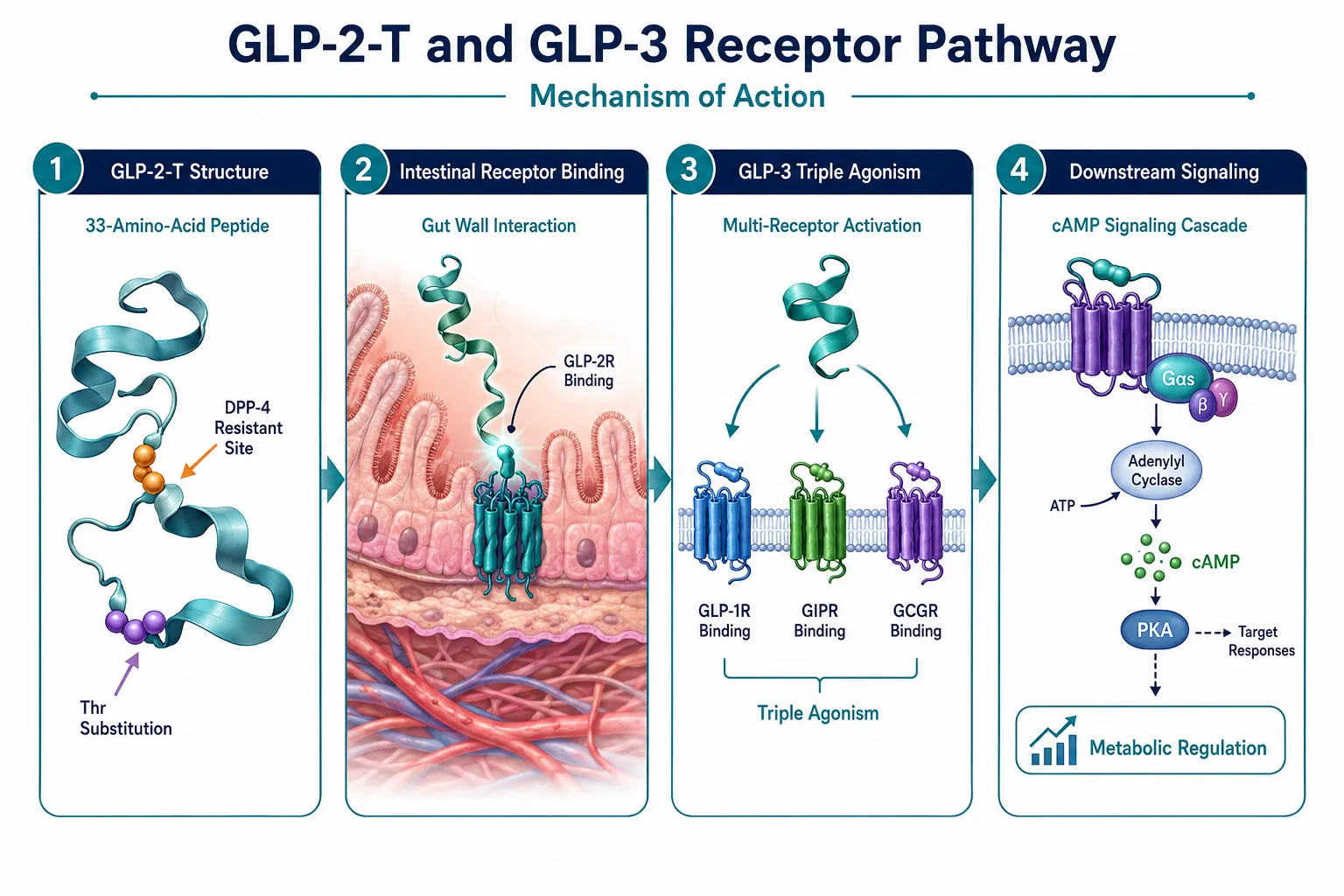
What GLP-2-T and GLP-3 Are, and Why They Matter to Cardiometabolic Science

Native glucagon-like peptide-2 (GLP-2) is a 33-amino-acid peptide derived from proglucagon. Its primary roles include promoting intestinal mucosal growth, enhancing nutrient absorption, reducing bone resorption, and linking nutrient intake to gut-derived hormonal signaling. These functions place it squarely in the gut-liver axis, a pathway with growing relevance to metabolic disease.

GLP-2-T is a laboratory-grade, modified analog of GLP-2. The "T" designation reflects threonine substitutions and other structural changes designed to resist degradation by dipeptidyl peptidase-4 (DPP-4), the enzyme that rapidly inactivates native GLP-2. By extending the peptide's half-life, GLP-2-T allows researchers to study GLP-2 receptor pharmacology in in-vitro and animal models without the confounding effect of rapid enzymatic breakdown. Multiple vendors classify it explicitly as a research-use-only compound, not authorized for human or veterinary administration.

GLP-3, in the context of modern metabolic research, is most closely associated with the triple-agonist framework exemplified by retatrutide. This peptide simultaneously engages three receptors:

  • GLP-1R (glucagon-like peptide-1 receptor)
  • GIPR (glucose-dependent insulinotropic polypeptide receptor)
  • GCGR (glucagon receptor)

That multi-receptor profile is a fundamental departure from how classic cardiometabolic drugs are designed. For a deeper look at how triple-agonist peptides are reshaping research endpoints, the article on GLP-3 Retatrutide and triple-agonist peptides in phase 3 obesity data provides useful context.

Polypeptide Peptides in Cardiometabolic Research: Comparing Mechanisms With Classic Small Molecules
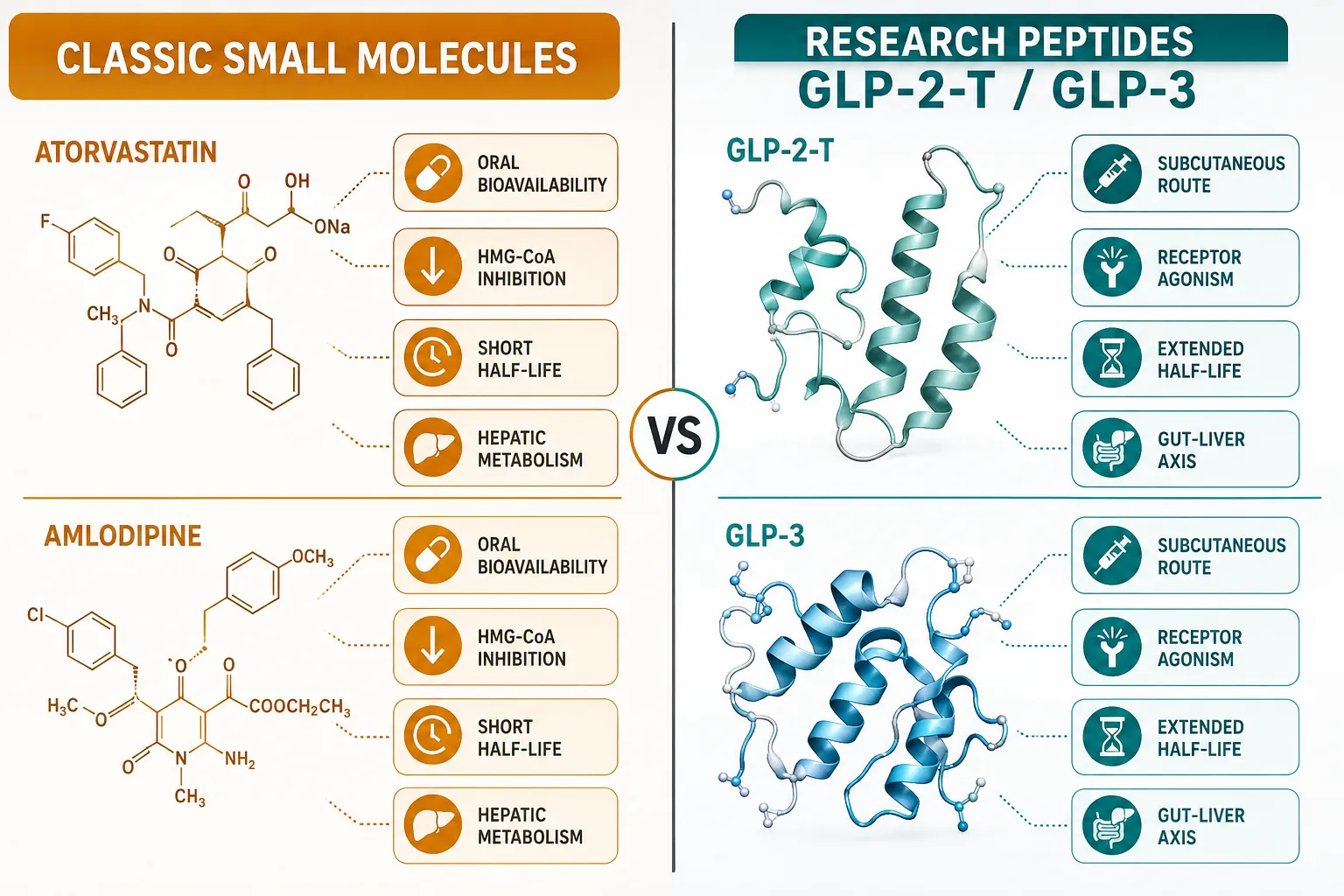
Polypeptide Peptides in Cardiometabolic Research: Comparing Mechanisms With Classic Small Molecules

The contrast between polypeptide research peptides and classic small-molecule cardiometabolic drugs is best understood across four dimensions: molecular size, receptor targeting, route of administration, and half-life.

Property Classic Small Molecules (e.g., Atorvastatin, Amlodipine) Research Peptides (GLP-2-T, GLP-3)
Molecular Weight ~300-600 Da ~3,000-5,000 Da
Primary Target Single enzyme or channel (HMG-CoA reductase, L-type Ca2+ channel) G-protein-coupled receptors (GLP-2R, GLP-1R, GIPR, GCGR)
Route Oral Subcutaneous or IV (research models)
Half-Life Engineering Hepatic metabolism governs duration DPP-4 resistance, fatty acid conjugation, or amino acid substitution
Regulatory Status (2026) FDA-approved, guideline-endorsed Research use only; not FDA-approved for cardiometabolic indications

Atorvastatin inhibits HMG-CoA reductase, a single hepatic enzyme, reducing LDL cholesterol through a well-mapped pathway. Amlodipine blocks L-type calcium channels in vascular smooth muscle, lowering peripheral resistance. Both are orally bioavailable and have decades of cardiovascular outcome data behind them.

GLP-2-T and GLP-3 analogs operate differently. They bind G-protein-coupled receptors, triggering intracellular cAMP cascades that influence gene expression, cell proliferation, and metabolic flux. Because peptides are enzymatically degraded in the gastrointestinal tract, oral delivery is not viable without special formulation, a core practical difference from classic drugs.

"The shift from single-enzyme inhibition to multi-receptor agonism is not just a chemical distinction, it reframes what an endpoint even means in a cardiometabolic study."

For a broader comparison of how peptide size shapes experimental design, the resource on peptides and polypeptides in modern research and how molecular size shapes function is worth reviewing. Researchers also benefit from understanding the differences between peptides and classic small-molecule drugs like prednisone, amlodipine, and metoprolol.

Polypeptide Peptides in Cardiometabolic Research: Endpoints, Regulatory Boundaries, and What the Data Show
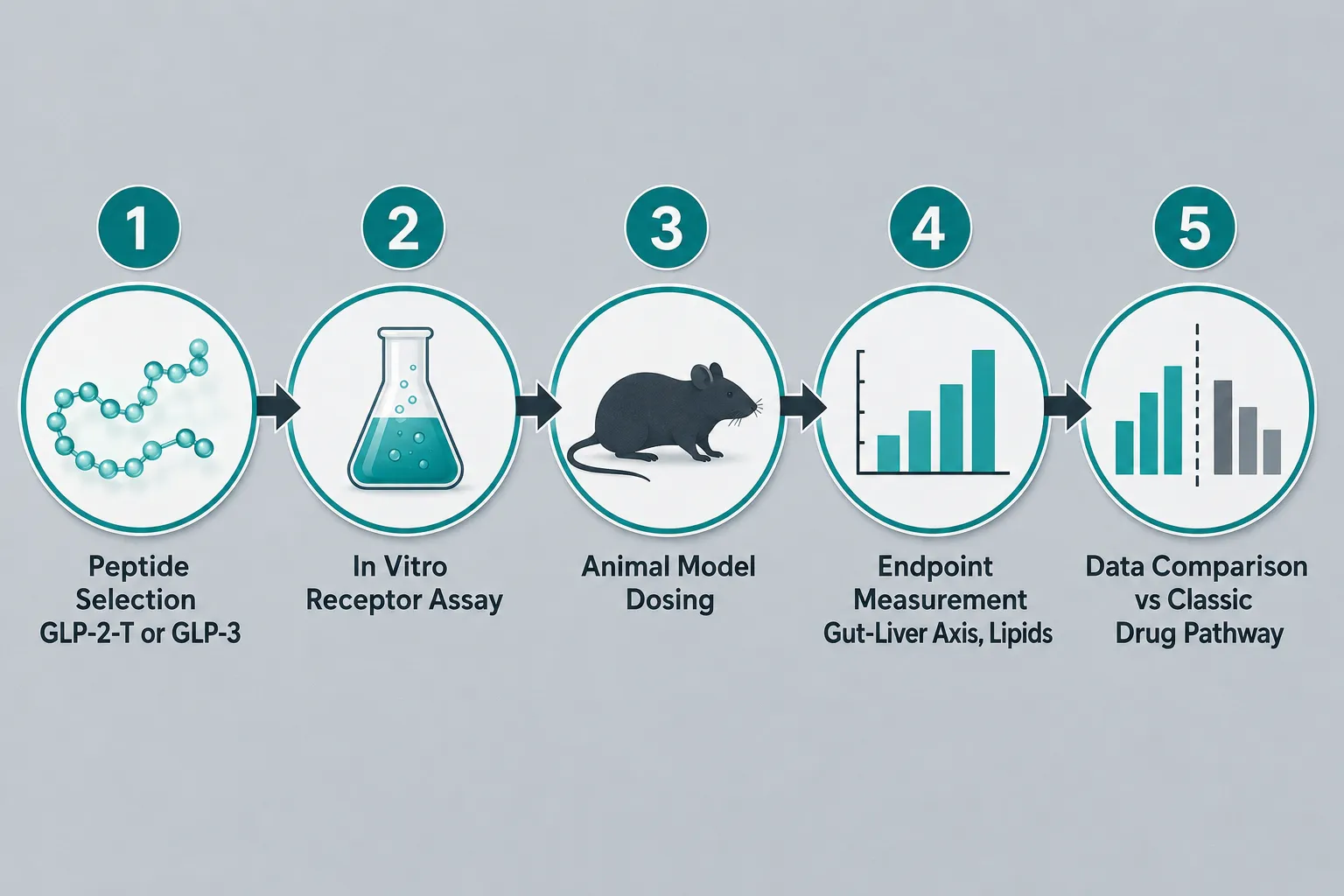
Polypeptide Peptides in Cardiometabolic Research: Endpoints, Regulatory Boundaries, and What the Data Show

The only GLP-2 analog currently in routine clinical use is teduglutide, a DPP-4-resistant GLP-2 analog approved for short-bowel syndrome, not for any cardiometabolic indication. This distinction is critical. GLP-2-T is not teduglutide, and no GLP-2-T formulation carries approval for metabolic disease management as of mid-2026.

Research involving GLP-2-T focuses on:

  1. Intestinal barrier integrity, studying tight-junction proteins and mucosal repair in cell culture and rodent models
  2. Nutrient sensing, examining how gut-derived hormonal signals influence hepatic lipid handling via the gut-liver axis
  3. Receptor pharmacology, mapping GLP-2R binding kinetics and downstream signaling in controlled systems

Any cardiometabolic relevance of GLP-2-T is therefore likely to be indirect, mediated through inflammation reduction, improved nutrient absorption efficiency, and gut-liver crosstalk, not through direct cardiovascular receptor effects.

GLP-3 research, by contrast, targets pathways with more direct metabolic overlap. The triple-agonist framework engages GCGR to promote energy expenditure, GIPR to modulate insulin secretion and fat storage, and GLP-1R to slow gastric emptying and reduce appetite. Researchers studying these interactions alongside classic drug mechanisms can consult the detailed breakdown on polypeptide peptides in cardiometabolic models comparing tesofensine, GLP-3, retatrutide, and GLP-2-T with classic small-molecule drugs.

No major cardiovascular or metabolism society guideline in 2026 lists GLP-2 or GLP-2-T analogs as part of standard cardiometabolic therapy. GLP-1 receptor agonists and SGLT2 inhibitors remain the guideline-endorsed peptide-adjacent agents in that space. For researchers tracking where GLP-3 retatrutide data are heading, the ongoing analysis of GLP-3 retatrutide in phase 3 trials and how triple agonism is reshaping obesity and MASLD research endpoints offers current perspective.

Researchers designing studies that incorporate these peptides alongside classic drugs should also consider how drug-mechanism context shapes study validity. The overview of polypeptide peptides and drug mechanisms, what common medications reveal about research-use peptide pharmacology addresses this directly.

Conclusion

Polypeptide peptides in cardiometabolic research, particularly how GLP-2-T and GLP-3 fit with classic drug pathways, represent a genuinely distinct pharmacological category, not simply a larger version of a small molecule. GLP-2-T extends the half-life of a gut-derived hormone to probe intestinal and metabolic signaling in preclinical systems. GLP-3, within the triple-agonist framework, simultaneously engages multiple metabolic receptors in ways that no single classic drug attempts.

Actionable next steps for researchers and informed readers:

  • Clearly distinguish GLP-2-T (research-only analog) from teduglutide (approved clinical agent) when reviewing literature or designing studies.
  • When comparing peptide endpoints to small-molecule endpoints, account for route of administration, receptor multiplicity, and the absence of cardiovascular-outcome trial data for research peptides.
  • Treat all GLP-2-T and GLP-3 preclinical data as hypothesis-generating, not as evidence of clinical efficacy or safety.
  • Use established comparison frameworks, such as those contrasting peptide and small-molecule pharmacology, to contextualize new findings accurately.

The field is moving quickly. Staying grounded in mechanism, regulatory status, and endpoint design is the most reliable way to interpret what these peptides genuinely offer to cardiometabolic science.

Tags: cardiometabolic research, dpp-4 resistance, glp-1 receptor agonist, glp-2-t, glp-3, gut-liver axis, metabolic peptides, peptide pharmacology, polypeptide peptides, research-use peptides, retatrutide, small-molecule drugs
https://www.puretestedpeptides.com/wp-content/uploads/2026/08/polypeptide-peptides-in-cardiometabolic-research-how-glp-2-t-and-glp-3-fit-with.webp 1024 1536 https://www.puretestedpeptides.com/wp-content/uploads/2026/01/buy-peptides-online.jpg 2026-08-15 13:05:422026-08-15 13:05:42Polypeptide Peptides in Cardiometabolic Research: How GLP-2-T and GLP-3 Fit With Classic Drug Pathways
You might also like
Retatrutide in 2026: Why Phase 3 Trial Updates Are Shifting GLP-3 Search Demand Retatrutide in 2026: Why Phase 3 Trial Updates Are Shifting GLP-3 Search Demand
Peptides and Polypeptides: Complete Research Guide for GLP-1, GLP-2, GLP-3, and Growth Hormone Peptides Peptides and Polypeptides: Complete Research Guide for GLP-1, GLP-2, GLP-3, and Growth Hormone Peptides
Complete Guide to Peptide Mechanisms: How GLP-1, GLP-3, and Growth Hormone Peptides Work at the Molecular Level Complete Guide to Peptide Mechanisms: How GLP-1, GLP-3, and Growth Hormone Peptides Work at the Molecular Level
Tesofensine vs GLP-3 Retatrutide: Which Appetite-Modulating Pathways Each Answer in Metabolic Research Design Tesofensine vs GLP-3 Retatrutide: Which Appetite-Modulating Pathways Each Answer in Metabolic Research Design
Polypeptide Peptides in Cardiometabolic Models: How Tesofensine, GLP-3 Retatrutide, and GLP-2-T Differ From Classic Small-Molecule Drugs Polypeptide Peptides in Cardiometabolic Models: How Tesofensine, GLP-3 Retatrutide, and GLP-2-T Differ From Classic Small-Molecule Drugs
GLP-3 Retatrutide and Triple-Agonist Peptides: How Phase 3 Obesity Data Are Shaping Next-Generation Metabolic Research GLP-3 Retatrutide and Triple-Agonist Peptides: How Phase 3 Obesity Data Are Shaping Next-Generation Metabolic Research
Peptides 101 for Research-Use Only Buyers: Structure, Mechanisms, and Where GLP-3, MOTS-c, and 5-Amino-1MQ Fit In Peptides 101 for Research-Use Only Buyers: Structure, Mechanisms, and Where GLP-3, MOTS-c, and 5-Amino-1MQ Fit In
Retatrutide Phase 3 Data and the Future of GLP‑3: What TRIUMPH and TRANSCEND Trials Mean for Research-Use Peptide Design Retatrutide Phase 3 Data and the Future of GLP‑3: What TRIUMPH and TRANSCEND Trials Mean for Research-Use Peptide Design
0 replies

Leave a Reply

Want to join the discussion?
Feel free to contribute!

Leave a Reply Cancel reply

Your email address will not be published. Required fields are marked *

×

Helpful Links

  • My account
  • Cart
  • Checkout
  • Refund and Returns Policy
  • Privacy Policy
  • SMS Privacy Policy
  • Login
  • My Account
  • Logout

USA Made Lab Tested Peptides

All products are sold for research, laboratory, or analytical purposes only, and are not for human consumption


Pure Tested Peptides is a chemical supplier. Pure Tested Peptides is not a compounding / chemical compounding facility as defined under 503A of the Federal Food, Drug, and Cosmetic act. Pure Tested Peptides is not an outsourcing facility as defined under 503B of the Federal Food, Drug, and Cosmetic act.

The statements made within this website have not been evaluated by the US Food and Drug Administration. The products we offer are not intended to diagnose, treat, cure or prevent any disease.

Human/Animal Consumption Prohibited. Laboratory/In-Vitro Experimental Use Only

Link to: Mesenchymal Stem Cells and Peptide Signaling: Where MOTS-c, BPC-157, and GHK-Cu Fit in Regenerative Research Link to: Mesenchymal Stem Cells and Peptide Signaling: Where MOTS-c, BPC-157, and GHK-Cu Fit in Regenerative Research Mesenchymal Stem Cells and Peptide Signaling: Where MOTS-c, BPC-157, and GHK-Cu...Mesenchymal Stem Cells and Peptide Signaling: Where MOTS-c, BPC-157, and GHK-Cu Fit in Regenerative Research Link to: Selank Peptide: What It Is, How It Is Studied, and Why Intranasal Delivery Matters Link to: Selank Peptide: What It Is, How It Is Studied, and Why Intranasal Delivery Matters Selank Peptide: What It Is, How It Is Studied, and Why Intranasal Delivery MattersSelank Peptide: What It Is, How It Is Studied, and Why Intranasal Delivery ...
Scroll to top Scroll to top Scroll to top