Call or Text 727-513-9780
  • Shopping Cart Shopping Cart
    0Shopping Cart
Pure Tested Peptides | America's most trusted Peptides for sale online
  • Peptides for sale
    • Oral Peptides for sale
      • Peptide Capsules for sale
      • BPC 157 Capsules 1000mcg
      • SLU-PP-332 Capsules | 1000 mcg
      • 5-Amino-1MQ 50mg Capsules
      • Tesofensine 500mcg
    • All Peptides for sale
    • Peptide Sprays
      • BPC 157 Nasal Spray Kit
      • BPC-157 TB500 Nasal Spray Kit
      • Semax Nasal Spray 10mg
      • Selank – Nasal Spray Kit – 10mg
      • Epithalon 50MG Nasal Spray Kit
      • Ipamorelin 10mg Nasal Spray
      • Klow Nasal Spray (BPC-157 + TB-500 + GHK-Cu + KPV) | 80mg
      • Hulk Nasal Spray Tesa / Ipa Blend 6/3 MG
      • Klow Nasal Spray
      • NAD + 500 mg Nasal Spray
      • PT-141 Nasal Spray Kit
    • GHRH Peptides
      • Ipa Peptides
      • CJC-1295 Peptides
        • CJC-1295 with DAC 5 mg
        • CJC-1295 without DAC 5 mg
        • CJC-1295 Ipa 10mg
      • Tesa Peptides
        • Tesa Peptide
        • Tesa 20 mg
    • GHK-Cu Peptides
      • All GHK-Cu Peptides
      • GHK-Cu 100mg
      • KLOW Peptide Blend – Buy KLOW blend online
    • BPC Peptides
      • All BPC Peptides
      • BPC-157
      • BPC-157 TB-500
      • BPC 157 capsules 1000mcg
    • SLU-PP-332 Peptides
      • All SLU-PP-332 Peptides
      • SLU-PP-332 5mg
    • GLP3 Peptides
      • GLP3-R
      • GLP3-R CAG 10mg
      • GLP3-R 20mg
    • PT-141 Peptides
      • PT-141 Peptides for sale
      • PT-141 10mg
      • PT-141 Nasal Spray
    • CAG Peptides
      • Lipo-C Peptide Blend
      • CAG 5mg
      • CAG 10mg
    • MOTS-C Peptides
      • MOTS-C Peptides for sale
      • MOTS-c peptide
      • MOTS-c 10mg *6 pack*
    • 5 Amino 1MQ Peptides
      • 5 Amino 1MQ Peptides for sale
      • 5-Amino-1MQ 50mg Capsules
      • 5-Amino-1MQ 5mg
    • Epithalon Peptides
      • Epithalon Peptides for sale
      • Epithalon 10mg
      • Epithalon 50mg
  • Shop
    • GLPs
      • 5-Amino-1MQ 50mg Capsules
      • 5-Amino-1MQ 5mg
      • GLP3-Reta
      • L-Carnitine 500mg/ml
      • Tesofensine 500mcg
      • SLU-PP-332 5mg
      • MOTS-c 10mg *6 pack*
    • Epithalon & BPC Peptides
      • Epithalon 10mg
      • Epithalon 50mg
      • BPC-157
      • BPC 157 capsules 1000mcg
      • BPC-157 TB-500
      • BPC-157 TB500 Nasal Spray Kit
      • BPC 157 Nasal Spray Kit
    • BPC TB-500 & NAD+ Peptides
      • NAD+ 500 mg
      • KLOW Peptide Blend – Buy KLOW blend online
      • GLOW Peptide Blend
      • TB 500 5mg
      • BPC 157 capsules 1000mcg – Supplement
      • BPC 157 Nasal Spray Kit
      • BPC-157
      • BPC-157 TB500 Nasal Spray Kit
      • BPC-157 TB-500
      • BPC 157 capsules 1000mcg
    • LL-37 Peptide
      • LL-37 10 mg
    • MOTS-C & Selank
      • MOTS-c peptide
      • Selank 10mg
    • GHK Peptides
      • GHK-Cu 100mg
      • GLOW Peptide Blend
      • KLOW Peptide Blend – Buy KLOW blend online
  • COAs
  • Wholesale
    • Wholesale Peptides for sale
  • PTP FAQ
  • Affiliates
    • Selank Peptide: Advanced Pharmacological Mechanisms Underlying Its Anxiolytic and Nootropic Effects in Research
      • 5-Amino-1MQ Peptide: Detailed Mechanisms of NNMT Inhibition and Its Impact on Cellular Metabolism Research
        • MOTS-C Peptide: Unraveling Its Role in Mitochondrial Dynamics and Energy Metabolism Research
          • Epithalon Peptide and Telomerase Regulation: Investigating Its Impact on Cellular Senescence and Lifespan Research Models
            • GLP2-T vs GLP2 Tirz Peptide: Understanding the Naming, Mechanistic Nuances, and Research Implications for Gut Health
      • Peptides and Polypeptides in Modern Pharmacology: What Research on Metoprolol, Prednisone, and Amlodipine Reveals
        • Polypeptide Peptides vs NSAIDs: What Naproxen and Diclofenac Teach Tissue-Repair Researchers About BPC‑157 and TB‑500
          • Peptides and Polypeptides in Endocrine Pharmacology: How GLP-1, GLP-2, and GLP-3 Retatrutide Differ From Classic Drugs Like Prednisone and Amlodipine
          • 5‑Amino‑1MQ Peptide and NNMT Inhibition: How It Compares With Statins Like Atorvastatin in Adipose and Lipid Metabolism Research
      • Enclomiphene, Estrogen Receptor Signaling, and Luteinizing Phase Biology: What Hormone Researchers Should Measure
        • Mesenchymal Stem Cells, BPC‑157, and GHK‑Cu: How Tissue Repair Peptides Compare With Classic NSAIDs Like Naproxen in Injury Models
          • Peptide Calculator Use Cases Beyond Growth Hormone: Working Through GLP‑3 Retatrutide, MOTS‑c, and BPC‑157 Research Dosing
        • Polypeptide Peptides in Endocrine and Metabolic Pharmacology: Lessons From Amlodipine, Prednisone, and Metoprolol
        • Peptides Calculator for Advanced Blends: Worked Examples for Tesamorelin, CJC‑1295, and Ipamorelin Stacks
          • Peptides and Polypeptides in Human Physiology: How Molecular Size Shapes Research Applications
            • Selank Peptide: Advanced Pharmacological Mechanisms Underlying Its Anxiolytic and Nootropic Effects in Research
          • 5-Amino-1MQ Peptide: Detailed Mechanisms of NNMT Inhibition and Its Impact on Cellular Metabolism Research
            • MOTS-C Peptide: Unraveling Its Role in Mitochondrial Dynamics and Energy Metabolism Research
              • Epithalon Peptide and Telomerase Regulation: Investigating Its Impact on Cellular Senescence and Lifespan Research Models
                • GLP2-T vs GLP2 Tirz Peptide: Understanding the Naming, Mechanistic Nuances, and Research Implications for Gut Health
                  • Peptides and Polypeptides in Endocrine Pharmacology: How GLP-1, GLP-2, and GLP-3 Retatrutide Differ From Classic Drugs Like Prednisone and Amlodipine
                    • Polypeptide Peptides vs NSAIDs: What Naproxen and Diclofenac Teach Tissue-Repair Researchers About BPC‑157 and TB‑500
                      • Peptides and Polypeptides in Modern Pharmacology: What Research on Metoprolol, Prednisone, and Amlodipine Reveals
                        • 5‑Amino‑1MQ Peptide and NNMT Inhibition: How It Compares With Statins Like Atorvastatin in Adipose and Lipid Metabolism Research
                        • Enclomiphene, Estrogen Receptor Signaling, and Luteinizing Phase Biology: What Hormone Researchers Should Measure
                        • Mesenchymal Stem Cells, BPC‑157, and GHK‑Cu: How Tissue Repair Peptides Compare With Classic NSAIDs Like Naproxen in Injury Models
                        • Peptide Calculator Use Cases Beyond Growth Hormone: Working Through GLP‑3 Retatrutide, MOTS‑c, and BPC‑157 Research Dosing
                        • Polypeptide Peptides in Endocrine and Metabolic Pharmacology: Lessons From Amlodipine, Prednisone, and Metoprolol
                        • Peptides Calculator for Advanced Blends: Worked Examples for Tesamorelin, CJC‑1295, and Ipamorelin Stacks
                        • Peptides and Polypeptides in Human Physiology: How Molecular Size Shapes Research Applications
                        • Selank Peptide: Advanced Pharmacological Mechanisms Underlying Its Anxiolytic and Nootropic Effects in Research
                        • MOTS-C Peptide: Unraveling Its Role in Mitochondrial Dynamics and Energy Metabolism Research
                        • Peptides and Polypeptides in Modern Pharmacology: What Research on Metoprolol, Prednisone, and Amlodipine Reveals
                        • Peptides and Polypeptides in Endocrine Pharmacology: How GLP-1, GLP-2, and GLP-3 Retatrutide Differ From Classic Drugs Like Prednisone and Amlodipine
                        • 5-Amino-1MQ Peptide: Detailed Mechanisms of NNMT Inhibition and Its Impact on Cellular Metabolism Research
                        • Mesenchymal Stem Cells, BPC‑157, and GHK‑Cu: How Tissue Repair Peptides Compare With Classic NSAIDs Like Naproxen in Injury Models
                        • Peptide Calculator Use Cases Beyond Growth Hormone: Working Through GLP‑3 Retatrutide, MOTS‑c, and BPC‑157 Research Dosing
                        • GLP2-T vs GLP2 Tirz Peptide: Understanding the Naming, Mechanistic Nuances, and Research Implications for Gut Health
                        • Polypeptide Peptides in Endocrine and Metabolic Pharmacology: Lessons From Amlodipine, Prednisone, and Metoprolol
                        • Polypeptide Peptides vs NSAIDs: What Naproxen and Diclofenac Teach Tissue-Repair Researchers About BPC‑157 and TB‑500
                        • Peptides and Polypeptides in Human Physiology: How Molecular Size Shapes Research Applications
                        • Peptides Calculator for Advanced Blends: Worked Examples for Tesamorelin, CJC‑1295, and Ipamorelin Stacks
                        • 5‑Amino‑1MQ Peptide and NNMT Inhibition: How It Compares With Statins Like Atorvastatin in Adipose and Lipid Metabolism Research
                        • Enclomiphene, Estrogen Receptor Signaling, and Luteinizing Phase Biology: What Hormone Researchers Should Measure
                        • Epithalon Peptide and Telomerase Regulation: Investigating Its Impact on Cellular Senescence and Lifespan Research Models
                        • Best research protocol Klow blend
                        • best time to take BPC-157
                        • best time to take DSIP (Delta Sleep Inducing Peptide)
                        • best time to take CJC-1295
                        • best time to take AOD-9604
                        • best time to take Follistatin 344
                        • best time to take Ipamorelin
                        • best time to take MK-677 (Ibutamoren)
                        • best time to take Ligandrol (LGD-4033) — research compound
                        • best time to take Ostarine (MK-2866) — research compound
                        • best time to take GHK-CU
                        • best time to take TB-500
                        • best time to take MOTS-c
                        • best time to take Semax
                        • best time to take RAD-140 (Testolone) — research compound
                        • best time to take Thymosin Alpha-1
                        • best time to take PEG-MGF
                        • Biolife Plasma, Octapharma Plasma, and Research Peptides: How Plasma Donation Labs Differ From Peptide Suppliers
                        • best time to take YK-11 — research compound
                        • best time to take PT-141 (Bremelanotide)
                        • Best research protocol Klow blend
                        • 5-Amino-1MQ and MOTS-C Synergy: Metabolic Signaling, Mitochondria, and Research Design
                        • BPC-157 and TB-500: Investigating Their Combined Effects on Angiogenesis and Cellular Migration in Tissue Repair Models
                        • BPC-157 Peptide: Gut Barrier Function, Inflammation, and Tissue-Recovery Research
                        • 5‑Amino‑1MQ and MOTS‑c Synergy in Metabolic Research: Designing NNMT and Mitochondrial Biogenesis Stacks
                        • CJC-1295 with DAC vs. Without DAC: Half-Life, Release Kinetics, and Research Implications
                        • CJC‑1295 with DAC vs. Without DAC: Expanding on Half‑Life Differences Using Tesamorelin and Ipamorelin Blend Case Studies
                        • Collagen Biology and Copper‑Binding Peptides: How GHK‑Cu, Glow Blend, and Klow Blend Interact with Skin and Connective Tissue
                        • Collagen Biology and Regenerative Peptides: How GHK‑Cu, Glow Blend, and Klow Blend Affect Extracellular Matrix Research
                    • DNA, Telomeres, and Longevity Peptides: Positioning Epithalon and MOTS‑c in Genetic Aging Research
                      • Enclomiphene Citrate: serm Mechanism, Testosterone Research, and Stack Compatibility
                        • Enclomiphene vs Enclomiphene Citrate: Formulation, Bioavailability, and Research Distinctions
                        • Epithalon Peptide Research: Telomerase Activation, Aging, and Pineal Gland Function
                        • Estrogen Receptor Signaling and Enclomiphene: How Selective Modulators Compare with Classic Polypeptide Hormones
                        • GHK-Cu Peptide: Advanced Mechanisms in Extracellular Matrix Remodeling and Wound Healing Research
                        • GHK-Cu Peptide: Collagen Synthesis, Wound Repair, and Skin-Barrier Research Models
                        • GLP-1 vs GLP-3 vs GLP-2: Peptide Classification and Research Applications
                        • GLP-2 Peptide Research Guide: Gut Barrier Function, Nutrient Absorption, and Intestinal Recovery Models
                        • GLP-3 Retatrutide vs. GLP-1 Drugs: What Triple-Agonist Biology Changes in Research Models
                        • Ipamorelin and Tesamorelin Combination: Synergistic GH Secretagogue Research and Dosing Protocols
                        • GLP2 Tirz Peptide: What It Is, Why the Name Exists, and How Researchers Should Interpret It
                        • Klow Blend Peptide Nasal Spray: What the Formulation Is Trying to Do in Cognitive Research
                        • Mitochondria, NNMT Inhibition, and Peptide Modulators: Where MOTS‑c and 5‑Amino‑1MQ Fit in Cellular Energy Research
                        • MOTS-c Peptide: Mitochondrial Function, Energy Metabolism, and What Researchers Measure
                        • MOTS-c vs. 5-Amino-1MQ: Which Metabolic Research Questions Each Compound Actually Answers
                        • Nasal Spray Peptides: Bioavailability, Administration, and Semax/Selank Research Applications
                        • PT-141 Peptide Research: Mechanism of Action and Melanocortin Receptor Signaling
                        • Retatrutide for Research: Mechanism, Structure, and GLP-1/GLP-3 Dual Action
                        • Retatrutide for Obesity and Type 2 Diabetes: What the Latest Trial Data Suggest
                        • Tesofensine Peptide Research: Mechanism, Appetite Suppression, and Neuropeptide Y Pathways
  • Contact
    • Contact Customer Service
    • Text Customer Support
  • About US
  • Shop all peptides
  • Affiliate Program
    • Affiliate Signup
  • Login / Register Login / Register Page Link Login / Register Page Link
  • Click to open the search input field Click to open the search input field Search
  • Menu Menu

Tag Archive for: polypeptide peptides

Polypeptide Peptides in Endocrine and Metabolic Pharmacology: Lessons From Amlodipine, Prednisone, and Metoprolol

Polypeptide Peptides in Endocrine and Metabolic Pharmacology: Lessons From Amlodipine, Prednisone, and Metoprolol

July 17, 2026/0 Comments/by Pure Tested

Three drugs, amlodipine, prednisone, and metoprolol, have shaped cardiovascular and endocrine medicine for decades. Yet their well-documented off-target effects on glucose metabolism, adrenal function, and mitochondrial signaling now serve as a compelling argument for why polypeptide peptides in endocrine and metabolic pharmacology deserve serious research attention in 2026.

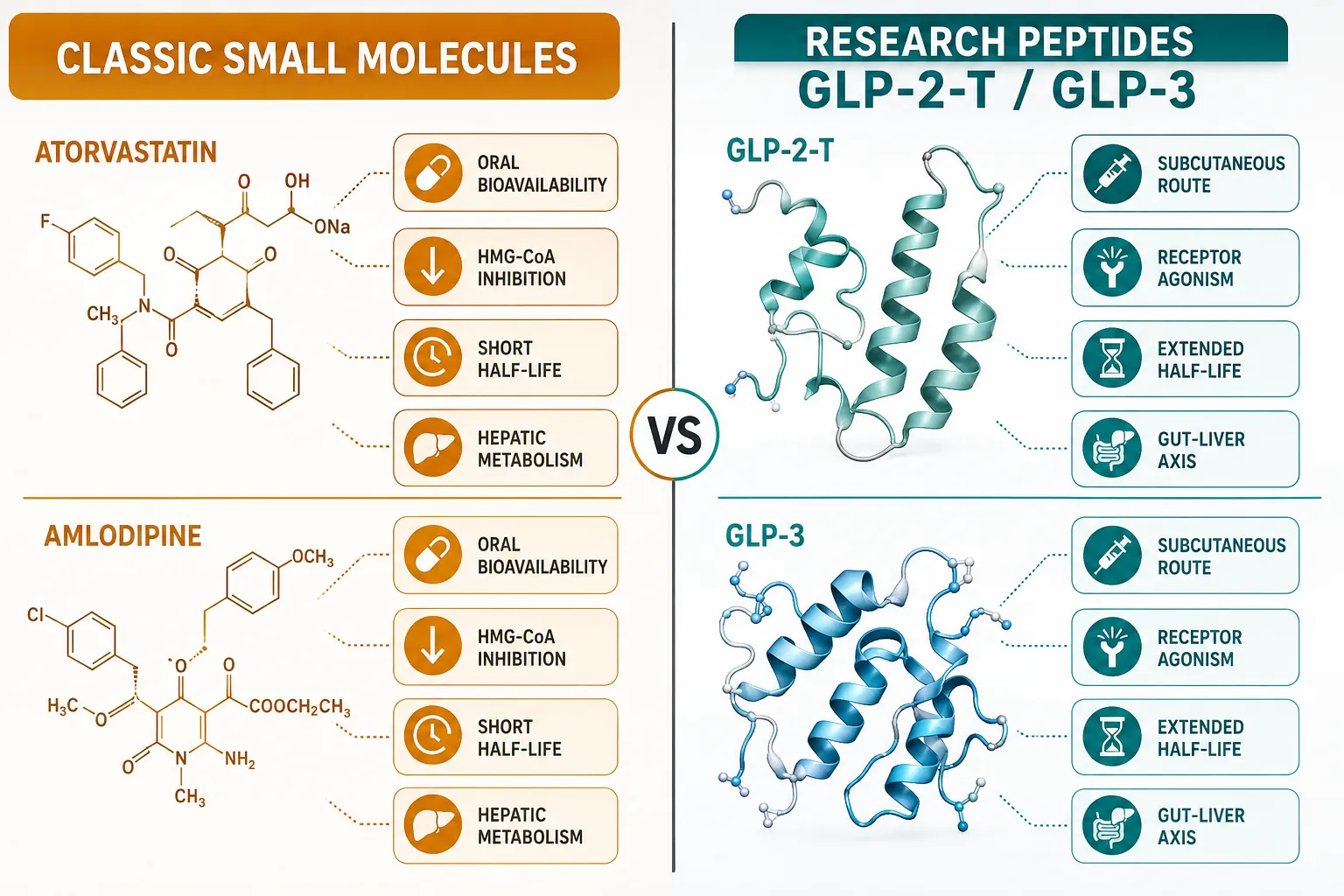
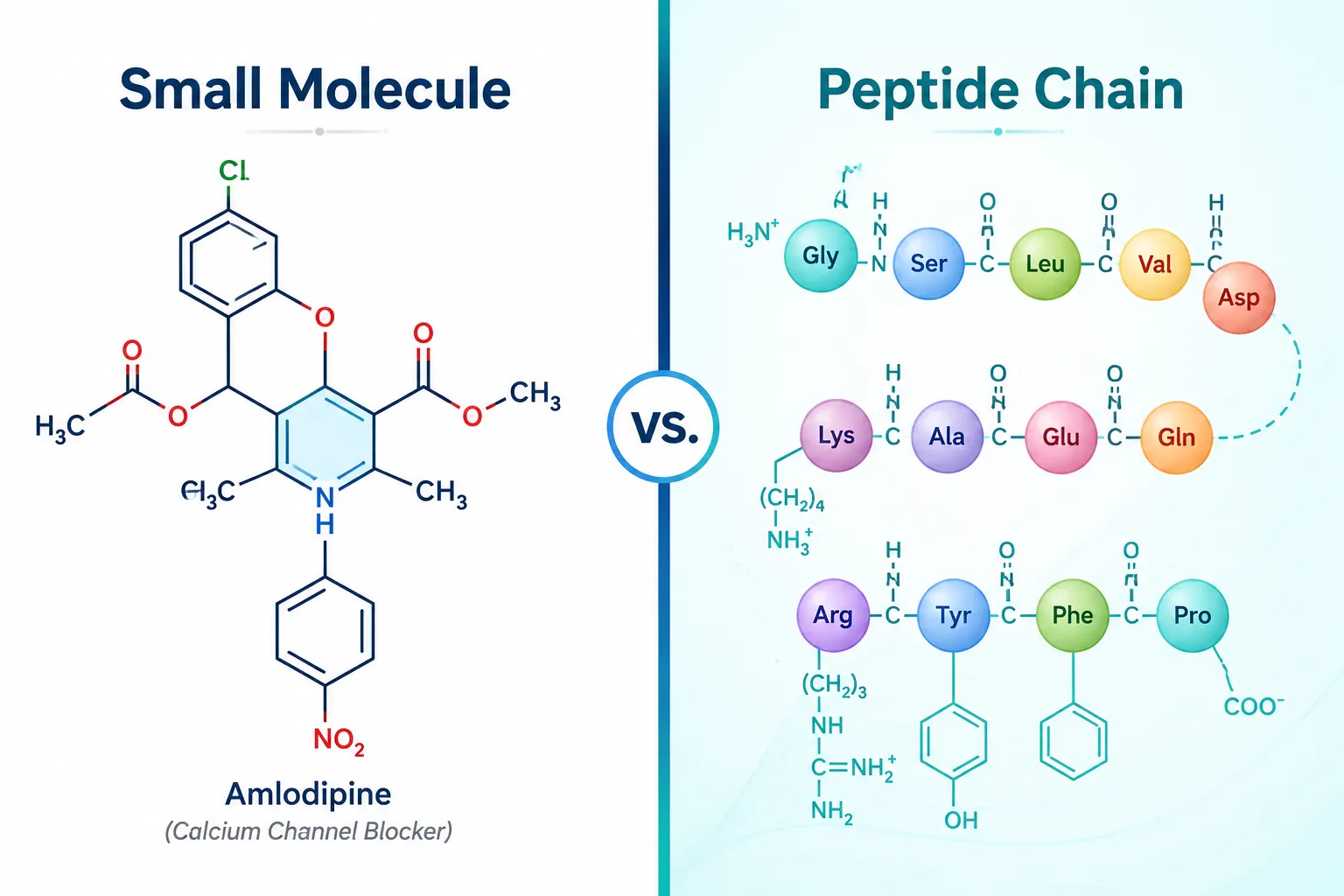
Bright editorial split-screen infographic landscape (): left half shows a clean white-background molecular diagram of a

Key Takeaways

  • Amlodipine, prednisone, and metoprolol each interact with endocrine pathways in ways that go beyond their primary targets, producing metabolic side effects that peptide-based agents may avoid.
  • Polypeptide peptides in endocrine and metabolic pharmacology offer receptor selectivity, shorter off-target profiles, and tissue-specific action that small molecules often cannot match.
  • GLP-1 receptor agonists and multi-agonist peptides represent the most clinically advanced examples of this shift, with GLP-3 retatrutide research extending the frontier.
  • Mitochondrial peptides such as MOTS-c address metabolic dysregulation at the cellular energy level, a target unreachable by classic small molecules.
  • Understanding the pharmacological gaps left by legacy drugs helps researchers identify where peptide-based tools offer the greatest research value.

How Classic Small Molecules Interact With Endocrine Pathways

Amlodipine blocks L-type calcium channels in vascular smooth muscle, reducing blood pressure and myocardial oxygen demand. However, calcium signaling is also central to pancreatic beta-cell insulin secretion. Disrupting this pathway even modestly can impair glucose-stimulated insulin release, a finding that has been observed in long-term hypertension management research.

Prednisone, a synthetic glucocorticoid, binds glucocorticoid receptors with broad tissue distribution. Its anti-inflammatory power comes at a metabolic cost: stimulation of hepatic gluconeogenesis, suppression of peripheral insulin sensitivity, and disruption of the hypothalamic-pituitary-adrenal axis. These are not rare side effects, they are mechanistic consequences of how the drug binds.

Metoprolol, a beta-1 selective adrenergic blocker, reduces heart rate and cardiac output effectively. Its endocrine liability lies in masking hypoglycemic symptoms and blunting the catecholamine-driven recovery from low blood glucose, a clinically relevant concern in diabetic patients.

The pattern is consistent: each drug achieves its primary goal through a mechanism that inevitably touches endocrine or metabolic circuitry.

"The off-target metabolic effects of classic small molecules are not design flaws, they are the predictable result of targeting signaling pathways that evolution never isolated."


Polypeptide Peptides in Endocrine and Metabolic Pharmacology: The Receptor Targeting Advantage

Polypeptide Peptides in Endocrine and Metabolic Pharmacology: The Receptor Targeting Advantage

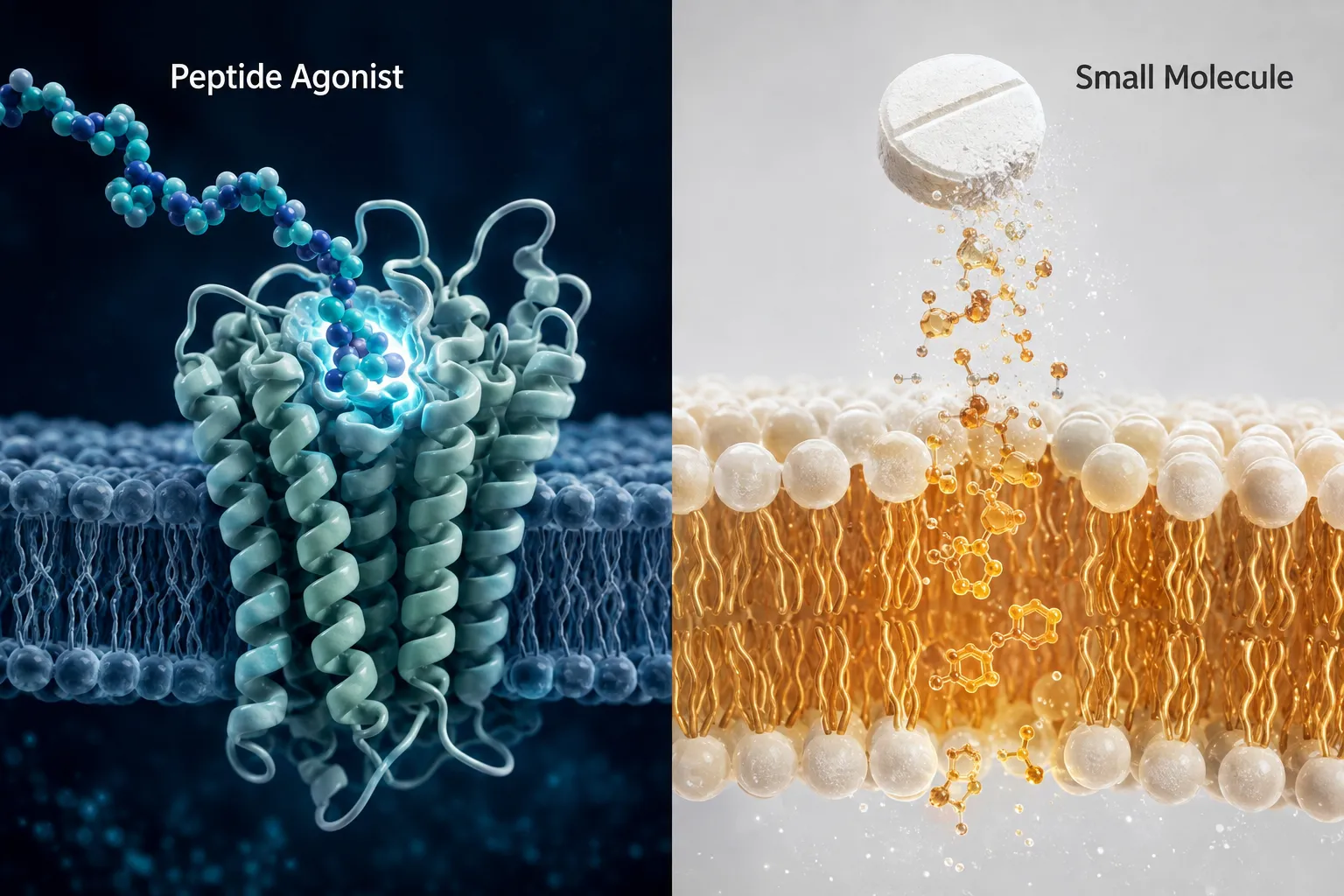
Where small molecules bind with high affinity but low tissue selectivity, polypeptide peptides in endocrine and metabolic pharmacology operate through receptor systems that are more anatomically restricted. This distinction is not merely theoretical.

Proglucagon-derived peptides, including GLP-1, GLP-2, glucagon, and oxyntomodulin, each act on distinct receptor populations across the gut, pancreas, brain, and liver. GLP-1 receptor agonists lower blood glucose by enhancing insulin secretion only when glucose is already elevated, a glucose-dependent mechanism that eliminates the hypoglycemia risk associated with metoprolol-class drugs.

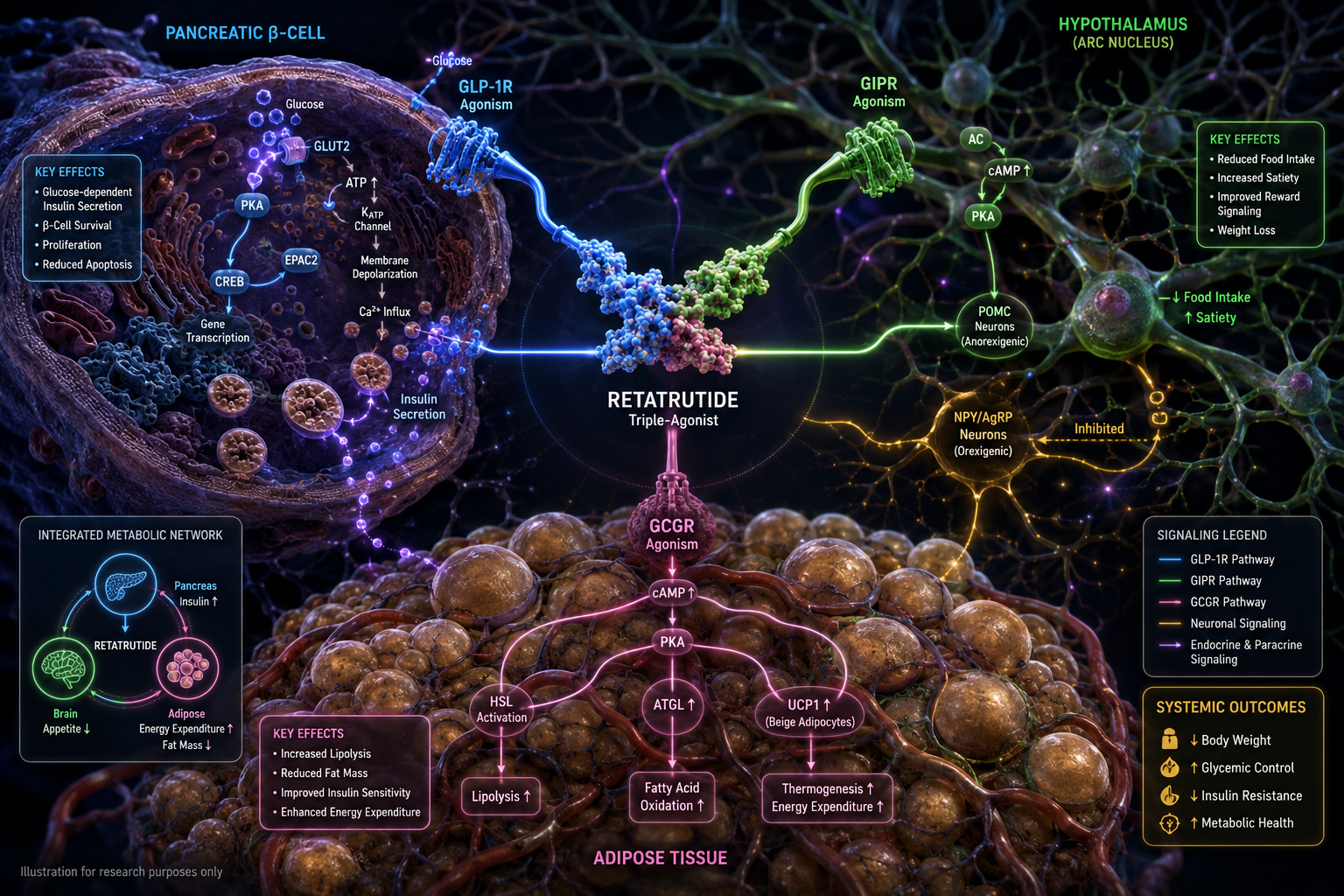
The next generation goes further. Multi-agonist peptides combine amino acid sequences from GLP-1, glucagon, and GIP hormones into single molecules with enhanced potency and extended half-lives. Research into GLP-3 retatrutide represents this frontier, targeting multiple incretin receptors simultaneously to address obesity and type 2 diabetes with a precision that prednisone-driven metabolic disruption cannot approach.

The GIP receptor plays a particularly important role here. GIP works synergistically with GLP-1 to amplify insulin secretion and may also support bone metabolism and fat storage regulation, a multi-system effect achieved without the adrenal suppression that defines glucocorticoid pharmacology.

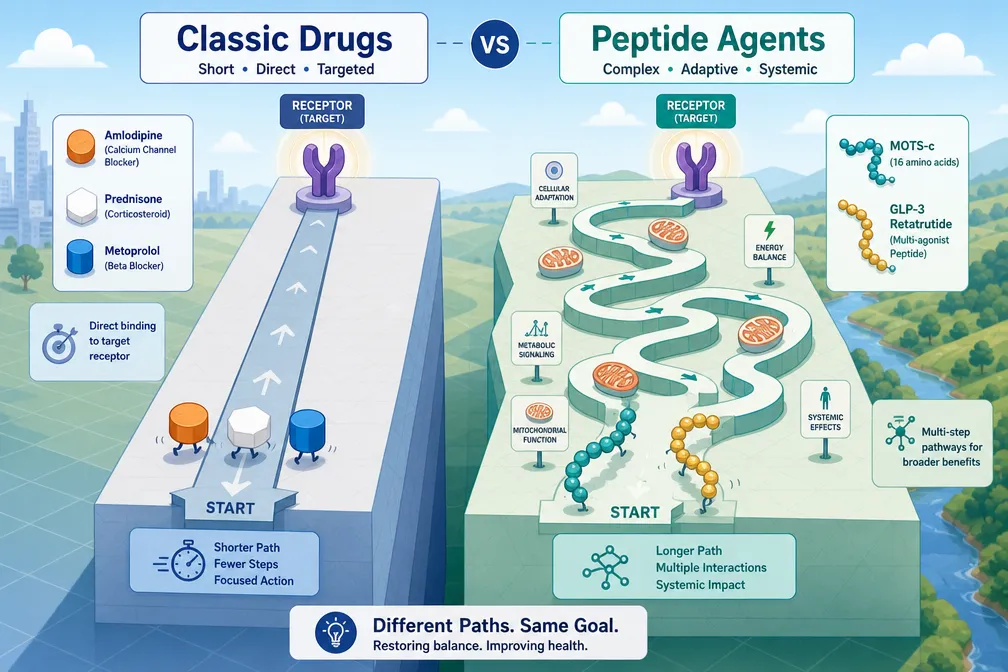
Key differences between small molecules and peptide agents:

Feature Small Molecules (e.g., Prednisone) Peptide Agents (e.g., GLP-1 agonists)
Receptor selectivity Broad Tissue-restricted
Metabolic off-target effects Common Reduced
Half-life engineering Limited Highly modifiable
Glucose-dependent action No Yes (GLP-1 class)

Adrenomedullin, a 52-amino acid peptide hormone, further illustrates the endocrine complexity peptides can address. It regulates cardiovascular tone and lymphatic function while also inhibiting insulin secretion in a dose-dependent manner, a finding that positions it as both a research target and a cautionary example of peptide pleiotropy.


Mitochondrial Peptides and the Metabolic Gap Left by Legacy Drugs

Mitochondrial Peptides and the Metabolic Gap Left by Legacy Drugs

Neither amlodipine, prednisone, nor metoprolol addresses cellular energy metabolism at the mitochondrial level. This is a significant gap. Chronic glucocorticoid use, in particular, impairs mitochondrial biogenesis and increases reactive oxygen species production, effects that accelerate metabolic aging.

This is precisely where mitochondrial-derived peptides enter the research conversation. MOTS-c, encoded within mitochondrial DNA, regulates glucose uptake, fatty acid oxidation, and insulin sensitivity through AMPK activation. Its mechanism operates entirely outside the receptor systems targeted by classic cardiovascular drugs, making it a complementary rather than competing research tool.

SS-31 peptide research addresses a related problem: mitochondrial membrane integrity under oxidative stress. Where prednisone-induced metabolic disruption increases oxidative burden, SS-31 targets cardiolipin on the inner mitochondrial membrane to preserve electron transport chain function.

For researchers exploring body composition and visceral adiposity, conditions worsened by long-term glucocorticoid exposure, tesa offers a growth hormone-releasing hormone analog that specifically reduces visceral fat without the broad hormonal disruption of steroid-class drugs.

Non-incretin peptide systems are also gaining traction. Apelin, spexin, and meteorin-like protein (METRNL) each interact with energy balance pathways that small molecules have historically ignored, opening new drug discovery targets for metabolic disease research.

For those examining AOD-9604 metabolic research, the lipolytic fragment of growth hormone provides another example of how peptide engineering can isolate a single metabolic function, fat mobilization, without replicating the full hormonal cascade of its parent molecule.


Conclusion

The lessons from amlodipine, prednisone, and metoprolol are not arguments against small-molecule pharmacology. They are a precise map of where that pharmacology ends and where polypeptide peptides in endocrine and metabolic pharmacology begin. Each classic drug reveals a metabolic vulnerability, impaired insulin secretion, adrenal suppression, blunted glycemic recovery, that modern peptide research is systematically designed to address.

Actionable next steps for researchers and clinicians:

  • Review the receptor selectivity profiles of any metabolic intervention against the endocrine off-target effects documented in glucocorticoid and beta-blocker literature.
  • Explore mitochondrial peptide tools such as MOTS-c and SS-31 for research models involving oxidative stress or insulin resistance secondary to classic drug exposure.
  • Track multi-agonist peptide development, particularly GLP-1/GIP/glucagon tri-agonists, as the most clinically proximate evolution of endocrine peptide pharmacology.
  • Use the pharmacological gaps in legacy drugs as a framework for identifying where peptide-based research tools add the most mechanistic value.

The field is not replacing its foundations. It is building precisely where those foundations show their limits.

https://www.puretestedpeptides.com/wp-content/uploads/2026/07/polypeptide-peptides-in-endocrine-and-metabolic-pharmacology-lessons-from-amlodi.webp 1024 1536 Pure Tested https://www.puretestedpeptides.com/wp-content/uploads/2026/01/buy-peptides-online.jpg Pure Tested2026-07-17 13:07:122026-07-20 14:59:49Polypeptide Peptides in Endocrine and Metabolic Pharmacology: Lessons From Amlodipine, Prednisone, and Metoprolol
Decoding Polypeptide Peptides: Advanced Structural Analysis and Research Applications

Decoding Polypeptide Peptides: Advanced Structural Analysis and Research Applications

July 11, 2026/0 Comments/by Pure Tested

More than half of all approved therapeutic drugs today either are peptides or directly target peptide-mediated pathways, a figure that underscores just how central polypeptide science has become to modern biomedicine. The field of decoding polypeptide peptides: advanced structural analysis and research applications has expanded rapidly in 2026, driven by breakthroughs in sequencing technology, machine learning, and proteomics. Understanding how a peptide's unique three-dimensional configuration shapes its biological activity is no longer an academic exercise; it is the foundation of drug discovery, disease diagnostics, and longevity research.

Key Takeaways

  • Polypeptide structure at every level, primary through quaternary, directly determines biological function and research utility.
  • Transformer-based AI models and nanopore sequencing have transformed how researchers decode peptide sequences with speed and precision.
  • Post-translational modifications add a critical layer of complexity that structural analysis must account for.
  • Advances in data-independent acquisition and proteogenomics are deepening proteome coverage in research workflows.
  • Peptide research in 2026 spans therapeutic development, neuropeptide characterization, mitochondrial biology, and skin science.

The Architecture of Polypeptides: Structure Shapes Function

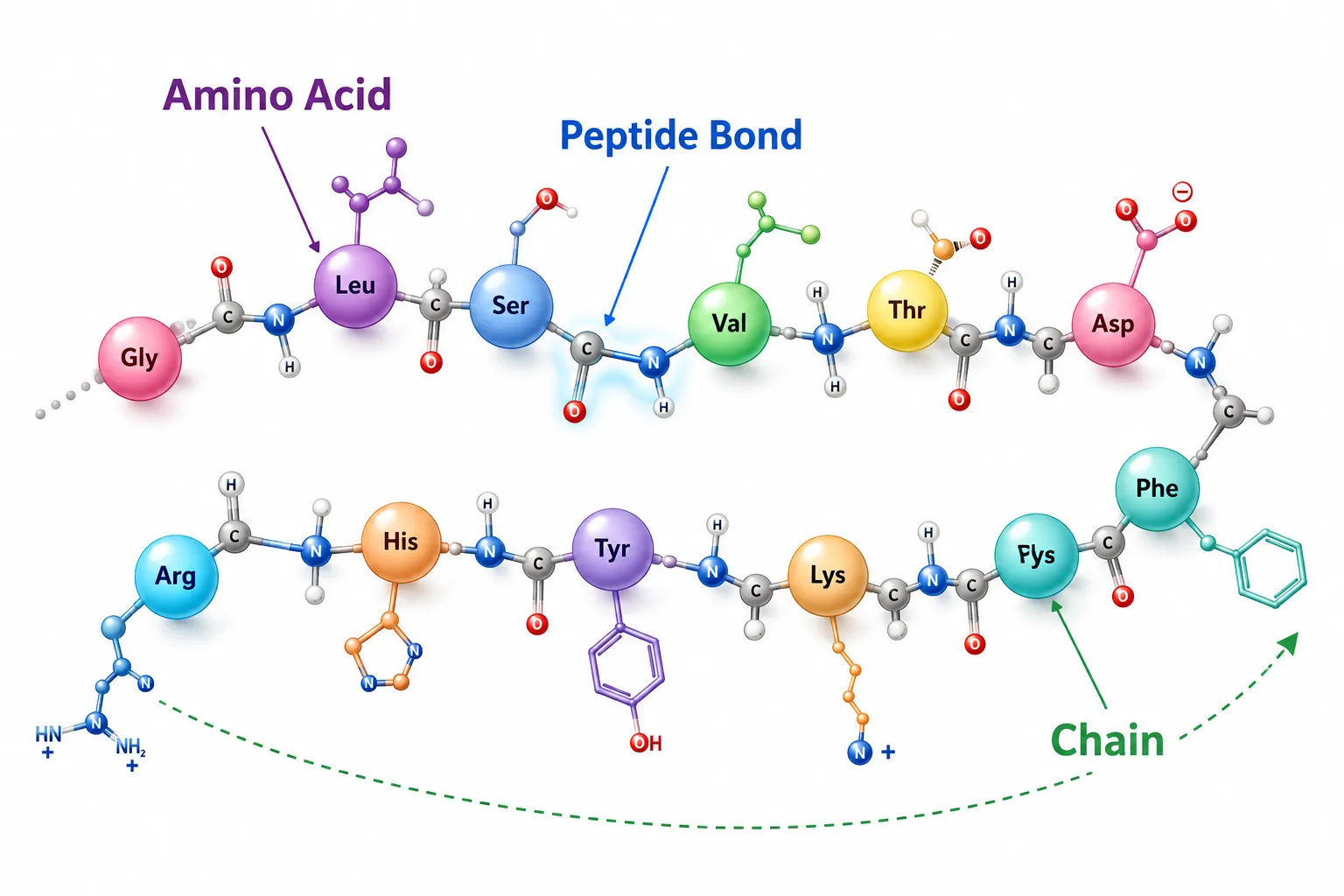
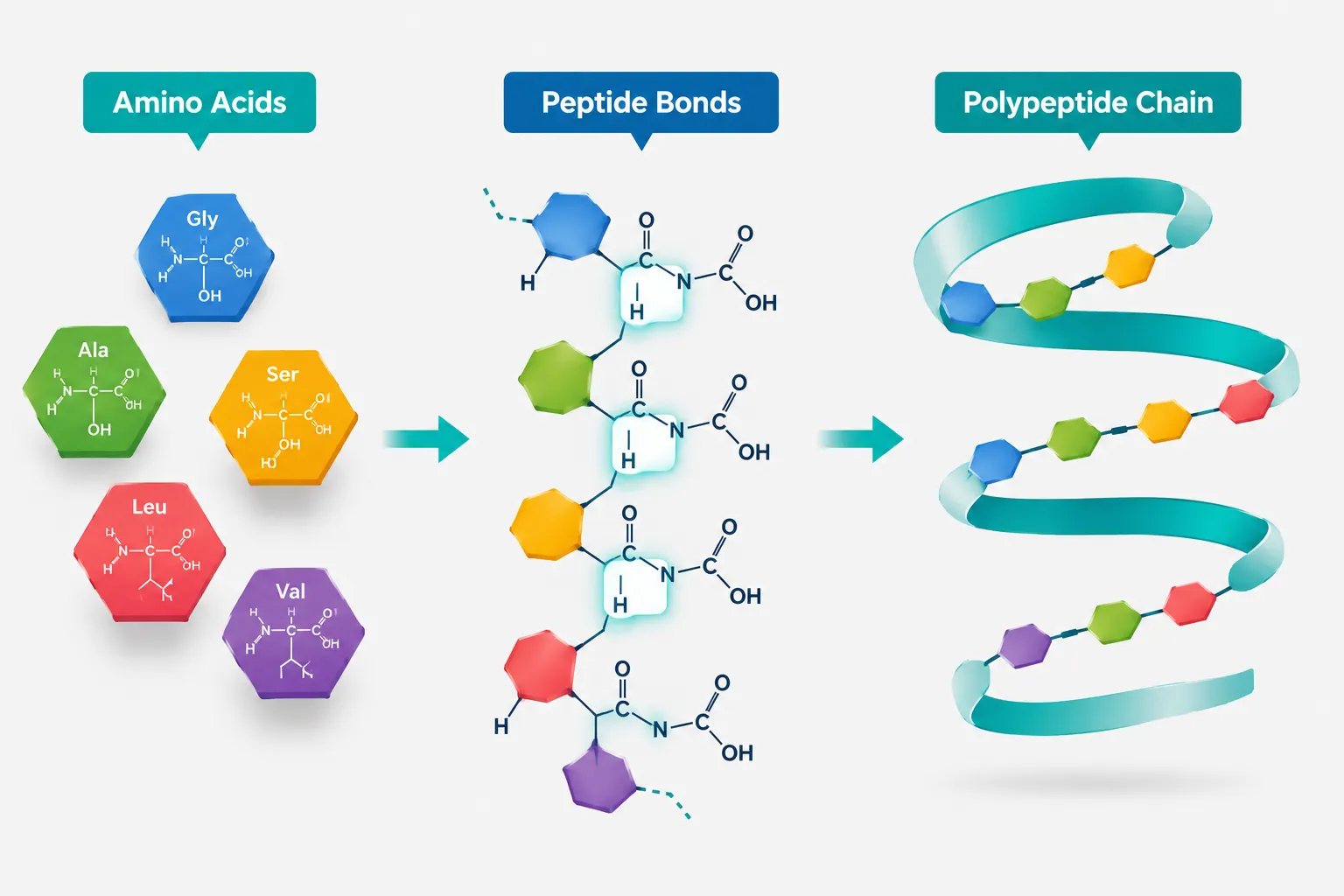
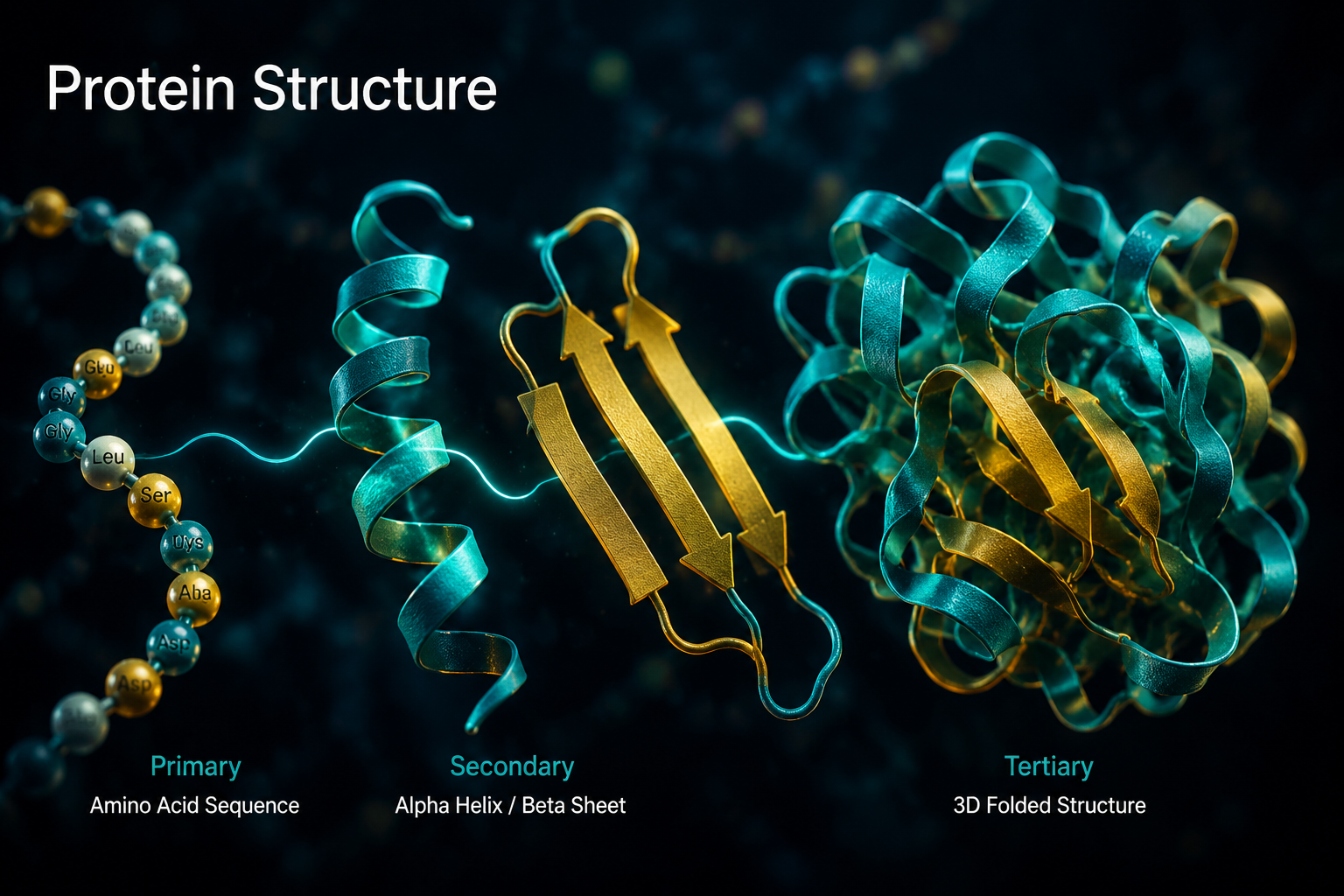
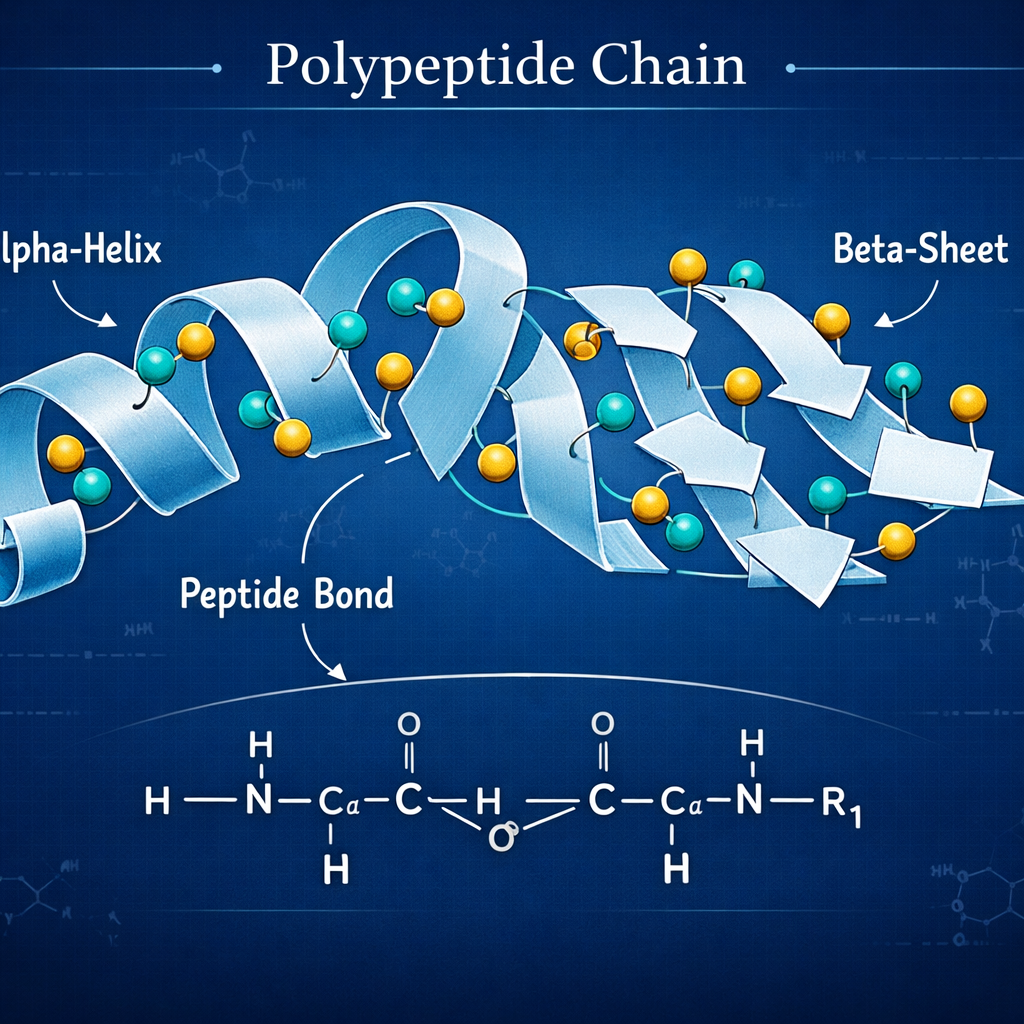
Polypeptides are chains of amino acids linked by peptide bonds. Their structural organization is described across four levels:

Structural Level Description
Primary Linear sequence of amino acids
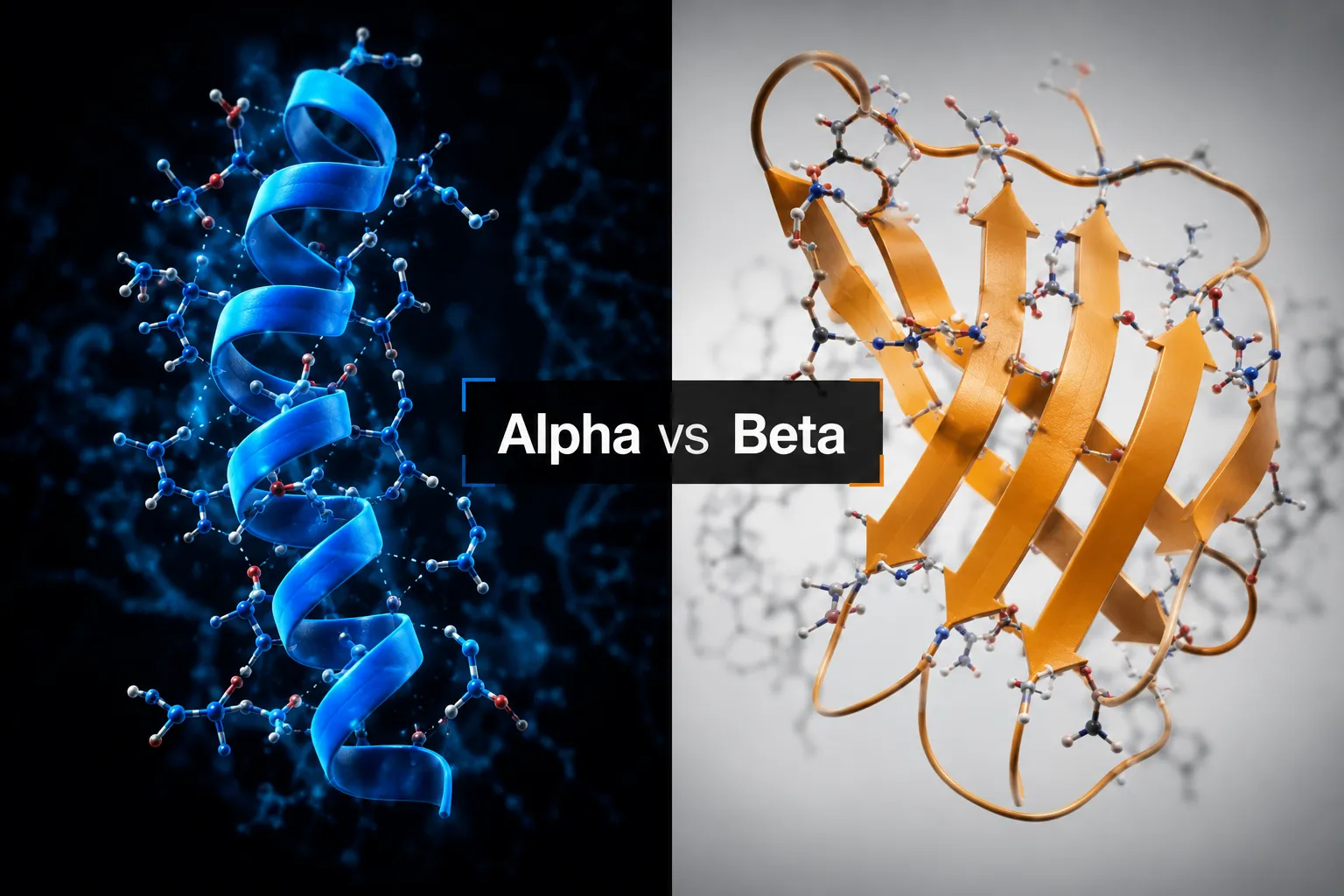
Secondary Local folding patterns (alpha-helices, beta-sheets)
Tertiary Full three-dimensional shape of a single chain
Quaternary Assembly of multiple polypeptide subunits

Each level profoundly influences how a peptide interacts with receptors, enzymes, and cellular membranes. A single amino acid substitution at the primary level can cascade into altered folding, changed receptor affinity, and entirely different biological outcomes.

Intrinsically disordered proteins (IDPs) complicate this picture further. Unlike globular proteins, IDPs lack a fixed tertiary structure yet remain biologically active. Mass spectrometry-based approaches, including hydrogen-deuterium exchange MS and crosslinking MS, have become essential tools for mapping the conformations and dynamics of these flexible molecules. IDPs are implicated in conditions ranging from neurodegeneration to cancer, making their structural characterization a high-priority research goal.

Post-translational modifications (PTMs) such as phosphorylation, glycosylation, and isomerization add another layer of complexity. A recent analytical workflow combining collision-induced dissociation-trapped ion mobility spectrometry with protein isoaspartyl methyltransferase activity enabled untargeted discovery and precise localization of isomerized residues in neuropeptides, a capability that was simply unavailable a few years ago.

For researchers exploring peptides with mitochondrial relevance, understanding structural precision is especially important. Resources covering SS-31 mechanism and research illustrate how a tetrapeptide's specific charge distribution governs its cardiolipin-binding activity inside mitochondrial membranes.


Advanced Sequencing and Identification Technologies

Advanced Sequencing and Identification Technologies

Decoding polypeptide peptides: advanced structural analysis and research applications now relies on a powerful toolkit of next-generation sequencing and identification methods.

Transformer-Based De Novo Sequencing

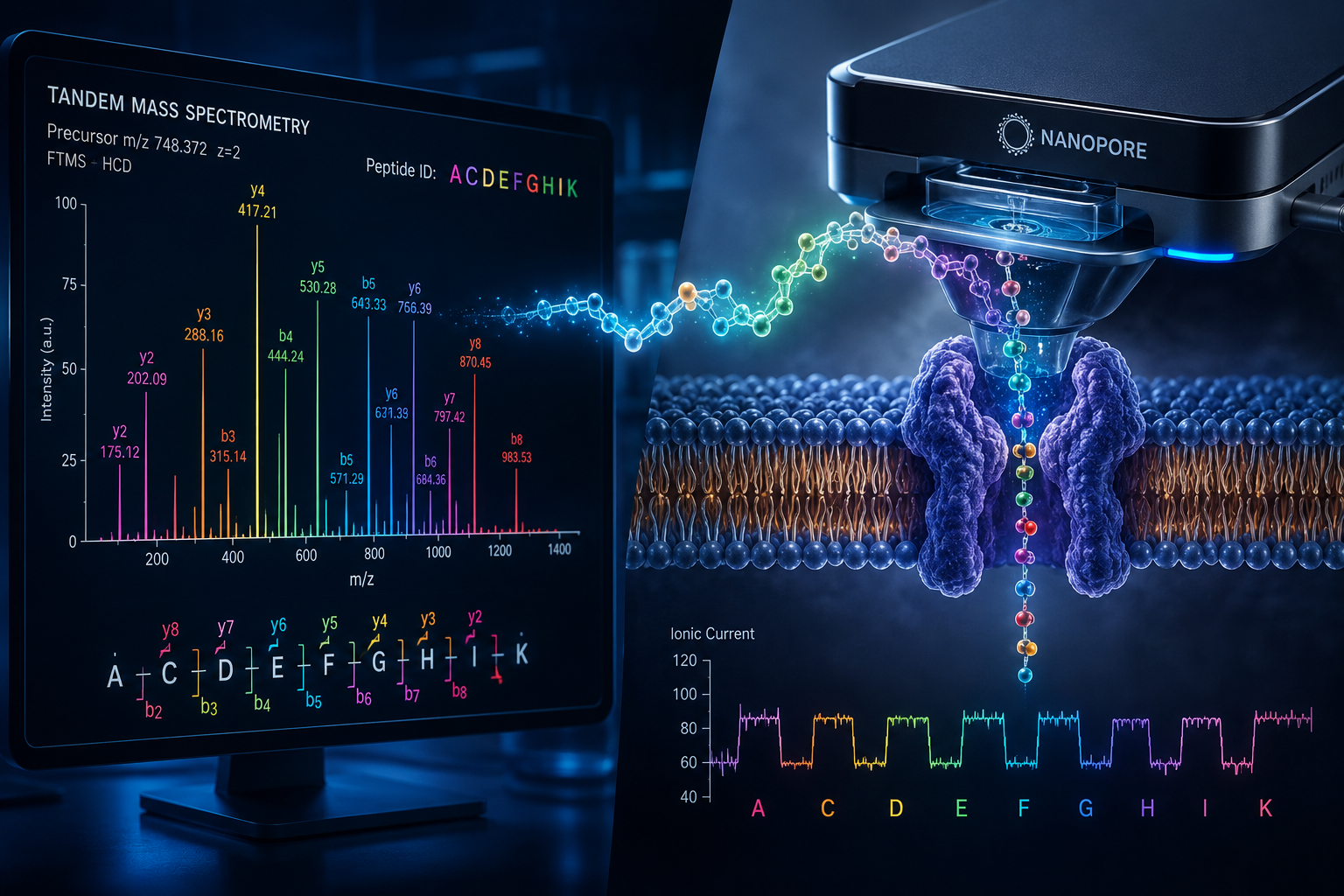
One of the most significant recent advances is the application of deep learning to peptide sequencing. Casanovo, a transformer neural network trained on 30 million labeled tandem mass spectra, translates spectral data directly into peptide sequences without requiring a reference database. This de novo approach outperforms earlier methods in cross-species benchmarks and has proven especially valuable in immunopeptidomics and metaproteomics, where reference databases are incomplete or absent.

Complementing this, rescoring peptide spectrum matches through integrated peptide property predictors, comparing observed versus predicted fragment ion intensities and retention times, has meaningfully improved identification rates and reduced false positives in complex proteomics datasets.

Nanopore Single-Molecule Sequencing

Biological nanopores capable of distinguishing all 20 standard amino acids now enable single-molecule protein sequencing. This technology can detect single-amino acid substitutions and PTMs at sub-attomole concentrations, opening doors to clinical proteomic studies that were previously impractical. High-throughput protein sequencing methods built on this platform are facilitating analysis of biological processes and disease mechanisms at unprecedented resolution.

DIA-LiPA for Conformational Mapping

A pipeline introduced in early 2026, DIA-LiPA, integrates Data-Independent Acquisition with limited proteolysis workflows. The result is improved reproducibility and deeper proteome coverage, enabling detection of conformational changes at the peptide level. This is particularly relevant for researchers studying how peptide structure shifts under different physiological conditions.

Those following what is new in peptide research will recognize these sequencing advances as part of a broader acceleration in the field throughout 2025 and 2026.


Research Applications Across Biology and Medicine

Research Applications Across Biology and Medicine

Research Applications Across Biology and Medicine

Decoding polypeptide peptides: advanced structural analysis and research applications extends across a remarkable range of scientific domains in 2026.

Therapeutic Peptide Development

Structural analysis directly informs the design of therapeutic peptides. Growth hormone-releasing peptides like those explored in tesa research depend on precise receptor binding geometries. Similarly, GLP-1 incretin research themes highlight how subtle structural differences between peptide generations produce meaningfully different receptor activation profiles and downstream metabolic effects.

Skin Biology and Structural Peptides

In dermatological research, peptide structure governs interactions with collagen, elastin, and growth factor receptors. The science of peptides in skincare demonstrates how signal peptides, carrier peptides, and neurotransmitter-inhibiting peptides each rely on distinct structural configurations to achieve their effects on the extracellular matrix.

Neuropeptide and Longevity Research

Neuropeptide characterization has benefited enormously from improved isomerization detection workflows. Structural variants of the same peptide sequence can produce entirely different neuromodulatory effects. Research into Selank peptide benefits reflects this principle, a heptapeptide whose anxiolytic and nootropic properties are tied directly to its specific amino acid arrangement and stability.

Longevity-focused research, including work on epithalon and thymic peptides, also depends on structural precision to understand telomerase activation and immune modulation mechanisms.

Proteogenomics Integration

Proteogenomics, the integration of proteomics with genomic and transcriptomic data, uses customized protein sequence databases to identify novel peptides from mass spectrometry data. This approach refines gene models and provides protein-level evidence of gene expression, bridging the gap between genome sequence and functional biology.

Key insight: The most impactful peptide research in 2026 combines structural resolution at the molecular level with systems-level biological context, neither alone is sufficient.


Conclusion

The science of decoding polypeptide peptides: advanced structural analysis and research applications is advancing faster than at any previous point in history. Researchers and institutions working in this space should prioritize three actionable steps:

  1. Adopt AI-assisted sequencing tools such as transformer-based models to accelerate de novo peptide identification, especially in non-model organisms or complex biological matrices.
  2. Integrate DIA-based conformational workflows to capture dynamic structural changes that static sequencing cannot reveal.
  3. Map PTMs systematically using ion mobility spectrometry to ensure that isomerized or modified residues are not misidentified or overlooked in structural datasets.

Structural analysis is not merely a technical step, it is the interpretive lens through which all downstream biological meaning is derived. As sequencing resolution, AI integration, and proteogenomic databases continue to mature, the capacity to decode polypeptide structure and connect it to function will define the next generation of therapeutic and scientific breakthroughs.

https://www.puretestedpeptides.com/wp-content/uploads/2026/07/decoding-polypeptide-peptides-advanced-structural-analysis-and-research-applicat.png 1024 1536 Pure Tested https://www.puretestedpeptides.com/wp-content/uploads/2026/01/buy-peptides-online.jpg Pure Tested2026-07-11 13:05:172026-07-20 15:00:27Decoding Polypeptide Peptides: Advanced Structural Analysis and Research Applications
What Is Polypeptide Peptides? A Research-Friendly Guide to Terminology, Structure, and Function

What Is Polypeptide Peptides? A Research-Friendly Guide to Terminology, Structure, and Function

July 10, 2026/0 Comments/by Pure Tested

{"cover":"Professional landscape format (1536×1024) hero image with bold text overlay: 'What Is Polypeptide Peptides? A Research-Friendly Guide' in extra large 72pt white sans-serif font with deep shadow effect, centered upper-third composition. Background shows a stunning macro scientific visualization of an amino acid chain forming a helix structure, rendered in deep navy blue and teal with luminous molecular bond lines glowing in white and gold. Semi-transparent dark overlay panel behind text for maximum readability. Magazine cover aesthetic, editorial quality, high contrast, 2026 research theme.","content":["Detailed landscape format (1536×1024) scientific infographic-style illustration showing a side-by-side comparison diagram of dipeptide, oligopeptide, polypeptide, and protein structures as ascending chain lengths, each labeled with amino acid count ranges. Clean white laboratory background with color-coded chain segments in blue, green, and orange. Bold sans-serif annotation labels, molecular bond icons, and a horizontal scale bar. Research-oriented aesthetic, educational clarity, no people, flat design with subtle 3D depth on molecular models.","Landscape format (1536×1024) close-up overhead view of a molecular model of a polypeptide chain folding into secondary structure, alpha helix and beta sheet formations visible simultaneously. Rendered in photorealistic 3D with deep purple background and glowing cyan hydrogen bond lines. Amino acid residue nodes highlighted in warm amber. Scientific visualization style, dramatic lighting from below, high-detail molecular geometry, no text overlay, editorial research quality, visually distinct from chain-length comparison image.","Landscape format (1536×1024) wide-angle flat-lay composition of a research laboratory bench showing peptide vials, a molecular structure printout, digital tablet displaying a peptide sequence chart, and a periodic table fragment. Color palette: clean white surface, steel grey equipment, accent colors in teal and gold. Soft directional studio lighting, no people, organized scientific workspace aesthetic. Subtle branded research theme, editorial quality, visually distinct from molecular model images, conveys applied peptide research context.","cover":""}

Professional landscape hero image () with : "What Is Polypeptide Peptides? A Research-Friendly Guide to Terminology,

The phrase "polypeptide peptides" appears in thousands of monthly searches, yet it is technically redundant. Every polypeptide is already a peptide. So why does this search phrase generate so much traffic? Because most people typing it are genuinely trying to understand the chemistry behind these molecules, and the terminology around peptides, polypeptides, and proteins remains surprisingly confusing even in 2026. This guide resolves that confusion directly.


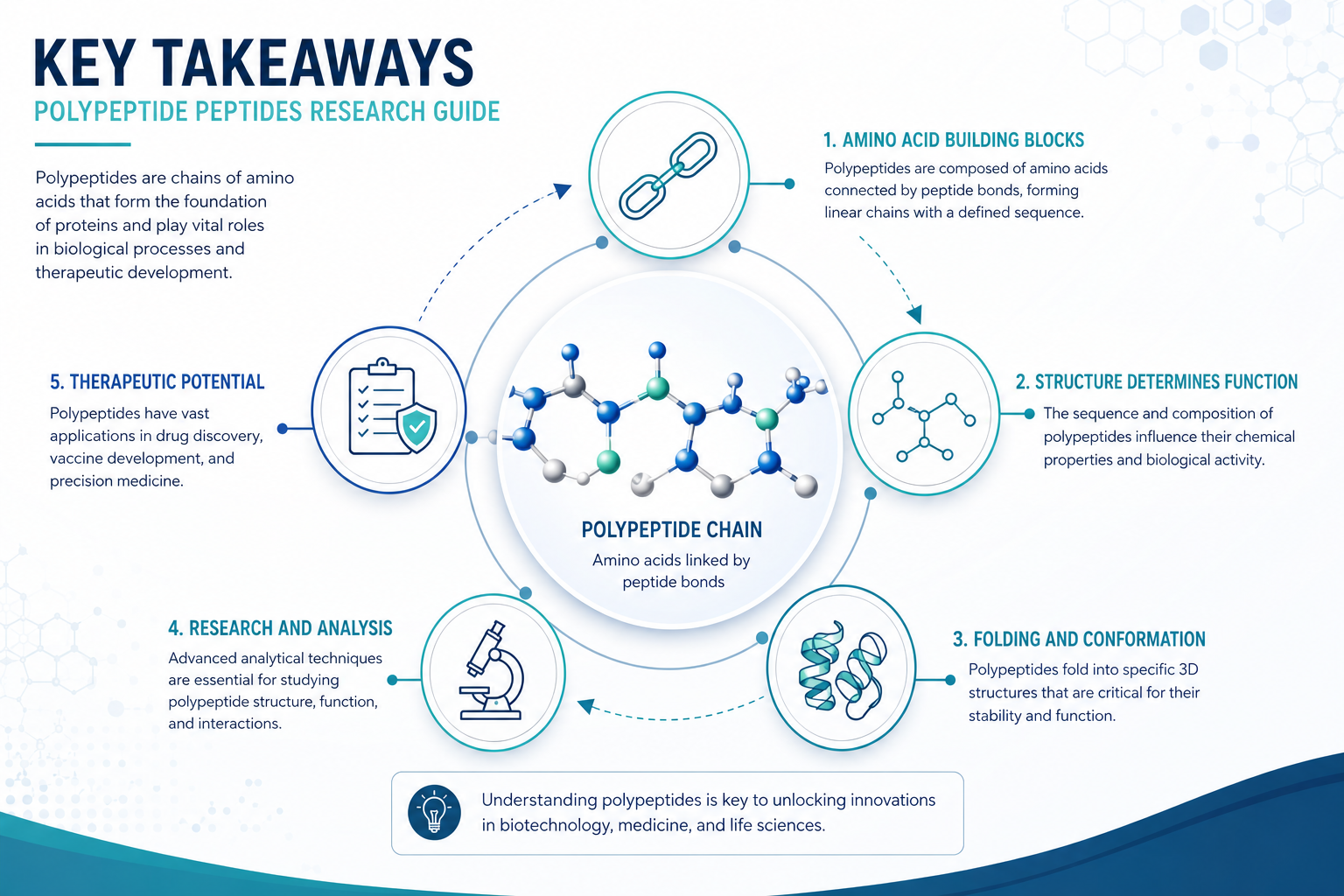
Key Takeaways

  • The term "polypeptide peptides" is redundant; a polypeptide is a specific type of peptide chain.
  • Peptides are short amino acid chains; polypeptides are longer chains; proteins are folded polypeptides with biological function.
  • Amino acids link together through peptide bonds to form these molecules.
  • Chain length and three-dimensional structure determine biological activity.
  • Understanding this terminology is essential for interpreting modern peptide research accurately.

Key Takeaways

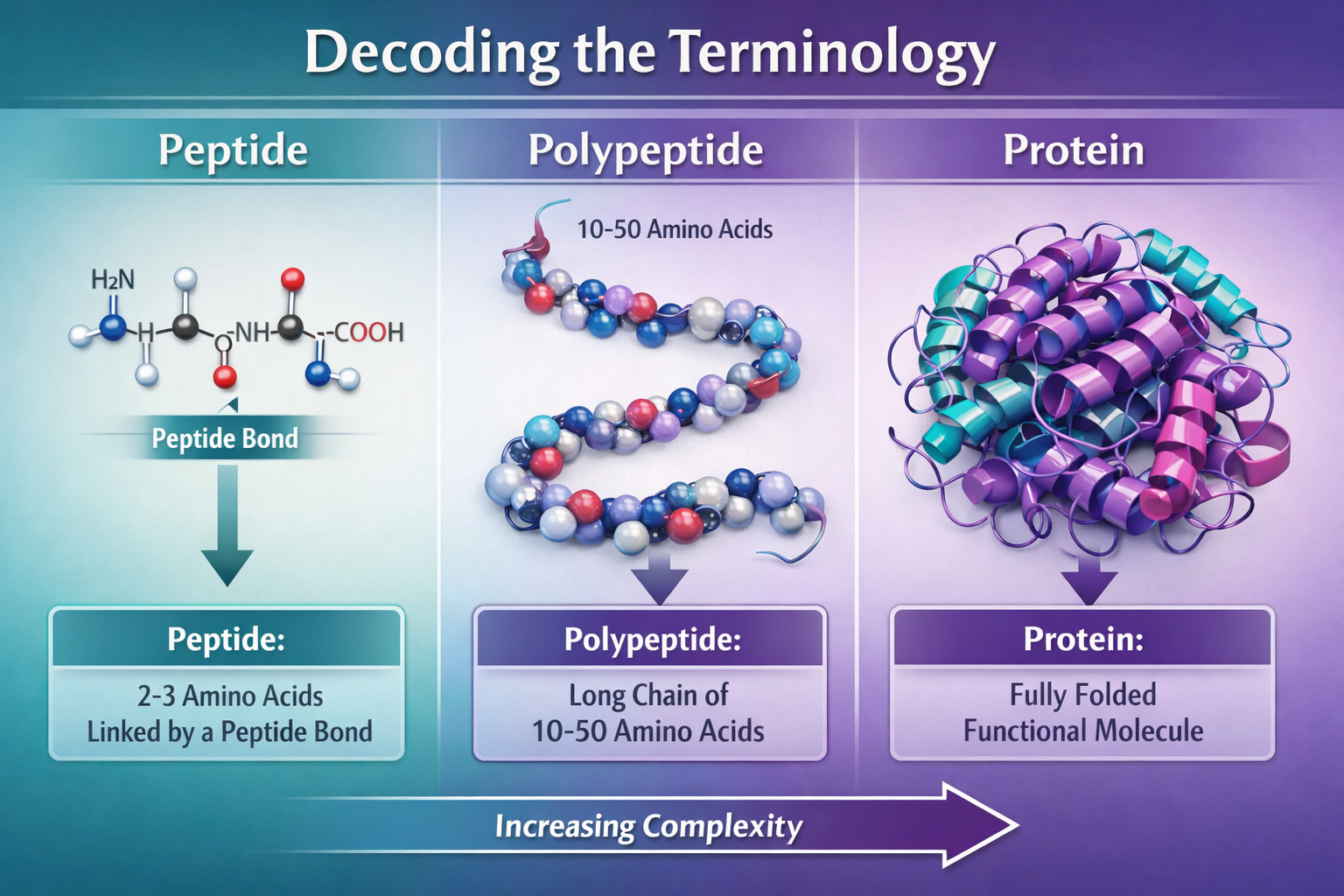
Decoding the Terminology: Peptide, Polypeptide, and Protein

When researchers and searchers ask about "polypeptide peptides," they are almost always asking one core question: what separates a peptide from a polypeptide from a protein?

The answer lies in chain length and structural complexity.

Term Amino Acid Count Key Characteristic
Dipeptide 2 Simplest peptide unit
Oligopeptide 3 to 10 Short signaling chains
Polypeptide 10 to ~100 Longer, more complex chains
Protein 100+ Folded, functional macromolecule

The prefix "poly" simply means "many." A polypeptide is therefore a chain of many amino acids joined by peptide bonds, covalent chemical links formed when the carboxyl group of one amino acid reacts with the amino group of the next.

"All proteins are polypeptides, but not all polypeptides are proteins. The distinction is function, not just length."

This is why the phrase "polypeptide peptides" makes sense as a search query even if it is chemically repetitive. Searchers are reaching for precision and landing on a term that captures both concepts at once.


Decoding the Terminology: Peptide, Polypeptide, and Protein

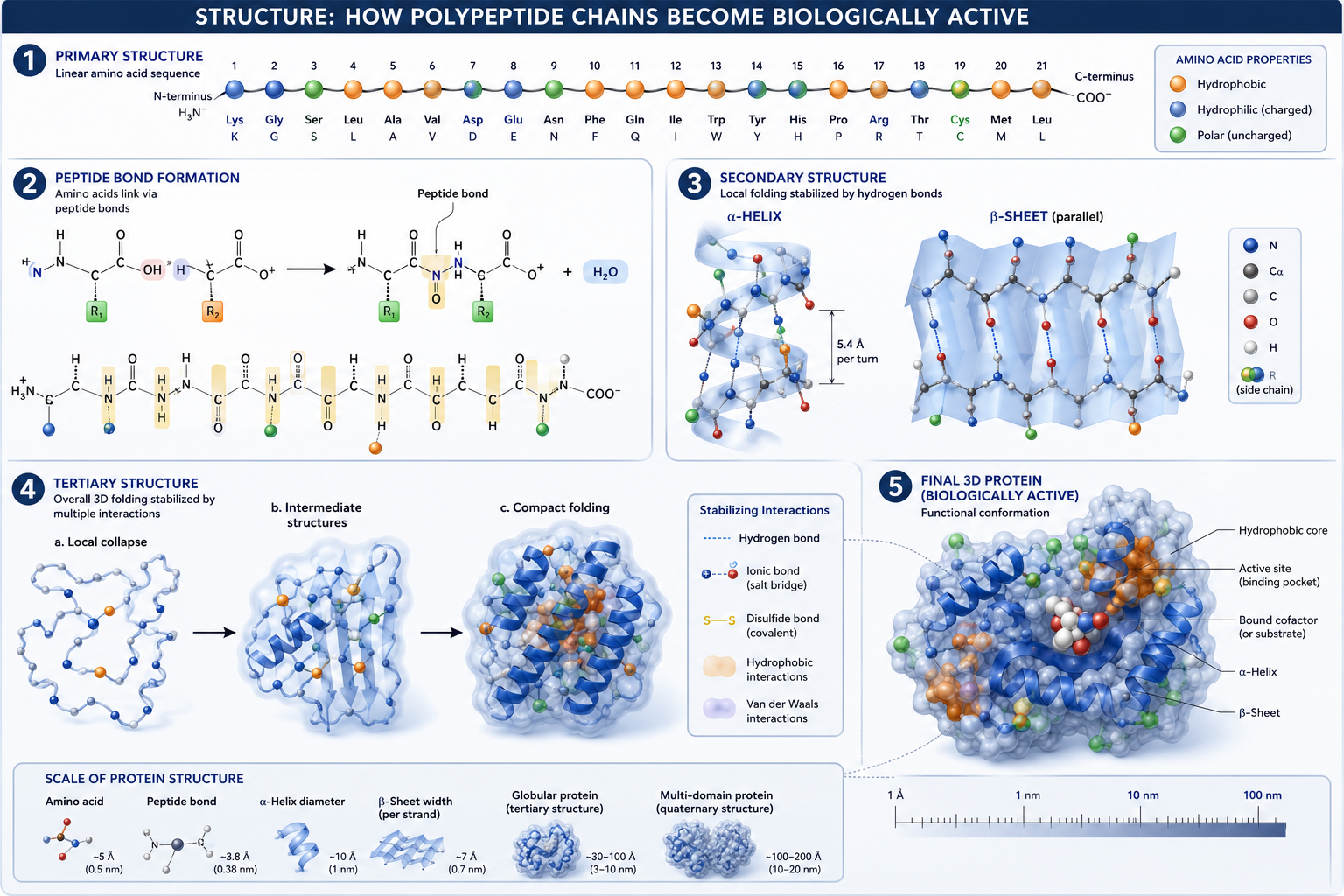
Structure: How Polypeptide Chains Become Biologically Active

Understanding what is polypeptide peptides, and why this research-friendly guide to terminology, structure, and function matters, requires looking at how structure drives activity.

Biochemists describe molecular architecture in four levels:

  1. Primary structure, the linear sequence of amino acids
  2. Secondary structure, local folding patterns such as alpha helices and beta sheets
  3. Tertiary structure, the full three-dimensional shape of a single chain
  4. Quaternary structure, the arrangement of multiple polypeptide chains together

A polypeptide's biological function depends almost entirely on its three-dimensional shape. Change one amino acid in the sequence and the molecule may fold differently, binding to different receptors or losing activity entirely.

This structural sensitivity explains why peptide researchers pay close attention to sequence integrity and storage conditions. Molecules like tesa and MOTS-c are studied precisely because their specific amino acid sequences produce targeted biological interactions.

Similarly, research on SS-31 (elamipretide) focuses on a tetrapeptide, just four amino acids, demonstrating that even very short chains can carry significant functional specificity.


Structure: How Polypeptide Chains Become Biologically Active

Function: Why Polypeptides Matter in Research

The research landscape for polypeptides in 2026 spans metabolic signaling, cellular repair, immune modulation, and longevity biology. Each application traces back to a core principle: specific sequences produce specific effects.

Key functional categories include:

  • Signaling peptides, act as messengers between cells (e.g., growth hormone-releasing peptides)
  • Structural peptides, contribute to tissue integrity
  • Antimicrobial peptides, support innate immune defense
  • Enzyme-modulating peptides, alter metabolic pathways

For researchers exploring metabolic pathways, resources like the metabolic modulation research lines overview provide context on how specific polypeptide sequences are selected for study.

Peptides used in skincare research also illustrate functional diversity. Copper-binding sequences like GHK-Cu are studied for their role in tissue remodeling, while the broader science is explored in resources covering peptides in skincare.

For researchers interested in GLP-1 receptor-targeting polypeptides, the generations of GLP-1 differences breakdown illustrates how incremental changes to polypeptide structure have produced successive generations of research compounds.


Conclusion

The search phrase "polypeptide peptides" captures genuine curiosity about one of biochemistry's most important molecular categories. This research-friendly guide to terminology, structure, and function shows that the distinction between peptides, polypeptides, and proteins is not just academic, it directly shapes how researchers design studies, interpret results, and select compounds.

Actionable next steps for researchers:

  • Review the amino acid count and sequence of any peptide before drawing functional conclusions.
  • Consult structural data (primary through quaternary) when comparing similar compounds.
  • Explore the full peptide catalog to identify research-grade compounds with documented sequence integrity.
  • Cross-reference metabolic and signaling peptides using dedicated research theme pages for deeper context.

Terminology clarity is the foundation of credible peptide research. Getting the language right is the first step toward getting the science right.

https://www.puretestedpeptides.com/wp-content/uploads/2026/07/What-Is-Polypeptide-Peptides-A-Research-Friendly-Guide-to-Terminology-Structure-and-Function.png 1024 1536 Pure Tested https://www.puretestedpeptides.com/wp-content/uploads/2026/01/buy-peptides-online.jpg Pure Tested2026-07-10 13:33:102026-07-20 15:00:29What Is Polypeptide Peptides? A Research-Friendly Guide to Terminology, Structure, and Function
Understanding Polypeptide Peptides: Structure, Function, and Advanced Research Applications

Understanding Polypeptide Peptides: Structure, Function, and Advanced Research Applications

July 8, 2026/0 Comments/by Pure Tested

Fewer than 50 amino acids linked together can trigger cascading biological events that influence everything from immune defense to metabolic regulation, a fact that underscores just how powerful polypeptide peptides truly are. This article delivers a comprehensive understanding of polypeptide peptides, detailing their complex structures, diverse biological functions, and advanced applications in cutting-edge research as of 2026.

Key Takeaways

  • Polypeptides are chains of amino acids linked by peptide bonds, and their three-dimensional shape determines their biological role.
  • Structural classes, including alpha-helices, beta-sheets, and cyclic forms, each carry distinct functional advantages.
  • Polypeptides serve critical roles in signaling, immune defense, enzymatic activity, and cellular regulation.
  • Advanced tools such as AlphaFold and molecular dynamics simulations are transforming how researchers design and predict peptide behavior.
  • Research-grade polypeptides are at the forefront of longevity science, metabolic research, and targeted therapeutic development.

Key Takeaways

The Architecture Behind Polypeptide Peptides: Structure, Function, and Advanced Research Applications

At the most basic level, a polypeptide is a linear chain of amino acids joined by covalent peptide bonds. The sequence of these amino acids, called the primary structure, dictates how the chain will fold into higher-order shapes.

Four levels of protein and polypeptide structure:

Level Description
Primary Linear amino acid sequence
Secondary Local folding into alpha-helices or beta-sheets
Tertiary Overall 3D shape of a single chain
Quaternary Assembly of multiple polypeptide chains

Alpha-helical polypeptides have received significant research attention for their helix-specific properties, including membrane permeability and receptor binding precision. Beta-sheets, by contrast, offer structural rigidity and are common in fibrous proteins. A third class, lasso peptides, features unique knot-like macrocyclic structures that confer remarkable stability and diverse bioactivities, including antimicrobial properties.

Constrained peptides, engineered to mimic protein secondary structures, have opened new doors for therapeutic design. By locking a peptide into a defined conformation, researchers improve target selectivity and resistance to enzymatic degradation. For a closer look at how simple peptide forms compare to complex ones, the overview of simple peptides offers useful foundational context.


Biological Functions: What Polypeptides Actually Do

Polypeptides are not passive molecules. They act as hormones, enzymes, signaling agents, and structural components across virtually every tissue system.

Core biological roles include:

  • Hormonal signaling, peptides like growth hormone-releasing hormones regulate metabolism and tissue repair
  • Immune modulation, antimicrobial peptides defend against pathogens at epithelial barriers
  • Enzymatic catalysis, short polypeptide sequences can accelerate biochemical reactions
  • Cell-to-cell communication, neuropeptides and cytokines coordinate systemic responses

"Therapeutic peptides are gaining traction because of their cost-effectiveness, reduced immunogenicity, and ability to engage large protein-protein interaction surfaces that small molecules cannot reach."

Research into peptides like LL-37 illustrates how a single antimicrobial polypeptide can modulate immune responses, disrupt bacterial membranes, and influence wound healing simultaneously. Similarly, research on KPV and epithelial barrier function demonstrates how short tripeptide sequences exert targeted anti-inflammatory effects at mucosal surfaces.

The comparison of LL-37 versus SS-31 benefits further highlights how structural differences between polypeptides translate directly into divergent functional profiles.


Biological Functions: What Polypeptides Actually Do

Advanced Research Applications in 2026

Understanding polypeptide peptides, their structure, function, and advanced research applications, has never been more relevant than it is today, as computational and laboratory tools converge to accelerate discovery.

Key research frontiers include:

  1. AI-driven structure prediction, Tools like AlphaFold now enable precision design of cyclic peptides, including candidates targeting complex viral structures such as the HIV gp120 trimer.
  2. Molecular dynamics simulations, These computational models predict how peptides fold and interact with receptors under physiological conditions.
  3. Molecular fingerprints, Emerging research shows these are computationally efficient tools for predicting peptide function without requiring deep learning infrastructure.
  4. Self-assembling peptides, Active learning-directed simulations have identified pi-conjugated peptides capable of self-assembly, with applications in bioelectronics and energy materials.

Advanced Research Applications in 2026

Longevity research represents one of the most active application areas. Peptides such as SS-31 (elamipretide) are being studied for mitochondrial protection, as explored in the MOTS-c and elamipretide research overview. Growth hormone axis peptides, including tesa and CJC-1295, are central to body composition and metabolic research, detailed further in the GH axis product line overview.

For researchers tracking the latest developments, the what is new in peptide research resource provides regularly updated coverage of emerging findings.

Peptide-based biopolymers also continue to expand into drug delivery, tissue engineering, and biosurface engineering, reflecting the broad translational potential of polypeptide science.


Conclusion

Polypeptide peptides sit at the intersection of structural biology, biochemistry, and translational medicine. Their diverse conformations, from alpha-helices to lasso structures, directly shape their functional roles, while advances in computational design and laboratory synthesis are making precision peptide engineering increasingly achievable.

Actionable next steps for researchers and professionals:

  • Explore the structural class most relevant to your research target (helical, cyclic, or linear)
  • Use molecular dynamics tools to model conformational behavior before synthesis
  • Review current longevity and metabolic peptide research through dedicated resources such as longevity peptide research
  • Source research-grade compounds from verified suppliers by browsing the full catalog of peptides for sale

As structural data becomes more integrated into peptide design workflows, the gap between laboratory discovery and real-world application will continue to narrow, making 2026 a pivotal year for polypeptide research.

https://www.puretestedpeptides.com/wp-content/uploads/2026/07/Understanding-Polypeptide-Peptides-Structure-Function-and-Advanced-Research-Applications.png 1024 1536 Pure Tested https://www.puretestedpeptides.com/wp-content/uploads/2026/01/buy-peptides-online.jpg Pure Tested2026-07-08 13:04:442026-07-20 15:00:49Understanding Polypeptide Peptides: Structure, Function, and Advanced Research Applications

Polypeptide Peptides in Endocrine and Metabolic Pathways: How GLP‑3, GLP‑2‑T, and CJC‑1295 Drive Hormone Research

July 7, 2026/0 Comments/by Pure Tested

Fewer than 30 amino acids separate a simple dipeptide from a full-length polypeptide hormone, yet that structural gap represents decades of endocrinology research and some of the most consequential therapeutic discoveries in modern medicine. The phrase "polypeptide peptides" is technically redundant, but it reflects a real gap in how researchers, students, and clinicians talk about these molecules. Understanding that gap is the first step toward grasping how compounds like GLP-3, GLP-2-T, and CJC-1295 are reshaping endocrine and metabolic science in 2026.

This article clarifies the structure-function basics of polypeptide hormones, then maps those principles onto three research-stage peptides that are generating significant scientific interest.

Key Takeaways

  • All peptide hormones are polypeptides, but the term "polypeptide peptides" is often used loosely to describe multi-chain signaling molecules derived from larger precursor proteins.
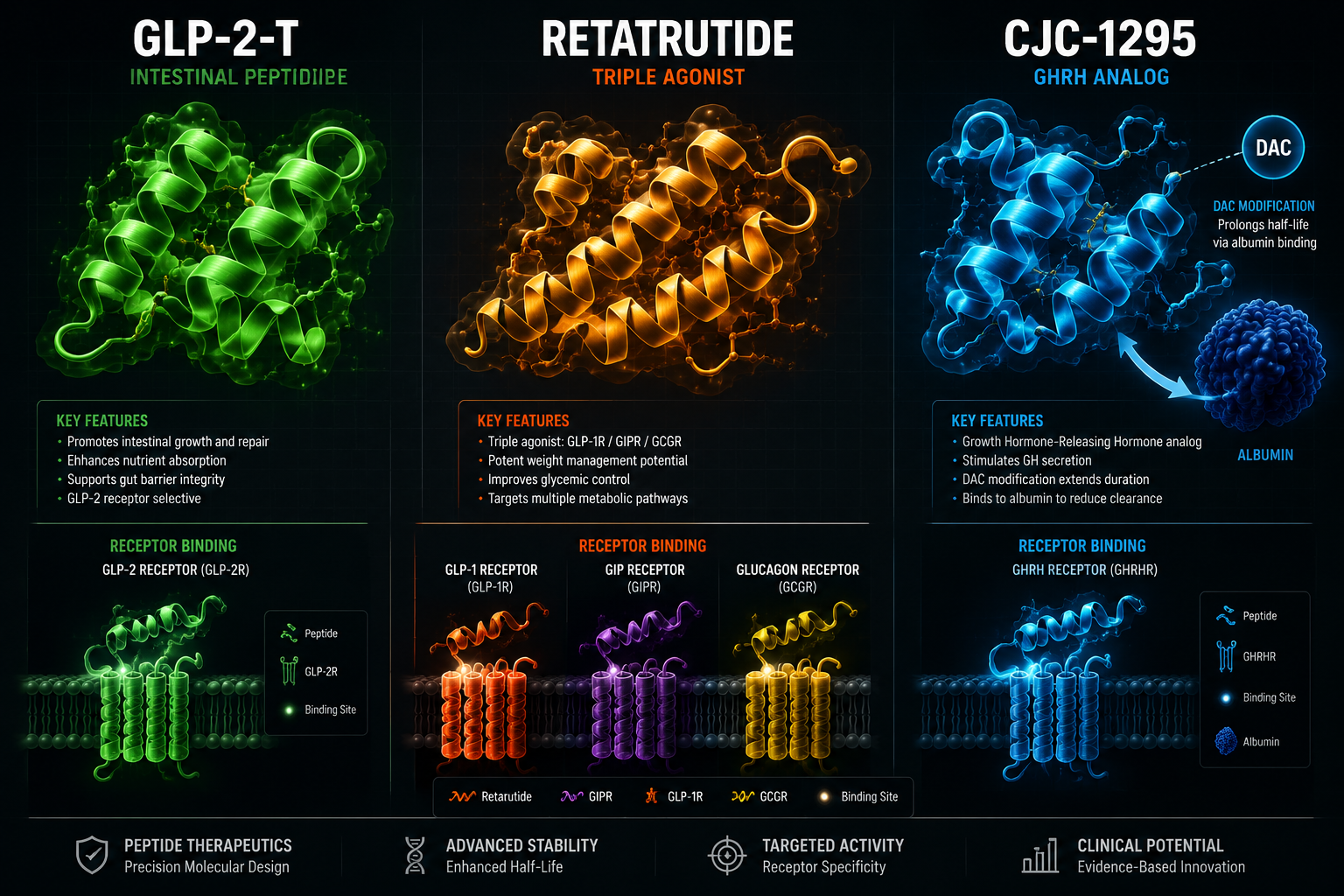
  • GLP-3, GLP-2-T (a stabilized GLP-2 analog), and CJC-1295 each act on distinct receptor systems, incretin, intestinal trophic, and growth hormone-releasing pathways respectively.
  • Proglucagon is the shared precursor for GLP-1, GLP-2, and GLP-3, with tissue-specific enzyme processing determining which hormone is produced.
  • CJC-1295 extends its half-life through covalent albumin binding, making it a useful model for studying sustained growth hormone axis stimulation.
  • All three compounds are currently restricted to preclinical and research contexts; none are approved for general clinical use.

Key Takeaways

What "Polypeptide Peptides" Actually Means in Endocrine Science

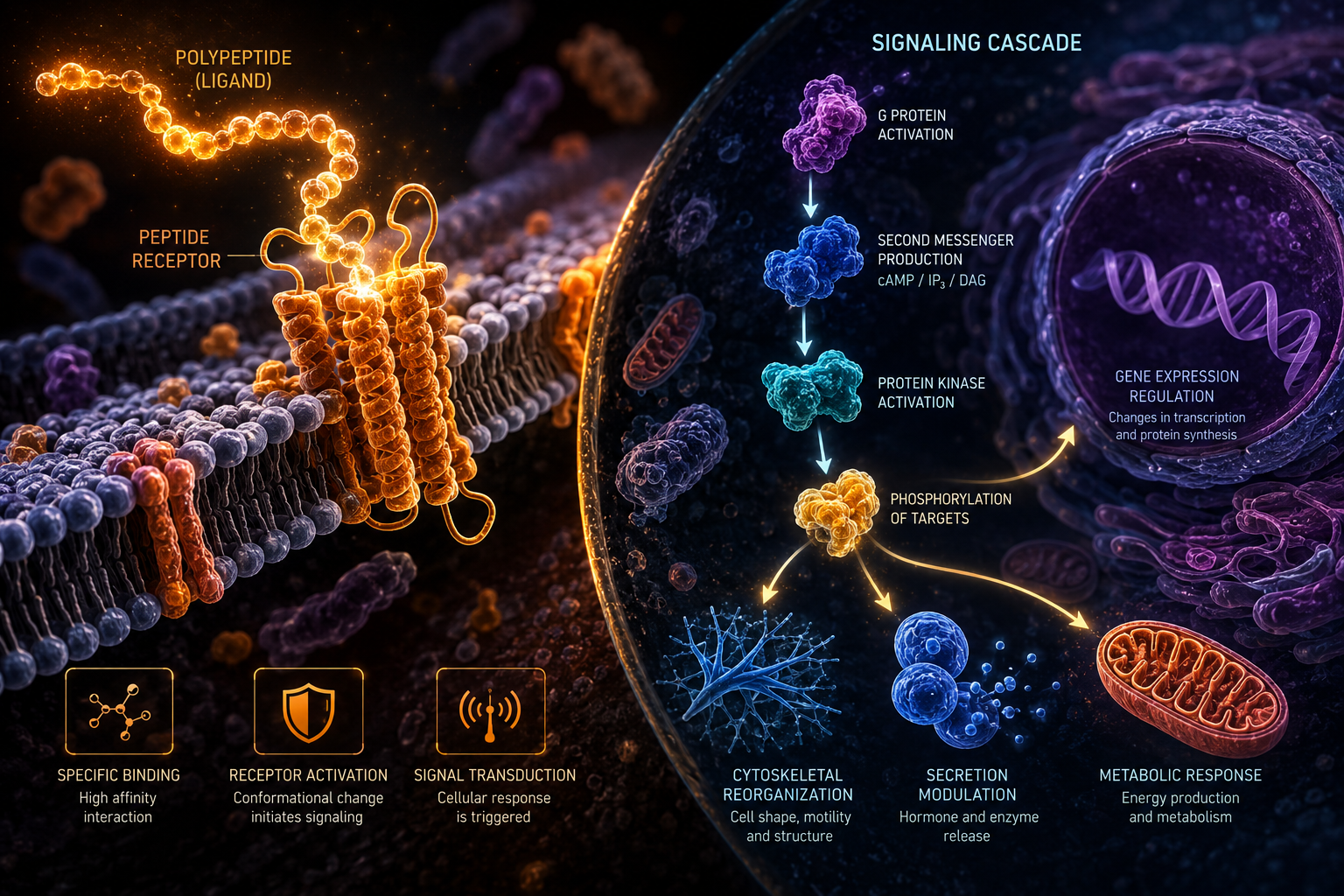
A peptide is any chain of amino acids linked by peptide bonds. A polypeptide is simply a longer chain, conventionally above 10 amino acids. In endocrinology, most signaling hormones fall into this polypeptide range, including insulin, glucagon, and the glucagon-like peptides. When researchers use the phrase "polypeptide peptides in endocrine and metabolic pathways," they are usually describing these multi-residue signaling molecules that bind to G-protein-coupled receptors (GPCRs) to regulate metabolism, growth, and energy balance.

Why does the distinction matter? Because the length and folding of a polypeptide chain determine receptor selectivity, enzymatic stability, and pharmacokinetic behavior. Small modifications, a single amino acid substitution or the addition of a fatty acid chain, can shift a rapidly degraded native peptide into a research-grade compound with a half-life measured in days rather than minutes.

The Proglucagon Precursor: One Gene, Multiple Hormones

Glucagon, GLP-1, GLP-2, and GLP-3 all derive from a single precursor protein called proglucagon. Tissue-specific prohormone convertases (PC2 in the pancreatic alpha cells, PC1/3 in intestinal L-cells) cleave proglucagon at different sites, producing distinct hormones with distinct roles.

  • Glucagon: raises blood glucose; produced in the pancreas
  • GLP-1: stimulates insulin secretion; produced in the gut and brain
  • GLP-2: promotes intestinal mucosal growth and nutrient absorption
  • GLP-3: a less-characterized fragment still under active investigation

For researchers exploring GLP-1 peptide sourcing and generational research concepts, understanding this shared precursor is essential context.


GLP-3 and GLP-2-T: Incretin-Adjacent Peptides in Metabolic Research

GLP-3 and GLP-2-T: Incretin-Adjacent Peptides in Metabolic Research

GLP-3 and the Triple-Agonist Frontier

GLP-3 is a proglucagon-derived fragment whose receptor binding profile is still being characterized. Research interest intensified when it became clear that multi-receptor agonism, hitting GLP-1R, GIPR, and glucagon receptors simultaneously, produces additive metabolic effects. Retatrutide, sometimes discussed in the context of GLP-3 triple-agonist research planning, is a synthetic peptide designed to exploit this multi-agonist principle.

"Multi-receptor agonism represents a shift from single-target pharmacology toward systems-level metabolic intervention, a paradigm that polypeptide research is uniquely positioned to advance."

Proglucagon-derived peptides, including GLP-1 and GIP, regulate energy storage through actions on adipose tissue, influencing white and brown fat activity, islet hormone secretion, and food intake. GLP-3 research extends this framework into less-mapped receptor territory. You can also explore related research on retatrutide and GLP-3 pathway studies for additional context.

GLP-2-T: Stabilized Intestinal Trophic Research

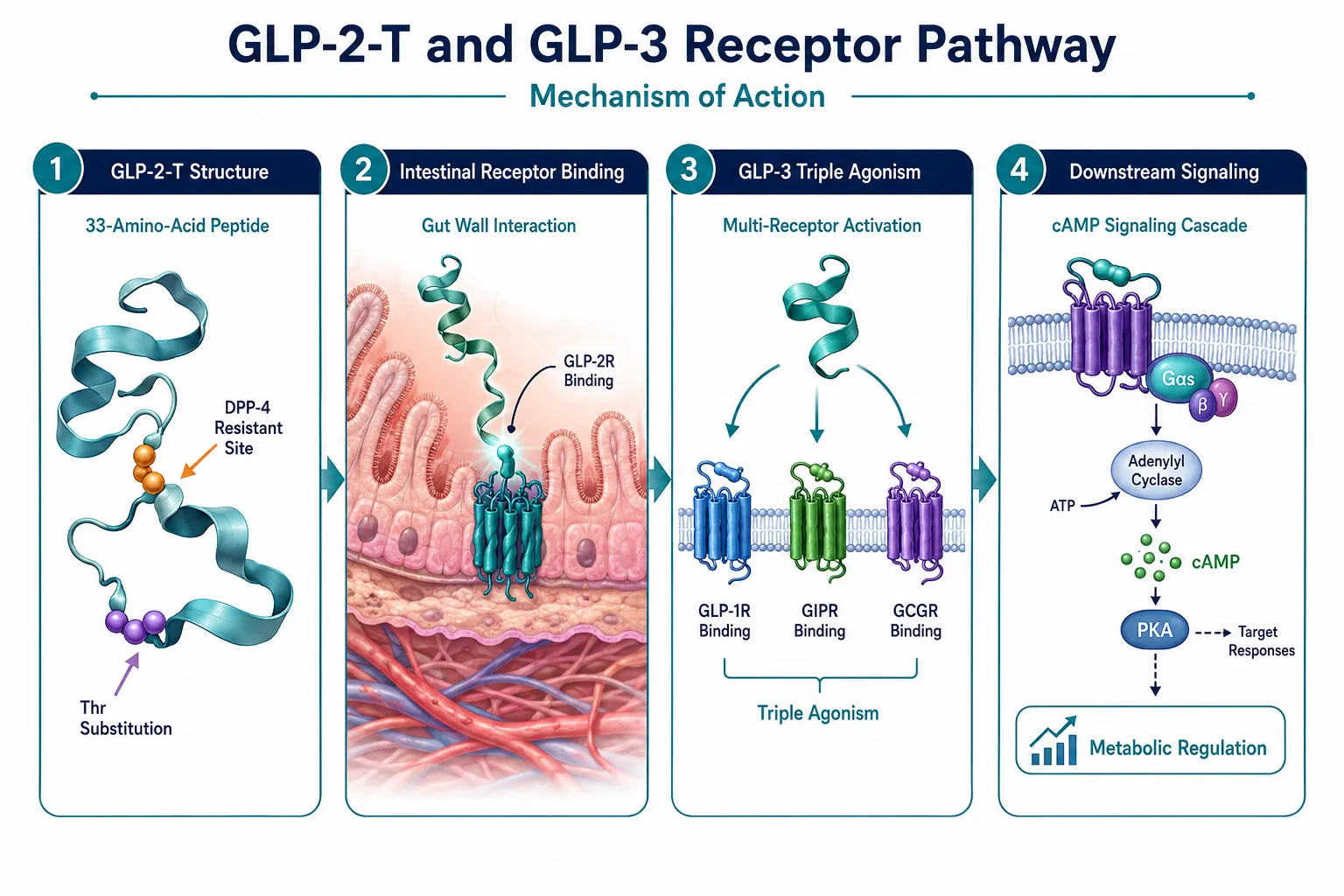
GLP-2-T refers to a stabilized, modified form of GLP-2 designed to resist dipeptidyl peptidase-4 (DPP-4) degradation, the same enzyme that rapidly inactivates native GLP-1 and GLP-2. Native GLP-2 has a half-life of approximately 7 minutes; structural modifications extend this substantially, making it viable for controlled research protocols examining intestinal mucosal integrity, nutrient absorption, and gut barrier function.

The chemical modification strategy mirrors what has been applied to other peptide hormones: amino acid substitutions at DPP-4 cleavage sites, combined in some analogs with fatty acid acylation to enable albumin binding.


CJC-1295 and the Growth Hormone Axis: A Model for Polypeptide Peptides in Endocrine and Metabolic Pathways

Mechanism and Pharmacokinetics

CJC-1295 is a synthetic analog of growth hormone-releasing hormone (GHRH). It binds to GHRH receptors on anterior pituitary somatotrophs, activating the cAMP/PKA signaling pathway. This triggers growth hormone (GH) release and subsequent elevation of insulin-like growth factor 1 (IGF-1).

What makes CJC-1295 a standout research model is its Drug Affinity Complex (DAC) modification. The DAC enables covalent binding to circulating serum albumin, extending the peptide's half-life to approximately 6 to 8 days in humans, compared to minutes for native GHRH. This sustained action allows researchers to study prolonged GH and IGF-1 elevation without repeated dosing.

CJC-1295 underwent Phase II clinical trials for HIV-associated visceral obesity before being discontinued following the death of a trial participant. The death was attributed to pre-existing coronary artery disease and deemed unrelated to the compound, but development did not continue. It remains a research-only compound.

For researchers reviewing CJC-1295 and Ipamorelin assay planning and sourcing, the DAC pharmacokinetics are a central variable in experimental design. Multi-peptide blend studies, such as those examining Tesamorelin and CJC-1295 combinations, also rely on this extended half-life as a design consideration.

CREB Signaling: The Downstream Pathway

CJC-1295's activation of cAMP/PKA feeds into the CREB (cAMP response element-binding protein) transcriptional pathway. CREB and its co-activators act as sensors for hormonal and metabolic signals, mediating gene transcription involved in glucose metabolism and energy balance. This makes CJC-1295 not just a GH secretagogue but a tool for studying broader hormonal gene regulation.

Researchers interested in growth hormone-axis peptides may also find value in reviewing Tesamorelin peptide research, another GHRH analog with a distinct modification profile and its own clinical data set.

Ipamorelin as a Complementary Research Tool

Ipamorelin is a GH secretagogue receptor (GHSR) agonist that stimulates GH release through a different receptor than CJC-1295. Used together in research models, they provide a dual-pathway approach to studying GH axis regulation. Detailed information on Ipamorelin research applications offers useful background for designing multi-peptide studies.


Conclusion

Polypeptide peptides in endocrine and metabolic pathways, from the proglucagon-derived incretin family to synthetic GHRH analogs, represent a structurally diverse but mechanistically coherent class of research tools. GLP-3 and GLP-2-T extend incretin biology into multi-receptor and intestinal trophic territory, while CJC-1295 provides a well-characterized model for sustained growth hormone axis stimulation through albumin-binding pharmacokinetics.

Actionable next steps for researchers:

  • Map the proglucagon processing pathway before designing any GLP-family study to ensure receptor selectivity is clearly defined.
  • Evaluate DPP-4 stability data when selecting GLP-2-T analogs, as modification sites directly affect experimental half-life.
  • Review CJC-1295 DAC pharmacokinetics and CREB pathway literature before establishing dosing intervals in GH-axis protocols.
  • Source peptides from suppliers with documented purity standards; consult peptide supplier comparison resources and reference standard benchmarking guides to validate compound integrity before use.

All compounds discussed here are for preclinical research purposes only and are not approved for human therapeutic use outside of authorized clinical trial frameworks.

https://www.puretestedpeptides.com/wp-content/uploads/2026/01/buy-peptides-online.jpg 0 0 Pure Tested https://www.puretestedpeptides.com/wp-content/uploads/2026/01/buy-peptides-online.jpg Pure Tested2026-07-07 13:20:052026-07-20 15:00:49Polypeptide Peptides in Endocrine and Metabolic Pathways: How GLP‑3, GLP‑2‑T, and CJC‑1295 Drive Hormone Research

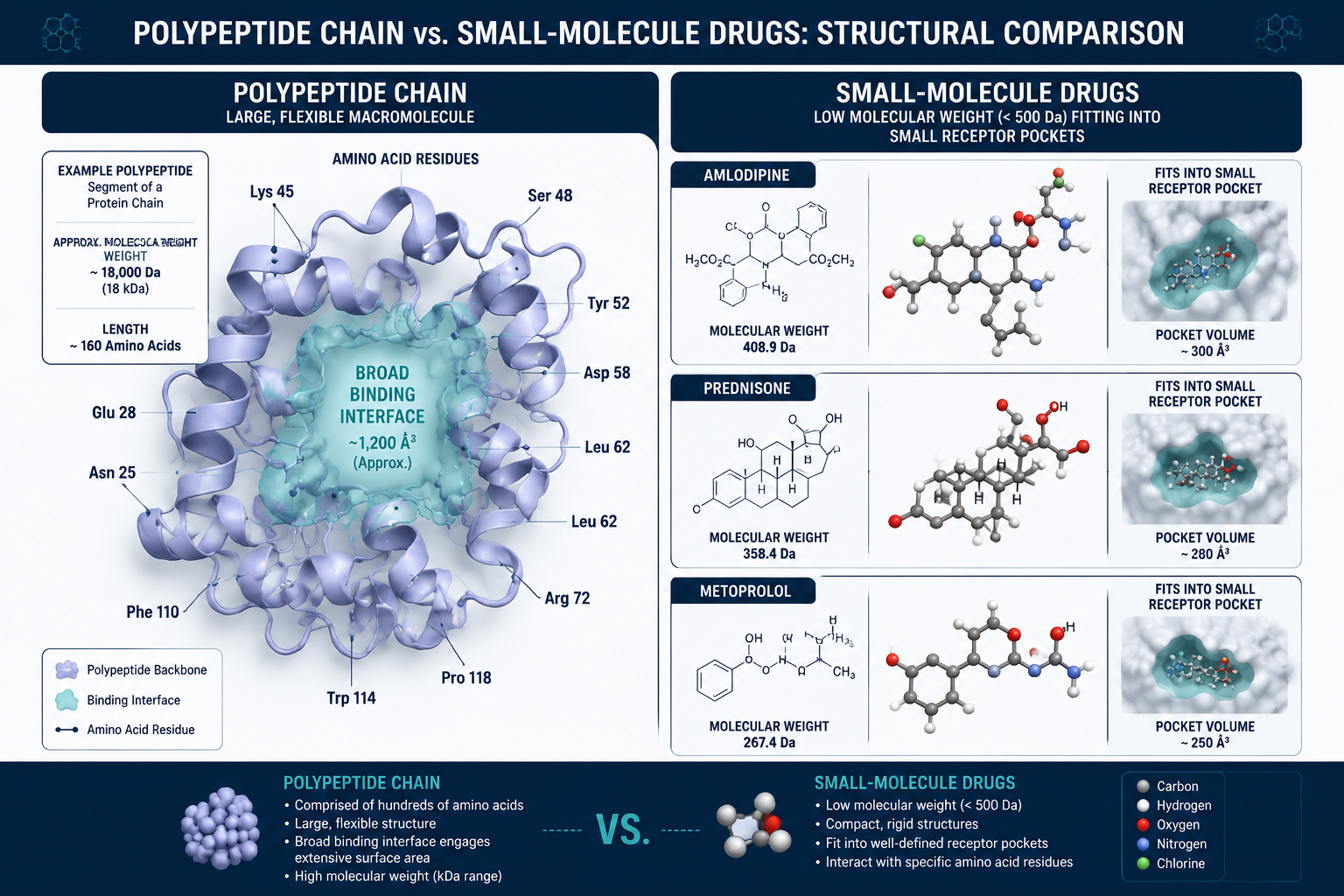
Polypeptide Peptides vs Small-Molecule Drugs: What Research on Amlodipine, Prednisone and Metoprolol Reveals About Mechanism Differences

June 23, 2026/0 Comments/by Pure Tested

Over 90% of approved drugs on the market today are small molecules — yet peptide-based therapeutics are advancing through clinical pipelines at a faster phase-transition rate than either small molecules or biologics. That contrast raises a precise and important question for researchers: what actually separates these two drug classes at the mechanistic level, and what do familiar drugs like amlodipine, prednisone, and metoprolol teach about those differences?

Understanding polypeptide peptides vs small-molecule drugs is no longer an abstract academic exercise. It shapes how researchers design experiments, select targets, and interpret pharmacological data.

Key Takeaways

  • Small molecules like amlodipine, prednisone, and metoprolol are rigid, low-molecular-weight compounds that bind precisely to defined receptor pockets.
  • Polypeptide peptides engage broad protein-protein interaction surfaces, functioning more like molecular Velcro than a key-in-lock mechanism.
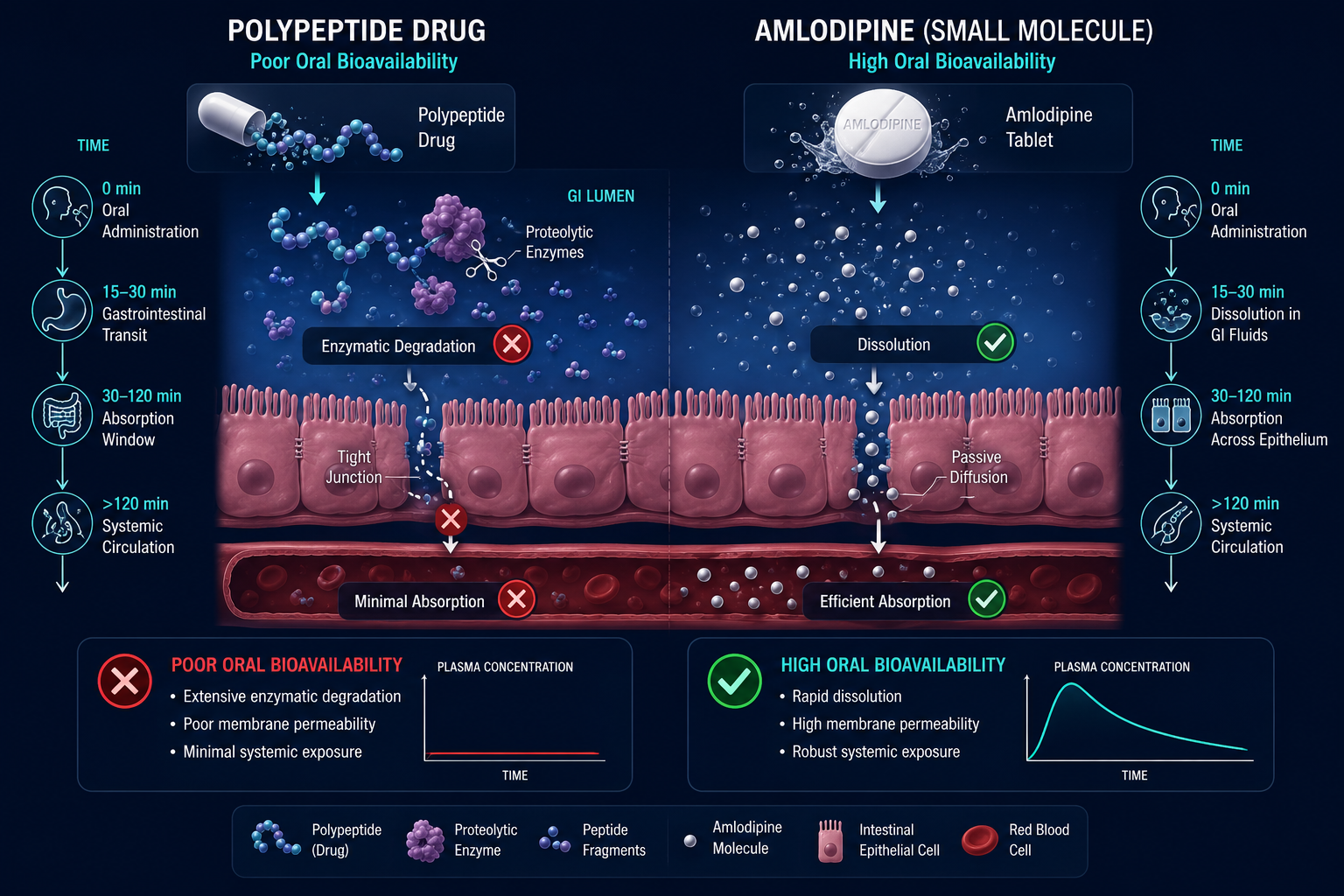
  • Small molecules generally offer oral bioavailability; peptides typically require alternative delivery due to enzymatic degradation.
  • Peptides face a conformational entropy cost upon binding that small molecules largely avoid.
  • Peptide clinical development is accelerating, with higher phase-1-to-phase-2 success rates than small molecules.

Key Takeaways

How Small Molecules Work: Lessons From Amlodipine, Prednisone, and Metoprolol

The three drugs most commonly cited in cardiovascular and anti-inflammatory research — amlodipine, prednisone, and metoprolol — are textbook examples of small-molecule pharmacology.

Amlodipine is a calcium channel blocker. It inhibits calcium ion influx into vascular smooth muscle and cardiac cells, producing vasodilation and reduced blood pressure. Its molecular weight sits well under 500 Daltons, and it binds with high precision to a defined pocket on the L-type calcium channel.

Prednisone is a synthetic glucocorticoid. It suppresses inflammation by inhibiting phospholipase A2, cutting off the production of prostaglandins and leukotrienes. Its mechanism depends on entering cells and modulating gene transcription — a task only possible because of its small size and lipophilicity.

Metoprolol selectively blocks beta-1 adrenergic receptors in the heart, reducing heart rate and myocardial contractility. Like the others, it achieves this through enthalpy-driven binding — matching hydrogen bond donors and acceptors within a compact receptor pocket.

"Small molecules derive binding affinity through precise geometric fit — they are rigid keys designed for specific locks."

This precision is their strength. It is also their limitation: small molecules struggle to disrupt large, flat protein-protein interaction (PPI) surfaces where no obvious pocket exists.

Polypeptide Peptides vs Small-Molecule Drugs: Receptor Targeting and Binding Mechanics

Polypeptides — chains of up to 40 amino acids — operate on fundamentally different principles. Rather than fitting into a small binding pocket, they spread across broad molecular interfaces, mimicking the surface of a protein partner. This makes them uniquely suited to disrupting PPIs that small molecules cannot reach.

However, this flexibility carries a cost. Peptides must shed conformational entropy — essentially paying a thermodynamic tax — to adopt the precise active shape required for binding. They exchange that flexibility for enthalpic stabilization upon target engagement. Small molecules, being structurally rigid, largely bypass this penalty.

Research on mitochondria-targeting peptides such as SS-31 (elamipretide) illustrates this well. SS-31 binds cardiolipin on the inner mitochondrial membrane — a large, diffuse lipid surface that no small molecule could engage with equivalent specificity. Explore the SS-31 mitochondrial research themes for a detailed look at this target engagement model.

Similarly, growth hormone secretagogue peptides like those reviewed in tesa peptide benefits research demonstrate how peptides activate receptor cascades through surface-level mimicry rather than pocket occupation.

Polypeptide Peptides vs Small-Molecule Drugs: Receptor Targeting and Binding Mechanics

Pharmacokinetics, Half-Life, and Tissue Specificity

This is where the practical gap between drug classes becomes most visible.

Property Small Molecules Polypeptide Peptides
Oral bioavailability Generally high Generally poor
Membrane permeability High (lipophilic) Low
Enzymatic stability Moderate to high Susceptible to proteolysis
Half-life Hours to days Minutes to hours (unmodified)
Tissue specificity Moderate High (surface-driven)

Amlodipine, prednisone, and metoprolol are all orally bioavailable precisely because their small size and lipophilicity allow passive diffusion across intestinal membranes. Peptides, by contrast, are broken down by proteases in the gut before reaching systemic circulation, which is why most peptide research protocols involve subcutaneous or intravenous delivery.

Tissue specificity tells a different story. Because peptides engage specific surface architectures, they can be engineered for highly targeted action. Research on MOTS-c metabolic flexibility and GLP-1 incretin research themes demonstrates how peptide ligands can preferentially activate receptors in metabolically relevant tissues with minimal off-target effects.

For researchers exploring peptide half-life optimization, CJC-1295 research themes offer a useful case study in how structural modifications extend plasma stability without sacrificing receptor specificity.

Polypeptide Peptides vs Small-Molecule Drugs: Clinical Trends and Research Implications

The clinical pipeline data reinforces these mechanistic distinctions. Peptides show higher phase-1-to-phase-2 success rates than small molecules, partly because their larger interaction surfaces allow more selective target engagement and a reduced likelihood of off-target toxicity.

Researchers investigating metabolic modulation, tissue repair, or neuroendocrine signaling increasingly look to peptides where small molecules have historically underperformed — particularly at PPI targets. The metabolic modulation research lines overview provides a useful reference for current peptide research directions in this space.

For quality-conscious researchers, ensuring compound integrity is essential. Reviewing quality testing protocols before sourcing any peptide for study is a practical first step.

Conclusion

The comparison of polypeptide peptides vs small-molecule drugs — illustrated through amlodipine, prednisone, and metoprolol — reveals two pharmacological philosophies operating at different scales and surfaces. Small molecules excel at precise, pocket-targeted inhibition with favorable oral pharmacokinetics. Peptides excel at broad surface engagement, PPI disruption, and tissue-selective signaling, at the cost of oral stability.

Actionable next steps for researchers in 2026:

  • Map your target: if it presents a defined binding pocket, a small molecule may suffice; if it involves a PPI surface, prioritize peptide candidates.
  • Account for delivery route early — peptide studies should plan for non-oral administration from the outset.
  • Review half-life data and consider modified analogs for extended in vivo study windows.
  • Cross-reference SS-31 dosage and timing research and tesa body composition research themes as model examples of peptide mechanistic study design.

Understanding these distinctions at a mechanistic level is the foundation of rigorous peptide research.

https://www.puretestedpeptides.com/wp-content/uploads/2026/01/buy-peptides-online.jpg 0 0 Pure Tested https://www.puretestedpeptides.com/wp-content/uploads/2026/01/buy-peptides-online.jpg Pure Tested2026-06-23 13:21:052026-07-20 15:02:21Polypeptide Peptides vs Small-Molecule Drugs: What Research on Amlodipine, Prednisone and Metoprolol Reveals About Mechanism Differences
GLP-3 Retatrutide vs. Polypeptide Peptides: A Comparative Research Guide to Metabolic Signaling Pathways

GLP-3 Retatrutide vs. Polypeptide Peptides: A Comparative Research Guide to Metabolic Signaling Pathways

June 19, 2026/0 Comments/by Pure Tested

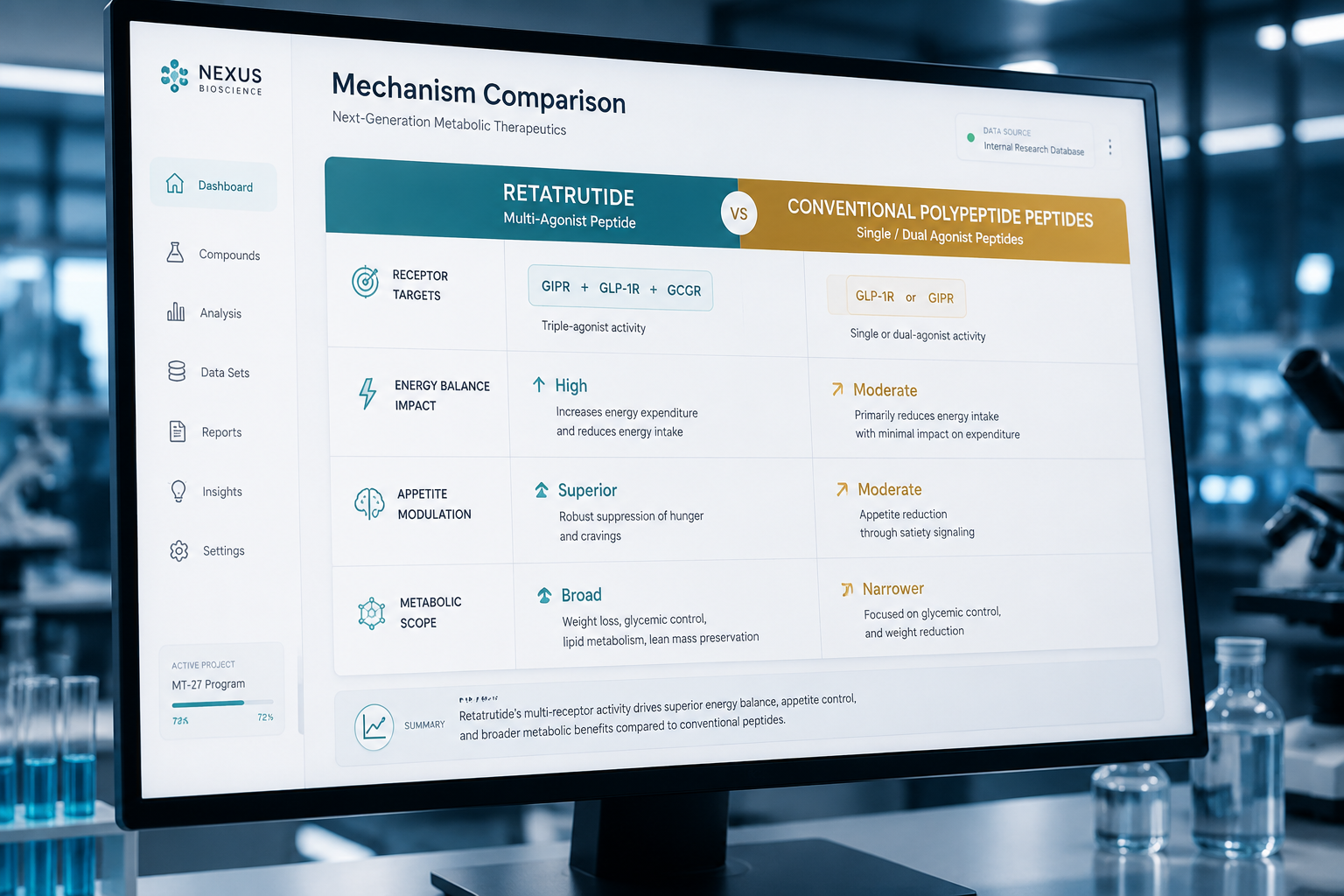
Metabolic peptide research has shifted dramatically — where single-receptor agents once dominated laboratory inquiry, a new class of multi-target molecules is redefining what researchers expect from incretin-based signaling. This guide to GLP-3 Retatrutide vs. Polypeptide Peptides: A Comparative Research Guide to Metabolic Signaling Pathways examines how retatrutide's triple-receptor mechanism compares to conventional polypeptide agents, giving researchers a clear framework for understanding the underlying biology.

Key Takeaways

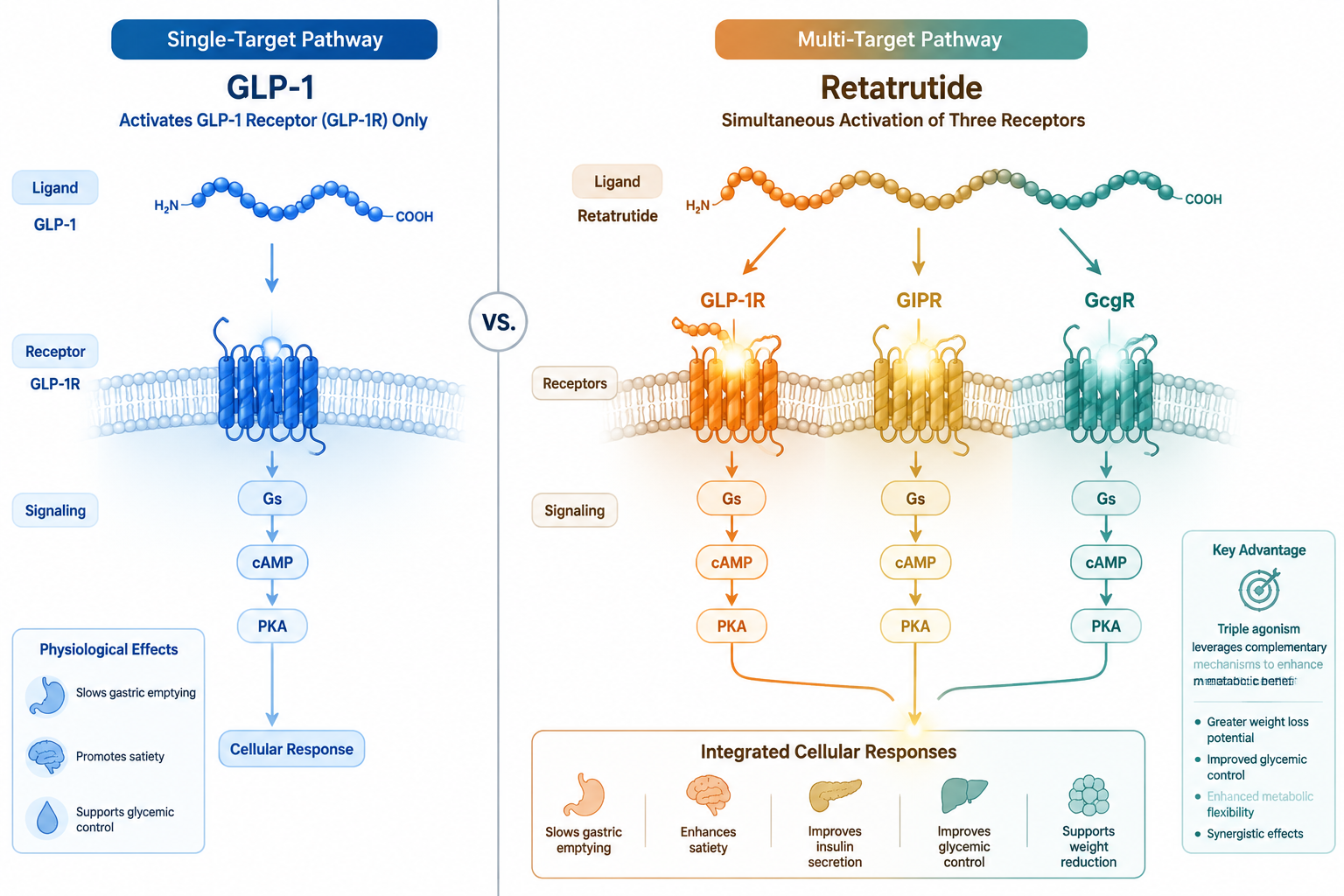
  • Retatrutide simultaneously activates three metabolic receptors: GLP-1R, GIPR, and the glucagon receptor (GcgR).
  • Conventional polypeptide peptides typically act on one or two receptor targets, producing narrower metabolic effects.
  • Triple agonism reshapes energy balance through complementary, overlapping signaling pathways.
  • Understanding receptor-level distinctions helps researchers design more targeted metabolic studies.
  • The term "GLP-3" is an informal research label — retatrutide's formal classification reflects its triple-agonist pharmacology.

Key Takeaways

Understanding the GLP-3 Label and Retatrutide's Classification

The label "GLP-3" circulates in research communities as shorthand for retatrutide, but it requires clarification. Retatrutide is not a third member of the glucagon-like peptide family in the classical sense. It is a synthetic triple agonist engineered to activate three distinct G-protein-coupled receptors simultaneously.

Conventional polypeptide peptides — including native GLP-1, GIP, and glucagon analogs — are typically single-receptor or, at most, dual-receptor agents. Their signaling is more contained. Retatrutide's design deliberately crosses those boundaries, which is why researchers studying GLP-3 Retatrutide incretin research themes often need a broader mechanistic framework than standard incretin models provide.

For context on how incretin generations have evolved, the overview of GLP-1 generations and their differences provides useful background on the progression from first-generation GLP-1 analogs to today's multi-agonist compounds.


Receptor-Level Mechanisms: How Retatrutide Differs from Conventional Polypeptide Peptides

This section of the GLP-3 Retatrutide vs. Polypeptide Peptides: A Comparative Research Guide to Metabolic Signaling Pathways focuses on what happens at the receptor level — the core distinction between retatrutide and standard polypeptide agents.

Receptor-Level Mechanisms: How Retatrutide Differs from Conventional Polypeptide Peptides

GLP-1 Receptor Activation

GLP-1R activation is shared by both retatrutide and conventional GLP-1 analogs. This pathway drives glucose-dependent insulin secretion, slows gastric emptying, and reduces appetite through both central nervous system and vagal nerve signaling. Single-agonist GLP-1 peptides operate primarily through this mechanism alone.

GIP Receptor Activation

GIPR activation adds a second layer. GIP further potentiates insulin release and modulates adipose tissue metabolism. Emerging research also suggests GIPR signaling may influence reward-related feeding behavior. Most traditional polypeptide peptides do not engage this receptor.

Glucagon Receptor Activation

GcgR activation is where retatrutide most clearly separates itself. Glucagon receptor signaling increases hepatic glucose output and, critically for metabolic research, raises resting energy expenditure. This thermogenic component is largely absent from conventional incretin peptides.

Receptor Retatrutide GLP-1 Analogs GIP Analogs
GLP-1R Yes Yes No
GIPR Yes No Yes
GcgR Yes No No
Thermogenic effect Yes Minimal Minimal

Researchers exploring complementary metabolic peptides such as MOTS-C, the mitochondrial peptide, will recognize that energy expenditure modulation is a recurring theme across multiple research-stage compounds — though the mechanisms differ significantly.


Metabolic Signaling Pathways: Triple Agonism vs. Conventional Peptide Approaches

The practical research value of the GLP-3 Retatrutide vs. Polypeptide Peptides: A Comparative Research Guide to Metabolic Signaling Pathways comparison lies in understanding how these mechanisms interact at the systems level.

Metabolic Signaling Pathways: Triple Agonism vs. Conventional Peptide Approaches

Triple agonism creates overlapping, reinforcing signals across three metabolic axes:

  • Insulin axis — amplified through both GLP-1R and GIPR co-activation
  • Appetite axis — suppressed via central GLP-1R pathways and potentially GIPR reward modulation
  • Energy expenditure axis — elevated through GcgR-driven thermogenesis

Conventional polypeptide peptides typically address one or two of these axes. Researchers studying body composition agents like Tesamorelin and its metabolic effects or AOD-9604 research methodology will note that each compound targets a narrower physiological window.

"Multi-receptor engagement is not simply additive — the convergence of three distinct signaling pathways creates metabolic effects that single-agonist models cannot fully replicate."

For researchers building broader metabolic panels, understanding cagrilintide's synergy with GLP-1 pathways also illustrates how combination approaches are increasingly central to advanced metabolic research design.

Those sourcing research-grade material can review GLP-3 Retatrutide product details for specification and traceability information.


Conclusion

The distinction between retatrutide and conventional polypeptide peptides is not merely a matter of degree — it reflects a fundamentally different approach to metabolic receptor engagement. Where single or dual-agonist peptides offer focused, well-characterized signaling, retatrutide's triple-agonist profile introduces a more complex, multi-axis mechanism that researchers must account for in study design.

Actionable next steps for researchers:

  1. Map which receptor pathways are relevant to your specific metabolic research question before selecting a peptide agent.
  2. Review the GLP-1 generations overview to contextualize retatrutide within the broader incretin research landscape.
  3. Cross-reference thermogenic and energy expenditure data when comparing triple-agonist results against single-receptor peptide benchmarks.
  4. Consult available innovative peptide delivery systems research to ensure study protocols reflect current best practices.

Understanding these mechanistic foundations is the starting point for rigorous, reproducible metabolic peptide research in 2026.

https://www.puretestedpeptides.com/wp-content/uploads/2026/06/GLP-3-Retatrutide-vs.-Polypeptide-Peptides-A-Comparative-Research-Guide-to-Metabolic-Signaling-Pathways.png 1024 1024 Pure Tested https://www.puretestedpeptides.com/wp-content/uploads/2026/01/buy-peptides-online.jpg Pure Tested2026-06-19 13:42:052026-07-20 15:02:42GLP-3 Retatrutide vs. Polypeptide Peptides: A Comparative Research Guide to Metabolic Signaling Pathways
Polypeptide Peptides in Modern Lab Research: From Structure to Synthesis Workflows

Polypeptide Peptides in Modern Lab Research: From Structure to Synthesis Workflows

June 3, 2026/0 Comments/by Pure Tested

Over 7,000 naturally occurring peptides have been identified in the human body, yet the synthetic peptide research market continues to expand rapidly as labs unlock new biological applications. The study of polypeptide peptides in modern lab research: from structure to synthesis workflows sits at the intersection of structural biochemistry, computational design, and precision manufacturing — a convergence that is reshaping how researchers approach GLP receptor agonism, growth hormone secretagogue design, and mitochondrial-targeted compounds in 2026.

Key Takeaways

  • Peptides are short chains of 2 to 50 amino acids; polypeptides extend beyond that range, and both categories are central to modern biomedical research.
  • Solid-phase peptide synthesis (SPPS) remains the dominant method for producing research-grade peptides with high precision and reproducibility.
  • Sequence design, solubility, and amino acid selection critically determine whether a synthesized peptide performs as intended.
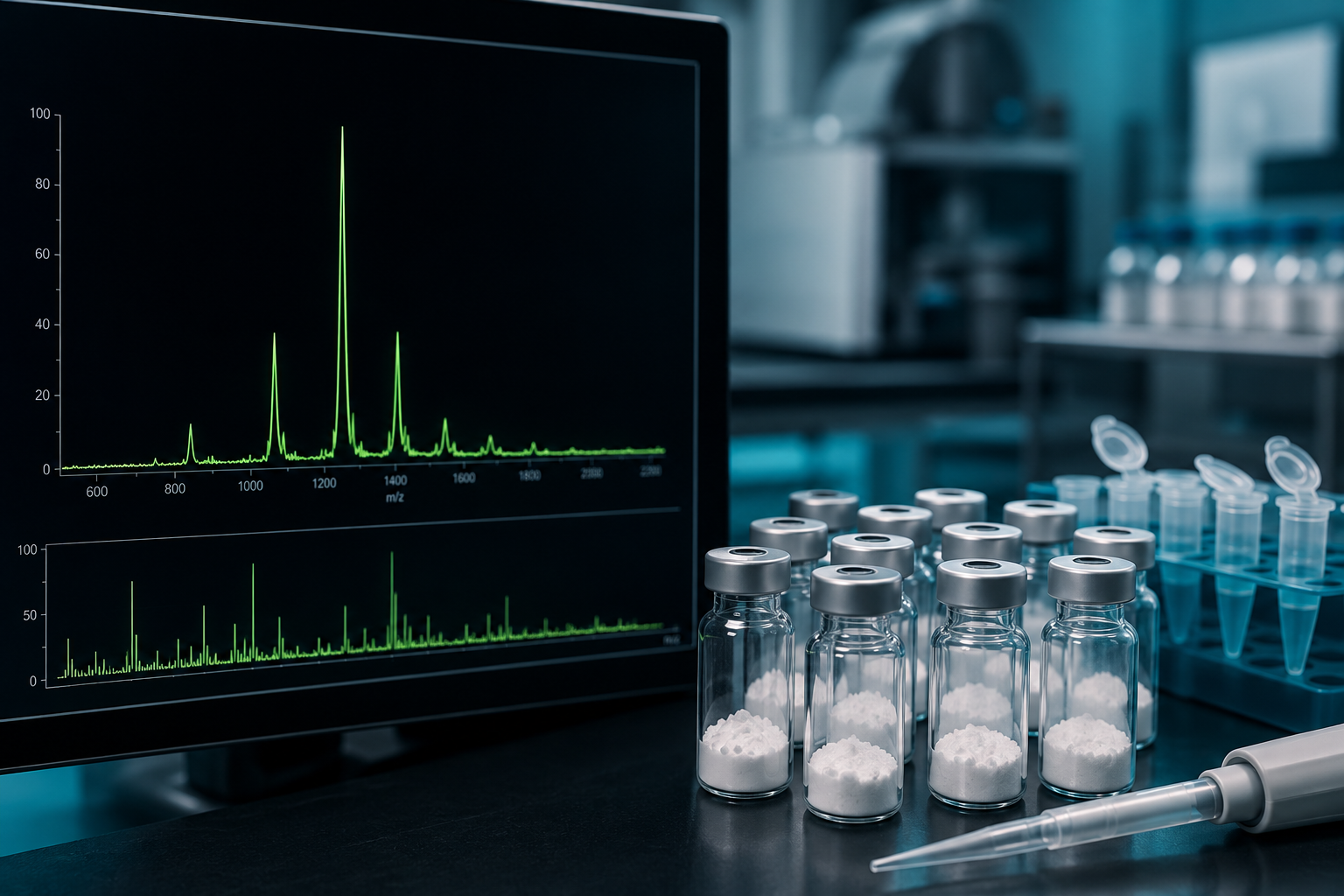
  • Quality control via HPLC and mass spectrometry is non-negotiable for validating peptide purity before research use.
  • Specialized research peptides — including GH secretagogues, GLP-class compounds, and mitochondria-targeting sequences — follow the same foundational synthesis principles but require additional design considerations.

Key Takeaways

Understanding Peptide Structure: The Foundation of Research Design

Every synthesis workflow begins with a clear understanding of molecular architecture. Peptides form when amino acids link together through peptide bonds — covalent connections created by condensation reactions between the carboxyl group of one amino acid and the amino group of the next. The resulting chain adopts secondary structures including alpha-helices and beta-sheets, which directly influence biological activity.

Structural Level Description Research Relevance
Primary Linear amino acid sequence Determines identity and function
Secondary Alpha-helix, beta-sheet Affects receptor binding geometry
Tertiary 3D folding Critical for target specificity

Sequence length matters significantly. Peptides of 5 to 20 residues are often sufficient for receptor interaction studies, while longer polypeptides may be required for enzyme mimicry or scaffold-based applications. Researchers designing compounds like GHK-Cu for longevity and tissue research must account for how tripeptide geometry enables copper chelation — a property entirely dependent on primary sequence.

Solubility is another early-stage consideration. Hydrophobic sequences tend to aggregate, reducing yield and complicating purification. Incorporating charged residues or using solubility-enhancing tags can address this during the design phase rather than after synthesis has begun.


Solid-Phase Peptide Synthesis: The Core Workflow for Modern Lab Peptides

Solid-Phase Peptide Synthesis: The Core Workflow for Modern Lab Peptides

Robert Bruce Merrifield's introduction of SPPS in 1963 transformed peptide chemistry from a slow, solution-based process into a scalable, automatable workflow. The method anchors the growing peptide chain to an insoluble resin support, allowing reagents and solvents to be washed away between each coupling step without losing the target compound.

The standard SPPS workflow proceeds as follows:

  1. Resin loading with the first protected amino acid
  2. Deprotection of the terminal amine
  3. Coupling of the next amino acid using activating reagents
  4. Washing and repeat cycling through the full sequence
  5. Global deprotection and cleavage from the resin
  6. Purification by reverse-phase HPLC
  7. Characterization by mass spectrometry

Recent protocol refinements have focused on reducing aggregation during chain elongation — a persistent challenge when synthesizing hydrophobic or beta-sheet-prone sequences. Pseudoproline dipeptide building blocks and microwave-assisted coupling have both improved outcomes for difficult sequences.

This workflow applies directly to the synthesis of research compounds like tesa and CJC-1295, both of which are growth hormone-releasing hormone analogs requiring precise sequence fidelity to maintain receptor selectivity. Similarly, MOTS-c, a mitochondria-derived peptide studied for metabolic regulation, demands high synthesis accuracy given its short but functionally dense 16-amino-acid sequence.

For researchers exploring incretin biology, compounds such as those covered in GLP-1 dual receptor agonism research illustrate how incremental sequence modifications — often single residue substitutions — can dramatically shift receptor binding profiles and metabolic outcomes.


Quality Control and Research-Grade Standards in Peptide Synthesis Workflows

Quality Control and Research-Grade Standards in Peptide Synthesis Workflows

Polypeptide peptides in modern lab research: from structure to synthesis workflows are only as valuable as the purity standards applied at the end of production. Two analytical tools dominate quality assurance:

  • Reverse-phase HPLC — separates peptide from truncated sequences, deletion products, and synthesis byproducts; purity above 95% is standard for research use
  • Mass spectrometry — confirms molecular weight and detects sequence errors or incomplete deprotection

Stability profiling is equally important. Lyophilized peptides stored at -20°C generally maintain integrity longer than reconstituted solutions. Researchers should always verify reconstitution conditions against the specific peptide's isoelectric point and solubility profile.

Benchmarking synthesis quality against established reference standards — as discussed in resources covering Bachem and reference standards for peptide benchmarks — helps labs maintain reproducibility across experimental batches. This is especially critical when comparing data across institutions or scaling from discovery to preclinical stages.

Peptidomics workflows have further elevated quality expectations. Modern peptidomics integrates genetic analysis, peptide characterization, and computational processing to handle complex biological samples and enrich low-abundance peptides — requiring that any synthetic reference compound used in such studies meets strict purity criteria.


Conclusion

Understanding polypeptide peptides in modern lab research: from structure to synthesis workflows is not optional for researchers who want reproducible, meaningful results. The path from sequence design to purified compound involves deliberate decisions at every stage — amino acid selection, synthesis strategy, coupling chemistry, and analytical validation.

Actionable next steps for researchers in 2026:

  • Audit current peptide design protocols against solubility and aggregation risk factors before initiating synthesis
  • Standardize HPLC purity thresholds at 95% or above for all research-grade compounds
  • Cross-reference synthesis workflows with published benchmarks to ensure batch-to-batch consistency
  • Explore the comprehensive peptide catalog to identify well-characterized research compounds relevant to GH axis, metabolic, and mitochondrial research lines
  • Review metabolic modulation research lines for context on how synthesized peptides are being applied in current experimental models

Precision at the synthesis stage protects the integrity of every downstream experiment.


https://www.puretestedpeptides.com/wp-content/uploads/2026/06/Polypeptide-Peptides-in-Modern-Lab-Research-From-Structure-to-Synthesis-Workflows.png 672 1024 Pure Tested https://www.puretestedpeptides.com/wp-content/uploads/2026/01/buy-peptides-online.jpg Pure Tested2026-06-03 13:05:382026-07-20 15:04:11Polypeptide Peptides in Modern Lab Research: From Structure to Synthesis Workflows
Understanding Polypeptide Peptides: Essential Building Blocks for Research Use Only

Understanding Polypeptide Peptides: Essential Building Blocks for Research Use Only

June 3, 2026/0 Comments/by Pure Tested

Roughly 22% of commercially available research peptides fail basic quality checks — a sobering figure that underscores why researchers must understand exactly what polypeptides are, how they are made, and what standards govern their use. Understanding polypeptide peptides: essential building blocks for research use only begins with grasping their molecular identity and the strict boundaries that define legitimate scientific application.

Close-up macro photograph of a molecular model of amino acid chains linked by peptide bonds, rendered in three-dimensional

Key Takeaways

  • Polypeptides are chains of more than 20 amino acids linked by peptide bonds, making them structurally distinct from shorter peptides.
  • They serve as hormones, signaling molecules, and structural components in biological systems.
  • Research-grade polypeptides are synthesized for laboratory use only and are not approved for human or animal administration.
  • Purity standards of 98% or higher are the benchmark for credible research peptide suppliers.
  • Regulatory classification as "For Research Use Only" (RUO) carries significant legal and ethical implications.

What Are Polypeptides and Why Do They Matter in Research

At the most fundamental level, a polypeptide is a polymer — a long chain of amino acids connected end-to-end through peptide bonds. The threshold that separates a polypeptide from a simpler peptide is generally accepted as 20 or more amino acids in sequence. Once a chain reaches sufficient length and folds into a defined three-dimensional shape, it becomes a functional protein.

This structural distinction is not merely academic. In laboratory settings, the length and sequence of an amino acid chain directly determines how a molecule behaves, what receptors it interacts with, and what biological pathways it may influence. Researchers studying metabolic regulation, tissue repair, or cellular signaling must select compounds with precision.

Why polypeptides are central to biological research:

Property Significance
Chain length (20+ amino acids) Enables complex folding and receptor specificity
Peptide bond stability Allows predictable behavior in controlled assays
Sequence variability Supports diverse research targets
Hormonal activity Models endogenous signaling for study

Polypeptides function as hormones, enzymes, and signaling molecules throughout living systems. Compounds such as BPC-157 and GHK-Cu are studied precisely because their amino acid sequences mimic or modulate naturally occurring biological activity, making them valuable tools for in-vitro investigation.


Synthesis, Purity, and the Research Use Only Framework

Synthesis, Purity, and the Research Use Only Framework

Understanding polypeptide peptides: essential building blocks for research use only requires a clear view of how these compounds are produced and what quality standards apply.

How Research Peptides Are Made

The dominant manufacturing method is Solid-Phase Peptide Synthesis (SPPS). In this process, amino acids are added one at a time to a growing chain anchored to a solid resin support. This sequential approach allows chemists to build highly specific sequences with controlled accuracy. After synthesis, the peptide is cleaved from the resin, purified, and analyzed.

High-quality research peptides should achieve a purity level of at least 98%, with premium-tier suppliers reaching 99% or above. Purity directly affects experimental reliability. A peptide with significant impurities introduces variables that can compromise data integrity.

"Purity is not a marketing claim — it is the foundation of reproducible science."

Researchers sourcing compounds such as Tesamorelin or CJC-1295 should request certificates of analysis (CoA) that confirm third-party purity testing before use.

The "For Research Use Only" Designation

The RUO label is not a formality. Peptides classified as research use only have not undergone the clinical trials, sterility testing, or manufacturing controls required for pharmaceutical approval. They are intended exclusively for in-vitro laboratory research — meaning controlled experiments outside of living organisms.

Key distinctions between research-grade and pharmaceutical-grade peptides:

  • Research-grade: synthesized for laboratory assays, no sterility mandate for human use
  • Pharmaceutical-grade: manufactured under strict Good Manufacturing Practice (GMP) standards, approved for clinical administration
  • RUO products: not tested or approved by the FDA for human or animal consumption

Compounds like MOTS-c and Epithalon are actively studied in research contexts, but their RUO status means they remain outside the scope of approved therapeutic use.


Selecting Quality Polypeptides for Legitimate Research Applications

Understanding polypeptide peptides: essential building blocks for research use only also means knowing how to evaluate suppliers and avoid substandard products. Independent analyses have found dose inaccuracies exceeding 20% in a meaningful share of commercially available research peptides — a risk that can invalidate entire study protocols.

Selecting Quality Polypeptides for Legitimate Research Applications

Checklist for evaluating a research peptide supplier:

  • Published certificates of analysis from independent third-party laboratories
  • Clearly stated purity percentages per batch
  • Transparent synthesis methods and storage recommendations
  • Compliance with RUO labeling requirements
  • No claims suggesting human or animal use

Researchers exploring innovative peptide delivery systems should also consider how formulation affects compound stability and bioavailability in experimental models. For those comparing sourcing options, reviewing peptide supplier comparisons can provide useful context for making informed procurement decisions.


Conclusion

Polypeptides are far more than long chains of amino acids — they are the molecular tools that drive some of the most important questions in modern biological research. A clear understanding of their structure, synthesis, purity requirements, and regulatory classification is essential for any researcher working with these compounds in 2026.

Actionable next steps for researchers:

  1. Verify the purity and CoA documentation of any polypeptide before incorporating it into a study protocol.
  2. Confirm that all compounds are sourced from suppliers who clearly label products as research use only.
  3. Review the specific amino acid sequence and known biological activity of a polypeptide to ensure it aligns with the research objective.
  4. Stay current with regulatory updates affecting the RUO classification in your jurisdiction.
  5. Consult peer-reviewed literature to contextualize in-vitro findings before drawing broader conclusions.

Rigorous sourcing and a firm grasp of the research use only framework are not optional — they are the baseline for credible, reproducible science.


https://www.puretestedpeptides.com/wp-content/uploads/2026/06/Understanding-Polypeptide-Peptides-Essential-Building-Blocks-for-Research-Use-Only.png 672 1024 Pure Tested https://www.puretestedpeptides.com/wp-content/uploads/2026/01/buy-peptides-online.jpg Pure Tested2026-06-03 13:03:422026-07-20 15:04:12Understanding Polypeptide Peptides: Essential Building Blocks for Research Use Only
×

Helpful Links

  • My account
  • Cart
  • Checkout
  • Refund and Returns Policy
  • Privacy Policy
  • SMS Privacy Policy
  • Login
  • My Account
  • Logout

USA Made Lab Tested Peptides

All products are sold for research, laboratory, or analytical purposes only, and are not for human consumption


Pure Tested Peptides is a chemical supplier. Pure Tested Peptides is not a compounding / chemical compounding facility as defined under 503A of the Federal Food, Drug, and Cosmetic act. Pure Tested Peptides is not an outsourcing facility as defined under 503B of the Federal Food, Drug, and Cosmetic act.

The statements made within this website have not been evaluated by the US Food and Drug Administration. The products we offer are not intended to diagnose, treat, cure or prevent any disease.
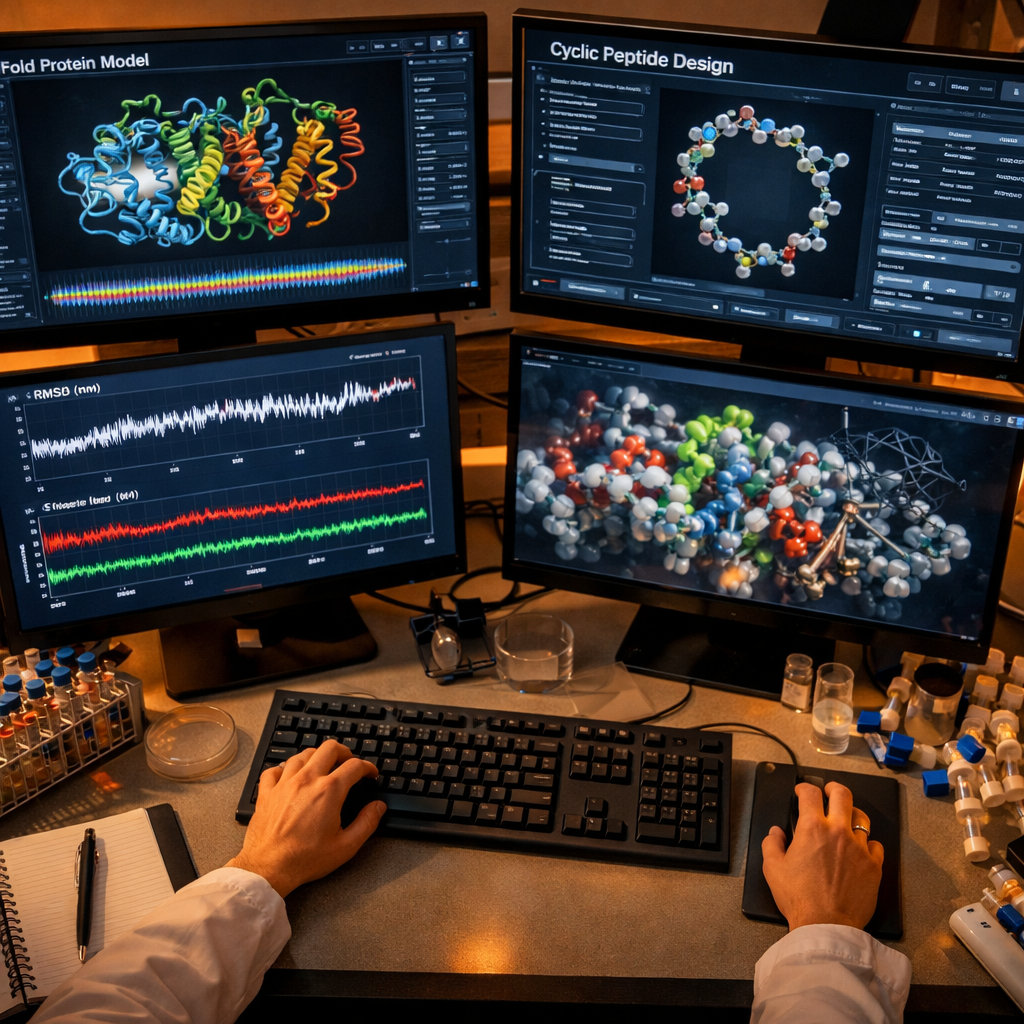
Human/Animal Consumption Prohibited. Laboratory/In-Vitro Experimental Use Only
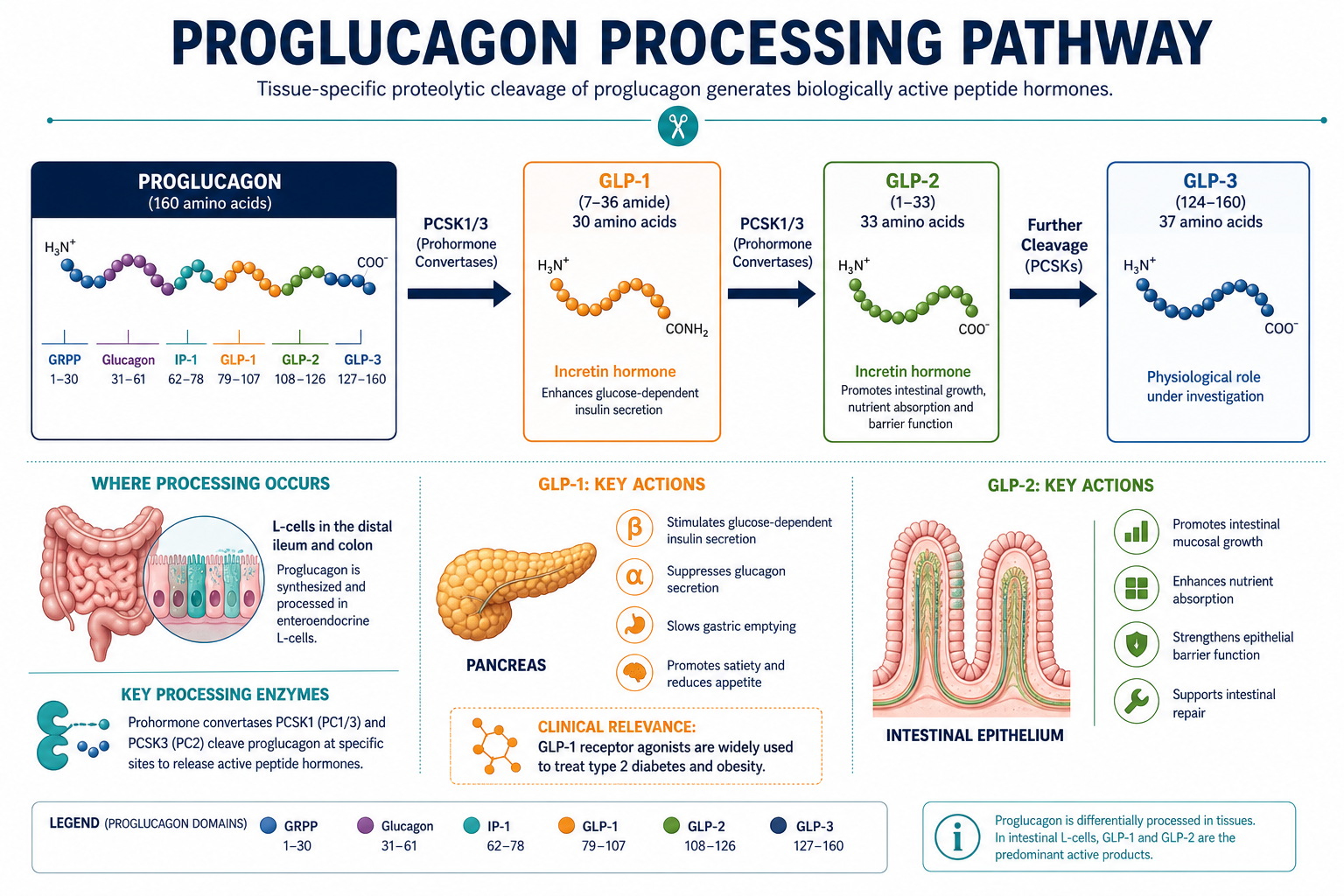
Scroll to top Scroll to top Scroll to top