

Polypeptide Peptides Explained: Structure, Function, and Research Applications
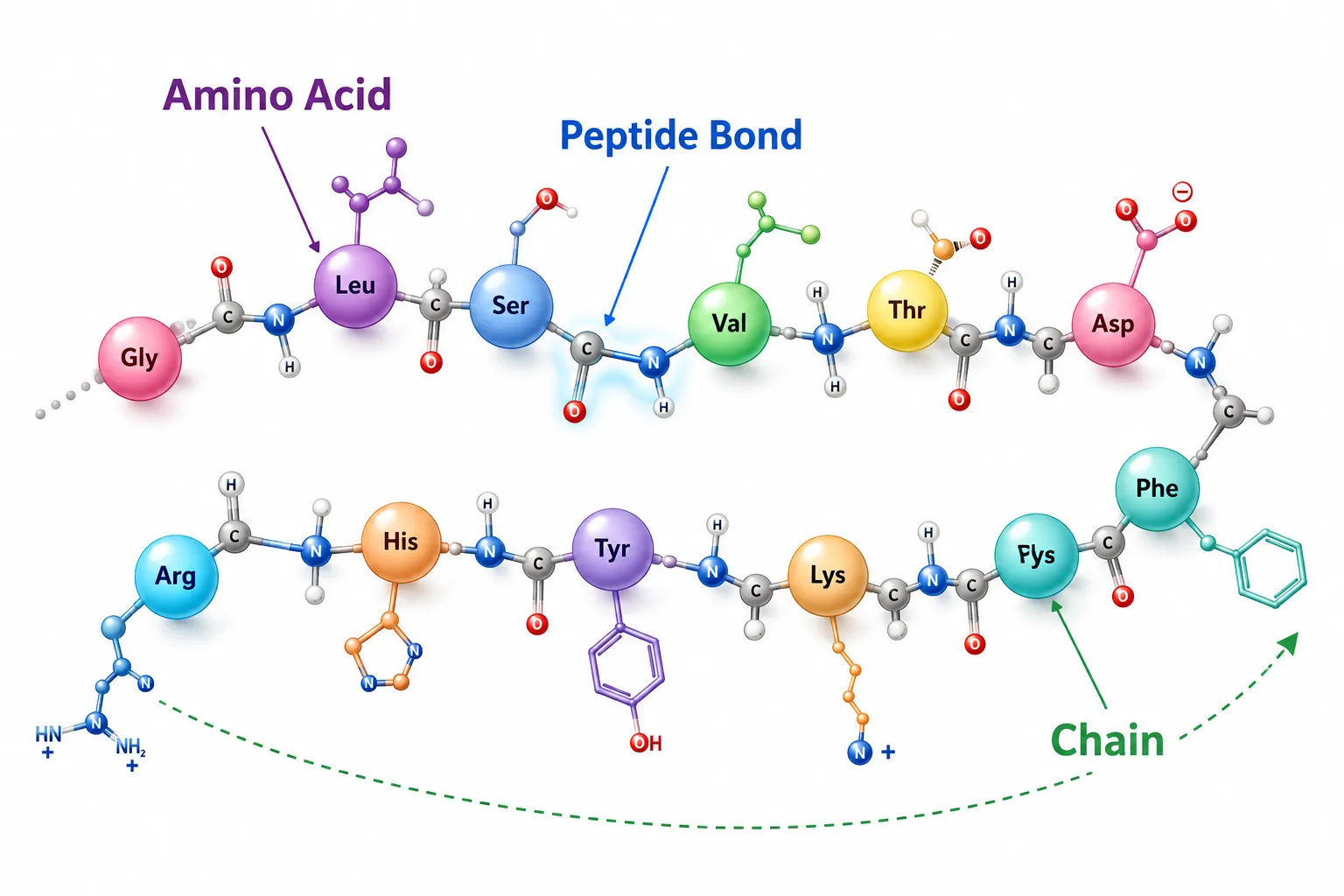
More than half of all approved biologic drugs in 2026 are derived from or inspired by naturally occurring peptide sequences, a fact that underscores just how central these molecules have become to modern science. Whether the goal is understanding cellular signaling, designing antimicrobial agents, or developing next-generation therapeutics, a solid grasp of polypeptide peptides explained through structure, function, and research applications is essential for anyone working in biochemistry, pharmacology, or life sciences research.
Key Takeaways
- Polypeptides are chains of amino acids linked by peptide bonds; chain length determines whether a molecule is classified as a peptide, polypeptide, or protein.
- Three-dimensional structure, including alpha-helices and beta-sheets, directly governs biological function.
- Antimicrobial peptides, signaling peptides, and enzyme inhibitors represent major functional categories with active research pipelines.
- Oral delivery of peptide-based compounds remains a key challenge, though 2026 has seen landmark progress with approved oral peptide-like drugs.
- Structural modifications such as cyclization, D-amino acid substitution, and lipidation are standard tools for improving peptide stability and potency in research settings.
What Are Polypeptides? Definitions and Chain Length
The term "peptide" describes any short chain of amino acids joined by covalent peptide bonds. The prefix "poly" simply means many, so a polypeptide is a longer chain, typically more than 10 amino acids. In practice, researchers use the following rough classifications:
| Term | Approximate Chain Length | Common Examples |
|---|---|---|
| Dipeptide / Oligopeptide | 2-9 amino acids | Carnosine, glutathione |
| Polypeptide | 10-50 amino acids | BPC-157, TB-500 analogs |
| Protein | 50+ amino acids | Insulin, growth hormone |
These boundaries are not rigid. Insulin, for instance, contains 51 amino acids but is functionally treated as a protein. What matters most in research is not the exact count but how the chain folds, what receptors it binds, and how stable it is under physiological conditions.
For researchers sourcing specific compounds, browsing a curated peptide sale collection can help identify well-characterized research-grade options across multiple peptide classes.
Structure: How Amino Acid Sequences Become Functional Molecules
Understanding polypeptide peptides explained at the structural level requires looking at four organizational tiers:
- Primary structure, the linear sequence of amino acids. This sequence encodes all downstream folding behavior.
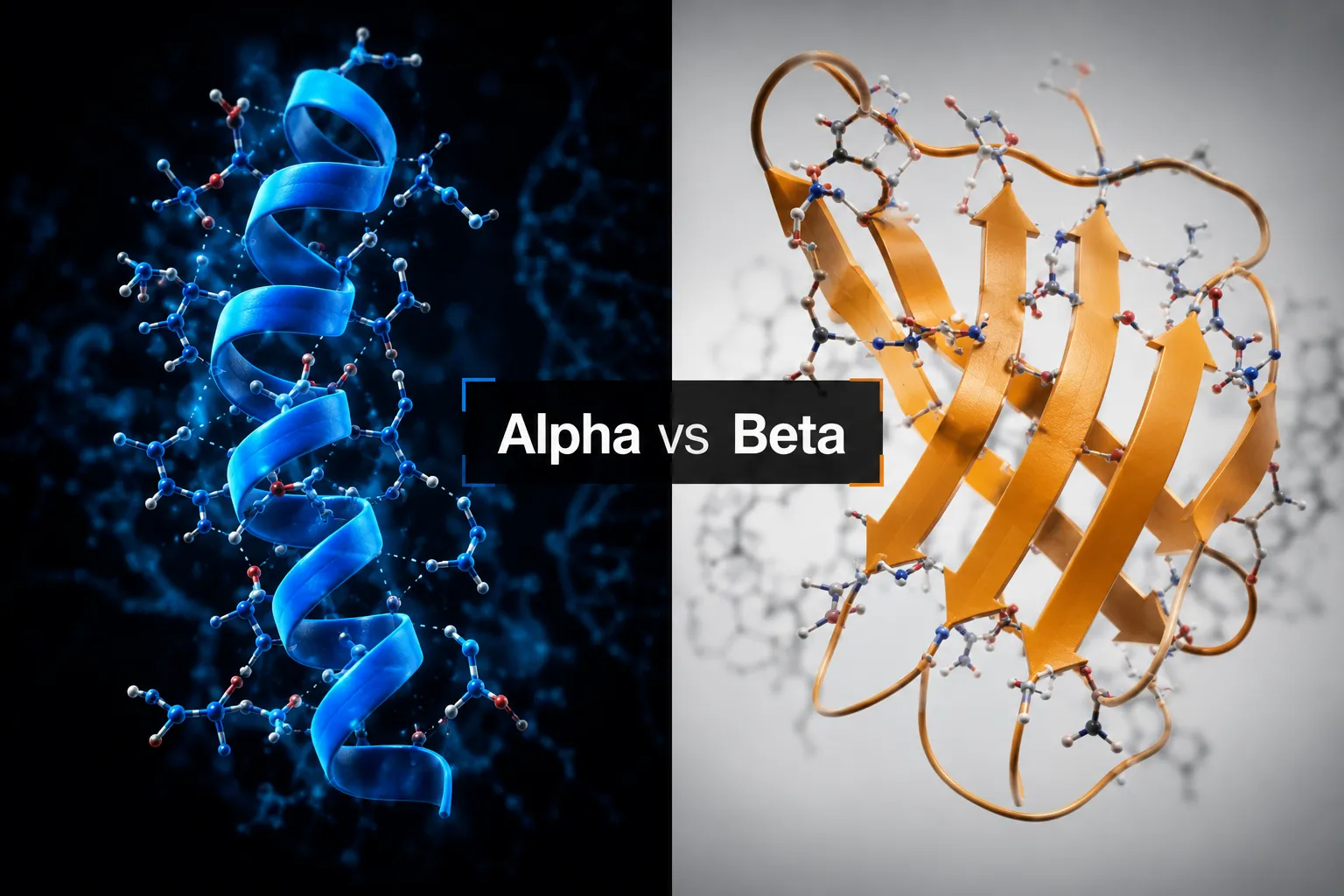
- Secondary structure, local folding patterns. The two most common are:
- Alpha-helices: coiled, rod-like segments stabilized by hydrogen bonds
- Beta-sheets: flat, sheet-like arrangements of parallel or antiparallel strands
- Tertiary structure, the overall three-dimensional shape of a single chain.
- Quaternary structure, relevant when multiple polypeptide chains assemble into a complex (e.g., hemoglobin).
"Biological activity is governed by sequence, conformation, and chemical modifications, not chain length alone."
Chemical modifications add another layer of complexity. Cyclization (forming a ring structure), N-methylation, and side-chain conjugation all alter how a peptide folds, how resistant it is to enzymatic degradation, and how selectively it binds its target. These modifications are not cosmetic, they are precision tools that researchers use to tune performance.
Function: What Polypeptide Peptides Actually Do
Polypeptides carry out an enormous range of biological roles. The major functional categories relevant to current research include:
Signaling peptides act as hormones or neurotransmitters. GLP-1 (glucagon-like peptide-1) is a well-studied example; it regulates insulin secretion and appetite. Researchers interested in metabolic signaling often explore GLP-1 peptides as part of broader studies on energy homeostasis.
Antimicrobial peptides (AMPs) are structurally diverse polypeptides, often cationic and amphipathic, that selectively disrupt microbial membranes or interact with intracellular bacterial targets. Their amphipathic nature (having both hydrophilic and hydrophobic regions) allows them to embed into lipid bilayers. Bacteria can develop resistance through protease degradation, membrane remodeling, or efflux pumps, which is why researchers use D-amino acid substitution and cyclization to improve AMP stability.
Repair and regeneration peptides such as BPC-157 analogs have drawn significant research interest for their roles in tissue repair pathways. Those exploring this area can review available X Peptides BPC options for research-grade compounds.
Mitochondria-targeting peptides represent a newer frontier. SS-31 is a tetrapeptide that accumulates in the inner mitochondrial membrane and has been studied for its antioxidant properties. Detailed notes on SS-31 mitochondrial research themes provide useful context for investigators in this area.
Growth hormone-related peptides such as Tesamorelin work by stimulating endogenous hormone release. A review of Tesamorelin peptide benefits outlines the research rationale behind this compound class.
Research Applications: Polypeptide Peptides Explained in Practice
The translation from structural understanding to applied research has accelerated considerably. Key application areas in 2026 include:
Oral Peptide Delivery
Historically, peptides required injection because oral administration exposed them to enzymatic degradation in the gut, poor intestinal permeability, and first-pass liver metabolism. Three strategies have emerged to overcome these barriers:
- Chemical modification: cyclization, N-methylation, and PEGylation
- Formulation engineering: enteric coatings, lipid nanoparticles, and polymeric carriers
- Permeation enhancers: co-administered agents that transiently open tight junctions
In 2026, Eli Lilly's orforglipron (Foundayo) received FDA approval as a once-daily oral GLP-1 receptor agonist for weight management, a landmark that demonstrates the oral barrier for peptide-like compounds can be overcome at commercial scale. Merck's oral macrocyclic peptide PCSK9 inhibitor MK-0616 has also completed Phase 3 trials and proceeded to a New Drug Application for hypercholesterolemia.
Non-Injectable Delivery Routes
Nasal, transdermal, and microneedle delivery systems are moving toward clinical validation. Microneedle patches, in particular, allow polypeptides to bypass the skin barrier without injection, opening doors for patient-friendly administration of larger peptide molecules.
Peptide Libraries and Structural Screening
High-throughput peptide synthesis allows researchers to build libraries of thousands of sequence variants, screen them for receptor binding or antimicrobial activity, and identify lead candidates rapidly. Compounds like TB500 peptides and Epithalon peptide are among those that have emerged from research pipelines focused on regenerative and longevity-related mechanisms.

Conclusion
Polypeptide peptides explained through structure, function, and research applications reveal a field that is both foundational to biology and actively expanding at the clinical frontier. The core principle, that amino acid sequence determines three-dimensional shape, and shape determines function, underpins every therapeutic design decision, from antimicrobial peptide engineering to oral GLP-1 drug development.
Actionable next steps for researchers:
- Map the structural class (alpha-helix, beta-sheet, cyclic) of any peptide before designing experiments, as this predicts stability and delivery challenges.
- Evaluate chemical modification strategies (cyclization, D-amino acid substitution) when working with protease-sensitive sequences.
- Stay current with oral delivery advances, the approval landscape in 2026 signals that formulation barriers once considered insurmountable are now tractable.
- Source compounds from verified, tested suppliers; reviewing options at established peptide stores ensures traceability and purity documentation for research use.
The structural logic of polypeptides is not abstract chemistry, it is the blueprint for the next generation of targeted, deliverable, and effective research tools.


Leave a Reply
Want to join the discussion?Feel free to contribute!