Call or Text 727-513-9780
  • Shopping Cart Shopping Cart
    0Shopping Cart
Pure Tested Peptides | America's most trusted Peptides for sale online
  • Peptides for sale
    • Oral Peptides for sale
      • Peptide Capsules for sale
      • BPC 157 Capsules 1000mcg
      • SLU-PP-332 Capsules | 1000 mcg
      • 5-Amino-1MQ 50mg Capsules
      • Tesofensine 500mcg
    • All Peptides for sale
    • Peptide Sprays
      • BPC 157 Nasal Spray Kit
      • BPC-157 TB500 Nasal Spray Kit
      • Semax Nasal Spray 10mg
      • Selank – Nasal Spray Kit – 10mg
      • Epithalon 50MG Nasal Spray Kit
      • Ipamorelin 10mg Nasal Spray
      • Klow Nasal Spray (BPC-157 + TB-500 + GHK-Cu + KPV) | 80mg
      • Hulk Nasal Spray Tesa / Ipa Blend 6/3 MG
      • Klow Nasal Spray
      • NAD + 500 mg Nasal Spray
      • PT-141 Nasal Spray Kit
    • GHRH Peptides
      • Ipa Peptides
      • CJC-1295 Peptides
        • CJC-1295 with DAC 5 mg
        • CJC-1295 without DAC 5 mg
        • CJC-1295 Ipa 10mg
      • Tesa Peptides
        • Tesa Peptide
        • Tesa 20 mg
    • GHK-Cu Peptides
      • All GHK-Cu Peptides
      • GHK-Cu 100mg
      • KLOW Peptide Blend – Buy KLOW blend online
    • BPC Peptides
      • All BPC Peptides
      • BPC-157
      • BPC-157 TB-500
      • BPC 157 capsules 1000mcg
    • SLU-PP-332 Peptides
      • All SLU-PP-332 Peptides
      • SLU-PP-332 5mg
    • GLP3 Peptides
    • PT-141 Peptides
      • PT-141 Peptides for sale
      • PT-141 10mg
      • PT-141 Nasal Spray
    • CAG Peptides
      • Lipo-C Peptide Blend
      • CAG 5mg
      • CAG 10mg
    • MOTS-C Peptides
      • MOTS-C Peptides for sale
      • MOTS-c peptide
      • MOTS-c 10mg *6 pack*
    • 5 Amino 1MQ Peptides
      • 5 Amino 1MQ Peptides for sale
      • 5-Amino-1MQ 50mg Capsules
      • 5-Amino-1MQ 5mg
    • Epithalon Peptides
      • Epithalon Peptides for sale
      • Epithalon 10mg
      • Epithalon 50mg
  • Shop
    • GLPs
      • 5-Amino-1MQ 50mg Capsules
      • 5-Amino-1MQ 5mg
      • L-Carnitine 500mg/ml
      • Tesofensine 500mcg
      • SLU-PP-332 5mg
      • MOTS-c 10mg *6 pack*
    • Epithalon & BPC Peptides
      • Epithalon 10mg
      • Epithalon 50mg
      • BPC-157
      • BPC 157 capsules 1000mcg
      • BPC-157 TB-500
      • BPC-157 TB500 Nasal Spray Kit
      • BPC 157 Nasal Spray Kit
    • BPC TB-500 & NAD+ Peptides
      • NAD+ 500 mg
      • KLOW Peptide Blend – Buy KLOW blend online
      • GLOW Peptide Blend
      • TB 500 5mg
      • BPC 157 capsules 1000mcg – Supplement
      • BPC 157 Nasal Spray Kit
      • BPC-157
      • BPC-157 TB500 Nasal Spray Kit
      • BPC-157 TB-500
      • BPC 157 capsules 1000mcg
    • LL-37 Peptide
      • LL-37 10 mg
    • MOTS-C & Selank
      • MOTS-c peptide
      • Selank 10mg
    • GHK Peptides
      • GHK-Cu 100mg
      • GLOW Peptide Blend
      • KLOW Peptide Blend – Buy KLOW blend online
  • COAs
  • Wholesale
    • Wholesale Peptides for sale
  • PTP FAQ
  • Affiliates
    • Selank Peptide: Advanced Pharmacological Mechanisms Underlying Its Anxiolytic and Nootropic Effects in Research
      • 5-Amino-1MQ Peptide: Detailed Mechanisms of NNMT Inhibition and Its Impact on Cellular Metabolism Research
        • MOTS-C Peptide: Unraveling Its Role in Mitochondrial Dynamics and Energy Metabolism Research
          • Epithalon Peptide and Telomerase Regulation: Investigating Its Impact on Cellular Senescence and Lifespan Research Models
            • GLP2-T vs GLP2 Tirz Peptide: Understanding the Naming, Mechanistic Nuances, and Research Implications for Gut Health
      • Peptides and Polypeptides in Modern Pharmacology: What Research on Metoprolol, Prednisone, and Amlodipine Reveals
        • Polypeptide Peptides vs NSAIDs: What Naproxen and Diclofenac Teach Tissue-Repair Researchers About BPC‑157 and TB‑500
          • Peptides and Polypeptides in Endocrine Pharmacology: How GLP-1, GLP-2, and GLP-3 Retatrutide Differ From Classic Drugs Like Prednisone and Amlodipine
          • 5‑Amino‑1MQ Peptide and NNMT Inhibition: How It Compares With Statins Like Atorvastatin in Adipose and Lipid Metabolism Research
      • Enclomiphene, Estrogen Receptor Signaling, and Luteinizing Phase Biology: What Hormone Researchers Should Measure
        • Mesenchymal Stem Cells, BPC‑157, and GHK‑Cu: How Tissue Repair Peptides Compare With Classic NSAIDs Like Naproxen in Injury Models
          • Peptide Calculator Use Cases Beyond Growth Hormone: Working Through GLP‑3 Retatrutide, MOTS‑c, and BPC‑157 Research Dosing
        • Polypeptide Peptides in Endocrine and Metabolic Pharmacology: Lessons From Amlodipine, Prednisone, and Metoprolol
        • Peptides Calculator for Advanced Blends: Worked Examples for Tesamorelin, CJC‑1295, and Ipamorelin Stacks
          • Peptides and Polypeptides in Human Physiology: How Molecular Size Shapes Research Applications
            • Selank Peptide: Advanced Pharmacological Mechanisms Underlying Its Anxiolytic and Nootropic Effects in Research
          • 5-Amino-1MQ Peptide: Detailed Mechanisms of NNMT Inhibition and Its Impact on Cellular Metabolism Research
            • MOTS-C Peptide: Unraveling Its Role in Mitochondrial Dynamics and Energy Metabolism Research
              • Epithalon Peptide and Telomerase Regulation: Investigating Its Impact on Cellular Senescence and Lifespan Research Models
                • GLP2-T vs GLP2 Tirz Peptide: Understanding the Naming, Mechanistic Nuances, and Research Implications for Gut Health
                  • Peptides and Polypeptides in Endocrine Pharmacology: How GLP-1, GLP-2, and GLP-3 Retatrutide Differ From Classic Drugs Like Prednisone and Amlodipine
                    • Polypeptide Peptides vs NSAIDs: What Naproxen and Diclofenac Teach Tissue-Repair Researchers About BPC‑157 and TB‑500
                      • Peptides and Polypeptides in Modern Pharmacology: What Research on Metoprolol, Prednisone, and Amlodipine Reveals
                        • 5‑Amino‑1MQ Peptide and NNMT Inhibition: How It Compares With Statins Like Atorvastatin in Adipose and Lipid Metabolism Research
                        • Enclomiphene, Estrogen Receptor Signaling, and Luteinizing Phase Biology: What Hormone Researchers Should Measure
                        • Mesenchymal Stem Cells, BPC‑157, and GHK‑Cu: How Tissue Repair Peptides Compare With Classic NSAIDs Like Naproxen in Injury Models
                        • Peptide Calculator Use Cases Beyond Growth Hormone: Working Through GLP‑3 Retatrutide, MOTS‑c, and BPC‑157 Research Dosing
                        • Polypeptide Peptides in Endocrine and Metabolic Pharmacology: Lessons From Amlodipine, Prednisone, and Metoprolol
                        • Peptides Calculator for Advanced Blends: Worked Examples for Tesamorelin, CJC‑1295, and Ipamorelin Stacks
                        • Peptides and Polypeptides in Human Physiology: How Molecular Size Shapes Research Applications
                        • Selank Peptide: Advanced Pharmacological Mechanisms Underlying Its Anxiolytic and Nootropic Effects in Research
                        • MOTS-C Peptide: Unraveling Its Role in Mitochondrial Dynamics and Energy Metabolism Research
                        • Peptides and Polypeptides in Modern Pharmacology: What Research on Metoprolol, Prednisone, and Amlodipine Reveals
                        • Peptides and Polypeptides in Endocrine Pharmacology: How GLP-1, GLP-2, and GLP-3 Retatrutide Differ From Classic Drugs Like Prednisone and Amlodipine
                        • 5-Amino-1MQ Peptide: Detailed Mechanisms of NNMT Inhibition and Its Impact on Cellular Metabolism Research
                        • Mesenchymal Stem Cells, BPC‑157, and GHK‑Cu: How Tissue Repair Peptides Compare With Classic NSAIDs Like Naproxen in Injury Models
                        • Peptide Calculator Use Cases Beyond Growth Hormone: Working Through GLP‑3 Retatrutide, MOTS‑c, and BPC‑157 Research Dosing
                        • GLP2-T vs GLP2 Tirz Peptide: Understanding the Naming, Mechanistic Nuances, and Research Implications for Gut Health
                        • Polypeptide Peptides in Endocrine and Metabolic Pharmacology: Lessons From Amlodipine, Prednisone, and Metoprolol
                        • Polypeptide Peptides vs NSAIDs: What Naproxen and Diclofenac Teach Tissue-Repair Researchers About BPC‑157 and TB‑500
                        • Peptides and Polypeptides in Human Physiology: How Molecular Size Shapes Research Applications
                        • Peptides Calculator for Advanced Blends: Worked Examples for Tesamorelin, CJC‑1295, and Ipamorelin Stacks
                        • 5‑Amino‑1MQ Peptide and NNMT Inhibition: How It Compares With Statins Like Atorvastatin in Adipose and Lipid Metabolism Research
                        • Enclomiphene, Estrogen Receptor Signaling, and Luteinizing Phase Biology: What Hormone Researchers Should Measure
                        • Epithalon Peptide and Telomerase Regulation: Investigating Its Impact on Cellular Senescence and Lifespan Research Models
                        • Best research protocol Klow blend
                        • best time to take BPC-157
                        • best time to take DSIP (Delta Sleep Inducing Peptide)
                        • best time to take CJC-1295
                        • best time to take AOD-9604
                        • best time to take Follistatin 344
                        • best time to take Ipamorelin
                        • best time to take MK-677 (Ibutamoren)
                        • best time to take Ligandrol (LGD-4033) — research compound
                        • best time to take Ostarine (MK-2866) — research compound
                        • best time to take GHK-CU
                        • best time to take TB-500
                        • best time to take MOTS-c
                        • best time to take Semax
                        • best time to take RAD-140 (Testolone) — research compound
                        • best time to take Thymosin Alpha-1
                        • best time to take PEG-MGF
                        • Biolife Plasma, Octapharma Plasma, and Research Peptides: How Plasma Donation Labs Differ From Peptide Suppliers
                        • best time to take YK-11 — research compound
                        • best time to take PT-141 (Bremelanotide)
                        • Best research protocol Klow blend
                        • 5-Amino-1MQ and MOTS-C Synergy: Metabolic Signaling, Mitochondria, and Research Design
                        • BPC-157 and TB-500: Investigating Their Combined Effects on Angiogenesis and Cellular Migration in Tissue Repair Models
                        • BPC-157 Peptide: Gut Barrier Function, Inflammation, and Tissue-Recovery Research
                        • 5‑Amino‑1MQ and MOTS‑c Synergy in Metabolic Research: Designing NNMT and Mitochondrial Biogenesis Stacks
                        • CJC-1295 with DAC vs. Without DAC: Half-Life, Release Kinetics, and Research Implications
                        • CJC‑1295 with DAC vs. Without DAC: Expanding on Half‑Life Differences Using Tesamorelin and Ipamorelin Blend Case Studies
                        • Collagen Biology and Copper‑Binding Peptides: How GHK‑Cu, Glow Blend, and Klow Blend Interact with Skin and Connective Tissue
                        • Collagen Biology and Regenerative Peptides: How GHK‑Cu, Glow Blend, and Klow Blend Affect Extracellular Matrix Research
                    • DNA, Telomeres, and Longevity Peptides: Positioning Epithalon and MOTS‑c in Genetic Aging Research
                      • Enclomiphene Citrate: serm Mechanism, Testosterone Research, and Stack Compatibility
                        • Enclomiphene vs Enclomiphene Citrate: Formulation, Bioavailability, and Research Distinctions
                        • Epithalon Peptide Research: Telomerase Activation, Aging, and Pineal Gland Function
                        • Estrogen Receptor Signaling and Enclomiphene: How Selective Modulators Compare with Classic Polypeptide Hormones
                        • GHK-Cu Peptide: Advanced Mechanisms in Extracellular Matrix Remodeling and Wound Healing Research
                        • GHK-Cu Peptide: Collagen Synthesis, Wound Repair, and Skin-Barrier Research Models
                        • GLP-1 vs GLP-3 vs GLP-2: Peptide Classification and Research Applications
                        • GLP-2 Peptide Research Guide: Gut Barrier Function, Nutrient Absorption, and Intestinal Recovery Models
                        • GLP-3 Retatrutide vs. GLP-1 Drugs: What Triple-Agonist Biology Changes in Research Models
                        • Ipamorelin and Tesamorelin Combination: Synergistic GH Secretagogue Research and Dosing Protocols
                        • GLP2 Tirz Peptide: What It Is, Why the Name Exists, and How Researchers Should Interpret It
                        • Klow Blend Peptide Nasal Spray: What the Formulation Is Trying to Do in Cognitive Research
                        • Mitochondria, NNMT Inhibition, and Peptide Modulators: Where MOTS‑c and 5‑Amino‑1MQ Fit in Cellular Energy Research
                        • MOTS-c Peptide: Mitochondrial Function, Energy Metabolism, and What Researchers Measure
                        • MOTS-c vs. 5-Amino-1MQ: Which Metabolic Research Questions Each Compound Actually Answers
                        • Nasal Spray Peptides: Bioavailability, Administration, and Semax/Selank Research Applications
                        • PT-141 Peptide Research: Mechanism of Action and Melanocortin Receptor Signaling
                        • Retatrutide for Research: Mechanism, Structure, and GLP-1/GLP-3 Dual Action
                        • Retatrutide for Obesity and Type 2 Diabetes: What the Latest Trial Data Suggest
                        • Tesofensine Peptide Research: Mechanism, Appetite Suppression, and Neuropeptide Y Pathways
  • Contact
    • Contact Customer Service
    • Text Customer Support
  • About US
  • Shop all peptides
  • Affiliate Program
    • Affiliate Signup
  • Login / Register Login / Register Page Link Login / Register Page Link
  • Click to open the search input field Click to open the search input field Search
  • Menu Menu
Peptides and Polypeptides in Modern Pharmacology: How Research-Use Peptides Compare With Classic Drugs Like Prednisone and Amlodipine

Peptides and Polypeptides in Modern Pharmacology: How Research-Use Peptides Compare With Classic Drugs Like Prednisone and Amlodipine

September 12, 2026/0 Comments/in Uncategorized/by

More than 100 peptide-based drugs are currently approved for clinical use worldwide, yet most patients filling prescriptions for prednisone or amlodipine have never heard the word "peptide." That gap in awareness matters, because Peptides and Polypeptides in Modern Pharmacology: How Research-Use Peptides Compare With Classic Drugs Like Prednisone and Amlodipine represents one of the most consequential shifts in how scientists think about drug design, target selectivity, and safety profiles heading into the second half of the 2020s.

Key Takeaways

  • Peptides are chains of amino acids that act primarily at receptor surfaces, while classic small-molecule drugs like prednisone and amlodipine bind inside enzyme or ion-channel pockets.
  • Research-use peptides such as GLP-1 analogs, MOTS-c, and BPC-157 are studied for metabolic, inflammatory, and regenerative endpoints that overlap with, but are mechanistically distinct from, classic drug targets.
  • Peptides generally offer higher target selectivity, which researchers associate with narrower off-target effect profiles compared with broad-acting corticosteroids or calcium channel blockers.
  • Manufacturing peptides via solid-phase peptide synthesis (SPPS) is more complex and costly than classic synthetic chemistry, influencing both pricing and regulatory pathways.
  • As of 2026, research-use peptides are not approved replacements for prescribed medications and must be handled under strict research-only protocols.

What Makes a Peptide Different From a Classic Drug
What Makes a Peptide Different From a Classic Drug

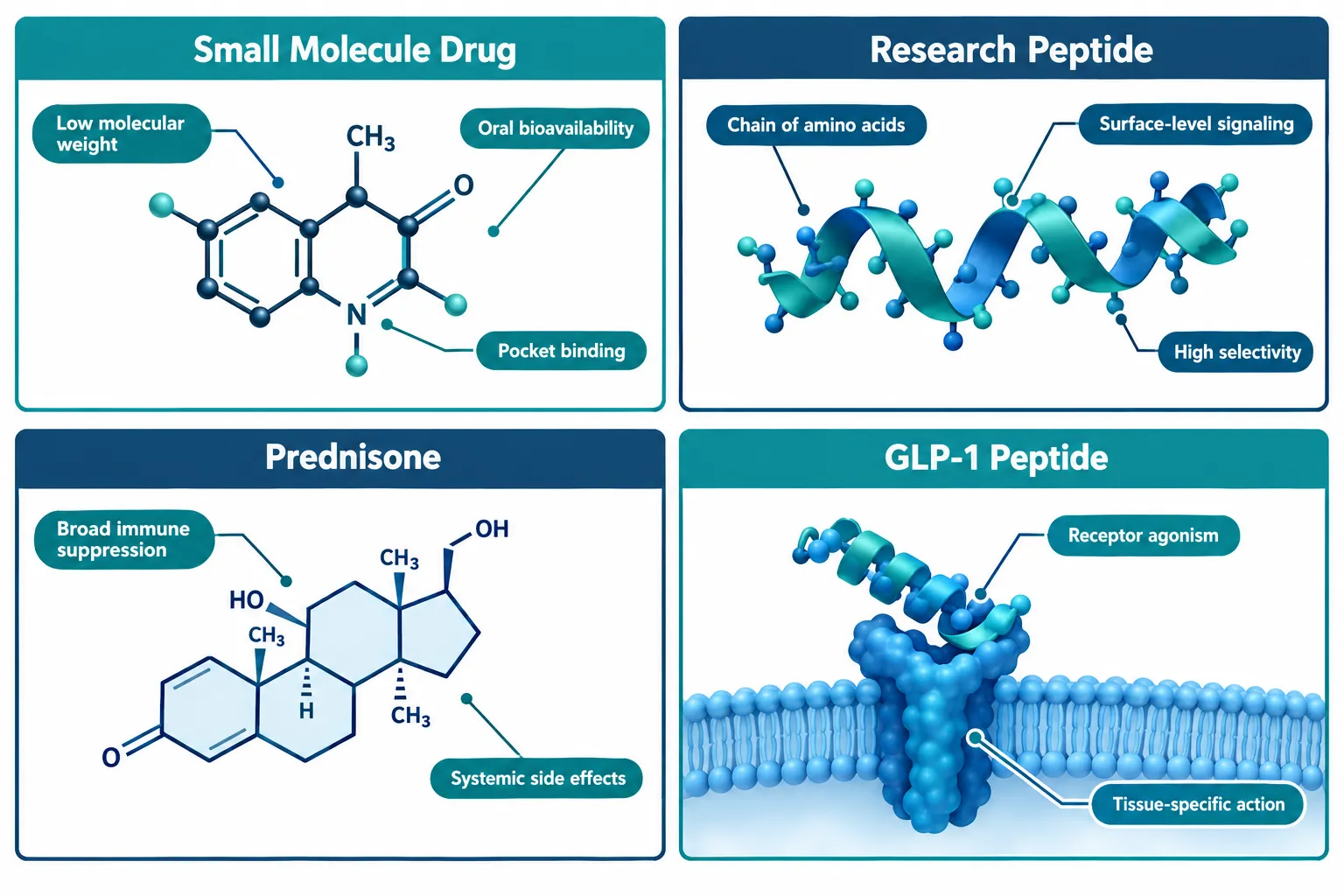
The FDA defines small-molecule drugs as compounds with a molecular weight generally below 500 daltons that can often be taken orally and absorbed intact. Prednisone, a corticosteroid, and amlodipine, a calcium channel blocker, are textbook examples. Both drugs work by fitting into a specific binding pocket, prednisone activates glucocorticoid receptors broadly across immune and metabolic tissues, while amlodipine blocks L-type calcium channels in vascular smooth muscle to lower blood pressure.

Peptides are short chains of amino acids linked by peptide bonds. They typically range from 2 to around 50 amino acids, placing them structurally between small molecules and full proteins. Rather than wedging into a pocket, most peptides bind to the external surface of receptors, triggering downstream signaling cascades with a level of specificity that small molecules often cannot match.

For a deeper look at how molecular size shapes these differences, the resource on peptides vs polypeptides and how molecular size and structure change research questions is worth reviewing.

"Selectivity is the central promise of peptide pharmacology, the ability to modulate a single pathway without the broad tissue footprint of a corticosteroid."

Key structural differences at a glance:

Feature Small Molecule (e.g., Prednisone) Research Peptide (e.g., GLP-1)
Molecular weight Under 500 Da 500 Da to ~6,000 Da
Binding mode Intracellular pocket Receptor surface agonism
Oral bioavailability Often high Generally low (requires injection or nasal delivery)
Selectivity Broad (multiple tissue types) High (receptor-specific)
Manufacturing Classic synthetic chemistry Solid-phase peptide synthesis (SPPS)

Mechanistic Contrasts: Surface Signaling vs Pocket Binding
Mechanistic Contrasts: Surface Signaling vs Pocket Binding

Understanding Peptides and Polypeptides in Modern Pharmacology: How Research-Use Peptides Compare With Classic Drugs Like Prednisone and Amlodipine requires a clear picture of how each drug class interacts with the body at the molecular level.

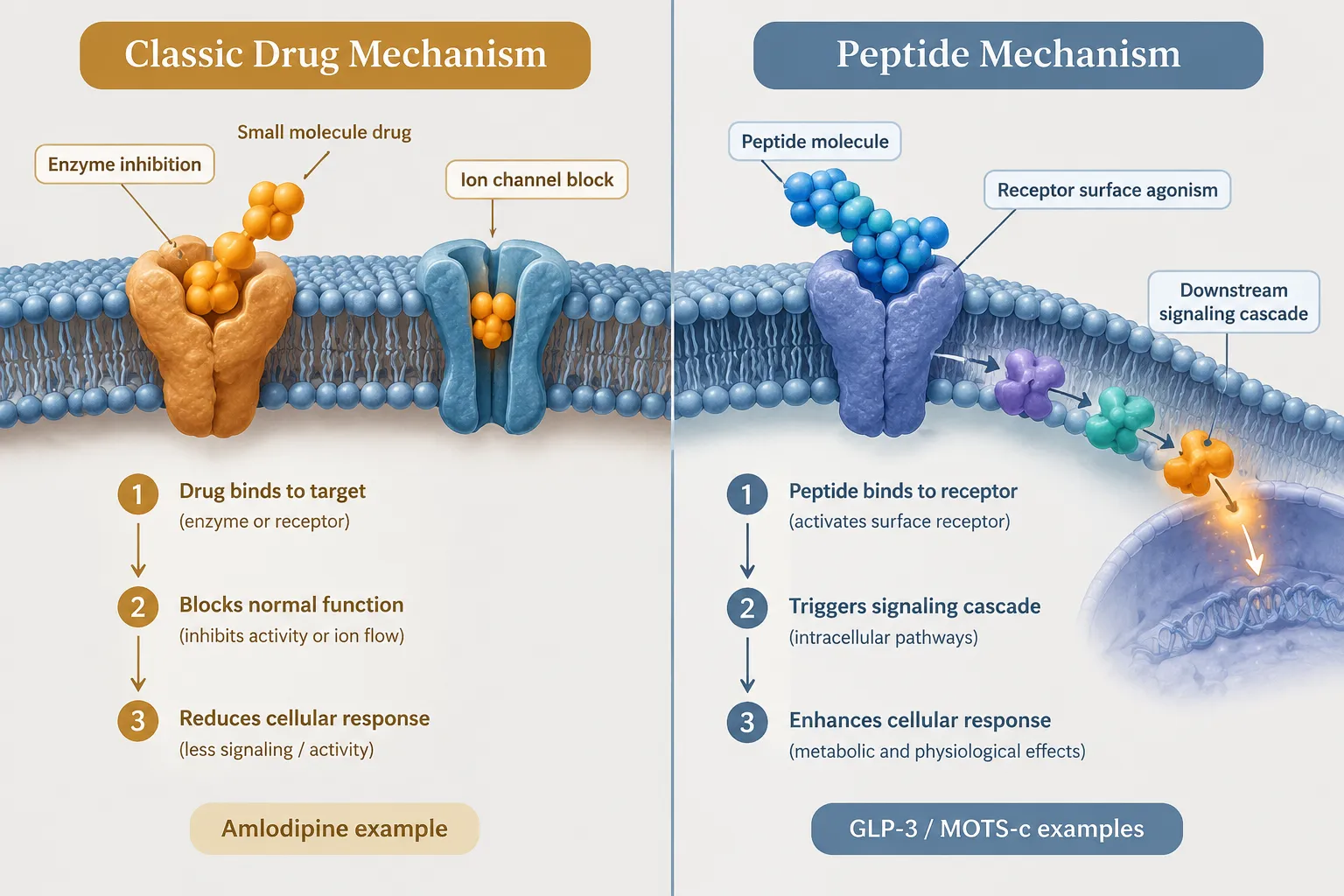
Prednisone enters cells and binds glucocorticoid receptors in the cytoplasm. That receptor-drug complex then travels to the nucleus and alters gene expression across dozens of cell types simultaneously. This mechanism explains both prednisone's power in suppressing inflammation and its well-documented side-effect profile, elevated blood sugar, bone density loss, and adrenal suppression, because the receptor it targets is expressed nearly everywhere.

Amlodipine works differently but is similarly broad. It blocks calcium entry into vascular smooth muscle cells and cardiac cells, reducing arterial resistance. Its selectivity is for a channel type, not a tissue, which is why it can cause peripheral edema and reflex tachycardia as off-target effects.

Research peptides like GLP-1 analogs, MOTS-c, and BPC-157 operate through surface receptor engagement:

  • GLP-1 peptides bind GLP-1 receptors on pancreatic beta cells and gut enteroendocrine cells, stimulating insulin release in a glucose-dependent manner. The complete research guide for GLP-1, GLP-2, GLP-3, and growth hormone peptides covers these pathways in detail.
  • MOTS-c is a mitochondria-derived peptide studied for its role in metabolic regulation and insulin sensitivity, explored further in research on MOTS-c mitochondrial signaling and metabolic research.
  • BPC-157 is a synthetic peptide studied in tissue repair and inflammatory models, with a receptor profile still under active investigation.

Because these peptides act on specific receptor populations, researchers hypothesize that their off-target footprints may be narrower than those of prednisone or amlodipine, though this remains an area of active preclinical and translational study.

Manufacturing, Regulatory Status, and the Research-Use Framework
Manufacturing, Regulatory Status, and the Research-Use Framework

Manufacturing complexity is one reason Peptides and Polypeptides in Modern Pharmacology: How Research-Use Peptides Compare With Classic Drugs Like Prednisone and Amlodipine involves such different supply chains. Prednisone and amlodipine are synthesized through well-established organic chemistry routes that have been optimized over decades, making them inexpensive to produce at scale.

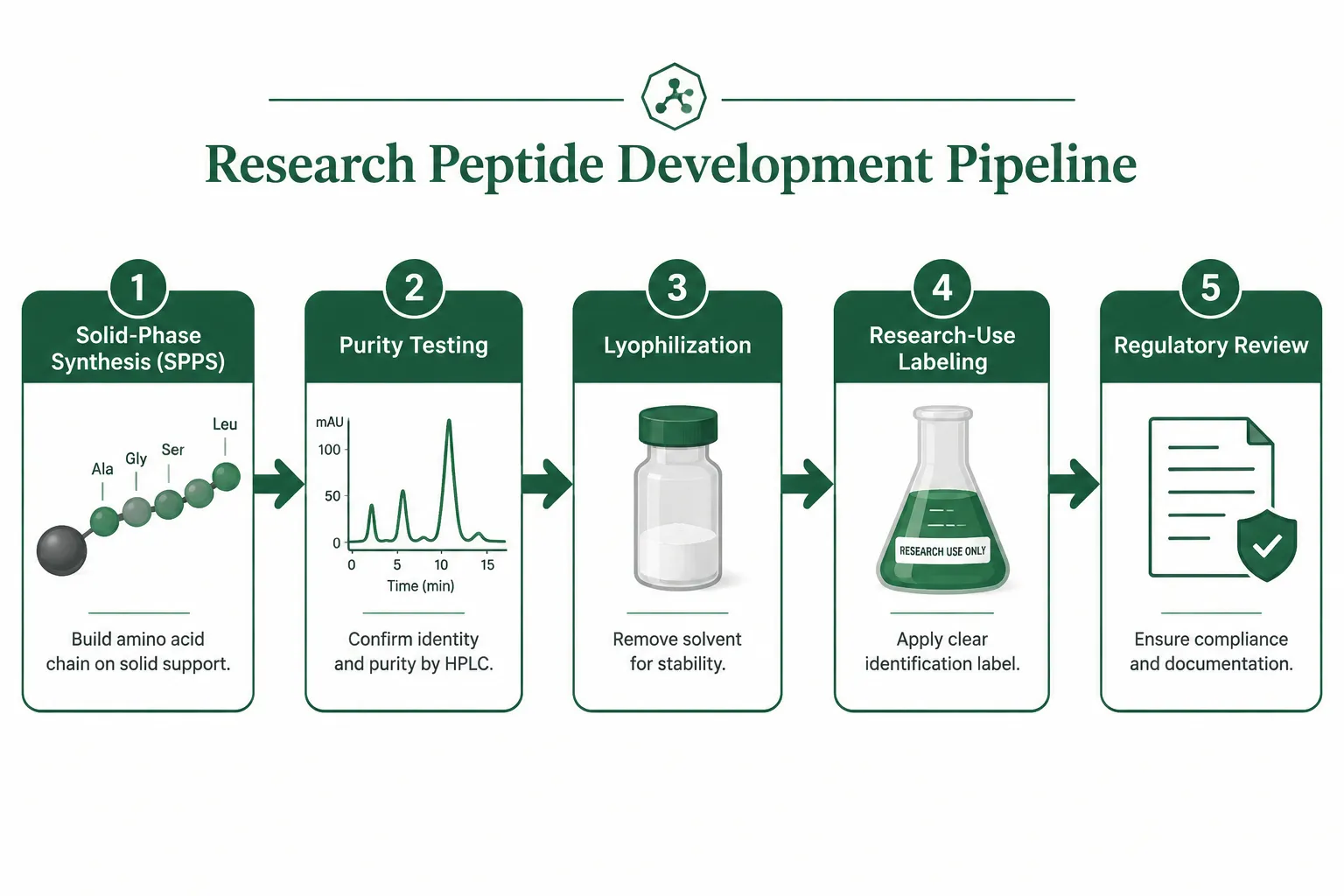
Peptides require solid-phase peptide synthesis (SPPS), a stepwise process that assembles amino acids one at a time on a resin scaffold. Each additional amino acid increases the risk of synthesis errors, racemization, and impurity formation. Post-synthesis purification, typically by high-performance liquid chromatography, adds further cost and complexity. Lyophilization (freeze-drying) is then used to stabilize the final product for storage and shipping.

Regulatory status in 2026 draws a sharp line between approved peptide drugs and research-use compounds:

  • Approved peptide drugs (semaglutide, tirzepatide, tesa) have passed full FDA clinical trial requirements and carry approved indications.
  • Research-use only (RUO) peptides, including GLP-3 analogs, MOTS-c, BPC-157, and Semax, are sold exclusively for in vitro and laboratory research. They are not approved for human administration, and as of mid-2026, the FDA has issued product-specific guidances tightening the compounding pathway for several peptide categories.

Labs sourcing these compounds need to understand reconstitution and dosing precision. Resources like the guide on essential tools and methods for accurate dosing and reconstitution in research provide practical frameworks for this work.

For researchers studying cardiometabolic endpoints, the same disease territory where amlodipine and prednisone are commonly prescribed, the article on polypeptide peptides in cardiometabolic models and how they differ from classic small-molecule drugs offers direct mechanistic comparisons.

Pipeline Trends and the Complementary Role of Peptides

Investment in peptide therapeutics has accelerated sharply since 2022, driven largely by the commercial success of GLP-1 receptor agonists. As of 2026, peptide-based compounds are entering clinical pipelines for oncology, cardiovascular disease, neuroinflammation, and metabolic syndrome, areas historically dominated by small molecules.

This does not mean peptides will replace drugs like prednisone or amlodipine in the near term. The two drug classes are increasingly viewed as complementary rather than competitive:

  • Prednisone remains the standard of care for acute inflammatory flares where rapid, broad immune suppression is needed.
  • Amlodipine remains a first-line antihypertensive with decades of safety data.
  • Research peptides are being studied to address residual disease burden, improve metabolic co-morbidities, and potentially reduce the dose burden of classic drugs in combination protocols.

For labs exploring metabolic research specifically, the top 5 research peptides for metabolic health buyer's guide provides a current overview of the most studied compounds in this space.

Conclusion

The contrast between research-use peptides and classic drugs like prednisone and amlodipine is not simply a matter of novelty versus tradition. It reflects a fundamental difference in how each drug class engages biological systems, broad pocket-binding versus targeted surface signaling, systemic gene expression changes versus receptor-specific downstream cascades.

Actionable next steps for researchers and informed readers:

  1. Clarify regulatory status first. Before sourcing any peptide compound, confirm whether it carries RUO designation or clinical approval. These categories carry very different handling requirements in 2026.
  2. Map the mechanism to the research question. If a study endpoint involves inflammation or blood pressure, understanding how a peptide's receptor profile compares with that of prednisone or amlodipine will sharpen experimental design.
  3. Use validated reconstitution tools. Peptide potency is highly sensitive to preparation errors; use established dosing calculators and follow lyophilized storage protocols.
  4. Monitor the regulatory landscape. FDA product-specific guidances for compounded peptides are evolving rapidly; staying current protects both research integrity and compliance.

The broader story of Peptides and Polypeptides in Modern Pharmacology: How Research-Use Peptides Compare With Classic Drugs Like Prednisone and Amlodipine is still being written, but the mechanistic foundations are clear enough to guide rigorous, well-designed research today.

Tags: amlodipine pharmacology, glp-1 peptides, mots-c research, peptide pharmacology, peptides and polypeptides, prednisone comparison, research peptides, small-molecule drugs
https://www.puretestedpeptides.com/wp-content/uploads/2026/09/peptides-and-polypeptides-in-modern-pharmacology-how-research-use-peptides-compa.webp 1024 1536 https://www.puretestedpeptides.com/wp-content/uploads/2026/01/buy-peptides-online.jpg 2026-09-12 13:12:082026-09-12 13:12:08Peptides and Polypeptides in Modern Pharmacology: How Research-Use Peptides Compare With Classic Drugs Like Prednisone and Amlodipine
You might also like
Peptides and Polypeptides: Complete Research Guide for GLP-1, GLP-2, GLP-3, and Growth Hormone Peptides Peptides and Polypeptides: Complete Research Guide for GLP-1, GLP-2, GLP-3, and Growth Hormone Peptides
GHK-Cu Peptide: Collagen Synthesis, Tissue Repair, and Longevity Research Applications GHK-Cu Peptide: Collagen Synthesis, Tissue Repair, and Longevity Research Applications
Research-Use Only Peptides: How "Peptides" Differ From Classic Small-Molecule Drugs Like Prednisone and Atorvastatin in Lab Design Research-Use Only Peptides: How “Peptides” Differ From Classic Small-Molecule Drugs Like Prednisone and Atorvastatin in Lab Design
Glow Blend Peptide: Examining Its Ingredients and Research Potential for Skin Health and Collagen Synthesis Glow Blend Peptide: Examining Its Ingredients and Research Potential for Skin Health and Collagen Synthesis
Research-Use Only Nasal Spray Peptides: Comparing Semax, Selank, and Klow Nasal for Cognitive and Anxiolytic Models Research-Use Only Nasal Spray Peptides: Comparing Semax, Selank, and Klow Nasal for Cognitive and Anxiolytic Models
MOTS-c and 5-Amino-1MQ Synergy: Optimizing Mitochondrial Function and Metabolic Research MOTS-c and 5-Amino-1MQ Synergy: Optimizing Mitochondrial Function and Metabolic Research
Best Research Applications for PT-141: What Makes It Different From Other Melanocortin Peptides? Best Research Applications for PT-141: What Makes It Different From Other Melanocortin Peptides?
Unpacking the 'Peptides Calculator': Essential Tools and Methods for Accurate Dosing and Reconstitution in Research Unpacking the ‘Peptides Calculator’: Essential Tools and Methods for Accurate Dosing and Reconstitution in Research
0 replies

Leave a Reply

Want to join the discussion?
Feel free to contribute!

Leave a Reply Cancel reply

Your email address will not be published. Required fields are marked *

×

Helpful Links

  • My account
  • Cart
  • Checkout
  • Refund and Returns Policy
  • Privacy Policy
  • SMS Privacy Policy
  • Login
  • My Account
  • Logout

USA Made Lab Tested Peptides

All products are sold for research, laboratory, or analytical purposes only, and are not for human consumption


Pure Tested Peptides is a chemical supplier. Pure Tested Peptides is not a compounding / chemical compounding facility as defined under 503A of the Federal Food, Drug, and Cosmetic act. Pure Tested Peptides is not an outsourcing facility as defined under 503B of the Federal Food, Drug, and Cosmetic act.

The statements made within this website have not been evaluated by the US Food and Drug Administration. The products we offer are not intended to diagnose, treat, cure or prevent any disease.

Human/Animal Consumption Prohibited. Laboratory/In-Vitro Experimental Use Only

Link to: What Are Peptides? A Researcher’s Guide to Structure, Synthesis, and How GLP, Growth Hormone, and Mitochondrial Peptides Fit In Link to: What Are Peptides? A Researcher’s Guide to Structure, Synthesis, and How GLP, Growth Hormone, and Mitochondrial Peptides Fit In What Are Peptides? A Researcher’s Guide to Structure, Synthesis, and How GLP,...What Are Peptides? A Researcher’s Guide to Structure, Synthesis, and How GLP, Growth Hormone, and Mitochondrial Peptides Fit In Link to: Prostate Specific Antigen and Hormone-Modulating Compounds: How PSA Monitoring Interfaces With Enclomiphene and GLP-Class Peptide Research Link to: Prostate Specific Antigen and Hormone-Modulating Compounds: How PSA Monitoring Interfaces With Enclomiphene and GLP-Class Peptide Research Prostate Specific Antigen and Hormone-Modulating Compounds: How PSA Monitoring Interfaces With Enclomiphene and GLP-Class Peptide ResearchProstate Specific Antigen and Hormone-Modulating Compounds: How PSA Monitoring...
Scroll to top Scroll to top Scroll to top