Call or Text 727-513-9780
  • Shopping Cart Shopping Cart
    0Shopping Cart
Pure Tested Peptides | America's most trusted Peptides for sale online
  • Peptides for sale
    • Oral Peptides for sale
      • Peptide Capsules for sale
      • BPC 157 Capsules 1000mcg
      • SLU-PP-332 Capsules | 1000 mcg
      • 5-Amino-1MQ 50mg Capsules
      • Tesofensine 500mcg
    • All Peptides for sale
    • Peptide Sprays
      • BPC 157 Nasal Spray Kit
      • BPC-157 TB500 Nasal Spray Kit
      • Semax Nasal Spray 10mg
      • Selank – Nasal Spray Kit – 10mg
      • Epithalon 50MG Nasal Spray Kit
      • Ipamorelin 10mg Nasal Spray
      • Klow Nasal Spray (BPC-157 + TB-500 + GHK-Cu + KPV) | 80mg
      • Hulk Nasal Spray Tesa / Ipa Blend 6/3 MG
      • Klow Nasal Spray
      • NAD + 500 mg Nasal Spray
      • PT-141 Nasal Spray Kit
    • GHRH Peptides
      • Ipa Peptides
      • CJC-1295 Peptides
        • CJC-1295 with DAC 5 mg
        • CJC-1295 without DAC 5 mg
        • CJC-1295 Ipa 10mg
      • Tesa Peptides
        • Tesa Peptide
        • Tesa 20 mg
    • GHK-Cu Peptides
      • All GHK-Cu Peptides
      • GHK-Cu 100mg
      • KLOW Peptide Blend – Buy KLOW blend online
    • BPC Peptides
      • All BPC Peptides
      • BPC-157
      • BPC-157 TB-500
      • BPC 157 capsules 1000mcg
    • SLU-PP-332 Peptides
      • All SLU-PP-332 Peptides
      • SLU-PP-332 5mg
    • GLP3 Peptides
      • GLP3-R
      • GLP3-R CAG 10mg
      • GLP3-R 20mg
    • PT-141 Peptides
      • PT-141 Peptides for sale
      • PT-141 10mg
      • PT-141 Nasal Spray
    • CAG Peptides
      • Lipo-C Peptide Blend
      • CAG 5mg
      • CAG 10mg
    • MOTS-C Peptides
      • MOTS-C Peptides for sale
      • MOTS-c peptide
      • MOTS-c 10mg *6 pack*
    • 5 Amino 1MQ Peptides
      • 5 Amino 1MQ Peptides for sale
      • 5-Amino-1MQ 50mg Capsules
      • 5-Amino-1MQ 5mg
    • Epithalon Peptides
      • Epithalon Peptides for sale
      • Epithalon 10mg
      • Epithalon 50mg
  • Shop
    • GLPs
      • 5-Amino-1MQ 50mg Capsules
      • 5-Amino-1MQ 5mg
      • GLP3-Reta
      • L-Carnitine 500mg/ml
      • Tesofensine 500mcg
      • SLU-PP-332 5mg
      • MOTS-c 10mg *6 pack*
    • Epithalon & BPC Peptides
      • Epithalon 10mg
      • Epithalon 50mg
      • BPC-157
      • BPC 157 capsules 1000mcg
      • BPC-157 TB-500
      • BPC-157 TB500 Nasal Spray Kit
      • BPC 157 Nasal Spray Kit
    • BPC TB-500 & NAD+ Peptides
      • NAD+ 500 mg
      • KLOW Peptide Blend – Buy KLOW blend online
      • GLOW Peptide Blend
      • TB 500 5mg
      • BPC 157 capsules 1000mcg – Supplement
      • BPC 157 Nasal Spray Kit
      • BPC-157
      • BPC-157 TB500 Nasal Spray Kit
      • BPC-157 TB-500
      • BPC 157 capsules 1000mcg
    • LL-37 Peptide
      • LL-37 10 mg
    • MOTS-C & Selank
      • MOTS-c peptide
      • Selank 10mg
    • GHK Peptides
      • GHK-Cu 100mg
      • GLOW Peptide Blend
      • KLOW Peptide Blend – Buy KLOW blend online
  • COAs
  • Wholesale
    • Wholesale Peptides for sale
  • PTP FAQ
  • Affiliates
    • Selank Peptide: Advanced Pharmacological Mechanisms Underlying Its Anxiolytic and Nootropic Effects in Research
      • 5-Amino-1MQ Peptide: Detailed Mechanisms of NNMT Inhibition and Its Impact on Cellular Metabolism Research
        • MOTS-C Peptide: Unraveling Its Role in Mitochondrial Dynamics and Energy Metabolism Research
          • Epithalon Peptide and Telomerase Regulation: Investigating Its Impact on Cellular Senescence and Lifespan Research Models
            • GLP2-T vs GLP2 Tirz Peptide: Understanding the Naming, Mechanistic Nuances, and Research Implications for Gut Health
      • Peptides and Polypeptides in Modern Pharmacology: What Research on Metoprolol, Prednisone, and Amlodipine Reveals
        • Polypeptide Peptides vs NSAIDs: What Naproxen and Diclofenac Teach Tissue-Repair Researchers About BPC‑157 and TB‑500
          • Peptides and Polypeptides in Endocrine Pharmacology: How GLP-1, GLP-2, and GLP-3 Retatrutide Differ From Classic Drugs Like Prednisone and Amlodipine
          • 5‑Amino‑1MQ Peptide and NNMT Inhibition: How It Compares With Statins Like Atorvastatin in Adipose and Lipid Metabolism Research
      • Enclomiphene, Estrogen Receptor Signaling, and Luteinizing Phase Biology: What Hormone Researchers Should Measure
        • Mesenchymal Stem Cells, BPC‑157, and GHK‑Cu: How Tissue Repair Peptides Compare With Classic NSAIDs Like Naproxen in Injury Models
          • Peptide Calculator Use Cases Beyond Growth Hormone: Working Through GLP‑3 Retatrutide, MOTS‑c, and BPC‑157 Research Dosing
        • Polypeptide Peptides in Endocrine and Metabolic Pharmacology: Lessons From Amlodipine, Prednisone, and Metoprolol
        • Peptides Calculator for Advanced Blends: Worked Examples for Tesamorelin, CJC‑1295, and Ipamorelin Stacks
          • Peptides and Polypeptides in Human Physiology: How Molecular Size Shapes Research Applications
            • Selank Peptide: Advanced Pharmacological Mechanisms Underlying Its Anxiolytic and Nootropic Effects in Research
          • 5-Amino-1MQ Peptide: Detailed Mechanisms of NNMT Inhibition and Its Impact on Cellular Metabolism Research
            • MOTS-C Peptide: Unraveling Its Role in Mitochondrial Dynamics and Energy Metabolism Research
              • Epithalon Peptide and Telomerase Regulation: Investigating Its Impact on Cellular Senescence and Lifespan Research Models
                • GLP2-T vs GLP2 Tirz Peptide: Understanding the Naming, Mechanistic Nuances, and Research Implications for Gut Health
                  • Peptides and Polypeptides in Endocrine Pharmacology: How GLP-1, GLP-2, and GLP-3 Retatrutide Differ From Classic Drugs Like Prednisone and Amlodipine
                    • Polypeptide Peptides vs NSAIDs: What Naproxen and Diclofenac Teach Tissue-Repair Researchers About BPC‑157 and TB‑500
                      • Peptides and Polypeptides in Modern Pharmacology: What Research on Metoprolol, Prednisone, and Amlodipine Reveals
                        • 5‑Amino‑1MQ Peptide and NNMT Inhibition: How It Compares With Statins Like Atorvastatin in Adipose and Lipid Metabolism Research
                        • Enclomiphene, Estrogen Receptor Signaling, and Luteinizing Phase Biology: What Hormone Researchers Should Measure
                        • Mesenchymal Stem Cells, BPC‑157, and GHK‑Cu: How Tissue Repair Peptides Compare With Classic NSAIDs Like Naproxen in Injury Models
                        • Peptide Calculator Use Cases Beyond Growth Hormone: Working Through GLP‑3 Retatrutide, MOTS‑c, and BPC‑157 Research Dosing
                        • Polypeptide Peptides in Endocrine and Metabolic Pharmacology: Lessons From Amlodipine, Prednisone, and Metoprolol
                        • Peptides Calculator for Advanced Blends: Worked Examples for Tesamorelin, CJC‑1295, and Ipamorelin Stacks
                        • Peptides and Polypeptides in Human Physiology: How Molecular Size Shapes Research Applications
                        • Selank Peptide: Advanced Pharmacological Mechanisms Underlying Its Anxiolytic and Nootropic Effects in Research
                        • MOTS-C Peptide: Unraveling Its Role in Mitochondrial Dynamics and Energy Metabolism Research
                        • Peptides and Polypeptides in Modern Pharmacology: What Research on Metoprolol, Prednisone, and Amlodipine Reveals
                        • Peptides and Polypeptides in Endocrine Pharmacology: How GLP-1, GLP-2, and GLP-3 Retatrutide Differ From Classic Drugs Like Prednisone and Amlodipine
                        • 5-Amino-1MQ Peptide: Detailed Mechanisms of NNMT Inhibition and Its Impact on Cellular Metabolism Research
                        • Mesenchymal Stem Cells, BPC‑157, and GHK‑Cu: How Tissue Repair Peptides Compare With Classic NSAIDs Like Naproxen in Injury Models
                        • Peptide Calculator Use Cases Beyond Growth Hormone: Working Through GLP‑3 Retatrutide, MOTS‑c, and BPC‑157 Research Dosing
                        • GLP2-T vs GLP2 Tirz Peptide: Understanding the Naming, Mechanistic Nuances, and Research Implications for Gut Health
                        • Polypeptide Peptides in Endocrine and Metabolic Pharmacology: Lessons From Amlodipine, Prednisone, and Metoprolol
                        • Polypeptide Peptides vs NSAIDs: What Naproxen and Diclofenac Teach Tissue-Repair Researchers About BPC‑157 and TB‑500
                        • Peptides and Polypeptides in Human Physiology: How Molecular Size Shapes Research Applications
                        • Peptides Calculator for Advanced Blends: Worked Examples for Tesamorelin, CJC‑1295, and Ipamorelin Stacks
                        • 5‑Amino‑1MQ Peptide and NNMT Inhibition: How It Compares With Statins Like Atorvastatin in Adipose and Lipid Metabolism Research
                        • Enclomiphene, Estrogen Receptor Signaling, and Luteinizing Phase Biology: What Hormone Researchers Should Measure
                        • Epithalon Peptide and Telomerase Regulation: Investigating Its Impact on Cellular Senescence and Lifespan Research Models
                        • Best research protocol Klow blend
                        • best time to take BPC-157
                        • best time to take DSIP (Delta Sleep Inducing Peptide)
                        • best time to take CJC-1295
                        • best time to take AOD-9604
                        • best time to take Follistatin 344
                        • best time to take Ipamorelin
                        • best time to take MK-677 (Ibutamoren)
                        • best time to take Ligandrol (LGD-4033) — research compound
                        • best time to take Ostarine (MK-2866) — research compound
                        • best time to take GHK-CU
                        • best time to take TB-500
                        • best time to take MOTS-c
                        • best time to take Semax
                        • best time to take RAD-140 (Testolone) — research compound
                        • best time to take Thymosin Alpha-1
                        • best time to take PEG-MGF
                        • Biolife Plasma, Octapharma Plasma, and Research Peptides: How Plasma Donation Labs Differ From Peptide Suppliers
                        • best time to take YK-11 — research compound
                        • best time to take PT-141 (Bremelanotide)
                        • Best research protocol Klow blend
                        • 5-Amino-1MQ and MOTS-C Synergy: Metabolic Signaling, Mitochondria, and Research Design
                        • BPC-157 and TB-500: Investigating Their Combined Effects on Angiogenesis and Cellular Migration in Tissue Repair Models
                        • BPC-157 Peptide: Gut Barrier Function, Inflammation, and Tissue-Recovery Research
                        • 5‑Amino‑1MQ and MOTS‑c Synergy in Metabolic Research: Designing NNMT and Mitochondrial Biogenesis Stacks
                        • CJC-1295 with DAC vs. Without DAC: Half-Life, Release Kinetics, and Research Implications
                        • CJC‑1295 with DAC vs. Without DAC: Expanding on Half‑Life Differences Using Tesamorelin and Ipamorelin Blend Case Studies
                        • Collagen Biology and Copper‑Binding Peptides: How GHK‑Cu, Glow Blend, and Klow Blend Interact with Skin and Connective Tissue
                        • Collagen Biology and Regenerative Peptides: How GHK‑Cu, Glow Blend, and Klow Blend Affect Extracellular Matrix Research
                    • DNA, Telomeres, and Longevity Peptides: Positioning Epithalon and MOTS‑c in Genetic Aging Research
                      • Enclomiphene Citrate: serm Mechanism, Testosterone Research, and Stack Compatibility
                        • Enclomiphene vs Enclomiphene Citrate: Formulation, Bioavailability, and Research Distinctions
                        • Epithalon Peptide Research: Telomerase Activation, Aging, and Pineal Gland Function
                        • Estrogen Receptor Signaling and Enclomiphene: How Selective Modulators Compare with Classic Polypeptide Hormones
                        • GHK-Cu Peptide: Advanced Mechanisms in Extracellular Matrix Remodeling and Wound Healing Research
                        • GHK-Cu Peptide: Collagen Synthesis, Wound Repair, and Skin-Barrier Research Models
                        • GLP-1 vs GLP-3 vs GLP-2: Peptide Classification and Research Applications
                        • GLP-2 Peptide Research Guide: Gut Barrier Function, Nutrient Absorption, and Intestinal Recovery Models
                        • GLP-3 Retatrutide vs. GLP-1 Drugs: What Triple-Agonist Biology Changes in Research Models
                        • Ipamorelin and Tesamorelin Combination: Synergistic GH Secretagogue Research and Dosing Protocols
                        • GLP2 Tirz Peptide: What It Is, Why the Name Exists, and How Researchers Should Interpret It
                        • Klow Blend Peptide Nasal Spray: What the Formulation Is Trying to Do in Cognitive Research
                        • Mitochondria, NNMT Inhibition, and Peptide Modulators: Where MOTS‑c and 5‑Amino‑1MQ Fit in Cellular Energy Research
                        • MOTS-c Peptide: Mitochondrial Function, Energy Metabolism, and What Researchers Measure
                        • MOTS-c vs. 5-Amino-1MQ: Which Metabolic Research Questions Each Compound Actually Answers
                        • Nasal Spray Peptides: Bioavailability, Administration, and Semax/Selank Research Applications
                        • PT-141 Peptide Research: Mechanism of Action and Melanocortin Receptor Signaling
                        • Retatrutide for Research: Mechanism, Structure, and GLP-1/GLP-3 Dual Action
                        • Retatrutide for Obesity and Type 2 Diabetes: What the Latest Trial Data Suggest
                        • Tesofensine Peptide Research: Mechanism, Appetite Suppression, and Neuropeptide Y Pathways
  • Contact
    • Contact Customer Service
    • Text Customer Support
  • About US
  • Shop all peptides
  • Affiliate Program
    • Affiliate Signup
  • Login / Register Login / Register Page Link Login / Register Page Link
  • Click to open the search input field Click to open the search input field Search
  • Menu Menu
Peptides and Polypeptides: Complete Research Guide for GLP-1, GLP-2, GLP-3, and Growth Hormone Peptides

Peptides and Polypeptides: Complete Research Guide for GLP-1, GLP-2, GLP-3, and Growth Hormone Peptides

August 18, 2026/0 Comments/in Uncategorized/by

Over 100 distinct peptide-based drugs are currently in active clinical development worldwide, yet most researchers encounter these molecules without a clear structural map of how they relate to one another. This guide on Peptides and Polypeptides: Complete Research Guide for GLP-1, GLP-2, GLP-3, and Growth Hormone Peptides addresses that gap directly, building a scientific foundation before diving into specific compound families.

Key Takeaways

  • Peptides are short amino acid chains; polypeptides are longer chains that fold into functional proteins, size determines receptor specificity and research use.
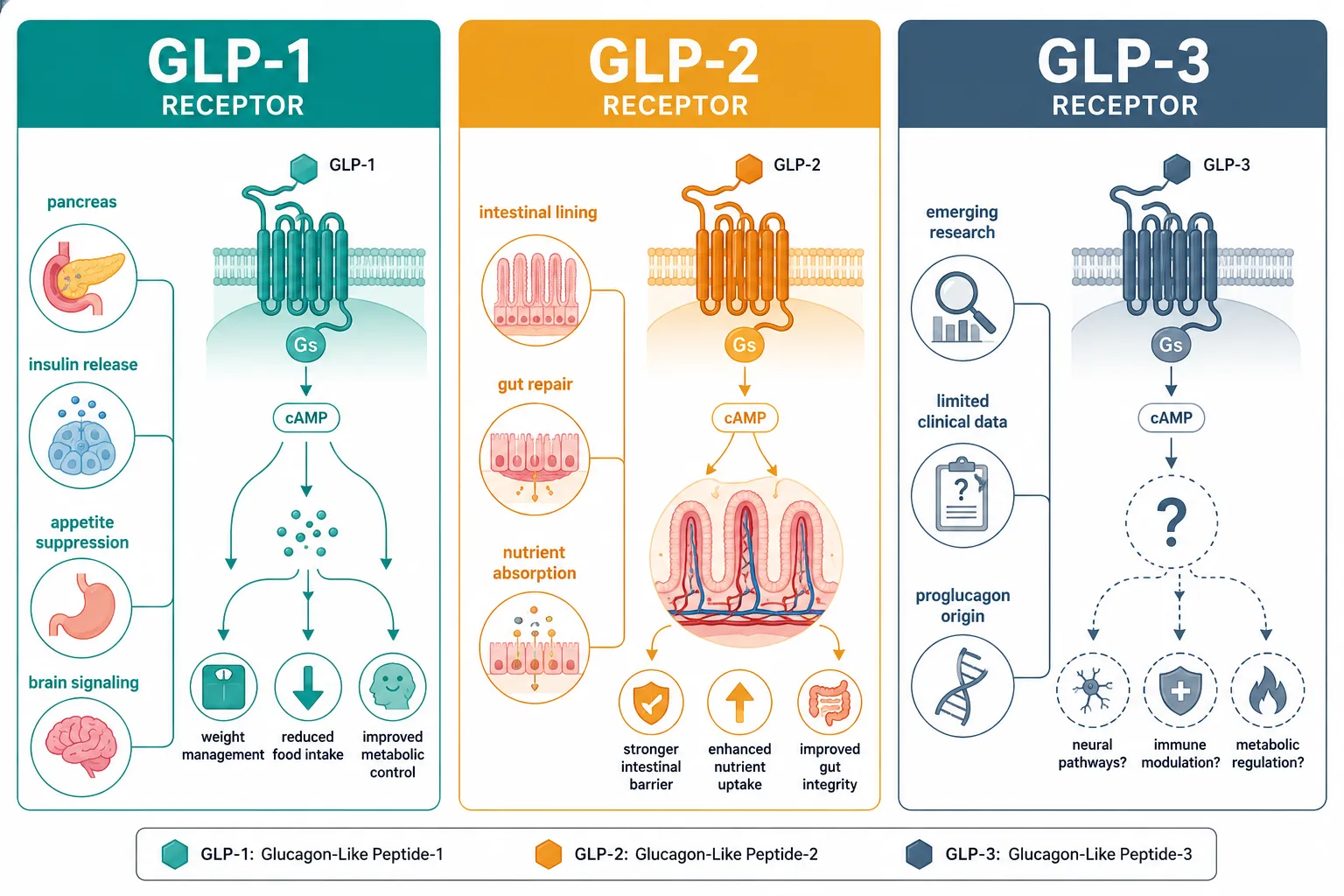
  • GLP-1, GLP-2, and GLP-3 all originate from the same proglucagon gene but act on entirely different receptor systems with distinct biological roles.
  • GLP-1 agonists represent the most clinically active peptide class in 2026, with oral, injectable, and ultra-long-acting formats now available or in late-stage trials.
  • Growth hormone-releasing peptides and analogs operate through the hypothalamic-pituitary axis, making them mechanistically distinct from GLP-class compounds.
  • Purity and structural integrity are non-negotiable in peptide research, third-party testing is the baseline standard.

Understanding Peptide and Polypeptide Structure
Understanding Peptide and Polypeptide Structure

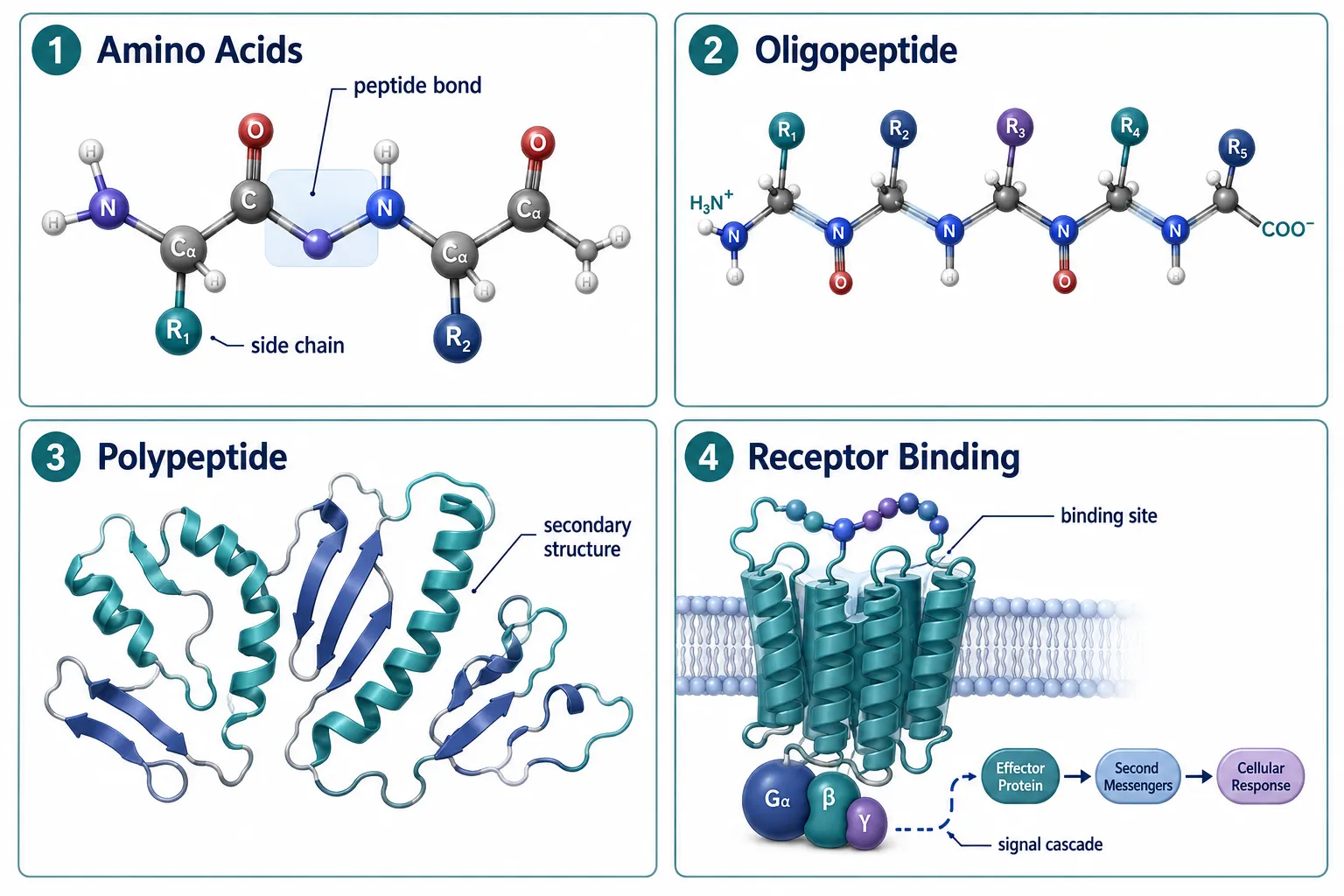
A peptide is any chain of two or more amino acids linked by peptide bonds. The classification system is straightforward:

Term Chain Length Example
Dipeptide 2 amino acids Carnosine
Oligopeptide 3-20 amino acids GLP-1 (30 aa)
Polypeptide 20-50+ amino acids Growth hormone fragments
Protein 50+ amino acids Full-length GH (191 aa)

The distinction matters in research because chain length directly influences receptor selectivity, half-life, and delivery route. Shorter peptides often cross biological barriers more easily but degrade faster. Longer polypeptides may require injectable delivery to preserve their three-dimensional structure.

Receptor binding is the next critical concept. Most research peptides act on G-protein coupled receptors (GPCRs), triggering intracellular signaling cascades rather than directly altering gene expression. This mechanism produces rapid, dose-dependent responses that researchers can measure with precision, a key advantage in preclinical models.

"Peptide size, charge, and secondary structure are not incidental features, they are the mechanism."

For researchers building a broader framework, the top 5 research peptides for metabolic health buyer's guide offers a practical starting point for compound selection within this structural context.

GLP-1, GLP-2, and GLP-3: The Proglucagon Peptide Family
GLP-1, GLP-2, and GLP-3: The Proglucagon Peptide Family

All three glucagon-like peptides derive from a single precursor protein called proglucagon, encoded by the GCG gene. Post-translational processing in different tissues produces distinct peptide fragments with entirely separate biological roles.

GLP-1: The Dominant Research Target

GLP-1 (glucagon-like peptide-1) is a 30-amino-acid incretin hormone secreted by intestinal L-cells. It stimulates insulin secretion, suppresses glucagon, slows gastric emptying, and signals satiety through the central nervous system. These combined actions make it the most studied metabolic peptide in modern pharmacology.

In 2026, the GLP-1 landscape has expanded dramatically:

  • Oral non-peptide GLP-1 agonists such as orforglipron (Foundayo, Eli Lilly) have received approval for chronic weight management, making oral GLP-1 a mainstream modality for the first time.
  • High-dose injectable semaglutide (Wegovy HD, 7.2 mg weekly) extends efficacy for patients requiring greater weight reduction.
  • Ultra-long-acting monthly injectables, including Pfizer's PF-3944/MET-097i, have shown robust Phase 2b results, potentially reducing injection frequency to once per month.
  • Multi-agonist peptides combining GLP-1 with GIP and glucagon receptor activity show the highest weight-loss efficacy seen in late-stage trials to date.

Emerging research also points to non-metabolic applications: addiction neuroscience, mood regulation, and neuroinflammation are active areas of investigation, though these remain speculative outside controlled settings.

Researchers sourcing compounds in this class should review GLP-1 peptide buying: generational research concepts and sourcing notes for structured guidance on acquisition standards. Those evaluating specific product options can also browse GLP-1 peptides available for research.

GLP-2: Intestinal Repair and Nutrient Absorption

GLP-2 is a 33-amino-acid peptide co-secreted with GLP-1 from L-cells. Its receptor is expressed almost exclusively in the gastrointestinal tract. GLP-2 promotes intestinal epithelial growth, reduces gut permeability, and enhances nutrient absorption. Research applications center on short bowel syndrome, inflammatory bowel conditions, and intestinal barrier function.

Researchers working with this compound can find relevant sourcing information under GLP-2 peptide research products.

GLP-3: The Least Characterized Fragment

GLP-3 is a proglucagon-derived fragment whose receptor biology remains incompletely mapped. Public research output on GLP-3 is limited compared to GLP-1 and GLP-2, and no approved therapeutic agents target this peptide as of 2026. It represents an early-stage area where foundational receptor characterization work is still ongoing. Researchers interested in this compound can explore GLP-3 peptide sourcing options as a starting reference.

Growth Hormone Peptides: Axis, Mechanism, and Research Context
Growth Hormone Peptides: Axis, Mechanism, and Research Context

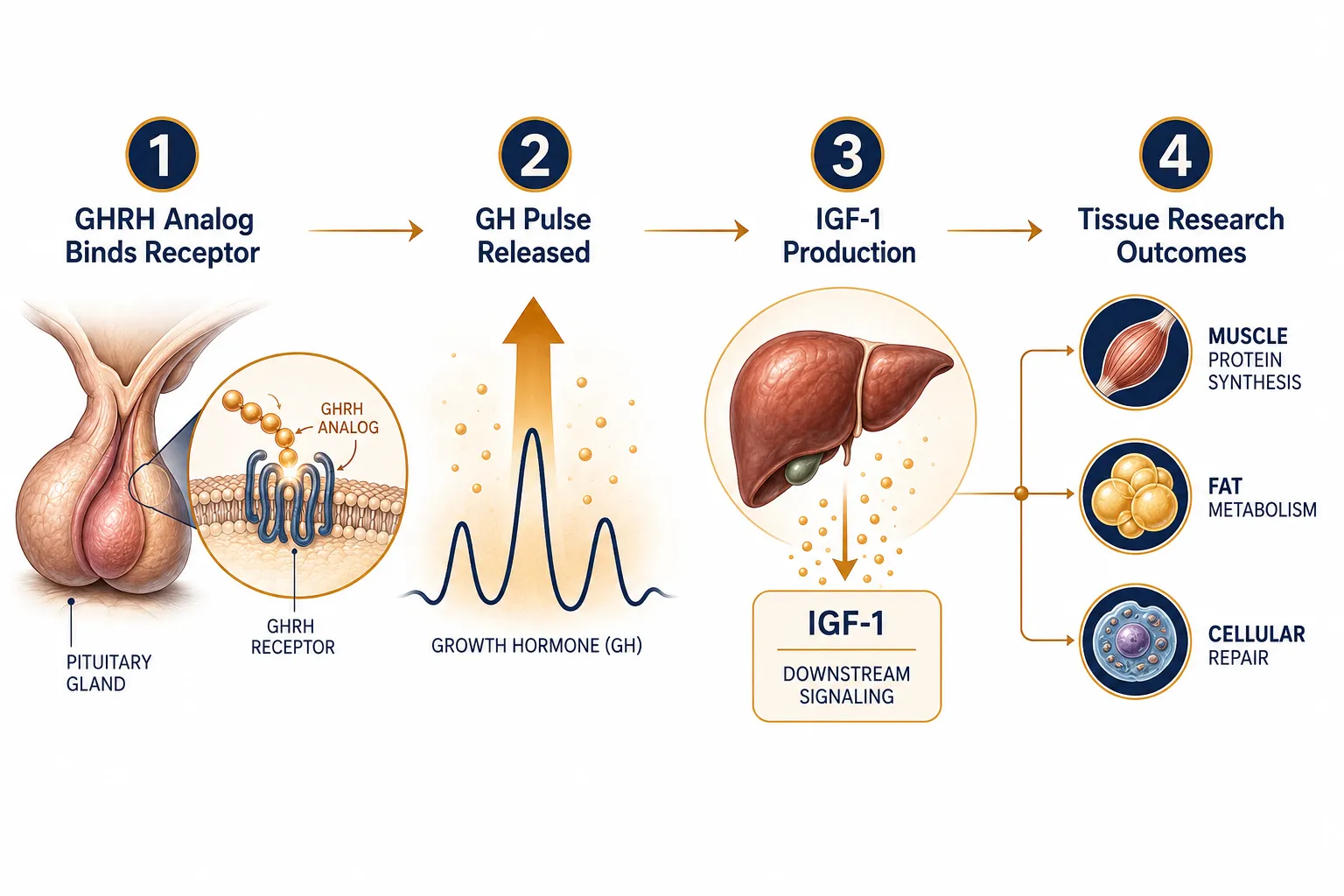
Growth hormone (GH) peptides operate through a fundamentally different axis than GLP-class compounds. The hypothalamic-pituitary-somatotropic axis governs GH release, and research peptides in this category generally work by modulating one or more points along that pathway.

Key categories include:

  • GHRH analogs, mimic growth hormone-releasing hormone to stimulate pulsatile GH secretion from the anterior pituitary. Tesamorelin is the most studied example; researchers can review tesa peptide benefits and research context for a detailed breakdown.
  • GHRPs (growth hormone-releasing peptides), act on ghrelin receptors (GHSR-1a) to amplify GH pulses, often synergistically with GHRH analogs.
  • GH fragments, truncated polypeptide sequences derived from full-length growth hormone, studied for specific downstream effects on fat metabolism and tissue repair.

Downstream from GH release, IGF-1 production in the liver drives many of the tissue-level effects researchers are interested in: protein synthesis, cellular repair, and metabolic substrate utilization. Understanding this cascade is essential for interpreting research data correctly.

Research Standards: Purity, Benchmarking, and Sourcing

The structural complexity of peptides makes quality control non-negotiable. A single incorrect amino acid, oxidized residue, or truncated sequence can produce misleading results or no activity at all.

Minimum standards for research-grade peptides:

  • HPLC purity of 98% or greater
  • Mass spectrometry confirmation of molecular weight
  • Third-party certificate of analysis (CoA) from an independent laboratory
  • Sterility and endotoxin testing for injectable preparations

Reference standards from established manufacturers provide the benchmark against which research samples should be validated. The article on Bachem reference standards and building robust peptide benchmarks outlines how to use certified reference materials effectively.

Researchers should also confirm that suppliers offer lab-tested peptides with verifiable documentation before committing to a source.

Conclusion

The Peptides and Polypeptides: Complete Research Guide for GLP-1, GLP-2, GLP-3, and Growth Hormone Peptides framework presented here gives researchers a reliable map before engaging with any specific compound. The actionable next steps are clear:

  1. Establish structural literacy first, know whether a target peptide is an oligopeptide or polypeptide, and how that affects delivery and receptor interaction.
  2. Match the compound to the correct receptor family, GLP-1, GLP-2, and GLP-3 are not interchangeable despite sharing a common precursor.
  3. Understand the signaling axis, GH peptides require knowledge of the hypothalamic-pituitary cascade to interpret results meaningfully.
  4. Demand verified purity, third-party CoA documentation is the baseline, not a bonus.
  5. Stay current, the GLP-1 field in particular is evolving rapidly, with oral formats, multi-agonists, and monthly injectables reshaping the research landscape throughout 2026 and beyond.

A strong structural foundation makes every downstream research decision more defensible and more productive.

Tags: ghrh analogs, glp-1 peptides, glp-2 peptides, glp-3 peptides, growth hormone peptides, incretin hormones, metabolic peptides, peptide receptor signaling, peptide sourcing, peptides and polypeptides, polypeptide structure, research peptides
https://www.puretestedpeptides.com/wp-content/uploads/2026/08/peptides-and-polypeptides-complete-research-guide-for-glp-1-glp-2-glp-3-and-grow.webp 1024 1536 https://www.puretestedpeptides.com/wp-content/uploads/2026/01/buy-peptides-online.jpg 2026-08-18 13:08:362026-08-18 13:08:36Peptides and Polypeptides: Complete Research Guide for GLP-1, GLP-2, GLP-3, and Growth Hormone Peptides
You might also like
Selank Peptide: Research Benefits, Dosing Concepts, and Mechanism of Action Selank Peptide: Research Benefits, Dosing Concepts, and Mechanism of Action
Understanding Polypeptide Peptides: Mechanism of Action in Research Applications Understanding Polypeptide Peptides: Mechanism of Action in Research Applications
Tesofensine Mechanism in Appetite Research: Where Noradrenergic Modulation Fits Alongside GLP Peptides Tesofensine Mechanism in Appetite Research: Where Noradrenergic Modulation Fits Alongside GLP Peptides
Nasal Spray Peptides: Delivery Methods, Bioavailability, and Research Advantages Nasal Spray Peptides: Delivery Methods, Bioavailability, and Research Advantages
Cellular Energy and Research Peptides: Why ATP Readouts Matter in Mitochondrial Studies Cellular Energy and Research Peptides: Why ATP Readouts Matter in Mitochondrial Studies
Glow Blend vs Klow Blend Peptides: Ingredient Comparison and Research Applications Glow Blend vs Klow Blend Peptides: Ingredient Comparison and Research Applications
How Researchers Use Tesamorelin and Ipamorelin Together vs Separately How Researchers Use Tesamorelin and Ipamorelin Together vs Separately
CJC-1295 With DAC in 2026 Research: Why Long-Acting GHRH Analogs Remain a Core Search Topic CJC-1295 With DAC in 2026 Research: Why Long-Acting GHRH Analogs Remain a Core Search Topic
0 replies

Leave a Reply

Want to join the discussion?
Feel free to contribute!

Leave a Reply Cancel reply

Your email address will not be published. Required fields are marked *

×

Helpful Links

  • My account
  • Cart
  • Checkout
  • Refund and Returns Policy
  • Privacy Policy
  • SMS Privacy Policy
  • Login
  • My Account
  • Logout

USA Made Lab Tested Peptides

All products are sold for research, laboratory, or analytical purposes only, and are not for human consumption


Pure Tested Peptides is a chemical supplier. Pure Tested Peptides is not a compounding / chemical compounding facility as defined under 503A of the Federal Food, Drug, and Cosmetic act. Pure Tested Peptides is not an outsourcing facility as defined under 503B of the Federal Food, Drug, and Cosmetic act.

The statements made within this website have not been evaluated by the US Food and Drug Administration. The products we offer are not intended to diagnose, treat, cure or prevent any disease.

Human/Animal Consumption Prohibited. Laboratory/In-Vitro Experimental Use Only

Link to: Collagen Research Peptides: Where GHK-Cu, Glow Blend, and Skin-Focused Formulas Fit in Laboratory Models Link to: Collagen Research Peptides: Where GHK-Cu, Glow Blend, and Skin-Focused Formulas Fit in Laboratory Models Collagen Research Peptides: Where GHK-Cu, Glow Blend, and Skin-Focused Formulas...Collagen Research Peptides: Where GHK-Cu, Glow Blend, and Skin-Focused Formulas Fit in Laboratory Models Link to: Adenosine Triphosphate, Mitochondrial Function, and Why Peptide Researchers Care About Cellular Energy Link to: Adenosine Triphosphate, Mitochondrial Function, and Why Peptide Researchers Care About Cellular Energy Adenosine Triphosphate, Mitochondrial Function, and Why Peptide Researchers Care About Cellular EnergyAdenosine Triphosphate, Mitochondrial Function, and Why Peptide Researchers...
Scroll to top Scroll to top Scroll to top