Call or Text 727-513-9780
  • Shopping Cart Shopping Cart
    0Shopping Cart
Pure Tested Peptides | America's most trusted Peptides for sale online
  • Peptides for sale
    • Oral Peptides for sale
      • Peptide Capsules for sale
      • BPC 157 Capsules 1000mcg
      • SLU-PP-332 Capsules | 1000 mcg
      • 5-Amino-1MQ 50mg Capsules
      • Tesofensine 500mcg
    • All Peptides for sale
    • Peptide Sprays
      • BPC 157 Nasal Spray Kit
      • BPC-157 TB500 Nasal Spray Kit
      • Semax Nasal Spray 10mg
      • Selank – Nasal Spray Kit – 10mg
      • Epithalon 50MG Nasal Spray Kit
      • Ipamorelin 10mg Nasal Spray
      • Klow Nasal Spray (BPC-157 + TB-500 + GHK-Cu + KPV) | 80mg
      • Hulk Nasal Spray Tesa / Ipa Blend 6/3 MG
      • Klow Nasal Spray
      • NAD + 500 mg Nasal Spray
      • PT-141 Nasal Spray Kit
    • GHRH Peptides
      • Ipa Peptides
      • CJC-1295 Peptides
        • CJC-1295 with DAC 5 mg
        • CJC-1295 without DAC 5 mg
        • CJC-1295 Ipa 10mg
      • Tesa Peptides
        • Tesa Peptide
        • Tesa 20 mg
    • GHK-Cu Peptides
      • All GHK-Cu Peptides
      • GHK-Cu 100mg
      • KLOW Peptide Blend – Buy KLOW blend online
    • BPC Peptides
      • All BPC Peptides
      • BPC-157
      • BPC-157 TB-500
      • BPC 157 capsules 1000mcg
    • SLU-PP-332 Peptides
      • All SLU-PP-332 Peptides
      • SLU-PP-332 5mg
    • GLP3 Peptides
    • PT-141 Peptides
      • PT-141 Peptides for sale
      • PT-141 10mg
      • PT-141 Nasal Spray
    • CAG Peptides
      • Lipo-C Peptide Blend
      • CAG 5mg
      • CAG 10mg
    • MOTS-C Peptides
      • MOTS-C Peptides for sale
      • MOTS-c peptide
      • MOTS-c 10mg *6 pack*
    • 5 Amino 1MQ Peptides
      • 5 Amino 1MQ Peptides for sale
      • 5-Amino-1MQ 50mg Capsules
      • 5-Amino-1MQ 5mg
    • Epithalon Peptides
      • Epithalon Peptides for sale
      • Epithalon 10mg
      • Epithalon 50mg
  • Shop
    • GLPs
      • 5-Amino-1MQ 50mg Capsules
      • 5-Amino-1MQ 5mg
      • L-Carnitine 500mg/ml
      • Tesofensine 500mcg
      • SLU-PP-332 5mg
      • MOTS-c 10mg *6 pack*
    • Epithalon & BPC Peptides
      • Epithalon 10mg
      • Epithalon 50mg
      • BPC-157
      • BPC 157 capsules 1000mcg
      • BPC-157 TB-500
      • BPC-157 TB500 Nasal Spray Kit
      • BPC 157 Nasal Spray Kit
    • BPC TB-500 & NAD+ Peptides
      • NAD+ 500 mg
      • KLOW Peptide Blend – Buy KLOW blend online
      • GLOW Peptide Blend
      • TB 500 5mg
      • BPC 157 capsules 1000mcg – Supplement
      • BPC 157 Nasal Spray Kit
      • BPC-157
      • BPC-157 TB500 Nasal Spray Kit
      • BPC-157 TB-500
      • BPC 157 capsules 1000mcg
    • LL-37 Peptide
      • LL-37 10 mg
    • MOTS-C & Selank
      • MOTS-c peptide
      • Selank 10mg
    • GHK Peptides
      • GHK-Cu 100mg
      • GLOW Peptide Blend
      • KLOW Peptide Blend – Buy KLOW blend online
  • COAs
  • Wholesale
    • Wholesale Peptides for sale
  • PTP FAQ
  • Affiliates
    • Selank Peptide: Advanced Pharmacological Mechanisms Underlying Its Anxiolytic and Nootropic Effects in Research
      • 5-Amino-1MQ Peptide: Detailed Mechanisms of NNMT Inhibition and Its Impact on Cellular Metabolism Research
        • MOTS-C Peptide: Unraveling Its Role in Mitochondrial Dynamics and Energy Metabolism Research
          • Epithalon Peptide and Telomerase Regulation: Investigating Its Impact on Cellular Senescence and Lifespan Research Models
            • GLP2-T vs GLP2 Tirz Peptide: Understanding the Naming, Mechanistic Nuances, and Research Implications for Gut Health
      • Peptides and Polypeptides in Modern Pharmacology: What Research on Metoprolol, Prednisone, and Amlodipine Reveals
        • Polypeptide Peptides vs NSAIDs: What Naproxen and Diclofenac Teach Tissue-Repair Researchers About BPC‑157 and TB‑500
          • Peptides and Polypeptides in Endocrine Pharmacology: How GLP-1, GLP-2, and GLP-3 Retatrutide Differ From Classic Drugs Like Prednisone and Amlodipine
          • 5‑Amino‑1MQ Peptide and NNMT Inhibition: How It Compares With Statins Like Atorvastatin in Adipose and Lipid Metabolism Research
      • Enclomiphene, Estrogen Receptor Signaling, and Luteinizing Phase Biology: What Hormone Researchers Should Measure
        • Mesenchymal Stem Cells, BPC‑157, and GHK‑Cu: How Tissue Repair Peptides Compare With Classic NSAIDs Like Naproxen in Injury Models
          • Peptide Calculator Use Cases Beyond Growth Hormone: Working Through GLP‑3 Retatrutide, MOTS‑c, and BPC‑157 Research Dosing
        • Polypeptide Peptides in Endocrine and Metabolic Pharmacology: Lessons From Amlodipine, Prednisone, and Metoprolol
        • Peptides Calculator for Advanced Blends: Worked Examples for Tesamorelin, CJC‑1295, and Ipamorelin Stacks
          • Peptides and Polypeptides in Human Physiology: How Molecular Size Shapes Research Applications
            • Selank Peptide: Advanced Pharmacological Mechanisms Underlying Its Anxiolytic and Nootropic Effects in Research
          • 5-Amino-1MQ Peptide: Detailed Mechanisms of NNMT Inhibition and Its Impact on Cellular Metabolism Research
            • MOTS-C Peptide: Unraveling Its Role in Mitochondrial Dynamics and Energy Metabolism Research
              • Epithalon Peptide and Telomerase Regulation: Investigating Its Impact on Cellular Senescence and Lifespan Research Models
                • GLP2-T vs GLP2 Tirz Peptide: Understanding the Naming, Mechanistic Nuances, and Research Implications for Gut Health
                  • Peptides and Polypeptides in Endocrine Pharmacology: How GLP-1, GLP-2, and GLP-3 Retatrutide Differ From Classic Drugs Like Prednisone and Amlodipine
                    • Polypeptide Peptides vs NSAIDs: What Naproxen and Diclofenac Teach Tissue-Repair Researchers About BPC‑157 and TB‑500
                      • Peptides and Polypeptides in Modern Pharmacology: What Research on Metoprolol, Prednisone, and Amlodipine Reveals
                        • 5‑Amino‑1MQ Peptide and NNMT Inhibition: How It Compares With Statins Like Atorvastatin in Adipose and Lipid Metabolism Research
                        • Enclomiphene, Estrogen Receptor Signaling, and Luteinizing Phase Biology: What Hormone Researchers Should Measure
                        • Mesenchymal Stem Cells, BPC‑157, and GHK‑Cu: How Tissue Repair Peptides Compare With Classic NSAIDs Like Naproxen in Injury Models
                        • Peptide Calculator Use Cases Beyond Growth Hormone: Working Through GLP‑3 Retatrutide, MOTS‑c, and BPC‑157 Research Dosing
                        • Polypeptide Peptides in Endocrine and Metabolic Pharmacology: Lessons From Amlodipine, Prednisone, and Metoprolol
                        • Peptides Calculator for Advanced Blends: Worked Examples for Tesamorelin, CJC‑1295, and Ipamorelin Stacks
                        • Peptides and Polypeptides in Human Physiology: How Molecular Size Shapes Research Applications
                        • Selank Peptide: Advanced Pharmacological Mechanisms Underlying Its Anxiolytic and Nootropic Effects in Research
                        • MOTS-C Peptide: Unraveling Its Role in Mitochondrial Dynamics and Energy Metabolism Research
                        • Peptides and Polypeptides in Modern Pharmacology: What Research on Metoprolol, Prednisone, and Amlodipine Reveals
                        • Peptides and Polypeptides in Endocrine Pharmacology: How GLP-1, GLP-2, and GLP-3 Retatrutide Differ From Classic Drugs Like Prednisone and Amlodipine
                        • 5-Amino-1MQ Peptide: Detailed Mechanisms of NNMT Inhibition and Its Impact on Cellular Metabolism Research
                        • Mesenchymal Stem Cells, BPC‑157, and GHK‑Cu: How Tissue Repair Peptides Compare With Classic NSAIDs Like Naproxen in Injury Models
                        • Peptide Calculator Use Cases Beyond Growth Hormone: Working Through GLP‑3 Retatrutide, MOTS‑c, and BPC‑157 Research Dosing
                        • GLP2-T vs GLP2 Tirz Peptide: Understanding the Naming, Mechanistic Nuances, and Research Implications for Gut Health
                        • Polypeptide Peptides in Endocrine and Metabolic Pharmacology: Lessons From Amlodipine, Prednisone, and Metoprolol
                        • Polypeptide Peptides vs NSAIDs: What Naproxen and Diclofenac Teach Tissue-Repair Researchers About BPC‑157 and TB‑500
                        • Peptides and Polypeptides in Human Physiology: How Molecular Size Shapes Research Applications
                        • Peptides Calculator for Advanced Blends: Worked Examples for Tesamorelin, CJC‑1295, and Ipamorelin Stacks
                        • 5‑Amino‑1MQ Peptide and NNMT Inhibition: How It Compares With Statins Like Atorvastatin in Adipose and Lipid Metabolism Research
                        • Enclomiphene, Estrogen Receptor Signaling, and Luteinizing Phase Biology: What Hormone Researchers Should Measure
                        • Epithalon Peptide and Telomerase Regulation: Investigating Its Impact on Cellular Senescence and Lifespan Research Models
                        • Best research protocol Klow blend
                        • best time to take BPC-157
                        • best time to take DSIP (Delta Sleep Inducing Peptide)
                        • best time to take CJC-1295
                        • best time to take AOD-9604
                        • best time to take Follistatin 344
                        • best time to take Ipamorelin
                        • best time to take MK-677 (Ibutamoren)
                        • best time to take Ligandrol (LGD-4033) — research compound
                        • best time to take Ostarine (MK-2866) — research compound
                        • best time to take GHK-CU
                        • best time to take TB-500
                        • best time to take MOTS-c
                        • best time to take Semax
                        • best time to take RAD-140 (Testolone) — research compound
                        • best time to take Thymosin Alpha-1
                        • best time to take PEG-MGF
                        • Biolife Plasma, Octapharma Plasma, and Research Peptides: How Plasma Donation Labs Differ From Peptide Suppliers
                        • best time to take YK-11 — research compound
                        • best time to take PT-141 (Bremelanotide)
                        • Best research protocol Klow blend
                        • 5-Amino-1MQ and MOTS-C Synergy: Metabolic Signaling, Mitochondria, and Research Design
                        • BPC-157 and TB-500: Investigating Their Combined Effects on Angiogenesis and Cellular Migration in Tissue Repair Models
                        • BPC-157 Peptide: Gut Barrier Function, Inflammation, and Tissue-Recovery Research
                        • 5‑Amino‑1MQ and MOTS‑c Synergy in Metabolic Research: Designing NNMT and Mitochondrial Biogenesis Stacks
                        • CJC-1295 with DAC vs. Without DAC: Half-Life, Release Kinetics, and Research Implications
                        • CJC‑1295 with DAC vs. Without DAC: Expanding on Half‑Life Differences Using Tesamorelin and Ipamorelin Blend Case Studies
                        • Collagen Biology and Copper‑Binding Peptides: How GHK‑Cu, Glow Blend, and Klow Blend Interact with Skin and Connective Tissue
                        • Collagen Biology and Regenerative Peptides: How GHK‑Cu, Glow Blend, and Klow Blend Affect Extracellular Matrix Research
                    • DNA, Telomeres, and Longevity Peptides: Positioning Epithalon and MOTS‑c in Genetic Aging Research
                      • Enclomiphene Citrate: serm Mechanism, Testosterone Research, and Stack Compatibility
                        • Enclomiphene vs Enclomiphene Citrate: Formulation, Bioavailability, and Research Distinctions
                        • Epithalon Peptide Research: Telomerase Activation, Aging, and Pineal Gland Function
                        • Estrogen Receptor Signaling and Enclomiphene: How Selective Modulators Compare with Classic Polypeptide Hormones
                        • GHK-Cu Peptide: Advanced Mechanisms in Extracellular Matrix Remodeling and Wound Healing Research
                        • GHK-Cu Peptide: Collagen Synthesis, Wound Repair, and Skin-Barrier Research Models
                        • GLP-1 vs GLP-3 vs GLP-2: Peptide Classification and Research Applications
                        • GLP-2 Peptide Research Guide: Gut Barrier Function, Nutrient Absorption, and Intestinal Recovery Models
                        • GLP-3 Retatrutide vs. GLP-1 Drugs: What Triple-Agonist Biology Changes in Research Models
                        • Ipamorelin and Tesamorelin Combination: Synergistic GH Secretagogue Research and Dosing Protocols
                        • GLP2 Tirz Peptide: What It Is, Why the Name Exists, and How Researchers Should Interpret It
                        • Klow Blend Peptide Nasal Spray: What the Formulation Is Trying to Do in Cognitive Research
                        • Mitochondria, NNMT Inhibition, and Peptide Modulators: Where MOTS‑c and 5‑Amino‑1MQ Fit in Cellular Energy Research
                        • MOTS-c Peptide: Mitochondrial Function, Energy Metabolism, and What Researchers Measure
                        • MOTS-c vs. 5-Amino-1MQ: Which Metabolic Research Questions Each Compound Actually Answers
                        • Nasal Spray Peptides: Bioavailability, Administration, and Semax/Selank Research Applications
                        • PT-141 Peptide Research: Mechanism of Action and Melanocortin Receptor Signaling
                        • Retatrutide for Research: Mechanism, Structure, and GLP-1/GLP-3 Dual Action
                        • Retatrutide for Obesity and Type 2 Diabetes: What the Latest Trial Data Suggest
                        • Tesofensine Peptide Research: Mechanism, Appetite Suppression, and Neuropeptide Y Pathways
  • Contact
    • Contact Customer Service
    • Text Customer Support
  • About US
  • Shop all peptides
  • Affiliate Program
    • Affiliate Signup
  • Login / Register Login / Register Page Link Login / Register Page Link
  • Click to open the search input field Click to open the search input field Search
  • Menu Menu

Tag Archive for: peptide sourcing

Tesofensine vs GLP-3 Peptides in Metabolic Research: How Labs Decide Which Compounds to Order

Tesofensine vs GLP-3 Peptides in Metabolic Research: How Labs Decide Which Compounds to Order

August 29, 2026/0 Comments/in Uncategorized/by

Only about 5% of obesity drug candidates that enter clinical development ever reach approval, a statistic that shapes every procurement decision a metabolic research lab makes. When evaluating Tesofensine vs GLP-3 Peptides in Metabolic Research: How Labs Decide Which Compounds to Order, the choice is rarely simple. It hinges on mechanistic goals, available evidence, translational potential, and practical sourcing factors that vary from lab to lab.

Key Takeaways

  • Tesofensine is a triple monoamine reuptake inhibitor with CNS-driven appetite suppression; GLP-based peptides act peripherally and centrally through incretin pathways.
  • GLP-1 receptor agonists and next-generation multi-agonists carry deeper clinical evidence and broader cardiometabolic endpoints than tesofensine.
  • Tesofensine remains a valid niche tool for labs studying central monoamine systems and appetite neuroscience.
  • Evidence depth, regulatory trajectory, and endpoint specificity are the three primary filters labs use when ordering compounds.
  • Sourcing quality, purity certification, stability data, and vendor transparency, is equally critical for both compound classes.

Understanding the Two Compound Classes
Understanding the Two Compound Classes

Before any procurement decision is made, researchers need a clear picture of what each compound actually does at the receptor level.

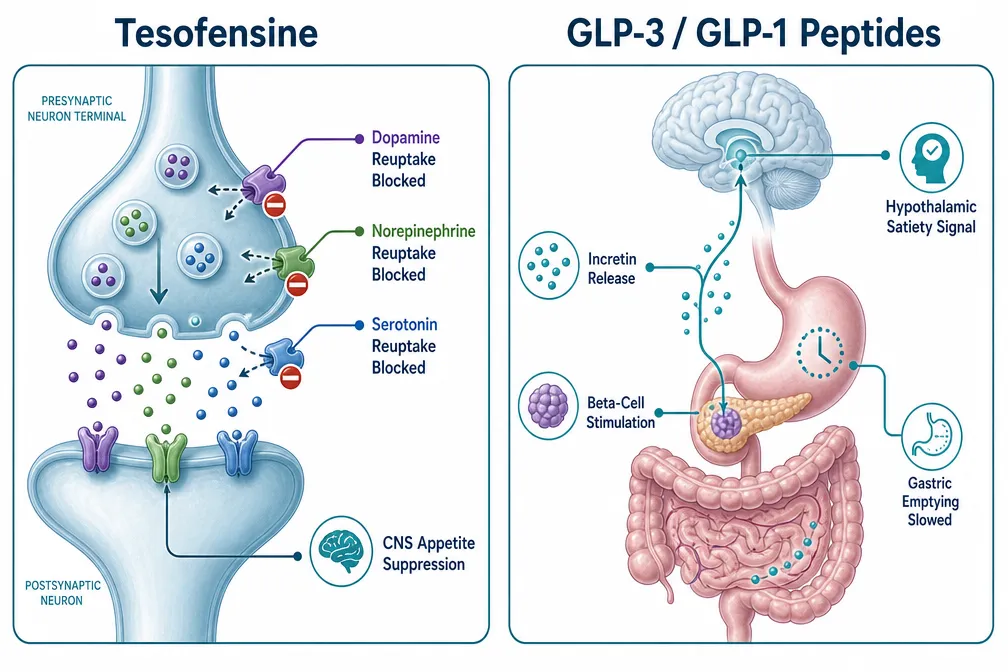
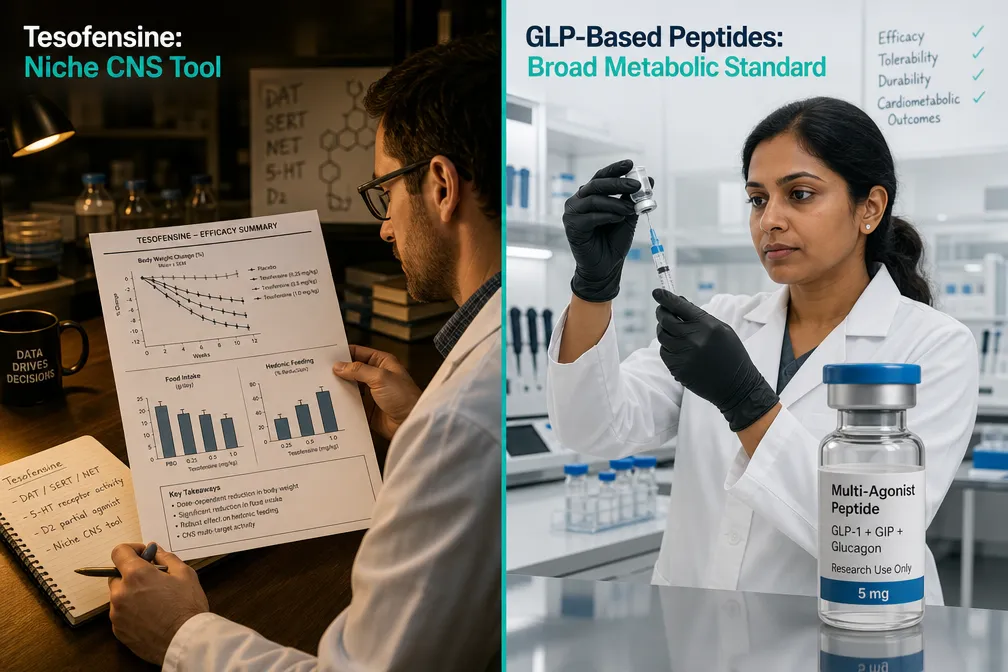
Tesofensine is a small-molecule triple reuptake inhibitor. It blocks the reuptake of dopamine, norepinephrine, and serotonin simultaneously, producing appetite suppression primarily through central nervous system pathways. Early monotherapy trials showed meaningful reductions in body weight, but cardiovascular signals, including elevated heart rate and blood pressure, slowed development. The Tesomet combination (tesofensine plus metoprolol) was designed to blunt those cardiovascular effects, and small trials have shown moderate but consistent weight loss. Pipeline analysts currently classify Tesomet as an early-stage anti-obesity candidate with modest efficacy compared to newer agents.

GLP-3 and related GLP-based peptides operate through a fundamentally different mechanism. GLP-1 receptor agonists stimulate incretin release, slow gastric emptying, activate hypothalamic satiety circuits, and promote insulin secretion in a glucose-dependent manner. Compounds such as retatrutide, a triple GLP-1/GIP/glucagon receptor co-agonist, represent the frontier of this class. For a deeper breakdown of how GLP-1, GLP-2, and GLP-3 relate to each other mechanistically, the GLP-3, GLP-1, and GLP-2 explained: a researcher's guide to the peptide family provides essential context.

"Mechanistic focus is the first filter. A lab studying central reward circuitry may legitimately need tesofensine. A lab studying cardiometabolic risk almost certainly needs a GLP-based agent."

Comparing Evidence Depth and Research Endpoints
Comparing Evidence Depth and Research Endpoints

When evaluating Tesofensine vs GLP-3 Peptides in Metabolic Research: How Labs Decide Which Compounds to Order, evidence depth is the most decisive factor for most labs.

Efficacy and Clinical Data

Factor Tesofensine GLP-Based Peptides
Weight loss magnitude Moderate Substantial to large
Cardiometabolic endpoints Limited Broad and well-documented
Translational pipeline depth Early-stage Advanced, multi-indication
Safety profile clarity Concerns noted Known, manageable
Multi-agonist variants None Tirzepatide, retatrutide, others

GLP-1 receptor agonists deliver larger, better-documented weight loss outcomes and cardiometabolic benefits than tesofensine across multiple trial populations. Pharmacovigilance data show known but manageable safety profiles for GLP-1 RAs, which reassures translational researchers planning longer study windows. Dual and multi-agonist GLP-based drugs, tirzepatide being the clearest example, have set a translational gold standard that newer lab programs aim to replicate or surpass.

Tesofensine's evidence base, while real, is narrower. Its value lies specifically in CNS-focused research: appetite neuroscience, reward pathway modulation, and monoamine system studies. Labs focused on those endpoints will find tesofensine uniquely suited. Labs pursuing metabolic syndrome, insulin resistance, or cardiovascular risk reduction will find GLP-based peptides far more aligned with their endpoints.

For researchers exploring GLP-1 peptide sourcing concepts and generational research notes, understanding how the evidence base has evolved across GLP generations is essential before finalizing compound orders.

How Labs Decide Which Compounds to Order: A Practical Framework
How Labs Decide Which Compounds to Order: A Practical Framework

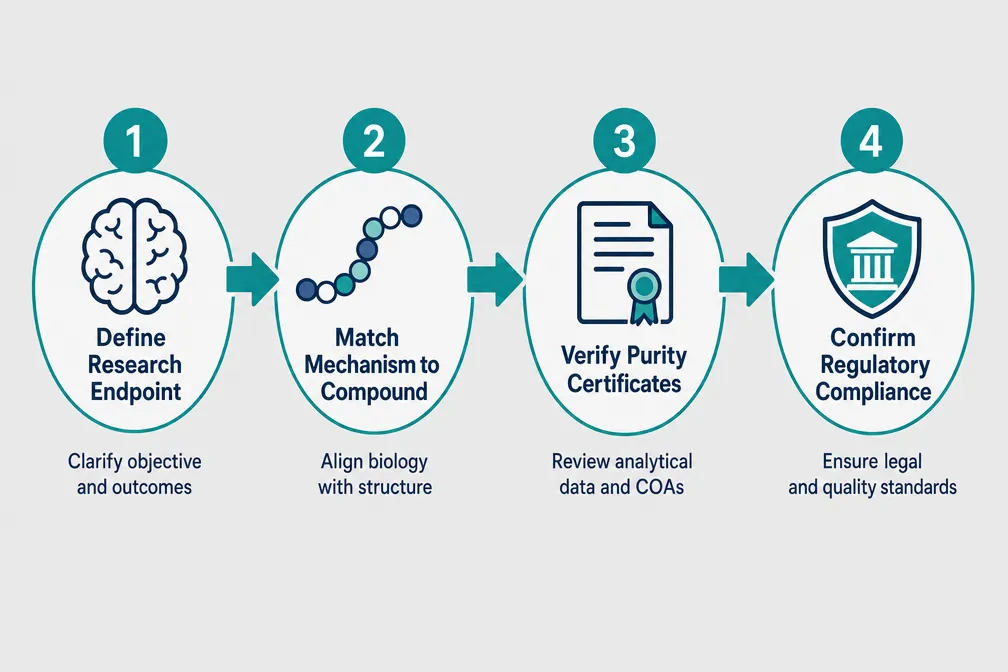
The practical side of Tesofensine vs GLP-3 Peptides in Metabolic Research: How Labs Decide Which Compounds to Order comes down to four structured decision points.

Step 1: Define the Research Endpoint

Labs must ask: Is the primary endpoint CNS-driven (appetite, reward, monoamine tone) or peripheral/metabolic (insulin sensitivity, body composition, cardiovascular markers)? CNS-focused endpoints favor tesofensine. Metabolic endpoints favor GLP-based peptides.

Step 2: Match Mechanism to Compound

Once the endpoint is clear, mechanism alignment follows naturally. Researchers studying hormone research compounds will recognize that GLP-based agents interact with incretin hormones in ways tesofensine simply does not. Conversely, monoamine reuptake inhibition cannot be replicated by any GLP-based compound.

Step 3: Evaluate Regulatory and Commercial Trajectory

Regulatory and commercial trajectories strongly push labs toward GLP-1-aligned programs. Labs seeking translational relevance, where preclinical data might eventually inform clinical development, will find GLP-based agents far better positioned. Next-generation GLP-based co-agonists and biased agonists are at the forefront of cutting-edge metabolic research investment globally.

Step 4: Verify Sourcing Quality

Regardless of which compound a lab selects, purity certification is non-negotiable. For peptide-based compounds, researchers should confirm:

  • Certificate of Analysis (CoA) with HPLC purity data
  • Mass spectrometry confirmation of molecular identity
  • Stability and storage specifications matched to the lab's conditions
  • Vendor transparency regarding synthesis methods

Labs sourcing GLP-class compounds can explore GLP-1 peptides available for research and review buy GLP-1 peptides options to compare available research-grade formulations. For broader compound discovery, all peptides for sale provides a wider catalog view. Understanding polypeptide peptides and drug mechanisms can also help researchers contextualize how each compound class fits within broader pharmacological frameworks.

The Short-Term Outlook for Each Compound Class

As of 2026, GLP-based agents remain the default ordering choice for the majority of metabolic research labs. The evidence base is deeper, the translational pipeline is more active, and regulatory momentum clearly favors incretin-based approaches. Tesofensine occupies a legitimate but narrow niche, valuable for CNS appetite research, less relevant for labs chasing cardiometabolic endpoints.

Labs should also monitor emerging hormone research developments, as the intersection of incretin biology and neuroendocrine signaling continues to generate new compound candidates that may eventually bridge both mechanistic worlds.

Conclusion

The decision between tesofensine and GLP-3 peptides is not a matter of one compound being universally superior. It is a matter of alignment, between the compound's mechanism and the lab's specific research question.

Actionable next steps for research teams:

  1. Audit current study endpoints before placing any compound order.
  2. If endpoints are metabolic or cardiometabolic, prioritize GLP-based peptides with documented multi-agonist profiles.
  3. If endpoints involve CNS appetite circuits or monoamine systems, evaluate tesofensine as a targeted tool.
  4. Require full CoA documentation and mass spectrometry data from any vendor.
  5. Stay current with pipeline developments, the GLP-based compound landscape is evolving rapidly in 2026.

Compound selection is a scientific decision first, and a sourcing decision second. Getting the order right on both counts is what separates rigorous metabolic research from inconclusive results.

https://www.puretestedpeptides.com/wp-content/uploads/2026/08/tesofensine-vs-glp-3-peptides-in-metabolic-research-how-labs-decide-which-compou.webp 672 1008 https://www.puretestedpeptides.com/wp-content/uploads/2026/01/buy-peptides-online.jpg 2026-08-29 13:04:292026-08-29 13:04:29Tesofensine vs GLP-3 Peptides in Metabolic Research: How Labs Decide Which Compounds to Order
Retatrutide Phase 3 Data and the Future of GLP‑3: What TRIUMPH and TRANSCEND Trials Mean for Research-Use Peptide Design

Retatrutide Phase 3 Data and the Future of GLP‑3: What TRIUMPH and TRANSCEND Trials Mean for Research-Use Peptide Design

August 19, 2026/0 Comments/in Uncategorized/by

Fewer than five years ago, achieving 25% body weight reduction through a single injectable compound was considered physiologically implausible. Retatrutide has changed that assumption entirely. As Phase 3 readouts from the TRIUMPH and TRANSCEND programs accumulate through 2026, researchers and peptide designers are confronting a new benchmark, one that is reshaping how next-generation GLP-3 analogs and multi-receptor agonists are conceptualized, synthesized, and sourced for preclinical investigation.

Key Takeaways

  • Retatrutide is a first-in-class triple agonist targeting GLP-1, GIP, and glucagon receptors, producing weight loss of 20-30% over 80-104 weeks in TRIUMPH-1.
  • The TRANSCEND-T2D-1 trial demonstrated HbA1c and weight outcomes that rival or exceed tirzepatide in a 537-patient, 40-week Phase 3 study.
  • TRIUMPH sub-trials extend retatrutide's research profile into knee osteoarthritis, severe obesity with cardiovascular disease, and metabolic liver disease.
  • Triple-agonist success is directly influencing how research-use peptide designers approach potency ratios, durability, and tissue selectivity in next-gen GLP-3 analogs.
  • High-purity sourcing and rigorous characterization remain critical as the research community scales investigations inspired by these Phase 3 findings.

Understanding the TRIUMPH and TRANSCEND Trial Architecture

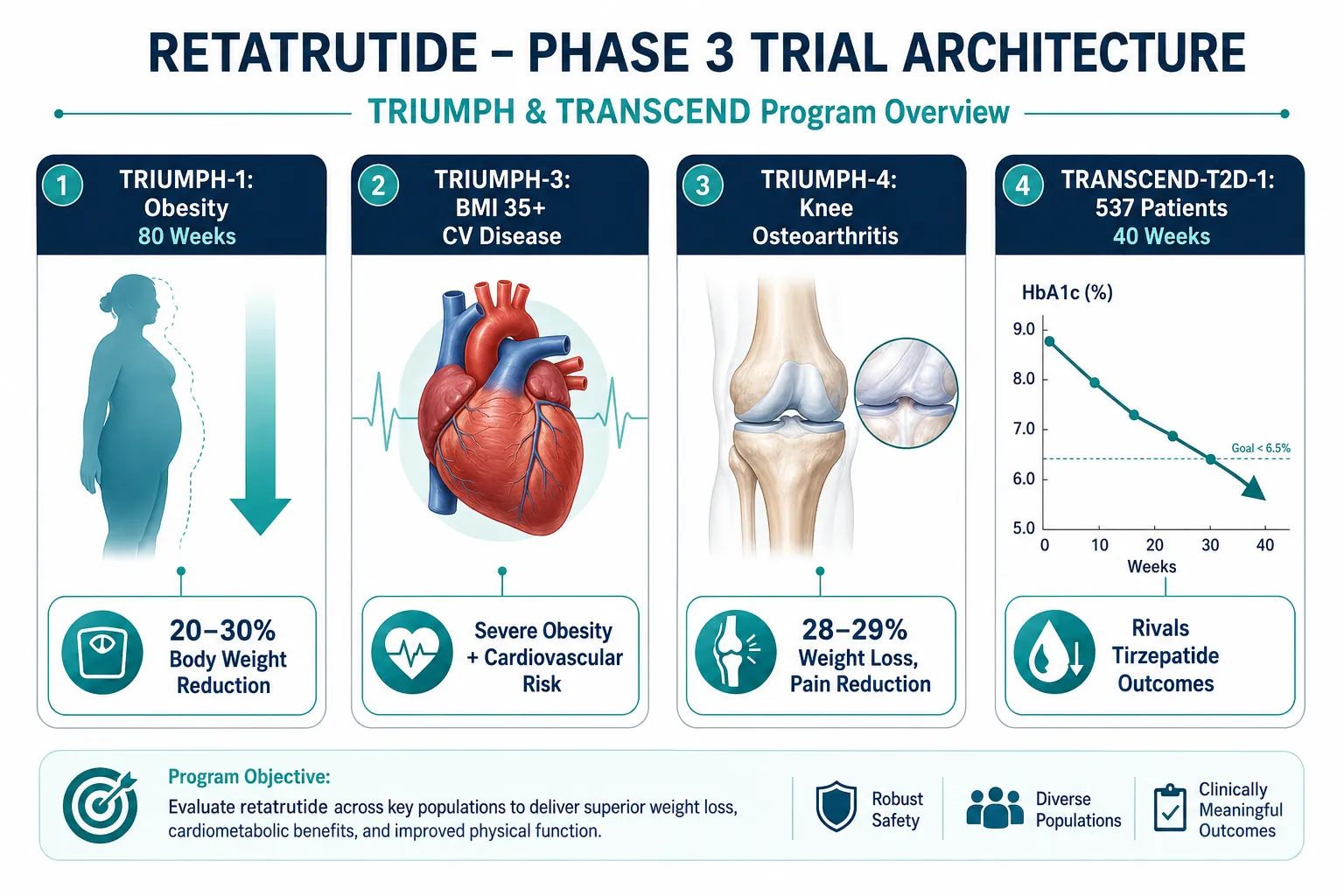
The TRIUMPH program is among the most ambitious Phase 3 obesity trial designs assembled for a single investigational compound. TRIUMPH-1, the flagship 80-week trial, enrolled adults with obesity or overweight without type 2 diabetes and delivered a striking 20-30% reduction in body weight across its highest-dose cohorts, a result that places retatrutide well above the efficacy ceiling previously associated with GLP-1 mono-agonists.

Understanding the TRIUMPH and TRANSCEND Trial Architecture

TRIUMPH-3 targets a higher-risk population: adults with severe obesity (BMI 35 or above) and established cardiovascular disease, directly addressing the intersection of metabolic and cardiac risk that has driven regulatory interest in this drug class. TRIUMPH-4 extends the program further still, examining knee osteoarthritis endpoints. In that sub-trial, participants achieved approximately 28-29% body weight reduction alongside measurable pain benefit, a finding that positions retatrutide as potentially relevant to musculoskeletal research far beyond metabolic endpoints.

The TRANSCEND program addresses type 2 diabetes specifically. TRANSCEND-T2D-1 enrolled 537 patients over 40 weeks and produced HbA1c reductions and weight outcomes that rival or exceed those reported for tirzepatide, the current dual-agonist standard. For researchers exploring the GLP-3, GLP-1, and GLP-2 peptide family, these results confirm that adding glucagon receptor co-agonism to a GLP-1/GIP backbone is not merely additive, it appears synergistic.

"Multi-hormonal agonism is no longer a theoretical advantage. TRIUMPH and TRANSCEND have made it an empirical one."

The Triple-Agonist Mechanism and What It Reveals About GLP-3 Biology

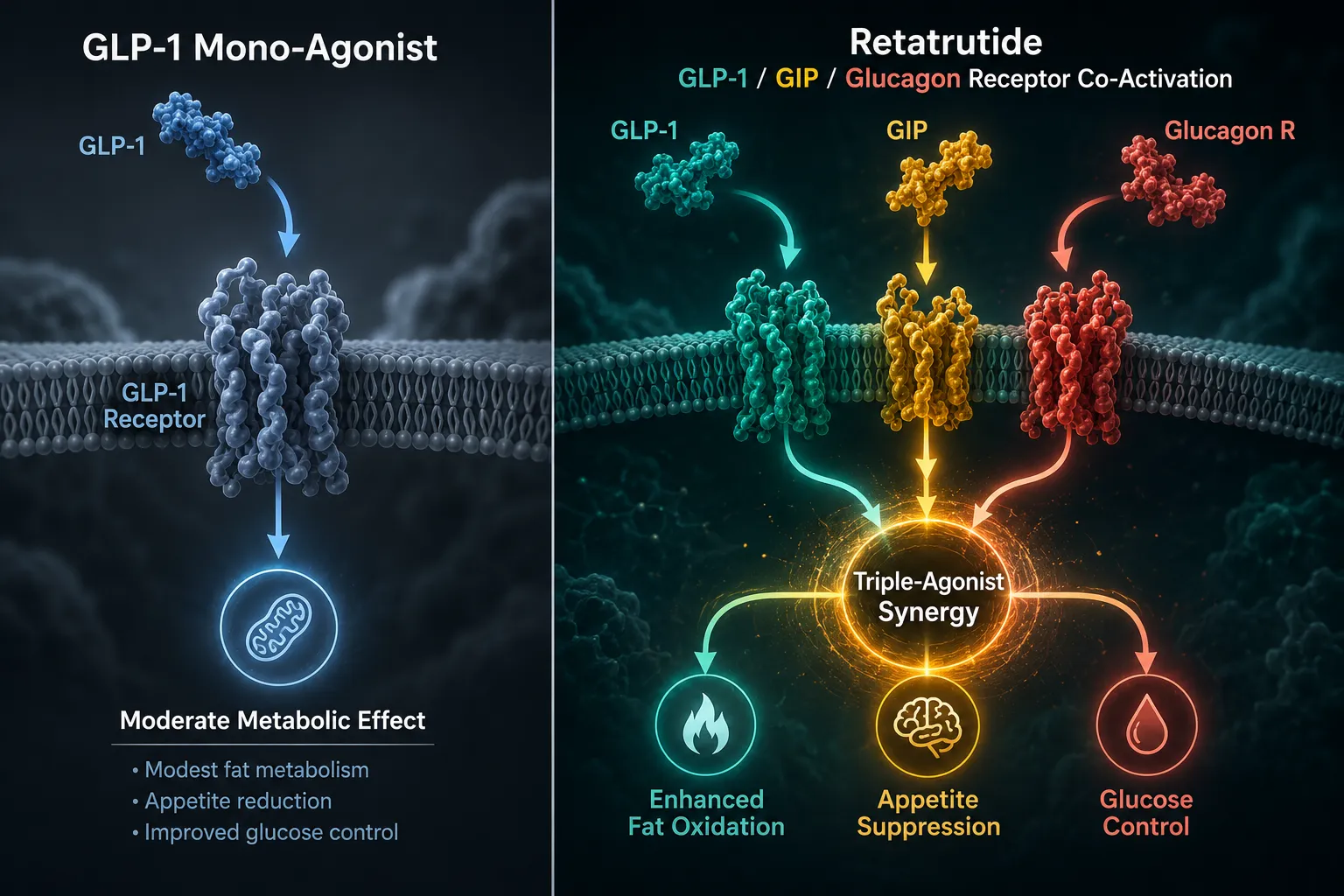
Retatrutide's mechanism involves simultaneous activation of three receptor pathways: GLP-1, GIP, and glucagon receptors. This triple-agonist profile is what some researchers informally classify as a "GLP-3-like" approach, a term reflecting the expanded receptor engagement rather than a discrete third incretin hormone. Understanding this distinction is important for anyone designing research protocols around GLP-1 peptide sourcing and generational research concepts.

The Triple-Agonist Mechanism and What It Reveals About GLP-3 Biology

The glucagon receptor component is particularly significant. By incorporating glucagon receptor agonism, retatrutide drives increased energy expenditure through hepatic fat oxidation, a mechanism that complements rather than duplicates the appetite suppression mediated by GLP-1. This is directly relevant to the compound's strong performance in MASLD and liver fat research contexts, where hepatic endpoints are primary outcomes.

Key receptor targets and their research-relevant effects:

Receptor Primary Research Effect Relevance to TRIUMPH/TRANSCEND
GLP-1R Appetite suppression, insulin secretion Core weight and glycemic outcomes
GIPR Enhanced insulin response, adipose signaling Amplifies GLP-1R efficacy
Glucagon R Energy expenditure, hepatic fat oxidation Drives superior weight loss magnitude

Safety data across TRIUMPH and TRANSCEND show a tolerability profile broadly consistent with incretin-based therapies, primarily gastrointestinal events that are dose-dependent and manageable. No unexpected safety signals have emerged that would restrict further research interest.

Implications for Research-Use Peptide Design: Potency Ratios, Durability, and Tissue Selectivity

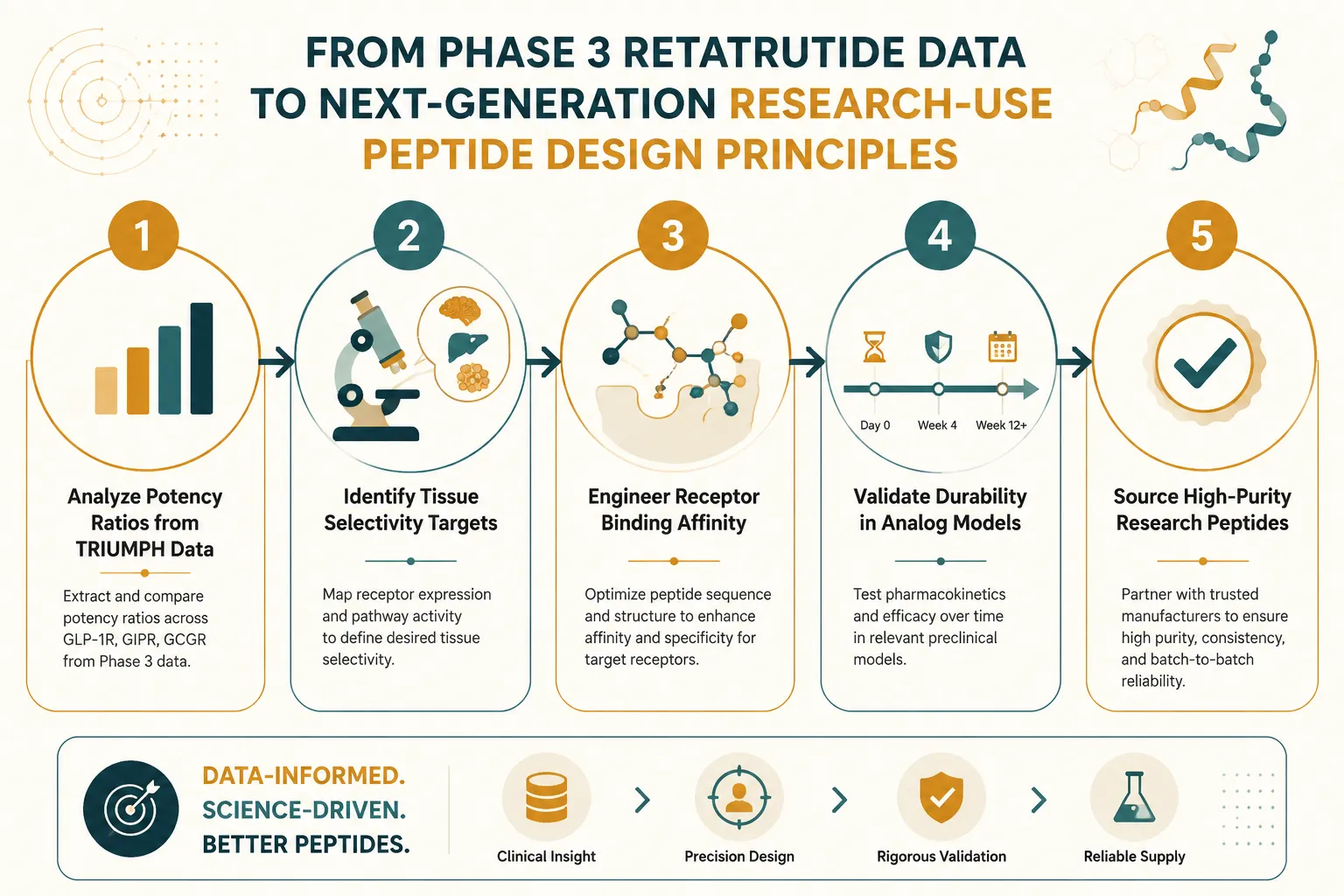
The Phase 3 success of retatrutide is already reshaping how peptide researchers approach analog design. Three design principles emerge directly from the TRIUMPH and TRANSCEND data.

Implications for Research-Use Peptide Design: Potency Ratios, Durability, and Tissue Selectivity

1. Potency ratio engineering matters more than single-receptor maximization. TRIUMPH data suggest that balanced agonism across all three receptors, rather than maximizing any single pathway, produces superior metabolic outcomes. Research teams designing GLP-3 analogs are now prioritizing receptor affinity ratios as a primary design variable.

2. Durability is a structural challenge, not just a dosing one. Weight loss in TRIUMPH-1 continued accruing through week 104 in extended analyses, suggesting that sustained receptor engagement, likely tied to the compound's half-life and receptor internalization dynamics, is a critical design parameter. This mirrors lessons from CJC-1295 half-life research in growth hormone peptide design.

3. Tissue selectivity is the next frontier. TRIUMPH-4's osteoarthritis data and the MASLD pipeline signal that researchers are moving beyond systemic metabolic endpoints toward tissue-specific applications. This parallels mitochondrial-targeted peptide research, such as work involving MOTS-C and cellular energy pathway modulation.

For preclinical investigators sourcing analogs, these design insights translate into concrete procurement criteria. High-purity peptide sourcing with verified third-party analytical testing is non-negotiable when evaluating potency ratios at the receptor level, impure or degraded material will confound any structure-activity relationship study.

The pipeline implications extend further. Retatrutide's Phase 3 breadth, spanning OSA, chronic pain, cardiovascular outcomes, and renal endpoints, signals that multi-agonist peptide frameworks are being evaluated as platform technologies rather than single-indication drugs. Research teams sourcing GLP-1 peptides for preclinical work should anticipate that future analogs will require more sophisticated receptor selectivity profiling than current GLP-1 mono-agonist protocols demand.

Conclusion

The TRIUMPH and TRANSCEND Phase 3 programs have delivered more than efficacy data, they have provided a structural blueprint for the next generation of metabolic peptide design. Retatrutide's 20-30% weight loss outcomes, its glycemic performance in TRANSCEND-T2D-1, and its expanding pipeline across musculoskeletal and hepatic endpoints confirm that triple-agonist receptor engagement represents a new standard in this research space.

Actionable next steps for researchers in 2026:

  • Review TRIUMPH sub-trial designs to identify receptor-specific endpoints relevant to your research model.
  • Prioritize potency ratio data when evaluating next-gen GLP-3 analog candidates for preclinical use.
  • Source research-use peptides exclusively from suppliers offering documented analytical purity data to ensure receptor-binding studies remain interpretable.
  • Monitor TRANSCEND program expansions for HbA1c and cardiovascular outcome data that may refine dosing models for analog research.
  • Consider tissue-selective analog design as a primary rather than secondary research objective, given TRIUMPH-4's osteoarthritis findings.

The science of multi-hormonal agonism has moved decisively from hypothesis to high-confidence Phase 3 evidence. Peptide researchers who align their design and sourcing strategies with these findings will be best positioned to contribute meaningfully to what comes next.

https://www.puretestedpeptides.com/wp-content/uploads/2026/08/retatrutide-phase-3-data-and-the-future-of-glp-3-what-triumph-and-transcend-tria.webp 1024 1536 https://www.puretestedpeptides.com/wp-content/uploads/2026/01/buy-peptides-online.jpg 2026-08-19 13:04:032026-08-19 13:04:03Retatrutide Phase 3 Data and the Future of GLP‑3: What TRIUMPH and TRANSCEND Trials Mean for Research-Use Peptide Design
Peptides and Polypeptides: Complete Research Guide for GLP-1, GLP-2, GLP-3, and Growth Hormone Peptides

Peptides and Polypeptides: Complete Research Guide for GLP-1, GLP-2, GLP-3, and Growth Hormone Peptides

August 18, 2026/0 Comments/in Uncategorized/by

Over 100 distinct peptide-based drugs are currently in active clinical development worldwide, yet most researchers encounter these molecules without a clear structural map of how they relate to one another. This guide on Peptides and Polypeptides: Complete Research Guide for GLP-1, GLP-2, GLP-3, and Growth Hormone Peptides addresses that gap directly, building a scientific foundation before diving into specific compound families.

Key Takeaways

  • Peptides are short amino acid chains; polypeptides are longer chains that fold into functional proteins, size determines receptor specificity and research use.
  • GLP-1, GLP-2, and GLP-3 all originate from the same proglucagon gene but act on entirely different receptor systems with distinct biological roles.
  • GLP-1 agonists represent the most clinically active peptide class in 2026, with oral, injectable, and ultra-long-acting formats now available or in late-stage trials.
  • Growth hormone-releasing peptides and analogs operate through the hypothalamic-pituitary axis, making them mechanistically distinct from GLP-class compounds.
  • Purity and structural integrity are non-negotiable in peptide research, third-party testing is the baseline standard.

Understanding Peptide and Polypeptide Structure

Understanding Peptide and Polypeptide Structure

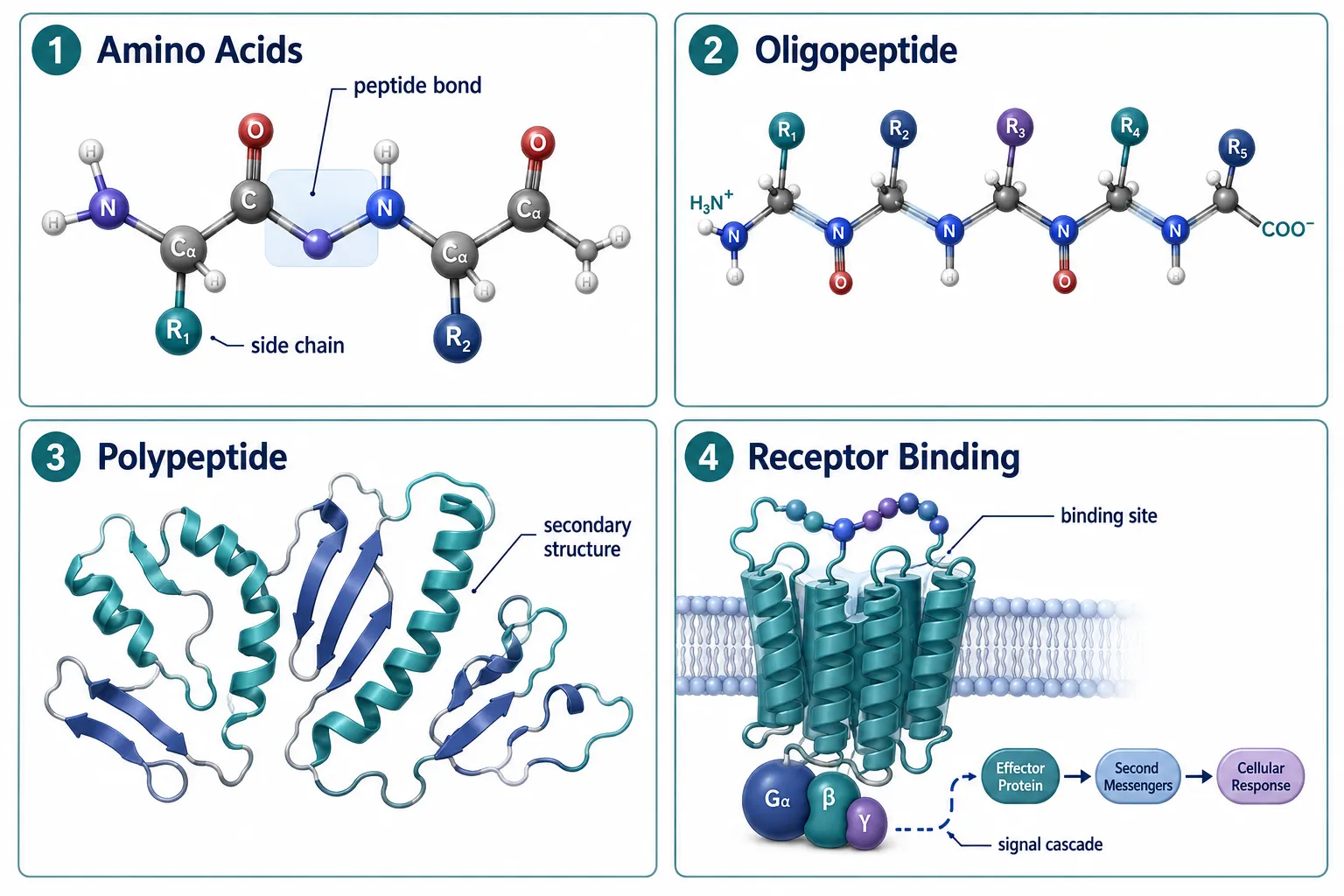
A peptide is any chain of two or more amino acids linked by peptide bonds. The classification system is straightforward:

Term Chain Length Example
Dipeptide 2 amino acids Carnosine
Oligopeptide 3-20 amino acids GLP-1 (30 aa)
Polypeptide 20-50+ amino acids Growth hormone fragments
Protein 50+ amino acids Full-length GH (191 aa)

The distinction matters in research because chain length directly influences receptor selectivity, half-life, and delivery route. Shorter peptides often cross biological barriers more easily but degrade faster. Longer polypeptides may require injectable delivery to preserve their three-dimensional structure.

Receptor binding is the next critical concept. Most research peptides act on G-protein coupled receptors (GPCRs), triggering intracellular signaling cascades rather than directly altering gene expression. This mechanism produces rapid, dose-dependent responses that researchers can measure with precision, a key advantage in preclinical models.

"Peptide size, charge, and secondary structure are not incidental features, they are the mechanism."

For researchers building a broader framework, the top 5 research peptides for metabolic health buyer's guide offers a practical starting point for compound selection within this structural context.

GLP-1, GLP-2, and GLP-3: The Proglucagon Peptide Family

GLP-1, GLP-2, and GLP-3: The Proglucagon Peptide Family

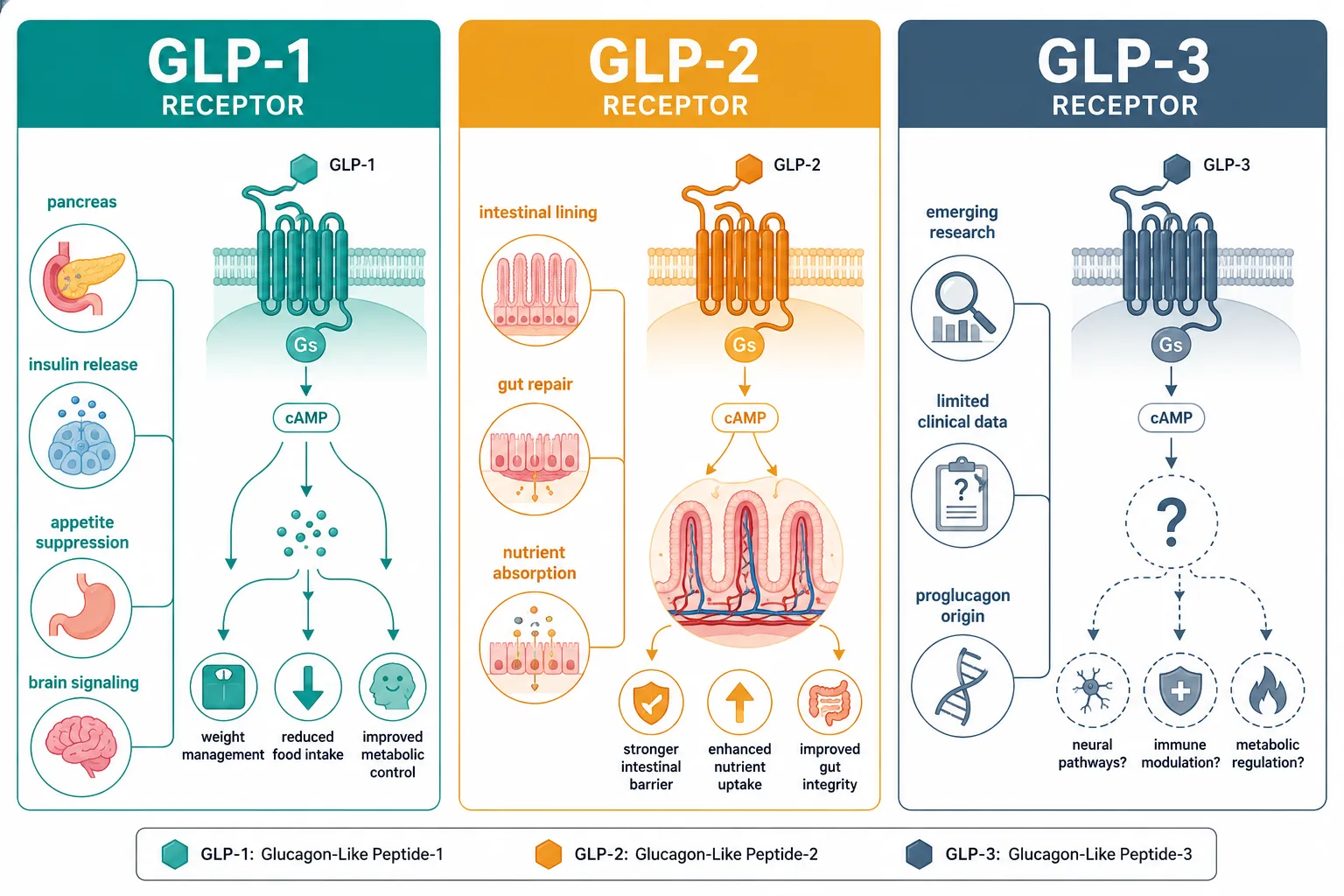
All three glucagon-like peptides derive from a single precursor protein called proglucagon, encoded by the GCG gene. Post-translational processing in different tissues produces distinct peptide fragments with entirely separate biological roles.

GLP-1: The Dominant Research Target

GLP-1 (glucagon-like peptide-1) is a 30-amino-acid incretin hormone secreted by intestinal L-cells. It stimulates insulin secretion, suppresses glucagon, slows gastric emptying, and signals satiety through the central nervous system. These combined actions make it the most studied metabolic peptide in modern pharmacology.

In 2026, the GLP-1 landscape has expanded dramatically:

  • Oral non-peptide GLP-1 agonists such as orforglipron (Foundayo, Eli Lilly) have received approval for chronic weight management, making oral GLP-1 a mainstream modality for the first time.
  • High-dose injectable semaglutide (Wegovy HD, 7.2 mg weekly) extends efficacy for patients requiring greater weight reduction.
  • Ultra-long-acting monthly injectables, including Pfizer's PF-3944/MET-097i, have shown robust Phase 2b results, potentially reducing injection frequency to once per month.
  • Multi-agonist peptides combining GLP-1 with GIP and glucagon receptor activity show the highest weight-loss efficacy seen in late-stage trials to date.

Emerging research also points to non-metabolic applications: addiction neuroscience, mood regulation, and neuroinflammation are active areas of investigation, though these remain speculative outside controlled settings.

Researchers sourcing compounds in this class should review GLP-1 peptide buying: generational research concepts and sourcing notes for structured guidance on acquisition standards. Those evaluating specific product options can also browse GLP-1 peptides available for research.

GLP-2: Intestinal Repair and Nutrient Absorption

GLP-2 is a 33-amino-acid peptide co-secreted with GLP-1 from L-cells. Its receptor is expressed almost exclusively in the gastrointestinal tract. GLP-2 promotes intestinal epithelial growth, reduces gut permeability, and enhances nutrient absorption. Research applications center on short bowel syndrome, inflammatory bowel conditions, and intestinal barrier function.

Researchers working with this compound can find relevant sourcing information under GLP-2 peptide research products.

GLP-3: The Least Characterized Fragment

GLP-3 is a proglucagon-derived fragment whose receptor biology remains incompletely mapped. Public research output on GLP-3 is limited compared to GLP-1 and GLP-2, and no approved therapeutic agents target this peptide as of 2026. It represents an early-stage area where foundational receptor characterization work is still ongoing. Researchers interested in this compound can explore GLP-3 peptide sourcing options as a starting reference.

Growth Hormone Peptides: Axis, Mechanism, and Research Context

Growth Hormone Peptides: Axis, Mechanism, and Research Context

Growth hormone (GH) peptides operate through a fundamentally different axis than GLP-class compounds. The hypothalamic-pituitary-somatotropic axis governs GH release, and research peptides in this category generally work by modulating one or more points along that pathway.

Key categories include:

  • GHRH analogs, mimic growth hormone-releasing hormone to stimulate pulsatile GH secretion from the anterior pituitary. Tesamorelin is the most studied example; researchers can review tesa peptide benefits and research context for a detailed breakdown.
  • GHRPs (growth hormone-releasing peptides), act on ghrelin receptors (GHSR-1a) to amplify GH pulses, often synergistically with GHRH analogs.
  • GH fragments, truncated polypeptide sequences derived from full-length growth hormone, studied for specific downstream effects on fat metabolism and tissue repair.

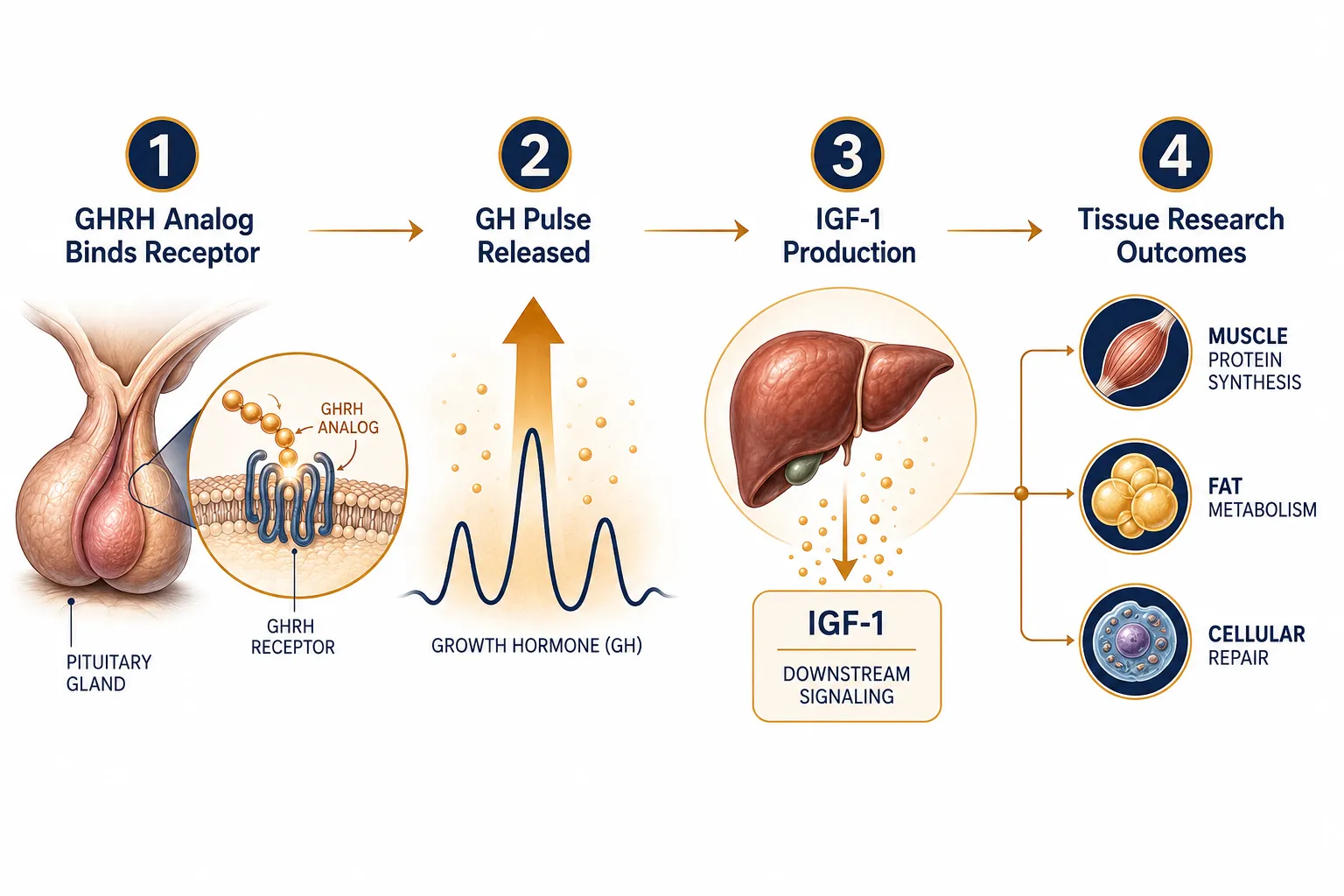
Downstream from GH release, IGF-1 production in the liver drives many of the tissue-level effects researchers are interested in: protein synthesis, cellular repair, and metabolic substrate utilization. Understanding this cascade is essential for interpreting research data correctly.

Research Standards: Purity, Benchmarking, and Sourcing

The structural complexity of peptides makes quality control non-negotiable. A single incorrect amino acid, oxidized residue, or truncated sequence can produce misleading results or no activity at all.

Minimum standards for research-grade peptides:

  • HPLC purity of 98% or greater
  • Mass spectrometry confirmation of molecular weight
  • Third-party certificate of analysis (CoA) from an independent laboratory
  • Sterility and endotoxin testing for injectable preparations

Reference standards from established manufacturers provide the benchmark against which research samples should be validated. The article on Bachem reference standards and building robust peptide benchmarks outlines how to use certified reference materials effectively.

Researchers should also confirm that suppliers offer lab-tested peptides with verifiable documentation before committing to a source.

Conclusion

The Peptides and Polypeptides: Complete Research Guide for GLP-1, GLP-2, GLP-3, and Growth Hormone Peptides framework presented here gives researchers a reliable map before engaging with any specific compound. The actionable next steps are clear:

  1. Establish structural literacy first, know whether a target peptide is an oligopeptide or polypeptide, and how that affects delivery and receptor interaction.
  2. Match the compound to the correct receptor family, GLP-1, GLP-2, and GLP-3 are not interchangeable despite sharing a common precursor.
  3. Understand the signaling axis, GH peptides require knowledge of the hypothalamic-pituitary cascade to interpret results meaningfully.
  4. Demand verified purity, third-party CoA documentation is the baseline, not a bonus.
  5. Stay current, the GLP-1 field in particular is evolving rapidly, with oral formats, multi-agonists, and monthly injectables reshaping the research landscape throughout 2026 and beyond.

A strong structural foundation makes every downstream research decision more defensible and more productive.

https://www.puretestedpeptides.com/wp-content/uploads/2026/08/peptides-and-polypeptides-complete-research-guide-for-glp-1-glp-2-glp-3-and-grow.webp 1024 1536 https://www.puretestedpeptides.com/wp-content/uploads/2026/01/buy-peptides-online.jpg 2026-08-18 13:08:362026-08-18 13:08:36Peptides and Polypeptides: Complete Research Guide for GLP-1, GLP-2, GLP-3, and Growth Hormone Peptides
Where to Buy Glow Blend, Klow Blend, and Klow Nasal Peptide Sprays: Lab-Grade vs Cosmetic-Grade Options

Where to Buy Glow Blend, Klow Blend, and Klow Nasal Peptide Sprays: Lab-Grade vs Cosmetic-Grade Options

August 17, 2026/0 Comments/in Uncategorized/by

Fewer than 15% of peptide products sold online in 2026 carry independently verified purity data, yet demand for nasal peptide sprays like Glow Blend and Klow Blend has surged sharply across research and wellness communities. For anyone navigating where to buy Glow Blend, Klow Blend, and Klow Nasal Peptide Sprays: Lab-Grade vs Cosmetic-Grade Options, the distinction between a rigorously tested research vial and an unverified cosmetic spray is not a minor detail. It is the single most important factor in sourcing decisions.

Key Takeaways

  • Glow Blend and Klow Blend are proprietary multi-peptide research formulations, not FDA-approved or peer-reviewed products.
  • Lab-grade versions come with Certificate of Analysis (COA) documentation and HPLC purity data; cosmetic-grade versions typically do not.
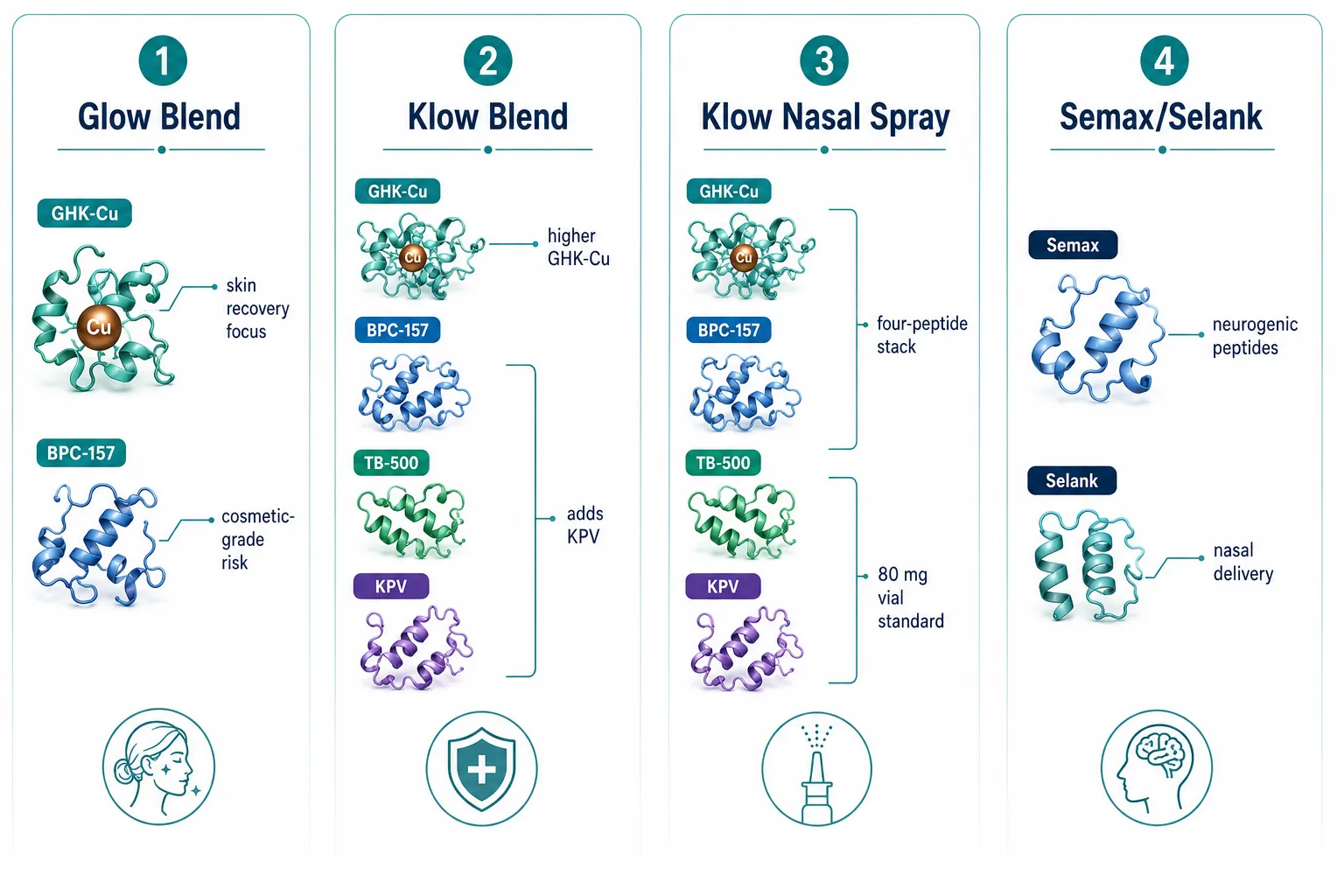
  • Klow Blend is often described as "Glow plus KPV with higher GHK-Cu concentration," making it a more complex research stack.
  • US and international vendors standardize Klow Blend at 80 mg lab-grade vials; cosmetic sprays vary widely in concentration.
  • All components in these blends remain unapproved for human therapeutic use and are sold strictly for research purposes.

Understanding Glow Blend and Klow Blend Formulations

Understanding Glow Blend and Klow Blend Formulations

Glow Blend is a multi-peptide formulation centered on skin and recovery-focused peptides, most commonly including GHK-Cu (copper peptide) and BPC-157. It is positioned by research vendors as a compound of interest for tissue repair and dermal research. Klow Blend extends this profile by adding KPV (a tripeptide fragment of alpha-MSH) and increasing the GHK-Cu concentration. Expert commentary from August 2026 consistently frames Klow as "Glow plus KPV, higher GHK-Cu", a more targeted stack for researchers studying inflammatory response and skin-barrier mechanisms.

The Klow Nasal Peptide Spray delivers this four-peptide stack via intranasal administration. Nasal delivery is chosen by researchers because it bypasses first-pass metabolism and allows faster systemic absorption compared to oral routes. Vendors such as Nova Labs, Research Peptides Europe, and PeptidePowerEU (EU-focused suppliers) have standardized their lab-grade Klow Blend offerings at 80 mg vials with full batch documentation.

It is critical to note that "Klow Blend" carries no regulatory recognition and no peer-reviewed clinical classification as of mid-2026. It is a proprietary research concept. Researchers and clinicians must treat it accordingly.

Comparison: Glow Blend vs Klow Blend

Feature Glow Blend Klow Blend
Core peptides GHK-Cu, BPC-157 GHK-Cu (higher), BPC-157, KPV
Primary research focus Skin recovery, tissue repair Inflammation, skin barrier, recovery
Standard vial size Varies by vendor 80 mg (US/international standard)
Nasal spray format Available (cosmetic risk) Yes, lab-grade framing
COA typically included Lab-grade only Lab-grade only

Lab-Grade vs Cosmetic-Grade: The Core Distinction

Lab-Grade vs Cosmetic-Grade: The Core Distinction

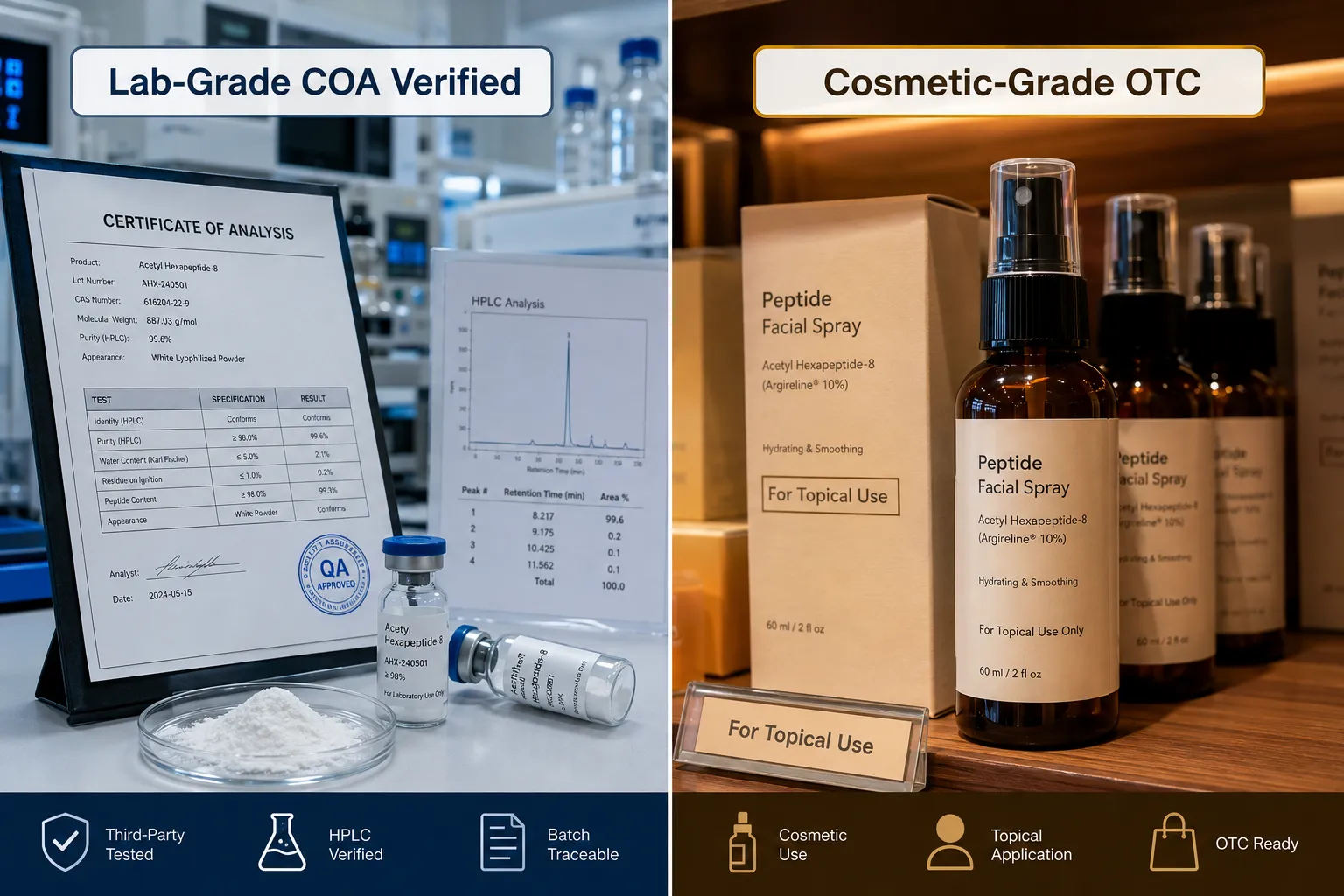
The phrase "lab-grade" in the peptide market refers to products manufactured under controlled conditions, tested by third-party laboratories, and supplied with a peptide COA (Certificate of Analysis). A genuine COA includes HPLC purity data, mass spectrometry confirmation, and batch-specific results. Without this documentation, there is no reliable way to confirm what is actually in the vial.

Cosmetic-grade nasal sprays occupy a legally ambiguous space. Glow nasal sprays marketed for "skin radiance" or "healing recovery" blur the line between research compounds and consumer wellness products. These products may use the same peptide names but offer no COA, no batch traceability, and no standardized concentration. The risk of underdosing, overdosing, or receiving a contaminated product increases significantly.

"A COA is not a marketing badge, it is the minimum evidence standard for any research-grade peptide purchase."

Researchers sourcing Semax, Selank, or complex blends like Glow and Klow should apply the same verification standard across all nasal peptide formats. For context on how rigorous sourcing applies to other peptide categories, the guide to where to buy SS31 and Epithalon online outlines the same COA-first framework.

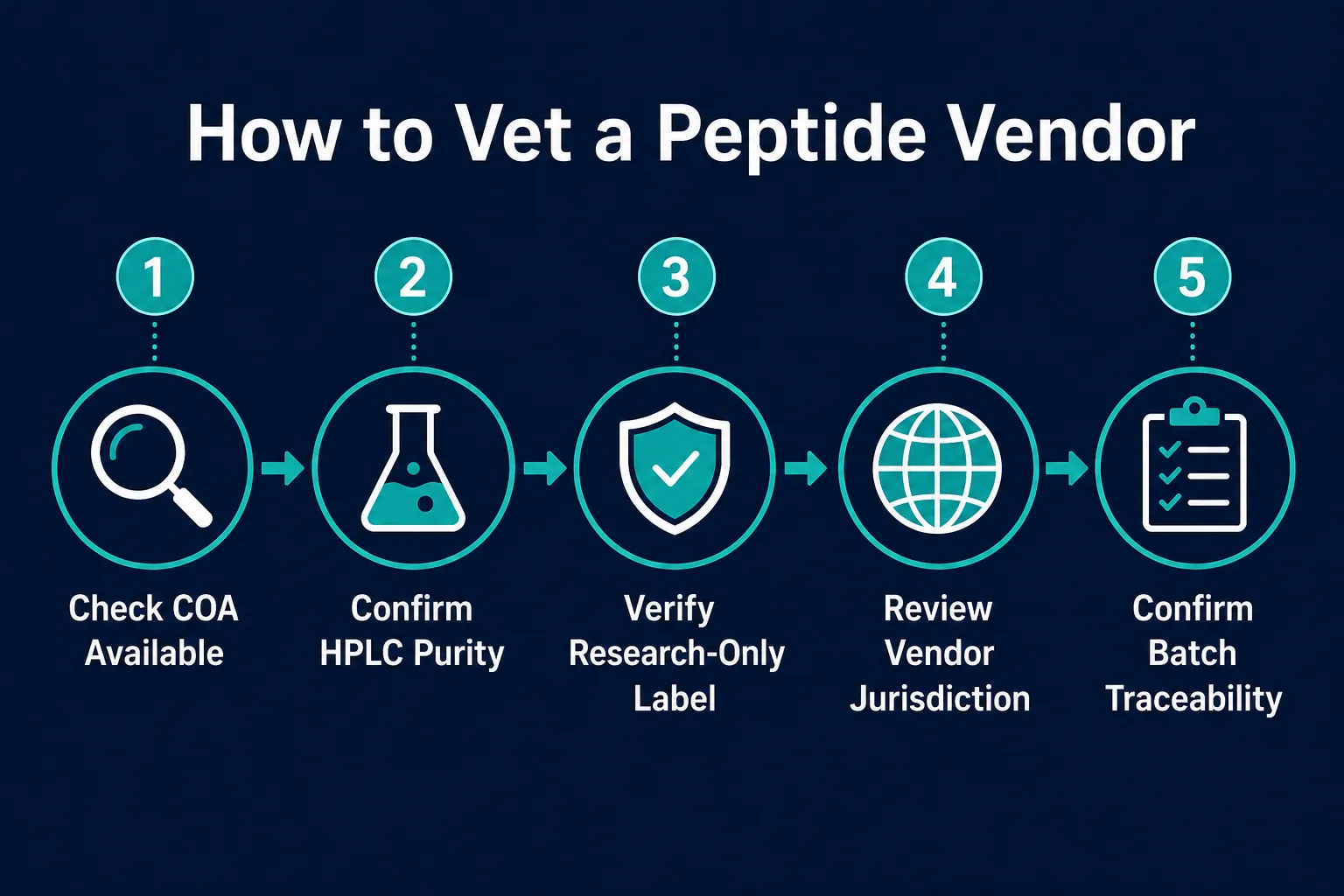
Key markers of a lab-grade supplier:

  • Third-party HPLC and mass spec data per batch
  • Downloadable COA with lot number
  • "For research use only" labeling
  • Transparent manufacturing location
  • No therapeutic or cosmetic claims

Where to Buy Glow Blend, Klow Blend, and Klow Nasal Peptide Sprays: Lab-Grade vs Cosmetic-Grade Options

Where to Buy Glow Blend, Klow Blend, and Klow Nasal Peptide Sprays: Lab-Grade vs Cosmetic-Grade Options

Sourcing these compounds responsibly requires understanding where to buy Glow Blend, Klow Blend, and Klow Nasal Peptide Sprays across lab-grade vs cosmetic-grade options, and knowing which vendor categories to prioritize or avoid.

Lab-Grade Research Vendors (Recommended for Researchers)

US-based research peptide suppliers and EU-focused vendors including Nova Labs, Research Peptides Europe, and PeptidePowerEU have emerged as primary sources for verified Klow Blend in 2026. These vendors provide:

  • 80 mg standardized vials for Klow Blend
  • Full peptide COA verification with downloadable batch data
  • Research-only labeling with no therapeutic claims
  • Lyophilized powder format for stability

For researchers already familiar with growth hormone-related peptide blends, vendors offering products like the Tesamorelin CJC1295 Ipamorelin 12mg Blend typically apply the same documentation standards to Glow and Klow formulations. This consistency in quality control is a positive signal when evaluating a new supplier. Those seeking higher-dose configurations may also review the Tesamorelin CJC1295 Ipamorelin 12mg Blend Dosage140 as a benchmark for how reputable vendors structure multi-peptide research products.

Cosmetic and Wellness Channels (Use with Caution)

Cosmetic-grade Glow and Klow nasal sprays appear on wellness marketplaces, beauty retailers, and some compounding pharmacy-adjacent platforms. These products are often marketed as "radiance recovery" or "healing peptide therapy." They lack the documentation standards of lab-grade sources and should not be used in formal research contexts.

Nasal Peptide Sprays: Semax and Selank Context

Researchers comparing Glow and Klow to established nasal peptide formats should review the comparative research on Semax and Selank peptides, neurogenesis, and synaptic plasticity for a benchmark on how intranasal peptide delivery is studied. Semax and Selank have a longer research history and provide a useful reference point for evaluating newer nasal spray formulations.

For broader context on multi-peptide research sourcing, the top 5 research peptides for metabolic health buyer's guide covers vendor evaluation criteria applicable across peptide categories.

Regulatory and Safety Positioning

All components in Glow Blend, Klow Blend, and Klow Nasal Peptide Sprays remain unapproved by the FDA and equivalent regulatory bodies as of August 2026. They are not approved for human therapeutic use, diagnosis, or treatment. Every legitimate lab-grade supplier labels these products strictly for in vitro or preclinical research use only. Any vendor making health claims or omitting this labeling is a red flag.

Conclusion

Navigating where to buy Glow Blend, Klow Blend, and Klow Nasal Peptide Sprays: Lab-Grade vs Cosmetic-Grade Options comes down to one non-negotiable standard: documentation. Lab-grade suppliers provide COA data, batch traceability, and research-only labeling. Cosmetic-grade channels offer convenience but sacrifice the verification that research integrity demands.

Actionable next steps for researchers in 2026:

  1. Request a downloadable COA with HPLC data before purchasing any Glow or Klow formulation.
  2. Confirm the vendor uses "research use only" labeling, not cosmetic or therapeutic claims.
  3. Cross-reference batch numbers against the supplier's published documentation.
  4. Treat Klow Blend as a four-peptide research stack requiring the same rigor as any complex multi-peptide formulation.
  5. Avoid any nasal peptide spray that cannot provide independent third-party purity verification.

The peptide research space moves quickly, but quality standards do not change. Verified sourcing is the foundation of credible research outcomes.

https://www.puretestedpeptides.com/wp-content/uploads/2026/08/where-to-buy-glow-blend-klow-blend-and-klow-nasal-peptide-sprays-lab-grade-vs-co-1.webp 1024 1536 https://www.puretestedpeptides.com/wp-content/uploads/2026/01/buy-peptides-online.jpg 2026-08-17 13:05:172026-08-17 13:05:17Where to Buy Glow Blend, Klow Blend, and Klow Nasal Peptide Sprays: Lab-Grade vs Cosmetic-Grade Options
Best Research Applications for PT-141: What Makes It Different From Other Melanocortin Peptides?

Best Research Applications for PT-141: What Makes It Different From Other Melanocortin Peptides?

August 12, 2026/0 Comments/in Uncategorized/by

Only one melanocortin peptide has received FDA approval specifically for a centrally mediated indication, and it is not alpha-MSH, Melanotan II, or any broad-spectrum analog. PT-141 (bremelanotide) earned that distinction by targeting a narrower receptor profile, which is precisely what makes exploring the best research applications for PT-141 and what makes it different from other melanocortin peptides such a productive focus for experimental design in 2026.

Isometric scientific illustration in bright teal and white palette, (): a detailed cross-section diagram of the melanocortin

Key Takeaways

  • PT-141 selectively activates MC3R and MC4R receptors rather than the full melanocortin receptor family, separating its research profile from broader analogs like Melanotan II.
  • Its central nervous system mechanism distinguishes it from peripherally acting melanocortin peptides and from non-peptide approaches.
  • The best research applications for PT-141 center on CNS-mediated pathways, appetite regulation, and receptor selectivity studies.
  • Purity and structural integrity are critical variables when designing PT-141 experiments; sourcing from verified suppliers affects data reliability.
  • Understanding PT-141's receptor biology helps researchers avoid conflating its findings with those from structurally similar but functionally distinct peptides.

The Melanocortin System: A Quick Receptor Map

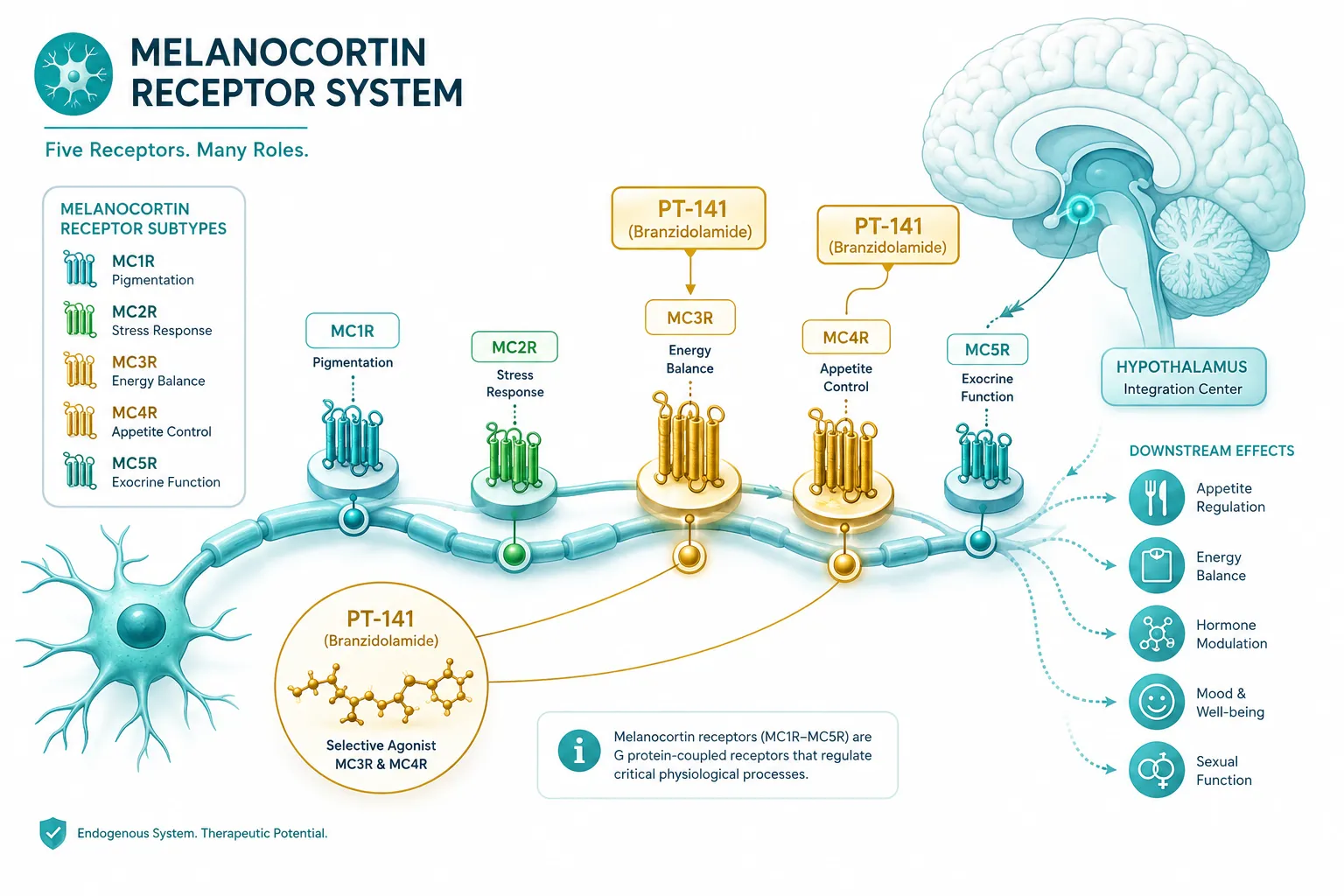
The melanocortin system comprises five G-protein-coupled receptors (MC1R through MC5R), each with distinct tissue distribution and downstream signaling roles.

Receptor Primary Location Key Research Associations
MC1R Melanocytes, skin Pigmentation, UV response
MC2R Adrenal cortex ACTH signaling, cortisol
MC3R Hypothalamus, limbic Energy balance, reward
MC4R Hypothalamus, CNS Appetite, sexual function
MC5R Exocrine glands Secretion, immune modulation

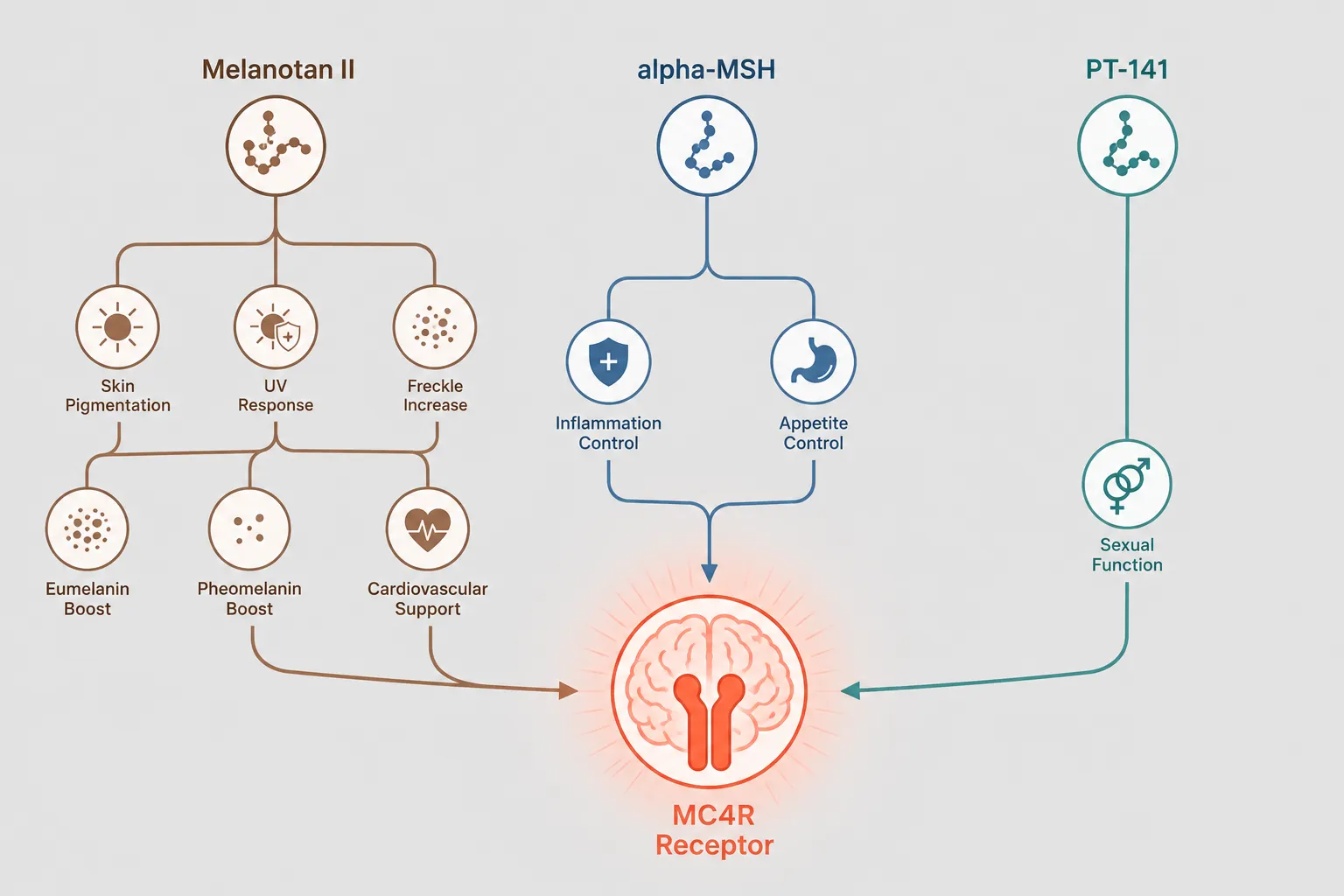
Alpha-melanocyte-stimulating hormone (alpha-MSH), the endogenous ligand for this system, binds all five receptor subtypes with varying affinity. That broad binding profile makes alpha-MSH a useful reference compound but a poor model for targeted mechanistic research.

To understand how peptide structure shapes receptor selectivity at a foundational level, the resource on polypeptide peptides and drug mechanisms provides useful pharmacological context.

Best Research Applications for PT-141: Receptor Selectivity as the Core Differentiator

PT-141 is a cyclic heptapeptide derived from Melanotan II, but with one critical structural modification: removal of the C-terminal amide and addition of a hydroxyl group. That change shifts its receptor binding preference toward MC3R and MC4R while reducing affinity for MC1R.

Why does this matter for experimental design?

  • Melanotan II activates MC1R strongly, producing pigmentation effects that complicate interpretation in CNS-focused studies.
  • PT-141's reduced MC1R activity means researchers studying hypothalamic or limbic pathways encounter fewer confounding peripheral signals.
  • MC4R in particular is densely expressed in hypothalamic nuclei involved in energy homeostasis and reward circuitry, making PT-141 a more precise tool for those research questions.

"Receptor selectivity is not just a pharmacological footnote, it is the variable that determines whether an experimental result is attributable to a specific pathway or to systemic noise."

For researchers building models around MC4R specifically, the MC4R research tag aggregates relevant studies and product information in one place.

Best Research Applications for PT-141: Receptor Selectivity as the Core Differentiator

How PT-141 Compares to Other Melanocortin Peptides in Research Models

Melanotan II

Melanotan II is a non-selective melanocortin agonist. Its strong MC1R activity produces robust tanning responses, which is useful in dermatology-adjacent research but introduces variables when the target is central receptor function. Blood pressure effects linked to MC3R/MC4R co-activation also complicate cardiovascular safety profiling.

Alpha-MSH

Alpha-MSH is the endogenous standard. It is valuable for baseline receptor characterization but lacks the stability needed for sustained in vitro or in vivo protocols. Its short half-life requires frequent dosing adjustments that add experimental noise.

ACTH (1-24)

ACTH fragments bind MC2R preferentially. They are used in adrenal axis research but are largely irrelevant to CNS pathway studies where PT-141 excels.

PT-141's position: Its cyclic structure confers greater metabolic stability than linear peptides like alpha-MSH, and its MC3R/MC4R preference makes it the most targeted tool currently available for hypothalamic receptor research among the melanocortin class.

For a broader look at how peptide structure affects research utility across categories, the Peptides 101 for research-use only buyers guide covers foundational mechanisms clearly.

Best Research Applications for PT-141: Where Experimental Value Is Highest

Best Research Applications for PT-141: Where Experimental Value Is Highest

The best research applications for PT-141 cluster around three areas where its receptor profile provides a genuine advantage over other melanocortin peptides:

1. Hypothalamic Energy Regulation Studies
MC4R knockout models have established this receptor's role in obesity and feeding behavior. PT-141 serves as a pharmacological probe to activate MC4R selectively without triggering the full receptor cascade that Melanotan II would produce.

2. CNS Reward and Motivation Pathway Research
MC3R expression in limbic structures positions PT-141 as a useful compound for studying dopaminergic interactions. Researchers investigating motivation circuits benefit from a compound that reaches central receptors efficiently.

3. Receptor Binding Kinetics and Selectivity Profiling
PT-141's defined binding preference makes it a reference compound for competitive binding assays. When researchers need to establish MC3R/MC4R occupancy baselines, PT-141 provides cleaner data than non-selective analogs.

For labs also working with delivery optimization, the article on nasal spray peptides, delivery methods, and bioavailability is directly relevant, as bremelanotide's approved clinical form uses subcutaneous delivery and bioavailability modeling informs dosing protocols in research settings.

Sourcing and Purity Considerations for PT-141 Research

Structural integrity is non-negotiable for melanocortin research. A degraded or impure PT-141 sample will produce off-target receptor activation that mimics a broader binding profile, effectively turning a selective tool into a noisy one.

Key sourcing criteria:

  • Certificate of Analysis (CoA) confirming peptide purity above 98%
  • HPLC and mass spectrometry data verifying molecular weight and sequence integrity
  • Endotoxin testing for any in vivo application
  • Proper lyophilization and cold-chain storage

Researchers evaluating suppliers should consult resources like the peptide supplier comparisons guide and review where to buy peptides for verified sourcing options.

For labs working across multiple peptide categories simultaneously, the top 5 research peptides for metabolic health guide provides useful cross-category context for experimental planning.

Conclusion

The best research applications for PT-141 and what makes it different from other melanocortin peptides come down to one core principle: receptor selectivity translates directly into experimental precision. Where Melanotan II and alpha-MSH cast a wide net across the melanocortin receptor family, PT-141's preference for MC3R and MC4R gives researchers a more controlled instrument for CNS-focused, hypothalamic, and receptor kinetics work.

Actionable next steps for researchers in 2026:

  1. Map your research question to the specific receptor subtype involved before selecting a melanocortin compound.
  2. Obtain CoA documentation and HPLC data before committing PT-141 to any protocol.
  3. Use PT-141 as a selectivity benchmark in competitive binding assays when characterizing novel melanocortin analogs.
  4. Review delivery method literature to ensure reconstitution and administration protocols match the receptor expression profile you are targeting.

Choosing the right melanocortin peptide is not a minor sourcing decision, it is a foundational experimental design choice that shapes every result downstream.

https://www.puretestedpeptides.com/wp-content/uploads/2026/08/best-research-applications-for-pt-141-what-makes-it-different-from-other-melanoc.webp 1024 1536 https://www.puretestedpeptides.com/wp-content/uploads/2026/01/buy-peptides-online.jpg 2026-08-12 13:03:572026-08-12 13:03:57Best Research Applications for PT-141: What Makes It Different From Other Melanocortin Peptides?
What Is the GLP-2-T Peptide? Research Context, Target Biology, and Why It Is Confused With GLP-2

What Is the GLP-2-T Peptide? Research Context, Target Biology, and Why It Is Confused With GLP-2

August 10, 2026/0 Comments/in Uncategorized/by

Fewer than a dozen peer-reviewed papers use the exact term "GLP-2-T," yet the phrase appears regularly in supplier catalogs, researcher forums, and database searches, often pointing to entirely different compounds. That naming gap creates real problems in the lab. Understanding what is the GLP-2-T peptide, its research context, target biology, and why it is confused with GLP-2 is not just a matter of semantics. It directly affects which reagent a researcher orders, which receptor assay they design, and how they interpret published data.

Key Takeaways

  • GLP-2-T is a non-standardized shorthand, not an official IUPAC or INN-designated peptide name.
  • The "T" suffix most commonly denotes a truncated or modified form of glucagon-like peptide-2, though some vendors use it to reference a tagged or conjugated analog.
  • Native GLP-2 acts primarily on the GLP-2 receptor (GLP2R) in intestinal epithelial cells; any truncated variant may exhibit altered receptor affinity or bioactivity.
  • Confusion between GLP-2 and GLP-2-T is driven by inconsistent vendor nomenclature, abbreviated database entries, and overlapping search intent.
  • Researchers should verify sequence, purity, and receptor-binding data before sourcing any compound labeled "GLP-2-T."

The Naming Problem: Why "GLP-2-T" Creates Confusion in Research

The glucagon-like peptide family is already crowded. GLP-1, GLP-2, GLP-3, oxyntomodulin, and glicentin all derive from the same proglucagon precursor gene. When a suffix like "-T" is appended without a published consensus definition, the result is predictable ambiguity.

Three common interpretations of "GLP-2-T" in the literature and vendor space:

Interpretation What It Means Where It Appears
Truncated GLP-2 A shorter amino acid sequence, often missing C-terminal residues Biochemistry catalogs, assay kits
Tagged GLP-2 GLP-2 conjugated to a fluorescent tag or biotin Immunology reagent suppliers
Typographic shorthand A vendor-specific abbreviation with no defined structure Product pages, informal databases

This ambiguity is not unique to GLP-2-T. Researchers navigating the GLP family regularly encounter similar issues, as detailed in the article on what is GLP3 peptide and how researchers distinguish it from retatrutide.

"A peptide name without a confirmed sequence is a hypothesis, not a reagent."

The practical consequence: a researcher searching for GLP-2-T in a supplier database may receive a truncated 30-residue analog, a fully tagged 33-residue conjugate, or, in some cases, standard GLP-2 mislabeled due to a catalog error.

What Is the GLP-2-T Peptide? Target Biology and Receptor Context

What Is the GLP-2-T Peptide? Target Biology and Receptor Context

To understand what is the GLP-2-T peptide in terms of target biology, it helps to start with the parent molecule.

Native GLP-2: A Brief Profile

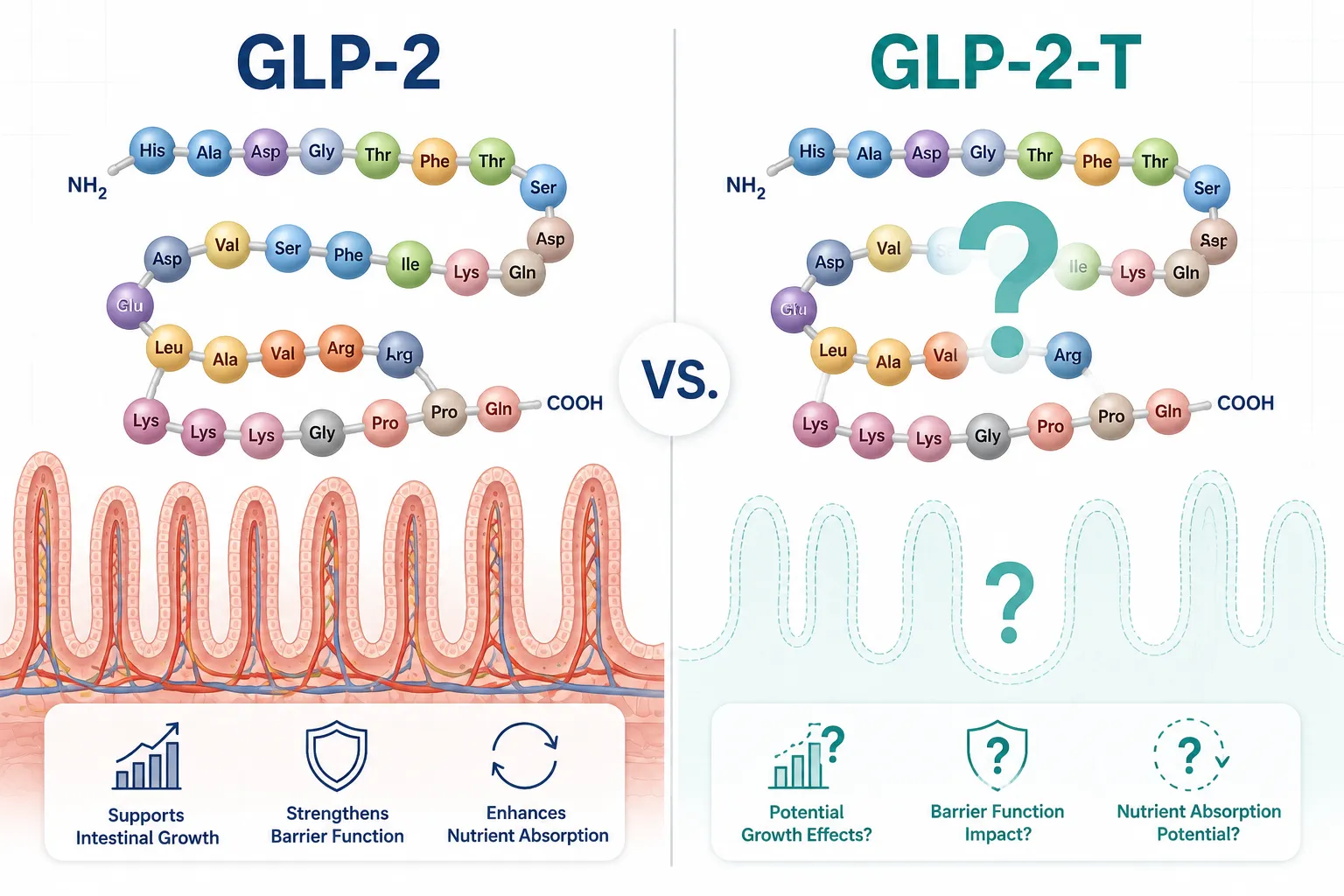
Native GLP-2 is a 33-amino acid peptide secreted by intestinal L-cells in response to nutrient intake. Its primary receptor, GLP2R, is expressed predominantly in:

  • Intestinal epithelial cells (enterocytes, goblet cells)
  • Enteric neurons
  • Subpopulations of hypothalamic neurons

Activation of GLP2R promotes intestinal epithelial proliferation, reduces apoptosis, enhances nutrient absorption, and supports mucosal barrier integrity. These properties have made GLP-2 analogs, most notably teduglutide, a focus of short bowel syndrome research.

How Truncation Changes the Biology

When the "T" in GLP-2-T refers to a truncated form, the functional implications are significant. The N-terminal dipeptide His-Ala is critical for GLP2R binding. Removing even two residues from the N-terminus can convert a full agonist into a partial agonist or antagonist in cell-based assays.

Key structural-activity considerations for truncated GLP-2 variants:

  • N-terminal truncation typically reduces receptor binding affinity and agonist potency.
  • C-terminal truncation may affect proteolytic stability without necessarily eliminating receptor engagement.
  • Mid-sequence deletions are rare in the literature but appear in some synthetic analog studies.

Researchers working with metabolic peptides should cross-reference findings against top research peptides for metabolic health to contextualize GLP-2-T within the broader metabolic peptide landscape.

Why GLP-2-T Is Confused With GLP-2: Search Intent and Product Context

Why GLP-2-T Is Confused With GLP-2: Search Intent and Product Context

Why GLP-2-T Is Confused With GLP-2: Search Intent and Product Context

Understanding what is the GLP-2-T peptide and why it is confused with GLP-2 requires looking at both the scientific and commercial environments where these terms circulate.

Search Intent Overlap

Users searching "GLP-2-T peptide" typically fall into one of three intent categories:

  1. Researchers seeking a specific truncated analog for receptor antagonism studies.
  2. Procurement staff cross-referencing catalog numbers and mistaking abbreviated entries.
  3. Students or early-career scientists who encountered the term in a secondary source without a primary citation.

Each group needs different information, yet all three land on the same search results, often product pages that do not clarify the structural distinction.

Vendor Nomenclature as a Source of Confusion

Peptide suppliers frequently use shorthand codes to differentiate product variants. A catalog may list:

  • GLP-2 (1-33), the full native sequence
  • GLP-2 (3-33), a truncated form sometimes labeled GLP-2-T
  • GLP-2-NH2, a C-terminally amidated form

Without reading the full product specification, "GLP-2-T" and "GLP-2" appear interchangeable. This is compounded by the fact that database aggregators sometimes strip suffixes during indexing.

For researchers who rely on reference standards to confirm compound identity, the resource on building robust peptide benchmarks with Bachem and reference standards provides practical guidance on verification workflows.

The Polypeptide Classification Layer

Adding another layer of complexity, GLP-2 and its variants are polypeptides derived from a larger precursor. Researchers unfamiliar with this classification sometimes conflate the parent proglucagon-derived peptides. A broader overview of polypeptide peptides from collagen and hormones to advanced research compounds helps place GLP-2-T within the correct structural family.

Practical Steps for Researchers Encountering "GLP-2-T"

When a protocol, catalog, or paper references GLP-2-T, the following verification steps reduce the risk of sourcing the wrong compound:

  1. Request the full amino acid sequence from the supplier, do not rely on the product name alone.
  2. Check the molecular weight against published GLP-2 variants; a truncated form will have a measurably lower MW.
  3. Confirm receptor binding data, does the supplier provide GLP2R binding affinity (IC50 or Ki) for the specific lot?
  4. Review the original citation if the term appears in a paper; trace it to the primary sequence data.
  5. Use mass spectrometry confirmation for high-stakes assays where sequence identity is critical.

Complement-dependent safety and immunological considerations also apply when working with novel peptide analogs. The article on complement-dependent cytotoxicity and peptide safety offers relevant immunology context for labs handling modified peptides.

Conclusion

The term "GLP-2-T" sits at the intersection of incomplete nomenclature, vendor shorthand, and genuine scientific interest in GLP-2 analogs. What is the GLP-2-T peptide in research context ultimately depends on the source using the term, it may describe a truncated sequence with altered GLP2R affinity, a tagged conjugate for imaging assays, or simply a mislabeled version of native GLP-2.

Actionable next steps for researchers in 2026:

  • Always obtain a certificate of analysis with full sequence data before ordering any compound labeled "GLP-2-T."
  • Cross-reference with primary literature using the exact sequence, not the product name.
  • Consult resources on what are polypeptide peptides and advanced research compounds to build foundational knowledge of the GLP family.
  • Report any supplier nomenclature discrepancies to institutional procurement to prevent repeated errors across research groups.

Clarity in peptide nomenclature is not administrative overhead, it is the foundation of reproducible science.

https://www.puretestedpeptides.com/wp-content/uploads/2026/08/what-is-the-glp-2-t-peptide-research-context-target-biology-and-why-it-is-confus.webp 1024 1536 https://www.puretestedpeptides.com/wp-content/uploads/2026/01/buy-peptides-online.jpg 2026-08-10 13:03:492026-08-10 13:03:49What Is the GLP-2-T Peptide? Research Context, Target Biology, and Why It Is Confused With GLP-2
Peptides and Polypeptides Explained: Connecting DNA, Mitochondria, and Modern Research-Use Compounds Like MOTS-c and 5-Amino-1MQ

Peptides and Polypeptides Explained: Connecting DNA, Mitochondria, and Modern Research-Use Compounds Like MOTS-c and 5-Amino-1MQ

August 4, 2026/0 Comments/in Uncategorized/by

Every protein in the human body, from the enzymes digesting food to the antibodies fighting infection, begins as a short chain of amino acids called a peptide. That single biological fact connects classical genetics, cellular energy production, and an entirely new generation of research compounds now drawing serious scientific attention in 2026.

This guide on Peptides and Polypeptides Explained: Connecting DNA, Mitochondria, and Modern Research-Use Compounds Like MOTS-c and 5-Amino-1MQ bridges foundational biology with cutting-edge investigational molecules, giving researchers and curious readers a clear, connected picture.

Key Takeaways

  • Peptides are short amino acid chains; polypeptides are longer chains that fold into functional proteins.
  • DNA encodes the instructions that ribosomes use to assemble every peptide and polypeptide in the body.
  • Mitochondria produce their own small peptides, including MOTS-c, that regulate metabolism and stress responses.
  • 5-Amino-1MQ is a small-molecule research compound studied for its role in metabolic enzyme inhibition, often discussed alongside mitochondria-targeting peptides.
  • Both MOTS-c and 5-Amino-1MQ remain strictly research-use compounds; neither is approved for human therapeutic use.

Key Takeaways

From DNA to Peptides: The Biological Blueprint

What Are Peptides and Polypeptides?

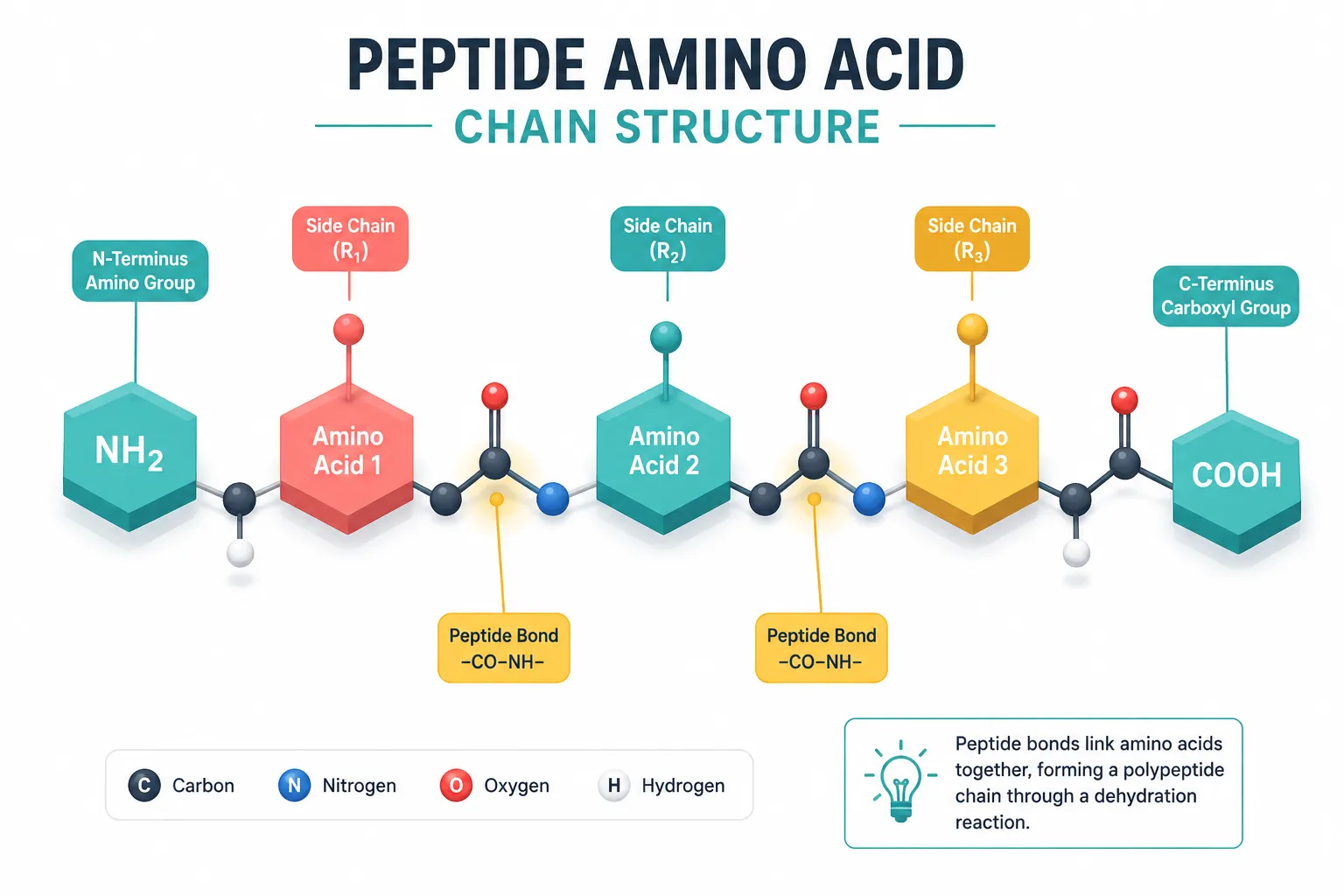
A peptide is a molecule made of two or more amino acids linked by peptide bonds. The naming follows a simple size rule:

Term Amino Acid Count Example
Dipeptide 2 Carnosine
Oligopeptide 3-20 GLP-1 (7 residues)
Polypeptide 20-50+ Growth hormone fragments
Protein 50+ (folded) Insulin, collagen

The line between "polypeptide" and "protein" is functional rather than strict, proteins are polypeptides that have folded into a defined three-dimensional shape.

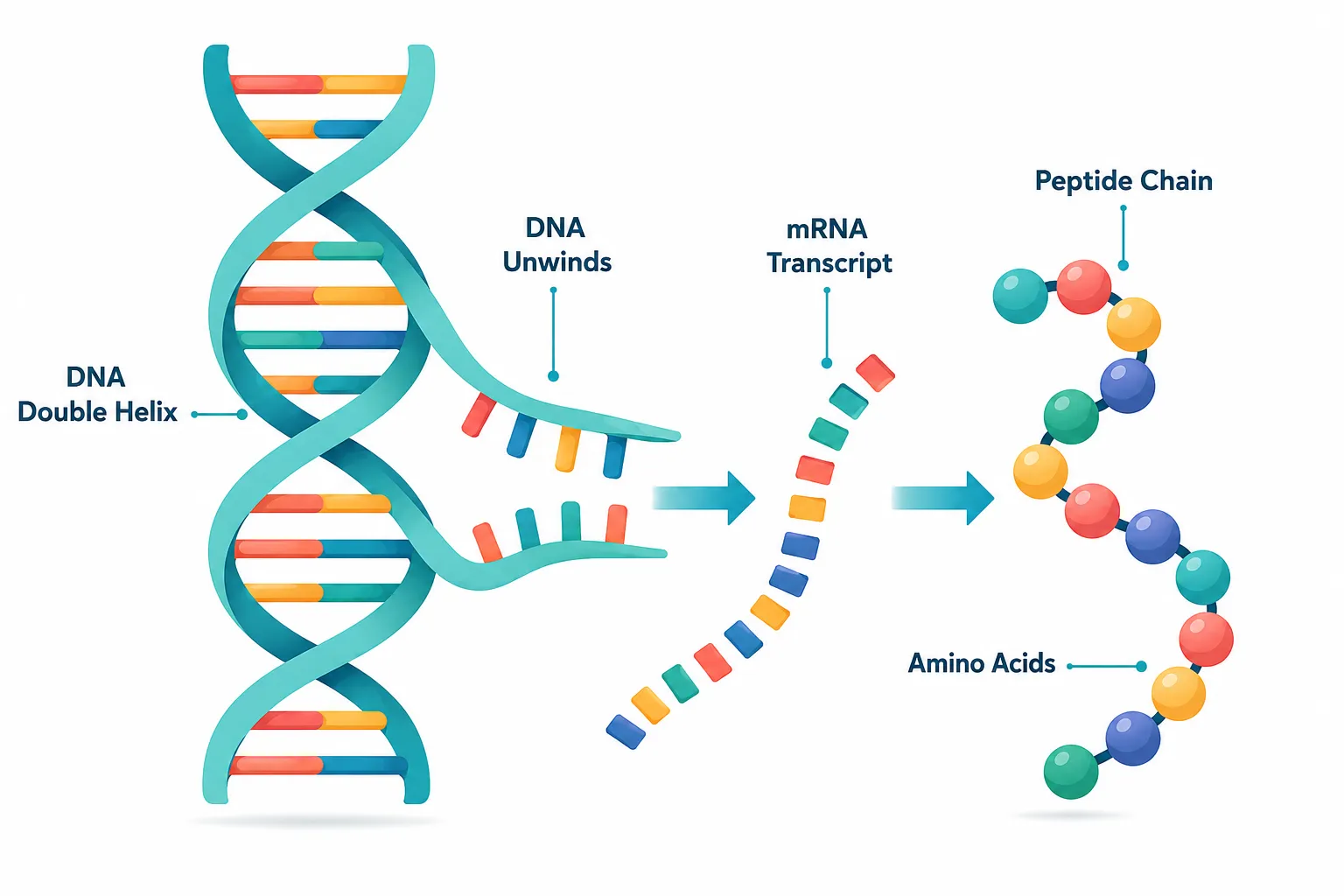
How DNA Encodes Peptide Sequences

DNA stores genetic information as sequences of nucleotide bases (A, T, G, C). When a gene is expressed:

  1. Transcription converts the DNA sequence into messenger RNA (mRNA).
  2. Translation uses ribosomes to read mRNA codons and assemble the corresponding amino acids.
  3. The resulting chain is a polypeptide, which may be cleaved, modified, or folded into its final form.

This process is the origin of every peptide the body produces naturally, including the mitochondria-derived peptides now attracting intense research interest.

"The ribosome is essentially a molecular factory reading a blueprint written in DNA and outputting a peptide product."

Researchers studying BDNF peptides and neuroprotective compounds rely on this same transcription-translation logic to understand how target sequences are designed and synthesized.

How DNA Encodes Peptide Sequences

Mitochondria as Peptide Factories: MOTS-c and the Energy Connection

Why Mitochondria Matter Beyond ATP

Most biology courses teach mitochondria as the cell's power plants, organelles that convert nutrients into adenosine triphosphate (ATP) through oxidative phosphorylation. What is less commonly taught is that mitochondria carry their own DNA (mtDNA), separate from nuclear DNA, and that this mtDNA encodes a small family of bioactive peptides called mitochondria-derived peptides (MDPs).

MOTS-c (Mitochondrial Open Reading Frame of the 12S rRNA-c) is the most studied MDP. It is a 16-amino-acid peptide encoded within the 12S ribosomal RNA gene of mtDNA. Preclinical research has examined MOTS-c in the context of:

  • Metabolic regulation and insulin sensitivity
  • Exercise-induced signaling pathways
  • Cellular stress responses and longevity-associated pathways

Another well-studied MDP, Humanin, has been investigated for neuroprotective properties, illustrating how the mitochondrial genome produces peptides with diverse systemic roles.

For researchers interested in mitochondria-targeted molecules, the SS-31 mitochondrial research overview provides a useful parallel, SS-31 is a synthetic tetrapeptide designed to concentrate in the inner mitochondrial membrane and is among the most cited mitochondria-targeting research peptides available today.

5-Amino-1MQ: A Small Molecule in the Metabolic Research Space

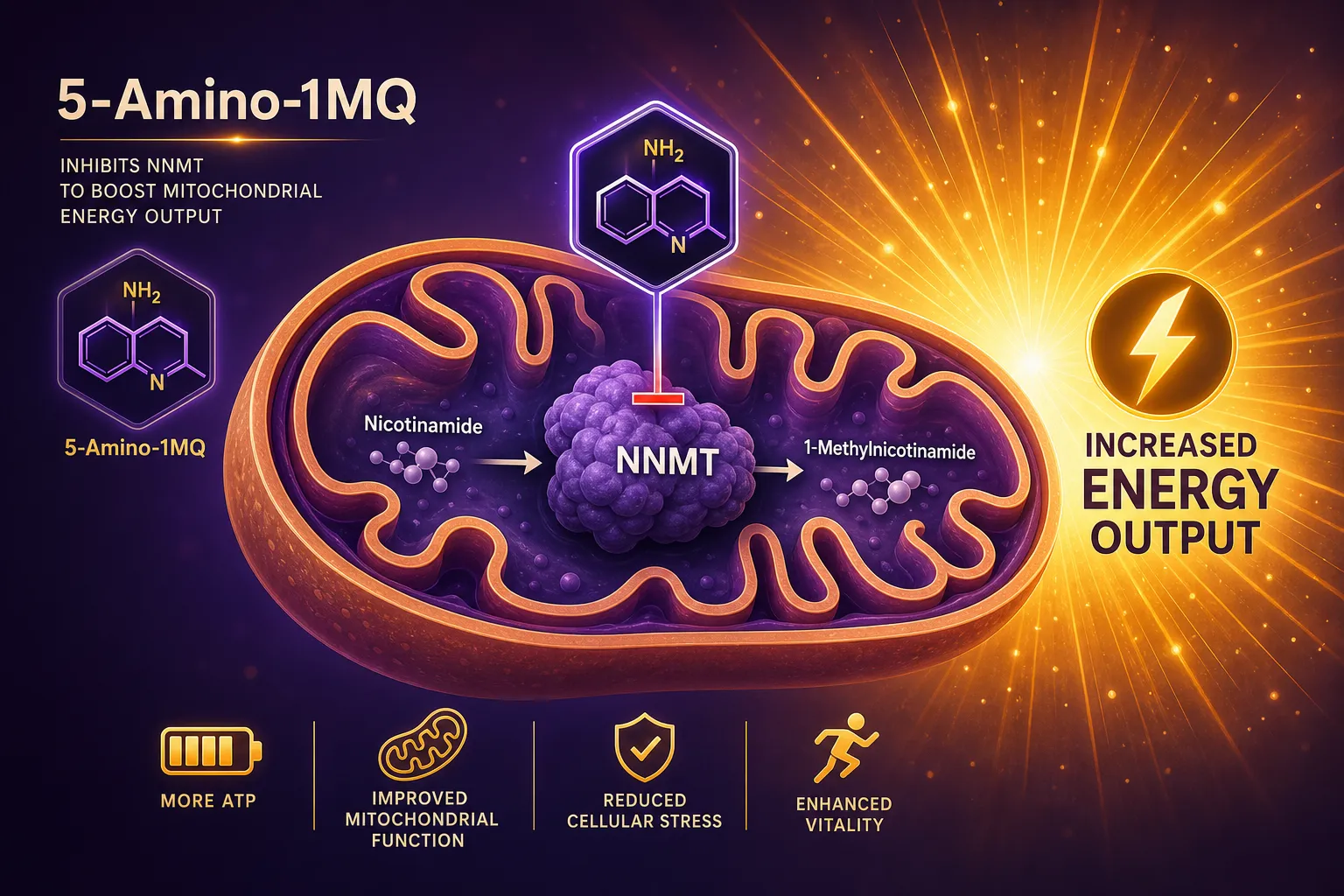
5-Amino-1MQ (5-amino-1-methylquinolinium) is not a peptide, it is a small organic molecule. It is included in this discussion because it targets NNMT (nicotinamide N-methyltransferase), an enzyme involved in NAD+ metabolism and fat cell differentiation. By inhibiting NNMT, 5-Amino-1MQ is hypothesized in preclinical models to:

  • Raise intracellular NAD+ precursor availability
  • Reduce lipid accumulation in adipocytes
  • Interact with metabolic pathways that overlap with those regulated by MOTS-c

This mechanistic overlap, both compounds influencing mitochondrial energy metabolism through different entry points, explains why they are frequently discussed together in metabolic research literature.

Researchers exploring this space also review SS-31 peptide research considerations for comparative context on how mitochondria-targeting compounds are evaluated.

5-Amino-1MQ: A Small Molecule in the Metabolic Research Space

Modern Research-Use Compounds: Context, Sourcing, and Responsible Use

The Research Compound Landscape in 2026

The category of research-use peptides and polypeptides has expanded considerably. Compounds once confined to academic laboratory settings are now more accessible to qualified researchers, creating both opportunity and responsibility. Key categories include:

  • Growth hormone secretagogues, such as those explored in GHRP-2 versus Sermorelin comparisons
  • Metabolic peptides, including GLP-1 analogs studied in generational research sourcing contexts
  • Mitochondria-targeted peptides, SS-31 and related compounds available through dedicated SS-31 research peptide resources
  • Repair and recovery peptides, such as the TB-500 and BPC-157 combination studied in tissue-repair research

Sourcing and Purity Standards

For any research application, purity and third-party verification are non-negotiable. Researchers should prioritize suppliers that provide:

  • Certificate of Analysis (CoA) from independent laboratories
  • High-performance liquid chromatography (HPLC) purity data
  • Mass spectrometry verification of molecular identity

Those evaluating suppliers can consult peptide supplier comparison resources to understand how to interpret third-party testing documentation.

Important disclaimer: MOTS-c, 5-Amino-1MQ, SS-31, and all compounds discussed in this article are research-use only. They are not approved by the FDA or equivalent regulatory bodies for human therapeutic use. All research must comply with applicable institutional and legal guidelines.

Conclusion

Understanding Peptides and Polypeptides Explained: Connecting DNA, Mitochondria, and Modern Research-Use Compounds Like MOTS-c and 5-Amino-1MQ requires holding two ideas at once: the elegant simplicity of how DNA encodes amino acid sequences, and the remarkable complexity of what those sequences do once assembled. Mitochondria are no longer just power plants, they are peptide-producing organelles whose outputs like MOTS-c may influence metabolism, aging, and stress resilience. Small molecules like 5-Amino-1MQ extend that conversation into enzyme inhibition and NAD+ biology.

Actionable next steps for researchers:

  • Review primary literature on MOTS-c (Lee et al., Cell Metabolism) and NNMT inhibition before designing protocols.
  • Verify supplier purity credentials before sourcing any research compound, consult where to buy peptides guidance for evaluation criteria.
  • Cross-reference mitochondria-targeting peptides such as SS-31 through SS-31 mitochondrial dynamics research to build comparative context.
  • Stay current with regulatory updates in 2026, as the research peptide landscape continues to evolve rapidly.

The biology connecting DNA, mitochondria, and modern research compounds is not abstract, it is the foundation every serious investigator needs before working with these molecules.

https://www.puretestedpeptides.com/wp-content/uploads/2026/08/peptides-and-polypeptides-explained-connecting-dna-mitochondria-and-modern-resea.webp 1024 1536 https://www.puretestedpeptides.com/wp-content/uploads/2026/01/buy-peptides-online.jpg 2026-08-04 13:05:022026-08-04 13:05:02Peptides and Polypeptides Explained: Connecting DNA, Mitochondria, and Modern Research-Use Compounds Like MOTS-c and 5-Amino-1MQ
Peptides 101 for Research-Use Only Buyers: Structure, Mechanisms, and Where GLP-3, MOTS-c, and 5-Amino-1MQ Fit In

Peptides 101 for Research-Use Only Buyers: Structure, Mechanisms, and Where GLP-3, MOTS-c, and 5-Amino-1MQ Fit In

August 1, 2026/0 Comments/in Uncategorized/by

More than 7,000 naturally occurring peptides have been identified in the human body, yet the research community's working vocabulary around them remains scattered and inconsistent. For scientists, lab managers, and informed research-use buyers, that knowledge gap creates real procurement and study-design problems. This guide to Peptides 101 for Research-Use Only Buyers: Structure, Mechanisms, and Where GLP-3, MOTS-c, and 5-Amino-1MQ Fit In builds a clear foundation, from basic chemistry through receptor biology, and then maps three emerging research compounds to that framework.

Disclaimer: All compounds discussed here are intended strictly for laboratory and research purposes. They are not approved for human consumption, diagnosis, or treatment.

Key Takeaways

  • Peptides are short amino acid chains whose biological activity is determined by sequence, folding, and receptor specificity.
  • Structural class (cyclic, linear, stapled) directly predicts stability, bioavailability, and research utility.
  • GLP-3 is a proglucagon-derived incretin with distinct receptor pharmacology compared to GLP-1.
  • MOTS-c is a mitochondria-encoded peptide with roles in metabolic regulation and cellular stress response.
  • 5-Amino-1MQ is a small-molecule NNMT inhibitor that intersects peptide-adjacent metabolic research pathways.
  • Purity verification and certificate of analysis (CoA) documentation are non-negotiable for valid preclinical data.

Key Takeaways

The Structural Basics Every Research Buyer Should Know

What Is a Peptide?

A peptide is a chain of two or more amino acids linked by peptide bonds, covalent bonds formed between the carboxyl group of one amino acid and the amino group of the next. Chains of fewer than 50 residues are conventionally called peptides; longer chains become proteins.

Key structural vocabulary:

Term Definition
Residue A single amino acid unit within a chain
N-terminus The free amino end of the chain
C-terminus The free carboxyl end of the chain
Peptide bond The CO-NH linkage joining residues
Cyclic peptide Chain with head-to-tail or side-chain cyclization

Why Structure Matters for Research

Structural class determines three critical research parameters:

  1. Stability, Linear peptides are susceptible to protease degradation; cyclic and stapled peptides resist enzymatic cleavage.
  2. Receptor selectivity, Sequence determines which receptor binding pocket a peptide fits.
  3. Half-life, PEGylation, lipidation, and cyclization all extend plasma half-life in preclinical models.

Researchers sourcing compounds for in vitro or animal studies should consult lab-tested peptides with documented purity above 98% to ensure data reproducibility.

Why Structure Matters for Research

GLP-3, MOTS-c, and 5-Amino-1MQ: Where They Fit in Peptides 101 for Research-Use Only Buyers

GLP-3: The Overlooked Proglucagon Fragment

GLP-1 dominates current incretin research, but GLP-3 (glucagon-like peptide-3) is a lesser-studied proglucagon-derived fragment that warrants attention. Proglucagon is post-translationally cleaved into multiple bioactive peptides depending on tissue context. GLP-3 occupies residues 126-158 of proglucagon.

Key research points:

  • GLP-3 does not bind the canonical GLP-1 receptor with high affinity.
  • Preclinical data suggest activity at intestinal L-cell receptors distinct from GLP-1R.
  • Its role in gut motility and nutrient sensing is an active area of investigation.

For researchers studying incretin biology, reviewing the GLP-3R peptide research page provides useful compound context. Those already working with GLP-1 analogs can find GLP-1 peptide sourcing information for comparison studies.

MOTS-c: Mitochondria-Encoded Metabolic Signaling

MOTS-c (Mitochondrial Open Reading Frame of the 12S rRNA-c) is a 16-amino acid peptide encoded within mitochondrial DNA, a structural distinction that sets it apart from all nuclear-encoded peptides. Discovered in 2015, it is classified as a mitokine.

Mechanistic highlights from preclinical research:

  • Activates AMPK (AMP-activated protein kinase) signaling
  • Modulates folate and methionine metabolism via the AICAR pathway
  • Demonstrates exercise-mimetic effects in rodent models
  • Translocates to the nucleus under metabolic stress conditions

MOTS-c represents a new class of signaling molecule that blurs the line between peptide hormone and intracellular regulator, a distinction that matters when designing receptor binding assays.

5-Amino-1MQ: Small Molecule in a Peptide-Adjacent Space

5-Amino-1MQ is not a peptide by strict definition, it is a small-molecule inhibitor of NNMT (nicotinamide N-methyltransferase). It earns a place in this Peptides 101 framework because:

  • NNMT regulates the same NAD+/methyl donor pathways that several metabolic peptides modulate.
  • It is frequently co-studied with MOTS-c and other mitokines in metabolic disease models.
  • Its mechanism (enzyme inhibition rather than receptor agonism) offers a complementary research angle.

Preclinical rodent studies have linked NNMT inhibition to reduced adipogenesis and improved insulin sensitivity, making 5-Amino-1MQ relevant to any lab running metabolic peptide panels.

5-Amino-1MQ: Small Molecule in a Peptide-Adjacent Space

Sourcing, Purity Standards, and Research Compliance

What to Demand from a Peptide Supplier

Research validity depends entirely on compound quality. A reliable supplier should provide:

  • Certificate of Analysis (CoA) with HPLC purity data (target: >98%)
  • Mass spectrometry confirmation of molecular weight
  • Sterility testing for compounds used in cell culture
  • Clear research-use-only labeling on all materials

Researchers can buy peptides online from verified sources that publish full CoA documentation. For labs scaling up, wholesale peptides options with batch-level testing are available.

Comparing Metabolic Peptides to Classic Signaling Peptides

Classic signaling peptides (e.g., BPC-157, TB-500, Sermorelin) operate primarily through growth factor receptors and cytokine pathways. Metabolic peptides like GLP-3 and MOTS-c engage energy-sensing machinery, AMPK, mTOR, and mitochondrial biogenesis networks.

This distinction matters for:

  • Assay design (receptor binding vs. metabolic flux assays)
  • Animal model selection (diet-induced obesity models vs. wound healing models)
  • Endpoint selection (body composition, insulin sensitivity, VO2 max)

Researchers working across both categories should review BPC-157 and TB-500 combination research alongside metabolic peptide protocols to understand how signaling and metabolic pathways interact.

For labs exploring growth hormone secretagogues as part of a broader metabolic panel, GHRP-2 vs. Sermorelin comparisons offer useful mechanistic context.

Conclusion

A solid grasp of peptide structure and receptor pharmacology is the foundation for any credible preclinical research program. Peptides 101 for Research-Use Only Buyers: Structure, Mechanisms, and Where GLP-3, MOTS-c, and 5-Amino-1MQ Fit In shows that these three compounds occupy distinct but related positions in the metabolic research landscape, GLP-3 as a proglucagon fragment with unique receptor biology, MOTS-c as a mitochondria-encoded mitokine with systemic metabolic effects, and 5-Amino-1MQ as a small-molecule tool for probing NNMT-dependent pathways.

Actionable next steps for research buyers in 2026:

  1. Audit your current peptide inventory for CoA documentation and HPLC purity data.
  2. Map each compound to its primary receptor or enzymatic target before designing assays.
  3. Source GLP-3, MOTS-c, and 5-Amino-1MQ from suppliers that provide batch-specific mass spectrometry data.
  4. Cross-reference the research blog for updated preclinical literature summaries.
  5. Distinguish metabolic peptides from classic signaling peptides in your study design to avoid endpoint mismatches.

Quality sourcing and mechanistic clarity are not optional, they are the variables that separate publishable data from inconclusive results.

https://www.puretestedpeptides.com/wp-content/uploads/2026/08/peptides-101-for-research-use-only-buyers-structure-mechanisms-and-where-glp-3-m.webp 1024 1536 https://www.puretestedpeptides.com/wp-content/uploads/2026/01/buy-peptides-online.jpg 2026-08-01 13:05:082026-08-01 13:05:08Peptides 101 for Research-Use Only Buyers: Structure, Mechanisms, and Where GLP-3, MOTS-c, and 5-Amino-1MQ Fit In
GLP2-T Peptide and GLP2 Tirz Peptide: Naming Confusion, Product Labels, and Research Interpretation

GLP2-T Peptide and GLP2 Tirz Peptide: Naming Confusion, Product Labels, and Research Interpretation

July 28, 2026/0 Comments/in Uncategorized/by

Fewer than a dozen amino acids separate some of the most misunderstood peptide labels in the research supply market, yet that gap creates enormous confusion for buyers, researchers, and anyone trying to match a product vial to a published study. The terms GLP2-T and GLP2 Tirz appear on supplier pages, forum threads, and search results in ways that blur distinct compounds, mechanisms, and research contexts. Understanding the difference is not a minor detail; it directly shapes how data is interpreted and how sourcing decisions are made.

This article addresses the GLP2-T Peptide and GLP2 Tirz Peptide naming confusion, product labels, and research interpretation challenges head-on, giving researchers and informed buyers a clear framework for navigating this terminology landscape in 2026.

Key Takeaways

  • GLP-2 (glucagon-like peptide-2) is a distinct gut hormone with well-documented intestinal trophic effects; "GLP2-T" is a vendor shorthand, not a standardized scientific name.
  • "Tirz" in GLP2 Tirz typically references tirzepatide-adjacent formulation concepts, not a standalone GLP-2 analog, the two should not be conflated.
  • Product labels using abbreviated or blended names require cross-referencing with sequence data and Certificate of Analysis (CoA) documentation.
  • Misreading these labels can lead to incorrect research protocols, dosing errors, and flawed data interpretation.
  • Verified sourcing and third-party testing are the most reliable tools for resolving naming ambiguity.

Key Takeaways

Understanding the Core Compounds: GLP-2, GLP2-T, and the Tirz Label

GLP-2 is a 33-amino-acid peptide secreted by intestinal L-cells. Its primary research focus involves intestinal epithelial proliferation, gut barrier integrity, and nutrient absorption. The endogenous form has a short half-life due to rapid degradation by dipeptidyl peptidase-4 (DPP-4). Teduglutide, a GLP-2 analog approved for short bowel syndrome, was engineered specifically to resist this degradation.

When vendor labels read "GLP2-T," the "T" suffix most commonly signals one of three things:

Suffix Interpretation What It Likely Means
T = Teduglutide analog A DPP-4-resistant GLP-2 sequence variant
T = Tirzepatide blend A multi-agonist formulation referencing GIP/GLP-1/GLP-2 activity
T = Truncated form A shortened peptide sequence with modified receptor binding

None of these interpretations is universally standardized. Without a published sequence or a CoA confirming amino acid composition, "GLP2-T" on a product label is essentially a marketing shorthand.

GLP2 Tirz, meanwhile, conflates GLP-2 receptor activity with tirzepatide's dual GIP/GLP-1 agonism. Tirzepatide itself does not target the GLP-2 receptor. When a product is labeled "GLP2 Tirz," it may indicate a blended or stacked formulation, a vendor-coined name for a novel analog, or simply a mislabeled product. Researchers exploring GLP-1 peptides for metabolic studies should be especially cautious here, as GLP-1 and GLP-2 share structural similarity but activate entirely different receptors with distinct downstream effects.

How GLP2-T Peptide and GLP2 Tirz Peptide Naming Confusion Appears on Product Labels

The research peptide supply market operates without uniform naming conventions. Vendors frequently create proprietary shorthand to differentiate products, signal formulation variants, or optimize for search visibility. This is where the GLP2-T Peptide and GLP2 Tirz Peptide naming confusion, product labels, and research interpretation problem becomes most acute.

Common label patterns that create confusion:

  • "GLP-2 (1-33)" vs. "GLP2-T", the former specifies the full native sequence; the latter does not
  • "GLP2 Tirz Blend", implies a multi-peptide formulation without disclosing individual component ratios
  • "GLP2 Analog T", suggests structural modification without specifying which residue was altered
  • Numeric suffixes like "GLP2-T 5mg", dosage is listed but sequence identity is absent

"A product name is not a substitute for a sequence. Every research decision should begin with the CoA, not the label."

For researchers accustomed to working with well-characterized compounds like TB-500 or BPC-157 blends, where naming conventions are more established, the GLP-2 space can feel unusually opaque. The GLP-2 peptide research tag and GLP-2 receptor tag pages offer useful context for tracking how these terms appear across research product listings.

How GLP2-T Peptide and GLP2 Tirz Peptide Naming Confusion Appears on Product Labels

Practical Steps for Decoding a GLP-2 Product Label

  1. Request the full amino acid sequence from the supplier before purchase.
  2. Cross-reference with published analogs, teduglutide, GLP-2 (3-33), and native GLP-2 are the most commonly studied forms.
  3. Verify purity via HPLC and mass spectrometry data on the CoA.
  4. Check for blend disclosures, if "Tirz" is in the name, confirm whether tirzepatide-related peptides (GIP or GLP-1 analogs) are present and at what ratio.
  5. Compare against reference standards, resources on building robust peptide benchmarks provide guidance on how reference-grade materials should be documented.

Research Interpretation: Why the GLP2-T Peptide and GLP2 Tirz Peptide Distinction Matters

Misidentifying a compound at the sourcing stage cascades into every downstream research decision. If a protocol calls for native GLP-2 to study intestinal permeability but the vial contains a DPP-4-resistant analog, the half-life, receptor binding kinetics, and dose-response curve will all differ from published baselines.

The GLP-2 receptor (GLP2R) is expressed primarily in the intestine, brain, and bone. Studies targeting gut barrier repair, inflammatory bowel models, or short bowel syndrome rely on precise receptor engagement. An analog with modified N-terminal residues, which is what many "GLP2-T" products likely are, will produce different receptor activation profiles than the native sequence.

Key interpretive risks when labels are ambiguous:

  • Overstating efficacy, a more stable analog may show stronger effects than native GLP-2 in short-duration assays, skewing conclusions
  • Dosing miscalculation, blended "Tirz" products with multiple active peptides require adjusted molar dosing for each component
  • Cross-contamination of data, if a GLP-1 agonist component is present in a "GLP2 Tirz" product, metabolic readouts (insulin secretion, glucose clearance) will reflect GLP-1R activity, not GLP-2R activity

Researchers working across multiple peptide classes, for example, those also studying tesa for GH-axis effects or AOD-9604 for metabolic research, will recognize this pattern: the more novel or blended a compound, the more critical documentation becomes.

For those sourcing GLP-1 adjacent compounds, the GLP-1 T 20mg product page illustrates how responsible vendors document their formulations with specificity, a model worth applying when evaluating any GLP-2 variant.

Research Interpretation: Why the GLP2-T Peptide and GLP2 Tirz Peptide Distinction Matters

Conclusion

The GLP2-T Peptide and GLP2 Tirz Peptide naming confusion, product labels, and research interpretation challenge is ultimately a documentation problem with real scientific consequences. Vendors use abbreviated names for legitimate reasons, brevity, differentiation, search optimization, but researchers cannot afford to treat a label as a specification.

Actionable next steps for researchers and buyers in 2026:

  • Always obtain a full sequence disclosure and CoA before committing to any GLP-2 variant purchase.
  • Treat "Tirz" in any peptide name as a signal to investigate further, not a descriptor of a known compound.
  • Use established reference standards and peer-reviewed analog profiles to validate what a product actually is before designing a protocol around it.
  • Consult supplier documentation pages that show HPLC traces, mass spec data, and batch-specific purity reports.
  • When in doubt, source from vendors who publish transparent product documentation and support third-party verification.

Clarity at the label stage protects the integrity of every experiment that follows.

https://www.puretestedpeptides.com/wp-content/uploads/2026/07/glp2-t-peptide-and-glp2-tirz-peptide-naming-confusion-product-labels-and-researc.webp 1024 1536 https://www.puretestedpeptides.com/wp-content/uploads/2026/01/buy-peptides-online.jpg 2026-07-28 13:04:132026-07-28 13:04:13GLP2-T Peptide and GLP2 Tirz Peptide: Naming Confusion, Product Labels, and Research Interpretation
Top 5 Research Peptides for Metabolic Health: An Updated Buyer's Guide

Top 5 Research Peptides for Metabolic Health: An Updated Buyer’s Guide

July 28, 2026/0 Comments/in Uncategorized/by

Metabolic dysfunction now affects more than one billion adults worldwide, yet the peptide compounds under active investigation to address it remain largely unknown outside specialized research circles. This updated buyer's guide to the Top 5 Research Peptides for Metabolic Health cuts through the noise, examining the mechanisms, current evidence, and sourcing considerations for five compounds that are drawing serious scientific attention in 2026.

Disclaimer: All peptides discussed here are research compounds intended strictly for laboratory use. They are not approved for human therapeutic use, and nothing in this article constitutes medical advice.

Key Takeaways

  • GLP-3 Retatrutide leads metabolic peptide research in 2026 due to its triple-receptor agonist mechanism.
  • MOTS-c and SS-31 target mitochondrial function, a core driver of metabolic disease.
  • AOD-9604 and 5-Amino-1MQ round out the list with distinct fat-metabolism and NNMT-inhibition pathways.
  • Purity documentation (HPLC, mass spectrometry) is non-negotiable when sourcing any research peptide.
  • Researchers should verify supplier credentials before purchasing any compound for study protocols.

Key Takeaways

What Makes a Peptide Relevant to Metabolic Research

Before diving into the Top 5 Research Peptides for Metabolic Health: An Updated Buyer's Guide list itself, it helps to understand the selection criteria. A metabolically relevant research peptide must demonstrate at least one of the following in peer-reviewed literature:

  • Modulation of insulin sensitivity or glucose uptake
  • Influence on lipid metabolism or adipogenesis
  • Mitochondrial biogenesis or energy expenditure effects
  • Appetite or satiety pathway engagement

Compounds that tick multiple boxes naturally attract the most research interest, and funding.

The Top 5 Research Peptides for Metabolic Health: An Updated Buyer's Guide

1. GLP-3 Retatrutide (Triple Agonist)

Retatrutide is arguably the most discussed metabolic peptide of the current research cycle. It acts simultaneously on GLP-1, GIP, and glucagon receptors, a triple-agonist profile that distinguishes it from earlier single or dual-receptor compounds.

Key research findings:

  • Phase 2 clinical data published in 2023 showed mean body weight reductions exceeding 17% over 24 weeks in participants with obesity.
  • The glucagon receptor component appears to drive enhanced energy expenditure beyond what GLP-1 alone achieves.

Researchers planning protocols around this compound can explore GLP-3 Retatrutide catalog and research planning resources for sourcing and assay guidance.

2. MOTS-c (Mitochondrial-Derived Peptide)

MOTS-c is encoded within mitochondrial DNA, an unusual origin that sets it apart from most synthetic peptides. It activates the AMPK pathway, a master regulator of cellular energy balance.

Why it matters for metabolic research:

  • Animal studies show improved insulin sensitivity and reduced diet-induced obesity.
  • MOTS-c levels decline with age, linking it to age-associated metabolic decline.
  • It has demonstrated exercise-mimetic properties in preclinical models.

For researchers sourcing this compound, the MOTS-c peptide product page provides documentation and purity specifications.

3. SS-31 (Elamipretide)

SS-31 is a mitochondria-targeted tetrapeptide that stabilizes cardiolipin, a phospholipid critical to the inner mitochondrial membrane. Dysfunctional mitochondria are increasingly recognized as a root cause of insulin resistance and metabolic syndrome.

Feature Detail
Mechanism Cardiolipin stabilization, ROS reduction
Research models Rodent obesity, cardiac metabolic stress
Sequence D-Arg-2'6'-Dmt-Lys-Phe-NH2

Deeper background on how SS-31 fits into broader metabolic frameworks is available through SS-31 mitochondrial research themes.

4. AOD-9604

AOD-9604 is a modified fragment of human growth hormone (hGH176-191). Unlike full-length hGH, it does not stimulate IGF-1 production, making it a cleaner tool for studying fat metabolism in isolation.

Research highlights:

  • Stimulates lipolysis (fat breakdown) in adipose tissue.
  • Inhibits lipogenesis without affecting blood glucose in preclinical models.
  • Has completed Phase 2 human trials for obesity, providing a relatively robust safety dataset for a research peptide.

Researchers can review compound specifications at the AOD-9604 product listing.

5. 5-Amino-1MQ

5-Amino-1MQ is a small-molecule peptide-adjacent compound that inhibits nicotinamide N-methyltransferase (NNMT), an enzyme overexpressed in adipose tissue during obesity. By blocking NNMT, it raises intracellular NAD+ levels and activates SIRT1, a longevity-associated deacetylase.

Preclinical data points:

  • Reduced fat mass without caloric restriction in mouse models.
  • Improved metabolic rate and mitochondrial activity markers.
  • Oral bioavailability in rodent studies, which is notable for a compound in this class.

5. 5-Amino-1MQ

How to Evaluate a Research Peptide Supplier in 2026

Sourcing quality is as important as compound selection. Poor-purity peptides produce unreliable data and can compromise entire research programs. When reviewing any supplier, confirm the following:

Non-negotiable documentation:

  • HPLC purity certificate, minimum 98% purity for metabolic research compounds
  • Mass spectrometry confirmation, verifies molecular identity, not just purity
  • Certificate of Analysis (CoA), batch-specific, not generic
  • Third-party testing, independent lab verification adds credibility

Researchers new to the procurement process can consult the research-only peptides catalog and the peptide distributors resource for vetted sourcing options. Those operating in Canada will find the peptides in Canada guide particularly useful for navigating regional import and research regulations.

For ongoing updates on compound availability and research developments, the research blog publishes regular sourcing and science updates.

How to Evaluate a Research Peptide Supplier in 2026

Comparing the Top 5 at a Glance

Peptide Primary Mechanism Research Stage
GLP-3 Retatrutide Triple receptor agonist Phase 2 clinical
MOTS-c AMPK activation Preclinical / early human
SS-31 Cardiolipin stabilization Phase 2 clinical
AOD-9604 Lipolysis stimulation Phase 2 completed
5-Amino-1MQ NNMT inhibition / NAD+ Preclinical

Conclusion

The Top 5 Research Peptides for Metabolic Health: An Updated Buyer's Guide reviewed here, Retatrutide, MOTS-c, SS-31, AOD-9604, and 5-Amino-1MQ, each represent distinct mechanistic approaches to one of the most pressing research challenges of 2026. Their diversity is a strength: researchers can design comparative or complementary protocols that address metabolic dysfunction from multiple angles simultaneously.

Actionable next steps for researchers:

  1. Define the specific metabolic pathway your study targets before selecting a compound.
  2. Request batch-specific CoAs and third-party HPLC data from any supplier before purchase.
  3. Review the latest preclinical literature for each compound to align dosing models with current evidence.
  4. Consult the online peptides sourcing guide for up-to-date supplier comparisons.
  5. Stay current with emerging data, this field moves quickly, and 2026 is already producing new findings across all five compounds.

Rigorous sourcing and protocol design are what separate publishable research from wasted resources.

References

  • Jastreboff, A. M., et al. (2023). Triple, hormone-receptor agonist retatrutide for obesity, a phase 2 trial. New England Journal of Medicine, 389(6), 514-526.
  • Lee, C., et al. (2015). The mitochondrial-derived peptide MOTS-c promotes metabolic homeostasis and reduces obesity and insulin resistance. Cell Metabolism, 21(3), 443-454.
  • Szeto, H. H. (2014). First-in-class cardiolipin-protective compound as a therapeutic agent to restore mitochondrial bioenergetics. British Journal of Pharmacology, 171(8), 2029-2050.
  • Heffernan, M. A., et al. (2001). An analog of growth hormone-releasing factor (AOD9604) reduces body fat in obese rodents and in humans. Endocrinology, 142(12), 5182-5189.
  • Neelakantan, H., et al. (2018). Selective and membrane-permeable small molecule inhibitors of nicotinamide N-methyltransferase reverse high fat diet-induced obesity in mice. Biochemical Pharmacology, 147, 141-152.
https://www.puretestedpeptides.com/wp-content/uploads/2026/07/top-5-research-peptides-for-metabolic-health-an-updated-buyers-guide.webp 1024 1536 https://www.puretestedpeptides.com/wp-content/uploads/2026/01/buy-peptides-online.jpg 2026-07-28 13:03:522026-07-28 13:03:52Top 5 Research Peptides for Metabolic Health: An Updated Buyer’s Guide
×

Helpful Links

  • My account
  • Cart
  • Checkout
  • Refund and Returns Policy
  • Privacy Policy
  • SMS Privacy Policy
  • Login
  • My Account
  • Logout

USA Made Lab Tested Peptides

All products are sold for research, laboratory, or analytical purposes only, and are not for human consumption


Pure Tested Peptides is a chemical supplier. Pure Tested Peptides is not a compounding / chemical compounding facility as defined under 503A of the Federal Food, Drug, and Cosmetic act. Pure Tested Peptides is not an outsourcing facility as defined under 503B of the Federal Food, Drug, and Cosmetic act.

The statements made within this website have not been evaluated by the US Food and Drug Administration. The products we offer are not intended to diagnose, treat, cure or prevent any disease.

Human/Animal Consumption Prohibited. Laboratory/In-Vitro Experimental Use Only

Scroll to top Scroll to top Scroll to top