

Retatrutide Phase 3 Data and the Future of GLP‑3: What TRIUMPH and TRANSCEND Trials Mean for Research-Use Peptide Design
Fewer than five years ago, achieving 25% body weight reduction through a single injectable compound was considered physiologically implausible. Retatrutide has changed that assumption entirely. As Phase 3 readouts from the TRIUMPH and TRANSCEND programs accumulate through 2026, researchers and peptide designers are confronting a new benchmark, one that is reshaping how next-generation GLP-3 analogs and multi-receptor agonists are conceptualized, synthesized, and sourced for preclinical investigation.
Key Takeaways
- Retatrutide is a first-in-class triple agonist targeting GLP-1, GIP, and glucagon receptors, producing weight loss of 20-30% over 80-104 weeks in TRIUMPH-1.
- The TRANSCEND-T2D-1 trial demonstrated HbA1c and weight outcomes that rival or exceed tirzepatide in a 537-patient, 40-week Phase 3 study.
- TRIUMPH sub-trials extend retatrutide's research profile into knee osteoarthritis, severe obesity with cardiovascular disease, and metabolic liver disease.
- Triple-agonist success is directly influencing how research-use peptide designers approach potency ratios, durability, and tissue selectivity in next-gen GLP-3 analogs.
- High-purity sourcing and rigorous characterization remain critical as the research community scales investigations inspired by these Phase 3 findings.
Understanding the TRIUMPH and TRANSCEND Trial Architecture
The TRIUMPH program is among the most ambitious Phase 3 obesity trial designs assembled for a single investigational compound. TRIUMPH-1, the flagship 80-week trial, enrolled adults with obesity or overweight without type 2 diabetes and delivered a striking 20-30% reduction in body weight across its highest-dose cohorts, a result that places retatrutide well above the efficacy ceiling previously associated with GLP-1 mono-agonists.
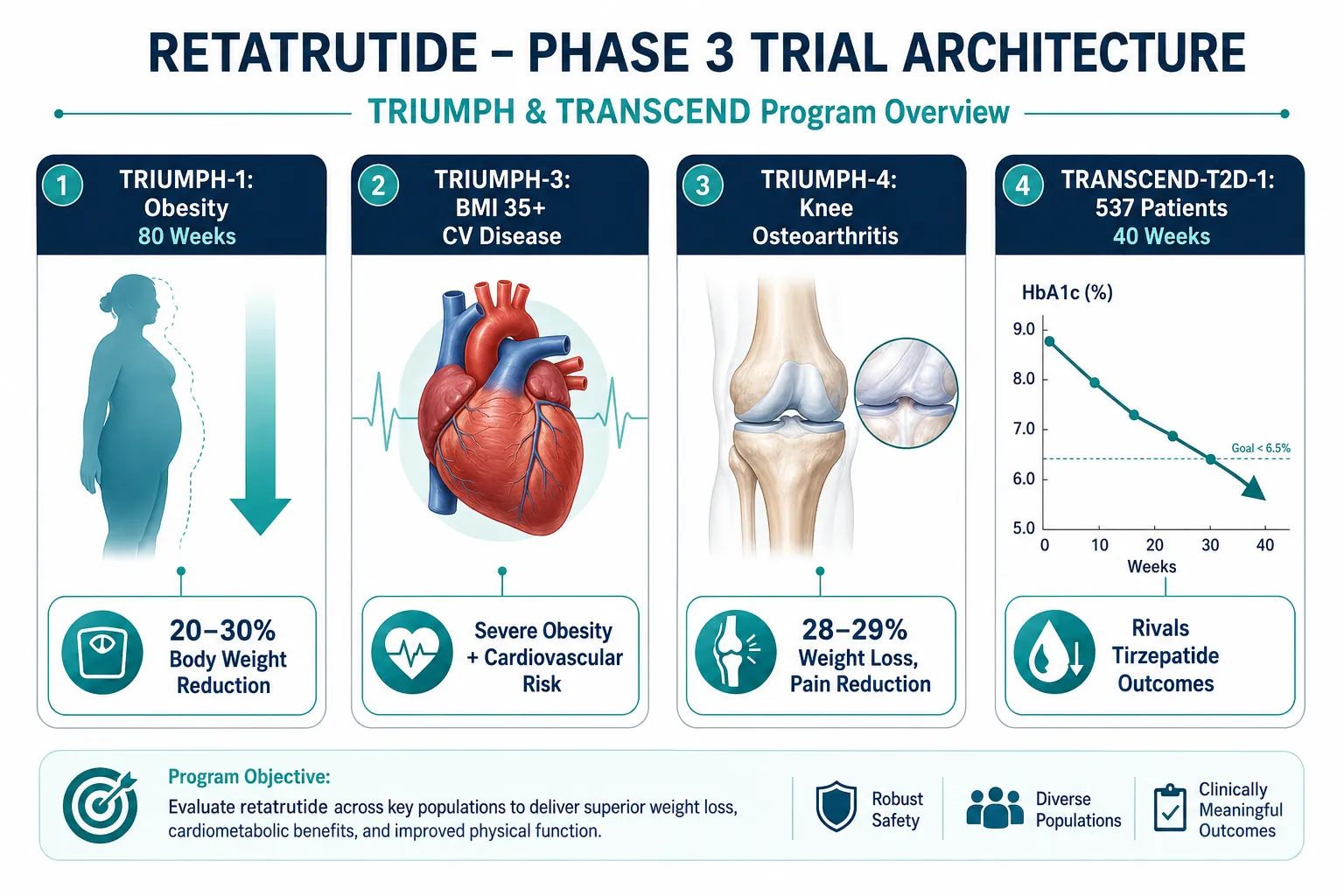
TRIUMPH-3 targets a higher-risk population: adults with severe obesity (BMI 35 or above) and established cardiovascular disease, directly addressing the intersection of metabolic and cardiac risk that has driven regulatory interest in this drug class. TRIUMPH-4 extends the program further still, examining knee osteoarthritis endpoints. In that sub-trial, participants achieved approximately 28-29% body weight reduction alongside measurable pain benefit, a finding that positions retatrutide as potentially relevant to musculoskeletal research far beyond metabolic endpoints.
The TRANSCEND program addresses type 2 diabetes specifically. TRANSCEND-T2D-1 enrolled 537 patients over 40 weeks and produced HbA1c reductions and weight outcomes that rival or exceed those reported for tirzepatide, the current dual-agonist standard. For researchers exploring the GLP-3, GLP-1, and GLP-2 peptide family, these results confirm that adding glucagon receptor co-agonism to a GLP-1/GIP backbone is not merely additive, it appears synergistic.
"Multi-hormonal agonism is no longer a theoretical advantage. TRIUMPH and TRANSCEND have made it an empirical one."
The Triple-Agonist Mechanism and What It Reveals About GLP-3 Biology
Retatrutide's mechanism involves simultaneous activation of three receptor pathways: GLP-1, GIP, and glucagon receptors. This triple-agonist profile is what some researchers informally classify as a "GLP-3-like" approach, a term reflecting the expanded receptor engagement rather than a discrete third incretin hormone. Understanding this distinction is important for anyone designing research protocols around GLP-1 peptide sourcing and generational research concepts.
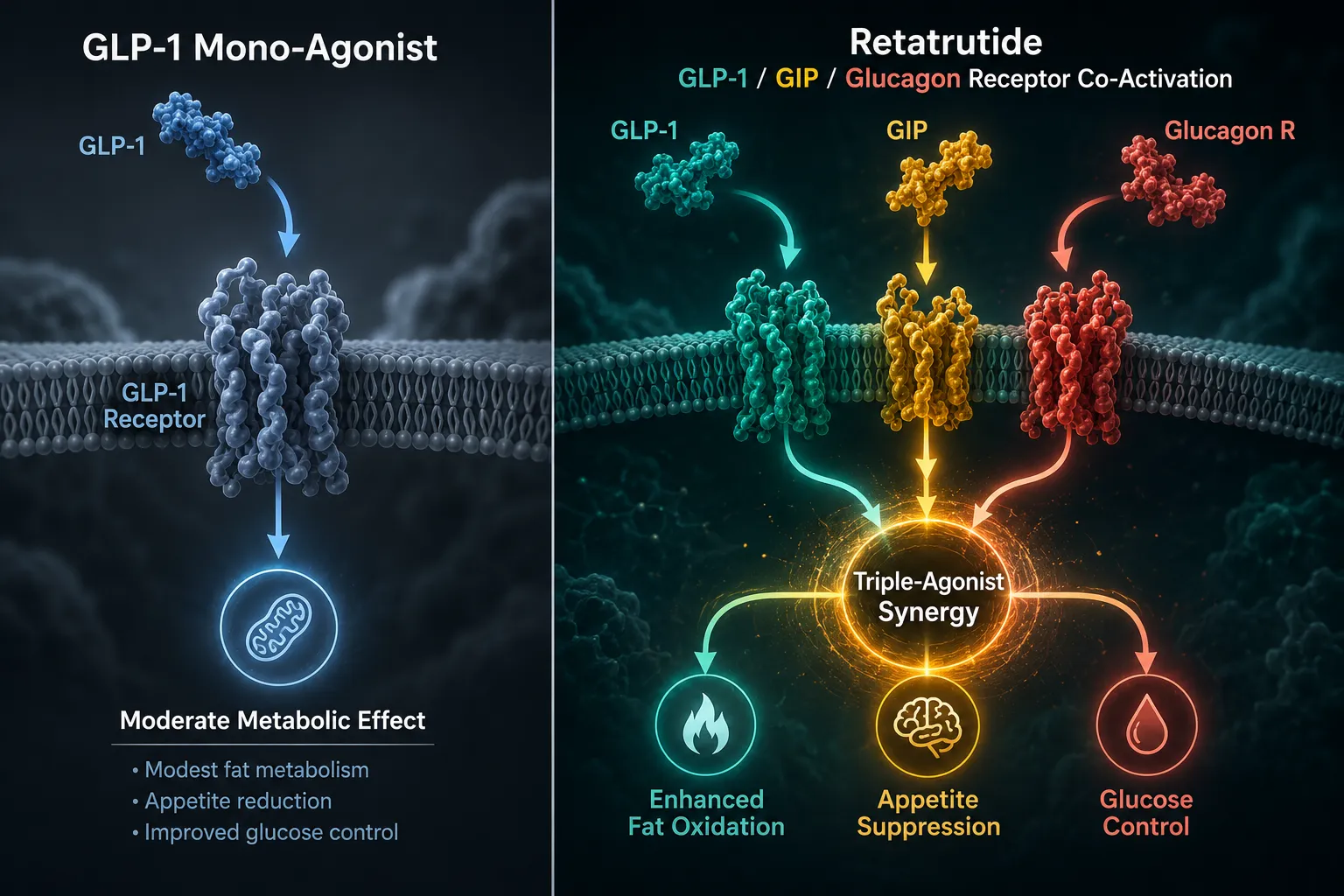
The glucagon receptor component is particularly significant. By incorporating glucagon receptor agonism, retatrutide drives increased energy expenditure through hepatic fat oxidation, a mechanism that complements rather than duplicates the appetite suppression mediated by GLP-1. This is directly relevant to the compound's strong performance in MASLD and liver fat research contexts, where hepatic endpoints are primary outcomes.
Key receptor targets and their research-relevant effects:
| Receptor | Primary Research Effect | Relevance to TRIUMPH/TRANSCEND |
|---|---|---|
| GLP-1R | Appetite suppression, insulin secretion | Core weight and glycemic outcomes |
| GIPR | Enhanced insulin response, adipose signaling | Amplifies GLP-1R efficacy |
| Glucagon R | Energy expenditure, hepatic fat oxidation | Drives superior weight loss magnitude |
Safety data across TRIUMPH and TRANSCEND show a tolerability profile broadly consistent with incretin-based therapies, primarily gastrointestinal events that are dose-dependent and manageable. No unexpected safety signals have emerged that would restrict further research interest.
Implications for Research-Use Peptide Design: Potency Ratios, Durability, and Tissue Selectivity
The Phase 3 success of retatrutide is already reshaping how peptide researchers approach analog design. Three design principles emerge directly from the TRIUMPH and TRANSCEND data.
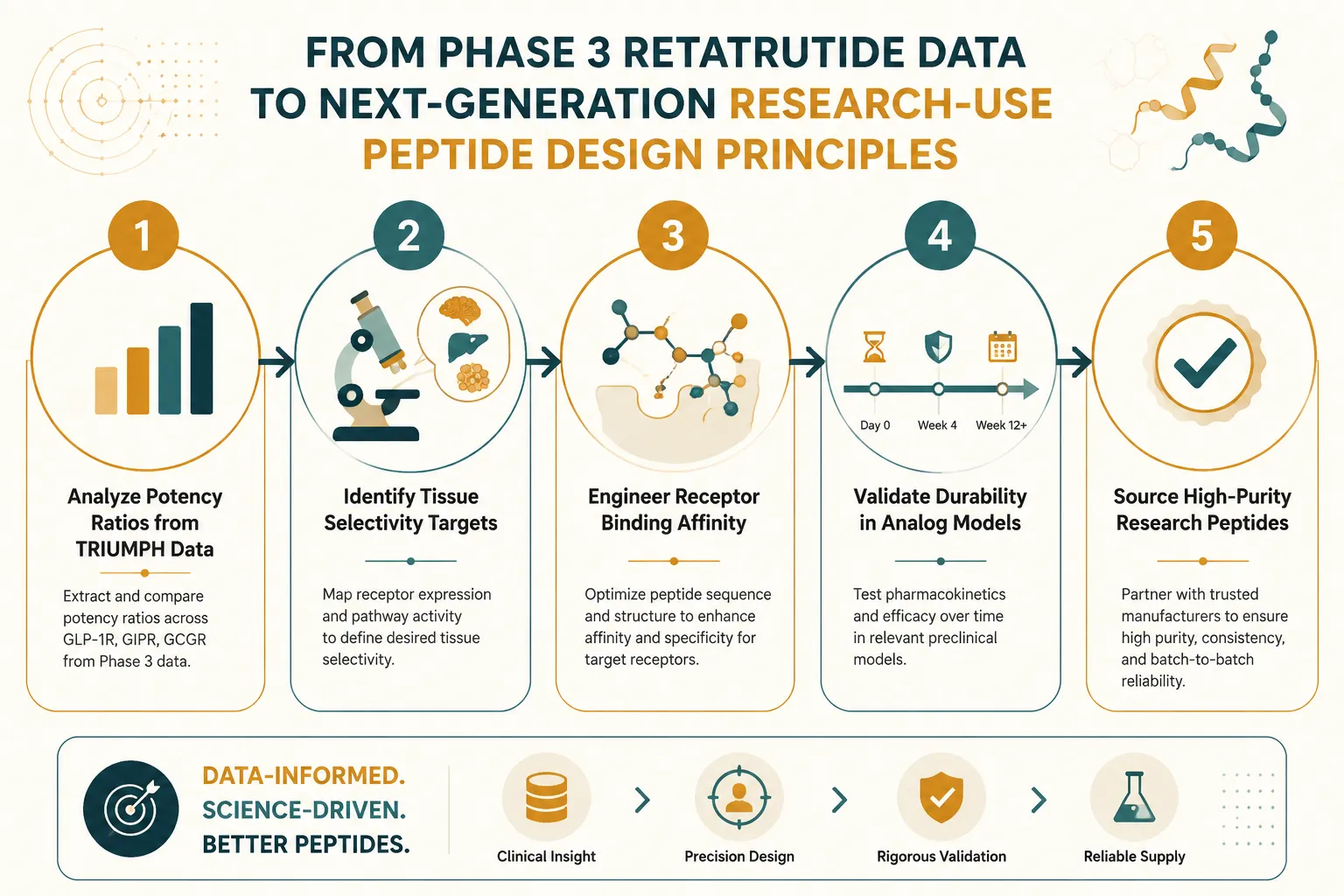
1. Potency ratio engineering matters more than single-receptor maximization. TRIUMPH data suggest that balanced agonism across all three receptors, rather than maximizing any single pathway, produces superior metabolic outcomes. Research teams designing GLP-3 analogs are now prioritizing receptor affinity ratios as a primary design variable.
2. Durability is a structural challenge, not just a dosing one. Weight loss in TRIUMPH-1 continued accruing through week 104 in extended analyses, suggesting that sustained receptor engagement, likely tied to the compound's half-life and receptor internalization dynamics, is a critical design parameter. This mirrors lessons from CJC-1295 half-life research in growth hormone peptide design.
3. Tissue selectivity is the next frontier. TRIUMPH-4's osteoarthritis data and the MASLD pipeline signal that researchers are moving beyond systemic metabolic endpoints toward tissue-specific applications. This parallels mitochondrial-targeted peptide research, such as work involving MOTS-C and cellular energy pathway modulation.
For preclinical investigators sourcing analogs, these design insights translate into concrete procurement criteria. High-purity peptide sourcing with verified third-party analytical testing is non-negotiable when evaluating potency ratios at the receptor level, impure or degraded material will confound any structure-activity relationship study.
The pipeline implications extend further. Retatrutide's Phase 3 breadth, spanning OSA, chronic pain, cardiovascular outcomes, and renal endpoints, signals that multi-agonist peptide frameworks are being evaluated as platform technologies rather than single-indication drugs. Research teams sourcing GLP-1 peptides for preclinical work should anticipate that future analogs will require more sophisticated receptor selectivity profiling than current GLP-1 mono-agonist protocols demand.
Conclusion
The TRIUMPH and TRANSCEND Phase 3 programs have delivered more than efficacy data, they have provided a structural blueprint for the next generation of metabolic peptide design. Retatrutide's 20-30% weight loss outcomes, its glycemic performance in TRANSCEND-T2D-1, and its expanding pipeline across musculoskeletal and hepatic endpoints confirm that triple-agonist receptor engagement represents a new standard in this research space.
Actionable next steps for researchers in 2026:
- Review TRIUMPH sub-trial designs to identify receptor-specific endpoints relevant to your research model.
- Prioritize potency ratio data when evaluating next-gen GLP-3 analog candidates for preclinical use.
- Source research-use peptides exclusively from suppliers offering documented analytical purity data to ensure receptor-binding studies remain interpretable.
- Monitor TRANSCEND program expansions for HbA1c and cardiovascular outcome data that may refine dosing models for analog research.
- Consider tissue-selective analog design as a primary rather than secondary research objective, given TRIUMPH-4's osteoarthritis findings.
The science of multi-hormonal agonism has moved decisively from hypothesis to high-confidence Phase 3 evidence. Peptide researchers who align their design and sourcing strategies with these findings will be best positioned to contribute meaningfully to what comes next.


Leave a Reply
Want to join the discussion?Feel free to contribute!