

Retatrutide Research vs Conventional Obesity Drugs: A Receptor- and Endpoint-Based Comparison
Obesity pharmacotherapy crossed a measurable threshold in 2026: a single investigational molecule achieved mean weight reductions of roughly 24 percent at 48 weeks in phase 2 trials, and up to 25 percent over 80 weeks in phase 3 data, numbers that no approved obesity drug had reached before. That molecule is retatrutide (LY3437943), and understanding why it performs differently from established agents requires a close look at receptor biology, not just headline weight numbers. This article provides a structured Retatrutide Research vs Conventional Obesity Drugs: A Receptor- and Endpoint-Based Comparison, examining how triple agonism changes the pharmacological landscape across food intake, energy expenditure, glycemic control, and tolerability endpoints.
Key Takeaways
- Retatrutide simultaneously activates GLP-1, GIP, and glucagon receptors, a mechanism that goes beyond the single or dual receptor targeting of all currently approved obesity drugs.
- Phase 3 TRIUMPH-1 data show mean weight losses of up to 25 percent at 80 weeks, exceeding typical results for semaglutide and approaching or surpassing tirzepatide benchmarks.
- Beyond weight, retatrutide trials measure endpoints including liver fat, sleep apnea indices, knee osteoarthritis pain, and A1C, reflecting a multi-system strategy.
- A 2025 meta-analysis found no statistically significant difference in overall adverse event rates between retatrutide and comparator groups, suggesting the efficacy gains do not come with a proportional safety cost.
- As of late 2026, retatrutide remains investigational; multiple phase 3 readouts have been reported, and a regulatory filing window is anticipated in late 2026 to 2027.
Receptor Biology: Where the Comparison Begins
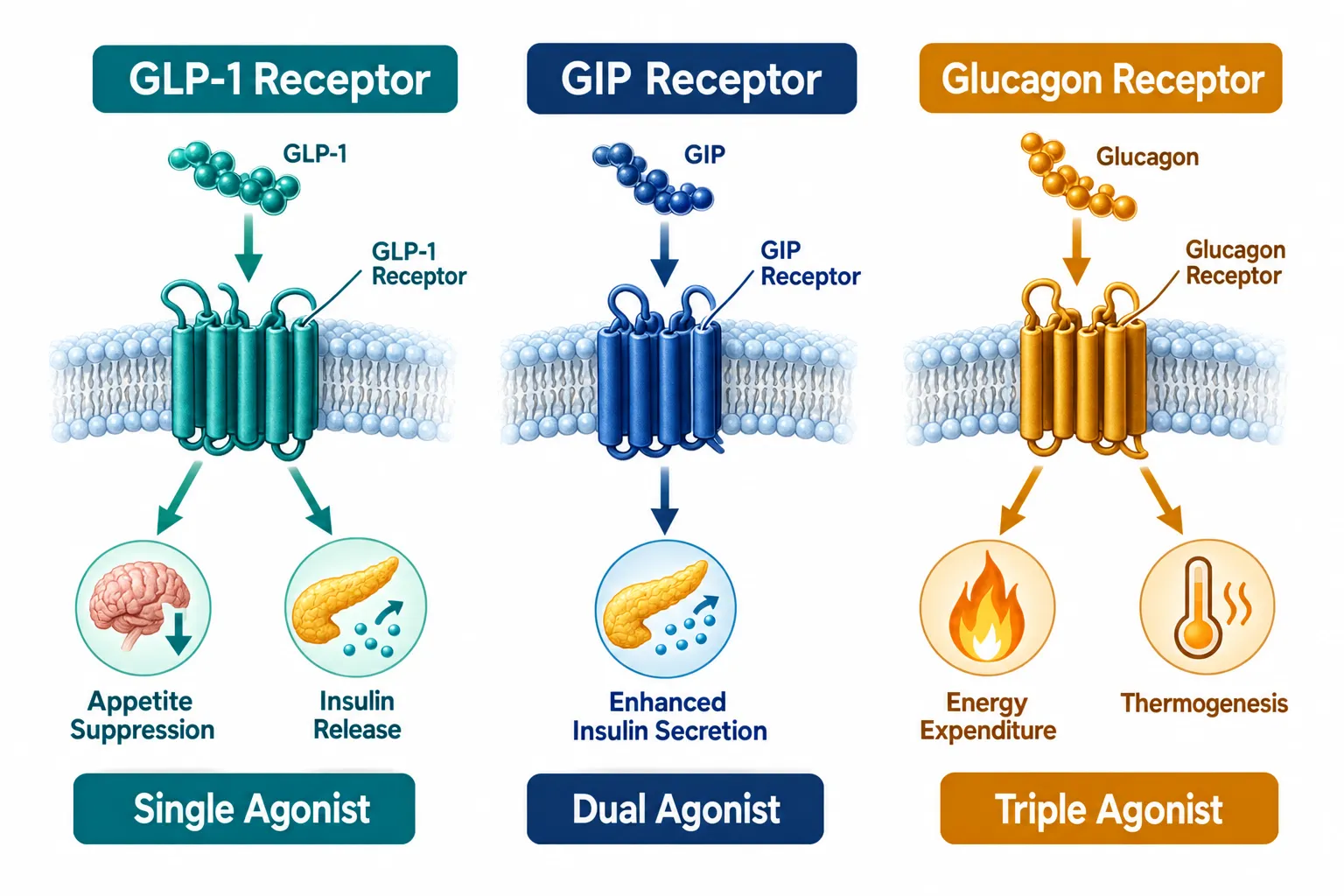
Every approved obesity drug in current clinical use targets at most two hormone receptors. Liraglutide and semaglutide are selective GLP-1 receptor agonists. Tirzepatide, the most recent approval, adds GIP receptor co-agonism. Retatrutide extends this architecture by adding full glucagon receptor activation, making it a triple hormone receptor agonist.
Each receptor contributes a distinct physiological role:
- GLP-1 receptor activation slows gastric emptying, suppresses appetite through central and peripheral pathways, and stimulates glucose-dependent insulin release.
- GIP receptor activation amplifies insulin secretion and may reduce nausea associated with GLP-1 agonism, partly explaining why dual agonists are often better tolerated at high doses than single GLP-1 agonists.
- Glucagon receptor activation increases hepatic glucose output in a fasting state and, more importantly for obesity therapy, raises energy expenditure through thermogenic mechanisms.
This third receptor is the key differentiator. No approved obesity drug currently engages glucagon receptor signaling in a meaningful therapeutic way. By doing so, retatrutide addresses energy expenditure directly, a pathway that GLP-1-only drugs do not substantially activate. For a deeper look at how GLP-1 receptor biology intersects with retatrutide's design, see the GLP-1 Retatrutide overview and the dedicated Retatrutide Clinical Trials resource.
"Triple agonism is not simply an additive effect, it is a coordinated engagement of appetite, insulin sensitivity, and caloric burn that single-pathway drugs cannot replicate by design."
Efficacy Endpoints: Weight Loss, Glycemic Control, and Beyond
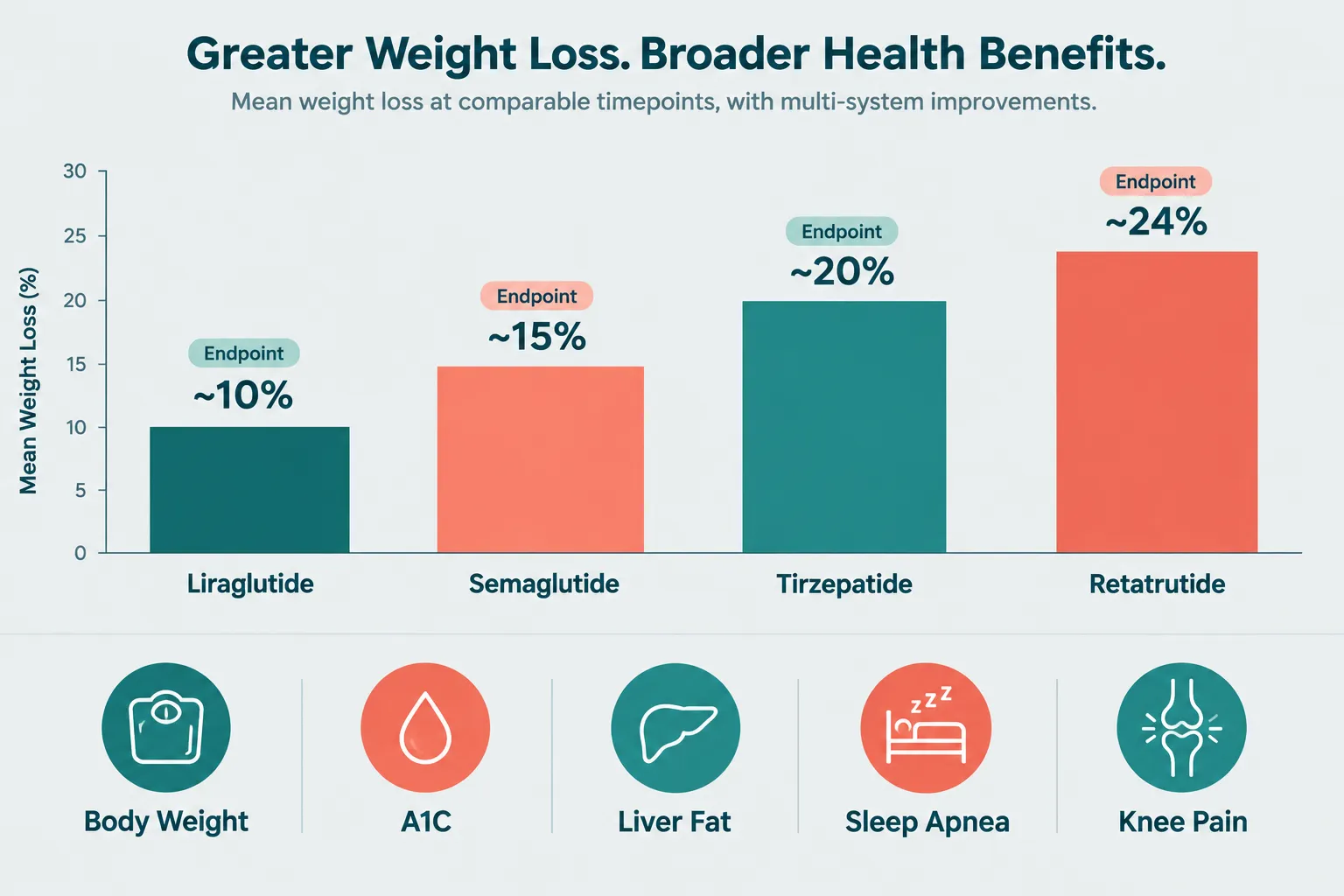
A rigorous Retatrutide Research vs Conventional Obesity Drugs: A Receptor- and Endpoint-Based Comparison must go beyond weight percentages and examine the full endpoint profile.
Weight Loss Benchmarks Across Drug Classes
The table below summarizes approximate mean weight reductions from pivotal trials across drug classes:
| Agent | Receptor Target | Approx. Mean Weight Loss | Trial Duration |
|---|---|---|---|
| Liraglutide | GLP-1 | ~8-10% | 56 weeks |
| Semaglutide | GLP-1 | ~15% | 68 weeks |
| Tirzepatide | GIP + GLP-1 | ~20-22% | 72 weeks |
| Retatrutide | GIP + GLP-1 + Glucagon | ~23-25% | 48-80 weeks |
Phase 3 TRIUMPH-1 data in adults with obesity but without diabetes reported weight changes of -17.6 percent at 4 mg, -23.7 percent at 9 mg, and -25.0 percent at 12 mg, compared with -3.9 percent for placebo. These results represent a statistically and clinically meaningful separation from all approved comparators.
Glycemic Endpoints: TRIUMPH-2 and the Diabetes Population
TRIUMPH-2 evaluated retatrutide in adults with type 2 diabetes and obesity over 80 weeks. All three studied doses (4, 9, and 12 mg) delivered substantial body weight reduction alongside significant A1C reduction versus placebo. A 2025 meta-analysis confirmed mean A1C reductions of approximately 0.91 percent and fasting plasma glucose reductions of roughly 23.5 mg/dL across pooled retatrutide studies. This dual-endpoint performance is relevant when comparing retatrutide to GLP-1 agonists, which already improve both parameters but generally achieve smaller relative weight reductions at comparable timepoints.
Multi-System Endpoints: The Receptor-Driven Advantage
This is where the comparison becomes most striking. TRIUMPH-1 phase 3 data showed that retatrutide also reduced knee osteoarthritis pain scores and decreased apnea-hypopnea events in participants with obstructive sleep apnea. A phase 2a trial in metabolic dysfunction-associated steatotic liver disease (MASLD) demonstrated meaningful reductions in hepatic fat content and liver enzyme levels. A 2025 meta-analysis also documented systolic blood pressure reductions of approximately 9.9 mm Hg.
Earlier GLP-1-only programs rarely incorporated these endpoints within a single trial design. The breadth of retatrutide's endpoint coverage, spanning liver fat, sleep architecture, joint pain, glycemic control, and cardiovascular risk markers, reflects a receptor-driven strategy that treats obesity as a systemic disease rather than a weight number. For related research on combined peptide approaches, the Cagrilintide and Retatrutide comparison offers additional context. Readers interested in how noradrenergic mechanisms compare to incretin-based pathways may also find the Tesofensine mechanism vs incretin-based GLP-1 pathways analysis useful.
Tolerability, Dosing, and the Phase 3 Program
A complete Retatrutide Research vs Conventional Obesity Drugs: A Receptor- and Endpoint-Based Comparison must address safety alongside efficacy.
Gastrointestinal Tolerability
Like all GLP-1-based drugs, retatrutide produces gastrointestinal adverse events, primarily nausea, vomiting, and diarrhea. However, the 2025 meta-analysis found no statistically significant difference in overall adverse event rates between retatrutide and comparator groups (relative risk 1.11, p=0.24). This finding is notable: the additional glucagon receptor engagement does not appear to substantially increase the total adverse event burden compared with single or dual agonists.
Lilly has designed a dedicated phase 3 trial specifically to evaluate different dose-escalation regimens over approximately 113 weeks and 26 visits, directly addressing the practical challenge of tolerability at higher doses.
Once-Weekly Dosing and the Broader TRIUMPH Program
Retatrutide is administered as a once-weekly subcutaneous injection at doses ranging from 1 mg to 12 mg, with gradual titration. This matches the dosing frequency of semaglutide and tirzepatide, which simplifies head-to-head comparisons and supports potential clinical adoption.
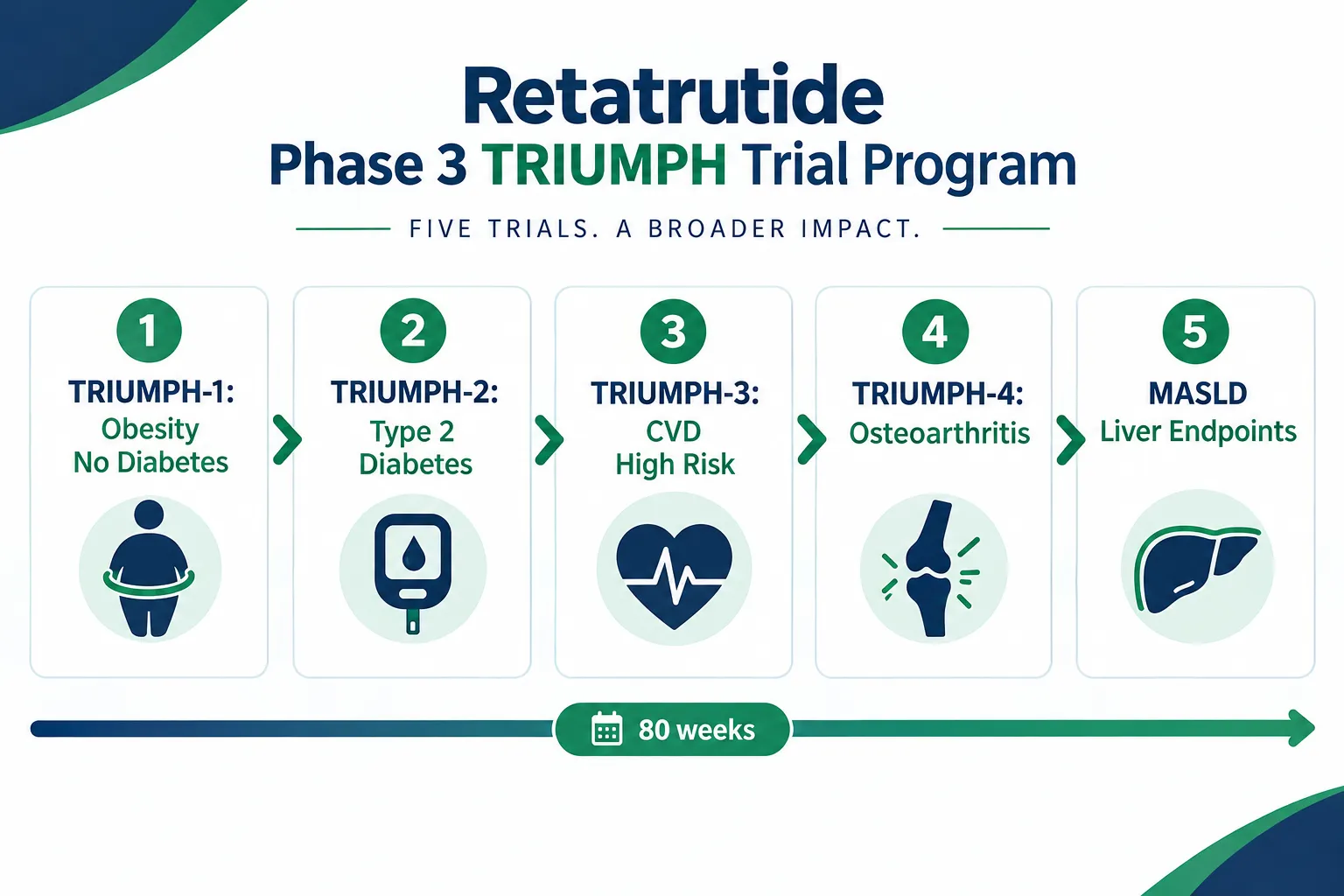
The TRIUMPH phase 3 program extends across at least seven additional trials covering:
- TRIUMPH-3: Severe obesity (BMI 35+) with established cardiovascular disease
- TRIUMPH-4: Knee osteoarthritis
- Moderate-to-severe obstructive sleep apnea
- Chronic low back pain
- MASLD / steatotic liver disease
- Cardiorenal outcomes
Most of these trials are expected to complete in 2026, with a potential regulatory filing anticipated in late 2026 or 2027 if safety data remain consistent. As of late 2026, retatrutide remains investigational with no approved indication. Research-grade formulations referenced in resources such as GLP-3 Reta Cag 10mg and Reta 20mg are available for preclinical and laboratory research contexts only.
Conclusion
The receptor-and-endpoint lens makes the comparison clear. Conventional GLP-1 agonists work primarily through appetite suppression and slowed gastric emptying. Dual GIP/GLP-1 agonists add insulin sensitization and improved tolerability at higher doses. Retatrutide's triple agonism introduces glucagon receptor-driven energy expenditure as a third mechanism, and the clinical data show this translates into measurably greater weight loss and a broader multi-system endpoint profile than any currently approved agent.
Actionable next steps for researchers and clinicians:
- Review the full TRIUMPH phase 3 dataset as readouts continue through late 2026, paying particular attention to cardiovascular and MASLD endpoints.
- Compare tolerability profiles at equivalent dose-escalation schedules, not just peak doses, when evaluating retatrutide against tirzepatide or semaglutide.
- Monitor regulatory communications from Lilly for a potential New Drug Application filing window, currently anticipated in late 2026 to 2027.
- For preclinical research contexts, consult current literature on glucagon receptor co-agonism to understand the mechanistic basis for energy expenditure findings before extrapolating to clinical populations.
The data available in 2026 position retatrutide as the most efficacious pharmacological weight-loss agent studied to date, with a multi-system endpoint strategy that reframes obesity treatment as metabolic disease management rather than weight management alone.


Leave a Reply
Want to join the discussion?Feel free to contribute!