

Tesofensine: Mechanism, Appetite Pathways, and Research Use in Metabolic Studies
Obesity affects more than one billion people globally as of 2026, yet the pharmacological toolkit for studying its underlying neurobiology remains surprisingly narrow. Tesofensine: Mechanism, Appetite Pathways, and Research Use in Metabolic Studies is a subject that has drawn sustained attention from metabolic researchers precisely because this small molecule operates through a mechanism that sets it apart from the incretin-based compounds dominating current headlines. While GLP-1 receptor agonists and dual-receptor peptides generate most of the conversation, tesofensine works upstream, at the level of monoamine neurotransmission, offering a distinct window into how the brain governs appetite and energy expenditure.
Key Takeaways
- Tesofensine is a triple monoamine reuptake inhibitor that simultaneously blocks the reuptake of dopamine, norepinephrine, and serotonin.
- Its primary appetite-suppressing effects are linked to hypothalamic signaling pathways, particularly those involving neuropeptide Y and pro-opiomelanocortin neurons.
- Preclinical and early clinical data suggest significant reductions in body weight, making it a valuable tool in metabolic research models.
- Tesofensine is mechanistically distinct from incretin-based peptides such as GLP-1 agonists, though both converge on energy balance outcomes.
- Research-grade tesofensine is used in laboratory settings to probe monoamine-driven appetite circuits, not as an approved therapeutic agent.
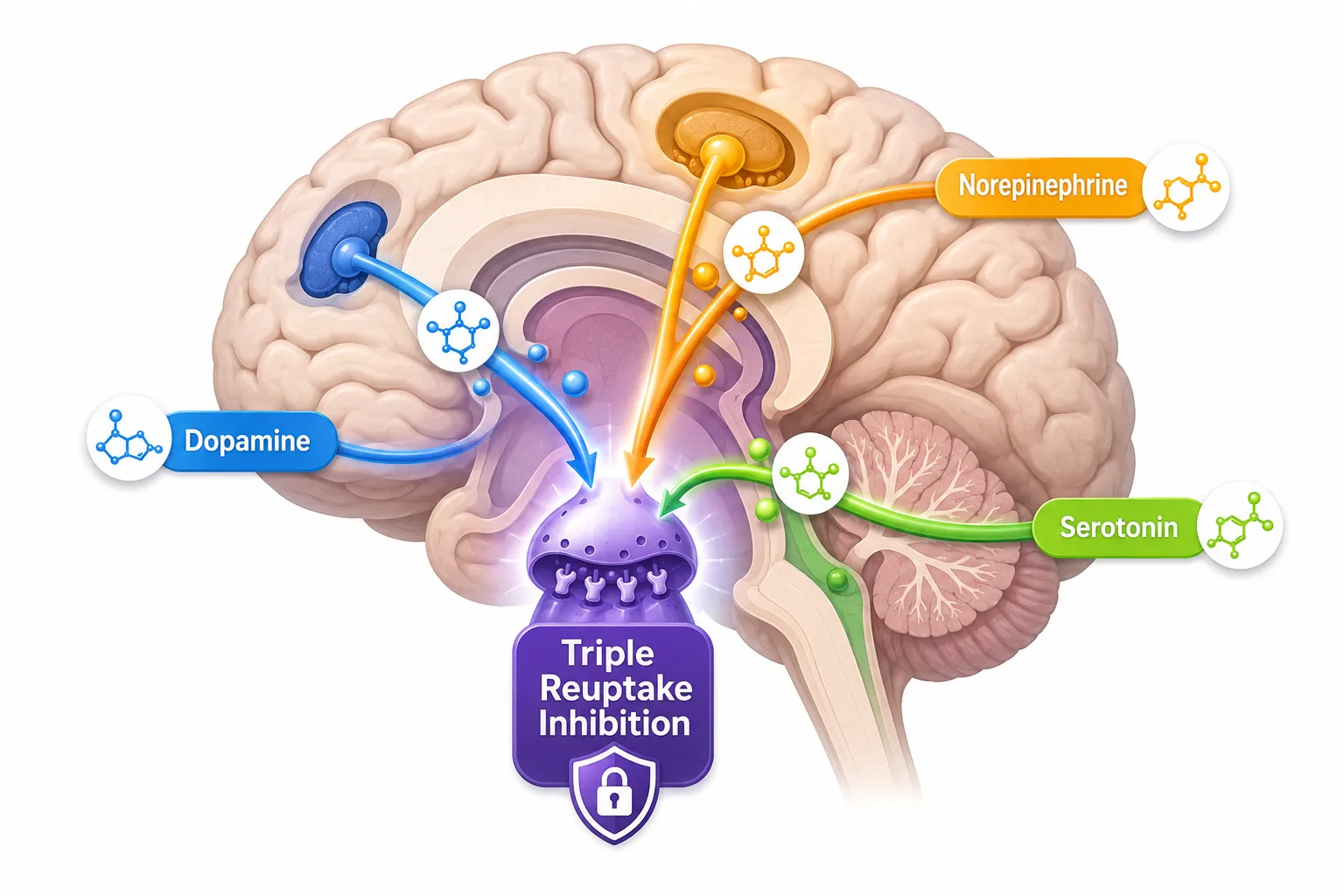
How Tesofensine Works: The Triple Reuptake Mechanism
Tesofensine belongs to a class of compounds known as triple monoamine reuptake inhibitors (TMRIs). Its core action is the simultaneous inhibition of presynaptic transporters responsible for clearing three neurotransmitters from the synaptic cleft:
| Neurotransmitter | Transporter Blocked | Metabolic Relevance |
|---|---|---|
| Dopamine | DAT | Reward signaling, motivation to eat |
| Norepinephrine | NET | Energy expenditure, thermogenesis |
| Serotonin | SERT | Satiety signaling, meal termination |
By blocking all three transporters, tesofensine elevates synaptic concentrations of each neurotransmitter simultaneously. This is fundamentally different from older single-target agents like selective serotonin reuptake inhibitors (SSRIs) or norepinephrine-dopamine reuptake inhibitors (NDRIs), which address only one or two pathways.
"The triple-inhibition profile of tesofensine allows researchers to study how monoamine crosstalk shapes appetite regulation in ways that single-target compounds simply cannot replicate."
This multi-pathway engagement is one reason tesofensine is discussed alongside incretin-based compounds in metabolic research. Both categories ultimately reduce food intake and body weight, but through entirely separate biological entry points. Incretin peptides act on peripheral gut receptors and vagal nerve signaling; tesofensine acts centrally on monoamine circuits. Researchers studying the polypeptide peptides in cardiometabolic models that include tesofensine alongside GLP-class agents have noted this mechanistic divergence as a key variable in experimental design.
Appetite Pathways Targeted by Tesofensine

Hypothalamic Control of Energy Balance
The hypothalamus is the primary brain region where tesofensine exerts its appetite-suppressing effects. Two neuronal populations are especially relevant:
- NPY/AgRP neurons, These neurons stimulate appetite and reduce energy expenditure when activated. Elevated norepinephrine and dopamine tone, driven by tesofensine, suppresses their activity.
- POMC/CART neurons, These neurons promote satiety and increase metabolic rate. Enhanced serotonin signaling supports their activation.
The net effect is a shift in the hypothalamic set point toward reduced caloric intake and increased energy output.
Dopaminergic Reward Circuits
Beyond the hypothalamus, tesofensine's dopaminergic action influences the mesolimbic reward pathway. Elevated dopamine in the nucleus accumbens reduces the motivational drive to seek high-calorie foods. This is a distinct mechanism from the gut-hormone signaling studied in GLP-1 dual receptor agonism research, yet both pathways converge on reduced caloric consumption.
Norepinephrine and Thermogenesis
Norepinephrine elevation contributes to increased sympathetic nervous system activity, which promotes brown adipose tissue thermogenesis, the process by which the body generates heat by burning stored fat. This thermogenic component adds a second dimension to tesofensine's weight-reducing profile beyond simple appetite suppression.
For researchers exploring mitochondrial metabolism alongside appetite regulation, the MOTS-c peptide mitochondrial signaling research provides a complementary perspective on how cellular energy pathways interface with systemic metabolic outcomes.
Research Use in Metabolic Studies

What the Preclinical and Clinical Data Show
Tesofensine: Mechanism, Appetite Pathways, and Research Use in Metabolic Studies has been examined in both animal models and Phase II human trials. Key findings include:
- In diet-induced obese mouse models, tesofensine produced dose-dependent reductions in body weight, with effects attributed to both hypophagia (reduced food intake) and increased energy expenditure.
- A landmark Phase II clinical trial (NeuroSearch, 2008) reported mean weight loss of 10.6% over 24 weeks at the 1.0 mg dose, a result that exceeded comparator agents available at the time.
- Cardiovascular parameters, including heart rate, showed dose-dependent increases, which remains an active area of safety characterization in research models.
Why Researchers Use Tesofensine Alongside Incretin Compounds
The growing interest in combination metabolic research has placed tesofensine in direct comparison with incretin-based peptides. The distinction matters:
- Incretin peptides (GLP-1 agonists, dual agonists) act peripherally and centrally via receptor-mediated pathways.
- Tesofensine acts centrally via transporter inhibition, independent of receptor binding.
This makes tesofensine a useful mechanistic control in studies designed to isolate central versus peripheral contributions to energy balance. Researchers consulting the top research peptides for metabolic health buyer's guide will find tesofensine positioned as a small-molecule comparator rather than a peptide, reinforcing its distinct role in experimental frameworks.
For those designing multi-compound metabolic protocols, resources on IPA muscle and fat research themes and tesa and ipamorelin combination protocols offer relevant context on how growth hormone axis modulation intersects with adipose tissue outcomes.
For a foundational overview of the compound itself, the tesofensine peptide overview provides a useful reference point before designing experimental protocols.
Research-Grade Sourcing Considerations
Because tesofensine is not an approved therapeutic in most jurisdictions as of 2026, its use is confined to laboratory and preclinical research settings. Purity verification, certificate of analysis documentation, and proper storage conditions are non-negotiable requirements for valid experimental data.
Conclusion
Tesofensine occupies a unique position in metabolic research: a small molecule that engages three monoamine systems simultaneously to reduce appetite and increase energy expenditure through entirely central mechanisms. Understanding Tesofensine: Mechanism, Appetite Pathways, and Research Use in Metabolic Studies equips researchers to use it as a mechanistic probe rather than conflating it with the incretin-based peptide class.
Actionable next steps for researchers:
- Review the preclinical literature on triple reuptake inhibition before designing dosing protocols in animal models.
- Use tesofensine as a mechanistic control in studies comparing central versus peripheral appetite regulation.
- Pair findings with complementary metabolic research on mitochondrial and GH-axis pathways to build a more complete picture of energy balance.
- Source only research-grade material with verified purity documentation to ensure data integrity.
- Monitor cardiovascular parameters alongside weight and intake endpoints in all study designs.
The mechanistic clarity tesofensine offers, distinct from yet complementary to incretin research, makes it a valuable tool for any laboratory serious about dissecting the neurobiology of metabolic disease.
References
- Astrup, A., Madsbad, S., Breum, L., Jensen, T. J., Kroustrup, J. P., & Larsen, T. M. (2008). Effect of tesofensine on bodyweight loss, body composition, and quality of life in obese patients: a randomised, double-blind, placebo-controlled trial. The Lancet, 372(9653), 1906-1913.
- Lehr, T., Staab, A., Tillmann, C., Nielsen, E. O., Trommeshauser, D., Schaefer, H. G., & Kloft, C. (2008). Contribution of the active metabolite M1 to the pharmacological activity of tesofensine in vivo: a pharmacokinetic-pharmacodynamic modelling approach. British Journal of Pharmacology, 153(1), 164-174.
- Axel, A. M., Mikkelsen, J. D., & Hansen, H. H. (2010). Tesofensine, a novel triple monoamine reuptake inhibitor, induces appetite suppression by indirect stimulation of alpha1 adrenoceptor and dopamine D1 receptor pathways in the diet-induced obese rat. Neuropsychopharmacology, 35(7), 1464-1476.
- Appel, L., Bergström, M., Buus Lassen, J., & Långström, B. (2014). Tesofensine, a novel triple monoamine reuptake inhibitor with anti-obesity effects: dopamine transporter occupancy as measured by PET. European Neuropsychopharmacology, 24(2), 251-261.


Leave a Reply
Want to join the discussion?Feel free to contribute!